RORY (00:00)
this is a topic that makes me angry.
Is that I think the world of speaking has a lot of predatory vendors. There’s a lot of people selling the dream of become a speaker who have not actually done it. There’s a lot of people who are like, buy my service and I’ll help you get on more stages. They’ve never actually done it. There’s a this this industry, this particular space, for some reason is fraught with people teaching how to do something they’ve never done. And I think it’s because they make a lot of money off of people.
What do you really need to have and do and become to build a professional ⁓ keynote speaking business? All things that we’re gonna talk about on today’s episode, along with
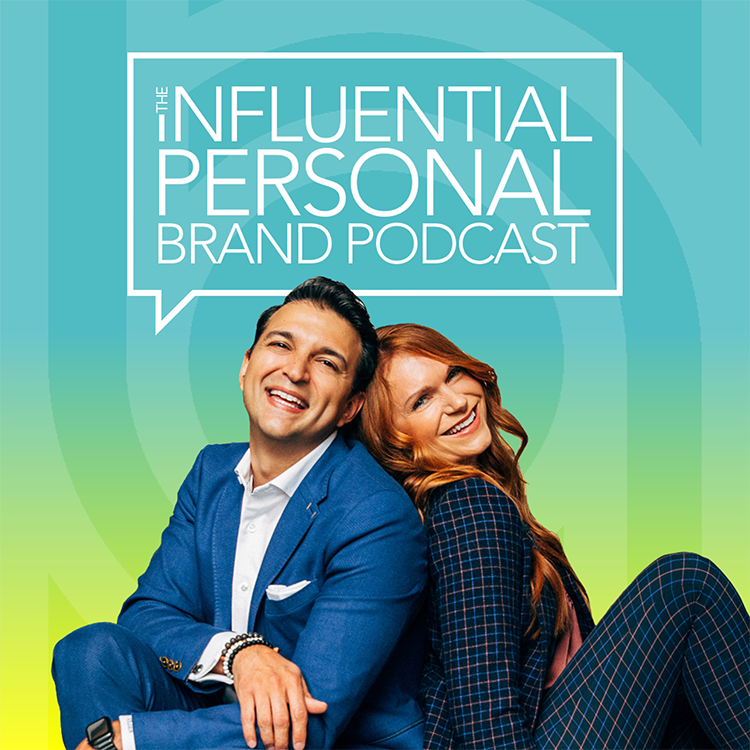
the vast amount of improper information and misappropriated information and misconceptions and miscommunicated information there is out there on this topic. So we’re gonna settle this once and for all. I’m joined by my wife, my best friend, my business partner, and the CEO of Brand Builders Group, AJ Vaden. Welcome to welcome
AJ (01:04)
Well
this is a a teed up episode for you for sure. I think it’d be good to give everyone some recap of your speaking life history and I can start for you since my job as a wife. Why don’t you I will just tell everyone what they need to know about you and
RORY (01:24)
And us. Something we built this together. So,
AJ (01:26)
Yeah, tell them about
it. So Rory’s wanted to be a professional speaker since he was in middle school. He heard a let’s see, let’s actually, this is a good time for you to see how accurate I can get your story. Okay. So in middle school, he heard a speaker. Actually, he helped hire a speaker, and when he found out they got paid, he was like, You get paid to come and talk? How do I do that? Right? Am I good so far?
RORY (01:36)
Yeah, interesting.
So that was close. So when I was in middle school, do you remember the name of the school I went to? Platt middle school. PMS. There it is. PMS. It was I saw a speaker, and then a few years later, I was in student council in high school. You combined two.
AJ (01:52)
Yes, PMS.
being it started in middle school right and that was like a really big dream and passion of his and then ⁓ I think this this is the part that’s just good for everyone to know it’s like this isn’t a new endeavor right and this isn’t also one of those things that’s built overnight right we’re always been wanting to do this and practicing and learning and honing these skills for at this point more than 20 years. Yeah. Yeah your age is starting to show
RORY (02:30)
I know, you were pointing out the gray hairs ⁓ this weekend. You’re like, ooh, there’s a lot of salt.
AJ (02:34)
My point is that it’s this is ⁓ it’s it’s like a ⁓ snowball, right? It it starts with like a dream and an idea, but the more you stick at it and the more you practice and the more you learn and the more you get coaching and the more you do it and the more you do it and the more you do it, the bigger that snowball gets, right? And then it starts building that momentum. And that also requires patience, right? It requires patience. but then
In college, Rory sold door to door and during that process had also really said, like, I want to be a professional speaker and started on the track of ⁓ doing Toastmasters and then post college, right post college, he joined the world championship of public speaking through Toastmasters. ⁓ and so again, if you’re looking for a place to hone your skills, Toastmasters is great because they’re very technical, very tactical in some of those things. And the first year that he did was a young.
Person to ever make it to the world championship of public speaking and made it to the top 10. ⁓ and you were 23?
RORY (03:41)
Yeah.
AJ (03:41)
Twenty two.
I was close. ⁓ then he didn’t win, but he was in the top ten. But I what what people don’t know is the amount of work that went in behind the scenes. And since we were friends at that point That was Yeah, we weren’t dating, but we were friends. It’s like he was like the annoying nerd on the team that was like, Sorry, can’t go out tonight. I have to go speak ⁓ at Denny’s. Like, what are you do speaking at Denny’s? And it’s like and this is the unglamorous part of the speaking story. It’s like it didn’t matter
Who was willing to listen to him? When I say Denny’s, yes, Denny’s restaurant, the restaurant, Denny’s, you heard that right. Speaking to three people sitting in a booth in the back of Denny’s. Why? Because he needed reps. He needed to practice. He was practicing his content. He was honing the skills. It’s like those are the things that people never talk about behind the scenes, right? They talk about the stage time and the glory and the fees and all the other stuff. But it’s like Rory spoke for 300 times that single year. One year. That’s almost once a day for free.
⁓ with no expectation of getting paid, but to hone the craft, to get good at what he was doing, to tighten the message. And for to be in the world championship of public speaking, the speech has to be seven minutes. That’s half of a TED talk, y’all. So it’s like you got to be dialed in. It’s got to be on it. And if you go over, you’re disqualified. So it was like a big deal, right? then he did that again the next year, right? And so it was like two years of just getting speech coaching, watching footage, watching his own footage, hiring coaches.
Like extreme, it was like very intense. ⁓ but he came back the second year and got first runner up, right? Second place, which I still think is pretty awesome. ⁓ you think it’s not as awesome as I do, but for someone in the audience of going like, no, I’ve seen the work behind the scenes. I think that’s what’s really important when we talk about how do you get paid to speak and where I’d really love to start this. And then you started charging, right? But even then, after you were second place in the world.
In the world championship of public speaking, we still spoke for free. Today, 23 years later, you still speak for free for the right audience at the right time, right? It’s different. ⁓ but one of the things that I would want to encourage as we kick this off is one of the best and fastest ways for you to become a highly paid professional speaker is to be the best speaker.
Right? You have to be really good at the content. You have to be amazing on stage. Because if you convince someone to give you money and you get on stage and you’re not good, it’s the last time. Right?
Like you don’t have footage, you don’t have assets, you don’t have testimonials, and you don’t have anyone advocating for you. So, and again, the reason that you sc go and speak for free is yes, it’s awareness, yes, it’s marketing, yes, you’re making contacts, but what it really does for you is it hones your craft. And it’s like if I’m gonna spend $10,000 or $20,000 to bring a person in to speak to our community, it’s like you better believe they better be good. They better be good on stage. I’m putting you in front of my people. And I think that’s what people don’t often talk about. They’re like, when do I start charging fees? Like when you’re dang good.
When you’ve done it so many times that people are like, you’re amazing. This is incredible. ⁓ then you do it. And it’s like it’s don’t rush the process. Be really, really, really good at your craft. And that’s why I think this is the perfect perfect episode, not just because of the marketing, but because you’re an actually very good speaker. ⁓ There’s your warm-up. There’s your intro. How’s that?
RORY (07:06)
Thanks, babe. That’s great.
Thanks. That was accurate. And thank you. ⁓ I’m excited to talk about this because I this this is a topic that makes me angry.
Is that I think the world of speaking has a lot of predatory vendors. There’s a lot of people selling the dream of become a speaker who have not actually done it. There’s a lot of people who are like, buy my service and I’ll help you get on more stages. They’ve never actually done it. There’s a this this industry, this particular space, for some reason is fraught with people teaching how to do something they’ve never done. And I think it’s because they make a lot of money off of people. So I’ve
think understanding the reps and and and what’s gone on behind the scenes and you know you left out a big part of that which is you started a speakers bureau in our first business and you recruited agents, you built up a team of people, and I was sort of like your lead product. So you guys were really building the machine sort of behind getting me out there and we’re working together, right? I’m supposed to bring back leads and and we worked at, but ⁓ yeah, so I think how do we get, how do you get your first
gig. What do you need to know about the world of paid speaking? What do you ⁓ what are the misconceptions that are out there? ⁓ the the first thing I wanna talk about is free speaking. Yep. Because there are ⁓
The fastest way to get clients in anything is to do it for free and you you go and people sample you, right? We use the phrase around our brand builders group community all the time, chicken on a stick. Because when you go to Whole Foods or you go to Costco, they give you like the chicken on a stick sample. And it’s like you have to go out there and people have to see you speak. That’s the number one reason you get hired to speak is cause someone has seen you speak and people say, Well, I I’m trying how do I get people to see me speak if no one will hire me to speak and it’s you go speak for free. And otherwise
AJ (09:03)
Even at Denny’s. It’s like anywhere. But it’s like again, like tactically speaking, associations, local groups, chambers of commerce, it’s like
RORY (09:14)
Why are associations so good? Let’s talk about that that as a potential place to go speak for free. Let’s go through a list of all the reasons speaking at associations are good.
AJ (09:25)
I think
associations are great because they have both. And one of the reasons that associations are great is because they have local chapters, state chapters, and then a national meeting. And so that’s really helpful. It’s like all in this one association, you could try to get the local chapter. Then if that goes well, you can get a state chapter. Then you go to the other state chapters and the other local chapters. So associations are great because they’re in every state.
So all you’re thinking about is like, ⁓ I have more times at bat. Like I’m just trying to go vertical. I’m working deep, not wide. So
RORY (09:57)
You
could do fifty events for one association and you hit all the state chapters.
AJ (10:01)
And
it’s and and they escalate in terms of fee ranges. At the local level, they’re probably not gonna have any budget. And if they have any, it’s a probably a couple of hundred dollars. It’s an honorarium. It’s very small. But then as you go to the state level, they probably have a few thousand dollars. But then as they go to the national level, they have larger, bigger budgets because people are paying to come to those. So it’s it’s nice because it allows you to build relationships within an organization at the local, free or honorarium. Then you get good enough or you get referred, you go to the state level.
And you can work all the states. So it gives you lots of opportunities to go deep in an organization. And that’s why we love associations on how do you actually get your foot in the door? It’s like if I just have all the information of all the, I don’t know, state school board associations, right? It’s like I have at minimum 50 opportunities to just go, I know what you’re looking for, I know what your fees are, and I have at least 50 opportunities, right? Even if you’re really bad.
Like at sales and marketing, if you have 50 opportunities and you can only like get 5% of people to give you a shot, it’s like that’s amazing, right? but it’s good because on a sales perspective, associations are great because they have to, it’s required for them to list their executive committee on their website.
RORY (11:19)
Okay, so first reason that associations are great, you can go deep i in one organization because they have so many chapters multiple fee ranges. Second reason why associations are great
AJ (11:22)
We can go deep.
Multiple fee ranges. Local, state, national. Right.
Their contact information is required to be listed on the website. So you go to any state association or any association and you go to team, about us, executive board, whatever, it’s all in there. But they actually have to share a picture, a name, and an email address.
Bingo. Yes, please. Right. And so they’re very easy and very simple to find. And almost 99% of the time for an association, you’re looking for the executive director. They’re the one who is actually going to make the final decision, the financial decision making. Even if they have a committee, it’s like I just bypass all that. And I’m looking for the executive director. Cause at the end of the day, they’re going to make the final decision and actually write the bill or write the check. Yep.
RORY (12:14)
Third reason why associations are great is because associations exist solely for the purpose of having meetings. What is the value? there’s there’s like 10. Okay, I’ll go, I’ll go. Okay. So they they’ve got
AJ (12:22)
There’s a fourth reset. Well I have another one. Okay. Okay.
RORY (12:31)
What is the value of an association other than people networking and meeting one another? And you go, okay, how do we add value? We have to create content that causes all of these people to show up, i.e., a speaker. So they must have speakers. And oftentimes, ⁓ you know, the there’s the well, so here’s another reason why associations are great. There’s so many associations.
AJ (12:55)
There’s association
for everything.
RORY (12:57)
Everything.
AJ (13:01)
There’s literally
associations for everything.
RORY (13:03)
And a lot of them, you know, a few of them do have big budgets. A lot of them run pretty lean financially. So you’re not competing with Simon Sinek and Brene Brown for that slot. You’re you’re you’re competing against other people who are in the association, who maybe aren’t professional presenters, who maybe haven’t like published a lot of stuff. So they’re gettable, they’re gettable spots. Okay, what’s the next reason associations are great to start?
AJ (13:28)
They’re paid prospecting. Because the beautiful thing about speaking to an association versus a corporation, when you go speak to a corporation, no one else in there is likely to hire you again. They just hired you to speak to everyone, right? These are all frontline employees, they’re leaders of the same organization. They all work for the same company and you’ve already
RORY (13:44)
All work for the same company.
AJ (13:48)
Spoke. You’ve already gotten the spot. You’re already doing it. Now they may hire you again for other reasons, but the point being there’s not a lot of spin-off at corporate events. Associations, everyone else is a prospect. Because the beautiful thing about associations is everyone is coming in from other companies, other organizations. It’s literally the perfect. And that’s why we’ve always had an affinity for them. And we’d be even willing to go, hey, like for the right one, like we’ll do some sort of an agreement of some sort of lesson fees.
By negotiating for other things. We don’t discount, but there could be some sort of exchange of, hey, we’ll reduce our fee by this much because you’re also going to provide me $5,000 worth of film footage or X, Y, and Z. And that’s why it’s like, hey, even if the association itself couldn’t pay the full fee, you’re literally in front of.
dozens, if not hundreds, of other organizations and decision makers that are you’re just it’s a tryout. It’s a paid tryout to get spin off. But that’s why being good on stage is so important. Because if you’re not good on stage and you get that opportunity, it just falls flat. And you’re like, well, associations don’t work. And I’m like, no, associations work. Right? These work. These provide spinoff. It’s how good were you on stage? And that’s where the honing the craft has to come first. But there’s many reasons why associations are a great
place to start. One, they’re easy, low-hanging fruit for you to get your foot in the door when you’re when you’ve never spoken before at the local level. And then you work that network and then you get referred to the state level. And that’s the other thing is like again, these are all they exist for the point of having meetings. And so they don’t have just one speaker. They have multiple speakers. They’re gonna have mainstage speakers and they’re gonna have breakout speakers. And so if you don’t get the main stage spot, take a breakout spot.
so there’s just lots of benefits of going after associations because you get so many times that bat. You can work deep in an organization. All of the decision maker contact information is found online and it’s a paid tryout to get more business. It’s a great place to start no matter where you’re at. Never done it before ever, first time, great, local level, all the way to doing the national stages where you can get lots of spin-off.
RORY (16:00)
All right.
So here’s one of the questions. So Brendan Burchard, Tony Robbins, Tom Hopkins, Brian Tracy, Zig Ziggler, many of the legends of this industry, and then also, including us, have made money speaking at a completely different type of event, which is invisible to most people in the market. This is something known as the seminar model. And ⁓ can you just walk us through what is the difference between?
Between like a a speaking engagement and a seminar, and how do you make money with seminars and like let’s talk a little bit about that in terms of a starting point for people to get paid to speak, but in a way that might be different than what they think.
AJ (16:44)
Yeah, I think again, when you’re a highly paid professional speaker, that’s you’re getting booked by other people. You’re going to someone else’s audience and you’re getting paid to come onto their stages and to be a part of their agenda. In the seminar model, you’re speaking to your audience, right? You’re hosting the event, you are the speaker, you bring the audience to you. And I think those are just two very different models.
RORY (17:10)
Yeah. And I think it you would say in a way you could say there is a pro paid keynote speaking as like you’re speaking to a private audience, right? Of a company as an example. And then seminars are often referred to as like public seminars, where there are all different just people that are in coming as individuals, and you’re either selling a ticket or ⁓ letting them come for free, or it might be some moderate ticket. And then typically the way that you make money on the public seminars is by selling something from
stage or making an offer to the people that are there. And that is, a lot of people don’t know, that is literally the first dollars that I ever made from speaking was I was hosting a free training, actually on humor training, believe it or not. And I let people come to a free one-hour training. I was teaching on the psychology of laughter. And then I sold a ticket to come to like a one-day event with me on where I would teach like the full system. ⁓ That’s also how AJ and I started first business
business together. So walk them through what our model was ⁓ when we first met and and started as business partners.
AJ (18:16)
Yeah, so I think again you have to look at and I I say this to people all the time, you have to redefine what is a speaking engagement, what is an event, right? You can host your own event, you can stick something on Eventbrite, put $200 behind it, and I bet you would have a small event of roughly 20 to 30 people show up in your local market. That’s an event. That’s you speaking in front of people. It’s just kind of have to have a back end offer. ⁓ the challenge with a lot of professional speakers is they don’t have a back end offer. They’re a speaker. That’s what
They do. So that’s the difference between are you on the path of becoming a highly paid professional speaker where that’s what you do, versus are you speaking as prospecting? And those are almost two different career paths for the professional speaker. Are you speaking as a way to generate business for your business or is speaking your business? And those are two different things.
RORY (19:08)
They
are. And and I would really argue that ⁓ most many of the people who make it as a true paid professional speaker, a lot of them survive financially long enough because they do both. They have their own events. They’re doing public seminars, selling their own tickets to their own events, or selling something at their events, and that’s where they make enough money to stay in this industry long enough to where they get known and they get enough spin-off and they build enough brand equity and reputation to where people start hiring them.
To come into the events. That’s not always the case, but a lot of I mean, you you know, some of the legends I mentioned, Tony Robbins, Zig Ziggler, Brian Tracy, Tom Hopkins, Jim Roman, like all of them did that. We did that. ⁓ Mark Sanborn, Ed Tate, these would be people more modern day who have had great professional speaking careers. They were doing both. And
That’s like you’re paying your own bills. You’re kind of like hunting the rabbits while you or you’re hunt you’re you’re shooting the rabbits. You’re hunting the elephants and shooting the rabbits along the way. The elephants are like the paid professional speaking, but then the rabbits are like your own seminars, even they can be small.
AJ (20:15)
So, as what Rory said is, you know, one of the things that we did when we started our first business in this, you know, what what I would call a micro seminar business is we would reach out because we were selling sales training. We were sales speakers selling sales training, and we would call sales teams. Again, somewhat easy to find with a little bit of research online. And it’s even easier. No, yeah. These ⁓ we’re talking about a Wells Fargo home mortgage sales team where the average office has somewhere between eight.
RORY (20:37)
Audio.
AJ (20:45)
To 10 loan officers. I would call their sales manager. Why? Because they have a meeting every week, right? So I’m looking for meetings. My mind is always going who has meetings? Who has meetings? Everyone does, especially sales teams. ⁓ Almost every company has an annual meeting, doesn’t matter what kind of company you are, or quarterly meetings. Like we have a semi annual required all hands on deck in person meeting. It’s like companies have meetings. It doesn’t have to be the big grandiose thousand person company with you know fire on the
stage and smoke machines like we’re talking about just normal meetings and that’s another way of going like hey you have a sales meeting i’d love to come in and offer a one hour free sales training why sales managers don’t have to plan the agenda that’s great for them so you got to think of like one where are meetings they’re everywhere you do it what it’s like your reticular activator will kick in the moment that you go who has meetings and then you realize my gosh there’s meetings everywhere everyone has meetings everyone’s in a meeting
Meetings are happening all the time all around me. You just have to gear your mind towards, well, then why would someone have me into their meeting? What can you do for the person who’s running the meeting? Can you save them having to plan for an agenda? Can you offer them something of value for their team? So that’s what we said. Hey, you don’t have to worry about planning the agenda. I’ll work with you. I’ll let you customize it. I’ll come in. I’ll provide a dynamic one-hour value-ridden sales presentation. You don’t have to pay for it. No problem. My only ask is at the end, you let me tell
about a big event that we have coming up and if they want to come they can buy a ticket. No skin off your back. So that’s that’s another version. I think the the goal of all of this is to reorient your mind around what is a speaking engagement. And a speaking engagement is anywhere you can speak. The end.
y’all, I was telling someone the story this the other day about one of the speaking engagements that I had that was most surprising to me and what really reframed my mind of what is a speaking engagement. We live here in Nashville, Tennessee, and I had just been networking and talk a lot about you know what we were doing. This is in our former business, and a law firm here in town, actually, our attorney was like, Hey, do you ever speak for law firms? And I was like, I most certainly can. I’ll figure it out. What do you need? And
They’re like, well, we are really looking for LinkedIn sales training. I was like, got you. Own this. Got it. I didn’t even have to talk to a person. They booked me through an email. It was $7,500. This was years, this was years ago. $7,500. So I show up literally with a full PowerPoint deck, full dress to the nines, ready to go. And they lead me to this small conference room. And I was like, this must be the green room.
It was not the green room. It was the room. And I’m like, hmm. Who am I speaking to today? One junior associate. Single audience member. $7,500 for that speaking engagement. And I was like, ⁓ I need to rethink about what is a speaking engagement.
RORY (23:41)
One person audience.
AJ (23:50)
It is any time that you are speaking to an audience. And in this particular case, at that time, that was my full fee. I didn’t even talk to them. I was like, this is the easiest sale of all time. Then I get there. It was one person.
And it’s like reframe how you consider speaking engagements. Reframe of just turning on your reticular activator to look for meetings. That’s the only thing I was talking about. Is I speak about this for people with meetings. and it will it will revolutionize your ability to get booked as a speaker by simply redefining how you think about being on stages and how you think about audiences. And that is how I built my own speaking career and was like, I don’t care if it was one person there or if there was a
thousand people there and engagement is an engagement, same money.
RORY (24:36)
I love that. There’s three things that I want to add for speakers that will accelerate your career. So, number one, you want to realize that the biggest marketing asset you have is your speech itself. Okay. So AJ’s been talking about that. The second thing that’s connected to that is that the biggest barrier to you getting your number one marketing asset out there is the fee. If you take the fee away, you get your marketing asset pushed forward. So anytime you need more speaking engagement,
You lower the fee to open up the door to being in front of more people, and then the speech itself drives more leads. The third thing I want to share with you is to go, if you can learn to sell at the back of the room.
Or just capture free calls, then you have created your own speaking career. That is the skill that unlocks the flywheel is going, I’m gonna go speak for free or low fee and offer people a free call with me and ⁓ andor sell something in the back of the room, which takes a lot more skill. But if you can learn that one skill, then it can change everything for you. And as you can tell, these are things that we’ve spent our life teaching people how to do, doing ourselves.
If you want to build your speaking career, go to freebrandcall.com forward slash podcast and request a call with our team and we can talk to you more about this. ⁓ all right, community question.
AJ (26:01)
Yes. I was gonna say before I go to the community question, I just wanted to share one other quick thing. ⁓ in this in this spirit of redefining ⁓ what a speaking engagement is and where should you speak, I just wanted to share another quick personal story that actually happened here recently. And although the dates didn’t work out, I would have said yes to this. And I just I want to constantly just reiterate to everyone who is listening, ⁓ because this is really important. Like if you really want to be a speaker or you wanna speak to Jen.
You have to look at every single opportunity in front of other human beings as something that you would just highly consider. So I have a really close girlfriend. We went to college. My college best friend, she is the principal of a pretty big school here in town. And she had reached out to me a couple of weeks ago and said, Hey, would you be our guest of honor at our middle school career day? And I like some people may go,
No, I don’t have time to do that. And if the date had worked, unfortunately it didn’t, let me tell you why I would have said yes to this. I would have said, one, are you inviting parents? Because if parents are there, I’m in. I’m in. Now, unfortunately, the date didn’t work out. So ⁓ if she’s listening to this, like she already knows the date didn’t work. But number one, it’s like our parents coming.
Right. So some might go like, I don’t have time to go speak to a middle school career day. And it’s like, well, one, I do it one, just because she’s my friend, right? And I, you know, you build those relationships before you ever need them. Two, it’s our parents coming. Three, our administrators there. Right? Because why?
There are school board associations, there are vice principal associations, there are principal associations. So going and being present at that was not just the hour to be the guest of honor talking about being a female business owner in Nashville, Tennessee. It was are parents there.
Our administrators there. And you yourself, my friend, are a principal. Can you introduce me to this Tennessee State Principals Association? What about your vice principal? Can they introduce me to the Tennessee Vice Principals Association? Because I know associations and I know all three of those exist and are in that audience. Reframe how you think about speaking and engagements and what you say yes to, even if it was a middle school career day.
So that was just a recent thing again. It’s a reframe of where are humans gathered together in one place. They’re everywhere. Yeah. They’re everywhere.
RORY (28:23)
If you think about speaking as paid prospecting, it changes everything. Or even just prospecting in general, it changes it changes everything.
AJ (28:31)
It’s a reframe. And all you got to do is reframe who has meetings, where are meetings, and that will literally change how often you hear about them and notice them where maybe you didn’t before. Okay. Now we’re already mentioned we’re moving into our community segment where somebody from our BBG community, that’s brand builders group, gets to propose a question that they would like to have answered on the show. And then all of the other other members upvote what question is most applicable and timely for where we’re at today. And that is
What we’re gonna do right now. So let me read you the question. This is from Marcus. And here is his question. I’ve been speaking for free at local events. Good for you. For about a year and a half. And I feel like I’m ready to start charging. But every time I bring up a fee, the conversation goes cold. How do I transition from free speaker to paid speaker without burning relationships I’ve worked so hard to build?
Great question.
RORY (29:31)
Mm.
Yeah. So the the number one thing that you need to do to move from free speaking to paid speaking is generate inbound demand, right? Anytime you’re making outbound demand, it’s a little bit harder to sell your value and charge for something. So when people are coming to you and asking, that’s a different story. And how do you get people coming to ask? You’re speaking for free or you know, discounted fees and you’re generating spin-off. So when people see you, you can automatically in that initial conversation let them
know, hey, ⁓ is there a budget that you have for this event? Once you share with me your budget, I’ll be glad to share send over my fee schedule and we can talk about whether or not we can make this work. But I think just realize that when leads are coming in, you are in a much better position to sort of establish yourself with a f with a fee. So those are a couple thoughts that I’ve got right off the bat. What do you what do you think?
AJ (30:24)
So I think this
is ⁓ really important ⁓ for everyone to realize is that you always have a fee. You don’t always charge it. Okay, you always have a fee. And I think a lot of people get confused, maybe when we talk about, hey, go speak for free, ⁓ as if you didn’t have a fee. No, you have a fee. You’re just not going to charge it when you’re first starting out. And I think that’s the first thing. This is around positioning. So even with this career day, right? I would have said, hey, my normal speaking fee is this.
I’m guessing you guys don’t have the budget for that sort of thing for a career day. Right? Well, friend, let me tell you why I’m not gonna charge that fee.
Right. And so I think one is setting the pace, even when you’re willing to do it for free, even when you’re first starting out, even if it’s at the back of a Denny’s, even if it’s a middle school career day, even if it’s at a local chapter, they need to understand from the get-go, and it’s not too late to do this, just start doing it now, that even though you’re not charging it, you have a fee. It’s amazing how many people don’t realize that people do this for a living. They just think it’s like.
Charity. They think it’s a a hobby. And it’s like, no, you have to be the one to say, here’s my fee. Here’s my program description. And because it’s local, or because of this, this, or this, I’m willing to waive my fee for this, this, and this. Because I am trying to break into this association because you’re going to put me in front of other business owners, because you’re willing to give me a testimonial, because you are willing to give me referrals, because you are willing to provide me with footage. So I
always have a list of concessions, right? I always have a fee. And then I always have a list of concessions of when, where, and why I would reduce or eliminate the fee altogether because I don’t have to get on an airplane and it’s local. Because I have X, Y, Z ties to this organization, because I’m trying to break into this. But the point is is you have to let people know even when you speak for free, you have a fee.
And I bet that’s why you’re getting a little bit of resistance right now is well, whoa, whoa, whoa, you’ve been doing this for free the whole time. Now all of a sudden you’re charging. Well, one, that’s how business works, right? Supply and demand. But two, it’s also because you’ve likely never shared that you had a fee to begin with.
Right. And so that’s where making the transition from free to or from free to fee gets a little challenging, is it feels like, well, you were doing it for this and now it’s this. Well, I I if if I had known that, I would have never done it. And it’s like, well, let’s start with the very beginning, which is I always have had a fee. I just didn’t charge you for it because of X, Y, and Z. So you always have a fee, and then you need a list of concessions that would reduce or eliminate the fee altogether. And that is
an easier, more simplistic way to go from free to fee.
RORY (33:17)
Mm-hmm.
Yeah. The other thing is to go, like we’ve said, if you can learn to generate leads from your speaking engagements, you only start taking free engagements that are in front of your perfect prospects and you pay yourself, right? You pay yourself from the business that you generate out of that. So there’s lots of ways to get there. ⁓ one other big question or one other tip here on getting paid to speak. When if you have inbound inquiries, one of the first things you should say is, What is your budget for speaking engagements? You also can ask.
who did you hire last year? ⁓ because then you can get a you can get a sense of, you know, do they understand? Do they have a budget for this? Is this a part of their, you know, their normal line item? And you kind of work your way up from there. So there you have it. Anything else that you want to do to say to to wrap up this this conversation on paid speaking engagements and how to get started and where to go?
AJ (34:08)
Think the last
thing I would just say is like the more you speak, the more you get to speak. ⁓ and that’s true for most things. The more you do it, the better you get, the more people realize you do this, ⁓ the more referrals you get, the more the more awareness that you get is like the more you speak, the more you speak. And so be willing to speak for free, but always have a fee. I think that’s really important. But also, if you’re gonna go speak for free, then you need to put on your sales and marketing hat while you’re there. You’re not there to show up 10 minutes before, go on stage and leave. What’s the point of doing that? You need to
To be there before. You need to network, right? You need to be there after. You need to meet people. You need to have a good, clear call to action from stage, at least getting people’s email addresses. And that’s why we say there is a strategy behind everything that you do. you got to build relationships with a meeting planner. Who else could they refer you to? It’s like when and if you’re willing to do it. Yes, it’s for practice, but there’s also a strategy behind it of relationship building, marketing awareness, email capture, ⁓ networking on site. There’s so many.
many things that go into that. It’s never just a one and done. It should never, let me be, let me rephrase that. It should never be a one and done. You get there early, you stay there late. You’re there to generate business. So you got to go there with sales hat on.
RORY (35:21)
Yeah. If you need encouragement, accountability, support to help you do those things, go to freebrandcall.com forward slash podcast. We’ll share with you exactly how we do that for people. And whether you do that or not, please come back and stay tuned in for the next edition of the wealthy and well-known podcast. We’re glad you’re here. Go find someone to serve. We’ll see you next time.
AJ (35:41)
that was some pretty good information today. Yeah.
RORY (35:44)
I mean, we know something about this. So subscribe.