The biggest threat to any small business is that the founder just simply doesn’t want to do it
anymore. The lie we’re telling ourselves that it has to be us and it has to be right now. And
neither of those are true. 90% of all small businesses in America won’t make it past their 10 year
mark. You have to ask yourself why. In this episode, we’re going to talk about the balance of hard
work, but also fun. and rest we explore how entrepreneurs and business owners can move beyond
hustle culture to build lives and companies they don’t need a vacation from focusing on longevity
joy and balance instead of non-stop grind contentment it’s a skill but it’s a choice what is your
level of enoughness protect your most important asset you and make fun a core part of how you work
lead and live every day Ever wonder what it actually takes to build a reputation that generates
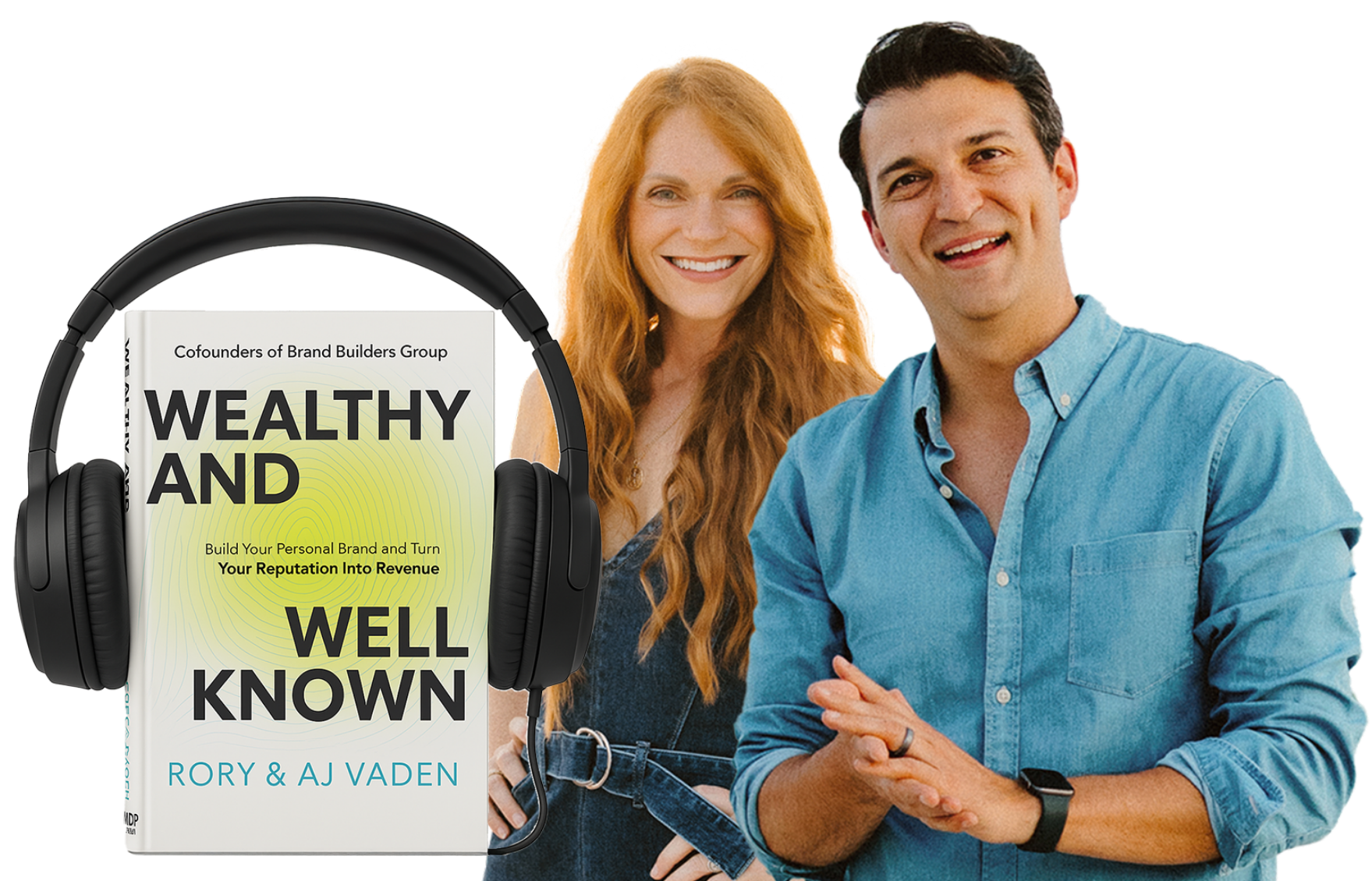
revenue? Rory and AJ Vaden are the powerhouse duo behind Brand Builders Group,
NYT bestselling authors, and the personal brand experts who have helped some of the world’s most
influential leaders scale their personal brands. Now, they’re pulling back the curtain on how to
capture attention, build massive trust, and turn your expertise into a lasting legacy. Get ready to
elevate your influence and your income. This is Wealthy and Well-known.
Have you made hustle an idol? Have you made nonstop work your only strategy?
We have a deep… belief that the people who win in the next decade are not just the people who
work the hardest. It’s really about who lasts the longest. In this episode,
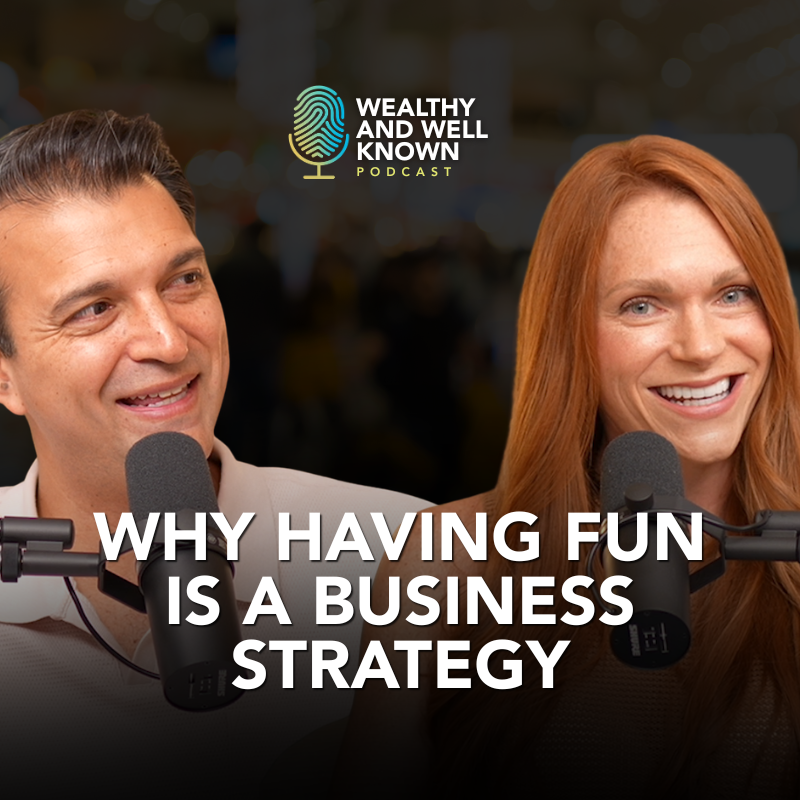
we’re going to talk about the balance of hard work, but also fun and rest.
I love this conversation. I think AJ and I have different views. If it weren’t for AJ, I would
probably work all the time and just be a boring, boring, boring person, but she has shown me how to
have more fun. And we have a lot of fun, particularly as a family. So we’re going to talk about and
help you wrestle down this issue to find the balance of work and life in a way that’s going to make
you succeed. Well, I think it’s really important because when you think about 90% of all small
business in America will fail or simply not make it past their 10-year mark.
I mean, you have to ask yourself why. And I believe there’s two fundamental reasons and research.
corroborates this is number one is that people simply don’t want to do it anymore. And the second
is they run out of cash. But here’s, I think, a really interesting part of why fun as a business
strategy really does produce longevity in the business because you still enjoy it.
Like how many of us as entrepreneurs or solopreneurs or just in business in general have going
like, why am I even doing this? and what you started wow because it was exciting and invigorating
and there was passion and belief and it was fun all of a sudden isn’t really fun anymore and it’s
because the business has all become about spreadsheets and emails and making it to the next meeting
and you look up and you’re like I’m freaking exhausted I don’t have time for friends or family or
life or faith or myself and you look in the mirror and you’re like I don’t even know who this
person is And I think that is why fun as a business strategy is such an important topic,
not just for business success, but it’s also for personal success and it’s for business longevity.
I think Mike Michalowicz is the one who I heard this say, who I heard him say this first is that
the biggest threat to any small business is that the founder just simply doesn’t want to do it
anymore. The burnout. Because it’s not fun anymore. So this episode is really about how do you keep
fun as a business strategy to keep you in the game, engaged, and also making sure that you have a
healthy, happy workplace. Because if you’re not having fun, guess who else isn’t having fun?
If mama ain’t happy, ain’t nobody happy. Like nobody’s having fun if you’re not having fun.
Your customers aren’t having fun. Your team isn’t having fun. So this is a little bit of how do we,
incorporate a little fun back into your business and i want to i want to start on the top about
what business you choose like just starting there because we’ve had so many people come to us to be
like hey you guys could make money doing real estate you guys could make money doing investing you
guys could own a piece of this other business you could have all these things and i think one of
the things that we do a pretty good job of is like money is not our ultimate scoreboard and we go
well yeah but Even if we could make a lot of money, that just sounds exhausting.
That doesn’t sound fun to us. It might be fun for somebody, but it’s not to us.
And I think people need that permission right away up front to go, you can make money.
You can make enough money being good at just about anything as long as you’re really, really,
really good at that thing. And I do think a lot of people get into a business to go like,
I’m going to start this business because I think I can make a lot of money at it. And then they’re
surprised when five years later, they’re like, I’m freaking burnout and exhausted. And it’s like, I
don’t care how many ping pong tables you have in your break room. Like if you’re doing that, but
you hate the business you’re doing, like there’s no cure. There’s no, there’s no bandaid you can
put on something where it’s like, I actually just hate the business that I’m in. And I go make.
choose something else, make less money. Even if it means make less money,
but you’ll be so much happier just doing the thing you want to do. And I just think sometimes
people just need that permission. And so that’s why it’s like money is just not our ultimate
scoreboard. It’s an item we are mindful of, but it’s not our number one. I think the other thing is
too, is when I think about a lot of people, grownups, adults, right? this whole idea of adulting
grownups, grownups. I think that there’s a lot of it where it’s like, I do think there’s a
sentiment of like, you can’t have fun and be a serious business. And I just don’t think that’s
true. And if it is, it’s like, well, that doesn’t sound like something I want to do. Like I’m just
being real. It’s like, like where did joy and happiness and fun get cut out of the equation in
order to be. you know, serious or taken serious or successful. And I think that that is a shift
that I think is happening generationally of, and maybe it’s something that maybe even some
industries get a bad rap for. But it’s like, man, like, let’s have a little joy.
It’s like, I just, I think one of the things that I hear a lot of people talk about my dad, I just
turned 75 this year. And he still goes to work every day, his version of work, according to my
brothers who are in the family business. But nonetheless, it’s like he doesn’t believe in
retirement. And my grandfather, who was also an entrepreneur, worked until he was in his early 80s.
And this whole concept of retirement, I think it’s like I’m kind of obsessed with. I talk about it
all the time. It was an American invention. Like this is not something that used to exist prior to
the 1960s. This is also not a practice that is all over the world. It’s a primarily American
function that was created in the late 1950s. Tell them what the word retirement means.
But yeah, but to retire means to be taken out of service. Like, well,
what’s that? But then this whole idea of I’m going to work, work, work, work, work, work, work, and
one day retire. Like what?
friends are busy and you’re old and you’re not physically capable anymore. Like that’s the dumbest
thing I’ve ever heard of. Right. You’re going to sit around and watch wheel of fortune all day.
Like, yeah, you’re going to, what are you going to do? best years working nonstop, having no fun so
that one day you can have fun when you no longer feel like doing it anymore. It’s crazy. So I’m
real convicted that fun has got to be a core part of your business strategy. And I don’t mean fun
in the sense of, yeah, playing ping pong or cornhole or whatever that is, but it’s how do you have
lightness? How do you have levity? How do you have rest? How do you have components of enjoyment in
everything you do? Yeah. And I’m going to do the thing again where I ask a question and then answer
my own question. This is going to have to be disallowed moving forward. You’re not going to be
answering your own questions. Well, you gave yourself the good questions and I’m afraid that you
won’t ask me it.
All right. Answer your own question. Okay. So here’s the question. Where did I learn that rest and
fun were a necessary part of being successful and what planted that belief?
So I want to talk about a book that you read. that changed my life and the book was called every
good endeavor and it was by timothy keller and y’all if you don’t know this aj reads like crazy
like i don’t know if he reads like a book every couple weeks and one of the things in that book
that timothy keller reminded people of and reminded me of was that work existed in the garden of
eden before original sin which means that work was part of God’s original plan.
Work was never meant to be a price that we paid for sin. Work was not a part of a broken world.
Work was a part of the perfect world. It was a part of God’s divine design.
It was the original creation that work is a part of what gives us purpose and joy.
And that book and that idea really transformed the way that I think about work.
If I’m having to grind through work, I’m not doing it right. It doesn’t mean I don’t work hard.
It means that it shouldn’t be that hard to do work. I should enjoy the work.
I should enjoy the challenge because that’s part of God’s design. And if I’m living into what we
would call uniqueness, then I should be exercising skills and functions and capacities that God
gave to me. And that is the kind of fun that I think of. It’s not going like,
oh, if I spend more time on the beach, I’ll be better at work. That may be true,
but that’s not the big idea for me. The big idea for me is to go enjoy the thing you’re doing and
figure out a way to make that enjoyable. So anyways. Yeah, I think that’s good. I’ll add two quick
things to that that I think are worthwhile is that God did. create work in the perfect world.
And so did he create rest as a law, as a commandment,
as a necessity, because I think, not I think, I know he knew that we as humans would have the
tendency to want to outperform, outachieve, and that our worth would be tied to productivity,
which is why he said, no, you have to take the Sabbath. And that is where you have to rely on me.
That is where you cannot be completely independent. This is not of yourself. Everything that you
have has been given and provided in some way. And just as we were created to work, we were also
created to rest and have peace and enjoyment. That is the purpose of the Sabbath.
But I think for a lot of us, to the other thing I was going to comment on, this whole idea of
hustle culture and grind, I think a lot of that stemmed from this idea of comparison.
It’s like we grind and we hustle and we work more hours and more days and we never take breaks and
we don’t take vacations and this idea of getting ahead, of getting more,
of getting ahead of the next person. Beating other people. But all of it stems from it’s like,
well, I got to get what they have. So I got to work more hours. I got to do this. I got to do this.
I got to do this. And it’s like, would we ever have done that if we weren’t looking around at
everyone else was doing? I don’t know. And I think that overwhelm comes from taking more on your on
your plate than you can actually get done. Right. It’s an over committed. Why do we say yes to
things that we shouldn’t be saying yes to? It’s, you know, you feel guilty or you’re trying to keep
up or you’re a people pleaser or, you know, there’s this thing of like, well, everyone else is
doing good. I guess I got to do it, too. And I think there’s some of that built in here that we got
to unwire from our thinking. And I think that’s why pausing and going like, hey, it’s not always
about doing more. Sometimes it’s just about being better at what you already have, being better at
what you’re doing. But also there’s a skill of contentment. And I think that’s a discipline and
it’s a skill, but it’s a choice. To enjoy what you’re doing is a choice. And,
you know, one of the policies that we have at the Vaden household for our youngest to our oldest is
that we are going to be excellent at whatever it is we do. I don’t care if it’s loading the
dishwasher. I don’t care if it’s organizing the pantry. She does care if it’s loading the
dishwasher. For the record, it matters that we load the dishwasher with excellence at the Vaden
household. I’m just, if you come over, I’m just warning you now. There is a way to do it. But that
really does stem from the idea of like, if my hands are going to touch it, it’s going to be done
well. Yeah. And it doesn’t matter what it is. Taking out the trash. I’m above nothing. And that was
very much a learned attribute in my household growing up. And in my grandparents’ household, it’s
like if you’re going to touch it, you’re going to touch it with excellence. I think it’s like we
don’t appreciate the job we have or we think we should be doing something else. And it’s like, nah,
just be excellent at the job you have. Enjoy the job you have. And those are choices, right?
So I think a lot of that is, yes, do something that you’re well-positioned to do, but also be good
at whatever it is you’re doing. Yeah. And I want to, I want to double tap on, you brought up the
word contentment and you said contentment is a skill. I could not agree with you more. One thing
that changed my life was a question that my, one of my best friends, Jason Dorsey asked me,
he said, what is your level of enoughness? And he was asking the question,
like, how much is enough? Like how much money is enough money? How much impact is enough impact?
How much recognition or reputation is enough? That question really rocked me the first time he
asked. And I think it is a sign of maturity to go to say,
I do have enough and I’m not in need of more,
but I’m always doing something because I do things with excellence and because I enjoy doing it and
I feel called to do it and I feel like I’m using my skills, but not out of comparison, not out of
beating others and not out of trying to… satisfy my own deep feelings of insecurity or
inadequacy. That’s the part that leads to burnout. I think it’s less about the quantity of hours
you work. I think burnout is more related to why are you working those hours and what is the drive
behind the work? If the drive is competition or ambition,
I think you can run into burnout. If the drive is mission, then I think you can work really hard
for a really long time because you get the power of having mission as your motivation is if I
impact one person, I get this deep, satisfying gratification.
And yet at the same time, I am. I have an insatiable desire to impact and help more.
And so mission is really beautiful. But I think it’s more about the motives behind the work than it
is about the volume of the work that you’re doing. And a lot of that comes down to more emotion and
psychology of contentment and enoughness. And God’s just designed for rest to say,
do you trust me enough to rest? Yeah. All right. So I have a question for you. Uh, what do you do
for fun that helps you be a more happier,
productive person at work? We were having this conversation before we hit record.
So it’s like, this one’s hard one for me. I mean, well, define fun for you and then answer the
question. I mean, for me, fun is enjoying my life. Right. To me,
it’s not. What does that mean? It means that like, I’m happy with the life that I have. It doesn’t
mean, oh, when I’m at the beach, that’s fun. But when I’m on my office, that’s not fun to me.
That’s a, that’s a losing life. Yeah. Like I go, it doesn’t matter how much time I have at the
beach. If I hate what I’m doing in my office, like. You just always want to be at the beach. Yeah.
You always want to be at the beach. Like Seth Godin had this great quote where he’s like, build a
life you don’t need a vacation from. Amen. Like. I go, that’s it. To me, that’s fun is to go.
What does that look like every day for you? I mean, here’s, I think what it looks like is, you
know, my source of fun would be the things that we do as a family. Okay. And I think we decide as a
family, we were going to invest into experiences and go, we’re going to go to games.
We’re going to go to concerts. We’re going to go to events. We’re going to show up at birthday
parties. We’re going to try to go to water parks. We’re going to try to do stuff that.
creates memories and we’re going to focus more on creating memories than just having possessions
and largely i think that was your influence which uh you know you do a great job of making our
family fun and i think making brand builders group fun like if I think Brand Builders Group would
suck a lot more to work at if it were just me, for sure, because you do prizes and recognition and
tacos, this tacos thing that we do. It’s fun. It’s fun,
yeah. Separate from our family, the way I would have to answer that question is I don’t think I do
fun. I think I do rest. One of my goals was to get to where I could afford a massage every week.
I do that almost every week. I want to be able to,
on Sundays, I am completely unplugged. Sundays is truly a Sabbath for us.
For you. For me, yeah. Saturday is more when you Sabbath, and that’s only because you’re spending a
lot of Sunday working to prepare to host Bible study on Sundays. But I think…
know, we wake up, we go to church, we have brunch as a family, we come back, we get ready for Bible
study. We have family Bible study from 3.30 to 8. And then we go to bed and,
you know, maybe read the Bible some in between there. That’s like our Sunday. And I think we,
you know, do that even though there’s work in preparing for that. Fun for you is rest. I think fun
for me is rest. I would second that. Our kids call Rory the master napper.
Their whole idea of a fun day is telling dad, you can’t nap today.
Napping is fun for me. I can nap right now. I can go to sleep at any moment.
I think what I do have the ability to do is… off work from my brain and like go rest um and i
think that has been a learned skill which is also i think a demonstration of faith and this is a
difference between our first business and our second business in our first business it was like if
it is to be it’s up to me we’re going to work all the time non-stop i think when we started brand
builders group we made a resolution that we’re going to work hard from, you know, nine to five.
And at five o’clock, we’re going to shut the laptop. We’re going to stop answering the phone and
go, God, I’m turning over my business to you. That’s how I’ve had to process it to go.
There’s a bunch of urgent things that need attention, but it’s five o’clock. God, I’m handing this
back to you. It’s the same thing you do with your money. When you give a tithe, a tenth is to go,
God, I’m, I’m, I’m, I’m turning this money. back over to you because I trust you to do more with
it. And so I think that rest, that enoughness, that separation, that picking a life you don’t need
a vacation from. Those are the things of how I do rest.
You know, other than that, it’s it’s swimming and reading. But I think for everybody, it’s like you
have to first define what is fun for you. Yes. Right. And fun isn’t going to necessarily amusement
parks or concerts or whatever. It’s like you get to define like and I think I think how I would
define fun in this regard of how do you make fun? A business strategy is what brings joy back to
your life. Right. And like when I think about what is fun for me, not as a mom,
not as a business owner, not as a wife, but what is fun for me is I like to be out in nature.
Like that is fun for me. Like I love going on a long walk or a hike. I love yoga.
I love being physically active. That is fun for me. It can be a yard game.
It could be a walk. But it’s like what is fun for me is to be physically active. And so for
everyone who’s listening, I’m just going like, well, I don’t have the money to, you know, go do X,
Y, and Z, or I don’t have that time. It’s like, no, no, you got to redefine fun as what brings joy
back into your life or what gives you mental reprieve. Like we have come to know at my house,
like if I don’t have some sort of physical release, the whole family feels it. And it’s like,
I’m like, I need to go on a walk. I shall be back. And I will come back a different person.
And it’s like, so I’ve just realized like fun for me, what brings me joy is just having physical
activity. It doesn’t matter what it is. I just need to be physically active every single day.
It could be a walk. It could be yoga. AJ is a high energy burner. I am. But it’s like, that also
brings me joy. It’s fun for me. I love that. It’s like, I actually really love working,
but I also love not working. I love both. Like, I think one of the greatest gifts of being a parent
that I never expected was how much joy I get from doing nothing.
It’s like, it’s like, it’s like, it’s just, they make everything fun.
And it’s like, it’s not about productivity. It’s not about, it’s just, we’re just doing it to do
it. And that has been a really important business and life lesson of not everything has to be about
productivity. It’s like sometimes you can just do things to just do them. And that has been like a
really good gift that I think is really important for us all to realize. It’s like I can easily.
Make yoga a competition. It’s like, how good can I get? How many poses can I learn? I can do that
with the books I read. You can do it with anything. How fast can I walk? How many steps can I get
in? Those are all things that we can do. And I think the greatest thing about having something that
just brings you pure joy, that to me is fun, whatever it is. And it’s like, really think about the
things that are fun. something that doesn’t have some sort of productivity measurement tied to it.
It’s just something that gives you a release, a reprieve. something that gets you back in alignment
those are things that are fun that’s what makes it all worth it because there’s hard days you got
to have something that will give you a release on a really hard day and I think those are the
things that when you think about fun as a business strategy that it’s not you’re glued to your desk
right you’re peeing on mute you’re eating on calls like that’s not sustainable For the long haul.
Peeing on mute is kind of fun because it’s a challenge.
From the mouth of Rory Vane. I have an important question. This is a really good one.
So I want to talk about not working for a second. Because in addition to running our business and
running our household and being a mom and spending time with our kids. What is the lie that most
high achievers are telling themselves about why they can’t slow down?
And specifically. Have you been there? How did you get past it? What have you,
how did you resolve that? Yeah. I mean, I come in and out of that every single day of,
you know, I can’t take a break. I can’t have lunch. I can’t do this. I can’t stop at five.
And I think the lie is that I have to do it. It has to be me. That is the lie that we all somehow
believe is like, somehow there’s like this magical power that we possess. That no one else does.
Only I can figure this out. Only I can do it. I can only do it this fast or it has to be this way
or it has to be this good. It has to be X, Y, or Z. The lie we’re telling ourselves that it has to
be us and it has to be right now. And neither of those are true. And so I constantly have to be
checking myself of what, and I think the practice that I have in the morning is what’s my priority
for the day. And as long as I get my priority done for the day, I’m good for the day.
That doesn’t mean there’s not urgent things. I mark them as urgent. I get to them as quickly as I
can. But that’s also learning how to use a team. And it’s also giving yourself permission of like,
I set forth a goal of the day. Have I completed the task of the day? If the answer is yes,
my priority has been completed. Check. I can check out now. But then the other thing is really
learning how to use your team. I think a lot of people hire a team and then they’re frustrated that
my team isn’t producing. And it’s like, well, are you giving them things to produce?
And it’s like, why are you still holding on to all these things? And some of that is,
I believe, one of an entrepreneur’s greatest skill sets is to hire people who know more than they
are, or know more than they do. To hire people who are better than they are at something. To hire
someone who knows more than something they do because… One, I think it’s a really important skill
set for you never to be the smartest person in the room. That is a dangerous place to be always
forever, no matter who you are. Like for me, for example, it was a really scary place for our
business and for me, for me to be the smartest person with our accounting and financial team.
I didn’t go to school for accounting or finance. Yeah. I mean, we should have known we had a
problem when the art major was the CFO.
Technically, I graduated as an advertising major. Okay, well. But it was like,
you know, I need to hire someone who is smarter than me in this. And if I’m the smartest person in
the room when it comes to our money, we’re in trouble. And it’s been so amazingly enlightening and
surprising in the best way possible to hire someone who knows so much more than me.
in this skill set, because what it is, it’s giving me the confidence of, uh, I can give this to
you. I don’t have to do it. You know what? I’m not the smartest person on this. It’s I’m not the
only one. And that it’s, um, that’s almost like, um, an addiction.
It’s like when you realize, Oh shoot, what else am I doing that someone else could do better? So
now I’m constantly looking around of like, wow, am I doing this? you’re so much better at that.
Why haven’t I given it to you? So I think there’s something in there that there’s a lie that we
believe that it has to be me and it has to be right now and neither are true. What would you say to
the entrepreneur who hasn’t had a day off in like a very long time? Like if somebody is listening
right now and they are like, they don’t know how to give themselves permission to take the time.
Like the only thing they know is, I do everything. I grind.
I make this thing work. And they feel like if they stop,
it’s going to fall apart. What do you say to that person?
I think there’s a lot of things I would say. But the truth is,
is you’re never going to realize that it’s not going to fall apart when you stop until you stop.
And then you realize it didn’t fall apart. Um, that’s the truth. And especially if it’s a day or a
week, it’s like, may there be a pile of things to come back to? Sure. But is it all going to
completely fall apart because you stepped away? No. And if you really feel that way, what the real
advice I would give to you is you need to look around at the team you have or the lack of and go,
why do you feel that way? Because there’s a reason you feel that way. It’s rather you haven’t
released control, you haven’t provided the necessary training, or you haven’t hired the right
people in the right seats. And that’s a you problem, right? That’s a business owner problem.
But a lot of that is I think we’re conditioned and some of it,
it just becomes a habit. And it takes a minute. And sometimes it takes abruptness to break a habit
like that. I have been in those seasons. And what I needed that is I needed accountability. I
needed someone else to come alongside me and go, no, we’re doing this. It’s phone-free,
device-free. This is what we’re doing. And so maybe that’s what you need. But I think for the
first, most important part, if you feel that way, there’s a reason. It’s rather you haven’t
released control. You haven’t trained up the team to help. You haven’t hired the team or you
haven’t hired the right team. Here’s something I want to say that is going to make some people mad.
But take this from someone who was a workaholic. I firmly believe now that overwork is a sign of
underfaith. I really believe that. And I don’t mean to offend you, but if it offends you,
I’m okay with it because I think you need to hear it. If you are overworking. It is a demonstration
of a lack of faith. It is a demonstration of going, I don’t trust God to fill in the gap.
I don’t feel like I’m going to be taken care of, which means you’re demonstrating a level of
exertion that probably carries into other areas of your life where you feel like you have to
control everything. And ultimately, you’re not in control. Like you can influence things, but you
can’t control it. The benefit that you get is to is to feel like you’re in control.
But the price you pay is a never ending soul crushing weight and stress.
It is a prison of your own construction and you will never break free from it. Because I would say
to you, I would say, how’s it working? Right. You’ve been working. How long have you been working
all day, every day for? How’s that strategy working? Did you get, is your inbox at zero?
Do you have things finally under control? Do you finally feel caught up or do you feel less caught
up? Do you feel more behind? Do you feel more busy and buried? And I go, because there’s no amount
of work that’s ever going to make you feel caught up. The only thing it’s why we talk about in
wealthy and well-known peace is the new profit. And that peace doesn’t come from spending in.
an infinite number of hours working on your business. At some point, it is a matter of
relinquishing control and saying, I will do my best and God.
I’m trusting you with the rest. And until you get there, you’re just going to keep in the pattern.
And that’s why overwork is a sign of under faith. And I believe that the pressure you’re feeling,
the stress you’re feeling is God trying to get your attention to go, hey, give some to me.
Give this to me. And it’s the same thing with a team, right? So if you don’t believe in God and all
that, it’s like a similar, it’s a, it’s a similar dynamic with your team. One is a spiritual, one’s
a practical. It all comes down to trust and surrender. Trust and surrender. It doesn’t matter which
angle you take, but it’s like, one of the things you have to realize is that the more you work, the
more work you create. And it’s like, until you rest, like, it’s like, there’s always going to be
more to do. Always. At home, at work. And you don’t even have to be in like.
a professional career to experience that. The same thing goes for a stay at home mom or like it
doesn’t matter. It’s like there is always another load of laundry, another load of dishes. There’s
always something to pick up. There is always more to do. It’s never going to go away. It’s your
choice to go. That’s not my focus right now. So I have one last question for you before we go into
the community segment. Then what are the non-negotiable fun moments that are the things that you
protect in your calendar no matter what? Every year we make an annual calendar and we,
I think, have done a pretty good job of this. So first thing that comes to mind, Sunday,
Sabbath, we’ve already talked about that. Second thing that comes to mind is Wednesday date night.
We’re relentlessly protective about one night a week for us. Third thing is we take birthdays off.
Um, and we celebrate, we just celebrated, uh, our youngest son’s birthday. Uh, you know, this week
we were out like, and, and I’ll tell you what, I was more exhausted at the end of that day than at
the end of the work day. Cause man, keeping up with the kids, man, they are nonstop. We were,
we were moving and grooving and playing games and doing stuff all day long. I was exhausted. I was
like, let’s play soccer. Can I please just have a day of meetings? Uh, cause it was, it was, it was
fun though. Um, so I think we, we, we celebrate. A lot. Like we celebrate.
You’ve built a culture in our family of like we celebrate things. And then I think the other thing
is you and I, and a lot of people don’t do this, you and I get away,
just the two of us, at least two weekends a year. We used to get like four a year. Childcare
coverage is the biggest obstacle and challenge. to it but i think ideally we’re getting away three
to four times a year even if it’s for one night or two nights and i am shocked at how many of our
friends will take a trip and they’ll be like is this the first time we’ve had a trip with just the
two of us and no kids in six years nine years 15 years and it’s like How can you stay connected to
your spouse if you never have time with just you and your spouse? Like those are non-negotiables
for me. And I think for us that have made a huge difference.
Yeah. And I would just add to that, regardless if you’re single, married, kids, no kids, empty
nester, it doesn’t matter. But it’s like you have to schedule it in. It’s just like you prioritize
the meetings and the tasks and appointments that you have to do at work. our personal life the same
way. It’s like I will book activities, fun things, whatever it is, six months, nine months,
a year out to go. It’s in the calendar. It’s we’re committed to it. We paid for it so that we can’t
be too tired or too busy to get to it as because we’ve already put the money and it’s already been
on the calendar. And those are things that we have put it as and it doesn’t even have to cost money
to do that. It’s like, hey, we’re doing a picnic at. xyz park and it’s like it’s in the calendar
that we schedule it we plan it we treat it like a meeting we treat it like an appointment because
if we don’t it’ll never happen and i bet the same is for you so it’s like what are those non
-negotiables for you uh that are fun right so i think that’s the first thing is just like what
brings you reprieve what brings you joy what are those moments of fun that you can bring back into
daily and i do think they need to be daily Not weekly, not monthly. I’m talking about daily.
You need to have moments of fun every single day. And maybe it’s just like you have a really fun
friend that you call or you’ve got it. You’re you’re on a friend text chain and it’s like, hey,
when we share these things every day, it’s so fun. Find the thing. that gives you joy and do the
thing every single day. Because I do think that helps you last longer. This is,
again, it’s not about how successful you are, it’s how long can you last. And those are things that
really matter. I love it. All right, it’s time for our community question. So this is where our
Brand Builders Group monthly members who are in our formal program get a chance to ask questions in
the community and they each vote up on their favorite questions. So the question for today is from
Mark. Mark says, I’m four months into working with Brand Builders Group and I am absolutely loving
it. I’m grateful for you both. We’ve been in the coaching space since 2017. I was inspired by
something you shared at one of your recent events, which is that the future vision of brand
builders group is to become a business operating system. I am wondering if you have any
recommendations on software platforms, teams, or phases of development for how we could also become
an operating system for our clients. So it’s a little bit related to systems and structure.
Um, you want to go first and share your thoughts or no. You want me to take this one?
No, I sure I have lots of thoughts and ideas. And I think, again, you have to for whatever your
business is. I think the conversation that we’re having at Brain Builders Group is how do we go
from being a luxury? business. In other words, a nicety, something that is not fundamentally
necessary to the function of our client’s day, right? So that’s what I’m going to call that a
luxury business to an essential business or a necessity. So you could either word nicety to
necessity, luxury to essential. That is the conversation that we’re having at Brand Builders Group.
And we are making a strong pivot towards being a strategy firm to a firm that helps execute
strategy. That’s how we’re going to become an operating system. And so that’s really what Mark is
talking about. So when you think about that, whatever your business is, and this isn’t going to be
a technology platform conversation. This is more of a structural mindset of going,
how do you become essential to your client? Yeah. So I would starting high level,
I would say the question that we ask is how do we help our clients get results faster?
So that’s the guiding question is to go, what tools, technology, systems,
techniques, templates do we need to create to help our clients succeed faster?
That’s the overarching question. The second thing I think you do is you go, what are the systems
and tools and technologies and templates that we use in our business? And how can I recreate those
and document them, codify them, extrapolate them? out of your head and your team’s head and get
them onto paper get them documented and go ah this is the system and then go what technology or
tool can we use to create to make those scalable and interchangeable
And that is what we’re doing, right? So in our case, we have been investing heavily in creating a
tool that does marketing automation, CRM, workflows, you know, drip email.
sequences to help people execute on the backend, all the systems and structures we do along with
content management systems, along with lead generation systems. So those are the three main areas
that we’re building tools. And I would underscore something you said, strategy matters way more
than the technology. You can get whatever technology you need to do, like to get it to do the
thing. What matters is you figure out what’s the strategy. How do we templatize that? And then just
go find whatever technology is available that’s kind of the closest and most affordable and meets
the number of things. And then make it work and do that work. But we’re trying to do as much of the
work as we can for clients so that when we teach them something, it’s like 80% executed already.
And then all they need to come in and do is tweak it and tailor it. And that’s been a long journey.
Mark said he is an eight-figure business. So this is not something you do on day one. No, and I
would just say too, it’s like you can become an operating system for your clients. sans technology
sure like you don’t have to have technology or platforms or softwares to actually become an
operating system uh becoming an operating system for your clients has everything to do with
answering this fundamental question which is what does your client need what do they need and
you’re giving them the playbook and you’re giving them and that could be a playbook could be a
playbook it could be a system there’s so many but that system doesn’t mean it’s software You have
to have the answer to these two questions. What does my client need? And what would make me
essential? Right? Like, what do they need? And what’s going to make me a line item on their budget
that’s like, can’t cut that. Gotta have that. It’s a fundamental part of our business. This is how
we do it. This is what we need. And so I think those are the two things that then you can come
with. Hey, what are the softwares or technologies or what are the things that we can have 80
percent done or what can we do for them? Those are all the fill in the gap after, you know, the
answer to those two questions. Absolutely. So if you want more help with that kind of thing or if
you have specific questions about how to customize strategy for your business. If you go to
freebrandcall.com slash podcast, you can request a call with our team. We will do the first call
for free with you. We’ll connect you with one of our strategists. So we want to invite you to check
out freebrandcall.com slash podcast. The other thing is I would encourage you to share this
episode with the busiest entrepreneur you know and maybe highlight, send them the time code of
whatever your favorite part of this episode was and just see if you can be like, hey, go listen to
these two minutes. and see if you can add value to someone in your network that way. And that would
be a great help to them and to us. And also it would be a way for you to build relationships before
you need them. So hit subscribe while you’re at it and you’re on the show and stay tuned for next
week. What do we got coming up next week, AJ? Oh yeah, I was just going to add, it’s like, hey,
let’s not forget that you did not build the business that you’re building to miss your whole life.
That wasn’t the point, right? A part of this, we started the conversation with like, we believe
that work was created in the original perfect design of human beings and so was rest.
But you didn’t build a business to miss your whole life. That’s not it. You’re building it so that
you can enjoy life to the fullest. So that is the point of this episode. And it’s a little bit of
what we’re going to even talk about on next week’s episode, which is how to protect your most
important asset in your business, which is you. So how do you do that? Come back next week and
you’ll find out.