Rory: [00:00:00] Welcome to the Influential Personal Brand podcast. This is the place where we help mission-driven messengers, just like you learn how to build and monetize your personal brand. My name is Rory Vaden and I’m the co-founder of Brand Builders Group, a hall of fame speaker, and New York Times bestselling author.
And this show is to help experts learn how to become more wealthy and well-known. I know you’re gonna love it. Thanks for being here. Let’s get started. One of my favorite things to do on this show is bring you people who I find intellectually stimulating and brilliant and genius. And that’s what we’re gonna do today.
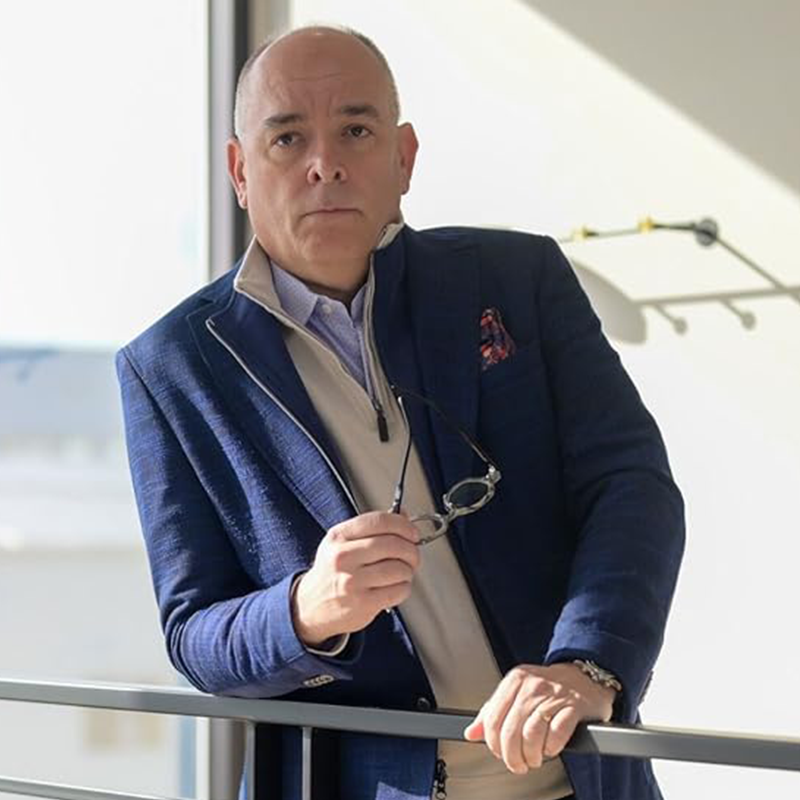
You’re gonna meet my friend Marcus Sheridan, who I’ve known of for years, and we’ve kind of been colleagues and we’ve, we’ve known each other. We got a chance to get to know each other more over the last couple years. And we’re gonna talk about how to use content to create more [00:01:00] conversions, how to sell through content, how to make a, a content strategy, a part of your trust building strategy.
He is one of the world’s leading experts on sort of inbound marketing and trust-based selling, and we’re gonna talk about some of his legacy principles and also his new book, endless Customers, which is exactly what we want to create for you. A stream of never ending endless customers right to your business.
He’s been featured in Forbes, Harvard Business Review. His story’s been in the New York Times. He’s an entrepreneur several times over. We’ll talk about some of that. Most of all, we’re gonna focus on how to use content to create endless customers.
Marcus: Marcus, welcome to the show, buddy. Rory, it’s overdue, man.
I’m so happy to be here with you and your community that I’m a part of, so this is really fun for me. Yeah, so. For people who are just meeting you for the first time. Yeah. I want you to talk about, they ask you answer because this is, you know, one of your sort of flagship philosophies that I think you really brought into the market.
You, you, it has been a staple [00:02:00] for years. What is they ask you answer and how does that apply to personal
Rory: brands?
Marcus: Yeah. Where it came from is I started a swimming pool company in Virginia called River Pools 2001. Things were going okay, but then the market crashed in 2008, 2009. A lot of people remember that.
It was a hard time for a lot of companies, especially pool companies, looked like we were gonna go outta business. But the cool thing, as you know Rory about pain and suffering is it forces us to get outside of our comfort zone and do things that we probably wouldn’t have done otherwise. It’s that yolo moments, like, okay, let’s just fool sin.
And this is when I really started to study how buyers were changing, how the internet was changing. I said, okay, based on all these things that I was studying, like inbound content marketing, social media, all that stuff, what I’ve really heard in my mind was, you know, Marcus, if you just obsess over your customer’s questions, worries, fears, issues, concerns, and you’re willing to address those online, especially on your website, you might save your business.
So I said, okay, well if there’s one thing I can do. [00:03:00] I can lean into those things because I’ve been selling pools at this point for about seven years. I knew the questions, and so I literally, like one night, Roy, I I, I brainstormed every question I had received over the years about in-ground swimming pools, fiberglass swimming pools, which is what we sold, and came up with a couple of hundred, and then over the next couple of years, every single night, literally, I would produce a piece of content, article or video and publish it online, either on our website or YouTube, et cetera.
And, uh, we became the most traffic swing pool website in the world. It totally took off and as soon as it took off, I said, everybody should be doing this. Like, why wouldn’t anybody like this is so powerful? And so I started to write about it on a personal blog, and that was late 2009. And I didn’t get any traction for about a year.
Then I started to get traction and then I started having folks say, can you teach me how to do that thing you’re doing with your pool company? Can you, can you speak about that on our stage? And as soon as I started speaking just a little [00:04:00] bit, ’cause that was always my thing. Boom. It was off to the races from there.
And so by two 2012 I was speaking professionally. The book they ask You Answer came out in 2017. Mm-hmm. But for many people it became the, the Bible of content marketing because finally a book was written that gave you a really definitive framework on how to do content marketing. Up to that point, there really weren’t any frameworks, and you can appreciate this.
In fact, one of the, one of the biggest reasons I became attracted to your content and uh, I don’t know if I’ve ever told, I don’t think I’ve told you this, is because the first time I saw you speak, I think it was on my Let’s pod, but it was, it could have been somebody else’s. I said, that guy thinks like me.
And what I meant by that is you think in frameworks.
BOTH: Mm-hmm.
Marcus: I didn’t know that I was a framework guy until later on in life. It started to become very evident, like I had. I had, I had written some books in my early twenties. They were framework based. [00:05:00] And then I did this as a pool guy and it was all framework based.
And finally I was like, wow, I now understand the power behind it. Right. Which was pretty cool. And you know, that book really did change my life and a lot of people. Uh, hundreds of thousands have now implemented this mindset of they ask you answer in their business all over the world. It’s really been cool to watch.
Mm-hmm. So you may not know this, so that’s really cool to hear, because the first time I heard your name was one of my best friends and, and mentors Jay Bear. Mm-hmm. Uh, he was the one telling me about you because, uh, he wrote a book called Utility and I saw him speak and that was like, I, I fell in love with him as a fan.
Just like, oh my gosh, he’s so smart. And then we became friends later and he was the one that was like, you gotta check out Marcus. Like, you gotta hear about Marcus. And I, I think that was where a lot of my content marketing philosophy was shaped, was sort of that era of going answer every single question your prospect has
Rory: and you’re gonna [00:06:00] build trust, you’re gonna add value.
One of the things that you said is, you’ve said that 80% of the sale happens. Before they even ever get on the phone with you? Yeah.
Marcus: Yeah.
Rory: Why do you think that, and
Marcus: what do you think are the things that people are doing wrong
Rory: where they, they lose the 80% sale before they even even get to the prospect?
Marcus: Yeah, so this number is growing literally by the day at this point in time because we have resources all around us.
We can get all the answers we want, and essentially we’ve become info VREs as humans is. We want to feel confident. Comfortable and informed before we reach out to a company.
BOTH: Hmm.
Marcus: So we know that the average buyer today is more than 80% through that typical buyer’s journey. Before they reach out to a company.
Okay. You take that stat and there’s one other stat. I think it’s really prominent, and we could talk about it maybe later, but it just runs in conjunction with it. We also know that it’s from Gartner, [00:07:00] 75% of all buyers today say they would prefer to have a seller free sales experience. Mm-hmm. So people just don’t want to talk to a salesperson until they are really confident, comfortable informed.
This is critical. So the question then becomes, well, who are they gonna learn from? Are they gonna learn from you or are they gonna learn from someone else? Right. And I always had the mindset of I want them to learn from me. Mm-hmm. Now it’s gotten a little bit more complicated because AI has certainly made that, uh, instead of them getting the information from your website, now they might get it from ai, but still even AI has to get it from someone.
And I want AI sourcing me. I want the human sourcing me. And the big mistake that people make, Roy. They don’t actually answer the questions that buyers wanna know, and there’s a really simple way that you can figure out what do buyers want to know? We call it in, in the system today, it’s called, of course, endless customers, but it’s called the big five.
The big five, or the five subjects that [00:08:00] drive every buying decision, like when you research something, I research something. B2B, B2C, doesn’t matter. Product service. We are constantly researching five things before we reach out to a company. Okay, so here’s the five. Number one, we wanna know how, so these are the, these are the five things that every prospect researches.
Yes. Before they even reach out Yes. To buy something. This is literally the economy of search right here. Okay. This is how people say, oh, I like you. I think I’m gonna reach out to them. Number one, as buyers consumers, we wanna know roughly how much is it? It is the literal gateway of the buyer’s journey.
BOTH: Hmm.
Marcus: How much does it cost? Roughly? Roughly. And once we get that question answered. Then we feel like we can move forward in the journey. We start to maybe start to vet companies as well, but we wanna know roughly how much is it? And we should spend some time talking about that one, because that’s a big resistor.
Everybody, everybody loves to resist talking about that one. Mm-hmm. Right. Number two, uh, we’re obsessed with problems. Like, how could this go [00:09:00] wrong? How could this blow up in my face? Turns out when we wanna spend money on something, we wanna know how could it go wrong? So that’s a big one. Most companies wanna ignore that.
Uh, very quick example of that. Think about how many attorneys in the world have answered the single most repeated question from someone that is looking at litigation. Some of that’s looking at litigation, the most repeated question. Is what if I lose my case? Find me an attorney in the world right now that addresses that question on their website, yet everybody’s thinking it.
Every attorney has been asked the question. Nobody wants to talk about that. So that’s number two. Problems or fears, right? Number three, comparisons. We’re obsessed with the comparisons. We’re constantly comparing stuff online, uh, brand versus bringing in company versus company, product versus product.
Method versus method. Just go down the list. We love to compare stuff. Number four, reviews. The thing about reviews is. [00:10:00] We don’t just want the good reviews, we want the bad reviews too. So we want the good, the bad, and the ugly, which is why the greatest reviews don’t just say who the product is for. That’s a big mistake.
If you just do that, you wanna say who the product is or service is not a good fit for, then you become dramatically more attractive. And then finally, number five is best, best, most top. We love to to almost like file things in our mind and say, okay, I feel like suit the best. Yeah. Think about how many times.
You’ve gone online, you search best product or service in such and such location. I mean, you’ve done it like a hundred like hundreds of times at this point. Everybody does it. So cost problems, comparisons, reviews, best, that’s the big five. That’s what people want to know. That’s what they’re asking your sales team right now.
That’s what they wanna know during the 80%. That’s what most companies to this day are ignoring. And that’s why generally speaking, they’re not trusted nearly as much as they should be. Yeah. So you, this is a hot take. You believe that companies should [00:11:00] publish their prices right on their website? No, that didn’t say that.
Okay. We should address cost. Well, now how do you do that? Can I, is that okay? Yeah, I flag that. Let’s talk about that because this is a, this is a question that comes up inside of our community is people say, should I put my prices right on my website? And we know that one of the most. Highly searched terms with brand builders Group is Yes.
Brand builders group cost. So we know I, what you’re saying is very true about us. Is it? And, and there’s a lot of, lot of debate around, you know, how, how do you address this? When do you address it? To what level of detail? Yeah, I mean. I have talked more about this subject literally than any person in the world.
I’ve got more data on it than anyone in the world in terms of con a cost based content and what it does in terms of traffic, lead, sales, revenue for companies. It’s extraordinary what I’ve gotten over the course of what’s now almost, uh, 15 years. Let’s just look at the psychology of it for a second, Roy.
’cause this is, this is what’s interesting. All right. If I asked you. Have you gone online [00:12:00] and research how much something cost recently you’d say? Yeah, of course. I have Mark, like let’s say over the last year, if I said to you, when you’re on a website and you’re looking for cost and price information, you can’t find it.
What’s the emotion you experience, you say. I get really, really frustrated if I said to you, well, why do you get frustrated? You’re like, because I’m the stinking buyer and I’m just trying to get a sense for how much is it. So then if I said to you, well, in that moment, do you say to yourself, well, I’m sure it’s on this website somewhere.
I’m just gonna, I’m just gonna keep looking until I find it. No, that’s laughable. You don’t stay. In fact, we know the average person will stay on a website if they’re looking for cost and price less than 10 seconds before they leave. You don’t have any patience for that. Number two, if I said to you. And that moment of frustration, do you, as the buyer, do you as the searcher, if you can’t find it, do you say to yourself, and this is really important.
Well that’s okay. They’re not talking about it. They’re a value-based company of. I’ll just call them on the phone instead. Right. So you don’t do that. Yeah, because you, as the buyer, you as a searcher, you, you keep searching and you search until you find what you’re looking for. And generally speaking, whoever gives you what you’re looking for, they’re [00:13:00] gonna get your business, if not your business.
They’re gonna get first contact, first phone call. And that is the case for every single person that is listening to this right now. Now, if that being said, if I ask most people though, are you talking about. The cost and price of your product or your service on your website right now, most would say no, not really.
And the reason is threefold, number one. We say, well, it depends. Okay, so if meaning the price, what the price is, depends on what they’re buying. Yes. That’s the number one answer as to why people don’t want to address price. Well, it depends. Every job is different. It’s very bespoke. You know, we have a customized solution that says all the things that we say.
From a psychological perspective, but if I came to you or anybody and I said, can you help me understand the factors that would drive the cost of your product or service up? What are the factors you, you’d say, yeah, sure, I can explain those factors. If I said, can you help me understand the factors that would drive it down?
Could you explain that? You’re like, sure, I can. I can do that. If I said, can you help me understand why some companies in your space are so [00:14:00] expensive? You’d say, sure, I could help you understand that. Why? Why are some companies so cheap? You could explain that. If I said to you, can you just gimme a rough sense?
Rough sense as to where your customers generally fall. Without giving me exact, you’d say, of course I can do that. And then depending on the product or service, there’s many other components that you can address in the book. And endless customers. I give 15 specific ones that you could talk about for the, what’s called the perfect pricing page, right?
There’s like a perfect pricing page, and in fact, if you’re. If you use chat GBT, if you just go to custom GBT and you search perfect pricing page or market Sheridan it, it will help you produce what is the perfect pricing page, and it’ll give you a grade on your existing pricing page right now, just so you have a sense for where you fall right now and how much better it could be.
You notice I didn’t say say exactly what it is. So that’s the first one, is it depends. You want to explain it really, really well through text, through video. Okay. Uh, so you’re, you’re not necessarily saying publish the prices, not the exact [00:15:00] price on, on the page, not the exact price. No. That’s up to you. But I do suggest everyone publish at least the.
That is a, helps people get at least a sense for where it is. And then you can give some, just general, some general ranges. Um, the second reason why companies say we can’t talk about cost and price is we say, well, if we put our prices on there and we’re more expensive, we just might scare them away. But what we have seen, this is like all the studies show this, the thing that actually scares us today in 2025 and beyond.
Is when we’re researching online and we can’t find an answer that’s the most scary, that creates the most friction. Ignorance is not bliss online whatsoever. So that’s the second component. It’s no different than, let’s say, hypothetically you wanted to go to a new restaurant tonight we’re here in Nashville, and I was researching that restaurant beforehand.
Most people do two things to research a restaurant. They look at reviews, they look at the menu. If you look at the [00:16:00] menu and there is no pricing. Are you gonna go? Now? Most people in that moment will not go, and it’s not because they can’t afford it, but it’s because the moment they let the blank. They planted a seed of doubt, and when seeds of doubt exist, inertia occurs and we stop.
It’d be like you driving by a gas station. You look up at the fuel and the prices for the fuel, which everybody has, and there’s nothing there. Can you imagine that? It’s like preposterous, but this is what companies do all the time. Now, again, for service, you don’t have to have the exact pricing, but you do need to help them understand roughly how much is it gonna be, because that’s the gateway to the buyer’s journey.
The third reason we don’t wanna talk about cost and price oftentimes is because we say I don’t want my competitors to see it. It is really, really silly because anybody that’s been in the game for any period of time has a pretty good sense as to what their competitors already charge. So it’s like, you know what they charge, they know what you charge.
This the big secret, non secret. You know when I embraced this mindset of they ask you [00:17:00] answer, in 2009, I was the first swimming pool company in the world. To address how much does a fiberglass pool cost to install? Talked about what drives cost up, what drives cost down, why some companies are expensive, why some companies are cheap.
Make a long story short that article, because we track it in terms of the leads and the revenue that have come from it, that article has generated over $35 million in sales alone for my little company in Virginia. So you think about the ROI of that 45 minutes to ride at my kitchen table. $35 million in revenue track back to one single article.
So what needs to be on that page then to, to say I’m answering that, that, that, well, um, you, you’ve said that’s basically what, what, pick an industry. Pick an industry and I’ll give an example. So it’s super let’s specific, let’s, let’s use like coaching as an example. Let’s do it right because you go, um. In the world of coaching, the prices can vary wildly, correct.
Right? [00:18:00] Yeah. What are some of those factors that would drive some coaches to be very expensive and some coaches to be really cheap? I mean, it would, could be the experience level, but I would say the number one thing would be what is the. Empirical financial value of the result that you deliver. Okay, there you go.
So that’s one of the major factors that you would start with and you would explain that, right? Mm-hmm. So that’s, uh, that’s one. You know, there’s other factors you might talk about, uh, the experience level of the coach themselves. You might talk about the subject matter because there’s some, uh, certain industries of coaching are, are, they demand much higher.
Rates than other industries, right? Uh, it might be the program itself. It might be how often do you meet? Is, are you meeting with the main person? Are you meeting with, um, you know, some of their train, you know, trainees or whatever it is. Is it self-paced or, you know, is it a cohort? Is it, you know, there’s all these factors that dictate what you spend with coaching.
[00:19:00] So the, the, the mistake that we make in business is we assume that everybody just knows how to buy stuff. I mean, think about how many times somebody’s come to brand builders alone. And, and thought I have NI have never joined a community like this. I got no idea how much, like what, what’s what this entails.
I got no sense for what it should cost. I don’t ha understand other communities. I got no clue. But we assume everybody understands the game like us. That’s the person knowledge, you know all about it. Right? And we do that to a degree. And so really when you explain pricing to someone, you start with the industry.
In fact, 80%. Of any piece of content that talks about pricing should be about the industry, not about the company, the industry. ’cause you’re teaching them essentially how to buy, how to make a buying decision. Mm-hmm. It doesn’t matter what it is. The final 20% really is about you and you can get as specific as you want.
I would say don’t be so generic that they are left saying, [00:20:00] but I still don’t have any clue as to what you’re gonna charge. Yeah. All right. I wanna talk about, I wanna shift to talking about, um, content. Mm-hmm. Specifically, I think one of the things that I think people do wrong or that they leave out of their content marketing strategy is content that converts.
I think everybody is so focused on content
Rory: that attracts contra. Like, I want to go viral, I wanna get more views, more followers, whatever, but. I’ve heard you talk about
Marcus: creating pieces of like video content specifically for conversions. Yeah. What’s, what are some of the keys and, and how do. Like, how would a sales person create a piece of content like that to help them increase their conversions?
Well, there’s, uh, this goes back to the big five because the big five is rooted really in the bottom of the funnel based questions that people ask a sales person. If, if you are [00:21:00] really, listen, if you’re gonna blow up your brand to become the most known. And, and, and create the most viral content, you’re gonna create very general content that the masses can appreciate.
But if you’re gonna create content that converts, you have to get further down the funnel. You just have to, because otherwise it’s it, there’s, there’s no there, right? So you have to give them something specific. If you think about, for example, let’s just take the, the case of a, uh, of a coach, right? So. Top of funnel might be something very generic that has nothing to do with a coach, it just has to do with, um, uh, maybe just having better habits, right?
But that’s not, uh, that’s not about, I, you don’t know that person’s looking for a coach yet. They’re just looking to solve a problem. But as they start to realize, I need to improve my habits, well, maybe I should get a coach. And so then they start to research middle bottom of the funnel and middle bottom of the funnel [00:22:00] might be who are the best.
Coaches, um, for, um, like stay at home moms, something really specific like that, right? Best coaches for stay at home moms. First of all, that’s one of the big five. It’s the best of search. People do it all the time. You’ve got a very specific, like who you’re targeting there, right? Who are the best coaches?
We know what they’re looking for. They’re looking for a coach and they’re looking for, uh, and their persona is a stay at home mom. There’s a lot of people that search that, right? So that is. Much towards the bottom of the funnel and now we know what that person’s looking for. And I, lemme give you an example of how I did this, did this with pools, and I’ve done it many, many times with many companies since then.
One of the things that I did that was an incredible conversion tool, which was highly like, freaked people out, the first time I did it was I was sitting in Richmond, Virginia one night, this is when I was still a pool guy back in the day. And I met [00:23:00] with this couple for like an hour and a half and they said.
Marcus, we like you. We think we wanna get this pool from you, but if we don’t get this pool from you, is there anybody else that you might recommend? And I thought, oh my goodness, are they really not gonna get this pool tonight? They didn’t get the pool tonight, Roy, because they were, in their mind, not ready.
They were still looking. And so I had a long drive home and I thought to myself, well, I didn’t make the sale, but they asked the question, which means I need to answer it. So I went home that night and I wrote an article that was. Who are the best pool builders in Richmond, Virginia. And I came up with a list of five of the best pool builders in Richmond, Virginia, and described each one.
Now, how did I choose the five based on who I had lost the most to Over the course of what was almost a decade at that point? Yeah, about a decade at that point. Okay. Now, when I did this, my two business partner freaked out a little bit ’cause they. What you’re talking about, our competitors on our site, why would you do that?
I’m like, first of all, if they’re reading this article, where are they? They’re like, oh, [00:24:00] well they’re on our website. I’m like, yes. If they’re on our site, it means we’re winning. But then all of a sudden, when you start, when you went online and you started searching reviews, name of competitor, Richmond, Virginia.
Who were you learning from? You were learning from me. So I started ranking for all my competitors’ keyword phrases is my point. So people were literally researching my competition. They were learning about them from me, and they were converting on my site. I had a lady one time, she said, mark, it’s the craziest thing happened.
I was this close to signing a contract with Playmore Pools, who was one of my biggest competitors in Richmond, Virginia. But before I de, I signed that contract, I decided to go online. And I researched their company and as I was researching their company, I stumbled across this article that you guys had written and I said, my goodness, these guys are so honest.
I should probably call them too. And of course, you know what happened because otherwise it wouldn’t be a good story she bought from us. Right. That article, best Pool Boaters, Richmond, Virginia [00:25:00] that year made us about a quarter of a million dollars in sales. And people are like, but yeah. That’s so crazy that you, that you.
Mention your competitors today. We’ve had a huge amount of success with this because now instead of you going to Google, you’re gonna AI and you’re doing the same type searches, like who are the best coaches for stay at home moms on performance, or whatever it is now, what’s happening with ai? It’s drawing from content from somewhere.
It’s gotta be trained by someone. And, and so many of the articles that I did for myself and for my clients where we created Best Dub lists, that’s what AI is using today. So one of the differences between they ask you Answer in the third edition, which is called Endless Customers. And we, we should, we should talk about why I changed the name because it’s relevant.
Um, one of the differences. And they asked you answer. I said, don’t put your, don’t put your company on the list ’cause it sounds too self-serving. But because [00:26:00] AI came out and people started using it in droves, AI was, I was looking, literally, it was sourcing my content or the content of my clients. I mean, I, like I said, I got a ton of data on this, but their names weren’t there.
The competitors were now there. I’m like, oh my goodness. So we were winning on Google, but we weren’t winning with ai. So I, everyone go back and I said, now listen, I want you to redo these articles to not sound self-serving, though you’re gonna need to do this in a way where you, you have a criteria by which you define the best.
So it might be the number of reviews that you have, it might be how long you’ve been in business, it might. Whatever factors you want to say dictate if this company is quote the best, right? We’re one of the best. It’s fine. As long as you do it in an honest way, you put yourself on that list, which River Pools can easily do because we’ve got so many reviews we’ve got so, I mean, so many years in business, so much experience, all these things.
And so now we’re seeing a ton of clients be recommended by AI simply [00:27:00] because they’re creating these best of list, very bottom of the funnel, because that person is looking for a specific company right now to solve their problem right now that’s conversion based content and ain’t never gonna go viral.
Uh, but just creating a, basically a best of list. Just a best of list and owning and controlling the, yeah, owning and controlling, but I mean, a really good one, Rory. Yeah. I’m, I’m the, I’m not talking about a Slack one, I mean a really good one. 1500 words. All the criteria listed out a chart that shows the different, you know, criteria and how they stack up against each other.
AI will pull from that and then they will be talking about you. And that’s a fact. I mean, I’ve seen it. I mean, it happens. I’ve, I have produced this content and like three days later, AI is recommending that company when people are searching for it. Yeah, any coach could do that right now. Any coach, most coaches won’t do it because it sounds, wow, gee, I’ve just never done that before.
But I can tell you if you want to do content that stands out, you need to be willing to do that, which others [00:28:00] have not been willing to do. And if someone’s asking it well then talk about it. Where do you find out the questions that people are asking? Is there a tool that you’re using to see what they’re asking about?
Yeah, I mean, there’s a lot of tools. I mean, we. I’ve always said that the best keyword tool though was just your ears and listening really well, like obsessively listening. For years when I was still a pool guy, Roy, I would sit in a home, somebody would ask me a question, and I’d say, before I answered it, I’d literally think, have I answered that on my website?
And if so, why are they asking me this? Why don’t they know this? They should know this. And that’s the like conversation happening in my head. And so. Make sure you’re obsessively listening to the things that you’re hearing every single day. But number two, at this point, AI is just, is just phenomenal. You could go easily online right now, and if you, if you said, Hey, you know, to chat pt, you’re an expert market share, and they ask you answer endless customers, uh, framework, I want you to [00:29:00] brainstorm.
75 titles under his big five cost problems comparison to reviews. Best, I want you to follow all of his methodologies. I want the titles to be, uh, SEO friendly, but also have a strong hook go. And I’m telling you, it’ll crush and they are just money. It is, there’s so much, just like there’s so much training content out there for you at this point.
Like for, for me, it’s, I look at these brainstorms. It does. I’m like, it’s like I’m sitting in that person’s living room coaching them right now. It’s wild. Hm. You mentioned you changed the title, you went I did. Went from, they from, from, uh, they ask you answer to endless customers. Yeah. So what’s the, what’s the, what’s the story there?
Yeah. Well, when I was, uh, listening to some chap named Roy Vaden one time, and he was talking about, I’m gonna use my words here. It might not be your exact words, but, but what I took from it, and by the way, man, the amount of people I have taught this to now is a crazy high number. I realized that. Although [00:30:00] they ask you answer was great.
It didn’t pass the I one I wish test. Right. So the I one I wish test for those that are listening, most of you know it is. Ideally you should be able to say before the title I want, or I wish like, I wanna win friends and influence people, I wish I could have a four hour work week. Right. You know, and that’s, it’s a very simple to say the problem with they ask you answer and this is the thing that many.
Authors, thought leaders, et cetera, do is they name it the framework or the, the, the secret sauce. The problem is they ask you answer did really, really well over the course of, uh, you know, the seven, eight years that’s been out mainly as a referral based book or people seeing me speak about it. Mm-hmm. But nobody walked by it on a shelf and said.
That right there is what I want. Mm-hmm. And so, because I, I heard that from you, I was like, oh my, because I always felt like the ask you answer was [00:31:00] so good. It easily could have done a million copies instead it did a hundred some thousand copies. Right. And so I’m like, well, let’s change, let’s change the title on this third edition.
A lot of people said, that’s crazy, but I was totally, because they ask your answer still, it’s still a framework there in. But it’s, it’s not the title of the book. Yeah. I mean, the analogy that we use a lot of times is it’s the difference between the vehicle and the destination. Yeah. And when you created the framework, when you created the methodology you’re so passionate about Yeah.
Wanna give it to everybody. And so you name your book, your program, your, your title, whatever you name it, a about the vehicle. But what people really want is the destination. In order to get them to buy, you have to like market about the destination. And so I I love that you made that move. ’cause that is, you know, they ask you answers like, I, I don’t know what it is unless you’ve explained it to me.
Yeah. Endless customers. It’s like, I, I want, I want to know how to get that. Yeah. And they ask you answers your vehicle to get endless [00:32:00] customers, which is
Rory: the destination.
Marcus: Yeah. And because I, I, I personally work with brand builders, um. It, we, we launched the book. It was written a lot more, uh, system oriented.
Mm. So I really said I want this to be more like the EOS of, in this case, content. You know, if you wanna become the most known and trusted brand in your market and you want to content strategy. Endless customers is gonna show you exactly how to do it. Mm-hmm. And, uh, you know, it, it hit the USA today bestseller list we were using.
You guys, congratulations. That in that process, which was, which was, which was great to see, you know, and, um, so it was really a relaunch of a new edition and you just changed the name. Yeah. And here I, but one more story about the power of titles because it’s a big deal and your audience will really appreciate this.
And I probably shouldn’t say it, but I’m say it anyway. Might get me in trouble. So I did the ask you answer through Wiley and I went to [00:33:00] them and I said I wanna do a third edition of the book. And, uh, on the first two editions, this might surprise people. I didn’t get any advance. I was an unknown author.
They did expect the asked your answer to do that. Well, it did way, way, way better than people. Anticipated. Mm-hmm. So I was one of those risky authors. I had never gotten in advance. And I was talking to one of the heads at Wiley and I said, I wanna do a third edition. They said, I’m not, we’re not really wanting to do a third edition, Marcus.
They ask your answer’s doing fine. I’m like, I, I AI’s come out, it needs, it needs a third edition. They said, I said, I’m gonna call it endless customers. She said, I will give you a blank advance right now. Like as soon as I said the title, it’s called Endless Customers by the way. She said, I wanna give you a, and she just put out a really large number and I was like, look at that.[00:34:00]
Of course I was thinking, why didn’t you tell me the title was so important? Like I’m, but that was like the, the moment Rory, I realized even a publisher who has spent their whole life tiding books. Can succumb to the same inherent flaws that all these authors do, which is naming it the vehicle versus the destination, to your point.
Mm-hmm. It’s the most common mistake that authors make the destination, and it’s just like you, you, you, you, you spend so much time on this thing. You fall in love with a thing, but no one on the outside knows what that thing is. They, they only know what they know, and you have to name. You have to name it in Yeah.
Relation to the thing that they want. The thing that they know, the thing that they understand right now. And it is just, it, it that, that, that’s funny. I did not hear, I’ve never heard that story. Yeah. About the It’s good ones, but it, it is that way. ’cause it’s, it’s not a gimmick that we [00:35:00] invented. It’s, it’s a pattern that we identified that’s rooted in human psychology.
Yep. As we go, we, we pay attention to things that we want. And if you just name your thing to complete that sentence,
Rory: I want blank. Now all of a sudden I’m paying attention. If you name your thing as anything other than something that completes that sentence, I want blank. I’m not as likely to pay attention.
Marcus: And so, and man, I tell you, I’m catching people all the time on this because I get authors because constantly reaching out and, uh, wanna be authors like, and, and they’re, they’re sending me their stuff. You, you deal with this. I can’t even imagine how much you deal with it. And I, nine outta 10 times, I’m like.
Just so you know, it doesn’t pass eye one wish test. And they’re like, what’s the eye one? I wish test. I’m like, well, here’s how it works. And every time they’re like, oh my goodness. I’m like, yeah. So there you go. They, they end up thanking me, you know, like months later you just changed the whole trajectory of the book because of that right there.
That’s so good. I always credit you [00:36:00] though, big dog. Thank you. Thank you. Um, so the, what do you think are the biggest mistakes that people are making right now in how they’re creating content? Um, what are they not doing that they should be doing? What is something that you didn’t use to do that you do now?
Um, where are they falling victim to? Like the trend versus going, no. If, if you wanna move your business forward, what is the one type, one piece of content that we need to create like tomorrow? Yeah. Lemme give you a few different things here. Okay. In endless customers, there’s. It’s really built on four pillars.
We call it the four pillars of a known and trusted brand. So if you’re listening to this right now, let’s do an audit together. If you’re listening to this, because I really want you to be self-aware and honest, and I want you to answer, are you doing these four pillars right now? Number one, are we consistently saying online what [00:37:00] others in our space aren’t willing to say?
That’s number one. That create, these are four things that create trust. Yes, in how you market. If you wanna be the most known and trusted brand in your market. Wherever that is, local or national, these are the four pillars. You gotta, you, you build your content strategy off of number one. You, you gotta be willing to say what others aren’t willing to say.
All right. The cost example is a perfect example of that one. Okay. Number two, you have to be willing to show with video what others aren’t willing to show.
BOTH: Mm.
Marcus: Now, there’s a bunch of examples I could get on this, but let me, lemme just give a really, really simple, let me give a simple example of this one.
I was recently, uh, I, I needed to purchase a travel van, uh, passenger van. My youth group was constantly, we, they were going to different activities, but they weren’t going together. So I’m like, I wanna get everybody a van ’cause I want my kids and all with all their friends, and they go to these, uh, activities together.
So I [00:38:00] found a van, uh, in Wisconsin. I live Virginia. I was interested in the van. It’s a small used car dealership. Always risky, right? Yeah. Well, in this case, he has a video and this is how he starts the video. And you tell me, Rory Vaden has anyone, have you ever seen a video? Someone do this before? This is how he starts off a video.
Hey folks, before I show you this passenger van today and everything I like about it. Let’s first start off with any flaws. I’m gonna show you any scratches. I’m gonna show you any dents, and I’m gonna talk about any issues before we talk about the good stuff. Mm. Now what do you think I did? As soon as you said that?
Yeah. You, you, you engaged, you tuned in. I dropped my guard. That’s called, that’s called disarmament. Oftentimes most people, they come into your content almost like with their arms folded. Just like, let’s see what this guy’s got. Like, I don’t know if I’m gonna trust this company. [00:39:00] Whereas if you come right out the gate and say, all right, let’s talk about what’s wrong with this vehicle, I’m like, okay, I’m here for it.
Right? And so he showed what was wrong with the vehicle, minor stuff, but I was like, you got me man. Of course. Did I buy that? Yeah, I bought that vehicle. I’d never seen any used car. Car dealership do that. So it’s no different than if you’re a coach, let’s say. A lot of financial advisor. Example. Financial advisor example.
Perfect example. So a financial advisor oftentimes will say who they work with, but do they say and show who they don’t work with? Not in a snarky way, in like a really honest way. So as a financial advisor, you might say, now. You’re probably saying to yourself, are we a good fit for each other? Let’s be really, really honest and let’s talk about who we’re not a good fit for.
If your net [00:40:00] worth is less than a million dollars, we’re probably not gonna be a good fit for you. Now, this doesn’t mean we don’t appreciate, you haven’t done well in your life. It just means that we made a decision as a company that we’re only gonna work with individuals that have a net worth between one and $10 million.
We decided not to go above $10 million because we said we want to have a sweet spot. We wanna know exactly who our customer is, and we wanna be at a tailor. The way we do our advise, like our advisement towards them. Now, you could go on about that, but that’s just like non snarky honest. Hey, I really appreciate that.
Thanks for letting me know. And how many financial advisors are really explicit like that? Again, you’ve gotta. Show, we call it the law of the coin. You need to show both sides of the coin. You can’t just say, this is who we work with. This is why we’re awesome. This is why we love what we do. You gotta show the other side.
The moment you show the other [00:41:00] side of the coin, that’s when you become much, much more trusted. It’s no different with brand builders. Brand builders should have a very explicit messaging that says, now we’re not a good fit for you. If. The problem is most companies, the only time they do this, they do it. I said in a snarky way.
They’ll say something like, well, if you don’t value great customer service, we’re not a good fit for you. Really? Come on. Now. That’s not, that’s not how you, I, when I would talk about fiberglass pools, I’d say, you know, fiberglass pools are not for everybody. They might not be for you. So let’s look at who they’re for and who they’re not for.
If you wanna pool that’s longer than 40 feet, I can tell you right now it’s probably not gonna be a good fit for you because they don’t get longer than 40 feet. If you wanna pull, it’s super customized. They don’t get super customized. There’s, they’re preset. See? So this is one of the big mistakes. We don’t disarm well, and this arming is one of the best hooks you can [00:42:00] have with your content, especially that bottom of the funnel content because the person expects you to sell something.
You quickly disarm them to show that you’re unbiased, that you have their best intention at heart. You do that, you’re, you’re, you’re cooking. So that is one of the big mistakes. Should you, what else should you show? Like when you said that you should show things with video, I thought you were going to show, or like behind the scenes or transformations?
Like before and after. Yeah. Yeah. Oh, all those things you should show, but oftentimes the things that you should show. Lean, I mean, show all the good, but the big point is show the bad. I mean, it’s, it sounds odd, but it’s, you might see it as bad, but actually the customer sees it as as good. So it’s no different then if, um, if I was a, uh, if I was a coach, let’s [00:43:00] say, and I have two coaching companies.
So this is something I, you know, think about a lot. We would want to be very, very, and show very explicitly how we work, how we don’t work, so that people understand exactly what it looks like. So, for example, we have a major culture of role plays within, uh, we have a sales and leadership coaching company.
80% of it is role plays. We show, like, we show what that looks like. Yeah. We want people to say, that’s exactly what I want, or There’s no way I’m gonna put myself in that line of fire. That’s just an ex, a simple example of it. Now, all those other things, yeah, you wanna show those things too, but show what others aren’t showing.
That’s number two. Number three, sell in ways that others, this third pillar, sell in ways others aren’t willing to sell in your space.
BOTH: Mm-hmm.
Marcus: Now, earlier I mentioned that stat to you, 75% of all buyers say they would prefer to have a seller free sales experience. [00:44:00] One of the major sales trends that everybody should be leaning into, most people are not is what is self-service, and this is when you give the prospect an opportunity to take an action or get an answer that previously they would’ve gotten by talking to a human first.
So it’s an interactive tool of some sort. An example of this classic example, a pricing estimator by you offering a service. Putting a pricing estimator on your homepage. If you do that and you give people a sense for what they’re going to spend, you’ll see that your conversions go up 300% every single time.
I have a company that does this. It’s called Price guide.ai. We help organizations create pricing estimators. It’s crazy. How much more, like how many more conversions you get as soon as you do this. Okay? So that’s a simple way to do it as a pricing estimator. [00:45:00] Incredibly effective. Second way that you can do self-service is through what would be self-selection tools, which is essentially a recommendation.
So let me give you an example. At Brand Builders Group, you’ve got what is the, the basic community, and you’ve got the community where you can work with a coach one-on-one. All right. I don’t know the exact, I can’t remember the exact names. Yeah, I mean, that’s what I was thinking about. ’cause we have, we have our premier membership.
Yeah. Which is like our virtual self-study membership. And it’s like, if you know you don’t wanna travel and if you’re, you’re hold yourself accountable and da da, like that’s really good for you. Then our flagship membership is called Pro, which is you want one-on-one coaching, you want in-person events, you want to like interact like in person with other people.
That’s pro. And then we have private clients. Yeah, which are in person, but you don’t meet any other clients. It’s just you locked in a room for two days and it’s like you get stuff done quickly. Right. And it’s high touch and you’d like crank it out. Right. So there’s a certain [00:46:00] amount of people. That would really love to be able to self-select which of those three is ideal for them before they talk to one of the humans at Brand Builders group.
Mm-hmm. So if you had a tool on the site that essentially said, what is the right program for you? At Brand Builders Group? You ask a series of questions, and then at the end of that, it gives a recommendation based on what you described. And the key is you’re not trying to, you’re not trying to. Manipulate or slot someone into a group, you really wanna ask the questions in such a way that they, they say, ah, this is so helpful.
So that when they have the first sales call, they say to Jenny, Jenny, I already know exactly what it is I want. I did that little thing on your site and I know that I want the pro level. I wanna work with a coach. That’s totally me. One on one all day long. Right, Jenny? I need that intensive. Yeah. I’m gonna do the pro, but I, I think I want some of those two days as [00:47:00] well.
So the whole conversation is different because what happens is, you’ve heard us on calls fallacy, right? The more time somebody spends with your content, especially if it’s interactive, especially if they designed it, the more committed they are to work with you. So by the process of them going through it, lemme give you another example of this.
It’s, uh, a, a a third example of self-service, which is self-scheduling with salespeople and or coaches. And this sounds, it might sound foreign, but it’s really powerful. We’ve done a bunch of studies on this and what we found is. Oftentimes people, you’ve seen this before, somebody will have a tool on their website that allows ’em to schedule a time for a conversation without talking to a human.
That’s helpful, but that’s not like really powerful. What’s really powerful is imagine this, and hopefully it’s okay if I use Brand Builders as a case study here, just like as a, like how you could do it as a hypothetical. Brand builders has a multiplicity [00:48:00] of really, really great coaches. One of the biggest questions that people have, if they’re gonna work, if they’re gonna have that one-on-one coaching, is, am I gonna be a good fit with my coach?
Like, how am I gonna decide that? So what we have found, this happens with sales, or whenever there’s a group of people that, like, let’s say coaches, or it could be anybody, it could be attorneys. Imagine on the brand builder site, every coach was listed. There was a video where that coach was describing themselves and there was, uh, a bio that they could read about them, so they could see them, they could hear their voice, they can learn from them, and then the person can choose who they wanna work with.
Here’s what the data has shown us. When someone chooses who they work with, closing rates double every single time. Hmm, full stop because it becomes almost like an uberization of the sales process because now all of a sudden they’re like, I’m no longer concerned with [00:49:00] who I’m gonna, uh, work with. ’cause I feel like I chose my person.
Something about their bio, about their video resonated with them. Now, you as an owner might say, yeah, it’s really hard because we have capacity issues. We have this, that there’s, there’s ways around all those things. Sometimes you might not show everybody. Sometimes you might show if they’re at capacity.
At capacity, not available right now. But it’s really powerful in what it does. And we see this as really cool with salespeople or with like when there’s a group to choose from those people up their game. They improve their game, they show themselves, they work on showing themselves better and it, the whole company rises because of it.
But a doubling of the closing rate is phenomenal. And that’s because you got to choose your date and you weren’t given a date. It wasn’t blind. Mm-hmm. Yeah. It uh, fascinating, fascinating stuff. Marcus, like, really, really interesting. So where do you want people to go? If you want, if they want more, if you, if they wanna stay connected to you and what you’re up to.[00:50:00]
Yeah, if you wanna connect with me, uh, make sure you connect with me on LinkedIn first. ’cause I’m a baller on LinkedIn Warrior thing. Okay. I take my LinkedIn business seriously. Put my best stuff there first. And uh, make sure you get the book, uh, endless customers.com. Obviously you can get it on Amazon, it’s on Audible as well, and you can find me as a speaker.
I speak full time all over the world. Marcus sheridan.com. Awesome man. Well, thanks for this. This is a lot, this is some really great compelling data points and some like challenging things to be thinking through. So, um, I appreciate the, uh. The conversation and as I, as I, as I said, the intellectually stimulating conversation, what we’re after.
So, uh, appreciate you being here buddy, and we wish you the best. Yeah, my pleasure, man. Thank
Rory: you.
Marcus: Cool.