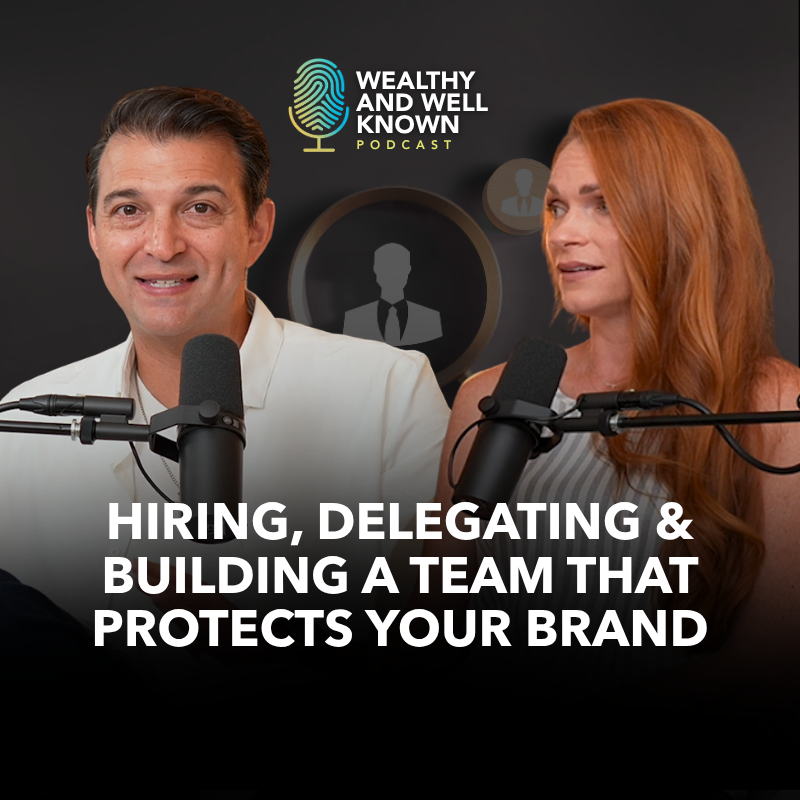
Rory: [00:00:35] Well, if you’ve been sleeping in a cave for the last two years, you’ve missed that. The entire world is [00:00:40] talking about marketing and particularly AI in marketing, and [00:00:45] how is AI gonna affect the future of marketing for small businesses? That is what we’re [00:00:50] gonna talk about today, and we’re gonna talk about that topic with somebody who [00:00:55] is the daughter of a really good friend of mine that I’ve had for a lot of years.
So you’re about to meet. [00:01:00] Sarah Nay. Uh, she is the CEO of Duct Tape Marketing Group. So [00:01:05] if you’ve ever heard of Duct Tape Marketing, that’s John Jantz, who we’ve had on this show before. [00:01:10] A couple times I’ve been on his show. Uh, and Sarah has worked in that business for [00:01:15] well over a decade. She took over, uh, as CEO of that business, like [00:01:20] a year and some change ago.
She knows this world and she [00:01:25] also has not only lived it and breathed it as they run their agency and they help small businesses, [00:01:30] she also released a book called Unchained, um, which is all about breaking free [00:01:35] from broken marketing models. And we’re gonna talk about that today. We’re gonna talk [00:01:40] about how marketing is changing for small businesses.
How does AI come into [00:01:45] that? And just everything you need to know to drive more leads for your business. So Sarah, [00:01:50] welcome to the show. It’s great to have you. Thanks.
Sara Nay: Yeah, thanks for having me on Rory.
Rory: So, um, [00:01:55] I wanna just dive in, right on the topic of, of ai. I know that [00:02:00] you’ve worked, you know, as a CMO with fractional CMOs, [00:02:05] um, but like, you know, I wanna ask you about the subtitle of the book.
So [00:02:10] the book, again, Unchained, but the subtitle I really love breaking free from Broken [00:02:15] Marketing Models. So, what are broken marketing models? [00:02:20] Why do you use that? Or like what are some of the broken marketing models that you see [00:02:25] small businesses doing today?
Sara Nay: Yeah, of course. And this comes from, as you said earlier, I’ve [00:02:30] lived the agency world for about 16 years now.
And so I’ve seen a lot of challenges [00:02:35] in the agency space, both on the agency side of things and also the small [00:02:40] business side of things as well. And one of the key things that I see broken in the [00:02:45] agency model or the outsourcing model is there’s a lot of small businesses [00:02:50] that get into business ’cause they’re passionate about.
A topic or a service or a product or whatever [00:02:55] it might be. And then all of a sudden they have to learn how to market their business. [00:03:00] And so either they’re forced to figure it out themselves, and so now they’re serving as the founder [00:03:05] and the CMO of their business. Or in a lot of cases, they end up just [00:03:10] outsourcing or delegating their marketing to outside partners as they’re in growth mode.[00:03:15]
And so where I see a lot of small businesses struggle is they out. Source their control. [00:03:20] And so all of a sudden they bring in an agency or a contractor and they say, okay, run my marketing, [00:03:25] we’ll pay you every month. We’ll have no idea what you’re doing and we hope that you get us some results. And they [00:03:30] keep paying over time.
Hmm. And there’s a lot of challenges in that and I’ve seen it as [00:03:35] extreme as, you know, companies outsourcing their marketing to an agency and the agency owns their [00:03:40] website, URL domain, all hosting all of the things. And so when they part ways, the company then [00:03:45] loses. S their biggest asset, biggest marketing asset, which is their website.
[00:03:50] And so the book is all about how can small businesses. Take ownership and [00:03:55] control of their marketing. And I’m not saying outsourcing is all [00:04:00] bad, um, but outsourcing to the right relationships is important. And so starting with [00:04:05] creating the business strategy, the marketing strategy, and then answering the question of who can get [00:04:10] this done?
And if you are bringing in outside solutions to get the work done, thinking of [00:04:15] them as a partnership, working together as a team, versus simply [00:04:20] delegating and having no idea what’s being done.
Rory: Mm-hmm. I, I recently, uh, [00:04:25] I heard someone say this quote and it was, uh, not like a famous thought [00:04:30] leader. It was someone that I’m actually in a mastermind with, and she said, my entire [00:04:35] goal is to insource [00:04:40] understanding, but outsource execution.
And it’s probably my, it’s my [00:04:45] favorite new quote. This is definitely my favorite new quote that I have heard [00:04:50] in like the last year is I want to insource understanding, but I want to outsource [00:04:55] execution. Um, so what [00:05:00] I’ll, I’ll, I’ll, I’ll ask you as an agency owner who, yeah, you know, [00:05:05] many companies do outsource some of their, their execution and some of their stuff to [00:05:10] you.
What are the things that you think a small business [00:05:15] owner can do and should be doing to hold their agency accountable? Right, [00:05:20] so I, I think you said like the wrong thing to do is just like to spray and [00:05:25] pray where you’re like, here’s some money. Like, solve this problem like. That’s not how it works, but [00:05:30] what are the kind of like metrics or reports or check-ins or, [00:05:35] uh, touch base points or, you know, call it, you know, internal [00:05:40] controls that somebody should install if you run a small business but you, you’re [00:05:45] working with outside marketing support.
Sara Nay: Yeah. I’m gonna take it even a step back further [00:05:50] before I get to that point. It really comes down to creating the business [00:05:55] strategy first, and then thinking about the marketing support from there, because that’s a key piece [00:06:00] where when someone brings in an agency or an outsource solution and they’re relying on that [00:06:05] agency to tell them what to do or to get the work done, you’re playing a bit of a [00:06:10] guessing game.
And so as the business. As the business owner, you should take some time to create an [00:06:15] overall business strategy to then help guide your marketing team or support in. And [00:06:20] so that’s things like your mission, your vision, your values, your current revenue, where you wanna [00:06:25] be in one year and three years from now.
Because all of that information is [00:06:30] important to then be able to say. Okay, now let’s think marketing strategy. And [00:06:35] so let’s say you, you’re not a CMO, you’re a business owner and you need help with creating the marketing [00:06:40] strategy. Then when you’re bringing someone in to help you, you wanna look for someone that is [00:06:45] very strategic on the front end.
And so they’re creating an overall marketing strategy and plan [00:06:50] based on research, identifying things like your ideal client and your core message [00:06:55] and your customer journey, and your biggest growth priorities. And then you can start thinking about. [00:07:00] Tactics. And so those are the components that should go into a marketing strategy.
Once that’s [00:07:05] created, you’ll, you’ll have a better understanding of what needs to be done in order [00:07:10] to move the needle and also who needs to do the work. And so [00:07:15] then you can start thinking about who, um, is actually gonna help us market or. Execute [00:07:20] on this marketing plan. Is it humans or is it ai? Depends on the tasks.
[00:07:25] Both are great solutions, but where I see a lot of businesses miss is they go straight into we’re [00:07:30] gonna bring the who the people in without actually thinking about what are we trying to [00:07:35] accomplish from a business or marketing perspective. So you have to do that work. First, and then let’s say you [00:07:40] identify, okay, we’re gonna work with an agency.
The things you wanna look for is the [00:07:45] fact that the edu, the agency is willing to educate you along the way. The fact that they’re willing to [00:07:50] communicate with you along the way, the fact that they’re transparent in the work that they’re doing. [00:07:55] Because, you know, when we work with clients as an agency, our goal is to set them up for success.
[00:08:00] Beyond working together. And so when they come and work with us, we’re teaching them why we’re [00:08:05] doing marketing strategy and why we’re doing the tactics that we’re doing. We’re teaching them what’s gonna [00:08:10] determine if these things are successful or not. So we can decide if we should keep doing these things [00:08:15] or move on to something new.
And so really our goal is to set them up to be better than when we [00:08:20] came along. And that way we’re really a, a. Advisor, we’re a [00:08:25] partner and we’re not just someone that’s, Hey, we’re gonna do all these things behind the scenes and show [00:08:30] you these fancy reports that you’re not even gonna understand. Because in those relationships and scenarios, [00:08:35] you’re in a worse case situation when you part ways than when you began.
Rory: Mm-hmm. So, [00:08:40] okay. So hot take here. In a world of ai, what matters more [00:08:45] strategy or tactics?
Sara Nay: In the world of AI strategy, I [00:08:50] still absolutely say, um, a lot of, I see a lot of businesses bringing in [00:08:55] AI tools and solutions right now without doing the strategic work on the [00:09:00] front end. And so now all of a sudden you just have all these tools that aren’t working toward, [00:09:05] towards the goal and that haven’t been trained properly on the front end.
And so it’s [00:09:10] confusing. It’s creating noise. It’s. Costly, like all of the things. And so [00:09:15] I absolutely recommend taking a step back and doing that deep work in terms of what you’re trying to [00:09:20] accomplish and who’s on your team, and then analyzing, okay, what AI systems can we build below [00:09:25] them to elevate our team members?
And then once you identify what tools [00:09:30] they are, you can then say, how do we need to train these tools on the front end with our [00:09:35] company, our vision, our mission, our ideal clients, our messaging, our stories. [00:09:40] And then once the tools are trained, then you need to put systems and processes in place to [00:09:45] help your humans all use the tools consistently moving forward.
And so, [00:09:50] absolutely, I still argue strategy is more important or is the [00:09:55] important piece. That guides the tactics and where a lot of people miss is they start with the [00:10:00] tactics and forget about the strategy on the front end.
Rory: Yeah. And we, we, we often get, [00:10:05] people will ask us the question like, what’s the right technology tool to use?
And they’re like, well, this CRM is better, or [00:10:10] that email tool is better, or this one has this thing. And we, and we always telling them like, guys. [00:10:15] Strategy is much more important than technology. Like all [00:10:20] technology sucks and all of it can be useful, but you have to nail the, the, the strategy. [00:10:25] The other thing that I’ve noticed, both in our business internally, like as an [00:10:30] entrepreneur and then in our clients, is to go chaos [00:10:35] multiplied by speed is exponentially more chaos.[00:10:40]
Like, it, it, it doesn’t, it doesn’t, it, it, it helps you zero. To [00:10:45] have complete chaos and then multiply it by AI and add speed, like it does [00:10:50] that, that makes it worse. Like you’re just going faster in the wrong direction. Yes. You’re, [00:10:55] you’re, you’re, you’re fastly, if that’s the word, fastly, [00:11:00] creating much more mess.
Um, so I, I, I noticed that you talked about [00:11:05] that and, uh, I, I just couldn’t, I, I so emphatically agree with you [00:11:10] that it’s just like, it’s not the tactics, like it’s all about, it’s all about [00:11:15] strategy. Um, one of the things that you said in that last answer, which I also really [00:11:20] love and I think is, um, a beautiful part of the future [00:11:25] that not enough people are talking about.
Is the [00:11:30] symbiotic relationship between humans and ai? It seems like so much of what we’re hearing is like [00:11:35] AI’s gonna replace jobs and people are gonna be jobless, or people are like, no. All that matters is [00:11:40] like human connection and authenticity and no one wants your fake AI crap. Right? Mm-hmm. And [00:11:45] I think, you know, I really think the magic is going to be the balance.
[00:11:50] Just like, you know, you can’t automate all of your email marketing with no human oversight or all your [00:11:55] social media without it, or all of your podcasts or video production, like, um, so talk to me [00:12:00] about, like you said, how do we create these two, how do we create the strategy, then create [00:12:05] the tools, and then create the systems and processes in place to help your humans?
What do you [00:12:10] see as that relationship between how humans and AI interact [00:12:15] specifically in the context of marketing for small businesses? [00:12:20]
Sara Nay: It’s a great point. Someone actually asked me on LinkedIn today, what tasks are you [00:12:25] using AI for? And I’m like, almost everything, but it’s because I’m using it as an assisted [00:12:30] approach.
Like I’m still layering on the human components and everything that I’m doing, [00:12:35] but I’m able to work at a higher level because I’m using AI as this. Assistant right now, [00:12:40] and so it’s a good point that you made. But I have an exercise that I talk about in the book, um, as well, which [00:12:45] we went through with our whole entire team, where, starting with myself, where essentially what I [00:12:50] did initially is wrote down all of the things that I do on a regular basis.
So. Skills, [00:12:55] tasks, like everything that I’m doing consistently. And then went through an exercise where basically [00:13:00] of everything on that list identified if those things are increasing in value because of [00:13:05] AI or, or they’re human based, um, if they’re staying stable or if they’re decreasing in [00:13:10] value because of ai, especially in the marketing space, there’s a lot of conversation about [00:13:15] that.
And then once you identify what’s. Staying stable or decreasing, then you can look at [00:13:20] what AI platforms or solutions should I bring in to help me with those things [00:13:25] so I can spend more time on the areas that are increasing in value. [00:13:30] And so it was a really great exercise for me to go through just to start identifying like, where [00:13:35] should I spend most of my time moving forward, and where should I delegate?
But then I also took that [00:13:40] exercise to our team as well because we’ve been talking to our team a lot about AI over the last few years, [00:13:45] as many have, and on my team, you know, some people are completely bought in, some people are a little bit [00:13:50] hesitant. There’s always this feeling of are we gonna be let go?
Are they just asking me to [00:13:55] be more productive and less time, even though, you know, we’ve been reassuring them all along, like [00:14:00] we’re using AI to elevate you all and ourselves. And so I had the team go through the [00:14:05] exercise, um, and it really helped everyone get bought in on we’re not bringing in these [00:14:10] AI solutions again to replace us all.
We’re bringing it in to help us do [00:14:15] better work. And I think if you can have that mindset shift on your team, you’re [00:14:20] gonna be able to be a lot more productive and bringing in different solutions.
Rory: Mm-hmm. Yeah, I [00:14:25] love that. I mean, it’s interesting because there is this. Sort of [00:14:30] like fantasy or dream that AI is gonna help us all get our work done [00:14:35] faster and like it won’t be so crazy and chaotic.
But there’s a [00:14:40] big part of me that wonders if it’s just like, it’s just gonna help us do more, [00:14:45] which is only gonna speed things up and, and create, create more work. Um, [00:14:50] but. Either way. I think it’s like humans are a necessary part of the [00:14:55] future, right? Like, there, there, there, there’s, there’s, there’s always some human level of oversight and, [00:15:00] and engagement.
Um, what, what are some of the ai what, what are some of [00:15:05] your favorite AI use cases right now? And let’s talk about marketing specific of [00:15:10] going, okay. Here are either some tools or maybe it’s not so much the tool, it [00:15:15] doesn’t have to be like a tool, but like, here is a, here is a way that we’re using AI [00:15:20] right now.
To increase, you know, as you say, do better [00:15:25] work. Um, yeah, in the marketing space.
Sara Nay: Yeah, so just to give you a [00:15:30] specific example, we’ve been doing an engagement for our clients for years called Strategy First, which is [00:15:35] 45 day engagement, where we create a marketing strategy before we think about execution.
[00:15:40] And so now in the age of ai, we are still delivering strategy first [00:15:45] over a 45 day period. And so it didn’t necessarily speed up what we’re [00:15:50] doing, but we have so much more information now available to help [00:15:55] us do better strategic work than we had. Without ai. And so for example, [00:16:00] some of the things we do is we do competitive research for our clients as part of the [00:16:05] process.
Before ai, we were doing, you know, there’s different tools you could use for some like SEO [00:16:10] specific research, but we were doing a lot of manual research looking at their websites and [00:16:15] social profiles and they had a hundred reviews online. We’d go read all the reviews and, and [00:16:20] look for themes. And now that seems crazy now that we have different tools available to us.
So now [00:16:25] in that specific. Case like we use, we still go out and look at their websites and we [00:16:30] still go out and look at their profiles because that’s the human piece that you still need to confirm on. But we’re able to [00:16:35] pull deep research reports in a tool like chat, GBT, and have a 35 page document [00:16:40] in 10 minutes that summarizes all the competitors and how they’re different than our client [00:16:45] and our opportunities to compete.
Um, if, you know, again, they have a hundred reviews [00:16:50] online, we can dump all of that into Che GBT and in seconds. Have an analysis of the [00:16:55] themes, and so it’s, it’s allowed us to have more information to [00:17:00] help guide strategic decisions than we’ve ever had before. But then [00:17:05] also when you go into the execution side of marketing, you know, gone are the [00:17:10] days where you need to have.
A content writer writing everything from scratch or a social [00:17:15] media specialist creating everything from scratch, because if you take the time to create the marketing [00:17:20] strategy and train something like chat GBT on that information. Now you can use chat GT [00:17:25] by human and on the front end and human on the back end where you’re having chat gt.
[00:17:30] You do a deep research report to write a blog outline, to write the first draft [00:17:35] of a blog post. But then as a human, you’re editing it, finalizing it, [00:17:40] publishing it, getting across the finish line. And I think that’s really the value of. [00:17:45] AI is, it’s helping move a lot of executors, from executors to [00:17:50] essentially managers in a sense where now they’re managing AI platforms [00:17:55] versus being in the weeds and doing all of the steps themselves.
Rory: Mm-hmm. Yeah, [00:18:00] no, I love that. And the way that you described it is also how I’m thinking about it. It’s like. [00:18:05] Basically, AI is my assistant. Mm-hmm. That just does a bunch of the [00:18:10] grunt work, a bunch of the middle work, a bunch of the like tedious work, whether [00:18:15] it’s researching, consolidating, summarizing.
Together, but it’s still [00:18:20] not really doing the thinking because you have to still tell it how to think. Like you still have to teach [00:18:25] it how to think in the way you want it to think. Uh, which, you [00:18:30] know, hopefully is the part of what still makes, you know, human insight and thought leadership sort of valuable.[00:18:35]
What, what are some of the ways that you think people are doing marketing wrong right [00:18:40] now with ai? Like, um, are there, are there some specific tactical [00:18:45] mistakes or? Even philosophical mistakes or [00:18:50] procedural mistakes that you see small businesses doing with AI that they really [00:18:55] shouldn’t be doing.
Sara Nay: Yeah, I mean, just look at LinkedIn and you can see a series of posts and [00:19:00] comments that are all AI generated, obviously, and generic.
I think the, you know, the [00:19:05] biggest struggle with small businesses is not knowing how to train these tools effectively to [00:19:10] create their unique voice out of the tools. And so a lot of people are just creating. [00:19:15] Volume of content that’s generic and that is not speaking to their ideal clients [00:19:20] directly and is not building trust and authenticity.
And so I think those, [00:19:25] and I talk about that in unchanged, like guiding people through your customer journey, understanding [00:19:30] them deeply, speaking them to, to them directly. Building trust along the way. I think that. [00:19:35] Always been important in marketing, but people are looking for companies that are real [00:19:40] and that are human, and that will speak to them and interact with them because all, a lot of [00:19:45] stuff is being automated these days.
And so, you know, again, where I see small businesses [00:19:50] missing is even either they’re leaning into AI and doing generic stuff within ai [00:19:55] or they’re leaning into it too heavily and they’re, they’re forgetting about that commun that, [00:20:00] that human element that needs to be in combination with ai.
Rory: Yeah, it’s sort of ironic because I [00:20:05] feel like that there’s been this sort of pendulum swing [00:20:10] where you go.
It used to be all offline, human, [00:20:15] face-to-face, like, you know, handshake relationship. Everything became digital and it was like, oh, who [00:20:20] can automate stuff and get me faster responses, response time and like, you know, more [00:20:25] accessible information and da, da da. But then it became so automated that it was like, oh my gosh, like I’m on [00:20:30] everybody’s automated newsletter and all this stuff.
And it seems like the pendulum was [00:20:35] already swinging back to human before AI showed up. [00:20:40] And. Ironically, you know, I, I think [00:20:45] it’s, it’s, it feels ironic to me because it seems like [00:20:50] humanness is our uniqueness. Like humanness is the new [00:20:55] uniqueness of going like. That’s what people already want it. And now like you’re saying, [00:21:00] AI is just exploding that out even more with more like garbage content and, [00:21:05] and that, do you agree with that or think about that differently?
Or [00:21:10] how, how, what do you think?
Sara Nay: Yeah, I absolutely agree with you. I think people are getting sick with [00:21:15] the automation and the perfectly polished content and like [00:21:20] the visuals people are putting out. I mean, I think really people connect with other humans, even if they’re [00:21:25] buying from a business. And so the more that you can show your unique selves [00:21:30] and tell your unique stories, people are gonna be attracted to that more than some [00:21:35] perfectly polished funnel or campaign.
I, I believe, and I, I agree with you, I was, we were [00:21:40] starting to see that shift swing back, and I think that it’s just sped up the direction that it’s [00:21:45] going.
Rory: Mm-hmm. Yeah. Do you, uh, the storytelling part is interesting. Do you [00:21:50] think that clients. Like, let’s take businesses. I mean, we, we, we serve [00:21:55] personal brands and, and that’s mostly who’s listening.
I think if you’re a personal brand, it’s like a more [00:22:00] obvious answer that you’ve gotta share your personal story. But if you’re working with small businesses [00:22:05] or even you guys work with some big businesses as well, do you encourage, like [00:22:10] executives, even let’s say it’s not a personal brand, let’s say it’s like a company, there’s a [00:22:15] corporate brand.
Are you encouraging executives and [00:22:20] professionals to share? More of their personality, more of their story, [00:22:25] or is it still more just like the company brand, the company logo, the [00:22:30] company tone of voice, or like how are you guys navigating that balance right now? [00:22:35]
Sara Nay: I mean, we absolutely encourage both. Like the company needs to have its own voice and brand and way it’s [00:22:40] put out there.
But also, as I said, you know, human people wanna buy from humans even if they’re buying from a [00:22:45] business. And so we absolutely encourage at least one person being the [00:22:50] spokesperson essentially for. For the company and putting themselves out there, um, to, to represent [00:22:55] the company because again, people, they buy from certain brands, but in a lot of [00:23:00] well-known brands.
But in a lot of cases, they wanna connect with other humans and they wanna trust other [00:23:05] humans. Um, I was actually at a mastermind group. Uh, event that I go to, uh, last week [00:23:10] and there was a speaker there that did a presentation and his whole topic was every single [00:23:15] small business needs an influencer or a spokesperson representing them right [00:23:20] now.
Hmm. And so I absolutely agree with a lot of what he shared, and it’s what we’ve been working on with our [00:23:25] clients and, and teaching over the years as.
Rory: That’s cool. Yeah, that’s, it’s [00:23:30] interesting. It’s, it is like, uh, definitely we trust people and it’s, you know, some of these AI [00:23:35] clones are fascinating to me because it’s like there are people [00:23:40] following these v uh, comp.
There’s a, there’s a lot of social media profiles that are growing that are [00:23:45] completely fake. Yeah. Like they, they, they are somehow generating [00:23:50] legitimate followership. But there’s a part of me that feels very much like the business world and the [00:23:55] corporate world is like. Always going to go, I want the real person.
I want a, I want a real [00:24:00] human, I want to know who I’m doing business with. Like, I don’t want this perfectly [00:24:05] airbrushed, like AI generated avatar talking to me. So [00:24:10] I’m, I’m very curious to see how that plays out.
Sara Nay: Yeah, I agree. I was actually recording a training [00:24:15] for our group yesterday, a training video, and I like stumbled over a sentence and I’m like, and I’m not gonna edit [00:24:20] that out ’cause I’m a human and I make mistakes.
And I kept going.
Rory: Great. So hopefully we’re
Sara Nay: [00:24:25] right here.
Rory: That’s great. That’s a great line to start using. Like, I’m not even editing [00:24:30] that out ’cause I’m a real human.
Sara Nay: Yeah,
Rory: that’s, that’s, that’s cute. Well, uh, this is [00:24:35] awesome Sarah. So where, where do you want people to go? Uh, again, the book is called Unchained.
Where do you [00:24:40] want people to go to get to get a, to grab a copy of the book if they wanna learn more?
Sara Nay: Absolutely, the book [00:24:45] is on Amazon, and then the book website is unchained model.com. And then our company [00:24:50] website as well is just duct tape marketing.com.
Rory: Really cool. Um, well thank you [00:24:55] for this chitter chatter.
Congratulations on taking over the business. You guys have had such a great brand over the years. [00:25:00] Uh, we’ve enjoyed a, a great relationship with y’all and, um, excited to see what the [00:25:05] future holds. So best of luck to you and, uh, here’s, here’s to stay in human. [00:25:10]
Sara Nay: Awesome. Thank you.