Rory: [00:00:00] That’s very frustrating and annoying. Mm-hmm. As an author, but, and then also with my colleagues, I’m going, [00:00:05] we can’t give away our own book. This thing costs nothing to produce, like [00:00:10] literally nothing to distribute, and yet somehow the money’s not coming back to us as creatives and that. [00:00:15] That bothers me.
Yeah. And it’s not about money, it’s, it’s so much, it’s just like, it just doesn’t, [00:00:20] it feels like injustice.
Tavia: Right, right. I’m with you and if I can ever help you solve that problem, I [00:00:25] want justice for the people whose hearts and minds justice for the people. Yes. Yes. I love the [00:00:30] direction this interview has taken.[00:00:35] [00:00:40] [00:00:45]
Rory: How do you make money with audio books and what [00:00:50] makes a great audio book? What are the mistakes that most audio book [00:00:55] authors make, and how does the whole industry of audio books work? How has it been created [00:01:00] and how is it changing in the future? Those are some of the issues and questions that [00:01:05] we’re gonna address.
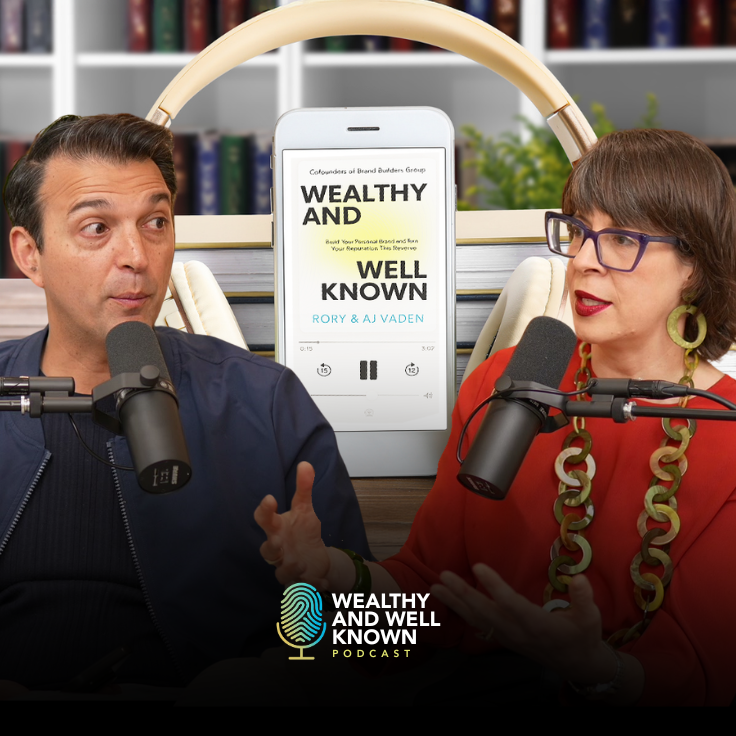
On today’s episode, and it’s not often that we [00:01:10] bring in outside vendors, but in the case that we meet someone who is a real [00:01:15] expert, and especially when it’s someone that we have hired personally and benefited [00:01:20] from, we want to introduce you. To them. And today that is the case with our [00:01:25] good friend Tavia Gilbert.
She is one of the most world renowned experts on [00:01:30] audiobook. So let me read a couple things from her formal bio. So first of all, she is a Grammy [00:01:35] nominated award-winning voice actor, producer, and creative director. She [00:01:40] was the creative director for. Mine in AJ’s, wealthy and well-known audiobook, uh, [00:01:45] which, uh, is phenomenal.
I might say if, if I can. Um, she is known [00:01:50] for her, uh, her transformative storytelling in both audio and [00:01:55] podcasting. She has nominated for many audio awards. Um, she has, uh, [00:02:00] she won. This, I wanna say it correctly. Audiobook Narrator of the [00:02:05] Year by Booklist Magazine. She’s produced and been a part of over 1000 [00:02:10] audiobooks for major publishers.
Penguin Random House, Blackstone Ette, Simon and [00:02:15] Schuster McMillan. Also hybrid books. Um, she is the person that we [00:02:20] predominantly work with for audio books, uh, with Mission-Driven Press, which of course is our sister company, where we [00:02:25] distribute our books through Simon and Schuster, but we also own the audio rights, and so [00:02:30] we work with Tabia on that.
So she is a pro, she knows what she’s talking about, and [00:02:35] this is a big, important issue, especially with the freedom that it gives authors in the [00:02:40] future. Tavia, welcome to the show,
Tavia: Rory. Thank you so much for having me. [00:02:45] I’m so honored to be here.
Rory: We really lean into people who are experts and obviously it’s a big part of what we [00:02:50] teach.
And man, this is, this is your universe.
Tavia: It is.
Rory: Um, I [00:02:55] wanna actually start with the business of audio books if we can. Um, I, I, I want to get to the [00:03:00] art as well, which I know is like a big part of also your bread and butter.
Tavia: Yeah.
Rory: But I think that [00:03:05] a lot of authors. I have no clue how audio books really work.
Tavia: Yeah. [00:03:10]
Rory: Like, they just go, don’t, I? Like, I, I know I recorded, I went to a [00:03:15] studio and recorded my book, but then, you know, nothing happens. It’s like this giant black box. Do I make any [00:03:20] money? How do I make money? What’s the difference between a self-published audio book and traditionally? So can [00:03:25] you just like, give us a little bit of an understanding of like, what’s [00:03:30] the economics of an audio book in, in both traditional publishing and [00:03:35] self-publishing and like.
How does it work? I mean, obviously you gotta record a [00:03:40] file and, and we’ll talk about that Yeah. Later, but I wanna just dive into the, the, the [00:03:45] money of how do you make money from audio books and who makes money with audio [00:03:50] books?
Tavia: Well, hopefully, hopefully the author will make some money from their audio books.[00:03:55]
That’s a, a pretty broad question, so if I get kind of away from it, bring me back because there are a [00:04:00] lot of components to the answer.
Rory: Yeah.
Tavia: First, the audiobook [00:04:05] industry has been growing, growing, growing. It’s a multi-billion dollar industry, and it [00:04:10] is the, it is a major part of publishing. So when I first started almost [00:04:15] 20 years ago, people saw audiobooks as kind of like a redheaded stepsister.
[00:04:20] It was like off to the side and people were. Very afraid that audio books [00:04:25] would poach print sales. Mm. So there was some kind of discomfort [00:04:30] in some areas of publishing about audio books. Mm. And over the last few [00:04:35] decades, audio books have been such an integral part of publishing and [00:04:40] marketing the book, getting the book out to audiences that it has really [00:04:45] shifted and audio is now one of the most important parts of your publishing [00:04:50] plan.
Rory: Hmm.
Tavia: If you’re. Publishing traditionally. [00:04:55] Often your audio book writes will be bundled with your print rights, right?
Rory: So
Tavia: [00:05:00] say you are publishing through a traditional publisher, they’re going to publish your print [00:05:05] book and produce your audio book. So that
Rory: is, and then that’s like, that’s what happened to me.
I [00:05:10] had a literary agent, we got a book deal, and I really didn’t even think much about it. Mm-hmm. It’s just [00:05:15] kind of like, yeah, it’s all bundled together. It wasn’t like really a separate [00:05:20] negotiation. Right. And I was just like, oh, the, and then. I was like, later on I was like, [00:05:25] I wish I would’ve known a little bit more.
Like I, I wish I would’ve understood this [00:05:30] piece of it better.
Tavia: Yeah. Now people understand more the [00:05:35] value of their audio rights, and I think part of the value is because it’s your voice. It’s bringing [00:05:40] to life your book off the page. So there’s a real resonance and frequency in that [00:05:45] audio product of the message.
Yes, it’s very powerful.
Rory: I mean, when [00:05:50] AJ reads her chapters of our book, it makes me cry made like I’ve me cry. I the story literally, I’ve heard the [00:05:55] story hundreds of times when I hear her tell it in our audio book chapter three, like [00:06:00] I break down crying. It’s such a powerful. [00:06:05] Medium and, and to to hear it in, in her own voice.
But anyways, yeah. So, so
Tavia: well, and your chapters [00:06:10] made me cry. Like the passion and the, the ambition and the hustle and the commitment. So it’s, [00:06:15] it has that power. Not that people don’t cry in books. They do, of course we cry when we read [00:06:20] books, but that there’s something about somebody telling their story that is just, it’s [00:06:25] amazing, transformative listening.
If you don’t have a [00:06:30] traditional publisher, if you are uh, publishing in a hybrid situation, [00:06:35] often the best case scenario for you as an author is for an [00:06:40] audio publisher to purchase your audiobook rights. Okay, so there are. [00:06:45] It’s, it’s consolidating, like all of the c corporate, corporate life is [00:06:50] consolidating into fewer and fewer companies, but there are still companies that [00:06:55] acquire only audiobook rights.
Rory: So it’s just like a book publisher. Mm-hmm. But they [00:07:00] specialize in, we buy audio books.
Tavia: Right?
Rory: And so if you self-publish or [00:07:05] you hybrid publish. As an author, you own those rights, right? You don’t sell them to a traditional [00:07:10] publisher, so then you then could turn around and sell them to, are they just called audio [00:07:15] publishers?
Tavia: Yes.
Rory: Is that what they are? Mm-hmm. Yeah. But they’re, are they also distributors? Yes. Or is [00:07:20] that a different thing?
Tavia: Yes. So if you were hybrid publishing and an [00:07:25] audio publisher purchased your audiobook rights, they would pay for the production [00:07:30] expenses and they would distribute that audiobook.
Rory: Okay, so that’s a positive thing.
Yeah. ’cause there’s [00:07:35] production, ex expenses. Yeah. And that’s that. So they, they’re gonna pay those [00:07:40] expenses. Now, are they usually paying in advance?
Tavia: Um, it [00:07:45] depends. Every contract is
Rory: different.
Tavia: Different, you know, so some people are [00:07:50] going to have a small advance. Some people may have their production expenses [00:07:55] covered.
Um. And get less of an advance or, you know, every deal is [00:08:00] sure details.
Rory: It depends on the author and the platform and all that kind of of stuff the same. But, but you could, [00:08:05] you, you at least, you’re not gonna be coming out of pocket to produce the audio. Right. Which is like if you [00:08:10] hybrid publish or you self-publish you, you do that.
Now, when that, and that’s part of why we met you is with [00:08:15] Mission-Driven Press. We got into the details of this and we’re like, this is, there’s a lot here.
Tavia: Yeah. [00:08:20]
Rory: It’s better for authors to just. You know, they can just pay us and then we go, we [00:08:25] take care of this for you. Right? They still own the rights of it, but like we solve the problem of the [00:08:30] production.
’cause the production is. A little bit easier. I feel like these days, I mean it’s, it’s more [00:08:35] common that people have microphones and like studios and you know, even though when [00:08:40] you do it, you’re doing like a real sound studio.
Tavia: Yeah. And I think one of the dangers, [00:08:45] and I don’t know if you want to move away from the economics yet, into the production, they’re, [00:08:50] they’re linked, you know, it’s a related conversation, but.
There’s a I I find that [00:08:55] often people have a DIY sort of mindset about their audio and I [00:09:00] think that’s a real risk and a real problem.
Rory: Let’s save that for later. Yeah. So yeah, [00:09:05] stick around. ’cause I definitely want to get into that. Yeah. So help, let’s go back to the landscape of the [00:09:10] space. Mm-hmm. That the industry, so I can.
I can sell my rights to [00:09:15] an audiobook publisher. This would be like Blackstone, right? Mm-hmm. Is what you’re talking about the one?
Tavia: Yeah. Blackstone Tan Tour, [00:09:20] something like that. That
Rory: What’s the, what’d the other one?
Tavia: Tan Tour.
Rory: Okay. I didn’t even heard. I’m not even familiar with [00:09:25] that.
Tavia: Yeah. But a Blackstone or Recorded books is a big publisher related to Tanto, so there [00:09:30] are audio publishers where you can sell your rights.
And they, then again, they’re producing it. [00:09:35]
Rory: Do you need a literary agent to do that or Usually authors are just kind of like going direct ’cause there’s not a lot of money [00:09:40] here. Right. And, and there’s, it’s, it’s rare that you get a big advance for audio. Right,
Tavia: right, right.
Rory: So [00:09:45] an agent, literary agents probably are not as much drawn to this space,
Tavia: but I think that you, [00:09:50] you probably are going to have more success with an agent [00:09:55] backing you when you’re trying to sell your rights.
Mm-hmm. But as an independent author, you can certainly approach [00:10:00] companies. Hope that they will acquire your rights. Audible may [00:10:05] acquire your rights. So, uh, a trade magazine that’s a [00:10:10] really. Uh, good, uh, tool and resources Audio File magazine. It’s the audio [00:10:15] book magazine. Okay. And if people get familiar with that magazine, it tells, [00:10:20] you know, there are articles and ads and reviews, and it’s the industry of [00:10:25] audio publishing.
So that’s how people can maybe discover who those companies are that are [00:10:30] acquiring rights. Who are the audio book publishers that are exclusively dealing with [00:10:35] audio, not with print. So. Definitely recommend people get familiar with
Rory: audio [00:10:40] file. So if I either, if I sell my rights either as part of a traditional deal [00:10:45] or I figure out a way to go direct, or I get an agent to just do my audio rights, if I’m hybrid [00:10:50] or self-published, then they’re gonna publish it.
They’re paying for the expenses and then they’re [00:10:55] gonna distribute it, meaning they’re gonna take the audio book and they’re gonna make it available in [00:11:00] Spotify and iTunes and Audible and places like that
Tavia: [00:11:05] probably. They would widely distribute. But one [00:11:10] uh, thing that’s important to understand is that audible.[00:11:15]
Is an ecosystem that stands alone. And if people, whether an [00:11:20] independent author, a hybrid publishing author, or a traditional publisher, if they want [00:11:25] to distribute for the highest royalty, they’re going to go exclusively to [00:11:30] Audible. They’re still the biggest deal in audio publishing. Spotify’s coming up, [00:11:35] you know, really trying to compete with them.
So if you want to publish widely [00:11:40] audible spotify audiobooks.com, downpour in the public [00:11:45] library market, you cannot. Get the royalty share that you [00:11:50] would if you went only to Audible.
Rory: And when, when you say only with Audible, you’re [00:11:55] talking about an Audible exclusive, which means that Audible is the only platform that people [00:12:00] could hear your audio book.
Tavia: Right?
Rory: Right. So you, it’s like that is an option. [00:12:05] That is like a self-contained option, and that’s what a lot of my private clients are doing. Mm-hmm. And [00:12:10] they’ve gotten some huge, huge deals.
Tavia: Yeah.
Rory: Right. Yeah. It’s like, you know, I think [00:12:15] audiobook, when I hear audiobook advance, I tend to think like $5,000 or 10,000 or 20, [00:12:20] some of them have gotten like huge advances.
Tavia: Right.
Rory: And, but, but then it’s like [00:12:25] audible. Owns that. Right. You cannot get it anywhere else.
Tavia: Right.
Rory: So that’s the best [00:12:30] money in town. Um, but then it’s not available in the public [00:12:35] library. Right? It’s not available on iTunes and Spotify. And that’s why Audible’s doing that. They’re, they’re kind of like,
Tavia: I think it’s [00:12:40] Audible iTunes, I think Audible and iTunes go hand in hand.
Okay. Or [00:12:45] there’s, um. I can put this in the show notes, we can talk about it so that I make sure [00:12:50] and it changes. So I just wanna make sure that I’m giving the most current up to date.
Rory: Okay.
Tavia: But, um, [00:12:55] yes, audible is going to be the, the highest royalty return.
Rory: And what kind of [00:13:00] royalties do you, do you get on an audio book?
Like, and, and, and walk us through like. [00:13:05] How do you even calculate a a a a royalty. So is this like, [00:13:10] like on a traditional published book? You know, we, I remember on like my [00:13:15] take the stairs book, you get, I wanna say we got between 10 to 15, a sliding thing between [00:13:20] 10 to 15% on hardcover. Mm-hmm. For the first whatever.
And then [00:13:25] on paperback, which the publisher immediately pushed it to paperback, it drops to [00:13:30] 8% on like the first 150,000 or, you know, something like that. Like, yeah. Um. [00:13:35] Are those the audio book royalty rates? Are they higher?
Tavia: So if you [00:13:40] are exclusively distributing to Audible, your royalty right now would be [00:13:45] 40% of sales.
Rory: Wow.
Tavia: Um, if you are [00:13:50] distributing to Audible in a non-exclusive arrangement so that you are also able to [00:13:55] distribute everywhere else, audio books can be discovered and purchased, [00:14:00] that royalty drops to 25%.
Rory: Okay.
Tavia: So
Rory: just talking [00:14:05] about Audible,
Tavia: right? If you, right now I work a lot with In Audio, [00:14:10] which is another distributor, I can distribute a book through in [00:14:15] audio and it will push it to Audible and everywhere else [00:14:20] if I distribute in, in audio.
I can [00:14:25] exclude Audible from that distribution platform. I recommend often that my [00:14:30] authors who want the widest possible distribution, that’s a higher priority than the [00:14:35] highest royalty share. I recommend that they distribute through [00:14:40] Audible in a non-exclusive arrangement.
Rory: So you’re talking 25% royalty,
Tavia: right?[00:14:45]
And then they distribute through in audio. [00:14:50] Excluding Audible from that distribution option,
Rory: so, so everywhere else [00:14:55] basically.
Tavia: Right? Right.
Rory: Yeah.
Tavia: So you’re getting kind of the best of both worlds
Rory: right now. Part of when people [00:15:00] hire you, you, you deal with all this, right? That you can, you can set, you can, you can, [00:15:05] part of your fee is just as like, you’re gonna deal with all this and you set it up and like you talk us through [00:15:10] how do we want to do this, right?
We agree on a thing, and then you deal with like submitting it and doing all of that [00:15:15] stuff,
Tavia: right? Because it can be a technical. Headache. It’s annoying. Yeah. To, you know, but I [00:15:20] also want to know with every client, what’s your priority? What’s your goal? Do you wanna get this out as [00:15:25] widely as possible? Are you trying to make the most money possible?
What’s important to you? Do you wanna [00:15:30] deal with the fewest platforms? You know, there’s not a cookie cutter one right [00:15:35] answer that fits everybody’s business plans, right? So it’s really important that people [00:15:40] don’t just make assumptions and think audible’s the only game in town. And they kind of [00:15:45] have to go in that direction.
Um, audible comes exclusive distribution, comes with a [00:15:50] seven year commitment, which can be shifted. Oh, midstream. If you really do want [00:15:55] to get out of that contract or
Rory: exclusive, it’s a seven year commitment.
Tavia: Right.
Rory: Okay.
Tavia: Right now they’re pretty [00:16:00] flexible. They’ll let you out of that commitment. That can always change.
So you wanna be [00:16:05] careful what commitment you’re making
Rory: and when you get a royalty in audio, like if it’s 40%. [00:16:10] Are you saying that you get 40%? Like if my book is $10, if [00:16:15] my audio book is $10 that every time Audible sells it, I’m gonna make [00:16:20] $4. ’cause that’s pretty good. But that doesn’t seem to be reflective of what we’re seeing on royalty [00:16:25] checks.
Tavia: It’s really hard to understand your royalty checks, honestly, [00:16:30] because Audible can make your book available for the, the [00:16:35] daily, you know, really cut rate. Everybody buy this for two bucks, you know, or
Rory: [00:16:40] whatever. Okay.
Tavia: And they shifted all, you have no control over pricing and audio is [00:16:45] distributed in, in so many different ways, so many different models.
There are over [00:16:50] 40 platforms that distribute audio books worldwide. Some are streaming, [00:16:55] some are credit models like Audible, some are number of hours. That’s the thing. How do
Rory: I get paid if, if, [00:17:00] if as a customer they’re paying 10 bucks a month or whatever the subscription is for [00:17:05] Audible and then. They get so many credits and they download my book and like maybe they [00:17:10] listen to five minutes.
Mm-hmm. Maybe they listen to five hours, like. [00:17:15] How does that work? Or does anybody know? ’cause like, I, I don’t feel like that’s very transparent or clear. It’s not. [00:17:20] Or at least not very simple to understand.
Tavia: Yeah, it’s not. And I, I partner with one [00:17:25] of the leading experts in audiobooks, Michelle Cobb, who’s been in the industry for over [00:17:30] two decades.
And I go to her, you know, every couple months I’m like, we’ve gotta figure this out for [00:17:35] people. How we can make it clear, how we can make it transparent. We [00:17:40] are partnering to give the best service, the most information, [00:17:45] but it is not possible for us to make up for the, the [00:17:50] deficit of so many different models, so many different ways.
Prices, it’s just, [00:17:55] it’s kind of opaque and that’s just the way the industry is. And [00:18:00] right now, that’s not gonna change anytime soon.
Rory: Yeah. So funny that you, you know, [00:18:05] as you say that this is why. We didn’t do an audio deal at [00:18:10] all,
Tavia: right.
Rory: We just we’re like, we’re gonna hold our own audio. ’cause, ’cause [00:18:15] as a mission-driven messenger, right?
So even at, even at my level, [00:18:20] uh, I’m not getting huge. Advances.
Tavia: Right.
Rory: And so [00:18:25] the way that we think of our book is less of like, oh, we’re gonna make money off our book. And more of [00:18:30] like, the book is the lead generation tool into our ecosystem, to which when people read our [00:18:35] book, they go, whoa, these people know what they’re doing.
They can, you know, help us with, with other stuff.
Tavia: [00:18:40] Yeah.
Rory: Um, and it’s always driven me so insane that I [00:18:45] cannot gift my own audiobook. Mm-hmm. Like even when I had a traditional [00:18:50] publishing deal. I could at least buy my hardcover book at [00:18:55] a discount. It was not a great discount. Right. It was like, you know, 35% off.
Like it’s, it’s [00:19:00] still paying a ton of money. But one of the reasons we did hybrid publishing on the print version was so [00:19:05] that we could get our books at wholesale costs, which has been a game changer. Mm-hmm. Like it cost me way [00:19:10] more to give. A paperback version of Take the Stairs then [00:19:15] to give out our beautiful hardcover embossed dust jacket version [00:19:20] of Wealthy and well known.
Tavia: Yeah.
Rory: So at least with a physical book I can give it out.
Tavia: Right.
Rory: But [00:19:25] with audio I’m like, this is crazy. It’s air like why Right. Can’t [00:19:30] IG this to people? And when you sell your rights, you give up [00:19:35] that. Right,
Tavia: right.
Rory: Um, because they own the right to the book. And so that’s why [00:19:40] this time around we’re like, there’s not enough money showing up on our royalty checks, right?
From our first two audio books, and I can [00:19:45] see how many units are being sold, kind of.
Tavia: Mm-hmm.
Rory: And I’m like, we’re selling, we’re selling [00:19:50] just as many units on audio as we are in physical. But [00:19:55] the, the royal, the royalty check is way less.
Tavia: Right?
Rory: And all we see is like a number. [00:20:00] So there’s like no transparency in the reporting, right?
But we can go sold this many [00:20:05] physical books. This many audio books. One was a check for this, the other check was significantly less and I [00:20:10] can’t give it away. And that was part of what also pushed us to hybrid is going, this is insane. We’re going [00:20:15] to use the audiobook. And sell it ourselves. Mm-hmm. And just do it.
[00:20:20] So are, are you seeing other authors do that or not really? Are people still hesitant to like, [00:20:25] say, I’m gonna like. Control the whole audio thing myself,
Tavia: I think more and more people [00:20:30] are picking up on the opportunity that audio gives them to connect, to be a [00:20:35] lead magnet or a lead generator. People are getting it and some [00:20:40] audio books are now being distributed before their print.
So [00:20:45] that’s kind of an interesting shift.
Rory: Mm-hmm. Yeah. We, we, we did that. Yeah. And to my knowledge, we [00:20:50] were one of the first that really pushed that. Yeah. But we gave away the audio book for free and [00:20:55] used that as a lead magnet to sell the physical copy.
Tavia: Right.
Rory: Which worked pretty well.
Tavia: I think, [00:21:00] you know, unfortunately publishing is a difficult business.[00:21:05]
A lot of authors know that they’re not going to make a lot of money on their [00:21:10] book.
Rory: Mm-hmm.
Tavia: And that for them. Who, the, those who decide to move forward to put [00:21:15] in the time and the, the blood, sweat and tears of writing a book and getting it out there, know [00:21:20] that it’s leading to something bigger than the book alone.
Rory: Mm.
Tavia: And so I think that [00:21:25] just, uh, savvy and strategic authors have a bigger [00:21:30] plan and they understand the rollout at a certain time, what they’re driving people [00:21:35] to, how it all works. I think that’s not gonna change anytime soon. [00:21:40] No. No. Corporation right now I see is going to be benevolent and say we [00:21:45] want people to be more empowered.
We want creatives to have more of their revenue. That’s just not the way. [00:21:50] The world works right now.
Rory: Yeah. Well to, so to that point, if you go to free brand [00:21:55] call.com/podcast, that’s exactly precisely what we specialize in is helping
Tavia: [00:22:00] Yeah.
Rory: Authors create monetization strategy beyond the book, outside of the book [00:22:05] and turning it into other, other revenue streams.
Um, you know, and there’s a part of [00:22:10] me, like, as you say this, and part of why I wanted to have this interview is there’s a part of me, you know, [00:22:15] you use the word benevolence. Mm. There’s a part of me that’s going. Could brand builders group ever get [00:22:20] to the level one day of scale that we could solve this problem because we’re [00:22:25] selling air and yet the authors don’t seem to be making any money.
Tavia: Mm-hmm.
Rory: Uh, and [00:22:30] to me that’s very frustrating and annoying as an author, but, and then also with my colleagues, I’m going, [00:22:35] we can’t give away our own book. This thing costs nothing to produce, [00:22:40] like literally nothing to distribute, and yet somehow the [00:22:45] money’s not coming back to us as creatives.
Tavia: Yeah.
Rory: And that.
That bothers me. Yeah. And it’s not about [00:22:50] money, it’s, it’s so much, it’s just like, it just doesn’t, it feels like injustice.
Tavia: Right, right. I’m with [00:22:55] you and if I can ever help you solve that problem, I want justice for the people whose hearts and minds [00:23:00] justice for the people. Yes. Yes. I love the direction this interview has taken.
So yeah, I [00:23:05] think it’s an important question. But for now, people should work with you to figure out [00:23:10] their strategy because the content of the book needs to get out into the world in all [00:23:15] formats. So it is an ongoing problem. You’re not the only person who has had that [00:23:20] frustration looking at royalty reports that are really difficult to understand.
But, [00:23:25] uh, I have seen people more and more put their book in their app. Distribute [00:23:30] it that way, whether it’s monetized or just, that’s
Rory: what we did.
Tavia: It’s just Right.
Rory: That’s what we did. We built our own app. We dropped the [00:23:35] book in there, and then when people download it, right, they get, they, they don’t, they not only get in our book, but [00:23:40] they get, um.
They get inside our app. Mm-hmm. All of our, our free [00:23:45] content, which if, uh, if you go to free brand audiobook.com/podcast, [00:23:50] free brand audiobook.com/podcast, you can get our audiobook for free. [00:23:55] And if nothing else, just see how we do this. Mm-hmm. Right. So you go to a page, you [00:24:00] put you, you fill it out. We send the audiobook and the mechanism by which we use to deliver [00:24:05] it is our own app.
And then that also gives us a way to stay in touch with people, which has been super. [00:24:10] Super powerful.
Tavia: Right?
Rory: Because that’s the other problem when, when you sell at retail, [00:24:15] which is also the, the same issue exists with physical books that when [00:24:20] someone goes and buys a copy of my book at Amazon, you know, okay.
I guess that’s good. I make. [00:24:25] Whatever, $2 or a dollar on the book. But the, the [00:24:30] more expensive problem is I never get the customer’s contact information. Right. Right. I don’t know who [00:24:35] they are. And it’s definitely that way with audio books. Right. They just sort of like disappear into [00:24:40] the ether. But when you own the rights, put it in your app.
Now all of a [00:24:45] sudden. I, I have a direct line of communication for them forever. And to us, I’m [00:24:50] going, that’s the more valuable piece. Of
Tavia: course. Yeah. If you had distributed your audio [00:24:55] book through Audible exclusively, you would not have the right to distribute it in your app. So [00:25:00] authors really need to understand that, what that relationship and that commitment means.[00:25:05]
It’s, it’s limiting. So audible still, again, is the juggernaut. It’s the biggest deal in [00:25:10] town still, but it’s, but that’s
Rory: why they’re paying more money is they’re. They want [00:25:15] control over it. But what you’re saying is I still could distribute our [00:25:20] audiobook ’cause we did not do exclusive. I could still have it on Audible.
Tavia: Absolutely.
Rory: And people could [00:25:25] just go buy it. Um, we’ve just, and right now we’ve said the only way you can get it
Tavia: right
Rory: is through our [00:25:30] app. ’cause we just want to know who the people are. Um, but, uh, okay. Let’s talk about the [00:25:35] art of it, because this is, I, IM important and, and I know this is something you’re really passionate [00:25:40] about.
Yeah. And, and I have to say, you know, I’ll start by saying. You know, [00:25:45] I’m a two time world champion of public speaking, and I thought, oh, I [00:25:50] can just like pick up the microphone and just record this, right? Like, I do this for a living. And then I met you and [00:25:55] I was so empowered by the coaching that you gave me, and [00:26:00] my first two books were traditionally published.
Mm-hmm. I [00:26:05] had an audio producer, but basically they just sat there and said, oh, [00:26:10] you fumbled that word. Go back and rerecord, oh, that pause was too long. We need to edit that out. [00:26:15] Like you did something completely different. Yeah. My experience with [00:26:20] you was so much better. It was a completely different level, which in a way [00:26:25] was very surprising to me because I would’ve thought, oh, the traditional publishers and my big fancy book deal [00:26:30] would’ve come with mm-hmm.
Another level here, so, so describe [00:26:35] what do you think are the spectrums of. What it means to have an [00:26:40] audiobook producer and, and, and a creative director. And yeah. And what, what are some [00:26:45] of that intel?
Tavia: Yeah. Well, I loved working with you and I’m really, really honored that I got to, and that it [00:26:50] made a difference in your experience.
I served as the audiobook [00:26:55] producer, so my company Talkbox from end to end, from, you know, your [00:27:00] manuscript to talking and consulting around distribution. Uh, [00:27:05] that’s the service that we provided in the booth. I served as your audiobook director [00:27:10] and so I was helping you stay present in the moment, [00:27:15] deeply connected to the material.
And the difference is, [00:27:20] I think in. Working without the knowledge or without the, the guidance [00:27:25] of somebody like me. An author thinks their job is to read their book aloud. I’m just reading the [00:27:30] text and recording it into the microphone, and I think that’s the last thing that you were [00:27:35] doing. What I guided you to do is discover the material as if [00:27:40] it was for the first time to think the thoughts in real time as you were.
[00:27:45] Discovering them all over again to connect to the emotion of it, to be in your [00:27:50] heart throughout. It’s a very meditative practice. I think your book was about eight and a [00:27:55] half, nine hours maybe. And so for both of you, I was inviting you to be present [00:28:00] moment to moment to moment, and. It is about [00:28:05] phrasing for, excuse me, phrasing for sense, making sure that the emphasis is [00:28:10] on the, the best operative word.
That your, you know, your diction is [00:28:15] smooth and listenable. Um, that everything is clear, but it’s really about how [00:28:20] connected are you, how alive is this in you and great actors. The thing that [00:28:25] differentiates great actors from. Average actors is their sense of [00:28:30] discovery and it’s fresh. Even if they’ve rehearsed that play or practiced that [00:28:35] scene for, you know, 50 times before when the audience sees it, [00:28:40] they’re experiencing somebody in a state of discovery.
That’s exactly what makes a great [00:28:45] audiobook. Is it new? Have we, do we feel like we’ve never thought this before? We’re [00:28:50] just. Discovering this right now. Mm-hmm. Now it’s, it’s a totally different energy. [00:28:55] So
Rory: the, the, and the mistake I made as a new author. Was [00:29:00] I read my audiobook.
Tavia: Mm-hmm.
Rory: The thing that I did with, as an experienced [00:29:05] author and with your coaching was I didn’t read the audiobook.
I performed to the audiobook. [00:29:10] Yeah. And that is a very subtle distinction. Yeah. But a [00:29:15] massive Yeah. Impact.
Tavia: Yeah.
Rory: For the reader. And even going back and listening to [00:29:20] to, to it, I was like, wow. Like the wealthy and well-known book on [00:29:25] audio, it’s not. Informational experience. Right. No, [00:29:30] it’s an emotional experience.
It’s, and that’s the difference is are you delivering an [00:29:35] informational experience of reading the book or are you delivering an emotional [00:29:40] experience Yeah. Of performing the book.
Tavia: Yeah. I wanna hear your breath. I. I wanna hear [00:29:45] your, you know, the, the cracks in your voice. I wanna hear when you start to get emotional, [00:29:50] a lot of authors say, what if I cry and I think I wanna hear that human [00:29:55] experience of an emotional connection to the material?
Because you’re, that means [00:30:00] you’re emotionally connected to your listener. That’s service. And that’s the [00:30:05] difference, I think, will barely touch on ai, because I think AI [00:30:10] is, it’s a dead medium essentially, but. You weren’t [00:30:15] making noise, you were offering meaning there’s resonance and [00:30:20] frequency in what you did, and that’s why I’m not too worried about AI because [00:30:25] what you created, you and AJ in the booth could never be replicated [00:30:30] by an artificial voice.
Rory: Well, and we actually did use ai, so not [00:30:35] everybody knows this, but because we released the audio as a free part of [00:30:40] our book launch to, to spread the word about the physical book. For speed’s sake, [00:30:45] we did use mm-hmm. AI to release the first version. Um, [00:30:50] and. You know, then we went and recorded anyways. And it’s because of what [00:30:55] you were saying.
Yeah. It’s like, I don’t want AI to replace my soul. [00:31:00]
Tavia: Right.
Rory: And, and I don’t want to rob the, the, the listener [00:31:05] of. The human connection. Even if AI could emulate my [00:31:10] voice perfectly, it wouldn’t emulate the emotion in the [00:31:15] moment. Mm-hmm. At the right. Exact intensity.
Tavia: Mm-hmm.
Rory: Of which I would [00:31:20] deliver it, because I’m not, you know, one of the keys to storytelling that we tell speakers is [00:31:25] you don’t, you don’t retell the story.
You relive the story.
Tavia: Exactly. Exactly.
Rory: And that is [00:31:30] also true here in audio books. And so. I’m not [00:31:35] worried about AI either. I’m sure there’s gonna be people who use AI for their audiobook. [00:31:40] Fine. Just like there’ll be people who use AI to like produce all their video content on YouTube or [00:31:45] whatever,
Tavia: right.
Rory: Whatever. There’s, that’s a choice to make, but I, I think [00:31:50] that human connection is really important and, and. And what people [00:31:55] really want. And ironically, as AI takes over, I think people are gonna crave that more.
Tavia: [00:32:00] Yes, I agree. You’re also giving up owner, um, rights in your ip, [00:32:05] ai. Uh, there’s little intellectual property [00:32:10] protection, so if you’re gonna put your audiobook in AI because you think it’s fast.
Your team [00:32:15] learned how slow and labor intensive it was mm-hmm. To put out an AI version. It also [00:32:20] compromises your, your rights to your own material. So people should be very careful [00:32:25] about safeguarding their ip.
Rory: Mm-hmm. Yeah. So, um, [00:32:30] the. What are some of the other, what other tips do you have [00:32:35] for, uh, reading your audiobook or let’s say performing the audiobook?
Mm-hmm. Since we’re [00:32:40] establishing that as the, as the standard, like what are some of the mistakes that [00:32:45] authors make when it comes to actually delivering their own material over audio?
Tavia: [00:32:50] Yeah. The first step is not recording in the proper environment. You want the [00:32:55] best quality audio. Obviously that’s the medium, so you want it to be.
Um, [00:33:00] the right sound for audio books, which means not recording in a music [00:33:05] centered studio. When you record an album, um, when you put out your next [00:33:10] country album mm-hmm. With your songs
Rory: mm-hmm. Yeah. I’m working on Right. I know. I have been using AI to help me write music ’cause I, I [00:33:15] can’t perform music. Yeah.
Tavia: You want the sound of the studio around you. That’s part of the [00:33:20] environment for an audio book. You don’t wanna hear the environment, it’s just the voice. So [00:33:25] people need to record in a proper studio that is ready for audio books. [00:33:30] When you’re actually recording your book, one of the most, um, [00:33:35] typical mistakes or things that authors do that deflates the energy [00:33:40] is to have an up inflection.
So if you’re reading your book and you’re sounding like everything [00:33:45] is in a question, it. It is very, it’s not empowered, it’s not [00:33:50] specific. It’s, and I hear this a lot with, with all levels of readers, but [00:33:55] especially new readers, they’re asking the question, so you really want to plant [00:34:00] that idea in the ground that is specific, that is something [00:34:05] powerful, right?
It’s a very different sound. So if you [00:34:10] are, listen, if you wanna hear yourself in,
Rory: so if I, if I, if I read it like this. [00:34:15] That makes it sound like a question.
Tavia: Yeah.
Rory: Versus I go, I’m saying it like this.
Tavia: I want you to [00:34:20] be wealthy and well known. That’s
Rory: a statement, that’s a directive.
Tavia: I want you to be wealthy and well known.
[00:34:25] You mean that? That’s something I always think of. It’s like you’re planting that steak, you’re [00:34:30] planting that seed.
Rory: Mm-hmm.
Tavia: So that’s one thing that somebody can listen back to [00:34:35] their own sort of test. And here where am I using that up inflection, [00:34:40] uh, unconsciously, and how can I change that to make it grounded?
Rory: Yeah. And that’s what’s [00:34:45] powerful about having you sit there, listen in real time is like some of that’s hard to [00:34:50] hear. Like as I’m trying to read and I’m trying to deliver. I can’t [00:34:55] also be listening and editing my voice at the same time. That’s where it’s helpful to have like a, a [00:35:00] producer, or I guess you would call that a direct director,
Tavia: director.
Mm-hmm. Um, another big tip [00:35:05] is. Paragraph. Breaks are paragraph breaks and punctuation are your [00:35:10] map. Mm. So when you’re narrating your book, you’re following your own punctuation, your [00:35:15] own phrasing. We don’t speak in sentences, we speak in [00:35:20] phrases. We speak in grouped thoughts. So just because there’s more text on the page [00:35:25] doesn’t mean you need to read like a freight train that’s just at a pace and it’s just continuing to go without a [00:35:30] break.
Rory: Mm.
Tavia: There are, there should be pauses for thought, pauses, for [00:35:35] breath, um, and paragraph breaks are a big shift in time [00:35:40] and space. So you really want to land each thought at the end of the [00:35:45] sentence, let it have its moment and fall to a close. Begin the [00:35:50] next para, uh, the, the next sentence when you’re ready.
Paragraph [00:35:55] breaks go somewhere totally different. Mm-hmm. There’s a, a shift there. So it’s all about [00:36:00] pacing, phrasing, tone. Um,
Rory: this was another thing [00:36:05] that I learned from you about audio books, was that the punctuation. [00:36:10] For an audio book is different than the punctuation for a printed book. [00:36:15]
Tavia: Hmm.
Rory: And you actually took our manuscript and laid it out [00:36:20] differently in certain parts and broke it up in certain ways.
To [00:36:25] emphasize that you wanted it to be read aloud differently [00:36:30] with different pauses and annunciation than it would be read [00:36:35] quietly, uh, through in a physical book.
Tavia: Mm-hmm.
Rory: Um, also, you caught a lot of stuff [00:36:40] related to like calls to actions. Mm. And mm-hmm. And instructions [00:36:45] and URLs that. Occurred differently when you’re looking at it on a page [00:36:50] versus hearing it in in the ear.
Tavia: Mm-hmm.
Rory: And you, you took our manuscript and [00:36:55] really like analyzed all of that and came and presented, you presented [00:37:00] our own manuscript differently. Like there was a lot of work actually that. [00:37:05] I overlooked or undervalued how much work there would be in [00:37:10] prepping a manuscript that was already done,
Tavia: which you wrote.
Rory: Which I wrote, but [00:37:15] prepping that for an audiobook. Read that. There’s actually a lot to that,
Tavia: right? Yeah. [00:37:20] There, there should be. We’re, you know, prepping that manuscript, looking for [00:37:25] vocabulary. Does everything, are we pronouncing everything? Uh, correctly. [00:37:30] And just because you’ve written the book or cited those studies or interviewed those [00:37:35] scientists or authors or experts, doesn’t mean you’ve thought, how do we pronounce their name?
[00:37:40] Mm-hmm. But you wanna honor them by being correct in, in all of that vocabulary. [00:37:45] You want to translate the visual components in text or decide [00:37:50] this is not translatable or it would be awkward. That needs to be put in the bonus. PDF. [00:37:55] I’m, uh, working on a very, very long audio book, [00:38:00] um, coming up and so we wanna be thinking how are we going to keep the listener’s [00:38:05] attention for that many hours?
Do we need to break it up with a little bit of a music cue? What’s going to [00:38:10] be enhancing the experience, not irritating the listener? A [00:38:15] vocal performance, especially in fiction, how are you going to sustain a character voice? Yeah. [00:38:20] That’s, you know, for hour upon hour. It’s, it’s those nuances that come [00:38:25] from within the, you know.
A thousand plus books. I’ve kind of [00:38:30] seen it all. And now that I’ve said that tomorrow I’ll get a book, something different, something completely different and [00:38:35] surprising. But there’s a lot of prep that goes into a polished audio book. And then [00:38:40] how are you, uh, labeling your chapters? What kinds of [00:38:45] calls to action are you creating?
It’s, it’s a lot deeper than just. Just read the text [00:38:50] and record it and
Rory: yeah, I mean, you, you can see now that just in this conversation there is [00:38:55] a lot of complexity around how does the business work? What’s the right way to distribute, how do the [00:39:00] royalties work, how do you prep the manuscript for it? How do you prep yourself for it?
How do you deliver it, [00:39:05] how do you edit it? All of these things. Um, that’s the difference between, there’s [00:39:10] producers, there’s direction. Uh, you also, uh. Function as a literary, an [00:39:15] audio literary agent in a way for mission-driven press authors, right? We can work with you. And then setting all [00:39:20] that stuff up. And that’s one of the things where we were like, you know what?
If someone’s a mission-driven press author, we’re [00:39:25] just gonna say, we can solve this problem for you without stealing your rights.
Tavia: Yeah. Yeah.
Like,
Rory: like, [00:39:30] we’ll just, you know, we pay a fee. To you, you take care of it, but then the author still maintains [00:39:35] control of their IP and stuff, which is important. But anyways, if you’ve got any of these [00:39:40] questions, uh, if, if these things are curious to you, uh, Tavia is available for you to talk to.
[00:39:45] She is one of our recommended vendors. So if you go to free brand [00:39:50] training.com/audiobook, free brand training.com/audiobook, you [00:39:55] can get in communication with her. We’ll have her contact the info there. You can, you know, ask her [00:40:00] stuff. She can send you some of these. These things that she’s talked about. So check that out.
Free brand [00:40:05] training.com/audiobook. Uh, tavia, any final thoughts that you would wanna share [00:40:10] with somebody who is currently thinking about an audiobook working on an audiobook? Uh, [00:40:15] you know, what, what would you leave us with?
Tavia: Yeah. I think the most important message for me to [00:40:20] put out into the world is that your voice is your birthright.
You are here to [00:40:25] use it. When you’re born, the first thing that you do is use your voice. [00:40:30] I believe that’s for a reason. So I think that audio is [00:40:35] spiritual. It furthers your mission and deepens your [00:40:40] impact, and it is a. Transformative [00:40:45] superpower. Mm. So I’m honored to have worked with you and heard your voice in [00:40:50] my ear for several days, and you know, your sound waves are going out into the world [00:40:55] in perpetuity impacting, and that is something that I hold so close to my [00:41:00] heart.
So audio books are not just a nice thing to have. They’re a profoundly [00:41:05] transformative vehicle for change.
Rory: Hmm. That is beautiful. And your [00:41:10] message matters. That’s why you’re here. We refer to our audience as mission-driven messengers. If you’re [00:41:15] getting value from this content, this podcast, please make sure to share it with somebody [00:41:20] else who you think could, can learn from it.
We’d love to have your comments, your feedback, your ratings [00:41:25] and your reviews wherever you listen to this show. Please let us know how we can [00:41:30] continue to serve you. I hope and trust that this, this information, this interview [00:41:35] was valuable. We’ll catch you next time on the Wealthy and Well-Known [00:41:40] [00:41:45] [00:41:50] podcast.