



Ep 542: How to Build a 9-figure Personal Brand with Michael Mogill

RV (00:03):
You are about to meet someone that I admire dearly. Michael Mogul is someone who I think is the epitome of someone who is doing the things that we teach personal brands to do. Except he’s not a client of ours,
RV (00:56):
And Michael has been amazing. Let me give you a little bit of his formal bio. So he’s the founder and CEO of Crisp, which is the number one law firm growth company in America. So they advise law firms on how to grow their practice and do another number of things related to, you know, improving operational efficiency, increasing profits, marketing, sales, the whole thing. They, they curate a huge event many different events, but a, a, a huge event. And he is also the author of a book called The Game Changing Attorney, which is one of Amazon’s bestselling books in the legal category. He hosts the Game Changing Attorney podcast which again, is one of the top podcasts in his niche of legal market leaders. The, the, the conference they put on is called the Crisp Game Changer Summit.
RV (01:46):
It’s huge conference. They’ve had many of the biggest speakers in the world and they help thousands of attorneys that are from solo and small firms to large practices just to differentiate themselves and, and earn millions in revenue. And in the process of that, the Michael’s company, Chris, has become very, very well respected. One of the fastest growing companies in Atlanta, twice, has been on the Inc 5,000 in the top 10%. And he’s just a, a student of personal development and, and personal growth. And I just want you to hear the story of how somebody has built a massive business serving one very specific niche. And so here to tell us that story is Michael Mogul. Michael, welcome to the show, man. Thank you for having me. So tell us a little bit about how, how you got, so, first of all, did I say anything in inaccurate in what I just said? That, that, that was a mouthful of me trying to just recapture, but that, that, that’s it, right? Like you guys serve the, the just lawyers exclusively in a very, very deep way. You curate events just for them. You write books just for them. You create podcasts just for them, right? That’s right. And, and as you were saying it, I, I felt like you were talking about
MM (02:58):
Somebody, somebody else. So it’s a, it was amazing, right? Like the, you hear all these accolades and you know, it, it’s, it’s kinda like the feeling that I had when I released, you know, our first book and, you know, the day before. I wasn’t a bestselling author, but the day after I was. And it’s just, it’s amazing how, how life changes.
RV (03:13):
Yeah. Yeah. So give us a sense of the size of your business to whatever e extent you’re comfortable. The, the number of customers you see, the, the size of your, your employees, your, your, the size of your events, just like whatever, yeah. Whatever analytics or empirical stuff you can give us to give us a, I wanna, I want people to understand a sense of the scope of what you’ve been able to build, serving a, you know, a a very specific audience.
MM (03:39):
Yeah. Yeah. So at this point, we work with about a thousand law firms across the country. Okay. And then roughly, because we also work with I’d say probably close to about 2000 law firm team members. We have, you know, this point, I’d say probably between 120, you know, 120 to 130 employees, right? That are full-time in the company. We are high eight figures. We’ve gotten a nine figure valuation for the business. And the business is entirely bootstrapped, started with $500 to my name, no investors, no loans, no partners, you know, no funding. Nothing like that.
RV (04:07):
That’s incredible. And, and this is one of the first points I want to make for people who are listening. I’ve been saying a lot that too many people are chasing the, the width of their reach, that they’re forgetting about the depth of their impact. And everybody’s chasing millions of followers, millions of followers, millions of followers. You’ve got a business that’s valued at nine figures with 1000 customers. That’s it. One, one thou not tens of thousands, not hundreds of thousands, not millions. 1000 customers, nine figures, for those of you mathematicians, that’s a hundred million dollars plus valuation from a thousand customers. Michael, that’s extraordinary. And I think that that represents the future of how monetization will be done for, for, for personal brands. So tell us about how you started it. ’cause I, you, I know when you and I talked before, you were like, yep, no investors and no partners. So, so how the heck did you start it? Because clearly if you didn’t have investors and a bunch of money, you must have started, you must have started fairly small, right?
MM (05:17):
Oh, yeah, yeah. I mean, as, as as small as small gets. So I am a first generation immigrant. So my, my, my family and I, we immigrated here. They were, you know, refugees coming over from Eastern Europe. We came here, I was four years old and you know, this was in 1990. And at the time, you know, my, my parents, you know, being immigrant parents, my career path was either doctor or lawyer. And when I went to college, I actually went pre-med at, took the mcat, got into medical school, decided that that was not for me. I spent, you know, hundreds of hours shadowing doctors, but I was always very entrepreneurial in nature. Like, I had a, you know, a web design company when I was 16 years old. And, you know, there’s always like these entrepreneurial ventures. So at the time, you know, where, you know, when I finished college and, you know, I got into medical school, I put in for a deferral just essentially to say, well, I’m not sure I wanna go yet, but I wanna take a year to just kind of find out.
MM (06:05):
This was in 2008. For those that remember this was, you know, not a great time in the economy. So I go from, you know, seemingly about to go to medical school, to washing dishes at a dive bar. Nice. It’s called Taco Mac. And yeah, it was like the American dream. You can imagine how, you know, how proud my parents were at this point. And essentially I went from there to washing lab equipment at the CDC, so the Centers to Disease Control. And while I was there, I had an opportunity to do some of the web design and web development. But really I was trying to figure out like, what do I wanna do with my life? And how do I want to, you know, spend my time? Like, what, what skills do I have? I knew I didn’t wanna go to medical school, so, you know, I just, I started doing all sorts of stuff.
MM (06:43):
Like, I would try to use the time productively to develop skills, whether it was in understanding like money, or whether it was understanding marketing. And I bought a camera. ’cause I just figured this would be like a lifetime hobby to learn, like, just to, just to take pictures. Wow. And every day I had the goal of just like taking one great photo and it was like, you know, like taking photos of flowers and plants and, you know, that sort of thing. But for me, my hobbies, you know, tend to turn into businesses. So the, you know, getting the camera turned into a photography business. And this was originally in like, in the hospitality space, so like bars and restaurants and concerts. Okay. Photography became, you know, video. And we had a a company in Atlanta where we were just doing photography and video and, and nightclub promotions and just working with like Live Nation when there were concerts that came into town.
MM (07:26):
And eventually I started doing that full time. After I’d say four to five years, I started to realize that I think I’m sitting at the wrong table. Meaning that, you know, I’m, I’m going all in on this, but half of our clients go outta business every year. ’cause The bars and restaurants turn it over, and then when it rains outside that, you know, that affects our business. So who would be a better fit client? And at the time it was our corporate clients. So things like the W hotels, red Bull, Verizon, Coca-Cola. So that’s really how CRISP started. It was the pivot from, you know, one industry to focusing more on, on corporate clients. But at the same time, we had no focus, like, meaning that we would work, you know, doing videos for anyone. I mean, when I started the business, even originally in 2012, I had $500 to my name.
MM (08:06):
So it’s like, how do we get clients and customers? And I just went down my list of contacts on my phone and I messaged everyone. I was saying, does anyone know anyone who needs a video? Right. And, and we were doing, I mean, it didn’t matter if we would do like a bar mitzvah or a soccer tournament or, you know, you’re just, you know, filming a dental practice, you know, whatever it was, there was just no focus whatsoever at the time. It was just, how do I get business? It was just me. And I will say that one of the biggest, you know, kind of pivots in the business that that led to a lot of exponential growth was when we started working with lawyers and law firms. So at the time we were doing videos for everyone, brands, different types of professional services, like just all sorts of different industries and businesses. It was just, it was about selling video to everyone, which was not, you know, not a great way to scale. And then,
RV (08:48):
Yeah, so you, you’re doing like, you’re, you’re, you’re selling to everyone, but you’re a generalist and so you’re just like, yeah, getting low dollar things like here and there. When, when you, when you decided to go on law firms. ’cause ’cause Yeah, here’s the ironic fear that all of our clients have when we, when we tell them like, Hey, pick, pick one and, and serve one audience very deep is they think that that will be limiting. They go, well, if I only serve this one audience, I’m gonna be saying no to all of these other people, and that that’s gonna make my business smaller and less revenue and less profitable. It’s like the, the idea of focusing on a, on a more specific, they, they confuse that being specific means being smaller. But it was not, it’s not that, it was not that way for you.
MM (09:43):
Absolutely not. And in fact, I even learned this lesson from many of the lawyers we worked with. So at the time, I mean, this happened by accident. I’m not a lawyer, nobody on our team is a lawyer. And we had a a fan, a phenomenal attorney come to us that essentially she, you know, she was working hard, but she couldn’t compete with the big advertisers, whether it was on tv, radio, billboard. She didn’t have the resources to compete. And we ended up producing a number of videos for her, like really that highlighted her area of expertise, what set her apart. Those videos went on social media and her business exploded. And then that led to her referring another lawyer that she knew and then another lawyer. And at the time, I didn’t know anything about the legal industry. As I started to learn more, I saw a super saturated, very competitive, commoditized space that consumers have a difficult time differentiating one lawyer from another lawyer.
MM (10:29):
And then I saw that, okay, well if they’re producing these great videos that tell their story, this becomes in, in a way a competitive edge, right? Especially for, you know, most law firms which can’t compete on TV and radio and other traditional forms of advertising. I also found, and this is kind of where that niche focus starts to come in, is that the law firms that came to us that were these full service firms that were doing personal injury and criminal defense and family law and so on, they were really struggling to bring in cases versus the ones that were honed in on one practice area. But the ones that were doing the best were honed in on one practice area, but then they found a deep niche, like a personal injury lawyer that focused exclusively on trucking accidents or motorcycle accident cases, right? The ones that had that, you know, that deep niche, they were able to be very focused in their marketing messaging and also were able to stand out and differentiate versus saying, Hey, we help all injured people, or we help not just injured people, but we also help those going through divorces.
MM (11:20):
And we also help those that need like, you know, business litigation, right? Because you’re just so broad. So I think that’s where, you know, that that started. And then for me, when we made that pivot fully and exclusively to working with lawyers and law firms, it’s just, I candidly saw that we were making a much greater impact. And I liked helping small business as opposed to some of these larger corporations where, you know, they had to spend the money, right? They, they had the budget, it was a lot of like decision makers, but helping another entrepreneur was much more rewarding. And we were helping them solve a challenge that we ourselves were solving in the process of how do you differentiate and stand out in a very crowded space where consumers have a hard time towing one apart from another.
RV (11:56):
Yeah. And I, the the other thing that’s amazing about this, right, is somebody listening might be like, oh, well that’s good. Michael figured out his niche and he’s crushed the law space. So now I can’t get into the law space. And I go, no, you’ve reached a thousand, you have a thousand attorneys. How many attorneys are there in the us? Do you have any idea?
MM (12:19):
Oh yeah, there’s about 1.3 million
RV (12:21):
MM (13:10):
Absolutely. And in fact, I was speaking with a, with an attorney recently. So she focuses on allergen law and apparently there’s only three lawyers. She focuses
RV (13:16):
On what? Allergy
MM (13:17):
Allergy law, right? So like if you, let’s say the types of cases would be if you go to a restaurant and you have a child who’s allergic to peanut butter and you tell the restaurant, Hey, you know, make sure no peanut butter, but then they put, put it on there anyway. And they have, you know, this massive allergic reaction they have to go to the hospital that is allergy law. And she said that she’s one of three that focuses on allergen law across the country. Like meaning that there’s just, there’s only three of them. It’s not, it’s not a super well-known practice area. There’s not a ton that do it. But she’s become kind of the go-to expert in this space because she writes books on allergy law, she’s now working with the FDA in terms of advising them. She works with several nonprofits and, and it’s such a, you know, you can find like the more narrow the focus we find, the more successful they are generally and the more known they are for that specific area.
MM (14:02):
Like, it is much, much easier, I think to grow a successful law firm. Probably a successful business as well, if you’re very clear on, and, and as you know, Roy, I mean like, you know who you’re for and who you’re not for down to the marketing messaging down to being able to differentiate and stand out and resonate. So I find that the more and more you niche down, I mean, I guess the common thought is that, oh, there’s gonna be less available. You know, like total addressable market, right? It’s like, oh, there’s gonna be less people, but you don’t need to win. You know, you don’t need to boil the ocean essentially.
RV (14:29):
Mm-Hmm,
MM (15:39):
Yeah, so when we started out, you know, started the company in 2012 video, then started working with lawyers, I believe around like 20 13, 20 14. But really the, so the expansion started where, you know, video was great, you know, to help somebody differentiate and stand out from the competition. It was great content. But then the next thing we heard was that, okay, I’ve got this great video, but how do I get it out there? Like, how, you know, how do I actually get the phone to ring and how do I get, you know, get known? Which is really where the marketing started of us placing the content on social media for our firms. So that was the marketing piece. And then we realized, you know, several years in that, okay, you can have great content and you can be, you know, promoting and amplifying that content, but then what happens when someone reaches out to you?
MM (16:18):
And that’s where all, like, everything beneath the iceberg of do you have a good business? Do you have the right people in place? You know, is the operation strong? Like is the culture, right? Like all those elements that sometimes you can have great marketing, but if you’re already working 80 hours a week, getting more calls, getting more leads, getting more cases doesn’t, you know, really materially improve your life. ’cause You’re already working 80 hours a week. So that’s where we went from video to marketing to coaching. And we soon saw that, you know, when we were doing workshops and coaching our firms on the leadership side of really growing a successful business, you know, in, in, you know, in their field. Now it’s like, okay, you can work with the firm owner. But then we started to get their team members on board because the team members were, that’s where all the true leverage came in for them.
MM (16:57):
So we started the team member workshops and we added, you know, onsite trainings. We come out to their office and then we even recently added recruiting to where we were first coaching on here’s how you can source and find these candidates. ’cause Hiring was one of the biggest challenges for many of our firms. And then we say, you know what, here’s the, we’re gonna show you how to do it and teach you how to do it. And then there’s the option of, we’ll do it for you. But what, where this all came from, I guess coming back to the, the reason for this evolution of the ecosystem was in the fact that we, we said from day one, we’re an law firm growth company. And one of the things that I didn’t love is that I hear a lot of businesses say they are an, you know, an x, y, z growth company, but what does that really mean?
MM (17:32):
Right? And can you really help solve a true business growth problem if you’re focusing really on only on one area? Like if we were only producing the content, if we were only doing the marketing, right? And I really viewed this as being a holistic solution of having like kind of a go-to shop that helps you understanding that you need to have all these elements and all these pieces, pieces to truly achieve these growth goals. Like if a firm comes to us and they’re at a million in revenue and they say they wanna get to 10 million in revenue, okay, is video gonna take them from one to 10 million? Probably not, not on its own at least, right?
RV (18:00):
It’s gonna help, yeah. Not just as an independent item that doesn’t, it has to exist inside of a ecosystem of, of like Strat, like strategic offerings or I guess operational elements.
MM (18:11):
Exactly. I mean, we just found that you’ve gotta get your messaging right. You’ve gotta get the positioning right. You gotta have the right content. You have to make sure that you’re promoting and amplifying the content in the form of marketing so people hear about you. And then once that call comes in that you’re providing, you know, you’re living up to your marketing, you’re providing great service, you’ve got a strong leadership team, like there’s operations in place in terms of processes and systems and procedures and so on. And now you can really start to grow and scale a great business. So all those elements and those expansions, the ecosystem came back to, if we say we’re gonna be a law firm growth company, then, you know, we really wanna make sure that we’re integrated and helping our firms solve this problem, you know, from, from beginning to end.
RV (18:45):
Mm-Hmm,
MM (19:30):
Yeah. You know, it’s funny, it sounds so obvious when you say it, but every time we made one of these expansions in the ecosystem, people looked at me like I had horns on my head and they’re like, what are you doing? Like the, the big shift when we went from video to, to coaching, like, I mean, we had team members that, you know, who looked at me and said, you know, I don’t understand the vision. We had a lot of people in the legal industry that were saying like, what is Chris doing? Chris is a video company. What are they doing getting into coaching? You know, that sort of thing over the years. But as you’ve described it, and this is the way that I saw it as well, was like, this is the natural progression, right. Of fulfilling the next need.
RV (20:01):
Yeah. So there’s, the reason it’s, it feels simple to me is also ’cause we’ve done it wrong for a long time, and then we, as we figured it out for ourselves, then we started coaching clients to do it. And, and right, that’s one of the reasons why brand builders group only works with personal brands. Like if a company calls us and says, Hey, can you teach us something about brand strategy? It’s like, well, yeah, a lot of our strategies apply to companies, but we don’t work with any company. Zero. We work only and exclusively and solely with a an individual single person of helping that person become more well known. But then we vertically integrate that component. And as we’ve done that, and we’ve coached other people to do that, there’s like two, two of the biggest philosophies that, that we’ve realized. And, and you model this too, Michael, is the greatest form of marketing in the world is a changed life.
RV (20:56):
When you change the life of your customer, they will go tell other people and your customer force will become your sales force. And the story you just told us was exactly that, right? It started with like, one lawyer has a great experience, they give you referrals from a, the second thing that has really emerged for us in terms of monetization strategy is that really the key to making more money is to serve a more narrow audience in a deeper way. So it’s going, how can I serve? Instead of going, how can I reach more audience? It’s like, how can I serve the audience I have in a deeper way? That’s the fastest path to monetization, right? That’s not how you become famous, it’s how you become rich. It serve a more narrow niche in a deeper way. And it, the progression you described was just like so perfectly spot on because you’re just going, oh, well I solved that problem and now a new problem emerges, and so I’ll solve that problem for them. And now a new problem emerges. And it just seems like that’s been your, your whole progression, and this has happened freaking fast. You’re not even 10 years. So you’ve gone from zero to a hundred million dollar valuation in less than 10 years.
MM (22:09):
Yeah. Oh yeah.
RV (22:11):
That’s epic. I mean, just, just think about, okay, so for anybody listening right now, I just want you to think about where you were in your life 10 years ago, right? And, and for some of you that might seem, oh, I’m very close to what you’re doing now some of you, it might seem like a lifetime away, but if you were starting on zero this moment, and I said, look, 10 years from now, you could have a hundred million dollars business. Most people would go no way. That’s freaking impossible. It’s not impossible. It’s not only not impossible, it’s likely if you follow the strategies and you serve a community and you focus on transforming their life and you focus on serving them in a deeper way. And I just, I just love, I just love you. This, you’re just a perfect example, real life story of this.
RV (22:58):
So starting 10 years ago, what would you tell yourself? Like what do you wish you knew then that you know now? Because you clearly had an instinct for this. I mean, you know, like even though I’m saying you’re such a great model, this we’ve only just met you, like so you figured this out all on your own. Is there some things that if somebody was listening right now thinking about, okay, I want to be be where you are in 10 years, what, what are the things, what are the, what are like the three biggest things that you would tell them that you wish you would’ve known?
MM (23:34):
Yeah. Well, so I think the first thing, you know, as I’ve been thinking about this a lot is just that really determining whether you have the stomach for this, right? Meaning of just entrepreneurship in general. I try to actually do my best to dissuade people from doing this stuff. And if, and if they still wanna do it at the end, then I’m like, okay, that’s it. You, you have, you have what it takes, right? Meaning that it’s going to be a very difficult journey. It’s gonna be a difficult path. It’s gonna probably involve a lot of pain, but it’s absolutely worth it, you know, if you, if you stick it out. So that’s probably one of just being clear on like, okay, you know, is this something I’m wi willing to dedicate my life to go all in 24 7? I mean, I I will say like, I, I didn’t do it on my own, right? I, I had a lot of help. You know, my wife, she came from a management consulting background, you know, when she came into the business, I was very strong on, you know, on the sales and marketing front. But she laid the operational groundwork, which, which really enabled us to scale, right? And that’s probably one, but number two, I wish. So
RV (24:29):
Just on, so just on that real quick though, I’m so glad you said this because there’s so much so many people are enamored right now with being an entrepreneur and like, start a side hustle and make millions and fly a private jet, and like all the pictures on social media, the glamorous of like, be your own boss. Like, oh yeah, you don’t need to work nine to five. Like, your boss is an idiot. Like start your own thing. And it’s like, you don’t, there’s not, there’s no one’s telling the true story, which is like, you late nights and stress and like, you’re leveraging the house and you have cash flow, like, you know, worries. So I’m, I’m, I’m glad that you, I’m glad that you bring that up ’cause no one,
MM (25:07):
Yeah, well, I mean, up until about four years ago it was seven days a week, you know, 24 7, 365. Like my wife and I, we would come into the office Saturday and Sunday. I mean, you know, it, it wasn’t until like our kids were born and, you know, we had more of the, you know, the leadership team in place and, you know, we’d start to really build a foundation. But up until that point, especially the first five years, it was ramen noodles. It was, you know, wasn’t really taking a salary. And if I was, maybe it was like $25,000 a year. Mm-Hmm.
RV (25:53):
So, so it’s like five to six years of intensity though. I mean, like real straight up. Like you’re not, you know, flying a private jet and living on a yacht. And, and, and it, it’s, it’s like, and, and you say it’s worth it, but it’s like, I think people need to hear to go, you gotta be prepared for, for five years. You’re saying, in your case, five years of, of very intense pain. Pretty much
MM (26:22):
At least. Yeah, I mean at, at least for sure. You know, and, and, and again, everybody has their own path. You know, I, I think we were very, very ambitious in terms of our goals. We wanted to move at a very fast pace. We wanted to, you know, to see a lot of progress year over year for, you know, depending on someone’s lifestyle. I’ll say that what, what made it easier for us at least, was in, in me early on, is that I really didn’t have much to lose. Like, I, I wasn’t coming from, you know, a, a job where I was making good income. You know, I wasn’t driving a nice car, you know, the, the home that we lived in was a, you know, $107,000, you know, town home that we bought as a foreclosure, right? Like they just, you, you start, I didn’t have to give up a Mercedes and, you know, and I didn’t have to give up any type of lavish lifestyle. So that made it a little bit easier, especially in the, you know, in the early days. But, and then I think the other part of it is that only
RV (27:08):
Easier, only easier in the sense that you didn’t have to go backwards. And a lot of people Yeah. Not, not only are very, very many, not very many people are willing to endure the five years, but even fewer people are willing to go backwards from where they are for correct. Four or five years. Especially if they’ve already put in, you know, five or 10 or 20 years to get where they are. And it’d be like, I’m gonna go backwards and, and it’s gonna be even worse. So that’s, yeah. That’s, that’s, that’s powerful to know. What was the second thing?
MM (27:39):
Yeah, so I guess I was thinking about the, the two because I got, I got a good one. That’s the third one. But you know, the the second I, I look back and I wish I would’ve documented more, right? Oh, so in, in, in, in a number of ways. So one is I wish I would’ve taken more photos and I wish I would’ve taken more videos. ’cause You know, I I think back to, you know, some of these experiences and stories which, which have become, you know, such, you know, amazing learning lessons and have made it their, you know, their way into presentations and when we speak at our summits and so on. And, you know, I wasn’t really proud of what we had early on, so maybe that’s why I wasn’t taking photos. ’cause It wasn’t a lavish office and we didn’t have a huge team and, you know, it just didn’t look that impressive.
MM (28:13):
But I wish I did that. And then the other side of the documentation is just, just the systems and processes, right? It’s much easier to do that when you’re small than when you get big and there’s more complexity and things start to break down. And you, and you wish you, you had, here’s kind of the step-by-step process on how to do this. Or if somebody leaves, you know, being able to, you know, to train up and bring in another person. So I, you know, I would say that start documenting things, you know, both in terms of capturing those moments, but also in terms of processes early on, it makes it much easier to scale later. Mm-Hmm
RV (28:42):
Mm-Hmm. Yep. Yeah, that’s, that’s, that’s, that’s a good one. I mean, I think it’s, when you look at scaling a business, it’s people, processes and product. I mean, it’s like you have to have a great product. You gotta have processes documented and great people and processes is the one I think people don’t talk about, which ironically is the most controllable. Sometimes it’s hard to create a good product. Sometimes it’s hard to recruit and retain good people, but like, documenting your processes, like all of us are a hundred percent in control of it. And nobody ever does it
MM (29:21):
Yeah, so this is a big one, and I see this with a lot of our clients and our firms. And if I had to say like, what is the difference, the biggest difference between a six figure firm and a seven figure firm and an eight figure firm and a nine figure firm, it is the same thing across the board. And it really just comes down to perhaps the level of courage and the willingness to write the check and the willingness to invest. So, meaning that it’s one of the things that I think led to a lot of our, you know, our growth was that we just, it was being courageous. So I, I’ll give you an example. Back in, you know, in 2017, you know, we were, you know, still a very, very small company in the legal space. There were companies that had been around for 20 years and 30 years that were these great like, marketing agencies and consulting companies and so on.
MM (30:00):
And it’s like, and we were unknown, and I wanted to get attention, I wanted to get our name out there somehow. And we thought, okay, so similarly, like our clients were having a great experience with us. And we felt that, okay, well our clients probably know people like them. So people that are very similar in growth minded and entrepreneurial in nature. So what if we did some sort of referral program where they could refer other people to us? And I saw what these other referral programs were in our industry. It was like they were giving away like, you know, an iPad or an Amazon gift card. And I was like, well, that’s not crazy enough. So I had got this idea in my head, and once that started, never left was what if we gave a car away, like to our clients? And at the time it was like, well, what if we gave away a Tesla?
MM (30:39):
And this was in two, you know, in 2017. So people ask me, they’re like, well, how did you give away a Tesla? Well, I had like $80,000 to my name. The Tesla model s at the time was $77,000. I went to the Tesla dealership, I wrote them a check, and they gave me one. Right? So it’s, you know, wow. And, and, and I thought this would be brilliant, right? Like, I thought if we did this, it would get a ton of attention. Clients would start referring other clients to us, you know, because every time they’re referred, they would get a chance to win this Tesla. And as soon as we announced it, 30 days went by, we didn’t get a single referral. Hmm. Like nobody cared at all. And I, and my eyes started twitching because every day I drive up into the office and I parked it in front of the office and I was just thinking like, have I made one of the most massive mistakes ever?
MM (31:21):
Right? Like, of just pouring the savings into a car,
MM (31:59):
So this first one was in 2017, let’s see, we’re now in 2020, you know, four, so roughly what, seven years. And we have now given away, I believe 18 cars over the past seven years to our clients. And you know, in this year we, we will be giving away a cyber truck. But we’ve done everything from like Teslas to a Ferrari, to a Rolls Royce, to a gwa. And you know, I, I got our, our fair share of criticism when people say, well, you know, they give cars away or whatever, and, you know, I have to do that. And honestly, we wanted to make working with us an exciting experience, right? Just because legal traditionally is not known for a very engaging, you know, thing. Like, you know, when lawyers are coming to workshops or, you know, even just in general, the industry as a whole is very traditional.
MM (32:41):
Not a whole lot of innovation, not a whole lot of change. And we wanted to create this engaged community of people that were, you know, entrepreneurial, that were committed, that were wanting to really grow their firms. And we wanted to make it exciting to be a part of that. So if you, you know, if just by growing your firm, you can, you know, potentially win a, you know, a, a Tesla cyber truck or a Ferrari or something. Okay, that’s exciting. That’s not the primary reason to do it, but you gotta do something to stand out and differentiate. And we didn’t have the resources to compete against these massive companies. So that was I think the, the lesson here is just that you gotta be courageous. You gotta be willing to, to, you know, to make those investments and place those bets. And, and I find that those that play on defense of like, not, you know, trying not to lose, that’s a very, very difficult place to be in business.
MM (33:24):
And instead we went on the offense. And even when it didn’t work, at first it’s like, okay, well let’s figure it out, right? And let’s, you know, let’s adjust, let’s iterate, let’s adapt. And, and now it’s, it’s become, in some respects, one of the things that we’re known for. But, you know, that’s how we went from one car to over 18 cars. And that’s how eventually, you know, we had a weird experience at the, at the conference where we gave away a car. Like we, we didn’t control the experience ’cause it was another conference and it was like right after Super Bowl Sunday, it was gonna be this big announcement, but only seven people showed up. And when we called the name of the winner at this other legal conference, they weren’t even there, right? Like they were at home. And then I called ’em, he didn’t answer the phone. So it was at that moment that I said, never again are we gonna give away our grand prize at another conference? Which led us to starting our own. And then that went to, that’s
RV (34:06):
Why that was the catalyst for starting your own conference.
MM (34:08):
That was the catalyst. And then we ended up creating the largest legal conference in the entire legal industry that has 5,000 people attending it. And that, that was the one catalyst.
RV (34:16):
Oh my gosh, this is so, so crazy. So, so just real quick, they get, for every client they refer, they get their name and a drawing to win a car. And as simple as that. Exactly.
MM (34:27):
Yeah. Oh my gosh, that’s,
RV (34:29):
That’s so cool. Okay, so I wanna hear about the conference. Yeah, because the conference is a whole nother business. I mean, th that’s really gonna stick with me just in general, Michael, about just, it’s the courage to invest, right? Like you’re, you’re investing in coaching, you’re investing in team, you’re investing in technology. You’re clearly you, you had to hire staff to be able to start offering all of these other things you’re putting on, you know, doing this raffle with the car. And then one of the biggest investments y’all make is this conference that you do every year. And I’d like to hear about that because that is a, that’s a really exciting thing, but a scary thing. So, and it’s almost like a separate business. I mean, how many people came to the first conference? Where did you do it? And then how have you continued to courageously invest beyond that? Yeah,
MM (35:23):
So if, if you’ve ever been to a legal conference or any type of, I guess, professional services conference, they’re not known for their excitement. Like, meaning, usually what happens is it’s at, you know, in a dimming lit room, everybody’s on their laptops, on their phones, maybe there’s a speaker on stage, but no one’s paying attention. And generally the reason people go is it’s either at a destination like a, like a Vegas or Miami and you know, they’re gonna get, get drunk in network, right? But, but the conference is kind of like a, you know, a sidebar to what, what is actually taking place. And I’d go to enough of these, ’cause you know, I was speaking at, at the time, like 15 to 20 of these a year and I was like, you know what? I think we can do better, but I’m one of these people that’s like, okay, well if you think that, you know, prove it.
MM (36:02):
And you know, so when we did our first conference, my target was 200 people. I was like, if we could just get 200 people there. The first event that we did was in in 2018. And, but we ended up getting 500. But the approach that we took is I looked at other industries and I’d look at like Salesforce, like Dreamforce conference, and I saw what, you know, Tony Robbins was doing. And I was like, what if we did something that had, you know, great production in av, we got a DJ and then we got like great speakers from other industries. So like at our first conference we had like David Goggin speak and Chris Voss, and this was right before David Goggins, you know, his book even came out and before David was known and you know, and we had so many non-legal speakers ’cause you could see a lot of the legal speakers at other conferences, but I wanted ours to stand out.
MM (36:44):
So the first one we had, you know, 500 people attend that one. And it was either gonna go where people walked in and they’re like, what the hell is this? And walk right out. Or it was gonna be a huge hit. It was gonna be one or the other. ’cause It was just so different from any other type of legal conference. And people loved it. I mean it’s, it was unheard of at the time, at least with legal conferences, they have a full room at 7:00 PM when you’re, when your speakers speaking on, I think it was like a Thursday or Friday night, like usually conferences start to clear out like at least legal ones at like two or 3:00 PM And we had the full room, David Goggins was speaking seven o’clock, like not, you know, not a single person on their phones, not a single person on their laptops.
MM (37:18):
Like it was a truly engaging event. And then we continued to do them, you know, year after years they grew bigger. And in 2022 we ended up doing what I think is, I believe it’s the first legal conference in a football stadium. So we did it at Mercedes-Benz Stadium where the Falcons play, where they had the Super Bowl here in Atlanta. And we had 5,000 lawyers at that one. So we kinda went from 500 to the first one to 5,000 at the one in 2022. And now we’ve made the the events even more exclusive. So they’re, they’re now private events by invitation only. The one this year is, you know, is 3000 people, but you know, the production values continue to increase the quality of the speakers and the quality of the contents continue to improve. And it was really about creating a, a conference that was about not the practice of law, right?
MM (38:00):
‘Cause We’re not teaching lawyers how to practice law. Like they’ve gotta come in with that. But more so the business side of law, and especially at the time in 2018, most legal conferences were focusing on trial skills and not how do you grow your law firm? You know, like how do you hire the right people? What about culture? What about marketing and brand and those topics? And there’s a lot of just, most law firms were really struggling to grow their business. So I felt that there was a need for this and now they’re more common. But you know, as they started to catch up, as we start to see other, you know, businesses and law conferences, they still, and I still don’t understand why maybe they’ll hear it on this podcast. Maybe they’ll, you know, they’ll do it different in which case out root for them. But they still don’t go all in in terms of like the production value and the quality and the experience. And it’s just, it’s, it’s almost like, you know, they see the business of all topic, but the, but the experience is what I really think is a differentiator. Is,
RV (38:49):
Is, but those, okay, so, so on the one hand you’re like, yeah, experience, make it awesome, make it engaging. On the other hand you go, it’s fricking expensive. I mean, oh yeah. You’re, you’re having, you know, production crews and setups and tear downs and av and like, these speakers are not cheap, right? Like, how do you, how do you justify the cost of putting on these events and do you, like, do you lose money on them and you’re okay with it ’cause you sell the other stuff? Do you try to break even? Do you make a little, do you make a lot? Like what’s your, you know, mindset there around how you’re investing into these? Because it’s also and is a ton of time. I mean, you don’t just get 500 people to show up at an event without spending a lot of time like talking about it.
MM (39:34):
So I don’t know if I’ve shared this publicly before, but I will, I will tell you. So as an example, and this is also why I think this could only happen in a founder led business. So meaning that if, if I had to make this decision by committee, the answer would be hell no. Every single time. So as an example, that conference in 2022 at Mercedes-Benz Stadium, that was an $8 million conference. Like meaning that between, between the venue rental, the av, the food and beverage, the speakers all, and it was $8 million before anybody walked through the door. And in, as you know, in the event space, there’s no payment plans. These, these people want their money up front. So, and that is terrifying. But I’ll, I’ll tell you how I justify it. And, and also we don’t do sponsors, we don’t do exhibitors like that.
MM (40:15):
It is cut, you know, in some ways unheard of in, you know, in the legal industry because pretty much every conference you go to, there’s the massive exhibit hall, there’s the person who sponsors the wifi, there’s the person who sponsors the cups there. We don’t do that because again, we feel that those detract from the experience and we want it to be really honed in and focusing on like what is going to be most valuable to people. So them having to walk through an exhibit hall of one person pitching them legal funding, another one pitching them, you know, pay-per-click another per person pitching ’em something else we feel could hurt the experience even though we’ve been offered continuously. I mean, it’d be easy to monetize that because people would want to have a presence there. Totally. But the, the way that I justify it is that, you know, it’s kind of interesting in our model that I really believe that we have to walk our talk.
MM (40:57):
So in the sense that if we position ourselves as a law firm growth company, that helps other law firms grow and we’re saying, Hey, you’ve gotta make investments and you’ve gotta take risks. I believe that we have to lead by example. So doing something, you know, crazy like that is, is is a form of doing that. So it’s, it’s this kind of this idea that when people, you know, see someone do something, it means more than when someone tells you something. Right? And then just like seeing is believing, like, you know, we’re at this event I remember at Mercedes-Benz and we’re telling ’em to think big and I remember sharing with the team, I’m like, this wouldn’t work if we were at a tiny venue of like a, you know, like a, a holiday inn Yeah. Telling ’em to think big, right? Just, you know, it wouldn’t align.
MM (41:33):
I, so I will say that, you know, we have, we’ve invested tremendous amount of resources in the events. Some I I would say are really just brand drivers. Like, meaning that, you know, that event in 2022 we didn’t lose money on it, it was still profitable. So we, we generally see like people that come to the event, many that are not clients become clients or join the ecosystem or even existing clients, it’s, you know, in some ways it’s like a re-engagement event where they may, you know, choose to add on additional aspects of our ecosystem to their existing programs. So there is that component to it. But our first focus is how do we make this as valuable as possible to someone. The majority of people that attend the event don’t invest in anything, right? Like probably 80% or more. But it’s such a strong brand driver. Like I knew when we did that Mercedes-Benz event that it was just as important about the people who weren’t there as the ones that actually were there. And when you, when you see or hear someone who’s did you know, a legal conference in a football stadium, like you can hate my guts. Like you can absolutely, you could dislike me personally. You could not be a fan of Chris. That’s okay. But you gotta respect filling that room,
RV (42:33):
Uhhuh. So when you say, you said it’s just as important about who is not at the event as who is at the event and you’re just basically saying like the statement it makes to the rest of the industry. Yeah,
MM (42:45):
I mean you could say you’re, you’re a growth company or you’re a great marketing company and that’s one thing. But then if you get 5,000 people to fly out to Atlanta and show up in a room, I mean seeing is believing, right? Mm-Hmm
RV (43:19):
So you went from 520 18 to like 5,000. So was it like a steady increase?
MM (43:26):
Yeah, so we went from 500, the first one I believe we had a thousand at the next one. And the highest we went before that Mercedes-Benz event, I believe was 2000. And, and by the way, that I do not recommend a 5,000 person event. Like I don’t know if we’ll ever do that again. To some extent it was probably hubris and ego where like, I think the biggest legal conference at that point, we were already that at 2000 and most legal conferences, like big ones may have seven to 800 people. So I figured, okay, well let’s just do 5,000. Basically going from zero to 2000 was one thing. Going from two to five was an exponential, like just challenge of, of just ’cause ’cause at that point, y you, you know, we realized that there’s all the people that attend legal conferences and we were already capturing them.
MM (44:09):
We had the database, they had attended some of our events and maybe they attended other ones. But then after you get, you know, there’s a core audience that goes to legal conferences overall, like from one to the next and so on. But then, you know, once you, once you hit all of them, now you gotta reach people that have never been to a legal conference. Now you’ve gotta reach people that have, maybe have never even thought about the business of law and, and, you know, and where are they? Right? Some of them aren’t even consuming the, the same content. They’re not in the same places. They’re, you know, they’re very, very different audiences. And we had, you know, a huge delta to make up from like 2000 to 5,000 of getting people that have never been to anything like this.
RV (44:41):
Yeah. Yeah. It is fascinating stuff. This is so been so cool, Michael. I, I, I just, I just love it so much and it’s inspiring on so many levels and just shows you how it, this is a very, you know, real, it’s, it’s a very practical reality that’s available. If you do the things and you put in the work and you serve your audience in a deeper way, where do you want people to go? If, if they, if they are curious, I know you’ve got your book on Amazon that they can check out if they want to connect with you, where should we, where should they head?
MM (45:12):
Yeah, so the book is called The Game Changing Attorney. It’s on Amazon. There’s a podcast by the same name. If they’re interested in learning more about me, I’ve got actually a personal brand website, Michael mogul.com. Come on. Yes, sir. Or they can go to the crisp website, which is just crisp.co. And learn about that stuff. But I really appreciate this.
RV (45:29):
And Mogul is M-O-G-I-L-L, Michael mogul.com. Michael, thanks for this insight. And, you know, thanks for being courageous with your risks, man. I love, I love what you’re up to, and we want to, we want to encourage you and we’re learning from you. And we wish you all the best, my friend.
MM (45:49):
Thank you.
Ep 541: Self-Doubt vs. Self-Belief | Marshawn Evans Daniels Episode Recap
AJV (00:03):
The difference between self-doubt and self-belief. These are not clinical definitions. I didn’t use Wikipedia or pull out the Webster dictionary. These are AJ Vaden definitions. Self-Doubt is the inability to believe in yourself. Self-Belief is simply the ability to believe in yourself, right? So self-doubt is the inability to believe in yourself, where self-belief is the ability to believe in yourself. And I kind of wanna talk about this concept of how do we turn self-doubt into self-belief? And I would encourage that there is nothing tactical, that I am going to give you some sort of checklist or workbook or a list of you know, self, you know, affirmations or positive goal setting exercises. That’s not what I have for you. What I have for you today is a perspective shift. It’s a decided choice to believe and to also factually realize that the hardest things that you’ve been through that have likely caused yourself doubt are most likely the things that have the power to change someone else’s life.
AJV (01:23):
And I just wanted to sit with that for a second. I’m gonna repeat that. Is that the things in your life that have most likely created this disbelief in yourself, this unbelief in yourself, IE self-doubt. So the things that have created self-doubt are also simultaneously, most likely the exact same things that have the power to change someone else’s life. You see, the challenge with self-doubt is it gets you believing that the insecurities that we have whether it’s through traumatic experiences or words spoken over us, or words spoken to us, or failures those things force us to believe that somehow we’re not worthy of doing something bigger and better because we’ve had this failure. We, we were the victim of something. We we weren’t able to do something in a better light or a better way the first time. And it convinces us that somehow we don’t have the authority to help someone else because of that thing, right? And it could be a divorce, it could be a failed business. It, it could be the fact that you are not married. It could be the fact that you’ve never been an entrepreneur who knows what it is. I know that, you know, I have insecurities in my life from comparison, right? The, the simple act of comparison creates this, this inkling of somehow other people are better and more well
AJV (02:59):
Positioned, they’re more informed, have more expertise. And that’s a lie. It’s a lie because the things that have seemingly failed in my life are also the things that I am best and most well positioned to speak on, to coach people through to go, I completely understand where you are. I have been there before and this is how I overcame it. This is how I got out of it. The things that have the potential to create self-doubt are the exact same things that have the power to speak life into other people. And if we’re focused on our insecurities, it’s an act of just self-reflection. And, and not in a good way. It’s an act of selfishness, of self-centeredness to go, well, I’m, I’m only worried about me. How I will look, my ability to do this. Instead of going, I don’t care how I have to do this.
AJV (04:00):
I know that what I went through. There are other people out there going through the same thing. They just need someone who can relate to them, who ha who is on the other side of it. You don’t have to be well-spoken. You don’t have to have great frameworks or formulas to actually have the power to help someone else change their life. That is self-belief is believing in your own ability to help someone else. And when we let self-doubt creep in, what it really ultimately does is it puts us into hiding. And it it disallows us from doing the thing that we actually wanna do. We want to help people. We want to serve people, but we’ve got this self-doubt thing creeping in because we’re comparing ourselves or we’re reflecting all the things that haven’t worked. We’re reflecting on all the failures, and we’re forgetting that the things that were the failures are the things that people need to hear the most.
AJV (04:59):
Nobody wants to hear about all of your wi your wins and your victories and successes. Those are important for credibility. But that’s not what makes you personable. That’s not what makes you relatable. What makes you relatable is knowing that you went through the fire and you made it through, right? That you sunk to the bottom and made it back up to the top. That’s what people need to know. They need to know that you know what it’s like to have been at the depths of the sea and you know how to swim back to shore, right? That is the, that is the, the special and unique part about overcoming self-doubt, which is realizing the things that you’re the most insecure about are the things that have the power to speak life and into other people if we just bring them to light. But if we allow them to remain in this area of self-doubt, IE hiding, then it ref, it literally creates this, this curtain, this, this impossibility of
AJV (05:56):
Our ability to help impact other people. And so I would just encourage you to lean into the things that are seemingly at the core of your self-doubt and go, no, those are the things. Those are actually the things that people wanna know. Those are the things that actually will draw people to you. Those are the things that people need help with. And when they know that you’ve been through them, then they will also believe that you can help them through them. It’s a perspective shift of going, what I went through is not what makes me unworthy, it’s what equips me to be the perfect candidate to help the next person. So is it gonna be self-doubt or self-Belief one has the power to keep you in hiding. The other one has the power to bring life into others around you. So two self-belief.
Ep 540: Believing Bigger with Marshawn Evans Daniels

AJV (00:00):
Hey everybody, and welcome to the Influential Personal Brand podcast. I am genuinely over the moon, excited to introduce to you today Marshawn Evans Daniels, and she was introduced to me by a friend, and I know if you guys follow me on social media and listened to this podcast, you have heard me refer to the a hundred Days of Believing Bigger devotional that was gifted to me by a dear friend earlier this year. And I’ve been raving about it, and I was just sharing with her, but before I hit record, how rare it is that I would read something and then stalk the person down and be like, I’ve got to interview on our show. Like, you have to share your words with our audience. And I’m so grateful, I’m so genuinely excited to introduce you guys to her. But before I give her a quick formal introduction, I want to tell all of you why you need to stick around for this particular episode as we’re rounding out the end of the year as we are sitting here in 2024, I think it’s a really unique time of year for everyone to go
AJV (01:25):
That could be doing more. It could be doing less. It could be, you know, rising up. It could be stepping back, whatever it may be. This is a really awesome season to step back and reflect, but also dream and, and really think about what that looks like. And so this is one of those episodes that it doesn’t matter who you are or where you are in your personal brand journey, it will have application to you. So I highly encourage you to stick around to the very, very end. I promise you it’s going to be worth it. Now, without further ado, let me give a quick formal bio. Marshawn Evans Daniels is a reinvention strategist and a faith and business mentor. She is a former pro sports attorney, a Miss America finalist. She was a Trump apprentice. And I think just as cool for the last 15 years she has been doing coaching and consulting and speaking and authoring on topics of how do you live bigger, how do you believe bigger?
AJV (02:26):
How do you dream bigger by helping people craft and sell hand offers close mass market brand deals, corporate contracts upload their uplevel, their visibility. And I’m sure I missed at least a hundred things,
MED (03:02):
Thank you for having me. It has been worth the wait
AJV (03:08):
Well, I’m genuinely so excited to just introduce you and just to help our audience get to know you a little bit, can you kind of just give us a little bit of the backstory? You’ve got such this amazingly, you know, complex and different and really cool path that has led you to where you are. Can you kind of just give us a play by play of how’d you end up doing what you do with all of this stuff that you have done?
MED (03:32):
Well, I appreciate that intro and the question, I believe that the hardest question, but the most important question that anyone can answer is who are you? Hmm? What do you do
MED (04:23):
And who was I and where did I belong and did I fit? And was I good enough to be in a space simply by being exactly how God made me. And actually in his image, each of us represents the actual image of God, the actual visual of God we’re extensions of his DNA. But when I showed up for school the first day it’s kindergarten for my brother, first grade for me. And I remember watching all of these kids walk straight to their classroom and we got stopped at the front door and they said that we were at the wrong school. Now, there was another school very close to us, but they assumed that we were supposed to be at the one down the street. ’cause There was an apartment complex where a lot of the brown kids were at, and they just assumed that that’s where we were supposed to be at school at.
MED (05:06):
And so they required my dad to pull out. And my mom was there that day as well to pull out Id to prove that this is where we belong and that this is where we were supposed to be. And I remember that feeling of wondering why nobody else was stopped, why everyone else got to go straight to their classroom. And they looked at our id, we did pay the taxes. We did have a house in the right zip code. And that really really showed, really defined the next six years. And I say that because I was labeled a problem child. I was labeled antisocial and that I needed special ed. When I ended up graduating from Georgetown Law School, I ended up graduating high school with honors. I graduated college, Magna laude, had over $200,000 in academic scholarships. They told my brother he needed special ed, he went to Rice University. We both graduated college and law school, a hundred percent debt free at the top academic institutions in the world. And the reason we were able to do that, I believe largely was because we had parents that taught us about who we are at home. That was not defined by what other people said, but they also introduced us to Christ. They introduced us to the Holy Spirit. They introduced us to God, and then they introduced us to church. And that’s a difference. Yeah.
MED (06:27):
That order is specific. Yeah. They introduced us to God and not just a God, but the God of the universe who had a son, and that there was this gift of the Holy Spirit. And to learn that at three years old, mm-Hmm. I’m now a mother. My greatest title is a mom. So I’m a mom of triplets. And to now have girls who are four years old, my middle child started speaking in the spirit at the age of three and remembering how important it is to arm our kids early. So for me, in terms of how I ended up here, it’s been a really big faith walk. I don’t have the connections. There’s nothing about my family that would make sense as to why at 18, 19 years old, I was appointed by George W. Bush as a teenager to the state advisor group for Texas to help impact youth policy and crime that I would be, you know, selected to work with the US Justice Department at 15 years old to be traveling around the world speaking.
MED (07:23):
But there’s something that’s really powerful when you find your voice early. And so when we talk today in this internet marketing business world about brand, to me branding is a, is a, is a easy business word to describe how do you help people, you know, how do you help people? But ultimately it’s less about brand, it’s more about voice. And so I’ve been on this journey to just figure out what God, where, where’s the next adventure. So it’s taken me to, to law, to law practice, to a sports agency. I signed the highest paid defensive end in the NFL as my first client. It took me from growing that having Rolls Royce, Tiffany and Company Nike as my clients, N-F-L-N-B-A players losing that. And that’s really how I stumbled into this space was through heartbreak and disruption that we could talk about. But I think that, you know, today, it’s an interesting question because I feel like I’m at a new turning point again, of what’s next. And every time I think about that, I’m like, let me not look too much at my brand because my brand is what I built and how I described it. But let me just lean back into where does the voice, where are you leading me to lead, and what are you leading me to say next?
AJV (08:37):
Hmm. That’s so good. And I, I love what you said too. It’s, it’s more than a brand. It’s the voice. Yeah. And I love hearing that. And quite honestly, I, I didn’t even know those things about you when you were 15 or 18, and I didn’t even know that you were the mom to 4-year-old triplets. Oh,
MED (08:53):
Yeah.
AJV (08:54):
Like, so that’s
MED (08:55):
AJV (08:58):
Mm-Hmm. I, like, I’ve been so, like actually just in your books Mm-Hmm. I hadn’t even like, stepped out to go like, what is this? I mean, now. And I think, you know, one of the things that I would encourage everyone who is listening to be reminded of is you can listen to podcasts like this and, and you can read blogs and you can follow social media, but there’s stuff, there’s something different about what you learn in a book. Mm-Hmm.
MED (09:38):
Yeah. So the book you’re probably referring to that you’re most familiar with is a hundred Days of Believing Bigger. That is one of many, my first book I wrote in 2008 called Skirts in the Boardroom. And it is, it was published by Wiley, the largest business book publisher in the world. It was the first time they published a book with a black female under the age of 30, which is a very big deal considering this is where the business titans all the, all the guys were publishing their books. So I was in my twenties, and this was before Facebook
MED (10:50):
And so I wrote that book ’cause there was something to say, and I was on the show, the Apprentice, 1 million people apply, 18 get selected, nine of there or more women. And because of the way the show worked, they picked one African-American woman out of a million. And so be, but beyond that, all the experiences I had, and I’ve always loved deal making. I’ve always loved high fast-paced environments. And so I wrote about confidence and what does it really mean to wear your skirt? Oh my gosh I forgot what my acronym for skirts actually stands for
MED (11:42):
We belonged in the place of deal making. My second book came 10 years later in 2018 called Believe Bigger, which is, it’s about it’s not about success. It’s about supernatural alignment actually. And how embracing disruption for for reinvention. Mm-Hmm.
MED (13:15):
And I, and this is where the a hundred days of believing bigger the message of believe bigger, the brand that I’ve built around confidence, all of this, some of this, this season, these last 14 years came out of betrayal and infidelity. Mm. Came outta depression of being a person who built, has built a immaculate resume with the best law schools and the best experiences. Big companies, big clients. I’m on television and, and private, which became public because it was a public wedding. It’s embarrassing. And so when I say believe bigger, it is not superficial. It is not bathed in the superficiality or the shallowness, the pink and black of this girl boss movement. It is out of the way that any holy reckoning, any higher elevation that really comes from the hand of heaven, it comes from the same thing that God, that Christ had to go through.
MED (14:11):
It comes from betrayal,
MED (15:02):
And the number of women who have left marriages that they weren’t supposed to be and called off weddings that they knew they weren’t supposed to step into or stepped into them and read, you know what? I have enough. Someone did this, maybe I could do it too. And I could give myself a yes and say no, despite what people would say, despite what my previous yes. Was. That should have never been a yes. And so I write books about belief. Mm-Hmm. Right. And so out of that people were teaching the messages inside of Belief Bigger. And I, my devotional, I grew my email list. I’ve grown my platform not by sending out business tips every week by sending out devotionals, and then people have trusted me in business. And that’s where a hundred Days of Believing Bigger came from. But I will tell you, I wrote it while I was pregnant.
MED (15:52):
Mm. With triplets where the doctors were giving us a 4% likelihood of going full term. So when you read any of the things in a hundred Days of Believing Bigger, I was literally carrying three babies. And the doctors were saying that we needed to selectively reduce, Hmm. I’m carrying three babies. They’re telling me that I’m geriatric, that I am ultra high risk. I had to change my language to high potential, high possibility in speaking life. And so it’s in that environment that a hundred Days of Believing Bigger was written. It came out in 2020 in the middle of a pandemic at the beginning of a pandemic. And it sold a year’s worth of books in 14 days. And this is what happens when God breathes on something. And that’s why I know that a hundred Days of Believing Bigger is it’s a, it’s a, it’s a reminder to me that God will do exceeding and abundantly above all you ever hope or imagine. But we have to first imagine that we are worthy to be included in that vision of his as well. So that’s a long way of asking why did I write a books, why I write books in general. Well, I think
AJV (16:57):
It’s so good because I think in general, what what honestly, and, and so much of in Believe Bigger, and I, I don’t wanna jump to my own assumptions, but you talk about this split rock moment. Yes.
MED (17:10):
Mm-Hmm.
AJV (17:10):
AJV (17:51):
And I, I’m just curious for the people who are listening, who, well, and I’ll let you define what that split drop mo moment is, but for the people who are listening, going like, okay, I resonate with that. Like, I, I’m, I’m at one of those moments where I’m like, nothing is going right. Yeah. Like, are you kidding me? Like, that’s so great for you Marshawn
MED (18:27):
Well, you know, the word says in the Bible that not by strength, and you know, not by my, not by power, but by my spirit, says the Lord, there’s certain things that we cannot do on our own. And for me, well, I’ll tell you this, the idea of the split rock moment was a phrase that I came up based off of a passage I read in Isaiah 48 21, where he talks about how God led the people into the desert. And then he split the rock and then water gushed out. And I’m reading this scripture on the side of my bed. This is maybe days, weeks, I can’t remember exactly the timing after I called this wedding off. So I’m on the side of my bed in pajamas. Probably hadn’t bathed that day. Certainly doubt. I even brushed my teeth. ’cause This is how snotty and ugly depression looks sometimes.
MED (19:09):
But I’m on the side of my bed on the floor with my Bible, and I see this scripture, and I’ve been having dreams about being in deserts. So when it says he led them into the desert, that really almost jarred me to a point where it caused me to sit up. And I felt like it was it was calling to me. And I sat with this passage for days. And when I saw he led them into the desert, I was like, wait a minute. God, you put me here. This wasn’t an attack of the enemy. Now it doesn’t mean the enemy won’t try to use something. You know, I always say Jesus came writing in on a donkey. And it’s you, you gotta get the book
MED (19:57):
But sometimes it has to be something that wakes you up. And the question is, if there’s a split rock, it’s separating us from something. When you look at a rock when I was at TCU, Texas Christian University for college, I took geology and I don’t remember there being a lot of water inside of rocks. Right.
MED (20:50):
It is taking you into a massively different place. ’cause Then when he says he split the rock and water gushed out, it was like an oasis was created. And that is radically different than a desert. And sometimes where you are has been something that has been really well watered. I was in this sports space and everything was going well. And even after I called everything off from the wedding, I tried to go back into it. ’cause I closed that business down to become a wife and a and a and a mama. So I didn’t know how I was gonna, now with my Georgetown law degree and all these opportunities, I didn’t know how I was gonna pay my bills. So that what was once what was once soil can become dirt when God takes his hands off of it. And then the question is, am I supposed to move?
MED (21:30):
But then why? What I realized is that it wasn’t just a breakup with a person, it was a breakup with myself and a version of myself that was divine defined by success. Mm-Hmm.
MED (22:15):
It is for your own protection and redirection so you can come in alignment with your real assignment. And I would’ve never desired because I didn’t desire to work with women. There’s a reason why I worked with athletes. And then God sit the split rock in the midst of a woman telling me she’s sleeping with my fiance. And God says, you’re gonna change the lives of women like never before. And I’m like, not excited. Sometimes we think the calling is exciting, but you have to fall back in love by first losing your old loves. And that’s how that’s how real, real supernatural reinvention, divine reinvention, redirection, realignment with your master assignment. All the seasons of past though, are important as you know, what you all likely teach as well is that you wanna bring what you’ve learned with you, but you can’t bring who you’ve been with you in terms of that being your core identity, if you wanna step into greater impact.
AJV (23:12):
You know, I love that. And I love that question of like, you know, what’s a disruption if it causes you to ask, who am I? And you know, curious, like, would you have said like, at that moment prior to this, like, and you kind of said it was all divine by titles and success and money and ambition, and like, how would you answer that today?
MED (23:34):
Hmm. I think I’ve done a lot of work around this for sure. So I, I know that I am a catalyst. The evidence of my life is catalystic. Mm-Hmm. Right. And I know that God didn’t just give me a voice that he created us as voice. Mm-Hmm. We see this in Genesis one, three when he said, let there be light. And if we’re created in his image, we’re created to create the way that he creates. And that, and it’s interesting because I literally was in a hundred days of believing bigger this morning, and I opened up to day 27 and I was journaling it myself. And, and I’m off, I’m off schedule. For those of you who fall off schedule, I’m off schedule in my own book. But I was looking at it, you wanna know what the question is today, aj, but today, so the title is on identity.
MED (24:24):
The subject is you are Distinctive. And the question for today is, how is your personality a clue to what God designed you to do? Right. And I struggled with this. I’ve done this devotional multiple times. There’s a point where I had to put it down because I’m like, God, you’ve told me over and over who I am. And this is just a authentic reality of sometimes you’ve, you, you know who you are and there’s still some resistance in your life. Hmm. You’re seeing evidence and fruit in other people, and you’re feeling like you’re still in a pause. And sometimes, sometimes it is exhausting to ask God, who am I? Because he’s already told you. And even in that he’s paused some things.
MED (25:29):
But I will say it’s funny ’cause I wasn’t gonna bring this. And he said, you bring this to this interview,
MED (26:28):
And I think the more successful you become, again,
AJV (27:16):
Yeah. I love that. I ha I have to remind myself often when I feel like I’m in seasons of standstill or seasons of pause, that it’s because God is preparing me. He’s teaching me often patience.
MED (28:36):
Yes.
AJV (28:36):
And the biggest thing that I need to do is learn how to, to, to do less and to say no. In a season of like, if I’m really gonna do what I’m called to do, then I, I have to learn how to say no. I
MED (28:49):
Have to and to have room to hear the Yes. Yeah. I think what you’re experiencing is, is busyness happens at all levels, but the higher up you are, the harder it is to discern blessed versus busy.
AJV (29:01):
Totally.
MED (29:02):
You’re not alone. And there’s several women that I’ve been talking to that are kind of in this same space. And what I’ve come to describe it as now as a fog, an intentional fog to allow certain things to settle. But, you know, I’ve got this contract here for a five year endorsement deal. I just signed a two YA two book children’s deal. I turned in into second draft of my manuscript yesterday. And then we’ve got a new mastermind that we’ve rolled out. And so it’s not that there’s not, sometimes it’s not that you’re not where you wanna be, but you still feel there’s another place that you are to be. And when there’s things coming in and they don’t, you don’t feel a quick, yes, it makes logical sense, but then can you hear if there’s something else? And I feel like there’s something else that these things are not bad.
MED (29:55):
And all these things are great, these are preparation for the future. But I think for women who are visionaries, it is important for us to just recognize sometimes that we can be very successful and things are great, but there’s still more sometime. But God’s gonna go deeper though. Before he can review. We’ve gotta hear more of his voice. It’s not gonna necessarily be from a, from a coach or even from a podcast. You know, my my hope is that when someone hears what I say, they would go pick up a Bible. Mm-Hmm. Even if you never have before or pick up a devotional. I think what I try to do with a hundred days of believing Bigger is anchored in such a way that it speaks to probably where you are. If you’re drawn to goals, vision, dreams, and ambition, likely it hasn’t been properly discipled.
MED (30:46):
‘Cause There’s all, there’s not much in the church or Bible or resources, podcasts that really disciple both together. But the worst thing you can do is become dependent on another person’s voice and that person begin to shape who you are. And I think that’s the illness of this entire industry. Mm-Hmm.
AJV (31:26):
Yeah. And I love that you bring that up. So I have a question for you. Yes. So in this world where everything is so visibility driven, social media driven, me, me, me personality especially, and like I’m in the space of personal branding now we, we define it slightly different than how most other entities would define personal branding. However, I am curious to hear your thoughts on when everything surrounding success has to do with more, faster, bigger, you know, those types of things. H how, how would you recommend somebody redefining what success looks like that is purpose driven and meaningful versus the worldly sense of, you know, success or visible?
MED (32:13):
Yeah. Well, when I started my company coming out of that broken season, I had an event called me University, the Ultimate Business in Branding bootcamp. And I had been on CNN, I’d been a brand manager, essentially with my sports agency managing athletes, NFL players, but also entertainer celebrities. I’d helped, I’ve helped number of Miss Americas and Miss Universes, miss USA contestants, I shouldn’t say Miss Universe, but Miss USAs, some have gone on to Miss Universe. And so I have always believed in presentation. Look, I competed in Miss America
MED (33:08):
And then as I really get came to understand, this was a calling, I was like, is branding superficial? Hmm. Is this actually wrong? And the reality is you know, God said, not just let there be light, and then there was light. But we are supposed to be light. We are supposed to be seen. And there’s, I will say this really clearly, and some of you need to write this down, but there’s absolutely nothing wholly about hiding. Mm. That’s pious. There’s nothing represent the, the problem is God has been poorly branded. And also because there are not people who a lot and a lot of people right now, faith has become popular. It’s become very manipulative. Also that utilizing faith as part of the brand for many people is a marketing tool because they know that people will come into their programs. That’s perverted too.
MED (33:57):
The question isn’t about presentation. God made women to look a certain way because he wants people to see us. We’re supposed to be attractive. We’re designed to attract, we’re never, it is supernaturally a part of the gift that makes the yoke easy burden and light for us. Being your best self is never a bad thing. Caring about, if you brush your teeth, why not put on some mascara? Like it’s the same thing. It’s not, there’s nothing wholly or unholy about that activity. Presenting yourself as an authority. There’s nothing wrong with that either. If you actually are. Now, if you’re not, it’s gonna bo it’s gonna burst one day. But ultimately it’s less about brand. It’s more about voice. And what is it that you are, what are your values and what do you see when you determine your values and you’re really clear about that.
MED (34:50):
And you then you see what do you, what do you envision when you’re casting vision for people? This is not about you being successful. This is about you helping other people to be successful. I believed I said this in 2011 for the first time, I said, I believe that entrepreneurship is a new faith movement. That was before it was a movement. I just believe that. And other people locked into that vision. And now there are a lot of people who teach faith in business as it should be that way. But I do believe it’s time for next level to that vision because it’s I don’t believe that most people who talk about faith in business are actually growing people in their faith. That means it’s just a cheap marketing trick. So for me, it’s not about success in terms of money, it’s about alignment with assignment.
MED (35:40):
Mm-Hmm.
AJV (36:26):
That’s so good because it’s
MED (36:28):
There.
AJV (36:28):
Yeah. You know what, I wrote this down. I said, this is so good. And if you didn’t hear her write this down. Now it’s like, there’s nothing holy about hiding. And you know, I think one of the things that, you know, and I’ve, I don’t know if this was in believe bigger or in the devotional, but like one of the things that really stuck out to me is the difference of playing small. And how, like, I think self-doubt. I think you talk about how self-doubt is really tied to playing small. And there was something that you just said that made me think about that, about there’s nothing holy in hiding. And if you’re hiding, it’s probably somehow connected to some self-doubt that you have about yourself. And so, can we talk about, just for a quick sec, and I know that we’re coming up on our time, but what, what are some shifts that need to go from, you know, the self-doubt mentality to a self-belief mentality, but specifically around this idea of playing small, which in my opinion and from a lot of people in our audience really has to do with saying yes to anything that comes their way versus discerning what’s the right.
AJV (37:35):
Yes. And so they end up doing a whole bunch, but it’s all real small and it’s really all centered in, well, I don’t know if I can do more than this. I don’t know if I can do bigger than this, so I’ll just do whatever comes at me. And thus, they’re so busy they can’t do the bigger things that they really want and feel called to.
MED (37:52):
Yeah. So belief is such a powerful thing. And when you talk about going from kind of doubt to belief or insecurity to feeling confident or what I would call even God fit, there’s two voices that I talk about. These, this battle for your destiny, this battle for your mind. And really it’s a battle for your belief. You know, I say the, the brain is an organ, but God showed me that the mind is an organization the difference. And there’s these two forces that show up as two voices that are battling for your belief and your voice and your identity. The first voice is called little me. And this is the vo voice of doubt that causes you to shrink. And the purpose of little me is to keep you small, to keep you settling and second guessing. And we’ll use scripture to do it.
MED (38:42):
We’ll use convention, protocol, gender, all the things that are appropriate. This is where we as women get should it on. Here’s what you should do, here’s what you shouldn’t do. And you’re asking these questions through a lens. And Little Me also is a great tape recorder. Little Me has kept track of every single thing that has been said to you, that has created the seeds of insecurity and then waters them and replaced them. Okay? So Little Me’s job is to keep you small, because little me knows that if you dare to believe in who you actually are in your own supernatural greatness that was created at the same time that God breathed, left breathe life into the world, if you were just ha if you were to step into that and breathe that kind of air, and Little Me ceases to exist, so little me holds on for survival.
MED (39:29):
But on the other side of little me is this other voice called Future me and future me conspires with the Holy Spirit. Whereas little me conspires with the enemy, the enemy’s job is to come still, to kill and to destroy you. And we’ll do it by keeping you busy. We’ll do it by getting you to be self-righteous or in a place of doubt or in a place of whatever it takes to keep you out of alignment with the fullness of your assignment. And he don’t even make you rich to keep you out of significance. Oh, that’s bad. But future me knows who you are, knows your destiny is speaking to you from the future about your future. Future me is the one who says, yes, daughter, you yes. Start that. Step into that, raise that price. Put your face on the cover. God crafted it.
MED (40:18):
Right. Future me is the one that knows who you are, but future me is the voice we least listened to and comes to us like a whisper as opposed to the lion ness. Not just this lion, but like this lions boldness with this assured yet quiet, yet fearless confidence that is the voice of future me and future me is pulling us into that. And here’s the thing about mentorship is that really great mentorship should be speaking to your future without utilizing little me to get you to move. Mm-Hmm.
MED (41:19):
You lean into that. And that is that that’s what alignment is. And so when you’re looking at your belief, and all of us have garbage flowing through our minds that we have to bathe and clean out daily there are some resources, I think believe bigger, a hundred days of living bigger help you with that. The best resource I believe that you anchor and build your life around is the Bible. You wanna be around great mentors, but really pay attention to how people talk to you. And then how do you talk to yourself? And it is a lot of, there is mind training, but there’s also spiritual training that you need, I think to have longevity. If you are called to leave, you lead, you gotta deepen your own roots. And so when you, when you, the biggest thing to shift is number one, getting dec deciding about what do I no longer wanna stew on in my mind?
MED (42:12):
What littleness, what smallness, what insecurity am I going to now actively, actively target as the enemy against me that may be within me. Like this is what I’m going to, whether it’s therapy, whether it’s the food, whatev, what is it that might be biologically, chemically, spiritually, emotionally, relationally, environmentally? What is creating this? Because I’m here for a reason. I have been called for such a time as this. You have been called for such a time as this. So the enemy is not around you. It’s often within you. The Bible even says, you know, rescue me from my enemies. Who owns their enemies? Your enemy is often the enemy. Mm-Hmm.
AJV (43:23):
Mm. I love that. So, so good. And and just truthful. It’s just truthful and, you know, it’s I love
MED (43:31):
Hot on that
AJV (43:33):
Yeah. I mean that’s, I mean, that’s just, it’s just truth. I mean, and I think that’s in a lot of, in a lot of places right now. And I think where, where we have opportunity is to actually seek truth, not a truth, but the truth. Not our version of the truth, but the truth. Mm-Hmm.
MED (44:10):
Yeah. It’s,
AJV (44:11):
It’s for a reason. So for each of you who have chosen to stick around to the end not only in what just Marshawn just said, but also I’ve just going like, why was I called to this episode, to this test, to this person? Why did I stick around? And what does that mean for me when this episode is over? Because there’s, is, there is that timing for all of us. And so I just, I wanted to have you on the show ’cause I just, it’s been so impactful in my life of just back, you know what it is, it is connecting the faith element to the success element, to the personal branding and the identity and, and the voice. Right? There’s one part of your devotional where it’s like you, your message is a voice and Mm-Hmm.
MED (45:08):
So funny ’cause that was my devotional yesterday was You are a Message
AJV (45:57):
Yeah, y’all, if you’re asking that question, what next? There’s a couple of places I wanna send you. First of all you should just follow Marshawn. It’s at Marshawn’s at Marshawn Evans. That’s her handle on all the different favorite social media platforms. But also go to believe bigger.com, get the book, get the devotional, get all the things. But then if you go to marshawn.com/start-here, which I’ll put in the show notes, but marshawn.com/start-here, there’s also a really cool free gift you wanna share just a quick few seconds about what they’re gonna get at start here.
MED (46:36):
Yeah. So it’s a class called Manifest Miracles. And you know, that word manifest is, is an interesting word nowadays, but I believe that the goal, the intention of our lives is to make manifest the glory of God. And that we do that in highly impactful ways and practical ways. I work with Office Depot Arts and Young Delta Airlines, Cisco HP tenure contract with them. I work with the biggest companies in the world. I’ve, but I also believe that this is what it means to manifest miracles, to birth babies, to work for there to be no limits to your life. And so just to have training around what that looks like and what that requires.
AJV (47:15):
So y’all, if you’re ready to believe bigger, there are so many tools and just words at your disposal to give you the inspiration. And also the next steps to do so. So, follow Marshawn visit, believe Bigger, then go to marshan.com/start-here. And get this on the go. Marshan, thank you so much for your time today and for everyone else, stay tuned. The recap episode will be coming next, and we’ll see you next time on the influential personal brand.
Ep 539: 5 Keys to Being Financially Secure as an Entrepreneur | Markus Kaulius Episode Recap
RV (00:06):
Welcome to the Influential Personal Brand podcast. This is the place where we help mission-driven messengers, just like you learn how to build and monetize your personal brand. My name is Rory Vaden and I’m the co-founder of Brand Builders Group, a hall of fame speaker, and New York Times bestselling author. And this show is to help experts learn how to become more wealthy and well known. I know you’re gonna love it. Thanks for being here. Let’s get started. I wanted to share with you as part of that go, I just wanted to off the top of my head, grab five keys to being financially secure as an entrepreneur. So as I look back over like my career and mine and AJ’s journey as entrepreneurs to go, what are some things that have, have really led to our financial security, at least to the level that we have at now?
RV (01:04):
And I just thought, man, let’s rattle these off ’cause these are good. And, and, and I would’ve wanted to have known these or, or heard them over and over again as an entrepreneur. So here they are, five keys to being financially secure as an entrepreneur. Number one, get debt free to own your freedom. Get debt free to own your freedom. And this is one that I just, I will be forever grateful to Dave Ramsey because he has the program that teaches people how to get debt free. And we followed that thing to a t Now, I don’t know, it was coming up on 20 years ago when I went through financial peace, but those principles became a part of my financial psyche that I adapted and adopted that are ingrained still to me today that have, I think, set me up in a completely different financial capacity from several of my friends and colleagues and clients and, you know, even mentors and people I look up to.
RV (02:06):
And a huge part of it is just being debt free, because people try to make mathematical arguments for why maybe you shouldn’t be debt free, right? They try to make mathematic mathematical arguments for like, well, think of all the money you have tied up in your house, right? And going, if you took that money out of your house and instead had a, you know, debt on your house, you could be investing that money in other places and making more money. And sometimes, and in some markets, that’s sometimes true. But here’s what’s always true. When you don’t have debt, you are free. I mean, the Bible says this, right? The borrower is slave to the lender. And what’s, what is more powerful in your life than having millions of dollars is just being free to do whatever you want to do. And that comes, that’s a mental thing.
RV (03:07):
And it’s a spirit that’s a spiritual condition. And that has more to do with not owing people money than it does to do with how much you make. And one of the things that you’ll realize as you make more money, and hopefully you realize this, this is one of the things that AJ and I learned over the years, is that we don’t need more money. We need less stress. We don’t need more money. We need less, less complexity. Peace is the new profit. It’s not about going, oh, I have some number in my account. And then that number’s bigger and bigger and bigger. Like it’s just a number in an account. What really matters is your peace of mind. How, how are you feeling? How secure are you? How stable are you? Versus how worried are you that if a change in the interest rates in the are, are gonna completely, you know, tank your business?
RV (04:01):
Or are you worried that if you don’t get a customer to pay in time, you’re not gonna have a chance to pay your vendor and you won’t make payroll. And like all of the stress that comes from leverage, which is like basically playing arbitrage with money, that is risky business. And it’s not that it can’t ever work, sometimes it does, but more often than not, it all nets out to be about the same as just doing it the simple way anyways. And regardless of it, it’s just when you come to a decision to go, I don’t need more money, I just need less stress. That is powerful. And that’s buying your own freedom. When you, when you’re debt free to go, once you’re debt free, you can buy whatever you want as long as you can pay cash for it. Like it, everything becomes simple.
RV (04:48):
But when you’ve got multiple investments in multiple, you, you know, loans from different people at different rates, and some are variable and some are fixed, and like, it’s all of this stress to manage, even if you’re healthy, it’s like you have to keep an eye on all of these different things. Stressful. So get debt free and buy your own freedom. And I just go start small. Be willing to go start small and be willing to go slow. And over time, it adds up to be something that will be far more than you ever need and you won’t have the stress along the way. So that’s number one. Number two is invest in yourself First. Invest in yourself first. If there are, when, when you, when people think of investments, what they, they tend to think of like, ooh, buy real estate or invest in the market, or maybe do non-traditional investments, right?
RV (05:37):
Like, you know, artwork or crypto or you know, wine or like whatever. There’s all these different things. You, you, you can, you know, currencies, there’s all these things you can invest your money into, but the number one thing you should invest your money into is yourself, your own mind, your own personal development. The, the, the greatest return on your money that you will ever get is strengthening your mind, your education, your knowledge, your, your mental capacity, and just you’re building your own confidence and your own strength and your ability to create wealth and create opportunity for yourself and those around you. And we just don’t hear about it. And people don’t think about investing in themself in enough of a literal way of like, if I could put money into the stock market that might grow at, you know, maybe 7%, maybe 8%, maybe 10% over years.
RV (06:30):
But if I put that money into myself, I go, I could grow my income exponentially over time, like in a, in a short order. If, if I learn how to do it and I learn and I’m, and I’m, I get in environments where I’m around other successful people. So invest in yourself first. Then the second thing I would invest in is invest in your business, right? Before I’d be looking at investing in the markets and all these things that you may or may not understand, and maybe you understand ’em better than I do. Like, you know, I consider myself reasonably smart, but there’s a whole lot of investment stuff that I don’t understand. I don’t understand all these fancy terms. And I have an MBA, like I have a, I have an MBA from a private university like I was a millionaire by the time I was 30 years old.
RV (07:13):
I have, I have, you know, been the, an entrepreneur now for a couple decades and there’s a whole bunch of this like speak this, this financial speak, I don’t understand. And all these, you know, you know, just weird terms. And I go, when I look around the people who have a lot of wealth and a lot of security, the big, the best investment is into yourself and then into your business. Because if you think about, like, you know, even trying to find, try to find a company that is gonna give you a 20% return, would, would be outrageous to be so difficult. But if you can grow your profit margin as a business to 20% of profits a year, then that means every dollar you invest in that business is gonna give you back 20 cents. So if you can build your own business, that can, that can, can, can grow over time.
RV (07:59):
And maybe it’s, you know, it’s not a lot at first. You might, you know, break even, hopefully and make a little bit of money, 1%, 3%, 5%. But that business starts to grow. You inch it up and you’re gonna start, you build a business that clocks 15% a year, 20% a year, every single year for the rest of your life. Like you’ve built the greatest investment machine you have for yourself. Now, you don’t wanna have all your wealth tied up in your business ’cause then you don’t have diversity. ’cause If something happens and you get sick or you lose key employees or customers or vendors, or the market changes or regulation or competitor kills you, like, there’s, there’s risk right there. But, but a lot of that risk is a much more in your control than investing in some other asset that you have nothing to do with it’s performance.
RV (08:43):
So I always, you know, think, invest in yourself, invest in your business, then invest in your retirement. So that’s how I would think about investing. And I would go, okay, I wanna get debt free first. That’s simple. Then I wanna invest, but I wanna invest in myself and then I wanna invest in my own business, the things that I’m controlling. Like if I have, if I have a choice between place and money with some outside person or entity or real estate investment or some project or investing into the business that I run and operate and control every day, I’m gonna invest in that one, the one that I have control over, the one that I understand, the one that I can influence, the one that I can shape. And so we just don’t think of investing enough with just invest in yourself, invest in your own business.
RV (09:26):
So that’s investment number three. Okay, so talking about real investments. I’m gonna just say this and, and you know, maybe some of y’all will disagree. Have a boring investment strategy, have a boring investment strategy. You know, you heard Rob talk about buy, buy boring businesses. You know, Cody Sanchez is one of my favorite people to follow online. I’ve developed a little relationship with her recently and that she talks about buying boring businesses all the time. Like, your investment strategy should be boring. And I don’t, I think buying businesses is not boring. I think buying businesses is like scary and risky. And half the time that go, more than half the time that investment probably goes to zero. You know, just doing single, like, you know, investing in startups and stuff is that is not for the faint of heart. That is, that is, you know, typically very risky.
RV (10:18):
I’m talking about growth stock mutual funds like the, the, the s and p 500 in here in the us. These are, you know, the, the big large, stable enterprises that they’re not gonna make you a millionaire overnight, but they’re gonna grow steady and consistently. And if something happens to those, if those all go under, that means the world is like, the world is in such dire straits. It doesn’t matter what your money is because you’re probably like you, you know, fighting for candles and, and water and stuff. Like these companies, the big companies, they’re, they’re, they’re, they’re, they’ve been around a long time. They’re stable. They’re not typically going anywhere. Y you know, they’re not going anywhere anytime soon or easily, right? And so it’s a boring investment strategy if you, if you don’t understand the investments, don’t make them. And, and if it feels like a lot of work to understand what it is, again, I would say don’t make it if it, if it, if it seems complicated or complex.
RV (11:17):
Like if you can’t explain what it is to someone else, don’t do it. And you know, if, if you’re doing it just because you saw someone on the internet telling you it was a good idea, man, be careful. I mean, just be careful. The, the people that I know that are the most happy, right? If peace is the new prophet, that’s something I’ve been saying so much lately. Peace is the new prophet. The people who are peaceful are not the people I know that make a a the most money. I know lots of people who make lots of money that aren’t peaceful, they’re constantly stressed because they’re constantly managing chaos. The people who I know are the most peaceful have simple plans, simple strategies, simple savings is they do simple things that they can understand and explain and, and that make sense to them. And they don’t do things because they wanna look smart or look sophisticated or to feel like they’re caught up with the crowd.
RV (12:17):
They, they do things that they actually understand. So have a boring investment strategy. Number four, choose abundance over scarcity. Choose abundance over scarcity. I think one of the most costly things that we have in the world today is a scarcity mentality. Simply stated. I think a scarcity mentality is, is often like an is is an an an either or thing. Either you can win or I can win. Abundance is going, we can both win, right? Abundance is going, there’s a, there’s a way to figure it out where everybody wins. Scarcity make feels like, well, if, if I help this person, that’s gonna take, if I help this person succeed, it’s gonna take something away from me. Abundance is thinking as I, if I help this person succeed, it’s gonna come back to me. And I think that too many people hold on too tightly to their money because they have scarcity.
RV (13:23):
They’re afraid that if they let that money go, it won’t come back to ’em. And so they don’t invest it, right? So what they do is they just hang on it and, and they go, I don’t want anyone to steal it. I don’t wanna do anything with it. I just have to hold onto it. ’cause I’m not a, I’m afraid if I let it go, it won’t ever come back. Well, one of the things that wealthy people do is, is they’re using their money. See, ironically, I think a lot of times people think that rich people have, are, are, are overly focused on money, or they’re like overly like, consumed with money and they go, oh, that’s why they have money, is because they just, all, they, they must love money. And that’s like their whole life. It’s their whole focus. That’s what people think.
RV (14:03):
That’s what I used to think, right? Coming up from, you know, a lower class family financially and, and not having much financial education until I self-educated in, in like my, you know, late teens and early twenties. What I have actually learned is that wealthy people, not all of ’em, right? Some wealthy people are not this way, but most of the wealthy people I know, they actually have the most healthy detachment from money because they know if they lose it, they’ll get it back. They’re not, they, they’re, they’re not hanging onto it for their, their own survival. They’re not so scared that going, oh, all of my security is in money. They’re going, no, I’m gonna invest in myself. I’m gonna invest in my business. I’m gonna invest in growth. I’m, I’m willing to take risks. I’m, I’m willing to. And, and I’m willing to invest in investments, whether it be real estate or it be the stock market or, you know, I I, there’s not that many non-traditional investments that I am a fan of, at least unless you’re, unless you’re like a professional investor and investing’s all you do all the time and it’s all you think about and talk about.
RV (15:02):
But you, you have to be willing to think of money as a tool, right? The, the analogy I use is don’t think of your money as like a shield. Think of it as a tool. Like, like, don’t, don’t, don’t think of it as like, don’t depend on it, just for your safety. Think of it as like something you use to build something with. And that’s abundance is going. I, I I I use money to, to make money. I mean, one of the things that we’ve done our whole life, we hire people to do everything. Like the number, probably the number one thing we spend money on even more than ourselves per se, is hiring other people around us to help us. We have lots of work that we need done. We need lots of help and going, part of why we do that is we don’t even make a lot of money, but we get more peace back because all the stuff there is to do, we hire, help people to help us do it.
RV (15:55):
And so even if we make no money, we go, well, at least we have help and we don’t have stress. And that’s the idea is, is is being willing to choose abundance over scarcity and, and be willing to invest. And, and by the way, that’s the risk of being an entrepreneur, right? Is you pay yourself last, right? The, the potential upside is one day you would make a lot of money, but it’s, it’s like we always pay ourselves last. Everyone else on our team gets paid whether there’s a good month or not. Like we have to pay them. That’s the commitment. And so that’s the risk. But you go, gosh, if we have, you know, there’s good months and bad months, and even if there’s bad months, I trust that like over time it’s gonna work out. That’s abundance, right? And it’s, it’s, it’s thinking long term.
RV (16:37):
And then number five this is another thing that I think this is related to abundance, and I don’t think enough people talk about this. And I think this is something that’s like maybe is kind of rare about me and aj. And I think this is something, I think part of what, how God blesses people with money. And part of how I think part of how other people bless people with their money and they wanna see people succeed is because of this. So number five is become great at helping other people make money, become great at helping other people make money. If you become great at helping other people make money, you will make a lot of money because people love being around people who help them make a lot of money. Like, and this is just something we do like, again, in the abundance mindset, our goal is to, is our goal is never to pay people the least amount possible.
RV (17:36):
Our goal is to pay people as much as we can. We wanna always pay at the top of the market. We don’t always have the money to do that, especially when we’re starting something new, right? So Brand builders group is still only five years old. Like we’ve, we’re still, you know, we just coming outta startup mode. But like over time, we want to pay more money. We wanna pay our, our team the most we want. We wanna help make money for our clients. We wanna help our clients succeed. Why? Not because we need their money, but because we want to help them make money. We know if we help them make money, they’ll return it, they’ll help us make money. We, we really focus on trying to help our affiliates make more money to go, ah, how can we help our affiliates make more money?
RV (18:14):
If our affiliates make more money, they’re gonna wanna help us make more money. But I think if you focus on just going, how can I make more money for myself and all I care about is how do I make more money, then it’s like you’re taking money from other people. And so other people close off to you. But if you figure out how can I help the people around me make more money, then you’re opening, you’re like opening the door, you’re opening a relationship, a connection between people to help you make more money. And you know, a lot of the people who are around who have been around us, they make more money because it’s a rising tide raises all ships, is we try to help them make more money. They’re working hard to take stuff off of our plate and make us free us up to be more productive and more efficient.
RV (19:00):
As we’re more productive and more efficient, we make more money and then we share that back with them. So this is, this again, is, is a difference in mentality. Most people are thinking just about themselves, how do I make more money? You know, who could I find that would just pay me the most? Versus going, what can I do to help the people around me make more money or help them have more time so that they can be more efficient, so that they can make more money trusting that it will flow back to them. And that’s what happens is I think money cascades down to the people who, who help. And, and that always happens. You know, and they say proximity is power. I would also say proximity is profit. I’m sure you’ve heard that before, right? Proximity is power. I, I think Tony Robbins said that.
RV (19:41):
I mean, I, that’s who I heard say it that lots of people have said it, but that’s who I think it was like the original source of it. I don’t know if it was him or not, but that proximity is power. But I would, I would adapt that to say proximity isn’t just power. Proximity is profit, right? And if you’re around, if you are literally in proximity to people who have the ability to create income and create revenue and build businesses, I promise you if you help those people succeed, it will cascade back to you. We always want to reward the people who are helping us grow, right? And, and I’m saying that we like in a general sense and in a and in a literal sense of like me and aj, I mean, wouldn’t you right where you go, aren’t you going to reward the people who are most critical to like helping you grow?
RV (20:29):
Yes. If, if they’re really helping you and they really, you really have that mindset of like, it’s an effort, it’s a partnership, it’s a collaboration. We’re growing together. And so I’m constantly trying to find my, I’m constantly trying to find ways to add value to the people around me. I mean, just today, so I was on a call, I was on two different calls today with Ed Millet, some of you know, ed Millet you know, he’s, he’s one of our, our more well-known clients. And we’ve gotta know Ed a lot over the last few years. ’cause We helped him with his book launch and we’ve done a number of things together. He’s one of our top affiliates. And I’m trying to figure out ways to make Ed more money, not just with us, but this other deal. And, and I brought Ed an opportunity that this is a, is an equity opportunity.
RV (21:11):
And I’m going, I mean, ed makes lots of money, right? But I’m going, how can I help him make more money knowing that if I can add value to Ed’s life, there’s a good chance that some of that value rolls back to me somehow. And I don’t always have to know how. I just have to trust that if, if I become great at helping other people make money, they’re gonna want to help me make money, they’re gonna want to reward me back. And, and, and that is true. I have found that to be true. And you, you align with people who are that way. And I know that’s true about me. If there’s, if there’s people around me who are helping me make money, I want to return and go as I make more money, I want to return it back to them. It’s a rising tide raises all ships.
RV (21:54):
And so proximity isn’t just power, proximity is profit. So pay attention to the people you’re around in your life to go, who, who has a capacity here to make a lot of money and how can I support them and, you know, be around them and partner with them and, and, you know, serve them and align with them and add value to their life. You’re likely going to win because of that. I mean, I have been the, the, the, the beneficiary of that, the recipient of that, and the benefactor of that also to other people. So there you have it. Five keys to being financially secure as an entrepreneur. First of all, get debt free to buy your own freedom. Number two, invest in yourself and your business first before you invest in other stuff. Number three, when it comes to inve outside investments, have a boring investment strategy.
RV (22:43):
Number four, choose abundance over scarcity. And number five, become great at helping other people make money. And you will make money with all of that. Just remember, peace is the new profit. You don’t need more money. You need less stress. You don’t need more money. You need as much as you need less complexity. I mean, we do want more money. You do, you, you should go for more money. You’re creating wealth for the people around you. But in reality, for most of us, we don’t need more money as much as we need less stress. And as we don’t need more money, as much as we need less complexity.
Ep 538: Play a Bigger Game with Markus Kaulius
RV (00:01):
I have an exciting announcement to make the man you’re about to meet. Marcus Kaulius is not only a friend not only a brand builders group client, but today, this morning we found out that his book Play A Bigger Game is officially a USA Today national bestselling book. We just found out early this morning and we met Marcus a year ago, I dunno, over a year ago. We’re gonna talk about that here. And we had no idea when we scheduled this interview that we would, we would do the interview on the day that we would find out that the, the vision and the dream that he once had when he became a client would actually come true on the same day. So let me tell you the rest of his story a little bit, or tell you his bio, and then you’ll get to meet him.
RV (00:54):
So he’s a serial entrepreneur, and one of the things I love about Marcus is he has built multiple eight and nine figure businesses. So he’s a real entrepreneur. He has a supplement company that he took from startup to $170 million, which I want to know about. That is so impressive and inspiring to me. He helped people worldwide lu like lose, like a cu a cumulative 3 million pounds, which is really cool. He’s been featured in Fox News on Apple tv, CNN. He’s a Guinness World Record book holder. He’s got several hundred thousand people who follow him online. And then as of today, he’s Canadian, who is a USA today national bestselling author. So, Marcus, congratulations brother. We’re so excited to celebrate with you. Welcome to the show, man.
MK (01:52):
Oh, Rory, this what an intro. Thank you. Thank you for this opportunity. Thank you for everything you and brand builders are doing, man, it is awesome. You already know how much I love you guys. And now to put me on that list, it’s just crazy. It is absolutely surreal. If anybody is watching this podcast, listening to this podcast, and I seem a little nuts at times, just know I’m riding a bit of a high
RV (02:24):
Yeah. So, so when did you is this apropos the timing of this? So when did you first hear, hear about Brand Builders Group and, you know, you started this journey of like, building the personal brand and then the book, and then meet us, and then like, here, here we are, like, you know, hitting, hitting a, a really great high highlight moment in your career. So like, tell me the story of how you found us and all, all of that.
MK (02:50):
I I remembered this story this morning ’cause I think I’ve only given you glimpses of it, but what a god led moment. I was writing my book, and I am not somebody, by the way, as people get to know me, you’re gonna find out, like I, I’m not a guy who’s like, oh, I’ve always wanted to write a book. I, I felt called to write this book and God just really wrote through through me. And he put this book together. And as I’m getting towards the end, I start going, oh God. Like I don’t, I don’t know any publishers. I don’t know any agents. I know nothing about, nothing over here. Mm. I was going into deep prayer. I’m like, Lord, I need you to step in. Like you told me to write this, but I don’t know what to do with it. Like, you just want me to pick up the phone a hundred times.
MK (03:30):
I’ll, I’ll do it. You know, I will. That day, that day that I was deep in that prayer, a Christian buddy of mine who we don’t even con connect that often, he reaches out and he goes, Hey, do you know who Rory Vaden is? And I, I think you’re writing your book right now. You need to meet Rory Christian Guy and just, he gives you, gives me this resume. And I’m like, are you serious right now? And I’m looking up like, God, you are awesome. And boom, texts go back and forth. You and I are connected that day and you sent me this beautiful text, and then you sent me the links to, to podcast, and you’ve been on with Ed, my lead and Louis House, and I’m watching these. And by the way, Rory, those were works of art. They were stunning. Like every, like, you could have scripted it better for how those went.
MK (04:23):
And I was like, it, you know, you know, any good God-given moment where it’s just like my screen was lit up in a special way. I’m like, oh, this is the guy. This is the guy who I am supposed to work with. And from day one, I’ve just, I loved who you’ve put together. You have an amazing team. I love you and aj, I love the, I love your marriage. I love the way you guys treat each other, the way you talk about each other. And then of course, I love how niche you guys are. You guys have figured out this system in this lane, and you stick to your lane and you guys kill it in your lane. And I think I’m a great example of that because again, people listening, I am not some like of course I got a bestselling book, of course,
RV (05:29):
Saying, when was that? When, when was it like a, it was like a y was it like a year ago? That was we first, it was like a year ago. Right? Man, I love how God moves like that and just go like, you know, and also it’s, it’s such a, it’s such an example of a story where it’s like God will show you the second step after you take the first step. And it’s like, you go, Hey, I feel prompted to write this book, but I don’t know what to do with it. But it’s like, well write the book and then I’ll show you, right? Like, write the book and then I’ll open the door. And I think that’s a really big part of how God moves, is like, I’ll, I’ll, I’ll show you the second step. You know, I think about like, the story of Moses, right? And, and, and God never said, you know, here’s what’s gonna, here’s how you’re gonna move through the desert. He just said, go tell Farrah to let my people go. Like, doesn’t explain how, doesn’t explain like what’s gonna happen. Just like, go do this. So I love that. The, the other thing, brother,
MK (06:27):
Definitely lemme jump in real quick because I love what you just said and I so agree with you. But I also see this is one of the biggest issues with humanity today. We go, okay, I know this first step I’m supposed to take, whether God gave it to me or not. I know I’m supposed to do this, but I’m not gonna move until I know the next 10 steps. And I think that’s what just freezes people. And that’s why so many people get so stuck where they are. They’re like, well, I know I should do this, but I wanna know exactly what’s coming. I think the most successful people and the people who get really good results in life, and, and this is a great example of it today, is I knew only the first step in front of me, and God only lit up this one step.
MK (07:10):
And I said, okay, I’ll do it. I don’t need to know what’s next. I have enough faith and have enough trust. And again, you don’t have to have God for this part, although it’s really good if you do
RV (07:54):
Totally different outcome. Yeah, I mean that such a great example. So I wanna hear about the company because you know, I, I, I mean we love personal brands, clearly this is what we do. But I but also are entrepreneurs and you know, we, we think of like real entrepreneurs as like people who like built a widget, a a a a product or system that’s not like based on them as a, as an individual. And you’ve done that. And I wanna hear, was that a similar kind of thing? Was it like, oh my gosh, I have no idea what’s gonna happen. I’ll just take the first step and then see what happens after that? And then, and then did you guys grow all the way to $170 million a year in revenue?
MK (08:34):
Well, I, I won’t get too deep into, okay, let’s, let’s jump right in, let’s start with this. Yes. It was another situation of, I know the first step, and it was January 17th, 2005. God spoke to me and said, I want you to have your own bread. I was already selling supplements. I had three supplement stores at the time, and we can rewind further. And I went from tiny business to a little bit bigger and a little bit bigger. And then it was this moment and God said, I want you to have your own brand. And of course, I don’t know, holy smokes, I probably didn’t know 1% of 1% of 1% of what I needed to know, but I knew enough to take the first step and I started to create my own supplements. And as a Christian man who had really devoted his life to God saying, God, I won’t make decisions without you.
MK (09:22):
I won’t make moves without you because I don’t wanna do that ever again. And I know the piece that comes with having God on your team. I mean, that’s the best business partner there is. And we just made little steps, little steps. I, I’m not the Instagram business that oh my goodness, I was doing a million after two weeks. And if you’re not doing it this way, you’re doing it wrong. Oh my goodness, man. I was, I was eating craft dinner for years into this, and my wife and I loved talking about this. You know, the first five years at Magnum, five years, I didn’t take a salary. Mm. I just knew we were doing well. Like by the fifth year we were, we were in the millions, but I knew where I wanted it to go and where God had shown me where it was gonna go.
MK (10:07):
And I knew that if I started pulling money too early, if I started driving a Ferrari or a Range Rover too early, it was all gonna crash down. So I just kept moving in faith and taking those steps forward. And he kept opening doors. And last year we were in over a hundred countries worldwide. Wow. I’ve learned so much over the almost 20 years that I ran that business. And then God called me one day and said, now I want you to sell it. And then he sold it
RV (11:20):
That’s really cool, man. Can you just, like, that road I think is so important for entrepreneurs to know because it’s like, you know, you see someone, you see all the people with the Ferraris and the private jets or whatever. I think it’s like entrepreneurship is so glamorized today. And it’s just like, the reality though is like, it is a massive grind for at least like five years. And then I think you feel like you’re failing if you’re not like, you know, living this up. And it’s like, that’s not the story. I mean, that’s how it ends maybe for a very small few. So how, like, how many years did it take you to get to seven figures and then to eight figures, and then to nine figures? Like, just, just roughly like, do you kind of remember what the arc, because you said it was like 20 years between when you started it and you sold it, so we know it, like basically went from like zero to one 70 in 20 years, right?
MK (12:22):
Yep. I grew anywhere from 22% to 56% per year, year over year. Okay. And you know, the funny stuff that, like you talked about, all we see is the stuff on social media, the, the stuff that’s never talked about. Do you know what was the most uncomfortable year, the 56% growth? It was nuts. Like the amount, and we were in inventory business. So it’s so different for someone who doesn’t carry inventory. But when you’re an inventory business, 56% growth means I had to have like, almost double the inventory. It was nuts. But here’s one of the other things I wanna say about something you just said. And I, and I love that you’re bringing this up. I think there’s so many people, especially when we see social media and we’re trying to copy what we think we’re seeing. Mm-Hmm.
MK (13:13):
And we get so tied to the outcome. And this is such a dangerous thing for entrepreneurs who are, who are watching this stuff and going, well, I’m not gonna be successful until I’m driving the Ferrari. I’m on the private jet, I’m this and this and this. So I’d love to give just a little bit of the other side of this coin. Number one, if you get too tied to the outcome and you think that that success, I wanna also mention to you, everyone who I’ve ever met who achieved that stuff, everyone I’ve met was grossly unfulfilled. Mm. Like horrendously like some of the most unhappy people, especially backed with the fact that I’m supposed to be living my dream. I thought this was my dream. If, if this isn’t my dream, what what is life all about? And that what a horrifying reality. So my encouragement to everybody who is an entrepreneur is enjoy the journey, find ways to enjoy the journey. Don’t just tie it to a end result. Enjoy the journey, because it is likely gonna take you way longer than you think it will. Yes. Social media goes, yeah. If you’re not super successful in three years, you’ve blown it. I don’t know if I’ve actually met a human being, and I’ve met a lot of very successful people who became radically successful in three years.
RV (14:33):
Yeah. And I, I would echo that. I mean, when you say grossly unfulfilling my friend network of people who have sold companies, many of them are not just unfulfilled. They go into a stark depression. It’s, it’s, it, it’s like you’ve spent your whole life working, you achieve this thing, the high lasts, you know, a few weeks. And then it’s like, wait, this is supposed to be the pinnacle. And, and, and what is it? And that’s a really, it’s it, it’s hard to explain, right? Because, because
RV (15:28):
So enjoying the journey, I think is is, is a really big part. And the, the other, the other thing about that enjoying the journey is like, you know, there, I think there’s a, there’s an element of truth to the hustle and the grind. Like, I don’t know someone who’s built a successful company that didn’t have some level of sacrifice, you know, for a season. But I think it’s also risky to say, man, I’m gonna do nothing for 10, or, you know, for 20 years of my life other than work. Because you go at the end, even if it does pay off, and a lot of times it doesn’t, you know, have the huge payday. But even if it does, you look back and you go, well, that wasn’t worth losing 20 years of like seeing my kids or seeing the world or like getting in shape, like losing my fit and my health or whatever. So that’s, that’s awesome to have your in insight on that.
MK (16:21):
Oh, thank you brother. And you know what, you’re so right. And I, I work with a lot of guys these days who’ve had exits, and you’re absolutely right, man, the amount of depression and just loss of identity, because we tie our identity up so much in our, in our business. Like yeah, Marcus was the Magnum guy. I was so blessed because I was called to leave it. I was called to sell it. So I didn’t have to struggle with that piece. But man, did I have my eyes open going, oh yeah, this was a moment, this moment right here. Like, I’ll never forget having to pack up my nice big, beautiful office. I mean, I had this thing designed for me. It had all the beauty, all the, the, the beautiful desk and the this and that. I had a slide that left my office and went into, it was a secret slide against a secret wall. It was so cool. I had to pack it up one day to give it to the new owner, and I had to move into the tiny office next door. And I’m sitting there going, this is a moment, this is a moment where most men or women who sell the business are gonna go, what have I done?
RV (17:23):
What have I
MK (17:24):
Done? Can’t go in the small office. I’m not the small office guy. I’m the big office guy.
MK (18:08):
Like, if you’re punching a clock for 40 years, it’s like anything but punching the clock. And I’ll be happy. And I see that. But for an entrepreneur who, who actually puts their heart and soul into something and uses their mind and their energy every single day, and then to go from that to just like, okay, I’m gonna swing a club for a few hours every day. Oh man, that, that, it’s, it’s not what you think It’s Mm-Hmm. So again, enjoying the journey will help you realize what you’re really all about. And you’ll develop relationships, you’ll keep growing. And I think growth is a huge part of enjoying your journey.
RV (18:44):
Yeah. I want to talk to you, I want to talk to you about that. ’cause That’s another thing that just year after year after year, this amazes me. You know, when, when I first heard about personal development and going to conferences and seminars and getting coaching, I remember so many people going, that’s such a waste of time. Those are people taking advantage of weak people who are desperate, who, you know, just, you know, they’re needy people. And like, but yet I, yet I would read a book and I was like, that’s not at all what this is. This is amazing. This is, and, and now I become more and more convicted that it’s like every time, it’s not this the desperate needy people who are at the con personal development conferences and in the coaching programs, it’s the people like you. It’s the, it’s the go-getters.
RV (19:33):
It’s, it’s the world changers. It’s the, the mission-driven messengers. It’s the’s the people that you go, like, of all the people you wouldn’t think would, hi, join Brand Builders group and say, I’m, I just sold a company for a, you know, a $170 million company and now I’m gonna go pay somebody else to be in their coaching program. And yet it’s always that way. It’s like, and, and I know you were in Tony, you were in Tony Robbins platinum thing. So te tell me a little bit about your philosophy on growth and personal development, because it’s like, you seem to very much be a product of that, of, and someone who’s really bought into that, you know, for, for not just brand builders group, but lots of, lots of people.
MK (20:17):
Yeah. Oh, thank you. I love where you’re leading this, by the way. So my life is one of these timelines where it’s all about the personal growth. I also, like you grew up really poor. And the first 15 years of my life, I was so stuck in that mindset and like, I’m not gonna make anything. I can’t because of where I come from, because of what I’ve already experienced. I no chance for me. Hmm. I’m so blessed. I got Tony Robbins cassette tapes when I was 15 years old, and there was just something about the way that guy spoke. It might be his Tony Robbins big voice
MK (21:08):
I’m in control. You’re taking control of your life. And if you do it for a long enough time, you are gonna recognize that everything in your life changed. And when you talk about these conferences, you talk about being in these rooms and who are in these rooms at the very basic, just think about if you surround yourself with a whole bunch of go-getters who are doing big things, who have already achieved big things, of course that’s gonna have a massive impact on you. It’s going to change how you view success, what you think you are capable of. And you listen to these stories and you, you talk with guys like Rory and you’re like, wait, you grew up poor. I thought because I grew up poor, I couldn’t do anything. And it’s like, who told you that? Those are limiting beliefs. And soon you just break down these limiting beliefs.
MK (21:55):
And it’s amazing how many we have. It’s amazing how many things we set in stone in our minds. Totally. When we were 6, 7, 8 years old. And when you peel them back, it’s like, oh my goodness, that that’s not even remotely true. But my 7-year-old self who’s still in there, said, no, no, no, no. Hey, hey, you can’t do that ’cause of this man. It is wild. And then essentially you’re taking control of your life. You have the reigns of your life. Isn’t that exciting? And by the way, any Christians listening to this, because I know there’s a lot of Christians listening to this. Remember, you have God inside you. You are a co-creator of your life. You are co-author of your life. God did not create you with all the blessings He’s given you all the talents he’s given you to live some crappy life on the couch. If you do, he has mercy for you. I have mercy for you. He still loves you. It’s not about that. But he’s going, what do you wanna do? You could do anything.
RV (22:51):
Yeah. That’s, that’s, that’s an inspiring thought. And I think it’s, it’s easy to lose sight of that as Christians was just like, literally the Holy Spirit dwells in us going the creator of the universe and all of its magnitude and power is like inside of you to do exactly that. It’s, it’s very easy to overlook that. It’s very easy to take that for granted and, you know, and to underestimate what’s possible. Like, it’s so easy to underestimate what’s possible. You know, I, I’ve been talking a lot to our team at BBG, right? So we, we had eight figures last year was our fifth year in the business. And it’s like,
MK (23:36):
Congratulations brother.
RV (23:38):
Thank you, thank you. But like, when AJ and I started BBG coming out of the former company, our vision was 1000 messengers. We’re like, one day we’re gonna get to a thousand messengers, a thousand personal brands that we’re, we’re, we’re, we know in a meaningful way we’re serving in like an in, you know, in an in intimate relationship. And we thought, well, gosh, if you, if we had a thousand people at a thousand dollars a month, that’d be 1.2 million a month that that’d be a figure business. That was like our, that was like our 30 year, you know, like in my mind I’m like, oh, that’s like our 20 year, 30 year vision. And it’s like, God made it happen in five years. And now you go, whoa. Like if, if we could go from zero to that in five years, what could we do between year five and 10 or five and 20?
RV (24:26):
And it’s like, I don’t even wanna put a re it’s like, I almost even wanna put a goal around it because I’m like, man, the, if, if you apply that same or just the same order of magnitude to what happened, go like, like God can multiply. I mean, he’s a, he’s a multiplier. Like, it, it’s not, it’s not hard for him to multiply things. He just needs a willing vessel who wants to participate and co-create in it, and then go like, look what I will do through you as, as long as you’re willing to invite me in, and as long as you’re willing to like, share, share in the credit with me. Like, you know, I just go, it’s, it’s, it’s so magnificent. Easy to, easy to overlook.
MK (25:14):
Oh, so good. And Rory, by the way, I so see this in you and aj and that’s one of the reasons I’m so drawn to you guys. And I love you guys. I love what you’re doing and I’m so excited to watch what happens for the next five to 10 years. And, you know, I’m gonna be on that, on that sideline cheering you guys on and on the bench whenever you want to call me in, I’ll be going in. But I think one of the key things that I wanna bring up here is this is where a lot of entrepreneurs mess up is, and even Christian entrepreneurs. Mm. You get to a certain level of success and maybe it’s a level of success that you’re like, I don’t know how I got here. I’m shocked. But then we start going, well, you know, I am pretty awesome and you know, I do deserve this, this, this, and this, and what happens?
MK (25:58):
And you just said it, which I love how you said it. Even if you just applied the same principles, the same standards, and just kept doing the same thing, you’ll grow incredible. But we don’t even do that. We take our foot off the gas, we stop doing all the things that made us successful. And like you said, and I totally agree with you, you stop involving God, you stop going. Well, let me tell you why. I’m like, that’s why I’m here. That’s the only reason I have this book. That’s the only reason anything you call success in my life is a hundred percent him. If you see anything negative or embarrassing, oh, that’s Marcos, I, I’ll take credit for that stuff.
RV (26:34):
MK (26:35):
Everything else is him. So if I remove him from the equation, all I have left is the embarrassment, and I am am confident, I’ll go to zero pretty quick. And I’ll be like, how did that happen? Oh, I’ll tell you exactly how. So that’s my encouragement to any entrepreneur who reaches any level of success. It’s, there’s not a specific number because it has to do with what you believe That number is where you are shocked that you got there. It could be 1 million, it could be 10 million, it could be a hundred million. And then you just go, I made it. It’s over. I did this. This is incredible. I don’t need to even do whatever I was doing. And everything starts to change for the negative.
RV (27:13):
Mm-Hmm,
RV (27:53):
I need to learn, I need to study, I need to optimize. I need to use data. I need to build a team, whether it’s for me or God. It’s like in order for it to, to to be good, like I have to do the same activities either way. And then I, I guess I just, I felt like God saying to me, the only way you know is, is to wake up every day and to dedicate it to me and to wake up every day and to just keep giving it to me. And is, it really is a matter of an intention of just being like, okay, this is yours. Because the, it’s, the behaviors are the same. The intentions are what’s different. And hopefully that never changes. And I, I do, I I think it, it can change that. And that’s why I think, frankly, there’s so much conversation in the Bible about money and the, the risks of money and the danger of money.
RV (28:40):
It’s not that rich people are evil. It’s that rich people can reach a point where they start to become less dependent on God because their worldly needs are met. And that is what opens the door for evil to kind of like come into their life. You know, David was very wealthy. Solomon was very wealthy. Jeremiah was very wealthy. Like there’s a lot of very wealthy people in, in, in, in scripture. But it’s, it’s never a, it, it’s, it’s never a self-reliance. It’s always a God reliance. So anyways, it’s, it’s powerful to, to, to to see that happen. So just real quick, so I know we’re wrapping up, but I wanna remind everybody. So the book is called Play A Bigger Game, which I love, right? You could see Marcus has been playing a bigger game. He’s got strategies for stepping into this. The book is seven principles, seven Universal Principles to Experience True Fulfillment, which is what we’re talking about and how to really, really win at life. First of all, all Marcus, where do you want people to go to, to get copies of the book if they wanna like read more about this and, and what you have to share?
MK (29:50):
They can go anywhere. Great books are sold. You know, go to Amazon, go to Barnes and Noble, go to any of those great places.
RV (29:56):
Don’t go to anywhere where crappy books are sold. That’s, you won’t find this one. If they sell crappy books,
MK (30:06):
And I, I wanna encourage you, everybody, if you’re gonna take, if you’re gonna grab a copy of my book and the Audible is coming out any day right now, which I was really excited to do because I love that stuff, but I want to tell you this, you must take action. Don’t just read the book. And one of the great things I love about what God gave me to put in this book, constant challenges and advanced challenges, because you have to put the book down and actually do something with it. We can consume every book on the planet, and if we do nothing with it, nothing will change. But if you take action, you can actually start to see your life change right away. It’s just perspective shifts. You just look at things differently. And so that’s what my book is all about. And I would love to hear, if you read my book, if you listen to the audio book, will you reach out to me? Tell me what was your takeaway? I would love to hear that. I will personally respond because I love hearing that from people. It’s my favorite thing to get messages from people I do not know from wherever in the world. And they’re telling me they read their book, and this was the impact that made that would light me up.
RV (31:12):
Yeah, man, I, I love it. And I love seeing a, a Christian entrepreneur that’s had the level of success that you’ve had who has not at all lost their reliance on God, but only leaned more into God. That, that’s inspiring to me and something I think worth aspiring to. And also, I mean, you’re still growing and still doing personal development and still like, I mean I, I, I just, I love your zest for life and your zest for the Lord and and your zest for service. And I think that really comes through in this book and, and the movement and all the things you are. So we’re so proud to, you know, be a small part of your success story and this book and everything that’s going on, and you represent very much the things that we want to be associated with.
RV (32:03):
And I think, you know, so many times people hear Brand Builders Group and they think, oh, Louis Howes and Eric Thomas and, and, and Ed Mylet and Amy Porterfield and all these amazing people, which is great. We love them too, but it’s, it’s like, I, I think people maybe don’t realize how much there’s a whole monster future generation of, of inspirers and thought leaders and messengers who are like literally rising up and you’re in that group. And we’re so honored to be a part of that brother. So keep it going, keep serving and we wish you all the best.
MK (32:40):
Rory, thank you for everything you’re doing. Thank you for the beautiful company you guys are running and for being so obedient the way you are. I love you guys, and God bless you, man.
RV (32:50):
God bless you, brother.
Ep 537: Why You Want Your Book to Hit a Bestseller List | Rory and AJ Vaden Episode Recap
AJV (00:02):
Why you want your book to hit the bestseller list. Now, I hear from a lot of people that hitting the bestseller list isn’t important to them because this is not a, a vanity project or, you know, they’ve already made it in their career. And this isn’t about popularity or they’re not trying to feed their ego. And I would say, yeah, it, it, hitting a bestseller list should not be about any of those things. And then I hear from another group of people, I wanna hit a bestseller list. And then remains the question about why, right? So this is a quick review of why every, everyone should want their book to hit a bestseller list. And it is not because it’s gonna make you feel good it’s not because you get some resume resume builder or some new notch on your belt, or it’s some pride thing that you get to brag about to your friends.
AJV (00:57):
Or it’s not an ego thing, or it, it, it shouldn’t be about feeding your self worth or making you feel like your content is worth something. I would say all of those are not the reasons.
AJV (01:56):
So I’m gonna talk about two in particular the USA Today National Bestseller list, the New York Times, but there’s others. Success Magazine is putting their own list out. There’s the indie list. There’s Publishers Weekly, there’s, there’s varying amounts there. Even an Amazon bestseller list if we wanna count that. But it matters because it acts as a filter. It helps people go through the process of helping define what’s a little bit more credible or not, right? Not saying that if you didn’t hit a bestseller list, it’s not a good book. I’m not saying that. What I’m saying is that with so much noise, our human brains need a filter of going, where should I put my time, money, energy, and attention. And what it does is it says, this author has done the hard work of helping their book get to X amount of people. And if that amount of people bought the book, there must be a, a varying level, a varying degree, levels of credibility of quality
AJV (02:59):
That is in this book. And that is really helpful. And like I said, there’s Amazon bestseller list, there’s Publishers Weekly, there’s the indie list. Success now has a list. There’s the USA Today List, and then there’s the New York Times. And I think through these different varying levels, it really does create a more intense filter, the higher you go up, right? But these filters help our brains process. Well, if this, if this list has recognized this because this many units were sold or this editorial, that means this. Many people bought it, which means this. Many people heard about it, which means there must be something to it. It is a credibility booster for your book. It is a filter for the noise. And most importantly, it gives your book the extra recognition that it needs, that it requires to be seen by more people, that it can help.
AJV (03:55):
That is why this matters. It’s why it should matter to you. It should matter that you do the work to hit the list so that you can help it get in front of other people where it has the potential to help them. If you are writing a book and you say, I don’t care about a list, then why are you writing a book? ’cause You should be writing a book to get it into the hands of the people. It can help. That means you have to do the work to get it into the hands of people. It can help, which means you, the author has got to promote it, sell it, market it, talk it about it. You’ve got to do the things. And if you do those things, hitting a list helps you do more of those things. So why should you hit the bestseller list? Because you want your book to change people’s lives. That’s why. And the list will help your book be filtered through the noise and get additional recognition and credibility to reach more people. That is why all authors need to care about making sure their book is a bestselling book.
Ep 536: 5 Things you Need to Know to Write, Publish and Launch a Bestselling Book with Rory and AJ Vaden

AJV (00:00:02):
Hey everybody, and welcome to the Influential Personal Brand podcast, AJ Vaden here getting to interview my one and only the one, the only Rory Vaden. This is apparently our annual podcast together ’cause we did one last year and we are doing one this year. Y’all, I have asked Rory’s permission to interview him as my guest on this episode because we have found ourselves immersed in this unexpected world of publishing over the last, I mean, really, I guess 15 years now unexpected for me, maybe not for Rory. And as we have discovered some things that we find are really important to us as we’re writing our next book, and as we’ve been working with so many of our clients at Brand Builders Group trying to decipher the best way to publish their book and to write their book, it, it drew out some interest in us of going, maybe, maybe we’re not just authors in this space.
AJV (00:01:05):
Maybe we have a bigger role to play in this space. We’ve published traditionally before. We will not do that next time. I’ll reserve what we are doing as a part of the interview. But through this 15 year, you know, kind of adventure in the world of publishing, we’ve learned a lot. And we wanted to share some of that with you today. And that’s why I invited Roan to be my guest as to help reveal some very exciting things that we have going on in the world of publishing. But to also help everyone understand just the state of publishing. Like what does the industry look like today and what does it take to hit a bestseller list? And what is required of the author versus the publisher, and where are we at? And so that’s what we’re gonna cover today. So if you’re listening and you are thinking to yourself, I wanna write a book one day.
AJV (00:02:01):
This is for you. If you’re listening, going, I’m in the middle of writing a book. This is for you. If you’ve already written a book and you’re in the middle of launching your book, this is for you. So, in other words, anyone who has will or will ever write a book, this episode is curated very specifically for you. So Rory, thank you for setting aside some time to come and talk with me today. This is an added bonus. Get an extra hour of my day with you. Yeah, which is also great, but also I believe that I’m not, I’m not saying this biased because I’m your wife and your business partner, but I believe you have figured out something in the world of publishing that no one else has, has cared to or has done the, the work to. But what you have been able to curate, discover, uncover, and Systematize is nothing short of revolutionary due to a deep desire of knowing how to do this better for yourself and for others. And so that’s what I wanna talk about on the show today. So welcome to your show.
RV (00:03:07):
Thank you, babe. I’m so excited about this. I I’m spending an extra hour with you. Yes.
AJV (00:03:13):
So be super
RV (00:03:14):
Fun. As you know, I’m a nerd. I’m a nerd on this topic. So this was, so this will be so fun.
AJV (00:03:19):
Yeah. And so what I wanna do first really quickly is make sure everyone has like a, a solid background on our history in the publishing world as authors. And so very quickly because we don’t have a ton of time and we have a lot to cover, can you just walk everyone through your journey to becoming a published author? And not just that, but a New York Times bestselling author, and then a follow up with a national bestseller. Walk us through, how’d that come about?
RV (00:03:49):
Yeah, so really quick not talking about it, how it came about. Basically, the first product that I ever produced was like audio CDs. But then the second product was a self-published book. And it was, it was the very first skill that I did where I taught, I did Speaking for Money, was called how to Be Funny to Make More Money. That was the subtitle of the book. So the book was called No Laughs, NO toay it to No Laughs, KNOW, no Laughs to No Laughs, how to Be Funny to Make More Money. And I taught the Psychology of Laughter and what makes people funnier, which was something that I had to learn how to do. And so We Self-published that book in 2007. Then
AJV (00:04:37):
Is this book available for Purchase Anywhere?
RV (00:04:39):
No, we have buried it deep, deep into the archives. ’cause It was truly self-published, which means we controlled all the editorial, we controlled all the creative, we found our own printer, we did everything. We registered the I
AJV (00:04:55):
VM number’s, what it means. That’s what it meant to self-publish. Mm-Hmm
RV (00:05:01):
Yeah. And we, we had to select the type of paper that we used and all the, there’s a hundred million decisions you have to make when you self-publish a book that you don’t even realize you have to make to turn it into a physical book. So, so there was that book Then Take the Stairs. It was a traditionally published book. That was our first traditionally published book that came out from Penguin Random House. Long story that we don’t have time for here about how we got a literary agent, and then how we got a book deal. And then that process took about three years, and then it took about a year to write it, do the presales. We release, take the Stairs in 2012, we hit number one on the Wall Street Journal, best settles number two on the New York Times. Then fast forward to 2015, we also released a second book with Penguin Random House called Procrastinating on Purpose, five Permissions to Multiply Your Time.
RV (00:05:55):
That book was one that we fully expected to be a number one Wall Street Journal bestseller, and and a New York Times bestseller. And we missed both of those lists. And we could not figure out why, which is a part of what l led us to where we are today. But we did hit the, the, the Indie IndieBound National Bestseller List. So it was a national bestseller, even though we did not hit New York Times or USA Today or the Wall Street Journal, which are the big main ones. Then last year we soft released another self-published book, which is a children’s book called Be the Buffalo, which we haven’t even really launched. We just, it, it is available on Amazon, but we haven’t actually done the book launch for it. But we released it so that we could print it for our kids. We used Amazon Kindle Direct Publishing, which is now, you know, the easiest way to self-publish today. And now we have our new book that will be coming out. We’re tentatively slating around July of 2025, which is the book you and I are writing together. And we have left traditional publishing and we are now hybrid publishing. And we can talk more about that, but that’s, hopefully that’s what you’re looking for. Yeah,
AJV (00:07:10):
And I think this is really important, and I think there’s a, a couple of things that just kind of wanna highlight in our journey of publishing is we have now published in all the formats,
AJV (00:08:02):
It’s not what other people said. This is our direct experience. And I think that’s a really important context for the, the rest of this interview today is we have gone through the, the trials tribulations of all different formats of publishing. And our biased opinion is not meant to influence yours, but it’s to give you facts, right? We have our own opinions. We’ll reserve those for private conversations. But we will keep this high level and factual of expectations. And that’s where we wanna start is, you know, today there is a very, very feasible way to get your book published in three very distinct formats. There is traditional publishing, right? Which means you are working with a, you know, a New York publishing house. There is hybrid publishing, which means you have some investment, the publisher has some investment, and then there is self-publishing. And there is no easier time in the history of our country.
AJV (00:09:06):
We live in the United States. So I’m talking specifically about the United States to get your book published than ever before. Right? There, there was a time not that long ago that if you wanted to publish your book, you had one option and they got to decide if your book was good enough to get out into the world. That’s not how it is to today. And that is good, right? That is, that is powerful. Now, it also comes with pros and cons at every diff at, at every different level. And that’s what we really wanna talk about. So here’s my, here’s my question for you, Rory. Can you just break it down and help explain what is self-publishing? What is hybrid publishing and what is traditional publishing in a way that someone who has never gone through this experience could understand at a high level?
RV (00:10:04):
Absolutely. so basically if you start with traditional publishing, there are, here’s the advantages. The advantages are they pay you to write the book. So they pay you in advance against future royalties. And you have to earn out that advance before you ever make more money. But you never have to pay back your advance if you don’t you know, out earn it. So they pay you in advance to write the book. Then they owned the, they own the book. They actually own the, the, the intellectual property of that, those words in that order, which means they have exclusive right of where to print it, how to print it. They get to have final sign off on the title of the book. They get to have final sign off on the editorial, meaning the words in the book and what gets included and what doesn’t get included.
RV (00:10:58):
They also have the final say on the creative editorial, which is like the book cover. The way that the diagrams inside the book are laid out, the, you know, how big the pages are, they control the creative, they control the editorial. They also distribute the book. So they have, there’s a whole network in traditional publishing, which is publishers make the books, and then they, they send those books to distributors. Those distributors send those books out to retailers, and then consumers go and buy those books. And traditional publishers have a sales team that also calls on retailers and set tries to convince retailers to stock their books on the shelves. You know, of what, what’s new and exciting coming out? And it’s like a, there’s a whole chain. Some of the other great things about traditional publishing are the quality of the books is really high.
RV (00:11:59):
It’s the, it’s the, some of the best editors in the world. The distribution is one of the top things, which is that your book becomes available in airports and brick and mortar bookstores and can be translated into other languages. And there’s foreign rights deals, and sometimes those become movies and things. So that’s the, the, the fundamentals of traditional publishing. Let’s talk about self-publishing next, because it’s basically the opposite of all of that. So in self-publishing, you don’t get paid in advance. You have to pay. And why do you have to pay? Because you have to pay to print the books. First of all, you have to pay to write the book, right? So either you’re gonna write it or you’re gonna hire a writer and you’re gonna pay that outta your pocket. Then you’re gonna hire an editor, you’re gonna pay that out of your pocket.
RV (00:12:51):
Then you’re gonna pay someone to lay out the words on a page that’s called type setting. You have to pay for that. Then you pay for the graphic design of putting in the charts and tables and pull quotes. Then you have to pay for the design of the cover. Then once you actually have the book made and you have to find suppliers for all of those pieces, then you have to pay to print the books, right? And, and the good news is that you get to control that. And so the price to print the books might be lower. It might be like, you know, say four to $5 per book if it’s a hardcover book. But if you print 10,000 units at $5 each, you’re, you come out $50,000 just to get 10,000 copies of your own book. So you have to pay all the money, is the downside.
RV (00:13:41):
The upside is you have full control. You get to say whatever you want. You get to have final authority on the cover. The other downside though is you don’t have distribution. Now with Amazon Kindle Direct Publishing, they have made it super easy to do a lot of that stuff. And so your book can be sold through Amazon, but it’s not gonna be in airports. It’s not gonna be in Barnes and Noble. It’s not gonna be in Books a million. It’s not gonna be at, you know, Parnassus independent bookstore in Nashville. Those places are not gonna have that book. And so you’re naturally gonna sell less of those books ’cause fewer people are gonna see them. The other downside of self-publishing is the time it takes to figure all that out and to control all of that. The other downside of self-publishing is your book is not gonna be New York Times bestseller eligible.
RV (00:14:28):
And there’s some reasons why, but predominantly it’s because you will never s have enough books in print available at all the necessary retail stores around the country of where that book needs to be placed so that people could buy it so that it could all report to count for the New York Times. We have, we have figured out, very few people have ever done this, but we have figured out how to help a few self-published authors hit the USA today bestseller list following our system that we teach. And by the way, we work with client. We have done all three, as AJ has mentioned, we also work with clients regularly who do all three. But the dream of being a real national bestseller is, is pretty difficult and it’s basically impossible. There might somehow be a one in a hundred million chance knowing all the things we know that we could pull it off.
RV (00:15:27):
But it’s, it’s, it’s pretty much, and the other thing is the New York Times bestseller list specifically is there’s not only a quantity factor, there’s not only a distribution factor, there is also an editorial factor. That list ultimately is not objective. The New York Times was sued many decades ago, and the way they won the lawsuit was that they publicly said, it’s not an empirical only list. It’s an editorial list. And so they have very high editorial standards and thresholds. And so self-published books don’t usually cross those thresholds, even if they did sell enough volume in the right places on the right times. So you kind of weigh bye-bye to the, the, the, the New York Times, you know, dream. Then there’s hybrid. But
AJV (00:16:10):
Before we move on to hybrid, okay, you wanna preface ’cause there are some self-publishing companies today that really do help orchestrate and organize all of the things that we just said. Totally. So it’s not really that you’re in it on your own anymore. In the self-publishing world, there are many self-publishing entities that have all have, have orchestrated and put that all together for you. I think one of the, the things I think is important to note about self-publishing is really what is the purpose of the book, right? And I think that’s the same question you have to ask as we go through all of these is what am I trying to achieve with this book? What, what’s the purpose, the intended purpose of the book? And that will help a lot of going, is this self-publishing? Is it traditional or is it this, this middle thing called hybrid, which we can talk about now?
RV (00:17:04):
Yeah, so that’s a great point. You know, when we, we self-published our first book, we had to control all of that. We had to make all those decisions. Amazon, Kindle, KDP, Kindle Direct Publishing came on the scene. They have a whole process that helps facilitate a lot of that if you print through Amazon, but then Amazon gets to control the prices and things, but it helps tremendously. But you still get to own your intellectual property. That’s the other big advantage of self-publishing. You own the intellectual property, so you can do whatever you want with that book. You can create derivative products of that book. You have full control. And then when we did our children’s book last year, we used, as AJ mentioned, a vendor who helped coordinate. We paid them to help us with coordinating the self-publishing aspects of it. She was phenomenal.
RV (00:17:52):
We’ve had her on the podcast and I think we’re probably gonna turn, we’re probably gonna create a whole children’s book division here in the future, working with her ’cause she’s so wonderful. So when you get to hybrid publishing, now hybrid publishing is a blend of self-publishing and traditional publishing. So self-published books often are paperback, not always, but often when you do hybrid, you have access. There’s a hybrid publishing company and a lot of hybrid publishing companies are made up of people who used to be in traditional publishing who left traditional publishing for whatever reason, to go work at a hybrid publisher. So they have a whole process to produce a book that looks like a traditionally published book reads like a traditionally published, published book. Feels like a traditionally published book. So if you have a good hybrid publisher, and there’s, you know, there’s a whole gradient range of hybrid publishers and as well as gradient price points that correspond with each of those.
RV (00:18:57):
They a hybrid publisher though, the good ones, you could have your book right next to a book from Jim Collins or John Maxwell or Brene Brown, and you really couldn’t tell much of a difference. Versus with a self-published book, you can almost spot it instantly. And so there’s a brand equity piece of that that ties into this, that hybrid publishers can help you really create. So the big difference between a hybrid and a traditional publisher is that when you hybrid publish, you also have to pay to produce the book. So you’re not getting paid in advance. You have to pay the cost of producing the book. But much like a traditional publisher, you have a highly skilled team that knows how to produce the book. They also typically include editorial. So you get a top notch editor that you don’t have to go source and find yourself.
RV (00:19:52):
They’re usually included in the price that you pay and they help you edit the book. It also typically includes some element of graphic design for typesetting the pages, designing the cover, and it’s kind of sold as a package. Also, things like registering the ISBN number, those are things that, like the hybrid publisher takes care of a lot of the like logistical technicality things that you never know you have to think of. Now, so the downside is you have to pay, but the upside is you own all of the intellectual property, more like self-publishing. So instead of signing away all of your rights, you get to own them, which means if you wanna change the title of your book, if you want to change the interior of the book, if you wanna change the color of the cover, you have full control to do all that in the way you would.
RV (00:20:47):
If you self-published and you own all of the intellectual property rights to create workbooks and quote books and day planners and daytimers and whatever, whatever thing you wanna do, you maintain control of the ip, you can turn that, you know, into any type of coaching program, mastermind consulting, curriculum, et cetera. You need no sign off from the traditional publisher. The other big advantage of hybrid publishing is the cost of the book itself. So when you self publish, you get the books cheaper because you get to choose where they’re printed. When you traditionally publish, you get in advance, but then you have to buy your own book from the publisher. And usually it’s at a discount of retail. It’s usually around 50% off of retail. But like with, even today with Take the Stairs, we have to buy our own books. Like if it’s a hardcover, take the Stairs book, it costs us like $12 to buy our own book.
RV (00:21:49):
When you hybrid publish, you get to buy the books at much closer to a cost, which means, and the reason why this matters is because if you sell the books, you know, there’s two ways to sell. There’s to sell through retail channels, like stores like Amazon, Barnes and Noble Books, Ilion, you know, airports, independent bookstores, that’s retail channels. But then there are direct sales channels which are like through your website or at the back of a room when you’re speaking or to your consulting clients where they buy directly from you and they pay you when you do self-publishing or hybrid publishing. You know, people say you can’t make money from books, and that’s actually not at all true when you self-publish or hybrid publish. In fact, one of my mentors, Zig Ziglar said, the way to know which type of publishing you should do is you should ask yourself, do you wanna get rich or do you wanna get famous?
RV (00:22:43):
If you wanna get famous, you should tra you should try to traditionally publish. If you wanna get rich, you should self-publish. But Zig told me that before the world of hybrid publishing emerged. And so what hybrid publishing allows you to do is to kind of get famous, but also get rich because the other advantage of hybrid publishing is so, so, so that’s normal hybrid publishing, okay? Is you pay for the book, but you own the ip, you get the books at discount, but they can be but they look like traditionally published books even though you still have full control. And then do you want to talk about why we went into hybrid publishing?
AJV (00:23:28):
Not yet. Okay. I think that, you know, as we’re kind of like going through this interview, there’s really five things that you need to know to write, publish, and launch a bestselling book, right? And that’s what this whole episode about. And the first thing that we’ve been talking about is publisher type. I mean, that’s the first thing that you really have to decide is like, what, what publisher type of, because that’s a really important factor of if you wanna have a bestselling book. And so back to purpose and intent, perhaps that’s not what you care about. I think there is a reason of why to have one that we can talk about. But that’s the first, the first thing. The second thing, these are in no particular order is the marketing of the book. The, the third is the selling of the book.
AJV (00:24:08):
The fourth is pub dates when you actually publish the book. And the fifth is actually making money with the book, which is ROI, which Roy just mentioned. And as we go through this interview, you’re gonna get all five of these things. But I think one thing that’s really helpful to, just to kind of sum up this first one, which is publisher type, is to think about it like this. My good friend Alison Trobridge, who has a hybrid publishing company and a self-publishing company, and also an app called Copper Books. I love how she phrases it. She goes, you have to think about self-publishing like a bootstrapped entrepreneur, right? You’re figuring it out as you fall off the cliff, right? You’re building it as you go and you’re self-funding the whole thing, right? It’s a bootstrapped entrepreneur. Skip to self-publishing. It’s like private equity, right? Or
RV (00:24:53):
Sorry, skip from self-publishing. To which one? To traditional traditional publishing.
AJV (00:24:57):
Traditional publishing. And it’s like private equity, right? It’s like you better come with a well-vetted plan of how you’re gonna market and sell the book, and they only wanna invest on a sure thing, right? They want proof. They wanna know how you’re gonna make money. This is a private equity, you make pennies on the dollar, but they make a lot, right? It’s private equity. Then you have hybrid publishing, which is like a business partnership, right? And there’s a time and a place for all of those. But I think that if you can just go, okay, bootstrapped entrepreneur, self-publishing business partnership, right? We both have skin in the game here, there, this is a true partnership that’s hybrid. And then private equity is like a traditional publisher. If you just wanna kind of categorically think about ’em that way, it will help you just kind of go like, where do I fit based on my audience size my investment abilities my, my writing abilities, my timelines, the purpose of the book all of those things really go into this really huge conversation of publisher type. Now as Rory mentioned we are in the middle of writing our next book and we, it will be a hybrid publisher published book. But there’s more to that story because we ourselves have gotten into the hybrid publishing space. So in January of 2024 we, this is a, a sister company, it’s an extension of Brand builders group. We launched our own hybrid publishing imprint called Mission Driven Press. Now Rory, why did we do that? Like why did we get into the hybrid publishing space?
RV (00:26:36):
Great question. And by the way, if you go to mission-driven press.com, there’s a great table that shows you the advantages and disadvantages of self-publishing, hybrid publishing, and traditional publishing all in one table that we put together. So it sort of summarizes what we’ve been talking about so far at mission-driven press.com. So why did we get into tradit or hybrid publishing? Why would we leave one of the biggest publishers in the world where we got, you know, we were earning over six figures in advances and we hit the New York Times bestseller list. Why would we leave that and go back to hybrid publishing? Well, there’s a few reasons why in general, hybrid publishing is a great avenue for people who are entrepreneurial minded, people who know how to run a business and know how to market, know how to sell, and know how to make money.
RV (00:27:29):
Hybrid is really good because you get the quality and the gravitas of a, of a really, you know, beautiful book that looks like a New York published book. But you get the profit and the, the return on investment the way you do with more of like a self-published book. It’s more of an investment. It’s you’re investing in and you’re getting a return. The reason why we didn’t hybrid publish sooner is because typically historically hybrid publishing books were not eligible for the New York Times bestseller list. And there’s kind of a couple reasons why I think that is. One was that they, they often didn’t meet the editorial standards of New York Times, which are extremely high, extremely high. You might think you’re a great writer, but like it’s a whole different level to, to get the New York Times to sign off on your book, editorially speaking. But the other reason is more practical, it’s more functional, which is in order to become a New York Times bestselling author, first of all, it takes a huge number of units sold in a week.
RV (00:28:44):
And this is something we’ve spent years figuring out and just trying to understand because it’s, it’s a, it’s, they don’t publish much information about how it works. And so, you know, we’ve put together a team that tries to understand what are the ethical rules that the New York Times wants people to play by, and how much does it really take to hit the New York Times? And I’ll share with you a key data point. This is a proprietary data point that’s been compiled by our data science team internally that in the year 2023, okay, if you look at the, a full calendar year of 2023 on average, the average book that hit the New York Times the first time it hit sold 18,401 units in a week on average. So just that alone says you have to move a lot of units, but you also have, those units have to be sold in a variety of different places.
RV (00:29:41):
This is a term known as distribution, meaning it can’t just be 18,000 units sold through Amazon. There’s gotta be the New York Times. Apparently nobody knows for sure. This is a little bit like the Google algorithm, like we don’t, nobody knows for sure, but we’re using the hints they give us along with experience to kind of create a validating set of triangulated hypotheses that then become proven over time. But they have to be sold in lots of places. And self-published books are not sold in lots of places. They’re usually sold on Amazon and through your own shopping cart and your own shopping cart. Sales don’t count for New York Times because the New York Times only recognizes certain reporting retailers. And the industry leans heavily on something called BookScan. And only certain retailers report to BookScan. So your direct sales are good while you make money on them.
RV (00:30:32):
They do not count for the major bestseller lists when you sell through your website. The only sales that count are the officially recognized sales that happen through retail reporting outlets, typically that report through book scan and or the New York Times. So you have to sell a huge number of units. And in order to sell a huge number of units, you have to have a huge number of units in print. Most self published books. And most hybrid publishers are never gonna print that level of inventory. ’cause It’s a huge risk, right? I mean, imagine if you were the publisher, if it was self-published to go, I’m gonna print 20,000 books at $5 each, that’s a hundred thousand dollars just to have enough inventory available to even have a chance. And it’d be super risky on the editorial side. And that’s, and most hybrid publishers also won’t make that investment.
RV (00:31:19):
So most self-publishing never has the distribution necessary to hit like the New York Times. And almost all hybrid publishers also do not have the distribution required to hit the New York Times. That is traditionally that the historically that has been a feature set that only belonged to traditional publishing, they had distribution. Remember they have that channel of, they sell to distributors who sell to retailers who te sell to consumers. Those sales report through BookScan, and they were, those retailers report to the New York Times. And that was a feature set only available to traditional publishing. About two years ago, our team started to notice something very unusual. We noticed a hybrid publishing company that hit the New York Times repeatedly. They hit with, and they were signing pretty big authors like Glen Beck John Maxwell, Joan London like Mike and Peggy Rowe. And these are major books that were, that were hybrid published that were hitting the New York Times.
RV (00:32:33):
So we established contact with them. We wanted to figure out what was going on here. How is this pulling, how are they pulling this off? You know, because previous to a couple years ago, we’d always been told it was impossible. And we had never seen evidence that it was possible. Well, as we built a relationship with this team, we came to found out, find out something incredibly powerful. This company was started by some very high powered tra, formerly traditional publishing executives. And they were able to structure an arrangement where they are a hybrid publisher, but their books are edited. They have the, the editorial level of like a, a a, a major five New York publisher. And they actually have distribution through Simon and Schuster. So it’s not like Simon and Schuster. It is Simon and Schuster. It is a hybrid published book that is printed on Simon and Schuster Printing presses.
RV (00:33:39):
It is shipped from the Simon and Schuster warehouse. The Simon and Schuster sales team calls on retailers the way they would for a normal Simon and Schuster book. And those, it, it has the same distribution chain, the supply chain, so to speak, as a, as an actual traditionally published Simon and Schuster book. And that is why they were hitting the New York Times. They figured out a way to where hybrid publishing could move one step closer to traditional publishing, but it stays just inside the line of traditional publishing in that you own your ip, you control the creative, the author gets to determine the title. But then here’s the other awesome thing that they do. The author doesn’t have to pay to print all the books the publisher pays to print to, to, they pay for the initial print run to satisfy the initial retail estimated sales.
RV (00:34:38):
That is another massive feature set that historically was only available through traditional publishing. So that is when the world changed, is we said, this version of hybrid publishing is as close to traditional publishing. It’s all the editorial, it’s the distribution, it’s the supply chain, it’s being bestseller list eligible. It’s producing a book that is world class, you know, with an an in. You cannot tell the difference between it and, and a normal major book. And yet you can own the IP control, the creative. Now you do still have to pay the cost. So that’s the one sort of, the one sort of downside is you still have to pay because you have to pay to produce the book. But there’s all these other things. And that was when AJ and I said we think with that week. So we started a partnership with them. We created our own imprint, which is called Mission-Driven Press. And so now we offer hybrid publishing through Mission-Driven Press, but that has distribution through Simon and Schuster and has all the editorial and all of these things. And so we said, we’ll go first as authors. We believe in this so much we’re going to abandon traditional publishing, which was something we spent years of our life. It was a desperate dream of mine to do. And we’re abandoning that for what we believe is more of the future, at least for our audience, which is hybrid publishing. And that’s why we started Mission-Driven Press,
AJV (00:36:13):
You know, and I think it’s really important ’cause I think the, the whole concept of being able to, you know, have a legitimate bestselling book that is truly bought by other humans, which is a really important part of the integrity of the process was a really validating moment of this is a space that we could really get into. The other really validating moment for us was, and I think that most really successful brands, no matter what they are they succeed because they really, they were really solving a problem for themselves. And they realized that if they had that problem, others did too. And I think one of the things that made me want to get into this is when we went through years and continue to go through years of trying to make editorial changes to Rory’s previous books, including titles and covers and being told, I know that it’s your book, but no, can’t change the title, can’t change the cover, can’t change the words in the book.
AJV (00:37:13):
No. And it’s like, but we have, we have all this proof of if we did these things that would, it would make, it would, it would have a big impact. It would make more sales. You would make more money. Publisher. The answer is no. And realizing that even though you wrote the book and it’s your ip, what what really happens in traditional publishing is you sell your ip, it’s no longer yours. And to have that realization before, during, and after, as, as anyone who’s a content creator, and I just wanna put it in a a personal context of, you know, those are your stories and you are giving them away in exchange for dollars and cents, right? They’re not yours anymore. The those frameworks, those points, the stories the content is no longer yours. And many times, not even the derivative rights to do more things with that, you have sold that for a payment.
AJV (00:38:05):
It’s no longer yours. And I don’t know if people really understand that as they step into that. And that was a very eye-opening moment for us when we had all this statistical proof and data of how all of these other things that were happening with a different title change would move the needle. And, and we can’t, we couldn’t, we were told no, because at the end of the day, it’s not really ours anymore. And the thing that was again, something we’re like, man, this should never happen again, is believing that no editor has the right to tell you that this can’t be published when it’s yours. Sorry, this part of that story, I know it’s true, but it’s too much for here, right? These words, that name can’t use those. And that’s a, that’s a really sobering moment for the accuracy of your story and the heart of your content.
AJV (00:38:57):
And just realizing as a content creator that you are giving that up for a paycheck. And sometimes that’s okay and in others it’s not. And when it’s not having a good alternative, like a hybrid publisher really made a lot of sense. And so that, that’s another component of just realizing those mm-hmm,
AJV (00:39:46):
How do you actually do that? Right? And I don’t care if you’re self hybrid or traditional, how do you do that? Because that doesn’t matter. It’s the same amount of work, right? To make that hell happen. But I think one of the things that is really important to note is that there is a huge gap and this is across all three options, self, hybrid, and traditional. No one actually knows how to market and sell their book
AJV (00:40:49):
What’s the work involved, what’s the investment involved? What’s actually required to sell enough book books to take a run at a bestseller list? But then also I think it’s a equally as important thing to realize. The other big gap was just knowing when to do it right? Because so many things in life, it’s all about timing. Launching your book is no different. It’s about timing. And I think that as we stepped into this and that’s why this is really a sister company, a brand builders group, which is a personal brand strategy firm. This is the fulfillment side of book strategy, right? But you gotta have a good writing plan, a good writing strategy. You have to have a good publishing strategy that’s mission-driven press. But there also had to be a good sales and marketing strategy to go and execute. And what authors don’t realize is that authors are the salespeople, you know?
AJV (00:41:46):
And I think that is where we really said, Hey, we we’re gonna fill this gap that’s clearly missing. There is no mystery of what it takes to sell books. It’s just some people choose not to do it, whether they don’t know it or they choose not to do it, right? And that you can be in either category but there, there is not a secret. It takes work. And that work is very specific. So Roy, if we could just move in for the, the next 10 minutes to talk about the sales and marketing side of what it actually takes to have a bestselling book, that would be great. And if we could also incorporate the timing component, right? So when we think about marketing, selling and the timing of those things, the nuance of that what, what would you tell the audience is the most important thing to know about how to market your book, how to sell your book, and when to publish your book?
RV (00:42:37):
Mm-Hmm.
RV (00:43:47):
And we’ve seen this time and time again. So one of the things, if you really want your book to be a bestseller, first of all, I think high level, you gotta understand the big buckets of what’s going on here. And so we talk about, again, at mission driven press.com, we sort of lay this out. There’s four, like when people say I wanna write a book, there’s actually four major phases of that project. Phase one is writing the book. Historically, brand Builders group has always been able to assist people with writing the book. We help them find their uniqueness, we help them create their frameworks, we create the big idea. We can help them create an outline for it. We can introduce them to ghost writers if they need them. But you, it’s writing the book. That’s like stage one. Stage two is publishing the book, which is, you know, publishers don’t sell books.
RV (00:44:40):
Publishers make books. Publishers don’t know much about selling books. You a lot of authors think they would, but that’s not what publishing is. Publishing is about making books. It’s about the editorial, it’s about the distribution, it’s about the, the, all the million decisions about what makes a great book. But it’s not so much about selling it. And, and that’s a big mistake that people make. So inside of publishing the book, there are the three options we’ve talked about mostly on this podcast, right? That’s what we’ve been talking about. Stage three is selling the book. So you write the book, then you publish the book, but now you gotta sell the book. And this is where our deepest level of expertise is at Brand Builders Group is teaching people a replicable system, a duplicatable system, a proven system to get real humans to buy your book.
RV (00:45:34):
And when I say we have a system for this, as of last week, we help our 51st brand builders group client, who has followed our system and become a New York Times Wall Street Journal, or USA today national bestselling author. We’ve done that over 50 times in the last couple years. And what we don’t do is we don’t tell authors to buy their own books. If anyone ever says what you should do is buy your own books that you should run, right? Number one, it’s very risky to do that. And it’s number two, there’s some questionable ethics around buying your own books just to make them count for the bestseller list. But number three, it doesn’t accomplish the actual goal, which is changing lives, helping people, and also building your brand and your business. So what we do is we teach a system and there’s seven main mechanisms that we teach people for how to sell books, okay?
RV (00:46:33):
And we can, we’ll deep dive on those for a minute here. But then you have stage four, which is processing the books or reporting the books. So you write the book, writing the book, publishing the book, selling the book, and then reporting the sales. And when it comes to where the rubber meets the road of making sure your sales report you know, to become a bestseller list or become a bestselling author, you have to make sure that your sales, whatever sales you generate, whether that’s 50 books or 5,000 or 50,000 books happen in the appropriate way so that they get recognized by the reporting outlets. We’re not trying to game the system, we’re not trying to cheat, we’re not trying to lie. We’re not trying to make it look like you’re selling more books than you are. We’re just trying to make sure that every single hard earned sale that you created gets counted and that’s it, right?
RV (00:47:29):
So that’s what we’re trying to do. And, and so we actually provide that service for free for any of anyone who’s a brand builders group client, whether they publish with mission driven press or not. If we’re helping you write the book or we’re doing the sales strategy, we do that part because we want your hard earned work to be recognized. We’re not really in the just the business of doing that. We just do that as a service because there’s a lot of people who do it wrong, and there’s a lot of misconceptions and frankly, there’s a lot of shadiness around it and a lot of disorganization and a lot of people have lost a lot of money. And so we just said, we’re gonna just take care of this piece and we’re gonna provide it for free. And we don’t care if you sell 10,000 or a hundred thousand or 10 books.
RV (00:48:10):
I mean, we do, we wanna help you sell. I just mean it’s not like we will only provide that service to like the big famous authors we work with. We provide it for everybody because we were, we were aspiring authors at one point too. So that’s the four stages. Now, if we zi deep dive here, what AJ’s asking about is how do we sell books? That’s stage three. What are the mechanisms? Okay, so I already told you the biggest thing that does not sell a lot of books is PR and social media, which is ironic because that’s what everybody thinks will sell books. And, and I just wanna spend a minute on this. PR is very important. PR is huge for brand building. If you do PR right? It can be huge for list building, but pr in and of itself, going on Good Morning America and thinking that’s gonna sell all your books is not a very good strategy because it’s very, very difficult to get that slot.
RV (00:49:07):
And when you get, when you get that slot, if you get that slot, which is, you know, one in a one in a hundred thousand, you, you’ll be shocked at how little books it sells. And we have, we have clients every week who are on like every month for sure that are on Good Morning America, Fox News, today’s show, you know, various things with Oprah. And you know, several of the biggest podcasters in the world are clients of ours, right? Louis Howes and Amy Porterfield and Ed Millet. We know exactly how many books are sold from being on those shows, but a national TV hit usually sells somewhere between 800 to 1200 units. So it’s not nothing, right? But it’s a very far cry from 18,000 units. If you’re trying to make a run outta New York Times or, you know, tens of thousands of units, if you’re trying to change the world, it’s not gonna happen that way. So
AJV (00:49:56):
Now there are a couple of PR mediums that we have seen that are better to do such as podcasts,
RV (00:50:04):
Right? Yeah. Podcasts are a high return on the buck for how small the audience is. So like the biggest podcast in the world typically are not gonna move as much as a Good Morning America hit, but the audience they’re reaching is much smaller. So as a percentage, because you go, you know, let’s take our book about personal branding. If we’re on a podcast that only has a hundred thousand downloads, but all a hundred thousand people are entrepreneurs will sell way more books to a hundred thousand entrepreneurs who listen to us on a 30 minute podcast interview than we will being on Good Morning America reaching millions of people for a three minute segment of which only a small fraction of them are entrepreneurs. So podcasts actually are a great strategy because one of the things that we talk about is you have to think of your online audience as an offline room.
RV (00:50:57):
And sometimes authors go, oh, I don’t wanna be on that podcast. It’s a small podcast. It, it only gets, you know, a thousand downloads a month. But if you were standing on stage in front of a thousand people, you probably would take that opportunity. You probably would be excited about that. And that’s more of what podcasts are like. It’s a thousand people focused on you giving you their full attention for 20, 30, 40 minutes. So we’re big fans of podcasts. Now you have to have strategies for how to convert those. And this is what it comes down to. I know we’re running short on time. Here’s how you sell books incentives in one word. The secret is incentives. And what you do is you give people additional incentives to order the book. And I’ll just share with you a really quick tip here. Here’s how to sell 50,000 books.
RV (00:51:51):
I can teach you this in 60 seconds. What you do is you get 10,000 people to buy one copy. And so you give some people some extra incentives. If they buy one copy, then you get a thousand people. You try to find a thousand people who will buy 10 copies. And so you come up with a few more incentives that they get if they buy 10 copies, and then we wanna get a hundred people to each buy a hundred copies and they get a really big incentive, and that’s another 10,000 units. Then you wanna find 10 people who will each buy a thousand copies. That’s another 10,000 copies. A great incentive there would be to like give away a speech and say, Hey, if you buy a thousand copies of my book, I’ll come speak or I’ll make an appearance or something like that. And then if you can, you try to find one person who would buy 10,000 copies, you know, and that might be like $300,000. So you’d have to give them some really, really, really big incentives. But you
AJV (00:52:49):
Let us know when you find those people because we would like to meet them
RV (00:52:53):
And, and, and, and there are those people out there. There are those people indeed. So incentives and that’s part of what our team helps you do is help you think through those strategies, think through those incentives. We’ve got templates and scripts and examples. But the point is, get real people to buy your book. And yes, we’ll use incentives to help them, but people know they’re buying books, we’re talking about the book. They’re real humans with real transactions. And you’re doing the hard work it takes to create a movement and change lives. And if all goes well, our team will help make sure hopefully those sales get reported properly and hopefully those sales get counted. And you get listed as a bestselling author and we’ve got a great track record of doing it because we’re trying to do it the right way. We’re trying to do it. We openly, honestly, in transparency with retailers, with publishers and with authors, it’s not about trying to just buy your own books to game the system. It’s doing the work it takes to tell the world about your book and that your book deserves to have that work.
AJV (00:53:57):
Yeah, and I would say one of the things I think it’s really important to kind of sum a lot of that up is like, that is sales. Y’all
AJV (00:54:50):
But that is at the end of the day, what moves books. We do this all day, every day with new authors every single day, every week having launches. And I can tell you right now, the people who go, I will sell my book, those are the books that sell
RV (00:55:20):
Well, you know, on this point, Robert Kiyosaki had a, a great quote on this. He said, you have to remember, it’s not called New York Times Best Writing Author. It’s New York Times best Selling author. This is a sales game. And like anything, whoever is selling the most is, is, is getting the word out there. And by the way, we do this for new authors. We also do this for the biggest authors in the world, right? John Maxwell, ed Millet, Lewis Howes, Amy Porterfield. Like we have helped Eric Thomas et the hip hop preacher, we’ve helped some of the most reputable, credible personal brands in the world build their brand by helping them do this stuff. We’ve had three of our clients have followed our system and pre-sold a hundred thousand copies of their book, like Pre-sold during their launches. So this stuff works at the highest level and it works if you’re just starting out.
RV (00:56:15):
But you know, the reason you would wanna be a bestseller is statistically you make, you make a lot more money in advances, in speaking fees. You get better media opportunities. I mean, look, you know, just to use Lewis Howes as an example, ’cause he’s a client and a close friend. Everybody wants to be on Lewis Howes podcast, everybody, it’s one of the biggest podcasts in the world. And every week his team gets flooded with books that get mailed to them. And when they open those books, there’s two piles. There’s the no pile, and there’s the maybe pile. Being a New York Times bestselling author doesn’t automatically put you in a, some type of a yes pile, but it pretty much almost always puts you automatically in the maybe pile. So you’re gonna separate, you know, it’s the, the, the, what is it, the wheat from the shaft.
RV (00:57:03):
Like you get separated from the crowd, that you get a real, legitimate, honest look by literary agents, by public publicists, by speaking opportunities by ma you know, being invited to be in part of, you know, VIP groups and stuff like that. But I do wanna just leave everybody with this, aj. It’s really important to know that you should do this and we’re really good at it, and we teach you straightforward practices that are ethical. There’s no, there’s no manipulation, there’s no deception. It is just hard work. But we give you the templates, we give you the tools. That’s what our clients pay us for. And you should want to do this because you want to sell a lot of books, right? But you have to remember bestseller lists. Don’t change lives, but books do bestseller lists. They don’t really change lives. They might change your life.
RV (00:58:01):
If anything, they’ll change one person’s life. They’ll change the author’s life. But nobody on the world, nobody in the world cares. If you’re a bestselling author, they care about, can you help me? Can you, could you have advice, insights, inspiration that will help me in my life? But either way, to reach a lot of people, you need to do the work of getting the book out there. So bestseller lists are fun to go after. They are meaningful. They, they do, they do matter, but they’re not the thing. Nowhere near are they the ultimate goal here. You know, they’re a fun game as a checkpoint to kind of go after. But this is about changing lives. This is about helping people. This is about making a difference in the world, and it’s also about helping you build your brand and your business by getting your, your message out there. So we try to, you know, we wanna pursue bestseller lists. We think that we’re pretty good at it. We got a strong track record, but it’s not the end goal. It’s, it’s a side goal of going, let’s help you get your book into many people’s hands as possible so that your book can make the world a better place. That’s what this is about. That’s why you started bestseller lists. Don’t Change Lives, but Books do.
AJV (00:59:12):
Yeah, and I would just add, like, why would you wanna do all of this? It’s a calling, right? You can’t not, amen. It’s a calling. It’s something that’s been placed on your heart that you feel like you have something that has the power to help someone else. And having it in writing words on pages it matters because you know that if somebody else reads it, it can help them. It’s a calling. And it has to be that first because then all the work is worth it. And it doesn’t know, it doesn’t matter how many copies are sold, it’s worth it knowing that it could potentially change the trajectory of someone else’s life. It’s a calling. That’s why you do it. And so we’re so excited to be a part of Mission-Driven Press. We’re so excited to be able to more deeply serve our community.
AJV (01:00:01):
And if you are an aspiring author or you’re in the middle of writing that book or you’ve got your book done and you’re trying to launch it, I would encourage you guys go check out our website, mission driven press.com, fill out our author form and tell us about your book. So Mission-Driven Press. There is a form that says, tell us about your book. If it’s a future book. It’s a book in motion. It’s a book heading into launch at any stage. We wanna hear about it, see how we can come alongside you, see what we can do to help you get that book into the hands of people that it can help. So, mission-driven press.com. Fill out the form. And y’all, thank you so much for listening. Rory, thank you so much for sharing your wisdom. Everyone else, we will see you next time on the influential personal brand.
Ep 535: 3 Ways Your Faith Affects Your Profits | Graham Cochrane Episode Recap

RV (00:03):
So many entrepreneurs underestimate the role and the power that faith plays in their business. And that’s part of what I want to talk to you about today is three ways that you may not even realize that faith is shaping your future profits. And three, sort of exercises and demonstrations of faith that are really, really important for you growing your business. So the first thing is you need to understand what’s working against you. And you need to understand that there is biblically there is a spiritual battle going on, that there are things going on in the heavenly realms that surround this world that we don’t know about. Now, that can be one of those things that feels hard to believe for people. And if it is, I get that. I kind of go, well, that feels, you know, wild to me sometimes. And you can go really deep on, on that.
RV (01:03):
But even if you can’t get your mind wrapped around the idea that like there is, you know, a spiritual battle going on all around us at all times, what you should be able to understand concisely and quickly and see for yourself is that even inside of your own head, there is a battle of doing what you know you should be doing and doing what you feel called to do versus being pulled back into doing what is safe and doing what is convenient and doing what is comfortable. And what I want you to know is that if there is a devil, okay, so let’s just say it, let’s just say it that way. If there is a devil, the devil, if the devil can stop you from dreaming, he will stop you from doing so. If the devil can convince you to not dream, then automatically you will not do.
RV (02:09):
Here’s the other thing that you should know about the devil, right? Part of the devil’s greatest victory if there is a devil, would be convincing people that the devil is not real, right? So part of his great victory would to go, oh, that’s crazy. That’s made up the devil. I’m not real. The devil’s not real. Like, and, and, and, and if that were true, then he would be completely free to operate in silence, to create chaos, to to shape the world without the world even being aware of the fact that he is there and that he really is, you know, an ultimate enemy. Now, that alone doesn’t just prove that the devil is real, but either way, whether the the devil is real and is, and wins by making you think he’s not real. And so he gets to operate freely. Or if the devil is real and you believe that he is real or even if it’s not the devil, if it’s just your own voice inside of your head that says, don’t dream.
RV (03:13):
You could never do that. You could never win. Sure. So-and-so could do it, but that’s not you. You don’t have their resources. You, you’re not as smart as them, you’re not as talented. You don’t have as much money, you don’t have the, the relationships, you don’t have the connections, you don’t have the education, whatever it is, even if you wouldn’t call that the devil spiritually, in all three of those scenarios, whether the devil is real and you believe it, whether the devil is real and you don’t believe it, or whether the devil isn’t real, but something inside of you still convinces you to stop dreaming the devil wins or somebody other than you wins. Because if the devil can stop you from dreaming, he automatically stops you from doing. And so you gotta combat that. How do you combat that? You combat that by dreaming.
RV (04:03):
You combat that. You combat that by first giving yourself permission to dream by first even allowing yourself to go suspend, bend, suspend the necessity for it to be realistic, right? No one said it had to be realistic. It doesn’t have to feel real realistic. It doesn’t have to feel possible. It doesn’t mean that someone else has to have done it. Chances are whatever dream you’re having, somebody has done it. So it is possible. But even if you can’t get your mind wrapped around it, I would just say when you’re dreaming, the first rule is give yourself permission to dream. And the way you do that is by suspending the requirement for realism, suspend the requirement for realism. Allow yourself to dream without it having to be realistic. You go, that’s right. I’m not having a realistic picture in my mind, that’s not what I’m trying to do.
RV (04:56):
I’m, I’m trying to dream something in my mind. Let’s suspend realism, at least temporarily. We can always bring realism back later. But if you don’t allow yourself to dream, you won’t allow yourself to do. And if the devil is real, and I believe the devil is real, ’cause I believe that is I believe in scripture. And I, I believe that that’s, there’s evidence and proof of that. As you probably have heard, if you’ve listened to my Eternal Life podcast where I go through, you know, 15 hours of evidence that supports scripture in the life of Jesus on my other free podcast the, if the devil stops you from dreaming, he automatically stops you from doing. And many of us are blind to that. Many of us go, man, that’s a battle that I’m losing before, before the war even begins. That prevents, prevents me from even having a chance.
RV (05:46):
So you gotta be aware that your faith comes into play from the moment you have a dream or an idea. The second thing, the second place that faith comes into business that you may not realize how important faith is, is you gotta understand that very often it is our broken dreams that lead to our beautiful dreams. Very often, our most broken dreams are the things that lead to and plant the seeds for what becomes our most beautiful dreams. The very things that we thought were just like, were devastated. ’cause We go, how could this happen? Why would this be years later, you look back and you often go, oh, now I can see how God worked that out in, in my favor, in my good. You know, I I think of like the high school reunion, right? This is classic where you go, man, there was this, you know, this, this, this boy or this like, you know, this girl or this boy that I had a crush on in high school.
RV (06:52):
And then you go back in your high school reunion 20 years later and you go, holy moly, am I glad I didn’t end up with that person. Like they went in a completely, you know, different direction than I would’ve ever gone in. You, you know, like that is not how I would’ve wanted my life to end up. Yet in that moment when they didn’t choose me in that moment when, when they didn’t show me love in that moment, when they didn’t come back after me, I was devastated. My dream was broken, I was, I was heartbroken. But yet that that not happening actually created the environment for the life that I have. Now, the reason this is important is because if you don’t consciously realize that when you have broken dreams, when things don’t work out for you, you automatically default to God is against me, or this wasn’t meant to be, or this isn’t in my destiny, or this isn’t fate.
RV (07:47):
And when you beli, when you beli, when you adopt that mentality, you often give up those broken dreams. Go, see, I tried, it didn’t work out, I’m finished. But the perspective principle of faith, so this is, this is actually in chapter six of Take the Stairs. The perspective principle of faith says that faith is consciously choosing to believe that what is happening now is somehow for your good later on. That actually ties back to a verse in scripture, Romans 8 28, which says, in all things God works for the good of those who love him and who are called according to his purpose. Not in some things, not some of the time in all things. What it doesn’t say is you’re gonna feel good all the time. Life is gonna be easy, it’s gonna be evident to you. It’s gonna be obvious what God is doing.
RV (08:44):
No, it just says in all things God is working for good. And so we can have faith in that. But, but that’s a conscious choice. You have to, you have to make inside of a heartbroken moment. Like if you’re, if you’re having a heartbroken moment, it’s easy to go. Where is God? There is no God or or if there is a God, why would God be letting this happen to me? Right? That and that’s where it stops. And that’s a lack of faith. That is that faith is choosing a long-term perspective, right? Faith is believing in, in a, in a future, but faith is having hope for what you cannot see. Faith, faith is more than just what is happening to me right here, right now in this moment. And if you’re not consciously aware of that, then when you have heartbreak and you will have heartbreak, right?
RV (09:33):
Faith doesn’t mean you won’t have heartbreak. Jesus himself says, in this world you will have trouble, but take heart, for I have overcome the world. But he says, in this world you will have trouble. So it’s a validation of faith to say you’re gonna have problems. We know the problems are coming. You don’t get a choice about whether or not you’re gonna have problems. You’re gonna have problems. I promise you’re gonna have problems. Anybody who’s been successful will tell you problems are on the way, right? Like you, you’re gonna have problems. The question is not whether or not you have problems. The question is how you respond to those problems and how you respond to those problems has a lot to do with how you process those problems and the meaning that you assign to those problems. And if you don’t have faith, when you have problems, when you have broken dreams, the default is to assign it to, oh, I was, I’m destined for failure, or God doesn’t love me, or God doesn’t care about me, or this isn’t meant to be, or I’m not smart enough.
RV (10:35):
But when you have faith, you Romans 8 28, faith, you know, in all things God is working for good faith is choosing to believe that what is happening now is somehow for a greater glory Later on. And I see this pattern again and again and again in the mindset of the ultra performers. And even if you can’t get your mind wrapped around the idea that this is God, hopefully you can get your i your mind wrapped around the idea of perseverance to go. It would be naive to think you could achieve anything meaningful without enduring heartbreak, without enduring some failure. You know, that’s gonna happen. It’s gonna happen. So what is necessary is perseverance. And to be able to persist through that, well then that means the way that you process that failure matters a lot. And if you think that heartbreak means you’re gonna fail and you, then you’re just gonna give up.
RV (11:28):
So, but if you have faith, then you go, I trust that God’s gonna weave together this beautiful tapestry somehow. The third way that you may not realize your faith is affecting your prophets is realizing that overwork is a sign of under faith. Overwork is a sign of under faith. If I overwork, then what, what I’m, what I’m demonstrating, what I’m saying with my actions is if it’s to be, it’s only up to me. It’s not up to anyone else. It’s not up like it’s not up to God. I’m in this alone and it’s on me a hundred percent. I must take control, full control of my success. It’s only up to me in general. I’m a fan of agency, I’m a fan of accountability. But spiritually we are co-creators with God, right? We, we, he created us, right? We’re not the creators of all things.
RV (12:31):
We are the created. And as the created, we get a chance to co-create with him. So there is this, you know, from the time Adam exists in the garden, there’s a co-creation mechanism that is reinforced biblically. Now, again, if you can’t get your, if you, if you can’t get your mind wrapped around that or you don’t understand that, it’s not necessarily, it’s, it’s not really nec, it’s not necessarily a necessity that you do. But what is is to go, when I’m overworking, I’m saying it’s only up to me. It, there is a level of faith required to tap the amount of work that you put in. And this is one thing that’s different about brand builders group from the company agent and I built before in the company we built before, we just worked like crazy nonstop. There wasn’t margin for God. We didn’t leave margin for a miracle.
RV (13:26):
You, there’s no, there’s no space that you’re inviting God to show up to fill you. You, if you wanna see a miracle, you have to leave margin for a miracle. You, you, you have to go, I’m gonna do my part and I’m going to, I’m gonna use my talents, but at some point I’m releasing control to say what happens here is, is out of my control. It’s, it’s in your hands. So I will show up with what I have, which is little right, which is humane. It is not much. I I don’t have supernatural powers, but I will use the skills and the talents and the resources you’ve given me, and then I will give it back to you and I will trust you to do it. That’s a sign of faith. And a lot of people don’t equate the idea that overworking is a sign of under faith is to go, oh, I have to work constantly because I, I don’t trust that God will fill in the gap. But having faith means I’m leaving margin for a miracle. I’m allowing God to fill in the gap. I’m, I’m contributing to the extent that I can, but then I’m surrendering, surrendering ultimately to his control. And these are three parts of your faith that influence your prophets.
RV (14:41):
The devil can stop you from dreaming. He’ll stop you from dream doing if you gotta realize that broken dreams lead to our most beautiful dreams, and that
RV (14:50):
Overwork is a sign of under faith. All of this points to an idea that if you increase your faith, you will increase your profits. That’s the challenge I wanna welcome you to and invite you to take in the next stage of your business.
Ep 534: How to Find Yourself and Your Own Vision with Graham Cochrane
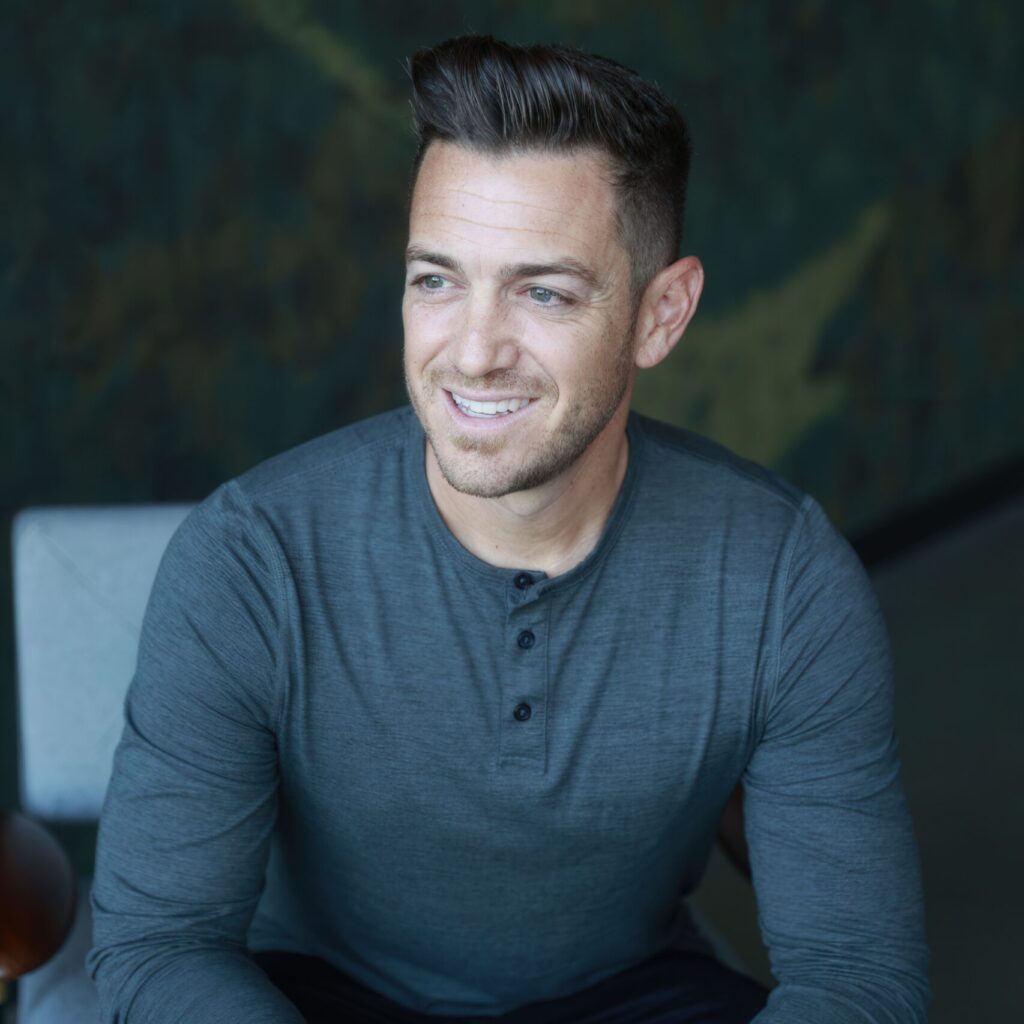
RV (00:02):
Well, I can’t wait to let you hear and listen in on this conversation with my good buddy, Graham Cochrane. So, Graham is a BBG client, and he represents, in my eyes, much of why we started the company, to find good people with real expertise, who are helping people and care about making a difference in the world, using their skills and talents to make the world a better place. He is a mission-driven messenger who has real expertise and a really impressive track record. So Graham is a seven figure entrepreneur. He has a podcast that reaches over 80,000 people every month. So he’s in the top 0.5% of all podcasters. He has over 700,000 YouTube subscribers, which is super impressive. I’m super jealous of that. And he does all of it in minimal number of hours per week. He’s been a Ted speaker, he’s a keynote speaker.
RV (00:56):
I know he’s speaking at some of my friends events, and I’m starting to see him more and more. We’re also in a Christian entrepreneur’s mastermind together. His wife and AJ are in an actual mastermind together. And so just an amazing guy and he’s got a new book coming out called Rebel. Find Yourself by Not Following The Crowd, and we’re gonna talk a little bit about that and how to just, you know, make money doing what you do and getting paid for what you know, which was kind of like more of his first book. So, Graham, welcome to the show, man. Good to have you
GC (01:28):
Dude. Pumped to have the conversation, man. It’s been fun to see our, our world collide over the last 12 months. A little bit more love what you guys are doing at Brand Builders. It is literally the best. Like literally, if you’re not in brand builders, you need to join. ’cause It’s the best program for getting your message out there holistically and building a business around it. It’s so well done, bro.
RV (01:46):
Man, thank you for that. I mean, that’s a powerful testimonial and, and to get it from someone like you who’s already, you know, doing a great job of it before we found you. I love that. And, and I just, I, I love your heart for what you’re doing. Everyone listening already knows I’m a hardcore bible thumping Jesus freak, and AJ is you are, and your, your, your wife is, and, and we got a chance to meet your family and that whole thing. But talk to me about Rebel, the title Rebel, and specifically the subtitle to me really spoke to me when I, I saw it said, find yourself by not following the crowd. So why is not following the crowd important? And I feel like we live in a world where people are constantly following the crowd and like looking at what other people are doing. And I feel like your book is like a very distinctively, diametrically kind of opposed message to that. So tell us about that.
GC (02:47):
Yeah, I mean, I think people are ultimately looking for fulfillment. You know, if you’re a personal brand or business owner, you want to be fulfilled in your business. And, and I have some thoughts on what leads to fulfillment, but t typically what we do is we almost abdicate the path to fulfillment by just looking at what everyone else is doing and saying, well, he looks happy. She looks happy. That’s how she’s running her business. That’s how he’s showing up online, that’s how they’re raising their kids. That’s how they’re thinking about handling their money. And so we just sort of copy what we see ’cause it’s easier. The, there’s already a flow. There’s already like a current of culture, of conformity moving in a direction. So the easiest path is the path of just doing what everyone else is doing. And the problem is, is that you’ll never find fulfillment by following the crowd because it’s gonna pull you further away from the way you were designed.
GC (03:36):
So we believe in a great designer and you, you know, this is true intuitively because you know what it feels like to feel out of alignment and then when you’re like in the zone or in your sweet spot, and it’s a lot easier to live in alignment. And I just think we’re afraid to a figure out what does alignment mean for us? Like, who, how are we designed? The late Dan Miller who was like, I, I had him on my podcast and he endorsed my first book and had a brief interactions with him before we lost him. But the two questions he always says that you need to answer are, who am I? And why am I here? And I, I, I agree with him on that, that we don’t know who we are. But even, but if we did the small but important work of finding out more about the way God designed us, the way we’re wired, man, we’d flourish in business. We’d flourish in parenting and marriage. We’d flourish in our relationships with money and people and spirituality. So it’s, to me, this book is a book about alignment and identity. But once you figure that out, man, you’re gonna be more successful. You’re gonna be more satisfied, you’re gonna be of more service to other people. And I think those are three things everybody wants.
RV (04:39):
So, yeah. And I think, you know, you used that word abdicate, which I really love. ’cause I think that it’s, it’s like this energy of almost like a a default mode. And I do think people basically like live, live their life in that way of like, I’m just sort of default. And I think probably at least the way I view it is few people wake up and go, yeah, I wanna do what everyone else does, and I’m just gonna follow the crowd. But it seems more of like, they struggle to figure out, how do I know, who am I? How do I know why I am here? How, how, how, how do I find that? So what insights do you have there? If someone’s like, well, I just don’t really feel like I’m that clear on that, what are the steps that they can take to sort of like, get clear on some of those things?
GC (05:28):
Yeah, exactly. So there’s a lot of ways to do this. The way I teach in the book, it, it is a, an acronym, rebel is an acronym. It’s a five part framework. And the, the r the beginning of it, it starts with resolving to dream again. So the R stands for resolve to resolve to dream. Again, my theory, my premise is that joy and dreaming and desires that I think are put there by God are the starting point to figuring out who you are. Mm-Hmm. The point of thinking about dreaming, the point of thinking about what fires you up, what you would love to, you know, in Tim Ferriss’s language dream of doing, being or having, like he says, like, if you’re the smartest person in the world and there was, it was impossible to fail, what would you dream of doing? Being or having, I, that type of questioning is a starting point for figuring out your identity.
GC (06:19):
Not the end, but the starting point. ’cause My my theory is that dreams are clues as to the way God designed us. We dream. We might have collective dreams that are similar for all people, but I think there’s a lot of uniqueness to the things you want to do, want to have people, the person you want to be, that are a, a, a clue to, maybe I should pull on that thread a little bit more, but the problem is, is like, as adults, I think that’s just beat out of us. Like, as a kid, this was so natural. Like we grew up dreaming. We knew what we wanted as kids. And then either culture at large culture, like in your home or whatever, told you this is the, the way, you know, sort of mandalorian star Wars. Like this is the way you have to follow it.
GC (07:01):
And very few people dream anymore when they grow up. And so they, they no longer know who they are. They’ve lost sort of themselves, and they, they’ve conformed. And I really think there’s a difference between the path of conformity and then the beginning of getting off of that path is dreaming again. And it’s really hard to do. ’cause We feel like dreaming is pointless. It’s childish. It’s my dream didn’t work out for me very well. I got burned by dreaming. There’s disappointment there. So it’s a very tender place, but that’s my theory. You start with dreaming again, 30,000 foot view might seem impossible. I don’t know what I’m gonna do with this dream, but it starts to tell you a little bit about the way you’re wired.
RV (07:34):
Yeah, that’s good. Brother and I, I mean, just as you were talking, I was, you know, sort of processing what you were saying and it, it dawns on me that like, you know, God puts a dream in your heart. If you, if you look at the inverse of that, the devil, if the devil stops you from dreaming, then the devil stops you from doing, right? Like, if you never allow yourself to have the dream, then the likelihood of that thing ever coming true, it basically becomes non-existent. And so the devil doesn’t even have to stop you from doing, if he can just stop you from dreaming, then it’s like, it’s like a seed that never gets watered. It never gets birthed. And so then it’s like the devil wins by default in terms of a spiritual battle. And just thinking about like a spiritual enemy of you know, and I think of that, you know, that’s what the scripture says, that, you know, the devil is a liar. I mean, that’s, he, he, he’s he’s a liar. He comes to kill and steal and destroy. And you go, if he plants a lie, like if God plants a dream, you should go do this. And then the level the devil shows up and just plants a lie on top of it, you could never do this then like you lose. So it’s like, which voice are you gonna listen to?
GC (08:43):
Oh, that’s so good. And there’s different lies. It’s either for some people he knows what’s, like, if we’re gonna talk spiritually, the devil knows what’s effective for each of us. So it might be, you know, you you’ll never be able to do this. The other lie could be if this won’t work out, and you’ll be incredibly disappointed. And there could be a huge fear of disappointment, especially if you had a dream that did die in the past. Something we, we talked about, about a year ago, I was doing a session with you. We talked about this identity crisis intersection about like, and I wrote about this in the book about when you have a dream, we all have had a dream. It could be a financial dream or a career ambition, or a relationship dream. Like, I wanna get married, I wanna have kids.
GC (09:21):
And then what happens when that dream dies? Well, we’re at this identity crisis intersection because our dreams are not compartmentalized. They’re part of, our identity is attached to our dreams. That’s why they hurt so much when we lose them. And that’s why they feel so good when we gain them. And so part of you dies with that dream. And so what most people do is they say, forget this. I’m gonna choose the path at this intersection. There’s two choices. I’m gonna choose the conformity path, put my head back down, be like everybody else, and say, Hey, dreamings for other people that didn’t work out for me. There’s no way I’m gonna do the opposite. Which is the other choice, which is to dream again. You know, maybe the, the divorce happened, you could choose to pursue another relationship and dream again. But most people are like, I don’t want to be hurt again.
GC (10:00):
I don’t wanna be disappointed. Again, it’s a tender spot. So we, we gave dreaming a shot once or twice, and then that was it. And I think I was just talking about this with Chris Cook on the Win Today podcast of like the people that seem younger as they get older and seem more full of joy in life are the people that continually let themselves dream again, dream new dreams. Maybe that dream didn’t work out, but what’s a different version of that dream? I could dream, you know, my first dream was to be a rockstar. Like literally try to get a record deal that fell through. I had to make some tough choices. But in a roundabout way, God put new versions of that dream in my heart, where now I’m in front of tens of thousands, if not millions of people regularly performing, sharing, creating, doing creative work.
GC (10:44):
I just didn’t wanna sit at a cubicle all day. And God gave me another way to do that. It was through YouTube, which didn’t exist when I was in college. You know, it was through podcasting, it was through books, it was through all this stuff. And so I never could have even imagined. But I think, yeah, there’s that lie of you’ll be disappointed if the dream doesn’t work out. It’s impossible. Dreaming is selfish. Depending on your, your origin story, your parents might have said, we don’t get to do what we want. We do what’s responsible we do with the families, businesses, we do. You’re gonna go to college, you’re gonna do this. So a lot of times dreaming feels selfish. So everyone’s story is gonna be a little different. But this is where, why I start with dreaming. ’cause It’s like so useful if you let yourself do it. But so many people have mental blocks around it.
RV (11:23):
Mm-Hmm.
GC (12:44):
Yes. Right. Because to do anything great, let’s talk about personal brands. Like to build a personal brand takes risk. Like anyone who thinks you can build a business without risk is, is not in the right mind. It takes risk. And so some people get scared away. But I think, and that was me when I thought about entrepreneurship, I never wanted to start a business ’cause it seemed risky. Mm-Hmm.
GC (13:21):
And so once I saw a vision of like, well, I, it’d be so fun to help musicians be so fun to be able to talk about music. And I was a freelancer at the time and do a little bit of everything. That was a big enough desire that made me want to take the risk. ’cause I had no idea what the business model was. I didn’t know who Amy Porterfield was. I didn’t know any, I didn’t know what a course was. This is 2009. You know, I’m like starting out in the dark ages and like trying to figure this out. But I think desire gets you past the risk. So if you’re gonna build a personal brand, don’t build the brand that you think you should build or someone else is building or build the business model the way you think. You, you’ve gotta really be excited about the thing you’re building to get you to take the risks necessary. And like you said, like horse correct along the way to get anywhere meaningful. And without that, I just don’t think we’re gonna take the risk. Mm-Hmm.
RV (14:07):
GC (14:15):
The e is to establish the outcomes you want in life. So if we’re resolving to dream again at the beginning, big picture dreams. I walk people through a 50 dreams exercise in the book. The E is to establish the outcome. So now we get clear on vision, right? And this is more of, okay, what what do I specifically want my life to look like? And I love, I kind of stole this question from Rich Lipin which is this just the simple scenario of imagine it’s three years from today, and I bump into you Rory, and I’m like, Rory, I haven’t seen you in three years. How the heck are you buddy? And you’re like, Graham, it has been the best three years of my life. I’m like, oh my gosh, that’s amazing. Let’s grab a coffee. Sit down. Tell me, tell me about that.
GC (15:00):
What would you be telling me about what would have to be true for you to say to me? It’s been the best three years of my life. And what I like about this journal prompt or thought exercise is two things. One, it’s open-ended. ’cause It’s not business related. It could be, it could be your family, it could be your finances, it could be whatever. But also it’s the timeframe of three years. Like, I’m not, like, I’m a big planner on the strength finders. I’m high on futuristic. I live in the future to my detriment a lot of times at the expense of the present. But 10 years, like people having a 10 year plan, it’s really, really hard because 10 years is so far down the road. I’m either gonna be highly unmotivated to take action today. Totally. It’s a decade away or I don’t know who I’m gonna be in 10 years.
GC (15:43):
10 years ago I was a totally different person. And so it’s just a tough thing to project one year. Like I, I kind of like New Year’s resolutions ’cause they give you a lot of urgency to like, let’s freaking go. And I like the, the boost of adrenaline, but then it’s hard to change your life in a year. And so you get discouraged and you give up three years, you’re close enough to who you kind of can project who you’re gonna be and what season of life you’re gonna be. And you can look at your kids, you can look at your life and go, I can kind of see in three years where I might be. So that’s, it’s reasonable to assume some things. And yet I think you and I both know that we can do a lot of damage in 36 months. Like we could change our body in 36 months. I could change my marriage in 36 months. I could transform my business in 36 months. And so that three year question allows people to go from dreaming big picture to man, what do I really care about that I would say it’s been the best three years of my life. What would have to be true? And now I have some specific outcomes I wanna move towards.
RV (16:39):
Mm-Hmm.
GC (18:01):
Yeah. You start to journal it out. There’s some sub-questions you can ask yourself. Like once you see that vision, like what are the opportunities in front of me right now that could get me to that vision that are just low hanging fruit? And then the opposite, what are the obstacles that I could foresee, external obstacles, internal obstacles that would prohibit me from making that vision come a reality. But the reason we do all this stuff, right, is like, and, and I have this with clients who come to me and say, Graham, I wanna, I wanna make a hundred thousand dollars a year in my business. And, and I’m like, Hey, go, go do this exercise. Go do the three-year vision. They come back and what it does is it exposes what they uniquely want. And I had a client who wanted a hundred thousand dollars a year in his business.
GC (18:42):
He wanted me to help him scale up. But when he came back from this exercise, what he discovered was actually what I want is to move to Florida and live closer to the beach so I can ride my bike or walk on the beach every day with my wife. I want to be able to have my wife stay home with our kids and work with me in the business. So my four kids, me and my wife are all at home together. We have more time together and we’re getting to work on something together. I want to be able to travel a little bit more and I want to be able to replace my car. Like he had very specific things and he was like, I wanna be working out every day. Like he had mapped all this out and he realized I don’t need a hundred thousand dollars a year, a month in my business to create that vision.
GC (19:20):
‘Cause The money is where as I coach business owners a lot, that’s where their minds go is a a dollar amount. But I’m like, the money is a just a vehicle. You really have a business to create the life you want and serve your life, not have your life serve your business. So like what, what kinda life do you want? And that’s gonna be different for Rory and me and my clients. Like, you’ve gotta get clear on what you uniquely want. And the reason why as a business owner, if you’re a personal brand, is that well then now you’ve got a much clearer vision to give yourself permission to not do what she’s doing, what he’s doing, what the trends say to do if it’s not in alignment with your vision. So if your vision is to work less than than 20 hours a week in your business, you probably shouldn’t be taking on a, a model of business that requires you to pump out content all day, every day.
GC (20:06):
And you’re a slave to the business. ’cause You’re now sacrificing your vision for making money. What if it got you to be curious about, is there another way to make money but have my vision of working less than 20 hours a week if that was part of your vision. So that’s where it starts to get more personalized to you so you know how to design your life and not just float. ’cause In personal branding, you’re gonna, everyone’s gonna copy everyone, but you’ve got some of the biggest clients in the world and everyone sees them, the Ed Millets and the Amy’s and all these people and be like, oh, I should just do what they’re doing. But maybe that’s not best for you and your personal brand. Mm-Hmm. Or your season of life or your unique challenges or your special needs child or your whatever. You gotta really get clear on what you want to do and make your business fit. That, that’s part of my heartbeat when it comes to business owners specifically.
RV (20:50):
Mm-Hmm.
RV (21:39):
I mean, like, it, it was hard. And, and I was thinking about that to myself and I was going, you know, people don’t give themselves enough grace for the season they’re in. Right? It’s like you’re looking at someone online who’s blowing up and it’s like if you got newborn kids, like you’re living in a completely different universe. Like you’re, you’re not even, you’re not even in the same game, the same league. Certainly not the same field. Like you’re in a completely different universe. And just having that, you know, both the dreams for your own life, but also the grace of failure of like, if it’s not happening so fast, it’s like, dude, there’s, you know, and, and having kids not having kids, it’s like, it’s two different universe, I mean, happening on this planet. Like they, they they’re completely different. Yeah. And each one has different, you know, things that come along with that.
RV (22:31):
And so I love that. And, and so, so the acronym y’all, R-E-B-E-L. If you want to know the rest of the acronym, you need to go get the book. Okay. So the book is called Rebel. By the time you’re hearing this, the book is out or really close to being out. So you need, you can, you can go get Gram’s book. I, I have one more thing I want ask you about before I let you go Graham, but like, but before I do that, where should people go if they wanna like get the book, learn about you, you know, stay in touch, et cetera?
GC (23:02):
Yeah, the rebel book.com will get you directly to the book. And if it’s before it comes out, there’s some pre-order bonuses there. But graham cochrane.com, the Graham Cochrane show, or on Instagram, the only place I hang out online is at the Graham Cochrane.
RV (23:17):
Cool. cool brother. So the last thing I always wanted to hear your thoughts on a little bit is how you build a business not working a hundred hour a week. I know this is something that you have made a focus in your life. I know that this is something that you have done. I know this is something that you have coached and advise people on. I would love to just hear a few of your tips or pointers around that and going like, I think a lot of people do think, I mean, entrepreneurship is hard. I mean, let’s, let’s be real. It’s, it’s like, I think there’s a, a lot of truth sometimes to that whole, like, you know, you quit a job working 40 hours a week for someone so you can go work 80 hours a week for yourself.
RV (24:03):
And a lot of times that is pretty, and then my experience has been that that is often true, especially like the first couple years. But like, you also have the freedom to design a business differently. So how do we design a business that works that way? The other thing I’ll say about you is I love meeting your family and I really learn a lot and like all I need to know about a person by meeting their family just to go like, you know, is this someone who’s just trading what’s happening at home for something else? Which is not necessarily good, bad, right or wrong, it’s not. It’s just, but I, I’m always very curious, especially of like people’s kids and things like that. And yours are so wonderful and your wife is so wonderful. So it’s, it’s powerful to me to to to go, alright, here’s someone who’s who’s doing this. And, and while, while they’re able to have this like really wonderful, beautiful family. So talk to about, talk to us about that a little bit.
GC (25:01):
Oh, thank you so much, man. And likewise, your family is a, is a, a, a treat to meet them and see them. And AJ is such a classy, classy person, and Shay’s really loved getting to know her. And I think they’re trying to stick together in their little small group inside this mastermind. But looking forward to doing more life with you guys. Man, I think we, we want the same things, right? Which is you really care about your family and you care about your faith and you care about other people and probably your community. And those are all things that are a time commitment. And so from day one, when I started my business, I was on food stamps. I was newly married, new baby planning a church. I was like a volunteer worship leader. Like I, I was like, I know God’s telling me to start a business, but there’s no way it can be a hundred hour a week business.
GC (25:48):
It just can’t. ’cause I, I am volunteering 20 hours a week at this startup church. I’m trying to become a dad for the first time. I’m, I’m still a couple years into marriage. So it has, I had parameters from day one that had to fit in. And so that was my set of circumstances, which I’m really grateful for because it taught me to understand something that’s just so simple, but it takes effort on the front end to do, which most business owners don’t do, which is really do the hard work of, of an 80 20 analysis on your business. Like I think people hustle because they’re lazy. I think hustle is just a, a form of laziness in disguise because people are, haven’t done the hard work of sitting down and slowing down and saying, what of the tasks I’m doing in my day, week, month, what of the offers I have, what are the lead gen strategies I have really are the, the 20% of the things I’m doing that are generating 80% of the results I need?
GC (26:40):
And that changes from season to season in business business. And I’m constantly putting everything under the gun, so to speak, of, prove to me that this task is worth it. Prove to me that that offer is worth it and I’m willing to let things go. Or I’m willing to not have the most perfect system as long as it gets me most of the results so I can do it in a minimal amount of time. And I became like a weirdo bro every year. I was like, I made it a game every January. How can I work fewer hours in my business this next year while increasing my income this year and just see what’s possible? And I haven’t always done it perfectly and economies change, things change. I’ve started a second business. That’s what I’m doing now. Now I’m writing and speaking and things are changing again.
GC (27:21):
But that’s always a mantra I have is I have to prove to myself that this task is worth it. I just think most business owners are doing a lot of activity and most of it isn’t moving the needle forward. It feels important, it might even look important, but I’m willing to not look as important. I’m willing to not look as active on social media or other places to have more of my time back and have the income and lifestyle I want. So it’s just a, it’s just a decision to analyze things and put it under the gun.
RV (27:50):
Yeah. That’s cool. I love that. I love that question. How can I work fewer hours this year while still growing the business? You know, that’s a AJ and I put constraints and parameters around our stuff. Like, you know, we’ve always said like, brand builders group cannot be more than 50 employees because then you get into all these other, like, it just becomes more complicated. There’s all these HR policies and like all these other things that come, come into play and it’s like, so what’s the most impact we can create with 50 employees? And it’s like, you have to go, what’s the impact per employee? What’s the revenue per employee? And it’s been really fun to, to fund to do that. We, we also, you know, we worked a hundred hour work weeks and the first business and brand builders, we said, we’ll work from nine to five and outside of that it’s up to God.
RV (28:36):
Like we, and so it’s like, how can I build a business? And this is the constraint. In, in AJ’s case, there’s two days a week and she, you know, she, she’d been trimming back more and more ever since we started to, to be, have more time with the kids. So I think it’s good to give yourself those types of parameters, those types of boundaries, those those types of challenge questions to go, how can I do this? Because if you ask the question how your brain will figure out the answer, it’ll start to cut what’s irrelevant. But if you don’t ask that, it’ll just fill the space with whatever shows up. So I really love that, Graham, I’m so excited about you and the book and just the, the future. I just, again, you know, we’re so proud of the people we get to work with as clients and just be a part of their journey and proud to hold people up and say like, look at, like these are the people who, who we get a chance to work with.
RV (29:31):
A lot of what I think we do that’s really brilliant at Brand Builders Group is we pick people who are gonna be successful with or without us and then we work with them right before they blow up
Ep 533: The #1 Best Way to Get Referrals | Sara Hardwick Episode Recap

AJV (00:02):
I’m gonna make this sweet. I’m gonna make this short, and I’m gonna tell you the number one way to get referrals. This is very easy, very simple. Give them first, if you wanna become an expert at getting referrals, then become an expert at giving referrals. There is no better thing to do in the world in order for someone to give you a referral than for you to give them one first. This, it’s an act of generosity. It’s an active initiation, it’s an act of service. It’s an act of you showing them, but you believe in what they do. But there is also this overarching law of reciprocity that just exists in the universe. That, and it’s, this isn’t why you do it. You’re not giving to get, you’re giving to give, but as a result of giving value, of providing connection, of establishing an introduction of giving something of yourself, there is this natural inclination in humanity to want to do that in return.
AJV (01:10):
It is harder for you to ask someone of, to ask something of someone before you have given them something first. I think that’s where a lot of sales hesitation comes from. And in this case, I think it’s where a lot of referral hesitation comes from. You feel bad asking, you feel guilty asking, you feel salesy asking. And I think a lot of that stems from a lack of confidence in conviction of knowing that you have provided them value before you ask. And there’s a lot of different ways that you can provide value. I’m just using this. One example of what you can do is give an introduction, give a referral first. There is value in that connection. There is a value in that introduction. I’ll make sure it’s a good one, right? But it doesn’t even have to be a professional one. Like maybe it’s a referral to a vendor.
AJV (02:04):
Maybe it’s a referral personally, right? But as you’re thinking about your network, your sphere of influence, your clients, past clients, whatever, pay attention, right? That requires active listening skills. That requires being present, but pay attention to what people are talking about, what they’re asking for. Perhaps it’s just a, a, a book recommendation, right? It’s a, it’s a connection of going, Hey, I heard you talking about this thing on our last call. I’m gonna send you the link to this book and then actually do it, right? That is providing value. Perhaps you heard him talking about taxes. It’s like, Hey, I don’t know if you’re looking for a new CPA, but mine has been amazing. Let me connect you to him. Perhaps they were asking for business, right? It was an I be like, you know what? I’m gonna inquire a little bit about that. I’m gonna say, Hey, person tell me, tell me
AJV (02:59):
Who it is that you’re exactly, that you’re looking for. Like, who’s a great client for you? Like, I’m gonna be intentional of going, okay, I’m gonna genuinely think about that and I’m gonna refer you to someone. I’m going to connect you to someone. That doesn’t mean they’re gonna buy from you, but it does mean I am listening and providing value to you through connections and introductions. Perhaps it’s a, a podcast episode. It could be a book, it could be a vendor, it could be actual business connections. Maybe it’s a personal connection. Maybe you heard someone say, Hey, we’re struggling to find extra, extra childcare help in the summers. And it’s like, oh, man, I have a whole deck of amazing people home from college. Let me refer you to them. Y’all like, the list goes on and on. If we can just reshift how we think about connections, introductions, and the word referrals specifically, it will change your mindset on what it is.
AJV (03:51):
Because really a referral is just an introduction, right? It’s a, it’s a connection. And that could be to a, like I said, to a book, to a podcast, to a course, to a, a vendor, to a, a prospect, to a, the list goes on. But what I know is that often the, the sales hesitation, this sales reluctance comes from a deep seated issue of have I earned the right to ask for this? Like, have I provided enough value that would, that would give me the confidence in asking for something in return? I, I know that it comes from that deep down for most of us, maybe not all of us, but for a lot of us. And I also know that some of us just aren’t gonna have that natural hesitation to ask for something. And that includes help, right? Which is really what we’re doing here.
AJV (04:38):
We’re asking for help. And so the best thing that you can do is not ask for it, but just give it, just give it and give it so well and give it so freely that the person then says, that was so generous, that was so kind. What can I help you with? What do you need help with? And then you need to be prepared, right? And that’s when you need to know clearly what do you need help with? What, what, who do you need to be referred with? What vendors do you need to meet? Like, what clients are you trying to connect with? And that, that is a clarity conversation that you need to have with yourself about who do I wanna be referred to? What I, what am I looking for right now? What would be helpful? Because I know personally, I get asked for referrals and introductions all the time.
AJV (05:25):
And the, and the other party can’t clearly tell me why or who
AJV (05:57):
Anyone in that seat right now, but let me make a mental note of this so that I know for the future. And I think that’s the other part about asking for referrals and asking for introductions is it’s not a one time thing, right? It’s not, there’s not, there shouldn’t be this huge buildup to this. One thing I’m gonna ask for this one time, and I hope I get it. It’s like this is a continuous thing, which means you should be giving continuously. It’s like how can you con consistently and continually provide value to those around you? And that means you’ve gotta be in their life. You have to know what’s going on. Could be through social media, through texting, through networking meetings, through phone calls, but this is called relationship building. Yeah, it is. And that takes work and it takes time. And that means it needs to be a part of your business strategy.
AJV (06:43):
This, this is a business growth strategy. This is a life strategy. This is