RORY (00:00)
analogy that I’ve landed on that’s really helped me with this is launching a rocket ship into outer space. And you go when you’re first launching a rocket,
like I think it’s like 80 % of the fuel is used just getting it out of the Earth’s orbit, right? Is this this gravitational thrust. And when you’re launching a company, that’s exactly how it is. It’s like getting it off the ground is so difficult, you have to do everything in your power to get it up.
AJ (00:28)
Ready?
When’s the last time that you bought a service from a company just because of its logo? And then ask yourself this, when’s the last time that you bought from someone that you know, liked and trusted? Here’s the difference between those two questions. We don’t buy from companies. We buy from people. We don’t buy logos and colors and typography and iconography. We buy trust and we…
by reputation. And that’s why for those of you who are hiding behind your company’s logo, thinking that’s what’s gonna help your company grow and you’re putting all your money into branding and advertising and marketing your company, those days are over. We are in the face forward era of why being the face of your company matters. And we’re gonna talk about exactly how to get you from out behind the logo and into the spotlight to help your business grow today.
RORY (01:30)
This is an important lesson for entrepreneurs, a lot of entrepreneurs who do hide behind their logo. And I want to I want to ask you this, right? So as the CEO of Brand Builders Group, you’ve got a lot of things on your plate. You’ve got a lot of things vying for your attention that do have are not the things that have to do with you being a face forward part of our business. Yes. But you also don’t particularly love social media. You also don’t particularly love like online
networking, you also don’t listen to like a ton of podcasts yourself, but yet you prioritize some portion of time inside of your schedule to make sure that your face is a part of everything brand builders group. How do you justify doing that when there’s so many other things that are vying for your attention? And how do you like make that calculation and consideration?
AJ (02:26)
It’s a genuine discipline. Today is a great example. We had time set aside to record podcasts today. This is the last thing that my brain was telling me that I should be spending my time doing. After three and a half hours stuck in front of financials trying to troubleshoot some things for Q1 close, justifying why I should go leave the finance team and disarray.
and come over here and record some content, my logical brain said, that does not make sense. My get it done, type A, task rabbit mentality was not telling me this is where I should be spending my time. The reason though that I do schedule for it and I do make the time for it is because I actually believe
that having an executive face forward presence of the company makes a significant difference and why people choose to buy from us, why people choose to work for us and why people actually choose to stay.
both employees and customers of Brand Builders Group. And if I spent all my time behind the scenes ⁓ working on spreadsheets or putting strategies together and I was never out in front, two things would happen. One, I would lose touch with what our customers, our community actually needed.
I’m not going to learn that in numbers on a spreadsheet. I’m not going to learn that in just the financials. I’ve learned that from being with our customers. I learned that from figuring out what problems they have, what needs they have, what they love, what they don’t want, they want more of what they want less of. And I don’t need to hear it third party. like personally, I like to hear it direct because I don’t have any filtering. The second thing is that if I’m always behind the scenes, I also lose touch with our team.
And they lose touch with me. Both things happen. And so I don’t get to talk to every single team member every single day, but this is a way to multiply my efforts, multiply our thoughts, our beliefs, our values, not just to our team members, which I do hope they listen, but I don’t know if they do. ⁓ but also our community, right? It’s a way of going, Hey, you don’t get to know the behind the scenes, everyday life of me. But when I choose to come out behind all of the
multiple calls and KPI reviews and month in close reviews and all the other things that happen. This is a chance for me to one help make sure that values and beliefs aligned individuals can find us and vice versa, but also team members. Then the benefit for me is that I’m not just looking at data. Data tells one half of a really important business story. People tell the other.
and you gotta have an equal balance of team member input and customer input to balance out the numbers. And that’s why I make time for it even when it’s highly inconvenient, even when timing definitely doesn’t make sense. But it’s like anything, if you don’t schedule it, most likely it won’t happen. And if this wasn’t on the calendar today, I guarantee you.
It would have been the first thing cut from my, just go make some content when you have a break. There would have been no break. There would have been no content. So it’s scheduling and prioritizing the thing that you believe will move the needle.
RORY (06:00)
So how do you, if you’re an entrepreneur and you have been sort of leaning into putting yours to your company brand and hey, I don’t need to be seen, it’s not about me, it’s all about, all that people need to know about is the company. And then whether it’s through our national research study, which if you go to freebrandstudy.com slash podcast, you can download where we talk about the data that proves how important.
it is for an executive to be seen or just through kind of what you’re sharing here or just through intuition that you go, okay, I do buy into that the idea that people don’t buy from businesses or companies they buy from people. And I do I do want to start building my personal brand. How do you separate your personal brand from your business brand? And how do you draw those lines? ⁓ How do you delineate? Like, what do you share personally versus professionally and how much
Do you share of your personal life? ⁓
AJ (06:58)
Okay, those are
a lot of questions. You pick one question. was 36 questions. Pick one.
RORY (07:05)
So how do you start building a personal brand if you’ve been, I’ll say hiding behind, solely behind a company brand? How do you go ahead and start building a personal brand without confusing your customer?
AJ (07:19)
I wouldn’t start with my customers. I would start with my employees. Yes, building a personal brand. I think for most people who’ve been hiding behind their company logo, they’ve been doing the same thing internally within their company. They haven’t been really allowing themselves to be known by their team of employees either.
RORY (07:23)
Building a personal brand. What does that mean?
AJ (07:39)
Right? They come up and they’re like, I’m the boss. I’m the leader. I have to know. I have to have the answer. I have to be the one to have it all together. I don’t think a lot of employers come in and talk a lot about their personal life or their personal beliefs or personal values. I don’t think they’re testing out content or thought leadership with their teams. I don’t think they’d, I think more people have a proclensity to actually record a video and share it with strangers than they do their own friends and family.
I find that to be true in most cases. And I bet if you asked yourself when’s the last time that you had an in-depth conversation with a friend or a family member about what you do versus how much you talk about it on social media, on videos, I think the percentage would be widely skewed towards talking to strangers than friends and family.
RORY (08:30)
So you’re saying that if an owner is not building their personal brand as part of building their business, they’re also probably not sharing much of who they are with their own team member internally. You think that’s usually going to be the case.
AJ (08:43)
I ⁓ almost always. And I would say you start building your personal brand by making sure that you have a personal brand within your own company. We just got off the heels of one of our twice annual speaker showcase events at BBG. And one of our amazing clients, Steven Hoschka, had this amazing quote, which I will be saying for the rest of my business career, which is, culture is the mindset.
of the company. And I think that a lot of companies that lack culture lack a shared mindset because the owner isn’t actually creating a culture that is from their mindset. I think a lot of companies have this culture that they’re like, well, this is what I want the company to be. But sometimes it’s even disconnected from who they are.
And I think that one of the things that entrepreneurs can do to start building their personal brand is just to start actually within the company of like, do my own employees, do my own team members, does my own executive team really know who I am? Do they know how hard it was when I started the company or did they just know the company today? Like, do they really know what I did before I started the company?
Did they know how hard I worked? Did they know why this was important to me? Do they know why I’m still here? Do they know what keeps me up at night? Do they know what my dreams are for the company? Do they know what my dreams are for my role and where my gifts are? Do they know where my challenges are? I don’t think most leaders share that. I definitely don’t think most entrepreneurs are sharing that. And I think the first place to start is you’ve got to build a personal brand within your company, your team members, your employees.
need to know who you are first. And I think that’s a great place to one. Well, one, it’s easier because you have a captive audience, right? You can schedule a team meeting and like, I got a keynote right here. Like you got a captive audience scheduling an all company meeting. ⁓ You already have a captive audience. It’s like, why not start with being like, hey, I’m going to start my very first newsletter just to my own company.
RORY (10:56)
help me understand, okay, if I’m an owner, how do I even think about what’s the difference between a personal brand and a company brand? Like, I understand my company brand, I have a logo, it’s my business. How would I, how do I define a personal brand? Because my identity is probably connected in many ways to the company I’ve built. you know,
AJ (11:19)
Well, I we say this all the time, right? The definition of a personal brand is the formalization, digitization and monetization of your reputation, right? So your personal brand is just the. Formulized reputation that you want to have, right? A simpler way of saying that is your personal brand is what people think about when they think of you. And I think the reason I would say the best place to start for entrepreneurs is within your own company is ask yourself or even ask your
team. What do you think about when you think of me? Again, you have a captive audience where you can make people respond and be like, does that actually align with how I want to be known? I think that’s a first gauge, a first point of going like, hey, if I really want to do this externally, I have to start internally. It’s got to be known with the people that I spend most of my time with in order for me to help get it known by a whole bunch of other people. So I think part of it, it’s like personal brand is just
Are you known for the thing that you want to be known for? What do people think of when they think of you? A company brand, and I say this all the time, it’s like a company is just a collection of other people, right? But how many times have you bought from a company and you’ve had an incredibly inconsistent experience just simply based on who you worked with? Sure. Right?
And therein lies what Stephen was talking about with culture is the mindset of the company and mindset is a shared set of values that starts top down. Right. But I think a lot of times we don’t do that. We want other people to do it.
And it’s like, that’s a great way to start. But I also just find it’s like, it’s a great way to test content and share things and see what resonates and make sure this is the thing that I want to go take public to make sure that it does have a connection point to my company. And the difference of a company and your personal brand, we think about an entrepreneur is your company is just the business model of your personal brand. It’s not a completely different thing that you’re going off and building. And I think that’s where people get really confused and they get it wrong. If you take
Either you or myself, we both have independent personal brands, right? Of course we do. We have our own reputations. We have our own messages, our own life experiences, our own life stories, but our business model is the same, which is brand builders group. My personal brand’s connection to brand builders group is that it is my business model. So my personal brand, regardless of what I’m talking about, is just helping generate awareness to brand builders group.
RORY (13:53)
a
lot of executives, particularly at large companies, assume that if someone’s building their personal brand, they equate that to like their moonlighting. It’s a separate, it’s a side job. It’s a different thing.
AJ (14:04)
PNB, but it doesn’t have
RORY (14:06)
And it certainly can be which can be can be an issue. But if they’re just directing all of that attention and awareness back to the company, it’s like each person is a billboard for the company, each person is 100 % is an advertisement for the company, like they’re out there in the community, which is like, well, they should be that anyways, to their friends and family. It’s like, people ask, where do you work? What do you do? And it’s like, that is an opportunity for every
team member to be a contributor to lead generation and marketing for
AJ (14:35)
It’s
like every person’s bio has what their role is and where they work. Like, I mean, it is a walking billboard. I say this all the time. It’s like, no one ever has ever hired a company to be on a podcast. Companies don’t speak on podcasts. Human beings do. No one ever has booked a company to be featured in media.
It’s the owner of the company, the founder of the company, the executive of the company. No one has ever hired a company to come speak on their stage. They hire people from companies to come speak on those stages. And so I think that’s a huge part of what we need to recognize is a company isn’t hired to sit on a panel. A company doesn’t get the community service award. Those are people, right? And people make up companies. And so for entrepreneurs,
Really what you have to think about is like, are the walking advertisement for your company, for your mission, for your values, for what you believe in, for your customers, for the service, for your team. You are the walking marketing campaign.
RORY (15:40)
Same, same for a nonprofit, church like.
AJ (15:42)
All of
You have got to be the thing that is just, you know, bubbling over ⁓ with everything that is your company. And your company also needs to be a reflection of you, right? Like you got into it for a reason, right? There’s got to be a connection of what you do and who you are. ⁓ And a lot of that has to do with like, there’s some sort of belief that you have, ⁓ a customer segment that you want to serve, a service that you just deeply believe that matters.
in the world and you just got to find that connection and become a massive advocate for it. And I believe that’s how entrepreneurs build their personal brands that thus help their companies grow.
RORY (16:26)
What would you say to an executive who’s who is just a little bit nervous about being on camera and being on stages and being out in front of people? So if they buy into this idea of like, yeah, I think me broadcasting more of my personal convictions around why we do what we do and who we want to be could be valuable for the company in many different ways. But I don’t love being the center of attention. I don’t feel comfortable on camera. I don’t really like even speaking on stages like
Do you think it’s so valuable they should get over that or like what would you be advice to that?
AJ (17:01)
I think there’s workarounds for every single one of those. Another reason why I say start with your own internal team first. ⁓ A part of that is practice. part of that is ⁓ anything that you do for the first time is a little awkward, uncomfortable, and scary. It only gets less awkward, less scary, less uncomfortable the more you do it. And yeah, you probably won’t be good at any of it the first time you do it. Who’s good at anything the very first time? First podcast probably won’t be as good as the 100th. First time speaking, it’s not going to be as good as the 100th.
that’s just the process of doing it. But I think the thing that I have found most people think is they have pigeonholed what it means to be in media, be on a podcast, going out and being a representative in the community. And it’s like, if you’re like, I have stage fright, I can’t speak on stages, well, then be a panelist, right? Be on a panel and just let people ask you questions. I have found most people can do that exceptionally well, if it’s in their industry, if it’s in their space.
They have massive expertise, but the idea of standing on stage by themselves talking to a big audience, but find your work around. How about doing a Q and a, how about being on a panel? So same thing.
RORY (18:12)
think it’s powerful for an executive to do anything where they’re having to overcome fear because it’s like it’s a communication to your team like I’m learning new things, I’m struggling with new things, I’m dealing with change.
AJ (18:26)
But I do think it’s a it’s a leader goes first mentality. If I’m asking my sales team to get out there and show up and knock on doors, then I got to be willing to do that. If I want my team to go out there and generate leads, then I got to be willing to do that. That doesn’t mean that’s 100 % of my time and focus, but I got to be willing. Be like, you know, project Maverick. We talk about that a lot. Like I love Top Gun Maverick. And when Tom Cruise at the very end of the movies, like I got to jump in the jet and show these other pilots that it came
be done. I have to prove it. I have to go first to show them this can be done. We as entrepreneurs get the opportunity to do that for our teams but also for our customers.
RORY (19:08)
What about ⁓ here’s a viable concern that I think entrepreneurs sometimes have and I don’t know that I have a great answer for this and I’m curious to hear what you would say. The valuation of a company, one of the things that drives down the valuation of a company is if a company is dependent on the founder, the more dependent on the founder, the less valuable the company is. And so they equate, if I build a personal brand to help grow the business, then that
ties the valuation of the company more to me and I want that to be separate. Do you think that’s true? If so, why or why not? And how would you how would you think about that? And then and I’ll share I have an analogy for this that I’ve kind of come around to over the years.
AJ (19:52)
You know, I would say the realness of that is the fact that anyone who is going to be buying your company is most likely going to keep you on board for one to three years for that exact same reason. They know how valuable you are and it’s why they retain you as a part of the contract.
It’s like, then there’s a phasing out. There is a filtering out. I know very few exits where the owner sold and was like, I’m out 24 hours later. There is a phasing out because there is trust and value that has to be transferred. And the trust transfer happens because you transfer the trust as the owner.
And so I’d say one, that’s just a big nonsensical thing of like, well, you’re going to be retained anyways to ensure all things go aligned. Otherwise all your employees would bail, all your customers would bail. So you’re going to be retained anyways. There’s going to be a phasing out naturally. But the other thing I would say is like, that would only be a concern if you’re trying to scale something to sell it, right? And if that’s the only thing you’re doing, it’s like, well, guess what? The quickest way to scale it is to build trust.
And so I would say one is like, doesn’t matter how you cut that pie. It doesn’t really make sense when you talk about what’s really going to happen in an exit.
RORY (21:09)
Yeah, I think you go…
whether you build a personal brand or not, if someone’s buying your company, it’s because the value you’ve created, which is largely because of you. That’s right. And the faster you can grow a company, the more valuable it is. And if a personal brand is something that’s going to accelerate the growth of that company, then you should do anything you can do. Anything you can do to speed up the growth of the company is a good idea. The analogy that I’ve landed on that’s really helped me with this is launching a rocket ship into outer space. And you go when you’re first launching a rocket,
like I think it’s like 80 % of the fuel is used just getting it out of the Earth’s orbit, right? Is this this gravitational thrust. And when you’re launching a company, that’s exactly how it is. It’s like getting it off the ground is so difficult, you have to do everything in your power to get it up. And so you have these rocket boosters that are on the side to launch it into outer space. And then once you clear the Earth’s orbit, those boosters kind of fall off and go away. And so what I would say is like, man,
When you’re launching a company, you have to do everything in your power to make it succeed, anything that will help you grow, survive, thrive, sustain, it’s like you must do it. And so if your personal brand is that and the data suggests very strongly and clearly that it is that you should be using that to grow it.
And then, you know, if there’s an exit on the horizon, or you reach a certain point where you’re starting to think about that, it’s like, okay, then maybe you could think about like, kind of breaking that off. ⁓ But I think you’re on it too, which is if if you sell the company, no matter if you have a personal brand or not, they’re still going to have that issue. So what difference does it make? It doesn’t. And even if you keep the company,
You know a company we’re selling looks a lot like a company worth keeping we say that a lot is to go at some point you need to make sure the business is going to operate without you right but here you and I are going we’re going to use our personal brands to grow this company and get it going and Maybe one day it could survive completely without us. That would be a good thing That would be a healthy thing, but there’s no reason not to like increase the viability of success for everybody by by doing it so
Either way, think it’s like, think that’s mostly just an excuse.
AJ (23:27)
I think there’s a couple of things that I would just encourage entrepreneurs, small business owners to remember is like building a personal brand ⁓ has four amazing components to it that will actually help your company. The first one is it helps with customer acquisition. Then it helps with customer retention. Then it helps with employee acquisition. And it helps with employee retention.
And those are four big components that people just don’t think about. They don’t talk about. And those are four things that a founder.
an entrepreneur should be doing no matter what phase of your business that you’re in, helping acquire customers, retain customers, acquire employees, retain employees. It doesn’t have to be your full-time gig, but it is a part of your gig as the business owner, and building a personal brand helps you multiply and expedite those efforts. It really is about accelerating trust, and the amount of customers that learn about you,
from a panel that you sat on, that doesn’t mean they’re going to run to your company website and buy from you. But they’re like, man, when I need that, I’m going to retain this little bit of information that I heard, or I saw, or I witnessed. Or when your employees start talking about, this is the type of person that runs our company. That matters when I’m
hard things come or hard times come or you need employees, then you put your employee force out there for you to help recruit. Same thing happens with your customer first. When you have a really aligned customer base, they help build more aligned customers. But that only happens when you’re attracting people that
share the same values and beliefs that you do. How can you attract those people? They know that you have them. How do they know you have them? You tell them.
RORY (25:22)
Yep, absolutely. ⁓ Well, I think that’s an important conversation for entrepreneurs and executives to understand. it’s just like, man, in the world today, it’s like whatever you can do to drive revenue. And beyond the data of this, right? So again, if you go to freebrandstudy.com slash podcast, you can download our national research study of ⁓
we invested over $100,000 into this PhD led study to answer some of these questions about how much does it influence, how much does the personal brand of an executive influence the average person’s decision to buy from you, recommend you, work for you, vote for you, hire you, date you, all of the things. But even just common sense is to go, would you rather work for a company
where you knew nothing about any of the people who worked there in senior leadership, or where you felt like you knew the executives of the company you were going to work for.
AJ (26:18)
think of just one teeny tiny story that happened just a couple of weeks ago. ⁓ We were in a finance meeting and I kind of sit as CFO at the current moment of Brand Builders Group and our bookkeeper was asking me as we were hanging up the phone, she goes, how’d you get into being an entrepreneur? And she was like, it just feels like.
You know, you’re a mom, you have two kids, like this is a lot. And I laughed and I said, it’s in my blood. She goes, what do you mean? I thought, oh, I’m a third generation entrepreneur. And she goes, how so? And I said, oh, my grandfather started a company and his wife was his business partner. And then my dad bought out my grandfather and my mom was his business partner. So being business partners with my spouse and running a business is the only thing I’ve ever known. I grew up with all our aunts and uncles
being the employees of my dad’s business and Christmas parties and birthday parties were mixed of company team members and family members and friends. It’s like it’s all I’ve ever known. I don’t even know how to do it any other way. And she laughed and she was like, wow.
That’s so helpful for me to know about you. She goes, that actually makes so many things, makes so much more sense right now, and the way that you choose to run things here. And I was like, yeah. And she goes, I’m so glad that we had that 10 minute chat. And I think a part of it is that’s never come out publicly.
I don’t promote that, but that one little conversation was so helpful for her to go, I just needed to know who you were. I just needed to know where you came from so I can relate to these, you know, conversations where you have such a strong conviction on how it should be. And I’m like, well, that’s because I was raised in this. It’s the only way I know how to do it.
RORY (28:09)
And had you not married such a pretty boy mama’s boy, maybe we’d be in a construction business together. But since you married me, personal brand strategy it is, ladies and gentlemen.
AJ (28:18)
But
it starts, building a personal brand really does start with one-on-one conversations just like that. I love that. No, regardless. Regardless of how, but it’s like those little stories do matter. Helping people get to know you, it matters.
RORY (28:26)
your story.
All right, that’s a good on the topic of community and community questions. This is something that we do on every segment we give our members, our monthly members who are in our program, a chance to ask questions and basically vote them up on what they would like us to answer here on the show. So this question comes from Kevin. He says, I’ve been running a successful accounting firm for 11 years. My company has a strong local reputation, but I want to expand nationally and attract higher end clients.
Everyone keeps telling me I need a personal brand, but I’m genuinely not sure how to separate me from the firm without confusing my current clients or undercutting the business I’ve built. How do I build both at the same time without one hurting the other?
AJ (29:21)
Well, I would start with ⁓ making sure that as you’re building your personal brand, you have a direct connection that the purpose of that is to generate leads for the accounting firm. That’s how you don’t undercut it. It’s like, no, I am going to build my personal brand as the founder of this accounting firm.
And a part of that is, you know, we talk about this all the time, is your most powerfully position to serve the person you once were, right? So what audiences are you speaking to? Hopefully they’d be in the space where you can help people who have accounting needs, right? Because that’s what you’ve been doing. You’ve been serving businesses who rather need fractional support or tax support or whatever it is you’re doing, but it’s like your personal brand.
I think a lot of people get confused with, I have to go start a new business. I have to launch some sort of product or a book. No, you don’t. Most people build their personal brands with intentionality to simply drive leads to their existing business. The second thing people get mistaken all the time is, I have to go build some new audience. No, you don’t.
That’s the hardest, silliest. Don’t do that thing, I can tell you. It’s like, no, you build a personal brand and you start sharing the message with the audience you already have, which are all the clients and all the prospective clients that you’re currently serving. That’s how you go and reach more. That’s how you go from a local brand to a national brand without undercutting either thing.
RORY (30:45)
Yep, I 100 % agree. think the big misconception here you touched on it is that people
inappropriately equate the term personal brand with a business model or a new revenue stream. They go, they, this is inaccurate, but this is what they think. If I’m going to start my personal brand, I need to start making money as a speaker, as a podcaster, as a book writer, as a course creator, as a membership, blah, blah, No, you don’t. In fact, the fastest path to cash is to use your personal brand as a lead generator for your current business.
the most simple, most common, most profitable, and the highest percentage of our clients are just simply using their personal brand as an accelerator for their current business. It’s less like they’re starting a new company, and it’s more like they’re launching a new marketing initiative that funnels into their existing business, a super high powered marketing initiative, which is the personal brand of the founder or executives, multiple executives feeding into
the business. so that’s just a common misconception that people have that leads them astray. And and so I think use your personal brand, talk about what you do, talk about what you believe, talk about your expertise, there is no difference.
AJ (32:02)
and talk about it to the audience, that would be your prospective clients.
RORY (32:06)
Right. And drive, you know, so it’s like, this is not two different things. You shouldn’t be confusing anybody. This is a very aligned like use your personality to drive to drive more revenue and leads into your current business.
Other than that, if you’re like really trying to start a separate business, I wouldn’t call that building a personal brand, I would call that starting a separate business. So I think executives and entrepreneurs should think of it less as like, oh, I’m starting a new business like a personal brand as a business. And you should just think of it as more of I’m using my personality to grow my existing business. Maybe that will help you make the distinction sharper and clearer. So that’s a great question from Kevin, a common one.
AJ (32:51)
Yeah, and I would just encourage for anyone who’s out there listening that you’re an entrepreneur, you’re a small business owner, and you’re going, okay, I’ve heard people say this enough times, I’ve thought it about enough times, maybe I really should explore this, then I would really encourage you to schedule a call with our team and you can go to freebrandcall.com forward slash podcast and request a one hour strategy call to talk about how do I build my personal brand to help grow my business. And that is how it can really help
you as an entrepreneur is to generate leads to funnel them to your existing business so you can grow and scale it. So freebrandcall.com forward slash podcast grab a call and let us help you explore.
RORY (33:33)
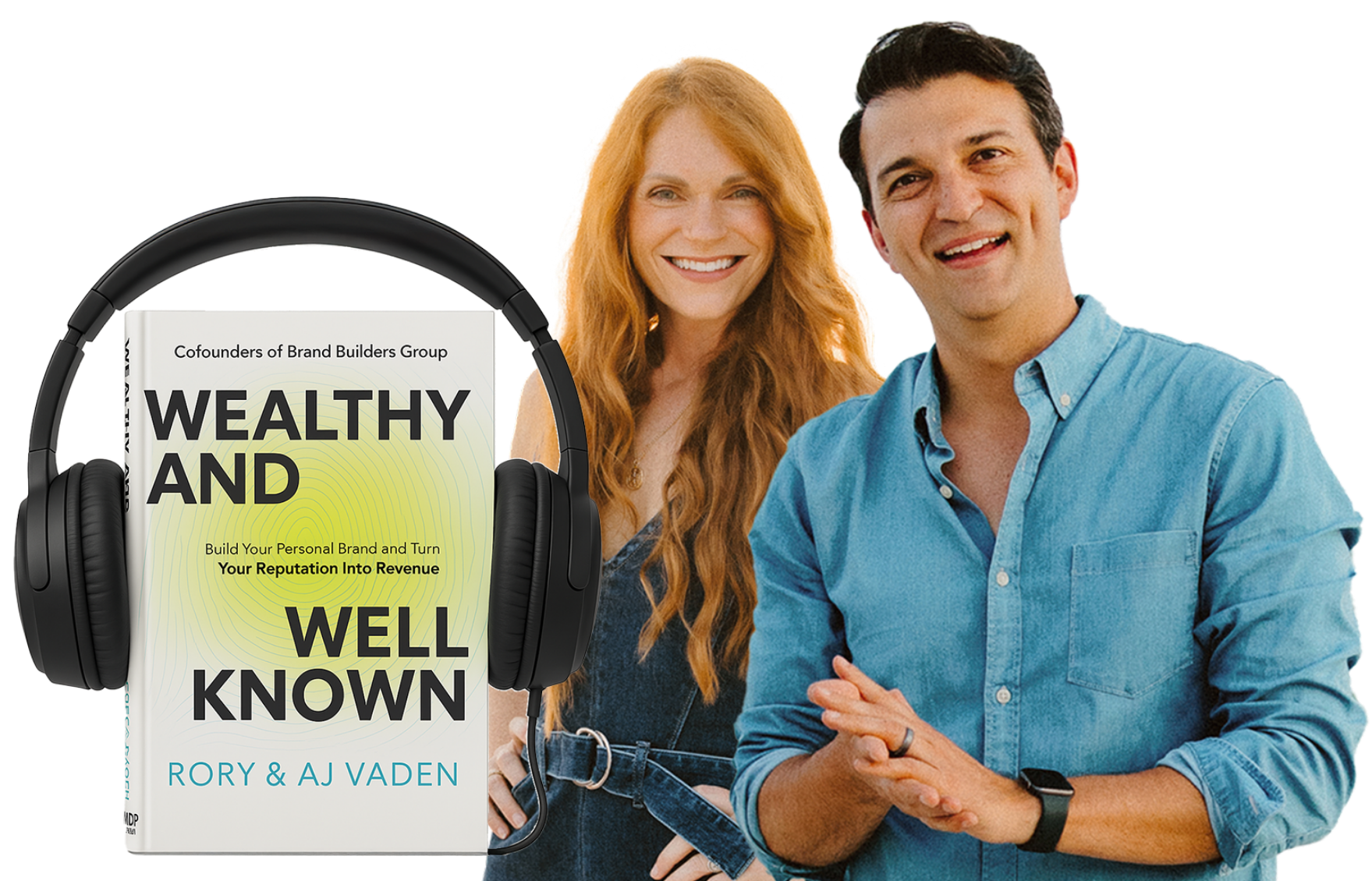
And if you know an entrepreneur that is out there who needs to do a better job of building their personal brand or who could have more potential growth for their company, share this episode with them. ⁓ Give us a ⁓ like, a subscribe, comment, review this podcast wherever you’re watching or listening to it. We’re so grateful for you. We’ll catch you next time on the Wealthy and Well-Known Podcast.
AJ (33:55)
Look guys, your logo cannot shake a hand.
RORY (33:59)
We’re not saying your logo is bad. It’s just emotionally unavailable.