Rory: [00:00:00] Every time I hear the word authentic, I throw up a little bit in my mouth. I don’t like the word why. I just, I feel like it’s people pretending not to pretend. Like when they, when, when you, when I think when you show up and say, I’m gonna be more authentic, it’s like. You are going to be less authentic because you’re, you’re consciously thinking about what you’re gonna say.
And to me, it’s like, if I’m consciously trying to curate what I’m saying, then I am not being authentic.
AJ: I’ve asked myself a lot the last few years, like, where did this come from? Have we all been inauthentic for the last 20 years? Like what? Mm-hmm. What happened to create this movement towards be, be more authentic?
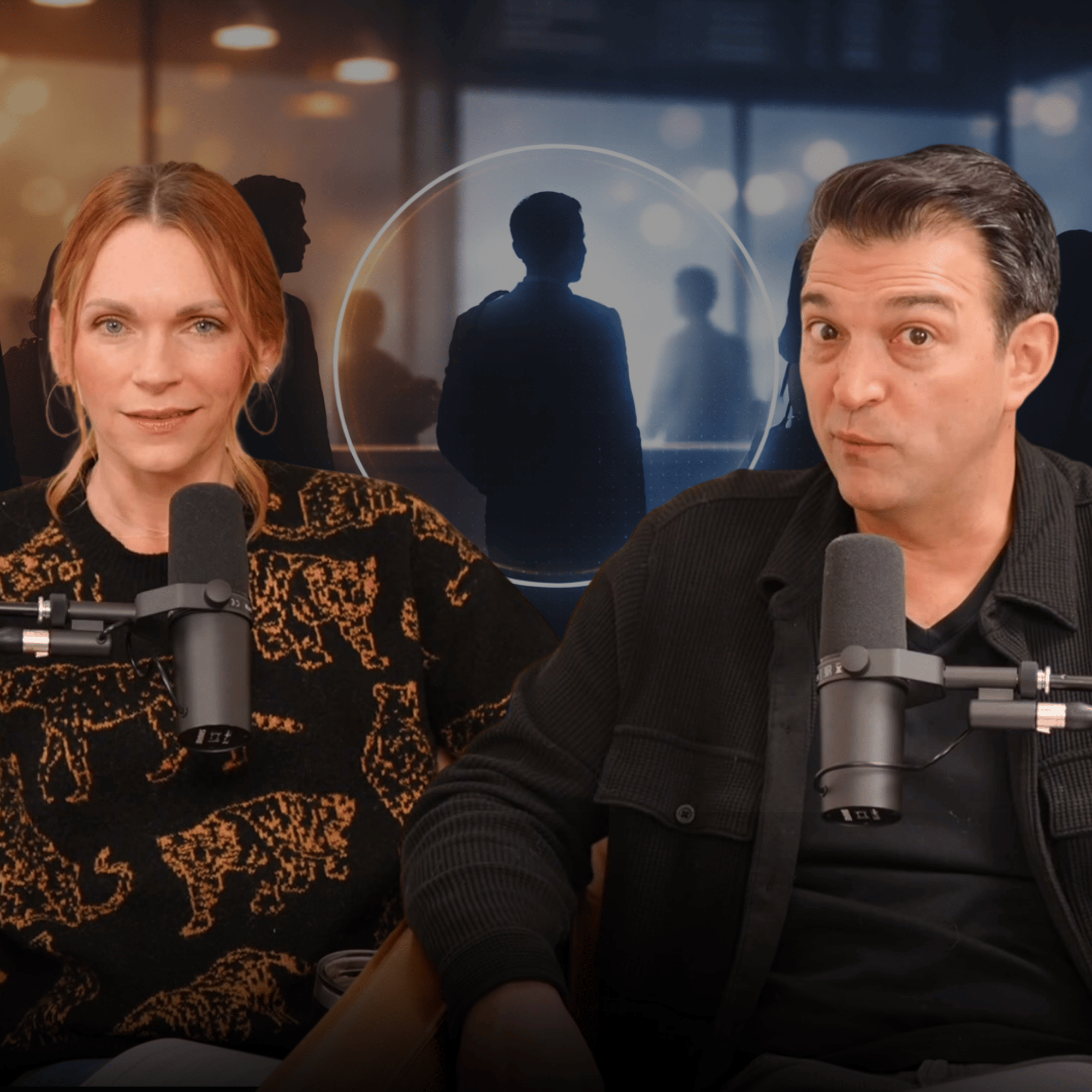
Rory: What would happen with your personal brand if you stopped trying to be interesting [00:01:00] and you instead just focused on being honest? Welcome back to the Wealthy and Well-Known podcast where we help you build and monetize your personal brand to grow your influence. Your impact and your income. Today we’re gonna be talking about the power of authenticity with a personal brand.
What are the mistakes people make? What are the right ways to do it, the wrong ways to do it? And as always, I’m joined by my beautiful wife, my best friend, my business partner, and my co-author and co-host AJ Vaden.
AJ: That’s a lot of, that’s a lot of things. You have a lot of titles in my life. I do. I do. But
Rory: you do a lot of, you do a lot of things.
True. Uh, here’s the opening question we got. How do you express. An authentic brand in a way that increases trust and conversions and doesn’t create confusion.
AJ: Yeah. Well I think before we kind of get into that, I think the word authenticity gets thrown around a lot today. A lot. Like a lot. Uh, and I think it’s good to define like, what do we [00:02:00] actually think is authenticity.
Rory: I mean, I will say. Authentically. Every time I hear the word authentic, I throw up a little bit in my mouth. I don’t like the word why. I just, I feel like it’s people pretending not to pretend. Like when they, when, when you, when I think when you show up and say, I’m gonna be more authentic, it’s like. You are going to be less authentic because you’re, you’re consciously thinking about what you’re gonna say.
And to me it’s like, if I’m consciously trying to curate what I’m saying, then I am not being authentic. I guess that’s just how I process it.
AJ: That’s pretty cynical.
Rory: Is it? Yeah. I don’t, I mean, yeah, I guess, I guess I think if, if you’re authentic, you’re allowing yourself to be seen. You’re not trying to curate.
AJ: I, I think maybe even a better place to back up and start is [00:03:00] why has there been this, uh, insurgence, right? This unbelievable amount of content around the importance of being authentic. And I think that’s, I’ve asked myself a lot the last few years, like, where did this come from? Have we all been inauthentic for the last 20 years?
Like what? Mm-hmm. What happened to create this movement towards be, be more authentic? Let’s talk about authenticity. ’cause you’ve got, uh, all these speakers talking about authentic leadership, how to be authentic online. So I think it’s actually a really important thing to talk about. Well. Where did that come from?
Why has that been such a topic of conversation the last few years? And I agree to some of what you’re saying, like, Hey, we hear it so much right now. Now much, you’re just inundated with authenticity. Be authentic. Uh, what does it mean? And at the same token, I, I don’t wanna be cynical in the God. It’s like, well, at some point there [00:04:00] must have been enough of us who are going like, man, I’m, I’m not being me.
I feel like I have to be someone else to be successful, to get promoted to, uh, be seen, or I, I have to show up differently. There has to be enough of that going on in the world. And I’ll just say specifically for the United States where we live, that it has become a topic of conversation. And so I often ask myself like, what?
What was happening culturally or in business or in the home that made us all go, like, why do I feel so inauthentic? What’s happening around us that has made this be a topic? Then I think it’s worthy of us defining for this conversation what we define as authentic. What is authenticity? Then we can answer some of these questions, but if we, if we don’t back it up, then, you know, to your point, it’s like we’re just, uh, adding more fuel to a [00:05:00] conversation that is this really worth talking about?
Is everyone else talking about it or should we back up and go, where did this come from?
Rory: Yeah, I mean, I think the conversation started with people pretending. People feeling like they had to curate how they were showing up both online and offline. I actually have a lot more appreciation for somebody who feels inauthentic in an offline world than an online world.
Um, because I think if someone feels like they’re having to pretend to be someone they’re not in an offline world, that I think is just exhausting and, and sad and painful. That’s where you lose relationships and you lose yourself and you, uh, you know, I think that that really struggles, but I think that’s not, I don’t think that’s as much what people are talking about.
I think, to answer your question, this all began with filters online. It all began when everyone had a video camera in [00:06:00] their pocket and everyone started taking selfies of, of themselves. Uh, we all started taking selfies. Then people were filtering it and using airbrush, and every single person was literally editing the way they looked.
And then the other thing is we were trying to appear successful and appear happy. And so the only things we shared on social media was the highlight reel.
AJ: Hmm.
Rory: That’s where I think it began, or how I think it began.
AJ: That’s interesting. I don’t think that’s accurate at all. It’s just the beautiful thing about two different worldviews having two different, yeah.
Rory: So what I’m curious, genuinely
AJ: social media and the emergence of all things digital simply revealed, magnified, multiplied what was already happening, happening all around us in everyday life.
Rory: Sure.
AJ: I think that’s all it did. I think every single bit of these, uh, [00:07:00] whatever word you use, pretending, um, was already happening.
This just multiplied it. It’s like I think about all the personal or professional encounters, um, that I’m in online, offline, but specifically offline for most of my life. Like, think about like even bible study conversations. It’s like it’s really hard for people to share the hard parts of their life. I think about all the professional, uh, meetings and endeavors and board meetings, and it’s like you very rarely actually know how someone really feels or what’s happening at home, how, how hard their home life is or the, the tragedies that are happening all around them.
You show up and it’s, you know, you leave your problems at the door and you come to work like this and it’s like, there has been that era that, and this tone of, uh, pretend like everything is okay. Right, whatever’s happening at home. Leave it there. You’re at work today. Uh, or, you know, I think about, uh, I, I’ll just use myself as an example.[00:08:00]
It’s like when I got fired from our former company, it took me two full years to say, publicly the words I got fired took me two years. And so I think for a lot of it, it’s like there’s this idea of like, I have to be a certain way. I have to look a certain way to be accepted. To be seen as credible. To be seen as worthy.
And then with the emergence of digital platforms and social media, my goodness, that just amplified everything. And I think that’s also why many of us are struggling with mental health issues offline, is because we were already pretending and now we’re portraying this life that isn’t even ours. And you look online and you don’t even recognize yourself.
You’re so airbrushed, you’re so touched up. Uh, it’s this highlight reel that’s not even close to reality. And then you go, wow, like that’s not even close to my life. And it, it creates surface level relationships. It [00:09:00] creates surface level conversations. And I really do believe that is why the words authentic and authenticity happened viral the last few years is because people started feeling the reality of.
I’ve never really shared myself, and now I don’t even recognize myself. I look at my own feed, I look at my own relationships and I’m like, who is that? Uh, and now I think we have an entire generation of people who are afraid. They’re afraid to actually go back and say all this stuff that you see. None of it was real.
Rory: So here’s, here’s, I think as you’re talking. I agree with all of that. Where I, where I kind of have the like distaste for the word is going, let’s say that’s what I’ve shared online is like this highlight reel and then all of a sudden somebody says, you should be more authentic. And then I deliberately [00:10:00] start sharing like.
I, I, I, I deliberately start talking about topics that are so personal that I would not normally talk about online. I think there is an element of prudence to, to, to certain topics that you talk about online and certain ones that you, that you don’t. And so now all of a sudden you’re like, so, so my issue is not with being authentic, my issue is with.
Pretending to be authentic, to get more views. Pretending like,
AJ: so what’s the difference? What, how do you know if you’re being authentic or being, or pretending to be authentic?
Rory: Yeah. I think only, you know, as a person, but it’s like if I suddenly go, here’s a, here’s a great example, right? I know that people love to hear stories of failure.
I know that, right? We know that those, those, those stories will perform better online. [00:11:00] If there’s a part where I go, I’m gonna come and just tell my failure stories just so I can get more views. That to me is incredibly disingenuous and disingenuine and inauthentic. I think it’s okay, like if you have a story about failure, that’s like a meaningful story and you think about it and it’s weighing on your heart and it’s relevant to the conversation.
I go, let me tell you about the, the, the stupidest mistake I ever made about mis titling my second book. But if I go, okay, let me brainstorm all the times in my life where I failed so that I can make a reel about each one of them so that I can get more views. That is the, uh, like that is the part, and
AJ: that’s the, that’s the cynical part.
I guess I’ve just, I have intentionally put a filter through my own lens of going. I’m sure some people may do that. I’m just choosing to go, that’s not what people are doing it. Even if they are, I don’t [00:12:00] care if it helps somebody else. Like I don’t even care. Like if they’re doing it just for the views, I still believe those stories are gonna reach the right person at the right as long as they’re true.
Right Now, if they were telling untrue stories, well that’s different. And
Rory: it’s, it’s, it’s particularly that it’s an embellished. An embellished version of my failures that I think people, it’s going, I’m going to deliberately tell stories about my failures and weaknesses, and I’m going to embellish them so that people relate to me more.
That’s what I see when, what I feel like when people are like, oh, I’m gonna be authentic online, so now I’m gonna tell like more embellished stories of my negative things, and I’m like, I’m like. You are a successful person. Why don’t you tell people about successful things that you’re doing? Um, I think
AJ: people don’t really want to know all of the successful things, and I think it’s not that you shouldn’t share those, clearly those are [00:13:00] credibility, you know, builders, and that’s helpful.
But I think the, I think the tone has changed because that’s all we’ve been doing. It’s like, look at someone’s bio, look at their introduction. It’s best thing I ever did this award, this title, this accomplishment. Um, I’ve never in my life read a bio on stage or doing an interview like this that did a highlight reel of the worst mistakes you’ve ever made.
Mm-hmm. And I think that we’re trying to counterbalance the only, share the successes, only the victories, only the awards, only the accomplishments, only the highlight. Highlight, highlight. Because I think there’s, there hasn’t been enough of the pendulum swinging the other way, so maybe it swung a little too far and it’ll settle back in the middle.
Uh, I just, I think this is an interesting, I had no idea you felt that way, first of all, about this. This is, uh, an interesting revelation for me over here of going, wow, there’s a little, there’s a little cynicism over there. Uh, but I had no [00:14:00] idea that you felt that way.
Rory: Well, I think I just have. General, a general distaste for anything that someone does that’s disingenuine for the purpose of building their platform.
That’s the part that really triggers me. Okay. And I go, like, if you wouldn’t have coffee with me and tell me about your failures, don’t do it online just because it performs well. That’s the part that drives me nuts. So is, is, is going like. Um, I, I guess, I guess that’s, I guess that’s it, right? I, because then it’s like, just like you were pretending to be successful online, now you’re deliberately pretending to be unsuccessful or like you’re deliberately pretending that you’re struggling.
That’s my, if somebody is really struggling and they want to share it, amen. And, and that’s it. As I think there’s a lot of [00:15:00] people when they say they’re being authentic, they’re actually genuinely being even more inauthentic. They’re deliberately manufacturing feelings of weakness or sadness or failures.
And that to me is what makes me throw up in my mouth, where I’m like, you are pretending to be you. You’re, you’re, you’re, you’re, you’re doing the same thing you were doing before. Curating a highlight reel of perfection, and now you’re curating this like highlight reel of like sadness and mistakes, and that’s where I, that’s the part where I’m like, no.
Now if somebody is genuinely struggling with something in life or they’re wrestling with something, or they’re going through a hard time. I think that would be fascinating to talk about. What do you share and what do you not share, but that I have nothing but compassion and encouragement and hope for
AJ: all right.
We’re just gonna have to settle this dispute and agree to disagree on the topic of, uh, being authentic and authenticity. Uh, [00:16:00] I. Had a podcast guest on our show earlier this year, Jessica’s Wag. And I asked her, ’cause she talks a lot about being authentic and I asked her like, what’s your definition of authenticity?
Because there’s so many variations of it. And hers was the first time where she said it. It hit me of like, oh, that’s so clear. That’s so concise. That makes so much sense. And when, oh, tell
Rory: me I’m, I want to hear this.
AJ: It’s the willingness to be honest.
Rory: Hmm.
AJ: That authenticity is just the willingness to be honest.
And we had a beautiful conversation of like, okay, well when do you be honest? How honest, and it was a great conversation. And I think for me, ever since we had that conversation several months ago, um, my lens has really changed on, oh, that’s what people are talking about, uh, when they, ’cause so many people can’t even really define it.
Rory: Absolutely. And this
AJ: was a really clear [00:17:00] definition that I’ve really latched onto. It’s just the willingness to be honest,
Rory: right? Because that’s where we’re aligned here, where I go if you’re being honest. Amen. That’s awesome. But if you’re deliberately, if you’re saying, oh, I’m being authentic and I’m now deliberately pretending to be sad, pretending to fail, I’m just gonna
AJ: move forward with, that’s dishonest.
People don’t do that. Sure. Probably it happens. I’m choosing to move forward of going, no one who is listening is doing that, so let’s just pretend that no one is doing that. Talk about authenticity of when, how, if they are
Rory: doing that though, you wouldn’t be in favor, you wouldn’t be in favor of that, would you?
AJ: No, no. I, you know, other than I,
Rory: I really appreciate the point you said about like, if it helps someone else, then who, that’s who cares. And I
AJ: think I, I, I hear what you’re saying and I liken it to a great fisherman story, right? A great fisherman [00:18:00] story always has a slightly bigger fish. It’s always a slightly more dramatic catch, right?
And the more often you tell the story, the bigger the fish gets. And yes, I think there’s some embellishing that happens with, and then this and then this. And it was 30 pounds, and the next time you hear the story and it was 40 pounds. Um. There’s a little bit of that that’s like, is it a hundred percent accurate?
No. And a little, a little embellishing is okay for the drama of the story. Um, I’m not saying that it should be false or inaccurate, but I liken every great fisherman story to a little bit of embellishing that draws us in. I think every story, the more it gets told, it gets a little embellished. Yeah. I mean, that’s
Rory: a license to embellish in storytelling.
Yeah, and
AJ: I think for what I, what again, my lens, my choice has been. I’m not even listening, asking myself, is that embellished? Is it a hundred percent accurate? I’m just going, what is in that [00:19:00] story for me? And if they’re not being a hundred percent honest, uh, and it, and it is authentic, I’m not even asking myself those questions.
I’m just going with whatever they have to share. Is there something for me in this story, in this lesson, and personally for me. Right. It’s like what, whatever they choose to share or not share, share or how much is true or not really isn’t for me to decide. Uh, it isn’t for, it isn’t for me to decipher or judge or discern.
I don’t really care. That’s between them. Uh, and God, I’m just going, whatever it is that gets shared, is there something for me in it?
Rory: So I think if you are listening right now or if you’re watching specifically on YouTube. Put in the comments down below. Do you have a, the word authenticity, I just want to hear in the comments if, and just, just go to the comments.
And I wonder if this is like a male female thing, if it’s an age [00:20:00] thing or if it’s just put in the comments or is it just a Rory thing or is it just me? If it with the word authentic, does that make you go? Woohoo. Yes. Be authentic or does that make you go, that is like, make me throw up on my mouth. The word turns me off or something else.
There’s
AJ: a third, there’s a third option. Or does it go, Hey, what does that mean?
Rory: What does the, how do you respond when you hear the word authentic? I am fascinated to know if I am the only person in the world who feels like this, because
AJ: my, my question hasn’t been woo hoo, let’s go, let me tell every dirty secret.
And it hasn’t been, Ugh, that’s terrible. Um, it’s more of like, what does that mean for me? That has my, that has been my constant question at every speaker, every topic, every podcast, everyone I know where that comes up, I’m always like, what? You’re not. Telling me clearly what that means. And it wasn’t until I had that interview with Jessica where I’m like the willingness to be honest.
And that just really deeply resonated.
Rory: And that to me is the light bulb moment is like authenticity makes me [00:21:00] throw up in my mouth honest.
AJ: Stop saying that honesty, you’ve been talking too much to our 8-year-old. Stop saying that
Rory: honesty is, I go, that’s what, that’s what matters. Mm-hmm. And I think the reason I have such a trigger response to it is if I sense that someone is being dishonest.
Even though I can learn from them, and I do, I learn from people and I’m sure there’s people you know who don’t agree with everything I do. Hopefully they can learn stuff. It’s not that I won’t learn from ’em, but it’s that the moment I detect that someone’s being dishonest, it’s like I deliberately am, I am removing them from my life.
Yeah. Like I, I’m on an active path out and, and I think there’s so much dishonesty online.
AJ: Sure.
Rory: Which is where this all came from and offline, which is the irony.
AJ: Welcome to humanity. Totally.
Rory: Totally. You know? Well,
AJ: what I have learned from this conversation is that you have a trigger word, a new trigger word.
That when I wanna irritate you, I now know what to talk about. So that’s great. Um, so let’s talk about, uh, when it comes to the A word, which I’m not gonna say anymore. Uh, [00:22:00] what, what, like, what? What’s appropriate and what’s not. Right. I think that’s a really think good thing to share of like, okay, if you are going like, yeah, I’m not really sharing the hard parts.
And I, to be honest, I think most people refrain from sharing the hard parts. I think most people are a little more comfortable sharing the credibility boosters of their life. Mm-hmm. Than they are the hard moments, which is why I find it. More rare that this is an issue of over embellishing, it’s more of an issue of like, reveal something at all.
Mm-hmm. Um, but I, I do think it’s a worthwhile conversation of, well, what do you share? How much do you share when, where, uh, with whom? Um, so let’s talk about that. So let’s, yeah.
Rory: And we’re aligned on honesty, so I mm-hmm. I think from that standpoint of going, okay, let’s make that the foundation mm-hmm. All of those questions.
So why don’t you go first? What, what do you. Is there anything off limits or what? Well, [00:23:00] some things are off limits, I dunno, is, let’s start with that. Is there anything off limits of what you would share publicly and that you would advise other people or not advise other people in terms of where their boundaries are?
Yeah, in terms of what to talk about. I
AJ: think there’s a difference between private and transparent. I think that you can be transparent to the degree of, Hey, I don’t have a hidden agenda here. There’s nothing in this for me. I think there’s some things with being transparent where you can be clear, you can be honest, but then there are some things that are private and it’s just none your business.
And I think knowing the distinction and both your professional life and in your, uh, personal life of there are things that are private. Like if I have a, a confidential conversation that is private. I’m not gonna share that, right. Uh, that’s at home or at business. So there are things that are private, which means that you’re still working through them, which means you have a, you know, [00:24:00] an agreement with another person that these things are confidential and not to be shared with the public or with anyone else.
So I think there are plenty of things in life that are private. I think there’s many things that I do not share about our family and our children. Those are private. Right. There are things that happen, uh, with close friends and family members in our business of those are private things. Like, I’m not gonna share the p and l statement, right?
It’s like there are some things that are private. However, at the same token, you know, on the p and l statement, it’s like there are plenty of things that I’m transparent with. Of like what our revenue is at and where we have expense overages. And so I think there’s a line of going what’s appropriate to be shared because it means something to the people hearing it versus what is private, which means it needs to stay confidential or, and you gotta ask yourself is just, is um, is this oversharing.
And I think there is a fine line and you just kind of have to know for yourself. But to me, oversharing is sharing anything that would [00:25:00] break confidence, that would break confidence that you have said, Hey, this is a private situation with a person or with a group of people. And if you’re sharing things that were, you know, talked about or agreed to be incompetent, that’s oversharing.
Those are not things for the public. Those are things for private. And then there’s the willingness to be transparent. Uh, you know, I I, I’ll give you a personal example, uh, back to it. ’cause I mentioned earlier it took me two full years to say publicly I was fired. Right. And, uh. We were at a dinner here recently and someone had asked you, you know, I had a mouthful of biscuit or something.
And so I was like, you tell the story. Well, I chew this, uh, biscuit. And they were like, so tell us about your business or whatever. And you said, well, you know, seven years ago we exited.
Rory: Mm-hmm.
AJ: Right? And as soon as I got done chewing, I was like, well, to be clear, he exited. I got real fired.
Rory: Very, you said? I got very fired.
I got
AJ: very fired. And I think for me in the [00:26:00] past, the inauthentic part was just to go along with, we exited and it’s like, to some degree that’s true, but that’s not authentic. Uh, that’s not a hundred percent accurate. No, I got very fired. And I think that’s the difference of like, do I need to share the details of why I got fired?
How I got fired? What happened in private boardroom conversations? No. That is oversharing. Those are things that were in confidence.
Rory: So what, where’s the what, what, how do you, what’s, what are the characteristics of where the line is? Like how do you know what’s the line? So for me, clearly if it’s confidential, sure.
That’s just a trusted, like this is agreed that this is confidential. I
AJ: think you have to ask yourself, where am I, oversharing?
Rory: All right,
AJ: so if somebody asks me, they’re like, so you got fired? Tell what? What did you do? Like, why’d you get fired? I’m like, there was a growing difference of opinions, and I always say, I got asked some very pointed questions.
I gave my very honest answers, and [00:27:00] they were not in alignment. Yeah,
Rory: philosophical differences. There were philosophical differences, which is like, it sounds cheesy to say, but it’s like that’s really, that is the most honest answer that there is. So that
AJ: is being transparent. What would be, oversharing would be like, well, I said this and then they said this, and then they said this.
And then I said like, that’s what purpose does that serve? And so as I’m sharing, I’m always asking, what is the point of me sharing this? And if there is not a point, then it’s my signal to go that’s oversharing. In other words, AKA gossip. Gossip. Mm-hmm. So I’m always asking myself, is this oversharing AKA gossip or is there a point?
To the story, and that is my, that is my filter of, is what I’m sharing, serving my audience by giving them a lesson that can help them? Versus, am I just reliving the story for the sake of like working through my own emotions? Or have I resolved what has [00:28:00] happened? Have I learned a lesson, and now can I share it in the benefit of another person?
Rory: So there are two rules that I’ve just gotten clear on for myself about what the, where the boundary is for being authentic and, and sharing, just listening to you talk. The first one is, if you are still processing it, do not share it. This, these are rules for me. They don’t have to be rules for everybody, but as you are talking, I’m going, that’s rule number one.
Rule number two is if me sharing. Is going to harm a different, a relationship I have with someone somewhere else. Keep it to yourself. Keep it to yourself, right? Those even,
AJ: even if you don’t have a relationship with that person, even if you don’t like that person, you do not cause her harm to other people because you decided to overshare.
It’s inappropriate. It’s gossip, right? If it’s harmful, you keep it to yourself.
Rory: If I’m sharing details. Any information that is going to harm my relationship or harm [00:29:00] someone else, I have crossed the boundary Absolutely. Of oversharing. So I’ve never been so clear on those two things as just listening to you talk and be like, because one of the biggest mistakes that I’ve made in oversharing has been talking about things that I’m processing.
Mm-hmm. Like. Don’t talk about things on air when you’re processing them in your life. It’s like, it’s gotta be in the past. It shouldn’t be in the present or, you know, approach with caution. If it’s in, in the present,
AJ: that’s what therapy is for.
Rory: Yeah. Another way of saying this would be, talk about your scars.
AJ: Yeah. Not your
Rory: wounds, not your scabs. Mm-hmm. Right? Like if it’s still a scab, it’s like it’s too fresh. You’re not fully clear on what this lesson is. You know, you’re still living it,
AJ: you, it’s interest. Yeah. And I think it’s interesting because like I, the only reason that I talk very publicly and openly about getting fired now is because I have complete resolution.
Like I have no. [00:30:00] My intentions, I have no malice, like, uh, complete forgiveness. And, and in fact, how I know it’s a time to share is that I’m nothing but grateful for it. I’m so grateful that it happened. Um, I’m so appreciative of the lessons that I’ve learned and the person that I’ve become because of that.
That’s how I know it. I, I’ve healed and I can share. There’s other, you know, things that in my life where,
Rory: you know what? Just really quick. That’s a, a really big deal. If you’re not grateful for it, then you haven’t gotten your lesson from it.
AJ: Yeah.
Rory: Like if you’re not grateful for it yet, you haven’t learned the lesson from it yet.
Mm-hmm. That’s really good.
AJ: And I think with that, again, that’s all of us discerning. Am I telling the story so that others can learn a lesson? Right. Good or bad. Right. And I think those are really important. It’s like when I decide to share something, to be authentic, to be vulnerable, I am going, there is something in this for [00:31:00] you.
And if I don’t know what it is, then I don’t share. I don’t share it. And you know, I think another example is, you know, in our book, wealthy and Well-Known that came out this, you know, past summer, I told the first time ever the public story of our family’s car accident. That’s a great example of for the last, however old I am, 35 years, I haven’t been clear on the lesson from that tragic car accident, so I’ve never shared it.
I’ve never shared the story. I’ve never done podcasts. I’ve never spoken about it. I’ve never written about it. It’s because I wasn’t clear on what benefit does this have to anyone else other than some biographical story of my life. The moment I got clear on, oh, this is the reason to share this story, this is the lesson.
Only then did I start, start sharing that story and that took, you know, [00:32:00] let’s just sense adulthood. That took 22 years to get clear on what’s the benefit of sharing this story for someone else. And so it’s, there’s not necessarily a timing on it. It’s going when you get clear that this story that has occurred in my life has the benefit to help someone else, then I know that it’s time to share, to be authentic, to be vulnerable.
And until I’m clear on that,
Rory: yeah, I don’t talk about it. And this is the difference between self-centered and service centered. When I’m processing something, it’s self-centered. When I want to tell a story so people agree with me or take my side, it’s self-centered. If I’m trying to sort out my emotions, it’s self-centered.
When I’m telling a story for the purpose of. And a lesson for someone else that’s service centered. And it reminds me of, you know, one of my, my speaking mentors, Craig Valentine, uh, when we, we talk about storytelling, he used to say, tell an I focused story. But a you focused message. [00:33:00] That’s one of the secret parts of story.
If you can only tell the I focus story, you’re not ready to tell the story yet. Mm mm-hmm. That’s what I’m taking from you is just like, until you can deliver that, you focused message. You’re not ready to tell, tell the story publicly. I, I think that’s super powerful and a sharp distinction.
AJ: Yeah, and I think those are the things where I really lean into this, uh, definition of authenticity, of just being willing to be honest.
And really looking through the lens of if we’re gonna share something, right, be authentic. It’s in the service, it’s in the benefit of the listener, of the audience. And in that regard, be authentic, share. Um, and that’s, that to me is that little bit of a delineation. And when I know there’s a lot of industries out there where this comes up of, well, I can’t really be authentic because of compliance issues or.
I’ve signed NDAs or you know, there’s regulatory issues that I can’t, can’t, can’t, and I’m like, [00:34:00] no, when I say this, in all kindness, those are big, fat excuses, right? That you’re thinking through the details, uh, the micro components, the oversharing components of the story, and it’s like nobody needs to know the X, Y, Z details.
At a higher level story, what’s the lesson that you would share? And I think that’s where people get stuck and caught up with, I can’t really be myself. I can’t be authentic because you know, I’m in a, you know NDA or I’m in a this and it’s like yes and right. It’s like back to, you know, when I got fired. I can tell that.
Are you gonna learn all the, the nitty gritty details? No. Once not pertinent to the story or the lesson. Don’t, you don’t need know don to. Mm-hmm. But also that’s oversharing. And so I think this is also really applicable to anyone who’s listening, who’s in a regulatory or highly compliant, or you have an NDA.
It’s, if you’re worried about that, [00:35:00] then you’re already too concerned on the specifics, not the lesson. Don’t focus on the story. Focus on the lesson that you learned. For somebody else.
Rory: One of the other things I think you should highlight for everybody, or I guess I will underscore that you’ve said that I really do love about this conversation is share the hard parts of your story.
Mm-hmm. You said that a while back, and to me that feels honest. Mm-hmm. And that feels real. And I do feel like there is a general. Unwillingness for people to share the hard parts of their story
AJ: because they’re hard.
Rory: Yes. How have you gotten yourself to be able to share the hard parts of your story? Like how did you overcome that fear of like whatever, whatever was holding, what was holding you back from doing it?
What did you learn and then like what has sharing the hard parts of your story done?
AJ: Yeah, I think the, for [00:36:00] any of you who are struggling with, you know, this idea of being authentic and sharing the hard parts, it’s, it’s only hard sharing the hard parts when you think that the hard parts define you. And what I have learned about myself and.
Lots of conversations of others is that most of us refrain from sharing the hard parts because we think it changes the way that others view us. And that is really self-centered. It it’s really about how do I want to be seen versus how can I serve? And for me, when I realized, oh, I’m protecting this image, I realized, wow, like I’m really overly consumed with myself.
I think that was like an aha moment of like what’s harder than being self-consumed and self-centered. Like that was the harder thing for me to grasp of like, wow, like that. That was a hard pill to swallow for me of like, I’m being [00:37:00] so self-centered. I am being so self-consumed with my image and the way people view me and the way I want to be seen, that I’m not even allowing anyone to actually know me, and that’s a pretty lonely life.
And so I think for me, it’s for all of us to realize it’s the hard parts that actually allow people to get to know you. And at the end of the day, that’s why we share is so that people get to, to have a larger glimpse of we’re not alone. Like none of us. We all go through hard parts. We all have hard days.
We all have hard stories. We’ve all been through hard things to varying degrees. When we refuse to share those, it’s like we’re creating ourselves in these little isolated bubbles. And the moment that you start sharing those, you create real connection. And the very first time I shared, you know, that I was fired, there was someone in the room, her name is, uh, Shire, and she walked up to me and she was like, [00:38:00] I, I can’t believe you just shared that.
That exact same story happened to me just a few months ago. I thought I was all alone. I was too embarrassed to tell anyone, not even my friends. No. And it hit me for the first time, oh, this is what connection means. It’s like when your story has the ability to connect you to another human being, to let them know that they’re not alone.
And so I think a lot of sharing the hard parts has everything to do with have you healed from it? And when you haven’t healed from it, it’s still hard. And if it’s still hard to share and it’s still hard to talk about, then it’s just the signal that you haven’t healed from it. And if you haven’t healed from it, then you’re not ready to share it.
But when you can share it without it actually affecting you, then you know that you’ve healed and you’re ready to share.
Rory: That’s beautiful. I love authenticity.
AJ: A full [00:39:00] 360 turnaround. That
Rory: is, I mean, honest honesty and connection and service centeredness. Sign me up if that’s what we’re talking about. I’m totally on board.
AJ: This is one of our favorite segments where we get to take a question from BBG members and the most voted question gets asked on the show today. So that’s what we’re gonna do right now. So here’s the question. Everyone keeps telling me to be more authentic, but I don’t know where the line is between connection and oversharing.
Oh, what an appropriate question for today’s conversation. How do I know what’s appropriate for my audience and what actually hurts my brand? Great question, right? Because there’s that line of what do you share to be, uh, connecting and to be personable? And then what’s the line of like, oh, that was oversharing and now it has hurt my reputation.
So, Rory, since you’re such a fan of this topic, why don’t you [00:40:00] start,
Rory: I don’t know the answer to this question, um, because there’s a part of me that would say. If you don’t feel comfortable sharing it, don’t share it. Yeah,
AJ: I said, good luck MS test.
Rory: But then there’s another part of me that goes, you’re never gonna be comfortable sharing the hard parts of your story. So it requires you at some point to get uncomfortable.
So I think I would probably just go back to some of the highlights of what we’ve talked about in the episode. Number one, if I’m still processing it. It’s too early to share it.
AJ: Yeah.
Rory: You know, if I haven’t healed from it, it’s too early to share it. Number two, if it’s going, if me sharing it is going to hurt another person or damage my relationship with another person,
AJ: don’t share.
Rory: Don’t share it. And then I think three, which is [00:41:00] another theme from the the episode, is if you can’t frame it in the form of a service centered lesson for somebody else. Don’t share it because that really means you’re back to number one, which is you’re still processing it. Mm. So those, I guess, would be the three rules and most of that came out of this conversation today.
AJ: Yeah, I think those are really good. And I think the only thing that I would say to this question of, you know, how do you know what’s appropriate for your audience and what could actually hurt your brand is I never recommend sharing the hard parts of your story or, you know, sharing the difficult parts online first.
I think this is back to the value and the importance of offline relationships, offline, um, conversations. Um, and I always start with going like, Hey, before I throw something online where it can be taken out of context, uh, because that does happen. It’s like, you know, how many of us get those [00:42:00] emails where you read it in the, in the voice that you’re feeling, not in the voice it was written.
I think that happens the same. The exact same thing happens online. We interpret something, we hear something in the mood that we’re in, not in the mood that the story or the lesson was created, and so I just think it’s really valuable that you do a lot of this offline before you do it online. Right? If you haven’t been willing to share this with your closest, trusted friends and family.
Why are you sharing it with a bunch of strangers on the internet? Don’t your friends and family need to benefit from your life experiences too? So like, I just think this is a really important litmus test of going, like, if you don’t feel good enough about it, that you wouldn’t share the people who are next to you, the people you work with, the people that you do life with, then why would you be sharing it with a bunch of strangers?
That you don’t know. Um, and so I think that too is a litmus test. If you haven’t been willing to share [00:43:00] it, if you haven’t talked about it, haven’t had conversations about it offline, then it’s probably not ready to go online. That would be the thing I would add.
Rory: One thing that I would add on this too, is if you are passionate about something, I think you should share it where I, what, what I think her.
Hurts people is when they’re so passionate about something and they don’t feel like they can talk about it because they feel like they’ll be judged for it. Hmm. And I remember when we had the whole conversation about my Eternal Life podcast and me being a skeptical of Christianity and doing the research and becoming a believer.
I was talking to you one time and I’m like, I don’t think I can share this. I think that customers. We might lose customers over it. I, I think I have friends that are not Christian who might be hurt by it. Mm-hmm. Um, and you said to me, [00:44:00] which is right out of the Bible, you were like, are you living for the approval of man?
And that gave me a lot of conviction to go, if I’m really passionate about something, I need to be okay. That some people would eject me from their life because of that. To go. I would rather be ejected from someone’s life, but get to be who I really am than stay in someone’s life and have to constantly cover up who I really am.
Mm-hmm. So I think, you know. Hurt and healing and fear is, is is one separate place that I think is a little more gray area of what to, to share. But if you’re passionate about puppies, if you’re passionate about trees, if you’re passionate about something, you know, I, I think you can, you tend to skew more towards sharing it.
Yeah. Because if you’re not sharing it and you’re passionate about it, I think you are, you’re, [00:45:00] you’re tempering. Your God-given desire of like what you care about. And I think that’s how you lose yourself is when you’re not, when you’re, it’s, it’s one thing to share the hard parts of your story. It’s another thing to dim the thing that you care so deeply about.
Mm-hmm. And you know, I’m very weird in that way. I love Jesus, and I love digital marketing, and I love speaking, and I love my family. It’s like a weird combination of things, but it’s like those are the things that I, I genuinely love, and if there was any one of those things that I purposely tempered and, and held myself throttled.
Then I would start to feel like I was losing myself. Mm-hmm. And I, so I think it’s, there is a, there is a courage and a conviction that you gave me, particularly with the Eternal Life Podcast to go if you are genuinely passionate about it and it’s not hurtful to others.
AJ: I think that’s the key [00:46:00] though, right there.
It’s as long as it’s not hurtful to others, and I think it’s like we can all believe different things and coexist. We can believe different things and still have dinner together and still be friends and still work together. Uh, and, uh, those are, uh. Maybe hard concepts to believe these days, but like we can all believe very different things and still coexist.
And I think the reason that that line is blurry sometimes is your, your zeal and your passion can sometimes, not yours, I’m saying in general, come across as hurtful and that’s what we have to temper. It’s like I can share what I believe without telling anyone else what they believe is wrong.
Rory: Yes.
AJ: Right.
It’s like this isn’t about anyone being right or wrong, it’s just me sharing. What I believe, what I’m passionate about and not condemning anyone else for what they believe. And I think that’s a, that’s a clear filter of, as long as it’s not hurtful. Let your passions fly.
Rory: And that’s the boundary of freedom in general, right?
It’s like I am free [00:47:00] to be me un until I am imposing upon you. Mm-hmm. That I think is going ’cause because then, uh, my freedom has overpowered yours and so we’re not able to, to coexist. So I, I guess that that is really a key part of it. Yeah. Is like it’s not harmful to others.
AJ: I think that’s probably key to this question, right?
Like how do you know what’s appropriate to share and what might be harmful to your brand is to just make sure it’s not harmful to anyone else. If it’s harmful to someone else, it’ll be harmful to your brand, but if it’s helpful to someone else, it will be helpful to your brand. I.