Neen: But the most revered position in a hotel is the concierge and the [00:00:05] concierge anticipates needs you don’t even know you have. And what I want our listeners to think about [00:00:10] is I want you to think like a concierge, not a bellhop. [00:00:15] A bellhop is transactional. A concierge is transformational.
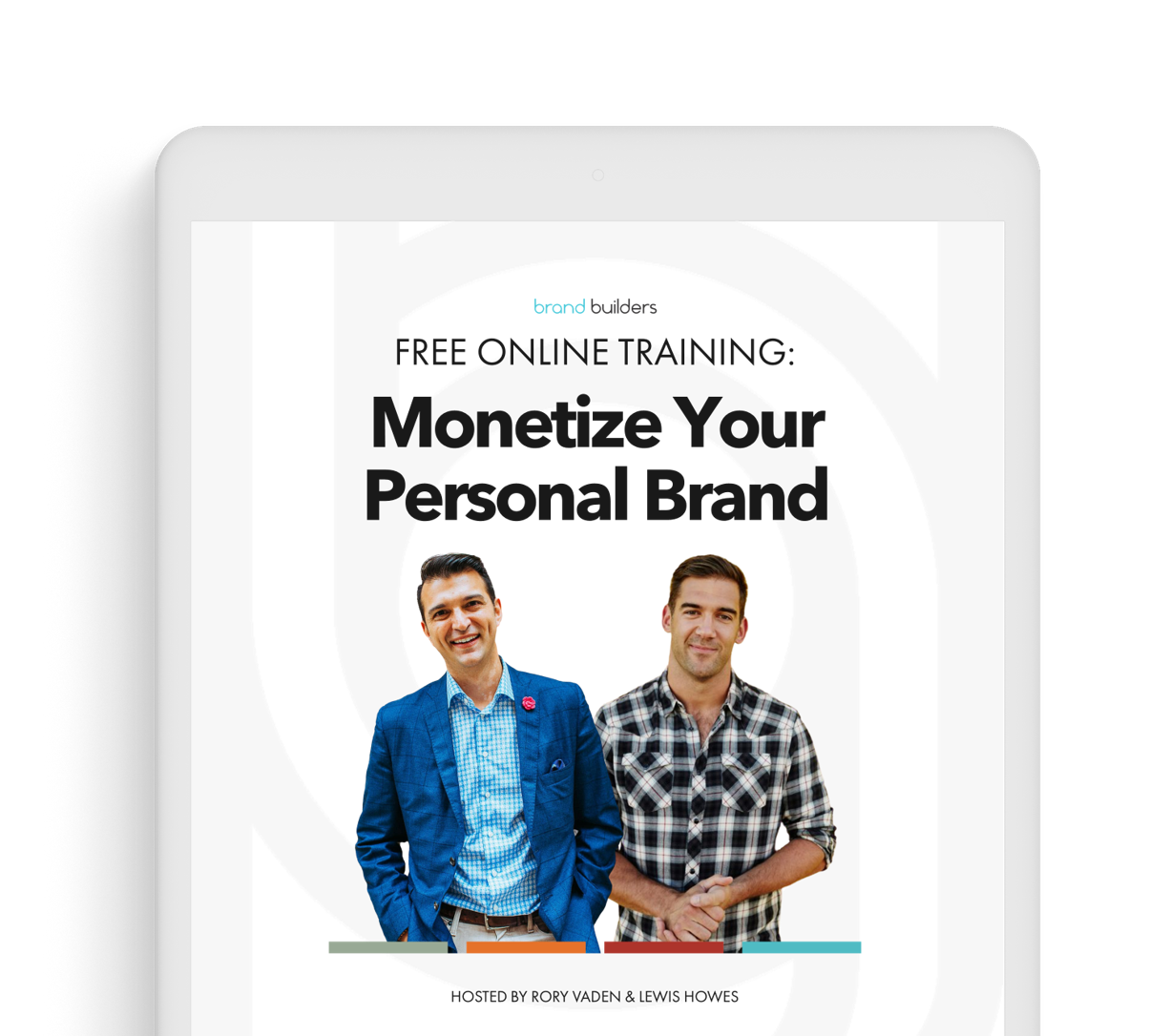
Rory: Well, [00:00:20] today I’m gonna bring you a fabulous high energy interview from one of my [00:00:25] longtime friends, uh, in the speaking world, and I’ve known through the National Speakers Association, [00:00:30] NEN James.
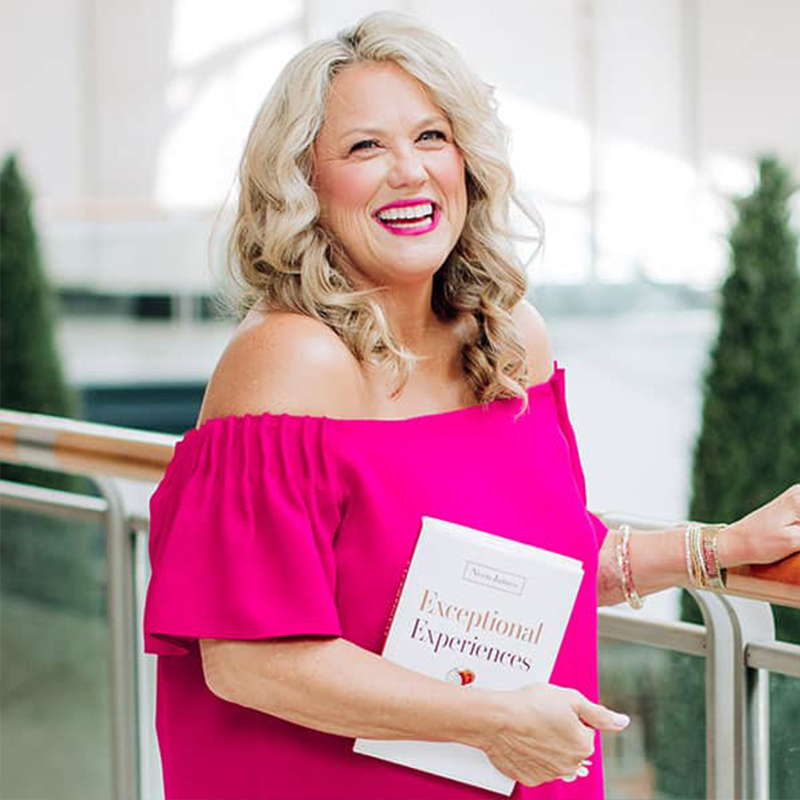
Her new book is number one right now on Amazon. She [00:00:35] works with some of the biggest and brightest and best companies, uh, in the world [00:00:40] to talk about creating luxury experiences and luxury price [00:00:45] points, is what we’re gonna talk about. But she’s worked with the Ritz Carlton, with Fairmont, Comcast, [00:00:50] Viacom, uh, Cisco, the Four Seasons.
She [00:00:55] recently was appointed to the Board of the World Luxury Chamber of [00:01:00] Commerce. Um, she is a favorite speaker, a longtime friend, and we’re gonna talk [00:01:05] about what does it mean to create elevated experiences. Um, [00:01:10] and, uh, her new book, by the way, is called Exceptional Experiences, five Luxury [00:01:15] Levers to Elevate Every Aspect of Your Business.
So we’re gonna talk about how to. [00:01:20] Sell those experiences and how to deliver, um, exceptional experiences. [00:01:25] Nen, welcome to the show
Neen: Goodday. Gorgeous. It’s great to be back serving your [00:01:30] fabulous viewers and the listeners to this podcast.
Rory: Yeah, it’s, uh, it’s not that often that we [00:01:35] have somebody back, but we’ve had you, uh, uh, a couple times.
It’s been a while though. [00:01:40] Um, well,
Neen: yeah,
Rory: it’s been a minute. It’s been a hot minute. So, um. Tell me about [00:01:45] exceptional experiences and, and here’s the thing, I guess to tee this up a little bit for the audience. You and I were [00:01:50] talking about this before. We’re seeing very consistently right now, both in our business [00:01:55] and with our clients, that ironically, it [00:02:00] seems almost like it’s easier to sell.
More expensive offers [00:02:05] and that people are willing, more willing than ever to pay for [00:02:10] an elevated experience for a higher level offer, they’ll pay more money. It’s [00:02:15] our top level offers that are selling out quickly. And it, in a way, maybe it [00:02:20] seems almost offset by, like it’s harder than ever to sell these sort of, uh, lower [00:02:25] ticket, more generic type offerings that are available to everybody.
So I’m [00:02:30] noticing that. As a pattern and a trend in our monetization strategy. So [00:02:35] I just wanted to kick that over to you and go, is that part of the timing of this book? Are you seeing that same [00:02:40] kind of thing?
Neen: You know, as a client experience expert, I have the privilege of working in [00:02:45] some incredible brands as you read out.
And if I take for example, the luxury travel [00:02:50] industry, when the world changed, that industry ended up investing [00:02:55] more in more exclusive experiences. So if we think about top tier [00:03:00] clients, so whether you are a consultant or whether you have a dental practice, you have top [00:03:05] tier clients. And one of the things that we’re finding is those top tier clients are [00:03:10] the ones that we wanna focus on.
Because if you look at your revenue split and think about the old. Greater principle, [00:03:15] right? Mm-hmm. The 80 20 rule, you’ll often find that it is those 20% that [00:03:20] are generating 80% of your revenue. What we noticed in the luxury travel industry is what [00:03:25] people wanted as more unique experiences. They wanted to be first to discover a [00:03:30] location, and then they wanted to share it with others.
The same could be true of businesses. What [00:03:35] people want is they want more exclusive behind the scenes. Access. [00:03:40] I loved the interview that you and Marcus did about the questions with endless customers, and one [00:03:45] of the things he was talking about was having videos showing behind the scenes, so people should go back and [00:03:50] listen to that particular episode.
What we are seeing is it doesn’t matter whether it is luxury [00:03:55] travel, whether you are in financial services, what people are willing to do [00:04:00] now because what they. Associating is they’re associating that [00:04:05] exclusivity, that exceptional experiences with their own values and success. And so [00:04:10] it’s, it is a lot easier to sell a high end item where people already perceive the [00:04:15] value will be there because of the ticket that you are charging for that.
As [00:04:20] opposed to you, you know, some people thought it was a volume game, like those small things, you know, they would say [00:04:25] start the funnel with something kind of. Free or something low end. And [00:04:30] that might work for people. But what I’m noticing is people want a personal touch. And what [00:04:35] luxury brands do better than anyone else, Rory is personalization and [00:04:40] customization.
Mm-hmm. And you don’t have to be a luxury product to provide a luxury level of [00:04:45] service. So regardless of what kind of product you have, when you’re listening to this, you [00:04:50] could easily offer a luxury experience. You just need to know how.
Rory: Hmm. [00:04:55] Yeah. Well I wanna talk about that. And I mean, we’ve definitely seen this, um, you know, people [00:05:00] are paying more to just be in a small, intimate setting with [00:05:05] myself and like some of what we call these events, mastery events that we started doing.
Mm-hmm. [00:05:10] Where it’s like I get a little bit of time to work with each person directly [00:05:15] one-on-one, uh, versus like, you know, a huge. Virtual or [00:05:20] in-person presentation where there’s hundreds of people in the room, uh, to that point about personalization and [00:05:25] customization. So, uh, you talk about five levers that, [00:05:30] you know, basically business owners can pull.
You call ’em the [00:05:35] five luxury levers of the experience elevation model. So [00:05:40] can you just tell us what are those, because I think it’s, um. [00:05:45] People start to go, okay, is there an opportunity for me to create a higher level [00:05:50] experience? What would that look like? How do I go about [00:05:55] doing that? Uh, walk us through the five levers.
Neen: Sure, because I [00:06:00] consult to so many CEOs and their, uh, teams around the world, whether it is luxury or [00:06:05] legacy brands, what I’ve been able to apply this experience elevation model to medical, [00:06:10] to hospital emergency rooms, to, you know, media companies, obviously [00:06:15] to hospitality. And what I’ve found is through my consulting and through the [00:06:20] research that I did, I have the only research study of its kind luxury as a mindset.
And so [00:06:25] what we discovered was that really, when you want to think about two things as a [00:06:30] leader, this book is designed based on my consulting model that I already used to [00:06:35] drive. Two things. How do you capture attention? Let’s call that mind share. How do you [00:06:40] drive revenue? Let’s call that market share. So if you are listening to this, imagine there’s a [00:06:45] triangle and at the bottom it’s about capturing attention, and that’s mind share.
At the top of the [00:06:50] triangle, it is market share, where we want to take those clients, we’re capturing their [00:06:55] attention and have them become advocates. The whole goal is to have people out there also [00:07:00] talking about your business. This book will help you do that. It’s like a playbook with all the [00:07:05] systems, the first of those luxury.
Levers you say, I say levers. The [00:07:10] first of those levers is entice. And using. Entice is how do [00:07:15] you then tell the story about your business? How do you position yourself? You [00:07:20] know, at Brand Builders Group, you already help people do this, to identify the type of client that they wanna [00:07:25] work with and to really elevate their reputation.
So storytelling is one of the techniques you [00:07:30] can use here, okay? But I challenge people to also share your origin story. Why is. [00:07:35] Your business so important to you, how does it align with your values and that your reputation would [00:07:40] be demonstrated there. The second of the levers is invite. Invite [00:07:45] is where you bring people into your business, into your community by speaking the language they [00:07:50] need to hear.
We even outline different digital and analog communication [00:07:55] methodologies in the book to be able to deepen those connections. Then we [00:08:00] move up to the luxury level of. Excite it’s here that we want to be [00:08:05] doing things that are shareworthy. Are your clients, not only do you have their attention, but [00:08:10] are you doing things that they wanna talk about with others?
It’s about engaging the five [00:08:15] senses, Rory, and if you have a digital business, it’s about using [00:08:20] language to create a more sensory experience. But if you have a physical business, how [00:08:25] can you then think about elevating that, using the five senses? We then move into the [00:08:30] luxury level of delight. This is one of my favorites because this one here [00:08:35] is where you show people that you know them really well.
This is where you also make [00:08:40] people feel like they’re seen and heard and valued. And just between you and I, Rory, that’s a whole [00:08:45] stealth message of this book is how do you really make people feel seen, heard, and [00:08:50] valued. I’m using examples in the book from luxury brands, but we can all do [00:08:55] that every day.
And then the fifth of the luxury leavers is ignite. This [00:09:00] is where you create advocates of those same clients. This is about helping educate [00:09:05] them to give you those referrals. Maybe it’s about hosting exclusive events so people could [00:09:10] feel like they’re really important to you. Maybe it’s to developing a gifting strategy, [00:09:15] but it’s surrounding their lifestyle so you become top of mind and top [00:09:20] of market for that particular client.
So we start with entice. Then we [00:09:25] invite, we then excite, delight, and finally ignite. We drive [00:09:30] mind share and market share using this model.
Rory: Mm-hmm. [00:09:35] Yeah. Um, uh, talk let’s, I wanna talk about the Shareworthy [00:09:40] stuff a bit because I think that is hard [00:09:45] to do. I mean, it’s, it’s like. Getting, it feels like it’s getting harder and harder to [00:09:50] impress people.
Um, you and I have a mutual friend, Eric Chester, and I, uh, Eric was one of [00:09:55] my speaking mentors. Right. And I remember growing up in the business where Eric was like, you know, when [00:10:00] I used to do presentations, people would go rousing, applause. And they were just [00:10:05] absolutely nuts. And today they just kinda like, okay, good job buddy.
[00:10:10] Like, you know, like, it’s just like the, the. There I, I [00:10:15] guess the threshold or the level of expectation of like what blows somebody’s [00:10:20] mind just seems to be getting higher and higher and higher and higher. [00:10:25] So what do you think are some of the kind of things that [00:10:30] people do to create those, you know, I guess.[00:10:35]
Remarkable moments or make ’em shareworthy as you say, to go like, [00:10:40] this is what you do when, when you do this. This is the kind of stuff that [00:10:45] people are gonna share about. Because that also is like even creating free content. We’re trying to make our [00:10:50] content shareworthy. Mm-hmm. Of like, sure. We’re trying to create something that people go, yeah, hit the share button.
Like that’s still like, yeah. [00:10:55] Perhaps the most important button on social is the share button. Yeah. So, yeah. What are you [00:11:00] seeing are the dynamics, components, characteristics of things that really reach [00:11:05] that shareworthy status?
Neen: Let me give you an example that’s not in the book, because it was [00:11:10] something I experienced after I was in the process of publishing, but I want people to listen [00:11:15] and remember about making an emotional connection because when we have an emotional [00:11:20] connection to something, we are more likely to then share it.
So one of the keys to this is emotional [00:11:25] connection. I love the luxury property in Alexandria called [00:11:30] AKA. It’s a brand of, there’s a few of the hotels, but the first time I checked into this [00:11:35] beautiful hotel, they have a hotel dog called Senna. He’s named after the F1 driver for any of the [00:11:40] listeners who are F1 fans.
And so he’s this massive big dog. So when I went to the [00:11:45] reception area, here’s Sena. I was on my knees cuddling this beautiful puppy as soon as I checked in, [00:11:50] because I love a furry baby When I travel, hotel, dog or cat, I’m, I’m here for all of that. [00:11:55] Someone snapped a photo of that Rory. Fast forward to the second time I stayed at the [00:12:00] AKA Alexandria, but wouldn’t you know there’s Sena there.
And I was like, oh, that’s an amazing [00:12:05] coincidence. And then Isaiah at the front desk said, no, no, n we knew you were checking in. We wanted to make sure Sena was [00:12:10] here to greet you. Amazing. Get to my room, Rory. [00:12:15] And there is a framed photo of Senna and I from my first visit [00:12:20] on my bedside table. But wait. There is a handwritten note [00:12:25] from Senna with a paw print on it saying, I’m so glad you’re [00:12:30] back at the property.
Mm-hmm. Now that plus less than $5. [00:12:35] Right. But what it was for me was that emotional connection. It [00:12:40] reminded me of the lovely visit, the fun that I had last time. It was incredibly [00:12:45] personalized. It took a moment to hand write a note in our digital [00:12:50] AI world. Analog systems get attention that handwritten note.[00:12:55]
That sweet, kind, thoughtfulness, that creativity of making it [00:13:00] from center the puppy as opposed to Yes. Chris, the general manager wrote me a note as well, but [00:13:05] Center is the one that I remember of taking them time to frame a photo. [00:13:10] Something that was a memory, because they’ve had systems in the background, what I call [00:13:15] systemized thoughtfulness to make that happen.
And what will we need to think about no matter what kind of [00:13:20] business you have. Perhaps one of the shareworthy ways that you could look at capturing the [00:13:25] attention and demonstrating your expertise to people is analog. [00:13:30] And it could be the simplicity of, let’s say Rory, when a friend of ours, Chris [00:13:35] Ducker, published a book, long Per Leader, I would buy 25 copies of his book, and [00:13:40] I would write a handwritten note to all of the people that are important to me, and I would send them a [00:13:45] copy of Chris Tucker’s new book.
And that is going to arrive in a hot pink bubble [00:13:50] mailer. It’s physical mail, it’s lumpy. It’s not a white envelope, which probably has a bill in it [00:13:55] if you get your mail. All right? That’s what we think about, and so it’s an extension of my brand through the [00:14:00] hot pink packaging. It doesn’t say anything about me, it’s just.
Hey, Chris’s book [00:14:05] is really great. As a leader, I think you’ll benefit from chapter four. This would be really powerful for you. [00:14:10] It’s personalized, it’s customized, and it’s saying, I thought of [00:14:15] you. So when it comes to doing things that are shareworthy Rory, it’s about [00:14:20] thinking creatively. It’s not just about sharing on social, and that’s really [00:14:25] important, but what people want is they wanna know that you are important to them.
Now an [00:14:30] easy way to make things shareworthy in a digital way is give us [00:14:35] behind the scenes. Give us what’s happening. Let us meet. Yeah.
Rory: What does that [00:14:40] mean? What does that mean exactly? So tell me about that. So let’s, for
Neen: example, let’s see, you’re a dentist office, right? As a [00:14:45] dentist office, there’s gonna be things that are happening behind the scenes.
As a client in the dentist, [00:14:50] it would be really cool for me to know who are the team members? What’s the process? What are they [00:14:55] go through in a day? What do they joke about? What are things that we need to know? You could shoot that video [00:15:00] and, and put it on the Instagram stories. It doesn’t have to be on the grid.
But it’s an easy way for us to [00:15:05] get to know, wow, this dental practice has personality. This is someone I’m like, oh. So [00:15:10] when I go to see my hygienist, I say, oh my gosh, how was your trip to Bali? How’s your family? Like, [00:15:15] little things that help me feel more connected. So what we can do is if, [00:15:20] for example, uh, at a hotel.
They might interview the chef about why they [00:15:25] designed the menu they did. If you’re a mechanic, it might be about showing us behind the scenes of how you [00:15:30] set up, how you take care of the cars. We need to think more creatively about using [00:15:35] video. Video is the future of communication, as we know, and people want to see the [00:15:40] unedited, unfiltered, genuine, because you know, [00:15:45] with what you do with people and their reputation, building that trust is so [00:15:50] important.
So. Would it be? An easy way to do it is capture some video, interview [00:15:55] your team, and then post that and share it. Or even with me as a keynote [00:16:00] speaker, as soon as I arrive on property, I will take out my phone. I’ll shoot a short video for the [00:16:05] meeting planner and say, Rory, I just arrived. I love my hotel. I can’t wait to see you at soundcheck at 7:00 [00:16:10] AM Have a great night.
I’ll see you and your wonderful audience tomorrow. I just text that off to the [00:16:15] meeting planner. It takes me less than two minutes to do that. Meeting. Planners love it because [00:16:20] it’s personalized. It’s digital, it’s easy, but it just [00:16:25] helps you. Then the meeting planning goes, it’s one less thing I have to worry about.
The coffee’s hot, the [00:16:30] room’s gonna be warm enough and needs arrived. So what we wanna do is also think about how can we [00:16:35] stand and service of our clients in a unique way, and video is an easy way to do [00:16:40] it. Using digital or analog, there’s so many ways you can capture attention.
Rory: [00:16:45] Mm-hmm. Yeah. I like, um, it seems like personalization and analog [00:16:50] are two really prime parts of that, that you, you go, [00:16:55] uh, the more, the more hyper-personalized it is and yeah.
The more analog it [00:17:00] is or that it feels, um, is really key. I wanna talk about the [00:17:05] definition of luxury and what you consider the definition of luxury, because you know, in a way you, [00:17:10] it’s like analog maybe is like, even that word is like, doesn’t sound luxury, but here you’re saying [00:17:15] like, no, that that is luxury.
Um, so what are, what are some of the misconceptions you [00:17:20] think that people do have about luxury and what do they, what, you know, how do [00:17:25] you sort of reframe that? Um, because, you know, is it just [00:17:30] expensive and it’s just Louis Vuitton or is it something else?
Neen: You know, I think luxury is a [00:17:35] divisive word.
Roaring people associate it with expensive or it’s elitist, and I [00:17:40] want to change the narrative on that. Mm-hmm. I believe luxury is both inclusive and [00:17:45] exclusive. Here’s what I mean by that. It’s inclusive because everybody deserves it every [00:17:50] day, and it’s exclusive because you can roll out the red carpet experience for people.
Like I [00:17:55] said, you don’t have to have a luxury product to provide luxury experience. But in my research [00:18:00] study that I did, what we discovered is of the hundreds of people that were part of the research [00:18:05] study, there were five words that appeared constantly as the main characteristics [00:18:10] of how luxury is defined.
They are high quality, long [00:18:15] lasting. Unique, authentic. Indulgent. [00:18:20] Mm. Now, for most people listening to this call, the only one they may not relate to as much is [00:18:25] indulgent because as leaders we wanna be high quality. We want to have legacy and be long lasting [00:18:30] in our brands. We want a unique approach to our thought leadership and the way we share out in the [00:18:35] world, and we wanna be authentic.
So those same definitions of luxury apply to the [00:18:40] businesses listening to this. But one thing that we need to think about is some people see [00:18:45] luxury as time. Others, it is about the fabulous handbag. But what [00:18:50] I discovered of all the research was two things were common in my research [00:18:55] study. Everyone agreed luxury is about, uh, a [00:19:00] reward for hard work.
Hmm. And the second thing that was my favorite finding in the [00:19:05] study and something I’ve personally believed my whole life, because I do believe luxury is a [00:19:10] mindset, is that luxury is about experiences. Not things. And we have [00:19:15] the data to support that. And what we can all do is we can all provide this [00:19:20] experience for our clients, for our team, customers, guests, patients, [00:19:25] students, whatever community you serve.
But what you can do is just elevate it a little [00:19:30] bit so that people feel more seen, heard and valued.
Rory: And, and what [00:19:35] does that mean to be, to, to help people feel more seen, heard and valued? I mean, is that [00:19:40] just like personalization? Is that basically. Think
Neen: that’s one of the strategies to it, but I [00:19:45] think one of the things that often happens is.
I’ve worked with brands where they’re so [00:19:50] eager to tell the world about their product or service, that all they do is talk, talk, talk. Right? So they’re [00:19:55] just vomiting out all this information, all this content, and it’s all about them, right? [00:20:00] And one of the things that I wrote in my book, attention Pays, and it was one of the best [00:20:05] lessons I ever got from my little five-year-old friend Donovan.
And he and I were in this heated [00:20:10] debate, and I don’t know if you’ve ever debated with a 5-year-old with your kids, but you know what? Every day
Rory: as it turns out, right?
Neen: And [00:20:15] so I remember he, he thought that I wasn’t listening to him, and he got so mad at [00:20:20] me, Rory. He jumped in my lap. He grabbed my face in his tiny little hands.
He [00:20:25] turned it towards him. And he said, this nin, listen with your eyes [00:20:30] now. From the mouths of babe, come to the best [00:20:35] wisdom. We don’t just listen with our ears, we listen with our eyes. We listen with our heart. We listen with our [00:20:40] soul. So if we want to, as business owners, whether you are an entrepreneur, whether you are a [00:20:45] thought leader, we need to listen with our eyes more.
We need to be able to listen for what the [00:20:50] clients are not telling us, for the concerns that they aren’t sharing, and we need to [00:20:55] anticipate in a way they haven’t thought about it. One of the things I love worry [00:21:00] about hotels is I love a good bellhop. A bellhop will move your bags really quickly through the [00:21:05] hotel.
Their job is very efficient. They wanna get those bags up into your room. It’s a [00:21:10] transaction. But the most revered position in a hotel is the concierge. [00:21:15] The concierge is the go-to person. They know everything about that community. They [00:21:20] can get you that hot ticket at a restaurant or that seat at a table.
And the [00:21:25] concierge anticipates needs you don’t even know you have. And what I want our listeners to think [00:21:30] about is I want you to think like a concierge, not a [00:21:35] bellhop. A bellhop is transactional, but a concierge is [00:21:40] transformational. How are you anticipating needs people don’t even know they have, [00:21:45] so that you can be the person who can help them with that?
Rory: Yeah. I’m a, I’m a big [00:21:50] believer in anticipate the need, like just going, if you wanna be a [00:21:55] great employee, anticipate the need of your employer, of your customer. Mm-hmm. And like, if you wanna [00:22:00] blow someone’s socks off. Anticipate the need. Give them the, give them [00:22:05] the thing they don’t even know they need before they have a chance to ask you for it.
Neen: [00:22:10] Mm-hmm.
Rory: Exactly. Uh, and the, the, [00:22:15] I think that’s also what makes a great gift giver is like when somebody’s like, [00:22:20] they hear you be like, oh, like I’ll never forget. So when AJ and I first started dating, [00:22:25] uh, actually we weren’t even dating was right when we first met. Um. [00:22:30] We all, uh, we were, we were living on the road.
We were living in these corporate like apartments [00:22:35] and we were all just kind of meeting each other and stuff. And it was my birthday. And [00:22:40] what had happened was we had all started going to like these, uh, yoga classes together. And we had [00:22:45] never done it, but we were like, it was close by or whatever. We were just looking for something to do and, [00:22:50] and she gave me a yoga mat for a birthday present.
And I was like, I was so [00:22:55] touched by. How thoughtful it was. Mm-hmm. Because I was like, [00:23:00] oh, she’s not just like googling great gifts [00:23:05] for, you know, random guys that I just met. It was, it was like [00:23:10] she was, she was thinking
Neen: mm-hmm.
Rory: About what I [00:23:15] was doing and going, what could I get for you that would [00:23:20] be so useful for you, but you haven’t even thought about needing that [00:23:25] yourself.
Neen: Yeah, and I think, you know, personalization requires information, right? [00:23:30] Customization requires connection, but anticipation requires fascination. And so if [00:23:35] what’s fascination, whoa, whoa. Go
Rory: back and say all that again. That was a lot of shun and that was really good. I wanna hear that again. So [00:23:40] slow that down.
Personal
Neen: personalization requires information. Personalization requires, [00:23:45] requires information.
Rory: Information, okay?
Neen: Customization requires [00:23:50] connection. Okay. Anticipation requires fascination. [00:23:55] Mm. She was fascinated with you and what was gonna make you happy and things that, so [00:24:00] that fascination is the same fascination we need.
When you ask about making people feel, [00:24:05] seen, heard, and valued, are we truly fascinated with the community that we serve so that we [00:24:10] want to be able to find ways to make their lives more exceptional, to [00:24:15] elevate every experience where it can be the simplicity of using someone’s name [00:24:20] when you. See them, the server, the valet, the barista, whoever it [00:24:25] is.
Just by being able to be kind and just instead of just sending these mass [00:24:30] emails out to people, could you look for opportunities to customize it so that people [00:24:35] realize that yes, you’re important to them? Yes. You’re still using automation. You can still [00:24:40] use systems to elevate things, but can you do it in a way that makes people feel like, oh, [00:24:45] I see you.
I get you, and what we need to do is leave room for that. Gifting [00:24:50] is one of the strategies we talk about in the book because really people who do this [00:24:55] well, I love hosting people in my home. It’s one of my favorite things to do because I am [00:25:00] always in these luxury hotels. I’m always learning. I’m always watching to see what do they do That makes me feel really [00:25:05] great as a.
And I wanna extend that into my home. So every time people stay [00:25:10] with me, Rory, I’ve already done my due diligence on their favorite fragrances, their [00:25:15] flowers, their dietary restrictions, how they have their morning beverage, what is it? And I create these [00:25:20] gift packs so that when they arrive, everything is self-contained for them.
That’s. Easy thing for me to [00:25:25] do and I have a system. I literally have a checklist for every time people stay at my house. And so [00:25:30] what we can all do is think about how we apply that to our team. What are the things we’re doing in the [00:25:35] team spaces? Do they really get, feel like they’re being taken care of in [00:25:40] hospitality?
In hotels, we talk about front of house, back of house. Often our clients only see [00:25:45] front of house, but the people who are taking care of our clients. Often back of [00:25:50] house. So are we paying the same attention to provide a luxury experience for our team [00:25:55] because they’re the ones who are providing that same level of service to our clients.
So think about [00:26:00] elevating all those experiences so everyone can deliver luxury, whatever luxury feels like to [00:26:05] you.
Rory: Yes. I think it’s, it’s amazing that it’s like this [00:26:10] is a great business strategy, but it’s also just a great human strategy of just [00:26:15] going, you’re showing people that you care. You’re showing people that you pay attention.
And [00:26:20] I have found that like the best marketing strategy in the world is to actually care [00:26:25] about people. Like when you actually care about people, like when you actually care about your [00:26:30] customers. They tell other people about you when you actually care about your employees? Yes. They [00:26:35] recruit all the other employees for you?
Yes. This is
Neen: also being shareworthy because [00:26:40] you’re, you’re giving them this shareworthy experience. They can’t help but tell other people, this is a great place to work. This is a great [00:26:45] person to book to speak. And so what I want people to think about as they’re listening to this [00:26:50] inside the book, it’s like a playbook of how you can apply all these different strategies to your business no matter [00:26:55] what kind of business you have.
But one of the things that we wanna think about too, when it comes to [00:27:00] this elevation, is we wanna make sure that. As people are [00:27:05] experiencing you as a leader, that you are also choosing to be exceptional. [00:27:10] That you are choosing not only to pay attention, but that you’d be so fascinated with people [00:27:15] that you, I think it’s like, for me, it’s a game.
How can I surprise and delight and get this [00:27:20] person excited about what I’m doing because I love it. But what that also means, Rory, is [00:27:25] you need to be really clear about who your clients are. Who are you for, and [00:27:30] who were you not for? And so what, that also makes it easier to provide a more exceptional experience [00:27:35] if you love the people that you take care of.
Rory: Mm-hmm. Yeah, absolutely. Um, [00:27:40] so cool, Neen, where, where do you want people to go? Uh, if you to learn more about you. [00:27:45] I mean, obviously they can go get the book, exceptional Experiences. It’s out now. [00:27:50] You’re helping us create a more luxury experience, giving us the playbook for how to do that. [00:27:55] How else do you want people to stay connected to you?
Neen: You can find
[email protected] or [00:28:00] follow my adventures every day on Instagram, but I love LinkedIn as well. But if you reach out to me on [00:28:05] LinkedIn, make sure it’s because Rory is our connection, so I get to know that in your invitation. [00:28:10]
Rory: I love it. Um, well thank you for this friend, and thank you for, uh, you modeled this [00:28:15] so well in your personal life of just surprising and delighting your friends and being such a [00:28:20] delight.
So, um, I love that you’re doing this. I love that you wrote the book now on this [00:28:25] and, um, I’m a hundred percent convinced that like this. [00:28:30] Conversation. This strategy is really, really key for personal brands in this moment, right now. [00:28:35] As you say, like in a world of ai, it’s, I think it’s the analog that wins.
It’s the [00:28:40] exceptional that wins. It’s the customized, the personalized, uh, and the more [00:28:45] kind of intimate, you know, heart based human connection that is, [00:28:50] is going to win. So thanks for sharing us. Thanks for sharing your insights with us, and, uh, we wish you all the [00:28:55] best friend.
Neen: Thanks. It’s been a privilege.