
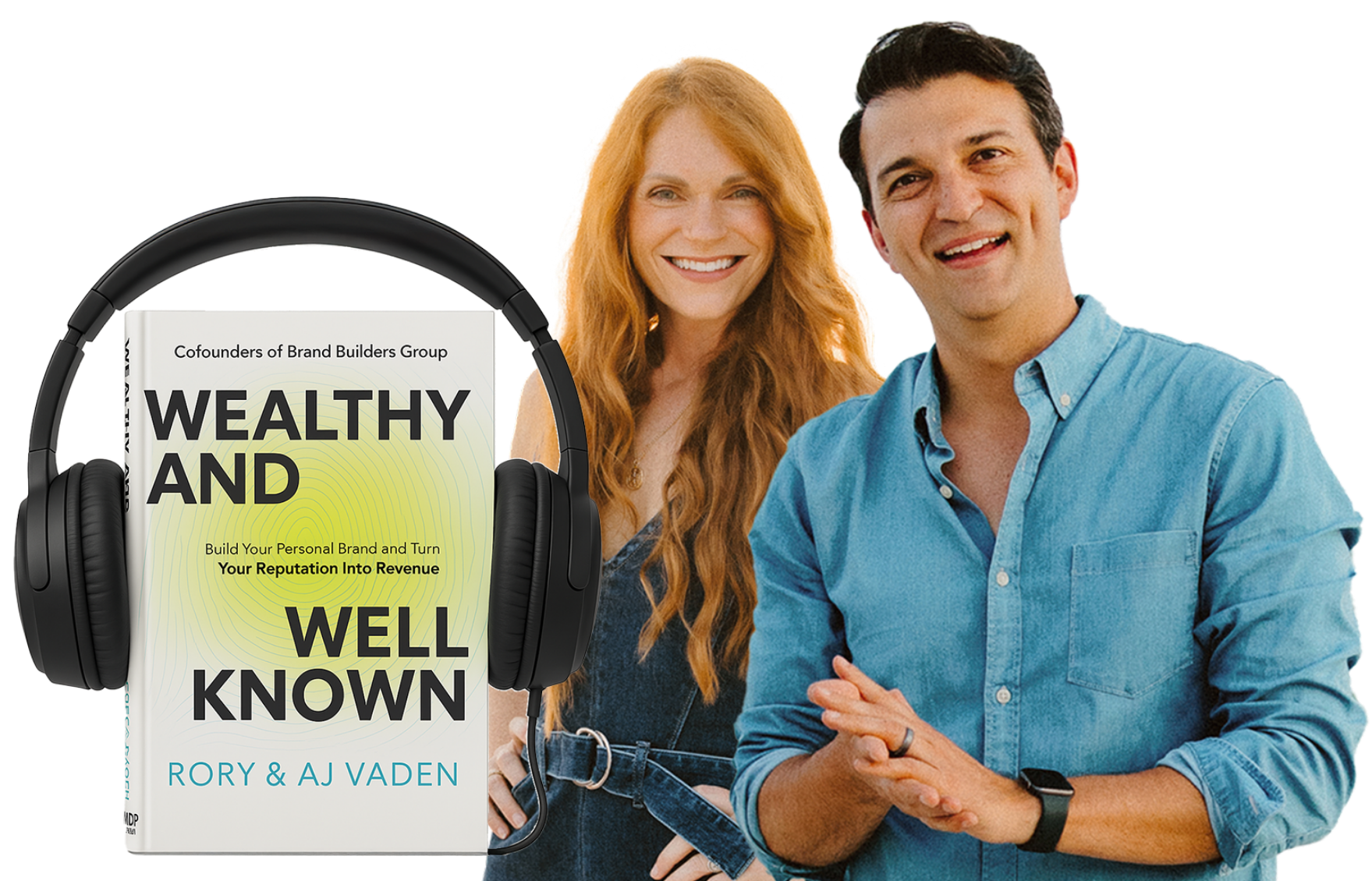

Ep 483: 5 Techniques to Gain Thousands of Social Media Followers | Ryan Pineda Episode Recap
RV (00:06):
Welcome to the Influential Personal Brand podcast. This is the place where we help mission-driven messengers, just like you learn how to build and monetize your personal brand. My name is Rory Vaden and I’m the co-founder of Brand Builders Group, a hall of fame speaker, and New York Times bestselling author. And this show is to help experts learn how to become more wealthy and well-known. I know you’re gonna love it. Thanks for being here. Let’s get started. Here’s how I grew by 3000 followers in three weeks. It was actually five simple ideas that I just wanna share with you. The first thing was to focus on starters. Another term for this would be the hook, but it’s really paying attention to the opening first few seconds of your videos. And I don’t know if you’re like me, but everyone throws that word around like, you gotta have a great hook.
RV (00:58):
It’s all about the hook. Start with hook. And I’m like, what exactly is a hook? Because nobody seems to be able to explain what that means. I’ve heard that term for years, but something finally clicked in the last few weeks, and I’m gonna share now what I’m using as my definition of a hook to see if it helps you. And a hook is simply this. Tell people what you’re about to tell them. Tell them what you’re about to tell them, right? Think about how they advertise the news. They say, A new study reveals a food that causing cancer will tell you what it is to tonight at nine, right? Like they tell you what they’re gonna, they they tell you what they’re gonna tell you. And in Toastmasters, where I started my professional speaking career, Toastmasters used to have a phrase where they said, tell the audience what you’re gonna tell ’em, then tell ’em, then tell ’em what you told ’em.
RV (01:48):
And now I’m realizing, oh, that’s the same opening formula for a great video. Tell ’em what you’re about to tell ’em. You’ll notice that I started this video saying, here’s how I grew my followers by th here’s how I grew by 3000 followers in the last three weeks. I’m telling you what I’m about to tell you. I don’t launch in to telling you how to do it. I’m telling you about what I’m about to tell you. And that’s what the key to a hook is. It’s super duper simple. So focus on your starters. Focus on the opening first three seconds of your videos. Tell ’em what you’re gonna tell ’em, and I think you’ll see an immediate improvement. The second thing is screen quality. And by screen quality, I just mean production value. We got my main man, Chris, over here. We finally invested to get a good camera and get a a, a, a decent, decent microphone.
RV (02:43):
And I think that’s made a really big difference. If you go look at some of my old videos, they’re just not as visually capturing because they’re not as quality in terms of the resolution. The content, I would argue, is just as good as it has ever been. But the production value is definitely up a notch. And I think at this point, if you’re trying to compete online, you need to make that investment. Why? Because all the other people who are doing it are doing that. And so you’re not, you’re competing not just on the quality of your ideas, but you’re competing also on the quality of your production value. And so it’s time to make that investment if you’re ready to really get serious. So that’s the screen quality. The third thing is stimulus stimuli. We have increased the cuts in our video editing dramatically.
RV (03:33):
Again, my man, Chris, over here rocking the camera is doing cuts every one or two seconds. And when I mean cut, if you just watch a video and count how many seconds go between each time the screen changes, something moves, right? A talking head video is just me here talking. The camera is not cutting. It’s the same view for an extended period of time. But adding stimulus means you’re adding cuts. You’re showing other pictures, other you know, it can be captions. It can be moving things around on the screen. It can be having pullout quotes. It can be dropping in emojis. It can be dropping in B-roll footage. It can be dropping in stock footage of other things. You can be referencing news media articles, but the camera is cutting every couple seconds. And again, this is just a tactic to hold people’s attention, which is a huge part of what growing your followers is all about.
RV (04:31):
The algorithms reward people who hold people’s attention on the platform. The fourth thing is stories. Tell stories. Stories from your life are an automatic great format and formula for capturing attention. There’s something about the human brain that we are drawn to stories. So for example, I spoke at the Keller Williams National Convention. There were 17,000 people there, and I had an opportunity to share the stage with Tony Robbins, Mel Robbins, and several other speakers. Well, I told the story when I came back of how I watched Mel Robbins speak. And I stayed two days longer in Vegas than I planned to, just so I could get to see her. And I just shared the story of what I thought of her presentation. Well, unbeknownst to me or unplanned by me, she saw the post and she reshared it. So part of the, the value was certainly the size of her audience.
RV (05:29):
But what really was powerful was the story. It was, it was sharing a story of what did I do and what did I learn? And that’s really the simple format for a story is what happened to you and what did you learn? And I’ve got other videos that talk about the four parts of telling a great story. But every picture in your phone is a story. If you just kind of go through your phone, camera roll, every single photo is a story. Tell the story of who was there, what were you doing, what happened, what did you learn? And how does that apply to the people who are in your audience tell great stories because they automatically serve as great hooks and great lessons and great attention grabbers and attention keepers. And finally, number five is stages. Getting on stages. As I mentioned, I was at a very large event, and to this day, the fastest way that I have ever seen to grow my email list, my social media following my customers or just new friends and fans, is to be out speaking on stages.
RV (06:36):
This is one of our expertise at Brand Builders Group. This is one of the things I’ve spent my life learning and that our team specializes in teaching you how to do, is to get on stages. Now, they don’t have to be thousands of people. You don’t even have to be paid to be on ’em. But the shortest distance between someone who is a complete stranger, becoming a lifelong fan is a world class one hour presentation after seeing you on stage. And by the way, if you’d like to talk to someone on our team about some of the strategies we use to help personal brands get on more stages, just click the link that is somewhere around this video and we’ll set you up with a free call. But there you have it. The five strategies that I’ve used to grow my followers more than 3000 in the last three weeks. It starts with the starts have great hooks, then it’s all about screen quality up your production game. Third, have more stimulus, more jump cuts, and more advanced editing happening inside of your videos. Fourth, tell more stories. And fifth, get on more stages. If you do those five things, I promise, you’ll see your followers grow.
Ep 482: Launching a Live Event Business with Ryan Pineda
RV (00:02):
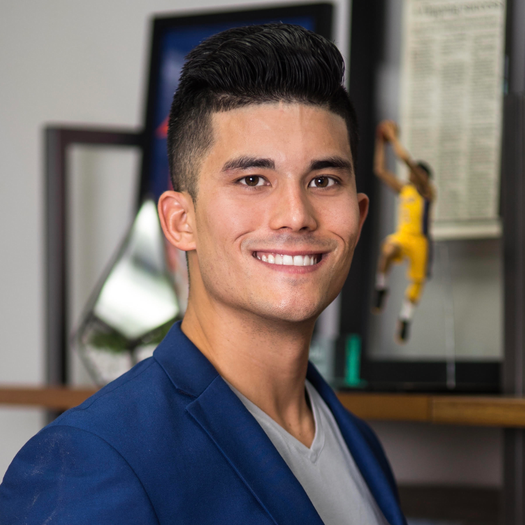
I’m so excited to introduce to you one of my favorite new friends. Also one of my favorite people in all of social media to follow. His name is Ryan Pineda. And Ryan was a former pro baseball player. We’re gonna talk about his journey. He went from professional baseball to real estate investor. And that started in like 2010. And he since has invested over a hundred million dollars in over a hundred million dollars of real estate. And then he became an entrepreneur. And he has founded seven different businesses that have gone on to generate seven or eight figures in annual revenue. He also has 2 million social followers online, has generated over a billion views with his his videos. He lives in Vegas with his wife, Mindy. They got three kids. And he’s just a really amazing guy. We’ve got some fun stuff going on together that will tell you about if you stick around to the very end. Ryan has a, a conference that I will tell you about and we’ll talk a little bit about that. But we wanna hear the journey of how all of this happened. Ryan, welcome to the show.
RP (01:11):
Thanks for having me, Rory. And man, I just appreciate, by the way, all your help behind the scenes, you know your willingness to, to answer questions and all the different things I got going on and serve and everything else, dude. So it means a lot.
RV (01:24):
Yeah. Well, it’s my pleasure, man. I, I you know, I love helping people as much as I can and, and obviously networking and you know, people know that I’m a hardcore bible thumping Jesus freak. And especially when I find other believers out there in the business world, I’m always like, Hey, like, I wanna help. I wanna help however I can. So, walk me through this story. You, so you were playing for the Oakland A’s, right? Is what the, the story was. So how do you go from pro baseball to real estate investor? Take me on that journey quick.
RP (01:57):
Yeah, so I grew up just wanting to play baseball my whole life. It was all I ever did, and I was fortunate to be, you know, a really good player. Every step along the way. You know, I was on varsity as a freshman, then I get a D one college scholarship and become an All American, all those things. And then I get drafted by the Oakland A’s in 2010. The only problem is in pro baseball, you have to start in the minor leagues. It’s not like the NBA and the NFL, where, you know, you go straight to the top and you start making millions. And the minor leagues in baseball, you make 1200 bucks a month. Yeah, that’s what it was back when I was playing. Wow. And you only get paid while you’re playing, so it’s six months outta the year.
RP (02:38):
So I was essentially making seven grand a year in the minor leagues. Wow. Yeah. So I didn’t have a choice. I did not want be an entrepreneur. I didn’t want to do real estate. I did wanted to eat
RP (03:25):
And so when, you know, your commission is based on the sales price and prices are at all time lows and no one has money to buy, it becomes really tough. And you’re 21 years old and you don’t even know what you’re doing. So it was a really hard time. You know, the average price of a home back in 2010 in Vegas, which is obviously a big market, was a hundred thousand dollars. Wow. So if I was lucky, I could make $3,000 selling a home that was super hard to sell back then. And I quickly learned, I hated it. As far as representing, you had a, you had an early knack for picking careers to go broke, it sounds like.
RP (04:08):
I got really mad, honestly, because I knew these were great deals. You know, I and I, after a couple of years, one deal just finally put me through the edge. You know, it was a house that was built in literally two years before, 1800 square feet in Vegas, four bedroom, three bath. It was a hundred thousand or it was $90,000. That’s was the list price. Wow. Literally never been lived in. And I’m telling this guy, I’m like, dude, this is a crazy deal. Like, you can’t lose, you know, you could go rent this right now for 1200 bucks, you know, like you can’t lose. And he’s like, ah, I don’t know, man. I think it’s gonna go down. And I’m like, what’s it gonna go down to? Is it gonna be free
RP (04:51):
Where do you go down from zero? Yeah. Like, yeah, this house just sold for 400,000 a couple of years ago, and you, you think it’s going down from 90, you can’t even build a house for 90 grand. So, you know, he is like, you don’t get it, kid. One day you’ll get it. And you know, at that point, that was the tipping point for me. I was like, all right, this ain’t for me. So I actually quit real estate along this path. What ended up happening was I, I met my now wife and so, you know, we get engaged. And, and while we’re engaged, I actually get released from the Oakland A’s. So, you know, I I spent three years in the minor leagues with them, and I get released in spring training. And so we’re engaged and I’m like, well babe, I really don’t know what I’m gonna do because I thought I was gonna, you know, make it in baseball.
RP (05:40):
I’ve already, you know, failed at that. I failed at real estate and now we’re about to get married and you’re in college not making any money and getting in debt. And she was gonna school to be a teacher, so she was never gonna make money. And I was like, I really don’t know what I’m good at or what I’m gonna do, but I’ll figure it out. So we ended up getting married and I end up furnishing our apartment with all of our wedding money. You know, we got some gifts and stuff, Uhhuh,
RP (06:25):
So like, I just had this knack for finding deals and flipping, which is why it frustrated me as a realtor because I was finding great deals and people weren’t buying ’em. That’s why I got so mad. So I look at the furniture and I was like, what if I just bought one piece of furniture a day and I flipped it, I could make great money. So I was like, you know what, I’m just gonna do it. So I buy a couch and I bring it back to our little apartment. She’s like, why did you buy another couch? Like, trust me. Okay. I, I have this idea. I ended up selling the couch and making 200 bucks, and I was like, okay, I’m gonna just do this like every day. If I just buy one couch a day, I’m gonna make six grand a month. And sure enough, that’s exactly what happened.
RP (07:09):
I ended up interesting. I ended up starting my first business flipping furniture. You know, I, I got a storage unit. I was putting all the couches there. I was cleaning ’em, posting ’em on Craigslist, offering free delivery. And sure enough, it went from 2000 a month to 4,000 to 6,000 to 8,000. I was like, we are freaking rich. This is crazy. I’m making more in a month than I was making it a year as a minor league player. And, you know, that was my first successful business. Now, during this time too, I was also still playing baseball. So I ended up signing a deal with an independent team, and I ended up going to play five more seasons. So I played eight seasons overall in professional baseball. Cool. But during every season I was always hustling, you know, making money in weird ways,
RP (07:56):
And so from there, 2015 happens. So this is five years after the fact. We’re on our one year anniversary and well, this is late 2014, early 2015. And I’m praying, and I’m like, God, you know, I’m grateful that I, you know, I’m providing for my, my family. Now, my wife, we didn’t have kids yet. You know, I’m grateful for this couch flipping thing, but I know I’m called for more. You know, I’m not supposed to just flip couches the rest of my life. And I was like, what should I do? And it was the first time I ever like really heard God, like, audibly tell me something. And I just heard like this whisper of real estate. And in my mind I’m like, real estate, I already did that and failed. I’m not gonna do that again. Like, it sucked being a realtor.
RP (08:45):
And sure enough, I see this TV commercial pop up like no more than an hour later. And it’s like, you wanna learn how to flip houses today, this big infomercial, you know, with no money, no credit, nothing. And I’m like, scam, I’m not doing that. And I just felt like the Holy Spirit in me telling me to look further into it. So I get on Google and I’m like, I’m like, what’s, what’s, can you buy real estate with no money? Nobody ever taught me this in realtor school. Like, that’s not true. And so I look it up and I find this website called BiggerPockets, and it’s like, oh yeah, you can totally buy real estate without money. Here’s how you know, you can do wholesaling, private money, all these different things. And I was like, holy crap. This is exactly what I’ve been looking for.
RP (09:29):
I always knew how to find deals. That was never my problem. I just didn’t have money. If I could just sell these deals and make money, I’ll kill it. So sure enough, I told my wife, I was like, Hey, we’re flipping houses. And she’s like, all right. It’s just like flipping couches, but with more zeros. I mean, what could get wrong? Yeah.
RP (10:10):
My wife and I weren’t sitting together ’cause we were so cheap, we didn’t want to want to pay for a signed seating. So forget about that. Right. That’s, that was the old me. All right. Now this guy sitting next to me and I’m sitting here reading this book about how to flip houses with no money. And it was by my friend Brandon, my now friend Brandon Turner, who’s a great dude. And he’s basically like, you know, talking about all these ways you can flip houses. And the guy goes, Hey, what are you reading? I was like, well, I’m reading you know, about flipping houses. I’m, I’m about to go into this business. And he’s like, so I don’t talk to people a lot like on planes and stuff, but God wants me to tell you that you’re gonna be very successful in this and you’re gonna change a lot of lives.
RP (10:54):
Wow. By doing this. Mind you, I’d never flipped the house. You know, this was just an idea. This is some random guy on the airplane. And he goes, and on top of that, I wanna give you my information. He’s like, ’cause I flipped hundreds of homes. He was an older guy. He’s like, I’ve done all these different things that the book was explaining that I didn’t even understand yet. He was talking about seller finance and all these weird terms. He’s like, dude, I’ve been doing that forever. He’s like, you need any help? Here’s my stuff. And it wasn’t that I wasn’t gonna do it, but that was like the confirmation I needed of like, alright, it’s about to go down. Fascinating. Yeah. So we ended up getting back home. I find my first deal I had to max out all my credit cards to get a down payment. So I maxed out our credit cards between me and Mindy for 50 grand. Wow. And got a hard money loan at like 13% and bought our first flip. Now fast forward through it, you know, we ended up making good money. We made 25 grand on that first deal. And
RV (11:58):
Walk me, walk me through that a little bit. So you’re, you’re putting, you’re putting $60,000 down on a $300,000 house or something?
RP (12:07):
Well, prices weren’t that high yet. So what happened was we had 50 grand in credit. So I’m like, well, we might as well just get it all, you know, even if we don’t need it, like, let’s just have cash in the bank. So I cash advanced, I had like these 0%, you know, credit offers and balance transfers. And so I’m like, let me just get it all at 0%. So we got it all at 50 grand in the bank to show liquidity for a hard money loan. And then, you know, I find this deal for $99,000 in Vegas. And so we buy that first home. I sold it in 51 days for 135,000. And I, I put like a thousand bucks into it. So we made money really quick and during that time I bought a second home with the rest of the cash and another hard money loan. That ended up making me 15 grand. And so did really good on the first two rolled that into every dollar back into another deal and another deal. I kept my credit cards maxed out for years. You know, just continuing to roll cash into new deals. You know, flipped five houses that first year in 2015. The next year I flipped 20. The next year after that I flipped 50. And then I flipped 150 in the fourth year. Wow. And then we’ve been doing over a hundred ever since, even to this day.
RV (13:23):
Wow. That’s pretty ballsy
RP (13:32):
That’s how I always have operated though. You know, at the end of the day, it’s like, if I feel this convicted about an idea, you know, we’re either all in or we’re not doing it. There’s no in between.
RV (13:42):
Fascinating. Yeah. So then you go from that. So you’re learning how to flip houses, you’re learning how to basically secure financing. You’re doing this, you’re good at, you’re good in making deals. So you’re basically just buying them, fixing them up, turning around, selling them. Yep. Making a profit on the difference.
RP (13:58):
Yep.
RV (14:00):
And then all of a sudden, what, what, where does social media come on the scene? Like, why do you start going, oh, let’s do a podcast and let’s put a bunch of time and money into social media. Like where does that show up?
RP (14:11):
Yeah, so let’s say from 2015 to 2019, all I really did was flip houses. And a lot of people don’t know that. You know, most people think, oh, this dude just had a bunch of businesses all at once and like, they grew. It’s like, no, that’s not what happened. Like, I pretty much spent five years only focused on flipping houses and becoming really, really good at it. Now, during that time, like I learned how to run a business. Like I was raising millions of dollars of capital. I was hiring people, we were marketing, we were selling, I was handling construction projects like anything with running a business, I was learning it. I was also still playing baseball at this time too. I retired in 2017, so I probably flipped 80 homes while I was playing. Which people don’t know either. So I had to learn how to delegate in order to keep playing baseball. ’cause That was still my dream, dude. Like real estate was plan B, you know, getting to the big leagues was plan A and for many years. So anyways I ended up retiring and you know, real estate’s going great. And I ended up opening up our real estate brokerage ’cause that was a logical thing to do. And we grew that to over 200 agents. So that was a success. Then I ended up opening a, a
RV (15:24):
Regular retail real estate brokerage. Yeah.
RP (15:27):
Because I was selling all my flips anyway on the ml. I’m like, why not get my own brokerage? All the exposure from all my own deals. And so that was the thought process. So then I ended up opening a tax firm because so many people were starting to ask me, dude, where do you do your taxes? You know, all this crap. I, ’cause I was developing influence locally, and I ended up opening a tax firm, not really thinking anything of it. I was just like, you know what, if I could just own the tax firm, I’ll like have control of our finances, our bookkeeping, and if we make enough money where it’s like basically pays for itself, that would be great. That was literally my mindset. But that’s not what happened. What ended up happening was it, it built into a multimillion dollar firm, you know, that made millions of dollars. And, you know, we had hundreds and hundreds of clients. I actually sold that company last year to my partner. So that was very successful. But long story short, where social media enters is in 2020 during the pandemic. Yeah. And
RV (16:28):
Hold on a second. So just backing up on the tax firm, like nowhere in your history do I hear accounting
RP (16:53):
Correct. You know, I ended up going through a bunch of accountants over the years, and I finally found one young guy too that I really liked. And he was working for another tax firm at the time. And you know, I remember this was back in late 2019, he was just, you know, we were doing one of our quarterly parties and he was like, man, you know, I, I really want to quit the firm and start my own. And I was like, why don’t we just start one together? Like, I, I know how to get clients like that won’t be a problem. And we’re like, all right, deal. Let’s do it. Like, that was literally it,
RP (17:42):
But yeah, you know, I never, I know a ton about tax, obviously from having a tax firm now and being in real estate. It’s real estate’s the most tax efficient mechanism like in the world today, period. There’s nothing that gives you more tax benefits than real estate. So it all went hand in hand. But anyways, you know, 2020 happens in March and you know, obviously the world gets shut down. And dude, at the time I had 50 house flips going, so, you know, I got like $20 million of debt on the streets, you know? Wow. Just sitting there and I’m like, huh, I wonder what’s about to happen? You know, like they’re saying that the world might crash, the economy might crash. Like, I don’t know man, and I can’t really do anything about it. You know, these properties are here and there’s nothing I can do.
RP (18:29):
I’ve already bought ’em and I can’t do, like, I can’t go to the office. I can’t do anything. So this is probably the second big God moment I ever had in my life. The first I told you about with flipping houses. The second was, I had multiple people during this time tell me, Ryan, you should make YouTube videos. You should do TikTok. I’m like, dude, what am I gonna do TikTok this stupid kids app? Like, what are we doing here? And I’m like, who watches YouTube? Honestly, that’s what I thought. I was like, who literally watches YouTube? They’re like, people watch YouTube. What are you talking about? I’m like, I go to YouTube to learn how to tie shoes or something. Like how to tie a tie. I don’t go there to like watch stuff. And I soon learned that obviously people go to YouTube to like, watch stuff.
RP (19:14):
And I start watching all these entrepreneurs well I wouldn’t even call ’em entrepreneurs. They’re more just like content creators at that time. So I started seeing these real estate guys. ’cause I was like, who do you guys watch? Just tell me who you think sure is the best. So they start telling me these guys who are now my friends, like Graham Stefan and meet Kevin and, and these other YouTube guys. And I was like, okay, so what have they done? And the reality was at that point, they hadn’t really done much. Like they couldn’t hold a candle to anything I had done in the real estate world. And I was like, so you guys get all your information from them when it comes to real estate. You know, they own like 10 houses. Like I flipped hundreds of homes. And they’re like, yeah, but they’re great.
RP (19:58):
I was like, okay. So I start watching their videos and they start talking about how much they’re making just from like YouTube AdSense and sponsors. They’re making hundreds of thousands a month. And I was like, wait a minute. These guys have no overhead, no office, no debt, no employees, none of this crap that I gotta deal with. And they make more money. Explain to me how this makes any sense. Like, I’m just thinking in my head, I’m like, I’m not gonna be a hater. Like I’m in the wrong business. I need to be where they’re doing media is the business. Like, it just clicked. And it was only because, like I said, I, I know God’s trying to speak to me when I ignore things. And then it just keeps coming up over and over again. And so that’s what happened. I was like, YouTube’s stupid.
RP (20:52):
Then another person’s like, Hey, you should look into YouTube. Hey, you should look into YouTube. And I was like, all right, fine. Lemme look into it. So anyways, long story short, during the pandemic, I start making YouTube videos in tiktoks. Now, dude, at that time people were laughing at me because I was this real estate guy making tiktoks and nobody understood it at that time. Entrepreneurs weren’t on it yet, but I was like, dude, let me tell you, I think this thing’s gonna be big. ’cause I’m not even a social media guy, but this is addicting watching this stuff. So I just start frigging making videos, it pops off, I get like 400,000 followers in 90 days or something crazy. Like it went nuts fast. And then YouTube starts to pick up, actually my most famous video was about flipping couches, which I told you that story before.
RP (21:39):
And people were like, dude, this helped me so much during the pandemic. How, because I just went through a tutorial. I’m like, this is how you flip couches. And you could go all make five grand plus a month easily. I guarantee it. And people are like, this changed my life. I still, people, I see people to this day who are like, bro, I flipped couches and it really helped me out. So, you know, long story short, I make these videos, YouTube’s tiktoks, everything. My following grows pretty quickly in 2020. And 2021 I launched the podcast and that thing grows pretty quickly. And you know, now it’s basically like I’m four years in the game of taking media seriously. And it was probably the smartest move I ever made. And, you know, that stemmed into, you know, other businesses raising more capital learning, digital marketing, learning, you know, all the tricks of the trade. And you know, it’s opened up the doors to so many relationships. And so you know, that’s kinda like how it all came about to where we’re at today.
RV (22:43):
Amazing. So, so on social, how do you think about social media today? Like h how, how do you think about the strategy for how frequently you’re posting what you’re posting? Because you do have multiple businesses going on, but you found a, you found a banner and a container for all of this, which is basically money, right? The wealthy way, which is like so that isn’t, is an, is a nice container that holds real estate and tax and entrepreneurship and, you know, whatever, all things business. But like strategy wise, what, what, what, what’s working on social media? How are you doing it now? How are you thinking about it? Like, talk to me about some of that. So
RP (23:32):
I think social media is always changing, right? Just like business. And so what worked four years ago does not work today. And so you gotta kind of always be at the forefront of testing new things, trying new things and everything else. So what I can say is this, okay, as an entrepreneur the number one way that social media helps us obviously is our business. And so the first thing to understand is what’s the goal of your social media? Are you trying to drive leads to your business or are you trying to become like a straight up influencer and make new streams of income from ad revenue and sponsors and all that stuff? That was never my intent, you know, I was always like, I’ll make far more money pushing traffic to my business. I don’t need to be an influencer. So I think number one, staff clarity on what you’re doing it for as far as business goes.
RP (24:26):
Now here’s the other part. Social media leads to a lot of other things too with relationships. That’s how we got connected, right? Yeah. It leads to opportunities would just different businesses that you otherwise wouldn’t have been in different streams of income. So like, there’s a lot of benefits to doing it. The question is, what’s the best way today? That’s basically what you’re asking. My my philosophy is this, for somebody to become a customer in your company, the number one thing they have to do is trust you. That’s how somebody buys. They have to first trust you. So then the deeper question becomes, well, how do you build trust? Right? And I I you’re a branding expert, so what do you think? How do you build trust with somebody?
RV (25:13):
I mean, the way that part of how we describe it is we trust people that we see, we trust people that we know intimate details about their life. Mm-Hmm.
RP (25:35):
So how would you go about learning those things about them?
RV (25:40):
I mean, you’re sharing ’em on social, I mean that basically turned Yeah. That, that, that inverts into like a social strategy, right? Is like teaching what, teaching what, you know, sharing who you are, like sharing some of your belief systems Yeah. And then physically them seeing you, right? As a matter of like, basically video and photography is like, they have to be able to see you. Like
RP (26:01):
Yeah. They trust you. So I would, I would take it in a step even deeper, right? So I’ll ask this with another que this is what Jesus did, right? He just asked a bunch of questions all the time. He never gave a straight answer. So like, with aj, your wife, how long did you guys date before you got married? Mm. I know the answer ’cause I listened to your podcast, but just for
RV (26:22):
Everyone you listened to our Eternal Life podcast.
RP (26:24):
Yeah. Yep. Yeah.
RV (26:27):
The yeah. So we started dating in 2007 and then we got engaged in the fall of 2009. So it was like two and a half years.
RP (26:37):
So you had two and a half years to get to know each other. Yeah. And then you got, you got engaged and, and you got married. So the simple answer is, in order to trust somebody, it requires time. You have to spend time with somebody. That’s literally the number one thing. Like all those things that you described happen by just spending time. Sure. And so the question then becomes not necessarily how many views you can get somebody to watch you or how many impressions you can get, but how much time do they actually spend? Because there are people that see me, let’s say on a reel or something or an ad, but they’ve never spent time with me. They, they could recognize me and they could be like, oh yeah, I, I know that guy with the hair, right? But they don’t know me. Like you said, they don’t know the intimate side of me.
RP (27:27):
What I believe they’ve never learned from me. They could just, I’m recognizable to them. The key is for somebody to become a customer, they have to spend time with you. That’s it. Right? And so we know from like sales and stuff that, you know, there’s like the seven hours, if somebody spends seven hours with you, you know, there’s a good chance they’re gonna buy. And this is why events are so effective. ’cause It’s like a hyper way to spend time with somebody. If I throw a full two day event, dude, you just spent 48 hours with me, you know, like, we’re gonna really get to know each other. You’re gonna develop a lot of trust. So how this plays into the social media strategy is very simple. The number one way to spend time with somebody in today’s world of social media is a podcast.
RP (28:08):
There’s no other form of content that’s long form like that, that’s raw, that you actually get to hear what they’re really like. It’s not scripted. You truly get to know the person through a podcast. And the beauty of a podcast is you can chop it up, repurpose it, get all your other short form clips and everything else that you need too. So it’s not only like the best way to build trust, it’s also the most efficient way to film content. And then the way we look at it is we simply just use our short form repurpose clips as like marketing to get them to watch the long form. And so through our research, what we have discovered is that the longer your podcast is, the better. Most people have the wrong idea about podcasts thinking that, oh, well, you know, people don’t wanna listen to like a super long podcast.
RP (29:01):
It’s not true. Joe Rogan’s been doing three hour podcasts for a long time. Patrick vda, his podcasts are going ultra long. You go look at the biggest podcast in the world right now, they’re all an hour and a half to three hours every episode. And you just start to think about how much trust these guys are building with their audience because of the time spent. And so now the new thing that we look at is not followers or views, but it’s watch time. That’s our most important metric. And so last year on YouTube, we had 1.2 million hours of watch time on YouTube. Wow. Wow. And when you think about that, that’s 150 years almost. So people spend 150 years with me in one year. And so you start to think about the concept of leverage in that way. It’s like, man, if I could go get 10 million hours, you know, in the next year or two, that’s 1500 years that people are gonna spend with me.
RP (30:02):
That’s an insane number. Is your YouTube the podcast also? I mean, is that how you think of it as like, it’s this video podcast. Now I doing that and that’s not even counting the audio downloads and ’cause audio downloads don’t tell you watch time and the way YouTube does, you know, they just go by downloads. So it’s actually the number’s a lot higher than that. But that’s just the, the clear number. I know that YouTube tells me that’s the most important metric because I know if you spend time with me, we’re gonna do something together. Like that’s all that it comes down to. So we just want to get people spending time with us as much as possible. And that’s the game of social media and business. Now, you know, we’re in competition with Netflix, we’re in competition with books, we’re in competition with YouTube.
RP (30:48):
We’re in competition with literally anything that’s entertainment. Here’s another thing to think about. For all the entrepreneurs listening, we know that money can be printed. And so there’s an infinite supply of money at the end of the day. But time is the one thing that we, it it is truly capped per person. Basically the studies have found that we have about four hours per day of discretionary time. You know, think about it, we’re gonna sleep eight hours, we’re gonna work eight hours the other four hours, you know, we gotta go eat. We gotta, you know, put our kids to bed. We gotta, you know, do things. But we basically have four hours a day to do whatever we want. Those of you with toddlers know that you spend four hours a day trying to put your kids to bed. Exactly.
RP (31:37):
Yeah. So, but the average is four hours and that’s never gonna change. It just isn’t. Unless they figure out how to make people not work and not sleep. So four hours is literally capped per person. So if I’m like Rory, like when you tell me that, you’re like, dude, you’re one of my favorite people to watch. That means a lot to me because I know you have four hours to go spend on whatever you want. You could go watch Netflix, you could go watch a movie, you could go watch a TV show, social media, a podcast, a listen to an audio book. They’re all competing for the same four hours. And so the fact that you chose to listen or watch something of mine says a lot about, you know, what you value. And, you know, it means a lot to me because I know like the cost of it, it’s easy for you to go pay me a thousand dollars. That’s not as significant as choosing to go spend hours consuming content. Mm-Hmm.
RV (32:46):
So I wanna come back to the events conversation. Yeah. So this is something else that you do really well. When we started our first business, so we started in 2006. You know, we ultimately grew it to 200 people. It was eight figures when we sold in 2018. But for the first four years, from 2006 to like 2010, all we did was live events. Like we, all we did was put like 750 to a thousand people in a room. And it was grueling, right? Like we did not do digital marketing, we did all human sales force, like calling outta the phone book. Then we’d go to their office, we’d do a free one hour presentation, we try to convince ’em to buy tickets to come. And we would do that for four months and we would generate revenue, right? We would generate a few hundred thousand in revenue. But like when you add up the venue, the, the av, the speakers, the coffee, the like workbooks, like we would lose money at least a third of the time. Mm-Hmm
RP (33:54):
For our big events? Yeah. But we’ll even run little workshops at the office like, you know, once a month or every other month.
RV (34:00):
So how are you doing events once a quarter. So tell us about the event. First of all, give us a sense of the order of magnitude here of like how many people are coming to these events and where are they? Yeah. And what it looks like and who the speakers are, et cetera. And then I want to hear about like how you’re doing that and not losing your tail constantly.
RP (34:20):
I know people, it’s, it’s an interesting thing, right? So we have an event called Wealth Con, which you’re talking about, so anybody can go look it up. Wealth con.org is the website and we hold it once a quarter. And if you look on it, it’s advertised as a real estate business and social media event, right? So we have speakers on all three topics. I would say 50% is real estate and then the other 50% is business slash social media. So anyone who wants to learn content, you’re gonna learn some content, you’re gonna wanna learn some business principles, and then you’re gonna learn a lot about real estate. Now the way all this started to just backtrack a little bit, is that back in 2020 when I got on social media, I started doing coaching too. So I never wanted to be a guru or anything.
RP (35:05):
I hated gurus. I don’t know why. I was just like, eh, you don’t need to learn. Like you can learn for free. And yeah, sure I learned for free, but I never leveled up until I started paying people. And very few people are good enough to learn for free. That’s just the reality. So once my mindset shifted you know, we started doing coaching and that first year with no marketing or anything, we made 700 grand. And with that, I just randomly was like, Hey, we should meet to all of our students. And they’re like, yeah, that’d be great. So we had our first ever, well what’s now known today as Wealth Con at my house with eight people in my living room. That was my first group of students. This. Yep. This was right before the pandemic. So this was in like February, late February of 2020.
RP (35:58):
We didn’t know we were about to get shut down. So anyways, I was like, guys, we should just meet. ’cause I think it would be cool. That was it. It was one day. So the next event, the pandemic, you know, they let people out and stuff. And so we meet in like June of 2020 and we meet at my office this time and we have about 50 people or 40 people I can’t remember. And they’re like, yeah, this is great. So once again, this isn’t costing me anything. I’m not making anything. It’s just kind of part of fulfillment for coaching, even though they were never promised it. I was just like, this would be cool. So then August hap or like August, September happens and sure enough, we have another one at the office, but this time the program’s growing.
RP (36:36):
We have like a hundred people and I’m like, dude, we can’t even fit everyone in here. This is too big. So the next meeting in like January of 2021 we get this space downtown with like this big classroom and stuff, and people come, they love it. We go to the bars afterwards downtown Vegas, and it’s great and we just have a good time. So then we do that again one more time and we outgrow that space. So then now I’m in a dilemma. I’m like, all right, well I gotta actually go pay now to have a venue. Up to this point. I’ve never paid anything other than like food costs, like nothing crazy. And I’m like, I’m gonna have to like go spend some coin to go throw this event. So
RP (37:23):
It could fit like 250 people. And I’m like, all right, well I don’t know. We got 150 students, so I could sell like a hundred tickets. Let me just see if I could kind of break even on my cost. That was my mindset. And so didn’t do any ad spend or anything. But yeah, we go sell a hundred tickets. We make some money on the front end and then at the event, because most of it are students, I don’t wanna pitch or anything. So I’m just like, Hey, if you’re new, join us. Just talk to the team, whatever. That was it. And sure enough, people join and it’s cool. Like we, we make, I don’t know, let’s say a hundred grand profit. And I’m like, wow, now this event actually makes money. It’s not just like hanging out with the current students. That’s cool.
RP (38:02):
So we go and do it again. Well, the next quarter it gets bigger. And so I gotta run a bigger hotel. So we rent the Sahara, which is like a, a little south now. So we’re moving from downtown, which is like the ghetto is part of Vegas South towards now we’re getting to the nice places. So this event has like 500 people now. And now it’s like, all right, well crap, if we’re gonna do it like this, let’s do two days. So we do a two day event now. And same thing, right? We’re not spending any money on marketing the, the, the venue cost for that venue. I don’t even remember now. Maybe it was like a hundred grand or something. And it’s great. We end up making money. Not nothing crazy. I’m not like pitching. When you say
RV (38:43):
You’re not spending money on marketing, you’re just selling these seats through your own direct email and social basically like your own podcast, your own like, just directly to your existing audience and
RP (38:52):
Exactly. Yep. No traffic. Other than organic, right? So we do that two times. So at this point though, they’re starting to get pretty big. And I’m like, all right, this next one, let’s get like, we need a bigger venue. We’re gonna do this legit. I’m gonna get like a speaker lineup. ’cause The other ones were literally like me and three friends. I would just head up three of my buddies. I’m like, come speak, whatever. So this is the first one. This was I think October of 2022. We get 700 people in the Mandalay Bay. I got Alex and Layla Hormoze. They did it for free. They were just friends. And you know, they were already blowing up, but this was obviously like even before they got super, super big. And they killed it. I had other speakers. It was just crazy. And I think we made a million bucks at that event net. Wow. And now you’re saying
RV (39:47):
You’re making a million bucks ’cause you’re selling your coaching at the, at on,
RP (39:51):
At the Yep. So that was my first time ever doing a real pitch, structured the way an event would be. And, you know, I did a real pitch. We structured it, you know, we made money on the front end with ticket sales. Like, everything about it was just, it was a great event. And the value was great. It, and by the way, it wasn’t called Wealth. It still was not called Wealth Con at this point, you know, it was just like the Future Flipper Mastermind. That was what I called it. ’cause My, the company used to be called Future Flipper. That was my real estate education. So then going into 2023, I was like, all right, I’m becoming more than real estate. And I just published The Wealthy Way. And I was like, I’m going all in on this wealthy brand and I’m, I’m rebranding everything to be wealthy.
RP (40:34):
And so we ended up what’s it called? Changing Future Flipper to Wealthy Investor. And then basically all of our other things became wealthy. So eventually we launched Wealthy Creator, which was for teaching people content creation. And we have Wealthy business, and now we have Wealthy Kingdom for Christians. And so everything went around this overall brand, and we changed the event name to Wealth Con. And yeah, you know, in 2023, every single event had over a thousand people. You know, we had, you know, great speakers like Louis House, who’s I know a friend of yours you know, Cody Sanchez, ed Millet the list goes on. Like we’ve had so many crazy great speakers at each event. And this next one’s gonna be at the Caesars Palace April 18th of the 20th. And I think we can get 2000 now. And really all that’s changed is the last about, let’s call it three events.
RP (41:33):
We actually finally started doing paid ads. We never did paid ads up to that point. We sold ’em all organically to that point. So that was why we were always profitable because number one, we didn’t have the ad spend cost that everyone else had. Number two, I just have so many friends in the industry. I never paid for a speaker for years. So we didn’t have that cost. Three, I’m in Vegas, so people don’t mind coming to Vegas. It’s freaking easy to get people here. I, you know, four, we, we just, I I I would say our team is really good at just getting deals for the venues and everything else. So we usually sign two event deals with the venue and get better costs that way. So, you know, overall, I would say now, for example, with the Caesars event, we’re gonna be, let’s just say hard cost all in like 400 grand on hard cost for 2000 people, which is a great, in my opinion, a super good deal. And like our production’s crazy, you know, like the room is sick, we got after parties, we got all this cool stuff. And then whatever I wanna spend on ads, we’ll be on top of that. But we’re gonna spend multiple six figures in ads over the next, you know, 90 days between events.
RV (42:47):
What do you spend the money on ads too? Do you just take them directly from an ad to a sales page? Like directly from an ad to a page that says, here’s the event, here’s the speakers, here’s the video.
RP (42:57):
You know? Yep. So this is where people make the s
RV (42:59):
Platinum, whatever.
RP (43:00):
Yeah. So here’s where people screw up in events is they think people are gonna self select buying a ticket. That’s not true. We sell probably 95% of our tickets over the phone. Hmm. So what happens is, in order to see the price, you have to give us your information. And so within a minute you’re getting a call and we’re gonna hit you up about the event because most people will just not buy a ticket on their own. Especially our tickets. Our tickets are priced from a thousand to $10,000. So these are not, you know, a a hundred dollars event where yeah, people will self-select for a hundred dollars event. You know, like the event that we’re gonna be doing together. That one, we’re not gonna do sales calls ’cause like there’s gonna be tickets for 27 bucks. You know, like people will self-select buying those. But overall, if it’s a higher price ticket event, you have to have a sales team.
RV (43:54):
Got it. So you drive an ad to the page, get ’em excited about the event to, in order to, you know, learn about the ticket prices, click here, request a call, and we’ll call you and figure out what’s right.
RP (44:05):
Yeah. So to give some context too, like at the end of the day, the event space and everything’s changing pretty dramatically. So is the coaching space overall I am, look, I haven’t been in this industry for a long time, but I’m fortunate enough to know the top people who have and just get their feedback about everything.
RP (44:30):
The days of just, you know, structuring these events for a pure pitch and like doing NLP and, and all this stuff. I think it works for guys like Tony Robbins and everything else. He’s been doing it for 30, 40 years. But that’s not how I’ve built my events. My events have always just been new speakers. Every event they’re given just tremendous value. And will that hurt conversion on like, at the event? Sure. Because if I had structured it in a way to like get people in the mindset of buying coaching, then yes, there we, we could potentially do better. But I look at the brand and lifetime value of it. Like Wealth Con is becoming a brand in itself where people are like, bro, like that event, that’s a sick event. Like yeah, they’re gonna sell you something. Every event’s gonna sell you something.
RP (45:20):
People are savvy enough to know that. But it’s not overtly just like fluff like people, you’re gonna go, you’re gonna know the quality of the room is really high because the tickets are expensive. You’re gonna know that the speakers are gonna give great game. ’cause You could see who they are and you know that yes, even though I’m gonna be sold something either way, I’m gonna have a great experience whether I buy or not. And so for me, what I know is, hey, you know what? Even if they don’t buy at the event, it’s all good. ’cause Guess what, back to what we talked about, you know, 20 minutes ago with trust, you just spent two full days with me. We’re gonna do something at some point. You know, I don’t need you to commit to me that event you’re gonna commit down the road.
RP (46:02):
‘Cause You can’t just stop you. It’s inevitable. That’s my point. And so I don’t need to monetize at the event itself and, and go crush it. But just to give you some rough context and numbers, you know, like I said, I think the event let’s just say we’re all in hard costs, like 400 grand. And once again, like other events, they got 400 grand on speakers. You know this Mm-Hmm.
RP (46:51):
So my model has always been, well, how can I make sure you know, like that we do this the right way. So my my costs are really low relative to pretty much every other event. And there’s no way anyone can really replicate it because it just, it’s, it’s relationship based. So that’s that. Number two, I don’t chase shiny objects. I do ’em all in Vegas. I don’t really care. People are like, well bro, don’t people get tired of it? Like, don’t you need to switch city to city? And I’m like, yeah, if, if you’re trying to just get local people, right? So like I got friends for example, my friends run the Aspire tour and we talk all the time about events, like obvious it’s what they do. You know, their tickets are very cheap to go to their events. And let’s say 80% of their people are local.
RP (47:38):
So yes, if you’re only getting local people, you have to keep switching cities. But 80% of our audience is not even in Vegas. They fly to come to this event ’cause it’s so good. And so it’s different. Nobody else really has it. And it’s because I, I really value the experience and the value and everything else. So anyways, if my hard costs are like 400 grand to throw it it’s then just a matter of how much I wanna spend. And for us, we, and this is unheard of in the event space, but we are doing about two and a half to three x on the front end of ticket sales on ad spend. So if I go spend 200 grand, 300 grand, I’m gonna make 500 to 800 grand, you know, on ticket sales in revenue.
RV (48:26):
You’re saying in revenue.
RP (48:27):
In revenue. And so if you just start to think about that, you’re like, all right, well, you know, if I spent let’s say two 50 and I made 700, you know, now my all in cost is six 50 between ad spend and hard cost, and then I made 700 grand in ticket sales. So I’m already in the green, like going into the event.
RV (48:51):
Going into the event, right?
RP (48:53):
Which very few people ever are. And so whatever we sell at the event, it’s all gravy. And that way I’m not stressed about, man, dude, we gotta like hitting numbers. We’re we’re a million bucks in the hole going to this event, which by the way many people are. And so it, it changes the dynamic of what we can do at the event because we’re not stressed out. And that’s what’s allowed us to have longevity and build brand because of the business model, which I don’t know that’s replicatable, but the only way we’re able to really get a two and a half, three x on ticket sales is because brand, you know, we’ve, we’ve proved it at quarter after quarter that it’s a great event. And then two, just, I’m really good at sales and marketing. So like I, I know that they gotta call ’em, they gotta hit ’em up to sell that many tickets.
RV (49:41):
Yeah. So, and
RP (49:42):
We know that by the way, we know 10% of the room is gonna buy something from us at the event.
RV (49:48):
Uhhuh. Yeah. That’s awesome man. I think so why don’t we tell ’em, so let’s land the plane. This has been awesome, Ryan. Like it’s so cool just to, to hear your philosophy on podcasts and long form and time spent and everything we do at BG is request a call. Right? That’s our whole model is just like everything we do request a free call and then our team talks to ’em, right? And figures out. ’cause We, we basically have like three different programs at three different tiers. One that’s very affordable, one that’s kind of mid, and then one that’s like private clients that are extremely customized. The so we, we really believe in that. So let’s tell ’em about the event that we’re doing. Because this, this is an event that I’m doing. I’m speaking at it for free, which I never do. Mm-Hmm.
RP (50:53):
Yeah. So, you know, wealth Con is our secular event and, you know, we run it every 90 days. It’s great. It’s a business event. One aspect that we included in Wealth Con was we started doing this two events ago, was a full on worship service. And so on the last day at nine o’clock, I freaking, we rock out and it, it’s optional. I tell people, I’m like, Hey, we’re gonna do this worship service. A pastor’s gonna come speak if you don’t wanna participate, come at 10 30. But if you do come at nine and 80% of the room comes at nine just to see what it’s all about. And so it’s been crazy seeing the feedback from that. You know, I did an altar call at the last one, and we literally had 400 people come up on the altar call. I’m like, Hey, if you wanna give your life to Jesus, or you want prayer, you wanna rededicate your life, come up to the stage in the side.
RP (51:46):
Half the room did it. Like we could, we, we had to like, delay the event for 30 minutes, praying for all these people. It was nuts. And so, anyways I’ve seen the change in that. And you know, I mentioned like the, the two things that God, I feel like audibly spoke to me first was real estate back in 2015. The second was social media back in 2020. The third is this movement with Wealthy Kingdom. And so to give two minute context of this, ’cause I know we’re coming up on time. I’ve been holding Bible studies in my office, in my home for eight years straight. And it’s just something I’ve been doing for a long time that has really helped me, helped people around me and everything else. And back last year, I was like, man, we need to bring this to the masses.
RP (52:34):
I’ve had enough people now ask me where they can find this. And it doesn’t exist. Like, churches just don’t have these bible studies or groups for entrepreneurs. And I was like, I’m gonna change that. So we start Wealthy Kingdom with the whole goal of getting people into local Bible studies led by entrepreneurs and business people. And so last year we launched 50 bible studies nationwide. This year I think we can launch hundreds and every week you just meet up. We got men’s groups, women’s groups and we all follow the same curriculum, you know, so we create a curriculum. So it’s super easy to lead. You don’t have to be a theologian. You don’t have to be an apologist. You just gotta be willing to show up as you are and lead the group. Now with that, you know, we finally got nonprofit status last month.
RP (53:27):
And so I’m like, oh, we’re at nonprofit now. It’s go time, baby. We’re about to go crazy with this. And you know, part of it is I already know how effective events are for life change and getting people bought in. So I’m like, all right, so we’re gonna start holding events for Wealthy Kingdom. And, you know, the mission of the event, well, the goal of the event is obviously life change at the event, but you know, from there, funnel them into local Bible studies nationwide. And once they get into these local Bible studies, they’re gonna have friendships, relationships, they’re gonna have spiritual growth. And then the third level from that is, all right, great, now let’s get them serving. Okay, so how do we get them serving? Well, one way is let’s get ’em into their local church now. ’cause So many people are not gonna step foot in the local church the way it is today, but they would show up to a Bible study at an office, right?
RP (54:18):
Especially your coworkers and everyone are there. Like, that’s much easier to step into than a Sunday service where you’ll never talk to anyone, right? You’ll show up and then you’ll usually leave. That’s kind of how it goes in America today. So if I can get them in a more small environment, I know that’s where life change happens. ’cause I’ve just seen it personally in the last eight years. And then they will funnel into the local church. They will start giving, they will start tithing, they will start going on mission trips. You know, they will start serving in their local community and different charities and other things. Like all that will happen. But for me, it all starts with that top funnel of like awareness and where does awareness come from. I mean, events, groups, all that. Then we get ’em into Bible studies, then we get ’em into serving Mm-Hmm.
RP (55:03):
So that’s our mission at Wealthy Kingdom. And with this event, this is gonna be our first event. You know, I’m hoping for just like all the other events, we throw a thousand plus people. It’s called the Kingdom Summit. The website’s not up, but it might be by up, by the time that this is released, you can go to kingdom revivals.com. So all of our events are gonna be there. I’m, I’m basically gonna restart the Billy Graham Crusades and go full force at this. And with that, you know, Rory’s gonna be speaking with everything he did with his Eternal Life podcast and everything, which by the way, you asked me like, did I listen to the whole thing? I did listen to the whole thing. It was like 15 hours. You listened to all 15 episodes of the Eternal Life podcast.
RP (55:49):
I did. I listened to all of them. Wow. So they were great, by the way. I think the way that you laid it out. I also think that the references you gave, you know, and I know you pulled a lot from Case For Christ from Randy Alcorn a lot of great sources. Like I’d never read Randy’s book. So I’m actually now listening to Randy’s book too. So it’s led me to other things as well. But you know, you’re gonna be speaking ed Millet is also gonna be speaking for free, which he never does either. Like, you know, once again, it goes back to a business model that can’t really be copied. It’s like, dude, when people resonate with the mission, they want to come out and support. So like Ed’s gonna come out and support. Tim Ross is coming out to support rulan, who’s a big YouTuber’s coming out. Girls Gone Bible are coming out. My friend Jordan Feliz, huge Christian singer is gonna be doing a full set.
RV (56:42):
Oh yeah. I love him.
RP (56:44):
Yep. So he lives in Nashville too. Uhhuh
RV (57:49):
Yeah, man, I love it. I really love it. So I, I am going to be speaking on Eternal Life. The Eternal Life podcast, which if y’all don’t know, that was where I basically walked through seven questions every intelligent skeptic should ask about Jesus of Nazareth. And I started a separate podcast to house all that content, which is 15 episodes, which Ryan has made his way through. And so I’ll be crafting a one of a kind, never before, first time ever, a keynote version of that just for this event. ’cause I’m, I’m so excited about it. And I believe in Ryan and, and, and I think the, the, it’s not replicatable, but kind of it is. Mm-Hmm.
RP (58:34):
Yeah. True.
RV (58:35):
If, if people build relationships and they add value to people who, whoever’s next to them and whoever is in their life and whoever they have access to, and they overdeliver to the people in front of ’em, they’ll build brand, they’ll build relationships. And then that opens up different opportunities and, and, and and different things. So, you know, we’ll, we’ll link to that, Ryan. So kingdom revivals.com is the place to go look for that particular event, which is this summer, and then yeah, A 31st. Where else do you want people to point? Where do you, where else do you wanna point people to Ryan to like, learn more about you and what you’re up to?
RP (59:11):
Yeah, just follow me on social media, Ryan Pineda. I mean, we got so many things going on that
RV (59:24):
It’s really cool. Well, we are, we’re praying for your event and grateful for your knowledge and your wisdom, man. Love what you’re up to. Thanks for sharing, sharing some of the, the insider kind of philosophies and strategies. Really, really cool man. So we’re pulling for you, praying for you. And I’ll see you in a, I’ll see you in a couple months. Yep.
RP (59:43):
Thanks for having me, man.
Ep 479: 3 Tips for Awkward-less Networking | April Garcia Episode Recap
RV (00:00):
You know how when you go to events and they give you a name tag and you always feel awkward meeting new people, I’m gonna share with you three simple steps in three different environments to make it easy for you to meet new people so that you can grow your business. All right? So first of all, let’s talk about events. What do you do at events? Well, here’s what you don’t do. I’m not a fan of walking up and saying, hi, I’m Rory, nice to meet you. Mm. Like, I always feel weird, and, and it’s not wrong to do that. It’s not bad to do it, but it just feels very abrupt and sharp. So lemme give you the three part formula that works really at any event or any in-person environment, anywhere you go, it’s compliment questions and then free compliment question and free. So here’s how it starts.
RV (00:53):
Start with a compliment. Don’t walk up and say, hi, my name is, walk up and compliment somebody on something. Hey, I love your smile. I love your hair, I love your shoes, I love your outfit. And if you can’t find something honest to compliment them on, then what you should do is comment on the environment, right? Rather than introduce yourself to the person, comment on the environment. So you would say like, man, it’s freezing in here. Or you know, do you have any idea what that food is? The the point is to break the ice of the conversation by not having such direct eye contact and such an, an abrupt opening to the relationship. So either compliment somebody on something genuinely, or comment on the environment. The second thing that you should do to meet new people is you should ask questions. This is the easiest secret tip of building relationships with new people.
RV (01:50):
And it takes all the pressure off of you when you feel like you have to meet people. Like you have to be somebody, you have to share something magnificent, or you have to like, show up and impress people. That’s gonna put pressure on you. And it’s also not the way to actually build relationships quickly. The way to build relationships quickly is to ask questions. Just simply ask questions. So where are you from? How did you find out about this? Have you been to this event before? Do you know? Who do you know here? Did you come with somebody? How did you hear about this? And then from that question, go to the next question to the next question to the next question. The key to meeting people is to not be so focused on yourself, but just be focused on asking great questions. Then how does this turn into creating new business for you? Well, that’s step three, which is offer something for free. Remember the formula, compliment questions, and free. That means offer something for free. Offer them free help, free advice, a free call. Offer them to, to connect
RV (02:58):
Them to somebody for free. A vendor, perhaps a friend of yours that might be useful for them, or a contact that you have. Or send them an article or send them a video or, or send them send them something, right? Give them something valuable that is free and it might just be free time with you, a free assessment, something like that. So we wanna be thinking about whenever you transition from a meeting somebody for the first time, usually you’re asking them questions. A lot of times that will show up as them asking you questions back. But when you transition into your business, think about what can you give them for free. That’s the, that’s the most gradual, safe, easy, smooth way to transition into talking about your business. And this works in person at events, it can work on an airplane, right? If you’re sitting next to someone on an airplane, you might feel awkward saying, hi, my name is, and, and immediately breaking the physical barrier of shaking hands, right?
RV (03:59):
Not everybody is prepared initially to, to make physical contact. They’re also not prepared to make eye contact. So if you instead compliment them and say, Hey, I love your shoes. Or hey, I love that show. If they’re, if they’re, if they’re, if they’re watching something on their iPad or comment on the situation, right? Like, comment on the airline, comment on how small the plane is, comment on the tray, comment on the flight attendant, comment on the environment as a way of breaking the ice. Then ask questions, then offer something for free that will work in any sort of in-person environment. The second place that you can really meet people, and you can follow this same three part process, is online on social media. So how do you build a relationship with somebody digitally in the interwebs on social media? Same exact formula, compliment question, and offer something for free.
RV (05:04):
So you show up and you leave a genuine compliment. Now it’s, if you just go to somebody’s profile and you comment on their post and you say, great post, they’re not gonna notice that. But if you write a genuine compli compliment as a comment on one of their posts, they’re gonna see it. I’m telling you, we work with some of the fam most famous personal brands in the world. These people have millions of followers. When you write genuine compliments, they see them. Here’s a secret tip. Realize nobody ever gets tired of hearing how awesome they are. Nobody, doesn’t matter how rich, how famous, how successful. You might think, oh my gosh, everyone tells ’em this. I’m telling you, there’s not a person in the world. Whoever gets sick of having other people tell them how
RV (05:56):
Awesome they are. So don’t do this in a fake way. Do it in a genuine way. Tell them what it is about them that you love. Tell them why you follow that person. Tell them what was awesome in the video or in the thing they just shared. And by the way, the other way to compliment people online is to share their content, right? You should retweet them. Or what do we call a retweet now for X? I don’t know. Rex them. I, I actually don’t know. But you can share their post, you can send it to a friend. And they’ll often see that as well. But leave a genuine compliment. Then if and when they respond to you, ask them a question. And this is a mistake that people make, is if they ever get a response from the person, they often immediately launch into their pitch of like, Hey, can, can I come on your podcast?
RV (06:52):
Or can I, can we go to lunch? Or can you know? They asking them for something? Don’t do that. Just ask them questions about something going on in their life. The key is to ask questions and not for those questions to be about something that they can do for you. And then the third thing is, if the opportunity presents itself, offer something for free. Now, I wanna say this, in the online world, where you wanna build relationships is not in the comments. You wanna do it in the dms. The, the goal of content is to create comments. The goal of comments is to create dms. And then once you have dms, then you can build offline relationships and then you can get stuff done. So you don’t wanna do this back and forth in comments. You wanna tell ’em, Hey you could leave a compliment publicly on their post.
RV (07:41):
And then if they respond, you can say, Hey, I just dmd you a question. And then move them into the dms. Ask them questions, go back and forth. And if the opportunity presents itself for some way for you to potentially, possibly, maybe might do business with them, do it in a way of offering them something for free. Give them free value. Don’t try to sell ’em something. Don’t try to pitch them on. You. Offer something for free. If you do that, then you have a chance of building the relationship. Now, the third place that you can meet people is through referrals. Referrals, referrals, referrals. I promise you that referrals from humans to other humans is the fastest way to build your business and to build relationships. And on this one, I’m just gonna give you one really quick line. One simple technique and tactic that works for asking with for referrals. And it all comes down to how you tee it up. The reason why most people are terrible at asking for referrals is because they think that if they ask for referrals, they’re going to come across somehow as needy or annoying or unsuccessful
RV (08:54):
Or weak. But in reality, you should be none of those things. People love to do business with friends. We all understand that we all prefer to do business by way of referral. So when you ask for referrals, I want you to use that line or to use this line that I’m gonna give you. And here’s the transition as you say, Hey, you may not realize this, but I really only prefer to do business with friends or friends of friends. And because of that, I was wondering if you might be open-minded to introducing me to, and then you explain the kind of people that you’re trying to meet. But that key transitional phrase is, is where the magic is. You may not realize this, but I really prefer to do business with friends or friends of friends. And so I was wondering if you might be open-minded to introducing me to people who are, and then you describe the type of people that you’re looking for.
RV (09:53):
If you can get past that part, if you can get past that awkwardness that, that opening moment, then there’s a good chance that your friends, your family, your active clients, your past clients will introduce you to people. They will refer you to people when you simply explain that’s how you prefer to do business. So there you have three different environments, live events, social media, and referrals. If you’re meeting new people for the first time, remember compliments questions and offer things for free. And if you’re asking for referrals, just explain that you prefer to do business with friends or friends of friends. Hey, if this video is valuable for you, make sure to hit the subscribe button and share this with somebody who you know in your life that needs some tips on meeting more people.
Ep 471: 4 Techniques to Make Your Content Go Viral
RV (00:04):
So I’m gonna share something awesome with you today. I’m gonna share with you four techniques to make your content go more viral. And the reason I’m sharing this is because I’ve spent a lot of time learning about this in the last several months. And if you’re new to this podcast or if you’re new to following me, you won’t know any different. But if you’ve been here for a while, you know that especially if you’re one of our brand builders group members, you’ll know that we don’t put a lot of stock into things like social media or a lot of time upfront into social media. And the reason why is because we know that building a real business is much more profitable. Focusing on systems, developing people, creating use, useful content, having automation and you know, follow up and, and these kinds of things that aren’t as sexy that you don’t hear about as much in the world today.
RV (01:00):
But you know, generating referrals speaking on stages, those are the things that actually are gonna generate meaningful or significant income in your pocket quickly. But there is this vanity of going viral that everybody is chasing. And you know, then they’re surprised when they don’t actually make much money from it. And so we just don’t focus on social media as much, right? Early on. But if you’ve, if you’re one of our members, you know that in our brand builder journey, we, we talk about doing the, there’s a, there’s a, people sometimes do the right things, but in the wrong order, right? They do the right thing at the wrong time. And the sequence matters a lot, particularly if you wanna scale a really significant multi seven or eight figure business. Now, that all said, we hit eight figures last year as a company, and we have spent five years perfecting our craft and creating our curriculum and building our systems and training our people, and doing all of those things.
RV (02:03):
And so what we have done is we are now set up to scale. We are set up to really rapidly grow. And so now all we have to do is go out and grow our audience. And so we are now turning our focus and our attention to learning some of these things that are more about scaling your audience. Because we’ve scaled our people, we’ve scaled our offerings, we’ve scaled our systems, we’ve scaled our team, we’ve scaled our technology, and so now we’re really ready to go out and scale our audience. And so that’s what I’m gonna share with you a little bit about what I’ve been learning in that front. And, and also to kind of say like, if you’ve been following me for a while watch out. Here we come, right? Watch how, watch how fast we’re gonna start to grow on social media and things.
RV (02:49):
And that’s because we can afford to do things now. We can afford to hire the team. We can afford to, to, to buy traffic if we need to, to, we can afford to produce high quality content. We can afford to invest in education to grow our audience because we have a backend business that can pay for it, right? If you know anything about how we teach paid traffic, which we don’t really talk much about here on the podcast, that’s really for members only. But we talk about how the, the person who wins the click is whoever can afford the most to pay for the click. And so the key is to not actually spend so much time just trying to build the audience or dropping a bunch of money into ads, is to build something on the backend that is very profitable so that you can afford to go buy traffic so that you can afford to go buy awareness.
RV (03:37):
And that’s basically what we spent five years doing. That said, I know that many of you’ll be excited to be learning about, you know, some of the strategies and techniques that we are learning to go viral. And I’m gonna share with you four of them today that are really important. That will make a huge difference for any of you, regardless of, of whether or not you have that backend system, and you have that, that clear personal brand, and you have that uniqueness and, and you really are building things the right way. Or if, you know, you’re just trying to get more views on your videos, and that’s what you, you, you know, or your, or your podcast or whatever your YouTube. And so either way this is, this is gonna be great. All right? So let me walk you through these. So the first one is content selection secrets.
RV (04:22):
Content selection secrets. A huge part of going viral is knowing what type of content is going to go viral. What kind of topics are going viral? What are, in other words, what are people already interested in that they are naturally sharing, that they are likely to share? And you might say, well, okay, but how do I know what the whole world is interested in? How do I know what people are likely to share? And that is the great question. And the answer is actually much simpler than you might realize. It is to watch what other content is going viral and to recreate your version of that same content. When we teach media strategy we referenced, you know, a term that David Meerman Scott created years ago called Newsjacking. And he said, if you wanna get featured in the news, what you do is you watch what is breaking news, and then you produce content on that same story, but with your slant, your expertise, your angle on that topic, because it will get picked up by the media that’s breaking news.
RV (05:32):
Well, this sort of viral drafting as I sometimes I think of it as like drafting is you’re, you are figuring out which topics are already going viral, and then you’re gonna draft off of those. So you’re not gonna copy them. You’re not going to, like, you’re not gonna just take a, a viral video and post it on your feed. That’s actually against many of the, the terms of many of these social media outlets, although people do it all the time. What, what I’m gonna say is watch for, for topics that are going viral in your niche and then create your version of it. So how do you do that? Well, there’s some simple ways. One is look at what’s showing up in your explore page. Look what is showing up in, in the trending section in YouTube, you can simply go look at a video and look at how many views a video has compared to how many subscribers the channel has.
RV (06:30):
If it has way more views than there are subscribers in the channel, you know, that piece of content is performing very well. There’s also lots of other third party tools that you can use to do this research for you. We talk about those in our membership program. But, but, but you can watch on what’s recommended for you. Like all of these platforms recommend content and push content. You know, in YouTube there’s like a whole panel down the side that will say, you know, you know, recommended next or, or watch this next. Those are all videos that are being recommended because they’re holding people’s attention, and that’s what the, the platform wants. And so those videos are performing well, and so they’re recommending those to more people, which, so you have to just pay attention. You have to like open your eyes. You know, when we say the next level of thinking or the next level of results requires the next level of thinking, it’s like your eyes have to be opened to a, a new way of viewing the world.
RV (07:23):
And, and this is happening all around you, and you’re probably just not paying attention to it. You’re not seeing it. So you need to look for that. And then you look for the topics that lend themselves to your expertise, to your niche, to your industry, or that you have something to say and you kind of recreate it in your own style, in your own voice. That is how you create viral content is, is basically recreating your own version of content that has already been proven to go viral by other people, right? So that’s content selection. And then that’s the first technique. Now, each of the next three techniques are all gonna be about hooks, okay? We’re gonna talk about visual hooks, text hooks, and audio hooks. In order to teach you each of those, you need to understand what a hook is. And this has been one of the most frustrating parts of my journey as it relates to kind of organic marketing and social media marketing is so many people say, you gotta have a hook.
RV (08:28):
You gotta start with a hook. You need a great hook. That’s a great hook. But nobody can define what in the freaking heck an actual hook is. Like, what does that mean? What is a hook? Like, I know the concept is that it hooks people attention, it hooks people’s attention, but how, like, what’s the formula for creating a hook? And I now, after studying this, you know, for a couple years, I think I found the answer. And I think it is insanely simple. And I think even the people who teach it, they can’t articulate what it is. They know what it is, and they’re able to replicate it, and that’s why they grow. But they actually can’t articulate it in a way that they could teach it to somebody else. And that’s what’s been so frustrating is, is, is figuring out how, what is, what is a hook?
RV (09:20):
What does that mean? What is a hook? And when I was in Toastmasters, when I started my professional speaking career, Toastmasters used to have this formula for a speech, okay? Not for videos, but for speech. And they said, and its formula’s been around for, you know, probably centuries, but at least decades. And they said, the formula for a great speech is tell ’em what you’re gonna tell ’em, tell them, and then tell ’em what you told ’em. Tell ’em what you’re gonna tell ’em, tell ’em, and then tell ’em what you told them. And that’s, that’s what the formula was for a great speech. What I’m realizing now is that what a hook is, is that first part. Tell ’em what you’re gonna tell them. So many people will start a video by just saying like, you know, here’s something I was thinking about the other day.
RV (10:08):
Well, that’s a random thought. Instead, what you wanna do is make the first words out of your mouth on the video telling the people exactly what you’re about to teach them, right? So you don’t wanna pontificate and flounder and mess around. You wanna say, here’s four ways to make your content go viral. And then it’s like, okay, one, I’m gonna teach you 1, 2, 3, 4. But the opening line should be, here’s four techniques that will help you go viral, right? I’m telling you what I’m about to tell you, or I’m telling you what I’m about to teach you. That’s the hook, right? I had my first con, my first social media content. I mean, my Ted Talk has gone viral and I studied TED Talks, right? So that, that’s gone viral. But in terms of like just creating organic content, I finally had a, a, a a, a social media piece go viral.
RV (11:03):
And it was when you, you know, I told the, the story of how someone stole $40,000 from me and for me and aj, and that was the opening line. I, I said, someone just stole $40,000 from me, and I want to tell you what they did. So it doesn’t happen to you, right? I’m telling them what I’m about to tell them, or I’m telling them what I’m about to teach them. I promise you, if you, if you focus on making the opening three to five seconds of your content and be very clear of just telling them what you’re about to teach them, your content is gonna perform exponentially better, exponentially better. So that’s the big idea. Now, let me teach you, you know, I promise you four techniques to make you go viral. So all three of these next techniques are related to hooks, but there’s three different type of hooks I want you to focus on.
RV (11:55):
Visual hooks, text hooks, and audio hooks. So a visual hook is when you hold something or you show something visual like you could be holding a prop or you could be, you could be doing anything that is different than just a talking head. It could be where you are. The, the where you’re behind. It could be something you’re wearing. It could be something you’re holding, but it is, it is something like visual that the eye can see to go, oh, this piece of content is going to explain this thing. Why am I standing here? Or why am I holding this? Or why am I doing x? That’s a visual hook. The visual hook is a signal that I’m about to tell you something related to that visual element, and that serves as a hook. So that’s visual hooks. Then you wanna use text hooks.
RV (12:53):
Text hooks are actually the easiest is to make sure the onscreen texts, like the, the, the, not what you say, but, but what you, what they see, that text that they see visually says what you’re about to teach them. So if this were a video, it would say four techniques to make you go, make your content go viral. And it would be titled that, and the text would be on the screen. It would also be the first line of your caption. And then the third type of hook is an audio hook. An audio hook is what you actually say, assuming it’s a video or a podcast where there is a spoken word element as you say. You know what I’m gonna share with you four ideas to make your content go more viral. So they’re seeing a visual element, they’re reading a text, a description, and they’re hearing an auditory description, all of which are three different types of hooks, A visual hook, a text hook, and an audio hook, right?
RV (13:55):
Lemme say that again. You’re giving them, they’re, they’re, they’re seeing a visual element, they’re reading a text description, and they’re hearing an auditory explanation. So they’re seeing a visual hook, they’re reading a text hook, and they’re hearing an auditory hook. I promise you, if you start your content with those three elements, and especially if you’ve, you’ve made a content selection, a strategic content selection, your content will go more viral. So there you have it, four techniques that will make your content go viral. If you’ve enjoyed this episode, please make sure you leave a review for me on iTunes or wherever you listen to the show, and share this episode with someone who you think will benefit from it. That’s how you can pay us back and really help us. We, it’s what keeps this podcast going. So thanks for being here. We’ll catch you next time on the Influential Personal Brand Podcast.
Ep 467: 8 Best Ways to Grow Your Podcast | Hala Taha Episode Recap
RV (00:09):
I wanna share with you my eight favorite techniques for growing your podcast. This is coming off my interview from Hala Taha, my friend talking about some of the technical sides and some of the, the detailed sort of tactical things that you can do to grow your podcast. And if you didn’t listen to the interview that her and I did, you have to go listen to this. Like, the interview blew my mind. There was so much about the world of podcasting that I did not even know. So what I’m gonna share with you are sort of like the eight conceptual things that have grown our podcast, right? And this podcast is the second time that we’ve grown a podcast to over a million downloads. And we only started this one a few years ago. So here we go. Let’s dive in real quick.
RV (00:55):
I’m just gonna give them to you the eight, my eight favorite tips for building a great podcast. So number one is appear on other podcasts as a guest. That is for sure. The fastest way to grow your podcast is to appear as a guest on other people’s shows. I remember interviewing Jordan Harbinger on this podcast. We actually talked about this. He started a show many years ago called The Art of Charm, grew it to millions and millions of downloads left the show or lost the show, and then started his own show, the Jordan Harbinger Show. And he rebuilt the whole thing like in a matter of a year. And the way he did it was by appearing on other people’s shows, like, so that is the fastest way. And part of that, right, is because people want to stay in the platform they’re already in.
RV (01:43):
Like, it’s harder to move somebody who’s like an Instagram follower to follow you on a podcast or a YouTube subscriber to like follow you on Facebook. People like to stay in the format that they are in. Now, you wanna try to move everyone, obviously, to your email list. But anyways, moving people from one podcast to another is much easier than moving somebody from some other platform to your podcast. So guest on other people’s show, which leads to both number two and three in my list, which are strategies for how to achieve, number one, to get book on number on other people’s shows. So number two, strategy is to help book all of your guests from your show onto other people’s shows. Yes, that that’s, I’m, I said that correctly, that one of the best ways for you to grow your podcast is for you to spend time and energy helping all of your guests who come on your show to get booked on other shows. Now, at first you might go, why? Like, how does, how does that work? Like how does that make sense? How does it grow my show? The reason it grows your show is because it causes you to network naturally with other podcasters,
RV (02:59):
And that forces you to build relationships with other podcasters, and you add value and you build relationships with all of your guests. So helping your podcast guests get booked on other shows is one of the fastest ways that you can build a relationship with somebody. And so what happens is they, you become friends, and so they start referring other guests to be on your show. And they start fu referring you to be on other shows, because when they go on shows, the the shows they’re off and on will ask ’em and they’ll say, Hey, who, who, who should have me on? Who, who show should I be on? And who should I have on this show? Which leads me to number three which is asking, asking every time you’re on a podcast as a guest, say, are there any other podcasts that you think I would be a good fit for?
RV (03:51):
That’s what you want to ask every time that you’re a guest. And similarly, when you’re the interviewer and you interview someone on your show, you should always ask them, who else do you know that would be a great fit for this show? Right? You gotta make the ask. You gotta make the ask. So that’s really, really key. Now, number four, here’s the secret to getting big guests. Okay? The secret to getting big guests is to offer them help in their time of need. Okay? So on any given day, a a an invite for a celebrity to come on a podcast is sort of an annoying, disruptive thing that they have to say no to or turn down, or they say yes, and it kind of throws ’em off the rhythm, right? Some, some, for a lot of high profile people, that’s, that’s how it occurs.
RV (04:44):
It’s like, I, I I’m not in podcast mode, so you don’t really wanna ask for that if you don’t already have a relationship or a warm referral or introduction to them. So what you wanna do is wait for their time of need, right? And you go, ah, they just had a book launch come out, or they just had a new TV show come out, or they just, they just, you know, they’re doing something right and you’re keeping an eye on the, the guest that you really want. I call this the Gretchen Rubin story because this is how Gretchen Rubin and I genuinely became friends. Like I for years admired her and thought she was so great and, and, you know, both academic and, you know, and also like in the personal development world and just really sweet and a fantastic writer. And, and so, you know, I waited until she had a book coming out, which is the easiest time to do it, right?
RV (05:29):
Everybody wants to go on shows when they have their book coming out. So I almost always wait until they have a book coming out, and that’s when I’ll ask them, because that’s when they’re most likely to say yes. In fact, here’s a little advanced ninja tip from one of our brand builders, group strategists. This is Matt LaBree. So Matt, this is a shout out to you brother. What he does for his show is he actually looks on Amazon at all the books that are scheduled for publication in like the next three months. And he, that’s how he picks his guest to come on his show. So is so smart. He’s getting them even before their new book comes out, because that’s when they’re doing all of their pre-launch prep. And he’ll make a commitment to say, Hey, let me interview you before your launch and I will help you during your book launch.
RV (06:15):
I’ll publish this episode on your launch. Relatedly, the other thing you wanna do with big guests is, is promise them that you’ll do the full court press on promotion. Tell ’em, you know, I’ll email my whole list. I’ll, I’ll post multiple times on social, like, I’ll tell everybody about you. And that’s a big deal because even if there’s a really big podcast that might not perform as well for someone as a small podcast where the host is super enthusiastic about the guest and willing to like, promote heavily the guest being on their show. So that’s the key to getting big guests, is help them in their time of need and, and promise to do a full court promotional, pro press for them, and then, and then do it. Relatedly number five. So here is another simple step any podcaster can do that we so often overlook.
RV (07:11):
Email your list every time you publish a new podcast. Email your list and tell them you have a new podcast. And if you think that’s emailing them too often, then I would say, well, then your podcast must not be that good, right? Nobody gets annoyed at like having too much like valuable information that’s hyper relevant to them being sent to them. So, and podcasts take a lot of work to, to produce and schedule the time and prepare for the interviews and find the guests and, you know, record and edit and blah, blah, blah. So what I want you to do is make sure that you don’t overlook the step of emailing and telling your people like, Hey, we have a new show, a new episode that just went live. You gotta check it out. And if you’re publishing your podcast on YouTube, it’s especially important that you, you email and you push traffic to your YouTube video the moment it goes live, like the moment it’s published, because part of the YouTube algorithm is a affected by how quickly a video is getting views.
RV (08:17):
You can, you can force that by driving social and you, you know, your, your email and your social list directly to YouTube to sort of spike the algorithm. So make sure you’re doing that. Number six, make it easy for your guests to promote their appearance. Make it easy for your guests to promote their appearance. How do you do that? Basically by giving them beautiful assets that make them look like the star from when they were on your show. So think about this for a second. Everybody has to feed the social media beast, right? Like anyone who is, you know, a con, a mission-driven messenger of any type and is like, very few people love being on social media every day. So it’s a chore that we all have to do, is we have to put out relevant content on social. So if you can create an asset that’s not about you so much, and not about your show, like take a back seat and highlight your guests.
RV (09:22):
Make your guest the star of the post, draw attention to your guest and give them assets that they can promote. Or even if they won’t promote ’em, hopefully you can, you can post it and you can tag them. And a lot of times they’ll share your post from their post post. We also related to this, we email our guests every time the show goes live. That’s an important step here, is just alerting them that, hey, like, we prerecorded this show two weeks ago, or two months ago, it’s going, it just went live. And we let ’em know like, Hey please review first of all the page, make sure that we didn’t spell anything wrong. You know, make sure that it looks the way you want it to. If there’s any changes, let us know. And also, here’s an asset if you, if it’s valuable to you, this is one of the highlights from the interview where we thought you really looked like a star.
RV (10:16):
We, we’ve gone ahead and edited it for you and put it together. But it has to look more like their branding than your branding. No one’s gonna share something that looks like your logo and your show and all that. You gotta take a backseat if you want them to share it, right? You can share it. You make your own assets that are more about your branding and you’re featuring them to your audience. But if you want your guests to share it, you, the asset needs to look more like them and less like you. So give your, give your guests assets to help them promote, make it easy for them to promote. Number seven, consistency. Consistency, consistency, consistency, right? I, I could not put this list together and not talk about the importance of just being consistent. Almost every single podcast does not have linear growth.
RV (11:07):
It has exponential growth. It’s it’s the hockey stick curve. It starts slow, slow, slow. And I would say you should consider publishing your podcast for a year and not even look at the stats, because that’s how long it takes to even start to begin to get traction. But like, if you’ve been publishing for six months and you look at your stats, you’re probably gonna be depressed and deflated. But if you keep going for like another year and 18 months in, it’s gonna start to catch flight. And by two years it’s gonna be become significant after two and a half or three years. If you’re doing all of these things, your podcast is gonna be a full out asset that produces leads and credibility and trust for you for the rest of your life. It’s gonna be the greatest door opener you have for networking to high profile relationships, to book deals, to speaking engagements to clients to just attracting friends, to just making an impact in the world around the world globally. If you just stick with it, A huge part of the podcast game is just not giving up. I mean, that’s a huge part of the personal brand game in general is just not giving up. So, consistency. Consistency. And then number eight, and this is my favorite. So I, I saved this for last, although I have a bonus tip for you. Number eight is move the audience emotionally.
RV (12:41):
Move the audience emotionally. A podcast is intimate, you’re talking right in people’s ears, right there. Your voice is in their head. And so you wanna become a master of emotions. You wanna become a master at using your voice, telling stories, delivering frameworks, pillar points, all things that we teach you. For those of you that are members, brand builders group inside of captivating content, right? Where we talk about the advanced storytelling mechanics, we talk about the six pillar point formulas. We talk about the 17 thought leadership frameworks. We talk about the, the, the exercise and engagement list, all all of these things, behavior drivers, all of these techniques for crafting amazing content and delivering it. You, you wanna apply that to your podcast. Your podcast is stage time. And what makes a great presenter is giving the audience an emotional experience. One where they’re inspired, right?
RV (13:39):
They’re moved, they’re proud, they’re, they’re challenged. They’re saddened, they’re they’re scared, they’re frightened you know, they’re provoked. Like move the audience emotionally. The, the use your words and, and your stories and your guest stories. And whenever there is an a chance to have an emotional moment, zoom in on that moment. Don’t skip over the emotional parts. People want to be moved emotionally. That creates a visceral bond, visceral attraction. And one of, one of my, one of my favorite quotes from one of our brand builders group clients, so this is not a Rory Vaden quote I did help them come up with this in one of our strategy sessions, but this is, this is their quote, it’s from the attention ears from Hillary Billings is she says, remember when people get emotional, they get promotional. When people get emotional, they get promotional.
RV (14:32):
That’s from Hillary Billings, from attention ears and Marshall, they that, that’s, you know, one of their pillar points. That is so good and so true. When people get emotional, they get promotional. So you gotta move your audience emotionally. And then number nine, bonus tip for you in terms of how to build a great podcast is interview your top prospects. Interview your top prospects. Even if your podcast never grows, even if it never becomes an amazing networking opportunity, even if it never becomes like a super loyal audience of like lots of listeners, which it will, if you do, it will over time consistently, it’s still the most amazing prospecting tool, I promise you. Take it from someone who went door to door for five years, spent two years calling over the phones to, to enterprises, and spent like five years walking in office parks and cold calling.
RV (15:25):
No cold call. Like if you’re cold calling somebody on the phone in their office knocking on their door, like 99% of the people are gonna slam the door on you. But when you show up in someone’s inbox and you say, Hey, I’m the host of this podcast. I would, I’ve been following your company, I think you’re so brilliant and I’d love to share your insights with the world. Would you be open to an interview with me? Like, who says no to that? Like nobody. So now all of a sudden you get to learn from them and you get to build a relationship by giving to them first, celebrating them, promoting them, adding value to them first. And now after the podcast is over and you’ve built rapport, now you can have an actual conversation as humans and maybe some that can go somewhere. So podcasting is the most magnificent Trojan horse prospecting strategy, I’ll call it the Trojan horse prospecting strategy of all time.
RV (16:22):
So it blows my mind that more business development people are not using this tactic, but it’s also, it’s also what I can use to prospect other podcasts to be on, right? Like, if there’s a podcast I want to be on, I don’t reach out to them and say, Hey, will you have me on the show? I reach out to them and say, Hey, can I have you on my show? Can I promote you? Can I highlight you? Can I celebrate you? Can I tell the whole world how brilliant you are? And let me do that first, and then maybe there’s a chance that we’ll develop a relationship from there. So there you have it. Nine of my, my favorite tips on how to build a great podcast. I promise if you do those, it will work over time. I promise it can’t not work. So I want you to share this episode with someone you know, who either should start a podcast or who has a podcast, share this with them so that they have this checklist to make sure that they’re doing it for themselves. And in the meantime, keep coming back. We’re always looking to give you the best of the best that we can to help you build and monetize your personal brand. And I hope that we get a chance to work with you as one of our mission driven, mission-driven messengers, who will one time become one of the members of our community. But until then, keep coming back. Stay tuned. We’re so grateful for you. See you next time.
Ep 466: Secrets of Growing Your Podcast with Hala Taha
RV (00:02):
I have to tell you that whenever I meet someone who is crushing social media, I’m always like, how do you do that? What is working? Dah, dah, dah, duh. Like, I’ve never, it’s one of the things, ironically of building a personal brand that like I’ve never been that good at naturally. We’re probably more well known for, for making a lot of money from a few, from having very few followers than we are from having lots of followers and reaching lots of people. And I was introduced to the guest, you’re about to meet Hala Taha from a couple really good friends that I I really admire. And I’ve heard several people say so many great things about her. I’ve gotten to know her. And she is amazing. She is super duper sharp, so she is known. Some, some people call her the podcast princess.
RV (00:48):
She’s the host of a huge podcast called The Young and Profiting, or the Yap Podcast, young and Profiting podcast, which is very regularly the number one business and entrepreneurship podcast across all different apps. So you’ll see her podcast charting. And then she’s also the, the founder and the CEO of Yap Media, which is both a podcast network with some of the biggest podcasters in the world are on her network. And then she also has, and this, you know, they’re like an award-winning social media, full service podcast, social media marketing agency for top podcasters, celebrities, CEOs. She’s had so many celebrities on her show as a guest. And she’s probably known. I mean, she’s also known for being a top top influencer on LinkedIn. So anyways, I was like, gotta have her on the show. Gotta learn from her. Gotta get free coaching for me at the same time for all of you. So, Hala, welcome to the show.
HT (01:48):
Wow, what an incredible introduction, Rory. I’m so excited for this conversation.
RV (01:53):
I, I seriously am so impressed by you. And you know, it’s one thing, there’s plenty of people with lots of followers, but when, you know, like Jenna Kucher or Julie Solomon or like the, like the Marshall Goldsmith, these people that you have worked with that, you know, and I know a lot of them, they don’t lightly throw around a, like, compliment behind the scenes. And so I was super impressed before I met you. The more I’ve gotten to know you, I’m just like, man, you are just so sharp. And I feel like we, we have very complimentary superpowers. So I wanna start with podcasting. Mm-Hmm.
HT (03:13):
Yeah, what a great question. So, first of all, you, it’s never too late to start a podcast. When I started a podcast six years ago, people told me it was too late. Now I’m literally at the top of Apple charts every single day, right? When it comes to growing your podcast, really what, what you need to think about is how do I create the least friction possible for people to subscribe to my show? Hmm. And when you think about that simple question, it’s really, I need to reach podcasters where listeners where they are, I need to reach these podcast listeners where they already are. I don’t need to try to convert them from some other platform to decide to listen to podcasts, to decide to listen to my podcast. That’s a really friction, full experience, but experience. Instead, I can guest on other podcasts like we’re doing right now, where people are already listening to a podcast app that they like, they’re already bought into the idea of podcasts, right?
HT (04:05):
I can do commercials on other podcasts and I can actually track and see based on the commercials that played another podcasts who went and then downloaded my show and started listening to my show. I can look at all the different podcast players out there and see what advertising opportunities are on all the different podcast players. There’s about 70 different apps. Apple and, and Spotify make up about 60% of the market share, but 40% of the market share is made up of 70 other apps that you can advertise on Android apps, castbox Google Play, you know, there’s a, a number of them you can think about. What are the ways that you can proactively influence the algorithms of the ranking charts so that you can rank and get discovered through ranking on Apple and Spotify. So you just have to keep thinking about how can I actually reach podcast listeners in the podcast apps? And a lot of it has to do with actually collaborating with other podcasters, which is why this podcast space is very collaborative and you hear a lot about like, swaps and trades, because the number of audience members who actually are active podcast listeners, they’re sort of finite and they listen to seven or so shows. So you wanna be one of those seven shows and you wanna get into that person’s ecosystem.
RV (05:16):
A amazing, so that, I think like you just gave, I think what’ll be an outline for the whole, like our whole interview together. ’cause I wanna dive deep on those, on those specific things, right? So, so first of all, part of what I want to know is how do you know if a podcast is legit? Hmm. Like what, what tool, what metric do you use? Like, you know, you can kind of go on Instagram and see how many views someone has on their reels, how many comments do they have? Like, you get a sense of like how real the whole thing is. Podcasting feels a little bit tougher to me. Mm-Hmm.
HT (06:05):
Oh yeah. So first of all, I just wanna call it out. There’s like a lot of fraud going on within the podcast industry. There’s a lot of people bloating their downloads using virtual machines to load their downloads. Something called coin marketing to blow their downloads. So a lot of fraud going on in the industry. One of the first things that I look to, ’cause I have to basically accept podcasters into my network. So I can just give you the process that I vet my own podcasters before I totally sign them. Basically what I do is I look at their, first of all, they’re Apple reviews. It is a huge red flag for a podcast to be like ranking or saying that they have, let’s say even over a hundred thousand downloads a month. Which, if you’re getting a hundred thousand downloads a month as a, as a podcaster, you’re really in the top 0.05% of podcasts, like four real.
HT (06:52):
It’s very rare for even like the biggest shows in the world to get like 700,000 downloads a month or a million downloads a month. So it’s not this thing where podcasters are getting a billion downloads per month or a couple million. And that’s a normal thing. That’s not normal in the podcast world. Actually, a real show with organic following a big show will have anywhere from a hundred thousand to maybe a million million five downloads a month. And that’s sort of the cap on the audio side, right? Like right now. So it’s like just knowing that what the realistic numbers actually are. Sure. looking to see on their reviews. If you are somebody who says that you get over a hundred thousand downloads a month and you don’t at least have two or so new reviews from the month, that is a huge red flag for me.
HT (07:33):
I go on people’s reviews and I see that the last review they had was last year. There’s no way you have active listeners in the last review you had as last year, right? So it’s like, if you go look at a podcast like mine, you’ll see that I have like dozens of reviews every month. Now if you have hundreds of reviews, that’s you prob somebody probably did a contest or it’s maybe not legit. But if you have dozens of like dozen or so real reviews every month, that shows me that you have an active audience, it’s really hard for every like 10,000 listeners you get a review or even more, right? So it’s really rare to get a review, but if you have none, that’s a huge red flag. Okay. So that’s number one. Number two is there’s different rankings. So there’s Chartable podcast rankings, there’s Apple, there’s Spotify, those are the main three.
HT (08:16):
Apple and Spotify are trending charts that are gonna show you who’s getting new downloads every day and new subscribers every day. And the chartable charts are actually download and reach charts. So if you wanna understand somebody’s actual reach, you wanna see their chartable rankings and see what is their reach on a global level, on their category level. And then you’ll get an understanding of how big that podcast is out of all the podcasts in the world. So like, if you go on Chartable, I’m in the top 1000 of podcasts and most of the podcasts in my network are in the top 1000 of podcasts. The bigger you are, you might be the top 500, and that’s actually a direct relationship to your IAB certified downloads across all the different apps. Not just Apple, not Spotify, all the different apps. So at one point when I was not huge on Apple, I would rank really high on Chartable ’cause I’m the biggest podcaster on castbox, but I had a very little following on Apple, so I wasn’t even ranking on Apple.
HT (09:08):
So Chartable gives you an idea of actually how many downloads you have, no matter what app it is, and is directly correlated to your reach as a podcaster. So I look at Chartable downloads, then I look at Apple and Spotify to see like if they’re trending, if they’re growing, if they’re hot, or if they’re sort of like outdated. And then the other thing is to look at the timing in which the person started the podcast. If you are a podcaster like Louis Howes or Jordan Harbinger, or somebody who started Amy Porterfield, Jenna Kutcher, some of the people in my network, they started a long time ago, they’re likely to have more organic downloads than a podcaster that started even three years ago. That’s ranking at the same level because they’ve got all these like, legacy subscribers from when there was no competition. So just like so many different factors to look at.
HT (09:51):
The other thing I I look at is to see like, how are their reels performing? Do they get real comments on their reels and social media? Because all of that is correlated. It’s, it’s pretty unusual for somebody to have like a huge podcast but then have very little engagement on other channels. That usually signifies to me that either they got really lucky, they’ve got an awesome podcast topic that everybody’s searching for. In that case, it is legitimate that they could have no so social following, but if it’s not it, that seems very suspicious to me that they would suddenly have a podcast following, but no other following on other platforms. Mm-Hmm.
RV (10:22):
HT (10:25):
Like, there
RV (10:25):
Are like, like there are, there are a few of those. So that’s interesting. Okay. So charitable is where you’re looking. And just for those of you that are listening,
HT (10:59):
So IAB is basically this bureau that determines what is the standard download, and then all the platforms sort of align to the standard to count what a real download is. Mm-Hmm.
RV (11:13):
Yeah. Okay. So, so I wanna talk about advertising. So it’s interesting you said to grow your podcast. You run, I forget what you called it. I don’t think if you said commercials, but you, but you know, more or less you’re, you’re running ads on other people’s shows. Yes. so how do you go about doing that? So let’s say you find someone in your niche, right? Like, let’s say you’re a, you know, whatever, like a, a lifestyle influencer who does like home decor or something. Do you go, you basically go on chartable or listen notes, you figure out, here’s the podcast I want to be on, and then you just like DM the person and say, what are your rates? Or like, is there a more formal way of going about that?
HT (11:57):
There’s lots of different ways to go about it. So now there’s a new platform called Swap fm. There’s also called a pla a, a platform called pod, which was like a legacy platform doing similar things where you can basically solicit that you’re, you, you want to buy commercials on other podcasts and set up trades on pod, you buy the commercials on swap fm, you set up trades if you want to just reach out to somebody cold what I would do is look up somebody in your category or just anybody who you know has a podcast that you feel like has a relevant audience for you, reach out to them on Instagram. You can, you know, get their email from LinkedIn, like scrape their email if you want, reach out to them on LinkedIn. And then you basically have to plan what the swap is.
HT (12:40):
So usually it’s an equal impression swap. You figure out how many downloads do you get a month, how many downloads do I get a month? Again, you wanna make sure it’s a legitimate podcast so that you’re not trading with somebody who has like a fraudulent audience or doesn’t really have an audience and that it’s a fair trade. So you might say like, Hey, I’m gonna trade 50,000 impressions with you this month. Now Jordan Harbinger is one of my mentors, and we do trades all the time. His show is like five times bigger than mine. He’s one of these legacy podcasters. Even though we both rank at the top of the charts, again, those are trending not based on reach. So, hi, even though we’re ranking the same, he gets five times more downloads than I do. So when I do one commercial for every five commercials I do for him, he does just one commercial for me.
HT (13:24):
And we do something called an impression based swap. So even if you are a smaller podcaster, you can actually trade up with bigger podcasters by doing more commercials for them. So the impression amount doesn’t have to be only what you can achieve. You basically figure out how many commercials do I need to run in order to hit the impressions that I wanna trade. And so you, you do those types of commercials. Then on Chartable you can set up something called a smart promo campaign where basically you just set up a pixel on your hosting provider, same with the other podcaster. And you can basically see who went and listened to the podcaster’s commercial and then came to your podcast and downloaded your podcast. And you can see how many downloads you got from that trade. It’s not directly correlated with subscribers, but it’s a good indicator of who came and subscribed to your show as a result of the trade. And then the shows that do well, you wanna lean in and keep doing trades with them until you don’t see that return anymore.
RV (14:21):
Fascinating. Okay. So that’s what I was gonna ask you. So you basically, there’s a, you said on the smart pro promo campaign inside of Chartable, there’s some type of a pixel that you set up that like an auto, like an auditory pixel somehow?
HT (14:34):
Yeah, basically it’s like on the, the episode itself I, I don’t recall if it’s like actually setting up a chartable pixel across like all your hosting or the episode itself. I’m not, I don’t remember. ’cause I don’t haven’t done this in a while, like myself, I have a big team now. But yeah, you set up a pixel and it basically just tracks the episode and then you have all the conversion data.
RV (14:54):
Okay. So, but when you were starting, you would do this and then you would see, oh, this podcast that I either was on or like that I bought, I either did a swap or I bought a commercial on their show. We could, you could track that with somehow this pixel and then go, oh, I wanna buy more ads there until that, just, until that starts to dwindle
HT (15:13):
Basically. Totally. And now Swap FM allows you to do this in a way less technical way. So that’s why I was saying like you could also just use swap fm now to do it, which is like, I’m getting my whole network up on swap fm. So we could just do this internally really seamlessly.
RV (15:27):
Uhhuh. Yeah, that’s so, that’s so good. The so now when you, once you, once you, once you start to grow, like how much do you charge for podcasts? So this is another thing that really comes up is like, when, when is your podcast big enough to charge advertisers? How much do you charge? Where do you find the advertisers? Like do you know that, that, that whole thing and like, you know, kind of give a maybe if, if you’re able to give like a small, like a smaller show just starting out, like here’s when you’re first ready and then over time they become, they, they probably join like a network like yours. Right? And that’s part of what you, you handle. So give us like the small and the large short term, long term.
HT (16:16):
Yeah. So as like a individual podcaster, you can start at any point to try and get direct sponsorships. There’s no limitation, right? Especially if you have a really niche audience. Like let’s say you’re a, you’re a lawyer and you’ve got an audience, and even if it’s a hundred lawyers are listening to every episode, you can proactively reach out to LegalZoom and try to get a sponsorship because even though you’ve got a small audience, it’s exactly who they’re targeting. So they may wanna work with you and then advertise on your podcast or socials and whatever else as like a micro influencer of that specific niche. So the more niche you are, the more that you can get started on monetizing, I believe, right away. Okay. Got it. Now if you have a broad audience, typically if you, if you wanna get advertisers, you’ve gotta really wait to getting about 20,000 downloads per week or about 80,000 downloads a month.
HT (17:08):
That is typically the first step of you getting sponsorships would be to apply to a podcast platform like advertise, cast or gumball to try to do your sponsorships direct. And the limitations of that platform is 20 to 25,000 downloads a week for you to be accepted to start getting direct deals from a podcast. They call themselves a network where they just basically accept any show that gets that amount of downloads and they’ve got like hundreds of shows and they’re just this like middle man between agencies and brands. And if you do well for them, they’ll get you a lot of deals. So like the first step is to get that many downloads and then plug in if you have an internal team to, to like an advertised cast or gumball and start doing direct outreach that is monetizing on your own. Now, the next level would be to join a network like mine, whose job is to not only get you sponsorships, but also to host your show on their hosting provider to flight your ads and to actually grow your show through growth tactics and swaps and, and whatever it is.
HT (18:12):
So a network has other incentives. They’re, they’re exclusively driving your brand deals negotiating on your behalf, soliciting directly and through agencies on your behalf. But then you’re also hosting their show, growing their show flighting their ads and doing other services for them. So a network is a more like exclusive thing. And typically, you know, for my network, for example, we’re looking for people with 150,000 downloads per month or more, maybe a hundred thousand downloads. Podcasts is actually getting there’s been a big Apple update. So a lot of people’s downloads on Apple have actually shrunk 30 to 40%. So our tier to let you in the network has significantly lowered because in November, most of the legacy podcasters out there on Apple lost 30 to 40% of their downloads. So now in general, standards are a little lower in terms of download counts.
RV (19:04):
So there was just like an Apple update, just like a Google SEO update and it just crushed everybody
HT (19:08):
Down. There was an Apple update in November where basically there’s no more auto downloading if somebody has not listened to your show in like six months. So a lot of these older podcasters that had these legacy audiences, it turns out there was just a lot of auto downloads happening. Mm-Hmm. And now it’s better for advertisers because it’s actually real listeners who are active listeners of the show, but these legacy podcasters thought they were getting a million downloads a month, turns out they might be getting 500,000 or 600,000. And so there was a big, big impact in the industry and caused a lot of like back and forth with advertisers because of the, the download discrepancies.
RV (19:41):
Mm-Hmm.
HT (20:26):
Pod yeah, pod you could also use advertise, cast gumball, the other platforms that I was mentioning as
RV (20:33):
A, as a, as a buyer. Yes. And then roughly like, is there a, is there like a rough budget that you would apply or, you know, is there kinda like a minimum that you have to spend? Or like how do you even come up with
HT (20:46):
That number? It’s just based on the size of the podcast. So all advertising and costs is very standard on the audio side of the podcast industry. So it’s all CPM based, it’s cost per 1000 downloads. So, you know, if you’ve got a show that gets a hundred thousand downloads, you wanna buy Midroll on that show, it costs $25 per 1000. You’re spending $250 per commercial on that show. And typically these shows will have like a three flight minimum just so that they aren’t only getting paid two 50 to do a commercial. Podcasters are hesitant to just do like one off deal. So it’s like there might be a three flight minimum. So you might have to pay $750 for three commercials on that show.
RV (21:27):
Uhhuh I think that,
HT (21:30):
I think I did the math wrong. I think it’s $2,500. The commercial, not two 50.
RV (21:34):
You’re saying $25 per thousand?
HT (21:38):
Yeah, 25 times a hundred. So that would be 2,500 per commercial.
RV (21:42):
Yeah. So se so you’re saying, so then it would be 7,500 bucks is what you would pay to have, like,
HT (21:49):
And you’d get 300,000 impressions total.
RV (21:52):
Okay. Yeah, the math, there’s the zeros, it’s like the zeros, it’s
HT (21:56):
RV (21:59):
Okay. They can, we can go, we can go back and rewind. I, I’m okay. I, I’m, I’m following you. So what is dynamic insertion and explain to us what, what is dynamic insertion? How do you do it? Why does it matter? And if you don’t use dynamic insertion, then what, what, what, what happens then?
HT (22:23):
Sure. So when podcasting first came out and there was advertisers, people would bake in their ads. What does that mean? You would actually record an ad and it would be embedded in your podcast episode. Now, as all these podcasts came out and they put out episode after episode, what they found out is that a lot of people will go back and listen to older episodes. And so there’s all of these downloads that people are listening to, but they’re listening to old commercials from sponsors that are no longer actually paying the podcaster, right? So these baked in spots caused a problem because you were unable to monetize your podcast fully based on the new people that were listening. So dynamic ad insertion fixes that problem. So basically if I get a hundred thousand downloads per month and I get an advertiser to sponsor my show, that means that the ad will play across every single episode. No matter if it’s a new episode or an old episode, it will play across the podcaster’s entire catalog. So every week I have sponsors and I record my commercials, and the commercials that I record get played across every single episode, no matter if it’s episode one or episode 400 on my podcast they hear the same commercial. So that’s basically what it is. It’s just infl the commercial across the entire catalog.
RV (23:40):
How do you set it? So like, what does it take to set that up? Because like when you first start, you go, oh, I’m just recording on my microphone, I’m uploading, you know, I’m uploading a file and we’re off and running. But then in order to get dynamic insertion going, what, is there like a tool that you use for that?
HT (23:54):
Yeah, so there’s two hosting platforms that allow you to do this. Primarily it’s megaphone and art. 19, if you’re on those platforms, you’re like basically getting ready for monetization. You’re a podcaster who’s getting like 80,000 plus downloads a month, like, and you’re basically ready for this step. So moving to a hosting provider that allows you to do dynamic ad insertion and allows you to plug into a programmatic advertiser like Spotify ad network where you basically can have prerecorded commercials play on your podcast. Okay. So the way that you set it up is you basically have to decide where you’re going to be inserting all of these dynamic ad commercials. So for example, a typical podcast might have like two pre-rolls, maybe two mid roll breaks with two ads each, and two post rolls. So all those insertion markers need to be added in your hosting provider.
HT (24:42):
Then once you get hosted ads, you have to record those commercials, and then you basically flight them in the insertion markers that you’ve set up in your hosting provider. And then for any open inventory you can basically put that up for programmatic ads to say Spotify ad network. If anything’s open and it’s not filled with hosted ads, they’ll play a prerecorded commercial in that spot if they find a brand that matches. So that’s what podcasters are doing. They’re basically setting up insertion markers. They’re getting their hosted ads either from their network or directly, they’re placing the ads in the proper insertion markers, and then anything open they’re leaving for programmatic ads if they’ve turned that on.
RV (25:23):
Yeah. So I’m gonna officially call this that you who are listening have had your mind blown many times,
RV (26:18):
And I, I’m gonna, I’m gonna tell people what to do at some point if they want to get in touch with you. In fact I’ll go ahead and share that now. So what I want you all to do, if, if you wanna get in touch with Holla, you know, you can reach out to us in [email protected] and I just want you to put Yap in the subject line, YAP for Young and Profiting. And then it’s possible that you would go, Hey, I want, you know, maybe you wanna apply to be a part of her network. But the other thing that she does is that she does high-end, sort of white glove, full service social media management. Mm-Hmm,
HT (26:59):
Sure. So like Rory said, I’m the podcast princess, but I’m also the LinkedIn queen, so I know everything about that platform. I’m running the number one LinkedIn marketing agency. I run most of the influencers on LinkedIn right now and has have been responsible for growing dozens of influencers on that platform. So essentially I have a white glove, social media and podcast agency. We stand up a dedicated team for all of our clients, which includes an account manager, a ghost writer, a graphic designer, a video editor, a community engagement specialist. We do sales funnels on Instagram and LinkedIn, and that is definitely our secret sauce. So we’re doing dms all day to try to drive growth and conversions for our clients. Most of my clients are in this space of being like an author, a speaker, a big entrepreneur, a coach.
HT (27:47):
They’ve got courses. This type of a person does really well with us. Anybody who basically has a converting offer all 10 x anything that they’re doing, especially on a platform like LinkedIn. And then we also are experts in creating podcasts, growing podcasts, and then eventually monetizing podcasts including YouTube and simulcast. So those are our, like, main areas is that we’re the number one LinkedIn marketing agency, also crushing it for people on Instagram podcasts and YouTube. And we do everything end to end where we basically have like a very intensive onboarding process. We’re managing your brand, your voice, your graphics. I have an amazing video team, creative team, and essentially everything that you guys see, like on my platforms, it’s like basically my team doing it and we do it for other people. So it’s, it’s incredible. I love my team. We’ve got a huge team, 50 people plus around the world. And we’d love to speak
RV (28:42):
To you. And I think, and, and what I would say there is, is going, it’s also like, you know, you’re, it’s an investment in a team and, but rather than having to hire and manage a team yourself, you can just hire Holla and her team, and then you, they go build the team. And so if you’re in that, if, if you’re in that mode of like, someone make my pain, go away, like, just deal with all of this, and you go, I’m, I’m serious, you know, I’m ready to invest. So email, email us info at bramble, just group.com, put, put YAP app in the subject line. Or you can reach out to Holla, holla and tell her that you found our found, found us here, whatever. But that is something I wanna make you aware of. ’cause That’s not what we do at Brand Builders Group, right?
RV (29:24):
Like we are a strategy firm and we get asked a lot about execution and social media is a real big pain point. So that was part of why I wanted to have her on the show. And I wanted to just give you a taste of like, you know, the, the way, the way that, the way that I talk about like book launches and speaking, as you can clearly see, it’s the way that this woman talks about podcasting and social media. I mean, it’s, it’s deep, deep, deep expertise. So holla, thanks for the time. I mean, you blew my mind. I, I’ve
HT (29:52):
Podcasting thanks
RV (29:53):
For a long, long time. So I just am really, you know, grateful to know you and grateful for your wisdom and you’ll look forward to staying connected.
HT (30:01):
Likewise. I really enjoyed my time with you. Thanks Rory.
Ep 428: Podcasting- Behind the Scenes Edition with Carli Van Heerden
AJV (00:00):
Hey, hey everybody, and welcome to another episode of the influential Personal brand, AJ Vaden here. And today is super awesome and exciting because we’re gonna talk about podcasting on the podcast. One of the things I was just sharing with our awesome guest, Carly who I’ll introduce in just a second, is there are probably within our community the, probably one of the most consistent requests that we’ve been getting here lately is how do you know when you should do a podcast? Or, Hey, I’ve been thinking about doing a podcast. How do I get started? Or, Hey, I have a podcast and now it’s taking off, but it’s a lot of work for me to keep up with. Or, Hey, I have this podcast and it’s not taking off
AJV (00:54):
We edit podcasts who we have used for the, since the beginning of this podcast, but this is our second podcast with We Edit podcast. We actually use them in our former podcast, but I don’t know, Carly might know more than me how many episodes you guys have produced for us thus far. But we are five, five years and some change in well over a hundred episodes. And so I just thought what a great way to both highlight what we’ve been able to do through the lens of podcasting. And it’s been such a gift for us. But also talk about it with the person who’s actually helping us behind the scenes bring this to life and make this a reality. So if you’re someone who is a podcaster who wants to be a podcaster or who just likes listening to podcasts, this is a great episode for you today.
AJV (01:46):
So stick around if you want to learn about the world of podcasting and how to make it work for you. Now let me introduce you to Carly, who is the founder and c e o of We Edit podcast. We were just talking about this. She’s also a full-time mama which I personally relate to and I love that. But we edit Podcast is a full service podcast production agency. You guys have been around since 2015. I’m positively sure we’ve been using you since you started in business
CVH (02:34):
Oh, thanks aj. It’s such a pleasure to be here and I’m excited for this conversation. ’cause You know, if I’m not doing something about podcasting, then what am I doing?
AJV (02:44):
I’m gonna, I love, I love this conversation too because, you know, right before I hit record I had said, Hey, I’d really love for you to tell everyone, like, how’d you get into this? Why did you get into this? Because I mean, I know podcasts are wickedly important today in terms of just, I mean, I think it’s more than 51% of Americans say that they listen to a podcast almost on a daily basis. But when you started this in 2015, I don’t imagine that was the case. I know it’s grown exponentially since then. So why did you get into this?
CVH (03:18):
My gosh. So I feel like we should backtrack in time for this one. It’s honestly such a, such a memory lane thing, but you know, I had been freshly graduated on university with my Bachelor’s of Commerce in my pocket. Here I go. I had actually moved across to South Africa to plan a wedding. And then after that all happened, we decided to do an impromptu travel through Southeast Asia for our honeymoon slash I don’t really know what we’re up to, just traveling around. And my husband had launched his podcast that year prior to that. And so he was spending so much time, obviously interviewing guests, going through the process and then sitting there editing his, his show. And I’m like, man, we could be doing something else about right about now. Like, is there so that he somebody that can help you with and his, and he’s like, you know, there’s probably some freelancers doing editing work and all this stuff that he, oh, some people that he know, but there, there’s not really like a company that you can just submit click and wait for the whole thing to happen. And I was like, Hey, here’s an idea. You know, why don’t we do something like that? Why don’t we just step into this world of helping people with their podcasts? And voila, there it was. We had a podcast was Born
AJV (04:37):
You know what the, I love stories like that because it starts with your own need. Exactly. It’s like, if I can solve this, you know, need for myself solve this problem for myself, then surely I can solve it for someone else. And I love it when stories start like that because it was, it’s organic and it’s like, we got a problem, let’s fix it and then let’s help other people fix it too.
CVH (04:58):
Exactly. That’s how it goes.
AJV (05:00):
And now eight years in oh
CVH (05:03):
My gosh, it’s grown to something I couldn’t even have imagined back then, right?
AJV (05:08):
I mean, I mean, it’s pretty awesome and I, and I just know that you guys are such a great partner for us and you guys do such a great job. And so I’m really excited to hear some of your thoughts behind the scenes of podcasting, right? Because that most people listen to the finished product, right? Like everyone listening right now, you’re getting, you’re gonna be listening to the finished product, but Carly and I are here sitting at the beginning of the product and there’s this whole middle part that nobody sees between this raw recording and then what actually gets published. And so I would love to talk about all the things that happen in between that people don’t realize and then very quickly get overwhelmed with. And this passion idea they had all of a sudden turns into a really big burden. So here’s my first question for you,
CVH (06:11):
So a lot of times, like I even think to back to myself, back then, I had no knowledge about editing a podcast. Like what did I know about any of that technical stuff? It’s quite technical if you wanna go into it. I mean, there’s a lot of options to do raw podcasts and just put out whatever you record. But if you want that finished, polished look and sound, then you’re gonna have to invest in knowing what it takes to edit. And so people just get thrown off of that and they’re like, oh, I don’t even know how to do that, so I’m not even gonna get started. I mean, nevermind this latest age of video podcasting. How do I even set up a camera that isn’t a FaceTime or a, you know, this and that? What do I plug in which headphones? Which this. So you can come become very overwhelmed initially with that, that initial start. You know, like, where do I even start? Because sometimes like some people think, oh, it’s gonna be about, I don’t know what to talk about. No, that’s not true. A lot of people have their why, they know what they’re gonna say. It’s just like, now how do I connect that to essentially a podcast, you know, in the end. Mm-Hmm.
AJV (07:17):
CVH (07:39):
So what I suggest is go into your listener’s shoes, what do they want to hear? Do they want to hear you like
CVH (08:34):
So you can find that information so easily and it, the people go through it, they step by step, like walk you through each microphone option, each headphone option, the recording software that you can use. You know, everything that you can find out is out there. So you can do some research, find out what works for your budget, what works for your commitment and time and everything, and what kind of quality do you want. Do you want something that’s a live show and you’re sitting with somebody in a room chatting? Sure. Go for that option and just kind of find out what is, what is it that you wanna give your listeners and then go from there.
AJV (09:10):
Hmm. I love that because it really is so varied in terms of how advanced and you know, how you know all in show production value. Do you wanna go versus, Hey, I’m, I’m just getting started. I, I hope that my parents listen I don’t know about anybody else, right? There’s a lot of in between there. Do you have a favorite microphone that you’re like, man, this is just a go-to.
CVH (09:35):
I’m loving this one
AJV (09:36):
Yeah. Which one is that? This is
CVH (09:38):
The sure. SMM seven B, you get the
AJV (09:42):
Sure M S seven B,
CVH (09:44):
SMM seven B
AJV (09:45):
S
CVH (09:47):
You get a smaller one too. That’s a, a lower price point, which is also the sure one, which is great. But there’s a ton of new ones always coming out right now. Like you can, I mean you can even use your headphones from your AirPods or whatever you want to if you aren’t ready to commit to something. But honestly, like the quality just makes a huge difference. And then when you do choose something like an editor or someone who can help produce your podcast, it’s much easier on their side too. ’cause They can’t out of thin air create great quality audio, but they can work with your audio when it’s got a base level standard that is good and make it polished. Right. So yeah, this one is great.
AJV (10:29):
Oh yeah, I think it’s, that’s important because I think one of the initial tips that we got when we first started our podcast and our first podcast, I don’t even know when we started. It was a long time ago, maybe 2008, nine, 10, I don’t know. It was a long time ago. And we did not invest into good equipment for a long time until finally someone said to us, you know, we really love the content, but it’s so miserable to listen to. And I was like, what is, are you saying my voice is miserable? And they were like, no. Like it, the, the audio goes up and down and half the time it sounds like you’re in an echo chamber. And it wasn’t until that we actually sat down, which is pro tip number one, listen to your own podcast. We sat down and listened and we’re like, oh my gosh, this is what people have been listening to. This is horrible. And so it’s like, if you haven’t listened to your own podcast, go listen to your own podcast and you’ll know in a gif what you need to make quick adjustments for. And 95% of the time I bet it’s audio. I bet it’s audio. And if you have good audio to your point, Carly, it’s easier for the editors behind the scenes to make it even better.
CVH (11:43):
Exactly. Just how you said it right there,
AJV (11:46):
Yeah. Well, and it’s true. It’s like I think about the best podcast that I listen to and it sounds, sounds like it’s a high production show even though I know it’s them in their home office with a microphone, right? But it sounds so good and it’s so easy to listen to and that, you know, regardless of how many people are, you know, watching the audio or the video versions, most people are still listening to the audio most of the time. And so really ramping up on the audio production makes a big difference. So, okay, here’s my next question ’cause I have a long list. I know I sent you
CVH (12:37):
What’s interesting, I was chatting to someone the other day about their process of starting their podcast and they said, you know what? I actually sat down and decided what is gonna be, what is my content strategy basically for my podcast? And you decide on the form, is it gonna be interview style? Are you gonna do a solo podcast? Are you gonna do live events? You know, so when you hone on that side of things, then you can kind of get a direction, okay, so if I’m gonna do guests now I have to email all these guests, find somebody to come on my show, book it all in. So it’s like a, it’s a whole process and you have to plan it on calendars not only yours, right? Because they’re not gonna be like, oh, I’m gonna start interviewing today. Oh sure I’m available. No, they’re booking out too.
CVH (13:21):
So you have to put that all into your planning. And then the interesting thing about that is like trying to find out when you’re gonna launch, which episode is it gonna coincide with that guest’s book launch or something to help them out? How can you make it more inviting for them to say, Hey, yes, that sounds like a great time for me to come on. But that’s the thing. Lot of us have our why we are already doing it in our business. Like for me, I’m already working in the podcast industry, so for me launching a podcast, I know what my why is I wanna teach podcasters or help them or give them tools. Okay, great, that’s what I’ve got, but how am I gonna convey that? What am I gonna do to get my message across in the most effective way? Mm-Hmm.
CVH (14:03):
So I would say you just have to put that type of planning into your content to begin with before you, you know, go off like, you know, on a whim. Like, I’m just gonna try out anything. That’s not to say you can’t experiment with your podcast format. Sure, be adaptable, be open to change, but have some kind of plan so that when you’re starting out, even if you start with step one, your step three might change, but hey, you had a step three to begin with so you have somewhere to aim to
AJV (14:34):
Yeah, I think that’s really a wise sage advice because otherwise we’re just stuck in, you know, analysis paralysis. It’s like, oh, there’s all these different options. What should I do? And it’s like, no, just pick one. You can change it later, but just pick one. Since you listen to, or at least your team listens to a ton of these as you’re editing, do you see that there is a very common format that most people are still doing today?
CVH (15:02):
Yeah, I mean it depends on how often they’re publishing their episodes. So if they’re doing like a few a week, then there’s quite a variety in there. Like a sample for you guys, you have the interview and then you have your recap. So that makes for great content for you to put out. But if you’re not somebody who’s doing a recap or multiple episodes in a week, then you kind of have one format. You’re sticking to it, it’s working for you and that’s the way that you go. But yeah, people love guest interviews ’cause it’s bringing the experts on. It’s getting down to the nitty gritty of your topic at hand. And it helps to create variety because a lot of people are like, oh my gosh, I can’t think about committing two a hundred episodes. What am I gonna talk about for a hundred episodes about the same topic? Voila, guests enter. And guess that is how you do it because every guest that you bring on expert that you bring on, or even like everyday human in the street that you bring on about this topic, we’ll have a unique point of view and then you can find a way to create variety for your content.
AJV (16:12):
Yeah. Like even to that. And I’m glad, I’m actually really glad you brought that up because we decided in the very beginning that we were gonna do our full interview episodes and then we would do like our version of like a Cliff Notes episode that was like much shorter. But I will tell you consistently, and we track this pretty diligently, and this potentially is maybe just a tiniest bit of an exaggeration, but I bet we still get 10 times the downloads on our interview format than we do on our solo recaps. So then we’ve had this debate internally, well then why are we still doing them? And
AJV (16:57):
So we may not be getting a ton of downloads on the recap episodes, but it’s giving us a whole new set of well produced video and audio content that we can then repurpose for blog and social media content. And it’s original and it’s now you have this amazing one hour interview that you can recap into a 10 to 15 minute recap where you’re not having to come up with all due content topics all the time that you’re pulling from these expert interviews. And it’s allowing us to take our spin, our take on it. And it’s a way of not necessarily are we expecting to grow the podcast with these recaps at this point. It’s pretty much proven we’re not going to be doing that. But it has been an amazing tool to give us fresh, new ideas and takes and twists on things to have fresh content that we can then repurpose for blogs, vlogs, social media and other things.
AJV (17:56):
And so I would just second, I was curious, it’s at least on our show anyway, the solo episodes so far underperform compared to the interview format. And I would even say our video show, our YouTube show version versus just the normal audio doesn’t even compare it’s audio downloads. 10 x and interview format. That’s the by far the runaway winner and our tiny little micro example. So it back to that’s like people love the conversation format as you’re beginning into those stages. Now I also have this question and this is totally your opinion and you don’t need any facts behind it. But since this is your world and it has been your world for a really long time, I would love to know what do you think makes a great podcast?
CVH (18:52):
Oh my gosh. Well, I know what the result is. Like if the result is an engaged, I’m not even gonna say audience, but community around your podcast that is like the result
CVH (19:55):
So for me, when I listen my personal podcast, things that I find the most valuable and the most amazing podcast is like, there’s something that really resonates with me on a personal front. Like whether it’s to do with your mom’s, like the way that your mom taught you how to do this and that, and somebody mentions it about their mom or something that it’s like, oh my gosh. Or whether it’s like with my kids or something to do with like, everyday life or like a, a personal failure in my business or something that I can totally relate to on a raw like vulnerable level. It’s like, that’s gold. ’cause Not a lot of people are open to being vulnerable on podcasts because you wanna be like super mm-hmm.
AJV (20:43):
Yeah. And I think that’s, it’s probably true across the board at some level because if you really think about it, it’s like we’re not in, most people are not in this anymore just for the information. You can get information in a multitude of ways. I mean, I mean, think about all the ways it’s like, there are blogs out of the wazoo. There’s, I don’t even know how many podcasts, but a lot, there’s YouTube shows now, there’s TikTok, there’s Instagram, there’s whatever this new one is. Threads can’t even keep up
CVH (21:37):
Yeah, yeah, totally. That and the thing is like, it could be, it could be vulnerability too, but it could be comedy like some of the comedy podcasts out there. Like, they become so, like they draw me in. ’cause Sometimes I’m just like, man, I need a good laugh. And obviously people have a habit of scrolling social media for those things, me included, right? Because you’re watching all these funny reels and things. But if you’ve listened to comedy or like comedians on podcasts, it is hilarious. And it just takes you right out of where you are into like their world of comedy. And it’s just, you could be watching a show if you close your eyes, you know, that’s where you can imagine you are. So yeah, you’re right. It just connecting on that level
AJV (22:21):
Yeah. So why, why do you think podcasts have taken off the way that they have?
CVH (22:28):
Oh my gosh. Because I, like, honestly, podcasts has been around so long, and to answer your question about how many podcasts the latest was, there’s almost 5 million out there. And in this last week, there’s like 200,000 new episodes that were launched and oh yeah, the stats are insane. But don’t let that scare you off
AJV (23:49):
Yeah, I love that. And I tell people all the time that there’s this hidden benefit, this hidden perk of getting to be the host of a podcast, which is Free Education
CVH (25:00):
Basis? Oh my gosh. On a weekly, oh, there are hundreds of, of episodes that we go through. I mean, from the start it’s been like 3,500 plus, you know, and we’ve worked with so many different kinds of podcasters, from individual ones to big companies, to even people who are white labeling our service. So I mean, then those people just push the episodes through because it’s all of their clients that coming our way too. But yeah, I mean, I cannot tell you how many I’ve listened to and how many show notes I’ve written Uhhuh
AJV (25:55):
Yeah. So knowing that I imagine through the years and through these thousands of podcasts that you’ve edited that there are a, a couple of things that you see people do consistently well and some probably some things that you see people consistently not do so well. So if you could share with us what are some tips of the trade to ensure that you have a great episode and then what are some of those avoidable mistakes that we should be on the lookout for? So
CVH (26:29):
One of my main things is if you are gonna start a podcast, be a host, learn how to be a host. And that means listening. So learn how to listen. ’cause You, it’s great if you are chiming in when the conversation happens. But I’ve, I’ve had a lot of people who as the host, they’re interrupting their guest the whole time. So then on our audio side of things, that’s jumping into their audio, sometimes it goes over what your guest is trying to say. I know from my transcriptionist, they always tell me it’s in Anau audible. I can’t hear what they’re saying ’cause somebody’s interrupted them. So find a way to be a host and, and learn how to be a host with from listening perspective. Number one, from the second thing, if you have something that comes to mind, write it down. Have your little notepad and your pen and write something down if you think about it.
CVH (27:21):
And when your guest is done saying their thought, then you bring it up. Because if you interrupt them halfway through, your listener might not have been thinking the same thought that you are thinking about. So you then you’re interrupting the listener as well as your guest. So instead find a way to make it cohesive in that way. And then the third way I say is listen to other hosts. Find people that you think are, man, they ask such incredible questions or Wow, I just love how they transitioned from that answer to their feedback and in seamlessly into a question like, how are they doing this? You know? And some of the most like amazing g hosts like that are actually speakers, right? They’re, they’re speakers on stages, so they know these things. They ha just have a way of phrasing things or reflecting it back to their guest and that the listener learns even more just from you being such a great host. So honestly, my main things are those like find a way to be a great host,
AJV (28:21):
I, you know, that’s so interesting to hear. ’cause I think a lot of people say, make sure you’re a good listener, but in context of this particular thing, you also have to think about, yeah, you need to be a good listener. ’cause If you’re cutting off your guests or talking over them or switching, it makes it really hard for the production component of this to turn out well, or the show notes feel discombobulated ’cause you were bouncing around. I had never thought about it that way. And so following that whole concept of being a great listener, not interrupting, writing it down actually helps you have a better produced show. Not just a better interview experience, but also, I, I didn’t even think about how complicated that would be if you’re like, oh, hold that thought. You just said something and then you’re like, okay, now continue. Right?
CVH (29:24):
Yeah, exactly. And it’s a lot, I mean, sometimes it is a conversation, like if you have two hosts, obviously you’re gonna banter back and forth. It’s laughter. It’s like, not shouting, but some people are like, ah, my gosh. You know, yelling over each other. And that’s, that’s fun because that’s not really, you know, that’s not interrupting somebody who’s trying to communicate with your listeners. It’s, yeah, it’s a banter and you expect it. That’s part of the show. So, but that’s part of knowing who you are as a host too, right? If that is what your format is, go for it. If not, hang back, listen and observe and think these things through. But yeah,
AJV (30:02):
Those things, I think a lot of it comes back to listen to your own show.
CVH (30:06):
Hey, you said it first.
AJV (30:08):
Yeah, listen to your own show. You’ll pr probably be your own worst critic. You would be the hardest coach on yourself, but listen to your own show. That’s a really important part of, you know, I think about it as a speaker, you know, we are like, one of the biggest things that we always did is like we forced ourselves to watch our footage. We would watch our footage and then we would watch it on rewind. We would watch it on fast forward. We would listen to it while not watching it, and then we would watch it on mute. And so it’s like we’re looking for all these different things. But we can do the same thing with our own show. It’s like you need to be a participant of the show. You need to know what it’s like to be the listener in order to be a really good host. And then I loved your comment too of like, what are the other hosts out there that you love? It’s like, man, I love the way that they’re a good host and the way they transition and that comes from studying your craft, is you gotta find other people that you think are doing a phenomenal job and picking up those tips. And so here’s my question. Who is some of your favorite hosts? Who would you say that you just think are crashing it in the podcast field?
CVH (31:15):
Oh my gosh. The last one that I was started, like just recently listening to was Natalie, Natalie Frank on the independent business podcast. She’s just, I don’t know, she just hits it. It sounds like she doesn’t skip a beat when she is replying to her guest. She’s converting it into a question. And I’m just like burning through those episodes, preparing for my own podcast, which has just been so inspiring. But yeah. And then some of the other ones, oh, I just interviewed Ashley Menzies, Baba Babatunde, and her voice is so calm and like she just really gets you centered and like, just relax. And I’m like, okay, yeah, that’s a good quality of a host because you need to, you know, don’t sound nervous and uptight about things. You need to be calm and collective
CVH (32:07):
So yeah, I’m just like soaking up everybody. Like I’m listening to the guests that they have on. Sure. But I’m out there to study the host to really get into like, in their shoes, like how are they doing this? Like what are their, what are their methods? And just listening to everybody. And obviously you guys, your conversations are so natural and you just like, yeah, I’m just like before I know it, I forgot that I was listening because I wanted to see your style. I’m like listening ’cause I’m drawn into the conversation, people into the conversation. Oh yeah. So I’m learning a lot.
AJV (32:43):
I love that. And you know, it’s, I think it comes back to, I think often, not just in the podcast world, in business, we forget to study, just to study. We forget that we gotta hone in in our craft. We get such in the rhythm of doing our thing that it’s like, oh yeah there’s probably ways we can improve. And two best ways you can do that are listen to yourself and listen to others. That is such a good refreshing reminder for me today of like, I can’t remember the last time I listened to one of my own episodes,
CVH (33:55):
Podcast? So this is actually something that I was struggling with personally is that whole thing of imposter syndrome. Like what makes me qualified to be here? And you might ask that as a newbie podcaster, you know, somebody who’s starting out but think is all of us have something to offer? The main thing is you have to figure out what it is, package it, and then put it out there. And instead of try getting trapped in this, why, why am I here? Am I allowed to be here? Turn your mindset and become the same thing I’ve been harping on in this episode is become a student. Like have a student mindset. If you’re just there learning, if you’re open about how you’re learning in this process, no one’s going to judge you. Like, I mean, no one’s gonna judge you anyways, but you yourself won’t judge yourself either because you’re like, I’m not imposing anybody. I’m here to learn. I’m doing this. You know, just adopting that student
Speaker 3 (34:51):
Mindset, you, your
CVH (34:55):
Journey as a podcaster, as a business owner, as anybody building a personal brand. It’s just finding a way to get through that obstacle, you know, packaging your who you are and what you have to offer. And then telling people, this is how I’ve learned to do it on my journey. And people will be so glad you did it.
AJV (35:15):
Hmm. You just reminded me of this quote I saw here recently and it said be you, there’s no one else like you, so why be anyone else? And it’s, it’s such a thing as we forget our own power, our own uniqueness. When we get stuck in that imposter syndrome state and you forget, it’s like, oh yeah. Like I, I am worth being here and what I have to say is going to help someone else. And it’s focusing on who you can help versus who you can’t. ’cause You’re not meant to help everyone and it’s just focusing on, there’s a group of people for you. Focus on them. Don’t worry about the people who aren’t for you. That’s not who you’re doing it for. You’re doing it for the people who need it.
CVH (36:02):
Exactly. And I just to add to that, like if you’re going out there to create a podcast, that’s for everyone. That’s probably not the right direction for you because not everyone is going to love what you put out there. But if there’s even one or two people that are touched by whatever you’re doing, how you’re helping them, and they, like I’ve heard so many people say, you know, I’ve got this feedback from this listener and somebody who said, oh, I helped them out here. And that’s just small things and it’s can like boost you into continuing to do what you wanna do and getting your podcast and your message out there and it’s just like, yeah, go for that.
AJV (36:39):
Mm. That’s such a good reminder. So before we go Carly, tell people what exactly you guys do at We Edit podcast.
CVH (36:48):
Oh my gosh. So we have involved for everything from edit, editing, audio for your podcast, video editing for your video, podcast transcription show notes. We even have a launch package for people who want some handholding on the launch podcast launch steps and you know, the whole process. So everything is so clearly laid out on our website. If you wanna find out anything about any services you could, we’re happy to hop on calls with you, making everything as easy as possible. And obviously our main thing is people love us because of our fast turnaround and great quality
AJV (37:47):
Well, I would second what you just said, and I can’t say this about every vendor we’ve ever worked with, but I can say it about you guys, that’s all true. It’s you know, we just submitted, I don’t know, 18 hours of content to your team to edit uhhuh. And I think like by yesterday you already had like the first three episodes done since Monday. It’s like you guys are crushing it. And on top of that you know, we’ve been monthly clients for over five years and not only are you guys reliable and you do good work and you fast, you hit your deadlines, but you’re also super affordable. And you didn’t mention that I think you’re super affordable for what you guys do. So they’re one of our preferred vendors. Highly recommend them. We’ve used them for years on multiple podcasts for multiple projects.
AJV (38:36):
You guys do an awesome job and if you guys wanna check them out I will put a link in our show notes so you can go learn about all of their services and all that they do. And Carly, thank you so much for being on the show. This was insightful and helpful and it’s so good to get a behind the scenes look at someone who is literally listened to, edited and produced thousands of episodes. So thank you so much. For everyone else, thanks for tuning in. Stick around for the recap that apparently no one else downloads, but maybe you’ll
CVH (39:08):
I listen to them.
AJV (39:14):
They’re awesome. Go check it out, be the first and we’ll catch you next time on the influential personal brand. Bye guys.
CVH (39:22):
Bye. Thanks.
Ep 417: 3 Tips To Help You Uplevel your Instagram Game | Chelsea Peitz Episode Recap
AJV (00:02):
Do you want to know how to be better on Instagram? Well, I’ve got three things that are gonna help you do just that, and I’m gonna make this as short and sweet as humanly possible. But I just wrapped up an amazing conversation with a newer friend of mine at Chelsea Peitz, and I had Chelsea on the podcast, the Influential Personal Brand podcast, and we were having this conversation about how many people are like, how to just, whatever I do, it doesn’t seem to be working and Instagram’s not for me, and I keep trying this video content, but it’s, you know, no one is liking it, it’s not getting an engagement. So how do I be better at Instagram? Like, how do I be better on this platform? So here are the three takeaways that I think are really helpful and tactical that will allow you to actually take some movement immediately into actually being better on the platform.
AJV (00:55):
Number one is you have to know how the algorithm works. And it’s very simple. The algorithm rewards you when you spend more time on the platform. Surprise, right? It’s not a secret, but we, we think it’s this mysterious thing that we can’t figure out. And the truth is, now it’s quite simple. They reward you when you spend more time there. And the most time that you can spend there is an engagement, right? So it’s responding to comments, it’s communicating and engaging in the dms that matters. It’s not just the content you post and how many people see it, but it’s how much time are you spending on the platform and how much time are you engaging others on the platform? Because if you’re engaging with others on the platform, then you’re both spending time here. So if you’re doing that with lots and lots and lots of people, then you’re bringing more and more people back to the platform, and it’s gonna reward you for that then, because it knows that you’re spending time there and you’re bringing other people there.
AJV (01:56):
So it’s not just about posting content, it’s not just about great content. Those are prerequisites. It’s not just about consistency. Those are expectations. Now, now it’s rewarding. It’s like, well, how much time are you spending? Right? This, these are businesses, you know, like Meta is a business, a very successful high revenue business. So they’re in the business of making money. And when you spend time on there, ad revenues go up and more money comes in. So that is it, it’s simple. That doesn’t mean we have to like it, but it’s more time on the platform is how the algorithm works. So spend more time in engagement and comments and dms. And the other parts are prerequisites. You have to be posting consistently. It has to be good content, it has to be searchable and findable. Those are prerequisites. Now it’s how do we go from here?
AJV (02:47):
And it’s more time on the platform. And what I love what Chelsea said, she said, the most important conversation is the communication that you’re having on the platform. So that’s the first thing. Second thing is don’t forget that there are some things, tactical things that you can do to become more findable and more searchable. So don’t forget that Instagram, like all other social media platforms, is a search engine just like Google, just like YouTube it’s a search engine. People are going there, searching for things, entertainment, education relationships, engagement, whatever. But there, it’s a search engine. So you have to be findable, you have to be searchable. And there are two searchable fields on your profile that allow you to be more findable. One is your handle, right? So it can’t be, you know, jogger 1, 2, 3, underscore 2023. It can’t be it, right?
AJV (03:48):
You have to be findable. So as much as usually humanly possible, use your name, right? Mine is AJ Vaden. So it’s like, get as close to your name as humanly possible. But that’s what people are finding. It’s like I type in people I meet all the time and they’re like, oh yeah, just find me on Instagram. And I assume, oh, it must be your name since you said, go find me on Instagram. When it turns out, it’s like, no, it’s, you know, I can’t even think of one right now, but it’s like, you know you know, sassy Saysso. And I’m like, well, who, who the heck is sassy? I dunno who that is. So you gotta be findable, right? So that’s the first place. And then the second is where your name goes, right? So it’s your profile and then it’s your username, right?
AJV (04:35):
So it’s like your handle. And then it’s like, what is the actual name? So like where that is if you’ve got the blue chip, then you’ve got to, you also have something that’s legally identifiable on your license. So my legal name,
AJV (05:23):
So those are the two fields that are searchable. And then the rest of the information in that profile section is helpful, but it’s not searchable, right? So once somebody finds me or finds brand Builders group then it’s like, is this someone I want to follow someone I wanna look at their content, someone I wanna engage with? And I make it very clear like, this is what you’re gonna get from me, and here’s my call to action of how to engage with me off the platform. Those are all really helpful things. ’cause We’re not trying to build our audiences just on social media, right? Social media to us that it’s an advertising vehicle. But what you really wanna do is you want to move this relationship off of social media and into your email list or to a blog subscriber or a podcast subscriber.
AJV (06:10):
But we’re not trying to only access this relationship on the social media platform. We also want to have them on our platform so that relationship can be more intentional, more meaningful, more direct, right? So you gotta have your handle, then it’s like what you choose to put in that username category. So, you know, it could be what you do. In my case, it’s the name of the company. And then underneath that, it’s like, what’s gonna appeal to the audience I’m serving? And then what’s the call to action to engage with me off of this platform? So your profile section is actually really helpful and mostly it’s helpful in making you searchable. So make sure you capitalize that space as much as humanly possible. And then last but not last the importance of video content. Not everyone is gonna love that we’re talking about this yet again but video is favored and preferred on all platforms, not just Instagram.
AJV (07:05):
And so this is something that we do have to learn and we do have to be better at if we want to have this component of, you know, social media. If we want social media to be a component of our lead generation, customer acquisition, employee retention, customer retention. But this is marketing, this is awareness. This is the game that we’re in. This is how we reach people today, and we do it with valuable content. We do it with relationship and engagement. And those things can happen at scale all across the world. It’s not a bad thing. To have this opportunity and access, we just have to know how to use it in the right way. So a couple of quick tips for creating video content. Short and sweet. Save the best for first. You don’t need to introduce yourself at the beginning of every video.
AJV (07:53):
People know who you are for the most part, they’re following you if they’re engaging with you. That can be found in the captions below, that can be found later out later on. But they need to know, what am I gonna get from this short video, right? So we need to start with the best content we have. And so we need to lead with, you know, wanna know how building a personal brand’s gonna double your income in the next 12 months. I bet you do then go into the content, but you want to start with a little bit of that marketing pitch. It’s like, yeah, it’s like, I believe that you’re building your personal brand can double your income in the next 12 months, and I’m gonna tell you three ways we can do that, right? Or maybe you’re in the dental business and you’re going, Hey, do you still have metal crowns in your teeth?
AJV (08:39):
Wanna know why those are linked to X, Y, and Z? It’s like, yeah, I do. If I have metal in my teeth, I wanna know that. So it’s like, start with those headline statements. It’s always helpful to start with a question or a provocative statement, a fact, a statistic. But you wanna start with something that’s gonna catch someone’s attention. This is where that catchy marketing lingo is really helpful in your favor, but you wanna give people what they’re gonna get right up front, and you wanna save the best for first. Then you wanna make it short and sweet, then you wanna tell people, if you wanna learn more, here’s where you go. Right? That’s where you continue the relationship, continue the engagement. Other quick things, and these came from Chelsea. I thought these were so helpful in our conversation,
AJV (09:22):
And if you’re watching this then you can see what I’m doing. If not, I’m gonna explain it. But don’t forget that if you’re like using your camera to film, it’s like you can just move your arm and get different angles, right? So it’s, I can start here and then here and then here, and then here, and then here. And it’s like all of a sudden you’ve got a multi camera angle shoot by just using your iPhone. But movement matters. It catches the attention, it breaks things up. If it’s just my little head in a tiny little box and there’s no movement happening the whole time just like this. We, we kind of get distracted kind of easy. Like we, we don’t have high attention spans today. And so we’ve gotta keep it engaging. That’s why it needs to be short, and there’s gotta be some interaction.
AJV (10:06):
Also if it’s your tiny head in a box, you can’t use your hands like I’m doing right now, which also really helps with the engagement factor. You can see when I’m getting excited or when I’m slowing things down those things matter. The other thing is that you’ve got to have captions that everyone listens to everything on audio they read. So having the captions makes a big difference, not just because you have some people in your audience who are hard of hearing, but because many people are walking through the airport or sitting in their cubicle at work and they’re not supposed to be maybe listening to things aloud, but they can be reading, they can be scrolling. And so it’s paying attention to the multifaceted ways of going. Like, we need movement, we need sound but we also need the words.
AJV (10:48):
And that’s easy. It’s all built into the platform that allows you to do that. Now, last but not least, this is the last thing. It’s don’t forget that you don’t have to create every single ev every single piece of content that you make. Now, original content matters a lot because it’s your story and everything else has already been said except for your story. So tell your story. No one else has your unique personal experiences, life stories only you do. So tell the thing that no one else can give the ideas and the examples, the only you can because they’re yours. But that’s not the only thing that you have to create content about. And you can vary it up so it doesn’t feel so overwhelming, like, oh, I have to come up with this brand new stuff every day or every week. No, you don’t. You can come up with it as it feels good and original to you, but don’t forget, every single day you get asked a certain amount of questions that you know the answers to. Could you share that content in a video? Don’t forget, every single day you ask questions
AJV (11:52):
That you need answers to once you get ’em. Could that be a piece of content you share with your audience every single day? You go places you see people, you have experiences, you encounter interesting or weird moments. Can other people relate to those? Does that create the human element that you need? Does that create relational value where somebody else can go, huh, me too. That happened to me today too. Like, I’m so glad I’m not the only one. Or I can’t believe this had happened to somebody else before. I thought I was the only one. Right? And it happens at both levels. And so don’t forget, you don’t have to create every single piece of content based on your original content, although that’s helpful and important and valuable, but there’s also everyday moments that we all experience all around us that allow you to create that human relationship online where someone else can go.
AJV (12:48):
Me too, me too. So if you wanna be better at Instagram it doesn’t take, it’s not rocket science, right? It doesn’t take a neurosurgeon to figure this out. But it does take some time and effort and intention if you want to do it. And it’s not for everyone. So don’t feel like you have to. And I think that’s a big takeaway. It’s like, if this is not the platform of choice for you because your audience doesn’t live there, skip pass, go move on. Don’t worry about it. These, there is no like rule of like, this is what you have to do to be successful. You do not have to have millions of followers to have a, a massive impact on lives that you are touching. You do not have to have viral videos to make a difference. You, you don’t just focus on the one, focus on engaging and building relationships just like you do offline, right? It takes time and work to build relationships in, in real life in person. It takes the same amount of work online. So don’t forget that time matters and it takes time to make this work. So there you have it. Here’s how to be better at Instagram with three quick tips that you can start doing today. See, you.
Ep 416: Be Better at Instagram: 5 Things You Can Do Today with Chelsea Peitz

AJV (00:02):
Hey, welcome everybody. This is AJ Vaden, one of your co-hosts on the Influential Personal Brand podcast. Get excited. ’cause Today we’re gonna be talking about all the things that we actually need to know, that sometimes we get so annoyed that we have to know, which is social media and it’s a, it’s a love hate relationship for many of us with social media. But we’re gonna deep dive today into, in Instagram, and I will give a formal introduction of my awesome guest in just a minute. But Chelsea is here today to do a deep dive with us on Instagram. So let me tell you why you need to stick around for this episode Before I introduce Chelsea to you. Number one, if you are questioning whether or not you should be on social media, that’s probably a good episode for you.
AJV (00:51):
Specifically if you are an entrepreneur, small business owner, solopreneur, anyone who is a reputation based, word of mouth, highly referral based business. If you’re asking yourself, do I really need to, well, what if I hate it? Do I still have to? This is probably good, worthwhile content to help sway your decision one way or the other. The second is if your preferred platform of choice is Instagram, do not skip this episode. Do not fast forward. Do not stop early. This was curated and built because of the amount of inquiries and questions on video content, the algorithm. What do we need to know? What should we be doing? And quite honestly, a lot of these are tips and ideas that you probably have never thought of before. So first category, you’re not sure if you really wanna keep going down this path of social media.
AJV (01:45):
Yeah, you should listen. Number two, Instagram is your chosen platform. This was an episode specifically designed for you, so don’t skip ahead. So with that now I get to introduce a new friend of mine Chelsea Pietz. And she was referred to me from another guest that we had on the show. So if you haven’t checked out Phil Treadwell’s episode, go check that out. But this is also a really special thing because we actually have lots of friends in common that we didn’t even put together when I first got introduced to you. And then this is what I love about the world we live in, is that you know so many people that you don’t even know, you know, until you’re like, oh, wait, like I follow you. I was just watching your course, or I just heard this episode you were on, and it’s this really cool world that we get to live in, however frustrating it can be sometimes.
AJV (02:38):
So let me give all of you a quick formal introduction of Chelsea and then we’ll jump right in. So Chelsea is an influential figure in real estate marketing coaching. She’s has more than a decade of experience doing all kinds of awesome things in the real estate industry but specifically being a trailblazer when it comes to the real estate. And then anything to do with that mortgage. Just anything in that world when it comes to social me, social media, being on video, creating content for people in that industry. She’s also a keynote speaker. She’s also renowned in the neuroscience behind effective social media Video Connections, which is a lot of what we’re gonna talk about today. She has authored a book which is called talking in Pictures. She has one has her own awesome podcast episodes all over the place. That’s one of the things that got introduced to her as you sent me the episode that you were on for Social Media Marketing World, right? Yeah. And all of these podcasts. So she’s a podcast guest, all these amazing shows. And today she gets to be a guest on our show. So we’re so excited to have you with hands-on tactical experience. You’re doing it, you’re talking about it, you’re writing about it, and now you’re gonna talk to our audience. So Chelsea, welcome to the show.
CP (04:00):
Oh my gosh, I’m so excited. First of all, I need you to be my hype woman everywhere I go. That was like the most incredible podcast,
AJV (04:44):
You know, I love that and I’m so, so, so glad that you started with that because I think for most of us, the reason we have this love hate relationship with social media is one, social media has got a bad rap, right? And it’s like, it’s like everything else in the world, though. It can be used for good and it can be used for bad as is life. But if you choose to use it for good, and you choose to create valuable content for an audience that you feel really called to serve, like you can do so much good. Yeah, there’s a lot of bad, but there’s a lot of good. And today we’re gonna focus on the good parts. And you know, I I am one of those people who has a love-hate relationship with it because, because I think what happens is people get hit up all the time with this is how you make it successful, and this is how you go viral.
AJV (05:36):
And I just wanna put it out there. You do not have to go viral to make a difference, right? You do not have to have millions of followers to make life-changing impact. And I think that’s the exhausting part of, you know, you feel like you have to run this machine, and it’s like, no, you don’t. So I love you said, it’s like you get to make the rules for how you do it, and there are best practices and tips, but quite honestly, pick what works for you, use that, but it doesn’t matter if you’ve got one follower or a million, like you’re doing this because you feel like you have content that can be helpful. And if we stay focused on that, the rest takes care of itself. Right?
CP (06:14):
I love that. I, I I feel like that is the entire theme and message of this entire podcast. Say it louder for the people in the back, aj. Absolutely. There is a massive difference between someone who is an influencer and someone who is influential. Ah-Huh. And I always talk about views versus value. Views do not equal value. And there’s so many meaningful metrics that we will never, ever be able to measure. I know that the people who are listening to you will have an aha moment listening to one of your podcasts. Are you able to measure that? Well, not unless they actually tell you about it. So there’s a lot of things that are immeasurable, which I also call the humanness of social media. And that’s what I’m really passionate about because I’m sort of a, I didn’t realize I was a rule breaker because I, I consider myself a rule follower. I’m like a high D rule follower. But it just wasn’t working for me. And I found it really wasn’t working for a lot of other people too. And I felt boxed in. I didn’t feel like it was sustainable. To your point, you read a blog, you go to a conference, you watch a YouTube video, and every single person is telling you something different. Well, which one is it? What do we do post every day? Post once a week? And so it becomes very overwhelming very quickly. Yeah.
AJV (07:27):
And I think the other thing that’s so overwhelming is then you do all of the things that are recommended or taught and then the algorithm changes and PO there goes all that work you did
CP (08:14):
That is
AJV (08:15):
Constantly untrackable. You’re
CP (08:17):
Right. It’s untrackable constantly changing, but we’re gonna talk about it today and I’m, I’m going to bring some clarity and simplification so that you can actually apply this and understand that it’s not working against you. And in fact, if you do the right things, it’s going to be working for you. And one of the things I remember from almost 24 years ago now, I became a, a real estate agent 23 years ago. My broker would always ask me the same question when I came into the office every day. And the question was, how many people did you talk to today,
CP (09:00):
And you also had to have someone’s phone number. You had to have their email, they had to answer their phone. You had to mail them something or go see them in person. And now the beauty of social media is you still can create those real human connections. You just can happen to share your story and your expertise and your thought leadership at scale while you’re sleeping. And so one of the things that I love to demystify is the algorithm. And yes, the algorithm is a little bit different on every single platform, but by and large, it is about the same specifically on Instagram. So we’ll talk about that one today. Believe it or not, there are actually separate algorithms for separate formats. And we’re not going to confuse anyone. There’s no need to even know about that. I just wanna let you know that there is a separate algorithm for stories.
CP (09:46):
There’s a separate algorithm for reels and everything else. What you do need to know is what is the platform looking for? And the good news, it’s the same thing your community of humans is looking for. And I call it simply less contenting, more commenting, having more meaningful conversations with people with intention and thoughtfulness. These would be people that you’ve worked with before and perhaps you want to continue working with them in the future. It could be a referral partner, it could be another small business in your particular area or hometown, anyone that you want to build brand awareness with. And that you can see a benefit that if you continue to create video content or written content, that that content could help a stranger feel like they already know you before they meet you. And so the algorithm is heavily driven by your conversations, your comments, your direct messages.
CP (10:48):
Direct messages are huge on Instagram and they have been for a while. So here’s the great thing. Who you talk to matters. And if you ask me, and I’m actually a full-time content creator, I would prefer to talk to people versus creating videos all day. I love talking to people and I love having those connections. And I love doing it specifically through Instagram stories because you’re getting this peek into someone’s life where I call it their sacred spaces. You are in my home, you’re in my office. You might be on a vacation with me. And you also see my co-stars, my dogs, my kiddo, my husband
CP (11:41):
And here’s what happens When I send you a direct message, aj, the algorithm wakes up and it takes notice because the algorithm is just a a, a data set, it’s just a software. And the ultimate goal of any platform is to keep you on it. Mm-Hmm.
CP (12:38):
If I go in there and it’s not with an intention, I am down the rabbit hole. Uhhuh
AJV (13:58):
I mean, that last line, you need to like have that on a poster somewhere where it’s like, it’s like, just like in real offline life,
CP (14:40):
Yeah. And you don’t have to make content all the time. So that content stress, and I know we’re gonna talk about content overwhelm today. How many of you would rather talk to someone that you enjoy speaking to or potentially making their day and having them feel seen and remembered and thought of? And you can do that while you’re having your coffee or your tea in the morning from bed because you don’t even have to make a video in order to send someone a direct message. You can even send them a voice message so they can hear the tonality in your voice if you’re wishing them a great day or a happy birthday or congratulations or whatever the message may be. And that is so much easier than having to drive and go see people. Yeah. I can talk to 30 people in less than 30 minutes if I want to on Instagram.
CP (15:22):
And because you’re a heavy engager, because you’re a good community member in the eyes of Instagram. And I’m also bringing people back because they have to open that notification. So I am bringing people back. And so what happens is this ecosystem where I don’t post every day. I never have. I post once a week in the feed. I know that’s gonna be shocking for a lot of people, but I’m a heavy engager and it fuels my community and it also brings me joy. And guess what? The algorithm is very happy with that. Because your most important content is your conversations.
AJV (16:00):
Hmm. Most important content conversations. Tweet that. Or it’s not even called that anymore. I forget,
CP (16:07):
Is it a something, an X, X,
AJV (16:09):
X X? No. Who knows what’s happening over there. We’re not talking about them today. It’s so helpful. That’s so insightful. I love that. Like, that is so simple. It may not be the answer everyone’s looking for. It’s like, oh, so that’s my problem. I only get on once once a month. Okay. but it’s, but it’s so simple, which, and that’s what we’re trying to do, is just go like, what are the simple things that you can do? What do you, what do you need to know so that you can time block it and put it in your schedule, just like you do with email and all the other, you know, communication formats we have. So, okay. So I love that. I love that. So now let’s talk about the next big topic, which, okay, knowing that we’ve got some, some sort of action plan to compliment the algorithm. The next big question we wanna tackle here is, well, what, what is the one thing or the one or two things that entrepreneurs should be doing today to help build their personal brands using Instagram specifically? So what do you got for us? What should we be doing?
CP (17:10):
Absolutely. This is something that may not seem as sexy as making a reel, but it’s so critically important because the foundation of how you show up your personal brand experience on Instagram matters. And one of the most important things that I always start with when I’m auditing a client’s profile or their account, is we don’t start with content. We start with the engagement, proactive engagement, which we just talked about. Then we move into, are you searchable? Can people find you? And when they find you, what do they see? What’s the experience they have of of you and your brand and what you do? Can they even tell what you do and how you can help them? And by the way, this happens in seconds if that. So we need to focus first on your profile. And I’m gonna give you some really tactical tips and some how to use some homework, if you will, for the listeners, because I bet there’s at least one thing, if not more, on this list that you haven’t done that will absolutely help you get found by the right audience, get followed by them on the first visit. So let’s dive into a little bit. I’m
AJV (18:24):
Pulling up my Instagram profile right now. This is like a, a mentoring session right now. It’s, I’m pulling up my profile. I’m gonna check my boxes. Okay, I’m ready.
CP (18:34):
Okay. So the very first thing that you need to know is how your profile actually works in your favor. A lot of people think it’s just a place that you can go and you can set up your information one time and that’s it. When in reality it’s just like a website that lives on the internet except it lives in Instagram. And we at a basic level understand how a website and how Google searches work, there is a website, it’s a place where people can find out information and how do we find them? You go to Google, you do a search, you ask it a question with some keywords, and then it says, Hey, these websites have similar keywords. This might be what you’re looking for, obviously an oversimplification. But just to keep it really, really, really basic like that. The same thing happens on Instagram.
CP (19:18):
Instagram is a search engine. Every social media platform is a search engine. Think YouTube. Mm-Hmm.
CP (20:21):
And underneath that is another field that’s called the name field. Let me go slowly through this. The fields of username and the one underneath your profile called name, those are the only searchable fields of your entire profile. So if you wanna get found, you need to make sure that you have optimized those two key areas. And I’ll give you a couple of tips on what you might wanna put in there. Well, first of all, you need your, your first and last name. That’s your personal brand. If this is representing a corporation or a company, then it would make sense to have your company or your brand’s name. If it is a solopreneur, an entrepreneur, a personal brand, it needs to have first and last, not just first, not just last. And it certainly doesn’t wanna be something obtuse like Jeep Lover 22, because then I definitely won’t find you when I’m typing in your name and your personal brand.
CP (21:21):
As you know, AJ is so critically important that we want people who are referring you. We want to easily find you. ’cause We’re not gonna stick around and keep searching. Mm-Hmm.
CP (22:16):
You might have author or whatever types of products that you want to be found for. So name or brand, name some kind of keyword that is going to tell people what you are offering or what you wanna be found for. If you’re location specific, I do recommend a city. And last but not least you know, you can also have some of those industry terms. And I wanna just take a moment to say, jargon is very challenging when it comes to those internal language that we often use. For example, if you’re a mortgage, you might call yourself a loan officer, but you shorten that to lo and no consumers are going to be searching for the the lo
CP (23:12):
There’s no rules of how you should craft this bio. It’s super short. So they make it brief. We love that. Get to the point, but be clear about who you help and how you help them so that when somebody lands here and skims mm-hmm.
CP (24:07):
Mm-Hmm.
AJV (25:22):
Yeah. I love that. And I think that, you know, it’s so similar to, like, we talked about this a lot with like LinkedIn, it’s no different here, right? It’s like all the
CP (25:29):
Same.
AJV (25:30):
It’s all the same, but you gotta know the little things. And so, so here I have a question. So what if you know, ’cause this kind of goes in with another question we were gonna talk about, which is, should you have your own personal account and then one for your business? Like, I mean, I wanna like, you know, you know, do all the fun vacation picks, but then I have all my business content. Like how do you manage those? And so before you answer that, because I am super curious to hear your thoughts, what if you are, you know, the, the face of a business per se? So like, I’ll use mug mine for example. So I’ve got my name. Would it also be good to put my business’s name next to my name? Mm-Hmm.
CP (26:12):
I would it without looking at it, I don’t have it in front of me, but I would have your username be your first and last name. Yep. And then in that name field you could have AJ and then like a little space and then Brand Builders group or whatever company or information you want in there. And then the bio itself, yes. You can also please insert keywords. It’s not going to be searchable by Instagram standards, but here’s the thing. Every ai, every software is looking at overarching themes. I think of it like a, ’cause I have a 10 year old who’s in fifth grade. So we do a lot of homework together. And I always tell ’em, you know, it’s okay if you just, you know, don’t s smash it on this, you know, spelling test. It’s not gonna ruin your whole grade for the year.
AJV (27:25):
Yeah. So my last question on this, so in your opinion, would it be better to put like AJ Vaden, you know, little Space Brand Builders Group or AJ Vaden Little Space helping entrepreneurs build personal brands?
CP (27:42):
Okay. I would put the, the message or what you’re doing in the actual bio one, because there’s probably not gonna be enough space for it. But also think about what people are searching, helping. Probably not a lot of people searching for helping, right? Yeah. That actual word. But if somebody refers me to Brand Builders Group, I’m searching for that direct. I know this because I did
AJV (28:21):
Yeah. So I think a lot of that too is, you know, one I love free coaching advice, but then also I think a lot of people, it’s like you, what I find all the time is that we have so many of our audience members at Brand Builders Group, they get caught up in being in the catchy word phrase, Hey, I want it to be like cutesy and I want it to be like this. And it’s like, no, be clear. Just be very clear. Right? But it’s like we get caught up in the marketing lingo Yes. Versus, you know, just what are people typing in? Right.
CP (28:52):
And I’m laughing because I’m not, I am one of those people. I’m very transparent. I love a good little rhyming marketing slogan. I understand that. And you are so right. It needs to be clear. It needs to be concise, and it needs to be succinct. Absolutely.
AJV (29:07):
Yeah. So good. This is great. Okay, so personal profile, business profile. Do we need two accounts? Like really? Okay,
CP (29:15):
This is a, this is a question I get every single time, every podcast, every webinar, every time I’m speaking. And I love this question because this question really aligns with, with my message, which is, you know, your human first and whatever you’re, you’re selling or service, you know, it is second. And at the end of the day, we are human beings behind the screen, right? So the reason that we got started on these two accounts, we can, we can thank Facebook for that because Facebook made us have these business pages. And so we all got business pages and now everybody has a business page. And guess what? The reach and engagement is abysmal unless you pay for it. Hmm. That might be why they’re keeping bus business pages around. And then invariably what happens is, every time I coach somebody that has two accounts, okay, they say, oh my gosh, I’ve got this one business account.
CP (30:04):
And so I put business stuff over there. I put my just listeds my just sold or my definitions of the day or anything that is professional and businessy, but it really doesn’t get much engagement and it’s kind of crickets over there. And so now I kind of resent it and I don’t even wanna post over there. So then I go to Canva, which I love and adore, and I just pull a template and I post it over there. And guess what? I’m in this vicious circle of not being able to get any engagement and then feeling the pressure of having to also post to that account. Now, there are many times where an individual may wanna keep something completely separate. You decide what works for you. If you have children that you don’t wanna share your children on social media, absolutely have a private account for family and friends.
CP (30:51):
Just know that I would recommend having a secondary account that is public because you do want people to find you, you do want to grow that way. And that is absolutely perfectly fine to have two, oftentimes I think two accounts is twice the work, depending on what your goals are. If you’re trying to grow. Two, it’s a lot of work. I also consider one human, one brand, one account. Mm-Hmm.
CP (31:40):
There’s a difference between personal and private. Private is whatever you decided to be. It could be the vacation pics. It could be showing your family but personal is your face, your voice, your perspective created from your lived experiences. And that is the only original content on the planet.
CP (32:36):
I usually just say, unless there’s extenuating circumstances, have one account and make your content a hundred percent human. There’s no 80 20 anymore. You can have a hundred percent business content and still humanize it. Or you could have no business content
AJV (33:27):
CP (33:29):
Yeah, absolutely. I
AJV (33:30):
Love that. But I think I love that. And I, I completely agree, like agree, we completely are on the same page here. The idea of trying to manage two accounts feels so much work. I mean, it feels like so much work because it is
CP (33:47):
Mm-Hmm.
AJV (33:50):
Really, I think more importantly, it’s like people don’t fall in love with businesses. They fall in love with people. They fall in love with founders. They fall in love with the person who had the idea for the business, and they fall in love with the story and what it’s about and who it’s for. But nobody falls in love with a logo. Right? They may fall in love with the products because the products serve a need that they have, right? And so totally agree with that, and I love that. So you, you actually just talked about this when you mentioned lurking with love. It’s like, if you’re scrolling quickly, like we’re making instantaneous judgment calls decisions on, is this the type of person I wanna follow content I wanna check out is it, is this someone that I want more of and more from?
AJV (34:34):
And a lot of that has to do with video content, right? And so one of the things that we had kinda outlined is something that we thought would be worthwhile for this conversation today is, well, if we know that it’s that important, and we know that the, you know, typically algorithm favors video, just generally speaking why do we have such a hard time with it? And I can just speak for the community that I get to serve at Brand Builders group and our own team. It’s like, I’ll be having a conversation with someone just like this, and it’s mind blowingly good. And I’m like, we gotta get that on camera. So I pause and I get my phone and I ask the question again, and then it’s like, deer in the headlights, crickets. And they’re like, wait, what, what were we saying?
AJV (35:17):
And it’s like all of their like personality and their amazing ideas just fluttered away into who knows where. And there’s this immense amount of video insecurity. It’s, I don’t like the way I look on video. They, they are not themselves, like their personality, their, even their words just fall apart as they look at this red dot, or in my case, a green dot and five computer. And so why does that happen and how can we overcome it? Like how do we get better at creating better video specifically for short form content, right? Because we’re not trying to put 30 minute videos up, or 10 minute or even five minutes, right? We’re talking about short short. So how do we get better at this? Oh,
CP (36:05):
Video insecurity is something that I know well and it, I know it well because it was me. I
CP (36:50):
Mm-Hmm. If I had kind of looked at some of the things. And so I’ve really, really honed in on what I call the the cringe factor or the ick, you know, why do we have the ick when we are watching our recorded selves? And what’s really interesting is that it comes down to a mismatch, right? It’s a misalignment of seeing the recorded self and, and who we are in, in the real life. And you just mentioned this, where we can be having a conversation and then all of a sudden the camera comes on and we feel as though we have to deliver a persona or a scripted performance or sound a certain way. And then when you add in that, oftentimes when you’re framing yourself in a small video like your phone, you’re not moving very much, right? And you’re not moving your hands or your body if you’re scripting, which by the way, I love scripting.
CP (37:42):
Not saying not to script, but I spend a lot of time working on making it sound human and making sure that the warmth cues in my face don’t dissipate. Hmm. And this is a lot of your beginning, I’m gonna give you a beginner’s tip, but some advanced tips is the reason that you don’t like what you’re seeing is that mismatch is because you don’t have any body movement. You’re probably not using your hands. You may have written down some scripts and your brain is trying to remember bullet point number three because you don’t wanna rerecord or you don’t wanna make a mistake, but your face and your mouth is on the intro. Yeah. And so all of a sudden
CP (38:26):
Yeah. It’s a very challenging to write in a conversational friendly tone. And what happens is we’re reading in our brains and our brain’s really focusing on one thing at a time. So if you’re reading your face is probably not emoting. And if you’ve ever memorized a speech, I know I have, I’m sure you have too. It’s the hardest thing. I do not recommend it. It’s really hard to be able to memorize something, read it in your mind, and e mote and move your body and all of those things at the same time. So those are some of the reasons for our video. Ick. The answer is one that’s very simple. Ask yourself this question. If you feel a limiting belief creep in. I don’t like how I look. I don’t like how I sound. I’m not hair and makeup ready. Oh, I don’t have time to write a script.
CP (39:17):
I just feel like I’m not very good at this. Whatever that limiting belief may be, because there is a long list, ask yourself this one question, what would you do in real life? And this is the, the question I ask almost everyone who is struggling with social media. And so it works in so many capacities. Like, okay, I can’t stand how I look. Okay, so imagine I’m going to visit a client and we’re at Starbucks and we’re having a coffee, and I’ve got my first p ss l of the season, and I’m so excited and they ask me a question and I know the answer. But instead, I dive under the table and I’ve left the lattes and my clients sitting there wondering if I’m okay bending over saying, are you okay down there? And I’m like, I’m totally fine. I just have this thing where I can’t look at people when I talk to them.
CP (40:04):
What would you do in real life? We would never do that. Right? And so when we ask ourselves this question, or, you know, people say, should I, should I dmm somebody a copy and paste sales script? Okay, well, what would you do in real life? You go to a wonderful conference, you’re meeting someone, would you throw your cards in their face and give them that exact word for word copy, paste message, and then leave and go home and say, I can’t believe it. I didn’t get any new business. And I even gave them my cards. Even the new ones with the new logo, I don’t understand it. Of course not, of course not even the private thing when people are like, well, I like to keep business and personal separate. Okay, but what would you do in real life? You meet a client. Do you talk about anything but business?
CP (40:49):
If they ask you, oh my gosh, do you have dogs? And your eyes glaze over and you’re giving them stats and data? Yeah. And they’re like, okay, no. ’cause, So it’s important to ask what would you do in real life? And that’s how you can kind of work through, through those, those limiting beliefs and, and say, okay, does this make sense? Would I do that? Probably not. Okay. And then we kind of peel back those limiting beliefs and then can get into sort of the tactics, which we’ll talk about of really, you know, now that you’re gonna get on video, what are some tactics you can do to make that video better so that you do feel better about the performance, about the finished product, and also get some engagement. ’cause There’s nothing worse than making content and keep being consistent, and you’re posting it and like nothing’s happening. Right? I understand it’s discouraging. So we’ll talk about those tips as
AJV (41:35):
Well. I love that. And I, as you were talking, I, I remember somebody giving me this tip one time, and it’s been a long time since I’ve used it, because I don’t have video in security. It’s probably, I probably need to have a little bit more video in security. I a little more
AJV (42:17):
So ask the person to step right above or right under the camera and talk to them, position the camera in a way that the person who you’re talking to, you’re talking to a person, not a camera. Now if you’re filming yourself, and we, this is something we talk a lot about, but hopefully you have an ideal, you know, customer avatar, right? You have this person that’s like, this is who I’m making this content for. So it’s, you know, whoever that person is, but have a picture of a person and cover it. Like, you can, like, just tape it on your computer screen right below where the little camera is. So you’re not looking at yourself, but you’re looking at a picture of the person, right? And it’s like, Google some images, give them a name like build out who they are. Like, but you gotta know that this, you’re talking to a real life human.
AJV (43:07):
Like, these are not mysterious accounts. These are people. And so talk to a person. And I remember that was years ago. I haven’t done it in a long time, but I may bring it back. I may bring it back because I, I think so much of what you said is like, what would you do in real life? In real life? You don’t talk to a camera, you talk to a person. Mm-Hmm.
CP (43:46):
Yes. Okay. I’m gonna give you a lot of tactics, but I, before I do, I just wanna say there are no rules. We are applauding you and cheering you on if you make any video at all.
CP (44:50):
Which means that they are pushing those videos to people who don’t know you. Mm-Hmm. Which is kind of awesome. If you wanna grow and you wanna share your message, you used to have to pay for ads for that, but now they’re looking at your topic, it, they’re serving this content to people that don’t know you. In fact, it’s 40 plus percent of the content you see in your feed and your home feed are from people you don’t follow. And that’s kind of new. So what happens is, you don’t have time. These people don’t know and love you. I kn I know and and love people that I follow, and I will sit through their intro because I love them, but not if I don’t know you. You’ve gotta get to the point. So the intro, sometimes we hear something like this, Hey everyone, it’s Chelsea Pipes, and today we’re talking about, and they won’t even last through the, Hey everyone, first of all, we wanna address the one human being that we’re talking to.
CP (45:42):
So we’re gonna use that word, you, not everyone, or hey all, or hey guys or whomever it is. But it’s how you start matters. So how do I recommend that you start a video? The simplest way is to ask a question and use the word you. So you’re gonna ask a question and use the word you. And you could call that a hook if you’re speaking in marketing terms. And there’s all kinds of hooks that you can use. You could even Google it. You could ask chat and g p t you could make it so that it’s specific to your industry, but simply asking a question. So here’s an example. Instead of me saying, Hey, everyone, it’s Chelsea, and today we’re gonna talk about three things you need to know for Instagram. Okay? I might say, do you wanna know the number one thing you’re doing wrong on Instagram?
CP (46:29):
I asked a question. I used the word you. And that person who doesn’t know me is like, oh, you’re talking to me because you used the word you and even invited me into a conversation by asking a question. Now, does every video you ever make have to have a hook? No. Does every video you ever make have to start with a question? No. But this is a best practice and it will improve your mindset when you’re creating video content to think about how can I stop the scroll? So that’s tip number one, is how you start your video matters. And I recommend having a hook, or it could just be simply a question and use the word you. Now, my second tip is my favorite. This is like my, my secret weapon. And when I realized this, I was like, where have I been? Where have I been this entire time?
CP (47:15):
If there’s anyone out there listening who thought I need to record this whole video in one clip, that was me. And then I thought, well, wait a minute. I don’t have to record this whole video in one fell swoop. I can actually record it in clips or little tiny itty bitty sentences I mentioned before. I love to script. I do a lot of educational content and I gotta be brief. So I like to write it out so I know what I’m gonna say. I don’t wanna memorize it because I still want it to feel like me. And that’s a lot of content stress. So I’m gonna do one sentence at a time. And if you’re in Instagram or TikTok, or if you are in Facebook and you’re creating a reel, all you have to do is press and hold record sentence number one, let go and reset.
CP (47:57):
Have a glass of water, look down at your notes. And when I started doing that, I was like, oh my gosh, I feel so much better. I don’t have to memorize all of this and I can record in clips. And with the beauty of how they set up these editing features, it just strings it all together. And so it’s a really simple way to not have to memorize, to be able to look down and feel confident. And also another pro tip, really high production value. I actually move my arm from here to here or just, you know, a few inches in between the clips. And I don’t even use a tripod, but I, I just move. And people say, why you change your angles? I go, because TV has a lot of cameras. They have camera one, camera two, we’re zooming in, we’re zooming out, and I hate editing and I don’t wanna edit. So all I do is my high production value of starting in one position and moving to the next when I’m recording clip number two. So recording in clips is absolutely going to help you. Ooh,
AJV (48:55):
Love that. So easy. And you know what the best part about that is? You don’t have to like get another, you know, editing app. You don’t have to like do this on your computer. You don’t have to do it outside of the, of the platform. Mm-Hmm.
AJV (49:18):
Yes. You gotta know what to do. I love that. And I love two simple tip of like, just move your arm, right?
CP (50:21):
Yeah. And, and you know, it’s funny because you can have really powerful text thought leadership content without any movement either. But you’re right, the, the stopping the scroll usually happens with some kind of, of movement. And that also brings in my, my really important last point for any video that you’re making. And this is one point that I see so many people missing almost a hundred percent of my audits. I will look through the content and this is not on it. And this will help you get more followers as well. So words text, right? Yeah. What is it? 80, 90% of people viewing videos have the sound off for a variety of reasons. Yeah. If it’s me, I’m in an airport somewhere, right? I’m getting on a flight to go somewhere. Maybe you’ve got a newborn and it’s 3:00 AM and you are not moving to wake that baby up.
CP (51:07):
But you are sitting there now and you’re gonna watch something, right? Maybe it’s like if your husband’s like mine and he watches like sci-fi and I don’t wanna watch that, but I don’t wanna be rude and have my phone on whatever reason it is. You’ve gotta give people different ways to consume the content. There is a massive audience of users who prefer sound off or need the closed captioning because they are hard of hearing or death. Yeah. So good. And so it’s critical that if you wanna engage people, they’re not gonna watch your mouth move for 30 seconds. They’re not even gonna watch your mouth move for three seconds if we can’t read it. So you need to add the closed captioning. It’s built right into the system. And the last thing that is the one that everyone, almost all, everyone misses, we’re going back to the profile where I’m scanning AJ’s profile, seeing what she’s all about.
CP (51:51):
If AJ doesn’t have a title on every single video, she does like a reel and there’s no title. I’m not gonna click on all 300 of her videos. I’m new here. I just wanna scan and see what she’s all about. So it’s so critical that on any short form, vertical video on any platform, you have a title that tells people what are they going to learn about? What are you talking about in the video? Because when somebody scrolls through mine and sees what I talk about, they’re like, oh, this person knows what they’re talking about. I’m gonna click follow. And so it’s really, really important to have those, what they call cover photos. Or just text on, on your video so that we know what it’s about.
AJV (52:34):
Oh, this is so good. And y’all, I cannot believe that we have already been talking for an hour. I told Chelsea it’s like 45 minutes and we’re gonna cover these things. And it’s like, whew. 60 minutes, just like flew by in a gif. And like we had a whole nother question that we were gonna spend time on. I, Chelsea, I’m gonna have to have you back at some point, but I don’t wanna leave everyone hanging. So the last question, and we’ll just do this super high level, and then we’ll tell people where to go to connect with you. Actually, I’ll go ahead and do that now. Y’all, if y’all wanna learn more about Instagram, then you should probably just follow Chelsea on Instagram, right? It’s like, if you want more of these tips you just go to, I think it, you said it’s, hold on, I’ve got this, I wrote it down so that I didn’t forget.
AJV (53:16):
It’s Chelsea dot pipes and it’s P E I T Z, Chelsea Pipes. That’s her handle. It’ll be in, in the show notes. So go follow her on Instagram and learn more about how to be better at Instagram. Now, last thing, content overwhelm. And we’ve kind of touched on this in a variety of different ways, but so many people want to, but they’re like, oh my gosh, I just don’t have time. Right? And I’m not a full-time digital marketer. I’m not a full-time content creator. I have a full-time business. How do I fit this all in
CP (54:03):
I think the easiest way to start thinking about content, and this is my personal strategy too, because I am in the overwhelmed category, I get so excited. I have too many things. I, I then I have no ideas. And what if I run out of ideas, which I guarantee will not happen, but I’m just letting you know, I also have that fear because I am human. And so I would recommend being more aware, and that’s the hardest part of content. So when I’m coaching people and creating like Instagram stories, they’re like, I don’t have anything to post. Like, I’m, you know, going to my law office and I’m, you know, doing paperwork that’s not exciting. Well, we have to start looking at everything as content. And I’m not saying to give all of those details away, but you can mess or you can give the message of, today I helped a client who was going through X, Y, and Z.
CP (54:50):
And you know, this is a really good lesson to learn about copyright law. So you can still let people know. So you have to start being aware of the content that’s around you. The best way that I personally do this is I put some time in my calendar, like three minutes max. I mean, if you wanna try it in one minute, go for it. I love that for you. But look through your text messages, look through your emails. Think about what meetings you had today. Mm-Hmm. And what were questions that came up? What were topics? What were the things that went sideways? Because you know, that’s definitely gonna be good content for you to say, here’s how to avoid this. And it’s being aware of the questions you’re being asked. And knowing that I am always asked this set of questions, Hmm, maybe I should make some content about it because if these people have questions about it, I guarantee that other people have questions about it.
CP (55:39):
And here’s my last tip on the content is, and this is a little bit harder, so maybe this is like the 2 0 2. I want you to start thinking about what are the questions people aren’t asking ’cause they don’t know to ask about. And that’s really where you can build that mind share and that thought leadership where people say, huh, I never thought about that. Mm-Hmm.
AJV (56:32):
I love that. And I just, I kind of wrote this down too. It’s, I, here’s my big takeaway from this. It’s like, content’s everywhere. You don’t have to come up with it. It’s everywhere. Like it’s, find one thing to talk about every day. So I love what you said, it’s like, what questions were you asked today? Or what questions did you ask today? Or what questions did you want to ask that you didn’t? You know, what experiences, like, did you run into an old friend? Did you did you have a client come back? It’s like, but what unique, something happened. Maybe it was a school event with your kids or a sporting event, but like, what was an experience you had? Where did you go? Who did you see? Were there any interesting moments? Was it like, you know, I have weird stuff happened to me every day.
AJV (57:15):
I don’t know if I attract it or what, but it’s like Rory is always like, babe, like, like, put that on Instagram. Like, you need to like talk about like this weird, like, yes, it’s just like that, but that’s life. Everyone has it. Yeah. It’s just, are you paying attention? Mm-Hmm.
AJV (58:17):
I’ll put it in the show notes, but then also stay tuned as I do the recap episode next.
Ep 413: Do You Need an App? | Josh Hotsenpiller Episode Recap
AJV (00:02):
Oh boy. I just had the best and most enlightening conversation. And it’s like one of those conversations that when you have it, you’re like, oh, I really need to tell somebody else about this. Usually the first victim is my husband and he’s always getting infiltrated with all the new things that I’m hearing and learning, but today to you. So welcome. Here’s what we’re gonna talk about for the next just few minutes. I’d like to keep these short, sweet, and simple. But I was recently having a conversation with a newer friend of mine. His name is Josh Hotsenpiller, and he’s the founder and CEO of this awesome company called Juno, which we happen to be using to build the new brand builders group app. And so I also have another great friend, Amanda Mariachi, who also owns a company called appt.
AJV (00:46):
They build custom apps. And you know, apps are a big conversation, right? They’re a big topic, they’re really expensive, take a ton of time. And so I’m always so curious to go like, how much does it cost to do that? And you know, there’s so many apps out there. I’m like, all these people spent all this money making these apps. How long did it take? And it’s like, the more you get into it, it’s like, wow, like that’s really expensive. It takes a lot of time. And so I was having this conversation with Josh about building and creating apps, and he cut me off right in the beginning, which is always a good sign, something good’s gonna happen. And he goes, whoa, whoa, whoa. This is the wrong conversation to have. The conversation is not do you need an app? The conversation is what problem are you trying to solve?
AJV (01:31):
And is one of the solutions an app? And I thought that was so wise and so simply stated because, you know, we at Brand Builders group, like every other human out on the planet gets distracted by what’s happening in the market, what’s happening all around us, what our friends are doing, what our competitors are doing. Just what’s happening, right? And it’s like everyone needs an app. And the truth is, no, you don’t. Not everyone needs an app. Not everyone needs this. Not everyone needs that. And I thought it was just a wise thing for someone who owns an app company to go, whoa, whoa, whoa. Wrong conversation. It is not, do you need an app or How much should I spend on an app? Or, you know, at what point do I get an app? He goes, all the wrong things. All you need to figure out is what are the main problems in your business?
AJV (02:22):
And then could an app be one of the solutions? Because it’s definitely not the only one. And it really got me thinking, you know, we started this app conversation, this app journey months and months and months and months ago. And really the problem that we have been trying to solve at Brand Builders Group is consolidation, right? It’s like up until now we have had a private Facebook group for a lot of our community interaction. We have used Thinkific as our L M Ss. We use Keep as our, you know C R M, but we use Teams
AJV (02:58):
For internal Chat. We have all listservs for days for our community. But it’s like, in order to really get the full picture of all things Brain Builders Group, it’s like we have our course curriculum, our course content, and think if that you use several different, you know, landing pages to register for events or register for virtual trainings. You can come live, you can come in person, you go to our Facebook group for daily interactions, and we have a growing number of people who are like, I refuse to log into Facebook. How else can I get engaged? And we haven’t really had an answer. And what we were solving that we weren’t even clear that we were solving is our big problem is consolidation. How do we create a platform, a go-to place where you can come in to one place to get access to every single thing that we do at Brand Builders Group?
AJV (03:46):
Log into your affiliate commission statements and sign up for a referral program. Register for an event attend a live event happening right now. Chat with our community, join a forum, watch course content gamification, see leaderboards. And we were using so many fragmented tools to make that happen. It just so happens an app was the solution for our unique problem. We just went and reverse order, didn’t do it in the right order. Luckily, it all worked out in our favor. However, I just thought that was a really powerful conversation to have. And not just about an app, but about technology in general. It’s not, do you need a C R M or do you need an L M s or do you need this? It’s no, no, no, no, no. Wrong questions. What problem are you trying to solve for your business? And what technology could help?
AJV (04:42):
What problem are you trying to solve in your business? What’s the biggest problem you’re trying to overcome right now? And then is there, and then what technology could help? Super simple conversation today, but was one of those aha. You know, like ding ding, dinging moments. And I wanted to just stop in a moment and record this for you of going, it’s like we get distracted by all the shiny objects. We all have a little bit of squirrel syndrome, right? It’s like shiny object swirl. And this is a great moment to go. Like just because it’s out there doesn’t mean you need it. Just because everyone else is doing it doesn’t mean you have to. But get focused and get centered on what problem are you trying to solve. And then what and if technology or if technology can do it, and then what technology is out there that can actually help solve that problem. So hope this helped you. It was an aha for me. I’ll catch you next time. See you later.