


Ep 49: Orchestrating a Career Pivot by Owning The New You with Donald Miller | Recap Episode

RV: (00:00)
Welcome to the special recap edition of the influential personal brand. Such an honor to be breaking down our interview with Donald Miller. And I just have to say up front, like we have learned so much from Donald. We love StoryBrand, we love the SB7 framework. And we love this dude. Like he is such a quality guy and, and just, just frigging smart, smart, smart, smart. So if you haven’t listened to the interview, go listen to the interview, read the StoryBrand book, like do the StoryBrand stuff. They are amazing. And I thought some of the things that he shared on this interview, because we’ve interviewed him before and we know him so well, it was actually quite unique, not things from his book and necessarily and, and not things that I, I had heard him say, you know, so many times.
AJ: (00:46)
Yeah, and I would just say this was actually one of my favorite interviews on all of our episodes so far. And I think the reason why is it wasn’t about his book, it wasn’t about the framework and it wasn’t about the business. It was about his personal brand and his take on what it takes to make it and the benefits and the risks and the pains and the rewards along the process. That’s why I loved it.
RV: (01:11)
Well, and he made a big jump, and you may not all realize the massive shift in personal brand. Not many people at his level make such a dramatic shift,
AJ: (01:21)
Which is funny because I was a Donald Miller follower way before Rory, because I was, I was hooked on blue light jazz, which is an amazing book. Oh my God. Well, it had to be over a decade ago. Well, it had to be before that. It was before we were together, the app out a long time ago. Make me feel so old right now. So yeah, no, I love that. I love this. I love this interview and I’m looking at my notes right now because I actually took a lot of notes and I think this is really amazing. I think the biggest thing, or not the biggest thing, but my first thing I would say is this concept of what does it take to reinvent yourself at that level when you have become so well known for one thing and his case, it was Christian memoirs, how do you go from that to being a branding business strategist,
RV: (02:15)
Millions of copies, millions of copies he had.
AJ: (02:17)
So it’s a big job. That’s a very big jump to go from this very niche Christian market to, no, I’m now I’m a I business branding expert. How do you do that and how does that whole process work? And here’s what I love because I’m not one who likes to ease into things. So I think maybe this resonated with me because this is very much my style. It’s like, Hey, if you’re going to do it, you got to do it. He goes, here’s the thing, and I, this is my paraphrasing of what he said, but this is how I interpreted it anyway. He said, people are going to really, it’s going to take time for people to relearn the new view, right? They’re going to have to reassociate themselves with the new new you. And so why would you confuse them in the process by trying to blend your past in your future for any amount of time? And that just made a lot of sense to me. It’s like, well, yeah, it’s like, in I past I was a sales and leadership consultant. Why would I confuse my audience for months or years? Trying to ease them away from this and into my future, which is a personal branding strategist. Why would I do that? It confuses me. It confuses them. It dilutes the message 100%. That made a lot of sense to me. You’re looking at me like deer in headlights glazed over.
RV: (03:42)
No, I’m just, I’m not, I just, I’m this listening to you.
AJ: (03:46)
And I just thought that’s so true. And it’s actually what we did, not necessarily by choice, but it went from one thing to the next overnight. Yeah. It was very stark. It was very stark. And we’ve seen the benefits of how helpful that was to be still black and white. So stark. So from this to this. There’s nothing in the middle.
RV: (04:06)
And to this day, people call us, Hey, can you come do sales training? Nope. Sorry. Not interested. And we’re really not genuinely not interested
AJ: (04:16)
And it’s actually very liberating to be able to go, that’s not who I am anymore.
RV: (04:21)
That’s a great word. It is. It is liberating. Yeah.
AJ: (04:25)
And the freedom that it like it gives me inside to go, I don’t do that anymore. And I just, the clearness and the clarity of Nope, I’m making a pivot. That’s not what I do and I’m not going to confuse anyone in the process including myself.
RV: (04:42)
So to tie that together with, with one of my top things, which is, is very much connected to that, as he said, be known for one thing and be disciplined to only do that thing. And so what, what clicked for me was we talk about, you know, like a large percentage of the clients that we work with at brand builders group I would say are, are novice to intermediate. They’re kind of earlier in their journey and we take them through phase one, which is brand identification, but we’re getting, we get all these calls from like pretty well known celebrity type influencers that have been in the industry a long time because they’re not really in phase one. They’re, they’re really in, you know, we have four phases. They’re really in phase five they’re circling back around, they’re in reinvention and they’re having to get clear on what is my one thing for the next chapter.
RV: (05:30)
Like I’ve been this one thing and now I’m not. I know I’m not that thing anymore. I need help getting clear on what my, my next one thing is going to be. And it’s, it’s funny to see, like you can tell from the people who are more intermediate in their journey. You go, wow, this person really has a chance to succeed because they’re disciplined about sticking to one thing. And then the experienced people, you go, wow, they’re going to break through to even bigger level because they’re still, they’re still committed to that process of just, I am going to be known for this and I’m going to make sure that I shaped the world’s perception of, of, of me in this way. So that was a big one. That was a big one for me, which also tied to something that I know you want to talk about with the
AJ: (06:20)
Oh yeah, yeah. This was God. Can you believe it was four years crazy? Same election year. Oh Lord. Watch out. So yeah, so I thought this was really interesting and a lot of the concept was it’s not, it’s not that the best message wins always and it’s really not. Sometimes it’s the easiest message, the clearest message. But I loved the way he said it. It’s, it’s the message that’s easiest to memorize. And I was like, yeah. And here’s the analogy, and it doesn’t matter if your left, your right blue, red, whatever. The point is, there’s a really great analogy if you look back at the last election, really in the primaries before election Republican thing. But what was the message of Jeb Bush?
RV: (07:12)
I have no idea. I have no idea. And you know, and this is the United States election. We’re talking about the primaries from 2016 in the U S
AJ: (07:21)
Yeah. So, but what was Donald Trump’s campaign? Again? Nobody can deny that. They don’t know what that is. It’s great to get that thing. And I think that’s, it’s not that it was the best per se, but it was the clearest, it was the easiest to memorize, but more importantly, it was the one that you heard over and over and over and over and over and over and over. It was the one that was the most repeated. He had it on hats. He had it on tee shirts, he had it on bumper stickers. He had it all over Twitter. Of course, you know that he had it all over his messaging. It was everywhere. And that is what we have to do and is like, it doesn’t matter how good it is if no one hears it. And part of that is your job to share it. And that kind of ties in with a little bit of what I kind of, I’ve really picked up and it’s a little bit of a nuance here. And he said that he works with a ton of artists and one of the [inaudible]
RV: (08:18)
Hold on, hold on, hold on. Say that one. Cause you’re going to go into the promotion was
AJ: (08:21)
No, Oh no, I’m tagging this in. I know what I’m gonna say. And I thought this was really good because as he’s talking about, you’ve got to have the clearest message, the one that’s easiest to memorize, but you also gotta be the one who’s willing to repeat it the most. And he said, and there’s a real challenge with that with a lot of people in our space and to, what I was gonna say with artists is that he works with a lot of artists. And he said, and you know it’s not the most talented that always gets to be the most famous either. That’s not always what happens. He said the ones that are willing to work and hustle and promote and brand and get themselves out there and do it over and over and over again. As soon as he was talking, I was like, that’s bright. Kissell that’s one of my clients and his interview is in the influential personal brand summit. Yeah, dude. That dude was hustling from age 16 on, he was a salesman. He was selling his music and he said the real challenge though with a lot of artists types, this also could be entrepreneurs who are waiting around on investors or whatever. This is me. I struggle with what you’re about to say. You know what I’m going to say? Talked about it before because you never put someone on the air.
AJ: (09:32)
Sardine. Yes, but now he said it’s like, here’s the thing, there’s a real arrogance to people who are not willing to promote themselves and does that and it’s, it’s counterculture. Cause really you think, Oh, the people who are promoting themselves are all self-promotional and it’s me, me, me. And he said, no, there’s an equal amount of arrogance to the person who goes, you know what? I’m so good. I deserve to be found. My business idea is so good. I deserve that investment money. You know, I’m so talented, I shouldn’t have to work this hard. I should have somebody catering to me. I should have some body getting my stuff out there. I’ve got the talent.
RV: (10:09)
Yeah. It’s a form of indulgence and arrogance. People should find me and I don’t want to do the work of promoting.
AJ: (10:16)
Yeah. And I thought, let me know. And again, regardless of your political affiliation, I loved his, his kind of tying that into this you know, Jeb Bush, Trump thing. He goes, man, Trump was hustling and we all remember the message regardless of how you feel about the outcome. We all were member the message. And I just thought that was really good. In terms of are you willing to promote yourself? Are you willing to share your message and do it again? And again, and again, I loved it. I thought it was really solid.
RV: (10:46)
Yeah. I had never heard Donald say so directly as he did in the interview that that branding and marketing is an exercise in memorization. Like I, you know, I’ve heard him talk about clarity and being clear. I’ve, I’ve heard him talk about how to find, you know, like the way to tell your story of course, but just saying it’s really an exercise in saying the same thing over and over and over and over again. It’s not just clarity, it’s repetitiveness, it’s memorization. So that really hit me hard. It also is when we teach about titles, we have this thing called the five title tests and we talk about why most titles are terrible. And some of the mistakes that we’ve made around titles, one of the title tests is called the memorability test. And that half the battle is just being remembered. And if you look at take the stairs to take the stairs book, that book fails four of our five title tests, but it is a 1000% on the memorability test because people remember take the stairs, they see the escalator in the stairs and just they remembered it.
RV: (11:54)
And so that has always been such a mainstay part of you know, my personal brand journey. And that was just by dumb luck. But yeah, so I think memorization, that was a huge, huge takeaway for me is as well. My third takeaway, I’m just going to jump to it and then I’ll let you do yours, is they, he said this, he said, if your goal is to help someone make money, you will never have to worry about job security. What a great truth as so simple and profound that if you are just trying to help people make money, then you’re, you’ll never have to worry about a job. Like if you get good at helping other people succeed. And this it really, I think part of why it hit me as I’ve been working on our our workbook for our, we have phase three, we have our phase three event is called high traffic strategies and, and one of the, it’s like a lot of the more advanced strategy traffic strategies and one of them is affiliate marketing.
RV: (12:55)
And there’s this part in the phase three workbook where I say, look, you know that you’re doing affiliate marketing, right? When you wake up and you’re consumed with, how do I make my affiliates a whole bunch of massive passive mailbox money? I want it to be massive passive mailbox money. When you’re have that mindset, you’re going to attract a lot of affiliates and you’re going to make them a lot of money. And guess what happens is a byproduct. Like you’re probably gonna make some money out of that too. So if your affiliates are making money, you’re making, you’re making money, right? But it’s kind of like, how can I make this easy for them? How can I make this a no brainer for them and for their audience? Like what actually moves the needle and could make them real money. And when you lend yourself in a direction like that, not just with affiliate marketing mode, anything, right?
RV: (13:46)
You could be just an employee, an employee. I don’t, I don’t mean to say just an employee. I mean, you could be an employee, you could be a business owner, you could be a personal brand, you could be a corporate executive. You, you can be anybody in the world seeking to add value to anybody else. That’s a great life. And you’re gonna, you’re gonna make money. That’s the point. And I, I just, I love that. I’d never heard him say that again so clearly. Yeah. And there’s no just in front of anything. Yeah. I didn’t mean I’ve learned that hard lesson because I write with just, and almost every sentence, like just a minute or justice. I’m like, somebody wants to tell me there’s never a, just before anything. It is what it is. Thank you for calling me out and for making me feel completely inadequate in front of everybody. I know this is going to be as long as the interview I recap is a third one I really love. He said, and I think this is really relevant, what I’m going to bring this back. I said it’s so many of our clients and brand builders group are in that stage of making a pivot, right?
AJ: (14:52)
They were this and now they’re wanting to do this and it doesn’t matter if they’re going like so many of our people have these huge online social followings and they’ve been this huge digital influencer, but now it’s like they want to take that and they actually want to do something and make a more solidified message and write a book or be a speaker or create a product or they want to solidify all this stuff they’ve been saying into one unified message. And it goes from that or it goes from the person who just exited their business or just exited a job and now they want to work on this next phase of their life. Or we have actually a ton of people who have been a full time mommy’s, which is a full time job. So five jobs, like I used to say, say, Oh mom.
AJ: (15:33)
I’m like, no. Like what? What? Yeah, you’re at home, but you’re not studying there. You’re, you’re on the, I’m exhausted the days I’m home with my kids anyways, but they go from like, they’ve been a full time mom and he’s two now. They’re doing a side hustle. And it’s like, how do I make this pivot? And I just, I love this. He said, anytime you make a pivot, any, any process of reinvention is going to come with a fair share of haters. And it’s just to be expected. And he said, but you will lose some, but you will gain more. I said, you will lose some in this pivot. People are going to be mad that you’re doing this. They’re going to hate on you for doing this because they haven’t, or they can’t, or they think they can’t. He said, you’re gonna have some haters.
AJ: (16:19)
And he gave this really unique example that was really personal as something that happened online with him here recently when he left this, you know, Christian focused wife see this business strategy life. And and he, he gave this biblical reference of, you know, as we all know, Jesus, you know, one of the parables in the Bible is the story of turning the other cheek. And there was something in the way that he said that, that just immediately I made me remember the sermon at church. Here in Nashville. We go to cross point major props to Kevin queen. He did this amazing sermon series. Maybe it was last year, I don’t remember, but I remember the message and actually, no, it wasn’t. It was no, it was Chris Nichols. It was Chris Nichols cause it was a Martin Luther King holiday. So the whole point of this is he’s a, people get this whole parable of turn the other cheek, very confused in the Bible. He said, because back in Jewish times and in a way for you to turn your cheek this way, and I may get the directions mixed up, not my strong suit, but you would have to have smacked somebody with the left hand
RV: (17:42)
If somebody was going to smack you in those times. They would have backhanded you so they would, they would have hit you up from your right to left. But anyways, turn the other cheek meant punch me directly. No,
AJ: (17:55)
There was a whole nother connotation to that. And how I remember it, he said there was one thing because in order to do that is that you wouldn’t have been able to like do like this. You would have had to do it like this. He said an if to go with your left hand. He said that was a hand in which everyone wiped with because I didn’t have toilet paper back then and he said there was a, there was a sign of like just the absolute disgrace and nobody would have done that. And he said, so to turn the other cheek says, no, you’re going to have to use your other hand and you’re going to have to treat me with the equal respect that I deserve. And he said there was a connotation in the, not just the direction but the actual hand that you were using and this idea of turning the other cheek. It isn’t a fight back, but it also isn’t a cower down and just be belittled. It’s not that you just stay in there and take it and you don’t stand up for yourself, but you do it in a way that has kindness. You do it in a way that says, I’m not going to stand for this, but I’m also not going to attack you back.
RV: (18:52)
No, it was different. It was an act of defiance. It wasn’t an act of acquiescing. It’s not retaliating, but it’s saying, if you’re going to hit me, hit me like a man. Like I’m not beneath you. If you’re gonna hit me, you’re gonna hit me like you’re eating.
AJ: (19:06)
That’s right. And I thought that was really good because the way that he shared their response on social media just immediately made me think about that. He said, it’s not that you don’t respond, it’s just you don’t respond with the equal intensity and hatred in what you’re receiving. And he said, no, at some point, feel free to take it down. He said, but it’s not that you just let the haters go and you don’t, you don’t argue it. And he said, you’ll just let it go and ignore it. And he said, Ben, at the same time, you don’t have to do it with the intensity and hatred that’s out there. He said, because it’s just part of life. You’re going to have haters. People aren’t gonna like you. They’re not going to like what you do and what you have to say. And if you work this and you’re going do this, people are going to not like that.
AJ: (19:47)
Or they’re going to be jealous or confused or whatever they are. And that’s just part of it. But those people will fall off and you will gain more. You will take who the key part of who you had and you will add on to it. So don’t be afraid to make that pivot. Don’t be afraid to make the change and don’t, don’t be afraid of the haters. Just stand your ground and be rooted in your message. Which is why something that we promote at brand builders all the time is it’s like you have to have a message that you are willing to go to the grave with and that no one can tarnish that message because of what they think. It’s your truth. It has to be your truth. And if it is, then let the haters come. Yup.
RV: (20:30)
Standard ground be or be clear, be direct, be disciplined repeated often. Just powerful, powerful stuff on, on like the way of being, of being a, of a, of a big, a big personal brand. So thank you for that Donald Miller. Totally inspired us and hopefully inspired all of you. Thank you for being here. We’ll catch you next time on the influential personal brand podcast.
Ep 48: Orchestrating a Career Pivot by Owning The New You with Donald Miller

RV: (00:01)
Donald Miller is someone that I have grown to respect a tremendous, tremendous amount. I feel lucky to have been able to see StoryBrand in terms of the framework and develop as he started building the company. And I was honored to give him an endorsement. We did the Book Launch Party at our house. And I absolutely love the elegance of what him and his team have done with StoryBrand and the SB seven framework. Now, if you’re not familiar with StoryBrand every year about 3000 business leaders go through StoryBrand and various forms, really their workshop and they help people clarify their brand message companies and individuals alike. But dawn is a New York Times best selling author of several books. So Blue Light, jazz, scary, close, a million miles in a thousand years. And then building a StoryBrand is his most recent book, which was a number one Wall Street Journal Bestseller. And so he’s just incredible business guy, incredible man of faith.
RV: (01:06)
I’ve gotten to know him a little bit more personally over the last few years. We’re going to be neighbors year within a couple months. And it’s just just so excited to have him and make sure you guys get a chance to, to see a little bit behind the scenes of Donald Miller. So, Donald, welcome to the show. Thanks for having me Roy. So one of the things that I wanted to take a little bit of you know, just friend, a liberal friend I guess privilege that maybe you don’t always get to talk about that I thought would be interesting is this hardcore pivot. Cause I do want to talk about StoryBrand cause it’s super applicable for everybody watching. But behind the scenes is something that I don’t know that everyone is aware of is you made a massive pivot. I w what I would consider a fairly massive pivot.
RV: (01:54)
I mean you had sold millions of copies as, as you know, writing Christian memoirs and being really big in that space and then you pivoted and then have built an equally, if not, I mean I don’t know how you would measure it, but to a huge presence very quickly in the business nonfiction space with StoryBrand. And certainly, you know, a large business. I think a larger business enterprise was with StoryBrand. And that reinvention to me is really interesting. And it’s something that people don’t talk a lot about. And, and in my mind, I don’t know this for sure, so I just wanna kind of like hear your thoughts on it, but I have to think that, you know, maybe there were some haters, right? Like maybe there were some people who were upset that you kind of like went from the Christian world to like the business world. And maybe there were people who were super supportive and some people followed you and some people lost. But like, I just want to hear a little bit of your journey and your philosophy about how to do that. Cause I think a lot of people watching this, they’ve been doing something and now they’re pivoting to their, you know, personal brand and, you know, so you mind sharing a little bit about that? Yeah, I will.
DM: (03:00)
You’re right, there were some haters at the beginning. You know, I, I built a reputation and based on books, based on who I really was. I wrote memoirs and my memoir voice is really sort of this stumbling through life and discovering deep truths and then kind of sharing them and applying them and that sort of thing. And probably heavy emphasis on the stumbling through life part. But the reality is, as you know, Rory you know, if you sell millions of books and you, and you have some success, you’re not really stumbling through life. You’ve actually, you’ve gotten some discipline there and some good work habits and you know, a little bit about branding and you show up when they’re supposed to speak. And so I meet a lot of artists who they want to kind of be this, this true artists where all they do is create art and they’re desperate for people.
DM: (03:49)
They want people to discover them, but they don’t want to look desperate for people to discover them. And those kinds of things, those brands tend to fail. The brands that tend to succeed are artists who act like that, but in reality, they’re really good business people. They know how to negotiate a deal. They show up on time. They, you know, they, they play a role that is truly them, but they, but they hide the rest. And so, you know, if you think about Taylor swift and you know, she’s singing about, you know, her boyfriend broke up with her and you know, she’s going to get him back when, when her real life is about private jets and, you know, dating supermodels and sharp like, and from everything I’ve heard so many sharp and generous and all that kind of stuff. So you know, so you have to understand that as an artist that I have, I have friends who do both.
DM: (04:42)
They’re the true artists but they won’t promote themselves cause they want. And if you really think about that, there’s a little bit of arrogance to that, that I am so great that I don’t need to go out and tell people who I am. That almost never succeeds. Wow. what succeeds is really you know, I really liked my stuff. I hope you like it too. And I’m not going to stop promoting it until I’m heard because it’s a really, it’s a really noisy world. That honest truth out there, that humble work ethic is Chris Martin of Coldplay. You know, Mick Jagger and the rolling stones that, you know, it’s just, you got to see it as a job. So if you really want to build a personal brand, you can’t wait for the world to come to you. You can’t throw a message in a bottle and hope that people get it.
DM: (05:26)
You have to actually get in a boat and go to the other shore and start handing out business cards. Now at some point that there’s the, the returns come in were enough people. You’ve created such momentum that you, you have to do that a little bit less. But in my opinion, in my council, I would never stop. I would keep going. So, you know, there’s a lot of hustle involved in building a personal brand. For me, you know, being a Christian memoirist, you know, I worked hard building that and, and the reality is that before I ever wrote my first book, I was president of a company. So I knew about business, I understood it. I didn’t write about it. Some people didn’t know that I understood it, but I did understand it. And then even running my own personal speaking and writing business, you’re running a business.
DM: (06:10)
And so when I started pivoting into how to create messages and and build your business both with a clear message, all that was completely natural to me and it just seemed like the obvious next step. But on the outside looking in people, that was a huge chasm. So there was a big difference between what I was experiencing, what other people were experiencing. But you know, I noticed something whenever you’re driving in traffic and you, you kinda change lanes into the faster lane, you sometimes get people honking at you and they shoot the finger or whatever and people like you to stay in your lane. And so I experienced the kind of like go, well, we, we missed the don who wrote these books. You know, we kind of missed the lovable loser and and, you know, I, I, that just wasn’t who I was anymore.
DM: (07:01)
That was, that was not a big part of my personality. So in order to be myself, I had to change lanes, but I was smart enough to know, you know, they only honk for a minute and then they go away and they accept you in the lane that you’re in. And a lot of people stay in their lane for all of life because one guy’s going to honk at them when they could really be moving much faster through life. So because they’re a little bit conflict avoidant, they don’t let you know it’s important. Sometimes all of us have probably run into an old friend who we haven’t seen in 15 years and they tease us about something that we’ve already conquered and overcome. And sometimes it’s important to sit them down and say, Hey, oh, you need to know that’s not who I am anymore. And I changed.
DM: (07:46)
You know, let’s say you’re married and you’ve got an old friend that used to run around with and go to bars and they want you to be that old friend. And it’s important to sit them down and say, hey, I made a sacrifice and I’m a different person now and this is who I am. And I live in the joy of that sacrifice every day. And so, you know, you have to actually explain to people you’re different and a lot of people in order to not create conflict will play their old role for the rest of their lives when and they never allow themselves to actually change.
RV: (08:17)
So do you think a graph that is so powerful, I love the part about like people will stay in their line cause one person is honking that it’s ridiculous. So true is to make that kind of reinvention. The other thing that I heard, which was interesting there was about that you weren’t, it wasn’t like you said, oh I’m going to create a new endeavor cause I need to make more money. It was more of like this is who I really am now and I’ve changed the years and I just need to be that person. So That’s interesting. But now when you come out, like with this whole new persona and brand, do you think the way to make a pivot like that, is it gradual or is it emphatic and flamboyant and do you, do you try to sort of coddle your old audience or do you just kind of go one day you wake up and boom, like this is who I am and you just start being that person and whoever comes along comes along like, you know, I have, we have clients that are like, you know, they’ve been a fitness personality and that’s who they were in their twenties but now they are like, you know, this woman who runs all of these multimillion dollar enterprises and businesses and they need to pivot.
RV: (09:23)
But it’s like some people still think of them as like the Bikini model and those are the posts that she gets a lot of engagement on. But it’s like, it’s not who she is anymore. Do you think you just make the hard turn or do you
DM: (09:35)
I do. I think you can do it both ways. My, my personality is leave the past behind and create a new brand. And so being true to my personality, I’m very comfortable with, with, you know, repeating, this is who I am now. This is who I am now. There’s alumni and I think you’d be surprised. It, it takes about three years of telling people who you are before they even forget who you used to be. And so, you know, I still have people, it took about three years. People still come up sometimes and say, I love your old books and but your new books are really changing my life. It took a long time for them to step me as a business kind of personality and but that at the same time, that’s who I was. And so I felt it felt completely genuine.
DM: (10:19)
And you know, I, I also think people love and respond to your energy and your competence of saying, this is who I am. Now, you know, this just happened recently with a friend of mine. His wife, actually Kyle Reed are graphic artists here in house. His wife is a, is a yoga instructor and I think she still a yoga instructor, but she fell in love with photography. She started taking very good pictures. Her name is Mandy, Mandy Reed. And you can follow her at Mandy. Read photography on Instagram. Her, her photography is excellent, very good. And somebody on staff recently said, Oh, you know, we should hire Mandy for that. She’s a photographer because her Instagram is Mandy read photography and she’s showing all her photography. And Kyle just turned to me and said, isn’t that amazing? She changed her brand in one year from Yoga instruction to photography. And the reason is she said, Mandy, read photography, not Mandy read Yoga. And I also have the hobby of doing photographs. Right. and she started submitting her photos on Instagram and showing people her work. And even I was like, oh my gosh. Wow, that happened quick. Cause I only think of her as a photographer. So you’re actually programming people’s minds. And I think if you do that passively or slowly you are not programming very hard.
RV: (11:39)
Yeah. So that kind of leads us, I think, to what you do at StoryBrand. And I think we’re huge fans of it. I think a lot of people here, I mean, you know, have the book, have read the book or follow the podcast in of applying StoryBrand
DM: (11:54)
To the personal brand. And maybe, you know, there’s probably a lot of people who still aren’t yet some million with it. What, what do you think StoryBrand, like the SB seven framework, what do you think that is? Like if you had to explain this is what it is and what problem does that solve specifically for people with personal brands, do you think? Well, the StoryBrand framework is a message clarification framework. So, you know, we all have to, you know, if you’ve ever branded a cow a, and I have once a buddy of mine took me out to his ranch and I, you lay across the back of that calf and you’d punch it with the brand and they actually don’t feel pain to the degree that you and I feel pain. So they kind of were like, Hey, what’s going on? Which was kind of weird.
DM: (12:39)
Oh well that’s good to know. It’s very good to know. And but you know, if you took that, that ranches brand and you branded that, that calf and then you took a different ranchers brand, you bring to that calf, you took a different one, you brand it over the top of that and another one over the top of that. You’d have an irreconcilable brand before long. And the reality is people in their mind are going to categorize you. They’re just going to do it. And you have got to you’ve got to control how you’re thought of. And the way that you do that is you come up with a very simple message and you repeat it over and over and over and over and over again. You brand and bring just like a cattle brand, it has to be fixed. It has to be the same language.
DM: (13:24)
You have to repeat it and you have to brand yourself in somebody’s mind. So your friend who was the bikini model, who’s become the business guru, you know, she, she needs to be known as the business expert who came out of the fitness world. And she needs to say that over and over. But people will think of her as a business expert and, and then they can make that bridge from, and as you know, you say that to somebody three times and that’s they finally just think of you as a business expert. So I think I don’t think moving passively serves us at all. The actual StoryBrand framework is based on 2000 years plus of, of, of, of screenwriting and well, it’s a hundred years of screenwriting, but storytelling ever since the days of of really Aristotle who wrote a book called poetics, it’s just an old, old formula that we have shaped and adapted for businesses and they give you, it gives you seven different categories the brain responds to so that you leave with seven messages that you repeat over and over and you begin to make an enormous amount of sense to people.
DM: (14:30)
And it’s, the stakes are very high. You know, I’ve gone around the country asking, what did Jeb Bush want to do with America when he ran for president? And nobody knows. But if I ask what a Donald Trump want to do, everybody knows that’s branding. So did the best candidate win. You know, that’s, that’s up for debate. But the best branding age of the best person on messaging did win. And it’s, they almost always win.
RV: (14:54)
Well, nothing that I, one of the things that I took from you and this a great example is it’s not even necessarily the best branding. That one, it was the clearest, most consistent. It was the most repeated. Make America great again over and over and over and over and over again.
DM: (15:13)
What you’re doing when you’re doing marketing and branding, the exercise really is a, an exercise in memorization. You are trying to guide people through an exercise and memorization so they memorize what you have to offer.
RV: (15:26)
Yeah, that’s so wild. You know, we, we often share the story about the success of take the stairs and then the failure of procrastinating on purpose. Our second book and one of the simple differences is just take the stairs is so was so memorable. People see stairs and escalator and they would think about it and procrastinate on purpose, just needed explanation. And it was like, what does that mean? And don’t really know how to explain it. That in is so clarifying it just what marketing is in general I think is, is, is memorization.
DM: (15:57)
Yup. That’s what it is. Yeah. And you know what’s interesting is something like I’m procrastinating on purpose. It’s pretty easy to memorize, but it’s actually confusing to know what it is, where take the stairs is obvious. You’re going to use more effort. You’re going to, you’re going to do things, you’re going to hustle, you’re going to have a strong work ethic. You know, it’s all kind of implied. But you know, you’ve done a great job in your pivot and it’s not much of a pivot. You’ve gone from sort of sales coaching to personal branding. But I already think of you in this, this time you’ve been doing this as the guy to go to. If anybody needs a personal branding coach or needs help with personal branding and really, you know, you’re an ex, you’ve done an excellent job of just saying Rory Vaden, personal branding, Rory Vaden, personal brand new work, and personally because you want to lock people in. Right?
RV: (16:45)
Yeah. Well, and in our case it was, you know, it’s interesting because like there are certain things we couldn’t teach, we can’t teach anymore for a while. And so it’s like we had to make that pivot, but I also danced, I think I was doing one of the mistakes of like, well, I want to do reputation, which is like kind of personal development and kind of, and I think that that is a thing that’s like, one of the mistakes that we probably make is we try to like straddle the line of two things and it’s unclear. It’s, it’s unmemorable, it’s it. And, and, and like you said, it’s just like going all in and just saying, this is who I am and everybody knows, and over and over and over again. Right, right. So I want to ask you something else related to marketing, which I think is really, again, more of a behind the scenes thing, but the, the, if you guys the SB seven framework, like if you haven’t read the book, Go get the book, go to the workshop, like don’t be silly.
RV: (17:41)
This is, this is the best thing you can do for clarifying your, your messaging and like the, what I think of StoryBrand is helping you find the words you need to describe what you do. And it is such a practical application. So you know more on that to come you know, by following don, which, you know, we’ll talk about that in a minute. But behind the scenes, one of the things that I love about StoryBrand is you guys do a lot of the digital marketing, online marketing info, marketing sort of principles and tactics, things like lead magnets and funnels and email marketing and social and webinars and free downloads and sales pages. But yet there’s somehow, when you guys do it, it doesn’t feel slimy at all. It doesn’t feel manipulative at all. Like, it doesn’t feel cheesy. It just feels elegant and clear and direct. How do you do that? And, and, and it’s been a really good case study because it shows you that you can do those things, which are really powerful, really powerful psychologically without cheapening the brand in any way. So I, I’d love to just Kinda hear some of your philosophy about how you think you’ve been able to do that.
DM: (19:01)
Well, I, I wish I had a formula for it. I, I think part of it is you know, it’s, it’s never been a thing with us in our, in our shop to try to trick anybody into doing anything. And, you know, I just spoke at a big conference about 2100 people in Las Vegas paid about 10 grand each to be there. I mean, you know, and they the thing that I got after I left the stage was, well, you were the only speaker who didn’t try to upsell us anything. And it was, it just never would have occurred to me to try to upsell you anything. Right, right. Because I’m there. You’ve already paid an enormous amount of money and, and so we really don’t try to upsell anything. I think that’s part of it. And then I think genuinely when we create something we are trying to help you solve a problem.
DM: (19:52)
And I think when you go into it saying, how can I help this person solve a problem rather than how can I help? How can I get this person to buy my product? The tone changes. Now there, there is a product involved. I mean, we want you to come to a workshop, we want you to do these things. But I, I think the tone changes and you get to kind of keep your reputation. And so I think, you know, Roy, the reality is, you know, we could probably be 50% bigger and be making 50% more money. It’s just not who we are. And, you know, we, we, we we really just want to help everybody win whether they pay us or not. Now we’ve got, you know, I’ve got a staff, 20 people, we got bills to pay, we’ve got, you know a lot of bill is six, $600,000 a month we have to come up with in order to keep the shop open.
DM: (20:44)
So, you know, I have to sell something. And and so but but at the same time, I think part of that is isn’t so much a strategy or tactic. It’s really a state of your heart. And, and I’ve always said, especially in business to business, if your goal is to help somebody else make money, you will never suffer for job security. I mean, you’re always going to have it [inaudible] because you know, other people are trying to figure out how to do this and you can help them do it. So yeah, I think that’s part of it. And then the other part of it is, you know, the people that I hire are just they’re great content creators, but they’re not sort of slick at tricking anybody into doing anything. And that’s actually been sometimes a point of contention where it’s like, Hey, wait a second.
DM: (21:32)
You know, we, I, we did this thing called business made simple daily. So you’ve got a business made simple.com you can get me giving you a piece of business advice every day, right? We’ve done that. I think we’d launched it three months ago. Maybe we have 43,000 people getting a daily email from me with a video. Wow. We realized really quickly sales were starting to trickle down, but we’ve had better, we have more leads than ever. And then we realize four, eight, none of the videos were selling anybody anything. There was no comments, no commercial applications at all. So this is completely unsustainable. I mean, we will, we will literally, the generosity of this offer will put us out of business. So we actually are now coming along and every second or third one and we say, hey, by the way, you know, we do a workshop, we’d love to have you. And and you know, sometimes you can take what you’re complementing me for too far.
RV: (22:24)
Yeah. Well that’s right. Like every strength is a weakness. But I that’s right. I love and want to highlight, you know, and make sure it’s a salient point for people of what you said, like don’t have to be as a snake oil salesman. No. Well, and it’s like your goal is to solve a problem not to sell them something. And even though the way to solve that problem may involve a purchase, the mindset, you know what it is to the finish line is different. If my goal is to sell you something, it stops when the sale is made. But if my goal is
DM: (22:59)
[Inaudible] seen is you getting the money, that’s not the climactic scene. The climactic scene has to be them get solving their problem.
RV: (23:05)
Yeah. And that is a huge mindset shift and strategy shift and heart change. I love that. Okay, so one other last little thing here. And I know I’m not like asking you about all your normal content stuff, which it’s, yeah. So, but your business model is also something that is extremely clear, extremely simple. And this is another thing that a lot of the people that we help struggle with. So we take them through all these exercises called primary business model and figuring out what is their short term primary business model, what is their longterm primary business model? And we’re like really, really huge ongoing. What is the one way you’re gonna make money? Because one the things that I think people fall victim to in this space all the time is it’s video courses, it’s membership sites, it’s masterminds, it’s coaching, it’s one on one coaching, it’s consulting, it’s, it’s an agency. It’s you know, like our own events. Like there’s so many things that they’re doing and StoryBrand, you know, has built a massively successful business, particularly in the space of people doing things, you know, kind of around a personal brand. And you guys pretty much do like one main thing. Can you do it over and over and over? So can you explain what the one main thing is, how you got there and why don’t you do a thousand other things, even though you do do a couple other things?
DM: (24:28)
Yeah. Well, I learned from a guy who he had a $10 million consulting business and he consulted on six sigma, which is a framework and industrial framework of productivity framework. And he told me, you know, my father actually invented six sigma. And I said, wait a second, you have a $10 million company, but your father invented it, six sigma bills for over a billion dollars a year. Where’s the other 990 million that don, you won’t believe it. My father did not protect the IP, so his father never legally protected it. So other people started using it. Well, we created the StoryBrand frame or DSP seven framework and it is a, a, you know, it’s the six sigma of messaging. And, and I knew that there’s potentially hundreds of millions of dollars in this and, but if we kind of did this and we did this and we did this, I would never be able to grow that framework so that it was institutionalized in global business culture.
DM: (25:32)
So it was very important to only do one thing for a long time. And now we’re, we’re doing something we launched in November called business made simple university and business made simple university. We’ll have a finance track that Mike McCalla is, is going to help us with. Nancy Duarte. Hopefully it’s going to do something on speak, giving speeches. It’s basically it, you can develop your whole team and, and in finance and human resources will StoryBrand and the StoryBrand framework will become the marketing track of that. So it will, so the mother company will actually be business made simple and StoryBrand will be a subsidiary of that. But it took us a very long time to figure out how to do that without confusing people. And, and who knows? We may fail at that, but, but I don’t think we’re going to and, and so, but it was, it was four to five years of, of people saying, well, can you do my website?
DM: (26:27)
No, we don’t do that. Can you do this? No, we don’t do that. We literally teach these the seven part framework and an online workshop and a live workshop. And then we can send facilitators you to teach it. And that’s gotten us to where we are. We’ve got a 12 or $13 million company only selling one in three different deliverables. And then, but that’s what works for about 3000 companies a year. They clarify their message and their, their company grows, you know, and I learn, here’s a great lesson for you and all your audience. I had a manager one, she was really amazing. He was, he, and he’s still a very close friend. And any speaking offer that I got for about $5,000, he would, he would accept and I’d be getting on planes going around speaking $5,000 is not a small amount of money.
DM: (27:11)
I mean, that’s, that pays my mortgage for a few months. And but I noticed that I was on planes all the time and I couldn’t get another book written. And because I couldn’t get another book written, the tail end of my career was coming in closer and closer and the longevity of my career was done. So I finally had to sit down and say, hey, let’s not chase five grand anymore. Let’s chase 25 grand. Let’s do less opportunities and let’s, let’s, you know, be more disciplined about what we’re doing. That was a huge moment for me in my career because I could speak less and make the same amount of money and still write a book. I think when it w where that overlaps is, you know, you’ve got to pick your lane, I’m going to be an expert in this and then there’s going to be this opportunity to go over here and make five grand being an expert in something else.
DM: (27:59)
Yeah. I would suggest that you don’t do it that, that you actually say, no, I’m only going to take money for this because I cannot be made. I cannot be known for too many things. I want to be known for this one thing and it’s, it’s, it’s tough for a minute, but if you can really carve in and be known for that, the longevity of your career is, it’s great and then you get to do what you want and you’re not always chasing money. And so to just be known for one thing and be disciplined and only do that.
RV: (28:33)
Yeah. I, I think that that whole little shiny objects syndrome assistance, that dead downfall is, there’s a hundred ways. Some, there’s like, there’s like a thousand ways to make 20 grand. But there’s only a few ways to, to, you know, to make 13 million a year or whatever. And it’s, it’s like, well, it’s, it’s actually, it’s like, it could be any of those thousand ways, but it’s choosing one of them and just doing that one thing over and over and over. Like that’s how you get to the 13 million.
DM: (29:00)
And that’s what’s so interesting about when people come through the workshop, they’re working on their external message. How do I talk to customers? They ended up getting that. But what’s even more valuable as they leave having talked to themselves. Oh yeah, that’s what I do. And that’s why I matter. And then we would say, just like if you are writing a book and you’ve written some terrific books, you gotta leave everything else out. The, the key to a great writer is not what they say. It’s what they don’t say. MMM. And the same is true with our careers. And building our personal brands. You’ve got to discipline yourself to not present yourself in certain ways so that people can only remember. They’re only gonna remember what you’re actually [inaudible] say in a focused and way. And so you’ve got to come back and say, yeah, I used to be a swimsuit model. Now I’m a business expert. Now I’m a business expert. Now I’m a business expert now at business experts. So we, you know, we, we’d said if you confuse, you lose for five years. Now we repeat it every day. And we’re here to help you clarify your message. That’s kind of the one, two punch of our messaging and just like a brand on the back of a cow, we keep punching it and it’s paid off for us in the long run.
RV: (30:07)
I love it. I love it. Love it, love it. If you guys can’t tell already you need to be following Donald, do you need to go to the workshop like it is powerful, powerful stuff. The SB seven framework I think is going to be one of those things institutionalized here. You know, in business culture, if it’s not already, Donald, where do you want people to go? If they want to like check out the workshop like online or come and see you and, or you know, follow you, what’s the best place to check that out?
DM: (30:35)
I’d love everybody to just go to business made simple.com and you can get a daily coaching video from me. I actually put on a suit and a tie and we use a welded studio. I’m telling you, I show respect. I learned from Rory Vaden. You got to look good
RV: (30:48)
Now. I don’t wear suits anymore. I used to wear them every day and now I’m just like, okay,
DM: (30:52)
You still look better than me. I don’t know what it is.
RV: (30:54)
Well
DM: (30:55)
Yeah, go there. Go to business made simple.com. I’d love to send you a daily video for free.
RV: (31:00)
Yeah, check that. So check that out. We’ll put a link up to business made simple. Dawn, last little question. I think you know, if you have somebody out there watching right now, when they’re dealing with some haters, you know, they’re, they’re dealing with either people in their personal life or sometimes it’s like the random troll on Instagram that I’ve, you know, I’ve always been shocked in my life and how much that person used to get to me, you know, or a random review on Amazon or maybe its themselves, right? Like if there’s somebody that is just dealing with the voices of you can’t do this, you can’t be this person. Like you are better. The old Jew was better, you know, what, what would you kind of say to that person that is like on the precipice of leaving behind the old in search of something new. But it’s kind of like, you know, feeling the heat of the Naysayer.
DM: (31:49)
Yeah. Two things. One is people are going to be incredibly inspired and impressed with you if you are comfortable being yourself. And so you gotta ask yourself, who am I really and, and I’m I, and I’m not gonna apologize for that and I’m not going to disappear. And the second thing, and my batting average is about 300, which would get me into the hall of fame, but my batting average on turning the other cheek is about 300. So about 30% of the tough. I’m hoping to get that up to 40%. But to take somebody who has insulted you and show them love and kindness and forgiveness is, is literally one of the best things you can do for your personal brand because everybody walks away believing you’re the stronger person when you do it. And, and I know that’s a selfish motivation. We also really want to be kind to those people.
DM: (32:38)
But if you can get done you know, Jesus taught us that right? Turn the other cheek and if you can turn the other cheek, he get to sleep well at night. People think you’re the better person. It’s very hard not to seek vengeance or wanna throw a punch or say something snarky and but that’s, you know, yeah. You know, I just had somebody on Instagram recently actually deleted the post because I thought it was going too far, but somebody said something like, you know, we missed the old don, nobody needs another business guru. And if they made a little bit of an insulting comment by saying, you’ve really thrown away all the gifts that God has given you which basically says you’re ruining your life with the, with the way that you’ve taken things. And I just wrote back in a Kai, posted that on my Instagram and then put a comment that just said a look.
DM: (33:26)
You know, I wrote eight memoirs. I’m s the world does not need a ninth from Donald Miller. Since I’ve gone this route, I’ve lost almost 200 pounds. I’ve married the woman I love and I became a multimillionaire. And so I know you’ve got your wounds and I’ve got my wounds, but I think I’m, I’m turning out okay. And I mean, probably 600 comments, lighting that guy up. I finally deleted it cause I thought they were being a little mean to him, but just having an understanding. But if I would’ve said, hey, you’re a jerk, what an asshole. I probably wouldn’t have gotten any comments except for people defending him. Right. And so he was coming off as a bully and I need to come off as, as Fred Rogers. And that’s the best way to deal with that kind of stuff. If you can turn the other cheek, I think you’re going to be okay.
RV: (34:16)
Well, I love it. There’s a lot of discipline themes in your, in your message, like in, in the things you talk about turning the other cheek, choosing a business model, choosing a message like maybe that’s, maybe that’s part of how we’ve become friends is, you know, good old, take the stairs, like go take the stairs, classic discipline. Clearly you believe in it. Well, for whatever it’s worth, man, thank you for being yourself and for reinventing and forgiven SB seven because I think it has solved the real problem in the world of just helping people explain clearly what they do. And that enables the good people to be found, I think. And I think that makes a real big difference. So we wish you the very best. Donald Miller, author StoryBrand, CEO, founder of StoryBrand. Go check it out. Don, all the best.
DM: (35:06)
I love it, Rory. Thank you.
Ep 23: Understanding the Seasons of Business Models and Personal Brands with Michael Hyatt | Recap Episode
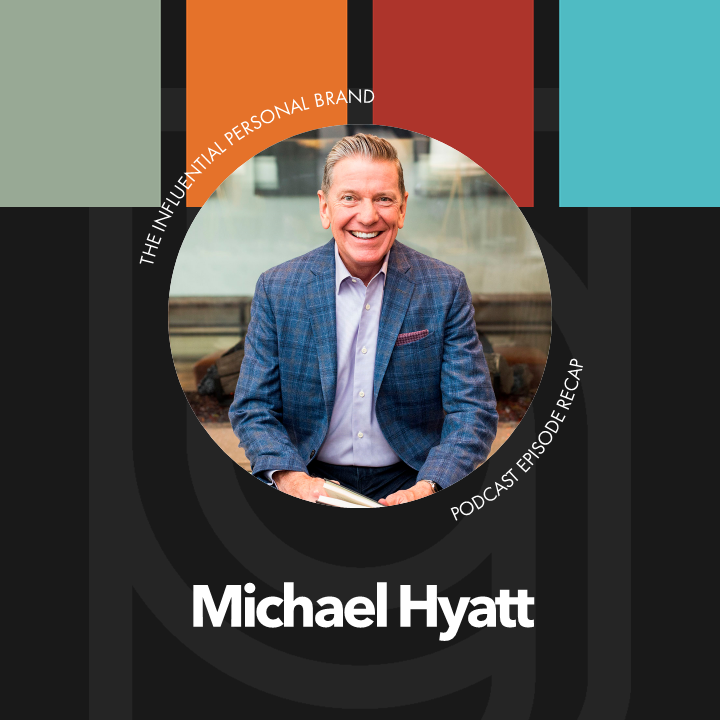
RV: Welcome to the Influential Personal Brand Podcast. This is the place where you’ll learn cutting-edge personal brand strategies from today’s most recognizable influencers. We’re going to teach you how to build a rock solid reputation and then how to turn that reputation into revenue.
I’m your lead host, Rory Vaden, head founder of Brand Builders Group, Hall of Fame speaker, and New York Times bestselling author of Take the Stairs. Welcome to the special recap addition of the Influential Personal Brand Podcast.
In just a minute, you’re going to hear myself and my wife and business partner, AJ, do a debrief, recap, and summary of our most recent interview with our big takeaways. But before we dive into that, I just wanted to let you know that people often ask us what is the first step to building a personal brand. If that is you or someone you know, then you have come to the right place, because we have put together for you a free video short course to help you get started. Just visit firststep.brandbuildersgroup.com to get access.
In it, we’re going to walk you through what exactly is the genesis of a personal brand and the six key questions that every personal brand must be able to answer but that almost none ever do. So go ahead and visit, again, firststep.brandbuildersgroup.com to get started, and we’ll see you there. Now, on with the recap.
[EPISODE]
[00:01:52] RV: Hey! Welcome to the special recap edition of the Influential Personal Brand Podcast. This is Rory Vaden, joined by my wife and my beauty and my business partner, AJ Vaden. We’re breaking down the Michael Hyatt interview, which is just tremendous. To get a chance to learn from somebody with this depth of experience is absolutely extraordinary. We’ve talked about a lot of things author, but the first thing that jumped out to me was when he said that you need to be willing to let go of different revenue streams in order to grow one. That was somewhat a little bit maybe surprising to hear from Michael. I thought that was really key, because in our phase one experience we talk about what we call your PBM, your primary business model. We help people get clear, both in the short-term and the long-term. What is the number one revenue driver of your business? The one thing which all others should point towards? I don’t think most people know about it and most people certainly don’t do that. So it was edifying to me to hear Michael talk about that.
[00:02:58] AJV: Yeah. We call this our three and three, the top three tips that Rory got and the top three tips that I got. I think in conjunction with what you said in terms of you have to be willing to let things go, I think the very first thing that I got from Michael is the fact that you should treat every endeavor like an experiment. I love that because as you listen to the interview, which you should, it is chock-full of really important industry tips if you’re a speaker, author, podcaster, influencer, or whatever. But he’s done a lot.
[00:03:30] RV: A lot.
[00:03:30] AJV: He’s done live events. He’s done coaching. He has done online courses. He’s done physical products, speaking.
[00:03:36] RV: Keynotes, books, the planners. His number one thing is planners now, the physical planners.
[00:03:42] AJV: This is my turn.
[00:03:43] RV: Sorry.
[00:03:44] AJV: My turn. I loved what he talked about in terms of his approach, because he said, “Our team looks at this as we might do what we may not. It may make money. It may not. It may succeed. It may fail. But we’re going to treat every single one of these new business models as an experiment to figure out where should we land, what makes the most sense for my brand and what we want to be doing.” I love that, because having so many people go all in and be like, “This is what I have to do or this is the only thing,” and that’s not the case. Sometimes, you have to do something to realize it’s not your thing. I think a lot of us have to go through the pains of that, because you see what everyone else is doing, and we think you have to do it. Then when it doesn’t work, you think it just wasn’t meant to be. The truth is your message was meant to be the vehicle to share it. Maybe it wasn’t meant to be –
[00:04:36] RV: That’s a great way of saying it.
[00:04:38] AJV: I think that’s really important. So this whole idea of experimentation and experimenting was really powerful. Don’t get so attached to just thing. If that doesn’t work, it doesn’t mean your brand isn’t going to work. It just means that wasn’t that one tiny part of it, so now on to the next thing.
[00:04:55] RV: I love that. It could be the right message, the wrong vehicle, which is really great. So another thing that he talked about, you hear content is king, content is king. We definitely agree with that. I mean, you have to be putting out valuable content. But he said, content is king, but platform is queen.
[00:05:14] AJV: And you have to have both to rule the kingdom.
[00:05:16] RV: Yes. You have to have reach in the reputation formula. We say that reputation, results times reach equals reputation. Well, reach is the platform, and that word platform – I remember the first time that we were trying to get our very first book deal and the literary agent said, “We could never work with you. You don’t have a big enough platform.” I didn’t even understand what the term meant, but just think about it as your direct access. What is the vehicle that you have that directly accesses your audience and how many people can you directly get a message to that you are in control of getting a message to? That is your platform, and there’s a lot of different avenues for platform, but you have to have a platform. It’s got to be as big as possible, and it needs to be growing, growing, growing, growing, and you need to focus on your reach as much as you’re focusing on your content. That was a pro tip for sure.
[00:06:10] AJV: Yeah. I love that and I loved how he said it. It’s not one or the other. It’s both, and they rule together. But you have to have content and you have to have a platform, which is such a good segue into my second point. It’s almost like we planned this or actually talked about what we were going to say, which we did not. So my next one was is he talked a lot about the publishing industry, which from someone who is a CEO of a very successful publishing company –
[00:06:38] RV: Huge publisher.
[00:06:39] AJV: And then as an author, it’s really fascinating to get the internal and the external perspective from the same person who’s done both rules. He talked a lot about – He gets asked all the time. Should you traditionally publish? Should you self-publish? Now, you have all these hybrid models. What’s the best way? He talked about the traditional publishing path, the self-publishing path. They kind of have gone back and forth. What’s the best? What’s the best? They’ve really settled on, which is a lot of what we talked about, it depends on what you want to do it for.
[00:07:11] RV: Yeah.
[00:07:12] AJV: He still says, “If you still are trying to hit the list, the New York Times or The Wall Street Journal. But if you’re trying to hit the list, a traditional commercial publisher is still probably the best way to go.
[00:07:24] RV: It’s the way to go.
[00:07:25] AJV: Here’s what I loved about what he said that most people don’t talk about when it comes to self-publishing. It’s a lot of work.
[00:07:33] RV: Tons.
[00:07:34] AJV: It’s expensive.
[00:07:36] RV: Especially if it’s not going to look like chintzy. If you’re going to do it right, it takes a lot of work.
[00:07:42] AJV: So I think one of the questions that we usually don’t propose to people but I’m going to start is, yeah, it totally depends on what you want to do it for. Is it to make money? Usually, when people say that, I’m like, “Well, I don’t know.” Is it for notoriety and credibility or do you actually just need to get your ideas out there and make money? Usually, that really – I propel that into commercial, traditional, or self-publish. But now, I’m going to add in another question, which is do you have a lot of money to spend on it? Because if you don’t, self-publishing probably isn’t the way to go. Or if that’s still what you want to do, you need to start saving those dollar bills.
But as you said, but if when you think about it from the time that it’s going to take you to write it, then you need to get an editor, then you actually have to have graphics design, and you actually have to have it printed, and then you have to have inventory, then you have to have distribution, it’s like, “Oh!”
[00:08:30] RV: Writing the book is like 25% of the whole project.
[00:08:34] AJV: That’s a lot of money. If you’re not a great writer and you actually need a ghostwriter, then you’ve got content editors, copy editors, graphics people. Then you’ve got the print and the layout and the inventory. It’s like, “Yeah. Those are things that most traditional publishing people were thinking.” Like, “Oh! I don’t want to go with a traditional publisher. They’re going to take all my money.” They don’t realize, well, so does self-publishing. It still takes all your money. It’s just are they going to take it in the beginning or over time?
I think that’s just a really interesting perspective and view that is completely separate of why do you want to do it. It’s the actual money behind it. It’s do you have the upfront investment to make it worthwhile or do you want to forego that upfront investment and then just make less long term? But it was really, really insightful from an insider.
[00:09:26] RV: Love that. Yeah, you can make money doing both models, but both models are also going to cost you money. So it’s just about like what do you need.
[00:09:33] AJV: Where are you going to give it up?
[00:09:34] RV: Over time as this question has come up, I have thought more and more. It’s like when you traditionally publish, it’s like the rule of thumb I use is when you feel confident you can sell 20,000 units. Like when you can move 20,000 units of your book, that’s when it’s like you can go to New York, get a great agent, get a great book deal. What do you need to do that? You need a platform. You need a big reach, which is what we were talking about.
How do you build a great platform? That leads to my third point, which is just creating amazing content that serves your audience. I wouldn’t say that this was an original idea from Michael Hyatt. It’s not original when you hear it from us. It’s not original when Jay Baer talks about it. But it’s important that you hear how consistent every bestselling author in every huge personal brand talks about this and what Michael said, which was super practical. Ask yourself every day, what does my audience need to learn? What does my audience need help with? Then answer that question for them and do it over and over and over and over.
That is the content strategy. There’s nothing more than that. You just have to do it consistently and as loudly and as many places as you can for as target of a niche as possible. Then hopefully, it’s aligned with what your primary business model is. But how can I serve my audience? How can I serve my audience? How can I serve my audience all day every day? Brand builder, that’s what you should be thinking about.
[00:10:58] AJV: All right. That leads to my third point, which actually has nothing to do with that. So completely separate of that but this was such a good reminder to me about perseverance and persistence. The reason it was such an aha isn’t just because he was a first-time author. But this was the CEO of a publishing house.
[00:11:18] RV: After he was the CEO.
[00:11:20] AJV: After. Again, my turn.
[00:11:23] RV: Hey! Sorry. Team, marriage. Marriage is a team, babe.
[00:11:28] AJV: But, yeah. This is so fascinating. I’m not going to get the number as exactly right. So I may be lowballing. I may be totally exaggerating. But it was something like when his first book, he was launching it. He got turned down like 24 times. So 24, 27 times. Y’all, this is somebody who had been turning down people for decades. That was like what he did was, “Nope, nope, nope.” He knew all of the other publishing houses. They all knew who he was, and he got turned down like 20 something times for his first book.
Then it went on to be a raging success, because his literary agent didn’t let him give up. They kept going. They finally got someone to agree that it was a good idea. Then it turned into a bestselling book with hundreds of thousands of copies sold. Now, that was interesting and inspiring enough. But then four books later, after he was already a New York Times bestselling book, after he already had a huge platform, after he had already done all of these amazing things and written three previous books, same thing. Got tuned down like 27 times, and it was like this last ditch effort to get this one book deal. Then it sold 200, 000 copies.
[00:12:46] RV: Boom!
[00:12:47] AJV: Just because some one weenie.
[00:12:50] RV: Person.
[00:12:51] AJV: Didn’t like your idea doesn’t mean it’s not a good idea. Just because one person said no one’s going to buy it doesn’t mean they’re right. Just because one person said you don’t have a big enough platform or that message isn’t exactly what people want to hear today or that book won’t sell or whatever nonsense people are saying, that means nothing. If you’re convicted in your message, then you need to stay the path. Do not veer from the path, because no one’s going to believe in it more than you do. So you’ve got to be the one that stand up and say, “No. This is going to happen.” Now, I just have to find the person to go on that journey with me.” It may take 20, 22, 25, 27, 29 times, but the point is somewhere amongst between 20 and 30, there’s a winner. You just got to find the right person who believes in your message as much as you do. It doesn’t always happen right off the bat. But it’s your job to persevere and to keep going, as if don’t get off the path.
I think that’s where most people fail is they give up too soon. They let one person dictate the validity of the power of their message and that’s not up to them. That’s up to you.
[00:14:04] RV: Yup. Many personal brands die on that road of patience and perseverance. It’s just follow through. Absolutely love it. So there you have. That’s our three and three recap from Michael Hyatt interview. Go listen to it.
[00:14:16] AJV: It’s really good.
[00:14:17] RV: It’s really phenomenal. Leave us a review. Share this with your friends, and we’ll catch you next time on the Influential Personal Brand Podcast. Thanks, everybody.
Here’s some great news. One of the most valuable things you can do to help us and other new potential listeners to find our show is for you to both rate this show and leave a review. So as a special bonus for you, if you leave us a comment in iTunes, Stitcher, or wherever you listen, take a screenshot of your review and email it to [email protected]. We will give you free 30-day access to 25 of our most popular interviews on video in your own private members-only area. So go right now. Rate us, review us, and then send a screenshot of it to [email protected]. We’ll get you set up with free access to our most popular video interviews all in one place. Also, just please share, share, share this podcast with anyone who you think might enjoy it. Until next time, remember that building a business isn’t nearly as valuable as building a reputation.
Ep 22: Understanding the Seasons of Business Models and Personal Brands with Michael Hyatt

ANNOUNCER: Welcome to the Influential Personal Brand Podcast. This is the place where you’ll learn cutting edge personal brand strategies from today’s most recognizable influencers. We’re going to teach you how to build a rock-solid reputation and then how to turn that reputation into revenue.
[0:00:27.2] RV: I’m your lead host Rory Vaden. Co-founder of Brand Builders Group, Hall of Fame speaker and New York Times bestselling author of Take the Stairs.
There are certain people in my life that I just feel honored to be associated with, just lucky to know. Michael Hyatt is certainly one of those people. I happened to speak at an event on a cruise ship and he was trapped there with me for six days and he couldn’t get away and I managed to get to know him and build a little relationship several years ago and I certainly consider him a mentor. If you haven’t heard of him, I don’t really know how you could be in the personal branding space and not know who he is.
But he is the former CEO of Thomas Nelson. He is the New York Times, Wall Street Journal, USA Today bestselling author of several books, one of which was Platform which made a huge personal impact in me and my direction. He’s written several others, Living Forward, Your Best Year Ever, Free to Focus, most recently.
He is both a tremendous personal brand, but also a real leader. He scaled a company, a 250-million-dollar publishing company with 700 employees, that’s Thomas Nelson. The Michael Hyatt team, like their company, now is on the Inc. 5,000 list. He’s a real leader, real CEO, real businessman, also real family man, he’s been married for over 40 years to Gale who – she’s awesome so it’s understandable.
He’s got five amazing daughters, nine grandchildren and he volunteered to come help me out as a personal favor. It’s not easy to get his time these days, he’s so busy so Michael, thank you for the honor of being here, my friend.
[0:02:09.6] MH: Absolutely Rory, thank you for those kind words, amazing.
[0:02:13.2] RV: You know, if you say publishing, it’s hard to create a list of people that would be more experienced in all different angles than you and I think so many of the people watching, I mean, I think almost every one of our clients like a book enters into the conversation at some point and so my first question for you, I figured was an easy one. Can you just tell us the secret of writing a bestselling book?
[0:02:40.6] MH: Well, take about 80% luck, and you know, have the right idea at the right time. No, seriously, I think part of it can certainly enhance your chances of writing a bestselling book but I think the most important thing on writing a bestselling book or creating a platform or a brand that has significance in the world is having something important and helpful to say.
I think you know, Zig Ziglar said, you know, if you help enough people, then you can get what you want and I think it’s the same thing with writing a book. Just write the most helpful, useful book you can. Be authentic, be transparent, be encouraging and that’s basically all I’ve tried to do and I’ve tried to find a topic that was hot and something that I could with integrity speak out of my experience but that’s pretty much what I’ve done.
[0:03:28.0] RV: Talk to me a little bit about the – you have the platform, like that’s – a part of the factor here is you have like the integrity of the idea but then you have the size of the author’s platform. Which one matters more? Do they matter the same? Can you do it with – do you have to have both, one not the other? What’s the balance there between platform and you know, premise.
[0:03:50.5] MH: Yeah, the way I say it is that content is king but platform is queen. It really takes both of those together, you know, if you want to create a kingdom and rule well. The reason I wrote the book Platform initially was because for years, in the publishing business, I had bene on the publishing side of turning away authors with great ideas, sometimes even fully written manuscripts that were fantastic but because they didn’t have a platform, there was very little for us as a publishing company to leverage.
But, when an author came to us with a great idea, great content, and they had some platform, didn’t have to be best but they had to at least proof of concept that there was an audience that was buying into their content and their framework and to whatever it is that they were selling, that was something we could leverage and kind of take to the next level. I think they’re equally important
[0:04:43.2] RV: Do you think that traditional publishing like, you know, that’s kind of the question today is years ago, was like traditional publishing was the way to go and then self-publishing and now I feel like it kind of teeters kind of back and forth.
A lot of our clients ask this question. How do I know if I should use a traditional publisher, you know? Do I really need one? Should I self-publish? Like what’s your take on that in the current day era?
[0:05:05.3] MH: Well, my opinion has vacillated over the years. In the initial – I mean, I was in the publishing business for 35 years. Initially, there was only traditional publishing, then there was self-publishing or we, you know, call it in those days, vanity publishing, which is kind of pejorative but that’s how we looked at it and it wasn’t very well respected because the books looked terrible. They usually weren’t well written or well edited and you could just tell it’s a self-published book. All that changed, started changing about 10 years ago and so self-publishing got more sophisticated, there were these hybrid publishers that would help you do some of it.
Now you’ve got all kinds of options out there but I’ve kind of come full circle. Here’s my theory right now. If you want to write a book, just the credential yourself and there’s no better way to credential yourself or to get authority in a space than to write a book. I personally think, it’s more important than a PHD, it’s more important than tons of experience. If you have a published book, that, in this culture, that kind of says you’ve arrived and you’re an expert in your category. If that’s all you’re trying to do then I think self-publishing is fine.
It becomes kind of a glorified, very nice business card that could pave the way as you go out and try to do other things whether it’s booking speaking or writing additional books or whatever.
If on the other hand you want to take a run at the bestseller list, and if publishing books is not your primary thing, like let’s just say that you’re primarily a speaker or you’re a consultant or you got some other gig that’s the main thing, your main revenue model, then I would absolutely use a traditional publisher because self-publishing is a ton, and I mean a ton, of work.
Now, Michael Hyatt and Company today, we do one traditional publishing published book every year, so I write one book every year but then we also do a couple of self-published books just for our tribe. I can tell you from looking on the inside in, having to do it on myself, it’s a ton of work.
If I didn’t have the platform I do that I could sell to, man, it would be – I don’t know that it would be worth it.
[0:07:14.6] RV: That’s super insightful. On the business model question, that’s a good one, that’s another thing I wanted to ask you about is, of all my friends and colleagues, I think you’ve tried more business models than anyone. I think, you know, you’ve done live events, you’ve done speaking, you’ve done consulting, you’ve done coaching, you’ve had memberships, you’ve done video courses, you’ve done affiliate launches like you’ve done online summits like this.
Is there a favorite business model that you have or you know, I think a lot of people kind of, it’s like, “Oh masterminds is the thing,” or, “No, a membership is the thing.” Or, “Really, it should be video courses are where it’s at.” Can you just give us just maybe some of the highs and lows of each of those and maybe like the ones you like or maybe what were some of the most surprising things you learned from the various different business models that you’ve tried?
[0:08:06.5] MH: Well, you know, I never really thought of myself as having tried so many but you’re right. Frankly, a lot of them haven’t worked. So I’ve done stuff that’s worked and stuff that hasn’t worked but one of the things I’ve always tried to cultivate is sort of an experimental mindset. Whenever I approach anything, a business launch or whatever. I approach it as an experiment, you know, “Hey, let’s just try it and see if it works.”
One of my colossal failures is that after we launched Best Year Ever, Five Days to Your Best Year Ever, that was a huge success, we had like 35,000 people go through that course over five years and it was a big revenue engine for our company.
We said, “Hey, let’s create Best Year Ever for leaders.” Because we thought, leaders are going to eat this up. I literally recorded all the videos and they were killer, you know? I was even impressed with them. These were amazing. We built a beautiful sales page and so we got all the emails written, everything. We launched it and it was crickets, we literally on the first 24 hours after the launch, we had one order. I was pulling my hair out.
I said to my team, “What’s wrong with the tech? This has got to be a technological failure. There’s no way that we could just get one order. We could have come up with that if we had a strategy.” Sure enough, that was it, nobody wanted the course.
So we try stuff and the stuff that that works you hear about, the stuff that doesn’t work, you know, we don’t typically publicize that. You don’t hear about that, but I would say that one business model that I’ve had that I’ve believed in for a long time is multiple streams of income.
You know, whatever horse you’re on right now, eventually probably is going to – you’re going to reach a saturation point or you’re going to – you’re going to get all the low hanging fruit and then it’s going to get more expensive and more difficult and so we’ve just tried to be in a lot of different things, kind of all in the same vertical space now and the goal setting and productivity space. But part of the reason, I’m kid of rambling here, so stop me.
But one of the things we’ve realized is that kind of when the market’s zigging, we want to zag. We got into online courses I think pretty early, we certainly weren’t the first but we were among the first people that got in to online courses and that was huge. It was ginormous margins. Then all of a sudden, people started doing courses on courses. How to create courses and then everybody and their brother created online courses and the market was very dense, very saturated.
We said, “We think that people are desperate for live experiences that even though they’ve got all this virtual capability, people want to be face to face and have real human encounters.” So we started our live events and that went crazy. Then we created our paper planners, the Full Focus Planner. That thing is –
[0:10:59.1] RV: I forgot about that one, I didn’t mention. There was that one and then also, you had the book, like the box, you were shipping boxes for a while.
[0:11:06.2] MH: Yeah. The planner business is actually our biggest business, that’s like, you know, almost an eight figure business now, all by itself. And the cool thing about that is it doesn’t really depend so much on my brand so it’s kind of got some autonomy and independence but again, you know, everybody was saying – in fact, people still say to me on Facebook, they say “Hey, we’ve got digital cast management, we got digital counters, why do we need a paper planner?”
As it turns out, people are very distracted in the digital environment, the thing that paper planner does is give them focus. Again,just kind of multiple streams of income and how can we best serve our audience? What does our audience need and how can we best serve them?
[0:11:48.2] RV: Year, I love that experimental approach and you certainly have to be like willing to lose some money here and there in the spirit of learning it out, lose some hours.
[0:12:00.5] MH: I’ll tell you the other thing too, you have to be willing to kill stuff when it needs to die. I mean, in my view, everything has a season but I’ll tell you a funny story. We had all these brands, you know, Best Year Ever, Free to Focus, Full Focus Planner, Leaderbox, all this stuff. Last December, we’re all sitting in a strategic planning and we brought in outside consultant.
He asked us this question that ultimately rocked our world. He said, could you explain to me the customer journey? Where do people start with you and then what’s the first step? Where do they go from there and how they go all the way through your product suite?
We kind of all looked at each other and we said, “We don’t know. We don’t have a clue. Here’s some ways you can get into it but we don’t really know.” We went through an unbelievable 24 hour periods where we killed or sunsetted Best Year Ever and Free to Focus and said, “They’re too confusing,” and so we mapped out a customer journey but we had to be willing to – it’s kind of like cleaning your closet. If you want new clothes, sometimes the first thing you have to do is get rid of the old clothes.
We had to clear out the old to make room for the new and that I think as a business owner, a lot of times it takes courage because those were – represented multimillion dollar businesses but we also realized that we couldn’t go to the next level unless we’re willing to kind of retire those and make room for the new things.
[0:13:24.2] RV: Yeah, it’s like killing the sacred cows kind of a thing. That’s not easy, especially like you have so much invested into those to just kind of go, “Okay, we’re done with that, we’re going to move on.” Like, not an easy decision I can imagine.
[0:13:39.0] MH: It’s not and it’s – I think one of the values of having a team is you know having other smart people in the room and people with wisdom that can kind of check and keep me from doing frankly as a business owner, something impulsive, but we can kind of check one another and ask if that’s the course in that kind of scenario play it and make sure it’s going to work.
[0:14:00.7] RV: All right, I apologize for bouncing around on all these different topics, although I’m not really sorry –
[0:14:06.8] MH: Sorry, not sorry.
[0:14:08.3] RV: One of the other things I wanted to ask you about is paid traffic versus organic traffic. You have built a huge platform and your community is so loyal. How much – should it be all organic? Is a real audience won that is built organic, you know? Is it paid, just like, “Hey, you got to pay the money to get in front of eye balls.” What’s the balance of paid versus organic?
[0:14:33.5] MH: If you had asked me about when Platform came out in 2012, if you’d asked me that question then, I would say, “I never pay for traffic.” Everything I had up until that point was organic. I built it from 2004 when I started to blog and I had about 100,000 unique visitors at that time on my blog and I thought, “You know, that’s enough,” you know?
It had a mailing list of about the same size of about 100,000, I thought that’s enough. Frankly, it would have been but in today’s environment, particularly when social media is really restricting the access that you get to for free, I don’t think it could be done without paid. Having said that, I think you got to have a very clear model of what you’re buying when you’re paying for traffic because I ultimately want to get them to the same place that I’m going to get organic traffic to and that is that I want it to be self-perpetuating, ongoing traffic that I can retain because they get exposed to the content and then they’re locked in because they enjoyed the content and feel like it’s helpful.
So, you know, I was telling you before we came on that last year, we spent about a million two on Facebook ads and believe me, we watched the return on investment like that, I wouldn’t be spending that kind of money if I wasn’t getting a huge return on that investment but it’s totally worth it. You just got to be smart about it.
[0:16:02.0] RV: Yeah, I feel like more and more, it’s like – it’s not necessarily the person with the best content that wins, but it’s the one with the most sophisticated systems of knowing what dollars they’re spending, what audiences they’re going after, what’s the lifetime, what are the conversions, the lifetime value of that customer. It’s interesting, one of my favorite interview questions I used to ask people was what is something you’ve changed your mind on recently and it seems like both this and the traditional self-publishing, it seems like you kind of have teetered a little bit so that’s interesting to see that perspective.
[0:16:36.1] MH: Yeah, I really believe in paid advertising now and just you know, to quickly kind of outline our strategy, I’m happy to share it. Typically, we run ads for free opt ins. You know, it’s usually an assessment or an ebook or a summit like this. Assessments have been very good for us because people seem to have unbelievable curiosity to find out more about themselves. It’s their favorite topic, right? We offer a lot of assessments and in those assessments, we typically try to convert them after the assessment to a webinar and a webinar is where I can begin to have a relationship with somebody but they get to kind of sample the brew. So for an hour on my webinars, I typically give them a good solid content and then I pivot. And it depends on the product. We are either pivoting trying to close to a discovery call like our high end coaching programs or actually trying to sell the product.
So we have done both of those very successfully. So that is how we think of paid advertising. We want to slowly escalate it where people get more involved with this after they tried that free thing and had a good experience.
[0:17:39.3] RV: Yeah and what would you consider, like on that kind of a thing, that kind of webinar, if it was a free call, what kind of percentages would somebody roughly estimate to go – if I am doing a good – if I have a great webinar and a good clear process for inviting a free call like 10%, 5%, 20%?
[0:17:59.9] MH: Yeah, I would say for us it usually runs – 10% would be on the low side especially for a free call but up to 35 sometimes 50%, but we usually offer something that we call a discovery call but people are wise to that. You know people don’t want to just call to get sold. So there has to be the promise of something else. So typically for us, I could tell you on our high end program business accelerator, which is like a coaching program, we do a discovery call there. But we invite them to take an assessment there.
We don’t usually use an assessment to get those people into the webinar but we use something called the Business Health Assessment. So we invite them to take the Business Health Assessment, get on the discovery call, and we will identify for them the three top priorities that as a business they need to focus on if they want to scale as rapidly as possible.
[0:18:48.4] RV: Got you, okay and then, you know if you are doing like a course, a thousand, two thousand dollars is more like if you can get five or 10% out of it then that’s pretty fine.
[0:18:56.4] MH: Yeah, totally.
[0:18:56.9] RV: Yeah, so on that note, again, this is like a bunch of pepper questions, automated webinars versus live webinars, is there a dramatic difference always to sometimes one you’d prefer more than the other?
[0:19:11.7] MH: I have done them both. I have to say that live webinars for us are always more effective and you know the biggest challenge today because there has been a proliferation of webinars too is to get for people to show up because the replays don’t convert like the live thing does even if it is on automated webinar. When they show up, they are much more likely to buy than if they’re just going to watch the replay. They have good intentions I mean I do it all the time myself.
You know to get somebody’s information, I sign up and then I get busy and I never go watch them. Yeah, I say you have to do both but I feel strongly about what am I about to say. I think you’ve got to be honest. I don’t think you have to trumpet the fact that it is an automated webinar, that it is not live, but I think you’ve got to be very careful with your language so that you don’t misrepresent it as live
And I remember several years ago, I stumbled upon some webinar software. I can mention the name but I won’t but that basically simulates a live webinar including feeding fake questions into the chat and to me that just lacks integrity and even if people don’t quite know what is going on they know something is off.
[0:20:23.5] RV: Yeah, I appreciate you saying that I agree a 100%. Do you think that a live webinar is going to covert twice as good as a recorded version of it or is it even less than that?
[0:20:35.3] MH: You know I don’t track that data in my role like I used to but all I can say is that I know it records – that it does better but here is the thing, there is no reason why you can’t do both. So do the live webinar and record it. Again, be careful with your language so that you are not implying that it is live. So when it is in the automated format, you don’t want to give the wrong impression but yeah, I mean that is what we do.
And a lot of times what we’ll do is that when we begin – like any kind of launch that we do, we’ll do live webinars for a week and I will typically do five, one day after another and – but we will also, and this is a good dress rehearsal for me, we’ll do the recorded one first and the great thing about that is putting in the recorded one in the can and having it almost perfect is then if there is a technical glitch in one of the live webinars, we’ve got that one that we can just shove in and run in its place and that’s happened to us before.
[0:21:31.9] RV: Oh wow that is interesting. Usually I only hear about the opposite like run it live several times and then take that but that is cool plus you get to have the practice run through with that like all of the live jitters and stuff. Okay, next one: email frequency. Too much versus too little. How much is too much and how little is too little? Is like the people that want to hear from you are going to stay tuned and you send them as much as you can? Do you have a thought on that? Has it changed over the years? I am very, very curious.
[0:22:08.0] MH: Let me just say I have overdone it. You know I have mailed way too much and of course, all the experts and I am not one, but all the experts would tell you that you can’t mail too much and the more you mail, the more people will buy, but I think at some point if you are not adding value I just think you got to listen to your audience and you’re going to get complacent. I mean if you mail it once a week there are going to be some people in your audience are going to think it’s too much, right?
[0:22:36.0] RV: That is a really good perspective. It doesn’t matter how much or how little you send like you are going to get complaints.
[0:22:42.0] MH: That is right but there is a point in which you reach critical mass where you are getting complaints from longtime customers and they saying, “Look, I love your stuff. I bought everything but you are killing me, you know, dial it back.” So I just subscribed to an email list about two weeks ago. The guy was literally mailing twice a day. Twice and sometimes three times a day and I just said, “Look, I love you but I don’t even see my kids three times a day” you know? So I don’t want to hear from you –
[0:23:10.8] RV: I’m sorry about all of those emails Michael. I didn’t realize there were three coming to you every day.
[0:23:18.1] MH: I just think if there is one guy that I never get tired of hearing from and maybe it is just me but it is Jeff Walker. Now Jeff mails a lot but he is so good with his copy that I almost always read them and I have never been tempted to unsubscribe but he is like the one exemption that probably proves the rule. You know unless you are super ninja copywriter, just be very careful
And I think one of the things that we’ve moved to in our business now is that we are sending out an email that has content that only appears in the newsletter but it is content driven not marketing driven and we feel like if we are adding value and I talk about this actually in my book Platform, I call it the 20 to one rule, which is pretty funny in retrospect because what I said is you got to make 20 deposits before you could make a withdrawal. Well today, I would probably say it is more like three to one. If you could make three deposits before you make an ask that is probably a good ratio but the point is you got to make more deposits than withdrawals otherwise, you over draw the account, does that make sense?
[0:24:21.8] RV: Yeah that is like the jab-jab-jab right hook, right? I guess that is like three to one but really it sounds like the rule is just listen to your audience and just respect the audience, listen, take their feedback. I mean that is another good one. That wasn’t on my list here to ask you but just like writing your own copy versus having someone else write your copy. When do you make that transition? How do you do that?
[0:24:48.6] MH: I think as a business owner or as a brand builder, you got to ask yourself what is the best and highest use of you? And so at the very beginning I did everything. You know, I wrote the sales pages, I edited the podcast, I posted it. I created all the content for the courses, everything, but at some point, I say, “Okay, what is the best and highest use of me?”
And in Free to Focus I talk about this being your desires on activities and the things that you are passionate about, things that you are particularly good at. So I don’t write any email copy. In fact this might be shocking but I don’t even review it today. What we have done is we trained a small group of writers to write in my voice, to kind of deconstruct how I speak. We literally have a written style guide on this, how I speak, things that I typically say, things I would never say, just the elements and style with regard to my voice and so yeah, where I spend my time these days is I am writing, every morning creating new content.
That is best and highest use of me. So at least for an hour a day I am writing 500 to 750 words a day and that becomes the pantry from which my team draws for all kinds of stuff, whether it be products or books or whatever.
[0:26:05.0] RV: How much do you read?
[0:26:07.0] MH: Less than I used to but still a fair amount. I read probably two or three books a month. The reason that I read less than I used to is because I listen to so many podcasts today and I find that unfortunately, this is the dirty little secret of publishing is that so many books should have been an essay and in order to give it enough bulk to be able to sell at retail they fill it up with a lot of filler.
And so the thing that I like about podcasts, not all podcasts, like some of the most popular podcast make me crazy because they take forever to get to the point. They just talk and talk and talk and they ramble and there is no takeaway but having said that, I generally can get out of a podcast content that really rocks my world much faster than I can most books. There is definitely some exemptions to that.
[0:27:00.2] RV: Okay, I know we are running up on our time here. I got one more question but before I do that, where should people go if they are not yet following you? If they want to follow you, htey want to catch up with Michael Hyatt and see how you’re doing, what you are doing in like the new era of the Michael Hyatt personal brand?
[0:27:18.6] MH: Yeah, well you can find everything at michaelhyatt.com. If you scroll all the way to the bottom of the page, you will find all of our other brands. So there is everything from our store there to the Full Focus Planner to the Business Accelerator Program, Leader Books which is our monthly book club for leaders. All of this stuff has links there and I would encourage people to listen to the podcast. That is still the thing that I think is the best effort that we make.
And in terms of branding and in terms of reach, I just think there is no return like what you get on the podcast and our podcast I do with my oldest daughter, Megan Hyatt-Miller who is our COO of our company and it is called Lead to Win. That is on iTunes or wherever you listen to podcasts but you can find the links on michaelhyatt.com.
[0:28:00.4] RV: Okay, so last one for you Michael. As you said, this is maybe going back to some of your earlier days certainly as a publisher, you had to turn down a lot of authors, you turned down a lot of dreamers. In recent years, it’s been more like you have been coaching them. And you have seen people trying to struggle and trying to battle the fight and then you comment to where today, it is like there is so much noise. There is a lot of competition in webinars and podcast and books and everything.
I think that there is a part of this these days that is just dealing with heartbreak and just dealing with some of that setback. What would be your advice is there is somebody out there that is just feeling like, “Oh my gosh, you know I can’t get a publisher. I can’t get an agent. No one is listening to my podcast. No one is reading my articles. No one is opening my emails.” What would you say to that person?
[0:28:50.5] MH: Congratulations, you’re normal. You know, I really think and I think this is important for people to hear. I think that’s in a way, God’s way of testing us to see if we are really committed to this thing that we said we are committed to. So my first book was rejected by 29 publishers before the 30th one said yes. I was ready to throw in the towel by my agent wouldn’t let me. My book Living Forward, which is about four books back was rejected by about the same number of publishers.
I already had a New York Times bestseller. I already had a huge platform and that book, nobody believed in it. Everybody rejected it. And now it’s gone on to sell about almost 200,000 copies. But nobody wanted to touch it for reasons I still don’t understand. I get that that gets discouraging and I almost gave up there too. I thought, “Geez, maybe there is a better use of my time, maybe God, the universe, whatever is trying to say something to me this isn’t the right timing or its the wrong message.”
And I think it is one of the most important books I have ever written, I am glad I persevered it. In fact, if it hadn’t been for Gail cheering me on I think I would have given up but I think that’s normal. And I think – I have bad days every week where I want to quit, you know? And for some reason, I just keep chugging along and trying to believe the best of what is happening but it is just normal. Rejection, the world doesn’t owe me a living and the marketplace doesn’t owe me anything.
And so it is up to me to create enough value that people can see it and want to participate in it. So I think the best advice I’ve ever gotten, the thing that I try to practice when I get discouraged is forget about the platform, forget about trying to write a bestseller, forget about trying to be famous. How can I help my clients? What are their needs? How can I encourage them? How can I be useful to them? And if you do that consistently enough I really think it would come back.
[0:30:50.8] RV: Amen. There you have words of wisdom from one of the most experienced people in several different aspects and components of the space. Michael, thank you so much for making time for all of us and for putting out as much amazing content as you do. I mean, your team is amazing, your family. We love you, we believe in you and we are honored to know you.
[0:31:13.4] MH: Thanks Rory, I appreciate you and AJ too.
[END OF INTERVIEW]
[0:31:15.8] RV: That’s all we’ve got for this episode of the Influential Personal Brand Podcast but here is some great news, one of the most valuable things you can do to help us and other new potential listeners to find our show is for you to both rate this show and leave a review. So as a special bonus for you, if you leave us a comment in iTunes, Stitcher or wherever you listen, take a screenshot of your review and email it to [email protected].
Ep 21: How To Produce A Winning Infomercial with Kevin Harrington | Recap Episode
On today’s recap episode, we break down the core lessons and extract the golden nuggets from our interview with the original “shark,” Kevin Harrington. Kevin is a true American legend in the world of business, investing, marketing and sales. He is the original “shark” on the hit TV show Shark Tank, the creator of the […]
Ep 20: How To Produce A Winning Infomercial with Kevin Harrington
Speaker 1: (00:01)
I am so excited to introduce you to this is one of those people where it’s like if you ever sat next to him on the airplane, you would have hit the Jackpot and the lottery and you, you might not realize you were sitting next to. But Kevin Harrington is a man that people literally try to strategize how they can get close to, um, he has become a celebrity in the world of entrepreneurs and inventors. You probably recognize him. He was one of the original sharks, the original shark, the first shark. Uh, I believe that was selected to shark tank, which has now been super successful. He is also one of the founders of, of infomercials and as seen on TV, like he’s one of the pioneers of that whole movement. He actually is the cofounder of entrepreneurs organization, which my wife and I are members of.
Speaker 1: (00:50)
I’ve spoken at several of their events, um, around the, uh, around the globe, around the country in my case. But it’s an international organization. And, uh, he has seen over 50,000 pitches, um, launched more than 500 products, generating $5 billion in sales. Um, he also is the creator of the secrets of closing the sale masterclass, which is inspired by Zig Ziglar. So He, uh, Zig Ziglar wrote a book, secrets of closing the sale. It’s just been rereleased with him and Kevin Harrington. Um, obviously zig has been passed away for seven, eight years now, but a was a mentor to me personally and also, um, to Kevin. So Kevin, thanks for being here. Uh, thanks for making time, Rory. Thank you. Great. Great to be here and thanks. It was a very nice introduction. I appreciate that. Thank you. What man? Like, you know, it’s one thing to talk about personal branding and brand builders group.
Speaker 1: (01:46)
That’s what we do, right? We help people build and monetize their personal brand. But really what we study is reputation and reputation as is. How do you build a reputation, how do you become trusted? And of all the people that I know that know the most people, I think you’re near the top, like of, of every like super influential person that I know you already know them and I know that your Rolodex goes far, far beyond that. So, and yet, you know, you’ve been in the world of sales and marketing for years and years and years and sometimes reputations go south in those industries. Uh, when you’re an investor and an entrepreneur, you know, those, sometimes those deals go south. There’s a lot of conflict and there’s fallout and you know, when you get to be your level of celebrity and notoriety, I know that, you know, people sue you for no reason and you know, so what is your philosophy on reputation in general? Like if we just start there, like you have been able to keep such a solid reputation over the years, how do you think you’ve been able to do that? I appreciate that. I think, and I’m going to go all the way back to the beginning because
Speaker 2: (02:59)
I think you need a foundation of, um, of, first of all, I think my foundation that I built my business on is, is respect for entrepreneurs, number one. And so, um, when you watch shark tank, there’s Mr. Wonderful. Uh, and, and I, and I always ask people, do you know why he calls himself Mr Wonderful? Because nobody else will. Okay. He calls himself that because nobody else feels that he may be. Mr. Wonderful. And actually I joke this, this is all kind of joking about O’Leary, Kevin O’Leary, but we used to on the show, we’d say he was the bad Kevin. I’m the good Kevin now. Like why, you know, I’ll take that they, you know, I wasn’t the one that came up with that the rest of the sharks were and, and it’s because when somebody would come out and make a pit, I wasn’t there to tear them down and rip them apart and tell them how stupid their idea was.
Speaker 2: (04:02)
I wanted to empower them even if I wasn’t going to invest. Because entrepreneurs are in a delicate situation. They, they’re fighting against coming home to their family, to their wives, to friends and talking about how they’re giving up their job. They’re investing their life savings into their idea. This is not an easy task. This is, this is a tough situation and you know, to, to have a full time job but be spending money on patents and on this and on that and going on shark tank to try to get, you know, an investment from a shark. This is what it’s all about. And I think today there’s more places to go to get funding. You can do crowd funding and yeah, you can go on shark tank, but that’s very difficult to get on. But I think going back to day one, when I got started, I was knocking on doors when I was 15 years old driving a bicycle cause I didn’t even have a drivers license getting the door slammed in my face.
Speaker 2: (05:01)
And, and so I learned the hard way. I learned my father was a bartender, saved up enough money to open up his first bar, Harrington’s Irish pub. And I started working in his bars and restaurants when I was 11 years old, 40 hours a week. So I, I, you know, worked hard, had to prove myself, had to pay my own way through high school, through college. So I looked at entrepreneurs as people like myself. I was in the trenches building and hustling to become successful. So when they come to me now asking for help and advice, I put myself on their level saying, what would I have to do if I were in their shoes pitching me now the investor that is risen above the, the, the ashes sometimes because that’s, you know, in the 500 products plus that I’ve done more than 300 of them bombed and they lost all my money. So, uh, you know, it’s, it’s not so easy every day. And I, and I say Winston Churchill had, it’s a great Chang success is being able to go from failure to failure without the loss of enthusiasm. Okay. So, uh, you know, it took me awhile to figure out, hey, I just failed. I’ve got to learn from that and, and, and go to the next step. But that’s what I do.
Speaker 1: (06:28)
I’ve gotten to know you. Uh, you know, we spent a bit of time together here the last couple of years, which has been awesome. And I think when I look at you as an investor, as a shark, I remember thinking after the first time I spent, you know, like a full day with you, it occurred to me, yet you’re not a, you’re not a shark at all. I remember you saying that you, you don’t even try to negotiate for a good deal. You negotiate for a deal that’s good for you and for your other partner because your, I remember you saying that, you know, your philosophy was not, where can I get the best deal? It’s one where everybody has a fair deal and everyone is motivated, um, you know, to, to, to win. And that spoke a lot to me. It was a very profound thing where I was like, wow, what, what a different way to approach negotiating. And I think, you know, in terms of your reputation and you know, over time, I think that’s what people are probably drawn to because they know that you’re, you’re fair. You, you’re, you’re fair.
Speaker 2: (07:29)
And I think I appreciate that. I think, um, when I go back to the early days, I met a gentleman named Arnold Morris. At the Philadelphia home show and he was slicing through Coca-Cola cans with the Ginsu knife and mufflers and things. And I cut a deal with him and put him on TV. Now Arnold said to me, Kevin, um, and he had his signed contract for the good shoe and the, and the knife sales, but he said, I’ve got other people that this is amazing what we’re doing. If I bring you other deals, can I get compensated? I said, absolutely. We put an addendum to the contract. He brought Billy Mays and he brought Sandy Mason and Wally Nash of some of those you may recognize and some you might not, but we did hundreds of millions and billions in sales that came from these projects that Arnold Morris brought. But he got compensated on all of it.
Speaker 2: (08:23)
And so on his, literally his deathbed, the week that he was passing away, he kind of knew it was coming close and he reached out and his wife said, Arnold needs to talk to you. And I said, oh my God. And she says, Yap, he’s getting very close. She’s, he had a stroke and this and that. And she’s, and I said, well, what does he want to talk to me about? And I’m absolutely, I’d love to talk to him. She said, he’s got a deal. He wants to pitch you. Okay. I’m like, you know, here is, I mean this amazing because he had to get this last feel out of his system before he could pass. I mean it was unbelievable that the, the way it went down, but you know, Arnold was an amazing man, did great things for many people, but these insults, so people say to me, you know, how do you keep getting all these new products?
Speaker 2: (09:18)
I said, I’m getting these products from people I’ve been dealing with for 30 35 years in 2025 years, 10 and 15 years. And people I dealt with two months ago. So it’s, it’s the roll of decks factor. As you mentioned, Rory, this is what creates a lot of magic for all of us. As you know, I call it the Golden Rolodex. And this is part of becoming, you know, it as you’re branding yourself and you know, get back to the concept of personal branding and things. Creating a golden Rolodex is, is, is an important step in that process.
Speaker 1: (09:52)
Yeah. Well, and, and so one of the other things I wanted to ask you about just, you know, as I think about what can I ask Kevin that I can’t ask anyone else is you’ve sold more on TV than anybody. I mean, I don’t know anyone. It would be only a few people in the world that you could even say has been involved with selling as much on TV. So I’m interested
Speaker 2: (10:14)
a couple that are up there in the same ranks, but I, I know, I never want to say I’m the top guy because there’s some pretty successful guys out there, but I’m right there in the top five for sure on a global basis.
Speaker 1: (10:28)
Moved a lot of product on TV. So one, I’m interested in understanding TV, like in terms of, you know, a lot of people that are building a personal brand. TV is like this holy grail of like, oh my gosh, if I could get on TV, it’s like Tony Robbins is on TV and Dean Grasiozi is on TV. You know, like you said, like Billy Mays and, and all of these like people who become these celebrity workout people, they, they do infomercials. So one is how does that business work? Like how does that happen? How does someone get their clothing line on QVC? Or how do they get their, you know, Dean Grasiozi has a book, right? He does an infomart. Like how would a person go about doing that if they said, you know what, I think I’ve got a program I could sell on TV. Like how do you do that?
Speaker 2: (11:17)
So, so let’s, let’s, I’ll step back a second. Cause it, it’s there, there’s a couple of different angles there. You said, how do you get on QVC? How do you get on TV like infomercial? So two different scenarios. But the bottom line is this TV has been very powerful for many, many years. For me. I started back in the early eighties when I was watching a just got cable TV and I’m watching discovery channel. It was actually channel 30 of the 30 channel package. And so I went to all the channels, ESPN and 24 hours sports and movies and HBO and MTV Music. I got to ESPN sports, I think I mentioned. Um, I got to discovery channel and there was nothing on the channel. There was actually just bars on the screen. So I called the cable company and they said, we as a cable company delivered to you what we get from discovery and they only deliver us an 18 hour a day block.
Speaker 2: (12:17)
Six hours a day is nothing cause they’re a startup channel. They can’t program 24 hours a day. So I went down how to deal bought that six hour block from discovery, not only locally, but I did an international deal. And so for a number of years I had exclusive rights to discovery channel a six hours a day. Okay. Now I was putting in my, I was putting Tony Little Jacqueline Lane, George Foreman, you know, all these different types of products, fitness juicers, you know, kitchen gadgets, whatever, right? And so we had an amazing success for many years putting people on TV. But the way it works is this, there’s all this sort of like downtime with all the TV networks and cable networks. There’s only a handful of places that won’t sell infomercial time, CNN, and, and I think, let’s see, CNN and ESPN, those are the two that you will never see a 30 minute infomercial on.
Speaker 2: (13:20)
But Discovery Channel lifetime, all the other channels of Bravo, we buy tons of time from all of them. So what you do is you buy a block, a 30 minutes slot, maybe you pay 5,000 for it, two thousand ten thousand whatever the number is. In the early days I watched it isn’t maybe 2000 to 10,000 is that a reasonable number for, that’s for cable broadcast. You can buy, for example, in Nashville, Tennessee, you could buy 30 minutes on broadcast television. On Saturday morning, we’ll probably gave $100, right? 30 minutes on Nash on, on, uh, that would hit all of Nashville. Okay. I’m in Tampa, Florida. I can buy time here for as little as $500 for 30 minutes slot. And, and you can even go to cable. The cable guys have some of their own local cable options for even less, maybe $200. So, so now you, by that time you produce the video that sells the product and now that when that airs, it’s, it’s got to generate more than the cost of the time in sales to make money, obviously.
Speaker 2: (14:36)
So you mentioned Dean Grasiozi, he goes, he goes into Tampa, Florida and says to his media buyers buy $20,000 worth of ads. And he’s expecting, now he’s selling his book, but he’s also driving people to a seminar. So his is a little bit different. Hey, buy my book, come to the seminar there. You know, his liquidation comes when people show up at the seminar and he sees how much, you know, sales he’s making from there. But that’s, that is his model is buy infomercial time, drive people to a seminar, upsell them into masterminds. But the fitness people that you see, like the Tony Little’s, when we’re selling the gazelle, for example, we spend 10,000 and media, we want to sell 20 to $30,000 worth of puzzles during that slot. That’s, that’s how it works. You look for at least a two time multiple of sales to the cost of the media. So if you spend 10 grand the media, you want to see 20 plus thousand in sales coming from that time. By
Speaker 1: (15:48)
amazing though, I am all over the country. Now. When you say the media, is that like buying the commercials to promote the show or that’s just buying like the 30 minutes?
Speaker 2: (15:57)
That’s just fine. The 30 minute block, you don’t need commercials to promote an infomercial. It’s a standalone sales piece. So yeah. So Saturday morning, let’s say we, we bought that $800 slot in Nashville on a broadcast station on Saturday morning. People are up there just going from channel to channel to channel on their cable box or the TV and they, oh, wait a minute, let me see what this guy, Dean Grasiozi Phil was talking about. Oh yeah. Well that’s pretty interesting. So they tune in, they get hooked, and this is why you need a good pitch or you need a good presentation in that infomercial because you’ve got to be able to hook them, grab them, and now they’re listening and now they’re going to take action. Hopefully. So you bought that time for $800 in Nashville. You’re hoping to get 1600 to $2,400 in credit card orders from that time. Bye.
Speaker 1: (16:53)
That is so amazing. I mean, it’s so interesting to me because it’s like this is the original webinar funnel. It’s just like buy traffic, drive people to a a one hour Webinar, do a presentation, deliver some value, make an offer, get it to buy. It also blows my mind where he’d go, why are infomercials always late at night? The reason infomercials are always late at night is because one night Kevin Harrington was sitting in his hotel looking at the discovery channel and found out that there were six hours in the middle of the night that nobody else bought and you went and bought it and that that became the homicide. That was the downtime. So can you talk about the, the, um, talk about the pitch a little bit for like, because you know what, there’s, there’s a difference between like selling to a person. You know, in our former life that was something that we used to do.
Speaker 1: (17:44)
We used to teach people to, you know, our, the, our former company used to do like one-on-one sales coaching. That’s very different than selling on a Webinar or selling from a stage or selling on an infomercial where you’re selling one to many. Um, so what do you think are some of the key principles there? Because the other thing, particularly with TV is I have to think like people are flipping their coming and going, so they may not be sitting watching the 30 minute block. They may only be there for like two or three or five minutes. I mean so exactly how do you construct that? Like what? Let’s say you went and bought the $800 cause that’s reasonable. Yeah. So now I have $800 how much do I need to spend on producing the show? Like the 30 minutes and, and what, what I put in that 30 minutes that I can use to like, you know, market my, my book or my Info, my video course or my seminar.
Speaker 2: (18:41)
So great question. Now you have to understand that you’re, you’re, when we talk about producing the show, you’re not producing it just for that $800 by you’re producing it to build a media schedule that might be two three, 400,000 a week in media. That’s generating. See that’s if you’re, let’s say you’re spending 200,000 a week on $800 time slots like Nashville time slot, right? So now you’re, you’re running hundreds of spots that each one is monitored and needs to perform at a two to three to one ratio, sales to media costs. Okay. So, so you say upfront, Dean, I talked to Dean about his show that he did with Larry King for example. I said to Dean, how long did it take you to shoot that show? And he said, Kevin, he said, you won’t believe this, but I shot that show live in 30 minutes.
Speaker 2: (19:44)
And I said, what do you mean? He said, well, I sat down, I, you know, I, I, Larry King is a professional, he’s been doing interviews all his life. I’m a professional. We talked a little bit first before we rolled the whole day. I gave him a couple of questions if he wanted to ask, but we just went live and boom, we got it. He said, we did some more footage just to have some more, but I mean that was sort of a live to tape. Turn the cameras on and film it now he had to do editing because he had testimonials. So he had the one day shoot filming with Larry. Then he had testimonials, then he had editing, but then he also had one other big costs. What was it? A fee? The Larry King. Okay. So Larry King, he’s probably, and this isn’t coming from Dean, so I don’t want to make, I don’t want to say, oh, Dean told me this, but if I had to guess, Larry probably gets anywhere from 75,000 to 100 grand to shoot that show.
Speaker 2: (20:44)
Plus he gets a percentage of you show. So what do you note now? What did Dean’s spend? He shot one day at Larry’s office. He shot a dozen testimonials. He shot, he had to do the editing. You have to pay Larry some money. He probably spent all in somewhere between 150 and $200,000 to shoot that infomercial. And that was a pretty easy one to shoot. So, uh, but he, he knows that the credible Biddle credibility of Larry is going to take this thing to a pretty good point. And, and so he’s now crushing it. He’s, I mean, I’ve seen his schedules in my local market where he’s running on three simultaneously at the same time, at two o’clock in the morning. Now let’s see, what am I doing watching it two o’clock in the morning. I as a business, I’m in the business I have to tune in.
Speaker 2: (21:44)
But I get logs from monitoring services of when these are errands. So I don’t have to actually be there live at 2:00 AM. But I get along from a company that says, okay, dean ran his show 122 times last week and here’s where it ran. I can get that information so I know where he’s running about how much he’s spending. Cause I know what those slots are worth. So if I can do a report and say, okay, Dean ran 122 times, he spent 350,000 in media last week. Okay. I mean that tells sophisticated the industry is and, and by the way, this is how people then decide whether they’re going to knock somebody off. Okay. They, they cheat somebody out there running a lot of media. They know what’s working because it’s bringing in, nobody’s running 350,000 in media. If it isn’t bringing back a return on investment, you don’t mean you find out on 10,080 or whether it’s working, you don’t roll it out to three 50 unless you’re getting that return on investment. Uh Huh.
Speaker 1: (22:51)
So, and, and, and this is like, who are you? Oh, you said you’re, you’re either calling a media buyer and you know, at that scale, but if you’re doing local, you’re just going to go to your like local cable channel or like you just,
Speaker 2: (23:04)
yes. Yeah. I mean, so like it, it’s, it’s no problem. Me Or you like I could call my local Tampa TV stations, you can call your local national stations, whatever. Um, you know, we can, we can all make a couple of phone calls. It’s on the rollout when like when I said Dean’s doing three 50 a week. When we did the Gazelle with Tony Little, that was a over a million a week in media span, generating over 2 million in sales a week. But that was hundreds and hundreds of slots. If you’re spending $1 million at 8,000 for some 800 for others, somebody has to monitor that and they have to buy it. Then there’s a traffic department that it goes through because you’ve got to, you buy it, then you send the tape, you’ve got to have an 800 number that’s tagged to that specific station so that when the sales come in, you know what 800 numbers tracked to that station. There’s all kinds of things happening behind the scenes, so there are media agencies that are in the business of buying media to the tune of if it’s 300,000 a week, 500,000 a week, $1 million a week, whatever it may be. Right? So that’s the important thing.
Speaker 1: (24:24)
The essence is really fascinating. I, I’ve never understood like the monetary, but even even going, okay at two to one ad spend, basically on revenue. You could do the same thing with Google ads or Facebook ads and you know, whatever is say, okay if I’m going to, I’m going to put $50 in in terms of Facebook ads, I need to make sure that $100 comes out before I go and spend 10 grand on Facebook ads. And so you’re looking for a two to one to three to one ratio. Um, so what about the content itself? Okay, so what needs to happen in that 30 minutes? Because again, I don’t the medium of that different, I mean it did TV. Yeah, maybe it’s not TV, maybe it’s a Webinar, maybe it’s on stage, but like what goes into the content?
Speaker 2: (25:08)
So, so now in the old days, and I, and I, cause there have been a few changes in the industry for 35 years. Infomercials worked pretty well, but there’s been a little bit of a disruption because there’s a lot of people that have cut the cord from cable and aren’t, you know, aren’t watching TV. There’s been a decline in DVD viewership has been pretty substantial. It’s a 50% decline in TV viewership in the last 10 years. And so the question is, where did these viewers go? Well, you just mentioned it. Facebook, Instagram, they’re, they’d gone to digital outlets, right? Google, youtube, et cetera. So, so now [inaudible] and there’s also another issue. 30 minutes is, is a long time. And let me explain the structure of a 30 minute show. There’s three 10 minute pods in a 30 minute show. Each one of the pods has a three step selling system that I’m going to call the teas, the please and the seeds all within each 10 minutes he’s police sees he’s police sees these please seat you, tease them with an attention getting problem. You please them with solutions to the problem, benefits to the product or service, magical transformations, some kind of demonstration maybe. But magical transformation is a very powerful please. You see a before and an after, right? And then you see like by having a irresistible offer, so t’s with attention getting problem please by solving the problem with magical transformations and cs creating an irresistible offer. And you do that three times in each 10 minute segment of the 30 minute show. So that’s kind of the blueprint for producing an infomercial.
Speaker 1: (27:07)
Wow, I love that. And so it’s really just a 10 minute it really, all you’re doing is creating a 10 minute and then you’re just repeating
Speaker 2: (27:14)
the same. You don’t actually, you, there are some people that actually just do one 10 minute repeated three times. I don’t like to do that because if people sense that, but the formula, yeah, so I mean what we’ll do is you can tease please and seeds, but you just use different testimonials and you know, it might be the, it’s going to be the same seeds, the same irresistible offer in all three closes, but you don’t necessarily have the same content teasing and pleasing along the way.
Speaker 1: (27:49)
Wow. That is so interesting. I mean, that’s such a simple process, but it also very sophisticated in terms of knowing the, knowing the dollars in which markets are producing. And, and it just, it blows my mind though, how like this is, even though people might not say it, this was the genesis of webinar funnels a and video. Any, you know, any, any modality of selling on camera? Like this was where that started.
Speaker 2: (28:16)
I’m going to give you a good example of something that we learned quite a bit on. Uh, a guy came in my office one day to do a, he had a fishing lure and he’d been watching Tony Little and George Foreman and Jacqueline Lane and all these great things we’re doing. And he, he puts this lawyer in front of me. He says, Hey, this is the most amazing lure you’re gonna want to do this. And I said, why is it so amazing? And he said, I have a pad and said, all the words hit the water drop straight down. Mine hits the water and it’s reverse rig to swim away like a wounded fish. And so I said, I’d love to see that in operation. We went out and showed how it was swimming away and fish were attacking this floor. We had this big hog draw, 20 foot long fish paint that we cast the lure in and saw some amazing demonstrations, catching fish that lures, we’re going straight down regular lawyers dish when just watching them drop, the flying lore went in and they’re chasing it around and biting it and catching fish.
Speaker 2: (29:14)
So, um, when we first tested the show, we ran on a lot of cable networks and the media buyers called back and said, the show didn’t work. I don’t think fishing’s going to be a good category. Um, it’s not successful. And I said, let me get some demographics. I want to see where the orders came from. You know, fishing is, you know, may be, it’s not some universal, we found La and New York, it didn’t have any traction, but in Missouri, in Ohio and Michigan and various areas where there was lakes, it was crushing it. So people aren’t in New York City going out and fishing every weekend. But in Kansas City, they would love to go fishing on the weekends, the lakes and places around. So now we stopped running cable. We went back in. So our cable for, you know, 10 grand in media is generating 5,000 in sales.
Speaker 2: (30:09)
But when we went and targeted local markets like Nashville, Cincinnati, Duluth, Minnesota, we were doing five to one on our buys because we were crushing it in these local markets. So we decided we’ve got to stay away from the coastal communities. This is not fishing lore because first of all, this young lords are generally kind of fresh water and, and, and in the, in, in New York and La, they’re on the ocean. We don’t even have a product yet for that. But in the central parts of the United States, we crushed it. This product went on to do 500 million lures at a dollar a piece, 20 to a pack, 20 bucks for 20 lures, $500 million in sales because we tracked it and focused on buying time where it works.
Speaker 1: (31:02)
Wow. Um, Kevin, I could talk to you all day about lots of stuff. Uh, we are out of time. Uh, where did, should people go? I know you have, you know, the secrets of closing the sale book was Zig Ziglar just came out. Uh, you have your secrets of closing the sale master class, which, you know, maybe we’ll put a link to or we’ll, you know, we’ll audience when you open that class up where else, but where should people go to connect with you and you know, if they want to stay in touch.
Speaker 2: (31:28)
Yeah. My, my website’s a great place because we have some free reports and some free books and chapters and things. It’s Kevin Harrington. Dot. TV and Harrington spelled h a. R. R. I. N. G. T. O. N. So Kevin Harrington. Dot. TV is my website and I’m got a lot of good content there and you can see some videos and see some things we’ve done over the years. But we also, I’m actively still looking for great products, great relationships. I sit on several, uh, board of directors of public companies and, um, I love doing that and, and helping, uh, you know, I invest money, I help raise money. Definitely am available for, for entrepreneurs looking to take their business, their idea, their service to the next level. It’s a good place to start. Kevin Harrington. Dot. TV.
Speaker 1: (32:20)
I love it. So last little thing. At some point in your journey, uh, you must’ve bumped up against some walls. I, I know that it’s been several times, right? Uh, and it’s, uh, it’s a long way between the guy who was on shark tank and you know, that kid that was knocking on doors and there were gotta be several setbacks. And, and my guess is there’s somebody listening
Speaker 2: (32:40)
right now who is trying to build a reputation either as an entrepreneur or an influencer, and they’re probably in one of those darker times. What would you, what would you say to that person right now? So it’s a great question. 25 years ago, I was sitting with $100 million business. We’re doing 2 million a week in sales. We had 10 products. And one day I was thought I was on top of the world, walked into my office on a Monday morning and my CFO said, I got terrible news. The bank just grabbed $2 million out of our account to apply as a reserve against future returns and chargebacks. Um, and, and I said they allowed to do that and said in the contract they have every right to increase the reserve and just grabbed the money out of our account. Okay. I’m like, wow, I can’t believe that actually signed that.
Speaker 2: (33:33)
But when you get those big thick documents, when you get a merchant account somewhere in there, it, you know, they basically tell you no more and grab the monies that are coming through for processing. And so we were technically out of business at that point. I went from, you know, being the king of, of infomercials, you know, to potentially being at the bottom of the barrel. And because that 2 million was my working capital, I didn’t have 10 million sitting in the bank. Okay. I was a young entrepreneur. I had, that was my cashflow. That was my payroll. That was my media dollars, my inventory dollars. Basically, we couldn’t make payroll that week then. And the bank, you know, whether they knew what they were doing or not, they didn’t care at the time. Now we figured out a way to get around some of this. We, we, we, we, we, we pulled a lot of great advisors to the table because they technically put us out of business and it was a very demoralizing time of my life and we had to do some massive things, you know, to make that all happen and save the company.
Speaker 2: (34:39)
But we ended up pulling out of it, coming out smelling like a rose. But the only thing I can say is this, is that I all my life, um, have looked to mentors and folks to be part of my team. And because in the early, early days, I tried to do it all myself. I realized I can’t do it all with Michelle. I, I’m not the operations guy, the finance guy, the guru of finance. But I brought in Gurus of finance. So, um, one of my guys went up against the bank and knew how to kind of get them to come to the table. We ended up getting 1.6 million of that 2 million back. So we did give him 400,000 but we saved the day, got some money back. We’re eight, but took 30 days to pull all this off. So, uh, the bottom line is, is that this is kind of what I do now for entrepreneurs.
Speaker 2: (35:37)
I’m a mentor, I’m a coach, I’m a consultant, I’m an advisor, I joined boards, I joined advisory boards that the right kind of opportunities. I’m out there looking for great companies to be an advisor to because sometimes I’ve seen people make the same mistakes with things that I was confronted with in the past. And I can show people, entrepreneurs how to deal with these things without letting it take you down. So bottom line is you, you’re not, you know, Kinda need to know that there’s a good group of people out there that may be available for you to be mentors in your business. And I, you know, just like I started off talking about how Zig Ziglar was a mentor to you, Rory, to me. Um, absolutely. I’ve had Richard Branson helped me with some digital things. At one point, I went to Necker island, hung out with him for a couple of days. My father mentored me. Mark Burnett mentors me. Yes, I’m, I’m a successful entrepreneur. I’m an original shark from shark tank, but I’m a product of many other mentors that have helped me become what I am. And I think that’s, uh, I’m the first to say that I couldn’t have done it all my on my own. And I, and I, I look to outside resources to help me manage my entities and my businesses and hopefully folks that are out there can, can learn from that too.
Speaker 1: (37:03)
I love that. That is so cool. I think, uh, that’s been the big surprise for a j and I with brand builders group. It’s turned into such a community of people supporting each other and getting to learn from people like you. It’s just incredible. So thank you for your inspiration and your story and your friendship and, uh, we wish you the best.
Speaker 2: (37:23)
You Bet. Take care of buddy. Good being here today. Thanks.