


Ep 173: Leveling Up Your Paid Traffic Acquisition Strategy with Eric Siu | Recap Episode
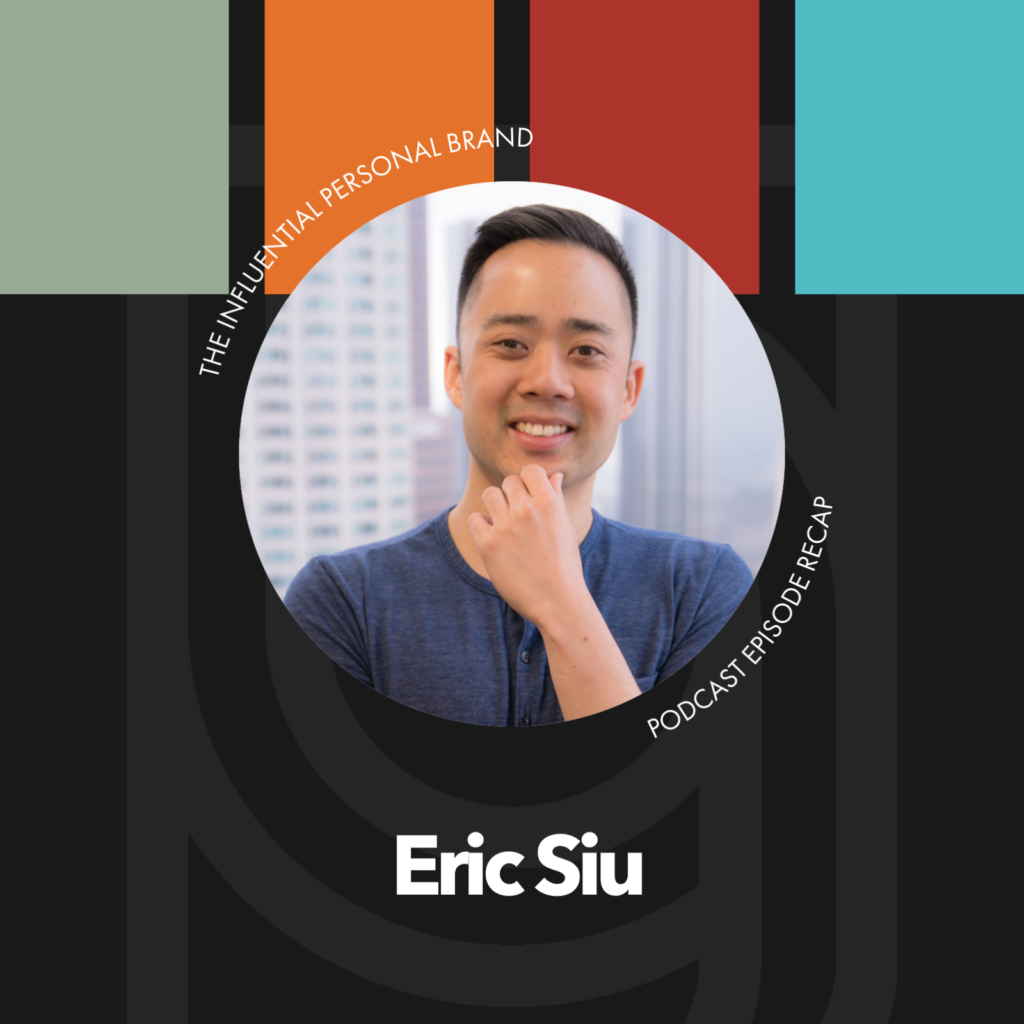
One of the things that I just love so much about podcasting is how much you learn as the host. It’s like, it’s one of the coolest things ever. I mean, the networking value of podcasts they get by itself is, is just incredible. But then it’s like, you get to talk to some of the smartest people in the world for free, right? I mean, it’s, you know, you’re, there’s an exchange. You’re helping promote them and stuff, but it’s like, I am blown away at how much I just constantly learn from our guests. And this episode was certainly one of those I’m breaking down. The, this is the recap of the Eric Siu episode. I’m going solo for now and covering for AJ on this recap, a special recap edition of the influential personal brand podcast. But man it’s just wild. And one of the things I love about personal branding, right?
And this whole space is this is such an emerging space. It’s like, it’s fun, it’s new, it’s exciting. Things are changing. It’s also difficult and frustrating because there’s, there’s so much to learn. And you know, my, my top three takeaways from this episode are really important because they tie in to something that has happened since I recorded this interview originally with Eric. Okay. So make sure you listen to the interview. Of course, if you can, if you haven’t, you know, we were talking about basically leveraging up your leveling up your paid traffic acquisition strategy. So in brand builders group speak, this is what we would typically call phase three, which is where we really create a lot of like scalable growth for a personal brand and, and there’s advantages and disadvantages to all different types of traffic. But with paid traffic, this is so important because here’s, what’s great about paid traffic, paid traffic is predictable.
You know, we divide traffic into three categories, there’s free traffic, you know, SEO, email, social media, et cetera, et cetera. Then there is paid traffic, which is a lot of what we’re talking about here, like buying, buying ads and things like that. And then there’s get paid traffic, which is our favorite type of traffic. Cause that’s when you get paid to be put in front of an audience and then you get to expose that audience to more people, which is like, you know, kind of the best of both worlds, but even in get paid traffic or free traffic, the bummer is they’re not predictable. Right? And so this is my first big point is you want predictable traffic, predictable traffic. And this, this is something that, you know, I think when people hear about traffic, we, we think of you know, we think of like, you know, it’s a lot of people wear it as a badge of honor.
Like I’ve never you know, all my traffic is organic or I’ve built my entire following without paid ads, which is, which is cool. I mean, that’s, that’s cool. It’s like, it’s cool thing to be proud of, but what I, and, and, and that’s the category that I have. That’s the camp that I come from and was raised in and have had to operate by, frankly for much of my career. And then realize, well, wait a minute, you know, I’m wearing that as a badge of honor, but is that holding me back because I’m not willing to invest in paid traffic because the only guaranteed type of traffic is paid traffic and it is guaranteed. Like I can guarantee that I can get you more traffic now, whatever organic strategy I teach you, I’m not sure I can guarantee that brings you more traffic.
And, and even though we know a lot about get paid traffic, I think it’s get paid traffic as some brand builders group is some of the best in the world at, at helping you not only get in front of large audiences, but get, get paid to also be in front of them and assess, especially over the long haul over the course of time, if you follow the things that we teach are going to build your reputation, and that’s going to be an upward spiral, that’s going to get you in front of more things, but it’s not guaranteed. There’s not a, there’s not a guarantee as to how fast or when and paid traffic. It gives that to you in the form of a guarantee. And this is a big mindset shift that needs to happen for maturing personal brands. That’s why we, we cover it in our high traffic strategies event, which is our advanced like mail marketing sales event digital marketing event, which we, we put in our phase three group of courses and curriculum.
But and this is the big, the big change is going okay. Well, even though it costs money, it is a, it’s a lever that I can pull every day to force growth, to ensure awareness, to intentionally accelerate my business forward. And so that’s why paid traffic is a good thing. And it’s something that a lot of us don’t think of it in that way. And maybe that’s a mindset shift for you. And I would say again for maturing brands, this is not something that we teach new brands. It’s not something we would encourage for new brands, because we definitely wouldn’t want you to do paid traffic until you’ve got all your other ducks in a row. And all of your, your funnel streamlined and your dashboards set up in your brand positioning clear in a, an unwell optimized website. And you’ve got keyword targeting going on on your, and you’ve got a content marketing strategy that is on, you know, running on autopilot.
Like those are all the fundamentals that have to be in place first and then paid traffic. Boom is fuel on the fire, but to get the most out of your paid traffic, you’ve got to have all that stuff set up first. But once you get there, then it’s like, yeah, we need to, we need to, we needed to pull the trigger on this. So predictable forms of traffic are super valuable and paid traffic is one of the best, if not the best form of predictable traffic, if you put money in the machine, it will send you more traffic, right? So that’s, that is the mindset of predictable traffic, which is related very much to paid traffic and listening to Eric talk, I think was just edifying and validating for, you know, I think an area of growth for me personally, and for our, our team company and where we’re at brand builders group.
And we’re, we’re really getting to this point now, right? Like the, our company has been around for a few years. It’s like, we’re, we’re getting stuff underneath us. And it’s like, let’s grow. Let let’s go. Let’s grow paid traffic. Here we come. All right. The second big debrief, which I think is the core of this interview is the, the importance and some of the tools around influencers marketing specifically. Okay. So the debrief, the reason this is in the debrief is because Eric shared two tools that you know, we have not used. Okay. So don’t consider them vetted and officially recommended yet by brand builders group, but we’re looking into them. Both because, I mean, because Eric said it and, and because they involve paid traffic. Okay. So here’s the tools he said, mighty scout mighty scout.com, which is for influencer marketing research.
And then, but sift tube, SIF like YouTube, but just to sift S I F T tube sift.com for YouTube advertising research. So why am I pulling these out now? Well, this is because of a massive change that has happened recently with the newest iOS update. And this is going to sound a little bit tactical. It is a little bit technical, and frankly, I, I, I don’t fully do geek speak, but this is from what our team is telling us and what our clients are saying. And the people we know that do, you know, speak geek, speak. There’s a massive thing that just happened that is going to affect the future of digital marketing, you know, in a big, big way in the immediate short-term future and potentially long-term. And that is this, that with the iOS update, they are now making people opt in to being tracked.
So if you’re on a mobile device, specifically iOS, okay, if you are using that operating system, right? So everybody with an iPhone all generations that when you’re on a site, whether it’s Facebook or it’s YouTube or wherever else, w you know, any other place that people run advertising and the past there’s been, you know, this kind of invisible tracking going on behind the scenes that was basically reported in the, I dunno, whatever, probably in the terms and conditions. And so by, by way of using this, these various tools, you’re consenting to have it in this happened well, for whatever reason that has changed and IO and, and the iOS update is doing away with that, which means that now people have to opt in manually to allow themselves to be tracked. Well, the, the, the, the data point that I heard this morning, again, I don’t, I don’t have the sources came from my, our internal team, right.
But these are really smart people that we work with. They’re, they’re saying that the, that up to as many, as 60% of people here, these are the people who have already had this change, rolled out to them on iOS are disallowing themselves to be tracked, which makes sense, right? These are like, when you go to the websites and it says, Hey, a pop-up comes up and Hey, we use cookies. Can we track you? Do you care? You know, and some numbers say, sure, I don’t care. I don’t even read it. Yes. But a number of people are waking up to this and going, no, I don’t want to be tracked. Well, the, when that happens, it dramatically affects and radically breaks down the ad tracking that we’re allowed to do using like cookies and UTMs and pixels. And these, these advanced terms that you hear of like passing through which all point back to going, okay, when I’m spending advertising dollars, I’m tracking to where, where are these buyers coming from?
Exactly. And, you know, letting letting like Facebook, as an example, run an algorithm to optimize, to optimize my advertising, spend to go find other people like the people who have bought. But if, if that, if the people who are buying are disallowing me from tracking them, then that disallows the informing to the Facebook algorithm that says, go find me more people like this person, which is, this is potentially huge. And you need to be aware of this, right? So, you know, consider yourself in the know of, for, you know, listen to this podcast and nobody knows exactly what’s going to happen, but from what I’m hearing and gathering, this is a really big deal and potentially a scary deal. For people who depend a lot on paid trafficking on, on, on paid paid traffic. So w w what, what does this have to do with influencer marketing?
Well, good question. Well, the reason that this matters is because as it becomes less easy to track the effectiveness at a granular level of, let’s say like a Facebook, yeah. Add it increases the value of, of spending money and advertising through an influencer, a specific person. Why? Because we know we can track every single thing that comes through that one link. Like I give one link to an influencer, I pay them, they post it. And everything that comes from that is trackable. It’s measurable. We know it came from that person. Well, we may not know about that, the end user data, but we know that all of the traffic came to that link. Well, that is really it interesting because it allows us to determine more, more naturally and more clearly the ROI versus some of these other tools like dumping money into Facebook or into you know, like YouTube or Google ads that it’s, it’s going to be harder and harder to track exactly where they saw the ad and who, and, and you know, how effective it is.
So that places up premium value on running ads through an influencer, because I can track for sure how well that is performing. I paid someone to promote this link. They shared this link, and either it worked or it didn’t which is just interesting because it kind of means that advertising dollars may flow in that direction. This is a, this is a potential trend that’s coming. It’s not here yet, but this is the kind of thing. And it’s good that you’re listening to the podcast. Right. And it’s one of the reasons I host the podcast is I’m interviewing people like Eric, who are very out there in the front of like the technical, you know, in the tactical world, seeing all these things coming and going, Whoa, how do we prepare ourselves? Cause this potentially alters the strategy. And the big thing you need to know now is going, Hmm, I need to really start looking at influencer marketing and going I need to find people that I can pay to just do a post for me.
There’s a lot less red tape. It’s a lot, you know, straight, more straight forward, but you got to find the people. How do you find the people while you could spend all day searching around online for them? Of course. And you’re going to go after the, all the big ones that everybody else sees, or you can, and, or you can use these tools like mighty scout and, and tube sifts. So we’ll, we’ll see how that plays out. But I guess just to share with you, this is on my radar. This is something that as the interim CMO for brand builders group, this is something that we’re watching closely, we’re paying attention and we’re going, you know what I think we need to wake up to, to influencer marketing and start looking at going. We may end up spending our advertising budget influencers rather than just dumping money into Facebook here in the near future.
And we’re going to be possibly looking at tools like, you know, these ones, mighty scout, et cetera, that have been mentioned to help us find those people. So that’s important. And then the last takeaway, you know, just real quick was the, the, what he said, the F he shared the four forms of leverage by novel Rob con two is like a world renowned early investor into several, you know, big companies and things. Uber four square, Twitter Postmates, things like that. So he’s, he’s kind of, you know, recognizes a very, very one of the smartest people in the world, I guess you would say. And he talks about the four types of leverage, labor, capital code and media. So labor is hiring people to do stuff for us. Capital is investing your money. Code is, you know, writing a code for a process.
And then, and then media, well, it reminded me very much of the focus funnel that we talked about all the way back in 2015, right? So if you look at the focus funnel from procrastinated, a purpose, or from the how to multiply time, my Ted talk it’s eliminate automate delegate, well, automate is basically code anything. You can create a process for today, multiplies your time in the future because the process is doing it tomorrow. Code is one example of automation. There are other examples there can be manual processes and, and, and checklists and workbooks and training manuals. Those, we would all consider those forms of automate, even though they’re not code or technology, but it’s really powerful to hear somebody like, Neval talk about this and go, wow. If he’s thinking that way, we’re really on the right track with the concept of multiplying time.
And then with labor, which we call delegate, right? Which is that it’s 80% done right by someone else is always better than a hundred percent done right by you. Why? Because it multiplies your time. It means they’re doing it instead of you doing it, which gives you margin to do something else without compromising the thing, getting done. That is a form of leverage. He calls it labor. We call it delegate capital money is one that we’ve all been aware of, right? It’s just, you know, compounding interest, let your money work for you when your money starts making money while you sleep. That is a form of leverage. And then I think the new one, which I hadn’t woken up to. So clearly until Eric said this even though he’s quoting and I hope, I hope I’m saying that name right. And of all, I don’t actually follow him.
But I, I, I might now his media, which is interesting, right? Because you know, I’ve described and I’ve heard, I’ve heard this described with money that when you invest a dollar, it’s like basically hiring an employee and then that is working if, when they’re invested to make you more money, right. So that person’s out there working well, media is the same thing. If I post a video on YouTube or I create a podcast episode that is now an asset that is out there working, it’s a form of multiplication. You multiply time by spending time on things today that give you more time tomorrow. So I’m building an asset right in this very moment, recording this, that somebody could be listening to years down the road drawing value from. And they’re just meeting me for the first time, but I’m leveraging an asset that I created, you know, today infinitely into the future indefinitely in the future.
That is super duper powerful. And then I would say, you know, another one that it made me think of is relationships. Relationships are multipliers. Why? Because as I develop relationships with people, okay, so this is like a new form of, of multiplication, not in the focus funnel and not something that Nepal talks about. But as I started thinking about this more relationships are a multiplier. Why? Because if I have a relationship with somebody and that person starts to multiply, that person’s influence grows. Now, all of a sudden as that person’s influence grows, mine grows too because of my connection to them. So this is where it’s like, you have to pour into relationships, you have to serve people and help people, which you should be doing anyways. But if you, if you can’t do it for like, you know just being a good person, you should also realize wow, that there is actual, amazing, exponential value in these relationships. So keep pouring into people, keep serving them, keep coming back here. We’re, we’re doing our very best to create consolidated ideas, tactics, strategies, and wisdom to help you multiply your message. Thanks for tuning in. We’ll catch you next time on the influential personal
Ep 172: Leveling Up Your Paid Traffic Acquisition Strategy with Eric Siu

RV: (00:08)
Hey brand builder, Rory Vaden here. Thank you so much for tuning in to listen to this interview. We are so excited to bring you this information and wanted to let you know that, Hey, there’s no sales pitch coming. From anything that we do with this is all our value add to you and the community. However, if you are somebody who is looking for specific strategies on how to build and monetize your personal brand, we would love to talk to you and we offer a free call to everyone that’s interested in getting to know us and is willing to give us a chance to get to know them and share a little bit about what we do. So if you’re interested in taking us up on a free strategy call, you can do that at brand builders, group.com/summit. Call brand builders, group.com/summit. Call talk to you soon on with the show.
RV: (01:05)
I’m excited to introduce you to a new friend of mine, Eric Siu, because we are going to level up our strategy and conversation as it relates to digital marketing and traffic which is also going to tie into his new book that is coming out called, or just came out called leveling up how to master the game of life. But I started actually following Eric Sue because he’s the co-host of marketing school of the marketing school podcast which he co-hosts with Neil Patel, who we had on a few weeks ago. They have over 30 million downloads to date. It’s a super practical, very short episodes. And these guys are the real deal when it comes to the technicalities and the high level strategy for true digital marketing. And so they’re one of the, one of the people that one of the groups that I look to to learn from, but separate of being the podcast host, Eric is also the CEO of a content intelligence software, which we’ll talk some about what that means called click flow, which basically helps you grow your organic traffic and does a lot of reporting and analysis for you and, you know, makes you look like a genius.
RV: (02:18)
Some of you listening, it would be more for someone on your team to be managing that, but he also owns an ad agency that is called single grain. And they’ve worked with companies like Amazon and Airbnb and Salesforce and Uber, just to help them acquire more customers. We’re going to talk about that today, how to drive traffic quickly. And the reason that we were able to get them on the show is because he has a book that just came out called leveling up how to master the game of life, which are more of a, some of his philosophies about how he’s grown his reputation and his, his businesses, and just success in general, which will be fun. So we’ll dive into that as well. But anyways, Eric, Sue, welcome to the show.
ES: (03:02)
Thanks for the intro Rory. Great to be here.
RV: (03:04)
Yeah, man. So you know, before we talk about the book, I guess the number one issue, I think that a lot of our clients are having, right? So if you’re a personal brand, we help them get clear on their positioning. We help them, you know, get the right words in place. They build their funnels, they launch their sites. And then at some point, once you have all your ducks in a row, traffic is just like this, this is the issue, right. Is how do I get more people coming to the page, which I know is a complex issue. And there’s a lot of answers to it, but I guess that’s what I want to start with is just going, if I have built a funnel, like you’ve got, you are about to launch your funnel for your book, right? And so you, we were going to build this funnel and then the question is going to go, how do I get a lot of traffic there quickly? And of course there’s organic strategies, there’s paid strategies. How do I know which one to do? Should I do both? Like you know, can you just kind of like high level address that question? How do I drive a lot of traffic quickly?
ES: (04:17)
Yeah. I, I think what we’ll, we’ll tailor to this kind of, to the, the, the book is one, just to kind of simplify how you might think about this, this strategizing this. And so for the book, what I’m looking for is where are my people hanging out? So for me, I know that I have at least two audiences right now. One is the gamers that are looking to do more, make a bigger impact on the world or those that are just lost. It really, the book is for my 13 year old self. Cause I played a lot of games growing up now. Also I used to fight with my parents a lot too. So it’s all for the parents that have kids that play games, right. And they want their, they want the best for their kids. They don’t think this gaming is the future.
ES: (04:56)
Right. So now I know, okay, if I’m targeting parents, where are they hanging out? I know there’s different coalitions, different organizations. There’s sometimes even groups of parents that, that are actually supporting their e-sports kids. And so I’m going to where the attention is, right? So it might be forums. It might be, you know, different Facebook groups and things like that. I’m looking for where the attention is now that’s on the parenting side. I can obviously hit the Facebooks, the Googles of the world, but that to me is kind of table stakes. Right? Everyone knows about those channels now. And the other side what’s more interesting is actually the gamer side of things. So, okay. I, on the gamer side, a lot of these people are hanging out on Twitch. They’re hanging out on YouTube, they’re following people on Instagram. Their heroes are really these YouTubers or these streamers.
ES: (05:42)
And so I know a lot of the attention is over there. Can I bought a, buy a sponsorship slot from these influencers, these gaming influencers, they don’t necessarily need to be the mega influencers, like a Ninja with millions and millions of followers. They could have, you know, 50,000, you know, a couple hundred thousand followers. That’s a micro-influencer. So I can go try to reach out to a couple of these, right. I can use a tool like a mighty scout. So that’s the word mighty and the worst scalp.com. And I can find a lot of these people is just by typing in certain keywords. And then I can make a list of outreach people just like I would with an email list. Right. So again, what I’m looking for first principles here, where’s my, like, where are my people hanging out? Okay. That’s the audience? And then how do I get a good price for getting these campaigns going?
ES: (06:27)
And how do I get a good tested testing price? Right. So that’s how I would do it for this campaign. But again, I think it’s, it’s really important to think about, okay. It could be in some cases where whatever you’re promoting there might be a lot of email lists out there where you can buy, you know, you can buy different blasts or maybe everything is done through, you know, a lot of, a lot of your niche. They’re all hanging out with on you know, these other websites, all the traffic there’s communities are on other websites, which have strong SEL. So the answer is, it depends, but you have to think about first again, where are your people hanging out and how do I get the best price?
RV: (06:59)
Yeah. So I love that. And so if I were to that’s cool, I’ve not heard of mighty scout.com. I’ve not actually heard of that tool. So that’s that’s cool. I would summarize that part of it as, as basically influencer marketing and brand deals, right. Which is, this is an emerging area, like you said. Okay. One thing is to go to, you know, Facebook business manager to Google ads and just dump some money into the machine and pick an audience, which is, you know, a game that has been going on for years. And it’s probably one, we need to learn how to play. But the influencer game is, feels very interesting to me because it feels like just the dynamics are different because you’re not dealing with like this big, huge company you’re dealing with an individual person, a small team and put money directly in their pocket.
RV: (07:55)
So how much is this, do you think is the future? Because I know that, I mean, both for yourself, your clients, your agency, you guys are, you’re no stranger to running paid traffic campaigns. Are you seeing that influencer marketing? And when I say influencer marketing, I mean, actually I go into mighty scout looking someone up and then paying them and putting money in their pocket for them to do a post. Are you seeing it as effective as part of the future? And cost-wise, how are you seeing that compare to like dumping money into the Facebook machine?
ES: (08:31)
Yeah. So we have, we actually have an agency that helps us on that side. Right. So I’ll tell you what they do. I mean, what they do is they will reach out to maybe 300 influencers in a month, right. These are micro influencers. And what they’ll do is they’ll have them do a story post, right. So they might, you know, show the book next to them and they might talk about how it’s been an amazing book and then tell people to swipe up, to go to leveling up.com or whatever. And so, you know, we just started working with them, right. So it’s too early for me to say, talk about the results, but naturally it just makes sense. Cause I know that’s where my audience hangs out. Don’t get me wrong. We’re we’re starting up the F the, the, the ad stuff again.
ES: (09:10)
And it’s, it’s, the targeting is very simple. Like we can hit parents that have kids with a certain age. Right. So all that to say is you know, if you don’t, if you haven’t done it before you could work with an agency, or you could just get a mighty scout account for yourself, reach out to a couple of people, do a test, maybe your budget’s $500 or a thousand dollars, or so give a test, do a test and see how you perform, look at the numbers. Cause your mileage may vary. Right. but what we’ve seen in the past with, with other people when they run these types of campaigns, so this has be anecdotally because I don’t have my own data yet. Is that it’s a lot more cost efficient cost effective versus running
RV: (09:48)
Ads. Yeah. I mean, it kind of feels that way to me. Right. Let’s go. And like, if I put in a thousand bucks in your pocket, that’s feels like to the average person, even if you have 50,000 followers, I mean, a thousand bucks is real money. You know, if you talk about 2000 or 3000 or 5,000, it’s like, that’s nothing on Facebook or Google. Like you can’t even get them to answer an email back for 5,000 bucks, but to a real person and go, yeah. Especially if I’m on, you know, social media all day, like I may not have just because someone has 50,000 followers doesn’t mean they’re a billionaire. Like a lot of them have audiences, but they don’t have a lot of money and it feels like you can just go directly to them. So that’ll be interesting to see how that works specifically. So, so you actually are working with a different agency just for the influencer piece for your book. Correct?
ES: (10:39)
Right. And there’s a lot of these influencer agencies popping up. So I think you can probably get a pretty good price working with these agencies right now. Cause they’re, they’re they’re up and coming, so yeah.
RV: (10:48)
Yeah. fascinating. So then separate from influencer marketing just to touch for a second. Cause you also said for your, for, for the book launch of leveling up, you’re also kind of doing traditional Facebook. Are you doing Facebook and Google stuff? Yeah.
ES: (11:07)
So it’s primarily Facebook, Instagram and YouTube. Those are the ones that were starting up because to your point, we just got the book funnel going.
RV: (11:15)
So now, and, and in your case you’re doing a free plus shipping thing, which, you know, our audience very, very familiar with. So you got basically add two free plus shipping to then the thank you page as an upsell or something
ES: (11:31)
Sells and one down sell. Yeah.
RV: (11:33)
Okay. Now it’s, it’s interesting. So you’re not using Google and just to kind of like point out the point that out for a second, you know, the obvious about Google is it’s kind of like an ad need a tool. So is, is the reason you’re not using Google because it’s like, there’s not a, there’s not a specific term that you would target, right?
ES: (11:57)
Yeah. I mean, to your point, so you’re saying demand generation versus demand fulfillment, I think you know, w with Google search specifically, you’re fulfilling demand and the demand isn’t really there right now. But you know, when you’re generating demand through a video, like YouTube makes a lot of sense. Instagram makes a lot of sense. Facebook makes a lot of sense and it, it just those channels are you just throw up a video and then you know, you’re, you’re, you’re good to go. So that’s not to say we won’t turn on Google display ads later. Also, there’s, there’s an element of of, of focus in the beginning, we know these channels are going to work and that’s what we Excel at. So let’s do that first. It’s our, it’s our bread and butter.
RV: (12:34)
Yeah. Well, and it seems like Google display ads. I mean, that seems to make sense because it’s just, once you have them pixeled from your side or whatever, you’re going to follow them around. I mean, that makes a lot of sense, but so to, to look at YouTube really quickly this is another area that I feel like YouTube is kind of still the wild West in terms of advertising. That there’s a lot you can do on with YouTube ads that I feel like there’s a lot of specificity that people don’t realize when it comes to running ads on YouTube. So it is, is there anything you’ve been looking at, whether it’s for you, for the book, for your clients related to YouTube ads that you feel like we should know about?
ES: (13:16)
Yeah. I mean, I, I remember there was there’s one company where you know, we, we, we bet the entire fate of the company on YouTube ads and you know, it was, it was an online web design and programming kind of online school and you know, bet the entire company on YouTube ads. And it worked out because all the people that are on YouTube are hanging out there, we get into your point, we can target very specific keywords, like learn, HTML, learn Java, script, that type of stuff. And you know, we, we went from acquiring, you know, 200 new users a month to about that jumped to 500, then a thousand, then 3000 and then 6,000 a month. And so, you know, that company, it worked out, it was able to raise their series B and then you know, they’re doing very well today.
ES: (14:01)
And so I think YouTube is very scalable because, well, one thing is you can target very specific keywords. You can also retarget people that have seen certain videos or retarded people that hit certain sections of your website. And so you have it’s, it’s more complex than Facebook ads or Instagram ads, but the complexity is worth it because it’s also like it filters out the people that are serious versus the people that aren’t serious. So you can target specific channels too, but I, I prefer to go for keywords because with keywords you gave, like, I know people that target just the keyword money and you know, they, they have programs that are selling, you know, 36 to $40 million a year.
RV: (14:40)
So, wow. Now, just to now, even though you’re saying you don’t go after channels, that is an interesting feature. I think that a lot of people don’t know about YouTube is when you, that you’re saying you can run an ad where your ads display on in front of all the videos on a specific channel, which is very targeting. You can,
ES: (15:03)
I can do that. That’s one thing you can do. You can use a tool like tube sift.com S I F t.com. And you know, the other thing that’s interesting is you can actually target based on what people search in Google search, right? So if they, if they type in like brand builder if they specifically typed in that you can actually target those people with YouTube, right.
RV: (15:22)
That’s later based on what they search on Google. Yes. You’re. And you’re saying that you can do that natively in the YouTube ad manager. Yup. Yeah. That’s pretty, that’s nuts. I mean, that’s, that’s, that’s incredible. But you’re, and that’s more of what you’re doing. I mean, you’re targeting keywords, so it’s, it’s more like well, when you say you’re targeting,
ES: (15:45)
So when I’m saying I’m targeting keywords, so what we’re just talking about right now with search to YouTube right now, what I’m talking about. So if people go into Google search, just to clarify the last thing, if they’re typing in brand builder, then when they go to YouTube later, they’ll get served an ad, right. That’s, that’s the first example now, but that’s the, you know, that’s the retargeting lists. It’s not RLSA, I forgot what it’s called. Exactly. But it’s tied to search intent right now. What I’m talking about when I’m running YouTube ads is we’re targeting keywords, but we’re targeting from a from a display standpoint. Right. So there’s certain keywords that we can target. It’s almost similar to Google display, right? You’re, you’re looking for, it’s scanning for certain keywords on the page. And then if those keywords are showing, then the video will pop up. Right. so if it’s showing them the description or the tag or the title or whatever, then the video
RV: (16:37)
Got it. So it’s reading kind of like the tags of the video, the title of the video what was the other one? You said the description, the description. Yeah.
ES: (16:48)
It could even be like, you know, the transcripts are all you know, generated now. Right. It can even put me pulling from transcripts.
RV: (16:53)
Well, so, and then you’re saying you basically is going to recommend your video next on those pages, like up in the, whatever the upper right. And
ES: (17:05)
The best format to use is you have the, the pre-rolls and the mid roll. So the pre-roll videos, those are the ones that come before the video, the mid rolls are obviously in the middle. And then there’s a, post-roll we’ve seen the in-stream ads, right? Those are the ones that get in the middle of a stream. Right. The first two are the ones that
RV: (17:23)
Interesting. So not, not so much like the next video to watch or whatever, but right. In the middle of the video. Right. That’s amazing. And then I think you can, you can even target on YouTube, us specific video, right. To say, I want to run my ad on this individual video. That’s crazy. All right, well, so I love this man. I mean, this is, so it mean it is leveling up, like to me, that, you know, is going this, some of this is just like, so Ninja, it kind of blows my mind. And you know, I think for a lot of personal brands, in many ways, we’re behind the game. I mean, you work with SAS companies, right? I mean, that’s like a core part of what you’re doing is your team is like growing revenue for recurring revenue, for like marketing SAS companies.
RV: (18:13)
So it’s very, very sophisticated. And I, and I think for personal brands to break through the noise, we have to level up, like we have to, we have to get our minds and our teams and our strategy upgraded to the level of which like a marketing SAS company would perform. So question for you, why write a book on mastering the game of life, which is kind of like success habits. It seems like the obvious thing would have just to, you know, done a book on like Eric Sue’s like master techniques for, for driving ads and marketing. But yes, I’m just curious, where did the, why the leveling up book and how did that come into the picture?
ES: (18:59)
Yeah, I mean, you know, I played a lot of games growing up from ages eight to 22, and the way I look at life is it’s just a puzzle. And you know, I’m just trying to love a lot, 1% better every single day. And when you look at life that way it’s a game that never ends then, you know, it only ends when you die. Right. And you just, so you just keep playing, it’s not a zero sum game. It’s not, you know, it’s not like football or basketball where one person has to win. And so if you look at it from that lens, life becomes a lot more fun. And so, you know, it’s, to me, it’s the book I wish I had when I was, you know, when I was a gamer at 13 years old. And you know, a lot of the power ups I talk about in the book, like in life, you’re going around collecting power-ups right.
ES: (19:38)
You’re whether it’s you’re training, you’re learning to fast, you’re, you’re improving your sleep. All these things are powering you up. And so those parts, I think a lot of people listening to this podcast are like, yeah, we get that Eric, like, yeah, that that’s great, but that’s, this is also for, you know, my younger self, right. Or the parents that want their kids to kind of you know, look beyond gaming. Right. Cause again, for me, I look at business very much as a game. Like if I’m trying to deal, do a deal or buy a company. Okay. How do I make it a scenario where one plus one equals five. So do they have other assets besides you know, kind of what they currently have? How strong is their executive team, right. How can I make it super good? And then now I need to think about the terms of the deal too.
ES: (20:16)
And so there’s, there’s puzzles within the puzzles there that I need to solve and how do I recruit the best person? Okay. How do we work out? How do we incentivize that person to? So it’s like, there’s all these dynamics at play here. And you know, we’re all just playing a game, but I think it’s, it’s demotivating to think that, you know, the game is going to end at a certain point or you need to kind of you know, someone needs to lose, but if it’s just like, I’m trying to get better every, you know, 1% better every single day. It makes sense. Now the answer to your question around, why not do a marketing book? That’s the easy route, right? Like to me, I, I feel like it’s inevitable. If I just keep doing what I’m doing, long-term like, it doesn’t matter the money will be there.
ES: (20:54)
Right? I don’t need to worry about that. What I need to worry about more. So is what’s more higher impact to me. If there’s four forms of leverage, you have code capital, labor and media Lape or sorry, media is, is, is one of the ultimate forms of, of leverage. And I get to build a moat around me. And so if there are 3 billion gamers in the world or 3 billion people in the world that have played games, well, if I can latch on and I can show them, I have this intersection right now where I played games, and now I’m playing the ultimate game of business. I’m going to have an unfair advantage around building a community. And I think community is very defensible. And so I’m going to build that. And I, I think that’s going to be infinitely more valuable than me doing a book right now on marketing, which is everyone does that th th the, the it will become outdated very quickly. And sure. I might make maybe a couple million dollars or so. That’s great, but I get to have a much bigger impact from leveling up and the money is that that’s a scorekeeper, but that’s not what really matters. Long-Term so it’s, it’s what has a bigger long-term impact me doing the marketing book or leveling up?
RV: (21:58)
Yeah. Well, it’s interesting too, because it’s like it seems very consistent that you reach a level of success or just, and just like, just even say money where it’s like another dollar isn’t gonna like, change your satisfaction or joy that much, but the idea of, you know, writing something that you care about leaving behind, you know, philosophies that you want, you know, that, that it’s like the impact factor really does become the driving force to do something like this. It sounds like that’s part of what you’re saying. It’s fun.
ES: (22:33)
And I mean, like, you know, I’m very grateful what, you know, we have a marketing audience with marketing school, the blogs and all that stuff. Like, you know, we have a foothold in SAS as well, and it’s like, okay, well, what else can we play? It’s the same thing with business. It’s like, okay. You know, we’re able to turn the agency around and then it’s like, okay, we have our software company. And then we have all the other stuff too. And now it’s like, okay, what else can we do? Right. Oh, can we go buy other companies now? Right. So it’s just like, there’s levels within business too. You can, you can have a job. Totally fine. You can start freelancing and then you can start your own thing and you can just keep getting stronger and stronger. And you decide if you want to go to the next level or not, it’s just, you don’t get to go to the next level, unless you beat the current one.
RV: (23:10)
Aha. Which I think is super relevant. I mean, that’s even just like when I’m thinking about paid traffic, you know, and I’m saying our audience really, I should be saying me as I feel like we’ve, we’ve gotten to where we are by just, you know, mastering organic traffic. We’ve done book launches, we’ve done speaking, we’ve done PR. And it’s like for us to get to the next level, it’s like, we have to learn paid and we have to master it. And that’s kind of like the level that’s right in front of me. And that’s part of why I was really drawn to you guys. You rattled something off a few minutes ago that there’s no way I can just let rush past this. You said the four, you called this the four types of leverage. What did, what did you call it? As you said, code capital, labor in and media. What, what did you call those? Yeah.
ES: (23:58)
So there’s four forms of leverage. And this comes from the vol rocket and he’s a billionaire and created angel list. And you know, this has stuck with me because if you think about the, the oldest form of leverage you have is labor. So you hire people to do things, right. Even if they could do it, 70, 80% of your capacity, you’re gaining leverage. Cause you, you free up your time. So that’s obvious to all of us, I think. And then, so you have labor and then you can hire programmers. So that’s code, right? They can write code for you where you can make money in your sleep. So you’re getting even more leveraged now. Right? So if you think of leverage, it’s like a Seesaw maybe, right? That’s like one form of leverage. If you put more weight on one side, obviously the other side goes up.
ES: (24:37)
So you have code and then we talked about labor, a capital, right? You have to have capital. So maybe when you start working somewhere, you start saving all the money and then you could go invest in and hire people. Right. And then they can write code for you. Now media is something like, I think we all know, because we’re talking about on the brand builders podcast right now we know the audience of building or the power of building a brand. I think you can build a brand. You can have a website, you can have a big email list. Those are all forms of kind of media leverage. I think the ultimate form of leverage is having community because you Rory talking right now, people, maybe you might speak at a conference. Everyone might be looking at you, that’s building an audience. But I think when you build a community and everyone’s interacting with each other, the community, it kind of it’s, it’s, it’s, self-sustaining at a certain point and it just continues. And there’s a lot of, you know, entrepreneurial communities I’m in like, like YPO or EO. And I love those because it’s just, you have like-minded people just hanging out and talking shop with each other. So
RV: (25:36)
I realize you’re in, are you guys, are you any or YPO? Yeah. Yeah. Yeah. So we don’t. We have, yeah, we don’t have a YPO chapter in Nashville. We only have EO. So we’re we’re in, at technically my wife is the CEO of brand builders, so she’s the one that’s in it. But I was in the first, the first couple of years, but yeah, and we, you know, we got engaged at a YPO event speaking at a YPO event. So that’s a great community, but anyways, to what, to what you’re saying, you’re saying when people start interacting with each other, it becomes self-sustaining. And so that’s why you’re saying it’s a form of leverage where it’s like building an audience is more like media. Yeah. But building a community you’re delineating that.
ES: (26:22)
Yeah. You’re taking it a step further. So to me, community is a level up from the audiences. And so I, I think they’re, they’re, they’re both important.
RV: (26:30)
Yeah. The, the code one is interesting. So in my Ted talk, so I have I did a Ted talk called how to multiply time. And one of the things probably the most retweeted from my Ted talk and this is my second book was called procrastinate on purpose. It was based on, this is, I said, this line automation is to your time, what compounding interest is to your money. And as you’re talking this out, it’s occurring to me that basically code and automation are really kind of closely related. And we talk about eliminate automate, delegate procrastinate and concentrate. That’s basically the outline of the Ted talk. And the, and the book and code is basically automate. Labor is basically delegate. You know, what we do at brand builders group is really around media capital is an interesting one too, because you’re, it’s kind of like where your money is making money instead of your, your time.
RV: (27:39)
But the community one is interesting that one’s rocking my mind here a little bit. Like I’ve not thought about community as clearly. And I, I think this is super powerful, what you’re saying, like, even before we started talking, y’all, didn’t hear this cause it wasn’t on the recording, but our community of personal brands is growing so big. They’re needing stuff that we can’t provide. And so we’re having to go crap. We need to go get agencies and vendor partners and people that we can partner with to go, Hey, you know, this client needs help with executing this thing. And it’s, it’s funny cause it’s like the community is taking on a life of itself. And I don’t really think about that as a, as a form of leverage, but so that’s the fifth form of leverage you’re adding to it. There were four, but Eric’s, Eric has added a fifth one.
ES: (28:35)
Yeah. I mean, I would still lump it into intermediate, but you know, fair enough. I’ll, I’ll call it a fifth one on this pocket.
RV: (28:44)
Well that’s awesome, man. I think this, the mindset of leveling up and just like you’re saying, there’s so many parallels here of just, you know, the power ups and you keep going and it’s, it’s, you’re not playing against like another person necessarily where someone has to lose. It’s just like getting better and better. You can’t, you can’t get to the next level until you conquer this one. There’s, there’s a, there’s a lot of parallels there between gaming and you know, and businesses. So it’s really cool. So where do you want people to go? You know, we’ll, we’ll obviously put links to your sites and stuff, but where do you want them to go to learn about the leveling up books since that’s kind of like your main focus right now?
ES: (29:26)
Yeah, I mean, simple enough. They can go to leveling up.com
RV: (29:30)
Go to leveling up.com, you know, and I would just say like, listen, if you are going to go check out, like if these, the concept of the, the four forms now forms of leverage is interesting to you, or if, you know, you learn something about YouTube ads just now, or if you realized that Hey, there’s a couple of tools, like tube sift that I could check out that I didn’t know about or mighty scout. Like if one of any, one of those ideas is easily worth hundreds, if not thousands or tens of thousands of dollars go spend the 20 bucks to support Eric on his book. Because I, I, that’s why I asked him here because I was just like, I mean, these guys dropped so many little nuggets that they speed through that are worth. I mean, I think this, this, this idea of these, these different types of leverage is so super valuable. So anyways, leveling up.com, check it out. If you’re not listening to the marketing school podcast him and Neil will blow your mind. I mean, I can’t keep up with half. The stuff they’re doing is so good. And so so solid, but anyways, Eric, thanks for being here. Thanks for sharing some nuggets, man. And we wish you the best. Thanks for having me, Rory
Ep 171: Chatbot Automation and Conversational Marketing with Natasha Takahashi | Recap Episode
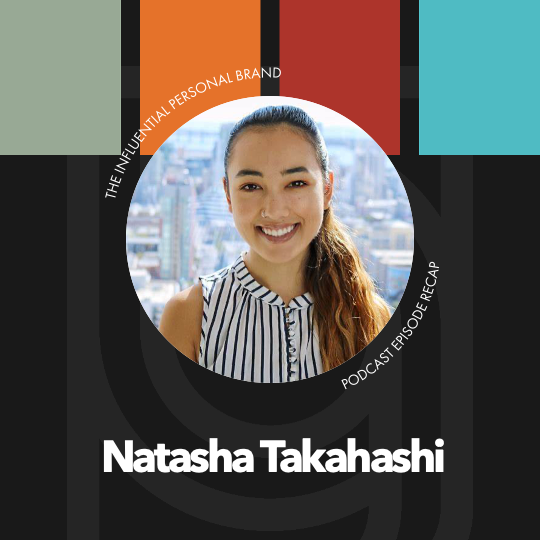
Whoa. My first thought on that interview is Whoa. It’s Rory Vaden. Welcome to the influential personal brand recap edition and breaking down this conversation that I had with Natasha Takahashi on chatbot automation and conversational marketing. What like this was crazy there were some really great takeaways for me, but like, of all the, of all the interviews that we have done of all the guests that we’ve had on this show, that one was probably the most unfamiliar to me. In other words, it was like a whole new world opened up that like, we’re not doing, we’ve never done. I I’ve been aware of, but not you know, that’s why I wanted to have her on. I thought she did a great job, really excited about her. And I think we’re going to be working together on, on some different things. And so I want to give you, the, my top three takeaways, but, but you know, the first thing I want to say, just make sure this is out there is that if you’re a beginner, this conversation, this topic to me is not where I would start.
This is like, if you, if, if, if you are, you know, baking a cake, this to me, chat bot automation is like the last it’s like one of the last things you do. It’s the sprinkles on the cake. It’s like, even after the frosting and the decorating and, and it’s certainly like long after the cake is baked. And, and I think that sometimes there’s this, this excitement over, how do I say nifty or advanced or fancy, or like cool, cool emerging spaces and technologies like this that people get really drawn to. Cause they’re exciting and they’re fun. And it’s like, Whoa, what is this? And, and yet I would go, yeah, this to me, these, aren’t the things that you do to make or break your career, right? You make your break, your career based on substance and uniqueness and positioning and expertise and a series of systems that are always working to grow your community and advance your message of which to me, I think this one is a great one and there’s a big opportunity, and this is an exciting one and an emerging one.
But you know, if this has happened to be the first episode you’re listening to, I would say that most episodes are not so much this, this tactical and technical, and this would be very advanced strategy. In fact, we would dump this into phase three, it brand builders. We, we take our clients through something called the brand builder journey, which is that we have one curriculum that is divided into four phases and each phase has three separate courses. And so we take people from like the very beginning of finding their uniqueness and their differentiation, their positioning and their business model strategy, all the way to growing an eight figure personal brand. This one would sit in phase three for us, which are our more of the like sophisticated tactics, tactical, technical, like really advanced technical things. But I love that stuff. Like I love to nerd out on this stuff.
And like I said, this was a new area for me. So conversational marketing anyways, I just want to give that one little disclaimer to you. And then, you know, just to dive into my top three takeaways, I think the, the, the first one was as much of a realization for me through Natasha’s coaching, which is that I have a bit of reluctance of moving into this, this automated, conversational marketing. I think conversational marketing is a really interesting term because like conversational selling, you know, in many ways is what selling is. Although not one to many, but one to one it’s very conversational. And so the idea of conversational marketing is, is fascinating because it’s kind of a new thing, but it’s really, you know, just human conversation. But anyways, perhaps you like me, or at least speaking for myself here, I’m resistant to the idea of trying to automate a conversation.
And I think what she helped me realize is that going well, it’s not really any different than watching a pre-recorded video of you, right? It’s it’s not it’s still me. It’s my brain. It’s my thoughts. It’s what I would be saying to the person. If I were there live very similar to how a video is, right? Like if somebody watches a video, I may have recorded the video months earlier. But if somebody were to ask me that question, I would say the same thing as I did then. And so a lot of times that’s what we do actually is people will write in and they’ll ask questions and they will take those questions and we’ll turn them into videos. And then it’s like, well, now we’ve answered it for everybody. Well, so I think if you’ve got a little bit of that, that roadblock, that’s at least how I’m thinking about this and going, okay, well, as long as I’m really writing this in my voice, and this is the process that I would take somebody through, if I were there, then it, it feels, it feels okay to me, like this is how I would actually engage in conversation where I think it could get risky is if I outsourced a script to somebody else and, and particularly didn’t have close oversight over it, because in that regard, I’m outsourcing my personality, right?
I’m, I’m trying to have someone else like completely peg this, this very difficult when you know, conversations are, are very personalized and they’re very much, you know, integrated with who you are. And so the idea of, you know, it’s even harder than like a ghost writer who you would hire to just write something, but then you would edit it. And it’s a one way form of communication. Whereas this conversational marketing is a two way. So you’re really like, you know, even outsourcing your personality in your brain, so to speak. So I think that’s where it would get risky. I think that’s where I would, I would send up a yellow flag of like, you know, Hey, some take some serious caution here is that you don’t, you don’t want to compromise longterm reputation for short-term revenue. That’s one of our values at brand builders group.
It’s in our mantra that we read at all of our team meetings is you don’t want to compromise longterm reputation for short-term revenue. And this is a place where I could see that people would, you know, kind of go down the slippery slope of doing that, but you can do both. And I think you can do them both right. And I’ve been able to rep many ways. That’s what I’ve been wrestling with and part of how I’ve been able to wrap my mind around going, yeah, I think we could deploy this. I think we could use this because we already do a lot of this. I mean, a lot of the scripts that we use, a lot of the content that we teach, even at our events are, you know, things that are being said by other people who were once said by someone else that we just scripted out and then operationalized it.
And so, you know, this is like a step, a step further down the path. But I would encourage you map it out, right? Like map out, or maybe do a couple conversations live, like actually do some live chats. See what the questions people are asking, write your own talk tracks, and then build it into a system. So that was the first thing, the second big takeaway. And this is a highlight that I just, you know, edified for me is much as any, anything and hope fully. You know, this is that the dollars are in the DMS, the dollars are in the DMS. Like when you think about how to monetize social media, people’s brain goes towards like, Ooh, I’m going to get famous, have millions of followers and get a brand deal, like a sponsorship deal, or someone’s going to pay me, do promotional posts.
Cause we see that a lot, right. Or we go, Ooh, I’m going to have lots of followers and I’m going to drive these followers to a webinar and then they’re going to buy on the webinar. And because they see that a lot, both of those are great things. We, we, we have clients that do both of those really, really well. We do a lot of that too, but I think when you’re first starting out, when you go, how do I monetize social media? How do I actually make money from any of this social media stuff? When, especially when you’re first starting out or if you’re servicing a niche and you just, you’re just not, you’re not playing content to the main stream where you’re going to have hundreds and hundreds of thousands of followers where you go, how do you actually monetize social media? You do it in the DMS.
The dollars are in the DMS. The way you make money is by in human conversations with the people who are engaging with you, specifically comments and DMS. Now, the reasons why I would say the dollars are in the DMS is because the goal here, not the goal, but, but I would say I’m not going to have a sales conversation typically in the comments section. So if somebody comments, I’ll probably comment back and then say, Hey, check your DMS. Or I just sent you a DM because now we can have private conversation, which I think has got to lend itself more naturally to a sales process. We actually have a process that we teach for this at pressure-free persuasion. It’s called the four F’s about how do you convert these comments into customers? Well, the very first thing we’re going to do it was moved that conversation out of the comments, into the DM.
So it can be private so they can share with you, you know, private information that you probably need in order to, you know, to persuade them to, to ethically persuade them and help them and serve them. So but, but what’s wild is people, especially newer people, ironically will spend some amount of time and energy trying to put together stuff for social media, which is like, it is a lot, right? It’s, it’s a lot of work to do it, especially if you’re running the content diamond and you know, the processes that we teach, that it’s a lot of work. And then it’s like, well, you’re not getting millions of views when you start out. Yeah. But you don’t need millions of views. You only need a couple of comments. And what you want to do is pay attention to the people who are commenting and move it into your DMS, pay attention to the people who are sending you DMS.
And people say, well, I already don’t have time for social media. I definitely don’t have time to deal with DMS too. It’s I would kind of say, well, then don’t expect to monetize your social media. Like if that’s what it’s about, maybe you shouldn’t do it at all. I mean, I think long-term there’s reasons to do it still, but it’s like, don’t complain about not monetizing your social media early. If you want to monetize your social media early, the fastest, best, most economical way to turn social media and followers into real money and dollars in your bank account is through DMS one-on-one conversation. So door not too busy for DMS. That’s like saying I’m too busy to stop and pick up a $20 bill that’s on the sidewalk. Like I don’t care if you’re bill Gates, you still probably would stop and pick up a $20 bill.
So that, that is how it is. And it’s a mindset thing. And for me, I used to always go, I’m just too busy for this. Like I don’t have time to like deal with all the social media stuff and comment on everything. Well, what you’re doing is you’re building a relationship and that’s what selling is. It is a relationship it’s based on trust. It’s based on service. So you’re going okay. If I’m going to convert this into dollars, it’s probably going to happen privately. And it’s, and, and especially if you have a high dollar offer, right? Like if you sell anything North of a thousand bucks in your new to social media, you don’t have a huge following or you don’t have a lot of trust or credibility online. It doesn’t mean you can’t make money doing it. It means it’s going to happen privately.
It’s not going to happen. Like, you know, here’s a link, everyone click and go to my store and buy, and I’m going a millionaire. It’s going to happen through human communication, which is how it has always happened. Social media is just a new Avenue. So the dollars are in the DMS. You’re not too busy for one-on-one conversations with people who are interested in you. Like if you’re too busy for one-on-one conversations with people, we’re interested in you, like, what are you doing like that, that they’re raising their hand. When somebody comments, when somebody engages, when somebody DMS they’re going, I like you. I’m interested in you. I think you’re cool. Like, I think you can help me. You you’re putting something here that is of enough interest and value to me that I’m not only willing to consume it. I’m willing to engage with you.
Hello. That is like a flashing bright light, like sales opportunity, referral partner opportunity like this, this is someone pay attention to. So, so, so I think this is really powerful because this conversational marketing is going okay. Maybe we can automate some of that. Particularly for those of you that do have large followings. Right. And I know some of you do have hundreds of thousands, millions of followers, and you’re going, okay. It really is a full-time job to keep up with this and go, okay, can we, can we, can we write some decision trees? And can we create some decision trees? Because I think that’s super powerful. So I think that’s one of the reasons why this episode is important is it helps you realize the dollars in the DMS. It gives you a way to do it manageably, but also a main, this helps you integrate with marketing automation.
You know, so you can, you can use chats to encourage people at based on where they’re at in your funnel. That’s amazing. Like talk about a hyper customized experience. We do something very similar with email, but it’s really cool to be chatting. The other thing, which was huge was this idea about being able to communicate across platforms, multiple platforms, even websites, and in the future, probably SMS to where you’re like centralizing one conversation with the person to where it’s not just like, if I send you emails, those are emails. If I send you Facebook messages or Facebook messages, if I engage with you on WhatsApp, that’s on WhatsApp. But like, if I forget, or I don’t have a good way of staying organized, or if multiple people are interfacing with you and we don’t all have context of what conversation is happening on the other platform, that’s really risky.
You can damage trust, right? That’s happened to me before, like we’ve created some automated responses and then, you know, this happened to me recently and I just feel terrible. Like one of our clients, we have a client who’s been a client for two years, but we weren’t connected personally on LinkedIn. And we had some automated LinkedIn messages going out. And so this person fit a search criteria that we were targeting. And I, anyways, they get into it, end up getting into what is more or less as an automated search with an automated conversation with me. And it’s like, they’ve been a customer for two years. That’s not good. That’s terrible. Right? Like, that’s the last thing I want to do. So but the cool thing is if you were able to have all the platforms, you know, this, this cross platform communication was super-duper powerful.
And so I think, you know, adding AI on top of this, it’s going to be a part of the future, the data that you can collect, connect from this and just the, you know, the cross platform communication, these are reasons why it matters. It matters. And there’s some risks, there’s some risks, but I think, you know, this is, this is really solid. And then my third takeaway, which Natasha said directly, which I think is so useful, is it, it can be very easy to get overwhelmed with the power of something like this. This happens very similarly when we teach marketing automation in general and you go, well, how granular do you want to be? You can get super, super granular and just go, just choose one use case to get started. Go. We’re just going to use this for customer service or just for marketing or, or just to talk to people who are already active in our sales pipeline or sales process.
And so try not to get overwhelmed, just choose one specific use case and go, let me try to master this one thing, get my feet wet, see how it goes, you know, try it out, watch the data, optimize, manage, optimize, and then go from there. But this is, this is pushing you, right? And it’s pushing me and this is pushing the future. And I think that’s one thing we want this podcast and everything we do at brand builders group to be is just to always be evolving and keeping up with the trends and not just going, Hey, this, this worked 20 years ago. It’s a balance of both principles, which are time tested, but also modern day practices, which sometimes are evolving. And so we’re honored that this is one of your sources of, of educating for those and, and vetting those two things out. And we’re just glad you’re here. So thank you for being here. That’s a little bit on automation, chat, bot automation and conversational marketing. One of the emerging areas for personal brands. Keep coming back. We’ll keep pushing the envelope. You keep showing up. We’ll keep delivering the goods. Thanks for being here. We’ll see you next time.
Bye-Bye.
Ep 170: Chatbot Automation and Conversational Marketing with Natasha Takahashi
Hey brand builder, Rory Vaden here. Thank you so much for tuning in to listen to this interview. We are so excited to bring you this information and wanted to let you know that, Hey, there’s no sales pitch coming from anything that we do with this is all our value add to you and the community. However, if you are somebody who is looking for specific strategies on how to build and monetize your personal brand, we would love to talk to you and we offer a free call to everyone that’s interested in getting to know us and is willing to give us a chance to get to know them and share a little bit about what we do. So if you’re interested in taking us up on a free strategy call, you can do that at brand builders, group.com/summit. Call brand builders, group.com/summit. Call talk to you soon on with the show.
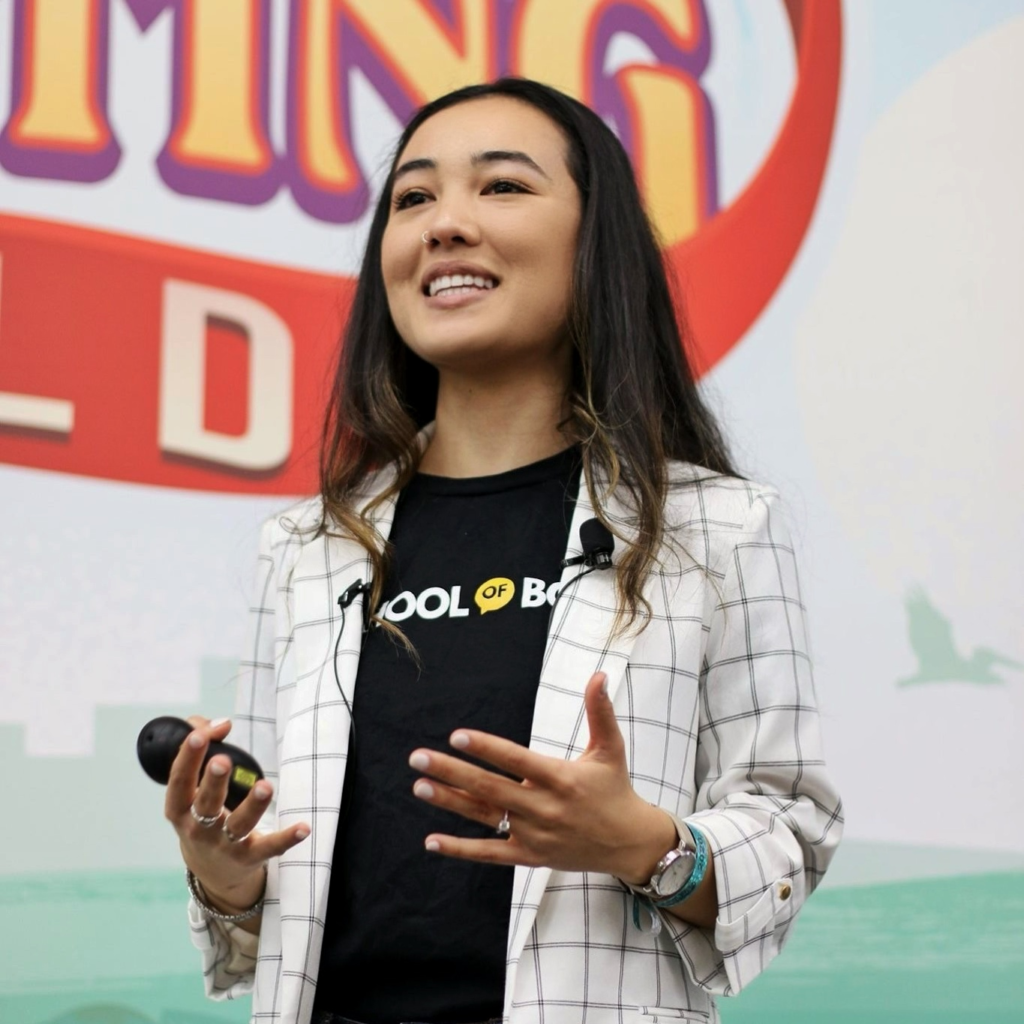
This is get ready for an amazing episode. This is like a mind blowing episode. This is one of these things that you’re going to go, Whoa, I can’t believe this exists and where the world is going and that this is a part of the future. I’m given a little special introduction here to my new friend, Natasha Takahashi. Because honestly the first four minutes of the interview we did together cut out for some reason. And so you don’t get the normal, like live real-time introduction that I usually do with my guests. So I have to recreate it here, but it was, it was mostly just like you know, the pleasantries a little bit. And then, you know, we captured the conversation, but I want to say this. So Natasha is somebody that I brought on who is a new friend who which again, you know, I don’t do that very often.
It’s usually something that really catches my attention. And she is actually somebody who caught my attention specifically because of her expertise. In fact, I would say she’s a great example of somebody who has defined such a specific niche for herself and her partner and their company, that they are starting to dominate and own a space. And they have quickly become one of the world’s leading authorities, if not the world’s leading authority on this very narrow, specific pointed expertise, which is chatbots also known as conversational marketing, which is an emerging technology and emerging strategy, emerging tool that I, I think that we think can be huge for personal brands. Now I also want to let you know that typically we don’t interview a lot of people on things that we’re not doing yet ourselves, but this is something that we’re exploring. We’ve known about it for a couple of years.
We’ve had our eye on it, had we not exited our former business a couple of years ago, we would have implemented it a couple of years ago. So we started a brand builders group we’re having to rebuild and retool and reload if you will, and get our feet underneath us. And so we haven’t yet started using chatbots, but we do do some manual versions of this, which I’ll talk about in the interview. So I just wanted to give you that context and background both on Natasha as a personal brand and just how it fits in and, and go. And yeah, she’s a great example of somebody that we’re giving our platform to, because she’s done a great job of carving out, you know, this uniqueness. And she really is an expert. So who is she? So technically she’s the chief marketing officer and the co-founder of ineffable marketing marketing which is an agency that does chat bot marketing, and they have built these chat bot marketing campaigns for over a hundred different companies and brands.
Several of them you’ll recognize ClickFunnels, mind Valley, digital marketer social media examiner. Those are really good friends of ours over there. Michael Stelzner Matthew Hussey. Billy Jean is marketing, you know, in a, in a, in a bunch of other ones, but Michael Stelzner specifically is someone that we know really well that we trust. He really knows his stuff and he doesn’t introduce or use vendors lightly. Which is one of the reasons it was, it was such a compliment for him to recommend us to his audience. And, you know, I’ve spoken in front of at, at social media marketing world several times. And Natasha has spoken at social media marketing world as well. So she, you know, is highly reputable and this, this company we haven’t yet engaged them personally, but I suspect that there will come a point here in the not too distant future that we will engage with them.
But I want to just to give you that context of how I met Natasha and what we’re talking about, chat bots, this is the automated, you know, when you go to a specifically Facebook messenger is where we started to notice this, right, is like you send an email, people may or may not open it. You said a texts. You know, you may annoy people if you do it too much, but chat bots, which happened through direct messages and it started primarily on Facebook messenger are extremely responsive. They have incredible engagement and open rates. It is, it is a great way to get your message to more people. But it’s a little delicate, right? Cause we’re automating it. And so we talk about a lot of that and I would very much classify this as an advanced technique and advanced technology and advanced tool.
This is not the thing that’s going to make or break your brand early on. You’ve got to build substance, but once you’ve got that, whew, this is a way to throw some fuel on the fire. And anyways, I think, you know, some of this may blow your mind. It definitely did, for me, it was, it was a lot of new information. So without further ado, that is my introduction. And now you will pick up exactly four minutes into my conversation that I had with the wonderful and delightful and extremely intelligent Natasha Takahashi. All right. So, so for those people that don’t know, like just to take it super high level, what is a chat bot? And you like, you, you mentioned Facebook, but then you said other places as well. So like, how should we, how should we think about chat bot in general? Like where are the places that this shows up and, you know, this is basically if I were going to summarize it, this is automating, this is creating automated, like marketing automation for DMs, more or less. Right,
Exactly. Right. And the way that we define chat bots is one-to-one conversations at scale, which has never been possible in history because even though conversations have always been a part of business, you know, somebody walks into a store, they want to know a little bit more, and then they buy something from you or they come back later on. Now we’re doing that at scale online. But the conversation part of it’s still hadn’t been scaled up until chat bots on Facebook messenger actually became available. So 2016 was when chat bot uses for marketing and sales really became a thing before that there were chat bots in other use cases, you know, there’s different apps that allow you to talk to them. You know, it’s a little bit more of an automated system that’s been going on since the 19 hundreds, essentially. But now with Facebook messenger, having led the way for Chapa automation from a business to user standpoint that is directly for discovery, for sales, for customer support, for retention of members, et cetera. All those use cases really started to blow up in 2016. And so when we talk about other channels right now,
This is totally new. I mean, this is, this is, this is like brand new stuff going on, which is why I wanted to talk to you. Cause I was like, Whoa, I think to what you just said, the reason I think this is so powerful, is it as one-to-one conversations, which most of you know, this is how I started. I started out going door to door when I was in college knocking on doors. And it was, it sucked, it was so painful and hard, but there was nothing faster than having a, having a one-on-one conversation with someone where I could take them from never heard of me to here is some money than a one-on-one conversation in a, in a 20, 20 minute window. And what you just said, Natasha, about one-on-one conversations at scale that are automated. I mean, I, I, I think this is a huge part of the future.
Absolutely. and to go back to your second question about the different channels, Facebook messenger, hands down is the best place, the most affordable, the most accessible place channel, if you will, to start out with regardless of business type or industry. And the reason is because all you need is a Facebook page, which ideally you are already utilizing for your business, right? You’re posting ideally a few times a week, engaging with people they’re using all the other wonderful features on Facebook, as well as running ads. And so when you attach a Facebook messenger bot to that page, then not only can people come to your page and just message you, but you can also leverage it for Facebook ads and use it in so many different types of campaigns and use cases. And apart from that in the Facebook ecosystem, right, in terms of messaging apps, we have Facebook messenger, Instagram and WhatsApp. So just to bring us back for a moment, Facebook in 2019, announced that they wanted to create a way for all three platforms to talk to each other, they called it interoperability. So we’re going to just get technical for a moment and their goal with it.
Yeah. That sounds, it sounds like an expensive word. That sounds smart. Yeah,
It does. It does. And so their whole goal was, you know, with different demographics in an audiences preferring different channels. You may have, let’s say a mom who loves talking to friends, business, et cetera on Facebook messenger, but then maybe her, you know, 20 year old daughter loves only using Instagram, DM, maybe WhatsApp a little bit. And so they could talk to each other on their platforms that they love. So let’s say the daughter’s on Instagram messaging or DM. And the moms let’s say on Facebook messenger, she can message the Instagram profile of her daughter while staying on Facebook messenger. Daughter’s going to be on Instagram, DM, right. Messaging mom on messenger. But they’re going to have their own experiences in the platforms that they know and love.
And grandma’s on WhatsApp talking to her home girls over, over in Singapore about some, some investment deals and they can all be so they can all be chatting in their native, in their native platform. That’s cool. I’d never even realized that.
Exactly. And so Facebook has already rolled that out. Maybe some of you have seen that and you’ll see more and more of it, where on messenger, you might’ve gotten a notification or an Instagram that says, Hey, now you can talk to your Facebook friends here in this inbox. So they’ve already started the process, but the reason why, you know, any of you guys should give a crap about this is because that means that businesses who are currently set up on Facebook messenger will be able to leverage more and more of that automation on those other platforms. We’re already testing Instagram, DM bots and WhatsApp bots in private beta with Facebook. And that’s going to be rolled out to more and more businesses this year. So that long story short, you know, going back to my concept about choosing different channels, Facebook messenger is the Guinea pig. Like you should be on there yesterday because you can be testing out conversational psychology for your audience. Like what do people actually want to talk to you about? What are the use cases that will bring the most ROI to your business and all of that translate to any other channel in the future, SMS, Instagram, WhatsApp, et cetera.
Yeah. I mean, conversational psychology, like there’s the term right there of which, you know, those of us from the old school. Cause you know, I’m almost 40, which makes me like an old gray haired person in this industry now is, you know, this was human to human sales. It was actual like one-on-one like quote unquote, like hand to hand combat of persuasion. And now this is happening. And so before we talk about all the things that can do, I need to help you, I need you to help me get past a psychological block that I have, which is number one, it’s this idea of feeling like I’m pretending that people are talking to me, but they’re not actually talking to me. And so that’s number one. And then I guess just kind of like I mean the worry there, there’s like a couple of worries.
One is like, okay, I don’t want to mislead people to somehow make them think that they’re actually talking to me when they’re not, even though if I write it, it’s kind of like, I am, it’s the same thing. Like my assistant, my assistant has a set of responses right now that she’ll copy and paste as me. Cause it’s like, I literally that’s what I would type if I were there and then the other, but the other, the other part of it is is, is making sure that it doesn’t ever do something that I wouldn’t do that like, Oh gosh, I would never say that. So how do you, how do you, how do I get past that emotional, like roadblock before we get into the technical part?
Sure. And those are great questions that I think, especially for personal brands, really important to consider and think about links for the number, the first thing that you mentioned right around, ultimately you’re asking, you know, what should the persona of the Bot be, like, how should we position this? So that people think of this as a helpful automation, almost like a personal concierge to help them with whatever they need, rather than positioning it as this is Rory, you know, and I’m here right now, talking to you. It’s actually illegal in some us States to have a chat bot pretend that it is a human. So there are laws in place in the world that essentially prevent you from doing this anyways. And you know, it’s not super ethical to say I’m actually here when you’re not. So the way that we typically position this for personal brands is that we’ll say something like we’ll either give the bot its own persona and say, Hey, I’m, you know, Jennifer. Yeah, exactly. You know, I’m Jennifer, I’m, Rory’s personal concierge. I’m here to help you with whatever you need from brand builders group. Like let’s get into it. You know, which of these things are you looking for? Just as like an example, or you could say, Hey, this is Rory’s bot, I’m not here right now, but I did create all of this for you. And I’m excited for you to go through this experience so that I can serve you 24 seven, you know, insert other benefits that make sense to your audience. So those are the,
I think that’s really cool because I would, I, you know, like that’s how I think of even how I think of a funnel is like, I’m not here with you live, but it’s like, this is my brain. Like if we were having a conversation, I would be telling you the same thing you’re seeing on this video, which is not that different from a podcast or anything else. I guess
That’s actually a great analogy that I haven’t really mentioned in the past, but I mean, a hundred percent, you know, if you’re viewing anything prerecorded or pre-written online, that person’s not there in your life to you. So yeah. That’s a great perspective to bring.
I like, I like Rory’s bot plus I could give him like some awesome alter ego and he could be like way more confident than I am and like really smooth talking and like really handsome, exactly a smooth, smooth talker, but so, okay. All right. And then, so this is, this is Rory’s bot and then how do I go about doing this? Because when I think about a conversation, my mind goes to what makes a conversation a conversation is there’s like an infinite number of possibilities. The conversation could go. And how do I get my mind wrapped around the idea that we could actually structure a conversation somehow that would feel like a conversation, but still be scripted enough that you could automate it without me writing like a hundred thousand, like, do you use like a decision tree to do this? Or like, how do you actually map this out?
Yeah. So a lot of people will come at it from that perspective, which is why they get overwhelmed of like, there’s so many things that we could do with this. You know, me, if I’m a personal [inaudible] and I’m sure a lot of people listening to this feel that way as well, if they’ve tried to tackle this. And so what it comes down to is simplifying it down to one specific use case. Let’s start there that you want to start with. So if we go back to my original example of somebody wanting to, let’s say, come into your business, learn more and see if they can book a call with you or, you know, buy something low ticket to, to better understand know that your chat bot shouldn’t be able to do everything a human could do. It should be able to handle specific use cases.
And those expectations should be set at the beginning of the conversation. So let’s say that you are setting up a chat bot with one use case, let’s say one campaign that is going to help leads book calls. You’re going to qualify them. Let’s say for your coaching program and you are then going to allow them to book a call, or if you find that they’re not qualified, then maybe you send them to a lower ticket offer or something free. That’s one campaign, one conversation that you technically already have scripts for, right? If you got on the phone today and someone’s like, Hey, I am XYZ business owner trying to do whatever my goal is. Then you know, what should I do with you guys? And then you would have probably specific questions that you are already thinking of right now that you would want to ask them, what’s your revenue?
How much are you spending on ads, marketing, et cetera, how many people are on your team, whatever it might be. Those qualifying questions that you might even actually already have written out on, like, let’s say a discovery call form or something of the, like an application. And you put all of that into the conversation, keeping in mind to always give the person opportunity to speak. So it should very much so always be a back and forth, right? Of like you asking the question that, you know, you need to know the answer of the person sharing that and then saying, great, thanks for sharing that, going back and forth, back and forth. And then at the end, the expectation you set at the beginning of, Hey, I’m going to let you know what I think the best next step is for us in this relationship. Then you shared that at the end.
And technically you already have this all mapped out inside of your head. You just need to get it out into a conversation and going back to expectations, just one last thing to say here, because you know, you bringing up the concept of, well, there’s so many different things I could pull up and things like it say again, it all comes down to the fact that if somebody were to message you and say, Hey, tell me a joke, or like, I need help with this super random thing. You’re like, I’m not gonna help you with that. That’s not what we’re here for. And so in the same way, your bot should just be able to handle things like that, which is very easy to implement at like a minimum viable level. So you can just say, Hey, you know, I can’t help with that at the moment, but here’s what I can do. I can help you understand what the next step would be if we were to work together. Does that all make sense?
Yeah. Yeah. So I just, how many of those things do you, you know, like if I’m going to write out a script to go, you know, what’s your goal with your personal brand? What are you struggling with? Are you hoping to write a book one day? Did you know that we can help you with that? Like that’s a pretty straight path to a free call, but planning for the other stuff of like, Oh, they asked me for a joke. Well, you know, tell me a joke or they asked me, I guess, do you just kinda like have a set of templates? You walk people through that says, you know, you need to write something for this and you need to write something for that. And I mean, is that, is that a cell? And are there a thousand or are there like five?
So when you first start out, there will be more like five, because what you should build into your bot initially is what we call the fallback. And that’s pretty common language and conversation design, which is that if you don’t have specific triggers set up, like let’s say someone says a personal brand inside of your body, then you might want, that’s a little bit vague. Still. Let’s say something more specific. I want to work with you. Then if somebody says something like that, you can set up a trigger so that when someone messages you that then you would send a specific response. But if they sent hey, tell me a joke, plus a thousand plus other random things someone could send you, they’ll all get directed to this fallback that says all, you know, you can test a few varieties of that. Like, Hey, you know, I’m learning every day.
So I’m not smart enough to answer that right now, but here’s what I can help you with. Or like, Hey, you know what, we, we actually don’t help with that, but here’s what I can help you with. And just always letting people be able to reply to that and say, okay, then just kidding. You know, maybe I was looking for something else or no, thanks. Or they might need to talk to a human or go to your help center. So there’s always different paths to kind of take people through and just close the loop. But you should not feel any pressure to have, to have all of those different triggers available for the most random things. Like you’ll get that data in over the first few months of the chat bot running and you’ll know what you actually need to implement in terms of those triggers.
So how much of this is kind of like a mapped out decision tree. If they say this, you say this, or you ask them a question and it’s like, this answer goes here. This answer goes here. How much of it is that versus like artificial intelligence where you’re just basically like putting in, I don’t even know how that, is it artificial intelligence or is this more like a decision tree that you’re mapping out?
Those are two different levels of, let’s say chat bot, marketing slash conversation design. And so the AI level is something that we, from a marketing perspective, we add that on as a layer on top of the decision tree. So the decision tree would be a sales and marketing conversation, even customer support style conversation that we create inside of a specific chat bot platform for a channel like Facebook messenger. And then as we start to see the data coming in for what people are saying, as well as just like random conversations that aren’t related to this, because people can message your Facebook page, anytime about anything they want. So getting all that data, and then we can start to stack the AI on top of that. So it can make sure people are going to what they need to essentially, and it can answer more questions that maybe didn’t start in a specific use case that are, you know, just incoming questions or messages that don’t have to do with a specific campaign.
You start, you start effectively, you start with a decision tree, like you’re saying, pick one objective. Like I want to get more people into this funnel or more people to request a call or more people to click on this link or whatever. And you just kind of like write a conversation for that. And then after you’ve got data coming in, then you can layer AI on later. Exactly. Right. And, and, and in terms of the technology that you’re using to do this, cause I see this as like, you know, there’s a little bit of an emotional part here, which we talked about, and then there’s like a strategy part, which is the decision tree and the conversational. And then there’s the technology part. So is this, this is like drift, right? Like this is, these are our, what are the, is that, is that the tool like, cause there’s a tool that you have to actually use to integrate with Facebook to, to build all this out. Right. And there’s different ones. Does it, is there pretty much like only one that you’re using or they’re like three or like what are the, what are the industry best standards here? Like, does it, are there a hundred already or how many are there we really looking at?
Yeah, there are quite a few platforms available, but just like, there are a gazillion platforms available for email marketing and you’re looking at like five to 10 top industry, totally eating platforms, same thing here, there are a gazillion platforms you could choose from, but the tech stack for chatbots just looks a little bit different than email marketing, although similar aspects, like there’s some crossover for short. So for example, we will start with a no code Shopbop platform because we come at this from the marketing perspective. And at this point it doesn’t make sense to code your own entire bot. It takes a lot of maintenance. It’s kind of like managing a WordPress site, but like 10 X, you know, you’re having to update things all the time, et cetera. Whereas if you use a out of the box solution, so what we primarily use is called many chat and that platform allows us to build everything we need to, they manage all the development code side of things, but we can still customize on top of that and add custom code and things that we want to. So that’s one example of a platform that you could go to similar, like using, you know, infusion soft drip, et cetera, for email marketing, but you would have this dedicated platform for your chat bot channels. So that’s,
So I basically, if I set up a Manny chat account, M a N Y chat is how this is, I set up Manny chat, you know, I integrate it with my Facebook and then it pulls me into some interface where I’m going, if this, then that, if this, then that, if this, then that, and you basically just write it out.
Yes. So you can create the entire backend automation as well as the content that users would see all inside of there. It’s kind of like a CRM plus, you know, content slash campaign management platform.
Huh. And then are you able to S to basically like, look at all those conversations or export them after to like analyze and go, okay, here’s what happened here? This person, you know, all these people are asking this and we’re sending them to the wrong thing. I mean, does that
Definitely, there are a few different perspectives on this though, and also more advanced techniques. So when you’re first starting out, like you can be reading through all the conversations happening just to be searching for certain areas where maybe the bot dropped the ball, you want to adjust copy, or like, Oh, that actually was confusing. Right? So that’s kind of level one of just taking a look at everything. Now level two would be to actually attach an analytics platform. So that be another step in the tech stack. There are tools out there, for example, dashpot, that’s a D a S H bot, and there’s also a platform literally called bot analytics. And both of those allow you to plug in whatever channel it is, Facebook messenger or otherwise. And it’ll analyze all the messages coming in. So it’ll tell you literally everything that you would want to know, right. What’s the most common word someone is saying to the bot, how many messages are coming in every day and anything else in between. So, so there’s a lot of great data that comes from that, that then you can use to optimize your experiences. And one other thing that I’ll just add to this, because even though you didn’t directly ask this, I think it’s still a question.
I didn’t know what to ask Natasha. I’m sorry. I don’t know what I’m doing. No, no, this is perfect. This is, so this is so like next level, we would call this phase three for us. Like, there’s so many other things you got to get right before you do this. Like, definitely. But, but, but like once you have your foundation and your principles set and like this can be something that can create exponential growth it seems like it feels like,
Yeah. And let me say that, it’s amazing. You guys have those two phases before you add on things like this, because when businesses are at, let’s say a phase one, as you guys define it and they try to add a chat bot into their business, it’s just not going to do a whole lot for them. Yep. They’ve got to have all those other pillars of their business there. They have to have an established business really in order to capitalize on this. So if you’re listening to this and you’re just starting out a chat bot can support you in a certain use case. Right? Make things a little bit easier for you, but understand you’re not going to get full advantage of a chat bot until you’re well-established.
Huh. Well, so you said, sorry, go back. You said you, the question you, that I should have asked that I didn’t ask that you were going to answer was what
Just around essentially transferring data between your CRM email marketing platform. Let’s say, for example, or if you use something else, active campaign Infusionsoft, and the list goes on there and something like many chat or your chat bot platform of choice. And so when you integrate those together, whether it’s natively, which is an option, and we don’t need to go down, you know, very logistical paths, but long story short, there’s a way for them to connect to each other. And from there you can pass data in between them. So that if somebody took some important actions inside of the bot, or maybe didn’t complete, let’s say a lead qualification form inside of the bot questions that you were asking, and you already send follow-ups in the bot, the user still hasn’t replied, well, maybe you send them an email and you can trigger that through, you know, your email marketing platform, but you can also just have all that data seamlessly integrated. So that then when it comes time to, like you said, pull certain data out of, like, let’s say you want to see all the responses coming in for those questions. When people go to book a call inside of the bot, you can put that not only just like a Google sheet, but also have that in your other platforms for your business,
You got Facebook, Instagram and WhatsApp is this is different than a chat bot on your website or is it similar?
Great question because I know you mentioned drift earlier and I was going to get to this. You know, we’ve been, we’ve been going a little bit all over the place, but I love it because we’re covering quite a bit of ground that is all adjacent, right? And these are all questions that people have when they’re first is trying to figure out what the hell this is. So, so, so website live chat, which you can go to pretty much any website these days. And there’ll be a little thing in the bottom, which actually fun fact. Now, most of the big enterprises ever since COVID really hit the U S are all using a chat bot. So next time you go to literally any website, your bank, government websites, et cetera, you will see automated chat there, which is really cool. But historically that’s all been, you know, humans who will come online and actually answer things like with drift or with Intercom.
So the difference between using one of those widgets where you don’t know anything about the user before they tell you it, so you have to say, Hey, you know, I’m here to help you, but what’s your name? What’s your email. Maybe there’s other things that they need from you in order to help you as a user with Facebook messenger. What Facebook has enabled businesses to do is actually capture a certain set of information about every person opting in. So whether you message the page directly on Facebook, or you go to their website and opt into a little widget, that looks the same as like another website live chat, but it’s actually Facebook messenger, but it’s happening on that website page.
Yeah. You can take your Facebook messenger and basically put it on your site, correct?
Yes. And so the page itself for the business in this case would receive the first name, the last name, gender time zone, and language of that person who’s opting in based on their Facebook profile information. So that’s one of the biggest advantages is that unlike website live chat, you’re getting that information and that conversation will now follow that person because if they leave your website, well, guess what? They’ve got Facebook messenger on their computer, on their phone mobile app, right? And so you can follow up with them. They can follow up with you. And it just becomes a seamless transition. Whereas with website live chat, that’s the only website page. You can actually have that conversation on. And then it might get moved over to email if you’ve ever had that experience, but it’s not the same as it all being gone. Right.
And can you broadcast push a message once somebody has been chatting with you on messenger? Can you basically kind of like flip the conversation where it’s more like a text blast that you would like push out a notification or no?
Yes. There are some changes that have happened over the last few years that make it different from like just sending out an email campaign, like blasting that out. Let’s say to an entire list, there are certain rules now around when you can do that, what those messages, but long story short, it’s definitely a critical part of a strategy to monetize your messenger list because everyone who now talks to your page, as soon as you connect a platform like many chat, they now become a subscriber on your list. Just like somebody would become an email list subscriber. So you can definitely leverage them in that way to send out broadcast promotions, new content releases, launches, et cetera.
Yeah. I mean, the fact that you can integrate this with your marketing automation tool, either natively or third party, but the, that you can follow the conversation with them across multiple platforms that you can add AI on top of it, that you can incorporate analytics to, to pull all the trends out of this. You can strategically design these decision trees, however you want. I mean, this is fricking nuts, like, and, and, and it’s a conversation, a one-on-one conversation. It’s not, it’s, it’s totally interactive. It’s not like email. This is amazing. So anyways, y’all, so here’s what we want you to do. Of course you can go find Natasha Takahashi online. The school school of bots we’ll put links to that in our profile, but here’s what I would love for you to do is if you want to learn more about this, go to brand builders, group.com forward slash chat bots. And you can learn more about some of the stuff that Natasha is up to and her team. And we’re gonna, we’re gonna, w we’re gonna learn more about this and we’re gonna, I think we’re gonna see more of Natasha in their game cause they’re, they’re doing it, and this is a huge part of the future. So Natasha, any other last little thoughts that you would leave people with?
I think the biggest reminder is starting simple. I know it sounds stupid and silly, but as with anything in business, it really is the key to success with this to not feel overwhelmed, but to take what Rory and I just talked about and understand that just starting with one use case, getting a win there, proving the channel for your business, and then expanding from there and expanding and scaling to the moon. Whatever you want to do with it is possible, but prove the channel for your business first. And we’re happy to help you do that and get clarity on it. So go ahead and check out the link that Brody mentioned. Yeah, there you go.
Oh, totally.
My friends this stuff makes me feel like I’m so far behind, but it inspires me that there’s a lot to learn and a big future ahead, Natasha. We wish you the best.
Thanks so much. And thanks for listening.
Ep 169: Secrets to Selling the Go-Giver Way with Bob Burg | Recap Episode
I cannot tell you enough how much I love Bob Berg and specifically Bob Burg’s philosophies about sales. You know, it’s been, it’s been a couple of years, really, since I had a focused conversation with Bob and, you know, this interview that we did together, it just reminded me of how much I love him and in the go giver. Okay. So the book that he and John David Mann wrote, and John David Mann is going to come on, we’re going to get him on the podcast here at some point. But that book is probably one of my top five all time business books. And, and, and probably, you know, can I actually say this, I might actually be able to say this. I think the Go-Giver is my, my number two book ever written for salespeople. Like top two, the only other one would be well, how to win friends and influence people.
And then also augmented Dino’s greatest salesman in the world, but Go-Giver is right up there. Like if you are in sales and, you know, we haven’t talked as much about sales on this podcast. I mean marketing and stuff like that, but like direct, you know, sales, sales, sales, as we did in this episode, which I love, I mean, this is sales was how I started, like sales is where I came from. I, I did sales first and then was a speaker and then was an author and then was an entrepreneur and then was, it was a marketer. And the, the, the takeaways from this episode are so good. Like for me to come up with three, I actually really had to, to focus hard and, and, and narrow them down. Obviously this is the recap edition of the interview that we did with Bob Burg.
Obviously it’s just me no, AJ this week. And I’m actually, I’ve got a lot to say about this, so it’s okay because I just, I think people sell the wrong way and there’s so much out there about how to sell that I just disagree with. And, and I, and frankly, I haven’t done. And I think there’s been so many times in my career where I haven’t fit in as a salesperson because I was not willing to compromise my reputation or my integrity just for the sake of revenue and, and Bob, you know, that’s what Bob, Bob teaches to do it that way. And so anyways, so let’s give you, let’s just dive into the, the three takeaways before I just rant here nonstop. All right. So number one thing that he said, or the first thing that really stuck with me is in a free market, you have to realize that people only buy things because they believe it’s in their best interest to do so.
It’s really, even though that should be obvious. A lot of times it’s not obvious because you know, like I’ve, I’ve heard people say people buy because they like you and they trust you. That’s not true. People don’t buy because they like you and trust you, people buy because they think that what you have is good for them. And it helps if they like you and trust you, and they might not buy from you if they don’t like you and they don’t trust you, it’s going to decrease the likelihood that they will buy. But even so some of us will still buy things. If we believe it’s in our best interests, even if we don’t like the person now, not, not as often. Right. And that is somebody not liking you and trusting you is a very big barrier to have to overcome, but either way it’s, they are buying because they believe it is in their best interest to do so.
And so your job is to help illustrate that for them. And I wouldn’t even say that way, like when I, when I think of this and I’m so excited, y’all like I don’t think I’ve shared this with you, but we have an event called pressure-free persuasion that, you know, we’ve been working on here for a couple of years since we started brand builders group and we haven’t taught it live. And we’re about to, it’s coming up for the first time. And so I’ve been like diving into, you know, really the first time ever in our life that, that Aj and I have put our actual personal sales philosophies into a training program, and it’s going to be so killer. And it’s so online and on target with, you know, this interview. And it’s all about serving the best interest of the prospect. And it’s, you know, I say illustrating that because if they’re going to buy, you want to illustrate it.
But I don’t even know that illustrate is the right way. Cause that illustrate basically means that like I’m drawing it out for them and I’m showing them how that’s in their best interest, which is true, but it’s a level deeper than that to go. Actually, I’m not trying to convince them. This is in their best interest. I’m not trying to show them how this is in their best interest. If you do pressure-free persuasion, which is what we teach. You’re actually legitimately trying to figure out if what you have is in their best interest. And that’s a whole nother level. Like we actually believe that you shouldn’t always sell everybody and that the goal isn’t to sell everybody. And I know that, I mean, gosh, like we may not get hired for a sales training from a lot of people, but I believe you, you make more that way.
Like you make more sales by genuinely being interested in discovering if what you have can legitimately help the person not look like it can help the person not pretend to help the person not convince the person that what you have may help them, but that it legitimately and authentically, and truthfully actually serves their best interest. And nobody does that. Like nobody does that. Salespeople are. So self-centered they think about I’m going to make the sale. What do I need to say to convince this person? Like, what are the magic words that I can use to change this person’s mind? And it’s like, what, like what that is so manipulative, that is not what sales is. At least it’s not what we think of sales. Let’s just say this way. It’s not what pressure-free persuasion is. So we don’t, I guess, own the word sales, but it’s not how we do sales and it’s not how we teach you to do sales and how we teach our team to do sales and how we teach the personal brands that we work with. And that we coach to do sales. It’s actually going, can I really help this person really? And so it’s important to understand that that is the goal. That is the objective and what we’re seeking. We’re on a mission for truth. We’re not on a mission for a transaction.
You understand we’re on a mission for truth. We’re not on the mission for a transaction. The truth is, can I really help you? If yes, then you should buy. If no, then you should not. It’s not that I’m on a mission for a transaction, which is what do I have to get you to do to say, yes, that’s not, that’s not, that’s not how we roll. This is not how we roll. Right? So you know, again, it’s one reason why we got out of the sales training business because we didn’t want to have to tell every single person that they should make every single sale every single time. And that all that matters is your revenue and your sales and your numbers and that your, your worth is determined to how much your sales is. We just don’t believe that. So this is probably a defining moment in a defining episode, I would say about who brand builders group is and how we are different.
And we’re not trying to differentiate ourselves for the purpose of differentiating ourself. I’m saying, this is what we believe that not every person should be sold and that it’s not a game of winning and losing. It’s not on a mission for a transaction. It is on a mission for truth. And it is about the best interest of the person that you’re talking to. And Bob believes, and I love that. Like there’s, I spent my whole life in sales and I can count on less than one hand. The number of people who teach sales, who actually legitimately teach that especially, you know, Bob has, has had such incredible career. So that’s the first thing is make sure you realize that the only reason they buy is because they believe it’s in their best interest to do so. Number two, again, Bob said a lot of this, some of this I’m adding color in, but we’re aligned here. The target is not making more money. The target is serving other people.
If you aim for serving other people, money is a reward that comes like the reward comes in the form of money, but we’re not aiming at money. If I’m aiming at making money, then serving people is ancillary. And I may or may not do that because it’s subservient to making money. We have to flip that. We got to switch that we have to turn that inside out, serving people is the target money is the reward. It’s not that money is the target. And maybe we serve people and maybe we don’t, it’s it’s never about the sales person. It’s always about the prospect. It’s always about legitimately helping them. Now, some of you, you know, you may go, yeah, I’m done listening to brand builders group because you know, they’re not going to help me make money quickest. And you know what I would say, in some cases that’s actually true.
We may not be the people who teach you how to make money the fastest. But what I would say is we’re the people who teach you how to make the most money. The longest, because this is about reputation. We’re playing the long game and don’t hear what I’m not saying. I’m not saying you shouldn’t sell. I’m not saying you shouldn’t close the deal. I’m not saying that people don’t need help making decisions. They do. We will teach that and talk a lot about that when we get to pressure-free persuasion in the course. But what I’m, what I’m saying is that service is the objective. The money is the by-product of that. And term, it will happen, but you never sacrifice long-term reputation for short term revenue. We believe that you shouldn’t, but that’s not what most people who teach sales believe it’s the opposite. Most of sales is revenue at all costs.
Revenue is your worth. You’re as good as your last sale. Like, you know, it’s only the top producers who matter the most like it and it’s, and it’s going, we’re playing a different game. We’re playing a longer term game that we’re investing in reputation. We’re investing in trust, we’re seeking truth. We’re going after service. We allow money show up as a by-product of that. And yeah, that’s what we just believe so far. It’s worked out pretty good for us. You know, maybe we would have made more money. Maybe we would have made more money in our careers. I’m specifically speaking to, to me and AJ right now. But I don’t think so. I mean, it would be pretty hard pressed. I mean maybe, but even if we did, we don’t care because it’s not worth it. It’s not worth, it’s not, it’s never worth a compromise of integrity just to make more income.
It’s never worth a compromise in your reputation just to make more revenue ever. At least that’s not what we believe. And I don’t think that’s what Bob believes. And, and to hear Bob say, it gives me conviction. Right. And I’m just like, man, that that’s that’s, that’s it. That’s what we believe is different. All right. The third thing I want to highlight about Bob, which I love, which is his personal brand journey. And you know, if you, if you, how do you make money quickly as a personal brand? Okay. So let’s now let’s flip and go, okay, got it. Love service. Also need to make some money, right? Like that, that is true. Okay. Again, we were good with money. Like we love, we want money, right? It’s not like we don’t want money. We want money. We want income. We want sales. Okay.
I’m not saying we don’t I’m saying that’s not number one. Now let’s flip it and go, how do we make some sales? Like, how do we make, how do we make some money, man? And here’s what I, here’s what I want to highlight about Bob’s career and what I want to tell you. Well, before I tell you what this is, this is the third takeaway. Bob built his career on this. He says it in the interview. Bob built his career on this. Tom Hopkins, Brian, Tracy, Tony Robbins. They also all built their career on this. We have built our career on this ed Tate, who is a good friend of mine, who is a world champion of public speaking, built his career on this Mark Sanborn built his career on this. So many of the top performing highest income earners, most notable award winners in this profession built their career on this one skill.
And Bob mentioned it, and this is what it is. You learn to speak for free and sell at the back of the room, speak for free and sell at the back of the room. So many of the greatest teachers, speakers, influencers, personal brands authors, whatever you want to call them. So many of, of the highest paid speakers in the built their career by speaking for free and selling at the back of the room, because it’s a lot easier to get in front of the audience. If you don’t have to charge a fee to get there, right? Like now again, don’t hear what I’m not saying. I’m not saying that you shouldn’t one day charge a speaking fee, right? I am at a stage in my career where people pay a a pretty good bit of money, right? Like we’re, we’re not, we’re not rolling in Oprah dough or, you know, or, or Gary, Gary Vaynerchuk DOE, but we get paid a pretty good amount of money to stand in front of some pretty large audiences.
But how did we get there? I spoke for free 304 times, 304 times before I got a legitimate speaking fee. Now, does that mean I spoke, I never made money for my first 304 speeches. No, we built a multi-million dollar business speaking for free. We built an eight figure business speaking for free. This was how we started our last company, because it’s the same model that Brian Tracy and Tom Hopkins and Tony Robinson, Jim Rhodes, like it’s the same model that so many of the legends in this industry have used. You go speak for free and then you offer something for sale. And even when I say offer something for sale, like when you think about it, right? You, you know, our mind goes to like sell a book at the back of the room or sell a course. You know, it used to be like sell CDs or sell tapes, and then it was CDs and then it was DVDs.
And now it’s like sell a course and that all works. That that can all be true. But it can be selling tickets to an event we’ve done that we’ve, we’ve sold millions of dollars of tickets to events after doing free presentations. It could be selling but, but, but, but it also could be selling coaching programs, consulting services. If you’re a financial advisor, if an anybody in the professional services industry, you go speak for free. And, and when we say sell at the back of the room, there’s two types of offers. So we teach this in our revenue engine course, there are soft offers, which are offers that you make, which are for people to take the next step, but it’s not for money. A soft offer is like schedule an appointment or request a call. And then there are full offers, which are to the point of a financial transaction.
So, you know, come to the back of the room and give me your credit card. So that’s the difference between full offers and soft offers. Most of the money we’ve made in our career has happened from soft offers. Well, I guess I can’t say that because it, in a, yeah, I mean, in our last business, we made a lot of full offers. Like we actually spoke for free and we’ve closed in the back of the room now. So, so you go, how does this apply to me? Because if you’re a, if you’re a cosmetic surgeon or you’re an accountant, or you’re a lawyer, or you’re a financial advisor, or you do direct sales, or you’re an author, a coach, a speaker consultant trainer, all of us can go speak for free and sell at the back of the room. This is the fastest path to cash.
This is the single greatest, most powerful mechanism there is for monetizing a personal brand. Now, if you can get paid to speak and you can sell at the back of the room even better. And, and there’s a lot of delicacy and a lot of tact and a lot of nuance and a lot of tremendous skill and psychology for making full offers. You know, it’s very easy to come across as pushy and slimy from stage. If you’re making a full offer, if you’re asking a room full of people for their credit card, all at the same time, there is a lot to learn about how to do that, right. Something that we know a lot about it. And we teach, we actually teach that skill in world-class presentation, craft how to close a room full of people which is very different from one-on-one sales, which is what we teach in pressure-free persuasion.
But a soft offer is easy. Anybody can do it. In fact, here’s another distinction I want to make for you. The word speaking, right? You might hear the word speaking and you think of people like me. I stand on, you know, I get on these stages. There’s sometimes there’s tens of thousands of people in the room. Well, you know, that may not be what your daily life looks like. It probably does it like, there’s not a, there’s not a ton of people who do that, but the way that I built my career and we built our career and, and AIJ, and I have built our various companies you’ve been involved in is by speaking to small rooms of people between like a smallest three people. And it usually like three to 15 and going out and speaking. So you can, it’s not auditoriums and arenas full of people.
It’s not giant conference rooms. These are small office built, you know, office buildings and their chamber of commerce meetings. And they’re, you know, Kowanas clubs and rotary clubs and, and just a small company know pulling, going in and speaking at their weekly meeting. I mean, that’s how Tony Robbins sells all of their event tickets, or they used to the yeah, I say that not, not knowing Tony and not knowing much about their, their internal operations, but that is how they, they built their company. Cause that’s been the model, but here’s the other thing, not only is speaking, does it not require big audiences. It also doesn’t require in person audiences. Ah, they can be virtual audiences. They are webinars. What is a webinar? Right? People like, Oh, webinars, which they’re not new anymore. But 10 years ago it was like all the craze, Oh, webinars, what is a webinar webinars speaking for free and sound something at the back of the room.
It’s the exact same thing it’s been around for decades. That’s why it works by the way. That’s why we teach you how to do it. And we, that’s why we encourage one of your first funnels should be quote unquote, a webinar funnel. But if you’re not an information marketer, you know, you might not think of it as a webinar funnel. You might think of it as a free online training or a masterclass or a web class or a video or whatever. But it’s the same thing you’re giving value for free in the form of a video. And then you’re offering something for sale at the end, also going and doing podcasts too. Where is the same thing you’re speaking for free. This is how we launched brand builders group. How did we get our first dozen customers? Right? We went on podcasts and for free, when I speak on a podcast it’s for free, right?
Usually I’m not getting paid. There’s a couple of times that’s happened, but usually it’s like, I’m there because I have a relationship with the host or I want to, or I like what they’re up to, or they’ve got a great audience and you know, blah, blah, blah, blah, blah. But you’re speaking for free. And then you’re selling now in a podcast interview, you almost never hear full offers, right? You don’t hear very often because not many people would listen to a podcast if there was a full offer, every episode. Right? But what you do is you do a soft offer, you know, go request a call. That’s a soft offer. Here’s my Calendly link or go to my website. And there’s a lead capture, you know, or go to this landing page and download a free opt-in. Those are soft offers. They’re they’re steps towards a sale, but they’re not, they’re not all the way to the sale, but webinars, podcasts, you know, now there’s this you know, challenges are like all the craze like, Oh, there’s a challenge.
What does a challenge? A challenge is a Facebook group of people. It’s just the audiences inside of a Facebook group instead of on a webinar or instead of on a podcast or instead of in a live room and you go low, you go live, which is a video comes on and you speak for free four or five days, seven days, 21 days, whatever the challenge is. And then what do you think they do at the end? They sell, speak for free. It’s a lot easier to build an audience, get in front of an audience, be invited onto a stage. If you remove the barrier of, of a speaking fee and you can still monetize your time. So you’re speaking for free, but it doesn’t mean you’re not getting paid. You’re just not getting paid to speak. You’re monetizing your time still, but you’re doing it through either full offers or soft offers at the back.
And anyways, I, I know I’m harping on this, but it boggles my mind, how people miss this. And if you look at the brand builder journey, and I know, you know, we don’t do a lot of our own training here on the podcast, but when we teach the brand builder journey, if you go to our website we have this, you know, when you click on our process, we map out our brand builder journey there. And we have, we have 12 core courses. We divide them into four phases. So our curriculum is, is one curriculum divided into four phases. And each of the four phases divided into three courses. Phase one is finding your brand DNA, which is creating, finding your uniqueness, finding your positioning. And we get clear on who you serve. What is unique about you? What’s your position in the market and how do you make money?
Well then course two in phase. One is captivating content where we help extrapolate your uniqueness into a body of original thought leadership, frameworks, and intellectual property. We draw out of you, your expertise into a body of work that happens in phase one course, two captivating content. And then phase one course three is world-class presentation craft, which is where we take that content. And we prepare it for the spoken word. Now, some people say, well, Rory, I need to make money faster. And they go, I want to get to funnels faster. I want to do paid ads faster. I want to monetize faster and they’re, and they’re missing it, right? Like we do all that stuff too. You’ll get there. But the fastest way to monetize is to go speak for free. It is the fastest way because people get to sample you. You’re reducing the, the, the, the barrier of entry to get hired because you’re not, you don’t have a fee, right?
You’re making it easy for them to hire you. You’re standing in front of that audience, you know, or presenting live or virtually or whatever it is. And they get to sample you for free. So they get to trust you first. And then they buy for you. This is a skill you have to master, and I’m not saying you have to master the full offer skill. That’s a hard skill. There’s risk involved there for sure. There’s a lot of psychology, a lot of tact. And if you’re standing on a stage asking people to pull out their credit card, you definitely need to go through some serious training with us. Cause it’s delicate to do. It can totally be done. It’s amazing. Like you can, I mean, you can, you can sell tens of thousands of dollars, hundreds of thousands of dollars in a room and actually collect the money on the spot.
Super powerful, but verb that’s pretty advanced, right? And so there’s a good, there’s a good or chance. There’s a more likely chance that what you’re going to start with is soft offers, which is great. That’s still a measurable deliverable, you know, drive towards revenue. How many people requested a call scheduled an appointment downloaded my opt-in, you know, my, my lead magnet gave me their business card. That’s a proactive step in the sales process. Speak for free, give value for free serving others is the target. You know, it’s about them. It’s not about you all of these great, amazing, wonderful takeaways from the one and only Bob Berg, who is one of the few people that I can recommend unabashedly when it comes to, if you want to learn how to sell this is somebody that we are aligned with that we believe in. And that love. I mean, Bob has been such an encouragement to me over my career and gosh, the Go-Giver is just one of the best books ever. And you know, Bob does this pour into people, give first serve first help first and allow money to be the by-product that will inevitably show up sooner or later. Keep coming back here to the influential personal brand podcast.
Ep 168: Secrets to Selling the Go-Giver Way with Bob Burg
RV: (01:04)
One of my favorite books of all time is a book called the Go-Giver sold about a million copies and is written by the man you are about to meet who is a long-time friend of mine, Bob Burg. He coauthored that book and several others with John David Mann, who was also a long time friend of mine. And they turned it into a Go-Giver series. His, their newest parable is called the Go-Giver influencer, but Bob and I met, I believe through Zig Ziglar way back in the day. And that was how we got connected. And then we’ve just known each other over the years. He is a hall of fame speaker. He BB for so many great companies, even a former us president speaks all all over the world. And, and these days is, is more focused on just building up a community and impact and people from home in, in a world of COVID like we all are. And we hadn’t connected in a while. And so Bob, I just, man, I’m, I’m honored that you’re here. My friend, it’s good to see you. Oh,
BB: (02:10)
The honor’s mine were already one of my all timeFavorite people, which I believe, you know,
BB: (02:14)
I hope you know that.
RV: (02:17)
Well, I thank you. I, you know, it’s funny because I knew you personally, bef long before I read the Go-Giver, there’s, there’s a few of author friends that I have where it’s like, I don’t actually end up reading their book until years after I know them. And, and once I read the Go-Giver, I was like, Oh, now I know why we hit it off. We have such a shared philosophy. And for, for people that don’t know, haven’t heard of the Go-Giver you know, I certainly want to hear the story about you, how you’ve built your business in your personal brand. So what we talk about on this show, but I, I feel like it’s so interconnected to the message and the principle that you teach in your parables specifically, the Go-Giver. So can you like, just give us the, the, the premise and the introduction to what the Go-Giver concept is all about?
BB: (03:07)
Oh, sure. The, the basic premise, and it’s actually very simple one, and that is that shifting your focus and, and this is where it really begins shifting your focus from getting to giving. And when we say giving in this context, we simply mean constantly and consistently providing immense value to others, understanding that doing so is not only a, a more pleasant way of conducting business. It’s actually the most financially profitable way as well. And, and, and it’s important to note, I think that when we say that it’s not for some, you know, Wu Wei out there magical mystical reasons. It, it actually makes very rational, logical sense when you’re that person who can take your focus off of yourself and place it on making other people’s lives better, right. Helping them solve their challenges, helping them get what they want help helping to bring them closer to happiness.
BB: (04:09)
Right? However, that, that ends up working out through what you do. If people feel good about you, people want to get to know you, they like you, they trust you. They want to be a part of your life. They want to do business with you. They want to refer you and introduce you and tell others about you. So, you know, that’s really you know, where, where it comes from. And, but it has to be very genuine. It has to be authentic. You have to not, and I know you are, and, and I know the people you teach and who you coach and mentor are as well. It has to really come from a place of, of wanting to help, desiring to bring that kind of value to others.
RV: (04:50)
Yeah. And I, you know, I know you’re, you’re such a proponent of like the free enterprise system in general. And, you know, I think like what you said, there’s a heart part of this, of just being, you know, thinking about other people, which I agree with so much. And I’m so aligned on and was an area that I’ve, I’ve had to grow and continue to have to grow constantly and actively pursue. That brings a level of satisfaction and joy, but there is also a shocking element to this, that money somehow shows up as a by-product of this. Why do you still believe that? Why do you believe that? What other evidence do you have, you know, in, with your, the success of your own personal brand or other people that, that make you go, if you trust this, it will work
BB: (05:45)
Because it’s not something you have to trust on blind faith. It’s, it’s actually the only thing in a free market that’s ever been proven to work. Now let’s, let’s clarify when we say free, what we mean is no one is forced to do business with others. People do it on their own volition. Now this should not be confused with cronyism where, you know, as we know you know, whether big businesses, special interests, whatever, through their lobbyists on K street, basically by the influence of politicians to make laws and rules and regulations that benefit, that’s not what we’re talking about. That is not capitalism. That is cronyism in a free market. People only buy because they believe it’s in their best interest to do so. Right. But this is great because it means that that entrepreneur whose focus is on bringing value to others, right?
BB: (06:44)
Pleasing that other person, helping them get what they want. That’s the person who, you know, let’s put it this way. I used to sit when I used to speak at sales conferences, you know, back before the COVID days when we actually went places to speak at conferences, I, you know, I’d be sitting in front of a room full of all these salespeople. And I’d say, I know nobody’s going to buy from you because you have a quota to meet, right. They’re not going to buy from you because you need the money and they’re not gonna even gonna buy from you because you’re a really nice person they’re going to buy from you only because they believe that it’s in their best interest to do so. And in a free market, which all I guarantee you you know, you and me and everyone listening, watching this, we, this is how we operate because no one has to buy from any of us. Right. It, that’s the only reason why anyone’s going to do business with us. So there’s nothing that we need to have, you know, blind faith about if we don’t please that other person, if we don’t bring immense value to them, they’re not doing business with us.
RV: (07:46)
And how does that, how has that showed up in your career? I mean, you know, you sell millions of books between all your books. You’ve got all of these, you know, places that you spoke at. And I know you’ve spoken at some of the largest, I mean, you mentioned the sales meetings. I know it’s more than that, but specifically in the world of sales, you have spoken at some of the biggest and largest you know, kind of sales gatherings, you know, is that a philosophy that you carried into your career early on as a personal brand, and it helps you, or is this something you kind of learned along the way that amplified what you were doing? I think
BB: (08:21)
There are two aspects to that. And it’s a great question. One is I was very fortunate, very blessed to be born to two great people who they were all about bringing value to others. So I got to see that as an example, now, as I grew up and got into the business world, you know, I, I think I kind of lost my way for a while. And I was around people who did things in a way that probably weren’t the best example and in some word, but some weren’t, you know, and so I don’t know what if I was necessarily on the right track. I think for a while it became more. Now I always had a great product or service I was representing when I sold for other companies. So that wasn’t the issue. It was a matter of the focus being on myself and the sale.
BB: (09:09)
Okay. and I remember that I was in kind of a, kind of, I was in a sales slump and I came back to the office one day and I saw a guy there and a much older guy. He was not even in the sales department. I think he was in the engineering department. Nice guy didn’t say much, but he was one of these people and we’ve all met, you know that when, whenever he did say something, it was always very profound. Sure. And I think he saw me as sort of a Joe in the Go-Giver, which I would write about 25 years later with John David Mann. But I think he saw me as that young up and coming ambitious, aggressive, you know, nice guy, but whose focus was on himself, but not where it should be. And he said to me, can I give you some advice?
BB: (09:58)
Fortunately, I’ve always been a pretty good student when it comes to listening to people around me. And I said, absolutely, please do. And he said, Berg, he was a last name kind of guy. He said, bird, if you want to make a lot of money in sales, he said, don’t have making money as your target. Your target, he said is serving others. Now, when you hit the target, you’ll get a reward. And that reward will come in the form of money. And you can do with that money, whatever you choose, but never forget the money is simply the reward for hitting the target. It ain’t the target itself. Your target is serving others and Rory that’s when it hit me that great salesmanship is never about the sales person. Great salesmanship is never about the products or services as important as those are. Great. Salesmanship is always about the other person. It’s about the people whose lives you choose to touch with the value you provide. It’s the people whose lives are a little bit better just because you were part of it. And I think when we go with that attitude, which is much more like my parents’ attitude than, than the people who I kind of started to learn from, I think we go with that attitude. We’re nine steps ahead of the game in a 10 step game.
RV: (11:30)
Yeah. I mean, amen. It’s, it’s, it’s so good. And I mean, when I say go-givers one of my favorite books, Shaw, like I read a ton, I love it. And I’m telling you, this is like one of my top five all time favorite books. I mean, I think because, and it’s, it’s, it’s shocking to me, how rare you hear this message that you’re talking about, and particularly in the world of success, it’s all about achieve grind, hustle, grow. It’s a very centered message. It’s a very self-serving accomplish acquire, like, you know, grow your influence, grow your title. And, you know, I just am so aligned and believe with in the same that, that all of those things happen as a by-product of the number of people that you reach and the amount of value you provide. And I think it’s so, so eloquent. So, so tell us a story about the go giver. Like, did you, I mean, a million copies of a book is, is amazing. I mean, this is so few get there. How did you get the book deal? How did you meet John David Mann? Did this, did you guys like light up the bestseller list right away? Like, was it easy to write? It’s a parable, right. So did you, did you know you wanted to write a parable? Like what’s the, what’s the story behind the success of this book?
BB: (12:50)
I can answer those really pretty easily. At first it came about because years and years ago, I had a book out called endless referrals. The sunrise with network, your everyday contacts into sales. It was basically a book on business networking, creating relationships, really for entrepreneurs and salespeople who knew they had a great product or service, they were proud of it. They knew how much of the value it brought, but they, they didn’t necessarily feel comfortable with the process of going out into their communities and creating those know like, and trust relationships, right. That they didn’t know how to associate. I was a how to guide that’s what it was, but I’d always read a lot of parallels, whether it was books like OD Mandino’s greatest salesman in the world or Babylon.
RV: (13:38)
Oh, another good one.
BB: (13:41)
I’m just trying to think, you know, back in the the late seventies, early eighties, doctors, Blanchard and Johns, and I’m a one minute series and then friends of ours, like Chris Weidner and certainly John Gordon, and so many people who have these magnificent you know, books. And what I w I found is that, you know, I’d read these parables and always enjoyed them so much learned a lot in a very short period of time. I think, you know, as, you know stories connect on a deeper level than a how to book, don’t get me wrong. I love how to books. I read hundreds if not thousands of them. But I think parables connect on a different level. So I thought, what if we could take the basic premise of endless referrals, which is all things being equal, people will do business with and refer business to those people. They know like, and trust people have heard me say this for 30 years, probably they’re nauseated. When they hear me say that, by this point, I said, how could we take that and turn it into a parable? So I just thought, well, so what’s the, what’s the basic
RV: (14:47)
Trait.
BB: (14:48)
What’s the essence of a person who’s able to very quickly and sustainably create those those know, like, and trust relationships. Well, they’re givers, right? They’re always giving value. Their focus is on giving value. So that part was easy to come up with the title, but go giver. But it was, it was when I, when I, when John David Mann agreed to, to co-author it and be really the lead writer and storyteller, because he’s a genius I’m a how to write. But so what happened was John was the editor-in-chief of a magazine I used to write for, and every month I’d submit my column and he would write back. I’d never met him personally at that point. And it would always be just so kind and so fantastic and so, so much better than what it was. And he, but he was always very polite and humble and say, you know, is this okay?
BB: (15:38)
I put this here does this honor. And the running joke was that every month I’d, you know, write back and say, not only is it okay, you write my stuff better than I write my stuff. You know, when I came time for the book, John was the only one I wanted to write this with back then, John wasn’t well-known outside of his niche. Okay. Now this guy is the, the the co-op writer of choice. Whenever an agent or publisher has a celebrity, a CEO, a athlete that they right. But back then, very few people outside of his, his niche.
Speaker 4: (16:12)
Fortunately, I knew him. So I had asked him, so
BB: (16:16)
He was still busy though. And so one day he and his fiance now, his wife, Ana they were at her mom’s in on the West coast of Florida. They took a four hour drive. We, we had a three hour dinner and discuss the book and what we thought it could be. He he called me back about three weeks later and said, you know what, Anna and I talked it together. I think it’s a good idea. Let’s do this. So it really only took us a few months to write the story, but it took us 25 rejections over the course of a year from the various New York publishing houses to actually find the, the pub now along the way. And you know, of course, some of them were, well, we don’t need another parable. There’s already too many. Some, it’s just not what we’re looking for other
Speaker 4: (17:01)
Agent at the time. Yeah.
BB: (17:03)
Yeah. The McBride literary agency. And they were absolutely fantastic, but we always listen to what the, the publishers who said no, and we listened to what they said. And sometimes it was just, it just wasn’t the right fit or whatever. But other times they Al they had advice that that was really good. And so
Speaker 4: (17:22)
We kept on, you know, with chiseling it
BB: (17:24)
And improving it. And what we really did was improve the marketing package for okay. Because that kind of came up, you know, a whole bunch. And, and and finally, I think the 26th one, if I’m, if I’m correct, and that was portfolio of business, division of a penguin random house, they loved it. And I’ll tell you what, Rory, they have been the perfect publishing, supportive and knowledgeable, and, you know, you know, they’re rooting for it. And so it’s just been great. So it happened exactly when it was, when it was supposed to. But yeah.
RV: (18:01)
And did you have a big old lawn? Did you do like a big old launch? I mean, this of course is back in the days, mostly before, you know, virtual summits and funnels and lead magnets and all that kind of stuff, but, but did you have a big launch plan? Did you sell a bunch of units in like opening week or did it, was it kind of a slower build or like what, how did that happen?
BB: (18:25)
So for that, we, we did put together a really nice size launch. I, you know, I don’t really do those anymore when I have new books and I don’t really see, excuse me, them being as effective as they used to be. Although that might just be me also, because I also know there’s launches that do wonderfully well for people. So I don’t want in any way to say it’s a, you know, this or that, but but back then, you know, we, we did a, a really big launch, but also sold a whole bunch of books to different companies that were going to have me come in to speak. And I really lowered my feet to do that because we really wanted in the first few weeks to really have a big buildup a bit. Right. And and, and that helped, you know, get the book on the wall street journal bestsellers list pretty quickly.
BB: (19:14)
And we’re very fortunate because the early adopters of the book were not the people who really needed to read it the early adopters. Cause we, we received emails from many of them. They were simply people who were already extremely successful at huge organizations. They were the, this or that and said, what you guys wrote is just what I is, how I built my business. Okay. But nobody believes me. So they were getting our books to cut up, put through their organizations because you know how it is, the third party says it and it’s Oh yeah, well, of course. And you know, and so, so that really helped as well. So there were a whole lot of good things that came together at the, at the same time.
RV: (20:02)
Yeah. Well, that’s, you know, that’s one of the things that’s so powerful about being a speaker and publishers, you know, even today love working with speakers. Cause they know if you’re a speaker you’re going to be out in front of a lot of people and they’re going to buy books. And that was how we launched take the stairs. I mean, we were doing, doing deals with early clients to get them to order lots and lots of copies. And I was basically leveraging my speaking as a, as a carrot to get them to do it. And we generated a bunch of pre-orders that way. Did you? And, and for me, I wanted to be a, I wanted to be a speaker and kind of became an author out of necessity. And then now I kind of view myself as more of like an author, like more of a content creator than even I do a speaker. But how did speaking happen alongside is, did you, did you start speaking first and were you really successful as a speaker and then you kind of bolted this on, did they kind of grow together? Like what was, how did you get, how did you get your first speaking gigs and when did it happen in relation to like the Go-Giver?
BB: (21:06)
Yeah, so I was in, in sales of course, and then I was sales manager of that company. And I started after, when I was a big student of sales, you know, so I was, I was, you know, reading zigs books and Tom Hopkins books and, and getting the back then it was cassette tape albums. Right. and I, I was just a total student of sales and I went to a a seminar once and at the UN I bought the person’s tapes in the back afterwards. And in the back of his Syria, you know, the, the album, there was a page that said, if you want to make some extra money speaking and selling these tapes, call our office, which I did. And they taught me how to speak at all these places for free every civic club, group, organization, anybody that would have me in to do these 25 minute talks and then like, you know, a three minute commercial at the end.
BB: (22:06)
And then in boom. And so, and I did that for a couple of years and you know, sold a ton for them. And it was great training, but eventually I wanted to kind of go into my own with my own sort of things that were working for me that I put together. And, and and so I just, you know, I actually, I joined the national speakers association, which you and I are both part of it. You had mentioned about the helping you, you were inducted into the hall of fame, I think. Was it last year, two years ago?
RV: (22:36)
2019. I was, I went in, I think it was the year. Yeah. Just like just, I guess two years ago.
BB: (22:43)
Yeah. So congratulations. And I remember I was not at that convention, but I remember when I saw it, cause I opened up the thing to look to see who were the CPAs, which is the, you know, the hall of fame and I saw you and I said, Oh man, that is so wonderful. He so deserves it. That was wonderful. And and yeah, so so it, because at, at national speakers association, you know, you, you, who, who were there, the people who are successful have successful speaking businesses. So I learned from them how they did it. I’m a big believer, Rory that you, you know, that it’s not necessary. It’s usually not productive to try to create the wheel. Right. You invent the wheel, especially when it’s already been invented. I’m a big believer in learning systems. So long as those systems are congruent with your values I define a system as simply the process of predictably achieving the goal based on a logical and specific set of how to principles, the key being predictability of it’s been proven that by doing a, you’ll get the desired results of B, you know, all you need to do is a and continue to do you’re going to get the dessert.
BB: (23:54)
Right. So I learned from those who did it, and then at one of the meetings Randy Pennington, I remember, I don’t know if you know, Randy great, great guy. And he had said, you know, Berg, you really should write a book because it’s going to help you position your side. I didn’t want to why write a book? I was selling my cassette tapes up there, you know, doing programs and having a lot of fun, doing that. And and you know, doing pretty well for a couple of years, but, but he said, you know, it’s going to help you market yourself better. You’re going to be better position. You’re going to get higher fees. You’re going to, you know, so I did. And that’s when I wrote endless referrals and he was right. It was a wonderful marketing tool, but I’m like, you, I I’m like you. I started out as a speaker who wrote for utilitarian reasons. Now I consider myself more of a writer and content creator who’s who speaks.
RV: (24:45)
Yeah, it’s amazing. I mean, NSA, I mean, that’s where I met Zig Ziglar and Brian, Tracy. I mean, like just walking around the hallways, I mean, it’s incredible the people that you meet there. And that was such, such, such an important part of my journey. And then the other thing that’s interesting is the more that I am around these really ultra successful speakers and authors, almost all of us have a story about how we started our career at one point, doing speeches for free selling something for someone else who was career track or Fred Pryor, or in our case, we, we, our former business, it was our business, but that was how we started. We would speak for free. And then we would sell a ticket for like, I think Anthony Robbins, he sold tickets. I want to say for Jim Rome. And you know, there’s Amy Porterfield used to who today is like a big celebrity. She used to work with Anthony Robbins. I’m pretty sure, like, it’s, it’s amazing how, you know, national speakers association, reading books and then learning to speak by under kind of someone else’s tutor, ledger, umbrella is such a common, common,
BB: (26:03)
Isn’t it? Yeah. There’s a pattern there. Definitely.
RV: (26:08)
Yeah. Well Bob, where, where do you want people to go if they want, if they want to connect with you and learn about all the things that you’re up to and like what you’re doing these days.
BB: (26:17)
Yeah. Best places. Burg B U R g.com and pretty much everything’s there.
RV: (26:23)
See, that’s a whole level, like Oprah goes by just her first name, but just when your last name only that’s like next level.
BB: (26:31)
And it’s also, you know, what it is though, Rory it’s age, because I remember I, you know, I’m 63. So when the internet really kind of started to be out there a little bit, and it was just, there was a who I knew who said, and he was from the Silicon Valley and, and he called me and he said, bird, I want you to get Berg. This thing called burg.com. I said, why would I want something called burg.com? I’m never going to, he said, trust me on this one. He actually walked me through showing me how to get it, but a am I glad I did? But you know, again, this is back of that. I think that was the mid nineties or something late nineties or something like that. So it was age more than anything, more than anything else
RV: (27:13)
That is classic. Well, Bob, thanks for sharing these stories and thanks for your wisdom. And I mean, just at, you know, a career, as you mentioned now, a couple of decades have gone by of just promoting and teaching these simple truths that continue to be true and they’ll continue to be true. And you’ve made such a difference on our, on our industry and our profession and and just on the world, man. So we wish you the best.
BB: (27:40)
Thank you. Likewise, my friend and brother, I appreciate you.
Ep 167: How to Create a Viral TEDx Talk with Jennifer Cohen | Recap Episode
Without a doubt. This episode that we’re breaking down here. As a recap with of the interview I did with Jennifer Cohen is one of my top favorite interviews and episodes of all time. Why? Well probably because this is one of our clients celebrating such a huge, huge win, and it fires me up and makes me so excited and so proud and so honored to be associated with what she has done. This is why we started brand builders group. Welcome to the special recap edition of the influential personal brand podcast. It’s your man, Rory Vaden talking about that interview with Jen. And I mean, this is why we started this company, like like seeing our clients win, makes me so freaking happy. And we just are in terms of that right now, we are on a roll. I mean, we, we have two clients on the New York times bestseller list right now.
We had another client hit number four on the wall street journal bestseller list. We’ve had like three clients hit number one in their category on Amazon with their, those are specific to book launches. We have two clients that have gotten over a hundred thousand TikToK followers in less than a month. We have another long-time client who closed a $300,000 consulting deal. You, which he says is a lot based on his personal brand. I mean, we’ve got clients doing 30, $50,000 a month consistently. These are the clients we’ve been working with for a couple of years. And it’s like, it’s so amazing to see this happening for them. You know, because it takes time. I mean, we tell people it takes time. And now that we’ve been around as a company for couple of years, we’re starting to see all the, all of these managers, these early manifestations of work that these people have been doing for a couple years, like a year or two now it’s starting to hit and it started to get so exciting.
And, and this interview with Jen, you know, really represents that. And if you miss the interview, okay, what am I talking about? This is one of our clients who followed our PR hired us for very specific reason, followed our process, which is my first takeaway. Okay. So just, you know, to get to my three biggest highlights and takeaways, this is the first one, follow the process. Because she hired us specifically, she got an opportunity to do a Ted talk. She had watched us do work with one of her friends. She, she sat in on a private brand strategy session with one of her friends, Darren, shout out to Darren Prince, love you, buddy. And then, you know, hired us to help her with her Ted talk. And she followed the process, went out, did exactly what we, we laid out in terms of a strategy and she executed it brilliantly.
And now she has a Ted talk a year later with 2 million views like viral Ted talk. And so when you, when you break this down on top of just being like over the moon, proud and excited for her and just feeling honored to have had some part in this, when I think about for you brand builder, like what’s the takeaway is to trust the process, like the stuff that we’re teaching you. And I know not everyone who listens to this podcast is a client of ours yet, but, but even the stuff that we teach on the podcast, the things that were drawn out of our guests, they’re, they’re proven like the people we bring on the show, the reason we bring them on is because they have proven results in a certain area. And that is why we bring them on. Right? And that’s why if you go, Hmm, how come some, every once in a while, Rory will bring on like a stranger.
And sometimes it’s a client. And sometimes it’s like a friend of his from a long time ago. And, and sometimes it’s like a new it’s because we’re bringing them because each of our guests has a superpower that is proven. And if you follow the things they do and you invest in the long-term and you have faith, and you, you, you have the discipline to execute in the short term and the faith to persevere for a while. And, and this is what’s so exciting is like, it’s not even five or 10 years. We’re talking about a couple years, like a year or two down the road. In Jen’s case, it was a year. It was like one year from the date. She hired us to where she had 2 million views on her Ted talk. The whole window was less than a year was, was, well, it was about a year.
I was actually just over a year and her life has changed. I mean, listening to the interview, she’s talking about her life has changed. She’s gotten these flood of inquiries in her email. This is growing and she’s getting business opportunities because she followed the process and she was faithful to that and humble, right? I mean, she, and this is the tricky thing about, you know, Jen and a lot of our clients is, you know, how we can’t really take, you know, a ton of credit because the clients, a lot of the clients come to every client that we work with comes to us with like this raw material. And in some cases it’s, it’s pretty well polished. You know, some of our clients are, are very well known and Jen is already a, you know, a rock star, like she’s already a bad mama JAMA, like, but that’s part of the power is going.
She humbled herself to go, you know what, in this specific area, I think I could, you know, maybe use some help, you know, hired us, invested the time and then actually follow the process. And I think, you know, that level of is, is really important. It’s the people who succeed are the ones who are like humble enough to learn something and humble enough to follow the process and, and not think they’ve got it all figured out. And this is, you know, me included the reason I host this show, right. In addition to wanting to serve you is if you can’t hear is like, I’m learning like the, basically the Wolf, my plan as a host for the show is I’m trying to draw out all of the things that I want to know and that I want to learn so that we can learn together because there’s so many things that we don’t do that well or that we just know a little bit about or some things, I mean, we’ve got, we’ve got an episode coming up here about chat bots. You’ll, you’ll see when we get there, like, we have no clue what we’re doing. Like we, we just know enough to know we’re completely missing the boat on this. And, and that’s a characteristic and an attribute that I hope you embody.
Not because we want you to hire us, although we’d love that or not, because we’re saying you need to go hire someone else. But because that’s the, that’s an attribute of successful people that they’re humble enough to learn a process and follow the process. And, and Jen is a great, this is a great example of that. And, and it, it, you know, she deserves all the credit because she did it, she, but, but, but she followed this. And I just love that. And I, I wish the same for you. And, and by the way, those of you who are clients of brand builders, Kay. If you’ve been through our world-class presentation, craft training, okay. Whether you did that as a private brand strategy session, or if you came through that event or if you’ve gone through it in your one-on-one calls with our strategists, or if you’re, if you’re if you’re one of our clients and you haven’t been through it yet, but you have access to the recordings.
If you watch that world-class presentation, craft training, or if you’ve been through it, you can literally go watch Jen’s Ted talk, which we will put a link to her Ted talk. Well, we’ll, we’ll talk about the title in a second. You can go watch that training, like watch her Ted doc and literally reverse engineer and dissect, and you will see her applying to a T the modular content method and the message and the uniqueness and the problem and the framework and the S the S the, you know, the four parts of a story and the character development like, and the psychology of humor. Like, you’ll, you’ll see her literally following this. And that is one thing that is so exciting about her successes. It’s such a public display of you know, something that you can see. So clearly, like kind of like, you know, our fingerprints are our formula on it.
And so I’d encourage you to do that. If you’ve been through world-class presentation, craft is, is to actually go watch her talk and dissect it. You know, you probably should just go watch it anyways, cause it’s an awesome talk, but you know, no matter how good we are, if someone does involve the process, it doesn’t matter. And no matter, you know, how good we are, if somebody, if, if we can’t, you know, we can’t do anything like our help is worthless. If someone isn’t willing to be awesome and do the work. So it’s, it’s a weird thing where it’s like, we can’t really take any of the credit because they’re the ones willing to do it. And, and Jen, is this a great example of that, but it sure is fun to see the wins. And, you know, like I said, not just with her Ted talk, we’ve got some other massive client winds going on right now that are very public, which is awesome.
Follow the process. Okay. Second takeaway, which is something that if you’ve been through brand DNA, or if you hang around brand builders group at all, you know, we talk about all the time. One message, one message, one message. You have to have one message that cuts through with precise, like precision level clarity. You have to have one message, not if you have three points, the three points should be subservient to one message. One message. What do you want the audience to, to, to do differently as a result of hearing your Ted talk or your keynote, or going through your video course or your coaching program or your book, most people cannot, will not boil their work down to one instruction, one command, one, like the order, like deliver an order, deliver a command and make it one. If you have diluted focus, you get diluted results, but the more you boil it down and you hit people directly with it, this is my message.
Then they can hear it. They hear it multiple times. They remember it, they process it and then they’re likely to do it. And then the best marketing of all is a transformed life. So they’re actually going to go out and tell other people about that thing. And that is what you want. So one message that cuts through with precise clarity. Again, when you go listen to Jen’s talk, you will hear she is giving one specific repeatable command. And it’s super clear with my Ted talk, same thing. You know, my entire Ted talk is one message. Spend time on things today that create more time tomorrow. That’s it one simple idea. And specifically with Ted, you know, remember with Ted talks that the Genesis of Ted is ideas worth spreading ideas worth spreading. That’s the Genesis of the platform. So you’re, you’re looking for an idea, one idea to express, and it’s much better to spend 18 minutes developing one idea then, then to deliver 18 ideas and spending one minute on each, which is what a lot of people do, or they’ll do three or five or seven.
And it’s like, especially in a Ted talk one, you only have time for one, but, you know, we would say the same thing about a book and a keynote, of course. And she just executed that. So brilliant brilliantly. So you have to have precision level clarity. If you are not clear, if you are not clear in one sentence, what you want, your reader or your participant or your audience member to do after they’re done listening to you, how are they ever going to be clear themselves? Like if you aren’t clear on exactly what you want them to do, how are they going to be clear? And that boggles my mind, how authors and content creators can spend four hours talking about something and not be clear on the one thing they want people to go do. What’s the one thing you want them to do take the stairs, was do the things you don’t feel like doing.
That’s the whole book, the whole premise, the whole goal, the whole movement is around encouraging, empowering, challenging, inspiring people to do things they don’t want to do procrastinate on purpose or how to multiply time is spend time on things today that create more time tomorrow. It’s a, it’s a smaller idea expanded in a bigger way, not a bunch of ideas expanded upon in little ways as my mentor, one of my main mentors, Eric Chester used to say, Rory, it’s always better to say a lot about a little than to say a little about a lot, say a lot about a little than a little about a lot. So that’s key. And then the third, third big takeaway, which I wanted to actually color in a little bit for you because you wouldn’t have seen this, but, and again, this is just another shout out to Jen for her humility and her coachability and her adaptability and flexibility, which is kind of ironic for a woman whose whole Ted talk is about being bold.
Cause she’s all about it. And that is her life. And that is her story. And, and yet being bold doesn’t mean not being humble. And she just lived this perfectly is your title should be about the destination, not the vehicle, the title, the titles you use should be destinations, not vehicles. And, and this is what I wanted to color in for you because when we were working with Jen and we were talking about the title of her talk, there were several different renditions or concepts that came up that she was kind of presenting as like potential titles. And they were all around boldness, which is what her uniqueness is. For those of you that speak brand Miller speak from brand DNA, her uniqueness is his boldness. And it’s all about being bold. Well, the, the, what she did, the very natural thing, which is what so many people do, which is the mistake that, that I’ve made those of you that have heard me tell the story with procrastinating on purpose.
Procrastinating on purpose is a vehicle. It’s not a destination. It’s, it’s not a good title. It’s a bad title. It’s not a bad concept. It’s just a bad title because it’s a, it’s a vehicle. The vehicle takes you to a place, but your titles should be destinations. Multiply. Your time is a destination. That’s a result. That is that is a great title, which is why the Ted talk called how to multiply your time. Went viral, even though my book called procrastinate on purpose, which is exactly the same content that book doesn’t sell very well. Because of a bad title, we know the content is great because the Ted talk proves it. People love it. It’s not just good. It’s amazing. It’s it’s worth going viral. How come the book doesn’t sell? Because the cover isn’t clear, the cover, the title is marketing a vehicle instead of marketing a destination, you and, and, and the natural instinct of content creators of which I am.
The number one, like this is how we learned this. This was my greatest marketing mistake of my career is that I marketed the vehicle because I’m passionate about the vehicle. I’m passionate about the solution, but you don’t want to market the solution. You want to market the payoff of the solution, the result of the solution, you don’t market, the how to you teach the, how to you market. What shows up as the result of the, how to, you know, we say the destination, the results, the payoff, those are the things that you market as the title. And here’s several of her initial titles were like bold is the new healthy. That was one of the things that she wanted to call it. Well, healthy is a destination. So the word healthy could have fit as a potential title, but bold is not a destination like bold is a vehicle.
Bold is her is her mechanism though, the way to change your life is to be more bold, bold. His, her, how to, that is the thing you have to do to change your life. But when you do marketing, you don’t market. The thing you have to do to change your life, you Mark it. What shows up as a result of having done the thing you have to do. In other words, what, when you are bold, what happens? That’s what the title is. When you are bold, what shows up, what occurs, what change happens. That is what is the title? And you know, so she had a lot of titles around bold. The other thing that she wanted to do was potentially call the speech the 10% target, the 10% target. Now, when you listen to the speech, you’ll hear that the 10% target is her framework.
That was something we helped her come up with. We teach people how to create their own frameworks, right? Well, 10% target is a great name for a framework. It’s a terrible name for a title. Why? Because the 10% target isn’t clear. I don’t know what that is. And remember, and if you haven’t heard this before, or even if you’ve had write this down, right, like etched in stone from Rory Vaden, clear is greater than clever. Clear is greater than clever. Clear is greater than clever. Clear is greater than clever. The 10% target works for the name of a framework because you’re only talking about it to people who know what it is as you’re explaining it, but it doesn’t work as a title because it’s not clear. I don’t know what that is. I mean, when you hear the 10% target, your first thought is what is that?
That’s how, you know, a title sucks is if people hear the title and they go, what is that? That’s not what you want people to say. When they hear your title, whether it’s a Ted talk, a video course, a subject line of an email sequence or a book title. You don’t want them to say, what is that? You want them to say, how do I get that? Right? You, you don’t want a title to be confusing. You don’t want it to be curiosity invoking you want it to be enticing. And so the 10% target isn’t clear. So what did she call her? Her Ted talk. Right? So, okay. If it’s not bold and, and it’s, it’s not healthy. And the reason we eventually went from healthy, even though her background was like a fitness person, that’s like part of her past, but that’s not who she wants to be in the future.
Like, so the reason we, we went away from healthy wasn’t because the concept of healthy works as a potential title, healthy is a destination. It is something that shows it’s a result. You know, you eat like a healthy as a, as a, as like a, as a by-product of, you know, being disciplined. Discipline is a vehicle healthy is the destination. So healthy could have worked, but we’re trying to take repivoting her brand away from health, which is where she has been known historically. And we’re wanting to position her more as like a personal development kind of kind of a person, right? So that is why we went away from that. But the, the, so that’s, that’s why we didn’t choose healthy. And so what did she go with the secret to getting anything you want in life? That’s it, that’s the name of her talk, the secret to getting anything you want in life.
Doesn’t say anything about it. Doesn’t say anything about the 10% target, but it’s because that is, if you follow her formula of being bold and using the technique she teaches called the 10% target, what happens according to Jennifer? Anything you want, like, that’s what she is saying is you can get anything you want by being more bold. And by using the 10% target, which has asked for what you want 10 times more or less, I forget her actual, the exact verbatim of her message, but it’s been over a year and I can still remember off the top of my head, a big part of what it is, the secret to getting anything you want in life is not a fancy title. It almost feels like boring. It almost feels like you would go well, that’s been done. That’s an original, that’s generic. Doesn’t matter. It’s clear, clear is greater than clever.
I don’t want the 10% target and I don’t want boldness. I want to get anything I want. And I want the secret to getting anything I want. I mean, that is why it’s a great title. It’s just, again, like she was willing to surrender her predispositions about what she liked and what she kind of thought for the, for the, for the kind of proven structure behind going. This is why we do it without surrendering her identity without surrendering. You know, she’s not just blindly saying, Oh, I’m going to do everything you say to do. She weighed it though. Right? She, she weighed it proportionately and, and that really, really, really worked. So kudos to you, Jennifer Cohen. We’re so proud of you. We learned a ton from watching you and the talk is great. And you know, your story about Keanu Reeves is so memorable. And you know, you are now etched in Ted talk history as one of the the few, few viral talks. So thank you for letting us be a part of your journey and keep going, girl, we’re going to keep tabs on you. It will be exciting to see where it goes from here. That’s all we got for this edition of the influential personal brand podcast recap.
We’ll catch you next time.
Ep 166: How to Create a Viral TEDx Talk with Jennifer Cohen

Hey brand builder Rory Vaden here. Thank you so much for tuning in to listen to this interview. We are so excited to bring you this information and wanted to let you know that, Hey, there’s no sales pitch coming from anything that we do with this is all our value add to you and the community. However, if you are somebody who is looking for specific strategies on how to build and monetize your personal brand, we would love to talk to you and we offer a free call to everyone that’s interested in getting to know us and is willing to give us a chance to get to know them and share a little bit about what we do. So if you’re interested in taking us up on a free strategy call, you can do that at brand builders, group.com/summit call brand builders, group.com/summit. Call. Hope to talk to you soon on with the show.
You know, nothing fires me up more than when somebody that we know that is a friend. And then also someone who is a client succeeds in a really big way. I mean, that is why we started brand builders group is we just, there’s no amount of money. There’s no amount of recognition that gives you the satisfaction that you get when you watch someone else succeed and you help them. And that’s why I’m excited for you to hear the story of Jennifer Cohen. Now, Jennifer is a, here’s why we’re on the show. What we’re going to talk about is she hired us about a year and some change ago to help her create a vision that she had for a Ted talk that Ted talk has now gone viral. It has millions of views. It is actually featured on ted.com, which is incredible and very rare.
And so we’re going to talk about how did she do that? What was the story? But you know, she is a very successful personal brand really, and, and was long before she met us. I mean, she’s been featured on good morning, America and entrepreneur. She, in fact, she hosts a podcast called habits and hustle all in partnership with entrepreneur and she’s interviewing Dr. Oz and Matthew McConaughey and Tony Robbins. And she’s also an author. She has several books. One of my favorite titles that she’s got is called strong as the new skinny which she released a few years ago. But she’s also a successful entrepreneur and she’s done a lot of things in the digital space. She is most proud of launching the good human foundation and some of her non profit work, which hosts an annual it’s called babes for boobs bachelor auction, supporting breast cancer research and treatment. So she’s just super cool. And we want to hear the story of what she’d been up to over the last year, because, and, and this is a bone I have to pick with you, Jennifer. You didn’t tell me how well the Ted talk went. I saw it on YouTube and I was like, what the, what? Like what, like, how did you not tell us? So anyways, welcome to the show.
You’re right. You have a boat to pick and, and a well-deserved bone to pick. Actually I have to say you know, why I was so busy that I didn’t have the everyday of, I told you, when you texted me, I was like, Oh my God. Like, thank God. Because for like Mo like for like five weeks, probably I was like, Oh my God, I got it. I got a contact. Or I got a text where I got a call Rory. And like, I just one day bled into another. And I, I know I’m I was,
And you are a ma I mean, you’re, you’re momming. You got, you know, kids. So that’s, that’s also like a whole thing that you’re doing all that.
Exactly. I’m trying to do everything. And like, with two kids it’s not easy. And they’re also unschool virtually right now. So that whole layer of stuff as well, right. With the pandemic. So my apologies though, for sure.
Yeah. Well, anyways, you’re forgiven because this is such a, such a great thing. And you know, and obviously you are an author and you’re a speaker and stuff, but it’s, it’s also like, you know, there’s always a part of you. That’s like, is the stuff we’re teaching, does it actually work? Like, would it actually help? And, you know, to see someone that you work with have, have the kind of result that you did. And so I, it’s just really, really exciting. We’re so proud of you, which you are already know. So what, tell us the story, like, how did it ha how did you get the Ted talk? How did it all happen?
Okay, so really, I mean, you know, I’ll just start from the fact that I, so they actually approached me. So a Ted person reached out to me and they asked me if I’d be interested in like doing a Ted talk, which of course I jumped at the chance then of course, you know, how I met you is through a friend of mine who hired you to do something for his stuff. And I was, you know, my friend wanted me to come along to Nashville and, you know, sit there and like hear and listen to everything. And quite frankly, I was really blown away by how you kind of your, your approach and how good you are at what you do that that’s when I asked you afterwards, I’m like, can you help me carve out? So this is thing, like I wanted you to help me carve out or kind of take the ideas and the nuggets of information that was in my brain, and then create something and execute on those messages in a, in a way that would resonate.
And that was streamlined. So like, I think a lot of times people have a lot of good content. They have great ideas, but they don’t know how to like put them in a place or they don’t know how to like display it in a way that is succinct and organized. So you helped me with that. Like, you guys helped me, you especially helped me with that organization, creating, you know, taking what I had and creating soundbites that like really landed on people really well. And what’s really funny is what you don’t know. Cause I haven’t spoken to you about this is that, you know, when I did this, when I did the talk so many, like so many, like other things were happening that first of all, there was a baby crying, which then threw me off, which then, you know, which made me kind of, I ended up like what we actually created together.
I thought was even way better than what I actually executed because right away that baby threw me off. And so I like missed a chunk of really good information at the beginning. And then towards like the middle towards the end, I had another really big chunk that really like drove my messages home and the guy working the slides made a mistake and didn’t put the right slides up. So it threw me off again. So I missed it check. Yes. So I missed another chunk and I was like, Oh my God. Because when I practiced, it was like really strong. It was tight. It was strong. I was like, Oh my God, this was really good. I was really, I was really proud of us. Let me say, and then when those things out of my control that was complete, like external forces that I really had nothing to do with, through my, you know, cause I’m also, by the way, I was super nervous. Like let’s like not, I mean, it’s a very,
Of course. I mean, yeah, like it’s a big opportunity and they’ll know like, so my Ted talk, I was turned down by 27 different Ted organizations. I think I told you that I was actively prospecting to try to get one. And then I finally got one Douglasville who only took me because they were so small and it was their first year. I don’t even think they wanted me, but they’re like fine. We need somebody and, and contrast this with your experience. But either way, like when you get that opportunity, I mean the Ted stages at this point, it’s sacred. It’s like, this can change your life. This can change your life. So I did not know this. So, so this is a big moment. You’ve prepared all of this. Like you spent time and money working up to this and then a baby’s crying. And then the dude in the back messed up your slides, freaking out.
The other part that you don’t know also why I was like, I was even extra freaked out about the baby was when I went out. I said, like I said, the first sentence. And then they’re like, Oh wait can you go back? Something was wrong with the sound we can’t really in the back. We got, I started again. So I was like, are you serious? So like I had to go and do that again. So I was like, Oh my gosh. So when I got off the stage, my husband was with me, whatever. And I was like really kind of upset. Like I was like, Oh my God. Like that was something that I spent a lot of time on money on. And it was really good. Like there, the chunks that I didn’t talk about were like, I thought really good. And I was really bummed.
So then when all of this happened, like I think out of the gate, it did fairly well, like right off the bat, I got like a hundred thousand views maybe. And then like, did you promote it? Like, no, I did nothing. Like, nah, I still haven’t done a thing, not a thing. So we should talk about that. Cause we could throw fuel on the fire know, trust me. I know. Cause like, I’ll tell you about that after. So like not, and then I’m like, Oh, this isn’t true. But then it kind of stagnated at like a hundred thousand. I was like, all right, whatever. And then like, I don’t know, like a few months ago or four months ago or whatever, is that a one 50? And I was like, all right, whatever then. And I forgot to check it. Like I was just not really paying attention.
And then one day, like three months ago, maybe four months ago it went to 200. And then I started noticing that at 200, I started to get a lot of like DMS and like different emails. People were sending me to info at Jennifer Cohen. Right. And then from 200, it jumped to like every day it was like climbing 20,000 more, 20,000 more, 20,000 more. And then next thing you know, I was like at the million and then it went to a million, one, a million, two, and millions. And like, I was like, I had no idea like how this happened because everyone was like, are you promoting this? What are you doing? I’m like, honestly I have no idea even how to promote this thing. And like, like the amount of incoming, thousands of DMS, thousands of emails, like, so now it’s, it’s hitting like I think on YouTube alone, I think it’s going to, it’s going to be at 2 million problems, like looking at my wife, like probably in a week maybe cause it’s at one nine ish or something like that. But like, yeah, you’re going to pass me, which me off.
That’s like, not even a question. I mean, let’s just say it right now. It’s going to happen. I mean also the engagement, if you look at the engagement or the comments crazy like, hi. So I think what ha what I find interesting is that I think people are what they liked about. It were all the things that I wasn’t so crazy for, which was the fact that there was like a a rawness to it. It wasn’t perfect. It was kinda like disheveled a little bit. And like, you know, it was like, it wasn’t, I wasn’t, I wasn’t. So polished was, I think that people actually were like, you know what, she’s, it’s it kind of like makes them feel there’s like, I’m less intimidated that like resonated a little bit. And the messaging, I think overall the content people really were inspired by what the content was. And so, yeah. So thank you for letting like helping me put it together and you know, you’re you’re, you guys are really good at what you do. So,
You know, th thank you for that. I mean, that it’s, it really is just fulfilling and exciting by the way. So we need to tell people that the, the name, the name of the talk is how to get anything you want. Is that
The secret to getting anything you want?
Yeah. The secret to getting anything you want. So at the time of this recording, it’s just like South of 2 million and climbing it in less than a year. And it’s, you know, this is changing, you’re changing. This is changing your life. And I think to what you said, many of the people who come to us struggle with exactly what you were struggling with, which is like, I have all these things I want to say and all these different facets. And it was just about focusing it and finding this, you know, the uniqueness, finding the through line all the way down to boldness and then turning, you know, figuring out what problem does that solve? What is your message in one sentence, and then building a technique around it this, this framework. So the, are you tell, tell us about, tell us about that process. Like how much, like, how did that help you or what do you, what do you remember about doing that work? Cause that’s, that was hard work that that’s harder work than even coming up with the word,
Not for you. It’s not, I mean, you’re just good at that stuff. Like what, you know, what it is. I find that everyone has some, a skill and something that they’re good at. Right. And that’s just so happens to be what you’re really good at. You’re able to take a lot of like jumbled information and like really, really, really organize it and streamline it to make, to be succinct. So the process was quite easy actually. I mean, like I said, I think that you’re just naturally gifted at this. I said this to you too. Like, I think you’re just naturally gifted at like, hearing all the verbal, you know, diarrhea and blahblahblahblahblah and then making and like, and then making it, like making it into something that’s actually coherent. Right. Cause I knew that it, I knew what my key points were and I think what view I said, I want, I knew that it was about asking for what you want being fooled going after it, all, all of that stuff. And like, and the key story, which was like a big story. I don’t know if you want to ruin it or talk about it here, but you know of that being a pivotal moment in my life. Yeah.
You talking about the Keanu Reeves store. Yeah. We’re not going to tell the whole story, but they can go watch the talk if you want to see. But I think, you know, like the process that we take people through, which, which, you know, and you also had the benefit of going through with Darren, like big shout out to Darren Prince, like much love to you, buddy, miss you connect, connect us. You had the benefit of going through that experience with him. And so you got to like work it on someone else and then apply it to yourself. But
Why saw what you did with him and this not to him. I wanted to interject because you know, it’s very hard. I think when it’s a very saturated and very claustrophobic environment right now with social media and everybody trying to build a brand, I feel that’s become like a very big thing right now. And it’s very hard to like stand out right when everyone’s kind of saying generally the same thing. So it’s super important. I think now even more than ever is to like really find that like little niche, that little nugget that sets you apart from everybody else. And when I sat with you in that room with dare and doing it, but a bunch of other people with all those pieces of paper on the wall and like really like that whole I don’t, what do you call that when you,
Yeah. So, so that’s called a brand strategy day, which is, you know, it’s the most expensive way for people to do business with us to do that. But we, but we, we take people through that same day for that, obviously. Well, yeah, that was, we were working on Darren’s stuff that day, but the, the same, we take people through the same process in our events and through one-on-one coaching, like the same questions, the brand DNA helix and all this stuff. But anyways, so what we did with you is a brand strategy day. Most of our clients experience that through one of our events, which are like 20, 30 people. And we take, we take them through all the same exercises and all the same stuff. It’s just not one-on-one.
Yeah. And it’s, and like I said, like, I, I, what I saw was you took all this information that was generally just good ideas or ideas. And then you like created like some type of like meat on the bone to kind of disseminate it. Right. Which people I think over underestimate how hard that is. I mean, it’s very hard to do it. That’s what I’m saying. That I think that there’s like very much a skill in that. Right. Cause you know, it’s that being able to take an idea in your brain someone’s brain and then figuring out a way to create a brand and structure around that is very difficult. And so I sat there for it the whole day and I was like, wow, I could not believe where we were from walking in to when we left. Like it was a massive difference in messaging.
Well I love hearing that. Thank you. And I, you know, for you, we identified your uniqueness as boldness and that’s the first thing is to really what we call find your unique uniqueness so that you can exploit it in the service of others, which is a quote from Larry. Winget one of, one of my mentors that I had heard. And once we narrow that down for you, was that boldness was, it was what it was about. And then the message, the one sentence statement or command and instruction you want people to do, which for you was chase what you want or ask for what you want. Don’t just take what you can get. And so when I saw your Ted talk and I was like, what a Whoa, and then I and then I watched it and I was like, gosh, I wonder how closely you delivered it.
And I was like, you followed it to a T and it was so clear. And and so we, we create that uniqueness. And then, like you say, we, we take people through in captivating content, the modular content method of building it into a story and points these, you know, the catchphrases or the sound bites, as you say, and extrapolating the signature story, but you stayed so on point and to what you’re talking about, the problem is noise. And what cuts through the noise is that precision level of clarity of knowing in one sentence and then building the framework around it with the 10%. So, so we’ve you, then we, we created that little formula, which was which is something you do in your real life called the 10% target. Can you, can you like walk us through the 10% target? Cause this is like good for everybody.
Well, the 10% target is making 10 attempts at what you want in life. Right. So and what we talk about not to give away the whole Ted talk, but
We’ll watch it. We’ll put a link to it too, like in the show notes so people can go, go click on it. Yeah,
Absolutely. But I mean, the truth of the matter is, and this is actually true. Most people don’t even go after what they want. One time, let alone two or three times. So the idea behind the 10% target is making 10 attempts and failing 90% of the time. And again, you know, what’s funny. It’s like, it’s what you it’s, it’s not so much like what you say, it’s how you say it. That makes it resonate and hit somebody in a certain way. And what I found so interesting is the way that we said it really hit people in a way that wanted them to take action, which you know why, which is why I think that it became very sharable, right? Repeat viral, right. People started sharing it with their friends call. You know, I can’t tell you how many times people like are calling me or what not calling, but DM-ing and emailing me that calls people don’t get nobody calls anyway, nobody calls. But like, Oh my God, because of this, I did X or because of this, I’m going to do X, right. That actionable item that makes people actually go from watching something passively to actually doing which I think I’m very, I’m very proud of it actually for that reason.
I mean, it’s so good. And that’s where, you know, and that’s where it’s like, you know, we, we always have to step back and go, we can’t take credit for that. Like that was, those are your ideas. All we’re helping do is pull it out of you and sharpen it and package it and like position it. But you know, when we try to teach people how to do this, you know, we’re always telling them the best marketing in the world is a changed life. It’s not a fancy graphic. It’s not the perfect words on a page. It’s not beautifully edit video. The best marketing in the world is a changed life. When you have a clear message and you deliver a clear behavior, then someone can hear it because it’s so clear and then they do it and then it changes their life. And then they tell everybody and their actions tell everyone because their life changes and people go, what are you doing?
Why did you do that? How did you do that? And they go, Oh, you know, I watched this talk to help, you know, help me just be more confident asking for what I want. And it’s, it’s, you know, like you said too, it’s, it’s simple truths. It’s, it’s like, we’re all saying variations of the same thing, but the way you say it with such precision and clarity and it just like it just so much, it made me so happy. And then, you know, even for me as a, as a viewer, I’m just delighted, even though I, you know, I know what’s coming, but for me to sit, like, I’m like, Oh yeah, here’s the Keanu Reeves story. And here she’s introducing the problem. And here comes your uniqueness and here comes your message and your framework and, and you, it was delightful to see you execute, but then it was just so wonderful as the receiver to just be like, I get sucked away into your message of going, man, I need to be, I need to be more bold. Like I need to do this. And it’s just so, so, so clear and simple.
Well, thank you. I mean, and yes, I, I agree and I appreciate it and I, I thank you for that, but I think that you’re right. The clarity is what, how it hits on, right. That’s the difference between being a success or, or not being right. A success, right. Because it’s the clarity of how you’re able to bridge your message to other people.
Yeah. That’s a great way of, of, of saying it, it, that is like the bridge, that connection between you and other people is kind of how, how clear can you say? Well all right, well, I, this has flown by, like I knew I knew it would, but we had to share this story. Where do you want people to go? If you want them to learn about you and we’ll put a link to the Ted talk again, so that they can, that they can get at the secret to getting anything you want in life is the name of the talk. And which, by the way, passes our title tests, where we, we are very, we have very structured formulas for titles, which you also, you know, we’re so humble and malleable to learning, especially being as successful as you were, you know, doing lots of things in life before we ever found you, you were such a great, you know, willing to just take input. So we’ll put a link to the Ted talk, but anyways, where else do you want people to go to, to learn about you connect up?
You can go to Instagram, which is the real Jen cohen.com. One N J E N C O H T N. The real Jen Cohen. They can go to my website, Jennifer cohen.com, I think that’s.
Yeah. Yeah. Well, I mean, and, and this is, so would you say this has really changed your life? I mean, have you, you’ve seen, you know, like change your business, change your business.
It’s given, it’s giving me more work if that’s what you’re asking in the sense that like, you know, I was not really focusing so much on my own brand is much beef at all, but now this is kind of kicking me in the butt and I have like a lot of different opportunities when it comes to my own personal ground. And I’m also, I didn’t, I’m writing a book right now based on the talk.
Did you get, did you, do you already have a publisher for it?
Well, no. I have like a couple, I’m not, I’m going to be using a difference. I’m actually just signed with an agent actually a couple of weeks ago. And I don’t have a deal yet. I’m not, I had a deal to be honest with you, but now I’m redoing it. So yeah, I’ll, I’ll, I’ll report back in about three weeks or a month.
Yeah. Well, let’s wait. We need to talk more both about what you can do to throw fuel on this organic fire. And then also talk about leveraging this into a book. So be on the lookout for that y’all, but we’ll put a link to Jennifer cohen.com. You could check out the real Jed co and on the Insta. And Jen is just, I mean, congratulations, I it’s inspiring. And I, and I hope that people listening are inspired because it shows that it’s like, it’s real. And if you, if you do it and you’re humble and you work hard and you do the right things and you give value, like it, it pays off and you’re, you’re, you’re literally impacting millions of lives and just job well done.
Thank you. And a job well done to you. If anyone’s listening to this and you know, they’re, they’re on the fence about you guys for you or the company to help them this should be a huge, a huge push in that direction because quite, and I will say this quite frankly, and I meet a lot of people. I live in Los Angeles and you know, everybody and their dog are, are, are pitching and approaching me and everyone around who say they do this. And you really are very talented and I wouldn’t hire anyone except you.
Well, thanks, Jim. We wish you all the best stay tuned. And we’ll, we’ll, we’ll look forward to following your journey be well, thank you.
Ep 165: Successful Self-Talk for Personal Brands with Jon Acuff | Recap Episode
Getting out of your own way and learning to believe in yourself, what a great chat with my friend long-time friend, John Acuff welcome to this special recap edition of the influential personal brand podcast. Rolling solo here today. No AJ, but I’m dissecting and debriefing this, this discussion that I had with John and I, I love John because, you know, when I watch him as a speaker, I just think he’s hilarious. And, and insightful. But every time I spend time with him, one-on-one he always phrases things in a way that I can like grab hold of them. And
This conversation was no different and this is kind of a newer, a different space for him than I, I think, you know, a lot of his early work was really rounded, like really, to, I guess, more of like your career and, and, and how do you, you know, kind of keep track of your career and then he’s moved more and more into like the inspiration, motivation, and goal setting space. And so anyways, this is just a fun conversation, fun to see the evolution of his career and all the different ways, all the different ways that he uses his, the various assets and skillsets that he has. And so I want to give you my top three takeaways from the conversation like we do on every, every episode in terms of what stuck out to me. And the first thing was, you know, of course this was a, this was basically a conversation about successful self-talk for personal brands.
And the difference between overthinking and preparation was a huge distinction for me, where he basically said preparation leads to action. So preparation ultimately is pointing you towards action. You’re getting closer and closer to action. Whereas overthinking just leads to more thinking. And I think that’s really good, right. Is to go because there’s value in being prepared. There’s value in thinking through things. There’s, there’s a lot of value to go and let’s make sure we do things right and not just do them fast. And so, you know, that’s always something that I’ve wrestled with. I think a lot of, a lot of you wrestle with that is going okay, you know, how much is the right amount to widdle on my website before it goes live? How much is it right to like edit on my manuscript before I just send it in? You know, how many times do I need to edit my video before I just post it?
And, you know, so I think there’s this, this, this balance of like working in it and refining it and preparing for it. But also not with procrastinating and overthinking. And so that was a huge distinction to me of going, okay, you know, you’re doing the right, like, you know, it’s a healthy use of your time. If it’s like moving you closer to action and to better action and to more effective action, then I feel like that’s the, that’s the healthy indicator. But if you’re just thinking, and then it’s causing you to think more and think more and think more, and you’re not actually stepping closer to hitting publish or to going live or to launching or to action, then it’s really just creative avoidance to borrow a term from my take the stairs book. Right. That that’s really all it is. And I thought what John said was super powerful when he said over thinking is anything that anything that you think that gets in the way of what you want overthinking is anything that you think that gets in the way of what you want.
That’s super powerful, right? It’s just, just going, okay. You know, overthinking could be negative thinking. It could be procrastination, it could be distraction. It’s just any type of thinking that gets in the way of what you want. And this is so critical to me because I think becoming a, whatever, a best-selling author, a successful speaker, building a successful personal brand, being a successful entrepreneur, what people don’t realize is we think that the battle is out in the tactical of like, how do I do this? And what technology do I use? And who’s the right vendor and how do I structure? And, you know, there’s like a lot of the details and, and, and, and those things are important, right? I mean, a lot of what we teach at brand builders group is related to those, those tactical things. But you, you can’t win that battle until you first win the battle in your mind that you, you deserve this and that you need to take action.
And so that’s why I loved this episode was because, you know, you have John and I both kind of going back and forth sharing various insecurities that we’ve had to overcome and that we still have to overcome, and that we wrestle with to kind of get to where we are and, and, you know, to, to where we’re wanting to go. And I think, you know, that’s just really big, it’s understanding that distinction of what is healthy thinking in terms of preparation and Polish and, and editing and, and making things better versus unhealthy thinking, which is ultimately just an excuse to not have to take action. So I really enjoyed that. The second thing is less about something that John said specifically and more just about this topic in general. I think the idea of positive self-talk or affirmations, you know, this mental programming, these are, these are things that I’ve cared a lot about.
I’ve practiced a lot. I’ve read a lot about research, a lot about and written about, I mean, and, and take the stairs. So in my first book, take the stairs. There’s a whole section called the creation principle of integrity which talks about this very deliberate connected pattern between the, the things you say to yourself in your head, which John calls, soundtracks, which I think is kind of a cool, a cool metaphor illustration of, of it, and how that ends up manifesting the results that you experienced in your life. And it becomes a huge part of the mechanism. And, and I think, you know, so there’s just a, this is a moment to recap some of those, but the biggest thing is just for you to know that the way that your brain works is that you don’t believe what is true. I don’t believe
Leave what is true. We don’t believe what is true. We believe
Ever. We hear most often, like our brain is neutral in its ability to determine truth. What, what we associate as truth is just whatever we’ve heard with the most frequency and we’ve decided and convinced ourselves or allowed ourselves to believe that that is his truth. Rarely do we take everything that we believe to be true and run it through, you know, like data analysis, or do we test it against historical accuracy or, or scientific corroboration? Most of the things that we believe is kind of like, you know, it’s because we heard them. And so the good news about that is that you can rewrite your programming. I mean, your brain is like an operating system. I, when, when people talk about belief, you know, I think the mind often kind of wonders, at least mine, mind thinks of that as kind of almost like touchy, feely or esoteric or abstract.
It’s kind of like out there in the world of, of go. And the, I don’t really know how do I believe in myself that is you know, it’s, it feels somehow impractical, but when you think, okay, my brain is an operating system, it’s like a computer and it runs on a program and the program is whatever. I tell it to run, whatever, I’ve what I, whatever I have been telling it most often, that is belief. And, you know, John calls those soundtracks, which I think is a great as an easy parallel for people to understand. But whatever you’re struggling with is, is not the truth. Like whatever, your, whatever you’re telling yourself about why you can’t succeed or whatever question you have about like, am I good enough or smart enough or experienced enough? It’s not based in truth. It’s based in unfamiliar unfamiliarity.
That’s a hard one to say unfamiliarity, because as you tell yourself over and over again, this a new, you, you restate something it’s, it literally is a new neural pathway that’s formed in your brain. And the more times you have that thought, the easier it is to, for those synapses to fire. And that becomes accepted as truth as a way of thinking, it’s, it’s, it’s written into your programming. So you have to architect your own operating system. You’ve got to program yourself. And if that feels weird to you, like, Oh, I have to program myself. The only thing that’s weirder than that is going, if you don’t do it, you’re allowing other people to do it. So this is happening, whether you want it to happen or not. Most of our programming comes from our parents and our friends and our TV, you know, like the media and our church, or like whatever we’ve been told.
So either you’re doing it intentionally, or it’s just happening to you accidentally. And that’s a real dilemma. And I’ve been shocked over time because I, I grabbed hold of this concept early in my life. I’ve had pretty healthy self-talk for most of my life. But as time has gone on, I’m realizing how many people have never been exposed to this or got exposed to it late in life. And they have all of this negative conditioning. And what, what scares me is that most of us would never let someone talk about their family member, the way we allow ourselves to talk about ourselves. That’s scary to me. You would never let someone talk about your mom or your spouse, or your brother, your sister, or your kids. Like you would never let some stranger say the kind of things about them that you allow yourself to say about yourself all day, every day.
And that is scary and heartbreaking because it’s not true. The only thing that is making it true is that your telling yourself that over and over again, and it is just as easy for you to say the complete opposite of that and say it again and again. And that is what becomes truth is you might say, well, it’s a lie. It’s not that it’s a lie. It’s that it’s new. And so it’s unfamiliar. It’s kind of like walking. I use this illustration a lot is like, it’s why you go hiking in the, in the woods or something. There is a path it’s easiest to stay on the path. That path has been paved, right? Like the path has been made. If I want to go off that path and go a different route, there’s no path there’s literally brush and trees that I have to peel back and knock down and pull apart.
And you might have to dig or lay rocks across the stream or build a bridge, right? It’s, it’s, it’s much harder the first time to form that new path. But then every subsequent time you go down that path over and over and over, even the second or third time, it’s exponentially easier than it was the first time. And by the 50th time or the hundredth time, that path is just as clear as the one you used to take. And so it becomes just as easy. And that’s how truth works. Well, that’s not how truth works. That’s how your brain works right. There, there are things that are true. I’m not saying that there isn’t truth. I’m saying what our brains perceive and receive and accept this truth are what we hear most often. And that is something you have a lot more control over than you realize.
There are certain things that are true. They can be proven true. They’re scientifically true, but that’s not, most of what’s in our head. Most of what is in our head, we’ve never even bothered to ask to say, who said that? Who told me that? Is that even right? Like, you know, is that even accurate to Thomas Edison really invent the light bulb? I don’t know, like I wasn’t there, but, but, but a lot of people go, well, of course he did. Well. Why? Well, because my history teacher told me and I read it in a book. But in fact, the more you dig into that, the more you’ll find there’s quite a lot of discrepancy about whether or not Thomas Edison invented the light bulb. Right now. I’m not here to challenge Thomas Edison. I’m here to say that there are things like that, that you accept as certainty that are not certain, they’re just familiar.
They’re just repeated with regularity and our brain interprets that as truth. And so belief doesn’t have to be this hooey phooey kind of gushy abstract thing. It is a concrete matter of programming your own brain, the way you would program a computer. And you’re either doing it deliberately to yourself or you’re allowing it to happen accidentally through other means. And which I think is kind of the essence of what John’s whole book and the conversation was all about. So that was really good. And then the third takeaway for me, which I loved, and this was, this was inspired by something John said, but I don’t think he said it exactly like this. But as I went back and I was listening to the interview and I was replaying it in my head and I was reviewing my notes, what really hit me. And perhaps this was the most salient learning moment of the conversation for me personally, is that your clients can’t hire you at a level that is higher than what you believe in yourself to be right.
Like, I can’t hire you at a level that is higher than you believe yourself to be. And there are certain clients who would pay more, who look, they look at you and they see you in a way that’s even higher than you see yourself, which is kind of wild, right? It’s like they don’t even know half of what you’ve been through. They don’t even know half of what you’ve learned. They haven’t seen half of the strife and trouble and problems and challenges and experiences in education. You know, that, that you know about yourself. And yet they see you in a more elevated light than you see yourself. That shouldn’t be right. That’s not fair. That doesn’t make any sense. Why is it that way? It, it, it’s just because some of us, a lot of us are harder on ourselves and more demanding on ourselves even than the people around us.
And that is something that is holding you back. Like you might think, Oh, this is just like a, you know, a good idea that I should believe in myself, but this is literally a dollars and cents thing. Like they can’t hire you. They can’t pay you for more than you think you’re worth. Like you’ll, you’ll sabotage it. It won’t work. There’ll be this disconnect and, and many cases, they probably see you even better and more credible and more qualified than you see yourself. So you have to proactively intentionally deliberately develop your, your own. Self-Confidence in a way of how you speak about yourself, what you tell yourself, your worth based on what you’ve done, because clients, aren’t going to be able to hire you at a level that is beyond what that is for you. And so that raised starts in your mind, you know, that level of credibility, that level of cachet, that level of respect starts in your mind.
And, you know, you throw out whoever the names are in your industry or your space and, and, you know, in your mind you kind of go that, that person’s the leader or that that person is the number one, you know, and, you know, in your mind, you kind of like rank, where do you compare with that person? And you’ve got to proactively, like, if, if you don’t really believe you’re at the top of your game, and I’m not saying that you have to think you’re the best. You may, you may not be the best, but, but where are you at really? And that’s based on how much value can you provide to your clients? How much experience do you really have? How much education do you really have and, and going okay, if I’m struggling with self doubt, I either need to do some things proactively.
I need to increase my education. You know, I need to increase my education. My experience, I need to increase my network. I need to grow my platform. My following, like there’s certain things that I need to do that would help me do that. And, and some of them are tactical and practical, and some of them are just the mental conditioning of your own mind, the way that you would strengthen a physical muscle, you have to do the same thing, which you know, very directly and repeatedly in this conversation is self-talk. And what you tell yourself about yourself. So, you know, the way that John said it, which I really loved, I thought this was, was clever retire, replace, and repeat, retire,
Replace and repeat. Because you probably wouldn’t let other people say some of the things about your family that are things that you say about yourself. You’ve got to develop your own. Self-Confidence your own conviction, your own level of certainty that you’re speaking from your uniqueness. You’re speaking from a place of experience. You’re speaking, not just from a matter of what you’ve done, but because you’re living a calling of who the world needs you to be, and that you’re fulfilling a purpose that was set out for your life and out of that should come a great conviction, that it is worth something very, very honorable. That’s all we got for this week’s influential, personal brand podcast recap. Keep coming back, my friends and stay tuned. We’re so grateful for you. Bye-Bye
Ep 164: Successful Self-Talk for Personal Brands with Jon Acuff
RV: (00:08)
Hey brand builder, Rory Vaden here. Thank you so much for tuning in to listen to this interview. We are so excited to bring you this information and wanted to let you know that, Hey, there’s no sales pitch coming. From anything that we do with this is all our value add to you and the community. However, if you are somebody who is looking for specific strategies on how to build and monetize your personal brand, we would love to talk to you and we offer a free call to everyone that’s interested in getting to know us and is willing to give us a chance to get to know them and share a little bit about what we do. So if you’re interested in taking us up on a free strategy call, you can do that at brand builders, group.com/summit. Call brand builders, group.com/summit. Call, hope to talk to you soon on with the show.
RV: (01:04)
Well, yeah, every so often I got to get together with my pal, Acuff, John Acuff, and tell you what he’s up to and glean some wisdom from him. If you don’t know who he is, he’s the New York times bestselling author of seven books. His last book was a number one wall street journal bestseller called finish. Give yourself the gift of done. He’s incredible speaker. He’s freaking hilarious. He’s been doing a lot of research lately and conducting studies and just really fascinating. We’ll hear about that as related to goals and specifically today about overthinking, but he speaks for big companies, FedEx Nissan Chick-Filet he’s got well over half a million people following him on social and we’ve just been friends for years. He lives here in Nashville. And so we have known each other for a while and he’s got a new book that is coming out called soundtracks, the surprising solution to overthinking.
RV: (02:07)
And so we’re going to talk about what that is and specifically some of the mindset issues that need to be resolved to really build and grow and become an influential personal brand like Mr. Aycock. So John brother, welcome back. Yeah. Thanks for having me again, Roy. It’s always fun to see you. Yeah, man. So so tell me about soundtracks. What, what is this all about? Where did this come from? I know that you’ve been really diving into some of the data and some of the research here in the last few years. And so I’m guessing this is connected to that.
JA: (02:45)
Yeah. So I would say if you’re a personal brand and you’re going to launch a book, you’re going to do a product you’re going to do any sort of new endeavor. There’s three things to look for. That’s kind of my Venn diagram. The first thing is you look for a personal connection. Do I have a personal connection to this content? Second thing is, is there a real need in the marketplace? Can I identify a need? The third is, is there a hole in the market for me to put it into? So for me I’ve always been an overthinker. I learned some things about my thoughts and that I got to choose them in 2008 and it kind of launched my speaking career. And so I’d been working on choosing my thoughts, which turned into my actions, which turn into results for a long time.
JA: (03:28)
And then I said, okay, but I wonder if other people need that, are there other overthinkers? And so I have a PhD named Mike Peasley who helps me with research and we asked 10,000 people if they struggle with overthinking and 99.5% of them said yes. So I knew there was a need. And then I went to the marketplace and there’s some great books about overthinking, but a lot of them say, stop it, stop it, stop it. And my opinion was, why would I ever turn off this amazing machine? What if I just said it with good things were thoughts that pushed me forward up thoughts that pushed me back. And so that for me was the Venn diagram where I said, okay, I’m willing to invest a few years of my life into this idea. And I think it’s going to reach a lot of people and I’m deeply connected to it. So let me spend the time. That’s kind of the Genesis of why I decided to write about overthinking.
RV: (04:16)
So when you say overthinking, is that the same as saying, we’re thinking limiting thoughts about ourselves. Like we’re, we’re, we’re dealing with self doubt and insecurity and there’s like, like when you say soundtrack is like the metaphor here, is it the, it is the negative kind of tape rolling in our mind is that’s what we’re talking about.
JA: (04:41)
It can be at a hundred percent. Can be. I mean that, you know, one of the things we say is that in all the research, cause we took thousands of people through this. Like that for me has been the evolution as a personal brand, you know, early books. I didn’t understand the research side of things. Now I have ideas in this office, but if I send them out of this office, you know, who they help John ACOF, you can only, it’s a very narrow focus. But if I take all these ideas and I have the generous thousands of readers who go we’ll test those for a month, we’ll give you feedback. We’ll then I have 35 different stories where a stay-at-home mom, a CEO, you know, a college student can go, Oh, I see myself in that book because I’ve tested the ideas with other people.
JA: (05:22)
And so for me, one of the things we said was we never found somebody who’s problem was they over-thought compliments. We never found somebody. Who’s like, I just keep overthinking what a good mom I am. And it’s really causing problems in my life. But on a broader sense, I define overthinking as when, what you think gets in the way of what you want. And the difference between overthinking and being prepared. Cause that’s great. Natural pushback. Okay. Well maybe I’ll just prepare it. I like to be analytical. Being prepared, always leads to action. Overthinking always leads to overthinking. It always just leads to more thinking. So be, be analytical, just look okay, does this turn into action? If it doesn’t, you might be stuck in an overthinking loop. I call that a soundtrack, which is this, you know, kind of repetitive thought that you hear again and again
RV: (06:10)
And again say, and you say that again. You said being prepared, always leads to action, but overthinking just leads to more thinking
JA: (06:19)
Some more overthinking. Yeah. That’s the difference. So if you said to me, you know, as somebody who writes books, people come up to me and go, Oh, I’ve always wanted to write a book. I’ve been working on one for 10 years. I know that that’s too long. Like I know, you know that you’re, there’s the chance you’re overthinking that. Where if you say I’m working on a book, I’ve already finished four chapters, I’ve already submitted to the publisher. Like I can see actions. And so the goal of the book is to help you get new thoughts that lead to new actions that generate new results. And most people don’t understand that they get to choose what they think about. They think I thought of something. They have not something they hone. And what I, what I try to teach is your thoughts are going to come by choice or chance and choices so much better.
RV: (07:04)
So as it, as you apply this to personal brands and specifically yourself, you’ve built a huge social media following, you have launched New York times bestselling books, you have this great speaking career. What are some of the evolutions of like the soundtracks that you’ve had to battle in your own mind related to those different things? Or is there a certain part of your business that you’ve really struggled with it? Or is there like, if, is, has it been like a series of, you know, I had to overcome this hurdle and then this hurdle and this hurdle, and like talk to us about your evolution as a personal brand, as it relates to the evolution of the soundtracks you’ve had to like rewrite in your own head.
JA: (07:54)
Sure. Well, I mean, where I first discovered that it was powerful, impossible was 2008. I get an email from an event planner. Who’s been reading a blog. I had and said, Hey, would you come speak at our event? I’d never spoken professionally before. I didn’t even know that was a thing. I didn’t know. People got paid for it. I didn’t know how to do it. All I had was a thought, I had a new soundtrack that said, I think you can do this. I think I can do this. And then I, I threw overwhelming action at it. I worked on it. I did repetitions. I worked on it and it changed my life. Like the start of that thought was the start of me moving to Nashville was the start of writing. New York times. Best sellers was to start getting a speaker on the world.
JA: (08:33)
All I had no other evidence except for that thought. So that’s an example of where it worked well for me, where I said, okay, I’m going to listen to this soundtrack. I’m I’m going to make it true through action. And I’m going to see the results I get through that one that’s been more challenging is I’ve got a note right on my wall right here. I’ll pull it off. And all it says is ask for more. And I wrote that on 27th, 2020, because I found myself in negotiations, undervaluing my work. That’s something that every personal brand struggles with the idea of like, what do I price it as? I don’t want to price it as too much I don’t want to. And so I just, I needed those words. They’re not sexy. They’re not that, I mean, they’re not that catchy, but I needed to see ask for more because I found myself listening to a broken soundtrack, who are you to charge that amount of money?
JA: (09:19)
Who are you to give that advice? Who are you? And I think that’s something that every personal brand struggles with. So for me, when it came to specifically money, I needed to say, okay, remember, ask for more, remember, ask for more value. What you do remember ask for more, even if it takes, you know, people have said that before, like, even if it takes you an hour, they’re paying you for the 10 years of expertise. They’re not paying for you for the hour. So change that soundtrack. So yeah, I would say there’s been, for me, it’s been a process. And every time I find a new one, I go, okay, what, what do I want to do with that broken soundtrack? How am I going to change that? How am I going to use a new one to push me forward into my business?
RV: (10:00)
And is that, so that’s a great example. So negotiating fees, or just what you’re pricing, your various offerings that have there been any others in the journey that we’re like along the way that were big ones or as it just kind of been more like a series of small ones.
JA: (10:17)
I mean, it’s been like they come in all shapes and sizes and that’s the fun thing is a soundtrack can be a song lyric. It can be a question from a friend. It can be a paragraph you read in a book. It’s not that you have to sit down and come up with the next, just do it. Don’t put that pressure on yourself. So for me, another one that I recognized fairly big one was when I show up at a speaking event, I’m there to serve the client. Not there to look like a rockstar. I want the event planner to win. I want the CEO to look good. I want the audience to win. And that service switch changed everything. Because now I get to say to the event planner, I’m here for 45 minutes. You’re here all year. How do I make you look like a rockstar?
JA: (10:58)
What have I done that? My goal is you’re getting texts during my speech from your CEO that says, this is exactly the kind of keynote we were looking for. Thank you so much for that. And that mindset changes how you serve on the front end. Now I’m, you know, I’m having a pre-call interview where I’m really digging in and going, what are the needs? What are the challenges? How do I serve them? Versus I have a keynote. I want John AKF to look a certain way. I want to get X amount of applause. Like that’s not what I’m trying to do. And that changed my business because then an event planner goes, okay, this is like, we’re working together. Like this is somebody who’s on my side. This is somebody who’s going to be easy to work with. I want to book them again. I want to recommend them other people. So that’s another example of a, a big one for me that I would say, okay, that changed how I look at, you know every event I speak out.
RV: (11:47)
Yeah. I love that. I I think that is so cool that it’s healthy for your, for your mindset. And it is a massive driver for the business, right? For them, the moment they think of you as like their partner versus like a piece like a, it’s like a speaker as a table setting. It’s like a task on a checklist that you check off when you’re planning a meeting. Like you have to deal with this thing. But once you kind of come on that side of like, this is a partner, this is my asset. Now you’re like doing stuff together. Long-Term I love that. Now I know you get the question a lot because you’ve got such a big social media following about, I want to write a book. I want to do what you do. What do you think are some of the biggest negative soundtracks that you hear? Other people that are personal brands, like th that you think, gosh, this is one I hear, or I notice all the time that keeps people stuck from like doing it. Whether it’s writing the book, starting the podcast, you know, going live on social, starting the keynote business. So what are, what are some of the other ones that you feel like, gosh, I see these all the time for personal brands.
JA: (13:02)
Yeah. The results aren’t coming fast enough, you know?
RV: (13:05)
Oh my gosh, that’s so good. The results, right.
JA: (13:08)
Coming fast enough. I tried this thing. It didn’t work. How long did you try it for 10 days? Well, that, I mean, what could you have possibly learned in 10 days? You know, I have a friend who’s a YouTube expert and we always talk about that because that’s one of the challenges is that people will go. I know, I know, I know I won’t get instant monetization. I know, I know it’s not going to be like, they say that on the front end, but the reality is three months in. They go, Hey, how come? I’m not like making a million dollars on YouTube yet? And you go, well, like it takes time to grow the thing. It takes time to serve the audience. It takes time to be. So like, I always, you know, my soundtrack to that would be the positive version would be accept the gift of invisibility.
JA: (13:46)
Like you get to make some mistakes when you’re invisible that you won’t get to make when you’re public. So don’t fight that, like learn the things before everybody’s watching, grow the things, like get a structure, get a foundation so that when I ball show up, you’ve got something to do with them. There’s a lot of personal brands that a million people getting into your thing would wreck your company. Cause you couldn’t even handle that. So like learning to be patient with the results and gracious with the progress, I think is a, is a big, is a big soundtrack. And, and like focusing on the marketing before the craft. So I think like to take writing, for instance, people go, I got to spend a ton of marketing and go, well, did you spend any on editing? They go, no, I didn’t. It didn’t need to be edited.
JA: (14:30)
It was great idea. And I go, then it, it’s not going to have a long tail. Like you need to like, make sure the craft is good too. Not just the marketing. And you see this when people say, Hey, John, I need writing advice. I’ll go. Sure. No problem. Then go, which publisher should I work with? And I’ll go, is, does the book exist yet? Do you have a good concept? And it’s, and there, you know, there’s this to rush to the finish line versus go. I have to do the things that are going to take me a little bit to get better at and grow. And so, yeah, I think those are that. And then I’m trying to achieve a hundred percent acceptance of your idea. I’m thinking that’s possible. It’s not, they’re going to be people that don’t like your idea and that’s okay.
JA: (15:13)
And if you get distracted by them, we live in a culture that over focuses on small handfuls of people. So you read an article that goes huge backlash to dah, dah, dah, dah, and you read the article and it was four people on Twitter that each have 20 followers. And that was huge backlash. So as a personal brand, you have to go, here’s who I’m serving these three people who weren’t going to buy my thing. Anyway, don’t get to decide that I don’t do it. And so that’s another one is not talking about your stuff enough and consistently. So my example of that would be out in, you know, back before COVID I do book tours and say, I’d go to Lancaster, Pennsylvania, and I’d tell people three different times, three different ways, emails, Instagram, I’m coming to Lincoln or coming to Lincoln. Lancaster. I’d feel like I’m bothering them.
JA: (15:57)
And then the next day I’d post the picture of the event in Lancaster. And inevitably people would go, Oh, I wish I’d known about it. Like why? And so I was afraid of the random person who, by the way, doesn’t live in Lancaster, somebody in Dallas going, Oh, stop talking about your event. That wasn’t for you dude. Like, but I underserved the people it was for in fear of the one person. So I think sometimes keeping your focus on the people you’re trying to serve versus the people who just want to be professionally angry and are always going to do that anyway. Like they don’t even want to be happy. So don’t, don’t let them tell you how you shape your business.
RV: (16:31)
Yeah. Those are, those are, those are good. I mean that the, in the timeline, I mean, I couldn’t agree more. It’s just like, people get so discouraged. I feel like, I mean, frankly, I mean, how, how many years have you? And I know each other, I think it’s been like 10 years now. Cause I think I met you
JA: (16:47)
For coffee at Starbucks. And like, that was like 10 years ago.
RV: (16:52)
And it’s like, how many people? 10, 10 years ago. I don’t know. Like, so we’re in our early, early thirties then, right? Yeah. There were so many people that were like, Oh, I want to write a book. I want to do that. I really feel like 80% of the battle is just hanging around. I mean like you and I have been at this 10 years and it’s like, we have all of these ideas. Like if you do this technique and this technique, and it’s like, the reality of it is like, we just been here for 10 years. People start to hear about it.
JA: (17:21)
Yeah. Yeah, exactly. Yeah. And it’s so funny. I’ll have people go. I met somebody the other day. I was like, man, love your books, got a couple at my house. I was like, this is awesome. They said, when’s the next like, are you working on anything new? And I was like, yeah, I have a new book that comes out in two weeks. They’re like never heard of it. And so like, you just have to stay in the conversation. You have to try things, you have to experiment, you have to be, you know, willing to go, okay. That didn’t work and that’s okay. Like you can’t get your identity up in the personal, that’s the other thing, when your identity is a hundred percent wrapped up in your personal brand, now when somebody criticizes it, they’re criticizing you, not the thing that you’re creating and that makes it really hard to stay brave.
JA: (18:01)
And so there’s all these things where you have to be really deliberate. But yeah, I mean, for me, it’s, it’s, I think it’s really fun. I don’t think it’s too late. Somebody asked me that the other day I started a podcast this year and they were like, isn’t it a little late to get into podcast? And I was like, well, I mean, this is the time I have, like, I don’t know if the window was 2004 because I clearly missed that one. So I’m going to start it today. And so I think being willing to start something, regardless of the timeframe it can just be really encouraging to a personal brand.
RV: (18:31)
Yeah. And I mean, just to like to share a little bit of my personal story, it was pretty discouraging two years ago when I had to start all of my social media over and all of my podcasts over and then, you know, it took us a while to even get going. And then we started like my YouTube channel, like a year ago. And it’s like, man, I’ve been in this business since I was 17. I’m posting videos that get eight views.
JA: (18:57)
And I’m just like, Oh my gosh, dude, I’ll tweet five different times to 290,000 people on Twitter and I’ll have videos of like 30 views. And you’re like, this is like, like that. Yeah. So I, I get that. And then anytime you start something it’s gonna take time. Like I wish my podcast had a million downloads. I wish I had Lewis Howes audience, but you know what I haven’t done. I haven’t put in Lewis house work to my podcast. And so,
RV: (19:25)
And to your, to your point too, it’s like, even though it’s painful, I sure am glad I started my YouTube channel a year ago and didn’t wait until right now because it’s like, at least I’ve got, I’ve got it going again. Right. Like it’s starting to grow and yeah.
JA: (19:39)
And you developed a muscle. That’s the other thing you develop the muscle, like so much of this is like getting into the muscle so that you’re not afraid of the work. So like doing the writing, doing the speaking, doing the consulting, you know, putting your flag up. I think that’s the other thing is people say people aren’t booking me for whatever and I’ll go, well, do they know you do that? And a lot of times they don’t even, they can’t book you if they don’t know you do it. And so you have to talk about it. You have to talk about it beyond your comfort zone. And I think that’s challenging.
RV: (20:09)
So is the, is the strategy here basically recognize when you have one of these is that half the battle is just go recognizing, Oh, I have a negative soundtrack going on. And then basically just installing a new one and just going, what would be more, what would be more helpful? Like ask for more as you go, Oh, I’m undervaluing myself. I need to install a new soundtrack called ask for more.
JA: (20:35)
Yeah. So the, the process is really simple. I like to, you know, part of my job, I consider myself a handle maker. I try to put, handles on ideas so that people can take them with them. Like we have enough ideas in the world. We don’t have handles, carry them into Tuesday and next Thursday and a month from now. So the three things you do is you retire your broken soundtracks, you replace them with new soundtracks and then you repeat them. So often they become as automatic as the old ones. So you retire, you replace, you repeat. And if somebody said, well, okay, what do I know to retire? No problem. The easiest way to find a broken soundtrack is to think of something you want to do personal brand. You want to write a book, you want to start a podcast. You want to do YouTube, write that down and then listen to the first reaction. The first thought you have, because every reaction is an education. And so you write that down. And then now that you’ve got that, you ask it three questions. Is this thing that I just heard? Is it true? Is it helpful? Is it kind? And if it’s not, if you can’t say yes to all those three things, you probably need to retire it and come up with a new one that you then repeat until you actually believe it.
RV: (21:44)
Yeah. I love it. Well this is so awesome. I mean, it it’s, it is such an important part. And like with personal branding, everyone’s like, well, give me the technique, give me the technique. And it’s like, it like everything. It’s more about the mindset. Like if you don’t believe you’re worth it, if you don’t believe you can succeed, like until you believe that you actually have value to offer the world, it doesn’t matter how many programs you take on social media strategy or building funnels or being good on stage. It’s like, if you don’t believe that about yourself, it’s nothing else matters.
JA: (22:24)
Nobody else will. Like your belief has to be here to get people to hear like it’s a sliding scale. And so for me, I always think about two things. I think about confidence and competence, like great personal brands have confidence and competence. So I have the confidence I’m going to like, I’m going to stand on the stage and believe I have a spot on that stage. And part of the reason I’m going to believe that is I’ve built competence. I’ve done the reps. Like the, like one of my favorites, kinda like, like little hacks, if you will, is I had a, a pastor say to me, John you know, I’ve got a new position where I read the announcements every Sunday and I’m nervous about speaking. And I was like, well, how, you know, how many times do you practice? And he said, I do at one time. And I said, well, you’re only getting one rep. So practice that 10 minute thing, four times each week, you’ll get four years of practice in a single year. So like, that’s the, that’s the competence part. And so I think there’s a lot of that where you go, okay, if I can combine those two things, there’s, there’s nothing I won’t be able to do.
RV: (23:21)
Yeah. I love that. We had John Lee Dumas on here a few weeks ago, like with his launch. And one of the things that really stuck with me was he said, you know, AAJ pick this up where we asked, is it quantity or quality? And he said, well, it’s the same because quantity is what leads to quality. Always. I mean, it’s just like
JA: (23:43)
Seinfeld says, it’s a game of tonnage. Like writing is a game of tonnage that you have to. And John Lee Dumas is a great example. Like I think his book, like his book has so many things in it, then I was like, Oh no, he’s right. And I’m not doing that. Like, I love how he simplified it. I love what he laid out. So yeah, I had him on my podcast too. And he was a really fun actually doing it interview. Yeah. Well buddy, where should people go if they w they want to learn about this new book is sounds soundtracks. The surprising solution to overthinking available wherever books are sold, but where should people go get it? Well, I mean, you can get it certainly Amazon, your local bookstore, whatever. But if you’re curious and you’re like, all right, I want to read the first chapter first, just go to soundtracks, book.com. You can download the first chapter, check it out before you actually buy the book. And then if you’re, you know, if you had a good time today, or like, I’d like to know a little more about how John’s doing his personal brand check on my podcast, it’s called all it takes is a goal. And it’s about goal setting because I believe that starting is fun, but the future belongs to finishers. And so I have a podcast that’ll help you actually finish the book.
RV: (24:55)
I love it. So we’ll put links to that and soundtracks, plural yall, soundtracks, book.com is where you go, buddy. It’s always great to reconnect with you. I learned so much from you every time I talk, and I’m just proud of what you’re doing. And it’s really, really wonderful and inspiring to see how you continue to grow and shape lives, man. So keep it up.
JA: (25:17)
Thanks for having me on, man. It’s always encouraging to connect and see, see where you are in your, in your Nashville experience.