


Ep 193: How to Be an Amazing Show Host with Ken Coleman | Recap Episode
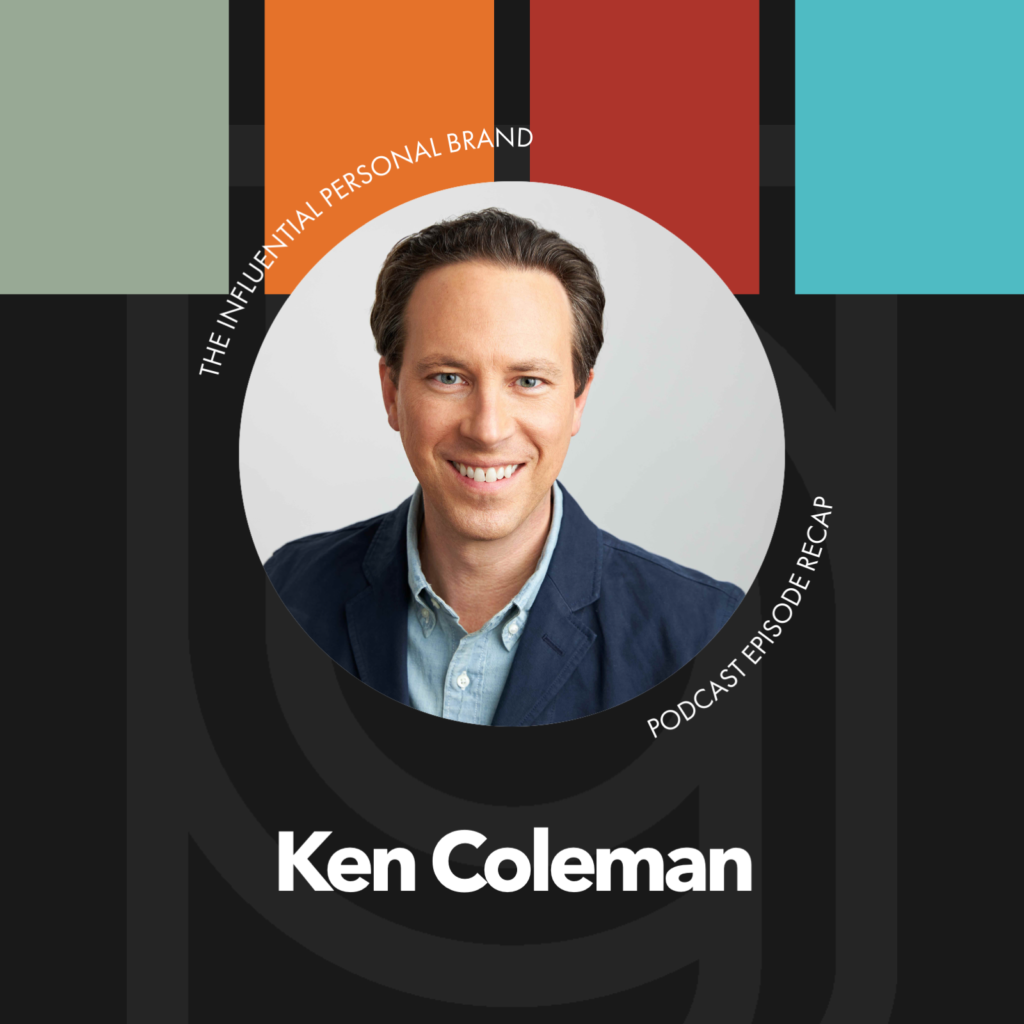
RV (00:02):
On this episode of the influential personal brand podcast, I had a chance to interview her interview, a master interviewer about he prepares his interviews, his guests, uh, obviously I’ve known Ken for a long time. It was actually my first ever recurring media appearance was being on Ken’s old show back when he was in Atlanta. So this was really great. I’ve always loved Ken as an interviewer. And, uh, I’m joined of course by our CEO, my business partner, my wife, aj Vaden, uh, she is here. So we’re breaking this down. I’m going to hop right in to probably the, I guess probably the, the biggest takeaway or at least the first like this, this was a big one was when Ken said, don’t listen to what they are saying, but how they are saying it. And listen for the emotions, listen for kind of like underlying emotions that they might be experiencing that they’re not sharing.
RV (01:01):
And, you know, I thought this was really good because I, I think a lot of personal brands are doing interviews these days for whatever, for, for their, for their book, for their podcast, for their, you know, live show, whatever. But it also reminded me of the days of sales, like in teaching sales, where you’re, when, when you do sales training, you’re listening, you’re listening to what they’re saying, but you’re kind of listening for what’s behind the scenes. And I never really equated those two things like, oh, this is a skill that, you know, I kind of learned in sales that really applies to being a great interviewer. So that
AJV (01:36):
Was, that was the question. Yeah, exactly. Exactly. That’s a good correlation there.
RV (01:42):
Yeah. It’s stuck that stuck with me. So what was your, what was your first takeaway? I
AJV (01:46):
Think the first one for me, I thought was really important and overarching is something that he talked about that he’s never intimidated when interviewing guests. And I think this is really important because we listened to a lot of podcasts interview. A lot of people, we are interviewed by a lot of people. Um, but I think there’s some real power in going first. Someone here was, you know, doing interviews of presidents and world leaders and various significance, uh, to give significantly low known individuals is that it’s like, you can’t be intimidated when you’re interviewing your guest because when they’re your guests, I get your show, right? Like you’re, you’re the boss, you’re, you’re the one leading the charge. And I loved, uh, he shared this example about Tom Brady, right. But he said, I’m never intimidated because of preparation and experience. Not because I know this person so well, or we’ve had all of these intimate conversations, it’s like, no, I prepared.
AJV (02:43):
And I’ve done this enough to know what questions make a difference and how to pull out really good answers. And he said, I love this little quote, relentless preparation leads to reflexive performance. I thought that was really good. Um, and then also just, you know, using this Tom example about, you know, him as a quarterback and how he can like lead this team on the field war, it’s like he didn’t go out there and do that for the first time. Right. That didn’t happen on try number one, but at some point by doing it enough times and preparing enough, it really becomes instinctive. Right. Um, and it’s, it’s not like you’re going out there going, okay, I’m going to study up on every single person to the, you know, millions degree, even though we’ve had other guests come on and say, that’s their unique advantage.
AJV (03:29):
Right. They do it. And that’s okay. But at some point you got to just be a good enough interviewer where you know, what questions to ask and you know, what to, how to pull out the question behind the question. And I thought your point was really good. It’s, it’s being intuitive enough that you can listen to the emotion versus just the words. But to me, it was more about, uh, you’ve got to know what you’re doing enough, that it really becomes instinctive so that you’re not worried about what’s the next question. I’m going to answer that you’re just present in the interview. Right? And I, this is how I’ll wrap this up. This was my, I thought this was the most interesting part in my first point, which was, he said always, always the best parts of the interviews are the ones that you do not plan. Right. It’s the best parts. And I just think that’s true in life. That’s true in life. Um, but it’s like the best part. So the parts that you don’t plan, but you can only do that if you’re being present and what’s really happening versus being nervous or worried about your list of questions or trying to make something fit, but don’t do that. Just be prepared enough and confident enough that you can be instinctively present in the conversation because that’s when the magic happens.
RV (04:44):
Yeah. I think it’s ironic how though, it’s almost like the more you plan, the more you’re able to do things spontaneous and unplanned just where that magic happens. So I want to dovetail on a dovetail off that because, um, this was going to be my third point. But since you were talking about prep, my second big takeaway was just how, like tactically, how he preps for an interview. I remember the interview we did with Jordan harbinger, which you can go back and listen to y’all, it’s still up on the podcast. Or if you, you go to our influential, personal brand, summit.com, you can listen to it there. But, um, Jordan reads like the entire book of every guest and his prep. That is his competitive advantage of one of the things he does. But he’s a, he’s a full-time interviewer, like that’s his gig. But what Ken shared here was that there were three, three things about how he preps number one asks, how can this guest provide value to my audience?
RV (05:43):
That is the core of it. Right. And putting yourself in the audience’s shoe shoes, um, was huge. And then he said, right, the last question first and right, the first question second, that was super tough. I love that. I thought it was super practical because it, if you write the last question first, it kind of tells you, oh, this is however we get there. This is sort of the arc that I’m wanting to go on, which I thought was powerful. And then the first question, second of which I think it’ll really stick with me, those two things. And he said, Hey, that first question, I always try to focus on an intimate detail from their life. That’s basically, I don’t think Ken said it quite like this, but at what resonated with me was he was going ask them a question about a detail of the, of their life that a normal interviewer never would have done enough prep work to know that question, to ask in the first place, because it creates that connectivity and it lets their guard down. Like it’s something they’re super passionate about. That’s maybe even unrelated to the interview. So a couple ninja tips there that are super practical on how to do expert interview prep. Yeah.
AJV (06:53):
Well, I’ll, I’ll dovetail off of your number two, because that was, um, because I, I wrote that down too, as a part of my point too, which is, you know, the most important thing is to really go, what’s the last question I want to ask and really like, you know, orchestrate the whole interview around knowing that, and everything’s leading up to that. Um, but I also wrote down a couple of other things that were very tactical and very technical. That would be very helpful. It’s just, first of all, you have to know as the host, right? The interviewer host of whatever it is that the interviewer is, what does your audience want to know? Question one, right? Question two. What is your audience need to know? And then three, what can my guest through their experience and expertise give to my audience based on those two things.
AJV (07:49):
I love that. And I think that is really a healthy juxtaposition of making the interview about both the guest and the audience. And I think one of the things that he had mentioned was that, you know, a great interviewer makes the interview all about the guest. And I would just add onto that is like a great interviewer, makes it all about the guest in relation to the audience. And I think it’s just this really healthy juxtaposition of like, yeah, it’s all about the guest. It’s not trying to highlight anything from the host experience or their background or their whatever. It’s like, no, this is really just about you, the guest and how you, the guests can provide value to the people who are listening. So what is, what do the people listening want to know? What do they need to know? And what can you, the guest give to them? And those two regards and your job as the interviewer is to make that connection.
RV (08:49):
That’s good. That’s good. Yeah. I like that. That, that’s a good thought. Like you have to know what your audience wants in order to be a great interviewer in order to be able to know what, what, how can I, what do I need to ask and how do I get the value out of them? You’ve got to be connected to your audience too. Um, I love that. So the, my third takeaway, which was really gonna be my second takeaway was about making your, how to do your interview in a way that it is entertaining also. And it kind of ties to what my first point was. But I asked Ken specifically about radio shows because radio shows are really difficult. Um, I did one for a while. Terrestrial radio Egypt probably remembers those day. I wasn’t very good at it,
AJV (09:32):
But we had the part of our past,
RV (09:38):
Well, it’s hard because it’s live and it’s, everything is compressed. There’s like, you’ve got, you’ve got six minutes to build rapport, get to know this person, get their backstory, get into the issue, solve their problem. And it’s like doing this in six minutes and be entertaining all at the same time. It’s really difficult. But when, when Ken basically said something to the extent of, of basically if you can get them to share their heart, it will be both powerful and entertaining. Um, so it’s like if they just talk from their head, it might be useful and educational, but if you can get them to share their heart, that will be entertaining, whether it’s sad or happy or, you know, like funny or, or profound or whatever. And so it’s kind of that same thing of what the first one was, was, was figure out what’s going in their heart and ask them about what’s going in their heart more than what’s going on in their head.
RV (10:37):
And I think, I think it gave me permission as, as a host. I’m sometimes also in the back of my mind, going, not only how can this be useful for people, but how can we make it sort of fun and engaging for them to listen to? And it, I feel like Ken relieved a little bit of that pressure to be like, Hey, like if you do this right, and you’re so present, like you were talking about ha like if you’re so present and you’re dialed in on like their real underlying emotion, that question behind the question, or like trying to access their heart, it’ll, it’ll be entertaining automatically as a by-product. So you can just like really focus on that. So that was a, that was a helpful thing for me.
AJV (11:16):
Yeah. Well, my third one isn’t necessarily something that I picked up, um, from the Ken Coleman, uh, interview, even though Howard, if you’re doing any sort of interviewing, you should definitely go listen to this. There’s some really great technical, uh, tips and, you know, just tactical strategies, like it’s really solid. However, my third point did it come from the interview, but more as a listener of a bunch of interviews and some things that I kind of jotted down throughout the course of this interview around like, no, this to me is just a listener sometimes. Like these are the things that are really awesome. And then also as a guest, right, as the person who’s being interviewed have some tidbits. And so I’ll just give a couple of quick are those, cause I think these are really relevant to the conversation. And the first one is like, I find that the best interviews of all times are the ones that are hyper-specific right.
AJV (12:07):
Like a great example, as I was listening to an interview, not too long ago. And one of the questions was, uh, what piece of leadership advice would you give to all the listeners it’s like, that is that it’s too broad. It’s too general. It’s too generic versus what is the one piece of advice that you would give to someone right now who is leading a team of people who do not see the vision. Right. And it’s the difference of something so broad in general that it doesn’t latch onto it doesn’t have that same, um, memorability factor. It’s like, I don’t even remember what the answer was. Um, but it was just at, it’s fine that there’s power in the specificity of the questions and the answers, um, that really allows you to hone in and go, oh yes. Tell me that. Right. Or also specific stories.
AJV (12:59):
Right. I remember some of the best interviews that I’ve ever heard are, do user stories. I still remember. And you would have thought, I’ve heard this conversation yesterday when it was like 10 years ago. And I think too, it’s the specificity of the stories as well as the points. Uh, but that has a lot to do with the person who’s asking the questions. But then also I would say as important as it is to be a great interviewer, people also need to learn how to be a great interviewee. Right. I think that is really important too, because I’ve listened to Sue minty interviews where I’m like, okay, that was not what it could have been to the interviewer, but also due to the interviewee, right? Giving generic, uh, stories and examples and not being prepared or not really answering the questions that the interviewer asked. Like, I hear that quite often. I’m like, well, I really wanted to hear the answer to that question. Not whatever you just shared.
RV (14:00):
That’s like a political move. It’s like the politicians, the politician answer
AJV (14:05):
The politician answer. Um, I think those things are really, uh, important. And here’s what I would say too, is just like a, an interview. We, uh, here’s something that I think is really important is not make it about the subject matter, but this is something that, um, Kim said, make it about the human, right. Like start with something that is humanizing. I remember one of my favorites, a podcast that I was a guest on here lately. And it just made me think about this, uh, was a good friend of ours, Carrie Jack, the happy hustle. Yeah.
AJV (14:39):
Um, but he was such a great interviewer, not just because he had prepared questions, but the enthusiasm he brought and the genuine excitement, like I felt genuinely like he was excited to be talking me. And he also does this like rapid fire list of questions to his guests, but they’re not always the same questions. And I think that’s really unique and it, you know, he was asking me about different, um, you know, uh, tricks or tips, uh, about all these different areas of your life. And I think it had nothing to do with personal branding, but it had everything to do with me, the guest, and it took the pressure off. It took the weight off of him and made go, okay, just for a minute, rapid fire, tell me the answers to these 10 things. And it’s really humanizing and fun and different. And I think really powerful to do in the very beginning because then it’s like, I get to know, even if it happens in 30 seconds, just enough about the personality that I’m like, oh yeah, I want to hear more of this. So those would be the things that really stick out to me. I’m going, those, those things are powerful of like, yeah, that person is fun and engaging in one of expected that, so it’s this humanizing factor that has nothing to do with the interview, but yet has everything to do with the conversation.
RV (15:56):
Yeah. That’s so cool. It’s being dialed into that person. Carrie does do a great job of that enthusiasm and making me feel so special and wanted. And that makes you perform better as the guests. I feel like when somebody is like, I’m excited that you’re here. Yeah. Um, well I love that stuff. Uh, again, very specific skill. That’s becoming more and more important and useful in the world in many, many ways, from one of the great interviewers of our time, Ken Coleman to go make sure you listen to the full episode, uh, and just keep coming back week after week, we’ll be here to support you on your journey. That’s all we got for this edition of the influential personal brand podcast.
Ep 192: How to Be an Amazing Show Host with Ken Coleman

RV (00:02):
Well, long before Ken Coleman was a Dave Ramsey personality. He and I were friends. He hosted a talk show in Atlanta and my appearing on his show as a regular guest was one of my first ever gigs like a regular recurring guest. And it’s amazing to see how Ken’s career has grown. He truly is like one of America’s number one, you know, like the number one career coach or one of the top career coaches, he is the bestselling author of a book called the proximity principle. And he hosts a nationally syndicated radio show now called the Ken Coleman show. And so he has been hosting. He also has, you know, he hosted the, the Rams, a YouTube channel. Now he has his own YouTube show. He hosts a lot of the events for entree leadership, the summit master series and all of these different events that they do. And he’s just an amazing guy and it’s been awesome to see how his career has evolved. His personal brand, at least, you know, as, as I perceive, it is really around helping people find purpose at work. And, and, you know, he’s got a new book coming out later this fall or around seven seven stages for how, how to really do that. And so anyways, I’m excited to bring Ken to the show. You haven’t talked to him in a while, buddy. It’s good to see you.
KC (01:30):
Good to see you. I feel like you couldn’t be any more of a beautiful serene setting behind you. There is. That is that real people need to know
RV (01:39):
It is that’s our, that is our back. That’s our backyard.
KC (01:42):
You have to finish the interview by running out and jumping in the pool so that we can see that that would be great.
RV (01:47):
So here’s the thing. So that’s the backyard, but I am in the basement. So it is a picture. It is, it is actually, it is a picture of the backyard. And then we just put it on a green screen. So it’s a little bit
Speaker 3 (02:03):
Magic of show business. I love it. Let me feel like I’m outside because I’m seeing it behind me, but I love it. So,
RV (02:11):
Buddy, can you just kind of catch us up on I mean, I thought it would be fun to talk to you specifically one, cause we’ve just been friends for years, but about hosting specifically. And I know you know, I was with Dave a couple of weeks ago. He told me that you had the interview with George W. Bush coming up. I know that you’ve done thousands of interviews on some of the biggest stages in the world. And and, and tell me about like the, tell me about the Ken Coleman show. Like what’s going on with what’s going on with that, where where’s it at now?
KC (02:45):
Yeah, so it’s very exciting. We’re now approaching 80 stations in national syndication. That’s just traditional talk radio. We’re also on Sirius XM live each day, Monday through Friday, I lead into the Dave Ramsey show. Of course we podcast that each day. So we have a daily podcast and because it is a, in my mind, it’ll always be, I’m an old school radio guy. So to me, it’s a radio show first, you know, now podcasts has become a part of our nomenclature, you know, in the United States for sure, and around the world. And so we take that live radio show and we, we put it out as a podcast because it is a color driven show. I do teach each day and give out great, you know, personal growth content and relevant data and stuff. That’s in the news that affects people that are trying to work on purpose and do what they were created to do, to make the contribution that they were created to make.
KC (03:42):
But we, you know, we do it on YouTube as well. So we have a different format on YouTube for that YouTube Bonnie’s cause it’s very different viewer and engagement habits there. So we’re all the platforms. But simply put, we are helping people discover what they were created to do, and then come up with a plan to make that purpose in your work or reality is based on this premise. We believe that everybody, every man and woman was created to fill a unique role in their work, that means that they are needed and it means they need to do it because somebody out there is relying on them, needs them to show up and be their best. There is a view of work. Roy, you know, this, there’s a view of work. That is, that is this cultural view that says that I work to live.
KC (04:31):
In other words, I work to get a paycheck. And then that paycheck allows me to take care of my basic needs. If there’s a little bit left over, we can make some memories with it. And so that’s pretty much the dominant view of work in the world. And I’m trying to put on a different set of glasses for people and say that you live to work. Now when some people hear that they’re like, Ooh, gross, right? That’s workoholism, it’s your identity. They’re all in place. Now what that means is, is that you were in fact created. I just believe that. So whether you’re a person of faith or not, I wouldn’t argue with anybody for two seconds over that, but I would say that you were created to work. If I substitute the word workout and put contribute, then it go, the yuckiness goes away and somebody goes, oh, that’s right.
KC (05:22):
Created to contribute. See, because the most confused person I’ve ever talked to on the phone or in person would say, can, I don’t know what I want to do. I just want to help people. Right? Most confused person will say that Y Aurora, you know, this, you’re a student of personal growth. You understand this. We all long to make a difference. We can just say it simply as that. So when we say created a contribute, created a work, I don’t think you can separate who you are personally from who you’re supposed to be professionally, meaning your worth is not in how you make your worth is not in your accolades, but, but you, but you get tremendous significance out of the contribution you make in work. So that’s the overriding philosophy of the Ken Coleman show. And so that’s what we’re doing.
KC (06:10):
We’ve got people that are calling in who don’t know what they want to do with their life. We’ve got people that are calling in that know what they want to do, but they don’t know how to get there. We’ve got people who call it, know what they want to do. They know how to get there and Roy, but they won’t do it because they’re scared to death. I get that too. Or they’re held back by financial or relationship issues. And then we have people who are on the path and they’re just trying to get promoted. They want to move up the ladder. They want that next wrong. And so I’m, I’m their coach. Well it starts out every phone call and the counselor first. Then I put on the coach hat and then I put on the cheerleader hat.
RV (06:43):
So I want to talk about that for a second because working with callers you know, when, when I think of hosting, there’s kind of two things I want to, hopefully we can get into one is working with callers. The other is preparing for like expert interviews, so to speak. But on the, on the working with callers which also could be, you know, in a live audience, you know, you’re engaging from stage with somebody, somebody out in the seats. It’s a, it’s a real skill set. And what’s amazing about terrestrial radio. Like I remember when I used to host a terrestrial radio show way back in the day, it’s such a short time, like you only have, how long is it? How long is an entire segment with with a guest? You don’t ask that a few minutes, right?
KC (07:26):
Yeah. Well, you you’re traditionally in an hour, you’re most radio clocks. You’re going to have at most an eight to 10 minute segment. So you might have a couple of eight minutes segments and you might have one 10 minute segment, but but yeah. And, and then you got at most, you know, six minutes with somebody you’re right. I mean, you have to, you have to,
RV (07:48):
That’s so hard. I mean, coaching calls usually are like an hour. I mean, and you’re having to do it in six minutes. So like, what are some of the, what are what’s some of your thought process? Because well, in, in, in, in, in here’s the, here’s the other thing that I’m, that I’m thinking about with you, right? Like, like I’m going, when you’re on a radio show, you’re trying to listen to the caller, you’re trying to get to the point, you’re trying to help them. And you’re also trying to make it quasi entertaining for the people who are listening in on the conversation. Like, how do you, what’s going on in your head when you’re working with a color like that? Yeah. That’s a really
KC (08:31):
Good question. And the reason that question is so good is because you can’t focus on those last two things. Oh, those last two things happen organically, which was well, so, so you got, so you got to coach them quickly, but you also got to be caused by entertaining. So it starts with though you got to listen to the caller. So you said, listen to the caller, give them the advice, coach them, but also make it quasi entertaining. Right? Right. That’s the way you worded it. So it starts with, you’ve got to really, really listen. And I’ve got the benefit of a call screener. So, you know, you get some of your clients who are thinking, Hey, maybe I want to do a call and podcast because what makes our show unique in the space that we’re in is that I’m one of the few, if, if only that are dominated by real live calls and by the way, not knocking anybody who does it this way.
KC (09:20):
Cause for some of your clients, it probably would be good to have somebody call them ahead of time, get some type of a worksheet and figure out what the issue is. Then they schedule a call to me. I think that’s cheating. If you really want to grow, you really want to grow as a thought leader. And as a content provider, put yourself on the high wire of taking calls live with no previous knowledge. So all I have when I’m taking a live call is I’ll see will from Kalamazoo, Michigan. And I’ll have one line that my associate producer will kind of say general direction of the call got two job opportunities deciding that’s all I know. And so what happens is, is I must listen. And now I’ve got a call screener who coaches that caller who’s nervous because it’s live right. And it’s a national show.
KC (10:08):
So coaches indigo get to your question pretty quickly. Be super specific. Ken will take over from there. So when they call in you, you have to listen. Not so much as to what they’re saying, but how they’re saying, like, so you, you can’t just listen to the question. Hey, Ken I got two job opportunities, blah, blah, blah, blah, blah, blah, blah. I need your help. You listen for their emotion. You listen for little clues and this happens over time. You don’t get this right away, but over time you realize that basically you’re getting the same five to seven questions every day. Just details. Details are different. And so what happens is you must listen. What is the real question? They may ask me this question, but they’re really asking me this question. Okay. So an example would be, instead of them, they’re not asking me they’re really not asking me which job they should take.
KC (11:09):
What they’re really asking me is, am I an idiot for wanting to take this other job because it’s less money. But it’s gonna eventually get where I want to go. The other one is on paper. It’s just a much better job. But this one over here, the heart’s telling me it’s right, is get the best payoff, little bit of risk. You see what I’m saying? So the question behind the question. So when I’m listening to the question, I’m trying to figure out what are they really asking? And many times I’ll just come right at him and go, well, what’s going on here? And so my job is to respond quickly with a scalpel. And the scalpel is the question. And from years and years and years of doing expert interviews with big name people and all this kind of stuff, and trying to develop conversation for an audience to get something from I’ve learned how to ask a question that goes about three levels deeper.
KC (12:00):
So the magic is listening for the real question, the emotion, the challenge, the desire, that’s what you’re listening for. And then you ask questions to get deeper to that and uncover it, not just for the caller to now answer your question full circle, but to uncover it for the listening audience and when the listening audience sees and hears that happening, it’s the theater of the mind because it’s radio or podcasts. So they’re picturing what I look like, the picture and what that person looks like. You can’t help it. And so that becomes entertaining when you uncover somebody and turn somebody’s light bulb on that’s entertaining as hell,
RV (12:37):
Man. So you’re just so basically it’s just, you’re focused on serving that one person and by virtue of doing that, it’ll be entertaining and engaging for the, for the listener. I like that. So that’s, that’s let me
KC (12:50):
Add one thing to that. You must serve the caller, but in serving the caller, you’re talking to the general audience too. You see what I’m saying? You’re taking, so I’m answering Will’s question, but as I’m teaching, I’m going and folks, Will’s not the only one, some of you out there right now are feeling the same way you drop in little moments like that. So it goes from Will’s application to their situation. They apply it, however they would, but they’re voyeuristically engaging, and that is entertaining to people.
RV (13:21):
Huh. And so you actually will step you’ll use language that kind of steps out of the conversation with you and will to kind of connect to the listener
KC (13:29):
And say yeah, sometimes I’ll apply it to everybody, but other times I’m just going to go deep with will and I’m going to go, will you feeling doubt? Why, what are you doubting? And by going really deep with him, everybody else in the audience, that’s listening to us, dealing with some doubt, they totally apply it to them.
RV (13:46):
So, so how do you go deep in six minutes? Like, so you
KC (13:51):
Have to listen to it. And I mean, I know you’re a busy guy, but you’d have to listen to it to really break that down the way I do it is again, I’m approaching 5,000 calls now in four years, live on the air. And so the repetitions, I know what I’m hearing. I, I mean, within 30 seconds, I usually know what’s really going on. And so your diamond did it dig, dig with questions and it seems
RV (14:16):
Like you’re really driving towards the emotion. Almost like it’s, it’s going, they’re asking whatever they’re asking. But the real issue is how are they feeling underneath the surface? And if you can, if you can get, if you can get them to open up about the emotions that they’re feeling, then we’re having a meaningful conversation. I must uncover their heart.
KC (14:40):
I’m all about uncovering their heart. I mean, I joke around with my wife about this, you know, but I don’t say this often publicly because it could sound cheesy, but I I’m in the business. I had a lady call today and she had two options. One was stay where she currently is where she’s crying once or twice a week. At the end of the day, she’s killing it. She’s making 180 grand. She’s really good at it. Loves the people there, but the job is stressing her out. She’s on the verge of burnout. And then she’s got this other opportunity where she’ll make 150 it’ll keep her on the same career path, keep her on the ladder. But it’s gonna be way less stressful. She may make 30 grand less and she’s called me. And instead of me telling her what I think, I just walk her through a series of questions and I get her to tell me, I said, I know what you should do cause I can hear it.
KC (15:29):
But I want you to tell us what are you leaning towards? Because I think your head’s telling you one thing and your heart’s telling you another is that right? And she goes, she starts giggling. And I’ve, I’ve had that call a hundred times where it’s a wrestling match between the head and the heart. So, but I got to get the color to tell me the voice of the head and then the voice of the heart. And then I go, before you called me, which way were you leaning? And she said, kid, I was 75%, one way, 75%. The other way I said, that’s impossible. She starts laughing again. I said, what’s your heart telling you to do? She goes, take the other job. And I go, what did you think I was going to say, she goes, you were going to tell me to follow my heart. She’s going to listen to my show long enough to know what I’m going to tell her, see the heart and the head should be in alignment, but it should always be the heart driving and the head joining.
RV (16:21):
And did I hear you say that you want them, there’s this wrestling match of the head and the heart and you want them to speak out both. What’s your head telling you and what’s your heart telling you? You try to get them to say them both out loud.
KC (16:37):
Absolutely do. And that’s for the audience. They think it’s for them, but it’s really audience because I want the audience to catch up and, and, and not just to follow along, but to see the exercise itself because that’s what we need to do. You and I have both been in a situations where we’ve been torn and we’ll speak to somebody that we know and we trust. And they’ll just however they do it. Maybe not as intentional as that, but they get us to that point where we go, I got to trust my heart here. My heart’s telling me this. I’m overthinking it up here. This is what the heart says is right. I’m going to go do it. And so then my head gets in alignment, but the problem is our brains are these logic machines. And that’s a wonderful thing from our creator, the greatest logic processor in the world, the greatest supercomputer of all times the brain.
KC (17:22):
But the problem is, is that I’ve been relearning this you and I’ve grown up in a world that kind of says our thoughts drive our feelings. I’m now totally reversing that and rethinking that and relearning that it’s our emotions that drive our thoughts. So when I have the emotion of fear, then my thoughts are going to all be about fear. And that drives my actions. So I’ve got to get my heart settled. And when I get my emotions in heart settled, then I can think better. And that’s, that’s that alignment. So when we’re talking about doing something that you love, these people call, they know ahead of time, they just want me to give them permission, right? Yep. Anyway, I just did with lots of questions. You’d be surprised how quick you can get to the hardest something with about the first of all, a really good question.
KC (18:12):
And then when somebody starts talking around it, see it’s my show and I’m in charge. So we’re all polite, real life. I’ll just stop and go stop, stop, stop, stop, stop. You didn’t answer my question. Let me ask it again. I’ve had people say kid. I say, what, what would you do? If, if, if money wasn’t an object and you couldn’t fail and you didn’t have to commit to the rest of your life, what would you do? I don’t know. I don’t remember the first time I did this almost threw up on my desk. It was in a moment. Okay. It was very Tony Robbins. I’ve watched Tony. I’ve studied Tony. And I remember the first time somebody said that to me and I let them right to the edge and they went, I don’t know. And in that moment I was like, okay, I can redirect, give them some advice and put them on hold and move on.
KC (18:54):
And in the moment were, I just went. That’s not true. You know, because while I was setting you up, but I’m going to do it again so that you can hear yourself one more time. I want you to see the thoughts. I asked you. If you could do something tomorrow where you knew you couldn’t fail, you absolutely loved it. And you have to commit to the rest of your life. What would you do? And I know that while I said that the second time, the same thought that you came up with the first time rolled through your head, you couldn’t help it. It popped up. And you’re not telling me because you’re scared or you’re doubtful now. No more excuses say it. And dude, I was totally terrified. I was like, if, if this person locks up on me, I don’t have a place to return to.
KC (19:36):
And would you believe it? That they said it blurted it out? Just like that. Now I’ve done that many, many times because here’s what I’ve learned. I’ve learned that when I create that vision for people, those word pictures, right? I say, what would you do if you knew you couldn’t fail? What would you do if you knew you’d love it? What would you do if you didn’t, you have to commit to it. It’s just as fun work adventure, like no risk. It’s impossible for a human. Not to have some thoughts. All I’m doing is taking them on a little journey. And so you got to trust that the thoughts are there and then you gotta make them say it.
RV (20:11):
Yeah. I remember when I was getting radio Koshin they used to call that the slap where you kind of confront, you kind of can respond to the call or directly and kind of go, no, you’re not being honest. You’re like, there’s a, there’s something very powerful about that kind of moment of conflict where you, you force them to reconcile the truth that they’re like you said, they’re so afraid. They can’t even say it. That’s powerful. So let’s shift the conversation. That’s awesome, man. I love this. So I want to shift the conversation to the expert. I mean, you got to interview George Bush. Like it’s gotta be a little bit intimidating. I mean, I, I know, I mean, at this point, I know you’ve interviewed so many people, the different podcasts that you’ve hosted, the different radio shows and stuff. How do you prepare for an interview with,
KC (21:09):
You know? Yeah. All right. So I want to address the first thing. And, and when I, when I give you, I’m going to give you all my secret sauce, all right? I’m not, I can charge a lot of money for this, but I’m not intimidated. And there’s two reasons why I’m not intimidated. One is preparation and two is experience. Preparation is everything. And I’m about ready to give you the secret sauce of how I prepare an interview like this, to do it in front of thousands of people. Plus, you know, a former head of state, but I’ve said this many times, relentless preparation leads to reflexive performance. I’m going to say it again. Don’t you? Any of you steal that because I see it on social. I’m going to bust you. Relentless preparation leads to reflexive performance. The reason the great quarterbacks like Tom Brady or Bret farmer, John Elway Joe Montana, you could plug in the names, Dan Marino, we Marvel at how they can lead a team from the one yard line down to a touchdown with less than a minute, less than two minutes to go.
KC (22:08):
No time outs. We Marvel at that. Except what we fail to think about is they’ve practiced that two minute drill hundreds and hundreds and hundreds of times. Number one, number two, they’ve watched film. They know what the other team’s two-minute defense looks like. They know their place. They know wherever it’s supposed to go. So when they’re out there, they’re moving on instinct. Brett Farve is not this chess player out there. All of a sudden where he’s out thinking everybody know he’s instinctively reacting. He knows where his primary, secondary, third check downs. He knows he’s done it. And he knows how to get out of bounds. You know the thing. So these guys they’re relentlessly prepared so that they can reflexively perform. There’s no brain going on out there. It’s just all instinct. All right. So that’s the first thing. Secondly the experience that I’ve had, I’ve done so many interviews that at this point, while I’m honored to sit across from George W. Bush or Condoleezza rice, or Mark Burnett, or you name it. Okay. Jim Collins, Malcolm Gladwell, whatever those
RV (23:12):
It’s true. You got to interview Rory Vaden one time for like, that’s it, man,
KC (23:17):
That’s it? So the issue is, is that they’re experts in their bigger deal than me, for sure. But they’re still a human being. And in that moment, for whatever reason, they’ve submitted to a conversation with me. So I’m in charge. So I might as well act like I’m in charge because I’m in charge. Now how much charge I take is up to me. So I’ve learned that they’re just a human and they’re sitting there and most of them have never been interviewed really, really well. So if you really prepare, use the process, I’m about ready to unveil. Then you’re going to find that they’re going, this is enjoyable. This dude, this gal, they came prepared. They’re teasing me up. This is enjoyable. All right. So here’s the process. First thing I do, there are questions that I ask before I write the interview and writing the interview is the most important part of the interview.
KC (24:07):
One of the mistakes that a lot of people make is they get up there and have a general idea where they want to go, but they haven’t really thought through the process. They haven’t thought through the journey. They’re taking the audience on, because remember this isn’t about you as the interviewer, okay? Some of your clients are big brands and they become known as interviewers, big freaking deal. Okay? It’s not about you. It’s about the audience. And if you want to get praised for being an interviewer, well, you’re only going to do that when you generate and produce a great conversation. So most people get into this stuff and they’re kind of prepared and then they get nervous or they get caught up in the moment. Oh gosh, I’m talking to Georgia, a Bush and they get tongue tied. They don’t know where to go.
KC (24:48):
Or he takes them one direction. And they’re too busy looking at their next question, cause they’re not prepared. And they miss a nugget. That should be a rabbit trail that you go down. Hmm. The best part of of interviews are the parts you don’t plan. But the only way you can discover that, realize it in the moment Roy is because you’re so prepared that you can listen to the full answer. And when George Abbey gets George, w Bush gets done, you go, oh, here’s my next question. It’s right there. I’m already prepared. I glance at it. And I go, so here’s the process. First thing you do before you write the interview, you ask yourself, what does the audience want to know? That’s the first question. What does the audience want you to think about your audience? If you have a podcast or you’re at a leadership event, like I was at a leadership event, there’s 3000 leaders out there.
KC (25:38):
So what does the audience want to know? They have come to this event and what they want to know is something that will help them lead better. Right? You can just general as you want to make it. What do they want to know? Second question is, what do they need to know? Now? This is where we get more specific. So what does the audience want to know? Well, they want to know how to be a better leader, right? How to grow their company, whatever. What do they need to know? Well, now this is where you, as the interview, get a chance to shape the conversation to go. They want to be a better leader. They want to grow their company. So what do they need to be able to do that? Right? So if somebody comes in and they want to lose weight and they meet with a nutritionist and Tricia goes, okay, they want to lose weight or they want to get a, they want to lower their blood, blood cholesterol, whatever.
KC (26:24):
Well, okay. Now what do they need to know to be able to achieve the one? Okay. So that’s the, so you start writing these things down. Well, they need to know about leading in crisis. They need to know how to lead in collaboration. They need to know how to lead in conflict. Okay. Those are three separate buckets right there that I just went, oh, that’s what they need to know. Well, I’ve got a president of United States who can speak to those things. And that leads to your third question. What can my guest, through their experience and expertise? How can they meet those two needs? What they want to know and what they need to know. So what does the audience want to know? What do they need to know? And then, well, how can my guest meet those two needs? That’s where you start. And so what that starts to do is give you themes, conflict, collaboration, crisis, whatever.
KC (27:13):
So you start to get these themes and go, okay. Again, some themes. I’m just writing this stuff down on the paper. This is what I do core Rory, I’m sorry. I don’t know why I keep calling you. Corey. I just got with a marketing guy named Corey in our billing. It’s a Freudian slip. So, so I’m writing all this down, all these topics. So once I get my bank of topics, then I say, what’s the last question I want to ask. So I write the very last question first, right? First, first question I write is the last question. Why do you know why I do that? What do you think it is? What’s the reason. Hm.
RV (27:50):
I don’t know. Maybe that’s just what they’re going to remember.
KC (27:52):
Well, that’s where we’re ending. So, you know, it’s how you close a talk. So I want to know, where am I taking the audience? So this is what most interviews never do. That’s why you weren’t able to answer. I put you on the spot because I don’t know anybody that thinks this way, but it works for me because I want to know, where am I taking the audience at the end of an hour conversation with George W. Bush, where am I taking them? Where are we going to finish? So once I know where I’m going to finish, that’s the story arc. So now I go, where do I want to start? And then what’s the rest of the journey looked like that takes me here. Or else you’re just going to have this Papa shot style interview where it’s not connected. I like for the interview to start here and make sense organically as it gets to the end point where I’m leaving the audience.
KC (28:45):
This is the final word they’re going to hear from this guest. And I think that’s the way you write a good interview. So I write the last question first. Then I write the first question. Second, I’ll give you some more tips on this. I always try to ask a icebreaker, very personal question. That could be fun or a very significant to them personally, early on. The reason I like to do that is because if you really do your homework and you dig deep and you ask them a question from their past, that’s very significant to them. Number one, you unlock their heart in the first question. They’re like, oh yeah. So the first question I asked Condoleezza rice, okay. This is the most decorated woman, arguably in us history. Okay. besides vice president Harris, who’s now the first female president. So, you know, Condoleeza, rice, big time, big time.
KC (29:37):
And most people don’t realize that she was competitive ice skater when she was in her early teens. So the first question I asked her was about ice skating. Most people in the audience were like, what where’s he going with this? She lit up big smile on her face, started talking about all the hours, why she loved it. And so I introduced a different Condi rice to the audience, number one, but more importantly, I established rapport with her. Cause she’s looking at me going, all right, man, you did your homework. You showed up, you, you know something about me. You’re not asking me the general question. And so she w she leaned in, she warmed up to me. We had rapport and Mrs. Thing, I think thing I did with George W. Bush, I started the interview, will my publicist sitting here. I started off by going, Hey, before we start talking leadership tell us what you’re up to now.
KC (30:26):
I knew he was going to talk about painting. Cause he just released his third pamphlet. I knew it was going to ask him about painting his wife, Laura. Cause he’s got a hilarious story on it. And so our first five minutes was hilarious. I’m talking about learning how to paint and paint and his wife and she hated it and making sure he threw it away. And the audience was roaring with laughter and he and I are having a blast. And I haven’t even asked him a leadership question yet, but I had established rapport. So that’s, you know, that’s my process. That’s a little bit of how I get into it so that people feel like they’re eavesdropping in on a real conversation. Then it’s no longer, I can’t believe Ken Coleman’s up there talking to George W. Bush. People are largely ignoring me because I’m not hemming and hawing over my question. I’m this guy who’s having the time of his life having a conversation and you’re getting a watch me do it. You’re not even focused on me. You’re focused on the present, which is what should be a great interviewer makes the interview about the guests because they’re so smooth, so prepared and leading somebody, not just the audience, but the guests you’re leading the audience and the guests at the same time.
RV (31:40):
Love it. That is, those are that’s so great. Can like that is I really love that idea of asking, writing the last question first and just realizing no matter how this goes, that we need to end up here. And and that is so true when people share an intimate detail about their life. It, it opens, it’s just, it’s disarming, it knocks down walls and it creates the rapport. So powerful. Well, man, I, I, I knew that you would have secrets on how to do these interviews and you’ve been so generous and this is so helpful. Where do people, where do you want people to go to learn about you? And I mean, obviously you’ve got the Ken Coleman show, we’ll put links to the proximity principle book on on our blog post about this. Where else would you, would you direct people?
KC (32:30):
I’d love your audience to connect with me on Instagram at Ken Coleman. If I can ever add any value to your audience, I love what you’re doing. I love connecting with other influencers and best practices and encouraging each other. Ken coleman.com is the website where you can learn anything and get connected with anything I’m doing. And of course the Ken Coleman show, you know, if you want to learn how to dig into people’s hearts in six or seven minutes, give it a listen. It’s a daily podcast. And once you get tired of it, you don’t have to listen to it anymore, but you can steal some trade secrets and, and listen, it’s just cuts at the plate, man. You know, it’s just, it’s just being willing to suck and put yourself out there and learn how to do that. And it, over time you, you get really good at it. If you just keep showing up.
RV (33:21):
Yeah. Well for sure, I mean, you you’ve been, you’ve been doing this for a long time. It’s great to see you growing what’s what’s your favorite interview question someone has ever asked you?
KC (33:38):
Favorite interview question someone has asked me man, that’s a tough one a lot. And so I’m trying to think.
RV (33:48):
Or do you have a favorite question that you’ve asked somebody?
KC (33:57):
I, I think the favorite interview question I ever asked of somebody was with coach cave, legendary hall of fame coach for duke. Who’s one of my favorite coaches. So it was it was an unbelievable honor and I prepared that interview and I asked him my favorite question I’ve ever asked, cause it was so personal, but also I thought what he did with it was really fun. And I felt like he was going to crush it. I asked him how he, how he led different point guards. You know? So, you know, in basketball, the point guard, at least back in the day, you know, the Tommy Amaker is the, the Johnny doc is the Bobby Hurley’s and coach K was done for these great point guards. And in the question I said, you know, Tommy, Amaker very different than Bobby Hurley both led your team.
KC (34:49):
And one graduates and the other comes in, how did you lead them differently? And you get this big, old smile on his face. Like that was a freaking awesome question. And he was like, I love that. And he said, he said that that’s that’s really, really good. And, and so he told me, and so he, he began to go into how he led Tommy was much more intentional and much more structured because Tommy wanted to know which play to run in the timeout, draw it out. And Tommy was going to run it perfectly. He said, I’d draw plays, but I’d make suggestions to Bobby Hurley. Cause Bobby Hurley was an instinctive leader. He goes, and I knew that I draw play up, but if Bobby didn’t see it, he just run his own plane, make it up. And he goes, I was okay with that.
KC (35:31):
And I had to learn more control, more intentionality with one leader, less allow him freedom. That’s a fantastic, fantastic answer. So I’ll tell you that was probably my favorite question. I think people have asked me before. What’s the, I think probably most favorite question is what’s the challenge. What’s the greatest challenge of, of being a thought leader and somebody who’s been given a really large platform like Dave Ramsey placed me here. This is the real question that God and Dave Ramsey they’re the hands along with others that poured into me, but they’re the hands that have put me in this position. And I got asked that question recently. How do you handle that? And what’s the greatest challenge, cause this is fun. What you and I get to do is fun to pour into people and see their light bulbs go on every day. It’s really, that’s a juice. That’s hard to get tired of it. So that was a good question. That was a really interesting, because most people don’t associate challenge, you know, personal challenges with what we get to do. And I thought that was a really thoughtful question.
RV (36:39):
Yeah. Well I love that. And that, that, that question that you asked coach K is such a great example where, you know, it was not only led to a great insight, but you tapped into an intimate place for him in his life that he was like,
KC (36:57):
That’s the key, that’s the key. You know, when you’re interviewing somebody like Malcolm Gladwell, like don’t ask him about 10,000 hours or something he’s been interviewed on 50,000 times, you know asking him, you know, what he admires most about distance runners. Does he see himself in them? Like that’s gonna like mocking level. The guy loves runners. He runs for, for his health, but he’s also a geek out super fan of these long distance runners. Ask him about something that he’s juiced about and then it’s game on, man.
RV (37:38):
I love it. I love it. Well, Ken Coleman, one of the greatest hosts of our time sharing secrets right here, stop and in full transparent disclosure. Buddy, I’m so grateful for you. You’ve been such an encouragement to me, keep going. And we wish you all the best
KC (37:57):
I will, man. Appreciate you. You’ve always been so kind and I got to get over there to that pool. You and I need to be in big, giant rubber ducky floats.
RV (38:05):
Do it, man. See you brother.
Ep 191: How To Accelerate Your Personal Brand Through Strong Visual Identity with Stephen Scoggins | Recap Episode
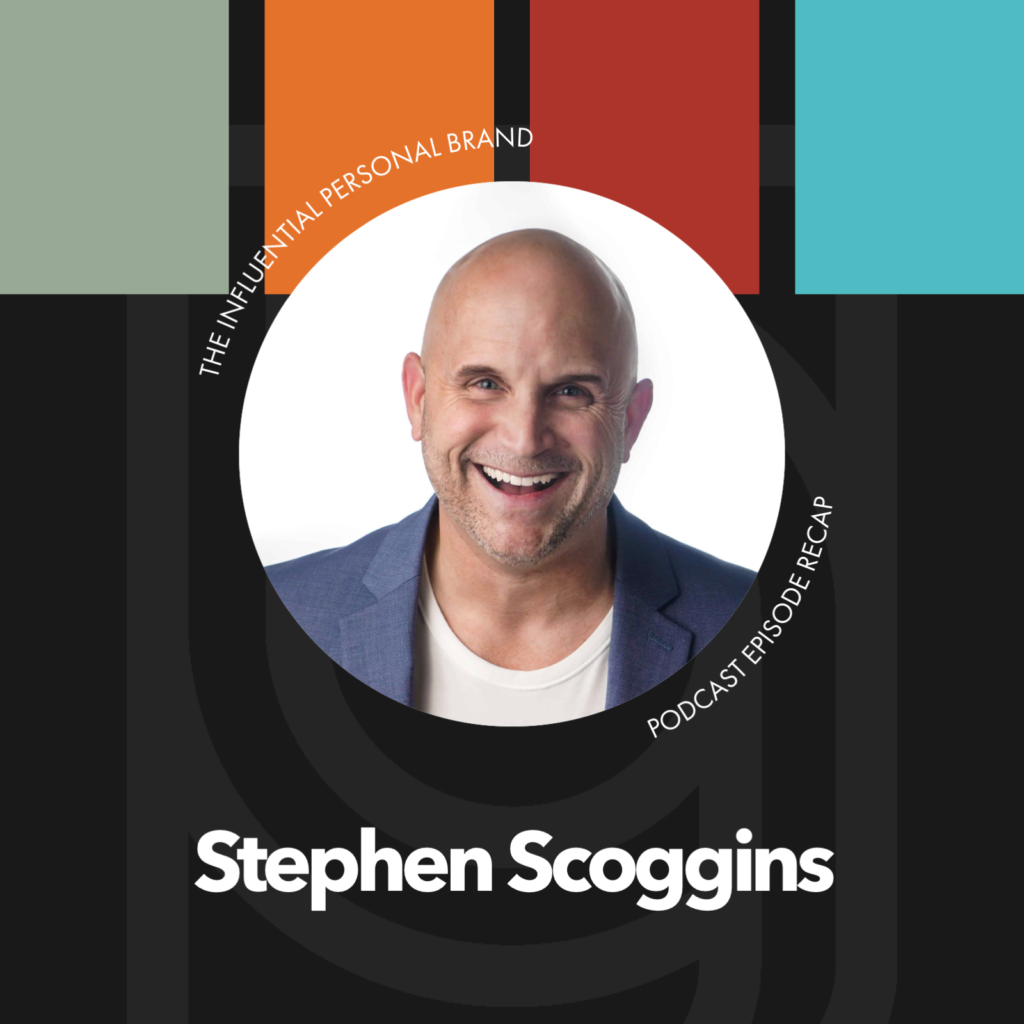
RV (00:02):
Welcome back to the influential personal brand podcast. This is the recap edition of the interview that you probably just heard recently with Stephen Scoggins, who is very unique. He is one of our clients. He then became a certified strategist, and now he is one of our implementation partners. And you got to hear his story and his own personal brand journey. And then we got into talking about visual identity and also doing an overview of, of what he provides. So AJ is here with me. Hi, AJ we’re going to do just our three biggest takeaways. And from, from the episode, obviously the episode was a little bit of an introduction, especially towards the end of what brand amplifiers is. But before we got to that point, when Stephen was telling the story about why he built a personal brand, this despite already having many successful entrepreneurial ventures, and he was telling the story about how he actually didn’t want to build a personal brand, or he wasn’t sure. And his friend asked him this question or, or made this observation. He said, what you’re really struggling with Stephen is not whether or not you should build a personal brand. What you’re really struggling with is an internal battle, an internal battle of answering the question. Am I worthy enough to have a voice? And that, I mean, I got goosies w when, when he said that, and I think, I think everyone struggles with that. I still feel that I still feel that from time to time. And so that was my first takeaway.
AJV (01:50):
No, I think that’s a really good point. And just knowing Stephen, and also probably so similar for all of you, it’s you question like, well, there’s already someone else who talks about this in my space, or there’s already a company that does this well, you know, it’s, Bernay brown talks about shame. So I can’t talk about that. And it’s like, millions of people talk about it, but it really does come down to that inner level of clarity of am. I meant to do this. Like, it’s like, why am I doing this? And I think that’s really important. And just knowing Stephen it’s like building his personal brand has so nothing to do with money. I he’s like all his financial endeavors and successes have paid him well enough. And this really is an impact thing for him. And it really is. I was like, no, I want, I want to be a beacon for people who’ve been where I’ve been and know that there’s another way there.
AJV (02:45):
And so for all of us, it’s going, when we have those feelings of, am I worthy enough? Am I good enough? Or is someone else better than me? And it’s, you know, this comparison battle that we’re all in going well, am I doing what I feel like I was called to do hi, is this like the calling on my life to talk about this, to speak about this, to share about this. And I think not always, but in many ways, it’s, it really does help subside some of those feelings of inadequacy or comparison of just knowing it’s like, I may not be the best, but this is what I was called to do at this time for these people at this place. So I love that. I think that was really significant. I think one of the things for me, this kind of like 0.1 and 0.2 is a lot of what he talked about was like, what is the most frustrating part about building a personal brand?
AJV (03:33):
All right. It’s just like, we all start with this. Like, I want to talk about this and I want to share this and I have this message and this calling, and I want to help people. And it gets clouded by the monstrosity of complexities that potentially can be there. Okay. We’ll have to figure out what I’m doing and who I’m doing it for and where I’m going to do it. And then what is my offer? And then how do I actually collect the money? And then what different platforms do I need? And it’s like, okay, well now I need a designer. Now I need a website developer. And, oh my gosh, now I need this technology. And it’s like, our mission gets clouded by the complexities that we add to it. And one of the things that I love about this is he said, do what you can with what you have.
AJV (04:16):
You don’t have to do all the things right now, but do what you can with what you have. And he talked a lot about how he’s a, he’s a bootstrapping counting guy and it’s like, it’s like, you do what you can with what you have. It’s like, we still, one of our primary funnels was shot within a 24 hour time span, changing outfits in our backyard using our iPhone and a ring light. That’s it? Like we launched our whole company brand builders group without a website. In fact, we didn’t have any website for the first six months. And it was like, so it was like, do what you can with what you have knowing it doesn’t have to be perfect. It doesn’t have to be pristine, but do what you can with what you have. And, you know, as it leads into why I think this is so relevant and why I love him so much is a huge part of him becoming a client and then a certified strategist.
AJV (05:11):
And now one of our primary implementation partners, like our preferred implementation partner is he knows how to bootleg Leggett, but do it in a high class way where it’s like, it does not look bootlegged. And that’s because he’s been through the process of doing it on his own and then hiring people and finding what works and creating the packages that, you know, you’ll hear about in the interview. And we’ll talk a little bit about here. It really is built to help the person who’s going, oh, why is this so frustrating? Why is this so difficult? All I want to do is get my message out there. Really figuring out a way to have these consolidated vendors and a consolidated process to get things done is a huge part of making this not only less frustrating, but also making it more successful in the process. So I just, I love this whole concept. Do, do what you can with what you have.
RV (06:07):
Yeah. And just dovetailing off that. I think my, so my second point was, you know, he talked, we were talking about how people have to be able to sample you. They have to be able to see what you do. And that’s why video is just, is so important. And you know, there’s a lot of people that shoot video, but being able to go and knock out a video for your sales page and video funnel for your lead magnet and your demo video in your full link keynote video all at once is that you can really be proud of it. And, and like you said, it’s just, it’s hard to find quality vendors. It’s hard to find quality employees. Like it’s hard to hire good, to, good to help. It’s really hard. And so
AJV (06:55):
I was so baffled, like why it’s so hard to give people money, how are you making it so hard for me to give you my money? But to your point, yes, it’s challenging.
RV (07:06):
And that’s why we put this together. So, you know, we mentioned that link brand builders, group.com forward slash brand amplifiers. You know, and there’s, they customize the package for each person, depending on what you need, but just go there and check it out. And if it feels like a thing that might be good for you request a call, but yeah. Do what you can with what you have and then level up level up when you can so that people can sample you and they can, they can get a level of production value that matches your level of expertise. That’s obviously why we put this together. I think people should, should go check that out.
AJV (07:39):
Absolutely. okay. I’ll get my, my third point, my third point, my third point was I thought this was interesting and he kind of talked about it in a side note, but just being in the industry and in the business, it’s such a problem as, you know, what comes first, the chicken or the egg. And when he talks about that getting a speaker reel for his demo video to get booked as a speaker, I immediately thought, oh my gosh, this is something that everyone is really challenged with because it’s like in order to get booked to speak, you really need a good demo. Cause people need to see you speak. But if you’ve never really gotten booked to speak before, how do you get a demo? Then
RV (08:21):
I
AJV (08:21):
Need to get a demo video. But in order to get a quality demo video, I need to be on stage speaking. And in order to get booked to be on stage, I need this demo video. And it’s like, wait, what, what and I, and it’s, it’s a challenge for so many of our clients. And just top of mind for me, cause at brain builders group, we recently had one of our two day events called full keynote calendar. When we talk about what are the four assets you need to get booked as a speaker. And one of them is a quality demo video. And it’s not just a clip of seeing you speak like that’s old school. That’s like, no people actually need to be your demo. Video is not just a clip of you speaking. It is a selling of who you are, what you bring to the audience, what problem you solve, how you’re going to enthrall the audience, why you’re different than other speakers and it seeing you speak.
AJV (09:08):
So there is production value. That’s really important in demo videos. And that means you gotta have not just a great stage. You need to have multiple great stages and voiceover and B roll and you, and that takes a great videographer and then a great video editor. And I can’t tell you how many speaking engagements that Rory you and I both have been at separately where we spent thousands of dollars bringing in a high professional film crew. And then I get the video back and it’s a camera in the middle of the room, looking at me, waist up the whole time, no stage, no audience, no movement. And you cannot use any of the footage at all. If you were in this boat, you know how hard it is sometimes to get a big audience on a high production space stage with great audio. Like those don’t happen all the time.
AJV (10:02):
And most everyday people’s lives who are trying to build a speaking business. And so I know not to like harp on this, but I, one of the things that I love so much about what Stephen is doing is like, he’s like, I’m going to fix that problem for myself and for everyone else. I love that he built a huge warehouse and a huge stage for this huge led like 50 foot screen and Milton audience. It’s beautiful. And he goes like F that I’m not waiting around on this stuff anymore. It’s like, I’m going to build my own high, get my own film crew, my own cameras. And it’s like a five camera set up on this huge stage with this huge led screen, with a built in audience.
RV (10:47):
You can’t get that anywhere. You cannot cannot like you can’t get it.
AJV (10:52):
You can’t even get it from a client, much less on demand. And I think, you know, one of the things that I loved about that is like, if you can’t find it, then it’s like, how do you go and build it? Right? And then how do you find the resources to get what you need when you need it? And to me, that just so resonated because we work with so many people who are speakers are speaking as a part of their career, a part of their business, but you need a fit, you need video. And it’s hard to find really good video. So I just, I just loved the whole concept of, well, I couldn’t find it. So I built it.
RV (11:23):
Yeah. That’s that’s that’s bootstrapping again. That URL. One more time is brand builders, group.com forward slash brand amplifiers. My last little takeaway, you know, I highlighted it in the interview because when he said it, I thought it was so powerful. He said, I realized that in my striving to be like other, the more I strive to be like other people, the more I diluted myself and the more disconnected I became with my audience. And so it’s like find your uniqueness and center in that. Don’t worry about what other people are doing be you, and then capture that on video, like so that people can see you. Like you don’t have to pretend you don’t have to be something you’re not like just center in and be you and the right people will find you and fall in love with you. And so anyways, thank you for listening. We’re always so grateful for you. Hopefully you found that inspiring instructional and maybe you even get a great vendor partner out of it. We certainly recommend them keep coming back here every week on the influential personal brand. We’ll see you next time. Bye. Bye
Ep 190: How To Accelerate Your Personal Brand Through Strong Visual Identity with Stephen Scoggins

RV (00:00:10):
Hey, brand builder, Rory Vaden here. Thank you. Thank you so much for taking the time to check out this interview as always, it’s our honor to provide it to you for free and wanted to let you know there’s no big sales pitch or anything coming at the end. However, if you are someone who is looking to build and monetize your personal brand, we would lovph to talk to you and get to know you a little bit and hear about some of your dreams and visions and share with you a little bit about what we’re up to see if we might be a fit. So if you’re interested in a free strategy call with someone from our team, we would love to hear from you. You can do that at brand builders, group.com/pod call brand builders, group.com/pod call. We hope to talk to you soon.
RV (00:00:54):
We love Stephen Scoggins. We love him for a number of reasons. Mostly just out of a pure respect and genuine admiration for his heart and his desire to serve, but we also very much admire what he has done. He is a serial entrepreneur, not just a personal brand, but he has several other businesses in homes and siting and all sorts of real estate and different things that he does. And he’s a, he’s a true entrepreneur and there’s not really another term other than serial entrepreneur that describes him, but w our lives intersected with his a handful of years ago. And since that time he’s become a best-selling author, he’s the podcast host his, his thought leadership has been featured in major media outlets. I mean, several of the big ones, Forbes, entrepreneur thrive, global NBC ABC. Several others he’s been on our pal, John Lee Dumas podcast to entrepreneur on fire.
RV (00:01:56):
And so basically Stephen has helped fortune 500 leaders, professional athletes, entertainers, pretty much anyone with a dream with with a plan and a set of principles to help them exceed their wildest expectations for all that life has to offer. And so he offers education and inspiration and encouragement for anyone looking to make their dreams a reality. And we also have a very unique relationship with Stephen from a professional standpoint that he was a client, is a client is still an active client who became one of our strategists at brand builders group. So he is also certified in teaching stuff at brand builders. And then he is a
New Speaker (00:02:40):
lso one of our brand implementation partners where he does execution for some of our clients, which we don’t do internally. And so we refer that out to him. And so I think he’s like one of the only people ever that we’ve had that relationship. And anyways, that’s, that’s a lot, but there’s, there’s a lot to you brother. So welcome to the show.
SS (00:02:59):
It’s my pleasure. No, I was gonna, I was fixing to say, did I get kicked out of the group? You’re gonna get fired as a client. No, man, I love you guys. You guys, has it been a, a major influence and a major impact or in my own personal brand and we’re changing lives because of it. So I’m grateful to you guys big time.
RV (00:03:13):
Yeah. Well thank you for that. And our team loves you and, and, you know, AIG loves you and AJ doesn’t love everybody, but once she finds someone that is like truly authentic and all about integrity and doing the right thing, like she latches on and, and, you know, I want to talk about how you’ve built your personal brand as an entrepreneur, like in addition to being an entrepreneur. Because I think, you know, a lot of our clients kind of set on the path to go, I’m going to be a coach, a consultant, you know, whatever thought leader expert, and they do that, or they’re in professional services and they’re like, okay, I’m going to X, I’m going to accelerate myself as an accountant, or they’re an executive, you know, kind of, you know, on the path of trying to get promoted or you maybe just create more visibility for their company, but you’re an entrepreneur who has quote unquote real businesses like businesses, separate of not personal and team members and employees. And, and actually let’s start with that. How many employees do you have and give us, like, give us a bit of a sense of the scope of your non-personal brand businesses.
SS (00:04:24):
Yeah, I think the easiest way to do that is to basically say that I’ve been at this game for almost 22 years. I started my first business CHG, where it’s known as custom home exterior siding business, not super sexy, unless you need siding on your house, then it’s super sexy.
RV (00:04:39):
Awesome. I mean, you guys like your house that you just, you did, it was just awesome. Like you guys do some awesome stuff.
SS (00:04:45):
Thanks, man. No, you know, it’s you know, I started that company sleeping car roughly 22 years ago. I grew up but grew up in a very difficult situation growing up was very fortunate to have a mentor that believed in me when I didn’t believe in myself, what kind of got me going began to kind of change my mindset a little bit, and then quickly grew that business wise, it quickly 20 years, it took me 20 plus years to get that company to be self-sufficient where, you know, I could spend time with you today and kind of share and whatnot and focus on some other business endeavors. But that company is now in three states, I employ about 400 people. Company-Wide on that, on that side of things. And we do with that one business do really high eight figures in revenue in that one business, which then led me to real estate, which then led me to other things.
SS (00:05:26):
And then, you know, I discovered that when I would get up and share my heart at, you know, HBA functions, which is, you know, homeowners association, it’s not, again, not super sexy to the, to the average listener, but it was, you know, it was my industry, right. They would be really drawn in by the simple fact that I had this, the story of overcoming. And then as that resonated, they would come up to me and say, Hey, you know, my, my son is really having a difficult time. If I got him on speaker phone, would you call it? What’d you talk to him? I said, yeah, sure, absolutely. And then over the course of 20 or 30 minutes, you, you would hear tears. She would hear laughter and then that person would then exhibit change. And then, you know, that, that word began to get out a little bit more.
SS (00:06:04):
And I was joking around with you before we hopped on air, but you know, our friend, John ACOF, I just told him recently that it’s all his fault that I even got on this journey because I w my friends and family would say, Hey, you should write a book. You should write a book. You should write a book. Now my ADHD dyslexic kid, right. Writing a book was not something I was concerned about. Right. And you know, and I remember him sitting down, we were, we were at an event together and we were going through some things and he was, and I was like, man, I didn’t pick the telling me to write a book. He like, I dunno, man, it’s really hard. You’ve got editing, you’ve got pillar. You know what we, we call it brand builders group. What you taught us is pillar point points, which I knew nothing about at that time.
SS (00:06:44):
And, you know, and all these different things. And he’s I tell you what, just tell me what one of the stories and, you know, I, and I proceeded to tell him the story of me you know, attempted to become a Navy seal and, and how that almost led to my suicide attempt and some other, just, just some very difficult things to kind of the transitions. And lo and behold, he runs out the door cause he was 30 minutes late for another meeting, slaps the wall and says, you should totally write a book and do it seven a month. I met you for the first time when you guys were training us on infusion soft and that’s how our friendship began.
RV (00:07:12):
Yeah. I mean, what a story, I mean, just to you, you breeze through a lot of those things, but you were sleeping in a car like living in a car, started a business that now has 400 employees, high eight figures. You know, you’ve turned that into generational wealth through real estate. And this is after being ADHD and dyslexic and, you know, for a moment being suicidal in your life, also your wife your FA your personal life, you’ve, you, you, you’ve had a number of health issues that you guys have had to, to navigate. And so I guess, why did you decide to start a personal brand? I mean, you kind of started to touch on it there, it sounds like it was really about the impacts because you clearly, you, you, you, you, you have the money. The other thing that you didn’t say is that you, you recently bought a building or you, what you have, you have several buildings, but you just bought a conference, a live event center is, is part of, as part of what we’ll talk about later. But, but also there’s a church that operates out of there on the weekends, right? And like, you got all this stuff going on and then you decide I needed, I need you to build a personal brand. Why
SS (00:08:31):
Can, can I be honest with you? I was one of the last
RV (00:08:33):
Ones I actually prefer when people lie and tell us the fake dishonest in authentic story. But if that, if you’d rather just tell us the real story, that’s cool, too.
SS (00:08:49):
Awesome. Awesome. Well, the real story is I didn’t want to build a personal brand. I didn’t, I have fought against that for the last five. You know, Casey, who was, who was with the team, you’re one of your senior strategist flew here to work with me specifically. She probably spent the first entire day of phase one die, dude, you’ve got to be the personal brand. You can’t just folk. You can’t just let the, like, it’s all connected together. And it took me a long time. And then a buddy of mine asked me a very interesting question. He said, Stephen, I don’t think it’s about whether or not you want to be a personal brand or whether or not it should be a business entity or whatever he goes. I think the question you’re really trying to solve is am I worthy of having a voice? Whoa.
SS (00:09:28):
And I started to cry, man. He goes, Stephen you’ve, you’ve overcome, you know, suicide, depression, anxiety dyslexia, ADHD, homelessness, you’ve built a major organization. You have all these different team members that you, that you pour into consistently on a weekly basis. He goes, dude, you’re worthy of having a voice and people gravitate to you because people hope and want more. And it dawned on me to answer your question, Rory, that my first mentor, Steve mark, that gave me the second chance. He’s my father’s employer. You know, I want to be Steve mark to somebody else. I want, I want to be able to give hope and inspiration and a framework and a process and a learning method. And if you look at all the businesses that I own, all of them, you know, from the real estate side to the construction side, to the thought leadership side, to the now the live event side, all of them have one thing in common. All of them, they’re all trying to make people better than they were yesterday, all of them. So I think at the end of the day, the reason I do what I do is not because of money, not because of wealth, not because of things. It’s because I want to be someone who creates a legacy that outlives myself. And the only way you can do that is by making an impact.
RV (00:10:44):
Yeah. That’s power. Am I am I worthy enough to have a voice? What an astute observation from your friend, cause that’s really the issue and you know, what’s so cool about that is going. It’s not about whether or not you’re worthy. It’s about whether or not other people out there can benefit from what you know. And when you shift to that conversation, the legacy conversation, and I know journey principles was part, part of your, your first book and partly of what your courses and stuff are about is when you make that shift off of yourself onto other people, then it’s all about making people better than they were yesterday. It’s not about making Stephen famous or liked or popular lots of followers. It’s about making people better than they were yesterday. I, I love that. So that makes sense to me. And also let that be a lesson for all of us that it’s like, there’s not really amount of money that will ever satisfy you.
RV (00:11:47):
It’s if we ultimately are all drawn to that impact, which is something you can do now with, with little to no, but you have built a personal brand very quickly. Your Instagram, like you, you went, you, you basically grew to a hundred thousand followers on Instagram and like the last 12 months, I know that you guys just crossed 2 million views or you’ve just crossed 2 million views on YouTube. You know, you’re I had a conversation with a very famous seminar promoter Peter Lowe, which he used to promote Zig Ziglar, Zig Ziglar’s to speak at his events. And then it was like, oh, Stephen Scoggins is speaking at my event. And I was like, what? Like, this is amazing. Like you’re growing so fast. So how have you built a personal brand quickly? I mean, you, you, this has happened fast or maybe it hasn’t
SS (00:12:43):
Well, I think it is, you know, for me it doesn’t feel very fast, right. Cause you know, it’s, it’s like that whole bamboo thing where you’re underground, you’re underground, you’re underground, you’re underground. All of a sudden you start to bust to the ground. And I was like, Hey, let’s get Scott to come out of nowhere. You know, I think I actually owe a lot of credit to brand builders group, just being straight up honest. And here’s why when I first went out to go create my first personal brand you know, I tried to mimic all the people that I know and respect that, you know, I had a an acquaintance style relationship with Dave Ramsey and knew Lou Maxwell a little bit and, and all these different people early on, I was like, well, I’m just going to do what they do. Right. I’m going to copy what they copy. And then I, and then I realized there’s this this veil, if you will, of stuff that you can see. And there’s also this, this hard work that goes in behind the scenes, you know, and as a result, I started focusing on getting, well, how do I get through here to here so I can get the information I need to, you know, to then level up. And what I ran into was my lack of clarity was causing a lack of connection.
SS (00:13:42):
So my striving to try to mimic everything that I saw was pushing me away from my authentic self and what brand builder is. One of the things that our brand builders did for me is they helped me get crystal clear, crystal, clear on what it is that I am here to serve who I am, who I’m called to serve what I’m supposed to be doing. And once I did that, I began to say things differently. I began to write things differently. I began to do things differently on camera. And as a result, I think that’s a direct reflection of your authentic self is ultimately your connected self, meaning that’s the self that people are going to connect to. You know, I, for the life, you know, when my team has been on my heinie for the last year about doing more Instagram stories and live, I’m like, dude, you’re really people care that I get up at 5:00 AM.
SS (00:14:28):
I pour myself some pre-workout and I head to the gym and they’re like, yes, I’m like, there’s no way like try it. I’m like fine. So I’ve been getting up and screenshot on my phone and whatever, and doing my stories and heading off to the gym. And lo and behold people identify with it and it blew my mind. And what I realized was people are looking for a beacon of inspiration so they can take a chance on themselves. And I think that’s at the core of what’s caused the rapid growth, but I could not have done it without the clarity that was forged through brand builders, groups, processes,
RV (00:15:01):
Not sure say that, say that again, people are looking for a beacon of inspiration
SS (00:15:07):
To prove to them that they can do it themselves.
RV (00:15:12):
That is so powerful. The other thing you said a little bit ago was you said my lack of clarity was causing a lack of connection. And then you follow that up with, you said my striving, something about my striving to be like other people was preventing me from
SS (00:15:30):
Yeah. So my S my striving to be like other people, right? So the mimicking of other people I’m mimicking Ramsey’s organization. So my first live event that I’ve tried to put on was like not, it wasn’t entree leadership, but it had elements of like, what I learned from entree leaders. Not, not the content, because I know I don’t steal content from anybody, but like the, the flow, the feeling kind of thing. Right. Well, I wasn’t being authentic to myself. So when we went to go do it the first time, and this was a few years back, you know, I, I didn’t intentionally do some key things that are in our live events now that are uniquely us. Right. I try to say things how Ramsey would say, well, that Dave’s Dave, like I’m bold, but I’m not, I’m not Dave’s Dave. Right? The more I tried to be like Dave, or the more I tried to be like, John, and the more I tried to be like or ACOF or gosh, any of the people that are in this industry, the more I diluted myself and the more I diluted myself, the more I broke connection with the audience that I was ultimately called to serve.
SS (00:16:27):
And that dilution process, that disconnection, that that unintentional focus on being connected was a major shift with me when I began studying all the content at brand builders, which is another reasons why I was like, AAJ, Rory, let me help, man. I’ve got, you know, I’ve got a window of time, let me, let me help. I gotta help other mission-driven messengers, make it to make it to the market. Like all of these things I learned from you guys, you know? So when you say, how does your brand grow so rapidly? Well, brand builders was the first step for me. Otherwise I was like shooting a shotgun when I should be shooting a sniper rifle. You guys helped me ane the scope.
RV (00:17:05):
Yeah. I love that. And, and, you know, I like to think that we pay our strategists very well, you know, like they, they, they make about a hundred bucks an hour, like which is annualized is, I don’t know if some, some six-figure number. And and yet when I look at how much you make on an hour, I’m like, this makes no financial sense for you whatsoever to be to be a brand builders strategists. And I think that, again, as part of why we were drawn to you is this, like, it wasn’t a financial calculation for you. It was a give back. It was a give back of going, you know, I’ve never actually heard you say this about that, that, that the, the clarity that you got from our process, cause I didn’t work with you directly. You worked with Casey, you worked with our team.
RV (00:17:56):
I worked with the AGA you and I haven’t had all that many touch points as a client. You and I have been more friends and stuff. And that’s, that is so, so powerful. So I want to, so those are some of the things that’s so huge. I mean, that, that part about the more I strive to be like other people, the more I diluted myself and the more disconnection I created with my audience, I mean, that is really profound. And totally true. And so that speaks to what we believe in and teach and promote. And Europe, you’re a great living example of the success that comes when someone becomes more of who they are. But there’s been a lot of frustrating parts of building your personal brand as well. And I’d, I’d, I’d love to hear about that, you know, all sides included and, and that was originally how we met you as we were specifically helping you with building your, your Infusionsoft application, which is now called keep cause that’s, that’s one of the things that we do really, really well.
RV (00:19:02):
It’s an extraordinary internal competency of ours. So what are some of the, the, the most frustrating parts, because you’ve built a lot of these businesses, you’re used to handling problems and challenges, but there’s been some unique ones. I feel like in the, in the journey of personal branding, that even if you’ve built other companies before I mean, obviously clarity is one of them, but, but I, I’m talking more about the mechanics of building a personal brand. What about that has been frustrating or difficult compared to maybe like other stuff that you’ve done?
SS (00:19:36):
Oh gosh there’s a bunch you know, the first one that comes to mind is this problem of creating enough content with the limited time that I have. And that was long before I understood the content diamond. That’s made things so much easier, so much easier, but so that’s, that’s a huge one. The second one content content
RV (00:19:54):
Diamond y’all is where we’re using a little bit of our internal speak that our customers and stuff understand. But the content diamond is is the, the process that we teach clients for taking basically one video and disassembling it into repurposing that all across the web. And it fills one five minute video fills your entire content calendar on every, on every online platform throughout the week. And your team does all of it. And it’s like, basically you do it for five minutes and you’re done and you’re everywhere online. So anyway, sorry to interrupt, but I, we don’t have too, too much internal jargon, but so that’s cool. So content diamond, what else? Yeah.
SS (00:20:34):
Well, I think the other thing too is, you know, when you, when you step out to begin to build your personal brand, I think there’s absolutely nothing wrong with doing, doing what you can with what you have. Like I’m a, I’m a big bootstrap guy clearly, right? Every, every business I’ve, it’s a bootstrap that kind of scenario. And as a result, I learned the hard way that there comes a point in time where you can’t do things by yourself, meaning you can’t necessarily go out and hire all these various subcontractors all over the place and expect them to know your brand, to the essence that you know at yourself and expect them to have consistency across your brand with them. So for example, I had three different website providers, all of them, none of them worked out. I had four different media companies that I tried to partner with to do personal branding for myself, to try to create visual assets and things that I had.
SS (00:21:27):
The, the one biggest problem I had, especially, and in trying to cut through the clutter as becoming a speaker specifically, was I had this essence of not being able to get the speaker footage. I need to create the demo reel that I needed to then sell me more speaker footage. Right. So it was like this, okay, well, I’m a speaker. I know I can speak like I’ve, I’ve been working on this craft and working on it and I’ll continue to work on the rest of my life, but you know, I’ve been doing it, but I can’t really showcase it. And I can’t showcase it because I don’t have an audience. And when I do have an audience, you know, it might be a couple of hundred people and there’s no cameras around there or the there’s cameras around, but the lighting sucks. Or if the lighting sucks, the bike sucks, you know, and it’s just like this combination of problematic behaviors are problematic consistency that comes from a strong visual identity, you know? So when you asked earlier, you know, what do you attribute some of the success of recent success of some of your growth to, you know, on top of the clarity, it’s going to be coming down to consistency. Right? We started doing some things in house. I started, I got so frightened. I don’t recommend this for everybody. I got so frustrated. Right. I just started investing in, building out, building out an organization myself to make it work.
RV (00:22:36):
It’s fine. You couldn’t find reliable vendors to do this stuff. So you’re like, it. I’m just going to buy them. I’m just going to hide it. I’m just going to build my own. I’m going to build a company. I’m going to hire them. And, and, and I’m going to have their full-time attention basically, and make sure that they care about my brand. And you’re, you’re in a very rare and unique position to be able to do that. Like, Hey, let’s buy a building. Let’s buy. I mean, you bought some led screens that were what? A quarter million dollars. Oh
SS (00:23:07):
Yeah. I mean, I’ve got, I’ve got a half a million bucks in the stage alone.
RV (00:23:11):
Yeah. So you bought it, you bought it, you actually bought an auditorium. Like you bought a venue, built out an auditorium. I mean we, we were there recently and it was like, I want to say it was, it was like a six camera shoot. So that means you buy six cameras, all the switchers, all the lighting these beautiful, I mean, those LEDs, these led screens are just huge and you know, all the chairs and yada yada yada. So you got, you bought a half million dollar venue. You dumped a half million dollars just into the venue piece alone. Yes. yeah. And it’s interesting. This is an interesting point to me. And, and one of the things that we realized that brand builders group, because about a year, maybe 18 months ago, we started dipping our toe into the idea of helping with the execution for our clients of actually doing the stuff for them.
RV (00:24:05):
And what we’ve found is there’s so much, we couldn’t, we can’t keep up with it. And that our real, our real uniquenesses is personal brand strategy. It is sitting, we’re like the CMO for a personal brand. We guide the overall big picture and we know the right things that need to happen in the right sequence, you know, in the right way. But we don’t have the, we don’t have, I mean, we don’t have a building, we don’t have a hundreds of employees. We don’t have a lot of these things. And so, but we noticed both for ourselves, we’ve had this same story, our entire career can’t get a reliable web designer. Can’t get a consistent graphic designer. They ghost you. They’re, they’re outrageously expensive. They build something within, in some stupid code language that nobody else on the planet earth understands. You, and you know, like you’re saying with the event production, either the lighting is bad or the, they don’t know the video angles that you need, or the microphone sucks, or this, the, the slides look weird in the background.
RV (00:25:17):
And there’s so many X factors. And so we started for those of you that don’t know what we did was we deliberately got out of the execution business at brand builders group. And we said, no, our real magic is, is specialty. And specialty is strategy. It’s helping people get clear on who they are, what they can do that no one else can do. And, and the high level orchestration of all of the vast amount of moving parts. And then we created a vendor network. And I mentioned this earlier in your bio. I said that Stephen has become, which was never part of the vision for either of us, one of our vendor partners, because we have, we realized we have to build a network. So even the, we can’t do the execution. We’re not staffed at the level. We need to support our hundreds and hundreds of clients. We have to find partners to help them do certain things. And so that’s how we solve the problem for our clients. Even though we can’t do it ourselves, we created, okay, here’s a, basically our trusted vendor partner network. And one of the biggest challenges is the speaking footage. Like you, you talk
SS (00:26:28):
To this, it is impossible to get on a stage unless you have proven footage, even TEDx now wants you to have a, some kind of footage of you speaking, just to get, it’s such a, it’s
RV (00:26:37):
Such a chicken and the egg thing. It’s like, yeah, I need, I need to have a video. I need to have a, a demo video of me speaking in order for someone to book me to speak, but I have to get booked to speak, to get enough footage that I need to put together a demo video. It is, it’s like the ultimate frustrating, most painful. This is how do you get around this until you solve this one thing? Your speaking career is zero. Like you, yeah, you can’t. Yeah,
SS (00:27:08):
You can’t do it. I mean, I mean, until I started getting some demo reels and some sizzle reels and speaking footage, I mean, I think I took as many free speaking events as I could get my hands on earlier. Went from that to getting one demo reel was able to go from zero to almost 2,500 bucks in one shot, got an updated version to some other speaking footage. Cause I, you know, obviously I host my own live events here that we do for my brand. And as a result, you know, very quickly
RV (00:27:35):
Again, I just want to say is really unfair. It is really unfair that you just bought a building and like built all this out, but you’re doing something really special with it, which we’re going to talk about here in just a second. But yeah, so, so anyway, so you, you, you reinvested and you upgraded. Cause that’s how I did it too. Was I went and spoke 304 times for free, but here’s something I noticed, even events that you speak at that you have to speak out for free. They usually don’t have a lot of high production value. It’s not as it’s camera shoot. It’s not led screens. It’s not uplighting and, and multiple angles. And it’s usually, I mean, it’s like the back of a Perkins restaurant. I mean, that was my career.
SS (00:28:20):
Yeah. You haven’t even seen the new relation lighting we just put in,
RV (00:28:23):
I don’t even know elation lighting is, but it sounds really cool and awesome. And it isn’t all, all those points. So, so this is a big problem. Getting this, this demo video footage, it is one of the number one problems I faced in my career. When AIJ you know, in our former life, AJ built a speakers bureau, not everybody knows this. One of the, one of the businesses that we sold as part of you know, our roll up of the last company that we sold. There was a speakers bureau inside of that, that AIG built from scratch. One of the biggest problems she always had was getting her, her younger speakers, new video footage, and hard to get the new, the newest, the newest speakers are the hardest to get booked just because nobody knows who they are. And you can’t prove that you’re good because no one can see you because of this whole chicken and the egg thing. And so there used to be a company that did this, that they T tell us about this company. Cause you actually hired them. There was a company that, that did this thing where they, they put on an event and speakers could come and you, they, they had people from the public or how, how did it, how did it work? I never was a customer, but we many of our brand builders customers, including you were a customer. So like what was the, what was the concept of this, of this company? Yeah,
SS (00:29:47):
So, you know, it was a, the original plan for the event was for, to solve the chicken and the egg problem we’ve been talking about for the last couple of minutes. And that was to get aspiring speakers, the video, the video keynote footage they need, you know, so you would do it and do a very short keynote, five to seven minutes, something like that. And as a result, you would get the speaker footage you need. They had people in the audience that were alive event attendees. Some of them were speakers like myself because you’re, you’re watching the other speakers as well. And then you would sit down and you would also have other folks on the audits. And that was folks would go, as soon as you’re done, go do your testimonials. So you had an arc of, you have basket of testimonials from your speaking that you could use. And then that company
RV (00:30:24):
Would then right into your demo video. So people say how awesome you are and it was so inspiring or funny or whatever. Exactly.
SS (00:30:32):
And then, you know, and then, so you had, you know, basically you dealt with three products, so a testimonial, a speaker demo reel, and a keynote footage. However, it was
RV (00:30:40):
Now, now hold on. It was also in front of a real life audience. It wasn’t a fake that, that was the thing that always got me was, and I’ve I’ve, I have done this several times in my career where I will record early versions of my demo video in a room where no one is actually in the room except me. Like, that’s the, that’s the only thing I could think to do to create a video, a demo, to get video footage, if I couldn’t get it in front of a live audience. And so, you know, I either would like you know, borrow a room or whatever, and go speak somewhere and you just record it. But this was an, this is a real life audience. So they invited, I mean, obviously all the speakers were there at this, but then they open it up to the public and people come, yeah, they
SS (00:31:21):
Have like a, they have like an outreach that they kind of do like an outreach and you know, so in doing so I’ll a friend of the owner, the original creator of that program really, really well. And it just so happens. He decided to come to my venue and shoot a video in the studio. I’m actually in right now doing we have the class whiteboard thing that we can do, like neon markers. And, you know, I said, man, you know, ha ha you know how things go on? When’s the, when’s the next event? And he’s like, man, I, I had to shut it down. And I’m like, well, why like, well, you know, COVID, I’m like, well, dude, you, you know, if you need some help get back on your feet, I’ll be glad to help you with that. He goes, man, I’ve I’ve, I’ve had to pivot my entire business away from it. And he gave me like three key factors that I don’t have permission to share. But the dude had a huge heart and he said, the number one driving factor, preventing him from like relaunching that is simply the the cost of actually putting on a live event. And I got to talking to him. I said, well, I said, dude, I’m standing in a live event center. What if, what about using my place? Like
RV (00:32:20):
You haven’t.
SS (00:32:21):
Yeah. And I was like, dude, I’ll I’ll I won’t charge you a thing. Just like, let’s go. Right. And he said, man, he said, I’d love to, but you know, I’ve already launched this other thing. I’m going to focus my attention over here. I said, well, dude, this is a major problem. Like I, you know, that’s the reason I came to you in the first place. This is a major problem for a lot of people. And it just is a, and it’s just exactly, and I just happened to be doing a live event. AIJ was actually teaching it. I briefly covered that little conversation with AIJ and age. And I was like, I, you know, I’ve got this event. She’s like, dude, so many of my, our clients need like this, you know? And then, so we went from like just really brainstorming really fast. And then a good friend of mine have Carmichael. Who’s been really helping us on, on with, with a lot of our YouTube stuff specifically. He said, he goes, man, I know people that need that. And then I know people that need that. And then I know people that need that. And I’m like, well, the, the building sits, the auditorium sits empty half of the week.
RV (00:33:18):
Right. It’s only there for Stephen to shoot his videos and nobody else is selfish it’s so, so, so anyways, the short of this is, you said I’ve got the space, I’ve got the capacity, I’ve got the team. The other thing that you have, which is really unique is it’s when you have 400 employees, it’s actually quite easy to assemble a real life audience because you go, Hey, guess what? Today it’s personal development day, everyone funnel into the auditorium. And so, so, so what happened? He basically just said, take this business and do it.
SS (00:34:00):
Yeah. I mean, I called him right back after AJ and I had a quick conversation and I was like, dude, can I, are you cool if I do this? He said, man, it would mean a lot to me. If you actually ran with it, to be honest, he said, I always felt bad for the fact that I had to close it. And I said, well, dude, I got you. If any point in time you want to reengage, just let me know. And then that’s how it started and ended. And as a result, we began thinking, okay, well, how do we take now? This is going to sound kind of weird given the fact that we haven’t really told everybody about what’s going on. But I said, well, how do we take that event and amplify it? That was like the question that we were having at our, at our little team
RV (00:34:32):
Meeting. Well, how could you, if you’re going to take it over, how do you, up-level it like, how do you make this even more valuable? Like, you know, what, what could you do to make it better? Sure. So
SS (00:34:42):
I asked Aja, I said, Hey Jay, I’m just curious, what are, what are all the things that you think?
RV (00:34:48):
And sorry, just to clarify, when he says, Hey Jay, he’s talking about our AIG, my AJJ the CEO of this group and the, and the woman I sleep with, right. My wife, she’s my business partner. This is art. So he’s used an ADJ. Cause again, it’s, you know, he, he’s one of our team members, but it’s our AIG that you hear do the recaps. So you two are having a conversation by the way, completely unbeknownst to me, strategizing and scheming and planning and never did either of you think, Hey, we should talk to Rory about this. You guys, you guys plotted this whole thing and then told me, Hey, this is what we’re doing. And by the way, by the way, you’re flying to Raleigh.
SS (00:35:28):
Yeah. I mean, it was, you know, it was, it was one of the situations where I was like, what, what did brands need? And she just rattled off just off the top of her head, the sales letter demo, video, mini courses, webinars, sequences all these different photography. [inaudible]. I said, we can do all of that here. Like all of it. I have, you know, quite a bit of income invested in rhino sliders and jibs and Gimbels and all these different camera devices.
RV (00:35:53):
These are all equipment jargon terms he’s using for fancy equipment stuff. And not only do you have the live event center, which is, that’s probably the hardest, the hardest thing to recreate is that beautiful stage live event experience. It’s like, even if you want to do it, it takes so much money. Like, like this guy was saying, he, it was his full-time business and you can barely, barely do it cause it’s expensive. But then you also have the podcast studio, by the way, I know this because I went there. And I’m going to tell you about my personal experience here in just a second, but, but the podcast studio that you’re sitting in right now, you can see that if you’re watching this on YouTube, you can see or go watch on our YouTube channel. You’ll see this, the beautiful lighting, a soundproof studio that’s there. You’ve got like what, four or five? There’s like five whiteboards. There’s
SS (00:36:47):
All right. So in this one room, so this is the magic of camera, right? If everybody’s watching from home or on YouTube or whatever, they’re going to say, well, he’s in a podcast studio because they see all the podcasting equipment. Okay. What they don’t know is over to my left hand side is another set over the truck and my caddy quarters, another set over there against the walls, another set, and in three other rooms, I’ve got other sets and I’m building two more sets.
RV (00:37:10):
And by the way, if you’re listening, if you go to brand builders, group.com forward slash brand amplifiers, we took a video of this. So there’s a video of all these different sets and layouts that you can, that you can, you can see. And that’s, you know, part of, part of what we’re we’re we, we did is we went on site to understand exactly what Scoggins the visual went on here. Yeah. And we were, we became clients. We went through the whole process ourselves personally. But one of the things that we did was we got a video of all these different sets so that you can see and we also recorded a video course cause that’s another thing that we teach all of our clients is, Hey, you need to build a video funnel, something that is just like sh a mini video course that you give away for free.
RV (00:37:59):
That adds value. That is kind of your first introduction to people. And so me and Elizabeth Stephens our, you know, our director of events and then Jeremy Webber we went and we’ve filmed. We did, we did the, we did the full experience. We, I recorded a keynote, a new keynote that I’ve been working on my team in front of your team, personal development day with, with Rory Vaden, which, you know, we’re stay loved by the way, which, which they were forced to be at against their will, but I was grateful for it. And then, and then while we were there, so we, we, we, we shot the keynote and then we shot a video course and we shot each video in a different set. And you can see that also, if you go to Bramble, there’s group.com/brand amplifiers, you can actually see what those sets look like.
RV (00:38:52):
And you see screenshots of, of me and Jeremy and Elizabeth. And then we also did a photo shoot. So it was like we were there less than a full day. No, in our case, how much, how much time was it? I think you were four and a half hours. Yeah. Now we had the whole place to ourselves. You didn’t have other other clients there, but we in four hours shot a full video. Course. We shot a keynote demo video. I think I spoke on stage for like 25 minutes. Yeah. And then you guys produced a five minute demo video for me, which again, you can see this demo video, if at that URL, I mentioned brand builders, group.com/brand amplifiers. And, and one of the things that we did with this demo video, which is cool is we didn’t use any of my other footage.
RV (00:39:45):
We didn’t use any of my like TV appearances and yada yada, yada, like other stuff we have, we did this as if this was the only footage I had ever had so that anybody who’s brand new can see what you, your team can create. Even if you have zero assets before arrival and the actual full length, it’s like a six minute demo video, five minute demo video is up at the, at that URL. So sorry to interrupt. So I just thought that was the place to interject, like what we did and what happened. But, but basically you’ve got this keynote experience, which is impossible to recreate. You’ve got all these video studios, which lots of people do that they’re not easily accessible, but the cool thing is if you’re there, why not knock it all out at once? And then the other thing was wa again, if you’re there and you’re all in makeup and dressed up and hair dead and like teeth whitened and whatever, you might as well do a photo shoot. And so you, you do all of this in one, one shot, right? Like how does it work? Like in your words?
SS (00:40:57):
Yeah, no, I mean, so, all right. So first of all, everybody’s a little bit different on their journey. So some folks may already have keynote, but then they may need updated photo shoots for social images or for a website, you know, your header bars, your transparent images. Like there’s a lot of color
RV (00:41:11):
Ads, Facebook ads, like all stuff like that. Yeah. Lifestyle shots and yada, yada back book covers for the back cover of your book or whatever.
SS (00:41:20):
Yeah. I mean, all of that. So there’s, there’s so many different places that these assets can be deployed. But one of the things that I feel is really important is that people are, have definitely gone through certain phases of the brand owner process. So they don’t come here and waste time. They come here and they can knock it out and it’s super duper important. Right. but when it comes down to it, we’re going to book off a whole week. Right. We’re only going to allow 20 people. We just, because it, it, when you see the movement of all the people that we’ve got working behind cameras and sound equipment,
RV (00:41:48):
Stuff like that coordination. Yeah. It’s,
SS (00:41:50):
It’s, it’s a, it’s a symphony. I mean, it really is. And as a result, we can only have a max of 20 people on, unfortunately, you know, in a week’s timeframe. And so we’re gonna book off a week. Yeah. Well,
RV (00:42:00):
You guys must have had like 20 people there, just, just taking care of the four of us, three of us, there were three of us for four hours. And you, you guys you, your team, which your team was incredible, you literally rolled out the red carpet for us. And they were young and savvy and sharp and professional and, and, and intelligent and service minded and catering, and just helpful and, and brilliant. And it was like, I, I have been around so many different production teams and this, this was probably the single best experience I’ve ever had. And just being directed, go here, go here, go here. Now this, now this, Hey, change that, tilt your head this way. Look over here. Let’s get, let’s move this camera. And like, I mean, it makes you feel like a celebrity, like you guys directed from the minute we got out of the car door until the minute we left back to the airport, you guys directed this with like first class a first-class experience. It was incredible. Yeah. Yeah.
SS (00:43:06):
And again, it all comes down to treating people how I want to be treated. Right. When I went through this experience that most of my major frustrations came from the fact that everything was disjointed. No one took me seriously. No one really cared about my end product that I was then trying to use to impact other people. Yep. That is a major underlying problem that we have worked really, really hard to solve. We want everybody that comes through those doors to feel like the million dollar brands that they’ll soon be. Hm. That’s what we want. Right. Because we’ve learned that a healthy visual identity is to a personal brand like emotional health is to mind a mental mindset, right? Those you can’t separate your visual identity from the personal brand that you are ultimately trying to become. Right. And there is a time to do it yourself. There is absolutely a time to do it yourself, but there’s also a time to say, enough’s enough. I’m going to make an impact. And I need the assets to get me there.
RV (00:44:03):
And that’s, you know, that is true. I mean, if there is one thing that I wish I would have done sooner, as I wish I would have invested sooner in high quality production of, of these things. We’re talking about video assets, speaking, speaking, real footage and photography. But frankly, you know, the more I’ve thought about that, cause I told you that whatever it was a couple of months ago when I was at your place or when it was like a month ago, a month ago, or two months ago, what I realized, even as I said, you know what? I actually would have made this investment. If I had confidence in the vendor, like if I would have found somebody who I was like these people, first of all, they care like first and foremost, they give a crap. It’s, I’m not just a number they’re cranking through a system.
RV (00:44:49):
And they’re only touching one little piece of my brand. And they’re trying to like spin me out, you know, as, as profitably and as efficiently as possible. So they have to care. And then they have to be extremely con like competent. They have to know what they’re doing. And then they have to be like reliable and, and responsive. And that has been the experience with you, by the way. So brand amplifiers is the name of this, that we’re, we’re, we’re talking about a, and w we’re not going to ask anybody for a credit card or anything today, but if you, if you go to brand builders, group.com/brand amplifiers, you can read a little bit about this and you can see the different services that these guys offer. The Quito, you know, demo video experience, the video course experience the photography. And you can just request a call with their team.
RV (00:45:42):
And they’ve got, I mean, I’ll say this, I don’t have all your prices memorized, but they’re extremely reasonable. They are for what you get, especially, but it’s like, you’re getting a top tier experience, like a top, top tier experience for what I would consider a very low to reasonable price range, which, you know, it costs something because you can’t do all this for nothing, but it’s much less than what you could, you could be charging. The other thing is at that URL brand builders, group.com/brand amplifiers. Again, you can see this cause you can cause we went through the experience. So you can see samples of the pictures that your photographers took. You can see the demo video that y’all produce just from that one visit. You can see the video of course, that we knocked out in a couple hours. And, and so anyways, the way that this happens for you guys is you have the venue, but you got to get all the staff there. And so it all happens inside of a week. And so you’re saying there’s there’s room for 20 people. They, they have to fly to Raleigh. So, so they, they, they got to pay their expenses and on top of whatever, they invest with you, they fly to Raleigh and there they’re there for how many, how many days. Yeah.
SS (00:47:04):
So it depends on what product they need. The reason we coordinated a full week is because with 20 folks, we’re going to have keynote day. So we’re going to do all the keynotes in one single day. But then on the other days, most people can get most of what they need done filmed within a two day window, possibly a three-day window, because we’re going to put the keynote day in the center. That way you have time to get your mini courses, sales letters, all the photography and everything else. You,
RV (00:47:30):
The other thing we’d even talk about the sales videos. We, we, we actually recorded one of those, which is also on that page, that the brand builders group.com/brain fires at the top is a, is an example of a sales video that we recorded. So you can see that as well. I totally forgot about that one. That’s a huge one. Yeah.
SS (00:47:48):
I mean, there’s, there’s, there’s, there’s so much, they’re going to get from a content and strategy side of things. You guys did a wonderful job in, in creating the strategy environment. You got to have the assets to deploy it. You know, one of the things that common questions I used to get as a strategist repeatedly is how come I can’t go faster? How come I can’t go faster? How come I can’t go faster? How come I can’t go faster? And I’m like, take it from me. I literally wasted millions of dollars, millions of dollars in the last five years, because I was unclear and I was deploying capital at a rate that was just straight up foolish, get clear and then put the assets together. And when you actually have those to deploy on a regular basis, literally you could turn on the faucet, you call it the revenue engine. You, you turn on the revenue. Right. But you can, you can’t scale what you don’t have to sale. Right. You got to get it filmed.
RV (00:48:37):
Yeah. So one of the other things that’s really awesome about this y’all and, and, you know, we want you to at least look at it and it’s, it’s like you said, it’s, if you’re, if you’re flat, flat broke and you have no choice, you might be where I was, where it’s like your first demo video, you’re recording in the public library in some back room with a, with a camera. You just start there, but you, at some point you got to go, I’m going to level up. Because I was embarrassed about my visual identity for years, for years in my career, I was like, you know, I have to do this, but I kind of don’t want anyone to see it because I don’t think the production level matches my expertise level. And there was always this gap. But you know, when you’re ready to level up and go, I need to get my first true set of quality assets.
RV (00:49:28):
And I’m actually going to hire you guys to do my next full production demo video, where I give you all of my assets and we do a real one. Cause I want to see what your team can do. If we like go all in on, like, let’s create something awesome. That’s going to be a project. But you got to do this. I mean, it’s super affordable. You knock it out all at once. You guys know what you’re doing, it’s a real life audience. It’s not a fake, it’s not like a fake simulated thing. It’s it’s a real experience. You meet other speakers and personal brands. And then the other thing is, you know, Stephen, you mentioned this, this has basically become, even though this is not technically a brand builders group offering, this is basically become a brand builders group guided experience because we created some tools exclusively for this that are available for our clients and anybody who finds out about this.
RV (00:50:21):
You know, even if you’re not yet one of our brand builders group clients, but you, you, you think you could use Stephen services. If you, if you come through our, our page brand builders, group.com/brand amplifiers we will give you some tools. We have a tool called the demo video template. We also have the brand builders group guide to photo shoots specifically for personal brands, all the different looks that you need. And we’re giving you these tools to make sure, in addition to what you guys provide, anyone who comes from us that comes to you is going to be dialed in. They’re going to know I’m coming to knock out this and this and this and this. I know where I’m going, what I’m doing, it’s aligned with my brand positioning statement. So, you know, and by the way that that URL that I keep mentioning, it’s just a free call.
RV (00:51:10):
So if you, if you go there, you’re just going to see samples of these assets, and then you request a free call with Stephen’s team. So this is, this is not a brand builder group offering officially, but you, as I mentioned at the very beginning of the show, because of your journey, because of our relationship with you as, as a customer, a strategist, you also, now through brand amplifiers have become one of our preferred vendor partners. Frankly, we don’t even know anyone else like after 25 years of being in this business. Well, how long? No, I guess more like 20 years we’ve been in the business for 20 years. I don’t even know anyone else who does what you, what you guys have put together here.
SS (00:51:56):
Yeah. It comes down to, what did I need to get to where I’m at today? What did I learn from that experience? What are the problems that we can solve? Which is something that is very clearly taught at brand builders. And as a result, we have tried to think through every facet of not only the experience for the personal brand, that’s going through the experience, but everything that they could possibly need to launch, right? You can’t, you’ve got to launch, excuse me, you’ve got to launch you’ve you’ve, you’ve got out there, you’ve got to get yourself out there. And you know, and we simply want to treat people how we want to be treated. We’ve kept that as close to cost as possible, because I knew how expensive it was to kind of get stuff going and it’s even more expensive and stuff’s disjointed. So we we’ve done everything in our power to put together a, a process and a program that helps messenger. Mission-Driven messengers, man, get to get to market. Right. That’s what you call a mission-driven messenger. So I’m happy to be one of them.
RV (00:52:47):
Yeah, absolutely. So anyways, the, I hope you’ve gotten, you know, just value from this conversation in general. I mean, Stephen did this because it’s a cautionary tale as well, that you can spend so much money. So fast trying to piece together, different things from different places. That’s why brain builders group we’ve created our, our what we call them, our brand implementation partners. It’s our trusted vendor network, which you’re one of because we just see our clients spending money left and right with people that have no idea, really what they’re doing, it’s totally disjointed. It’s, it’s, it’s falling down, but also going, even if it’s not with, with brand amplifiers and Stephen’s team, at some point you have to do this, you have to one of my favorite pieces of advice that I received from a mentor was a guy named Randy gage.
RV (00:53:39):
And he told me this early in my career, he said, Rory, you have to be the number one investor in your own dream. Yep. Like at some point you have to be the one that says I’m going to, I’m not going to put my money on a, on a house or a car or into someone else’s business or into like via stock or angel investment. Like at some point I’m going to take my money and I’m going to place a bet on me. And I’m going to say, I feel called to do this. And there are certain tools and assets that I need to do this. And I’m going to invest that money as a bet on who I am and what I feel called to do. And, you know, if you trust brand builders group we’re extending that trust to Stephen’s team and brand amplifiers because he, even though brand amplifiers, technically is not a brand builders group offering.
RV (00:54:37):
It is one of our trusted vendors. And Stephen is a strategist of ours. Like he is in this all the time. Like he knows the stuff that we teach and we know him. And if something goes wrong here, this is our reputation at stake too. And we care about this cause we want to see this work. Not, not so much because we love Stephen, not so much because we get a small referral fee from this, if you do do it. But because we know you need this to succeed that sooner or later, you’re going to have to solve this problem of photography and, and video funnels and sales videos, and, and most rare and difficult of all that speaker demo video. And we think this is a rare opportunity in a, in a very rare chance. Like I said, I don’t even know anyone else who does do this.
RV (00:55:26):
And so we need this to work. We want this to work because we care about Stephen, but, but more because we care about you and because we’ve been there before, and Stephen has been there before we’ve experienced this, this problem, this massive frustration that I can’t get new subscribers because I don’t have a quality video funnel. I can’t get conversions on my sales page because I don’t have a great sales sales letter video. I can’t get hired to speak because I don’t have a demo video that shows people what I can do for them. And we’re working together to try to solve this problem for you in as fast as a way as possible. So, so the, the net, the net result of that question was, you said, this is like two to three days.
SS (00:56:08):
Yeah. Yeah. Give me, you know, give us, give us three days. If you need everything, go ahead and come for the week. Be part of the experience, share in it. You know, that way you can hopefully go home and tell your friends and family about the experience that you had, you know, but more importantly, come get, you need, let us serve. You, let us help you, let us help, help you make you the million dollar brand that you are.
RV (00:56:29):
Yeah. And you feel that way when you go. So anyways I hope this episode was valuable for you. I mean, just hearing Stephen’s story and how, you know, he’s become an entrepreneur and the power of clarity first, right? Like I hear that as a, as a consistent theme here is don’t start producing assets until you’re clear, right. And if you’re not clear, come to brand builders group and get clear, then go to Stephen and produce, produce these, these visual assets. So I, I hear that you know, I hear very powerfully this idea of that. You gotta be a beacon of inspiration for other people because that proves to themselves that they can do it. And just believing that you’re worthy of a voice and then B, and then being willing to invest in your own dream. But if you are interested in this, then go to brand builders, group.com forward slash brand amplifiers.
RV (00:57:19):
It’s, there’s, there’s nothing, there’s no credit card or anything there. You’re just going to see samples of the work of the experience that we actually went through. You’ll see me there, our team there, you can read about it. And then if you’re more interested, then you can request a call with someone on Stephen’s team and they will help customize, customize a package for people you’ll help them. And it depends on what you need. Not everybody needs a photo shoot. Not everybody needs a demo video. Not everybody needs a video funnel, but those are things that you will need at some point. And you might be able to knock them all at once or upgrade what you have or just, you know, make contact with these guys. So we’ll link up to that, obviously in the show notes, brand builders, group.com/brand amplifiers Stephen, you have such a great story. We feel so lucky to attract people like you as clients and strategists. Again, like, you know, I think we pay our strategies really well, and we strive to always like, be able to pay them more. But you know, clearly for you, it’s, it’s not about the money. It’s just about this desire and this whole business of brand amplifiers, basically as, I mean, not basically it legitimately came out of a frustration, a problem you struggled to solve for yourself that you said, Hey, I, I I’m in a position. I can help other people solve this.
SS (00:58:34):
Yeah. I mean, I, you know what, it’s one of the greatest things that you guys have taught me and I’ve heard of repeatedly is if you see a problem in the world and you have the capacity to solve it, don’t let a night go by until you try something, you know? And that’s at the heart of everything we’re doing. A lot of the folks that I’ve worked with as a, as a strategist they had the same, the same concerns, the same means, okay, well, I got my clarity down now, what do I do? You know? And, and, and they’re in my heart and my mind, as we were thinking through this thing, man, it’s going to be special. I firmly believe it.
RV (00:59:03):
Yeah. I mean, I’m excited about it. We have total confidence in you. And you know, the other thing was is that this episode, you know, whether you’re interested in doing this now or later with Stephen’s team or not is just going at some point, people have to be able to sample you. Like they have to be able to see you. I call it chicken on a stick. I’ve been using that phrase a lot chicken on a stick. Cause like when you go to the whole foods or Costco or the food court, they give you a free piece of chicken on a stick because they know once you taste it, you’re going to go, Ooh, that was awesome. I want to buy the whole, I want to buy a bag of that. We’re the same way as personal brands. We’re like basically our marketing assets is just chicken on a stick.
RV (00:59:44):
It’s like, here’s a chance to sample me. And if people aren’t buying from you, there’s a good chance. It’s because you haven’t, you either don’t have a sample available or you haven’t spent enough time in care crafting and preparing that sample in the same way that you would craft and prepare an entire meal. And, and so you need to, you need to give them a chance to sample. You need to put out something that you’re proud of. You need, you need for the viewer of that video to get to S to experience a small taste of what it’s like to do business with you. This is a chance to do it. And whether you do it with brand amplifiers, or you do it on your own, you, you need to do this at some point and be willing to invest in your own dream. Stephen, thanks for sharing your story. So much of this. I think emulates our story. And so many of our, our values are aligned. And so anyways, man, I hope that a few of our people will take you up on it. We’re going to take you up on it again. I’m going to be investing money with y’all to, to produce my next demo video. I want to see what you could do at full, full strength. And we just, we just wish you all the best for your continued inspiration,
SS (01:00:56):
Dude. I, I, I firmly enjoyed law or love being part of this community. And so grateful. You gave me a chance to share my heart today. Thank you, Man!
Ep 189: How Entrepreneurs Should Use Their Personal Brand to Launch Their Startup with Claire Diaz Ortiz | Recap Episode
RV (00:02):
Welcome back to the influential personal brand podcast recap edition. Today, I am joined by my cohost of my wife of amazing wonder and beauty and brilliance, AJ Vaden. We’re talking about I think a topic that’s super, super relevant to things that AJ is interested in as a true entrepreneur herself. How do entrepreneurs use their personal brand to launch their startup and the interview that we did with Claire Diaz, Ortiz, who’s a long time Silicon valley influencer, I would say. And, you know anyway, fascinating AJ. And I we met her. Do you remember what was that? What was the event we were at that we met her?
AJV (00:42):
I think it was at that leadership event that we had gone to read like Jesus.
RV (00:49):
So it was Ken Blanchard’s. Yeah, it was a Ken Blanchard.
AJV (00:52):
We’d like Jesus event. I’m recalling correctly. I could have made that up, but that’s okay.
RV (00:57):
Yeah. Yep. Yeah. That’s right. So so anyways, just to dive into it, you know, I think this interview was interesting because I think it was more focused towards kind of the traditional entrepreneur than more of like the, you know, kind of modern influencer
AJV (01:15):
Or business owner, CEO, executives, anyone in that business category.
RV (01:20):
So maybe not your kind of classic author, speaker, coach person, but more of like a, a leader of a business and asking the question, like, why does it matter to have a personal brand? You know,
AJV (01:33):
If you’re not, yeah.
RV (01:35):
Like if you’re not selling a video course or a coaching program, then does this, does this all still matter? And you know, w the first point takeaway for me was where she was talking about how one of the things that she does now is she’s an investor and she gets to go to these investor meetings and they see pitches and yada yada, and she said, well, look, no matter how you think about it as an entrepreneur, as the founder of anything, it’s your job to share the story of your thing with the world, whether it’s a nonprofit, or it’s a whatever, a sports team or a, or a, a SAS company or a widget, it’s the founder’s job to figure out how to share the story with the world. And, and there’s only a couple of ways to do that, right? It’s like either you have a, you build a sales team and they make a bunch of cold calls and they go tell everybody about it. Or you have a huge advertising budget and you spend a bunch of money so that you tell people about it, or you do something more organic, which is basically through personal branding and the, and the things that we talk about. And I guess that was a big light bulb for me to go, gosh, so much of what we teach at brand builders group directly applies to the traditional entrepreneur, just because of that, because of that one point alone. And it wasn’t, it didn’t stick out in my mind so much until she said that, no,
AJV (02:59):
That’s, that’s really good. My first point was although there are great PR people at the end of the day, it’s really up to you. I think there’s so many things in life that we want to outsource to someone else. It’s, you know, there’s oh, I’m drawing a blank on Harry said this Kiyosaki, rich dad, poor dad. Talking about how there is, there’s no such thing as a New York times, best writing author. It is a New York times best selling author. And, you know, it’s so many people throughout our community at brain builders group, this question of, or just assumption, I’ve got a question. It’s an assumption that the publisher sells your books. No, they do not. They publish books. They do not sell books. And, you know, I think there’s so many things where it’s like, well, who’s going to get the story out there and who’s going to get it on TV and who’s going to get on it.
AJV (04:01):
Well, most of the time, it’s you, that doesn’t mean you won’t have help and assistance, but that’s your job, right? It’s like, you want people to learn about your company, your products or services, then go and tell them. And that’s what I love about personal branding is, and I think this is in the wise words and one of our good friends, Jay Baer, it’s like, you have the ability to be your own media company. So go and do it. Don’t rely on other people go be your own media person, right? You have the ability to do that. Like as individuals, we are our own media companies, and I was sharing this with Rory over the weekend. And I don’t know all the details. I didn’t read the whole story. I’m a headline reader in the news. So I don’t know all the details. I know just enough to be dangerous.
AJV (04:50):
Please don’t pass out. This was fascinating. And very much to this point where I saw that the young individual who films, the murder of George Floyd recently was awarded a Pulitzer for investigative journalism. I, this was a young teenager who had the thought, maybe they weren’t a teen or young adult who had the thought of something is going on here. I’m going to film it and look at what it has created across America and the world like that. You are your own media person. Like you are your own media company. Like you have that ability. Now. It’s like, there’s been entire movements. So there’s been black lives matter. But if you years ago, there was the me too movement that all started by people saying, I’m going to take stand. I’m going to share my voice. I’m going to do it in my own way, because I can be my own media company with the power of social media, plenty of bad things about social media, but there’s equal good things too. And I think as, as business people, as entrepreneurs and executives, CEOs, why don’t you think you have the same power to do that? You want people to learn about your products and your company’s mission and your services and how you’re different. Well, get yourself out there and tell people about it. But at the end of the day, it’s a great PR is up to you. Not some PR company.
RV (06:11):
No. Wow. Yeah. That’s that is, that is empowering and challenging at the same time. It was on that note, on that note about PR this was one, my second takeaway was, was Claire said, basically she was talking about reframe PR as moment making as like you know, think of it less as like, oh, there’s a press release of something we’re doing. And more of like, how do you create this special moment for people? And, you know, it made me, it reminded me of a couple of things where like Taylor swift would send, you know, personal video messages or show up to certain people’s birthday parties. You know, that would request and she’d get thousands. But occasionally she would show up at one because it was like, it was this huge moment where everyone couldn’t believe it. And it went viral like, oh my gosh, Taylor swift is at my birthday party.
RV (07:05):
And that’s so genius. And it’s so cool. Like it’s both cool and genius in terms of its effectiveness. And, you know, I I remember lewis saying this when we interviewed him for the influential personal brand summit that by the way, there, there’s a link to that on our website. If you, if you go to brand builders, group.com and then I think it’s resources, there’s a, you know, you can get all these video interviews that we did. And, and on that specific interview, I remember lewis saying that he tries to organize this whole business around one or two big moments every year. And so it’s like they really have like one or two really big things that they do. That’s like gonna push them to the next level. And so just thinking of PR as moment making for your customers versus like press releases about, you know, stuff about you. That was, that was good. I thought that, and
AJV (08:02):
That’s a game changer and this was technically my third point, but I’ll consider this my second point since we’re on the subject of it, because I thought the same thing I thought, you know, reframing PR is moment making versus some announcement or some press release, which quite honestly is tired and old. And really who cares? No offense to all of us doing it. We, we asked, included like Rory and I had a conversation less than two weeks ago about putting some press releases out about our new study and going through this. It’s like, well, that is so boring. Like who wants to read a press release about something that some company is doing that may or may not have any implications to them or their business. And instead it’s like, no, how do we create a moment of this? And here’s the thing that I loved about this. This is what I had really highlighted underneath. This is that you have to come up with a long-term of interesting, wow.
AJV (09:00):
Is the power of moment making it’s. What are you doing? That is interesting. That’s like, you’ve got to have a longterm strategy of interesting, because that is where the moments are made. It’s in the interesting, it’s in the unique it’s in the out of the ordinary. So what kind of strategy do you have as an entrepreneur business owner, executive CEO to go? What are the interesting moments? The interesting things that we’re doing that would be newsworthy or attention grabbing, because that is what we draw our attention to. We all know that media is sensationalized. Why? Because we, they know it works. Like we want to hear the things that are out of the ordinary that are uncommon, that are, you know, wildly unbelievable, good or bad, unfortunately. It’s totally sensationalized because they know that’s what grabs people’s attention. So what are you doing? What is your strategy of being interesting? I love that. I thought that was brilliant.
RV (10:01):
That’s a great one. That’s a great one. I bolded and underlined that [inaudible] quote for the, for the, for the ages. so my third takeaway was just about social media. She said, Claire said this, I think pretty much directly. She said with every passing year, there is more and more pressure to have some type of online presence. That’s true. It’s not the fad thing. Like we’re so far past that it’s just more and more and more. And so now it’s like, you got to get on the, you gotta get on board with this ship. Like it’s sailed, you’re behind. You need to catch up this. Isn’t like, oh, I, you know, it was hot for awhile. This is phew. This is how people do do business. And so stop asking, do I need social media and start asking, how do I use it to grow our business?
RV (10:50):
And I think there’s a lot of people still reluctant to embrace it, you know, and it’s unfamiliar. And it’s, you know, sometimes in some ways it’s like annoying. I have to deal with this thing, but it’s like, there’s a lot of parts of business that are annoying and difficult and that you have to learn. And, you know, most of us don’t know about taxes and financial statements and legal stuff and corporate entity structure and hiring like HR policies. Like there’s a lot of parts with a business that are necessary that, you know, you just have to embrace. And I think this is one of them and just going, okay, how do we use it? How do we use it to grow our business and coupling it with what you just said, AIG, about what is our longterm strategy to be interesting is, is, is super, super powerful and important. So I thought that was simple, but it was a, it was a takeaway for me.
AJV (11:38):
Yes. I agree. My third point is actually also about social media, but a completely different point. This is something Claire said in the interview, but I kind of latched on to because I find it to be true with myself. And I figured if it’s true with me, it may be true with some of you listening. And so she said, everyone needs to be on social media, but you do not need to be everywhere. You do not have to be on every single platform and posting content every single place in order to have a presence. And she said there are three things that you need to think about. This is directly pulled from the interview. This is directly from Claire, not AGA one. I think about what is your story and what are you trying to share to focus on engaging with the audience you already have. That’s more important than trying to get new audience members.
RV (12:27):
So good, good way.
AJV (12:29):
More time, sharing value and providing value to the ones you have because by natural, the natural by-product of things is you’ll get more, but focus on that. And then to spend some focus on outreach, right? That’s engagement, engage with the audience that you have, right? Don’t just post a bunch of things and then disappear into the wild, beyond her. You have to post and then engage you. This is building relationships, right? This is nurturing your audience. It’s just in a new way. And one of the things that I thought about is like, at a so often, you know, it’s like even we, we teach this at frame builder script, and I most definitely believe in it. And it’s the, you know, it’s like, how do we repurpose content in a variety of places, but at the same time it’s going to, what is my place?
AJV (13:11):
Where are my people? Where is my audience? And what does that audience want on each platform? Because I truly have seen in my own social media presence, my LinkedIn, I have the largest following on LinkedIn, right. That’s where I spent most of my previous life. And it’s where most of my contacts are in terms of engagement and content. It’s a more executive entrepreneur community. That’s, that’s my group, that’s my people. Right. and I, I have so much more success when I post business content, personal branding, content on LinkedIn. I can post the exact same thing on LinkedIn and get 10 times the likes engagement and shares than if I posted it on Facebook or Instagram. Here’s, what’s fascinating. I post a picture of me and my kids on Instagram. It will get 100 times more engagement than any other thing I post that week.
AJV (14:03):
Right. It’s like I have different platforms for different needs, right? So I have really committed that. You know, it’s like all of my business content, my strategy, my personal brand, my company, stuff that is going for LinkedIn. And I’m just going to stop posting it on Instagram because it’s not what they want for me on Instagram. Instagram is they want to know about me and my family and my life, my travels, my kids, they want personal connection and personal engagement. That’s not the case for every individual. That’s just my I’m just giving you an example. And quite honestly, I will be very truthful. I don’t ever get on Facebook. Everything is just automatically shared from Instagram. I cannot tell you the last time I logged into Facebook. So I don’t really know what they want because I’m not paying, that’s not my platform. And I think it’s okay to say no, I’ve got my platforms of choice.
AJV (14:48):
And that is where I’m going to spend my time. I think that’s okay. And then you got to ask yourself, what did they want to hear about on this platform? What audience and I trying to reach here. And it’s not that you can’t repurpose and reshare content. You can, but it’s gotta be with intention, but then you also have to pay attention to what the analytics actually show you of knowing, well, what is your platform? Because by natural it’s like, I would just assume Instagram is where I spend most of my time. So that’s what, and it’s like, well, no, not when it comes to business content, that is not my platform. That is a platform for my personal life. And I have a very business audience for my LinkedIn. And I think just knowing that and just going, I need to be on it, but I do not have to be everywhere.
AJV (15:28):
And I don’t have to be doing everything everywhere, which makes it feel almost a manageable. So it’s just like taking those bite sized chunks and going, this is this platform and this is what I’m going to do there. This is the other platform. And here’s what I’m going to do here. And it just it’s maneuvering what really works for you and what you enjoy doing. Because if you don’t enjoy doing it, you’ll never do it. So you have to enjoy it and then you need it to be reciprocated. Right? You want people to find value in it because it makes you want to do more. So I think just latching onto that, it’s like, yes, you need to be on it. No, you don’t need to be on all of them.
RV (16:05):
Yeah. Yeah. That’s good. That’s a good takeaway. Y’all and I liked what you said there about making sure you enjoy it. Cause if you enjoy it, you’ll show up, you’ll engage. You’ll you’ll naturally do all the things you need to do to be successful. If you don’t enjoy it, it’s going to constantly be like this fight and resistance to, to actually do it. And then it doesn’t. Yeah. It’s a burden that doesn’t actually work out. So well go, go check out the interview. Claire is just super influential, very unique perspective, unique blend of this expertise in entrepreneurship and investing in tech and startups as well as building a very huge and successful personal brand herself and also being one of the early people at Twitter. Very unique perspective, very, very sharp woman agent. I both met her personally. So, you know, she’s got our, got our, our endorsement and hope you enjoy it and keep coming back. We’re grateful for you. We’ll see you next time on the influential personal brand. Bye.
Ep 188: How Entrepreneurs Should Use Their Personal Brand to Launch Their Startup with Claire Diaz Ortiz

RV (00:08):
Hey, brand builder, Rory Vaden here. Thank you so much for taking the time to check out this interview as always, it’s our honor to provide it to you for free and wanted to let you know there’s no big sales pitch or anything coming at the end. However, if you are someone who is looking to build and monetize your personal brand, we would love to talk to you and get to know you a little bit and hear about some of your dreams and visions and share with you a little bit about what we’re up to see if we might be a fit. So if you’re interested in a free strategy call with someone from our team, we would love to hear from you. You can do that at brand builders, group.com/pod call brand builders, group.com/pod call. We hope to talk to you soon.
RV (00:55):
You know, sometimes you have these friends where you’re like, gosh, they’re such a slacker, but I like them anyways. And Claire is somebody who has a bachelor’s and a master’s from Stanford. She has an MBA from Oxford. She was an early employee at Twitter. She got the Pope on Twitter, according to wired magazine. And she’s the author of nine, nine books that have been translated into 10 languages. And, you know, even though she’s kind of a slacker like that, I thought, well, gosh, we should have my good dear friend, Claire Diaz Ortiz on the show. Obviously I am being facetious dramatically. She is one of the most intelligent people that I know. And one of her books she wrote was called one minute mentoring, who she wrote with her mentor, the legendary Ken Blanchard, who we went to a conference and that’s how her and I really connected.
RV (01:53):
We’ve known each other through Donald and Betsy Miller for awhile, but AIJ and I went to this lead, like Jesus event that Ken Blanchard put on, which was amazing. And Claire was there and that’s when we really became friends. And she’s just incredible. And I think what’s really cool. So she lives in Argentina and right now for the last couple of years, she’s really been involved with investing. Okay. So she is an angel investor. She’s a VC. And specifically, recently she’s been working on you know, doing investing down in Latin America for female entrepreneurs and just, you know, anyways, she’s, she’s all things entrepreneurial and investor backed companies, and we just thought it would be cool to have her perspective on how to use your personal brand to launch your startup and to get funding. And for those of you that listen, that are true entrepreneurs, but even if not she’s got a new book called social media success for every brand, which will apply to everybody. So she’s just someone we got to learn from, and here she is welcome to the stage. Claire Diaz, Ortiz. It
CDO (03:00):
Is so good to be here. We were just trying to figure out what year we were out in Palm desert at that event must have been four years ago or something like that. I don’t know. I’m trying to remember how many children I had at the time. It’s hard to keep it back. You’re in the same scenario, right? You had a baby at that event, right? Yeah,
RV (03:19):
That’s right. That baby is now four. So I think it was okay. It was like three, three, like three and a half years
CDO (03:25):
Ago. And
RV (03:27):
Dina Dwyer Owens was there. She’s another sweet dear friend. I don’t know if you know her, but that’s she was who invited us to that event. And yeah, it’s like pre COVID pre-baby. I mean, that’s how you keep track of things when you get, you know, our state just by, by children. But so anyway, so you’ve been, I mean, you grew up in Silicon valley, you kind of grew up in that world, both like literally lived there, but also at Twitter and, and that, and I think it’s fascinating that, you know, I know a lot of people, I know a lot of people kind of that are like from the entrepreneurial VC angel investing world. And I know a lot of people who are from like the social media, personal branding world, but I know very few people who have straps, both of those worlds.
RV (04:15):
And what, what are some of the things is that you’re seeing Claire in terms of how, how are quote unquote real life entrepreneurs using personal branding and, and, and how should they be thinking about their personal brand when it comes to, you know, and I’m, I’m not talking about coaches and speakers and authors and consultants per se. Although I know you understand that world because that is also you and you, you hang in that world a bit, but specifically for our listeners who have a business that isn’t so much based on their personality, what are the things they should be thinking about and doing and using you know, and maybe even just you as an investor where you go, these are things that capture our attention in terms of the way the founder presents online or with social or et cetera, et cetera. And I just, I’m just honestly fascinated to hear your opinion on this,
CDO (05:20):
Right? So I think one of the sort of big things we need to sort of address when we think about kind of the answer to this big thorny question is just the fact that personal branding is basically completely different than it was 30 years ago, right? It’s no longer about you writing a typing and a typewriter, a press release, finding a PR person to send it out, and then watching that person try to get you in paper magazines, right? These days it’s really in the power, the entrepreneur hands, a lot of the time to, to get out there and to share your message and your story with the world. And although there are, you know, great examples of PR teams still doing wonderful things, and I love PR people, and I think startups should hire them and individuals should hire them. A lot of it these days is really up to you.
CDO (06:16):
And I think that is terrifying, but also encouraging to a lot of people, because it basically means that you have most of the tools at your fingertips to execute. And so it’s just a matter of trying to learn a few of them so that you can essentially, you know, make a splash, right? I mean, I think a classic example of this would be, you know, I can’t tell you how many times in, in a startup that, you know, I’ve invested in or been working with, they have hired PR people or PR teams, you know, or entire departments of teams to basically execute on a lot of things that you can do individually as, as a solo preneur. Right. And so learning how to do some of those things is, is probably one of your biggest kind of value adds if you are a solopreneur or if you have a small startup and you don’t have a lot of staff.
RV (07:12):
Yeah. And I, you know, I think this is helpful to hear you talk about this because you know, AIG and I kind of straddle this world a little bit of entrepreneurs and the, especially at success magazine, I’m I’m entrepreneurship is kinda my explicit focus. And then that’s kind of our friends circle and social media. But even in my own mind, I’ve always kind of separated and thought of like personal branding, quote, unquote, social media, podcasting writing books. I’ve kind of thought of that as like, that’s a thing for speakers and coaches and consultants. But what I hear you saying is that’s not, it’s not just for those people that, that this is a, those skill sets applied directly to entrepreneurs even where the brand is not their name per se, but it is, it’s trying to create awareness for this new company or this new idea. Am I hearing,
CDO (08:12):
I mean, I think there’s sort of two factors. There’s one issue, which is, you know, with every passing year, there’s more pressure to have some sort of a presence online, no matter what your job is. Right. that may be simply a, you know, a LinkedIn profile saying what you do, but you know, there’s different ways to have a presence online, but with every year there’s more pressure to have presence online. Then I would say the second issue is just what we are seeing is that many people are now leading these multi career lives, right? So you might be an executive coach today as your full-time job. And then in five years, that might be a part of what you do, but you might also be publishing your first book. And when publishing your first book, you’re going to need a little bit more of a platform to get the word out. Right. So there’s kind of this idea that personal branding is a thread that takes you through your whole career and trying to get some of the tools in place to build a little bit of an audience now will be valuable to you in the future, wherever you may go.
RV (09:16):
Yeah. I mean, I think that’s really cool. I think you’re a great example of someone who’s done that, and it hasn’t been a through line. Like you kind of built a personal brand starting early, and now you’ve had these kind of different seasons that you continue to move through. The, I guess the other thing I didn’t really connect directly is how important is PR for a startup, because in my mind, again, I sort of separate them and go, okay, personal branding. It’s almost like a little bit of a it’s for, for many years. It has kind of felt like a vanity thing. I’m like, oh, likes and followers and yada, yada. But now I think the world is waking up more to it’s like, no, this is just about marketing it’s advertising. It’s it’s, it’s reaching people. So is, is that like, is PR pretty critical for startups and, and for venture backed companies or the companies that you looked to angel invest in? Is that, is that a, is that a core component of what you look at and evaluate is like the ability of this company or this founder to go out and get attention for what they’re doing
CDO (10:28):
Well. So in this day and age kind of, we are enticed by things that are able to get our intention online. Right. And that means that we read those things, we click on those things, we download those things, we buy those things. So if you are a startup or an individual, if you were trying to sell something, whether it’s your own services, your own book or your own widgets, you will have to get an online presence and try to build that. That’s really quite honestly what the world has come to. Right? So it’s time to stop sort of saying, do we need social media? And instead think about how you can use it sort of biasly for your business or your individual kind of empire. Now, that being said, I mean, one of the greatest tools or assets of sort of the social media world is the ability to create kind of an outsized impression of the work you do.
CDO (11:20):
Right? And I’m not talking about it in authentic impression, impression by any means, but I am talking about the ability to get out there and get your product in front of lots of people on Instagram, say when maybe it’s just you and two people in a garage pumping out those widgets, right. And someone on Instagram might see how effective you, you seem to be promoting this, or, you know, how it’s in the hands of so many people and not really understand the humble beginnings or the humble origins that, you know, this amazing widget coming from. So I think that PR is, is probably, you know, in the age of social media, you know, probably should be rebranded into just something like moment making, essentially, because that is really kind of the key to most social media success. I mean, so I wrote this whole book, social media success for every brand.
CDO (12:12):
And one of, kind of the big things behind it. One of the big key seeds is that everybody needs to be on social media, everyone who has an individual brand or, or a company, but you don’t need to be everywhere. Right. So you really need to pick one or two. And in that book, I walk you through how to find the one or two that are right for you. And then you need to really focus on that. Right. And so when you have a platform that works for you and works for your followers, let’s just, let’s just say it’s Instagram, right. There are kind of three main things that you’re always trying to think about when you are thinking about your presence and your brand on that platform. The first thing is, is just your story. I mean, you and I are both fans, Don and StoryBrand, and so understanding your story and what you’re actually trying to share is the most important thing.
CDO (13:00):
The second thing is making sure that you are engaging with the people who are following you, engaging with your current followers is way more important than trying to get new ones. And then the third thing is just making sure that you are always to some extent, so you’re saying on outreach, whether it’s to influencers or to other sort of peers and your network, but always trying to grow that network through outreach. So those are sort of the three things within whatever platform choice you are choosing that you’ve got to really think about. And then I think when, when you think about those things, I think there’s a way to sort of reframe the idea of PR as, as really moment making, I mean, going back to Don Miller again, I remember he wrote some blog posts or maybe it was on Twitter, or maybe it was on Instagram some years ago about reading you know, the heat Heath brothers chip Heath, and rather, okay. So what’s the book they wrote. That’s called that’s about moments. I don’t know,
RV (14:00):
I’ve read made to stick, but I don’t think that okay.
CDO (14:02):
That’s what I’ve read some book that has something about moments and Don, I believe he posted this somewhere. Maybe he just told me I’m not really sure, but he said that there is a section of that book, which is basically just talking about the importance of creating moments in your lives. And it’s convicted him in the power of moments. It’s very cryptic. And so after reading that book, he and Betsy and some couple were out at dinner and it was just the four of them. And he, you know, using the knowledge that he gained from that book thought, you know, what can I do to really make us have a fantastic moment at this, at this dinner table? You know? And so I, I think the end of the story is he did something crazy with some dessert that the waiter waitress brought out and everyone was shocked and it was very funny and that always people would remember. But the point is just that this idea of moment making is probably one of the simplest and the most effective things you can think about when you think about personal branding on social media, because you’re going to have to come up with sort of a long-term strategy for what you want to be and who you want to do and who you want to be. But ultimately making sure that that long-term strategy is really highlighted by interesting moments is, is going to be the key to pushing your brand forward.
RV (15:26):
I love that. I mean, I think that’s so cool. The moment making thing there’s several para like that. I found that to be true in our own career and several of our clients and friends is that is really the value of PR is it’s like a reason to come out and tell them something, which is if you’re already talking to them every day. You know, and I guess the way I think about it is on a daily basis, your shoes should be talking to your audience in a way that you’re just adding value to them. And when you get these PR hits or moments, it’s, it’s, it’s kind of a natural way to also let them know what’s going on with you sorta sorta through a third through a third party. And and, and you’re saying that as a VC firm, or as an angel investor yourself, your, one of the criteria that you are using to select the opportunities that you invest in is based on either a person’s ability, a proven ability to go out and kind of get attention, call a PR, just get attention for what they’re doing, or your belief that either that person or the product itself is noteworthy enough or remarkable enough that it will gather attention true or false.
CDO (16:52):
True. So either, you know, I’m already seeing it to be so just to be clear. So I’m, I invest in venture capital and I’m basically a venture capitalist. I invest in early stage startups with really high potential growth for growth in the tech industry. And I’m investing at the really, really early stages, right? So sometimes you’re, you’re seeing someone who has already been able to, you know, get a hundred thousand Instagram followers who like their blog and they just come up with a product idea and, you know, you don’t know if the product’s going to work, but you see that this person has high engagement in their personal brand. And so you think, okay, this would be an interesting person to back. Let’s put in some money into a very, very early stages of their new company, which is going to be about creating this widget. Right? So that might be sort of one scenario, right?
RV (17:40):
That’s that’s like betting the G that’s like bet the jockey, not the horse kind of a thing.
CDO (17:44):
Totally, totally bet. The jockey, not the horse. Now there’s another side of really early stage, which is basically betting the horse, not the jockey, right. Or you’re betting the horse and the jockey, but you’re kind of looking at the horse. You’re saying this is an incredible product. I’ve never seen a razor, this awesome in my life. The founder’s also very strong, but, you know, I believe that I can sort of make this fly by, by helping them on sort of the media side. So those are sort of the two ways kind of, I think about how branding is related to early stage startups. Some people sort of already have it naturally, and that’s great. And they’re trying to figure out how to operationalize a product and a business out of that. Other people I believe are just riped to be sort of pushed into the spotlight, essentially.
RV (18:31):
That’s awesome. Yeah. I love thinking about that. It’s either bet the jockey, not the horse or bet the horse and the jockey which I think is really cool, but I guess, you know, part of like the, the underlying current I hear you saying is that you guys are making investments of real money into real ideas here. That, and it’s, it’s not just a game of vanity of like, oh, likes and followers. It’s this is real big business, big business decisions are made based upon whether either the, the horse or the jockey can actually get in front of a lot of people, because ultimately that drives whether a huge part of whether or not the business is successful.
CDO (19:14):
Absolutely. So what I typically invest in is consumer, right? So anything in consumer, whether it’s on the internet or it’s a physical good being shown on the internet. And when it comes to consumer media is super, super important. I mean, I can sort of tell you that this is a really crazy random example of, of something that I’m doing with a company. So one of the ways you met me was when Ken Blanchard and I had recently written that book one minute mentoring, I’m a huge fan of mentoring, of being mentored. And so I really see investing in early stage companies as a form of mentoring, you know, for the most part, I’ve got a couple dozen companies in my portfolio. And depending on the day, I’m having some type of talk with the founder about some issue they have, and we’re trying to figure out some thorny problem or, you know, encourage them in, in an important way.
CDO (20:04):
That’s pretty much what I do, right. And there’s money involved in the mentoring relationship, but that’s pretty much what it is, right. Investing being an early stage investor is a form of mentoring. So I have this one, founder, her name is Emma, and she has a women’s neobanks. So it’s a women’s digital bank. She came to me about a year and a half ago. I had heard of her because I had seen her at a, at an event winning a big contest. And so she had come to me for funding about a year and a half ago. I was super interested in this, you know, there, we have digital banks these days for all types of individuals. You know, we have them for immigrants and for teens and for kids and for parents and black people and for Asian people and for millennials. But we don’t yet have consumer banking for women.
CDO (20:52):
That just hasn’t been something that has been created yet. So I was really interested in this idea. She came up with, so I invested in her company once I invested in her company. Again, now it’s been a year and a half. And Emma is now at this sort of critical point in her journey where she’s got 150,000 women who are, you know, trying to get on the wait list for this new women’s bank that she is creating, but Emma is now pregnant. And so what is she going to do? Because it is, it is her first baby. And, you know, she wants to take some time off. And so we think through a strategy of how we’re going to handle that. And then we think, Hey, you know, we can handle this, but then we can also think about a way to share how we are handling this.
CDO (21:35):
And so what we did is we basically created a moment out of it. I flew up to see her in Seattle. I put on a funny costume, we put it on Twitter and it went viral, right? And essentially that helped us to share our solution, which was that I’m going to help out and step in at Emma’s company for a couple of months while she takes some maternity leave and turning it into a moment that could help her company. And so those are the types of things that really early stage entrepreneurs can always be thinking about. I mean, having a day-to-day strategy is important, but having sort of these peaks and these reasons that people are going to be interested in your brand in the first place are interested in your story in the first place and have a reason that they’ll come to you for the first time is really essential.
RV (22:21):
Yeah, that is so cool. I’ve never thought about early stage investing. It’s kind of funny. Cause normally, normally the client pays the coach in this case, the investor actually puts money into the business, but it’s for the long-term payoff of, of what that business will become. And then you just like, you put money in and you put the time of coaching and mentoring and you know, then you get paid. If it, if it all works out. I you know, as you’ve been talking here, I’ve been, I can’t help. But think of, there is a this statistic that came out of one of our study. So we did, we started to realize that brand builders group that wow, a bunch of our clients are not just, I would say, just not like in a demeaning way, but you know, I, I consider myself like an author and a speaker first and had been a coach consultant my whole life.
RV (23:13):
AIJ is more of the entrepreneur of the two of us. But what we’re realizing is that about half of our clients are aren’t personalities, they are entrepreneurs. And so when we did this trends and personal branding study, we asked a lot of questions around how much does a personal brand drive a business. And one of the key data points was this was it’s a US-based study is that 82% of Americans agree that companies are more influential if their founder has a personal brand that aligns with their own values. So you know, to your point about sharing the story that of our entire study and, and by the way that 82% is, that’s all ages. If you just look at older millennials and, and younger millennials, it’s more like 88%. So in the next generation, this is going to go up even higher to your point about going, sharing your story. It’s wild. But, but so to finish that sentence, I was going to say is of every question we asked in our entire study, that was the most dramatic number that was the largest like percentage number of, of, of any other question. And it has to do with this idea of the founder sharing their, like their personal values. And if people align with that, then they’re more likely to buy from that person.
CDO (24:51):
I mean, a hundred percent, you know, while you’re talking I’m of course having visions of when I was working at Twitter 10, 15 years ago, and we were working hard to get basically CEOs of large companies on the platform, right. And at the time it was much harder than it would be today, but it’s kind of funny that in some ways, it, it maybe wasn’t even much harder then than it is now, simply because when you get into huge size, big size companies, you often have the top executives not wanting to sort of go through the process of creating a personal brand, not really knowing how there’s lots of layers of, you know, comms teams, PR team bureaucracy. So it’s interesting that when we think about personal branding connected to the statistic, that 82% of Americans agree that, you know, whether the company CEO has an influential product, it matters. It’s really an advantage to basically small business owners or solo preneurs or people who, you know, can pull the, can pull the strings in their own business. Right.
RV (25:50):
Yeah. Yeah. And that’s, it’s, it’s it’s kinda like, you know, you’re mentioned the chip chip and Dan Heath book. This one makes me think of Malcolm Gladwell’s book, David and Goliath. Totally. A hundred percent. Yeah, of course. Of course. It’s kind of the idea that, okay, we all think of it as like, you know, David is this huge underdog, but in fact, every underdog has advantages that the favorite doesn’t have. And to your whole point here about the founder and executive using social media, it’s like, it’s easier for a solo preneur to do this. It’s more natural for them to do this. There’s not as much risk. There’s not as much bureaucracy. There’s not as many people with an opinion. There’s not as many protocols and guidelines. It’s just kind of like, you can press a button and tell the world the reason I started this, this, you know, Sara Blakely as a great example. She’s like I started this company because I realized that every other company in this space was started by a man. Like it’s not actually a woman making products like intimate products for women, like, and that’s super powerful and people, and this data point was exciting, like really shocking to us going. It totally makes sense that we buy into the story of the people who share the same values as us. And that that’s an asset that far too many CEOs are under-utilizing.
CDO (27:16):
I mean, the Sara Blakely example is so great. So Sarah is in so incredibly authentic on social media, right? And Instagram is sort of her place where she really shows you her personal life. But her engagement is so incredibly high. So over the years she has posted, I guess, three times about one of my books. She’s taken this one book I wrote some years ago called design your day, which is a book about productivity. And she takes it on these sort of mini think weeks she does. Right. And this has happened three times over the years. And every time it happens, it’s like, my Instagram just blows up. Like, I’ve never said more engagement in my life.
Speaker 5 (27:51):
I don’t know her at all. I don’t know her at all. I don’t know her at all,
CDO (27:53):
But it’s because he has developed such a very authentic connection with her followers. It’s, she’s an incredible, incredible case study of that. And it’s an interesting one because she already had a big business when she was starting to do that. So it’s kind of unusual in that sense, but right. I mean, there are lots of yeah, there are lots of examples like her out there.
RV (28:17):
And, and so, you know, we, we obviously share the mutual friend, Donald Miller. His is the same way if Donald it’s like going on Donald’s podcast is a bigger deal than being on the today show, like in terms of, and that’s another thing I think that’s kind of fascinating. That is another shift that’s happening here is that the big media opportunities aren’t from companies, they’re from individuals, just like you’re, you’re saying that, you know, getting an, getting a writeup on, you know, some major media outlet is always really nice, but you don’t, at least I don’t typically see the kind of engagement from that as I would from, you know, with if Lewis Howes makes a post about us, it, it blows us up more than anything. And it’s, it’s all because of this, this transferred like trust with a perk between people, rather than like this, this faceless enterprise, which is either a company or a meat, even a media outlet, it it’s, it’s really wild, this shift that’s happening.
CDO (29:22):
I mean, you and I, as authors know, you know, it’s think of the work that goes into trying to pitch you to something like the today show, right? And sometimes it can be awesome sometimes, you know, you can spin the wheel and it’s the right morning on the right day of the week and it’s the right segment and it really hits. But most of the time, these days, those major opportunities simply do not produce the type of engagement or sales that, that you’re looking for. And these basically more niche opportunities will, it’s incredible. It’s really, really interesting how we’ve sort of broken the wheel of marketing and re redrawn it with social media.
RV (30:00):
No, it’s, it is really, really wild. Well so I have one other question for you before we do that. Claire, where do you want people to go if they want to learn about you and kind of connect into you know, some of the stuff that you’re doing and get ahold of your books and all that? Sure.
CDO (30:15):
So I’m really active on Twitter at Claire C L a I R E or otherwise I’m at Claire Diaz or teas.com. And those are sort of my homes on the interwebs. You know, as, as I was saying, everyone sort of has to pick one or two social media platforms that work best for them. And so for me, Twitter is really my space. I’m on Instagram, but for me, Instagram is really pretty personal. I, you know, I tend to share a lot about my kids and my house and, you know, the bad things I’m trying to cook and that kind of thing. And so I think that if there’s sort of one point of encouragement, I could give to anyone out there, who’s thinking about how to sort of get their mind around this concept of personal branding. You really need to just step back and think about one social media platform as being the place to focus on. And as I said in my book, you know, I can take it there. I take you through a quiz about how to figure out the one for you, but sometimes people just know inherently, you know, this is the place where, where I belong, where I think the people who follow me, who care about me, who want to read my books or buy my widgets will be, and just, just focus on that one place and focus on engagement.
RV (31:24):
Oh, that’s so cool. Well, we’ll link up to that book that you’re referencing social media success for every brand which is Claire’s latest and as well as social media and Twitter, it’s pretty cool that you’re such an OJI on Twitter that it’s just at Clare. That’s like Oprah. It’s like you know, that’s, that’s the re that’s the rare air, but that was going to be my final question in terms of like, what’s the one thing that people should do. And I think that’s super encouraging to go pick one platform and, and dominate it and, and do that. And this has been so insightful, Claire. I mean, you just, it’s really edifying. I think for me speaking into both the world of, of personality driven personal brands, as well as, you know, entrepreneurial driven personal brands, that, that this is a big part of the future of business and the way that decisions are being made about growing those businesses and who gets invested in and just really appreciate your time and your friendship and, and for sure, your professional perspective on this, it’s, it’s been awesome as always
CDO (32:29):
To be here to say hi to AGA and the kids. And I hope you can get in that pool afterwards. It’s already, it’s already summertime at Nashville, snip. That’s right.
RV (32:38):
It’s on the docket. Thanks Claire.
Ep 187: Success in Publishing and Humility in Life with Tom Rath | Recap Episode
RV (00:02):
Welcome back to the influential personal brand recap edition with myself. I’m joined by AJ Vaden, our CEO and my wonderful wife and amazing business partner. What an awesome episode, you know, I didn’t realize that Tom Rath has sold 10 million books, that Strengthfinders, that book has sold more books than like any other book, except like the Bible and you know, like a couple, a couple others. Uwhat a fantastic conversation. UI’m always amazed, I’ll say this real quick about Tom, before we jump into the three points and,uagent I’ll go, go back and forth, but I’m always amazed at his humility. It blows me away that someone that has sold 10 million books and yada yada, yada, he, you would not know it. You would not even know it in the conversation. And,ubut anyways, super practical, you know, just a goldmine of knowledge and, and a lot of things we could have interviewed him before.
RV (01:04):
Well, we actually interviewed him before on other shows that we’ve done, but this one was very focused on selling books. And how do you sell 10 million books? And the first thing that my first takeaway, which to me was, again, it’s just, it’s, it’s so simple, but so profound was, he said, make sure your book gives people something to do. It gives them an action. It gives them a behavior because it’s like when people do a behavior in their life, it is, it is evidence of the fact that this book has changed their life. It becomes a talking point to all the people around them. And it’s like a manifestation of your ideas showing up in a pragmatic way. And that is just such a simple idea that it doesn’t seem like that could be a secret of selling 10 million books, but that was the number one thing. He was super clear on it. And he’s like, look, the books that sell a bunch of copies, the five love languages, books like that. It’s like they infiltrate our everyday lives as behaviors. So I know that’s super simple AJ, but like that, that hit me hard.
AJV (02:14):
Yeah. You know, simple as powerful, simple also isn’t always easy. I think one of the things that is really important and, and all of this for us all to remember, and it’s like, you know, Tom said it in this interview and we’ve, we’ve had other individuals come over to the podcast and said very simple very simply like the key to having a best-selling book is to become a daily part of your routine. Right. you know, Hal Elrod talked about this with miracle, it’s about, you have to be a part of your daily routine. And it’s the same thing. It’s like, you have to create this way that it becomes infiltrated in your life. And so I think with, you know, StrengthsFinders, it’s like how many people just go like base interviews off of this? Big, this is a part of their interviewing and recruiting profile.
AJV (03:00):
This is a part of how they find coaches. This is how they view themselves. Or these are my strengths. And then all of a sudden you’re told something that you live into. And I think that it’s not just give them something to do, but it’s also give them something that’s based in data has I think, and perhaps it’s, I have a natural fascination with data like I do, but it’s give them something that’s founded and real data, not just opinions, but this is it’s researched and it’s founded and it’s valid. And it’s not just an opinion. That’s like, well, maybe, but maybe not. It’s like, no, it’s like, I got asked these questions. I answered these questions. It ran a little formula. There was an algorithm and bam boom, people love that. They love to know that there’s the solidity and that there’s some sort of data founded in these opinions and it doesn’t have to be huge.
AJV (03:52):
It doesn’t have to be an assessment or a test or a quiz, you know, as we’re talking about StrengthsFinder, but you find the people that thing that just fascinates them. And one it’s learning about themselves, right. Who doesn’t want to learn more about themselves too, it’s being a part of their daily life. Right. So giving them something to do, it’s being a part of the routine, but then three it’s something that’s actually founded in more opinions than just one. And I think that’s a huge part of, you know, also being a reader of, you know, Tom Rath’s work and a user of it. It’s like, there’s a lot of power and not just giving them something to do and being a part of the routine that it’s not just one person’s opinion, right. It creates this credibility factor that allows you to buy more into it because it’s somehow more credible or more valid. And I think those are all things that we can do. Right. We’ve had researcher, Jason Dorsey on our show before who’s also a good friend. Uwe recently did our own huge research study because we believe in this so much, but I think there’s a lot of power and going give people real data.
RV (05:03):
Yeah. Yeah. That’s so that’s so good. You know, as you were talking, I was thinking about the books in, in our life or in my life specifically that that have literally like changed my life. There are things that have infiltrated behavior. Do you know Dave Ramsey, total money makeover clearly the Bible, the you know, a lot of people talk about how Hal Elrods miracle morning, that’s a routine T Harv Eker secret of the millionaire mind. I still read my millionaire, mind affirmations from his book, which was like 15 years ago. I read that book. I read those affirmations regularly. So, so, so profound. A second, a second. My second takeaway, which I think is kind of closely connected to the first is give them a reason to share. So like give them a reason to do, it’s like, okay, that’s what am I going to change in my life?
RV (05:54):
But then give them a reason to share. And like you were saying, AJ so many people use StrengthsFinders, like it’s baked into their interviewing process. Whereas like every single candidate, they interview every single leader that gets promoted. They all go through this training because it’s, they, it’s just, the book is designed in that way. And they end to hear Tom say, oh yeah, that that’s part of the plan. Like you, you, you make it shareable and you, you don’t just think about what is a great idea you think about how could I package this idea to where it’s more like transmittable and again, super simple. And I, I almost feel a little silly that like, I haven’t had that thought myself before, but what so powerful, so powerful.
AJV (06:41):
Yeah. I would just add on to a couple of these things since they’re very similar, but I think one of the things that makes things shareable and my personal opinion is anything related to human discovery. It’s where one fascinated about learning about ourselves. And then we’re fascinated about learning about others. Like what makes them tick? Or why does this person annoy me? Why do I like this person? How was this person so successful? How did this person ever get in this situation as a, as a human being, we’re fascinated with discovering things about ourselves, how we tick, how we think, how we act, how we react, why some people act and think one way why others are good at other things, why others aren’t. And I think that that’s a part of what makes something sharable is this the human connectivity part. And it’s something that not just StrengthsFinders does really well, but clearly does very well.
AJV (07:34):
But you mentioned this earlier, the five love languages, right? Like we all want to know like, well, what, what is my love? How do I receive love? And what’s my natural way of giving it. It’s very fascinating. And then you’ve got programs like fascinate and disk and the Enneagram and Myers-Briggs, and you know, there’s, there’s dozens you, something we use in our company called the culture index culture index just become shareable. Why is because it’s about the human experience. It’s about human connection, the human psyche, and who isn’t fascinated about learning about the way you tick and others tick. And again, I said this earlier, but I really mean it, like, there is a way for any topic, every book, any product to incorporate the share-ability factor by connecting it to the human experience, what other than potentially fiction, which also plays at our emotions, which is a part of the human experience that doesn’t allow us to learn more about ourselves and each other. We just don’t market it that way.
RV (08:40):
Yeah. That’s, that’s, that’s, that’s super insightful. Like cause yeah, all of those books, I mean, if I have one more person asks me what my Enneagram number is, I’m gonna to, flip out
AJV (08:50):
Don’t you just tell us, put it on the record? What are,
RV (08:53):
I don’t know what it is like I actually forgot. I think I’m a three, I’m either a three or an eight I an eight. You’re not a eight.
AJV (09:03):
I’m an eight, but I think your secondary or your third was an eight, but I’m an eight. Yeah.
RV (09:08):
Well I know that, I, I know that I’m a C in disc, I’m a C D, but anyways, that’s, that’s just like, how can we educate our audience about the human experience? I mean, that’s really good that people are absolutely fascinated with it. Yeah. So love that. My last takeaway, which was very tactical, again, something I would, I did not expect him to say all, all, all three of these big themes were so simple that it’s kinda like what I thought it would be much more advanced with split test everything. I mean, split test everything. And we just live in a world where you know, I saw Donald Miller post this on Instagram, like yesterday or the day before. He’s like, Hey, I’m working on a subtitle for my next book. Here’s three options. What do you think? Then you get feedback. You can run ads.
RV (09:57):
You can cert you can send a survey, like be an email. You can do all of these different things, but you’re just split testing and letting the data I know AIG is like, yes, I I’ve been harping on this, like use data-driven data-driven decisions. It, it reveals the path. Like it just, it takes a lot of the, the risks. The other thing that makes me th whenever, whenever we think of data, I think of oh goodness, what is Adam Grant’s book originals. And, and his whole book is, is that, you know, basically the premise of the book is it’s not that the most successful people in the world just take risks. They’re not all just gamblers or risk takers. It’s that they take calculated risk. So you have to take risks, but it’s calculated risks. And, you know, to, to your conversation about the data and the study that we’ve done. And, and to hear Tom say that is like, gosh, we, we, I want to be more data-driven
AJV (10:59):
I love that. And my third one is ever so slightly different, which is a, it’s a question. That’s a question for all of you who are listening. It’s what are you doing? What are you talking about? What does your content do to start a conversation? And I thought that was so brilliant in this interview, as he just said, it’s like, if it starts a conversation, then it has value. So what are you doing that lends itself to someone going, Hey, I’ve got a question for the group I’ve recently been reading or listening to, or doing a course. What do you think about, or have you done this? It’s like what to Roy said, it’s like, if I get asked what might Enneagram it, and it’s just, it starts a conversation. So what, what is it that you’re doing that starts a conversation? Because it will go viral again, it says lead in point to this human connection, human experience of interesting things that are applicable to all of us, right?
AJV (12:03):
It’s not for one group of people. It’s for just the group of people and who we are and humanity. It’s like, what are you doing that starts a conversation, such a powerful question. And one that we should all take some time, you know, just sit sitting with and actually delving in and going, okay, what is it that I’m doing, but actually starts the conversation. And what conversation do I want to start? And how does that connect with my personal brand? And to me, I thought that was one of the most powerful things. That whole interview,
RV (12:35):
Love it. Go listen to the interview. I mean, where else can you talk to someone about how they sold 10 million books? Not a lot of people have that and are willing to share as openly and generously as Tom did. So we hope you get value out of the episode and this one and everyone. So keep coming back here, we’ll catch you next time on the influential personal brand.
Ep 186: How to Sell 10 Million Books with Tom Rath

RV (00:58):
I am filled with joy to reconnect with an old friend who I never really knew that well, but I always found that he was so humble and gracious. Especially for his stature. You are about to meet Tom wrath and you probably will recognize Tom Rath. He has sold over 10 million copies of his 10 different books. And my favorite stat about Tom is that his book StrengthFinders 2.0 is the all time bestselling nonfiction book ever on Amazon. So, you know, we have a lot of bestselling authors, but Tom is the best-selling author. When it comes to non-fiction, of course, he spent over a decade at Gallup and you know, it was, it has been a senior advisor and, and a senior scientist there for years and years and years. He’s got degrees from the university of Michigan and Pennsylvania, and he’s written several books.
RV (01:58):
His first was, how full is your bucket? I interviewed him on my old podcast. When are you fully charged? Came out and he’s got a real passion for balancing productivity, with wellbeing. And you know, so we had a conversation about that and then we lost touch for a couple of years and we just recently reconnected and turns out he’s actually in the world of publishing among other things. He’s doing some leadership training, which you’ll probably hear about, but he’s in the publishing world and he’s helping other authors, you know, to do some of the things that he’s done. And anyways, just Tom is so good to see you and, and to be reconnected my friend, welcome to the influential personal brand.
TR (02:39):
Good to see you as well. And thanks for inviting me to join you.
RV (02:42):
So I only have one question, which is how do you sell 10 million books? Can you just give us the answer really quickly and like one sentence share with us secret?
TR (02:52):
You know, I think the reason that a lot for that number most likely is the way that a lot of the teams I’d worked with a Gallup over the years put together in addition to the concepts that went around the book about essentially focusing more of your time in the areas, we have the most talent over the span of a career. They were able to put together a pretty good application that in addition to just being a book and a concept, it gave people something to do. And so, I mean that, according to the latest numbers I’ve seen from Gallup looks like, I mean, maybe 10 million people have read that book, but I think over 25 million people have gone through that Clifton strengths assessment that goes with the books. And I think that’s really helped a lot of people to have a new lens into who they are and how they can contribute in different parts of their career.
TR (03:42):
And so it’s, it’s been fun for me to see that take on a life of its own. And it’s also been a really good learning for me around books and publishing where I think in, in this day and age where, I mean, it’s so much easier for any of us to just let the Netflix show play automatically. If you want somebody to really embrace and think about more learning oriented instructional type concepts, I think it always helps to give people something to do in addition to just something to read or listen to with the traditional books that you and I have been so used to.
RV (04:15):
Yeah. So I I’d love that. That’s fabulous. I mean, what what what that’s actually a very clear answer to. I was being kind of facetious, right. Tongue in cheek. That’s a very clear answer. And, and, you know, I think the assessment is, is very famous, right? I mean, StrengthFinders and, and, and that clearly 25 million people, how do you go about it? There’s, there’s two things. W you know, when I think of when I think of strength finders, which still to this day, I think it’s like almost every week sells, you know, 8,000, 10,000, 12,00 7,000 units every single week. I think of the research and I think of the assessment and those to me are two things that I would say are intimidating for authors, right. Let me just speak for myself and say, it’s somewhat intimidating to go. You know, if you don’t, if you don’t have that background of working at gala, or you don’t feel like, you know, assessments, what qualifies as valid and what isn’t, and, and, you know, are there, are there certain ways, and maybe we should talk about those separately research versus assessments. But you know, I, I’d love to just kind of hear your thoughts. I know you, you guys really started the whole Gallup publishing, you know, division while you were there and a number of the books, not just yours, but several others are really based in both research and then have, you know, other tools around them.
TR (05:41):
Yeah. You know, one of the things I’ve observed and I’ve probably like you, I’ve been a student of business and non-fiction books for 20, 25 years at this point. And I, and I speaking across all the books I’ve read and followed, I think the ones that I would say are true evergreens that sell year after year and decade after decade there, there are a lot of cases where it doesn’t require an inordinate amount of original or proprietary research, and it doesn’t require a lot of technology or a fancy website. I think a lot of those really timeless books that I think I’ve had some of the most influence on people, both personally and professionally, it’s about boiling down a few central or Seminole concepts. And then most importantly, giving people either a new lens to look through in terms of the way they act and think and behave on a daily basis or giving people something to do.
TR (06:38):
I mean, I look back at, I was just challenging a few authors that came to us and for one does to publish their book and said, you know, if you really go back and look, I mean, back the origins of mega business books, you start with one minute manager who moved my cheese, who moved my cheese was kind of essentially, it was like giving your employees a subpoena to say, you need to get ready for change and deal with it. Or you might not make it here. Right. And when we worked on how full is your bucket? I mean, that was the first book I ever really spent a lot of time on. And that was a, such a simple message. You got every time you interact with a customer or another employee, or one of your friends or your spouse, maybe it fills their bucket a bit, or it takes from it it’s rarely neutral or in between.
TR (07:21):
And what people at do. There was just an incredibly simple metaphor to help you think differently about each of your interactions with other people. And then when we worked on that book, one of the things I was kind of insistent on that people didn’t agree with me about it first was we had these drops that Gallup would develop, which was a simple note card. And it said, I it’s a drop for your bucket. And you just write in there, what you appreciated about what someone did during the day. And we put five of those drops in the back of every book and it costs another 30 cents or whatever, to put the packet in the back with all these drops, but that really caught on in public schools around the country. And so now you walk into almost any school district in America, I would say they have these walls with drops for your bucket.
TR (08:06):
And there’s a kid’s version of that book. And, and I don’t think any of that would have taken place if you didn’t give somebody something really simple to do. And so I think that’s just, that’s one small example of a book that caught on with something very simple that wasn’t entrenched in all of that research, and it didn’t require a complicated website or scientifically validated application, but I would challenge any author to try and boil their message down to something that basic. And I mean, you saw it with some of the activities and what color is your parachute? You see it with the five love languages it’s sold for year after year after year. I mean, I could go on about books that kind of sprint methodology and startups or lean startup where it’s, it’s a methodology essentially. And so I, I always authors to try and bring it back to something that basic that people can really latch onto and use with their teams.
RV (09:02):
Yeah. I, you know, it’s funny cause when I think about take the stairs, so one of the lessons that we use as a cautionary tale is my second book procrastinating on purpose, which I think is a much better book, a much much more original premise. Yeah, we did a Ted talk that did really well. It had a few million views, but it doesn’t sell as well as take the stairs, which is to me take the stairs is a much simpler book. It’s timeless principles. And yet to what you’re saying, I don’t think we did a great job necessarily with either of them in terms of like giving something to do, except the actual metaphor of take the stairs and doing things you don’t want to do. People do it even still, it’s been almost 10 years, that book has been out. People send me pictures, they tweet at me. Yeah. Took the stairs today in Minneapolis. And it’s amazing just the lifespan that, that has, like you’re saying not just an idea, but in action and exercise. So you’re, you’re saying it’s not so much about the science or the research methodology. It’s more about I guess creating some physical evidence in the person’s life that exists posts, reading the book versus prereading the book.
TR (10:23):
Yeah. I think that’s a really important thought in there or because my highest level goal with any book project I’m working on is that when someone finishes reading it, they do just one thing differently in their lives on a continuous basis. And I think even that’s a high bar, I most people put down a book before they even finish it. I think maybe a third of books get finished. And then if someone does finish a book, the odds of that actually changing their behavior might be one in 10. So, I mean, if you aim for something like that, and then you get a critical mass of people who start to have that conversation and share it with others, and there’s, there’s also something about the, share it with others because my, my second goal with any book would be that someone wants to have a conversation with a friend or coworker or colleague about it.
TR (11:13):
And so, and let me go back to health. Was your bucket for a second? We learned really early on when we started, but we poked. That was the first book we published is Gallup crest and w the whole time I’d been working on that book, the title I really wanted was why negativity kills. And so we agreed, we test everything at couch. So we put out 10 or 15 titles, got a big sample of people and said, what title do you like most, or suggest another one and an analyst who is working in gala at the time said, well, how about how full is your bucket? Cause it’s kind of based on that metaphor, I thought it was odd and quirky and probably wouldn’t work, but we tested it and it crushed the title I had up there about 10 to one. And so sure enough, that was the title that resonated with people. And so I would also encourage writers to do kind of basic AB type methodology testing to figure out what messages do people remember and maybe give them a heuristic that’s likely to change their behavior, like taking the stairs really early on in the process. So now nowadays we test titles before we write books
RV (12:19):
[Inaudible] and then the share it with others. Part is the talk, tell me, tell me more about that. So you’re just saying like, is there a, is there a way of thinking and approaching the project or is it, is it just as simple as that going, how can I structure this concept in a way that it naturally facilitates a transference to someone else?
TR (12:44):
Yeah. And that’s, I think in the most recent book I worked on it, we were kind of publishing and then put on hold for a bit in March of 2020, it’s called life’s great question. But it’s a book that has a, an inventory that goes with it and it allows each person to put together a baseball card of how they want to contribute to a team or a project or a company. And we gave people two unique codes. They kind of scratch off in the back of that, so that they can sit down with a colleague and have this discussion about how each person can contribute uniquely to a team. And they kind of, in that way, you have a one pager for each person in a room when you sit down as a new project team. And so that was an attempt to give people an opportunity to share that code and to have that conversation.
TR (13:31):
And so I’m always looking for ways to kind of build that in both practically and back to your point about procrastination. I think you need to find topics that people want to have those conversations about. So, I mean, I could write a whole book on mistakes with publishing and writing books based on my experience. But one of the things I learned was I wrote a book. I think it was after help was your bucket called vital friends. And it was all about how to make more friends at work or how to have better friendships at work. And nobody really wants to have that conversation and it’s a difficult conversation to broach with another person. Right. And so, I mean, even though that would put a lot of research into that, where there was an application with that, I think you need to have conversations that are easy to move around that a manager wants to share the book with somebody on her team or a leader just naturally talks about it when they’re out in groups and circles.
TR (14:24):
And just an example from this past week, I had a colleague out of this retreat center that we ran and he kept talking, I couldn’t stop him from talking about a book he read, I think it’s called breath. And it’s all about a lot of people are talking about that. I mean, it just permeated our conversations for two or three days. So now I’m going to go read that book and the next time I get a chance, right. So you want more and more of that, it’s kind of that, that’s what leads to evergreen books in my, his organic word of mouth more than anything else.
RV (14:55):
Hm. So, gosh, that’s so amazing. And you know, I think in, in the, you know, I, I think I’ve taken the stairs and I go, gosh, that’s, that’s probably the luckiest thing that we just did. Was we just, it was just that metaphor of like, you take the stairs and your family’s like, what are you doing? And you’re like, well, I read this book, you know, I saw this guy and, and and, and, and then, you know we have one of our friends is Hal L rod. He wrote the miracle morning, which was, self-published a self published book, you know, has sold 2 million copies because he gives people this, this morning routine that they go through, Dave Ramsey’s you know, seven baby steps for total money makeover of how to get debt free. And you know, another friend, oh, go ahead.
TR (15:43):
Well, I was just going to try and I was going to add one there, you’re talking like that. I mean, the number of people that have done that whole 30 diet, and I think it’s because it’s such a quick 30 day regimen, so it’s kind of a practice like you’re saying. Yeah.
RV (15:54):
Yeah. Well, and, and so, and then Donald Miller, StoryBrand, you know, it was his, you know, his new, his first business book and he created this SB seven framework, which is basically like a checklist that you would fill in and he gave a tool to go. Here’s how to come up with the words you need to tell your story. I mean, they really, there’s a lot of really great examples that fit what you’re saying. Let’s talk about assessments for a second. How do you go about establishing in an assessment? I mean, does it, do you think there are help? I mean, are there certain like academic rigors that you think somebody has to take or is it you know, is it, is it pretty complex or do you think it can be very simple?
TR (16:43):
It depends on what you’re talking about. And I’ve spent probably too much time thinking about some of those distinctions or my career where, when I first started at Gallup, I was working with my grandfather, Don Clifton. Who’d been kind of a leading scientist in the strengths and positive psychology field. And he put together thousands of interviews for jobs over the years. So I was like, what does it take to be a great teacher? What does it take to be a great truck driver? What does it take to be a great chef and all these different talents? And so the project I worked on with Don, when I started there, it was could we put all of his ideas together in one big inventory or assessment and pull together a way to identify the most common human talents across all these occupations that he’d seen.
TR (17:27):
And so really it was 25, 30 years of his work that went into the creation of that one big assessment. And as we put that together with a leading academic at Harvard and a guy at UCLA at the time we test it with college students, a lot of the star, but all of the scientists at gala and I were looking at what are the liabilities, these themes or categories to make sure they were statistically distinct when you looked at this factor analysis across that. And so there was a lot of real scientific and academic rigor and even more decades of conceptual knowledge that went into something like that. So that I would say is a big endeavor, millions of dollars and decades of research go into something like that. And that’s kind of a dedicated assessment, obviously companies and governments and schools use all over the world. Now, I think if you’re looking more at a, what I would call a quiz or a test that authors can put together to give people unique insights around a book that normally doesn’t require all of the testing and all of the rigor and the background and statistics and scientists and those pieces. And I’ve seen a lot of good tools people put together, but I’d call them tools or tests or quizzes that give people practical and unique insights without doing years and spending millions of dollars on R and D. That makes sense.
RV (18:53):
Yeah. Yeah, absolutely. I mean, we had, we, again, just, we had one called the focus 40 and take the stairs that it was, you know, just to quit is a quiz. People love that thing. I mean, it’s crazy. They take it and, you know, there’s only like five things they to that’ll come out and they’ll spit out some, you know, a couple of words of encouragement basically for, and it’s amazing people, people love it, but to your point again, it’s like, it’s something for them to do to help them apply to apply all that information. But so, so if you, if you really do want to go through the work of creating, you know, a statistically valid assessment, then you’re probably partnering with somebody who is a, is a data scientist or somebody who knows statistics and that kind of a thing.
TR (19:40):
Yeah. And I mean, aside from the StrengthsFinder work that I know a lot about and is involved with, there are a lot of really popular a set personality type assessments people use out there that don’t have that much science behind them as well, but yet I’ve heard people say they’re very practical anecdotally. I mean, really from my vantage point, if something gives you more confidence in what you want to do and more self-awareness, and, or it leads to meaningful conversations with other people about how they can develop and how you can work together, that has a benefit. So I, I’m always trying to put things to kind of the test of practicality. And one thing I do, I mean, one of my concerns is like you were mentioning, everybody loves these quizzes because they essentially turn a mirror around and help you to look at yourself in a different way. Right. but in a lot of the work I’ve done lately and some of the conversations I’ve had, I really like to challenge people to look in more of an outward direction and spend even more time thinking about what the world needs, how they can make a contribution to that. Because I think we’ve, we’ve spent a lot of time looking inward in some cases.
RV (20:55):
Hmm. Yeah. I I’m, I’m excited about that. I noticed. So the, the theme, so life’s great question. And then also it’s not about you, which is a brief guide to a meaningful life. These are some of your, your newest works, right. Are they, did, you said you paused it,
TR (21:13):
It’s not about you as an exclusive project with Amazon published on the first of 20 January 1st, 2020. And it was kind of a short, shorter story preview of the ideas in life’s great question. It was kind of a story book. Hey, all, it was all just story and life’s great question had the research and the application and that inventory I was telling you about. And we were launching the live screen question book in March, 2020, and it had just launched. And then everything hit with the pandemic. And so we just kind of stopped all of our launch and publicity and all of my interviews turned into conversations about what do I do now that I’m at home with five kids and how do I manage? And and so we, I just went with the conversation and what was relevant to people at that time. And I think once people get back into the world of work, we’ll kind of relaunch that and get back into it because it’s a tool that a lot of people who did get their hands on, it found some benefit and based on my experience. So it’s, yeah, it’s, as someone who’s studied the modern workplace and the relationship between people and their work for the last 20 years, it it’s been a complete realignment of everything I thought new and really fascinating to study and watch over the last 14 months.
RV (22:27):
Yeah. Yeah. Well on that note, I have, I do have one other question I’d love to ask you before I let you scoot off, but the where do you want people to go if, if they want to connect into you, I know you have your leadership retreat center that you’re doing in Washington, like in the DC area where do you want people to go to connect up with
TR (22:48):
You? Yeah, I’d encourage them to go to Tom rath.org where there’s info about all the books. And there’s the website for the tool I was talking about the inventory it’s called [inaudible] C O N T R I B I F y.com. And that’s the inventory where people can put together a profile of their big experiences in life and where they can contribute to others. And I I’d love to get people thinking a little bit more about what are the things that the communities and circles around me need, my customers need. And then how do you map back to what your talents are and what your strengths are and how you can put those things together to have a, I guess, a more meaningful and energizing career, which is the big target I’m always spending time thinking about.
RV (23:32):
Yeah, well, so related to that, I, I, you know, I wanted to ask you about humility. I mean you’ve sold so many books. I mean, you were a lead scientist and influencer Gallup you know, you teach at top universities, you know, invited to speak and all these places how do you manage to kind of keep the level of humility? I’ve, I’ve, I’ve always been so impressed at how gracious you are. And I, you know, especially, you know, when you’re in a world of academia and things, you mean, you just have so much notoriety, but you, you never come across as pretentious or you know, pompous or arrogant at all of, of all, you know, and so many of the people that I’ve ever met, it’s like, if, if somebody does you, you’d probably be on that list. So why aren’t, why aren’t you more of a jerk? Oh, I’ll work on it. The promise.
TR (24:34):
But no, I, I mean, I, I think I’ve, I feel like I’ve been, we’ve all had our challenges in life, but I feel like I’ve been pretty fortunate to be surrounded by really smart people who I’ve enjoyed working with. And I’ve got my, my kids are 10 and 12 and my wife who they’re, they, they do a good job of keeping any ego from being in check on a daily basis. It’s, you know, what I’ve observed over the years is I’ve spent a lot of time interviewing leaders of big companies and organizations. And some of the ones that I’ve admired the most over the years are the ones who try and keep themselves in the background and they really learn to thrive off seeing other people succeed. And I, I was mentioning this when you and I had a brief conversation before that in the last year, I’ve spent more time on publishing other authors and thought leaders and republished the book by the former chairman of the joint chiefs and Patty McCord from Netflix.
TR (25:34):
And I’ve actually enjoyed working on those books more than I’ve enjoyed working on books that I bothered lately. And I’ve probably been happier and taking more pride in some of their success. And I, I think that’s a theme that in the next 15, 20 years of my career, I’d like to do even more of that. And again, I think that, you know, I spent enough time, 10 years ago over the last 10 years, studying wellbeing to learn that if you want to increase the collective wellbeing of the world and of your family and society the best way to improve wellbeing is to not be focused on your own happiness and to just direct as much energy as you can outward. So I’ve been trying to practice that and live that over the last 10 years and it’s has been helpful.
RV (26:22):
I love it. I love it. Well, Tom wrath, my friends we’ll put a link to Tom rath.org. Make sure you stay tuned. Life’s great question. Of course, is the book that came out most recently that right before COVID March 20, 20
Speaker 2 (26:37):
Boy, you picked, you picked a perfect time
RV (26:40):
For that, Tom, thank you so much for your encouragement and support. And just for being here, my friend, we wish you the best.
TR (26:46):
Thanks for your time and good questions. There is fine.
Ep 185: 4 Keys to Reinventing Your Career and Your Personal Brand with Pete Wilson | Recap Episode
RV (00:02):
Hey, welcome to the special recap edition of the influential personal brand podcast. Although I guess it’s not necessarily a special recap. We do a recap after every episode, but one thing that is special is that my co-host and wife and our CEO brand builders group, AJ Vaden, is here with us today. She’s, she’s been out for a couple of these. And so she’s here, we’re breaking down the interview with Pete Wilson. Long-Time personal friend of ours. You know, as you probably listened to the episode, he was our pastor for several years. And I mean, for a decade. Yeah. I mean, and what a powerful episode age at like it was, it was it, I was blown away. So I’ll kick it over to you to sh to share you know, some of your highlights. Yeah.
AJV (00:50):
Honestly, there are so many good nuggets and one-liners, and it’s hard not to just brag on the whole episode because of how much I really love Pete, but I will narrow it down to the three biggest ones. I think that are really important. And so much of the whole episode is about reinvention. It’s about where are you going next? And I just love that because I know so many of the people listening to this podcast are in some version of reinvention right now, right? It’s, you’re leaving a previous career to start a new one, or you’re doing this whole new thing. That’s really a passion or a calling on your heart, this mission and it’s new. And for others, you’ve been doing it for a long time, but now you want to talk about a new subject. And I just kind of feel like this is relevant because it touches every single person, no matter where you are, maybe you’re reinventing and your personal life, right? All of these different stages of life that we go through just by the nature of growing as humans, we are always reinventing. And so he said something earlier on in the interview that I just thought was so, so important. And he said, and I won’t get it right. So I won’t, I’m not going to try to quote this, but this is my paraphrase version.
AJV (02:09):
Is that the things that you think are blocking your path are not, those are the things that create your path. That is your path. And I think so often, at least in my life I think so often you see these huge barriers as the things that are preventing you from going to the next level or from doing the next thing. Or in many times, they’re just excuses of why you, can’t, why there’s not enough time or resources. He’s going no, no no, these are your path, the challenges and the, what you consider the blockades that no, that is your path. That is your journey. And so it’s not to try to avoid them. It’s to no, it’s actually to lean into them because that is the path and whoever you’re going to be on the other side is, is a part of this reinvention and this journey altogether.
AJV (03:02):
And I just, I love that because so often I think, at least for me, you want to avoid the pain. You want to try to sidestep it as much as possible. And all you want to see is progress, progress, progress. When in truth. So much of Pete’s interview is like, no, it’s not always forward motion. A lot of times it’s backpedaling to figure out what direction you need to go in. And it’s not always forward motion, but that doesn’t mean you’re not moving forward. It just means you’re not feeling like you’re not moving forward. But in, in truth, that is the process of reinvention to begin with. So I just, I loved it. I thought it was just a cornerstone of the whole interview.
RV (03:39):
Yeah. I wrote that down too. And I actually put the same note. I’m not exactly sure how he said this, but something about that, you know, the things that you think are blocking your path, they aren’t blocking your path. They are the path. And like when I look at our life, you know, me and you, and whether it’s in business or personal, everything that has felt like, you know, a challenge that’s like, oh, this thing’s in the way, like I got to get out of the way. It’s like, that’s the actual thing that grows you and develops you and builds you into the person you need to become for the next level. And I definitely like that was so profound for me personally, in this interview that I think my approach to problems has been more of like, how can I get them out of my way versus how can I go through this? What am I supposed to learn from this? Who am I supposed to become by this? And I mean, just like you said, it’s one reason that we’ve, we both love Pete so much is he’s just got such a profound wisdom and ability to like, create those little distinctions. So, so that was my first takeaway too. So I, I actually don’t, I don’t really have any, anything else to add. So what was your second
AJV (04:56):
One? Yeah, for my second takeaway, actually didn’t happen in the interview and these are in no order. So this could have been my first takeaway, but it wasn’t about anything that happened in the interview. So this is more of a behind the scenes of how the interview came to me. And I follow Pete on Instagram and social media and just like his little one-liners and to get his perspective on things. And, and I reached out to him randomly, what, I don’t know, couple months ago. And I said, Hey I love this new brand that you’re building. And a lot of it is with his wife and so resonate with that being in business with my partner or my husband. And I said, I really love this new take on all these things that you’re talking about. And would you ever be interested in being a guest on our podcast, the influential brand podcast and his very first responses? Well, I don’t know if I have anything to share with your audience. What are you thinking? What do you mean it’s? You are a, like literally a professional presenter presenting brand new speeches every single week for almost 20 years. He did that on a weekly. It’s like you’ve got successful books. You’ve been on huge tours. You’ve been a part of these enormous conferences, and you’ve got this following and you are reinventing, didn’t
RV (06:17):
He speak at woman of faith conference? Wasn’t he one of the, like, that’s a
AJV (06:21):
Monster. He’s now got this podcast and he’s doing this whole personal brand thing. And he’s got this coaching program. I kind of thought to myself, what are you talking about? And that’s why I gave him like 10. I was like, well, you could talk about this or this or this. I said, what I’d really love is to talk about reinvention. And during that whole process, what I wanted to do is take a step back and be like, do you not realize the breadth of knowledge and wisdom that you already possess in this field? Like you have had multi book publishing deals, you have spoken thousands, thousands of times to huge audiences. Do you, you know, all these things. And then it made me think about how often for all of us, it’s so easy to see the beauty and others, but not see our own power and our own strengths.
AJV (07:15):
Because we don’t view ourselves the same way. Wow. I thought this was such a great reminder to myself and to everyone. It’s we, we de-value our own accomplishments and forget that. No, truly through this process of reinventing it’s like you already have these skillsets, you already have the skillsets to produce great content to interview people, to share a message, to do whatever it is you want to do. We just have to realign how we view the skills that we’ve accumulated over the years and apply them in a new way. That doesn’t mean you don’t have them. It just means they’re being applied in new and different ways. And it got me thinking if some of our other clients who have said similar things of like, well, I’m, you know, here I am, you know, 30 years later in my career and I’m mid fifties and I’m starting over.
AJV (08:10):
And you know, Pete said this too is like, you’re never starting over. Hey man, like you have spent 30 years growing into who you are that allows you to be exactly where you are. And it’s like, no, we’re not starting over. You may be starting a new thing, but you are not starting over. You can do this, you already have the skills to do it. And so often we don’t see that in ourselves, but it’s so easy to see it in the people around us. And it’s like, you know, sometimes I just wish if we could see ourselves the way that others see us, how much further along we would be and all of our dreams and all of our passions and all of our goals. And I think so much of that came out and not just this interview, but even in my approach of getting him to be on this show was well, there’s at least 10 things I can think of immediately. That would be so genuinely helpful for our audience. And just again, at this thought to myself, how many of us live in that seat where it’s like, I mean, I’m starting over. I don’t know what to do. And it’s like, no, no, you do. You just have to learn to apply those skills in a new way, but you know what to do and you can do it. Or you just got to get a different perspective on how to use the talents you already have.
RV (09:29):
That’s such a great perspective. I mean, that’s the, that’s the word and thanks for sharing that. Cause I know you, you reached out to him. I wasn’t even in the conversation and it was like on the calendar. I was like, oh, we’re talking to Pete. That’s so great. And that’s so, so powerful for me. My second takeaway actually I have to say was a mix from both Pete and you a day, like it’s, I’m going to call this. The beauty of the blank slate was, was really my big takeaway. And I think what, what Pete said was basically I want to do some things that I did before, but do them in a healthier way. And that really spoke to me because of our personal situation. I mean, to what you were just saying, it’s like brand builders group has come really far in three years.
RV (10:21):
And part of the reason is because it’s not been three years, we, we had, even though we started over, we had a lot of relationships and knowledge and et cetera that we, that we were building from. And then something that you said, you know, it’s kind of in this context of like just appreciating the beauty of the blank slate versus being scared by it or intimidated or frustrated by it where you said, I didn’t want the life I had before, so why do I miss it now that really hit me hard because I think a lot of people do that, where we go, we think about the old days, like they were the good old days, but it’s like, there was a lot of pain back then. Like there was a lot of hardship that, you know, when you, when you’re, re-inventing, there’s this beauty that you can create it to become whatever you want it to become. And I think one of the most important decisions that we have made in this phase of our life personally, was when we started BBG, we very deliberately said, if we can’t build it between nine and five, we’re not going to build it. Like we have to be able to build this business between the hours of nine and five, you know, and God gave us a couple of kids to help hold us accountable to that. So that has helped. And for the most part, yeah,
AJV (11:36):
I have been held also accountable to that. I mean a lot better. Yes. Much better. It’s definitely a more concerted effort.
RV (11:45):
Yeah. We, we’ve not been perfect about it. No doubt about it. But, but anyway, it’s just that, that concept of a chance to go, what do I, my life to be right now? What do I want most right now that’s the beauty of a blank slate. And I think a lot of times we look at it as like this massive setback and in reality, it’s this beautiful kind of blue ocean. And so anyways, that was a nod to both you and P cause that that really hit me hard. Yeah.
AJV (12:11):
Well, mine is my third point is somewhat similar to that, but I’m just a little bit just slightly different. And one of the things that I thought was really important that he said that both, you know, I think struck a chord with me, which is why it was my third point was something along the lines of, I did so many things wrong before and was working 70 and 80 hour weeks and not getting enough quality family time and, you know, putting work first and just all these different things. And it just stuck with me around like how often we do that and how all of a sudden our, our, our job becomes the number one thing in our life ahead of all others. And, but what if our job was really more of our calling, that was the mission that we were built for.
AJV (13:03):
It was a passion that we felt within us, where there was no real line between, you know, personal and professional because they were the same. And how would that change the way that we saw things and the way that we did, you know, quote unquote work and the way that we talked about things and would that create more stress or less stress, more overwhelm or less overwhelmed, or would it create more energy, more happiness? Because we were actually living out the thing that we were put on this earth to do versus a thing that we are doing to make money, to then get to do things that we think we want to do. And it just something around when he said about the miss prioritization of time and money and resources, and we we’ve all been there, we’ve all done it. In some regards, I spent 12 years of my life doing that.
AJV (13:57):
But if you really say, no, it’s like, this is my calling. This is what I felt like I was born to do in this world. Then what it really feels like work anymore. And it’s like, how much more dedicated and relentless would we be to fulfilling that calling if that’s how we really viewed it. Versus I have this passion that I’m working on, part-time on the side after hours, what would it look like if that was actually what you did all day, every day and this just removing this line between work and all other things, because it really isn’t work. It’s your calling, it’s what you were meant to do. And, you know, he talked a little bit about the process of finding that. So I’m not going to get all the secrets away from the interviews. I really think you should go listen to it. But I thought it was just a very good introspective question, but then also a take on how we do things versus how we’ve done things. And if you just shift that what a difference that it will make in, in your work.
RV (15:02):
Yeah, that’s good. Like the, the, the, the less sharp that line is probably the less stress you feel, even though you might be spending more hours on it, it’s like you’re doing, it’s not work. It makes me think of this happened to AJ. And I recently, like this last week, we were on vacation and this email came through at literally 10:00 PM at night. It was a media request and it said, Hey, you know, yada, yada, we heard about your personal branding study. We’re running a story. We’d like you to comment on it. It’s for T it’s for it’s for tomorrow. I think it said for TV for, for tomorrow morning. And my first response was, well, I was actually going, well, no, this is family time vacation. Like, we can’t do it. And I, you know, AJ was like, what are you reading? And I said this, and she’s like, oh yeah, we should do this. And so there was something in the way it was worded that it must’ve felt like to you. It was like, no, this is more of like a calling this isn’t like working in and we did it. So we took the time we did this at like 11 at night. They ran,
AJV (16:09):
He did it because I looked similar to right now. I know many of you listening can’t see me, but I didn’t have a makeup. Didn’t I had my hair done, had to spend 12 hours traveling with two toddlers. And I was like, yeah, I’m going to go ahead and have you do that. You go do that. I’m going to get ready for bed. It’s more of what happened,
RV (16:27):
But, well, yeah, so, you know, but it was your decision to do it. Like you said, Hey, we should do this. And you, and, and, and it was like, Hey, go ahead and do this. And so we did the interview and y’all, they, they aired it and then it got picked up by good morning, America. And the next morning we didn’t even know someone texts us back and was like, Hey, did you see this on good morning America? We had no idea. And, you know, just anyways to that blend of like, if something feels like a calling versus just like, you know, it’s this corporate thing, I’m all a job. That’s super powerful. And, and, you know, so anyways, my third, my third point is super quick, but it was, so this was really important. And I, I’m pretty sure this is a verbatim quote from Pete.
RV (17:09):
He said, when you change your mission, change your metric. And that was huge because it was like, how often do we go? You know what, I’m going to take this job because I want less stress and I want more passion, but then we go, oh, but I’m not making as much money. And then we let stress creep in. Cause it’s like, we’re not making as much money. And it’s like, you changed your mission. Like your mission used to be money, or it used to be followers, or it used to me promotions or job titles, or it used to be all these things. And then we change it. And then we, we strap ourselves. We kind of like imprison ourselves to the metric of success of the old versus being able to freely pursue and, and, and live in the metric of, of the new thing, which is, which is the blank slate in the reinvention. So that’s just a quick one that I wanted to mention. That’s good. That’s good. So anything else you want to add AJ?
AJV (18:08):
It’s good. It’s really good. Not just because it’s on our podcast because we’re biased, but because I truly believe that at some level, every single person at every single phase of their life is in the process of re-invention. And he really talks about these three steps, these three phases that are just naturally occurring when you’re reinventing and they appeal to you right now today. So highly encouraged. It’s worth a, a 40 minute. Listen,
RV (18:38):
Do that, go listen and keep coming back. We’re so grateful for you. We’ll see you next time on the influential personal brand.
Ep 184: 4 Keys to Reinventing Your Career and Your Personal Brand with Pete Wilson
RV (00:06):
Hey, Brand Builder, Rory Vaden here. Thank you so much for taking the time to check out this interview as always, it’s our honor to provide it to you for free and wanted to let you know there’s no big sales pitch or anything coming at the end. However, if you are someone who is looking to build and monetize your personal brand, we would love to talk to you and get to know you a little bit and hear about some of your dreams and visions and share with you a little bit about what we’re up to to see if we might be a fit. So if you’re interested in a free strategy call with someone from our team, we would love to hear from you. You can do that at brand builders, group.com/pod call brand builders, group.com/podcast. We hope to talk to you soon. Pete Wilson is our former pastor.
RV (00:57):
We love Pete Wilson. He was the founder and senior pastor of our church that we still go to in Nashville. It’s called cross point. It was one of the fastest growing churches in America and to reach 10,000 people each weekend. During that time, Pete published four books with Thomas Nelson, including his bestseller plan B, which we have read through together. And then in 2019 he started good vibes management, which is an organization that kind of pairs up celebrities with court with like corporate brands. So this is people like Kane brown and Tim McGraw with, with brands like boys and girls club of America and the MBA to do these inspiring press grabbing projects while also giving renewed purpose to the celebrities platform, which is super cool. And today he also hosts a new podcast called the good talk podcast with his wife where they inspire people to be healthier and happier and more purpose-driven versions of themselves. We’ve been friends for years. I mean, a decade a decade at this point, Pete was one of the first people we met when we moved to Nashville. And anyways, we just love this guy. And you’ll notice AJ is sitting here with me because she hijacked this episode because she was like, I want Pete to come and I’m coming too.
AJV (00:57):
New Speaker (02:23):
Very rare that I do a co-hosted interview. And it’s not to just say, I wouldn’t want to be on all the episodes that typically our schedules don’t align, but since I scheduled this one, I made it work
RV (02:37):
Anyways, buddy, welcome to the show. It’s great to see you.
PW (02:40):
Thank you. It’s an honor. It really is. I’ve been looking forward to this for so long as you know, I’m a huge fan of both of you. I’m a huge fan of this podcast. So it it’s, it’s great to be here.
RV (02:52):
Yeah, well, I, and, and I think one of the reasons that, you know, obviously our relationship with you, but, but AJ has a knack for reinvention.
AJV (03:03):
No, honestly, what it was is I know so much of our audience or is going through this phase of their business or their life where there’s this concept of reinvention and it’s for so many of our clients who have been very business minded. So they’d been entrepreneurs or in corporate or in sales, and now they’re going, but there’s something else out there for me that I feel called to do. And a part of that has this personal brand. And I just, we hear all the time that people are going through this. Like this is, you know, the next phase of my life or I’m in, you know, this is my life version 2.0. And, and so I follow you on social and clearly I know you a bit, it’s you have gone through like this massive reinvention and I love what you’re doing and all the things you’re talking about and all of your posts. And so one day I reached out and I was like, Hey, do you think that you would want to come on our show? Because I just feel like this, this whole conversation around re-invention affects every single piece, every single person that we work with. And so it’s going to be applicable to everyone.
PW (04:07):
Yeah, for sure. Yeah. And I think you’re right. I think there’s a lot of people going through reinvention and for a host of reasons, right? I mean, sometimes you have to go through a reinvention because it’s forced upon you either you made some serious mistakes or you work for someone who thinks you made some serious mistakes, or you just find your line of work to reach the people you really want to reach, you got to do something completely different. And so there’s a host of reasons, but you know, the, the process of reinvention for everyone is pretty similar. And I think there’s some things that you can do to help prepare yourself to do that in a successful kind of way.
AJV (04:46):
I love it. I’m so excited to get, to hear all about it too. You know, I
RV (04:50):
Think all the way back, you know, plan B probably feels like years and years. I mean, it was years and years ago, but it probably feels like a lifetime ago for you, but you know, that whole book and, and story about just like, what happens when the thing you thought was going to happen, doesn’t happen. How do you think that applies to this in terms of like, what’s the right mindset that you think you go in, you, you should go into a re-invention with, or that just that you, that you’ve gone through. I mean, you’ve gone from being this very well known senior pastor in this space and then, you know, have moved to a whole different space in some, in some ways what’s the mindset there, you know, and just to start with,
PW (05:42):
Yeah, it’s, it’s very humbling to write a best-selling book about, you know, what do you do in life? Doesn’t turn out the way you thought it was going to turn out when I wrote that book. And at that point in my life, to be honest with you, everything had turned out the way I wanted it to out. Like, if you go back and read that book, it’s full of everybody else’s stories. Cause I had to pull from all the people around me whose life hadn’t turned out the way they thought. And then years later, you know, I live out my own plan B and my own life feels like it kind of imploded in some ways. And I’m like, wow, I really need to rewrite that book now because there’s some things I would say much different having lived through it personally. But I think there can be, you know, you, you look at these opportunities that you have in life reinvention.
PW (06:28):
Like I said, sometimes they’re kind of forced on you. And then in, in my case to some degree, it’s not a path I would have chosen, but I had the opportunity to either go one direction, which is just to be bitter the rest of my life, to wallow in mistakes that I’d made to say, you know what, I’ve, I’ve made the biggest, greatest impact I’m ever gonna make. It’s never going to be that good again. I’ll never have that kind of audience again. And to be honest with you, I had that season, I needed that season. I needed to hold on to that pain long enough until I’ve learned all the lessons that I needed to learn. But there came that day of saying, all right, enough’s enough. I’ve learned what I’ve needed to learn from that pain. And now it’s time to build back.
PW (07:15):
Now it’s time to reinvent. And the beauty, the gift I’d been given was a blank slate. And so all the patterns of overworking the patterns of being a people pleaser and finding my identity through the validation of others. I had an opportunity to build everything back, but do it in a healthier way. And I just got to answer the question that some people never get to really ask themselves, which is what do I really want to do with my life now? And I started building from that, that, that, that point forward. But one of the first things I always say to people is, number one, I’d say commit to the process like reinvention as you guys know is not easy. And it is a process. Sometimes it’s a painful process, but you’re not going to go to bed, a successful CEO and necessarily wake up a New York times bestselling author, right? There’s a process there. There’s going to be some work there and you got to embrace that process. Have you guys seen that to be true?
AJV (08:20):
That’s an understatement statement. No. And I think one of the things that we see a lot, even in our own lives and our own business, because I think one of the reasons I so wanted to have this conversation, our podcast is brand builders group is the product of reinvention, right? This was not our life as a full-time business five years ago. Right? In fact, brain builders group, we’ll celebrate three years in business officially next month, next month. And so this, I think for, even for us, it’s like, it was a very, again, not a process we would have chosen probably wasn’t planned, wasn’t chosen, but oh my gosh, the fruitfulness and the blessings that have poured out because we got that second opportunity to reinvent. I’ve been so incredible, but there’s something that you said earlier that I really resonate with. And I know a ton of people in our audience with is that process of, well, how do you go from, well, F this isn’t what I planned.
AJV (09:24):
Cause I felt like a lot of people are in that. Okay. You know, the last, roughly 18 months of rocked, my world turned my business upside down. I don’t know if I’ll ever go back to the business I had. So what’s next. How do you go from that O F moment to no, actually this, this is, this is a blessing and this is an opportunity to reshape and reshift, even though it’s going to be hard work, but I’m getting a second chance to do life and a whole new way. How, how do you do that?
PW (09:54):
Yeah. Yeah. That’s a great question. And you know, I think for me, I’ll tell you a big part of the process for me was changing my mind shift towards gratitude because there’s a season that I wanted to focus on everything I had lost. Right. And honestly, that, that, that kinda came from the spirit of my life of entitlement. Like I was owed that I, you know, I did this, I did that, our target, you know, I really felt like I had earned all of that. It was all owed to me. I had to shift my mindset to one of gratitude. It’s become one of the most important practices in my life to just in that gratitude journal, every morning list of things that I’m just grateful for. And the more I started to see all of life as a gift, as I started to see even my, my skills, my abilities, those were gifts that were giving them, given to me.
PW (10:49):
It wasn’t owed to me when I started to see everything through that, that, that perspective. It really allowed me to stop looking at things as if they were obstacles and start looking at them as if they were opportunities. And I started to that whole mind shift of, oh my gosh, all these obstacles that I’m looking at, they’re not blocking the path. They are the path, right. This is the way I need to walk down this road because all of this is forming and shaping me, not only what I’m going to do next, but it’s forming and shaping who I am as a human being. But I took a while to get there again, that wasn’t an overnight thing.
AJV (11:28):
No, but that’s so good. It’s these things aren’t blocking their path. They are the path that’s really, really well. And
RV (11:37):
You talk about entitlement. And I think that it’s really weird because when you have been successful at something, I mean the word re-invention, yo basically, no matter how you slice it as starting over, and that is it’s, it’s a painful part about going well, I already, I already fought this battle. Once I already did this war, like I already ran this race. I shouldn’t have to do it again. And that is so frustrating. It can be frustrating and maddening. How do you get yourself past that? Because you’re like, you know, one day, as you said, you’re a CEO or you’re you have this big business you’ve started, you’ve got this huge team of people until just like crank stuff out. And then the next day you’re gone, it’s all gone. And here I have this beautiful blank slate, but it’s also like, do I really have to do this again?
PW (12:43):
Yeah. That’s why I say, I’d say the second step is you’ve got to embrace humility. It takes a tremendous amount of humility because you’re right. When you’ve had tremendous amount of success and a particular season of your life, or in a particular industry, right. That you’ve been working in. And then all of a sudden you find yourself having to either leave that industry and start something completely new, or maybe you’re, maybe you’re staying in the same job, but to really get the results you want. Now you’re having to learn a completely new skill. Right. it’s humbling. You know, we were joking around a little bit before this podcast started, as we were both fumbling around with some it issues that, you know, there was a time in my life that I had a video team of four or five full-time people. I had an it department of three or four people, you know, I really got to just show up and do the part I love the most and walk away.
PW (13:37):
And somebody made magic out of that and made me look good. You know, these days you know, I am the video team. My wife is the it department. Right. And you know, we’re, and she’s only in the it department cause she knows a little bit more than I do. And when stuff doesn’t work, I tend to throw it. It gets expensive, replacing stuff. So you know, it’s humbling, right? And again, you could look at that in one or two ways. And, and to be honest are times I’ll look at it and I’m so frustrated because I can’t get this cord to work or this program, the work, or I can’t figure out how to do lights. And then there are other times I sit back and say, you know what, though, like again, part of this process is it’s, it’s leading towards what you wanted and you started with a blank slate.
PW (14:24):
One of the things that was of value for me was flexibility. There was a time in my life that I worked 80 hours a week. And in that process, I wasn’t focusing on some of the things that were most important to me in life, such as family. And so, and part of that was, you know, I, I had a staff from over a hundred people that I was trying to manage and lead. And so again, my ultimate goal, these days of wanting some more flexibility means I don’t have a staff of a hundred people that I’m leading day in and day out. It also means I don’t have three separate offices anymore. I have a two foot wide desk in my laundry room. Right. So there’s, yeah, there’s, there’s humility that comes with it, but I have to keep that long range goal.
PW (15:11):
And there’s some, also some values kind of started with that blank slate. And I said, what is it that I ultimately want? And for me, flexibility was one of those things. So, but yes, the humility it’s huge. In fact, you said something recently on your podcast. I wrote it down. I have it here on my desk because you were talking about Jim Cohen, who you had had on there and you guys had helped her. And so she had had tremendous success right. In one area, but now she’s wanting to do this TEDx talk and she comes to you guys to help her organize that and create, you know the possibility but viral Ted talk. And you guys did that for her, but that only happened because she was willing to be humble. Right. And to kind of go through that process. So you said this, what you said, be humble enough to learn a process and follow the process.
PW (16:03):
And so that’s been in the back of my head ever since I heard you say that is, you know, you again, just because you had success before, doesn’t mean that’s going to be ODU again. And so you gotta to read, if you need to hire a coach, hire a coach needed, send a online webinar, attend the webinar, you know, but become a sponge, commit to that process, get rid of the pride that makes you want to think that you’re too good to start over and you’ll automatically greatly increase your chances to be successful at your re-invention. Whatever that reinvention might be.
AJV (16:37):
This is so good. Cause I know you’re going to talk about something in a second, so I won’t give it away, but I think this is a really nice transition into that because we hear a ton of people come to us going, well, I should just be here by now. I should just have been making this much money by now. I should have gotten this by now. And I’m like, why, why and what is buying now? And I think a lot of it is what you said is like you get entitled to this previous idea of success or your role without going, Nope, I’m actually going to clean the slate and I’ve got to humble myself and realize I may not get there in the timeline that I want, but that doesn’t mean I won’t get there. But also I think what you said, I think is so powerful it’s to redefine, like, what is it that you want?
AJV (17:25):
Like, do you want to just go back to what you did to do it in a different industry or a different avenue? Or do you really take the time to sit back and go? No. What, what is this opportunity to reinvent really mean in my life? And I just don’t know if a lot of people sit back and take that time. They kind of go from, you know, to use your example. I was working 80 hours a week as a corporate CEO, a CEO. Now I’m going to work 80 hours a week to be a New York times bestselling author. I’m going, but is that what you really want or is that just a conditioned part of your life that you’ve gotten used to?
PW (17:57):
Yeah, yeah, you’re exactly right. That’s it leads right into that third thing, which is, I think you have to redefine your success and the temptation is to take whatever metric you were using before and just apply that right. To whatever it is that you’re going through to, you know, in the midst of this reinvention. And it just rarely works that way, especially if you’re going to pivot industries like I did. So I went from being a full-time pasture speaker for over 20 years. That’s all I had really ever done in my adult life. And now all of a sudden I’m doing something a little different, right? And so these days, you know, I have the podcast, a good talk podcast, you know, we have this good Bob’s manner management that we’ve started, where we’re partnering, you know, celebrities and entertainers with nonprofits and corporations. And then I have my personal coaching, all three of those things were quite different in many ways. And what I was doing before I pivoted along with that, you know, the, the reality was I had an audience that I had gained over 20 years of working in ministry. And some of that audience translated over to what I do now, but many of them did. And so it was, you know, I had to redefine success because, you know, I started with maybe 30,000 Instagram followers and every time I’d post about the new things I was doing, you know, I’d lose a thousand and gain 50. And
RV (19:25):
I find that to be a motivating experience when I post something in my followers, not only do not grow, but when it goes in reverse, that really drives me to continue in the perseverance passion.
PW (19:40):
Oh yeah. Yeah. I had some choice words for Instagram. I get it. You know, it’s like what they had originally signed up for. It had changed. It was different. The content was different. I had a little different angle. I had a different feel to it. And so I had to redefine what is success? Then success is gaining those 50. And I had to focus on that because those are 50 now who are signing up for what it is I’m doing. And I had to be okay with losing that a thousand at that time, you know, it’s the same thing. It’s like, I used to get paid pretty good money to stand in our arena full of, you know, 20,000 people and talk for 30 minutes. Well now, like I love the opportunity for free to stand in a room full of a handful of executives and talk to them about how I can help them go to the next level level and their business and their life and to redefine what success looked like and all those different offerings that I was able to provide.
RV (20:41):
I love that about the metrics. I mean, that is so true. Cause it’s, it’s funny, like, you know, you’ve heard that you were saying this before you hear that, don’t compare your step one to someone else, step 100. But when we reinvent in our own lives, we do it to ourselves against ourselves where it’s like, I’m comparing my new step one to my former step 100 and carrying the metrics over, man. It just creates pressure and like anxiety. And it brings a whole bunch of negative habits
AJV (21:11):
With it. Yeah. I think one of the things you said, I was like that I think out of everything, it’s like, that’s where you have to humble yourself the most, even comparing yourself to yourself because it’s not going to be the same in the beginning, nor should it be, nor should it be.
PW (21:28):
If you can get that early on, it really sets you up because you guys know this you’ve had seasons in your life where you got the awards, you know, you had the New York times and
RV (21:39):
AIG got the awards. She got so many awards. You had a box full of awards from our former life. But the only one she kept, this is funny. This is anecdote. Most of you don’t know. AIJ literally was the top producer, top leader, top revenue, earner, top everything. And, and when, when we started brambles group, we left, right. We had re-invention she left all those awards except for one which was corn hole tournament.
AJV (22:17):
Yeah. I still have it in my office. And it’s like in the shape of a little corn and every time somebody comes in, I’m like, I want that that’s right.
Speaker 4 (22:25):
I want to love,
PW (22:28):
I’m not surprised by all the other awards, but that one, that kind of surprised. I know you would not
AJV (22:34):
Think I’m so talented in the skills.
Speaker 4 (22:38):
Let me just I’ll leave it at that.
AJV (22:40):
But that’s like, I think that’s so important is redefining success because when we, you know, departed from our former company and former partnership, you know, I really struggled when we started brand builders group and settling into my new role because I settled in as the role of CEO and wasn’t so client facing anymore and I wasn’t getting all of the accolades, right. So I was very, very client facing before and got a lot of praise and a lot of you’re so awesome. This was amazing. And now I get, is this sucks.
RV (23:15):
I use for problems. It was a very humbling
AJV (23:20):
Experience that I appreciate, but it was really challenging to go no longer am I the one who people want to see or want to work with or nor do I even get really paid for it. And it was a very challenging first 18 months of me settling in that my worth does not come with the amount of revenue that I produced. And it was a real challenge. And it wasn’t really until I had our second child, which was in the midst of our startup with this, but I said, I didn’t want the life I had before. So why do I miss it now? And it was a very poignant moment that I remember when Liam are now almost two year old was just an infant of X. I remember at that first with Jasper, I only took a three week maternity because I was so afraid that if I wasn’t working that I wouldn’t be significant.
AJV (24:11):
And with Liam, I took a three month maternity leave. And I just remember sitting in that moment, I’m like, why do I miss a life that I didn’t even want? Yeah. And it was so tied to this. I really had to really look at my pride and my ego of, I cared way too much about the way I looked and the way I seemed, I cared more about that than my own happiness. Yeah. And it was a very humbling experience to settle in and go, I’m going to have to really redefine what success looks like in order for me to step into this new role in our new company and, and actually seek happiness. Yeah. And it was, it was that right there, it was redefined success. And that it was, it wasn’t until that moment that I really was like, okay, I don’t have to be the one to have my name everywhere or be the one on stage or get the huge contracts. Like that’s no longer success to me, but being able to take my kids to school that I, you know, just like those little things, it was, it was a very humbling, important process that was redefining success. So I just, I know when not you sent this outline over, I was like, we’re going to have to talk about that because I know so many people who listen to this podcast, they’re dis their success is being defined, but what’s happening around them, not what they actually want.
PW (25:40):
Yeah. That’s so true. And you know, for me, one of the things was, you know, you ma in ministry, you’ve measured things. And the number of people in almost every category is kind of one of the things that gets measured. And so when you’re speaking in front of large groups, as you guys know, it feels good. It’s momentum somewhere along the way, though, for me, I had bought into a lie and the lie I bought into was because I’m so good with large groups of people. It means I’m not good one-on-one. And I repeated that for years. I repeated that to people, people would compliment me on a wow. I mean, you can stand on that stage. And just, and I had always say, well, thank you. I appreciate that. But I’m, you know, I can’t do what you do. Like I’m not good, like one-on-one with people or with small groups of people.
PW (26:26):
What I discovered that wasn’t true at all now what it required the one-on-one, that’s why I love coaching these days, but it, it requires a level of connection with people that I didn’t have to have with 20,000 people. And so it’s that I wasn’t good with people one-on-one it was, I wasn’t prepared to have that level of emotional connection with them that are required to go there. And so that’s really helped me again and just redefining what that success looks like. And success for me these days is loving what it is that I do, which ultimately is so much more important than any kind of accolade. You could get any kind of awards you can get. Cause those things, again, they, they feel great for about a day. And then it’s, if you don’t love what you do, you’re going to be miserable because all those awards, all that stuff, except for the corn hole, they’re going to end up in a box somewhere. Right.
AJV (27:28):
But it’s true. And I land, I love that. And I think too, it’s like so much for our audience. And this is a shout out to everyone to remember. It’s like, you are not defined by your followers and the number of likes that you get, or it’s like, it is not about that. And we had a guest on the show several months back, he’s also a personal friend, John Ruhlin. And I love what John Ruhlin said. And you, something you just said made me think about it is like, you do not have to have millions of followers to make impacts impact in millions of lives or even to make millions of dollars. And so often in the world of personal branding, we look at our followers and go, oh, the, you know, if you have a lot of followers, that means you’re successful. And it’s like, no, you can have 10 followers and be incredibly successful. It’s just, what, what is that success for you? I love that. I think that’s so important
RV (28:17):
When one of the things, when we were kind of talking about reinvention and, and, and how we might frame the conversation, you know, so much of this is like humbling yourself, re you know, changing, redefining success sort of like letting go of the past. But there’s also a little bit of a nuance to this that you thought that you brought up that I thought was really fascinating, which is that there’s actually, some of it does come with you. That is healthy. Can you talk about that?
PW (28:48):
Yeah. Yeah. Well, I, I think, I think the reality is you’re never actually completely starting over, you know, the reality is whatever work it is that you’ve been doing, like, wow, you know, you’ve got, you know, for me to 20 years in ministry, it didn’t like just completely disappear. You know, I spent 20 years working on this skill of speaking and communicating, right. I had 20 years worth of relationships that I had built. All those didn’t disappear the day that I started to kind of reinvent and kind of shift or pivot. And so for me, I had to look back and say, okay, you, you have a certain set of skills. Cause I started with this. I started with the mentality of all you’ve ever done in your life is be a pastor, which is true. I mean, it was true. That’s all I had ever done as far as an actual title.
PW (29:41):
But the reality is I had 20 years of skills that I could dig back into 20 years worth of relationships. I could go back into. That would be helpful. So I’ll give you a great example of this. And it’s one I think you guys will identify with when I started decided to launch good vibes management, and I just had this idea because as a pastor, over the years, our church being in Nashville and being a large church, we had over the years, many celebrities who had kind of come through with huge hearts, we definitely
RV (30:11):
Relate with this. We know lots of celebrities. I mean, we can keep on parts. They’re always trying to come over and call us and bug us. I mean, I mean, we definitely relate to you
Speaker 4 (30:20):
On this, but they had great hearts. They wanted to do good
PW (30:25):
Things, but often they’re so busy. They didn’t even know where to start. Right. And so sometimes as a church, we we’d help them. Hey, here’s three or four amazing things going on in our community that you could be a huge help to not only with your resources, but with your platform. And so I just had this idea of what if we launched good Bob’s management and we do this with artists and athletes. We part, we paired them with nonprofits and really add purpose right. To their platform. But I knew like let’s take music business. For instance, I don’t know anything about music business. I knew that managers of these artists would be kind of the gatekeepers. So I literally got on my Instagram feed and I started going through my followers, looking for followers who had something to do with music management. And I saw this girl, her name’s Nikki Boone.
PW (31:13):
I’m like it said a music management. So I clicked on her profile. She happened to be like the day-to-day manager for a guy by then McCain brown, who was this really up and coming country music artists who had had some crossover hits. I literally just like reached out to her and said, Nikki, I don’t need you follow me, but I don’t even know if you know who I am, but I would love to pick your brain. And we sat down and she told me everything there was to know about music management. I told her about my idea. She was like, I think that’s a great idea. In fact, I think like you could really help me with some stuff with Kane, six months later, I’m putting a deal together between the world’s largest nonprofit and one of the world’s largest blowing up country music artists.
PW (32:01):
And they were doing incredible work together and lives were getting transformed. And it was all because I thought for just a minute may be there’s some people in relationships from my past that could help me with my future. And so I know that in the process of your reinvention, whatever it is, there’s some people you’ve worked with. There’s some relationships that are formed. There’s some skills that you used and you honed that can come over and you can use those in whatever new endeavor you have going on. And I said that you guys would be able to identify that because I recently saw you with Lewis house. And I tell story on Instagram, about how, when you guys went through your reinvention, he was one of the first people that you guys kind of reached out to, and he was incredibly generous and really helped you guys out. And I just think there’s more people like that out there in the world than we realize who want to help us. If we’re willing to ask
AJV (32:56):
And to, to what you said, it’s you already possessed this unique skillset from your past. You were just doing it in a different way. It’s like people were coming to the church of going, Hey, how can I help? And you’re going well, what if I went to them instead and said, Hey, let me part you. Or it’s like, I think that’s too, it’s really a powerful to remind everyone. It’s like so much of what your future holds. You’ve already developed those skills and your past. You just need to learn how to apply them in new and different ways towards your future goals. And we definitely relate to that in so many different ways in our business, but then also the, the people too. It’s like, just because you’re, re-inventing doesn’t mean that people of your past the, you know, the things that you did, clients even don’t they, they come with you. Yeah. Some do some don’t. I mean, to
RV (33:41):
The way that you said, you know, one of the things that you just said P which was a light bulb for me, I guess this is kind of a random anecdote, but w we have a good friend, a guy named Ron marks and, and he used this metaphor one time. It has stuck with me my whole life. And when you were talking, it’s sunk in with me that, wow, we have a little bit of this in common with you, between what we used to do and what we’re doing now and what you used to do and what you’re doing now. And Ron here’s here was the illustration. He said, you know, one of the great things about becoming a leader is you go from being in the spotlight to becoming the spotlight operator. And that I think is something that we both have in common, which is where we used to be more in the spotlight.
RV (34:26):
And now both you and us, we are more the spotlight operator. We’re trying to like facilitate other people who have, you know, to grow their platforms and to do meaningful things with them. And you know, what an amazing what an amazing and beautiful unexpected part of the way that God’s plan works and rolls out that the pain we’re going through, isn’t about the pain at all. It’s about him preparing us for the work that he always originally designed us to do. And I, I can’t let you get out of here without asking you I know you’re not officially a pastor anymore, but like, how has your relationship with God? Like, how has that affected or the plate into reinvention and, and how much do you think that that shows up or, you know, matters or has changed, or just like, yeah. Talk to us a little bit about that specifically, you know, going from a, to, you know, what you’re doing now
Speaker 4 (35:39):
I’m just, I’m fascinated about that.
PW (35:41):
That’s great. And, and your illustration, what you just said is huge that idea of being in the spotlight and now facilitating people who are in the spotlight and what that moment does for you is it helps you understand, okay, what is it that I really love that I love being in the spotlight spotlight, or did I love the impact that was being made? And if you love the impact more than you love the spotlight, then you’re going to be just fine and sliding into that new role of allowing other people. One of the things for me to just continue on with that illustration is I’m stepping out of the spotlight for a season, really helped me kind of redefine my relationship with God. You know, I I’ve found it in this all pastors wouldn’t feel this way, but I kind of felt this way.
PW (36:29):
There’s kind of this line this, this feeling of working for God, right? Instead of kind of working with God. And I think for me, I got up, I got caught up in a season where I just started, I was working for God, which also meant, I felt like I was working for God’s love. And one of the beautiful things that I’ve discovered over the past five years is, is truly God’s unconditional love. And for me, what that means and what that represents might look a little different than what it means and represents for some other people, but for a big part of my ministry, the driving force behind it, and you guys were a part of the church long enough to know this. I used to say all the time, it’s okay to not be okay. I used to talk about this idea that there’s no perfect people.
PW (37:19):
You know, everyone’s welcome because nobody’s perfect was kind of that tagline. And I remember when I was going through my reinvention part of it for me was some therapy. Right. And I remember my therapist asking me about kind of my life message and me saying, yeah, part of my life message is I believe everyone’s welcome because nobody’s perfect. And he said, you believe that for everybody else, but for yourself. And that was a turning point for me. He was right. I didn’t believe that for myself. I believed in God’s unconditional love for everybody, but for me, I thought I still had to earn that. Right. And so he said on the other side of all this, I believe you’re probably going to still have the same kind of life mission he said, but it’s going to sound a little different this time, because this time you’re going to believe that for yourself. And I do. And I feel like it’s the same message I’ve always had. It’s coming out in different ways to personal coaching and through good vibes management and through a podcast. Now with my wife life looks a lot different than it did 5, 6, 7 years ago. But it’s still the same message. And it sounds a little different because I’m embracing it for myself for the first time. And that’s been a beautiful thing.
PW (38:35):
Wow. I love that, buddy.
RV (38:37):
We love you. We’re so grateful for you.
AJV (38:40):
I’ve heard the record. We will always consider you one of our pastors. Thank you. Thank
PW (38:46):
God. I still get to do some ministry. I work for a church up in Detroit, outside of Detroit, actually in Plymouth that I get to speak at quite a bit and love serving there. So it’s still, it’s still a part of my life which is awesome. And that’s another thing about reinvention is sometimes you don’t have to walk away from all of it, or maybe you walk away from it for a season and somehow it kind of comes back around. But yeah, it’s a, it’s a beautiful thing. And that means the world. You guys, I mean, the world, this podcast, what you guys do is huge and you give really practical tools. I listened to it every week. It’s been so helpful to me, to Jordan. And I hope you guys will just keep doing what you’re doing cause you are, you’re making a big difference. Well, thank
RV (39:28):
You, Pete. And, and the you know, one of the other hallmarks I’ve always heard of a great leadership is that, you know, that the great leaderships will build something that eventually outlasts them. And you know, we still go to cross point where you know, I, we’re still involved with the leaders.