



WWK Ep #003: Why They Killed the Downline: The Truth About Affiliate Marketing, AI, and the End of Direct Sales as We Know It

Rory: [00:00:00] Sales to me is the ultimate level playing field. I didn’t grow up with a lot of money, [00:00:05] didn’t have Ivy League connections, and didn’t grow up with powerful relationships with [00:00:10] people who were high up in companies. But it was like sales is this thing that goes like, I don’t care if you got [00:00:15] your degree from Harvard, or if you dropped outta school.
Can you knock on a [00:00:20] door? Can you overcome rejection? Yeah. Can you build a relationship? Can you add trust? Can you add [00:00:25] value? Can you follow up? Can you stay in touch? Do you have a good product? It’s like, I don’t care about your pedigree. I don’t care [00:00:30] about your, you know, connections. It’s like, it, it’s really you as a person.
AJ: It’s the whole concept of your [00:00:35] reputation precedes you. And in this case, it better. Right.[00:00:40] [00:00:45] [00:00:50]
Hey [00:00:55] y’all. Welcome to this episode of The Wealthy and Well-Known Podcast. [00:01:00] Uh, today we’re gonna be talking about an interesting topic, uh, something to do with [00:01:05] micro entrepreneurs, what a lot of people would maybe refer to as direct sales. [00:01:10] Uh, or, you know, a side hustle. But I think it’s a really important thing to start this [00:01:15] conversation with what is direct sales, because it’s really different than affiliate marketing, and it’s [00:01:20] really different from the old school MLM model.
But I, this is what we would call [00:01:25] in today’s market, the micro entrepreneur or the micro influencer. And [00:01:30] so that’s where we wanna start today, is how does personal branding help you [00:01:35] indirect sales as a micro. Influencer, a micro entrepreneur, and, uh, [00:01:40] specifically what is direct sales, so we know exactly who we’re talking to.[00:01:45]
Rory: This is a, this is a topic that’s near and dear to my heart. Uh, for those of you that don’t [00:01:50] know my story, I was raised in direct sales. My, my mama, my single [00:01:55] mama sold Mary Kay Cosmetics when I was a kid. And so I grew up going to those [00:02:00] meetings. Um, and then when I was in college, I went door to door for five years, five [00:02:05] summers, and was in a network marketing company.
Was a recruiter, a top sales [00:02:10] person, and, um. I have sort of just grown up around the industry, and this is well [00:02:15] hold. I
AJ: wanna pause really quickly because you aren’t just a, a recruiter. You are the [00:02:20] all time 150 year record holder of [00:02:25] recruiting, recruited the largest teams of a direct sales. [00:02:30] Marketing company.
Thank you, babe.
Rory: You’re, you’re, you’re making me blush honey. You’re making blush. Well, I think it’s a big
AJ: deal. Like [00:02:35] they actually had you as a college student, travel around the country teaching other [00:02:40] student managers how to build organizations like you did. Like 150 [00:02:45] years is a long time to be the all time record holder for recruiting is no small feat.
So let’s [00:02:50] not skim over that. Like you don’t have experience in the space.
Rory: Well, thank [00:02:55] you. Yeah. I, I just, this is, it is, it’s an important, it’s, it’s near and dear to my heart and I [00:03:00] think in many ways. I think of direct sales as true sales, [00:03:05] real sales, where you are prospecting human to human [00:03:10] and like building relationships.
It’s
AJ: interesting though, but is direct steel sales still [00:03:15] happening that way today?
Rory: No less of it. I mean, I, I think that’s what we’re gonna talk about is [00:03:20] go, you know, how’s it different? And I, I think that’s an interesting topic even to start is [00:03:25] what’s the difference between direct sales? Affiliate marketing, network [00:03:30] marketing, personal branding.
Mm-hmm. You know, it’s, there’s a sort of a weird amalgamation [00:03:35] of all all of these things coming together
AJ: and we’re seeing a lot of direct sales [00:03:40] companies transition. Two more of affiliate marketing [00:03:45] organizations. There’s been a lot of disruption, uh, in the industry the last few years as [00:03:50] a lot of traditional direct sales companies are no longer a direct sales [00:03:55] model and have moved to a.
More affiliate marketing affiliate
Rory: model. Yeah, I was, I was just, I was just [00:04:00] speaking at an event for, uh, direct selling news, direct selling university, and they were sharing a [00:04:05] lot of the data of what’s going on in the industry. There’s a, there is, there has been a lot of [00:04:10] consolidation in, in the industry.
Um, part of what they were saying is like, the [00:04:15] headlines are dominated by some of those, but a, you know, in many ways the industry [00:04:20] still. Is what it has always been. And, but they were showing how, you know, some of the [00:04:25] companies, I, I’d say, you know, most famously, like Rodan Fields, um, [00:04:30] Beachbody, you know, which is now just body, they, they, they have kind of [00:04:35] adapted or adopted to an affiliate marketing model where, and I think the difference here for people who [00:04:40] are just listening is, is going.
Direct sales is anything where you [00:04:45] have a, a sales person selling a, a product direct to consumers. [00:04:50] It’s like the individual person is conducting that [00:04:55] transaction. Um, I think network marketing is where I get [00:05:00] paid on the sales of people that are. In as part of my organization. And [00:05:05] then affiliate marketing is more like digital marketing where I’m just sharing a link.
And so [00:05:10] some of these companies moved from like a true network marketing model to, to more of [00:05:15] an affiliate marketing model where they’re just selling links, but they don’t have the downlines of like Yeah, the multi-level, [00:05:20] the multi-level, the multi-level part of it. Um. And, um, I
AJ: think it’d be [00:05:25] worthwhile, um, to talk about like why this shift, why the trend to [00:05:30] affiliate marketing for some of these larger organizations, and what does that mean across the [00:05:35] board?
Compared to some of the other information and other research that we’ve [00:05:40] learned from other thought leaders in this space of how you can barely [00:05:45] make a living on affiliate marketing today. It’s like you have to have such a big following [00:05:50] and still so very few people see it, uh, that it’s like. What [00:05:55] used to you would get paid thousands or even a hundred dollars for a post.
You’re now getting pennies on the [00:06:00] dollars. So there’s been also conversation that would go, why would they [00:06:05] transition to this if this is what’s really happening in this space? So I think there’s the dichotomy of [00:06:10] why are people moving to this. When you hear this counter argument of it’s [00:06:15] almost impossible for a normal individual to make any money in that.
Rory: Yeah, I mean, I don’t [00:06:20] know exactly why they do it, right? Every company is different and everybody who, you know, buys and investors, they [00:06:25] do this sort of thing. But I think the general thought process is, as a company, we will become more [00:06:30] profitable if. We don’t have so many layers of payouts like we’ve had in [00:06:35] network marketing.
So I don’t, I don’t think their goal is to help people make more money, and that’s just kind of [00:06:40] evidenced by the fact that some of these companies basically like let their entire field force kind of [00:06:45] go overnight effectively, or they transitioned, you know, very quickly to, to a model [00:06:50] to where it’s like, Hey, we’ll still pay you to sell our product, but we’re not gonna pay you on.
The, [00:06:55] the, the downline of everyone you’ve recruited and built in. And I think, you know, [00:07:00] there’s some pain around that. There’s controversy around it. As somebody who owns a business, you know, [00:07:05] there’s an argument to go like, well, if it’s more profitable, and you know, maybe there’s reasons that we do that. But I think [00:07:10] there’s also influencer marketing, which is part of this conversation, which I think is really what you’re talking [00:07:15] about too, is going, affiliate marketing is.
I give a link and I [00:07:20] get paid a percentage of those sales or a flat fee per sale. A influencer [00:07:25] marketing is more like. I get paid from the platforms per thousand [00:07:30] views, um, or brands show up and they pay me. And now that everybody is a [00:07:35] creator, I think the supply has gone through the roof and the demand [00:07:40] isn’t necessarily gone with it because I don’t know that brands are always seeing [00:07:45] directly attributable, attributable results to like.
Just like brand deal marketing. [00:07:50] So there’s a lot of it. There’s all, there’s still people being successful in affiliate marketing, network marketing, direct [00:07:55] sales, uh, you know, in influencer marketing, but. It [00:08:00] begs the conversation of what is happening here and, and what’s the right [00:08:05] mix for me as an individual and for us as an organization.
I mean, I, I’d be curious [00:08:10] how some of those things and topics have shaped your philosophy about what we do at Brand Builders [00:08:15] Group. Mm-hmm. In terms of the type of marketing and payouts that, that we provide. ’cause I think we’re [00:08:20] kind of pioneering and innovating in some ways in that regard. So like, how do you process [00:08:25] all of this going on as a CEO in terms of.
What we can be doing to, to drive leads.
AJ: Yeah. And I [00:08:30] think that’s not just, uh, pertinent to brand builders group, but for any business [00:08:35] who’s going, okay. Like, uh, and I think you could even throw in the emergence [00:08:40] of AI and technology into all of this, of going, wow. Like, do I [00:08:45] really need all these people anymore?
And I think that’s a lot of the thing that’s happening with [00:08:50] some of the dissolution of these direct sales models at the multi-level, uh, [00:08:55] impact to an affiliate where it’s like, yeah, you brought these hundreds or [00:09:00] thousand, you know, for some people, thousands of people, organizations, and now all that work [00:09:05] you did is now ours.
I’ll pay you direct, but not for any of the work in recruiting [00:09:10] or leading or training or building. And I, uh, you know, not to cast [00:09:15] shade anywhere ’cause I don’t know the inner workings of any of these companies, but I do [00:09:20] find that that’s a profit first approach, not a people first approach. And [00:09:25] those are, those are, those get to be harder and bigger conversations the bigger that you get.[00:09:30]
Um, but those are real lives with years of history helping those [00:09:35] organizations build and for that to just go away, it, it’s a hard pill to [00:09:40] swallow. I think speaking as a business owner of going. Our philosophy [00:09:45] around ai, which we, we recorded an episode here lately on this, is like, we’re [00:09:50] not trying to have AI replace any position, but we would love it if we didn’t have to keep adding [00:09:55] positions.
But we’re not in a replacement mode. Like, this is not like, Hey, we’re gonna bring in, you know, all [00:10:00] these new things that we don’t need to have, we don’t have to have as many people anymore, and we’ll be more [00:10:05] profitable. It’s like, why can’t it be both? Like why can’t we, you know, serve our [00:10:10] team and also make more profit?
Right. Doesn’t. Can it be both? [00:10:15] Does it not need to be both? And I think that’s where I kind of get stuck in the middle [00:10:20] of more people, more problems. Right. And that’s more clients [00:10:25] or more team members? More problems. But that’s also a, a decided choice of [00:10:30] going like, no, it’s like, yeah, like we’re humans.
There’s. There’s [00:10:35] the, there’s the potential for greater success or greater failure, the bigger you get. [00:10:40] And I think removing the human elements, in my opinion, is always a little dangerous. [00:10:45] And so that’s, I, I think for me it’s a people conversation [00:10:50] dilemma where. You know, we’ve seen all over the news with big corporations doing massive [00:10:55] thousand person layoffs with ai.
You’ve see a lot of these, you know, [00:11:00] companies that are removing all these layers of leadership with all the work that’s been done over decades and [00:11:05] replacing it with links. And I, I think, yes, do I see why they’re [00:11:10] doing it on the one hand, sure. Do I know their financials? No. And yeah, those are [00:11:15] real human lives and real human costs that sometimes get left out of the equations.[00:11:20]
I think that’s the hard part of all of this, and I just think there’s an opportunity [00:11:25] to go, how do we do both?
Rory: Yeah. And I think that part of that has all been a catalyst to [00:11:30] particularly, I think, the direct sales industry going okay. Personal branding [00:11:35] matters a lot because people, I think there’s a few macro sort of [00:11:40] economic trends happening.
One is in general, power is shifting from corporate brands [00:11:45] and corporate media conglomerates to individual people, right? We’re not loyal [00:11:50] to the company, we’re loyal to a person. We don’t trust the company. We trust the person. Mm-hmm. And so. I [00:11:55] think that has happened. The other thing is, so just as a marketing, [00:12:00] uh, channel, personal branding is really important to everybody, every type [00:12:05] of business and every, every business model.
But I also think particularly in this [00:12:10] sort of direct sales industry, that for the people who spent [00:12:15] decades of their life building a field force that was. [00:12:20] Something that they treated like their own business, but on paper was never actually their own businesses [00:12:25] owned by an organization. I think certainly there is the backlash of feeling burnt and [00:12:30] like, you know, I poured my whole heart and soul into this and now you just take it away from me.[00:12:35]
I think that also becomes a catalyst for people to build their personal brand to go. Mm-hmm. Now I’m gonna build my [00:12:40] own audience, I’m gonna own my own audience, I’m gonna have my own database. I’m [00:12:45] gonna, um. Be in control of like my own business, even if [00:12:50] I’m selling someone else’s product, it’s like the customers stay with me because I’m the [00:12:55] person building it.
So
AJ: yeah, the trust lies with the trust
Rory: lies with me. And, and now the technology [00:13:00] exists for me to manage that versus turn all that those customers over to somebody else. So I think, [00:13:05] you know, it’s a weird relationship that, and, and, and a lot of dynamics, like you throw AI [00:13:10] in there that, that are going on.
But I think for everybody to go. Whether you’re a [00:13:15] business, you’re a big business, you’re a small business, you’re a creator, you’re affiliate marketer, [00:13:20] you go, all of us are building our own audience. Mm-hmm. [00:13:25] And we’re building trust. And the trust must always take place before there’s a transaction. [00:13:30] And now the power lies in the individuals and the [00:13:35] technology and the tools are available to, to, to bring, for you, to own your own audience.
And that is [00:13:40] something that. I think everybody should want to do and and pay [00:13:45] attention to because whether your company [00:13:50] changes its model or you own your business and your business goes outta business, or you get replaced [00:13:55] by a competitor, the fact that you own your audience is really important. Mm-hmm.
And you can take your [00:14:00] audience with you. So I think that’s what makes this conversation. Interesting and, and super [00:14:05] relevant for direct sales and really for anybody who’s in any type of marketing or or sales. [00:14:10] Um,
AJ: so I have a question for you about that because I think there’s been, you know, [00:14:15] probably a 15 year shift.
You know, you take it back 15 years ago and you [00:14:20] look at the direct sales space. And I can think about like on a monthly [00:14:25] basis what type of home party I was getting invited to. Mm-hmm. It was a Pampered Chef party. It was a [00:14:30] Rodan and Fields party, uh, you know,
Rory: wine. There was wine tastings. Yeah. There’s been all sorts of party [00:14:35] planning.
Tupperware was back in the day, Mary Kay. There was the wild
AJ: tree, there was the food company. It doesn’t exist [00:14:40] anymore, but it was like all the time. And over the course of the last 15 years, they got [00:14:45] completely away from that all together. Mm-hmm. It kind of went [00:14:50] all digital, all online, but now COVID
Rory: accelerated that.
AJ: COVID [00:14:55] accelerated that for sure. But now even with some of the most explosive growth, [00:15:00] what I would say, you know, direct sales companies or affiliate marketing companies, I think [00:15:05] about like the faster way to weight loss. I think about even some of the nonprofits like. [00:15:10] They’re finding ways of doing in-person events again.
Hmm. Um, like I was just thinking about [00:15:15] faster way to weight loss because I’m on their text blast I guess from years ago, and [00:15:20] it’s like coming to Nashville for National Legs Day hosting something at, you know, [00:15:25] Opryland. And it’s like now, like there’s some of that kind of coming back in a mass community [00:15:30] appeal.
And what I would just like to hear your opinion on, like why did we get [00:15:35] away from all of that and. Have you seen, have you heard about some of that [00:15:40] reemerging? I was thinking about another company that we had on the podcast a couple years ago, Hugh and Grace.
Rory: Hmm. [00:15:45]
AJ: And they were, you know, it’s a, a hormone free, you know, cleaning line [00:15:50] and supplements and vitamins and.
But they were like, no, we want to reimagine what [00:15:55] it’s like to have a home party. And it’s more of an event and an, it’s an experience. It’s something that [00:16:00] you wanna go to, not to get sold, but for learning and education and networking. And they were really trying [00:16:05] to reimagine, uh, what it was like to host the old school, you know, [00:16:10] home parties.
And then I hear about like all these other events that are happening of like, Hey, everyone come [00:16:15] in for National Leg Day. And you know, you even hear about like charities, like Charity Water, doing the [00:16:20] immersive experiences. It’s like, Hey, the online thing just isn’t working anymore. There’s too much noise, there’s [00:16:25] too much clutter.
I gotta get people in real life immersive experiences [00:16:30] experiencing what we do again. So have you seen that? That’s. [00:16:35] Coming back.
Rory: I feel like that I, I feel like COVID accelerated us towards a [00:16:40] digital environment and ironically, I feel like AI is accelerating [00:16:45] us back towards an analog environment because you go, if AI can do all [00:16:50] the stuff, then what do we do?
What matters? Community. Yeah. [00:16:55] Relationships, emotions, and, and that lends itself to in-person [00:17:00] experiences. And I think, you know, if even at Brand Builders group we have. [00:17:05] Wrestled in that pendulum has swung back and forth about how much in person do we do versus how much per how much, uh, [00:17:10] virtual and also how much live do we do versus how much prerecorded, and we’ve [00:17:15] skewed heavily into both live.
Even virtual stuff is like our members. It’s live. It’s live. [00:17:20] I mean, how many live virtual events do we have like in our, in. Entry level [00:17:25] program. It’s, it’s, it’s like one a more than one a month, isn’t it? Yeah. In our
AJ: entry level program, there’s seven virtual [00:17:30] training calls you can attend, and then one every
Rory: month.
AJ: Every month. And
Rory: those are hours. So seven one [00:17:35] hour live
AJ: plus a full day live virtual event.
Rory: A full day, at least one a month.
AJ: [00:17:40] Every month.
Rory: Every single month. Yeah. And then our in-person events, I mean, 16 a [00:17:45] year, we have
AJ: 16 in-person events and an additional 24 live interactive workshops. [00:17:50] For our pro members.
Yes,
Rory: we do
AJ: a lot of events.
Rory: A lot of events. Turns out, so, [00:17:55] and I think you go, I mean, if, if I apply all this lens of what’s happening to us, I [00:18:00] think you go. The future is not about selling information and when we [00:18:05] put this in, in the book, right? Uh, people don’t pay for information. They pay for organization and [00:18:10] application.
I think that continues to be true, but I also think the next evolution of that is like people pay for [00:18:15] application and they also pay for community. Mm-hmm. They pay to be, I want to be, I wanna find my [00:18:20] people. I want to have in-person experiences. I wanna be in an environment where I feel supported and [00:18:25] cheered on.
I think, you know, we’re leaning so heavily into helping people get on each other’s podcasts and [00:18:30] helping them share speaking opportunities and, and doing client referrals [00:18:35] because it’s like that’s the part that AI can’t replace the relationships. Mm-hmm. [00:18:40] So, you know, if we were building a direct sales company, I would be leaning [00:18:45] heavily into that.
You know, anecdotally, I think some are doing that. [00:18:50] Um. Some of the other ones are moving away towards just like more towards social selling the, the affiliate thing. [00:18:55] Now, when I saw, uh, Stuart Johnson did a presentation, so he’s the, he’s the owner of Direct Selling News and [00:19:00] he had this very, very data rich presentation on what’s happening in the world of direct [00:19:05] selling.
He was showing, um. The data behind some of those companies that switched [00:19:10] to affiliate marketing and direct sales. And while they maybe have become more [00:19:15] profitable, nobody knows, always, many of them are privately held, their revenue has [00:19:20] gone down tremendously. Um, and part of that makes sense. You know, you let all these people [00:19:25] go and they all go run off and they go to a different direct sales company or whatever, but, um.[00:19:30]
You know, there, you lose that bond, you lose that comradery. And I think [00:19:35] direct sales, what, what has made direct sales, again, going all the way back to my mom, it [00:19:40] was like community. It was community. It was being around women who made her feel beautiful [00:19:45] and she could help them feel beautiful I, and supported and important, and it was like, [00:19:50]
AJ: mm-hmm.
Rory: Part of why I have such a passion for direct selling is [00:19:55] because. The product isn’t the product, the industry is the product. Yeah, I
AJ: was gonna say it’s the common [00:20:00] experience of all of that.
Rory: And it’s personal development. I mean, direct [00:20:05] sales is basically a way to monetize personal development. And so it’s learning
AJ: goal [00:20:10] setting time, manage management and leading and time management productivity.
Rory: And you go and, and [00:20:15] the other reason I’ve always loved direct sales is, and sales in general mm-hmm. Is [00:20:20] sales to me is the ultimate level playing field. Mm-hmm. And you know, I. We didn’t grow up with a [00:20:25] lot of money. You know, didn’t, didn’t have Ivy League connections and didn’t grow up with [00:20:30] powerful relationships with people who were high up in companies.
But it was like [00:20:35] sales is this thing that goes like, I don’t care if you got your degree from Harvard. Mm-hmm. Or if you [00:20:40] dropped outta school.
Both: Mm-hmm.
Rory: Can you knock on a door? Can you overcome rejection? Yeah. Can you build a [00:20:45] relationship? Can you add trust? Can you add value? Can you follow up? Can you stay in touch?
Do you have a good [00:20:50] product? It’s like, I don’t care about your pedigree. I don’t care about your. Connections. It’s like it’s [00:20:55] really you as a person. And I’ve always loved that. And, um, you know, I [00:21:00] told this to that audience when I was speaking a few weeks ago. I said, you know, when [00:21:05] you and I started, we really were like building a speaking [00:21:10] career.
And, you know, we were building a coaching company, consulting company, speaking. We learned [00:21:15] personal branding for ourselves, being speakers, authors, coaches, consultants. [00:21:20] I never would’ve thought. When we were learning all of that 20 years ago. [00:21:25] You would fast forward to now and you go, no. Personal branding is not just for [00:21:30] experts, it’s for all professional service providers.
It’s for anyone with any type of field [00:21:35] sales force. Mm-hmm. And especially direct sales. Absolutely. And [00:21:40] net and network marketing,
AJ: it’s the whole concept of your reputation precedes you. And in [00:21:45] this case, it better. Right? It’s like it, you need to be the person that’s like, oh, let [00:21:50] me introduce you too. Right, and I think that’s a, that is a really important thing for sales in [00:21:55] general, right?
You wanna be the first person that someone thinks of when they think of what [00:22:00] you sell, because that’s how you get referrals. That’s how you get word of mouth customers. That’s the difference [00:22:05] of being a megaphone versus a magnet, right? Are you just out there, hustle, hustle, hustle? Or [00:22:10] are you actually attracting people into you because you have built a strong community, [00:22:15] you deliver good service, you have a good product, you stay in touch with people, you [00:22:20] have community.
Right. And that is a lot of how you build that regardless of what [00:22:25] kind of sales you’re in. That’s just sales.
Rory: But, but yeah. And, but it’s like the in [00:22:30] direct sales, the money they pay to the field force. Historically, [00:22:35] the network marketing, right. All these organizational downlines is money they didn’t [00:22:40] spend on corporate advertising.
Marketing, yeah. And marketing. So. Direct sales has [00:22:45] always been like the purest, truest form of like, if you’re buying, you’re buying because of me, me.
AJ: [00:22:50] Mm-hmm.
Rory: My re my reputation, your trust with me,
AJ: my effort, my outreach.
Rory: [00:22:55] Yes. You’re not buying ’cause it’s like, oh, I’ve seen that product on, uh, the Super Bowl [00:23:00] commercial or the ads.
Um. So, you know, it would be interesting to see the, the, [00:23:05] the direct sales companies that are shifting away from the field force. Are they pouring more [00:23:10] into advertising now? You know, I think it’s, you know, companies like Beachbody and Rodan and Fields in [00:23:15] particular, they had done a great job of that. Rodan and Fields had already.
Already had [00:23:20] a very established brand. Yeah. You know, body, which was previously Beachbody had the whole nine, uh, P [00:23:25] 90 X movement and all that kind of stuff. So they, they had a lot of brand equity that was [00:23:30] outside their, their field force. Um, but for anybody listening, you [00:23:35] know, the thing that I think applies to all of us is how do I own my own audience?
How do I build [00:23:40] trust? And then. What type of transactions am I creating? Mm-hmm. [00:23:45] Am I gonna sell my own products and services? Um, and this goes to the [00:23:50] paid that we teach in the, in, in the book, um, in the monetization strategy chapter, which is your [00:23:55] chapter. Yeah. Why don’t you do a quick, well quick review of the page.
AJ: Paids are products. Those are [00:24:00] tangible things that you can touch. Hold, right? Those are your widgets, uh, those are your items. Then you’ve got [00:24:05] ads and affiliates, right? You gotta have a big enough platform, a big enough audience where someone is [00:24:10] paying you money to get access and exposure to your audience.
Mm-hmm. Then you have [00:24:15] information. Right. So I would say, uh, information be courses that could be [00:24:20] eBooks, it’s uh, anything, membership
Rory: certifications, [00:24:25] assessments, all that kind stuff. Stuff. Totally.
AJ: Um, then you have deals, right? So that could be book deals, that could be [00:24:30] sponsorship deals, uh, that could be different brand deals.
But you’re getting paid because again, [00:24:35] your platform, your audience, your notoriety. You already have an established personal brand that doesn’t [00:24:40] technically happen if you don’t have something already established. And then you’ve got services, which [00:24:45] is the most common, the most popular and the most pervasive of all of them, which is [00:24:50] anything that’s in the service business.
We would fit in services, all professional services, uh, [00:24:55] anything that you can think of from attorneys to doctors, to financial services, to [00:25:00] insurance, to real estate to mortgage to. Coaching, consulting, those are all services. [00:25:05] So that’s a quick recap of paid.
Rory: And I think in, in direct sales, you used to say, [00:25:10] okay, even before social media, if we said a personal brand is a reputation.
Okay. It [00:25:15] was very clear. I, I, my mom worked for Mary Kay. She sold a physical product. Yeah, [00:25:20] right. She was in that key category. All direct sales
AJ: almost are all physical products
Rory: almost [00:25:25] entirely, almost. And they’re, a lot of ’em are in the health in beauty space. [00:25:30] Supplements
AJ: Avatar woman.
Rory: Yeah. Yes. Um, and, and, [00:25:35] and when, what the shift that has happened is you’re going, oh, well now they’re moving [00:25:40] more into affiliates, where they’re going, okay, I’m just giving out affiliate links.
Which shifts the model to where you [00:25:45] go all if I am, you know, like if, if my mom were selling this today, [00:25:50] if all she has is links mm-hmm. She actually. The company is less [00:25:55] loyal to her and she also is less loyal to the company because
AJ: she could have links for lots of people,
Rory: beauty [00:26:00] Counter, and she could have links.
She could be selling Rodan and Fields and Mary Kay. Now, some of the direct sales [00:26:05] companies are, I disallow that, disallow, that post,
AJ: disallow that.
Rory: But um, there’s this woman that spoke at the [00:26:10] conference. Her name was Heather. I wish I could remember her last name, I think maybe Frazier. But she said, you [00:26:15] know, in direct sales.
Brand loyalty is still alive, but brand [00:26:20] monogamy is dead. Mm. And so what she was the, the point that she was making, which I thought was [00:26:25] really good, was she was like, Hey, if you’re not all in on them, they’re not gonna be all in on you. And [00:26:30] don’t expect them to be, because if it’s an affiliate model, they can also affiliate [00:26:35] for Brand Builders group.
They can affiliate for some other nutrition line there. You
AJ: could get. [00:26:40] You could fill, its everything. Blanket,
Rory: blankets and whatever. Like, and, and, and that’s [00:26:45] also the shift that’s happened was I was the Mary Kay lady and now [00:26:50] I’m a lifestyle influencers. But that’s problem for everything and
AJ: pretty much against everything that [00:26:55] we teach and believe in when it comes down to how do you break through she hands, walls.
Exactly. [00:27:00] Which is you become known for one thing. You don’t wanna be a jack of all trades, you wanna be a Dr. Jack of [00:27:05] one trade and. That’s a problem.
Rory: So that’s, so that was
AJ: dilution?
Rory: Yes. [00:27:10] And that’s what I said on stage. I said, the problem here is you got an industry and a whole [00:27:15] culture that’s moving. That’s problem.
That’s a towards telling people like, Hey, have multiple streams of income, have a [00:27:20] bunch of these affiliate links. But you and I know, and the data is super strong that the [00:27:25] way you get rich is not from multiple streams of income, one. From one amazing stream of [00:27:30] income, you do one thing really well. And so I do see that as a, as a problem.
Just take
AJ: this [00:27:35] out of the direct sales space for a second. I just want everyone to think about this. Like, what [00:27:40] if you were talking to your financial advisor and all of a sudden he was like, Hey, just so you know, [00:27:45] I’ve started selling cars. Uh, would you wanna go to the, the lot and see some cars?
Rory: Such a [00:27:50] good example?
Or
AJ: what if he was like, you know what, I’ve also, I’ve started a, a healthcare line, [00:27:55] really love to show you my supplements. I’d be like, what are you doing now? I don’t wanna [00:28:00] learn about your cars and supplements. I thought we were talking about my finances.
Rory: Yeah,
AJ: just like a [00:28:05] ra. Imagine in real life
Rory: if your doctor was suddenly like, you know, teaching softball [00:28:10] lessons all, all the time on the side.
Like,
AJ: like
Rory: what, what? [00:28:15] Professionals to be a professional, you study a craft, an
AJ: expert in one thing, you [00:28:20] need to be known for one thing. While that’s a really big potential issue. So I have one quick [00:28:25] question as we wrap into the next segment. If you were starting. [00:28:30] Brand new, fresh in this space of direct sales.
What’s [00:28:35] one thing that you would do today to build brand notoriety to [00:28:40] build this community? Like what would you do today if you were not at Brand Builders group and you’re like, [00:28:45] I’m gonna start over in direct sales, what would be the first thing that you would do to,
Rory: [00:28:50] so it’s a philosophical thing, instead of trying to figure out how I could [00:28:55] pay the least amount of money to people to sell my thing.
I [00:29:00] would figure out how do I pay people the most amount of money with the least amount of effort? Mm-hmm. [00:29:05] Which is exactly what we do at Brand Builders Group. Um, those of you that are watching or listening, you may [00:29:10] not know this, but we have a referral partner program where we pay a 10% lifetime [00:29:15] referral fee and we pay the referral fee to whoever’s the first person that refers someone to [00:29:20] us.
And it’s very transparent across the board, and it’s whoever is the first person that [00:29:25] sends us the lead. To somebody, we pay them and we pay them forever on any of our core [00:29:30] strategy services that someone buys. And people have said, why do you do that? Why don’t you pay the last [00:29:35] person who made the sale?
And it’s like, no, we’re rewarding the person who is out there talking about us [00:29:40] first. And they go, why do you pay forever? And they say, well, one, because we don’t have high [00:29:45] margins, so we can’t pay huge affiliate fees all upfront. And it’s like, I want to [00:29:50] send Lewis Howes checks every month, and Ed Millet and Amy Porterfield, and you know, our top [00:29:55] affiliates, Jenna Kutcher, and these people who have supported us.
I want them to make more money. Why? [00:30:00] Because I want them to think about us and go, they’re gonna redirect traffic. [00:30:05] Now, affiliate in our own model is. Primary revenue stream, [00:30:10] it’s the A and page. So if you said, oh, I am just gonna drive affiliate traffic, that in some [00:30:15] ways is one thing, but you go, I’m not gonna be spending my time creating products and [00:30:20] launching services and managing and building teams to do all these things.
Yeah. I’m a media company [00:30:25] that builds audience and I sell ads and affiliates, and that’s part of what Lewis got really clear on and it’s like, [00:30:30] I want them to to. So I think we’ve done that really well. I [00:30:35] think it’s now people are, it’s, it’s working and people are seeing the evidence of brand builders [00:30:40] group growing because so many people are talking about us, and then more people hear about us, and then they all make money [00:30:45] referring us to people.
And so, in a weird way, I think Brand Builders Group has become a modern [00:30:50] day network marketing through our referral partner program. But you know, we, we [00:30:55] have created that massive passive mailbox money. So [00:31:00] anyways, that’s how we do th we do things, any of our clients can be referral partner. And by the way.[00:31:05]
You, you can, we will pay you to give our audio book away for free. Look at how we [00:31:10] did our book launch. Yeah, we did this. We said you can go to, uh, I think it’s brand [00:31:15] builders group.com/referral partner, and you can [00:31:20] request. Your own affiliate link to give our audio book away [00:31:25] in full for free to your audience.
And then what happens is we tag all those people in our system is coming from [00:31:30] you and if they ever request a call from our team, we do all the selling, all the follow up [00:31:35] deal with all the cash collection, we do everything. All you have to do is give away our book [00:31:40] and we send you money. Massive passive mailbox money forever.
So I think [00:31:45] we’ve done that and I think. You know, you’re asking me the question, what would I would do? I [00:31:50] would do exactly what we have done all over again, which is more of a [00:31:55] philosophy is going, how can I pay people the most amount of money with [00:32:00] the least amount of effort from them as possible? We create, we wrote the book, we created the assets, we did [00:32:05] everything.
AJ: You just gotta share it.
Rory: You just gotta share it. And if you’re gonna move into that model, [00:32:10] I think it’s that. But coming back to what you said earlier, the problem is. People are [00:32:15] making a profit First decision instead of a people first decision. And you know [00:32:20] who’s to say what is right? But I think you and I are aligned on like the people first, and we [00:32:25] believe the profit shows up as a byproduct a
AJ: hundred percent.
Now we are going to [00:32:30] do what we call community questions. This is where a question from our [00:32:35] community gets boated up and we answer the top question from our Brain Builders group community. [00:32:40]
Rory: Today’s question is how do you manage relationships at [00:32:45] scale, but meanwhile making every single person feel valued and important?
And this is the [00:32:50] perfect question for you, because you do this as good as anybody in the world. [00:32:55] You manage so many relationships, and you have a knack for making people still [00:33:00] feel important and valued and special, and showing up. And we were just talking [00:33:05] about this this weekend. So I would love, personally would love to hear your philosophy on this.
AJ: Yeah. You [00:33:10] know, I think a lot of people talk about the techniques and tactics and tips and [00:33:15] schedules and, you know, different programs you can buy of how to stay in [00:33:20] touch and do this many things at this frequency and yes. [00:33:25] Can you do all of that? Have I done a lot of that? Sure. But what I have come to find [00:33:30] as a parent.
And I think this is where I’ve learned this most, is that [00:33:35] quality is better than quantity. And what I have found is that a [00:33:40] few genuine outreaches, a few genuine conversations, [00:33:45] I few really personal touches make up for months of no connection [00:33:50] at all. And I think. What I have found, uh, of what people do for me and [00:33:55] what I do for people is can you and will you be present in life’s [00:34:00] greatest moments and in life’s hardest moments?
Mm. And that’s how you do it at scale. Uh, [00:34:05] I think that I’m a very big firm believer. Jenny Allen talks a lot about this in her book, [00:34:10] find Your People, that it’s almost impossible to have deep, intimate [00:34:15] relationships with more than a few people. Hmm. Because of the amount of time that it takes and [00:34:20] you just don’t have it.
She talks a lot about, I love this book. If you’re, if you’re an [00:34:25] adult trying to figure out how to make friends as an adult, I highly recommend this book. Find Your People by [00:34:30] Jenny Allen and
Rory: all Jenny Allen books she loves. I love her
AJ: avatar. That’s true. [00:34:35] Um, but I love what she talks about is, you know, the concept of proximity is power is [00:34:40] true for deep, meaningful, intimate relationships.
And that’s not meant to be done at [00:34:45] scale. Mm. It’s really not. And she goes, if you’re not randomly running into someone at [00:34:50] church, at school, at the grocery store, you cannot do life together. And that’s [00:34:55] true, but that doesn’t mean that you can’t love. People serve people and be there [00:35:00] for people, but as your, you know, the volume grows in your relationships and in your [00:35:05] community, how do you keep that authentic connection alive at scale?
What I have found [00:35:10] for me, what people do for me and what I do for people, is that you show up to celebrate [00:35:15] the mountaintop moments. You were most certainly there for the value moments, [00:35:20] and that makes up for months or years of little to no connection at [00:35:25] all because it’s not surface level. It’s there to celebrate the [00:35:30] things that happen once in a lifetime.
It’s babies, it’s weddings, it’s [00:35:35] uh, book launches, it’s product launches, it’s sales of businesses, it’s [00:35:40] graduations, it’s life’s biggest moments that everyone was like, thank you for being there. And it’s [00:35:45] also life’s hardest moments. When there was a death or a sickness or an illness or, [00:35:50] um, a disaster or a business failing or, you know, a mental health [00:35:55] challenge of also showing up in those moments of like, they’re like, and you were there too.[00:36:00]
And I have found that being there for life’s biggest and hardest moments is [00:36:05] how you stay connected at scale. It’s not in the everyday, hey, just, you know, [00:36:10] it’s been six months, wanted to see how you were doing. Um, it’s no like, you show up for the things [00:36:15] that count. You show up in the valleys and you show up on the mountaintops.
Rory: Mm-hmm. [00:36:20] I’m not the best to answer this question. I don’t think I, I do a, a particularly great job at it, [00:36:25] but I do watch you do it and as you’re talking, there’s like a little framework coming to, to head for [00:36:30] me of going, you celebrate, you commiserate. The other thing I think you [00:36:35] do is you commemorate. Mm Uh, I remember when I very first launched, like, take [00:36:40] the stairs.
You got me like pen. Yeah. That said take the stairs. And it [00:36:45] was technically,
AJ: I got you. Pens, notepads, pens, not pads. Popping mugs, pads, Uhhuh magnet [00:36:50] stickers.
Rory: And it’s, it’s part of celebrating, but it’s like celebrating is more of like life’s [00:36:55] biggest moments. Yeah. Commemorating is like acknowledging more of like.[00:37:00]
The special things people are into. I remember the first gift you ever got me before yoga Mat. We were dating, yoga was a yoga [00:37:05] mat. You were commemorating that. I had just started going to yoga and I was like. That is such a [00:37:10] thoughtful gift. Mm-hmm. Not expensive. Not the nicest gift I ever got, but one of the most [00:37:15] thoughtful.
Yeah. And I think that’s what commemorating about is being thoughtful [00:37:20] and strategic, almost anticipating what do people need or what’s big in their world [00:37:25] right now. Mm-hmm. And you are the best gift giver. And, and, and I think [00:37:30] that, I think that’s it. And I, I’ve watched you show up for people. In the good [00:37:35] times.
Definitely in the hard times. You, you are the friend to have in a crisis.
AJ: Yeah. I say this [00:37:40] all the time, I’m not a great casual friend. If you’re looking for the girlfriend to go chit chat or, [00:37:45] uh, you know, go to the movies with, I’m probably not your friend. Like, that’s not who you call for that. But [00:37:50] I’m the best friend in the world for someone who’s going through a crisis.
Yeah. Mm-hmm. [00:37:55] I’m not good at that. And, and maybe that’s why I stay in touch is at scale that way is I’m [00:38:00] not your chitchat girlfriend. If you wanna have a deep conversation about how the world was [00:38:05] created, I’m down for it. But if you wanna talk about what happened in fashion this week, I’m gonna, [00:38:10] I’m not your pr, no one’s calling me for that.
They know. Um, but I do think it’s. But that’s also [00:38:15] how I’m able to keep deep, long relationships with very infrequent communication [00:38:20] is because when I do make the time, when I do have the opportunity, it’s like we’re [00:38:25] going deep. It’s not, we’re not talking about the weather. Uh, we’re talking about, uh, [00:38:30] life’s biggest struggles.
What’s happening with your kids, what’s happening in your marriage? We’re going deep [00:38:35] fast. It’s not a surface level wide conversation, but I also think it’s like that’s how you build [00:38:40] meaningful relationships. That can stand the test of time when you don’t live together and [00:38:45] you don’t live near each other and you don’t talk every month.
You might talk once a year. [00:38:50] You can still have deep, meaningful relationships and only talk once a year. Mm-hmm. And it’s because when you do [00:38:55] talk, it’s the important stuff.
Rory: Yeah. And again, I I, I don’t feel like the expert to add to this, [00:39:00] but I, I, I wanna share one quote for everybody that I heard, and it was a guest that I [00:39:05] interviewed on our show.
This is from Ryan Leveque. I’m not a hundred percent sure this is [00:39:10] true a hundred percent of the time, but it has totally stuck with me, and I have [00:39:15] wrestled with it because there’s so much truth in it that I’m like, maybe it is [00:39:20] always true. And one of the things that Ryan said, it was so simple, he said, the best things in [00:39:25] life.
Do not scale. Mm. The best things in life [00:39:30] do not scale. Um, and I’m like, there’s, you know, there are some great [00:39:35] things that scale, but like the best things in life, they really don’t scale. And so [00:39:40] you, you make the time to show up. Yeah. To, uh, celebrate, commiserate, [00:39:45] commemorate
AJ: the Three C’s. Coming to a new book soon.
Rory: [00:39:50] Yes, absolutely. The world is changing. It’s changing fast. The world of marketing, the world [00:39:55] of sales, the world of online offline reputation. And this podcast is the place [00:40:00] that you wanna stay connected to if you want solid, steady truth, [00:40:05] data-driven, practical, faith-driven principles to help you navigate.
That [00:40:10] change. So hit subscribe, come back, stay tuned. [00:40:15] We’re gonna be open and honest with you every single week. Share this with other people who want, uh, a [00:40:20] solid foundation for how to navigate the changing world of personal branding and [00:40:25] reputation, and turning those reputations into revenue. Hit subscribe.
WWK Ep 002: How AI Is Helping Us Scale Without Hiring or Firing: The Future of Personal Brands Starts Here

Rory: [00:00:00] This is perhaps the greatest opportunity for scale that we’ve seen in our [00:00:05] lifetime. Why am I nerding out over ai? I think [00:00:10] it’s a good touch point to, to consider. It’s a chance for us to scale our company and grow [00:00:15] profits disproportionate, um, to revenue. The number one [00:00:20] driving question, at least for me, in terms of what drives [00:00:25] our strategy at Brand Builders Group.
Is simply how do we help our [00:00:30] clients succeed faster? I am just consumed with that question, how do we help our clients succeed [00:00:35] faster? Yeah. That’s what I think is so powerful.[00:00:40] [00:00:45] [00:00:50]
Hey, welcome back to the podcast. [00:00:55] I am joined by my wife, business partner, co-founder, co-author. AJ [00:01:00] Vaden. Today we’re gonna be talking about and diving into the subject of ai. [00:01:05] We’re gonna be talking about the ways that we’re using ai, the ways that we’re not [00:01:10] using ai, what’s helpful, what’s gimmicky, uh, how AJ is using it as a [00:01:15] CEO, and how I’m using it to build the content and infrastructure to support more [00:01:20] personal brands and more of our clients.
So, babe. Welcome back to the [00:01:25] show
AJ: on this topic of ai. I think it would be really [00:01:30] fascinating for everyone who’s listening to hear why you are [00:01:35] so passionate about it, and for those of you
Rory: passionate, also nerdy,
AJ: passionate, [00:01:40] nerdy, whatever you wanna call it. But I think this is really good because a lot of people listening may not know, but we’ve [00:01:45] really been on a internal.
Company wide kick for the last 18 months [00:01:50] on building bots and uh, trying to figure out different AI tools and [00:01:55] strategies to help us scale without having to add a lot of human capital. And I’ll just [00:02:00] start with this. My philosophy is and will always be. I do [00:02:05] not want to use AI to replace jobs. I would like to use [00:02:10] AI to scale from here without having to add more jobs.
One of the [00:02:15] things that we say at Brand Builders Group all the time is we wanna provide maximum income [00:02:20] opportunities for the team that we have. But if we keep having to add more jobs, more [00:02:25] roles, more people, well then the income opportunities have to get [00:02:30] distributed evenly. But if we can figure out how to do [00:02:35] more with less.
Addition of human capital. Mm. Then we [00:02:40] are, we’re able to keep that money and spread it more internally to who’s here. So, uh, I think that’s a really [00:02:45] important place to start. I know there’s a lot of companies doing a lot of layoffs right now. I just read [00:02:50] last week, Salesforce announced a huge layoff because mm-hmm.
The CEO said, I [00:02:55] just don’t need as many bodies. Mm-hmm. And you know, I think there’s a lot of benefit to ai, but I [00:03:00] see our team as more than just bodies. Mm-hmm. Right. They are more than just bodies. We’re also super [00:03:05] believers and advocates in what AI can do to help scale efficiencies, effectiveness, [00:03:10] and I think this is a good topic to talk about both humanity [00:03:15] and ai.
Rory: Yeah, so as you were talking, it was reminding me, you know, there’s a, there’s a [00:03:20] chapter. In our, in our new book, wealthy and Well-Known on Monetization strategy, [00:03:25] which you wrote, where we talk about the difference between growth, scale, growth and scale and scale. [00:03:30] Why don’t you tell everybody what the difference is?
I mean, I know everybody listening has already read [00:03:35] our book. Of course, of course. They study it on nights and weekends, but every chapter underlined, highlighted,
AJ: folded, [00:03:40] start
Rory: if they haven’t.
AJ: Yeah, so growth is when you are growing revenue. [00:03:45] At the same rate, you’re growing expenses, right? So that’s growth, right?
Yep. Uh, we just know [00:03:50] so many people behind the scenes who have, you know, and I’m sure all of you have seen this too, it’s like, [00:03:55] you know, learn how to have a six figure launch, make seven figures in your first year. And it’s like, [00:04:00] okay, that that could be true. But what no one talks about is, well, I also [00:04:05] spent six figures or seven figures in ads or staff.
Spent [00:04:10]
Rory: eight figures made multi seven figures. Yeah. Not a good, and I think a lot of people
AJ: talk about revenue, revenue, revenue, but they [00:04:15] forget. There’s this other thing that occurs too, which is expenses. Expenses, expenses. Mm-hmm. And not enough [00:04:20] people, at least I think, online talk about what’s a little bit more [00:04:25] important, which is profits.
That’s actually the money you get to keep. So [00:04:30] that is growth when you’re, you’re growing revenue, but expenses are growing up the same rate [00:04:35] scale is when you are growing revenue, but expenses have [00:04:40] flatlined. It’s, they’re no longer growing at the same percentage as [00:04:45] revenue. So that’s what happens when you have figured out how do you continually grow revenue [00:04:50] and you’re able to help flatline and maintain the same expense [00:04:55] without having to exceed it to grow revenue.
Rory: Mm-hmm. Yeah, and I think it is a [00:05:00] brand builders group. I think it’s like we have two. Audiences to cust to [00:05:05] customers. We serve our internal team and then our actual paying customers. And that’s something that you and I have always been [00:05:10] very passionate about is like we’re not just building a business.
It’s like we’re creating a family. We take it very [00:05:15] serious. Like we’re pro, we’re supporting the families, like Brand Builders Group supports all the [00:05:20] families who are a part of this ecosystem. And so I do think that that is part of the [00:05:25] vision and the excitement of AI is to go, this is perhaps the greatest opportunity for [00:05:30] scale.
That we’ve seen in our lifetime.
Both: Yeah.
Rory: And maybe that we will ever see in [00:05:35] our lifetime. So when you, when you, when you start with that question, why am I [00:05:40] like nerding out over ai, I think it’s a good [00:05:45] touch point to, to consider those two audiences. One is what we already said, it’s a [00:05:50] chance for us to scale our company.
Grow profits Disproportionate to [00:05:55] revenue. Yeah. Which we then turn around and we share with our team because of how we’ve got the, the structure [00:06:00] set up. And then number two is I think that the number one [00:06:05] driving question, at least for me in terms of what drives [00:06:10] our strategy at Brand Builders Group, is simply how do we help our clients [00:06:15] succeed faster?
I am just consumed with that question, how do we help our clients succeed [00:06:20] faster? Because one thing that also I think is very different about Brand Builders Group is [00:06:25] we’re not just like for us, you know, you and I have a shared sales philosophy that a sale [00:06:30] isn’t made when the cash is collected. A sale is made when a result is [00:06:35] delivered.
Mm-hmm. And so we’re not just in the business of. Collecting [00:06:40] cash from our customers. We’re in the business of delivering results to our customers, [00:06:45] and we’ve never, I don’t think we’ve ever had someone leave our membership program [00:06:50] who was like. This program sucked. This was a waste of time. I didn’t [00:06:55] like it.
You over like, over promise this wasn’t good. It’s more like I just, [00:07:00] you know, they got, they were too busy, like with their normal day job or they didn’t [00:07:05] maybe like, it didn’t take off the way they wanted it to. Or as fast. Or as fast. It’s, it’s, it’s [00:07:10] all about speed, right? It’s like, you know, I just, it’s not taking off as, as fast as I want it to.[00:07:15]
And so. To me, brand Builders Group is a strategy firm. First and foremost. [00:07:20] I think our job, at least how I view my job as like our head of curriculum, uh, [00:07:25] you know, that role that I kind of play is my job is to go out and find [00:07:30] the world’s smartest and most effective strategies for growing a personal brand in all [00:07:35] aspects.
Social media, podcasting, book launches, you know, speaking, blah, blah, blah is like [00:07:40] I have to go kind of, we have to go find those, but. [00:07:45] Every one of our clients has always said, can you just do this for me? [00:07:50] Like, can you just like build these funnels for me? Can you just like write my my keynote for me? Can you, it was like, can [00:07:55] you, can you just read my book and edit my book?
Like, can you just write these funnels? Can you just edit my [00:08:00] demo video? Can you, and it’s like, man, with a thousand, you know, [00:08:05] we’ve got nearly a thousand active members. It’s like, I would love to do that. I know that [00:08:10] that would help. I know you would love to do it. You’re occupied running the whole company [00:08:15] and with a thousand members, it’s like there’s only so much time we can get to people.
Yeah. And so I [00:08:20] think the bots, I think AI for me is going, this is the [00:08:25] way that we can scale execution to go. These [00:08:30] bots are a chance to have Rory and AJ [00:08:35] coaching every single person in our membership as if [00:08:40] they were sitting in this room right now. Right here talking to us like we would over dinner with [00:08:45] friends or clients.
So I think that’s, to me is the, that’s the big vision is to go, [00:08:50] they, I see them as a vehicle to enable us to move from solely [00:08:55] strategy to strategy plus execution. Execution still be in secondary, but we [00:09:00] can scale the execution, its ability to, to scale access to us. Yeah. [00:09:05] That’s what I think is so powerful.
AJ: So I have a question for you. If time and money were no [00:09:10] limit and you could have any AI tool created and deployed [00:09:15] next week. What would you be working to solve? Like what problem would you be working to [00:09:20] solve with ai, with unlimited money and resources that could launch next week?
Rory: Are you gonna gimme an unlimited budget?
[00:09:25] Is that why you’re asking?
AJ: I’m absolutely not doing that, but I do think it’s a good question.
Rory: [00:09:30] AJ is very frugal, which is why, part of why she’s such a great ceo. I am the
AJ: financial [00:09:35] fiduciary,
Rory: financial fiduciary slash frugal, um,
AJ: when [00:09:40] necessary.
Rory: Okay, so I love this question. So I’ve been describing [00:09:45] ai. To our community in almost like two eras.
So we’re in [00:09:50] era one right now, which are really like the release of these bots, right? So we’re [00:09:55] creating custom bots to immediately achieve deliverables for [00:10:00] clients. There’s things that we teach clients how to do. Here’s how to write a sales page. Here’s how to create an expert [00:10:05] bio. Here’s how to do your brand positioning statement.
These things that you’ve heard about this. On this podcast and [00:10:10] in the wealthy and well-known book of like, you select your primary business model, identify your [00:10:15] avatar. So
AJ: we have built a whole suite of bots that help you execute strategy.
Rory: Yeah. They [00:10:20] execute and they’re like things that you would do one time.
Sure. Right. You write a speech one time, you write a book [00:10:25] one time, you write an avatar one time. And so the, the, the, the earliest win and, and for [00:10:30] those people who are not listening, those are just some of the examples that we coach people on. Um. [00:10:35] Is going, let’s create bots to execute those things so people can [00:10:40] create those deliverables faster.
But the real answer to your question is what I think era two is [00:10:45] an era two for me in terms of how we’re deploying AI to [00:10:50] our membership is creating bots or more appropriately and [00:10:55] accurately named agents, which is a series of bots strung together, agentic [00:11:00] workflows. Creating agentic workflows that solve the problems [00:11:05] that never go away,
Both: such as,
Rory: so let’s give some examples, right?
[00:11:10] So such as creating social media content. [00:11:15] Mm-hmm. So social media is a beast that you have to feed. Mm-hmm. Again, and again and [00:11:20] again. Again. Like every week you have to put out new content. Yeah. So you need new topics,
AJ: lots of. [00:11:25] Tools could do that right now. So what is different about this?
Rory: Yeah. Well, what’s different about [00:11:30] ours is that it’s got our intellectual property baked into it.
Mm-hmm. So I [00:11:35] think this is what I think is the real magic of AI for personal brands. And I think, I think we’re actually doing a [00:11:40] great job of this is what makes our bots so amazing is [00:11:45] three parts, and it’s equally thirds. So the first third is. [00:11:50] That they are based on LLMs, Chachi, bt, Claude Gemini, [00:11:55] grok, et cetera.
And we’ve built our AI digital [00:12:00] infrastructure to be nimble to where we can toggle switches and operate with different [00:12:05] foundations. You, you know this, but the people listening have definitely never, you know, heard us talk about this on this show. So [00:12:10] you’ve got these LLMs. And so you could ask chat GBT, you [00:12:15] know, crank out some content topic ideas for me and it would do it [00:12:20] for you.
But what it would be missing is the second of the three parts of [00:12:25] the triangle, which is the brand builders group proprietary intellectual property. [00:12:30] Yeah. So all of the things that we teach about viral hooks and talk tracks and what to [00:12:35] say and how to, you know, reduce your fear and blah, blah, blah. All these things in our curriculum that are not.[00:12:40]
Accessible in the public domain, Chachi bt, and none of those LLMs large language models have [00:12:45] access to our proprietary information. And so this is what I think all personal brands should [00:12:50] be doing. It’s again, we’re just telling people to do what we’re doing is we’re going, so we have, you know, call it [00:12:55] Chachi BT as the base foundation, but then our IP is layered on top.
So if you want the brand [00:13:00] builders way, the Brand Builders group way, the brand builders group methodology, we’ve baked it in. Mm-hmm. [00:13:05] And then the other third is. The client’s information. So our [00:13:10] bots, as you know, operate off of something that we created called Brand Memory. So when they [00:13:15] complete exercises from our curriculum, like in the era one bots, we store [00:13:20] that information into brand memory.
And so every [00:13:25] future use case of a bot draws upon everything that’s already [00:13:30] preexisting in brand memory. Right? And so that’s the, that’s the, that’s the magic now. [00:13:35] Your question was if I had unlimited, yes. Let’s get to my question. Unlimited budget. Yes.
AJ: My question. [00:13:40] Yeah. What would
Rory: I do? And, and it’s, I would solve a whole classification of [00:13:45] problems, which are the things that never go away.
So for example. Creating [00:13:50] topic ideas that are not only structured to go viral based on, you know, [00:13:55] what the LLMs would say, but scripts that are, are coached through RIP [00:14:00] and then specifically tailored to you based on everything else you’ve done. That’s a problem that never goes [00:14:05] away. You have to constantly create content.
You gotta create thumbnails for your YouTube channel. You gotta edit [00:14:10] videos would be another great example. So one of the bots we created is called Clip Bot. So a lot of our [00:14:15] clients have a backlog of content and they’re like, uh, I hate social media. I. Can I just [00:14:20] upload? Like do you have someone that could just edit all my old videos?
And the answer is, well, you could, but [00:14:25] you’d have to hire a video editor. It’s very expensive. So we created a bot that will crunch your [00:14:30] past videos, and it’s trained to pull out the time codes that. [00:14:35] Make great short form content and then it feeds the time codes to the video editors. That’s a [00:14:40] problem that never goes away.
The the two big, but it
AJ: doesn’t edit it.
Rory: It doesn’t edit it. [00:14:45] Now, for now, the immediate thing that our clients right now in our membership have [00:14:50] access to, they can upload a file and it will give ’em the time codes of exactly, [00:14:55] exactly where to cut. So what it does is it saves them or their editor hours and [00:15:00] hours of scrubbing through footage and just like sitting there watching over and over and over.
AJ: Now these are bots [00:15:05] that are made just for our members though. So if we were to go outside of the Brand Builders Group [00:15:10] community, and you were to think about using AI that everyone potentially has [00:15:15] access to, not just within the Brand Builders group membership community, like [00:15:20] how do you do some of that?
If you’re not a member.
Rory: Yeah, I think, I think I’d actually flip [00:15:25] that question I’d like to ask you about, ’cause the stuff that you’re using AI for is more, I [00:15:30] think, relevant to that conversation. I think the, the part that’s super relevant of [00:15:35] what I’m saying to everyone listening, one, is to hear how we’re thinking [00:15:40] about it and building it internally for our clients.
One, because if you’ve, if you’ve been listening to the [00:15:45] show for a while and you’ve considered becoming a client, like there could not be a better time in history, [00:15:50] um, course of course you can Go to free brandand call.com/podcast and request a call with our team to learn [00:15:55] more. But even if you have no interest in becoming a client of ours.
[00:16:00] You could adapt the same thinking and strategy for how we’re building this to your own [00:16:05] business to go, all right, how do I build an environment where I’m, I’m leveraging the tools of the [00:16:10] day, the LLMs, but then I’m, I’m layering my proprietary intellectual [00:16:15] property on top of it, and then I’m creating an interface for my clients to interact [00:16:20] and add their own specific use cases.
And then that engine. [00:16:25] Of those three things, working together is what creates the magic answer. [00:16:30]
AJ: If there was one problem that you could solve next week with unlimited budget and [00:16:35] time, if time wasn’t a thing, like what is the one problem you would solve next week? And I hear you saying, [00:16:40] I wanna solve the problem.
That never goes away, but as we know so many, there’s several examples of those. Yeah, right. There’s so [00:16:45] many.
Rory: The immediate one is, is what I call the speaking switchboard. So we teach a technique called the [00:16:50] relationship switchboard. I’ve taught this for free on my blog before, which is basically a dating service of [00:16:55] introducing two people to each other.
And so we’re building bots that connect. People [00:17:00] who should know one another. Mm. A good example of that is [00:17:05] we’re building a database of people who need speakers, [00:17:10] and our clients are a database of people who want to speak. Mm-hmm. [00:17:15] Sometimes it’s for a fee, right? We have clients, you know. Ourselves. [00:17:20] We speak $50,000.
Our friends, you know, our, some of our clients speak a hundred, [00:17:25] $150,000. Eric Thomas, ed Millet, you know, Wil Guera. People like that, they get top, top [00:17:30] dollar to go speak. A lot of our clients go speak for free and they u use it to generate [00:17:35] leads. What I want to do is I wanna capture and build a database that all [00:17:40] of our clients.
Crowd source and then build the [00:17:45] agentic calculation to go, oh, AJ spoke at this company. Mm-hmm. [00:17:50] Rory would be a great fit for that company and for it to be an automatic catalyst to [00:17:55] create that introduction. And then the people who did the work of generating the lead and creating it, get a [00:18:00] percentage of the revenue.
That’s the, that’s the number one thing, because it would. It would [00:18:05] help us guarantee that we could make our clients money right away. So that [00:18:10] switchboard
AJ: functionality, and that’s an immediate ROI revenue generating, sales [00:18:15] driven lead generation tool. And I think that’s some of the, the [00:18:20] strategy work that a lot of people are not using AI for.
I think a lot of people are [00:18:25] using AI right now and they’re using it for very. Simple things. Important [00:18:30] things, but simple things. How to respond to this message, drop this email. I use it
Rory: every day for like, how [00:18:35] should I, how long should I grill stakes on stuff like that all the time. But
AJ: then there’s more strategic [00:18:40] building infrastructure work that we are seeing is really [00:18:45] expediting our ability to move technology forward without having to go hire [00:18:50] some big company who can code and who can do this.
You, that’s not a prerequisite [00:18:55] anymore. Some of the things that I think, uh, along those same lines that are really important, [00:19:00] not just in a personal brand fashion, but in a business owner fashion, a CEO [00:19:05] fashion that I have seen that have worked extraordinarily well and, [00:19:10] uh, I could give you a long list of things, but I think about some of the things that a year ago [00:19:15] would take me hours and hours.
And hours to do that I [00:19:20] am now cranking out in 5, 10, 15 minutes mm-hmm. Are extraordinary things that I [00:19:25] had to hire full-time people to outsource to that I’m now able to make a draft [00:19:30] and a car ride from my house to Starbucks, send it to someone else to edit, cleanup, and boom, there [00:19:35] we go.
Rory: Okay. And I would love for them to hear your actual workflow on this.
AJ: Yeah, I’ll, [00:19:40] I’m gonna do that.
Rory: Yeah.
AJ: It’s one step ahead of me.
Rory: Okay. Okay. I wanna see. Okay. But just [00:19:45] being, just, you know, we’re, we’re, it’s not just one of us who can be verbose. I’m just, for the record. [00:19:50]
AJ: We’ll, we’ll, we’ll let the audience decide who’s more verbose. We’ll do that. We’ll have [00:19:55] a, a voting contest in social media.
Uh, like a, a, a great example is, uh, [00:20:00] role benchmarking. Job descriptions, salary benchmarking, uh, [00:20:05] competitive analysis of, you know, so we need
Rory: to hire a new person. Yes. Walk us through [00:20:10] that.
AJ: So, today, and again, this would take. So many hours [00:20:15] and recruiters to do a year ago. Soon as I need a new role. The very first thing that I do, and again, [00:20:20] this is where you have to know the role.
You can’t just step in and expect AI [00:20:25] to be your brain. That’s not how it works. And I think that’s when a lot of people going, oh, that wasn’t [00:20:30] very good. Like, the output is only as good as the input. So you have to use your [00:20:35] brain in order for it to do good work for you, which means you really have to know the role.
[00:20:40] You have to sit down and go, what am I really looking for? What type of person am I looking for? [00:20:45] What tasks and responsibilities would this person do? Uh, who would they report to? [00:20:50] Uh, what would be the frequency of these tasks? What skill level would they need to have in those [00:20:55] things? Mm. And so once I have all of that, and again, I literally voiced [00:21:00] this out to myself.
Rory: You have, you have all. And then [00:21:05] how out of your head, I literally
AJ: use the voice feature on chat, GPT. [00:21:10] And I literally say, uh, hello, will you please [00:21:15] so friendly with it? Uh, and I go, Hey, I am looking for a brand new position that has never [00:21:20] existed before. I am looking for a person with these character traits, these [00:21:25] personality characteristics, who can do these categories of work.
And one of the things that I have [00:21:30] found that works really well when you get super clear and specific is I break down the [00:21:35] categories of work. Someone would do. I would say, Hey. Category one would be [00:21:40] something such as proactive member outreach of members who [00:21:45] are at risk. What does ask at risk mean? Then I’ll define that and I’ll go, and here are [00:21:50] some of the things that I know they should do, and then I would encourage.
Chat, GBT, Hey, [00:21:55] please help fill in the gaps with anything that I’ve missed based on these types of [00:22:00] membership companies that we potentially are comparable to, right? So I go category by [00:22:05] category. Then at the very end, I would wrap that up with, Hey, I need a formal job description. That can [00:22:10] be used. One externally facing, then a more detailed one that would be internal [00:22:15] facing that a manager could hold this person accountable to.
Then I want you to go [00:22:20] out based on this skill level, right? And I’ll say this is a entry to mid-level [00:22:25] person with three to seven years of experience. This is a Nashville based [00:22:30] position, or it’s a remote based position because those are two different salary fields, and I would ask it to [00:22:35] do a salary benchmark across comparable companies of our revenue size.
With [00:22:40] our employee count across all states in the United States.
Rory: Is this a different prompt from [00:22:45] the giant? The giant,
AJ: all one big prompt?
Rory: You’re just, you’re just puking it. These
AJ: are like [00:22:50] eight, nine minute prompts. Yeah. Like legit. Uh, then from there I would say please [00:22:55] make me KPI recommendations that are top line or bottom line [00:23:00] oriented.
I would say create me a metrics chart that gives me at what [00:23:05] frequencies I said all of these tasks should be done at. This isn’t an eight, nine men minute [00:23:10] drive. Like I use my drive time to do this now. I’ll take a once over. I give my [00:23:15] feedback through the voice prompt back into chat, GBT, and then I have a draft [00:23:20] then said, sent to our head of people in ops who can verify a few things and we are ready [00:23:25] to go in about 15 minutes.
Both: Mm-hmm.
AJ: This is. Immensely [00:23:30] powerful and helpful in terms of, do you know how many sites that I would have to subscribe [00:23:35] to or people to talk to to do a salary benchmarking? Less than two years ago, I was paying [00:23:40] $8,000 a year to do what I just did in eight minutes for free on chat, GBT.
Rory: Mm-hmm. [00:23:45] One of the, one of the mantras we have around Brand Builders Group is Say it ugly first.
We teach our members that [00:23:50] all the time when you’re creating content or like whatever, it’s like say it ugly first, just puke it out. [00:23:55] That’s what you’re doing. I do the same thing where it’s just like, you don’t have to have it perfectly [00:24:00] formulated, just start talking. Oh, yeah. Because it, that’s what it does really well, is it organizes your [00:24:05] thoughts and creates like, oh, KPIs and charts.
Um, no, I’ve
AJ: set up projects. [00:24:10] Okay. Like in chat GBT for this particular, you know, scope of work where I keep all of [00:24:15] the job descriptions so I can. Go back to a project and continue to iterate [00:24:20] on a, you know, job description of like, oh, you know, I’ve changed my mind after talking through this [00:24:25] with our team.
We don’t need it to do this, this, and this, but I want you to add this, this, and this. The [00:24:30] amount of workload that this has offboarded from [00:24:35] myself, my head of people in ops and other directors in the company that just had never taken the time to [00:24:40] do this, is, I can’t even tell you how extraordinary it has [00:24:45] been in order to clearly articulate, explain, and then benchmark.[00:24:50]
That, that is where I think some of the strategic thought is not [00:24:55] being considered of like, no, I’m not having it pull anything from Glassdoor to Indeed [00:25:00] to, uh, different other US Bureau of Labor Statistics and I’m benchmarking [00:25:05] salary roles and KPIs, so I feel a hundred percent confident when someone on [00:25:10] the team or my head of people or a recruit’s like, well, I just think, uh, [00:25:15] I should get paid more.
Rory: Based on
AJ: what you feel like, tell me, tell me more about that. [00:25:20] Is
Rory: it giving you, it’s giving you accurate market. Market compare. Market cost. It really is.
AJ: It really is. And, and [00:25:25] then I have all the places to go, but then that’s it. It’s like I, what I have found is that so many [00:25:30] people who are. Looking for jobs who are, you know, looking for a new job or even [00:25:35] looking to get a pay increase or get a promotion with their own company.
They go out and they go, Hey, what’s [00:25:40] the, you know, salary range for this, this job? Mm-hmm. With no context. [00:25:45] Like, do you know, like you could have the exact same title and have 45,000 different job descriptions, [00:25:50] and it’s like, what a title. Of this person, it means that this company that’s a [00:25:55] $50 million company with a similar title at a $5 million company, we’re not gonna have the same [00:26:00] salary team.
Rory: Yeah. Director of marketing means something very different. [00:26:05]
AJ: And in different geographic areas, Joe, and at different, uh, levels of [00:26:10] experience and years of experience. And so just to have the very [00:26:15] factual, logical proof to go, this is not an emotional conversation anymore. [00:26:20] This is a logical conversation around real dollars, real employee counts.
[00:26:25] Companies, geography
Rory: matters. Geography tremendously. And so what I have found is
AJ: that for our team and for the [00:26:30] conversations we’re having with potential employees, it gives us all a little bit more confidence of [00:26:35] going, wow, like this would’ve been a full-time job or a recruiter or [00:26:40] a very expensive tool to do the level of data and research that it’s empowering us to have real [00:26:45] conversations and, and make good hires based on [00:26:50] real data.
Rory: So this is a, a little bit off the topic of ai, but it’s, it’s right [00:26:55] in the vein of what you’re talking about. Can you explain for everyone what is the difference between a [00:27:00] job description and a role mapping? We’ve never talked about that on this show, and I know that’s a huge part of [00:27:05] how you’ve hired and mm-hmm.
And built our leadership team to hire. What is the [00:27:10] difference between a job description and a role mapping? Why do you need both, and how do you use each of them?
AJ: And [00:27:15] I am currently using AI to develop both.
Rory: You’re using AI to build both of them. Yeah. But the [00:27:20] use for each of them is strategically different.
My job
AJ: description is for recruiting purposes. A job [00:27:25] description is external facing. It is high level. It is what you put in a job post. It’s what you [00:27:30] send to recruiter. It’s what a candidate is previewing to go, do I have the skills and [00:27:35] qualifications and do I have the interest to apply for such a job? A role [00:27:40] mapping is an extension.
It’s an uh, an elaborate [00:27:45] expansion of a job description into every. [00:27:50] Granule, every little, you know, rock that needs to be unturned of what this person is [00:27:55] accountable for. Mm. And that’s really it. It’s like, what tasks are you accountable [00:28:00] for in this role? So when I make a job description with ai, now I turn [00:28:05] around and then I use the exact same job description, make another probably seven, eight minute prompt [00:28:10] to build out a detailed role mapping that a manager could hold their team accountable [00:28:15] to.
It’s going, Hey, in each of these categories, what are the very [00:28:20] specific tasks and responsibility, and at what frequency is this person held [00:28:25] accountable to doing these things? What I have found is over the years is that [00:28:30] most often, more often than not, it’s not that somebody just didn’t do the job ’cause they [00:28:35] didn’t want to.
Often they didn’t even know they were supposed to or at what [00:28:40] frequency, and that was poor onboarding, poor training, poor accountability.
Rory: I’ve also been shocked at how many of our [00:28:45] meetings we’re like, well, whose job is that? And we’re like, we’ll pull up the role mappings. And it’s like, [00:28:50] oh, it’s not on anyone’s role mapping uhhuh.
Like, we literally don’t have that task assigned to a [00:28:55] person. And so it’s like, no wonder why it gets, doesn’t get done. It’s, it’s extremely powerful [00:29:00] to go, like each task for each person
AJ: has to belong to a person, has to belong to somebody with [00:29:05] a backup. And then a backup to the backup. But that’s it. A role mapping is the, the [00:29:10] list, the list of tasks that we can hold that person accountable to.
So that’s an internal [00:29:15] facing document, or a job description is more of a recruiting tool.
Rory: Yeah. And one, one thing for, if you’re feeling [00:29:20] overwhelmed right now as an entrepreneur and you’re just like completely buried, a lot of times it’s, it’s [00:29:25] kind of a desperate, hopeless feeling of like, I need help, but I can’t have time to get [00:29:30] help, and where am I gonna find the perfect person?
From an emotional standpoint, the best thing you [00:29:35] can do for yourself is make a list of all the tasks that need to be done. [00:29:40] Don’t try to find the person when you just dump out of your brain and and [00:29:45] chat. GBT is a good function for this. What are all the tasks that need to be done [00:29:50] is immediately emotionally freeing and empowering to go.
I could [00:29:55] probably get someone to do this, and at least now you know exactly who you’re looking for and, and you [00:30:00] can, you can, you can do something with it. You can, it goes from this obscure emotional, [00:30:05] you know, mess in our brain to a tactical like, okay, well what would it cost to get someone to do [00:30:10] these tasks and then hold them accountable?
What I found
AJ: is that when you don’t do that, and then we can move on from this [00:30:15] particular topic, when you don’t do that is when you end up overpaying or underpaying. [00:30:20] ’cause there wasn’t clarity in what this person was, would actually be doing. And [00:30:25] then all of a sudden they’re in the job and you’re like, you know what?
I do need someone to do this. Or you know, you’re, this is [00:30:30] gonna be what your job is and you end up overpaying or underpaying when you don’t have [00:30:35] clarity in all of the tasks that they’re gonna be held responsible for. So what, this has been an [00:30:40] immensely revenue saving. Profit maximization and time [00:30:45] saving tool that we’ve implemented in the last year.
Rory: I wanna hear some of the other examples of, uh, so this is [00:30:50] powerful. Like this has been huge and it’s almost like an HR function of it, a business that all, all of us, [00:30:55] uh, as entrepreneurs, you know, we, we struggle with or executives, like, you have to hire people. [00:31:00] What are some of the other general ways you’re using And by general, I’m just saying not our internal [00:31:05] bots.
’cause we built a, we’ve also built a set of internal bots that do things just for our team [00:31:10] internally, which has
AJ: been extraordinary.
Rory: So what are, what are some of the. Non-internal bots [00:31:15] that other uses of AI that you’re using as a CEO?
AJ: Yeah, I would say like I should be their new [00:31:20] spokesperson. ’cause I talk about this so much is fixer, [00:31:25] FYXE r.ai.
Rory: They would be a great sponsor for this podcast. We should, we should be. I [00:31:30] talk about them all the time. Time. We should be getting them as a,
AJ: um. I have an amazing chief [00:31:35] of staff who, you know, doubles as my executive assistant. Plus, [00:31:40] you know, all things project uh, management for me at BBG and beyond. [00:31:45] But there’s just so much that one person can do [00:31:50] that.
I just felt the need over the last couple of months. It’s like. I [00:31:55] need my chief of staff doing more project work, more high level strategic [00:32:00] work, and I found that she was getting caught up in my inbox in my calendar more than she had [00:32:05] time to keep up with vetting and, you know, research and a lot of [00:32:10] other things that.
Are on her role. And I got introduced to Fixer, you know, it’s comparable to [00:32:15] like a superhuman or some of those other, uh, email tools out there.
Rory: These are AI based [00:32:20] inbox management tools,
AJ: inbox and calendar. But what I like specifically about Fixer [00:32:25] is that one, you can train it, right? You can upload a lot of training docs to it.
[00:32:30] Others don’t have that or didn’t have it when I researched them. Uh, the other thing that I really like about it is [00:32:35] it replaces other tools that you might be using, like Fathom. [00:32:40] Right. So it follows me to every meeting that I go, and what I have found about it spec it [00:32:45] specifically, is that it’s
Rory: also an AI note taker for your virtual meeting.
AJ: It’s AI note taker, but then what it [00:32:50] does is it takes all of those, puts them in email, draft form [00:32:55] automatically includes everyone who is on the call. So I have all of these notes, like my chief of [00:33:00] staff used to have to come to meetings to take all of these notes and action items. And yes, fathom has helped [00:33:05] with that, but email drafting and assigning who to who?
It does it so [00:33:10] well, and by the time I’m done with the meeting, five minutes later, there is an email draft in my [00:33:15] inbox to everyone who was on the meeting with a recap of the meeting, a link to the meeting, and then [00:33:20] at every second with an action I item where you can link to where I said that or it was [00:33:25] written.
And so. The communication process, the accountability process of [00:33:30] using Fixer or something like Fixer has put everyone on notice [00:33:35] of, oh no, this is what we said. Now it’s in writing with your name tagged to it with the [00:33:40] minute it was said, email drafted, sent go, and the heightened level of accountability and [00:33:45] specificity that it does that is extraordinarily well.
It’s almost acting as [00:33:50] like a project management tool in and of itself without, you know, all the details of a Monday or [00:33:55] an Asana. But I have found that that is an extraordinarily useful part of [00:34:00] that. That was an added bonus. The other things is its ability to just [00:34:05] filter through your inbox and then draft emails.
Now the drafting of emails, most of them need slight [00:34:10] editing, but I have found that it’s accuracy and calendar availability is [00:34:15] extraordinary. Mm. So somebody will say, Hey aj, you know, I’d love to, you know, get on a meeting with you [00:34:20] and. I have filters set up. That is, if this is a first time person who’s never emailed me, it does [00:34:25] not draft a response.
It does not come to me that it’s being filtered. So it goes to an inbox that Laura [00:34:30] manages and checks of like, who is this stranger who’s never emailed us before? Who’s asking for a meeting [00:34:35] or a call? But if it is someone who is emailed before, or it can tell in the tone that we know each other, [00:34:40] it will draft an email, right?
That I can then go and approve it, scrapes [00:34:45] my calendar and says, aj, these are the three times that you’re available. Should [00:34:50] we offer these to, you know, Bob And uh, then all I have to do is edit [00:34:55] send. And often it’s just a send. But this is saving me [00:35:00] and my chief of staff hours every week. Like I love that.
It too gives me, you know, an end of [00:35:05] week recap of this is what we did for you last week. This is how many hours it saved, how many emails [00:35:10] we drafted. But last week alone in seven days, it routed, it rerouted [00:35:15] 782 emails that never met my eyeballs. That’s significant. [00:35:20] Not just for for me, but for my team. Um, and so.
There’s [00:35:25] lots of different ways of them just getting more effective, more efficient with where I [00:35:30] spend my time and where my Chief of spa staff spends her time with, Hey, I’ve [00:35:35] got an initial draft. All right, I can train it in my tone of voice. Uh, I have all [00:35:40] these, uh, folders set up where, you know, these are first timer, first time emails [00:35:45] that are coming in so we can vet like, do I actually know this person?
Or is it a sales? Is it a [00:35:50] promo? Is it marketing? Is it a mention? Is it Monday? [00:35:55] That alone, yes, you can have email rules like that in Outlook, but not to this degree. [00:36:00] Not to this level of what I would just say. The specificity [00:36:05] of how it’s tagging things and moving them has freed up so [00:36:10] much. Work for me. And then the drafting, just an initial draft has also [00:36:15] been super helpful, where maybe I change two or three words, add a sentence versus having to start from scratch.
[00:36:20] So fixer, uh, I’m super high on right now.
Rory: And you, you feel comfortable with the [00:36:25] team trying out tools like that too?
AJ: Our team is trying out tools I set up with [00:36:30] Fixer a brand builders group organization account. So anyone who tries to register [00:36:35] with Fixer [email protected] automatically gets added to the [00:36:40] organization.
Absolutely. So that we can set admin settings, which I think is also [00:36:45] really wise, otherwise every person in your organization’s trying a new tool. Um, and so [00:36:50] we’ve set up some admin settings, uh, in the tools that we’re advocating for.
Rory: What do you think [00:36:55] are. Some of the things people are doing wrong with AI in general in terms [00:37:00] of either how they’re thinking about it, how they’re using it, or how they’re not using [00:37:05] it just in general, like personal brands, small business owners.
[00:37:10] Let’s say specifically you go, here’s some of the things I’m either hearing about or seeing [00:37:15] people do or not do that I would flag as like. I wouldn’t [00:37:20] advise that.
AJ: Uh, I have three categories of really close friends who would [00:37:25] fit in each of these categories. Okay. Category one would be, what’s ai? It’s like, [00:37:30] I mean, I know what people talk about, but what’s it really used for?
I, I, I [00:37:35] have really close, successful Sure. Eight. Figure entrepreneur friends who right now are [00:37:40] going, don’t tell me how you really use it. And they, they still have in their mind a little bit. It’s a [00:37:45] marketing tool.
Both: Hmm.
AJ: Right. They’re going well, yeah. But I’m not in marketing, I’m not building a personal [00:37:50] brand.
I’m not doing copy and content like what actual business owners use it for. [00:37:55]
Both: Hmm. Um.
AJ: I have that category of friends. All
Both: right.
AJ: And I think that’s a, a [00:38:00] big no-no. I think that’s a big, don’t be in that category. Do I think that it’s [00:38:05] going to be used in every function of every department today? No. Do I [00:38:10] really think it will likely be in every function of every department of your company?
Very soon. I [00:38:15] do. Um, and that’s rather be, that’s gonna be because you, the business owner, the [00:38:20] entrepreneur have created a path for it, or your team’s gonna be doing it without you and they’re gonna go rogue because [00:38:25] they’re going, well, if you’re not doing it, I’m doing it because I would like efficiencies in my work.
And I think what [00:38:30] happens when I see the friends that I know who just haven’t embraced it in their work [00:38:35] life at all. Their teams have, and their teams are now [00:38:40] using it in maybe not, not the most productive way, such as thinking it can do their job for [00:38:45] them. Right. And all of a sudden, like I, we had somebody share this last week.
They’re like, my team [00:38:50] is sending me AI written emails. And it’s like, okay, well [00:38:55] that’s because you haven’t had the AI conversation. It’s like, I can still tell if I know [00:39:00] someone well enough. I’m like, you did not write that. That is way too polite. I know you didn’t do it. [00:39:05] Um, so I’m like, that is not, I know that is not how you talk.
And it’s like, no, you don’t [00:39:10] use AI to write emails to your colleagues or to your boss or to your team. [00:39:15] So is it a memo? Sure. Could you use it for that? But I think there’s some of those things where it’s like AI is [00:39:20] not an excuse to no longer use your brain. Right? That that’s not what it’s for. And [00:39:25] if we’re not educating and training properly on how do we use it, where do we use it, [00:39:30] what’s appropriate and what’s not?
Then people don’t know, so don’t be mad. Right? And that’s where a [00:39:35] business owners have to step in and go, these are the AI policies, guidelines for the company, and how we [00:39:40] use it for efficiency and effectiveness. And where it’s a no-no, you get to decide that. So that would be [00:39:45] category one. Category two is where people are only using it in, I [00:39:50] would, what I would say, I’m just gonna Skype business areas of their life.
And they go, [00:39:55] oh, well this is, I’m not gonna let this invade the personal parts of my life. Uh, or vice [00:40:00] versa, right? They, they have segmented this to, this is only for the [00:40:05] marketing department, or this is only for the financial [00:40:10] analysis team, or this is only for. Whatever executives, I’m just making that up, [00:40:15] or other people are who are going, well, I use it in my personal life, but I don’t wanna use it [00:40:20] in business because that takes away my true expertise and authenticity.[00:40:25]
Mm. I was like, well, that neither are true. Some
Rory: people use it more like Google. They’re just like replacing [00:40:30] Google for like personal search, but they’re not really leveraging the power, power. They’re not using it of it in business.
AJ: [00:40:35] Like I just a very quick example, like in my personal life, as you know, and some people who’ve [00:40:40] followed the podcast for a while know I’ve had a pretty radical health journey after an [00:40:45] emergency gallbladder surgery.
And I don’t eat oils, uh, of any kind, right? I [00:40:50] don’t cook with oils. I don’t eat with oils. I have a very low fat diet, don’t eat a lot of [00:40:55] sugar, right? So. If you don’t cook with any oils at all. [00:41:00] It can be kind of hard to go, like, how’s anything gonna taste good? Right? [00:41:05] So I’ve used this a ton for recipe creation.
Mm
Both: of,
AJ: [00:41:10] Hey, I need a four ingredient recipe that uses no taps, types of butter, [00:41:15] coconut oils, olive oils, avocado oils, no oils, who, da, da, da. [00:41:20] And that has been a very simple way, I tell
Rory: you, he who’s not gonna sponsor our podcast or any oil [00:41:25] companies. That’s right. Sorry
AJ: guys. But I think that, but is. One of the most [00:41:30] helpful because I have searched high and low in every bookstore online on [00:41:35] Amazon for cookbooks that cook with no oils.
This doesn’t exist.
Both: Mm.
AJ: There are [00:41:40] no, there are no cookbooks that are oil free cooking.
Both: Mm.
AJ: And so it’s been a really [00:41:45] challenge in our personal life, in my kitchen of going like, how do I not just eat a Turkey burger [00:41:50] every day? It’s been really frustrating. Um, and ever since I’ve started using this [00:41:55] for this micro part of my personal life, it’s like.[00:42:00]
I’m excited to cook again and try new recipes again, and none of them have oil in it, and there [00:42:05] is no cookbook that exists. Maybe that’s my next, that’s my next book. Mm-hmm. Oil free cooking, [00:42:10] which no one will buy, but it serves a really important personal need. Right. And so [00:42:15] how are we using it to build the gaps in our life where we haven’t been able to [00:42:20] find the resource we need?
Rory: Yeah. And that’s, that’s how I really think about AI in like a [00:42:25] really tight summary is it’s like. I think of it as like an assistant.
AJ: Yeah.
Rory: It doesn’t [00:42:30] do it for you. You have to know what to do.
AJ: It’s gotta do it with you. It
Rory: does. It [00:42:35] does it with you. You have to be able to direct its work. You have to be able to guide it, coach it, know [00:42:40] what you want.
Yeah. Like, it can’t tell you what you want. You’ve, you’ve gotta know that. [00:42:45] But it, it can do a lot of the more menial parts of labor or [00:42:50] manual tasks or repetitive things like it just crushes in that area. And deep
AJ: research too. Sure. [00:42:55] Research assistant, same, same thing. So that’s the second category. Okay.
Right. It’s like you’re [00:43:00] segmenting it somehow. Um, and then the third category, you know, you have the one extreme [00:43:05] of what is it? Don’t wanna touch it, don’t want it to invade my life [00:43:10] people or they just don’t get it. And then you’ve got the other where they’re like, [00:43:15] amazing AI is here. I’m firing my workforce.
Right. [00:43:20] And I think that’s equally as a dangerous place to be. That’s removing the humanity [00:43:25] from your work. And I do think it’s gonna create efficiencies. [00:43:30] Unfortunately, I do think it’s gonna replace jobs. It is replacing jobs. We’ve [00:43:35] already seen the massive layoffs, but a lot of those layoffs were happening because of inefficiencies.
[00:43:40] And I just really believe that there is a, a place for, you’ve gotta have the, the [00:43:45] human capital in the workforce. And then there is that a hybrid of bringing a AI in [00:43:50] to do the parts of the job that you didn’t really wanna do anyways? Mm-hmm. Right. There are some parts [00:43:55] of my job I just don’t want to do, and I have been doing them because I just have to do them.[00:44:00]
But now there is a tool. That does ’em for me, so I can do the parts that I’m better [00:44:05] at, more skilled out, enjoy more. That can be for my entire workforce. I don’t have to get rid of my [00:44:10] workforce. I can make them healthier, happier employees, more efficient, [00:44:15] more effective, more productive, and happier by using some things to [00:44:20] relieve things off their plates.
And that’s how I think we should be doing it.
Rory: Yeah. And I, I, I, I pulled [00:44:25] this up from one of our clients, so this is. This is from a woman named Daphne who’s [00:44:30] been in our program for 18 months and she said, um, you know, I jumped on the AI [00:44:35] bandwagon years ago, so I’m no stranger to the benefits and also the challenges, but [00:44:40] I’ve been using the, the brand builder bots since you gave us all access.
They are incredible. [00:44:45] I’m almost done writing all of my primary keynote speeches for all five of my pillars. These bots are [00:44:50] not just a one and done. As with all things, you really do have to work with them. That being said, the [00:44:55] brand bots have allowed me to leverage frameworks and models you’ve created, but [00:45:00] also to really learn how those models work at the highest levels to help me get more of my things done.
[00:45:05] You know, lead can offer closing offers. Uh, they are geniuses and. [00:45:10] I think, you know, that’s a, those are the bots obviously that we’ve created, but it’s, you, you see that [00:45:15] light bulb come on for people to go mm-hmm. Oh my gosh. It, it is doing, it helps [00:45:20] us to move faster and get through more of the mundane things, to do more of the higher level [00:45:25] things.
And while I do think it will replace jobs, I think it will also create jobs. Absolutely. I do think it will [00:45:30] cause people to have to think differently, just like the internet did, like the internet. You know, [00:45:35] killed a bunch of jobs, but it also created a bunch of jobs.
AJ: Same with social media, same
Rory: with social media.
So I, I, [00:45:40] I don’t, I don’t totally worry about the whole w world just being like, laid off to
AJ: [00:45:45] thoughts. I don’t either. And for every job that’s laid off, there’s going to be a [00:45:50] reemergence of industries and jobs that are refilled again, right? It’s not like [00:45:55] everyone’s gonna be, you know, sitting at home collecting unemployment.
Hopefully I don’t, I don’t [00:46:00] think that’s the case, but you know, I had this conversation with someone the other day and I’m like, if you think about every [00:46:05] single progressive
Rory: technological tech,
AJ: not even [00:46:10] technological, just any sort of progressive element of society. [00:46:15] So think about it, grocery stores, they, they are not technological at all, [00:46:20] but they were placed.
Farmer’s markets, they replaced the door to door [00:46:25] milkman. Right. They replaced, like they replaced something and eliminated one [00:46:30] thing, but created a whole new thing. Mm-hmm. Right. I’m not saying I’m a, you know, not to go shop at the farm. It’s [00:46:35] not what I’m saying, but it’s like every single progression has eliminated one, [00:46:40] but created another simultaneously.
And that’s what we’re seeing here. [00:46:45]
Rory: Is there anything you are scared of as we, so we gotta wrap up here. Is there, there so many things? Is there, is there [00:46:50] anything about AI that you are really worried about?
AJ: Yeah. Uh, but they’re [00:46:55] not any different than, they’re the same things I’m worried about with social media.
Uh, they’re the same [00:47:00] things I’m worried about with, with anything.
Rory: It’s like the, it’s, it’s just another [00:47:05] opportunity for the proliferation of bad things. Sure. But it is. Equally and greater [00:47:10] the opportunity of the proliferation of good things.
AJ: I, for, for now. I very much see it [00:47:15] as I see most things, anything in this world can be [00:47:20] wielded for good or for evil, and this is just another one of those tools.
[00:47:25] Another one of those examples. I think there is a lot of good to social media. I also know [00:47:30] there’s a lot of bad, right? I think there’s a lot of good [00:47:35] to, you know, schools. I think that we see a lot of bullying and a [00:47:40] lot of problems in schools today. Mm-hmm. That doesn’t mean we eliminate school, right. That doesn’t mean that [00:47:45] we, you know, shut down freedom of speech on social media.
Um, but I think with [00:47:50] anything, this is just a new emergence of there are gonna be hard things, there are gonna be [00:47:55] scary things. Welcome to life. Uh, I, I, I get scared going on the [00:48:00] interstate every single day, like just today, the day. Right. It’s no different than [00:48:05] anything else.
Rory: Yeah, I think, I think that’s so true.
It’s, it’s, you know, AI is a [00:48:10] tool and what matters is the people, the hearts of the people who are using it. [00:48:15] And I think, you know, when I think about our, our. Our passion of serving [00:48:20] mission-driven messengers is going, we wanna surround ourselves with people who are good [00:48:25] people. Yeah. Who care about changing the world, wanna make a difference.
And so we’re embracing [00:48:30] the idea of building tools to help people like that. People like you. To use these [00:48:35] tools so that you can reach more people. So those are some of our initial thoughts on [00:48:40] ai. Thanks for being here. If you wanna learn more about, uh, brand Builders Group and you wanna have a chance to [00:48:45] sample some of our bots and talk about how they could work for you, go to free brand [00:48:50] call.com/podcast.
Share this episode with someone who you think would benefit from it. And we’ll [00:48:55] see you next [00:49:00] [00:49:05] [00:49:10] time.
WWK Ep 001: Peace is the new profit — and here’s how we built a business that respects both
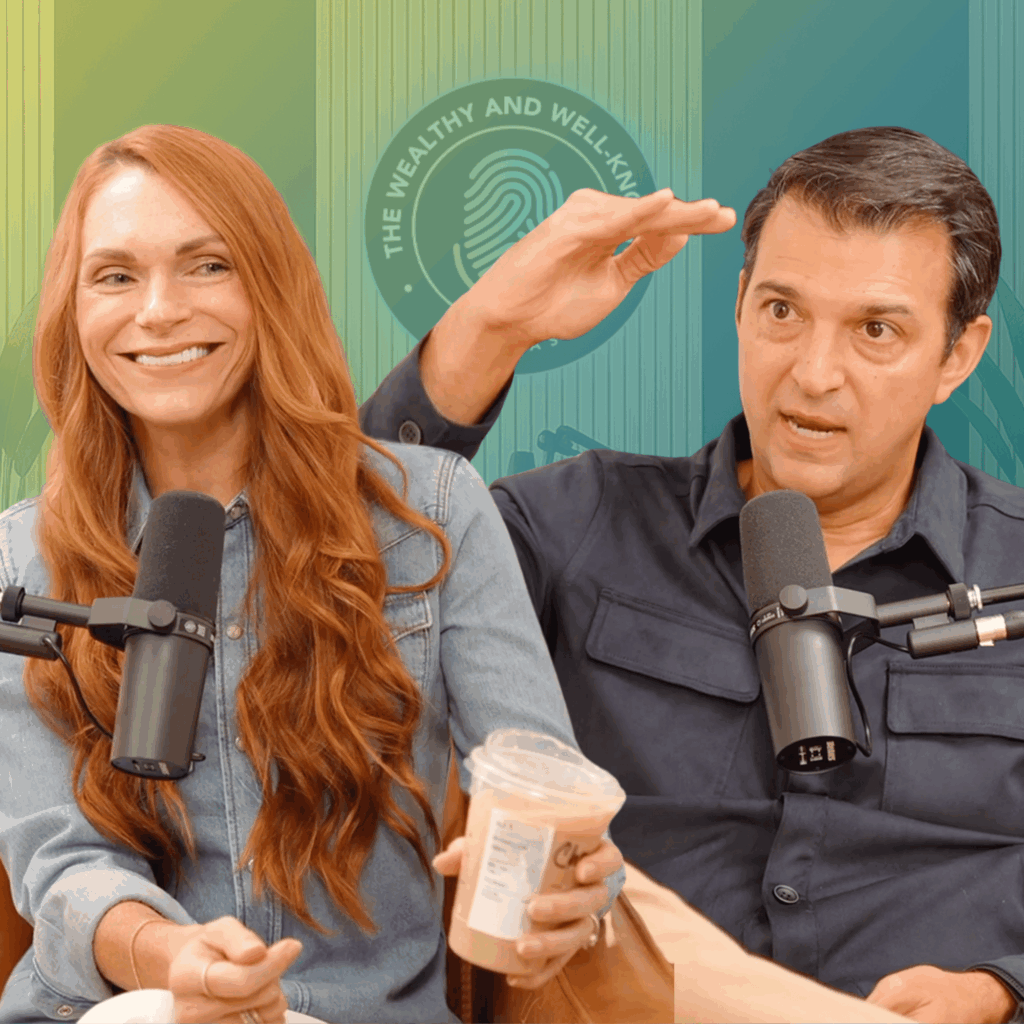
[00:00:00] Hey, welcome back to the podcast.
[00:00:05] Today, I’ve got Rory with me and we’re talking about money, wealth, riches.
[00:00:13] What to do if you have some, how do you get it and how do you keep it?
[00:00:19] Really we’re talking about just like personal philosophies, best practices with money, mindset,
[00:00:26] tactics, strategies, but anything around personal finances.
[00:00:31] I feel like people have asked us to talk about this before and we’ve kind of been resistant
[00:00:35] to it because it’s like, we’re not the people that are like, hey, look at us, we’re rich,
[00:00:42] which we’re not like ultra-rich or anything, but I feel like we’ve been a little bit resistant
[00:00:46] to that, but I also feel like there’s a lot of bad influences online about money.
[00:00:53] I’m excited about this because I do think there’s some things that we’ve done differently.
[00:01:01] I think we have a joke inside in our family that we’re weird and it’s like, we are very
[00:01:05] weird.
[00:01:06] I think we’re very unusual in many ways and I think statistically, financially, we’re
[00:01:12] pretty unusual for our age.
[00:01:16] I think it would be fun to do this and talk about it.
[00:01:18] I’d like to start off with asking you, what are some of those philosophies that you think
[00:01:25] we have about money that are different from what most people have?
[00:01:31] And again, just kind of a qualifier, right?
[00:01:34] We’re not like billionaires and like the world’s wealthiest people, but you know.
[00:01:39] We might be thousandaires.
[00:01:40] Yeah, we’re definitely hundredaires.
[00:01:42] Most days we’re hundredaires, but I do think we’ve been able to achieve a lot.
[00:01:48] A level of, I guess I’ll call it financial piece beyond what most people ever get to,
[00:01:54] certainly from where I grew up in and I’d love to just kind of, yeah, just start with
[00:02:02] that.
[00:02:03] What do you think are some philosophies about money and maybe not even that are different
[00:02:06] from other people, but just like philosophies we have that maybe we have spoken or even
[00:02:10] ones that are sort of unspoken between us because we haven’t talked about this subject
[00:02:15] in a while.
[00:02:16] Yeah.
[00:02:18] And I think one of the reasons why is we’re not financial advisors.
[00:02:23] So this is not legal, formal financial advice, please go talk to a professional.
[00:02:28] These are personal philosophies and best practices mainly curated from some really good things
[00:02:36] we’ve seen and some really hard things that we’ve seen.
[00:02:40] We’ve seen money build marriages up.
[00:02:43] We’ve seen money build marriages down.
[00:02:45] We’ve seen money help expand.
[00:02:47] We’ve seen money help implode.
[00:02:50] And so I think those are some of the things that have curated some of these practices
[00:02:54] and beliefs.
[00:02:55] If I were to start over archingly, I think one of the things that makes us most unique
[00:03:02] is how simple and conservative our philosophies are.
[00:03:07] Somebody asked me last week, they’re like, Hey, I’m in this mastermind and they’re talking
[00:03:12] a lot about crypto and investments and real estate and she said, can I just get your take
[00:03:18] on how you invest your money?
[00:03:20] And I looked at her and I smiled and I’m like, it’s going to be a very short conversation.
[00:03:25] She goes, why?
[00:03:26] And I said, I don’t invest in crypto.
[00:03:29] I don’t invest in a lot of real estate and I have very little investments outside of
[00:03:33] some very conservative, boring 401k IRAs, Roth IRAs insurance, the end.
[00:03:40] And she goes, wait, what?
[00:03:42] And I’m like, yeah, I told you it was going to be really short.
[00:03:46] It’s very conservative.
[00:03:48] And I think a lot of that is what I have found and I know that you agree with this is the
[00:03:53] best investment that we have ever made that we will ever make is reinvesting back into
[00:03:58] our own personal development, our own company and our own family.
[00:04:03] And there is nothing in the world.
[00:04:05] There is no reward, great enough to risk my sleep and my peace and the security of my
[00:04:13] family and my team for some potential one day big payoff.
[00:04:20] And maybe that’s just really ignorant, but I’m choosing that I am choosing peace.
[00:04:27] I am, I am choosing enoughness than some big potential investment and payoff.
[00:04:34] I’m choosing peaceful rest at night versus any anxiety over what the stock market is
[00:04:38] doing or what’s happening with Bitcoin or anything in cryptocurrency.
[00:04:44] I’m not stressing out about managing lots of properties.
[00:04:47] Don’t care.
[00:04:48] I’m not saying it’s bad.
[00:04:49] I’m not saying don’t do it.
[00:04:51] I’m just saying that what we have learned for us is no thanks.
[00:04:54] I think I think that’s something that would shock people to know like for us, we really
[00:05:01] believe that peace, that profit, like peace is the new profit.
[00:05:06] I think we end to go like, we aren’t really money motivated.
[00:05:11] Like we don’t go, we have to like earn this much money to do this and like, let’s think
[00:05:17] about it every day.
[00:05:19] It’s going money is subservient to the mission that we’re on.
[00:05:24] And so it’s like money shows up as a byproduct of what we’re doing.
[00:05:28] And I think to your point of simplicity, I have to give a shout out here and I don’t
[00:05:34] know if you would say he’s been as impactful in your life as I would.
[00:05:37] So I’ll be curious to hear this, but like I still look back on Dave Ramsey’s financial
[00:05:43] peace and we made a decision that we weren’t going to get married until we were both debt
[00:05:47] free.
[00:05:49] And I look at that decision as like the first step to being rich.
[00:05:56] If you want to be ultra rich, I really still believe to this day, the most important first
[00:06:02] tactical step is to be debt free because when you don’t have debt, everything you make piles
[00:06:10] on top of itself.
[00:06:12] So like if you don’t have a car payment and credit card bills and student loans and a
[00:06:16] mortgage and you don’t like paying off TVs and sofas, if you make $50,000 a year, then
[00:06:25] that means at the end of a year, you’re going to have $50,000 sitting there and then in two
[00:06:28] years you’ll have $100,000 and then $150,000 and then it starts to grow with interest and
[00:06:32] it’s like you can have peace much earlier than you think.
[00:06:39] Like people feel like, I have to invest because I need to hit the Bitcoin jackpot or I have
[00:06:45] to hit the lottery or I have to pick a unicorn company to invest in that I’ll have this huge
[00:06:51] payoff and they expend so much time and so much energy and so much money diluting all
[00:06:59] of this where it’s like if you just like live simple and don’t get into debt and you keep
[00:07:04] investing in yourself, you grow your income.
[00:07:07] So I personally really still feel like being debt free was one of the most important things,
[00:07:12] first things that we ever did.
[00:07:14] Yeah, I think when it comes to personal financial decisions and it’s not that we don’t have
[00:07:20] strategies.
[00:07:22] I have pretty much a minor in taxes at this point with the amount of books and courses
[00:07:27] that I’ve invested in terms of, I want to know just enough or I can make good decisions.
[00:07:33] I’m not going to read all how many per thousand pages of tax code there is but there’s this
[00:07:39] new big beautiful bill that came out and it’s like I went to a course and I listened to
[00:07:44] this webinar and I need to know enough to go how does this impact me but I’m not going
[00:07:50] to like spend every extra dollar I have with some new investment or tax shelter or tax
[00:07:57] saving strategy and it’s like I care enough to go, yeah, I want to know what’s happening
[00:08:03] and I feel the same way about investing, right?
[00:08:06] It’s like I think we should have IRAs and Roths and we need retirement plans and we
[00:08:12] did a cash balance plan and we have a donor advice fund, like there are things that we
[00:08:17] do but those are very simple and honestly they’re all with the long game in mind and
[00:08:24] I think that’s one of the philosophies we have is we’re not doing any quote unquote
[00:08:29] get rich quick strategies because at the end of the day our goal isn’t to get rich.
[00:08:37] I think that’s what’s surprising in a lot of ways.
[00:08:40] It’s like we don’t build a lot of, you know, we don’t make decisions on, we don’t buy a
[00:08:46] lot of real estate because we’re not trying to get rich.
[00:08:50] It’s really back, you know, and I said this since to somebody a few weeks ago, like I
[00:08:56] have never since I have been alive seen the stock market or any of our funds get the rate
[00:09:01] of return that we do in our own business and it’s like if I’m going to invest money somewhere
[00:09:06] I’m going to go where the greatest rate of return is and I have yet to see any fund any
[00:09:11] investment opportunity, anything come my way that has a greater almost guaranteed with
[00:09:18] my influencing control rate of return and then investing into myself and investing into
[00:09:23] my own business.
[00:09:24] Which includes investing into people and it’s hiring new people, it’s giving them raises
[00:09:29] and trying to like grow the pay so we can attract better people into the business and
[00:09:34] keep good people and all that kind of stuff but it’s like, you know, if your business
[00:09:38] makes, you know, a 20% profit margin, it’s like show me some other investment that’s
[00:09:43] going to consistently make 20% and you know, I think what’s crazy is all the get rich quick
[00:09:48] schemes are like exciting for a hot minute but it’s like literally trying to time the
[00:09:55] lottery and then they like crash and it’s, you know, there’s, we’ve been around now long
[00:09:59] enough to go.
[00:10:00] We’ve got lots of friends and people who’ve done like real estate.
[00:10:04] I think real estate could be a great investment.
[00:10:07] It’s also like people get really leveraged and it’s like, man, I can’t make money fast
[00:10:13] enough.
[00:10:14] I can’t buy enough properties and then the moment the interest rate goes up or, you know,
[00:10:18] there’s the mortgage crisis or whatever, it’s like, man, it all disappears quickly
[00:10:23] and it can invert and go massively upside down and it’s like, did you need all that
[00:10:28] in the first place?
[00:10:29] Like you, like you have this high high but then you have this really low low, you end
[00:10:33] up averaging in the middle.
[00:10:34] Like what if you just kind of like plotted along?
[00:10:36] Yeah.
[00:10:37] I mean, my family, I come from a construction business and my brother and my dad build a
[00:10:41] lot of real estate on the side, right?
[00:10:44] And the quote unquote, not no busy, the non busy seasons of the construction industry.
[00:10:49] And there’s often been seasons of life where I’m really tempted of like, wow, like he’s
[00:10:55] cranking out neighborhoods left and right and look at all these deals he has coming through.
[00:10:59] And then I remember it’s like, but that’s not what I want.
[00:11:02] I have to like, I mean, that’s how you, one of the biggest financial personal philosophies
[00:11:08] I have is stop looking at what other people are doing and that’s, that’s the temptation.
[00:11:14] It’s like, and I even have it with my own family and I’m like, wow, it’s like, look
[00:11:17] at all this, look at all these deals they’re turning and look at all these houses and look
[00:11:20] at all this, wow, wow, wow.
[00:11:23] And then I’m reminded it’s like, yeah, but he works a lot of nights and weekends and
[00:11:26] a lot of mornings and is always on the phone and always handling problems and I just need
[00:11:33] to put on my own blinders and go stop paying attention to what other people are doing.
[00:11:38] And there’s no judgment at what other people do.
[00:11:42] And I just need to know like, that’s their lane.
[00:11:46] This is my lane and I’m making choices that are good for me and my family and they’re
[00:11:51] making choices that are good for their and their family.
[00:11:54] And not one is right or wrong.
[00:11:55] They’re all unique for each of us, but every single time that I’ve been tempted to try,
[00:12:03] you know, I don’t know, maybe we should buy, you know, Bitcoin or maybe we should do it’s
[00:12:06] only because there was some comparison, right?
[00:12:09] There was a bit of FOMO or there was a bit of what everyone else is doing it.
[00:12:14] And when has that ever done any good for me?
[00:12:16] When I go back to my high school days, every single time I did something that someone else
[00:12:20] was doing, I got in the biggest worst trouble of all time, every single time.
[00:12:24] I cannot think of one time ever that me jumping on the bandwagon did me any good.
[00:12:31] I think it’s a mature, one of the most important places you can get to in your life financially
[00:12:39] is when you can consciously say, I’m willing to accept less money if it gives me more peace.
[00:12:50] Like I remember one of the recent things that happened to us, I don’t know, it was maybe
[00:12:54] around the time of COVID, we started saying consciously, we don’t need more money.
[00:12:58] We need less stress, right?
[00:13:01] It’s like, what are you going to do with more money?
[00:13:04] Like what?
[00:13:05] I got plenty of things we could do with more money.
[00:13:06] Well, I’ll make you a list.
[00:13:08] Really?
[00:13:09] Yeah.
[00:13:10] Is there a lot of things that you want to do like with more money?
[00:13:12] I didn’t say want.
[00:13:13] I said could.
[00:13:14] Oh, yeah.
[00:13:15] Lots of things we could do.
[00:13:16] Like when you ask the question, what are you going to do with more money?
[00:13:19] I’ll give you a list.
[00:13:20] There’s a lot of things we could do with more money.
[00:13:22] Yeah.
[00:13:23] But I think realizing to be, you know, getting to the place to go like, I’m okay with less.
[00:13:30] Like I don’t need to have the nicest car, the biggest home, the private jet, the like…
[00:13:39] Really you don’t want a private jet?
[00:13:42] I would mind flying private, but I don’t think I’d want a jet.
[00:13:45] It’s a boat is a good example, right?
[00:13:47] Like we could definitely have had a boat.
[00:13:48] I don’t want a jet.
[00:13:49] A long time ago.
[00:13:50] Yeah.
[00:13:51] But I’m like, we could own a boat.
[00:13:52] But I’m like, what a mess.
[00:13:53] Like what a night.
[00:13:54] I don’t want to own a boat.
[00:13:55] I just want friends with boats.
[00:13:56] It’s kind of the same thing with real estate.
[00:13:57] It’s like, yeah, I know we could kind of build the empire and like, I don’t know, maybe we’re
[00:14:01] missing out there.
[00:14:02] But I’m like, man, it’s so much.
[00:14:04] But that’s good to that point.
[00:14:06] We’re only missing out because we’re looking at what someone else is doing.
[00:14:09] Yeah.
[00:14:10] Or listening to what somebody else is saying.
[00:14:12] And here’s the part about running your own race because it’s like, it’s the…
[00:14:18] You know, you always say the grass isn’t always greener.
[00:14:20] It’s almost never anywhere near as good as it sounds, right?
[00:14:27] Like they say, oh, I got this Bitcoin thing.
[00:14:29] And it’s like all they’re talking about for a year.
[00:14:32] And then, you know, we have some friends that have lost significant money, very painful.
[00:14:38] Same with real estate.
[00:14:39] Same with investing into businesses.
[00:14:41] Same with buying individual stocks, right?
[00:14:43] I mean, our plan, I think, you know, looking back on our path was very simple.
[00:14:48] It was like, we got debt free.
[00:14:50] We lived below our means.
[00:14:52] We maxed out, first of all, our IRAs, then we maxed out our 401Ks.
[00:14:58] Then we had enough amount…
[00:14:59] We had enough in the stock market that just the rate of compounding interest over the
[00:15:05] next 30 or 40 years, plus we had term life insurance.
[00:15:10] And then it was like, okay.
[00:15:12] Now we have, after all that is taken care of, you go, now what?
[00:15:17] It’s like, well, I guess we’ll, you know, buy a few things.
[00:15:20] You know, we got to the house of our dreams and we upgraded.
[00:15:24] For those of you that don’t know the story, like the first house we bought when we were
[00:15:27] married was 1,000 square feet.
[00:15:30] It was 1,200 square feet, and technically I bought it.
[00:15:33] Technically you bought it.
[00:15:34] Just to be clear.
[00:15:35] Yeah.
[00:15:36] Just so everyone knows who the sugar momma is in this relationship.
[00:15:41] $179,000 house to be clear.
[00:15:44] But then…
[00:15:45] $179,000.
[00:15:46] That was 2010.
[00:15:47] And then it was like seven years later, we built our dream home, which was a very nice
[00:15:51] home.
[00:15:52] And that was because our business has also quadrupled.
[00:15:55] And you know, we’d had books come out and we were speaking everywhere and like you were
[00:15:59] doing consulting with big companies and you know, we had some more income, but it was
[00:16:04] just going, it was because we weren’t trapped by debt.
[00:16:06] Everything that we made just started to kind of like pile on top of itself.
[00:16:09] And we were also not quick to be like, oh, let’s go buy a hundred properties and you
[00:16:13] know, like multiply everything.
[00:16:17] It was like, no, I just want to have like this place that we live every day that we’re
[00:16:21] happy with and not have a lot of stress to like pay the mortgage and like be buried underneath
[00:16:25] the weight of feeling like we have to do stuff.
[00:16:27] And I think, and then after that it was like, oh, that put us in the position to start brand
[00:16:32] builders group really.
[00:16:33] You should tell them about the financially, you know, why we were able to start brand
[00:16:40] builders group just on the purely financial side.
[00:16:47] Do you know what I’m getting out there?
[00:16:48] I’m trying to take your cue here.
[00:16:50] I have no idea where it’s coming from.
[00:16:51] Yeah.
[00:16:52] Okay.
[00:16:53] So anyway.
[00:16:54] Why don’t you tell them, right?
[00:16:55] Yeah.
[00:16:56] Maybe I’ll start that.
[00:16:57] But just to go like, you know, when we exited our former company, it takes a lot of money
[00:17:00] to do it.
[00:17:01] And by exited it when I got fired.
[00:17:03] When AJ got fired and then, you know, I resigned and we started brand builders group.
[00:17:11] Our income went straight to zero.
[00:17:13] So literally like in a matter of a few days, a two week period, but we had two incomes
[00:17:18] that went to zero straight to zero.
[00:17:21] We had a newborn baby.
[00:17:23] We had our brand new house.
[00:17:25] And then we were starting a company and that is very expensive.
[00:17:30] The reason we were able to do it is because of savings.
[00:17:33] We were able to weather that storm and then literally day Ramsey and your six month emergency
[00:17:39] fund.
[00:17:40] Yeah.
[00:17:41] And then, and then COVID hits and we were literally able to weather that storm.
[00:17:44] We were, we were literally able to hire the people we needed to start brand builders group
[00:17:50] because we had savings.
[00:17:51] Well, yeah.
[00:17:52] And I think that’s important to go.
[00:17:54] It’s like we had savings, but we also, we didn’t pay ourselves a salary at brand builders
[00:17:58] group until year five.
[00:18:00] So every, every dollar that was coming in was going right back.
[00:18:04] We earned commissions for the first five years of brand builders group.
[00:18:07] There were no salaries.
[00:18:09] We earned commissions just like anyone on our team did sales commissions, delivery commissions.
[00:18:14] And that was a huge part of it is like we could do that, but it was also because we
[00:18:18] were betting on ourselves, but we also knew that we had to give the company enough runway
[00:18:24] to make it.
[00:18:25] And if we were going to pay ourselves big salaries, it wouldn’t make it.
[00:18:28] Yeah.
[00:18:28] I think that’s actually a really important financial philosophy in the business side that
[00:18:33] people don’t think of.
[00:18:33] It’s like when you’re a small business owner, you just kind of like pay yourself the profit.
[00:18:37] One of the things that we do is we, we earmark the money.
[00:18:40] We, we, we take people actually in our eight figure entrepreneur course in our membership,
[00:18:45] we take them through an exercise called divide the dollar.
[00:18:48] And we basically say, okay, if there was for every dollar you make, there’s a hundred pennies
[00:18:53] divvy up who those pennies are going to go to.
[00:18:56] And so we’ve always said, we’re going to pay this percentage to the person or
[00:19:01] persons doing the work.
[00:19:04] We pay this percentage to the person or persons who sell the deal.
[00:19:09] We take this percentage and pay the person or persons who generated the lead.
[00:19:15] We then have this percentage allocated to paying for the overhead and being able to go,
[00:19:20] okay, this is the amount we can reinvest into like more infrastructure and staff.
[00:19:25] And then there’s this percentage that theoretically is what should be left over for profit.
[00:19:29] Well, in actual budgeting, I do it the opposite.
[00:19:34] So you start with profit first is what you’re saying.
[00:19:36] Yeah, it’s a profit first budgeting.
[00:19:38] And I go in order to make a, you know, I’m just crazy math, a 10% profit margin.
[00:19:44] I reverse engineer like, what are the fixed expenses that we’re going to have?
[00:19:48] Then what are the variable expenses that includes labor, that includes all the software
[00:19:53] and all the rents.
[00:19:55] And then I reverse engineer it and go, can we do that?
[00:19:59] And that tells you, right, how much revenue we need to bring in and what gross margin
[00:20:04] products and what percentage of products.
[00:20:06] So I actually, in terms of budgeting, I take the reverse approach.
[00:20:11] And then if I feel like that’s too much of a stretch, then we back it down.
[00:20:14] We back it down.
[00:20:14] We back it down, but it’s a profit first budgeting.
[00:20:17] Yeah.
[00:20:17] And just, you know, high level percentages, because people ask this a lot, um, in our,
[00:20:23] in our internal trainings, like roughly we budget 30 to 30% to 40% of a dollar for all
[00:20:31] the variable expenses.
[00:20:33] So that’s paying the people that includes like, you know, if there’s food and meals
[00:20:37] and all, all that stuff, roughly, you know, somewhere between five to 10% for sales
[00:20:44] commissions, when, when you add in like salesperson salaries and stuff, it’s like
[00:20:48] 10%, then you go roughly 15% is what we budget, 15% of revenues, what we budget
[00:20:54] to pay for lead generation, which we can either pay to our affiliates and referral
[00:20:59] partners, whether that’s employees or clients or true affiliates, or we can pay
[00:21:04] that in advertising dollars.
[00:21:07] And then roughly, uh, you know, so what, what is that?
[00:21:11] That’s like 65.
[00:21:12] So then roughly you could do like 20 to 25% and overhead.
[00:21:17] And then that leaves something like a 10 to 10 to 15% profit margin.
[00:21:21] So high level, that’s kind of like, at least what’s worked for us in terms of
[00:21:25] like how we would structure a company, it’s in theory.
[00:21:28] Yeah, in practice, they change each product, each service changes in that.
[00:21:34] But that’s, but, but I guess my point in saying that to what you said was if you
[00:21:40] don’t, even when you pay yourself as the business owner, you need to pay
[00:21:46] yourself for each of those different roles, even if you’re doing all of them.
[00:21:50] Um, because if you don’t, then you don’t ever feel like you can afford to hire
[00:21:56] somebody.
[00:21:56] Well, and then it’s all false sense of profits, right?
[00:21:59] If you’re not paying yourself at all and you’re just taking profits, those
[00:22:03] aren’t real profits, right?
[00:22:04] It’s like you, if you had to replace yourself, right, as whatever role you
[00:22:08] play in the company, salesperson, delivery, you know, CEO, president,
[00:22:13] whatever, right, that costs real money.
[00:22:16] You’d be paying someone else that.
[00:22:17] And so we didn’t take a salary because we simply couldn’t afford it with overhead.
[00:22:21] So we took it in commissions and then we worked our way towards that.
[00:22:25] But that’s how we, that’s how we had the runway.
[00:22:27] When people talk about most small businesses don’t make it, that’s what
[00:22:31] they’re talking about, right?
[00:22:32] There wasn’t enough financial runway to hit the stride.
[00:22:38] And, and often that happens because of a variety of different things.
[00:22:42] But at the end of the day, not enough revenue, right?
[00:22:44] And so we acted as the primary revenue generators, which is why we took commissions.
[00:22:49] It’s like they’re, I’m, we’re seven years in and I just now feel like I’m
[00:22:54] starting to sit in the seat as real CEO, right?
[00:22:57] And that’s because we couldn’t afford it, right?
[00:23:00] I had to take sales calls and we didn’t have people, right?
[00:23:03] And it’s like, well, that’s how you have enough runway to make it, right?
[00:23:06] It’s like, yeah, sure.
[00:23:07] I would have loved to stepped out of that.
[00:23:09] Some of that stuff, customer service calls, writing copy.
[00:23:12] It’s like, I still find myself doing some of those tasks on a pretty
[00:23:16] frequently basis today, but that’s because that’s what the business needs.
[00:23:20] Yeah.
[00:23:21] And there’s power in paying yourself, I think, commissions.
[00:23:25] We have three different types of commissions.
[00:23:27] We’ve got the lead generation commission, the sales commission, the delivery commission.
[00:23:30] There’s, I think it’s powerful to do that because you, you’re, when you pay
[00:23:36] yourself in that way, you know that you’re directly contributing to revenue
[00:23:40] generating activities, and then you’ve set up the business model to do the same
[00:23:44] so that other people are stepping in and they’re getting paid to generate revenue,
[00:23:47] which is always, that’s always the hardest thing is like generating revenues.
[00:23:51] The thing that nobody wants to do is the hardest thing.
[00:23:54] And so we’ve always kind of compensated well for that.
[00:23:56] And then it’s like, it’s easy to step out of it.
[00:23:58] Like we really just pulled me out of delivery like last year.
[00:24:03] And it was because we were able to ramp up the income and the overall revenues
[00:24:06] and finally start paying ourselves, but it’s like, there’s a bucket of money
[00:24:10] that is earmarked to pay other people to step in and do the delivery.
[00:24:14] So that’s good.
[00:24:14] I want to ask you about taxes because you have learned a lot about taxes.
[00:24:19] What are, what are some of the, what are some of the key tax strategies,
[00:24:27] you know, or just philosophies, maybe not even tactics or strategies,
[00:24:31] there’s people from different countries listening, but like,
[00:24:34] how do you think about tax strategy?
[00:24:36] Where do you find tax strategy?
[00:24:38] Are there some key things that, you know, you advise in general for small business owners?
[00:24:45] Yeah, I think there’s a few things.
[00:24:48] But before I forget to say this, I would just say, if anyone is looking to go,
[00:24:51] where do I get more information around some personal philosophies around money?
[00:24:58] One of my favorite books, and I really a turning point in my own relationship
[00:25:01] with money was the book by Morgan Housel, The Psychology of Money.
[00:25:06] And so if you’re looking for additional resources of going like, maybe I do have
[00:25:10] an unhealthy attachment to money or the idea of money, or I really need to talk
[00:25:15] about my relationship with money.
[00:25:18] And I think that’s where we all need to start is like, what is our emotional
[00:25:21] relationship with money?
[00:25:23] And that dictates so much.
[00:25:25] Even tax strategy, right?
[00:25:26] It’s like, if you’re obsessed of, you know, how do I make more?
[00:25:31] How do I keep more?
[00:25:32] How do I do this?
[00:25:32] How do I, you know, not pay the government more like whatever it is.
[00:25:36] Like there’s an emotional attachment there.
[00:25:38] That’s worthy of you doing some self discovery in.
[00:25:40] And that’s a great first place to start.
[00:25:42] I would just preface that.
[00:25:43] Now, why I became somewhat obsessed with taxes is because I knew nothing.
[00:25:52] And I was taking a lot of advice from advisors, tax CPA individuals that quite
[00:25:59] honestly, I took them out their word and it cost us a lot.
[00:26:03] And I think that was a first lesson.
[00:26:05] And just because they’re a bunny ears professional, it doesn’t mean they
[00:26:09] know what they’re doing.
[00:26:11] And it was a really good, hard lesson for me to learn in the early days of
[00:26:15] the brand builders group of, Oh, that was bad, bad, bad advice that just
[00:26:21] cost us tens of thousands of dollars.
[00:26:23] I will not be making that mistake again.
[00:26:26] So I think this would be shocking for people to realize that some of the worst
[00:26:30] tax advice we’ve ever gotten is from tax professionals and some of the best
[00:26:35] tax advice we’ve ever gotten is from where?
[00:26:38] Where do you, where do we ultimately learn the best tax strategies?
[00:26:42] Most of them have been on Instagram.
[00:26:45] I was going to say other entrepreneurs, I would say other when I bet them, but I
[00:26:50] think that’s, uh, I follow a few very, very reputable tax, you know, content
[00:26:57] creators on Instagram.
[00:26:59] And when I say, I’m not, I’m not kidding.
[00:27:01] Right.
[00:27:02] I learned some of my best, but then I don’t deploy those.
[00:27:05] I go and I bet them.
[00:27:06] Yeah.
[00:27:07] Cause by designing this, I heard this, I saw this run this through Tennessee, because
[00:27:13] a lot of things that are out there might work in another state, but they don’t
[00:27:17] work in your state, which was some of the awful hard lesson that I had to learn
[00:27:22] when they deployed something that was counter to Tennessee tax law.
[00:27:26] And then we ate it double sides and it was really bad.
[00:27:28] So I think a part of it was, I don’t need to know all of it, but I need enough.
[00:27:32] I need to know enough where if somebody says something whack, I can raise my
[00:27:35] hand and go, no, I don’t think so.
[00:27:38] Not in Tennessee or not here or we’ve done that.
[00:27:41] Or I know what that is, not some random thing.
[00:27:44] I’m also always going to follow our fall on the side of the law.
[00:27:48] Right.
[00:27:49] I, I want to pay my fair share of taxes and not one cent more, but I want to pay
[00:27:54] my fair share of taxes.
[00:27:55] Right.
[00:27:56] Right.
[00:27:56] And so it’s like, I’m always going to fall to a little more on the right side of
[00:28:02] the line in terms of, Hey, I’m going to follow a little bit more to the letter
[00:28:05] of the law than not.
[00:28:07] Right.
[00:28:07] A lot of people go, is it a ask for forgiveness or ask for permission policy?
[00:28:12] That’s like, well, I’m probably going to follow a little bit more in the
[00:28:14] ask for permission a little bit, uh, even though I’m walking the line
[00:28:17] pretty close personally.
[00:28:19] Uh, but some of the, the best things that I have learned, uh, that have helped us.
[00:28:24] And again, uh, I believe this was set to sunset this year, but it has just been
[00:28:28] extended is the one 99 a QBI deduction.
[00:28:32] And that’s a classification for training companies, um, that you’re able to take
[00:28:38] a major deduction on pass through revenue.
[00:28:40] And, uh, the first year that we took the QBI, the one 99 a business deduction
[00:28:46] qualified business, um, I think we saved $80,000 in taxes and it’s been roughly
[00:28:51] about that.
[00:28:52] So again, I’m not going to go into all the, the details of each of these for
[00:28:55] limited time, but these are things that take to your CPA, to your tax advisor
[00:28:59] and go, Hey, would that apply to me?
[00:29:01] Which is what you should do with anything that you hear from taxes is not
[00:29:04] making any assumptions and go, does that apply here?
[00:29:07] But that has been a very tangible, helpful business deduction.
[00:29:12] Um, that we just, if you’re not out there learning, you would never know about it.
[00:29:16] And I think that was another big thing that went with personal finances that I
[00:29:20] learned is don’t expect others to come to you with ideas that save you money.
[00:29:23] Yeah, that’s what I want.
[00:29:24] That’s your job.
[00:29:25] That’s what I wanted to really get at was, was going, it’s.
[00:29:30] The tax professionals aren’t often the one to give us the, the ideas to vet.
[00:29:35] It’s usually other entrepreneurs or even if it’s on Instagram, it’s usually
[00:29:38] other entrepreneurs, or it’s just people doing more sensational things.
[00:29:41] Cause that’s what you, how you get followers, but you gather the ideas and
[00:29:45] then you take them to a professional to vet.
[00:29:48] Um, but it’s your, like, I would just say, take the personal responsibility of
[00:29:52] no one’s coming to save you and your banking account.
[00:29:54] Yeah, you go.
[00:29:56] This is another financial philosophy we have.
[00:29:59] It’s like one thing we never do is completely outsource our money and just go,
[00:30:06] I don’t understand that.
[00:30:08] I’m just going to like, so-and-so takes care of that.
[00:30:10] If I don’t understand it, then I go learn it.
[00:30:13] Yeah, we know enough to be dangerous.
[00:30:15] Um, and taxes, one of those things, just general finance and accounting.
[00:30:19] I didn’t go to school for a finance degree.
[00:30:21] Uh, I didn’t tell everyone what your degree was in, babe.
[00:30:24] Until my junior year, it was in painting.
[00:30:28] Um, and then my, and now it’s in financial statements.
[00:30:33] It’s a different kind of art.
[00:30:34] It’s a different kind of art.
[00:30:35] Uh, no, I didn’t graduate with a painting degree.
[00:30:37] I graduated, uh, with an advertising degree with a minor in Spanish and business.
[00:30:43] Um, but up until my dad said, you can’t graduate with that.
[00:30:47] It was painting.
[00:30:48] Uh, no, but I would say with all of that, though, I think just something I’ve
[00:30:51] learned in all of this tax research and tax knowledge is
[00:30:58] one of the things that thing is really important and I have seen them as a
[00:31:01] mistake and I would say this with financial advisors or tax advisors is
[00:31:05] make sure you don’t outgrow who you use.
[00:31:08] And over the years, um, we have, uh, outgrown three separate tax firms.
[00:31:15] And what do I mean by and, and bookkeeping?
[00:31:17] We’ve also, we’ve also, uh, and yes, several things we’ve ensourced as we’ve
[00:31:21] gotten bigger, but what worked for you as a $1 million company or a 3 million or
[00:31:28] 5 million or to 10, 15, 20, beyond, you know, you really have to look at are
[00:31:33] the service providers that I’m using now advancing at the level that I am advancing.
[00:31:39] And what I learned is the first, you know, really amazing, you know, and this
[00:31:44] was specific to taxes, tax strategy firm that we used, uh, who are all CPAs.
[00:31:48] They were great until we had deployed every single thing they had to offer.
[00:31:54] And then there was crickets for years and then it wasn’t so great anymore.
[00:31:59] A lot of them have a playbook of like, these are like the, the five or 10 plays
[00:32:03] we know how to run, but then they don’t have much beyond that with you.
[00:32:08] So I would just say as you’re growing and your own knowledge and your
[00:32:11] and income and revenue, it’s like, make sure that you’re up leveling your
[00:32:15] providers as you grow.
[00:32:17] Now, some can grow with you.
[00:32:18] Like we’ve had our personal financial advisor for as long as we’ve been
[00:32:23] together and he has grown with us, but not all, not all do.
[00:32:28] And so I have found it’s really good.
[00:32:30] Even if you make the decision not to change, you should have an audit of
[00:32:35] how you run your finances every couple of years.
[00:32:39] And I did that this year and the, I hired an external firm to come in and just
[00:32:44] do a tax audit because there were just some things that felt rushed.
[00:32:47] If I had, I had lingering questions that didn’t get answered and I wasn’t
[00:32:52] comfortable with it.
[00:32:52] So I would say, trust your own instincts, but you’ve got to be in your
[00:32:55] finances enough to go, I don’t know about that.
[00:33:00] And I didn’t know the answer and I really didn’t have the time.
[00:33:02] So I hired someone to come and do an audit.
[00:33:04] Y’all, let this be a lesson.
[00:33:07] You never have to learn the, that feeling I had within of like, that just
[00:33:12] felt rushed.
[00:33:13] That just felt like not thorough with no good explanation.
[00:33:17] It was just a gut feeling when I had the audit done.
[00:33:21] The previous tax firm had simply forgot to select a very important box that
[00:33:27] cost us $40,000.
[00:33:33] That was it.
[00:33:33] They forgot to select the box.
[00:33:35] What was the box?
[00:33:37] That’s confidential financial information.
[00:33:40] Come back next week.
[00:33:43] But the audit firm that I did, they were like, Hey, great news.
[00:33:46] This is our very first meeting after they had, you know, done an audit of our
[00:33:50] financials and tax statements.
[00:33:51] Uh, we found $40,000 that we’re going to get returned to you.
[00:33:54] And I said, how?
[00:33:56] And they’re like, well, this is good news, bad news, good news.
[00:34:00] We found it.
[00:34:00] You’re going to get the refund check, bad news.
[00:34:03] Your prior firm forgot to select this one really important box about, uh, how
[00:34:07] you file taxes.
[00:34:11] Like what?
[00:34:12] What do you mean?
[00:34:13] They just forgot.
[00:34:15] So I wouldn’t have found that.
[00:34:18] I just had enough wherewithal to go.
[00:34:20] Something’s not right.
[00:34:22] I’m going to pay the $500 to have someone else review the tax statements.
[00:34:26] They found $40,000 of refunds.
[00:34:28] And I think this is an important thing.
[00:34:29] I feel like this is happening in the medical world too, where it’s like,
[00:34:33] let’s get a second opinion.
[00:34:34] It’s like, don’t blindly trust someone because they’re the professional.
[00:34:39] And, and especially with taxes, here’s what’s interesting.
[00:34:41] A lot of, a lot of firms, somebody, if you’re a business owner, a lot of the firms
[00:34:49] that are doing your taxes, the people that are on that team doing your taxes
[00:34:53] have not never actually been a business owner.
[00:34:56] Or you have never spoken to either.
[00:34:58] Yeah.
[00:34:58] Or you don’t know that.
[00:34:59] But there, it’s going like, if you’ve never been in my position, how do you
[00:35:04] think like, how do you, how do you think like I think?
[00:35:06] And you go, you don’t, they’re just running, they’re running a playbook.
[00:35:10] Um, so let’s talk about personal finances for a second.
[00:35:13] What are some of the financial practices that we’ve done on our personal side to
[00:35:21] keep track of expenses, manage cash, like, you know, all of that.
[00:35:26] So can you talk a little bit about more on like the personal side?
[00:35:30] And also, I’d be curious, I think, I think a lot of people would be interested
[00:35:34] in knowing how do you transfer that money?
[00:35:37] When do you transfer that money between like, the business makes money and then
[00:35:42] it comes into the personal and like, how separate are those entities or how
[00:35:46] connected and like talk, talk, talk, talk, talk about some of that.
[00:35:50] Now we just say, I think the, one of the biggest things that we’ve done on our
[00:35:54] personal finances is we have a personal bookkeeper, right?
[00:35:58] It’s a nominal amount of money we pay every month for sanity and peace.
[00:36:03] We have a business bookkeeper, right?
[00:36:05] We have two in-house accountants and a bookkeeper for the entities we run.
[00:36:10] Why wouldn’t we have that personally?
[00:36:12] Cause it’s like, what am I opening up every bill and paying every bill and
[00:36:16] tracking it?
[00:36:16] No, my tracking every receipt?
[00:36:18] No.
[00:36:19] Um, so we hired someone who’s a personal bookkeeper just for our personal
[00:36:22] finances and I get a personal statement every month that I go through.
[00:36:26] And so just like we do in our business and we have a P and L, we have a personal P and L.
[00:36:32] It’s like, how much did you spend on entertainment?
[00:36:35] How much did you spend on groceries?
[00:36:37] How much did you spend on gas and how much income came in?
[00:36:40] Yeah.
[00:36:41] And so it’s like, I review that every month and I’m watching for trends of, why
[00:36:46] did we spend that much in groceries last month?
[00:36:48] What were we doing?
[00:36:50] Uh, or whatever.
[00:36:51] And so it’s like, it helps me go.
[00:36:52] Like this is where we need to pull back.
[00:36:54] Now a lot of people live by personal budgets and I wouldn’t say that we
[00:36:59] necessarily have like a strict budget that we follow personally.
[00:37:02] We did early.
[00:37:03] We did in the early days when we were getting out of debt.
[00:37:05] But what I do now is I have a better sense of how the money ebbs and flows.
[00:37:11] And I’m looking for anomalies, right?
[00:37:13] And you just can’t do that unless you’re looking at trends month over month,
[00:37:16] year over year.
[00:37:17] And if I see something that’s abnormal in one month, that’s not for the year.
[00:37:22] I’ll go back and say, Hey, pull, pull me this same period last year.
[00:37:25] And I’m like, Oh, summer water.
[00:37:28] Okay.
[00:37:28] That’s why it’s always high.
[00:37:30] Um, you know, so there’s just like some of those things that by having a personal
[00:37:33] bookkeeper has allowed me to not flip out, not stress, because I have historical records.
[00:37:40] And at this point, we’ve had this bookkeeper for more than a decade.
[00:37:42] They know our spending patterns as well as we do.
[00:37:46] And they have caught fraudulent activity.
[00:37:48] They have saved us money.
[00:37:49] Um, you know, somebody was cashing a bunch of checks at Walmart and our bookkeeper
[00:37:55] reached out to me and was like, I have never seen you shop at Walmart before.
[00:37:59] What are you doing?
[00:37:59] And I’m like, I don’t go to Walmart.
[00:38:01] She goes, really, you haven’t cashed the X amount of checks at Walmart.
[00:38:06] And I was like, no, $3,000 of checks that they were able to mark as fraud and get
[00:38:11] that money back because you follow your spending patterns.
[00:38:15] So that would just be one awesome best practice, uh, for the, for a nominal
[00:38:19] amount of money to save you peace, track your own personal spending, which I think
[00:38:23] a lot of people track it in their business and they forget to do the same
[00:38:26] in their personal life.
[00:38:28] One of the keys of managing a successful business financial statement, I think,
[00:38:34] is also managing by anomaly.
[00:38:37] And so one of the reasons to create a budget is that every month on our
[00:38:41] financial statements, we have, you know, one column that says budget and then one
[00:38:45] column that says actual and then another column that just says like the delta,
[00:38:49] the difference, and it’s going, how do you quickly review financial statements
[00:38:52] for a business?
[00:38:54] You just take your kind of ruler down the page and go, where is, if we’re
[00:38:58] kind of spending within the range of what was planned, okay, but we’re looking
[00:39:03] for the big sharp deltas.
[00:39:04] And then when there’s a big delta, it’s like, okay, let’s double click on that
[00:39:08] and let’s tap in and let’s go dive in and what, look at every expense and all
[00:39:12] that sort of stuff.
[00:39:13] So I think that is just kind of a more general practice that you can use with
[00:39:17] your personal finances or with your business finances is sort of like when
[00:39:21] you have a baseline of like a trend line or create one by way of a budget,
[00:39:29] you know, and you go, now all of a sudden we can manage by exception.
[00:39:34] And I think that, that, that helps a lot.
[00:39:36] So we’ve, we’ve done that.
[00:39:37] Talk about the different bank accounts that we have because I think we’ve,
[00:39:41] this has come up before it.
[00:39:42] Some of our philosophy has changed over the years.
[00:39:46] It has changed, but talk about, talk about the, maybe the journey, the evolution
[00:39:49] of it, because I think, you know, at one of our accelerator events, which are,
[00:39:52] are our in-person masterminds for our members, AJ and I still do four of those
[00:39:56] in-person a year with our members.
[00:39:59] This question came up one time and I remember people were like, so
[00:40:02] curious about the way that we did this, because we, we did this for years.
[00:40:06] So, so tell them about our, all of the accounts we had.
[00:40:09] Yeah.
[00:40:09] And we still have several different accounts.
[00:40:11] And I think, uh, as all the interest rates were going nuts and when that
[00:40:17] happened, you know, the high yield, uh, accounts also kind of went up.
[00:40:23] And so I made some of these shifts with the market, right?
[00:40:28] But prior to that, I would just say, like, we don’t do this as tightly anymore.
[00:40:32] This has kind of shifted with some of the,
[00:40:34] But for the first 10 years we were married, we did this like clockwork.
[00:40:38] We did.
[00:40:38] And I, we probably were managing eight different personal banking accounts.
[00:40:43] Um, so that we couldn’t access our own money.
[00:40:45] I think that’s the gist of it, right?
[00:40:47] It’s like we put in measures to make sure that we weren’t touching money.
[00:40:52] That wasn’t ours to touch.
[00:40:54] So we had a primary checking account that was joint, joint checking.
[00:40:58] Then I had a personal spending account.
[00:41:02] Rory had a personal, personal spending account.
[00:41:04] Rory allowance, which I could spend on whatever I wanted and you could too.
[00:41:08] So we gave ourselves adult allowances and we had our own accounts and a certain
[00:41:12] amount of money went in there.
[00:41:13] And it’s like,
[00:41:14] I don’t have to ask money.
[00:41:15] Don’t ask any permission.
[00:41:16] If it’s,
[00:41:17] And that was great.
[00:41:17] Like we,
[00:41:18] Rory and I have plenty of debates and arguments about things throughout our life.
[00:41:24] I can never recall in the 18 years that we’ve been together,
[00:41:26] that we ever have had a serious argument about money.
[00:41:30] True.
[00:41:31] We’ve had others.
[00:41:32] How late we work, how much we work, where we’re going to eat.
[00:41:36] We’ve had plenty of arguments.
[00:41:38] But trying to be in the same canoe together was the biggest fight we ever had.
[00:41:42] But never about money.
[00:41:43] And I believe a lot of that was due to the way that we had these accounts.
[00:41:46] If he wanted to buy some nonsense piece of technology that I didn’t agree with,
[00:41:50] he was like spending account.
[00:41:52] Like, okay.
[00:41:53] And courses.
[00:41:54] I spent most of,
[00:41:54] I spent most of my money on gadgets, courses and gifts for you.
[00:41:58] Yeah.
[00:41:59] Which the last one wasn’t so bad.
[00:42:01] Um,
[00:42:01] but we never argued about it because it was can’t talk about it money.
[00:42:05] This is my spending money.
[00:42:06] Then we had a personal savings, right?
[00:42:08] That was like our emergency fund.
[00:42:10] Then we had a giving account and that was just set aside for tithing and
[00:42:14] giving sin.
[00:42:15] That one gets populated first.
[00:42:17] Uh, and we still have that separate.
[00:42:18] We still have that.
[00:42:19] That is still separate.
[00:42:20] 10% of our money, no matter what, every, every dollar that comes in every
[00:42:24] single month, 10% goes aside for tithing and giving.
[00:42:28] And then we also have a donor advice fund,
[00:42:29] which is just basically like a next level of that where we set money aside for
[00:42:34] charity.
[00:42:35] At the end of the year,
[00:42:35] we do a large amount into that to figure out how we want to spend it for the
[00:42:39] next year, but every month we set money aside.
[00:42:42] Um, then we had a tax savings account.
[00:42:43] So we were setting aside 30, 35% every single month.
[00:42:47] So there was no surprise bills or, uh-oh, where’d all the money go?
[00:42:50] Um, so we had again, a joint checking.
[00:42:53] We had a joint savings.
[00:42:54] We had a personal spend for each of us.
[00:42:56] We had a tithing in our givings.
[00:42:58] We had a tax savings account and then we had a household account and the
[00:43:01] household account was for all the recurring routine bills that were paid,
[00:43:06] uh, rather by check or on auto debit.
[00:43:09] But those were for the routine types of bills and mortgages.
[00:43:13] So when you looked at all of our different accounts,
[00:43:16] it really made clear how much we actually had to spend on things like gas and
[00:43:20] groceries outside of ordinary expenses.
[00:43:23] And I think a lot of that was just the training ground to help us know how to
[00:43:27] treat our money.
[00:43:28] And we did that for 10, 12, probably 12 years.
[00:43:30] And as we started hiring staff, like personal staff of like helping us,
[00:43:35] like our family managers and, and you know, and once we had kids,
[00:43:39] we have like nannies, they would have debit cards that would also have access
[00:43:44] to the household account.
[00:43:45] So there, there’s, we’re always separate with a $500 max.
[00:43:48] So you have joint checking, joint savings.
[00:43:52] We each had an allowance account, a tithing account, a tax account and a
[00:43:57] hassle household account and then a separate account for, for assistance and
[00:44:01] family matters.
[00:44:01] So we had eight, we literally had eight accounts,
[00:44:05] which now you know why we needed a personal bookkeeper.
[00:44:09] But it’s like the Dave Ramsey envelope system in many ways.
[00:44:12] It’s just, it’s just like, it’s instead of like having a bunch of cash
[00:44:16] laying around stuck in envelopes, we’re, we’re, we’re actually segmenting it.
[00:44:20] I learned about myself anyways, uh, and managing a lot of our family’s finances
[00:44:25] is, um, don’t want to spend money that we don’t have.
[00:44:28] And so I’m going to pull it out, separate it.
[00:44:31] And then we really knew what we had.
[00:44:33] Um, and there wasn’t this false sense of, Oh, look at all this money.
[00:44:36] It’s like, no, this is God’s money.
[00:44:37] This is America’s money.
[00:44:39] This is Roy’s money.
[00:44:40] This is the mortgage’s money.
[00:44:41] Like it was all separated.
[00:44:43] So at the end of the day, it, it really gave you a better sense of how much is
[00:44:46] left over.
[00:44:47] Um, and that’s, that is, that’s how we trained.
[00:44:50] Oh, and an emergency fund.
[00:44:51] Yeah.
[00:44:52] That was our savings.
[00:44:53] We use that.
[00:44:53] And then we had a different savings.
[00:44:55] If we were saving for a big house, no emergency fund and savings was the same.
[00:44:58] Okay.
[00:44:59] But I think it was again, back to, you have to know yourself.
[00:45:02] That may feel like too overwhelming.
[00:45:03] It may not be good for you, but it worked for us.
[00:45:06] And I think that’s a part of the goal in all of this is like, you got to figure
[00:45:09] out what works for you.
[00:45:10] And just because we did, it doesn’t mean it will work for you.
[00:45:13] But I think that was, that was our training ground of training ourselves of not
[00:45:18] every dollar that comes in is for you to spend.
[00:45:20] And going back to the divide the dollar in the business is the same thing is just
[00:45:23] going like a lot of entrepreneurs wake up one day and they look at their checking
[00:45:27] account and they’re like, Oh, we got lots of money.
[00:45:29] Let’s go buy some stuff.
[00:45:30] And they forgot that like payrolls next week and like they owe, you know, they
[00:45:34] owe this other bill and they’re just like looking at their checking cows.
[00:45:37] Like that’s not the way to do it.
[00:45:38] Like look at the budget and, and earmark the money quickly to the places so
[00:45:43] that you know what you really have to work with.
[00:45:45] And I think that just helps a lot of people, you know, operate more logically
[00:45:50] when you, when you, you segregate out the dollars like that.
[00:45:55] Yeah.
[00:45:55] That’s interesting.
[00:45:56] I guess we’ve never really had a fight about finances, which is great.
[00:46:01] Cause I think, you know, statistically, that’s like one of the biggest reasons
[00:46:04] why people get divorced is because, it’s because of they have, they have money issues.
[00:46:10] I think a lot of that was from the financial discipline of coming into
[00:46:14] the marriage debt free.
[00:46:15] Um, but I think a lot of it was the separation of accounts.
[00:46:19] Last thing I want to talk about, we need to wrap up.
[00:46:21] Um, I want to talk about giving money.
[00:46:24] Um, I want to talk about tithing, generosity.
[00:46:31] What is your philosophy on that?
[00:46:33] Have you always been good at it?
[00:46:35] You know, how has it evolved over the years?
[00:46:39] Um, and then I’d like, I’d like to answer this question too.
[00:46:42] Do you want to start?
[00:46:44] Um, no, go ahead.
[00:46:46] Uh, I was very blessed from a very young age to get to watch two parents, both
[00:46:53] my mom and my dad give generously.
[00:46:56] And so I was raised in a very generous home.
[00:47:00] I remember sitting in church.
[00:47:02] Um, my dad’s an entrepreneur.
[00:47:03] My grandfather was an entrepreneur.
[00:47:05] So, um, there’s a lot of family business and entrepreneurship in my paternal line.
[00:47:12] And I remember sitting in church and I was probably seven or eight years old.
[00:47:15] And we were sitting on the front row and I remember my dad would always give the
[00:47:18] kids like a $20 bill to put in the basket.
[00:47:21] And then every so often I’d watch him write a check.
[00:47:24] And I just remember this one particular time I watched him write a $10,000 tithing
[00:47:30] check to our church.
[00:47:32] And I remember looking at that and looking at him and having a conversation in the
[00:47:36] car after I’ve like, where’d all that money come from?
[00:47:39] Like to me, like $10,000 was like millions, right?
[00:47:42] I was a little kid and he was like, it’s a lot of money.
[00:47:45] That, that’s money for the church.
[00:47:47] And I was like, why did I get that much money?
[00:47:50] Like why?
[00:47:50] Like, I was so intrigued.
[00:47:53] And I just, like my parents were just like, well, that’s not our money.
[00:47:56] That’s God’s money.
[00:47:58] And so I just was raised in a very young age of there’s some money for us.
[00:48:03] There’s money for others and there’s money for God’s causes.
[00:48:07] And I, my dad had lots of rental houses at my mom and my dad.
[00:48:11] My mom died when I was 15.
[00:48:13] So if I say my dad’s single early, that’s why I remember like going to all
[00:48:17] these rental houses on Saturdays, collecting cash, right?
[00:48:21] So my dad would like go through like all the properties he had.
[00:48:24] And a lot of these people didn’t have banking accounts, so they paid their rent
[00:48:29] cash and I remember so many times that we’d go to collect the rent and they
[00:48:35] just didn’t have it.
[00:48:36] And he’d say, all right, I’ll be back next week and he would just let them stay.
[00:48:41] And it was like, pay me when you can.
[00:48:44] And it just, it really set a precedent of sometimes it’s not always about making
[00:48:51] more money.
[00:48:52] Sometimes it’s just about providing some runway for someone else.
[00:48:56] It’s about giving to something that you believe in.
[00:48:59] You know, that old saying, it’s the one who gives the gift is the one who
[00:49:03] receives the gift.
[00:49:04] And I saw that lived out.
[00:49:07] My mom was one of the most generous human beings on planet Earth with her time,
[00:49:12] love, money, resources, just the ultimate giver.
[00:49:17] I just got to witness it at a really young age from both parents, both in a
[00:49:22] financial aspect, but also in a celebration aspect.
[00:49:25] My mom was a great celebrator of life, of just, of celebrating, right?
[00:49:31] It doesn’t matter what it was, it was a recital.
[00:49:33] We got to have a party and roses and stuffed animals.
[00:49:36] And it was like just a generous, generous giver of helping people feel loved.
[00:49:41] And then I watched my dad do that financially.
[00:49:43] So I was raised in a home that was like, there was an expectation that you get
[00:49:50] 20 bucks, it’s not all for you.
[00:49:51] Some’s for you, some’s for others.
[00:49:54] So I was lucky enough to see that really witnessed and modeled.
[00:49:57] And I was able to step into that.
[00:49:59] That’s beautiful.
[00:50:00] I love that.
[00:50:02] You know, I, I came from a family that didn’t have much money.
[00:50:07] And so I think I came at this very opposite where it was like, we didn’t have,
[00:50:13] we felt like we didn’t have any excess.
[00:50:15] And we, you know, we, in many ways we didn’t.
[00:50:17] And so when I started to accumulate some money, I was living with this psychology
[00:50:25] of like, I don’t, I, I’m never going to have enough.
[00:50:27] Like we never have enough to get what we want.
[00:50:29] We’re never going to have enough.
[00:50:30] And so I was always naturally holding onto it.
[00:50:34] And it’s not because my, like my mom was not that way.
[00:50:37] My mom’s very generous and always has been, but it was just, but she’s also not had a lot.
[00:50:42] And so I grew up like holding tightly of like, I can’t, I can’t give this away.
[00:50:47] And, um, you know, I think I started giving out a sheer discipline out of just, you know,
[00:50:56] the, the biblically speaking of like, you know, giving a tie the 10th and, um,
[00:51:02] and didn’t really kind of like have the heart for it.
[00:51:06] I was just doing it like out of obedience.
[00:51:09] And in many ways, I think that’s a great place to start.
[00:51:12] If you’re not, if for no other reason, it’s like, give it out of obedience.
[00:51:16] Same way of like, I don’t want to go to the gym, but I’d do that.
[00:51:20] Or, you know, I don’t, I like just do it out of obedience and see what happens.
[00:51:25] Because, you know, there’s this great verse in the Bible in Malachi,
[00:51:29] that this is one of the only places in the Bible where God says, test me in this.
[00:51:34] He says, bring, bring your whole tithe into the storehouse and see if I do not throw open
[00:51:41] the floodgates of heaven, like test me in this.
[00:51:44] Like this is a place where God invites you to test him.
[00:51:48] And there’s this great meme on the internet of a little girl standing next to Jesus.
[00:51:53] And she’s got this teddy bear in her hand.
[00:51:56] And she’s like, Jesus is saying, give me your teddy bear.
[00:52:00] And she’s holding this small teddy bear.
[00:52:01] And she’s like, I can’t, like this is my favorite teddy bear.
[00:52:04] And behind Jesus is back.
[00:52:06] He’s holding with another hand this huge teddy bear, like waiting to give it to her.
[00:52:11] And he’s like, just, just trust me.
[00:52:14] And I love that meme.
[00:52:15] And it’s, I found that to just be true.
[00:52:18] It’s like, you, you really can test God in it.
[00:52:21] So it’s like, if you have to do it out of obedience, if you can do it out of faith,
[00:52:28] ultimately that will evolve to doing it out of generosity.
[00:52:33] And I think, you know, and you, I would say it’s like, my experience has been,
[00:52:38] you can’t out give God.
[00:52:40] There’s not been a season when it was like, sometimes we’ve been called to give to something
[00:52:45] or like, that’s going to stretch us.
[00:52:48] It’s like God has always blessed it somehow.
[00:52:51] And then, you know, the last thing is just going, there’s nothing quite like the feeling you get
[00:52:57] when you give to someone, especially when you give to something, you know,
[00:53:01] someone that’s really in need.
[00:53:03] And it’s like, what else are we going to do with the money?
[00:53:06] Like what’s another meal or another car or another trip versus like watching the money
[00:53:12] that you’ve worked hard for to make a contribution to someone else’s life?
[00:53:18] And do that while you’re alive.
[00:53:20] Like don’t wait to like die and give all your money away and never see that impact.
[00:53:25] It’s like, enjoy that feeling and that fruit of getting to give people that gift.
[00:53:31] And I think that’s one reason why, you know, I’m most excited about making more money is to give
[00:53:36] more money.
[00:53:37] And you’ve always had such a great faithful heart in that way.
[00:53:41] And it’s really been encouragement to me.
[00:53:43] So there you have it friends.
[00:53:45] Those are a few of Rory and AJ’s random philosophies and smattering principles
[00:53:53] that about finances that have made a huge difference in our life and in our business
[00:53:58] and in the lives of the people around us.
[00:54:00] You know, keep in mind, again, for us, you know, money is not the marker.
[00:54:05] Peace is the marker.
[00:54:07] Peace is the new profit.
[00:54:09] Hopefully some of what you learned today will help you have more peace in your life.
[00:54:13] Share this episode with someone who needs it.
[00:54:15] If you haven’t yet, please go leave a review wherever you listen to this show
[00:54:18] so other people can find us and come back next time.
[00:54:21] We’ll see you then.
Ep 600: The Pain That Prepared Our Purpose: The Untold Story Behind “Wealthy and Well-Known”

Rory: [00:00:00] Hey, welcome to a very special edition of the Influential Personal Brand Podcast. I am excited to interview the most beautiful, the most smart. The best guest we’ve ever had. My wife, my business partner, my best friend, and, uh, the co-author, my co-author of our new book, wealthy and Well-Known.
Please welcome CEO of Brand Builders Group. Hey, Jay Den,
AJ: you can tell he’s earning some brownie points working towards, oh, working towards some, some good feelings with the wife.
Rory: I either got in trouble or I’m gonna get in trouble, so, um, uh, so. We’re interviewing AJ about our new book, wealthy and Well Known.
If you haven’t heard, uh, this is my first book in 10 years and it is AJ’s first book ever. Congratulations, babe.
AJ: Thank you.
Rory: Um, so the way we’re gonna do this is I’m gonna interview AJ on her book. Her first book ever. So I’m an interviewer, even though I, I helped write some of it. Um, and we did [00:01:00] this together.
We’re gonna ask her, uh, about the book and some of what’s not in the book, uh, and the story behind the book. And, uh, we just wanted you as our dedicated podcast listeners as some of our most loyal fans and subscribers. We wanted to make sure you got a chance to hear from us first about this book and, and why we wrote it and, uh, why we’re, what, what we’re doing here.
So, um. I wanna start with why, why did, why did you feel like we needed to write this book right now at this moment in history? ’cause we’ve been in business for seven years already. I. Uh, so why all of a sudden now’s the time?
AJ: Well, it definitely wasn’t all of a sudden, let’s be clear. Um, technically this book is a lifetime in the making as many of our life stories and the examples and.
Stories in the book. Literally go all the way back for at least me in this particular book to [00:02:00] age seven, right? Mm-hmm. So it’s a lifetime in the making, but seven years truly in production. So the idea that all of a sudden we decided this was the time, that’s not necessarily true. In fact, just this morning we were having this conversation with some new members of our team about build the audience before you write the book.
Mm-hmm.
AJ: Right? Build the audience before you write the book. And. It’s been seven years of. Rebuilding our audience, building a new audience, and rebuilding our team and putting in the infrastructure. And if you’ve been here long enough listening to this podcast or a part of the Brand Builders Group community, then you know, we say this all the time, that the book is not the hypothesis.
It’s the conclusion.
Mm-hmm. And
AJ: the last seven years have been our hypotheses that we’ve been validating, testing and curating and fine tuning and making sure that everything was tight. And that has what has led us to this [00:03:00] time. I don’t think there’s anything unique about this particular day or season of this book other than we’re ready.
We’re ready. That’s why it’s time.
Mm-hmm. We’re
AJ: ready. I feel like the audience is ready. Um, but we feel very, very clear on what our purpose is here in this world and in this life. And I think it’s taken us a while to get clear on that, but I feel like as we have gotten really clear on that, it has become more clear.
This is the book, this is the time, and, uh, we’re here. Right now.
Rory: I love it. So one thing that I love about this book is that it is. A combination of different things. It’s a tactical textbook, a very like best of the best of what we’ve learned at Brand Builders Group from building and being a part of some of the biggest personal brands in the world behind the scenes.
But my favorite part of this book is the memoir piece of it. There’s stories about our lives. Memoir is
AJ: a strong word, that memoir, [00:04:00] there’s,
Rory: there’s stories, um, that are a part of our, there’s some good stories and particularly your life because. This is your first book. Mm-hmm. And a lot of people, you know, we’ve never codified your stories, stories, stories in a book.
Now you mentioned a moment ago that we’ve had to rebuild, um, for people who are brand new or haven’t heard the story, or haven’t heard the story in a while. What were we rebuilding from? And can you, can you share the opening line? ’cause we alternate chapters. Uh, so we write, we each take turns writing different chapters
AJ: here.
I’m just gonna read it. Why
Rory: don’t you grab it? Why don’t you read the first line so that you can hear the first chapter verbatim right outta your voice. Here’s a little, a little, a little clip of the audio book, uh, directly from AJ Vaden opening line.
AJ: May 4th, 2018. Today is your last day. Your services are no longer needed here.
Rory: What [00:05:00] happened? What, what, what did happen? What, what are you, what what? Uh, what’s the. Tell us the, tell us what you can of the story briefly. What was happening in that moment?
AJ: Yeah, so May 4th, 2018 was, you know, I think all of us, if we look back just a little bit of universal context, have moments, events, uh, experiences in our lives that there was a before and an after.
Mm. Right.
AJ: And that was that for me, it was the ending of an era and the beginning of something new and what that new was, I wasn’t sure in that moment, but it was definitely the ending of something. It was a necessary ending. It was, uh, an ending that I wish had gone a little differently. Um, but on May 4th, 2018, I got fired and there was a, a long season of three or four years.
I had a really hard time saying those words. I had a hard time saying the words. I was fired. I think there was a lot of [00:06:00] shame around that. Like what did I do like. Like, I think there’s just like a negative connotation with getting fired. Um, and I’ve come to realize it’s not always true. Sometimes there’s a negative, uh, reason.
And, and in this case, I think I could share my perspective. They could share their perspective. And at the end of the day, I don’t really care about my perspective or their perspective anymore. I care that God had a better plan for me. And I didn’t have the courage to leave our former business.
Rory: Yeah. What, what were you being fired from, just to clarify our former company?
Yeah. So what, what was, what, what were we doing?
AJ: We had a sales training and sales coaching business that we had spent the better part of the previous 13 years building. Um, and when I say the better part, I mean the better part of our lives. Right. Um, I share this in the book. It’s like for, I saw the decade I very.
Willfully gave up all personal events, birthdays, [00:07:00] anniversaries, weddings, birthday parties in the name of company, first revenue, profit, ego, ambition, success titles, accolades, uh, thinking that, you know, if I give it all up, if I put, if I make the company first, then, then they’ll see how good I am. Then they’ll see how loyal I am.
Then I’ll, they’ll see how committed I am if I give it everything I have. And so I did. I gave it everything I had and then I got super fired and lots of different things went into that. And the truth is though, I knew I was losing myself, uh, I knew years before I got fired, this wasn’t the right place for me.
I knew in my soul that I was doing something that didn’t feel aligned with my purpose. I felt. Uh, very isolated from my personal life and personal friends and family. And, um, I lost a lot of friends in the, in those seasons because of ambition and success [00:08:00] and the pursuit of success, uh, whatever that was, uh, for me at that time.
Um, and I didn’t see it, but I felt it. Right. I felt alone. I felt isolated. I felt like no matter what I tried, it wasn’t enough. I felt really like I had to earn my worth, and I, I didn’t feel good about that, and so I had genuinely wanted to leave a couple of times and didn’t, and. When this day came, and that’s why I said I, God had a better plan for me.
And, uh, this was no longer the seat for me. And because I didn’t have the courage to do it when I knew I should, it happened in a lot more of an aggressive way. Um, but I also, I can honestly say, and I share this in the book, it’s like I needed a. A full tear down. I needed, I needed the, the humbling experience of having it stripped away.
I, I personally needed a heart [00:09:00] transformation for me to become present to how much I had made my work, my idol.
Rory: Yeah. I think, you know, as I reread this, uh, which you as if you’ve ever written a book, you know, you reread your own book dozens of times before it becomes real. One of the things that really has.
Set in with me is that this is a book about identity. Mm-hmm. Not just the tactics of personal branding, but the, the stories and particularly your stories, uh, and how they intersect become our story. And the company story is really about who you are as a person. And, um, for those of you that don’t know, our first business, that was an eight figure business.
We had about 200 people, uh, ish that were on the team with business partners with. We had business partners and investors. Investors. We had, um, uh, thousands of clients. Um, you were consulting and large boardrooms with some of the biggest companies in America. [00:10:00] And all of a sudden, in one moment it was gone.
Um, and everything that we had known. Was gone, our team was gone. The technology we’d built was gone. The curriculum we created was gone. The, the relationships that we had built were gone. Our, our, our platform, our following, our podcast, uh, all of it was gone in an instant and there was a clean slate, um, for us And for you.
And, and I think, what did you learn a, a, about your identity in that moment? Because you’re talking about. You, you kind of knew you had some instincts or some nudges that maybe you shouldn’t leave. You didn’t, for various reasons, obligations, responsibility, but then it was all taken away. What did you learn about yourself in that moment when it was all erased or like wiped clean, as you said?
AJ: Well, I share this in the book. Um, but in the moment [00:11:00] that those words were spoken, there was this immense sense of relief.
Hmm.
AJ: And terror. It was like, oh my gosh, I, I don’t have to make this decision. It’s been made for me. That was the relief. It was, I don’t have to explain or let people down or justify my reasons.
I don’t have to do any of that. This was, this was done for me. That was the relief part, and the terror part was, oh crap, what does that mean next? Like. Does that mean I’m not gonna have a paycheck? Does that, what does that mean, uh, for my team? Do I not get to say bye? What does that mean? What does that mean?
Mm-hmm. Like for our business, for our equity, for our ip. So it was this also, we
Rory: had a a, a brand new baby.
AJ: Had a brand new baby and, uh, first baby. So there was all those kind of, there was this [00:12:00] huge 800 pound gorilla. Removed from my back and then a new one put on. So it was, uh, but I, but that’s the honest truth.
It was a huge relief because I was kind of living in this daily torment of should I go, should I stay? Should I go, should I stay? Um, and the, the staying part kept winning.
Mm-hmm.
AJ: Um, against my better judgment for, for me. And that, that was the relief part. And the terror part is it’s, oh crap, what does that mean for.
Real everyday life.
Mm-hmm.
AJ: So I think that is a huge part of realizing there was this deep knowing that I wasn’t doing what God called me to do. Um, and that was the relief part of like, okay, like this is my chance. And then the terror part is the, the fear of the unknown, just fear in general. Um, but what I learned about myself, not in that moment, that’s what I learned in that moment, is you can have both at the same time.
Rory: Yeah.
AJ: And I [00:13:00] think that’s healthy and was uh,
Rory: there may be someone living that right this second feeling like there’s something wrong with them. And it’s like, no, you can have these two very absolutely strong dichotomy. Juxtaposition, very real.
AJ: And it was the next couple of years that I learned that my entire worth, my entire identity had been basically packaged up underneath this work, this work role that I was living.
And it was a really hard. Transition of everything I had done, everything I had built, everything I had known was just gone and quote unquote, had nothing to show for it. Um, lots of life experiences, lots of good things. Um, but tangibly, I’m like, oh my gosh. It’s like all gone.
Rory: It can all be taken. My social media
AJ: is gone.
The podcast is gone. The books might be gone. My clients are gone. The money is gone, my team is gone, my assistant is gone. My contacts. Are gone. Like [00:14:00] that was a very real thing of going, I, I didn’t know that could happen. I didn’t know it could just like disappear in 24 hours. And so I think that was like more of the terror, uh, part that I’m like, wow, you could spend 13 years.
I spent 13 years giving up everything that I stood for that just disappeared overnight. It was really humbling and very, um, infuriating. And so what I learned is, the reason I was so mad about it is because I looked around and I didn’t really have a lot of friends left.
Mm.
AJ: I looked around and I, you know, I didn’t have the work to do where I had filled my mind with bu
I, I looked around and felt really lost because everything that had been my identity was just gone. And the quote, unquote, nothing to show for it was. Oh, I don’t have all this busy work to do, or calls to lead, or emails to check. And I had found like that I found my, my worth [00:15:00] and all of that stuff. I had found my worth in a whole bunch of insignificant things like emails and calendar invites and calls and, and when it was all gone, I kind of looked around going like, what now?
Like, who, who am I supposed to be? What am I supposed to tell people I do like, and that’s, that’s when it hit me. It’s like, oh, I, I didn’t get it right. I got it wrong. I got it really wrong. Um, and it had to be all gone for me to see it.
Rory: If you look at the high level arc of our journey as business partners together, if, if you don’t know, AJ and I were started as business partners first, uh, in our first company.
And then we started dating like a year into that. But we started from zero making cold calls out of the Yellow Pages, built that company to eight figures. We launched our first New York Times bestselling book. We built this team. You built a multi seven figure [00:16:00] consultancy, speaking bureau, coaching company, and then all of that disappears in one moment.
And then you fast forward to where we are today. A brand Builders group is back to eight figures. We got 50 ish employees. We work with some of the biggest personal brands in the world. Many of the people who endorse the book, uh, ed Millet, Amy Porterfield, John Maxwell, Louis Howes, et cetera. Um, we’ve worked with a lot of these great clients.
But in that interim, tell us the story of how Brand Builders Group got started. So you’re, everything is gone. You realize, oh man, my whole identity was wrapped up in this. Who am I? What do I tell people? I do. What happened next? How did, how did you go from that or to, to brand builders group becoming a thing?
AJ: Mm. Well that’s a great question and uh, I’m actually gonna pull the book out just for a second and go back to the acknowledgement. Section at the very end of the book, um, because I think it’s [00:17:00] worthy of doing a verbal acknowledgement for a very specific person. There’s so many people that made this possible.
Um, but at the, at the very start, the match that kind of started the flame was Lewis Howes and. So I’m just gonna read this ’cause I think in the audio book, Rory reads it. So this is my chance to read it to Lewis. To Lewis Howes. It’s pure fact that we would not be where we are or doing what we are doing without you.
We are eternally grateful for the divine intervention that brought you into our lives. We cannot possibly begin to express our gratitude for your generosity, belief in us, and willingness to help us when things felt so out of reach. Thank you for the bottom of our hearts. That took a lot of restraint, not to cry, um, but uh, you know, in the middle of the chaos that was getting [00:18:00] fired and a lot of unnecessarily.
Hard things that came out after that. Um, we get a call from Louis, um, and Rory, you know, you had been building a relationship with you Lewis for years. I was very much, um, an associate like a, a friend of Louis by proxy. Um, didn’t have a personal relationship with Louis at all. So when he calls us, was really calling you but us by default, um, as this two become one thing.
Right? So, uh, he calls. And it was like, Hey Rory, I don’t know why I’ve gotten this feeling, this prompting. I should call you and, uh, I need help with my business and my personal brand. And any chance you just have some time to like sit and talk to me. And, uh, I remember we were not too far away from each other and it’s like this almost the first time of levity, of laughter in the middle of all this, of like, yeah.
We got lots [00:19:00] of time, lots of calendars, calendars and calendars wide open calendar has been cleared. Yeah. Um, which I do also believe is the divinely orchestrated.
Amen.
AJ: Uh, the timing is just impossible to ignore. In the contacting of us by Lewis, the later the podcast that released and the events that followed, like the timing is impossible to ignore, that this was not divinely orchestrated.
Um. For our good. That doesn’t mean good things aren’t hard. I think the best things in life can be very hard. Marriage is hard. Being a parent is hard. Uh, running a business is hard and it’s good. It’s so good. So when he called, we did have this wide open calendar, which if he had called two weeks before.
Yeah. Right. Like. Our calendars were chock full every minute of every day. That wouldn’t have been a, it [00:20:00] wouldn’t have been a possibility. It would’ve been an oversight or it just, it just wouldn’t have happened. Um, so I think that in, in and of itself is just, was the first sign that like, God’s up to something.
Mm-hmm. Like this, this is gonna be okay. And that was just within two days of me getting fired. Um, and then Louis came to Nashville. Flew to Nashville, spent two days with us in our basement. Now the, don’t think basement. Basement, it was like a decent basement. Yeah. Like, uh, it wasn’t like it was fish. We were hiding out in a dungeon or anything.
It wasn’t that crazy. Um, but we spent two days with him and just listening and asking questions and thinking and talking. Really, it was just doing the stuff that we do and that we had done for your book, for the podcast, for our coaching business, for all the things that, here’s what I would say, what I realized in that the, the two weeks after is that everything had not been lost.
It had all been for preparation. Um, the conversations around books and speaking and [00:21:00] podcasting and coaching and consulting are all things that we had been doing for 13 years, and that’s why we could speak so easily and off the cuff about it. We didn’t need to have a course or a book or a workbook ready to do this to help him.
This was already in our lane of expertise. It was already in our lane of what we do. ’cause we’ve been doing it
Rory: even though that’s not what we.
AJ: Did as a business. That’s not what
Rory: we did as a business before then.
AJ: But I think it, it was all like coming together of like, no, like this is preparation. Like what we, what we quote unquote lost has not been lost, is just showing up in a new way, in a new form, in a new season.
Um, and I think those were, you know, really important aha moments to have in the middle of a lot of like, oh gosh, are we gonna make it? Oh gosh, are we gonna be able to pay the bills? Oh gosh, what? What’s gonna happen? Also at the same time knowing, oh, okay, [00:22:00] there is something there. We have done this before.
We can do this again. Again, feelings of fear and hope can coexist. Mm-hmm. They can be there at the same time. Um, and so at the end of those two days, it was Lewis who said, this is why. This happened. This is why you’re fired, right? This is why this is going on. Like this is your new business. This is what you guys can, you can do.
You, y’all should do this. Like this is your new business. Um, and, but this is, but this is a part that’s crazy. It’s like I just genuinely believe regardless of what everyone else’s religious beliefs are, and affiliations of faith, for me, I’m a devout believer in Jesus. And God, and in my life and in our family, this was the biggest, loudest, brightest sign on planet Earth of, I have a plan for you.
Rory: Amen.
AJ: [00:23:00] Will you trust me?
Rory: So Louis comes over, I remember he says to us, you guys were born to do this. This is your new business. And I was like. No, we just got done working 80 hours a week, like for 12 years. Like we don’t have a business, we don’t have a team, we don’t have a bank account. Like we don’t have not a business bank account.
A business bank account. And, and I said, we don’t have an audience. We don’t, we don’t have a, a database, a list. And Louis said, that’s okay. I have one and I’m gonna have you on my show. And we’re going to, you’re gonna tell the whole world everything that you taught me, and we’re gonna tell everyone this is what you are gonna do.
And so, uh, he invited me out to speak at his mastermind. We signed up our first two clients there. Uh, brave
AJ: souls. Very brave souls. We didn’t even have a way to collect the money. [00:24:00]
Rory: Justin
AJ: and Danielle, if you are listening, you have no idea how much confidence that you inspired in us and our team. By signing up and giving us your credit card that in that very first two weeks.
Rory: Yep. And then Lewis has me come on the podcast. We started, uh, walking and figuring out, oh, could we do this and what would it take and how could we pull it off? And then we, and then I go on the podcast, what happens after that podcast?
AJ: Lots of things. Do you have something specific in that? Well, just, just, just
Rory: the how many calls and like, what was the state of our, what was the state of our team in our company?
Oh,
AJ: I, I asked because I was like, and again, I think this is just a, a beautiful picture of how the best things in life and the hardest things at life can all happen simultaneously. I got fired two days later. Louis shows up with this. Grand idea. Um, right. Divinely orchestrated, um, [00:25:00] Lewis’s podcast. Go live, goes live and we get sued all within three days of each other.
And so I think that, and that’s why I asked, well, which thing? There’s lots of things are happening around that time. Um, and so I think that’s just, it’s a really beautiful example of the highest highs and the lowest lows can coexist in life. And that is the adventure of life.
Rory: It’s so interesting ’cause one of the other things that happened was around that time someone broke into our house.
Mm-hmm. And they stole all of your late mother’s jewelry. Um, and just recently, like recently, now. Lewis had someone break into his house, uh, and then, and then someone broke into Matt’s car and they just posted about this on YouTube and I said, I said, man, uh, it’s so terrible. I know you, you feel so like victimized.
But I said, look, for every action, there’s an equal and opposite reaction. I. And I think when these bad things happen, it’s because you’re being prepared for this incredible good. And the, the, the metaphor I think of as an [00:26:00] arrow being pulled back. Mm-hmm. Right? And it’s like the farther you pull the arrow back, the faster it shoots forward.
And so I think. Sometimes when these like really hard things are happening, it’s because it’s like, it’s literally the world is shaping. God is orchestrating to go. There’s an equal and opposite positive reaction coming, like you are an arrow being pulled back that’s about to release.
AJ: Well, yeah, well just even at the, the story of when our house was broken into and all of our, you know, things were stolen.
Um, it was also in a really hard financial season where it was like, are we gonna be able to make the next payroll? Are we gonna be able to pay our bills? And the insurance money was able, it bought us three months of payroll. And it’s not, that’s not just putting a positive spin on it. It’s, it was provision.
And that’s just a choice to see it. It’s a perspective, it’s a lens. It’s like, is that the way I wanted provision to show up? No, uh, not really, but at the same token, I was praying for provision and there it is. It’s like, but do I see the [00:27:00] blessings right in front of my face? Or do I only see the hard parts?
Um, and so, you know, Louis’ podcast go live. We get sued almost at the exact same time, but, you know, this podcast goes live and we’re a personal branding firm, y’all. Um, and we launch our business on Lewis’s podcast, which is very well done. Uh, very high quality, very well produced. And we have an uns stylized landing page that’s white with a picture of me and Rory with an orange button that says, request to call here.
Rory: No
AJ: website. No website, no social podcast, social media, no email list. Barely, uh, barely a business license. And lo and behold, the next miraculous thing happened. A thousand people requested a call from the orange button. I don’t know what possessed those people to click on that button, other than one of the things that we talk about through the book, which is we borrowed the trust of Lewis’s [00:28:00] audience.
And I think trust is the underlying current of so much of what we talk about in the book is trust and reputation.
Mm-hmm.
AJ: And because we had a trusted reputation with Lewis and because he had a trusted reputation with his listeners, our business launched. Our business flourished because there had been VA an exchange of value and trust for years on our behalf of Lewis and on his behalf with his audience.
And I think it’s a really good reminder for all of us listening, it’s we are, we’re living in a world, and this isn’t new, but it’s a good reminder of instant gratification. We want it right now. It doesn’t matter if it’s starting a business, launching your personal brand, writing a book, a podcast, social media, whatever it is you’re trying to achieve, it’s like somehow we forget that that actually takes work and that work is good and good for us.
And it creates, uh, truly, it creates endurance. It creates a competitive spirit. It creates the, the [00:29:00] necessary lessons. To make sure that it lasts and then this in this world where, especially with AI and technology where it can just be done faster and faster and faster, we somehow think that the rest of our lives get to be lived that way too.
And
AJ: that’s just not true. Relationships don’t happen like that, and long-term success doesn’t happen like that. And trust doesn’t happen like that. It doesn’t happen in an instant. It doesn’t happen in a moment. It takes time, it takes work. And that work. Was happening behind the scenes long before that podcast went live, which is why our relationship with Lewis and his relationship with his audience transpired into something that is today brand builders group.
Rory: Mm-hmm. Yeah. I wanna, I want to read another section of acknowledgements, uh, because that all happened and to the point of trust and, and relationships. So one of the things that we talk about in here is. You build relationships before you need them, and that’s one of our BBG [00:30:00] mantras is build relationships before you need them.
Uh, and that takes time. Mm-hmm. One of the other things that is just a true part of the story, so I’ll just read this. First and foremost, we want to express our deepest gratitude to the founding team members of Brand Builders Group. El Petrillo, ILA Lake, Thomas Dotson, Jeremy Weber. Jane Weber, Kristen Hart Nagel, Elizabeth Stevens, Jennifer Kerr, Brittany Parker, Kevin va, and Nicole Gale.
Elise Archer and Kristen Colon. Each of you risked your livelihoods and your financial security to join us on this wild and uncertain adventure. You believed in the vision of what could be before there was any proof that it would work. Your courage, dedication. And unwavering faith in this mission laid the foundation for what Brand Builders Group has become.
We owe you an immeasurable debt of gratitude for taking a leap of faith with us and helping us to turn a dream into reality. And I think that’s the other part of this story that people don’t always know is, um, [00:31:00] after, uh, AJ was fired, uh, and two other senior female executives were fired at the same time, I resigned.
And then it’s like. When the four of us left, there were a lot of people who, who left our former company and some of them came and found us, and Brand Builders Group started because we had a team of people who also believed in this and they had, you know, when you said earlier it was like, it felt like we lost everything, but it was like we had our reputation, we had trust, and um, we had a lot of loyalty.
AJ: We had an amazing team.
Rory: And we’ve had, we have an amazing still do, amazing team still today. Um, they’re paid better today than they were, than they were in those early days, but I think that’s such a good message for everyone and anyone to know is just like, you don’t get rich overnight. You don’t change the world through going viral.
Like you don’t, you don’t [00:32:00] just. Accidentally instantaneously become like this worldwide phenomenon. It’s through years and years of trust and relationships and serving. Um, and we were helping Lewis long before we had anything to gain from him. Um,
AJ: and didn’t do it for gain. And didn’t
Rory: do it for gain. We had no reason to Back then it was, but God was orchestrating this in a way that was super powerful.
Um, I wanna talk about your, another part of your personal story. Um, which is the story before all of this. Mm-hmm. So you mentioned that, um, you know, as we talk about identity, a lot of the work that we do today at Brand Builders Group is, is, uh, we do what Larry Wingett. Says, which is help people find their uniqueness and exploit it in the service of others.
One of the things I’m most proud of with this book is I, I think it gives people a chance to see your uniqueness in a way. Oh
AJ: yes. Tell us what is that, Roy? What is my uniqueness? What’s your head
Rory: in a way that that isn’t often shown in [00:33:00] broadcast? ’cause you don’t care to be on the front of the, you know, the scenes and on the stage and in front of the camera.
Always. Um. But I’m so proud of that. People get a chance to see that. And, uh, there, there’s a section in this book, chapter three, which I have read at least a dozen times, and I cry every single time. And it’s, it’s your story and part of it is ’cause I’m so connected to your story, but it’s, it’s, it’s because of this woman in your life.
And something she said to you that is so important and powerful. Can you just tell us the story of what happened when you were seven years old and then,
AJ: I don’t know, we have enough time in this episode for all of that. This is chapter three in the book. Um, I can give you the truncated high point. The truncated version, the high points, um, but all the, all of the details are, you can listen to it in the audio book or what would be so helpful is you picked up a copy of the book.
So feel free to do that as [00:34:00] well. But, uh, by
Rory: the way, before you jump into the story, so we actually are doing someone with this book that we’ve never done before. We’re giving away the entire audio book for free. If you go to free brand audiobook.com/podcast, that’s free brand audiobook.com. Forward slash podcast, um, for a limited amount of time.
We’re not sure when, but at least until when the book comes out, we’re giving away the audio book for free. Maybe after that, um, you can go check there and you can get the entire audio book for free. Uh, and then we’ll also share with you details about how you can order the actual book. So anyways, that was a good pause for that.
So, seven years old? Yeah. What happened?
AJ: Highlight, this is very short version, but I was in a very terrible car accident along with my entire family when I was seven years old. Uh, we were on a short journey from Dalton, Georgia, my hometown, to Chattanooga, Tennessee, which is just 30 minutes. Away. And I was seven.
I have a younger brother at the point, at that time who was five, an older brother who was 10. And my parents, we were [00:35:00] all in. My dad’s good old, good nineties, early nineties, Cadillac, uh, heading to Chattanooga, and we hit abrupt traffic. And were hit going 70 miles an hour, um, by a tractor trailer. Uh, the driver fell asleep at the wheel and didn’t see that traffic had come to a halt and hit us going 70 miles an hour.
It was the, we were the first car hit in a 13 car pile up and, um, it was a devastating accident and there were people who died that day. Um, luckily no one in my family, uh, died that day, but my younger brother and my older brother were in. Critically, um, severe condition. Um, my dad was injured but conscious.
They were
Rory: actually pronounced dead. Dead at the scene, dead
AJ: at the scene. Um, they were saved by the jaws of life. Um, strangers from vehicles in front of us came and tried to, uh, help get my family out. My dad was conscious they couldn’t get my mom out. They couldn’t get my brothers out, but since my dad was able to escape from the driver’s side window, he was able to [00:36:00] pull me out through a, a broken window, set me on the side of the road, and I watched.
As these strangers risk their lives. Didn’t know if the car gonna explode as, you know, something. Who knew what was gonna happen? It was, it was a devastating, um, accident, um, trying to save my family, but they couldn’t get ’em out. And so then the jaws of life showed up. Um, they were able to get my brothers out, but they both were without a pulse.
Um, con considered dead on the scene. Both were, um. AirVac to the nearest hospital. My mom and dad went in an ambulance. I went later in a police car as they were clearing the scene. And long story short, both of my brothers made miraculous recoveries. Um, neither were supposed to make a recovery. My youngest brother gave, was given a 10% chance of living.
He was in a three month coma. He was not predicted to make it. And if he did not live a normal life, uh, he lives a normal life. He’s married, he has a child, he [00:37:00] has a job. Uh, my older brother made a complete 100%, uh, recovery, unexpected without any medical intervention. It was absolutely miraculous, uh, doctors said.
So, it was just so obvious that this was God’s work, um, to the point where our family was contacted by the Children’s Miracle Network telethon because of the miraculous, unexplained medical miracle that had just occurred. Um, to be a part of their telethon series in 1990. My youngest brother was the poster child of the year that year, and we traveled, um, the country with the Miracle, the Children’s Miracle Network, telethon for the next.
Five years helping raise money for the children’s hospital and doing fundraising events and telephone events. I don’t know if they still do those. Um, but that was a very big part of my childhood from age seven to 12. And here’s how it went. Meet Christopher and meet Jason, the [00:38:00] Miracle kids from this accident.
And that’s what I heard my entire childhood meet my brothers, these miracle children. No one said I wasn’t. But no one said I was. So, I spent the majority and they, and they were
Rory: miracles, they a
AJ: hundred percent. Um, but I very much interpreted that as I wasn’t saved, I wasn’t important. Um, I wasn’t special.
Um, I didn’t get a settlement from the accident since I wasn’t injured, so I wasn’t even considered as a part of the accident. Um, everyone else in my family, um, got fairly large settlements. Um. At, but not me. And so I, I, it felt very overlooked, undervalued, um, unseen. Not intentional, but very real. Um, and so I started believing those things about myself, um, that I had to do something to be seen.
I had [00:39:00] to work. To show my worth, hence the how that carried on into the later years of my adult life. And then fast forward to college, I went to University of Tennessee Vols, very proud. Caught the college pride. Let’s stay on pride, let’s proud. Lots of college pride. Um, but it was, uh, at a sorority dinner, um, during parents’ weekend.
Um, my mom passed away as r he mentioned when I was 15. Um, and my dad. Wasn’t able to make it that weekend. And I was one of the only kids, one of the only girls there who didn’t have a family to sit with. And so my little sister in the sorority said, Hey, sit with my family and I. I didn’t have any options, said I will because I don’t have any parents here.
Um, and Katie was just trying to make a small talk, my little sister in the sorority and said, Hey, tell my mom your story. And I knew what story she meant ’cause she knew my story and her mom was a doctor. I don’t recall a doctor of what, [00:40:00] uh, I just remember had the Dr. Um, doctor something. And so I’m telling her this story and you know.
Fully expecting to hear like, wow, that’s amazing. And at the end of the story, I just remember her grabbing my hand and she goes, aj, my goodness, you are a miracle.
Rory: And and you said to her, tell him what you said to her.
AJ: Sorry. You must have misheard me. No.
Rory: You said my, I’m not the miracle. I
AJ: know y’all, Rory is crying like a bloody mess over here. Um, we’ll have to edit this part out of, uh, the podcast. Don’t
Rory: edit it. Tell the story, babe.
AJ: She said, you are the miracle. And I said, no, you misheard me.
My brothers, they’re, they’re the miracles. [00:41:00] And she said, no, I heard you, you just said. That you survived a 13 car pile up with not a scratch on you, no bruises, no internal injuries, you walked away unscathed. You are a miracle child.
And for the first time in my 21 years, I thought to myself, wait, what?
Did I, did I miss something? Wait, could that be true? And I remember getting in the car to leave the dinner, to go back to the sorority dorm and thinking to myself, wait, was I too a miracle was I, was I saved In that moment from a, from a stranger radically changed my life. And I just so [00:42:00] very firmly believe that the power of the tongue has the ability to build up or destroy, and we use it at will to do either of those things, and you can be a complete stranger.
And a side conversation unknowingly changed the course of someone’s existence on this earth, and that’s what happened.
Rory: That story makes me cry for many reasons. Um, uh, but I think the part that connected for me when we wrote the book was, you know, this book is about identity, and that moment was one of the most redefining moments in your life. That, that literally redefined your identity.
Mm-hmm.
Rory: And now what your [00:43:00] identity is, is helping other people get clear on their identity.
And of course, one
AJ: which is very fitting
Rory: and so fitting. And one of the, one of the, one of the flagship phrases in the book is what we print, we printed right here on the cover. It’s a little Easter egg, so you’ll have to, if you don’t know to look for it, you won’t see it. But if you open it up, it says right on the right on the front cover, you are most powerfully positioned.
To serve the person that you once were. And we discovered that. We discovered that. We didn’t know that when we started Brand Builders group. Mm-hmm. But we, we started to notice that pattern as we had worked with hundreds and now a couple thousand clients that, oh, for all of us, you’re most powerfully positioned to serve the person you once were.
Well, we are a company who helps people get clear on their identity. And that moment, that story in your life and the story of you getting fired are two really defining moments, [00:44:00] redefining moments of your identity, which I look back and I go, God is orchestrating your life from the time you were seven years old to go, I’m gonna build this woman into a woman who helps.
Other people find their identity, that helps other people get clear on their identity that he was making you a woman that would be like Katie’s mom. Um, and I hope Katie’s mom hears this story because the way that she spoke life over you is the way that I pray. That brand builders group and our team and our strategists and our content and curriculum and that this book, I pray that it’s, it brings life to other people that when they’re going through the hard times, when they’re going through the hard parts, it gives them the perspective to go, I know this is hard, but it’s because God is doing something powerful in you.
Mm-hmm. And he’s shaping you and he’s, he’s making your identity.
AJ: Well, I think that. [00:45:00] I think one of the big takeaways of why we included the story into the book, and that’s the first time I’ve ever really publicly shared that story. I didn’t have a purpose or, um, a good point to what is the universal nature of this story and what, what good does it do other people?
And it wasn’t until, uh, writing this book that God just really put outta my heart like, this is the story that people need to hear. Because I think that we all struggle so much with this concept of what’s my purpose? I. What, what am I here for? Am I, am I doing the right thing? Like, does even, does e does anyone even care?
Like, what am I doing? Like, what, what is this about? And, and I think that’s a lot of people, and I think another group of people live in the hardships of their past. They live in the, the trauma and almost can’t see the good. That has come because they’re so focused on the bad. And I only share that ’cause I lived [00:46:00] in that too.
I had a really hard time seeing the gift of my saving of my rescue. ’cause all I could focus on through the lens of comparison is what my brothers were getting, which was attention and gifts and accolades and time. Um, and it was through the lens of comparison that I lost myself. When I was a child.
Mm-hmm.
AJ: And I see a lot of people live that through adulthood. I too have lived that in adulthood. Um, but I think that’s one of the reasons why this book is so important. And, and it’s not just a book about personal branding, it’s a book about finding your God given purpose. Because it’s there. It was crafted before you were created in your mother’s womb.
It’s there today. It’s in the midst of all the hardships and the struggles and the trauma and the valleys. It’s there at the mountaintop moments. It’s it’s there and the victories and the successes, but it’s there in the hard stuff. It’s not mutually exclusive. They’re all [00:47:00] together working for the good of your life and the good that you can do in other people’s lives, and I think that is a huge reason.
Why the story became really important for the book and, uh, the signature story of chapter three is until you realize that you do have purpose, you can’t find it.
Mm,
AJ: you have to believe that you were created to do something, to be something that you just haven’t discovered yet, and you only discover it by serving other people.
Yeah. Like you only do it by going back and helping the person you once were. It’s like you find purpose in that because you’re helping someone else. Um, it’s not gonna be found in money in your banking account. Sorry. Hate to disappoint all of us. Uh, that’s not where it’s found, it’s not found in a bunch of material stuff.
It’s not, we all know way too many people who have all the things who’ve done all the things that are [00:48:00] still searching for purpose and fulfillment. ’cause it’s not where it comes from. It comes from knowing that you’re living into the reason you’re here, that you’re, you’re doing the thing that you were created to do for the person that you can help.
Rory: That’s why we went, by the way, I dunno if you can see this on the video, but there’s a single fingerprint on the cover and, and in the hard cover it’s raised is going, every single person makes a unique mark on the world. It’s, it’s. The difficult things that you’ve been through that are actually what equip you and prepare you, the pain that you’ve gone through, is what prepares you for your purpose.
Because it’s, it’s what has shaped you and molded you into being the only person in the world who can help somebody else, who’s going through exactly what you’re going through, what you’ve been through. Um. And I just, I think that’s so powerful. Again, you, [00:49:00] if you go to free brand audiobook.com/podcast, you can download the audiobook, um, completely for free.
Uh, I. I am so honored to do life with you and to do business with you, and to raise a family with you, uh, to now be a co-author with you. Uh, I’ve always thought, you know, the idea of there’s no such thing as a bestselling author. There’s only such a thing as a bestselling team, and we’ve been a team. From the beginning.
And now we’re officially, you know, a team and, uh, our whole team, brand Builders group and our whole community at Brand Builders Group is a part of this. Uh, whatever this book becomes, it’s gonna be in large part to the fact that our community right now is sharing it and they’re, they’re giving the audio book away for free to their people.
And, um, I think that’s what brand builders has become. And for, for AJ and I, you should know that like brand Builders group was never started to be. A profit [00:50:00] maximization endeavor. Um, we started this to be an impact maximization endeavor. We started this because we felt like God was telling us, help my people be heard and help the people who are mission-driven messengers, the people with great stories to.
Okay, share their stories because their stories matter. And you know what you were, when you were just talking about purpose, I couldn’t help but think about this story. I’ve been thinking about this a lot lately. When, when Jesus is asked, I don’t know if it’s a Pharisee or someone asked him, he says, you know, there’s 617 laws, I think 617 in the Old Testament.
And he says, which, which is the most important? And Jesus says, you know, love the God. Love the Lord your God with all your heart and strength and mind and soul. And then love your neighbor as yourself to like serve and. Yeah. Even people don’t believe in Jesus. They’re not Christians. I think there’s something inherent about a mission-driven messenger that goes, I want my life to count.
I want my life to have meaning, and it has meaning in service. Mm-hmm. It’s in the con, in the [00:51:00] context. My life, in and of itself sits as this sort of isolated piece that’s disconnected from everything, but the moment I engage with helping somebody else, I have meaning and I have purpose, and it, it never goes away and it’s never insignificant.
It’s. It, it just, it matters. And so that’s what we’re doing at Brand Builders Group. That’s what we’re hoping to do with this book. Um, what is any final thoughts that you would share, uh, as we wrap this up and this journey about the book? Yes.
AJ: I’m gonna flip the switch for a minute and ask you a question about the book.
How about that? Uh, wealthy and well known. Why that title? Oh, because. Uh, I think it can be misleading, but we had very big intentional reasons around these words in this title. So why this title? Rory Vaden?
Rory: Yeah. Well, it’s not accidental. It, uh, it is a bit of a bait and switch. I mean, well, obviously at Brand Builders Group we help people become more well known and we, monetization strategy is something that we do really [00:52:00] well, but it it, the epilogue of the book, you will find that we transparently disclose, um, this not so secret.
Hidden agenda, which is, I used to think, you know, when I grew up I was, I was raised by a single mom. We didn’t have a lot of money. Um, a defining part of my youth was being curious about how do you get money and why do some people have money and, you know, why are there the haves and we seem to be the have-nots and how is that fair?
And, and so I used to think growing up, I used to think that wealth was an abundance of money. And then later as I got older, I used to think, I, I, I evolved, I guess my thinking to think that wealth was an abundance of time and that, oh man, time is the thing. That’s really the precious commodity time is the thing that matters the most.
And today, I, I, I still see a, a big value for money and time both in the world, but I’ve come to believe that [00:53:00] wealth is simply an abundance of peace. And I really believe that peace is the new profit. And we have been a part of, you know, a small part of some of the biggest personal brands in the world. Uh, a big part of some other personal brands.
But we’ve been around a lot of people. Uh, I mean, I think we have seven billionaires that are clients. We have some of the best selling authors of all time. Some of the most famous speakers, some of the highest paid consultants are now clients of ours. And it’s not the money that gives them the peace.
It’s not the fame that gives ’em the peace. Uh, what I’ve come to believe is that the only true sense of peace is God. Um, and it’s no accident that, that Jesus says, you know, my peace be with you, my peace I give you. And that peace is what we’re really after. Mm-hmm. Um, and you can, it’s ironic because you don’t have to become rich or famous to experience peace.
It’s a gift that’s [00:54:00] available. To all of us immediately at any moment through knowing Jesus and God. But, um, you know, again, even if you’re not a Christian or you’re not sure where you stand on the religious thing, there’s peace and service. There’s. You know, I think so many people are struggling because they’re trying to find happiness.
They’re, they’re, they’re, they’re trying to find happiness and they’re so self-focused on my happiness and they’re missing that. Where purpose really comes from is from being service centered on others. And then the other thing about being well known is, you know, you talk about this in, in the, in the book, you’re already well known by your creator.
Um. Why, why don’t you talk, why don’t you talk about that and land the plane on. Uh, so that’s where wealthy comes from. Where does well known come from? Well, I just
AJ: added one quick thing to the, the wealthy part is like really, it’s like peace is the new wealth, um, is what we talk about in the book. And also I think a lot of peace comes from knowing and believing [00:55:00] that there’s purpose in your pain.
I think there’s peace in knowing that you’re not going through this for no reason, right? And that good will come of it and that you will be stronger and that you will. You’ll find purpose in helping others going through the same thing. And I think that’s also finding peace of going, it’s, nothing is lost.
Everything will be used. Um, how doesn’t, we don’t always get to know and decide that, but I think there’s also a lot of peace in that. Um, the well-known piece is, I think so many of us spend so much of our time trying to get validation from external sources. From how many likes we get on social media or content or engagement or downloads or book purchases or what lists we’re on or how much money is in our account, or what bag do we cover, carry or car, do we drive?
We look for so much external validation, um, because that’s where we think we’re seen or known or loved or respected or appreciated or valued. [00:56:00] And we all know, we just talked about it. It’s like that’s not it. Because we can do all those things and still feel really empty, really lonely, uh, really isolated and very confused of like, I thought, I thought this was the thing that was gonna make me feel known, loved, respected, valued, and important.
And it doesn’t happen. It, it doesn’t come. And, um, and I think this whole concept of what does it mean to be well known is just to realize right where you are in this very moment. You are known, fully known, fully loved as you are. In your mess, in the chaos, as unknown as you might be in worldly standards, you are so very well known by your creator, and you are desired, and you are wanted, and that you have purpose and that you are created for a reason, for this very time at this very moment, and for a person.
Right. You were created for a reason and you were created for a [00:57:00] person. And so it, it’s helping us all take a step back from the very, um, influencer world that we live in. There’s no shade, not costing any judgment on the influencer model and helping us all realize that doesn’t mean you’re known, right, and that you are already known as you are right where you are.
Rory: So there you have it, friends. Um. Wealthy and well-known. You can download the audiobook for free one more time. Free brand audiobook.com/podcast. Uh, we’d love it. Also, if you considered ordering a copy or getting send one to a friend, uh, if you’re not able to do that financially, share this episode with them.
Just give, share the episode. Episodes totally free. Um, with someone who needs it. The book is quite tactical also, uh, we, we, uh, I wanted to interview AJ on more of the kind of heart emotional side, so you could get to see that side of her, but, um, it’s, it is quite tactical as well. [00:58:00] And, um, I think I, I speak for AJ when I say, you know, we feel like we’re stewards of this message.
We feel like we’re stewards of brand builders group. This was not our plan. You’ve now heard the story. We didn’t have a brilliant plan. We didn’t have a strategy. It, it all happened to us. Right? And for us, and for us, and more importantly, for you and for others. And the same is true with your life. It’s not, it’s not just happening to you, it’s happening for you.
And more importantly, it’s happening for others. Mm-hmm. Because your pain is preparing you for your purpose. So thanks for letting us be a part of your journey. Uh, hope you’ll support the book, share the episode, the podcast with a friend, and we wish you all the best.