



Ep 592: Numbers You Need To Know | Greg Crabtree Recap
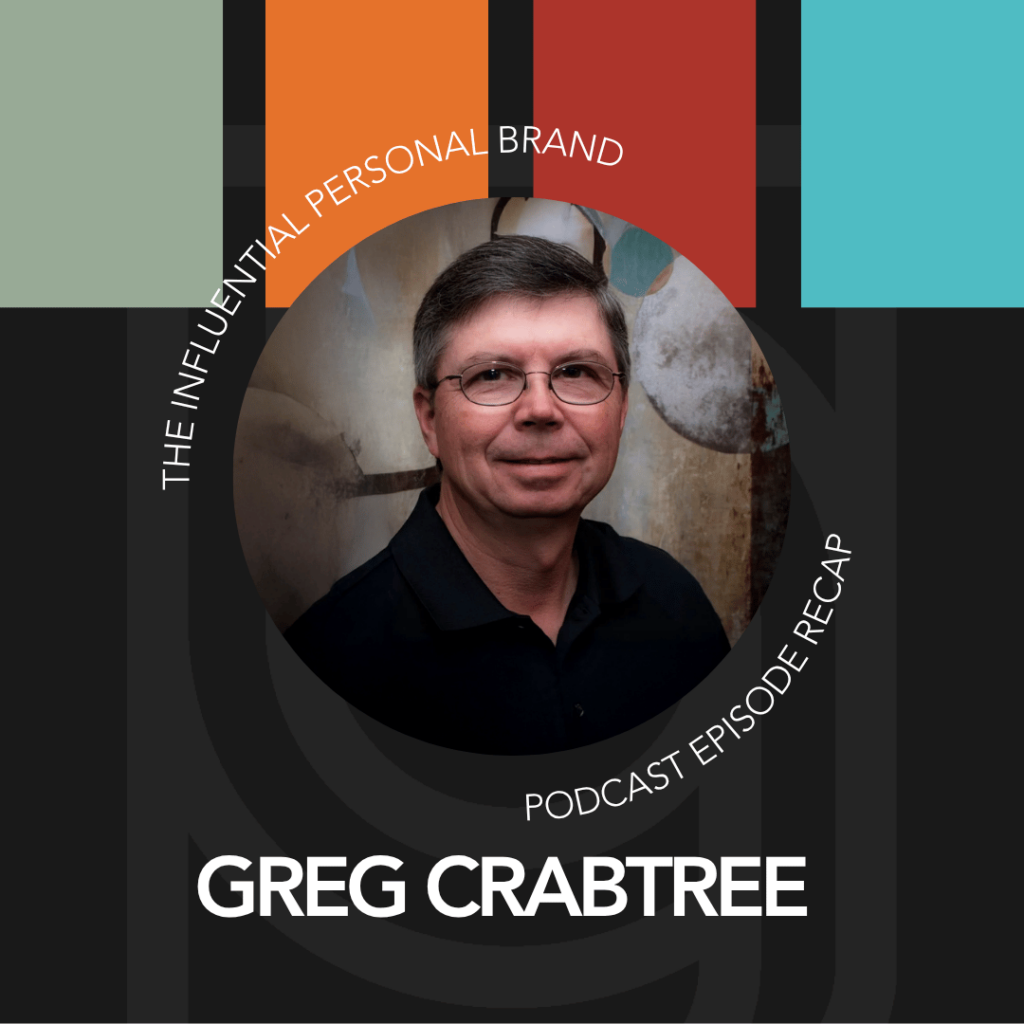
[00:00:00] the truth that nobody ever told you before you started your business. If you [00:00:05] don’t know your numbers, you don’t own a business, you have a hobby, [00:00:10] and hobbies don’t pay. The bills. So let’s talk [00:00:15] about a few things when it comes to knowing the numbers. And I think [00:00:20] that, as an entrepreneur and as you are in your entrepreneurial endeavors, [00:00:25] building and growing your personal brand, whether it’s within a business or it’s completely aside of your [00:00:30] business.
[00:00:30] There’s some things that are fundamentally important, and I think the numbers [00:00:35] are a huge part of what people tend to shy away from, and it’s whether because they don’t understand [00:00:40] them or they’re not the fun and exciting part of the business, or they’re [00:00:45] confusing, and it doesn’t matter which category those fall into, those are dangerous places to be [00:00:50] as you’re growing and scaling a business or a personal brand.
[00:00:53] So there’s a couple of quick things that [00:00:55] I wanna talk about. As a business owner, congratulations, you are also now A [00:01:00] CFO. And that doesn’t mean you shouldn’t replace yourself one day, but at the end of the day, this is your [00:01:05] business. And it’s your business to know your numbers. You don’t have to be a spreadsheet [00:01:10] wizard.
[00:01:10] You don’t have to be a CPA and you didn’t have to go, to school and finance and [00:01:15] accounting to know how to run your business. But you do have to know what’s going on. So here’s a couple of [00:01:20] things. A quick checklist. Here are three things that you should be asking yourself and the most [00:01:25] simplest standards of, making sure that you have your ducks in a row when it comes to knowing your numbers.[00:01:30]
[00:01:30] Number one, how much money came in last month. Now I know that is seemingly [00:01:35] basic, and I cannot tell you how many six, seven, and eight [00:01:40] figure businesses that I know personally where the owner of their business could [00:01:45] not tell me how much money came in last month, basic and [00:01:50] important. Number two, how much money went out, right?
[00:01:52] So how much came in? [00:01:55] How much went out? And that’s IE expenses. So how much did [00:02:00] you bring in? How much did you spend? And then thirdly, how much is [00:02:05] left over. Right. That’s called, uh, revenue expenses net [00:02:10] profit. Right? But that’s simplest way to think about it. And at the very, very, very [00:02:15] basic level, those are the three things that we have to know is how much came in last month, [00:02:20] how much went out last month, and how much.
[00:02:22] What’s left over. This is not about, [00:02:25] uh, doing it all yourself, but it is about knowing what to do with the financial numbers [00:02:30] and not outsourcing that and not looking at it because you don’t want to, right? So that’s step [00:02:35] one. Uh, number two, you gotta have a system. All right, so these are four [00:02:40] quick systems checklist items that I will give you about how to get more [00:02:45] intimately acquainted with your numbers in your business.
[00:02:47] Uh, number one, make sure that as a business [00:02:50] owner, that you have separate business and personal accounts. That’s the first big [00:02:55] no-no, when creating some simple, basic financial guidelines in [00:03:00] your business. Personal and business accounts have to be separated. I [00:03:05] would say the same thing for credit cards.
[00:03:06] If you’re gonna choose to have credit cards in your business, then you need personal cards and [00:03:10] you need business cards, you need a business account, and you need a personal account. Make it easy on [00:03:15] yourself for reconciliation. Do not mix and mingle the two. I don’t care how small you are. I don’t [00:03:20] care if you brought in $10 last month.
[00:03:22] Have it in a separate account. Okay. [00:03:25] Second quick system to make sure that you have clean financials, uh, is make sure that you have monthly [00:03:30] bookkeeping. If you have to start with something as simple as a spreadsheet to track what came [00:03:35] in, what went out, and what we have left over, great. Uh, then you can elevate to simple [00:03:40] systems like HoneyBook, or we use QuickBooks online.
[00:03:43] Um, you don’t have to have [00:03:45] a bookkeeper, but you have to have bookkeeping. Now, at some point, it’s going to behoove [00:03:50] you to start with an outsource bookkeeper. Then you can hire a full-time bookkeeper. Then you can [00:03:55] hire a controller and you can start building the financial engine of your company. But until then.
[00:03:59] [00:04:00] You are the bookkeeper, you are the CFO. Um, and so you’ve gotta take control of this. You [00:04:05] can fractionally outsource it. You can hire someone for 20 hours a week. You can hire a company, an [00:04:10] individual, it doesn’t matter. Um, and you’ve got to have a bookkeeping system. Could be a [00:04:15] spreadsheet, could be QuickBooks, but you gotta have a system.
[00:04:17] Number three, you have to have a [00:04:20] tax. Planning strategy, not just a tax filing strategy. There [00:04:25] is a difference between tax planning and tax filing, right? Tax [00:04:30] planning has more to do with your entity structure. [00:04:35] And, what are the different ways that we use the money, right? So it’s making sure that you’re [00:04:40] set up the right way.
[00:04:40] It’s making sure that you’re best optimized to pay [00:04:45] taxes and only the amount that you owe. So let me be clear here about taxes. I am not [00:04:50] against taxes. I’m an American who lives in America and gets the great [00:04:55] privilege of paved roads, paramedics, police officers, [00:05:00] teachers, the fire department, red lights, stoplights.
[00:05:03] Those are things I [00:05:05] greatly love about our country, and I am all about paying my fair [00:05:10] share of taxes. I call it America’s money, right? This is America’s money, and I am happy to pay [00:05:15] it, and I do not want to pay 1 cent more than I am [00:05:20] supposed to. That is the difference between tax filing and tax [00:05:25] planning. I want to pay every good cent that I owe to America to enjoy all the benefits [00:05:30] that I get as an American, and I wanna make sure that I’m not overpaying, [00:05:35] I don’t wanna underpay, I wanna pay my fair share, but I most certainly don’t want to overpay [00:05:40] because I didn’t hire the right person.
[00:05:41] I didn’t know, uh, what counted. I didn’t know what was a [00:05:45] deduction. I didn’t know that I didn’t have the right entity. Those are all things that are tax [00:05:50] planning, right? And as someone who files your taxes and someone who helps you with tax planning [00:05:55] are two different people, you have to have two different thought trains on that.
[00:05:59] So what’s my tax [00:06:00] planning strategy versus who’s just gonna file my taxes? That’s the third. And then the fourth is your [00:06:05] profit, right? What’s your plan for profits? Are you trying to make profits, right? I [00:06:10] imagine you are if you’re in a for-profit business. Um, but you have to have a real [00:06:15] monthly budget.
[00:06:16] With revenue goals and expense limits, right? Um, [00:06:20] you likely won’t hit your financial goals if you don’t plan for them, and you [00:06:25] likely won’t hit the plan if you don’t track it, right? So there, there has got to be a [00:06:30] target of what we’re going after. There has to be a budget. Um, and that’s, that’s a well-defined [00:06:35] budget and lots of different arenas.
[00:06:36] And like I said, uh, even if the budget is, Hey, next month I can [00:06:40] only spend a hundred dollars on my personal brand for X, Y, and z [00:06:45] reasons. That’s a budget. Budgets don’t have to be huge, but everyone [00:06:50] needs a budget to make sure that you’re spending and earning in ways that [00:06:55] allow you to grow. The number one reason that most companies fail is they simply run out of [00:07:00] money.
[00:07:00] Don’t let your mission fail because you didn’t plan for the basic fundamental [00:07:05] essentials of financial planning. Okay. Now last but not least, I wanna [00:07:10] share just a couple of quick things of what smart, entrepreneurs do.
[00:07:14] Not the only [00:07:15] things, but a few things that they do to really help with this. Number one. Make sure [00:07:20] that you have, this is a best practice. Make sure you have monthly financial review time in your [00:07:25] calendar, right? I’m very much of a believer if it’s not in your calendar, it won’t happen, it won’t get [00:07:30] done.
[00:07:30] So make sure that you have monthly financial review time to review what came in, [00:07:35] what went out, and what was left over to make sure that you have time to evaluate. Do I [00:07:40] have enough set aside for taxes? Right? That’s a part of the plan is budgeting. [00:07:45] Uh, like, hey, when money comes in, I have to set aside some for taxes.
[00:07:49] ’cause nobody wants to be [00:07:50] hit with that surprise bill at the end of the year plan in advance. That requires [00:07:55] time. So make sure that that time is in your schedule in advance every single month. [00:08:00] The only reason that things get out of control is that you who is in control of the money, [00:08:05] stopped looking at the dollars and cents.
[00:08:06] So make time for that every single month. Number two, [00:08:10] hire a bookkeeper to help you keep things straight, right? Uh, that [00:08:15] comes at varying levels within your business, but with all the things that you have going on, uh, [00:08:20] I would say making sure that there is someone. Protecting the financial [00:08:25] realms of your business, which is what helps you keep going, is one of the most important things for you to [00:08:30] start with, right?
[00:08:31] It doesn’t have to be full-time. Maybe you start with five hours a week and then you grow [00:08:35] from there. But most people think, oh, I need a va. Right. That might be true. [00:08:40] Um, but you also may wanna look at, Hey, I gotta make sure that I have money [00:08:45] coming in and I’m limiting money going out so there’s money left over so that I can continue to do this next [00:08:50] month.
[00:08:50] Right. So weigh the pros and cons of who are the first [00:08:55] people that you hire. In order to keep the business intact. Uh, number three, make sure that you’re saving [00:09:00] at least 20 to 30% of everything that comes in for taxes and also hopefully some [00:09:05] profit leftover, right? So a good rule of thumb, based on what you are projecting [00:09:10] come in, you can start with 20, uh, we put aside 30% every single month of what’s left [00:09:15] over for taxes.
[00:09:16] Right, and that is to make sure that we don’t get hit with [00:09:20] surprise bills and that we always have operating capital and that we never put ourselves in a cash flow [00:09:25] crunch ’cause we spent all the money that actually belonged to America, right? So make sure that you have those [00:09:30] financial practices in place and that last but most certainly not lease, is make sure that you [00:09:35] actually have a monthly p and l to review.
[00:09:37] Right. Part of that time that you’re gonna set [00:09:40] aside is going over your profit and loss statement, your p and l, but you actually have to have one, [00:09:45] right? And if you don’t know how to make one and you can’t, then that’s why those initial, maybe first five [00:09:50] hours that you hire out could be a bookkeeper, because this is what keeps you in business.
[00:09:53] This is what keeps you in [00:09:55] motion. This is what allows your message to get out into the world, is that you have enough funds coming in that allow you to [00:10:00] keep doing the thing that you feel like you’ve been called to do. Right? There’s the art. To [00:10:05] this, and then there’s the business side of this, right?
[00:10:08] And they’re both [00:10:10] necessary. And you don’t have to, like I said earlier, you don’t have to be a finance major. You don’t have to be a [00:10:15] CPA and you don’t have to be a spreadsheet wizard to know the basics, but you gotta know the basics [00:10:20] because the basics are what are gonna keep you running so that your message can get out to the people that [00:10:25] it’s meant to help.
Ep 591: Simplifying Financial Success for Entrepreneurs | Greg Crabtree

[00:00:00] AJ: Hey everybody. Welcome back to the Influential Personal Brand Podcast. [00:00:05] I get the privilege of getting to interview someone today that [00:00:10] I have been learning from behind the scenes for actually a few [00:00:15] years and actually hired the company that he works with. Simple numbers [00:00:20] to. I actually come in and work with Brain Builders Group about seven months ago, and Greg [00:00:25] Crabtree has been notoriously renowned in the Entrepreneurs [00:00:30] Organization community for pretty much like the 10 years I’ve been a part of eo and I [00:00:35] read Simple Numbers.
[00:00:35] I’m currently rub reading his second book, simple Numbers 2.0, and [00:00:40] it’s one of, here’s what I would say, and this is a, a great testament to you, Greg, the [00:00:45] title. Is exactly what’s in the book. It’s how do you make very [00:00:50] challenging, difficult numbers, simple. So that as a, a business owner, I can apply those [00:00:55] two of my financial life.
[00:00:55] So to get to have you on our podcast today is a privilege [00:01:00] because selfishly I’m gonna get to ask you all these questions that I wanna know. But [00:01:05] also I know that if I want to know the answers to these questions, so does everyone who’s listening. [00:01:10] So I know this is going to be applicable and universally sound for everyone [00:01:15] who’s listening.
[00:01:15] So. Without, you know, further ado everyone. Let me give you a [00:01:20] formal introduction to Greg Crabtree. He is a CPA, a speaker, an [00:01:25] author, an entrepreneur himself who has dedicated his career to helping [00:01:30] entrepreneurs build the economic engines for their business. As the founder of Crabtree Roe [00:01:35] and Burger Greg has pioneered revolutionary metrics for measuring.
[00:01:39] Two [00:01:40] very important things we’re gonna talk about today, labor efficiency and then also something that [00:01:45] we’ve really adapted in our company culture, which is contribution margin to help financial [00:01:50] reporting for business owners. So Greg, welcome to the show. I’m so excited to have you.
[00:01:54] Greg: [00:01:55] Yeah. I appreciate it. Thanks for having me. That that’s a, a very, very nice introduction. I appreciate [00:02:00] it.
[00:02:00] AJ: Well, and here’s why I asked for you to be a guest on the show [00:02:05] today is I think it’s very challenging in a world where there is a [00:02:10] thousand different things that we could be looking at and financial D dashboards and [00:02:15] metrics, and you have so many terms and terminology that just. [00:02:20] Don’t necessarily make sense in real world application.
[00:02:23] It’s like, yes, okay, I [00:02:25] know what my profitability is and I know what gross margin is, but how do you [00:02:30] actually use those numbers to make decisions in your business as something that I [00:02:35] think you just do so extraordinarily well. And it’s something I’m really excited to talk [00:02:40] about today. But before we do that, I, I mentioned to this before I hit record, I was gonna ask [00:02:45] you this question because you could have done a thousand different things.
[00:02:49] And you [00:02:50] chose to be in the world of finance and not just in finance, but [00:02:55] in the world of finance for small business owners, for entrepreneurs. And we can be a [00:03:00] seemingly difficult audience to appeal to. So how’d you get into this and [00:03:05] why have you stayed in this?
[00:03:07] Greg: Well, I mean, first and foremost, I chose [00:03:10] accounting because they, they worked in an air conditioned office. I mean, so when you grow up, grow up [00:03:15] on a chicken farm in ho cotton in the afternoons, when you’re not gathering eggs, you know, you [00:03:20] just want to, you know, work in someplace that isn’t, you know, hot, smelly, [00:03:25] unpleasant. you know, once I started in the profession and got outta school, [00:03:30] you realize what they taught you in school is not what you do every day. And [00:03:35] after the shock of that wore off and I had to make a living, like many of us, we gravitate [00:03:40] to the thing that fits our passion. And, [00:03:45] and so I, I, you know, through a series of, of, of changes, I, the [00:03:50] firm I worked for originally, I got hired by a bank client of theirs to be their controller. [00:03:55] That was where I kind of developed my technology skills and love of kind of modeling and [00:04:00] forecasting, you know, with spreadsheets. It was like first generation pc. I mean, I was, I was running outta this [00:04:05] space every time I turned around ’cause I just kept pushing the limits of what it would do. And then left [00:04:10] there and, and went back into practice.
[00:04:11] ’cause I, I, I really had a passion for more, you know, working directly, [00:04:15] you know, with multiple clients rather than just working for the bank. But even that [00:04:20] had its moments of, you kinda get drug into, you know, the, the, the [00:04:25] stuff that, you know, you tell somebody you’re a CPA, the first thing you get is a tax question. you know, and, [00:04:30] and it’s like, yeah, I mean, it’s necessary, but it’s not the prime thing. And really for [00:04:35] me, I mean, and I wish this had come along sooner in my career, but you know, in [00:04:40] 2001 I got introduced to the non entrepreneurs organization and that was a, just a [00:04:45] transformative moment because at that moment, you know, I had a couple partners.
[00:04:49] We had a [00:04:50] qualifying million dollar CPA firm in Huntsville, Alabama. All of our clients were [00:04:55] local. since then, we became entrepreneur [00:05:00] focused and really more consulting first focused in that, you know, we’ve now [00:05:05] grown that, that practiced about 7 million of revenue and we, our clients are all over the [00:05:10] world. And 98% of what we do is not in Huntsville,
[00:05:13] AJ: Mm-hmm.
[00:05:14] Greg: [00:05:15] and, but it all came because of that focus of. [00:05:20] Really asking the question that I, I really attribute to my first EO forum [00:05:25] what is our per, you know, when I asked them how many would recommend their current accountant, the answer [00:05:30] was none. So that from a net promoter score basis, that’s a pretty sad [00:05:35] statement of a profession. and, and as a profession, we sell people what we do. We don’t do [00:05:40] what they need. And, and, and there’s, and there’s a, there’s a truth to that. And just about [00:05:45] anything in the world. The idea is, you know, figure out what the market needs [00:05:50] and, and that takes some time and takes some effort. And then once you find that [00:05:55] need, you gotta find a way to solve that need profitably.
[00:05:57] And then you start building the [00:06:00] marketing engine to say, let people know that you exist. And even to this day, I mean, we still straight, you know, [00:06:05] people try to put us in a box. Oh, you offer fractional CFO services? not [00:06:10] really. We, we may eliminate the need for fractional CFO services, you know, for what we [00:06:15] do, but we, no, that’s not the box we fit in. You know, and, you know, and, and so [00:06:20] it really comes down to, we really want to help people optimize [00:06:25] profitability, return on invested capital, which is a very poorly [00:06:30] understood, you know, topic of, capital you invest in the business. What is the [00:06:35] return that you should get out of it? You make that business as profitable and [00:06:40] capital efficient as possible, you’ve got the best of both worlds. It’s a very valuable [00:06:45] business should you ever decide to sell it, and it’s a very valuable business should you decide to keep it.
[00:06:49] AJ: [00:06:50] Yeah.
[00:06:50] Greg: you know, fortunately for me, the, the [00:06:55] study of the data is never ending because it’s like, and, and I don’t [00:07:00] go to the data. to, with a proof text I’m trying to prove, I go to [00:07:05] the data to say, Hmm, what are you saying? You know what, what? Look what, talk to me.
[00:07:09] AJ: [00:07:10] Hmm.
[00:07:10] Greg: And, and, and so really it was more so an approach that I had to do something that [00:07:15] accountants loathe to do is I go study data without somebody paying me to do it. [00:07:20] To, to develop. I mean, and you know, you’ve worked with us a while now and you [00:07:25] understand we have deeply held beliefs of how things work. Not [00:07:30] rules. No. These are beliefs
[00:07:32] AJ: Hmm.
[00:07:32] Greg: and for the most part, there is [00:07:35] only a handful of numbers that truly matter. and it’s easy [00:07:40] to, you know, get worried about some other numbers in your day.
[00:07:43] And it says, well, you know, I, I get that, [00:07:45] you know, don’t waste money. a call this morning before this call that, you know, a client [00:07:50] that’s in a rapidly growing mode, you know, and they were worried about, you know, hitting their [00:07:55] labor efficiency targets and, and, you know, their operating expenses that increase.
[00:07:58] They said, don’t worry about it. It, [00:08:00] it’ll be fine. said, you’re not spending money that’s not crazy. You hit that LER number, [00:08:05] you will have that level of profitability. You, you gotta go crazy with, [00:08:10] with the opex number. You know, for that not to happen. And once you understand the [00:08:15] power of leveraging labor and efficiently deploying capital. You [00:08:20] got something that puts you miles ahead of every other business out there, [00:08:25] you know, in that process. But they don’t teach us that in school. They don’t even teach you that, you know, in, [00:08:30] in the world of business because there’s all of these, know, rules of, [00:08:35] oh, you know, you know, business is valued at 10 times EBITDA or five times ebit, ebitda.
[00:08:39] You know, it’s like, [00:08:40] yeah, maybe not really. You know, those are, those are [00:08:45] benchmarks, you know, when people are talking about values. But if you have. I can get 10 [00:08:50] times ebitda selling a business that has a really bad EBITDA number, it didn’t mean I got my [00:08:55] value for it.
[00:08:55] AJ: Ah, that’s good.
[00:08:56] Greg: you know, and I can get five times EBITDA for a number that I’ve [00:09:00] got a, a, a, a very strongly adjusted EBITDA number that I win when the [00:09:05] argument for, and I get the right number. You know, so, so a lot of those things, there’s a lot of [00:09:10] lore that goes around in business
[00:09:11] AJ: Mm-hmm.
[00:09:12] Greg: and I, I just try to stick to finding what’s [00:09:15] truthful,
[00:09:16] AJ: Hmm.
[00:09:16] Greg: truthful. and trust me, in the [00:09:20] world of accounting, audits aren’t truth. Audits are, you know, are, are [00:09:25] things that, you know, it’s just generally accepted accounting principles that have a tendency to just confuse things more than they [00:09:30] help, and, and put a lot of weight on the data.
[00:09:33] And, and oh, by the way [00:09:35] anybody listening to this, that if you’ve ever had accountant prepared financials that got sent [00:09:40] to the bank, why is it that the bank calls you back and asks for more information? [00:09:45] If it was actually a sufficiently prepared document, the bank wouldn’t have any more questions. And, [00:09:50] and so once again, it identifies the deficiencies of what existed in the [00:09:55] marketplace, but it can’t be so deep into the weeds [00:10:00] that, you know, you’re, you’re picking lint outta your navel to kind of figure out what’s wrong. I mean, it’s like, [00:10:05] come on people. I mean, there are some long hail principles and to be quite honest, everyone that I [00:10:10] talk about, I learned from a client, I didn’t learn from school. The only thing I [00:10:15] learned from school I, I’m fortunate that we’ve done about 10 years of the program now. [00:10:20] I, I get to, to host the EO at Horton Executive ed program. and I’ve been [00:10:25] the host since the beginning. And, one of the early years of that program, [00:10:30] actually the first year of that program, or lead professor David Wess, was talking about return on Vista Capital. [00:10:35] And, and you know, I’m sitting in the back of the ring going, [00:10:40] Hmm, you know, I, I. Knew about that in school, but we never used it, never, never did [00:10:45] the calculation.
[00:10:45] And they got enamored with the idea of it. come to find out, there’s really no [00:10:50] private company data around that topic. And so I [00:10:55] just started studying it because we have access to data and, and so we have hundreds of businesses we can [00:11:00] look at, you know, and, and we started to find this, this very identifiable [00:11:05] correlation of a capital efficient business that’s producing the right amount of profitability relative to [00:11:10] the capital invested. Because in the, in the world of business, you know, there’s [00:11:15] really, you know, you can identify businesses of, do you have accounts [00:11:20] receivable and inventory? Those are tough businesses to get a good return on because I’m carrying two things that [00:11:25] turn over
[00:11:25] AJ: Mm-hmm.
[00:11:26] Greg: a frequent basis. Do I carry one? One of the two, but not both.
[00:11:29] [00:11:30] Okay. That gives me a little higher return potential. I, I can’t, I’m a business [00:11:35] that I don’t have ar or inventory. I get to bill either upfront. as I [00:11:40] perform, perform the service or sell the product. So that’s even better, [00:11:45] And, and do you have, then, do you have a big capital component of equipment?
[00:11:48] Well, you know, we’re a [00:11:50] very heavily dominant service-based economy in the us although we do have some capital [00:11:55] intensive businesses. But there’s a way to look at all of those things and equate it back [00:12:00] to setting your profit target then giving somebody something [00:12:05] definitive to aim at. I would say probably my [00:12:10] greatest amount of pride in the work that we’ve done is giving people a [00:12:15] very specific, definitive target that is unique to their business. [00:12:20] and you know, as always say, a man who aims at nothing hits it with amazing accuracy. [00:12:25] Well, it, and when somebody just gives you an opinion about something. [00:12:30] You’re not committed to that thing. It’s like, eh, you know, sounds nice. You know, may maybe we’ll hit it, maybe not, [00:12:35] but when, when you give people definitive things of, Hey, I need to be a two total LER, [00:12:40] I need to have two months of operating expenses in cash with zero drawn on a line of credit. I [00:12:45] need to be a 75% return on invested capital. are definitive things [00:12:50] that gives you trade off decisions of. [00:12:55] you know, I can grow well, but is growth good? Not all growth’s good. I got, I’m here to [00:13:00] tell you, you know, we have seen many times people have grown and made less money.
[00:13:04] AJ: [00:13:05] Yeah, I think that happens. I think a lot. And you’ve, you’ve mentioned this term a couple of times. [00:13:10] It’s one of my hot topics for today because, and I love what you said, there’s lots of [00:13:15] numbers you can look at, but there’s only a few that are like really instrumental to [00:13:20] really understand. And up until the last year, I [00:13:25] had never even heard the term of LER Labor efficiency ratio, and [00:13:30] I consider myself.
[00:13:31] Fairly savvy in the financial business world [00:13:35] and never had come up, not in school, not in [00:13:40] all the courses and all of the you know, I’ve done like anything from, you know, like [00:13:45] my financial, like MBA course to like, none of that had really like come up to how do you use [00:13:50] that? In business. And so I’d love for you to first of [00:13:55] all explain, because I think even definition wise, if you were just to go Google it, it’s gonna [00:14:00] be slightly different than how I believe you guys use it and practice it.
[00:14:04] Greg: Actually, you [00:14:05] probably we, we’ve become known enough as, I mean chat, GPT has read both of my books, and [00:14:10] so it, it, it, it actually will give you an accurate you know, answer.
[00:14:14] AJ: so [00:14:15] tell.
[00:14:15] Greg: yeah. Yeah. And, and so it really requires a couple [00:14:20] of things to think of. Number one is revenues, the slipperiest number on the p and [00:14:25] l and. Probably to go back in [00:14:30] thought of why I started looking into this is I was frustrated [00:14:35] with the annual requests that I get from clients who wanna be [00:14:40] included in the Inc 500, Inc. 5,000 list. And I’ve long [00:14:45] since believe, I mean, granted, I mean Great Frank Magazine to generate awareness and yes, [00:14:50] it’s a great marketing tool and, and I, I, I get all that piece. From a metric [00:14:55] standpoint of growth of revenue is you are not [00:15:00] rewarding the most deserving companies because there’s a lot of [00:15:05] companies on that list that unfortunately I do know the background of that, that [00:15:10] revenue is about as worthless, you know, as, as, as it gets. And, and so [00:15:15] as they say in Texas, all hat and no cattle, I got revenue, but I ain’t got profit and I ain’t got margin, you[00:15:20]
[00:15:20] AJ: Yeah.
[00:15:21] Greg: So it really kinda led me down this path. When I was on the [00:15:25] EO Global Board I started working with this thing that I, that I, I kind of [00:15:30] keep in my hip pocket and we’ll, we’ll probably use it here soon, I came up with [00:15:35] basically a business health scoring metric that looked at [00:15:40] not revenue growth, but gross margin growth.
[00:15:42] And the way we define gross margin is revenue [00:15:45] minus materials or con subcontracts, not labor. So I wanna [00:15:50] get to a gross margin number. That is the pure value of what’s left over for [00:15:55] your labor and your overhead to do in the business. ’cause everything else is really a pass [00:16:00] through, you know, at that point of materials or cogs. And, and so that gross margin is [00:16:05] the true economic top line of the business. And if you measure things off of it, well then we started [00:16:10] looking at, well, let’s measure things off of it. Well come to find out the more you study the data. [00:16:15] There is a very, very tight correlation of all labor. Doesn’t matter if it’s direct or [00:16:20] management, all gross wages not loaded for payroll taxes either.
[00:16:24] Keep it simple, [00:16:25] just wages to gross margin. There’s probably 80 to 90% of the [00:16:30] businesses offer off of one simple metric. need $2, a gross margin for [00:16:35] every dollar of labor to hit my profit target, and [00:16:40] you couldn’t get more simpler than that. And, and then. [00:16:45] We can take it and split it between direct and management for a next [00:16:50] level view.
[00:16:50] Now those that, you know, we, we look at total LER as a health diagnostic. [00:16:55] I mean, literally, I can look, I mean five minutes, I can look at a business and tell you [00:17:00] where its problem is
[00:17:01] AJ: Hmm.
[00:17:01] Greg: that that’s how simple the, the analysis is. [00:17:05] And once you look at it, you go, okay, well what can you do it? Well, let’s split it between direct and management and then let’s [00:17:10] watch it move across time.
[00:17:11] If we’ve got some historical data. Compared to now, [00:17:15] and those individual measurements of direct and management is more about your labor [00:17:20] strategy of how you go to market. I, I can win the game a lot of different ways, but direct and [00:17:25] management play off of each other. If I go expensive, direct labor, [00:17:30] I gotta have less expensive management labor. I can go balanced between the two, [00:17:35] or I can go inexpensive direct labor. Then I gotta have a lot more expensive management [00:17:40] labor to cover the deficiencies of the direct labor that I. Get you in trouble.
[00:17:44] AJ: Now the direct [00:17:45] labor revenue producing labor, right?
[00:17:48] Greg: Revenue really, [00:17:50] essentially. Think of it like this and, and we don’t get too wrapped around the axle about it, so don’t, don’t overthink [00:17:55] it. Somebody that spends 30% or more of their time facing the customer or [00:18:00] doing, making the thing that you do happen, you know, if you’re a product or service business. [00:18:05] So, so really, I don’t care what their title says, we have plenty of people that have the [00:18:10] manager title that we put into direct labor. I.
[00:18:12] AJ: Mm-hmm.
[00:18:13] Greg: Matter of fact in our office, [00:18:15] I’m direct labor, I still face clients more than 30% of the time, you know, in billable work. [00:18:20] So let’s face it, I don’t want to do management labor.
[00:18:24] I [00:18:25] like doing this. And, and so, so from that standpoint, but that’s really [00:18:30] just more, we call it a button, a bucket. Don’t split people. allocate. I’m an [00:18:35] avid anti allocator. I mean, in the world of accounting, accountants love to allocate things. [00:18:40] Allocations are just jobs programs for accountants. It, it just takes up time and, [00:18:45] and just pollutes the quality of the data. You know, at the end of the day, and [00:18:50] not gonna say that there’s no cases where you allocate, but it’s, but you [00:18:55] want to allocate as, as the last possible choice to get [00:19:00] clarity of the information. so at the end of the day, we call it a but in a bucket. Put the whole person in [00:19:05] into direct labor or the whole person in the management labor, watch it move across time. [00:19:10] Is it getting better? Is it getting worse? typically we don’t, like [00:19:15] month, months are highly inaccurate period of time. So we’re looking at rolling three is the shortest [00:19:20] period. We look at enrolling. 12 is your most authoritative period to look [00:19:25] at. then you can look and see at this mix. And, and for the most part, I mean, we. [00:19:30] Klan, I was talking to you earlier this morning. I mean, they, they’ve gone through this transition and they, [00:19:35] they’ve been growing, their total labor efficiency ratio had fallen [00:19:40] to below their minimum acceptable target, and, and it was [00:19:45] all in one place. It was in management labor. They had, you know, their direct, their direct labor efficiency actually [00:19:50] gone up,
[00:19:50] AJ: Hmm.
[00:19:51] Greg: management, they’ve gotten really heavy and lethargic, and, and this is [00:19:55] growing.
[00:19:55] Companies fall into this trap all the time. Oh, we need to add people to this. [00:20:00] You, you might, but for every dollar of management labor you add, [00:20:05] you have an output component. And this is really why I think management LER was even a more [00:20:10] revolutionary component even total LER.
[00:20:12] AJ: Hmm.
[00:20:13] Greg: Because [00:20:15] you have something that your management labor has to attain to, it has a [00:20:20] definitive measurement that, that, you know, ’cause if I add management labor, okay, now [00:20:25] I’ve reset the target of contribution margin.
[00:20:27] I. And then that works its way [00:20:30] up to then, you know, an estimate of revenue that we’ve gotta go get. And, and if we, [00:20:35] anything below that number is unacceptable. That, that’s just a definitive measure of, of, [00:20:40] you know, successful performance.
[00:20:42] AJ: What would that be like? Would you say there’s like a [00:20:45] baseline of like what you would say? Anything below this is like.
[00:20:48] Greg: now, now management labor, I [00:20:50] mean the individual metrics, there are some guidelines within certain [00:20:55] industries, you know, I mean, we, we have. You know, the one one we have a lot of mastermind [00:21:00] participants in, is it MSPs? And we, we kinda identified the neutral [00:21:05] success for Ms. P is a two total LER, like I said, [00:21:10] you want a 3.5 direct labor and a 3.5 management labor.
[00:21:14] Now [00:21:15] those two are me. Those, those, those two individual components have a different numerator. So that’s the [00:21:20] reason why they’re the same number. You know, but, but we’ve got people that are above one and below the [00:21:25] other.
[00:21:25] AJ: Mm-hmm.
[00:21:25] Greg: But the two balance out to get you to the two, to the key is you gotta get to the two total.
[00:21:29] AJ: Yeah.[00:21:30]
[00:21:30] Greg: And then once you set them side by side, you start to realize, oh, you’re, [00:21:35] you’re pushing inexpensive labor, but you had to compensate with more management. [00:21:40] Oh, you’re pushing expensive labor and you’ve got a really skinny management.
[00:21:44] AJ: [00:21:45] Hmm.
[00:21:45] Greg: All of those have. think of it like this. If I have really expensive [00:21:50] direct labor and I have really inexpensive management, problem is I have nowhere to [00:21:55] go
[00:21:55] AJ: Hmm.
[00:21:56] Greg: and say My expensive labor, last time I checked, still [00:22:00] likes to get raises. Well, they’re already expensive. Can will the market let me [00:22:05] continue to charge more. Now when I go to the other end and I got inexpensive labor and I got [00:22:10] the management. That’s more of what I would call a team development model [00:22:15] of where, okay, I’m gonna grow these people and you know, we’re gonna go from [00:22:20] inexpensive, direct expensive management to balanced.
[00:22:23] We’re, we’re actually moving [00:22:25] from that strategy to the balance mode. Once we get the balance, we have to decide, are [00:22:30] we gonna go all the way to expensive direct labor? Eventually, maybe, maybe not. [00:22:35] I, that’s the one where I typically find a lot of people are stuck.
[00:22:37] AJ: Mm-hmm.
[00:22:38] Greg: And they, they, they get some [00:22:40] terrorist on their, you know, a, a terrorist in labor is a person who doesn’t fit your [00:22:45] culture, but they’re a high producer.
[00:22:47] AJ: Mm.
[00:22:47] Greg: that, those, those are [00:22:50] people that, that, you know, when we look at it and Yeah,
[00:22:53] Yeah. You, you kinda get stuck with those.
[00:22:54] AJ: [00:22:55] it was, it’s interesting because I think one of the reasons that I was so drawn to this [00:23:00] concept of LER, labor efficiency Ratio is because me, [00:23:05] like so many other people, doesn’t matter how big your team is, you could have a team of one or a [00:23:10] team of. A thousand. There’s always this never ending [00:23:15] commentary and business of, there’s more work to be done than we have the team to [00:23:20] do the work.
[00:23:21] Right. And there’s, there was.
[00:23:22] Greg: it’s a, that’s not, and I’ll [00:23:25] give you a good data point for that. So in our most recent Horton class, and then I did the same [00:23:30] question the year before as well. W we get 60 entrepreneurs from around the world. All [00:23:35] different kinds of businesses. of the room. Will I ask a question? What [00:23:40] is your biggest constraint?
[00:23:41] Getting revenue or getting access to labor?
[00:23:43] AJ: Hmm.
[00:23:44] Greg: Half of the [00:23:45] room is revenue. Half of the room is labor and, and what you typically [00:23:50] find the necessary businesses of [00:23:55] the marketplace are labor constrained. The discretionary [00:24:00] businesses in the marketplace are revenue constrained.
[00:24:02] AJ: Hmm.
[00:24:03] Greg: And, and [00:24:05] that’s become a very interesting learning over the last couple of years, is we, we, we keep a, what we call the [00:24:10] simple numbers a hundred company model. So we have a hundred of our clients that we put in a [00:24:15] model treated as one big conglomerate. ’cause it’s businesses from all over the us, all [00:24:20] different industries, all different geographies, since we’re not geographically centric and it, it’s our read [00:24:25] of the economy.
[00:24:25] AJ: Hmm mm.
[00:24:26] Greg: And one of the things that has really emerged in the last five [00:24:30] years going through Covid is this separation of the necessaries and the discretionaries
[00:24:34] AJ: [00:24:35] Hmm.
[00:24:35] Greg: and, and the discretionary businesses are getting their head handed to ’em right now. And [00:24:40] so, so when people, you know, in, you know, write articles or going the news and [00:24:45] start talking about the economy, I mean, they’re, they’re paying with a pretty big brush because I got news [00:24:50] for you. We got people that are crushing it and we got people that are hanging on for dear life.
[00:24:53] AJ: Hmm.
[00:24:54] Greg: And [00:24:55] everybody in between. Now we tend to like to think that we can move the [00:25:00] needle a little bit, you know, to the better. And we do, you know, but, but [00:25:05] still, I mean, there’s only so many things we can do when, when somebody’s facing a market, selling a product or [00:25:10] service, that there’s just not sufficient demand for, because they’re, the, the [00:25:15] people buying it are the bottom 60% of the wage force no extra money at the [00:25:20] end of the month.
[00:25:20] They have to make hard decisions. And that’s, and we’ve been in that [00:25:25] mode for about 24 months now that those discretionary [00:25:30] businesses I mean, they’re hanging on like this, that they’ll have a good month, they’ll [00:25:35] have a bad month, they’ll have a good month and a bad two months, and a good half a month.
[00:25:39] And, [00:25:40] it’s, it’s really schizo and, and that that consumer base that they’re relying on is [00:25:45] really struggling.
[00:25:46] AJ: Hmm.
[00:25:46] Greg: Whereas, you know, the other part of the discretionary market is [00:25:50] what we call the highly desired discretionaries. are the people selling to the top 30, [00:25:55] 40% of the wage earners, but still, you gotta fight for their wallet.
[00:25:58] AJ: Mm-hmm.
[00:25:59] Greg: mean, [00:26:00] even those people make discerning decisions about what they spend money on and they don’t [00:26:05] spend consistently, you know, that things will get hot and things will get cold. you know, [00:26:10] and, and so, and a good place that you can kind of see it right now is like in the restaurant industry. [00:26:15] The bottom end is hanging on.
[00:26:16] Okay. their labor costs are high. [00:26:20] But you, you’ve seen them do everything possible to take labor out of the component.
[00:26:24] AJ: Hmm.
[00:26:24] Greg: [00:26:25] dining rooms, doing doing online ordering, doing ordering a [00:26:30] kiosk and all of those things. The upper end, they’re fine. They’re, [00:26:35] you know, if you’re good and you deliver, you do, you do good food and deliver good service.[00:26:40]
[00:26:40] Your parking lot’s always gonna be full because there’s enough people that have the money,
[00:26:43] AJ: Just,
[00:26:44] Greg: to deal with you. [00:26:45] that middle tier that’s getting crushed.
[00:26:47] AJ: Hmm.
[00:26:48] Greg: TGI Fridays went [00:26:50] bankrupt. There’s a couple of other, you know, mid tiers that are teetering on bankruptcy [00:26:55] because their cost of elevated to the point that they just can’t charge [00:27:00] enough to cover those costs because it pushes ’em into that upper tier pricing [00:27:05] somebody will come in and go, well that was good.
[00:27:06] It wasn’t that good.
[00:27:07] AJ: Yeah.
[00:27:08] Greg: And, and there’s a lot of [00:27:10] that. So there’s a lot of, you know, and every industry kinda has, you know, some of the, those same components I. [00:27:15] But if you’re in one of the necessaries, guess what? You can raise your prices to [00:27:20] whatever your cost input is. ’cause if you’re, you know, we, we have a [00:27:25] mastermind group, I’m about to go visit in the HVAC space, you know, they’re doing really [00:27:30] good now, they’re, they’re labor constrained.
[00:27:32] ’cause there’s not people that are HVAC techs walking [00:27:35] around looking for jobs,
[00:27:35] AJ: Sure.
[00:27:37] Greg: But as those people have, as you keep having to pay those [00:27:40] people more. You just charge more
[00:27:42] AJ: Mm.
[00:27:42] Greg: when you’re cold, you need them. When you’re hot, [00:27:45] you need them, you
[00:27:45] AJ: Yeah, I think that’s, that’s, that’s a good, I think that’s a good point of distinction [00:27:50] between, you know, what’s necessary and essential versus discretionary. And I think one of the things I, [00:27:55] I’d love for you to talk about too is like, because I hear this even in our own company, it’s like, Hey, [00:28:00] I feel like it’s time to hire someone.
[00:28:02] And what I love about LER is [00:28:05] it tells you more data-driven of. Are you [00:28:10] in need of more staff or is that just a feeling [00:28:15] that’s amongst the team? Can, can you talk about that a little bit?
[00:28:17] Greg: yeah, so once you, once you set the [00:28:20] parameter, so like I said, most people listening to this is they’re gonna fit that two profile. [00:28:25] If you’re a restaurant, you need to be a 2.5. If you’re a distributor, you generally need to be a 2.5. [00:28:30] I. you’re a union shop, you need to be a 2.5, but most everybody else is a [00:28:35] two. If you’re a staffing business, you’re kind of off the grid in a totally different mindset. You may be below a [00:28:40] two. So I’ll keep staffing businesses to the side, but almost everybody else kind of fits within those categories.
[00:28:44] AJ: [00:28:45] Hmm.
[00:28:45] Greg: If we establish, say, listen, you’re gonna, if you’re at a one eight,
[00:28:49] AJ: [00:28:50] [00:28:55] [00:29:00] [00:29:05] Mm-hmm.
[00:29:08] Greg: I want you to look around and [00:29:10] see, is anybody stressed? Are we running hot? [00:29:15] But if we’re not, let’s see if we can get to 2 0 5, maybe two 10. [00:29:20] find. If you have found a way to be marginally better than your [00:29:25] competition, and there’s a few times that. You’ll have windows of time. This won’t last [00:29:30] forever. got a, the, the click of a team that really gels [00:29:35] Your operating cost are optimized for the range of [00:29:40] revenues that you’re doing. And so this, you’ve got this window of [00:29:45] incremental value that just drops to the bottom line that gives you that extra little juice.
[00:29:49] But trust [00:29:50] me if you grow, you’ll kinda lose it and, and it’ll still be okay. But, but. [00:29:55] And, and if you kind of hit that rough patch of the economy and [00:30:00] finally goes soft, it’ll, it’ll drop down as well. But you’re trying to live between that one, eight and, and the two, [00:30:05] and, you know, and when you’re, and, and if you’re not there, let’s say you’re, you’re [00:30:10] operating consistently at a buck 75. Alright, so we go into the three Ps. [00:30:15] Ps. First, I priced effectively? That’s my [00:30:20] first place I always go. Have you? Have you defended the [00:30:25] value of your team? And that is on management. Shoulders don’t be a [00:30:30] wimp. go defend for that value. there’s a lot more room [00:30:35] for pricing than most people believe
[00:30:36] AJ: Hmm.
[00:30:37] Greg: been our experience over the last, I mean, we’ve seen [00:30:40] more price changes in the last five years than we’ve seen in a lifetime. And so I’m [00:30:45] telling you, most people have not pressed the edge.
[00:30:47] AJ: Mm-hmm.
[00:30:48] Greg: Once I get to the right price though, and [00:30:50] I, and I can defend it and I’m getting the right value and I’m letting the bad customers go to my [00:30:55] competitors and I’m keeping the good ones and serving them, the next thing is process. [00:31:00] Have I given my team the right tools, [00:31:05] training? Are we getting things, you know, David Wessel’s, one of our lead [00:31:10] professors at Horton, you know, talks about speed and power equation. And, and I love that [00:31:15] power is margin pricing power speed is clock time [00:31:20] from beginning to end. There is undoubtedly any project that [00:31:25] expands in length of time becomes less profitable. And so, you [00:31:30] know, there, there’s a significant lack of a sense of urgency in the productive environment of [00:31:35] most businesses.
[00:31:36] AJ: I agree. Mm-hmm.
[00:31:37] Greg: I, I, I’ve gotta, I gotta a [00:31:40] culture of everybody’s on, on target.
[00:31:42] AJ: Hmm.
[00:31:43] Greg: Once I go through those two Ps, there’s [00:31:45] only one P left people. Do I have the right people [00:31:50] And to take a college football and basketball term, the the transfer [00:31:55] portal of business has some talent in it at the moment, don’t think it’s gonna be there [00:32:00] long, but there is some available talent that I would kind of [00:32:05] be paying attention to and you might be able to upgrade your team. You know, [00:32:10] there’s perfectly good players on your existing team that end up going elsewhere because [00:32:15] you had to sit down and have an honest conversation with ’em and going, you know, I like you as a person. You’re a great [00:32:20] person, I don’t think this is the best place for you in the
[00:32:24] AJ: [00:32:25] Mm-hmm.
[00:32:25] Greg: And you gotta have those honest conversations with people and [00:32:30] know. The, know, how many of us have had in our [00:32:35] working career before we became business owners? Somebody sit down and do that with, with us, [00:32:40] not very many. we had to kind of find it out on our own, you know, but Robert [00:32:45] Glaser is a longtime EO member outta Boston. I mean, Robert came up with this concept that we’ve used quite [00:32:50] successfully, and what I call the mindful transition, where I got a good person. [00:32:55] They’re not going to get to their personal LER. We can actually measure [00:33:00] LER by person, you know, so not everybody can, but with our metric approach to things, we [00:33:05] can, so I can look at somebody and go love you as a person. You’re just not gonna [00:33:10] produce that. I, I can’t, you’re using up a productive slot of the business that [00:33:15] is underoptimized.
[00:33:16] AJ: Hmm.
[00:33:18] Greg: That means there’s a better place in the world for [00:33:20] you.
[00:33:20] AJ: Yeah.
[00:33:21] Greg: hey, you know, if you’re not disruptive. [00:33:25] Don’t, you need to be looking, I mean, and there’s a good job market. There’s plenty of jobs available. I mean, [00:33:30] that’s the nice, nice thing about this time of life that’s not existed before is [00:33:35] economy might be kind of, eh, sluggish, but everybody’s got a job that wants a job.
[00:33:38] AJ: Mm-hmm.
[00:33:39] Greg: [00:33:40] not be the job you want, but sometimes you gotta work at a little bit. But, you know, we can give those [00:33:45] people extended, you know, 60, 90 days to go, go find another job. As long as you’re not [00:33:50] disruptive, you don’t make a, make a scene about anything, we’re fine. You know, we’re not. We’re not grossly [00:33:55] losing money, but we’re not optimized, you know, within that, and I, and I’ll give you a [00:34:00] great example of that to put in everybody’s head.
[00:34:02] AJ: Yeah.
[00:34:02] Greg: So in the world of car service, [00:34:05] auto, auto, auto service businesses, they actually pay mechanics on a, a book [00:34:10] rate. So if you’re gonna go replace a carburetor in a bus, in a car [00:34:15] book says, takes seven hours. So you’re gonna pay the, the service technician seven [00:34:20] hours, whether it takes ’em three hours or 15 hours. To replace that carburetor. [00:34:25] one of the most unique industries that exist [00:34:30] of paying people for the value of what was done, not the hours that was done.
[00:34:34] AJ: [00:34:35] Hmm.
[00:34:35] Greg: Now, labor requirements, you can’t pay them less than minimum wage, a pretty good [00:34:40] indicator. You got the wrong guy. unsuccessful people in the car service [00:34:45] industry that, oh, I don’t have to worry about under performers because I’m only paying [00:34:50] them for what they produce.
[00:34:51] No, no. In a car service business, it is [00:34:55] the margin that goes through the bay a day, not [00:35:00] what you paid the person. if I have an underperforming [00:35:05] service tech that’s taking twice as long, yeah, I’m not having to pay him, [00:35:10] but I’m missing the opportunity cost of that bay turning over [00:35:15] activity. And I think we, we’ve got to look at our productive team. [00:35:20] Say, just because you’re not costing me money doesn’t mean you’re, you’re [00:35:25] optimized and, and you’re not in a good place, and we’re not in a good place because of that. And so if I [00:35:30] can’t get you up to speed, we gotta make a [00:35:35] change.
[00:35:35] AJ: Yeah.
[00:35:35] Greg: I know that sounds heartless and cruel, but there’s a, there’s a, like I said, [00:35:40] you know, Robert Robert’s demonstrated and we’ve been successful with that approach of going, listen, let’s just be [00:35:45] honest with each other.
[00:35:45] We’ll help you you know, you don’t have to do the. [00:35:50] Friday afternoon, walk of shame with a banker’s box, you know, leaving under the cover of darkness, [00:35:55] and, and, and have people with some dignity. But everybody, I mean, [00:36:00] my energy level, because I get to do what I really like to do every day [00:36:05] at my age. Oh, man, I, I don’t think about retirement.
[00:36:08] This is fun. Why would I [00:36:10] quit?
[00:36:10] AJ: And I think that’s kind of to the point of what you were just saying too. It’s like if there is a, [00:36:15] you know, unproductive slot on the team, the likelihood they could be [00:36:20] productive elsewhere is a high potential. They’re just not being productive here. [00:36:25] So it’s beneficial to both parties and, and that’s what I love about this financial.[00:36:30]
[00:36:30] And, and it’s interesting because this is a very HR written kind of talk around people, [00:36:35] but shows up in the financial statements. And I think it’s a really important connection,
[00:36:39] Greg: The [00:36:40] important thing in the.
[00:36:40] AJ: right? And it’s like, but that’s, I think a lot of people silos those two things and don’t look at [00:36:45] financial statements to make HR related decisions.
[00:36:48] And this is combining those [00:36:50] things for an entrepreneurial company, you know?
[00:36:53] Greg: and, and I think [00:36:55] you,
[00:36:55] AJ: [00:37:00] [00:37:05] [00:37:10] Mm-hmm.
[00:37:13] Greg: there for a reason. [00:37:15] But when, when you dehumanize people and, and think of, [00:37:20] you know, this is, this is a cost that just has magical properties when it [00:37:25] works. Now, one of the things I will say that we’re, we’re noticing, [00:37:30] so, so we’re in a period of the economy that, you know, like I said, I mean, if, if I look [00:37:35] at my model and you, you tell me what do I think GDP really has been? I [00:37:40] think we’ve been somewhere between zero and negative 2% GDP for about 18 months [00:37:45] on the data I’m looking at. And now it’s a really hard number to [00:37:50] measure, especially in a service-based economy. But that, that’s where my feeling is. for [00:37:55] every company that’s up, there’s a company that’s
[00:37:56] AJ: Hmm.
[00:37:57] Greg: And so, so [00:38:00] in, in that, you know, kind of environment, you know, of, of this flat economy. [00:38:05] What we’re, what we’re seeing is companies with good [00:38:10] cultures are starting to separate first time economically. Now, they were a [00:38:15] better place to to work, but rarely did they actually have better economic performance,
[00:38:19] AJ: [00:38:20] Hmm.
[00:38:20] Greg: which is sad. It’s sad to say, but people never talked about that. I take, take [00:38:25] away the, the Googles and the Facebooks of the world that make insane money and they can throw, you know, they, [00:38:30] they can buy you food every day and all that.
[00:38:31] I mean, I’m talking about ordinary everyday businesses that we, we can’t afford that [00:38:35] kind of stuff, but we gotta have a good culture. We gotta have each other’s back. But there’s those ordinary [00:38:40] businesses that are the dirty job businesses that have great cultures [00:38:45] and, and those are, are separating, which I love it.
[00:38:48] I mean, this is. Matter of fact, I [00:38:50] mean, I love this market more than any market I’ve ever worked in because [00:38:55] it’s going to show success for those who are best
[00:38:59] AJ: [00:39:00] Hmm. That’s good.
[00:39:00] Greg: the last 25 years has been the participation trophy economy. I [00:39:05] mean, the, the economy was growing so fast that you could roll out the ball and pick up a [00:39:10] game and you didn’t have to be good. And, and, and those people sucked up a [00:39:15] lot of the activity of the market. They should have gone to the better businesses. [00:39:20] Now this is, this is a good competitive market and if you wanna grow in this market, [00:39:25] you’ve gotta go take your fist and punch your competitor in the mouth and take their business away from ’em [00:39:30] because the market isn’t growing.
[00:39:32] AJ: Yeah.
[00:39:33] Greg: we’re in a market share [00:39:35] growth economy, not a growth economy.
[00:39:38] AJ: Mm.
[00:39:38] Greg: I, I just hope to get [00:39:40] my share of the new growth that comes along and. Be, be better than the others for the new [00:39:45] stuff that comes along and be better positioned for that.
[00:39:47] AJ: But that’s a huge opportunity for people [00:39:50] who are the better business to take market share.
[00:39:53] Greg: It’s [00:39:55] absolutely,
[00:39:55] AJ: So,
[00:39:56] Greg: we haven’t had to think about market share [00:40:00] acquisition for 30 years.
[00:40:01] AJ: Hmm.
[00:40:02] Greg: You know, probably since the nineties. I mean, the [00:40:05] nineties was probably the last time. You know, that, that the economy [00:40:10] probably had, had some vestige of a market share. You know, the, the [00:40:15] GE days of Jack Welch, you know, I mean, he, he, he, he talked about being number one [00:40:20] or number two in every market that they had a subsidiary in. You know, so he thought about that way. [00:40:25] We’re getting back to that kind of a marketplace, but even on a much broader [00:40:30] scale,
[00:40:30] AJ: that’s even like for the micro businesses in local markets. And I think, and I, [00:40:35] and I, and I love this concept of LER for those reasons. There’s another concept that you [00:40:40] talk a lot though that I had also never heard about, which I’d love to talk about before we run outta [00:40:45] time, is contribution margin.
[00:40:48] And so [00:40:50] similar to LER. Labor efficiency ratio for everyone. I’m gonna keep repeating that. This was [00:40:55] another term that was fairly new to me in this, you know, kind of [00:41:00] business owner world that has now become like the leading indicator of [00:41:05] our company health and had never heard about it a year ago.
[00:41:09] Greg: [00:41:10] It, it’s a, it’s a, it’s a closer derivation to, from what we call [00:41:15] contribution margin. Most people would refer to as gross profit.
[00:41:18] AJ: Mm-hmm.
[00:41:19] Greg: I, [00:41:20] I’ll give Vern Harness credit for this. ’cause when I was writing the chapter for scaling up [00:41:25] back in 2014, and I was having a discussion after I’d written the chapter. [00:41:30] And I’d use the term instead of contribution margin, I’d use the term gross pro. Or actually, I, I used the [00:41:35] term gross profit instead of gross margin, and he recommended [00:41:40] eliminating the use of the word profit unless you’re talking about bottom line. And I thought [00:41:45] that was a very brilliant insight, you know, because he is exactly right. [00:41:50] so, but what already existed, which helped in terminology there, if [00:41:55] you look at QuickBooks. Traditional p and l, you’re gonna see a gross profit number, [00:42:00] or a, a term, which is after cost of good sold, which [00:42:05] includes your direct labor.
[00:42:06] AJ: Mm-hmm.
[00:42:06] Greg: were very adamant, we said direct labor should never be mixed [00:42:10] with something that’s not labor. Labor’s the only cost that comes to work every day with an attitude. It, [00:42:15] it has, it has a variable output component to it. And so once you [00:42:20] separate the non-labor cost of goods and then your direct labor. [00:42:25] wanted a clean term to call that we didn’t want to use gross profit ’cause that would confuse people with [00:42:30] gross margin. And so we, we, we said, well, it’s a subset, so use the word margin [00:42:35] and attach a modifier word to it. So we came up with contribution margin, was what we named it. [00:42:40] And essentially, you’re exactly right. I, I contend that contribution [00:42:45] margin is the most important number in the business because the [00:42:50] output of your business engine.
[00:42:51] It’s the horsepower measurement. So when [00:42:55] you’re talking about buying a car and you want to know how, what, what’s the horsepower of that? [00:43:00] That that’s what contribution margin is. and so, but it’s a clean number with [00:43:05] only out, three inputs on what’s your revenue, your cost of [00:43:10] goods, of materials and subcontractors, and then what’s your direct labor? And, and [00:43:15] that’s direct labor with no add-ons or any of the other loads that are unnecessary. [00:43:20] You know, it, it’s, it’s a clean, clean, clean number.
[00:43:23] AJ: Mm-hmm.
[00:43:23] Greg: What we found [00:43:25] is one of the, some of our clients who use bonus programs, we [00:43:30] believe that contribution margin is actually the best critical number to base [00:43:35] performance measurement programs for bonuses and those things off of, because [00:43:40] it’s the number that everybody in the business can do something about. can do something [00:43:45] about contribution margin. costs that come below contribution margin [00:43:50] largely rest in the hands of the owners, or a handful of people in corporate
[00:43:53] AJ: And what would you say, like [00:43:55] for everyone who’s listening, because I’m trying to, I wanna make sure this is in the show notes. What is the calculation for [00:44:00] contribution margin?
[00:44:01] Greg: revenue minus cost of goods [00:44:05] minus direct labor.
[00:44:06] AJ: Right.
[00:44:07] Greg: three numbers. Now we draw our subtitle. So revenue minus cost of [00:44:10] goods is gross margin. gross margin minus direct labor is contribution margin. Now. [00:44:15] Contribution margin becomes the numerator that we [00:44:20] hold management labor to. this was, this was a huge, huge [00:44:25] thing.
[00:44:25] So we, when we identified that, that started striking fear in the hearts of [00:44:30] management teams that we’d work with. we actually had a way to hold their wages [00:44:35] accountable to output. So they want, they wanna go on the top number. Well, [00:44:40] that, that’s the slippery snake. Not every dollar revenue is the same value. [00:44:45] That contribution margin is you had to sell it, you had to manage the [00:44:50] direct costs, and you had to manage direct labor. Those are the three primary functions of [00:44:55] management. I gotta be good at all three. I can’t just focus on one to the detriment of the other two.
[00:44:59] AJ: [00:45:00] That’s good.
[00:45:01] Greg: Yeah. And that’s, that’s why it, it, it is the supreme [00:45:05] number that really tells you the directional health of the business.
[00:45:08] AJ: Yeah. And ever [00:45:10] since we started working with your team, it’s like we, we did, like we [00:45:15] reevaluated our entire bonus structure the, the financial dashboards that we look at [00:45:20] it every single week to make sure that contribution margin was the leading indicator of [00:45:25] what our management team is looking at to go, are we doing the thing that we’re supposed to be doing?
[00:45:29] Greg: [00:45:30] Okay. Yeah, because, and, and think of it from the businesses that have a choice of either doing [00:45:35] something internally or contracting it out. Well the bene, the net [00:45:40] benefit of both of those activities fall into contribution margin. So I can [00:45:45] subcontract it, all of it, subcontract a piece of
[00:45:47] AJ: Mm-hmm.
[00:45:48] Greg: do perform, self, perform, all of it. [00:45:50] the same net number has to come out to justify the existing of [00:45:55] management that is down below that number and that ratio of output, a contribution [00:46:00] margin to a management labor dollar is really your north star of, of [00:46:05] management labor effectiveness.
[00:46:06] AJ: Yeah.
[00:46:07] Greg: we see this all the time as businesses go through growth [00:46:10] phases. We, I look at that management LER number and you’re growing, but your management [00:46:15] LER number’s going down or even staying flat, which is telling me you [00:46:20] continue to give away your gain to the management team in, [00:46:25] in labor costs, and you’re getting no leverage.
[00:46:27] AJ: Mm-hmm.
[00:46:28] Greg: should, that number should [00:46:30] get better as I get bigger, not flat to declining. [00:46:35] Same thing. Now we can take management labor, which generally also includes your sales labor. [00:46:40] companies. When we will take that number and separate it into two pieces of looking at sales labor [00:46:45] separately from management labor, we’ve identified many of flawed sales [00:46:50] compensation plans sales LER, which is based on its numerator’s [00:46:55] contribution margin as well, that sales LER is flat to declining, [00:47:00] which tells you I get no leverage from somebody selling more.
[00:47:03] AJ: Mm-hmm.
[00:47:04] Greg: mean, the, the [00:47:05] company has got to get a better end of that deal
[00:47:07] AJ: Yeah.
[00:47:08] Greg: you, you’re just, you, you’re [00:47:10] just running that, that wheel faster and faster and getting less and less out.
[00:47:13] AJ: Yeah. It’s one of those, the [00:47:15] biggest lessons that I learned as a, a young entrepreneur is like, the number one reason most [00:47:20] companies don’t last is they simply run outta money. And that’s not revenue is that there’s [00:47:25] no money left over. Right. And at some point that’s, you know, it’s, it’s [00:47:30] mismanaged.
[00:47:30] Financials isn’t the right word, but it’s a true lack of awareness of the different [00:47:35] levers that run a business. And that’s why I just, for everyone who’s listening, [00:47:40] I know that we’re talking about. Seemingly complex [00:47:45] concepts, but y’all, the book, simple Numbers and Simple Numbers [00:47:50] 2.0. Highly recommend the simplicity of taking these seemingly complex terms and [00:47:55] making ‘ em exactly what we just said.
[00:47:56] They’re simple numbers that will help you guide your [00:48:00] business. And if you wanna learn more about what they do on a consulting and a, a [00:48:05] business aspect just go to simple numbers. CR i.com [00:48:10] and you can learn about all that. The thing that they do for companies, like they do for ours at Brain Builders [00:48:15] Group.
[00:48:15] And if you wanna learn just more about Greg, you can go to greg crabtree.net. He [00:48:20] does speaking engagements. You can learn more about his books there. But these are [00:48:25] financial terms that help businesses and help personal brands ensure that [00:48:30] you have the runway to do the thing that you started out to do, which I think is.
[00:48:34] Greg: Well, [00:48:35] well, I think, I think much in the way that, you know, you tell a story with somebody. Brand, [00:48:40] we, we essentially are storytellers with data because like when we did our planning session with [00:48:45] you, didn’t just look at the current snapshot of your financials. [00:48:50] just look at it compared to a single point in time.
[00:48:52] In the past, we looked at it [00:48:55] across time in a flow state, and what we found is [00:49:00] when I can tell you a story about this is what the data’s telling you here, and [00:49:05] you think back to what was happening then. Here’s what the data’s telling you here and how [00:49:10] that’s reacting. You’re exactly right. I mean, the entrepreneurs [00:49:15] struggle with time, context of what they feel about [00:49:20] what’s happening versus what the data’s telling them, and what our goal is to get [00:49:25] those from a out of time sink into time sink.
[00:49:27] AJ: Mm-hmm.
[00:49:28] Greg: I want your feelings and the [00:49:30] data to be aligned, you know, at, at the time. And I think it, it is just a handful of [00:49:35] numbers that help you do that.
[00:49:36] AJ: Yeah. And I would tell you every single time that I get on a call [00:49:40] with our simple numbers representative my feelings of [00:49:45] we’re not hitting our numbers, we’re not doing well, he very quickly is like, [00:49:50] what numbers are you looking at? Because when we look at the historical trailing 12 [00:49:55] months. You’re doing great.
[00:49:57] And I’m like, we are, we are. And [00:50:00] it’s, again, back to it’s, the feelings don’t often match the facts, but you [00:50:05] gotta have the data in front of you to line those up at the same time. Okay, Greg, so I, I know [00:50:10] we have just two minutes left and I have two very quick questions for you. This is for. [00:50:15] The early on entrepreneur, and then also for the more advanced established [00:50:20] entrepreneur.
[00:50:20] If they were listening to this episode, what would you say is the number [00:50:25] one action item that each one of those categories, the early on just getting started [00:50:30] and the advanced person should do leaving hearing this [00:50:35] conversation?
[00:50:35] Greg: Well, in essence, a little bit of both, but especially the early on entrepreneur, [00:50:40] you’re trying to get the financial truth. And so we talk about this in the first book. Really, the first four [00:50:45] chapters of the first book is just primary reading material for that early, that million [00:50:50] dollar or below entrepreneur, because you gotta get your salary set to a market wage. You [00:50:55] gotta eliminate distortions in your data so that you’re being honest with yourself about the [00:51:00] economic truth so that you can set pricing process people, you know, to get [00:51:05] those things aligned. But you’re gonna get to that, your, your signature LER number [00:51:10] is going to come very, very, very early in your business, probably somewhere in the [00:51:15] 500 to $750,000 range once you’re a larger business. [00:51:20] It’s reminding them of what the things they did that got ’em there.
[00:51:23] AJ: Hmm.
[00:51:24] Greg: Because they [00:51:25] tend to start to think, oh, we’re a bigger business and we should act differently. So no, [00:51:30] no. I mean, you need to hold on to that profitability back there. [00:51:35] and I think for the bigger business in a market like we’re in, you’ve also [00:51:40] got to understand that if we’re not in an expanding marketplace like we have been [00:51:45] in, where do you settle out?
[00:51:47] Are, you know, I mean, you can’t just sit still. I mean, you’re [00:51:50] always gonna grow, prune, grow, prune, even if you stay at the same revenue number. You’ve got to really [00:51:55] have a strategic decision of looking at your market and saying, how do we gain market [00:52:00] share? And when do we get to where the next percentage of market share isn’t worth it? And [00:52:05] there’s a point that we always get to. And then, what is your strategy from there? And I’ll just [00:52:10] plant the seed and we’ll talk about this on a later podcast. The emerging trend [00:52:15] that I love, and we got multiple clients now that do, this is what I call the emergence of the [00:52:20] portfolio entrepreneur.
[00:52:20] AJ: Hmm.
[00:52:21] Greg: You’re going to optimize the primary business you’re in [00:52:25] and then start another business that may be in a totally different industry [00:52:30] and, and we’re seeing people stack, you know, 5, 10, 15 business [00:52:35] units together with one. I mean, business is business at the end of the day. [00:52:40] You know, leadership is leadership. HR is hr. You know, marketing is marketing. Yes, you use [00:52:45] different techniques, but the concepts are essentially transferrable across many business [00:52:50] platforms. So this idea of, you know, running, you know, a, a multiple [00:52:55] business optimized entity with a very thin, not a heavy corporate structure, [00:53:00] but just the right amount of leadership and skillset that can be more effectively [00:53:05] utilized across multiple businesses instead of one. That, that’s an emerging trend [00:53:10] that I think you’re gonna see a lot more of.
[00:53:11] AJ: Hmm. Yeah. And I, I have seen that [00:53:15] in our entrepreneur community not just here in Nashville, but across the country. [00:53:20] All right, Greg, last question. In the financial worlds that [00:53:25] you live in, but also in the entrepreneurial community that you live in, what does [00:53:30] influential mean to you?
[00:53:34] Greg: [00:53:35] That’s a, a question I’ve never been asked. I mean, I, I think [00:53:40] influential is someone that is, is a go-to [00:53:45] person. I. So not so much trying to be influential, [00:53:50] but it’s someone that is sought out [00:53:55] you know, is the, the word that comes to mind is kind of an anchor. You know, [00:54:00] Hey, I want to anchor myself in good wisdom, founded [00:54:05] principles, and, and, and, and somebody that, you know, [00:54:10] kind of sets helps you set the cornerstones of the playing field. In that [00:54:15] and, and I think, you know, influence is not necessarily always something that’s pedaled. [00:54:20] It’s more so of, of something that’s maintained.
[00:54:22] AJ: [00:54:25] I love that. This has been so good. Y’all, again, I [00:54:30] can’t iterate this enough. And reiterate, it’s like the book is a wealth of [00:54:35] value. It’s like you’re gonna get an entire financial degree for roughly $25.
[00:54:40] So, get the book check them out simple number c i.com. [00:54:45] Also, feel free to learn about [email protected].
[00:54:48] Greg, thank you so much for [00:54:50] being on the sh
Ep 590: How Entrepreneurs Should REALLY Think About Wealth | Jim & Mimi Dew Recap

[00:00:00] Can we stop confusing wealth and revenue [00:00:05] together for just a second? And that’s kinda, I wanna start there. There’s a difference [00:00:10] between wealth and revenue and what our job is in this conversation is to stop [00:00:15] talking about the two, like they’re the same. Making money is not the [00:00:20] same.
[00:00:20] Is building wealth, and if you’re an entrepreneur, the way you think about [00:00:25] money needs to be completely different. So let’s actually talk about how to build wealth, [00:00:30] not just chase cash flow, right? So there are three different [00:00:35] categories of things that I wanna talk about in the next five to seven minutes that I think can drastically help you make [00:00:40] these very simple distinctions between wealth and money in your life.
[00:00:44] Number [00:00:45] one is the mindset shift between income versus wealth. Here’s what most [00:00:50] entrepreneurs tend to get wrong, is that you think more clients equal more money. [00:00:55] Equals more freedom. But wealth is not about how much money you make, it’s about how much you [00:01:00] get to keep, how much you get to grow, and how you multiply that, right?
[00:01:04] [00:01:05] That is the difference between money and wealth, right? And you don’t build [00:01:10] wealth from your income usually, and you build it from your decisions. [00:01:15] Okay. Most wealth is built not because you made a lot of money, is that you [00:01:20] made the necessary decisions in how to keep, grow and multiply that money over the [00:01:25] course of time.
[00:01:25] This is a, an emotional component of how we treat and think [00:01:30] about money. Okay? So key points here. Wealth is not [00:01:35] directly connected to revenue or income. I know plenty of wealthy people who do [00:01:40] not even make six figures. But they have made decisions about how to [00:01:45] deploy their money into ways that grow over the course of time.
[00:01:48] Number two [00:01:50] money is a tool, not a goal, right? I don’t set money goals [00:01:55] right now. Do we have financial budgets and do we have growth objectives? Absolutely. But [00:02:00] income, money is a tool. It’s not a goal. And wealth is a [00:02:05] strategy, not a result. Right. Wealth happens through incremental decisions [00:02:10] over the course of a lifetime.
[00:02:11] Not some results, some destination that we end [00:02:15] at haphazardly. Second thing I wanna talk about. There [00:02:20] are three buckets of entrepreneurial wealth, and now I’m using the term [00:02:25] entrepreneur a lot. But this could be a small business owner, it could be a solopreneur. This could be [00:02:30] anyone who is trying to figure out how do I grow and build?
[00:02:34] [00:02:35] My wealth. So think about it in three buckets. Number one, you have your active income. That’s your [00:02:40] business, right? That’s the money that you’re generating through your business. Number two, you have passive income, right? [00:02:45] Those are things that you’re investing into, right? And that could be anything from [00:02:50] retirement accounts to real estate to.
[00:02:53] A plethora of other [00:02:55] things that I won’t even take the time to mention here, but it’s where you’re investing your money. So [00:03:00] active is where you’re making your money. It’s your business. Then you’ve got passive. That’s what you’re investing [00:03:05] into. And then you have your protected income. So you have active, you have passive, then you [00:03:10] have protected income, and that is what you’re setting aside in savings and [00:03:15] you’re shielding for later.
[00:03:16] Right? And that could be later. Post working years. [00:03:20] That could be in the case of an emergency. It could be again for a plethora of different things. [00:03:25] But you have active, that’s company currently. You have passive that’s happening right behind the [00:03:30] scenes ’cause of your investments. And then you have protected IE savings, right?
[00:03:34] And the, a [00:03:35] variety of different savings accounts as well. But bucket number one, your active income [00:03:40] that’s what pays for your current lifestyle, right? That’s what pays for your bills. Bucket number two, your [00:03:45] investments, that’s where you’re growing your money, right? So you’re, you’re deploying the money that you have right [00:03:50] now into investments that’s hopefully earning a, a percentage of interest [00:03:55] beyond inflation that will grow over the course of time.
[00:03:58] And if as long as you leave your money [00:04:00] in historically speaking, that will always happen, right? But we’re looking for [00:04:05] returns that are greater than the rate of inflation. But the key to that is longevity. [00:04:10] Right. So the earlier you put it in and the longer you let it sit, the rollercoaster that we’ve [00:04:15] experienced in the last decade or so it all levels out over the course of time, [00:04:20] historically speaking.
[00:04:20] And then bucket number three, which is what we’re calling your protected IE your [00:04:25] savings money. That’s for retirement. It’s insurance, it’s emergency [00:04:30] funds. It’s all the things that may happen that are unexpected. [00:04:35] Right. And that’s the protected income. And I think a big part of this conversation [00:04:40] is again, it’s separating what is income versus what is wealth.
[00:04:44] [00:04:45] And you’re not wealthy typically because of what you earn for most of us, right? We’re not talking [00:04:50] about the Warren Buffetts of the world. Even though there was a time that Warren Buffett. Was not Warren [00:04:55] Buffet, right? There was a time where he was deploying these exact same strategies. [00:05:00] He just did it successfully enough and long enough to get to where he is [00:05:05] today.
[00:05:05] And I’m not saying all of us are striving to be Warren Buffett’s and with billions of dollars [00:05:10] that’s not what ~I’m saying, ~I’m saying, but we can deploy the same strategies, the same tactics in our own lives [00:05:15] to make sure that ~we, ~we have the life~ that we can, ~that’s at our disposal. ~Right. ~That doesn’t mean that we’re [00:05:20] all going to be buying yachts and flying private jets.
[00:05:22] Most of us probably don’t even want that. [00:05:25] But there is also some things that we can pull out ~and, ~[00:05:30] and apply to how we think and treat money that will help us do things [00:05:35] and ways that will set us up for success in the future. But I’m gonna say it again. It’s like you’re not wealthy because of what you [00:05:40] earn.
[00:05:40] You’re typically wealthy because of what you own. Right. And I wanna say that’s not just [00:05:45] material assets, right? This isn’t about earning, this is about owning. Now, I [00:05:50] think a lot of ~that ~that is underestimated when I talk about this, is also your knowledge, your [00:05:55] education, your expertise, right? If you have a skillset that is [00:06:00] transferrable, then there is always an opportunity for you to earn more somewhere else [00:06:05] later.
[00:06:05] Right. But that is owning your intellectual property. It’s owning your education [00:06:10] experience and expertise. It is owning that you’re in charge of learning how to [00:06:15] be the best at what you do. Now, owning can also be real estate. Owning can [00:06:20] also be investments. Owning can. Lend itself in a lot of different categories, [00:06:25] but most people’s wealth didn’t come from their earnings.
[00:06:28] It came from [00:06:30] what they owned, their earnings. And that is also just as much up here in your [00:06:35] head as it is in real estate or investments or any of the other [00:06:40] vehicles that you can do ~to, ~to earn outside of your ordinary income. I just wanted to put a heavy [00:06:45] emphasis on what’s underestimated when we talk about this.
[00:06:48] Is owning your intellectual [00:06:50] property, owning your skill sets, owning your expertise, investing into yourself, investing [00:06:55] into your education. That is something that no one can take away, right? No natural disaster can [00:07:00] take out that property. No one can remove that from you. You own it. It is [00:07:05] yours. Right.
[00:07:05] That is knowledge and education and information and skills that you have developed that can [00:07:10] be deployed anywhere at any time. Do not underestimate the [00:07:15] importance of investing into yourself as a part of becoming wealthy. [00:07:20] Now last, but certainly not least I wanna also talk about what you can start doing right [00:07:25] now to build wealth regardless of how much money you’re making.
[00:07:29] Doesn’t matter if you’re [00:07:30] making $40,000 a year or you’re making $4 million a year, what you make top line [00:07:35] has nothing to do with how wealthy you are, right? So let’s talk about some of those things. [00:07:40] This is in the entrepreneurial category, of course. Number one, make sure you pay yourself a [00:07:45] set salary, right?
[00:07:46] Revenue does not always mean income. ~I. ~And most business [00:07:50] owners most entrepreneurs pay themselves last, right? But make sure that you give yourself a set [00:07:55] salary. Number two, make sure that you’re setting aside 15 to 30% [00:08:00] in taxes and savings, right? You need that for emergency accounts. You need that to pay the [00:08:05] government but you also need that for your own ~s ~nest egg.
[00:08:07] Number three make sure that you talk to [00:08:10] financial advisors that actually work with business owners. Not all financial advisors [00:08:15] are equal. Not all tax strategies are equal, so make sure that you were [00:08:20] talking to people who specialize in actually working with entrepreneurs and business [00:08:25] owners. Those are different conversations for different types of people.
[00:08:28] So make sure that you’re talking to [00:08:30] people who cater and specialize in your unique realm as an entrepreneur or business owner. [00:08:35] And then last and certainly not least, and there’s a time and a place for everything, [00:08:40] but make sure you’re investing outside of your business. Even if it’s just $50 a month.
[00:08:44] And that could [00:08:45] be in simple IRAs, could be in Roth IRAs, it could be in a [00:08:50] 401k plan. It could be making sure that you have the necessary insurance in place. ~It could be in those but ~it could be in [00:08:55] other things, right? It could be in different mutual funds. But make sure that [00:09:00] you are using some of the money you have to deploy so that it’s working outside of your business.
[00:09:04] So [00:09:05] I could spend. Hours more talking about this. But I just wanna leave you with [00:09:10] this. You don’t have to be rich to build wealth, you have to be disciplined and [00:09:15] intentional to build wealth. And this is about freedom, not a flash. This [00:09:20] is about building something that allows you to do the things that you want to do [00:09:25] in this life, in this world, not something that is gonna be fleeting [00:09:30] and non-essential in the current day.
[00:09:32] So all of this has to do with [00:09:35] building wealth. And that is separate from your income and you do not have to be [00:09:40] rich in order to be wealthy.
Ep 589: Transforming Wealth Management for Entrepreneurs | Jim & Mimi Dew

[00:00:00] AJ: Hey everybody, welcome to the influential Personal Brand podcast, AJ Vaden here, [00:00:05] and I’m so, so excited to have this conversation with [00:00:10] Jim and Mimi do today, hun, because I love getting to learn from people that I [00:00:15] already follow, admire, and respect.
[00:00:17] But then super selfishly, I know [00:00:20] that every single thing they’re gonna share today would cost thousands and thousands of dollars to [00:00:25] pay for, and I get. The privilege of learning today along with everyone who’s [00:00:30] listening. And so, as you guys know, I kind of tell you who the episode is for. And you know, I think [00:00:35] it’s important that if I think this is an episode that everyone’s gonna benefit from, I’ll tell you upfront so that you can [00:00:40] set aside the next hour and not wonder is this for me?
[00:00:42] So let me go ahead and tell you [00:00:45] why I think this is one of those universal conversations that’s applicable to [00:00:50] everyone who’s listening. No matter what stage of business or personal branding that you’re in, [00:00:55] number one, we’re gonna be talking about wealth strategies. And uh, I think this is part [00:01:00] how do you make money, right?
[00:01:01] But there’s another part of it, which is how do you keep the money you make, right? And that’s the [00:01:05] wealth strategy part. And so if you’d like to talk about how do you keep more of all that [00:01:10] money you’re working hard for, then this is a conversation for two. Number two, we’re gonna talk about [00:01:15] understanding the importance of structured.
[00:01:17] Wealth management. And I think that is [00:01:20] also important ’cause there’s a concept of money, but then there’s all the tools, tactics, uh, tactics, [00:01:25] practices and best use cases of how do you actually create structure [00:01:30] to handling your finances. Well, everyone can learn something with that. Doesn’t matter if you [00:01:35] have.
[00:01:35] $10 in your banking account or 10 million. There are things to be learned about that. [00:01:40] And then what I’m personally most excited for is to learn all the blind [00:01:45] spots, the mistakes, the what to avoid, all the things that you [00:01:50] just don’t get to learn in every day. Business, marketplace, practice, these are the [00:01:55] things that you learn from professionals who’ve been behind the scenes, helped build [00:02:00] their own businesses, have worked behind the scenes with other very successful eight figure.
[00:02:04] [00:02:05] Probably even nine figure business owners that you just don’t get the opportunity to have these [00:02:10] conversations very often, and that’s what I’m most excited for. So Jim [00:02:15] and Mimi, I’m so excited to spend the next roughly 50 minutes with you. But I [00:02:20] also want to kind of give a joint bio of both of you so you guys have a [00:02:25] professional bio for everyone.
[00:02:26] So this dynamic duo is, uh, the dual founders [00:02:30] of DU Wealth Management, uh, specializing in providing fractional family office [00:02:35] services for seven and eight figure entrepreneurs. And with a combined experience of over 30 [00:02:40] years doing this, they have helped countless business business owners protect, [00:02:45] grow, and pro, uh, protect, transfer.
[00:02:47] Which I think is a big part of [00:02:50] conversation as well, their wealth strategically. So Jim and Mimi, welcome to the show. [00:02:55]
[00:02:55] Jim: Thanks,
[00:02:56] Mimi: aj. Thank you so much for having us here. Great to be, yeah, super excited to be [00:03:00] here. Jen and I will try not to talk over each other.
[00:03:04] Jim: Yeah. Which is gonna be [00:03:05] hard because we’ve been married for 32 years, so that’s,
[00:03:07] AJ: that’s exactly what Rory and I do like when we’re [00:03:10] on podcast interviews and so now like we have like all these like.
[00:03:13] Just best practices of, we [00:03:15] have like an eye and he knows if I’m giving him the eye, like I’m answering this first, [00:03:20] this eye movements. Uh, that’s what we do. But I’m so excited to have this [00:03:25] conversation and where I’d love to start is just helping [00:03:30] people. I think even understand what wealth management is.
[00:03:33] That’s a term that’s really broadly [00:03:35] thrown around in different business communities. You hear people talk about wealth [00:03:40] management, but what is that? What do you actually do to manage your [00:03:45] wealth? Mm-hmm.
[00:03:48] Jim: You wanna take that? Me? [00:03:50]
[00:03:50] Mimi: I’m gonna let Jim take it. Yeah. I, I’m giving him the, i [00:03:55]
[00:03:55] Jim: You always gotta ask your wife first for permission.
[00:03:57] You know, that’s a smart thing to do. You know, wealth management [00:04:00] comes in all kinds of. Flavors and sizes and everything else. But I think the key is, let’s boil it [00:04:05] down to its essence. And the essence is really the three pillars of wealth management, which is [00:04:10] protecting what you’re making and you’re building, managing what [00:04:15] you’re creating and building, and then also growing what you’re [00:04:20] creating, the money you’re making and everything else.
[00:04:22] And I think that people overcomplicate it [00:04:25] because what you really want to do is think about what do you want to achieve with your money? What are your [00:04:30] goals? What matters to you? And if you think about it, there’s a lot of things you can do with your money, but there’s only [00:04:35] three things that will make you happy and the three ways you can be happy spending your money is spending [00:04:40] money on experiences with people you love spending money to get your time [00:04:45] back.
[00:04:46] Giving your money away. Those are really the only three ways you can get [00:04:50] happier with your money. So thinking about in that, in that context of [00:04:55] what is it that you wanna achieve that would create memories with people you love? What is it that you would want to [00:05:00] achieve that allows you to buy back your time?
[00:05:03] And then what would you like to [00:05:05] achieve that would allow you to give back? And if you do those three things, you’ll be much happier. Mm-hmm. So those would be the [00:05:10] essence of what it means to manage your wealth.
[00:05:14] AJ: I love [00:05:15] that. You know, um, I just finished reading this book called [00:05:20] Die With Zero.
[00:05:21] Yeah.
[00:05:21] AJ: Oh yeah.
[00:05:22] And it’s a, it’s a [00:05:25] fascinating, interesting book and there’s lots of things I agree with, a few things I didn’t agree with. Um, [00:05:30] but I think there’s something you can learn from anything. And one of the biggest takeaways is, you know, how are [00:05:35] you spending your money to have better life experiences? Right, right.
[00:05:39] And I [00:05:40] love what you said at the very end of the book, which is at the end of, end of your life, right. [00:05:45] No one’s going to put on their tombstone had 10 million in net worth. And it was like [00:05:50] that really simple but common reminder. It’s like memories are what you [00:05:55] have at the very end, right? It’s like, what did you do with the people you loved?
[00:05:59] What did you do with the [00:06:00] money you had to help people around you? And that was like a very profound kind of [00:06:05] ending for me of like, yeah, like am I just. Hoarding money away to for a [00:06:10] rainy day, or am I doing it to grow the joy and experiences [00:06:15] of me others and serving the causes that I so deeply believe in?
[00:06:18] So I love that [00:06:20] you brought that up right here in the front, because I don’t think a lot of people talk about that.
[00:06:24] Mimi: [00:06:25] Yeah, we think about that all the time. The entrepreneurs, business owners, who we work with, I mean, all [00:06:30] of them give back the legacies that they’ve created. And so that’s why we love what we [00:06:35] do and the people who we serve.
[00:06:36] It’s, it’s just again, about giving back [00:06:40] experiences, creating memories, like you said.
[00:06:42] AJ: Yeah. I think that’s at the end of the day, [00:06:45] right? It’s like, what are we making all this money for? Right? Like what is it all for? So I, [00:06:50] I’d love to kind of. Start with that because a lot of the people that you work with have made a lot of money, [00:06:55] right?
[00:06:55] Mm-hmm. And I would love to hear from you guys, like what [00:07:00] are some of the most simplistic but. Helpful strategies [00:07:05] that you have learned from very, very, very successful and wealthy people, including your own [00:07:10] practices that anyone can employ to help them have the same wealth strategies [00:07:15] as you know, today’s billionaires.
[00:07:17] Jim: Yeah, probably the, the first thing I would say is [00:07:20] the most important thing, or one of the most important things is having the [00:07:25] right team. Because every entrepreneur over their lifetime, and this is true of whether you’re an entrepreneur or not, [00:07:30] over your lifetime, you’re gonna pick up an accountant, an insurance agent, a [00:07:35] banker, maybe an investment advisor.
[00:07:37] You know, an attorney maybe to do your will [00:07:40] or your trust or maybe an attorney for your corporate world, you’re gonna get these different professionals. And if [00:07:45] you picture those like spokes on the wheel, on a wheel like I have behind me, usually that’s what we call a [00:07:50] financial flat tire. ’cause they’re usually not all A players, they’re not talking to each other.
[00:07:54] And the [00:07:55] worst part is you are in the middle of that wheel trying to manage that team when you don’t have the time and you don’t speak the [00:08:00] languages of tax, legal insurance and investments. So the first thing I think is [00:08:05] to evaluate your team. To try to uplevel that team so you have a [00:08:10] players that are pulling for you and serving you and not serving themselves in silos, [00:08:15] which is what we see a lot.
[00:08:16] AJ: I have a question about that because I think it’s very hard [00:08:20] to find a good team, the right team, maybe good’s not the right word, [00:08:25] that the right team for you. Right. And I think one of the things that we have discovered is it’s [00:08:30] exceptionally difficult to find. Really amazing vendors, [00:08:35] partners, teams. Mm-hmm.
[00:08:37] So how do you, how do you do that? Like, how do you know that you have a [00:08:40] good one? How do you know that what you’re entrusting someone with, which in this case is a lot of [00:08:45] our livelihoods, right? Our finances. Our finances of going, right. It’s not [00:08:50] only that, hey, they’re not gonna do anything corrupt or, you know, experience malpractice, [00:08:55] but it’s like they’re making good decisions and I, I can trust them.
[00:08:58] Like, how do you discern [00:09:00] that?
[00:09:02] Mimi: Yeah. One of the things is to look for [00:09:05] specialists. There’s a lot of generalists out there and, um, who, who say that [00:09:10] they serve entrepreneurs and some retirees, et cetera, and so [00:09:15] entrepreneurs and business owners. Needs specific strategies, specific tax planning, [00:09:20] specific wealth strategies that we’re talk, gonna be talking about today.
[00:09:23] And if they don’t [00:09:25] specialize, it’s just kind of like, I think it’s their correct information. [00:09:30] It’s like if you were to see. You needed a surgeon in a certain area, let’s say [00:09:35] a heart surgeon. Um, you wouldn’t go to a surgeon who, an orthopedic [00:09:40] surgeon who just specializes in limbs, hip surgeries, knee surgeries and [00:09:45] things like that.
[00:09:45] So specialty is one of the things to definitely look at.
[00:09:49] Jim: Yeah, I, I [00:09:50] got two ways I’d answer that aj. One is what everyone on the call could do to [00:09:55] evaluate their team, and then the up level, which is finding someone who can do that for you, who has [00:10:00] expertise. Mm-hmm.
[00:10:01] Right?
[00:10:01] Jim: Because always if you find an expert that can do it for you, that can be the right answer.
[00:10:04] So [00:10:05] if you’re evaluating your team, which you should, I would say everyone on the call, write down your [00:10:10] professionals on a wheel, your account, and your attorney, your insurance agent, and then rank them one to 10. [00:10:15] And then once you rank them one to 10, one being should have fired ’em yesterday, 10 being [00:10:20] they’re the most amazing advisor you’ve ever met, then ask yourself, why am I rating [00:10:25] that person a seven or a nine or a two?
[00:10:28] Right? Because if [00:10:30] you don’t really have a good reason why you’re rating your professional ’cause I often hear entrepreneurs will say, well, [00:10:35] I like my so and so. Why? Because they return my calls and they’re nice to me. Okay, well there’s [00:10:40] more to that to decide if someone’s a really qualified professional.
[00:10:42] So there are five areas that I would say you should look [00:10:45] at. The first area is education and credentials. Second area would be looking at [00:10:50] their regulatory history, which you can look up on the websites, whether it’s your state board of [00:10:55] Accountancy, your state board of insurance, your uh, bar association.
[00:10:59] The third thing would [00:11:00] be their specialty, as Mimi said, what’s their specialty and how does that apply to you? Also, their [00:11:05] experience. How long have they been doing this? Hmm. And then the fifth thing is their personality and their follow through. [00:11:10] If you’re trying to get a first meeting to evaluate a professional, and they can’t even.
[00:11:13] Get the meeting set [00:11:15] up or they don’t follow up and let you know when the meeting is, then you can’t trust them to do a good job when you’re [00:11:20] actually working with them. So those are five areas you can look at. Now, the up level is when you get to a [00:11:25] place where you can hire a firm that actually builds your team out for you.
[00:11:28] And that’s really what we [00:11:30] talk about in the fractional family office, where you have a firm that knows how to build those. I [00:11:35] know we’ve been doing this for 26 years, our company that we started together in 1999, and we’ve [00:11:40] got over 500. Of the top professionals in every area of tax, legal, [00:11:45] insurance and investment.
[00:11:45] So when we have a new client, we evaluate their team and then we go, Hey, your accountant’s no [00:11:50] good. Let’s bring in an A player that we’ve worked with before. Your insurance agent is not the best. [00:11:55] Let’s get an A player that we’ve worked with before. So that would be the next level, when you can actually afford to [00:12:00] hire someone to build the team and run the team, and to manage the team for you.
[00:12:04] AJ: Yeah, I [00:12:05] think that’s really good. And I, I love, you know, the specialist component of it. ’cause I think a lot of people are [00:12:10] like, I just want a one stop shop. Right. And that means you’re getting just [00:12:15] surface level experience over everything and deep experience and nothing. I think that [00:12:20] happens a ton. ’cause people don’t have the time, right?
[00:12:22] And they’re just like, I just need one person who can do all the things. [00:12:25] And that at some point is no longer serving you very well. And then I love the other part of, hey, [00:12:30] evaluate who you’ve got. And I love those five criteria. I think those are really healthy. And then [00:12:35] knowing when have you outgrown them.
[00:12:38] And I think that’s the up level part. At [00:12:40] some point you continue to be successful in what you’re doing. You could [00:12:45] likely outgrow the team you have. So it’s making sure that you’re evaluating those in the plan. I [00:12:50] think those, those are really good, healthy parameters to start this conversation. So you [00:12:55] mentioned this Mimi with like, what are some of those wealth strategies and tax strategies we’re gonna talk about?[00:13:00]
[00:13:00] Let’s talk about those. What, what are the wealth strategies that [00:13:05] we, as entrepreneurs need to be aware of? And then I’d love to talk about taxes ’cause I find [00:13:10] taxes fascinating and frustrating at the same time. But, we’ll, we’ll start with the [00:13:15] happier of these two topics. The, the wealth strategies. What, what do we need to know as entrepreneurs?
[00:13:19] [00:13:20] What do we don’t know that we should know? Maybe start there.
[00:13:24] Mimi: Yeah, I know one [00:13:25] of the things that, especially in our industry, entrepreneurs are listening to friends, [00:13:30] listening to, uh, professionals who really don’t understand how to give [00:13:35] professional advice specifically to the business owners. And, um, so.[00:13:40]
[00:13:40] The main thing is, number one, to look and find a professional who specializes [00:13:45] in working with, uh, business owners, and then also looking for somebody who [00:13:50] isn’t there to sell products. Uh, there’s so many who kind of a Backended [00:13:55] way come in and say, you need this type of a product because it’s going to [00:14:00] save you this, or it’s gonna help you with text.
[00:14:02] Planning and really what’s behind [00:14:05] the scenes is commissions. It’s about, so if a professional comes in to sell you a [00:14:10] product, because there’s a big commission at the end. So that’s something definitely to, to look out [00:14:15] for since that is often sold as a wealth strategy or a [00:14:20] wealth plan. Um. And some other things.
[00:14:23] So anyways, Jim, what are, [00:14:25] what are some of the other things that
[00:14:26] Jim: I, I like to think there’s sexy things about wealth planning [00:14:30] and then there’s, and there’s things that are not sexy at all and entrepreneurs love the sexy stuff.
[00:14:34] Mm-hmm.
[00:14:34] Jim: So, [00:14:35] I, I wanna scratch that itch, but let’s start with the non-sexy stuff, right?
[00:14:37] So when I talk about the main pillars of [00:14:40] wealth management. Protect, manage and grow. Protect means things like insurance. Everybody hates [00:14:45] insurance.
[00:14:45] Yeah. It’s
[00:14:45] Jim: like a necessary evil, but overpaying for insurance or not having the right [00:14:50] coverages mm-hmm. Could put you at risk if you ever get sued, if there’s a problem with your business.
[00:14:54] So you [00:14:55] know that protect is really important. Also, entity structure.
[00:14:58] Mm-hmm.
[00:14:59] Jim: I’ve seen entrepreneurs, [00:15:00] they get. All these complicated entities way before their time, that becomes difficult to [00:15:05] manage. They don’t manage ’em correctly. They’re not keeping them compliant, which risk blowing up. Even if [00:15:10] you get sued, if you’re using it to protect you or.
[00:15:13] Too simplified. They don’t have enough [00:15:15] stuff because they’ve grown enough wealth where they need more on the entity structure. So I could spend a lot of [00:15:20] time on that, but those are not sexy, but those are critically important. Then on the more fun stuff, like grow, [00:15:25] entrepreneurs love to grow their money, and one of the problems entrepreneurs have is [00:15:30] that, and what we fall into this category.
[00:15:31] Mm-hmm. You start with something that has a possibility. Right? [00:15:35] We started our company 26 years ago. No one would’ve believed we could have made it. Because most businesses [00:15:40] fail. So we’re believing in possibilities. There’s a possibility we could make this work. And [00:15:45] then guess what? We did it. We made it work.
[00:15:47] We created this really successful company, sold to our [00:15:50] employees in 2022, still running the Business Inc. 5,004 years in a row. All [00:15:55] these things, right? So we’re like, we believe that we can make a possibility come [00:16:00] true. Then we have all this money we’re making and now we have to invest it. And guess [00:16:05] what?
[00:16:05] The tendency of the entrepreneur is to invest in things that have possibilities. [00:16:10] Hey, my friend’s doing the startup. I believe in possibilities ’cause I made this possibility come true [00:16:15] and I want something that’s gonna make incredible returns like my business. So they end up putting [00:16:20] their money in these deals where they lose their money and, and I don’t know if you’ve ever done this, [00:16:25] aj, but here’s the recipe, right?
[00:16:26] Hey, here’s someone I like, they brought me a deal. It’s very exclusive. [00:16:30] Most people don’t have access to it. Uhhuh, I gotta get my money to ’em in two weeks ’cause it’s oversubscribed. And [00:16:35] I look at the idea and I love the idea this can’t miss, and then I look at the financials, [00:16:40] it’s all up and to the right.
[00:16:41] I’m gonna make so much money off this deal. I throw money in and then guess what? I [00:16:45] lose all my money. That’s what entrepreneurs all the time do all the time. ’cause they wanna invest [00:16:50] in possibilities. They’re gonna make ’em these huge returns like their business. But what you need to [00:16:55] do is realize you are the very unusual that [00:17:00] made it work and you succeeded now to keep your money because.
[00:17:04] Creating a [00:17:05] business to make a lot of money is one thing, but keeping your money as the other. So to keep your money, you have [00:17:10] to invest in reliable, predictable investments, and those aren’t sexy [00:17:15] and no one likes to do ’em. You’re like, I don’t wanna invest in the reliable, predictable, the [00:17:20] real estate and the stocks and the private equity and the venture capital, and [00:17:25] maybe not too much venture capital, right?
[00:17:27] I wanna invest in Bitcoin and my friend’s startup company. [00:17:30] So that’s a recipe for disaster. So when you start making money, you have to have, first of all, a [00:17:35] game plan or a strategy. ’cause too many entrepreneurs are living by tactics. Mm-hmm. So in the [00:17:40] art of war, there’s a, there’s a quote I love it’s tactics without strategy is the noise before defeat.[00:17:45]
[00:17:45] Mm-hmm. So before you start investing, you should have your overall investment strategy. That means how much [00:17:50] of my money is gonna go into real estate? How much is gonna go into stocks? How much is gonna go into private equity [00:17:55] or private debt? How much is going to going to go into crypto and then stick with my plan.
[00:17:59] And within real [00:18:00] estate, I don’t want it all in multifamily. Look what happened the last couple years. So I’m gonna wanna spread it [00:18:05] around in different parts of real estate, because you get rich by being concentrated in a business, [00:18:10] but you stay rich by being diversified outside of that business. Mm-hmm. So you need a strategy [00:18:15] that you can stick to, otherwise you’re gonna run around like you’re in Vegas.
[00:18:18] Throwing money at cool [00:18:20] sounding stuff and 10 years later you’re gonna say to me, like a, a lot of entrepreneurs say to Mimi and I, [00:18:25] I made so much money in the last 10 years. Where did it all go? Mm. And that [00:18:30] happens unfortunately too often. I.
[00:18:32] Mimi: Yeah. And AJ for us being in the industry [00:18:35] 26 years with our business, we made mistakes as well before having our team, [00:18:40] having our own fractional family office.
[00:18:42] And, uh, same thing without having a strategy [00:18:45] and specific investment allocation. So we, we ourselves have, [00:18:50] it’s, it’s, it’s easy to fall, so you need the right team and, and the right strategy in place [00:18:55] that’s best for you.
[00:18:56] Jim: Yeah. And just to, to build off of that. I, I urged [00:19:00] Mimi to, to make this investment that we made in 2005.
[00:19:02] Now, if you do the math, that was 20 years ago [00:19:05] and it was a million dollars, and I was 100% sure. Remember, I was a very smart investor at the [00:19:10] time. I thought I knew more than I knew, which is an overconfidence problem entrepreneurs have. So I’m like, [00:19:15] this is a. A hundred percent. This is gonna make it, we’re gonna make millions off of this deal.[00:19:20]
[00:19:20] And I could tell you why I thought that. And there’s a lot of good reasons why I thought that. But guess what? It didn’t turn out [00:19:25] and we lost a million dollars. Now, a million dollars is a lot of money today. Even in our [00:19:30] situation, a million dollars matters today. But 20 years ago, it was a huge impact on us in [00:19:35] our lives.
[00:19:35] But the way I think about it, ’cause I was, I felt shame. I was embarrassed for a lot of years. [00:19:40] I never told people this, but what I learned from that mistake, I like to say. [00:19:45] I paid a million dollar tuition to get an education. Most people never get. [00:19:50] And then I see entrepreneurs reliving this, right? So we’ve never made that mistake again.
[00:19:54] [00:19:55] We’ve built a serious portfolio that’s strong and is [00:20:00] predictable because I realized I can’t invest the way I invested my business. I’ve gotta invest to [00:20:05] stay rich, not to get rich.
[00:20:07] AJ: I heard a great quote not too long ago is that [00:20:10] it’s only a failure if you didn’t learn the lesson.
[00:20:13] Yes. Right. So [00:20:15]
[00:20:15] AJ: good. Only a failure if you didn’t learn the lesson.
[00:20:17] Yes. And sometimes those are really hard, [00:20:20] expensive lessons, but as long as we learn, you know, is worth it, you know? And, [00:20:25] and one of the things that you said I think is really important since you know so many of the people who are listening. [00:20:30] You know, also in the midst of building their personal brand, AKA, their [00:20:35] business, and they’re on this entrepreneurial journey in some capacity, and [00:20:40] we at brand builders groups unknowingly to most, we do the [00:20:45] unsexy work of strategy.
[00:20:47] Right. And often what people think they’re [00:20:50] coming to for us is pretty websites and social media posts and all. And [00:20:55] it’s not a personal brand, nor is it business. Right? And we do the unsexy, [00:21:00] but foundational work of strategy. And what I have found, and I’m sure you’ve experienced [00:21:05] the same, is that that’s what most of us human beings want to [00:21:10] skip through.
[00:21:11] It’s like, well, that’s not where the money comes in. And that’s [00:21:15] not where the interest is earned. And for us, that’s not where everything is pretty and [00:21:20] shiny and in the public it’s, it’s the hard conversations and the planning [00:21:25] and the forecasting and all the things that, it’s like, when is it just gonna be done [00:21:30] work?
[00:21:31] Right. And that’s what I hear you guys saying. It’s like you gotta have a great team, but then you have to have a [00:21:35] great plan. In other words, a strategy before you just go spending your money. [00:21:40]
[00:21:40] Jim: Right. It’s so true. Yeah. And you know, you gotta think about what you’re trying to [00:21:45] achieve. And I always say, automate your saving.[00:21:50]
[00:21:50] And even if it’s 50 bucks a month, automate your saving. And it, I used to say this for years, [00:21:55] and then I found out Warren Buffet had said it a few times, so for whatever reason he gets credit. I don’t get credit. [00:22:00] But the quote is, don’t spend and save. What’s [00:22:05] Le left over? Save and spend what’s left over.
[00:22:08] And so one thing Mimi and I have done [00:22:10] for years is every December we sit down and we say, how much more are we gonna save and invest this next year than we did [00:22:15] last year? And then we. Put the saving in first. So the save saving happens [00:22:20] automatically. Even if we’re buying a piece of real estate, the money goes out of our checking account into another account [00:22:25] with a one-way door can’t come in ’cause we’re building up to buy that piece of real estate or whatever it might be.
[00:22:29] ’cause I need to move it somewhere where I can’t see it. ’cause if it’s sitting in my checking account and I’m pretty disciplined, [00:22:35] Mimi can tell you. But guess what? I like watches and I’m gonna find a watch that I like and I’m gonna spend that [00:22:40] money on a watch. So it will happen to. To the best of you. So safer spend what’s left [00:22:45] ever over.
[00:22:45] Because if you spend first we all know this is true. Guess what? There’s nothing left over. ’cause you can always [00:22:50] find something to spend it on. And by the way, like I said at the beginning, you think certain things are gonna [00:22:55] make you happy. Mm-hmm. But they will not. The only things that using money will make you [00:23:00] happy, as I said, is experiences with people you love getting your time back and, and giving it away.[00:23:05]
[00:23:05] AJ: Yeah. I think that pretty good. So wise,
[00:23:09] Mimi: I love [00:23:10] shoes, but they don’t hold value like the watches do. I know
[00:23:14] Jim: that’s a dangerous thing. [00:23:15] My watches have gone up a lot in value, but I people say, oh, that’s a great investment. I said, no. It’s [00:23:20] not an investment. That is not an investment. Because if I start thinking that, then I’ll start buying more [00:23:25] watches.
[00:23:25] I do not think watches are an investment. I don’t care what anybody says otherwise. I’ll buy watches. [00:23:30] It’s my throwaway money, and if they go up in value, that’s great, but it’s my money that I know we [00:23:35] don’t need and we’ve already saved first. And then I can myself a, a little reward.
[00:23:39] AJ: But, you know, but [00:23:40] that’s, I mean, that, I think that’s, that’s part of the, the plan right there is knowing, hey, this is.
[00:23:44] [00:23:45] This is not an investment strategy, right? This is this budget that we have set [00:23:50] aside after everything else. It’s my fun money. It’s my throwaway money, whatever you call it. But that alone is a [00:23:55] strategy that most of us aren’t taking the time to sit down and actually plan for. So [00:24:00] here’s what I would like to do.
[00:24:00] I’d like to hear from you guys. Maybe just like each of you share one or two tips [00:24:05] are ideas of like, where would you say are some of the most [00:24:10] effective strategies for building wealth today? [00:24:15]
[00:24:15] Mimi: One of the most effective strategies. Please. Well, um, Jim just [00:24:20] gave you one is again, um, saving first. Really, really just because [00:24:25] it doesn’t matter where, what level from a startup entrepreneur to a very [00:24:30] successful entrepreneur is, again, saving first before spending and [00:24:35] just really allocating where you want.
[00:24:37] And then number two is how do you want [00:24:40] you. Your money to work for you. Um, and what I mean by that is [00:24:45] everybody, we, we coined a term that’s called Make Rich Real, and it means different things to [00:24:50] each business owner. Each entrepreneur is, is it taking care of my family? Is it [00:24:55] providing for a charity, is it starting a, a new foundation?
[00:24:58] Is it [00:25:00] experiences and trips? And so just really allocating to. The wealth that you [00:25:05] make to what is truly important, and that’s in your heart. So many of our [00:25:10] clients have, um, for example, have started, foundations have actual rescue [00:25:15] charities that were wasn’t going to survive without, without some of those [00:25:20] I was saying.
[00:25:20] So those are the two big things
[00:25:23] AJ: I love. I think that’s good. And I think the whole [00:25:25] concept of, I just wrote down safer spend second, right? It’s like [00:25:30] simple, but not often practiced.
[00:25:32] Jim: Yeah, I, I, I’m gonna go a little [00:25:35] different direction on that. Uh, the first thing, as I just think about wealth building [00:25:40] strategies, the first thing is have someone, and this could be a firm, this could be a person [00:25:45] that protects you from yourself.
[00:25:46] Hmm.
[00:25:47] Jim: Richard Feynman was one of the greatest physicists who [00:25:50] ever lived, and one of his quotes was principle number one is don’t fool yourself. [00:25:55] And you’re the easiest person to fool. So if one of the greatest physicists said he could fool himself, you can fool [00:26:00] yourself too. And I see this all the time with entrepreneurs.
[00:26:01] They think they’re so darn smart. You’re not that smart. And [00:26:05] I, by the way, I do this my, with myself, and I’ve been investing for 30 years. When I have an [00:26:10] investment and I wanna invest, I’m getting excited. I stop. And I said, Jim, you’re not that smart. [00:26:15] What? Else are you not seeing? Mm-hmm. Now why do I do that?
[00:26:18] I do that because it [00:26:20] checks me in my overconfidence, but then I also have our team. I don’t make any investment. Mimi doesn’t make [00:26:25] any investment unless we talk to our investment team. And guess what? I don’t talk to my friends who are other [00:26:30] business owners, I. Because they think like I do, and they wanna do the crazy nutty stuff and they wanna buy the [00:26:35] NNFT and they want all this stuff, which is fine.
[00:26:37] You just want to have a strategy. How much of your overall [00:26:40] investment portfolio should go into an NFT? And by the way, the answer is not 80%, right? [00:26:45] Yeah. So having a game plan for that, but having someone, and it’s not someone who thinks [00:26:50] like you. It’s someone who thinks differently than you that can put you in check and have you just [00:26:55] rethink what you’re about to do.
[00:26:57] That’s number one. Number two is if you are married. [00:27:00] Take care of your marriage because one of the most expensive mistakes you can make in building wealth [00:27:05] is to have your marriage fail. It is incredibly expensive and distracting and [00:27:10] painful, and you know, on and on and on. Mm-hmm. So take care of your most important [00:27:15] relationship.
[00:27:15] If you’re married, which is your spouse, that’s a huge wealth building [00:27:20] strategy that you need to do. And then the third thing, and this will go in a little bit of a different direction, is [00:27:25] taxes. If you’re especially a successful business owner, the tax code is written to help [00:27:30] business owners do better.
[00:27:31] And your biggest expense if you’re a successful business owner is gonna be taxes. [00:27:35] So have a well thought out tax strategy, just like you have your allocation strategy that’s [00:27:40] implemented by good people, people you trust and have that updated every single year. [00:27:45]
[00:27:45] AJ: Okay, so first of all, I love that comment of like.
[00:27:49] Protect your [00:27:50] marriage. ’cause that can be one of the most devastatingly expensive things that is, is the [00:27:55] fallout from not doing so. And I think that’s a very big deal, a very, [00:28:00] very big deal in a culture where divorce runs rampant. And it’s like, well that doesn’t [00:28:05] just affect your marriage. That affects all parts of your life, your team business, your kids, your health.
[00:28:09] [00:28:10] Like you protect that. The other things kind of tend to work out. Like we have a policy in our family where [00:28:15] it’s, you know, God first marriage, second kids third. Right. And it’s [00:28:20] like as long as we’re good with God and we’re good with each other, everything else in our life takes care of itself. [00:28:25] But our kids do not like it when mom and dad go out on date night.[00:28:30]
[00:28:30] So we have our Wednesday night date night, and every Wednesday they’re like, why don’t we get to [00:28:35] come? And like I’ve had like this ingrained conversation with, and I have my, my boys are little [00:28:40] five and eight and mm-hmm. Literally like. Mommy and daddy need time together. [00:28:45]
[00:28:45] Mimi: Yeah. Yes.
[00:28:45] AJ: Right. And like mom and dad have to have a happy marriage that we can have a [00:28:50] happy family.
[00:28:50] And it’s just been one of those fascinating, interesting things where like [00:28:55] the temptation is so quickly to be like, well, let’s just do a family thing. Mm-hmm. And then all of a sudden the marriage [00:29:00] is not existent. And so I love that you said protect your marriage because that [00:29:05] is a, that is a wealth management strategy of like Totally.
[00:29:08] You keep that healthy and [00:29:10] intact. All these other things work. And then you transitioned into something that I wanna spend a few [00:29:15] minutes on talking about taxes. As I mentioned earlier, I am equally frustrated and fascinated [00:29:20] by all things taxes, fascinated by how many, um, [00:29:25] you know, exceptions to the rule there are, and how much you have to know and [00:29:30] learn to know what those exceptions are, right?
[00:29:32] Mm-hmm. There’s a few rules and then [00:29:35] thousands exceptions to the rules that just takes a professional. Mm-hmm. And that ain’t me. [00:29:40] Right. And it’s like I cannot give enough time to learn all the things that are constantly at [00:29:45] play and then changing. Um, but then you talked about having a good tax, you know, strategy.
[00:29:49] [00:29:50] Right? And that’s just like a business strategy. And that also takes it professional [00:29:55] and it’s, I. It’s unique and different by industry and state and your [00:30:00] setup. So what I would love to hear from you guys are like, what are some of the more [00:30:05] universally applicable tax tips or strategies that entrepreneurs need [00:30:10] to know about?
[00:30:11] Jim: Yeah, I, I think I would start with. The [00:30:15] mistakes that entrepreneurs make when they’re trying to do their tax planning, as I said, tactics over strategy. [00:30:20] Yeah. So their buddy said, I, I did a um, 8 31 B micro captive. [00:30:25] Then I’ll do that for myself. Well, it might be okay for your friend. It might be a tragedy for you.
[00:30:29] It could [00:30:30] be a big mistake. Right. Or, you know, I structured my business as a C corp instead of an S corp. [00:30:35] A friend of mine did that and supposedly there’s tax savings there, right? So again, you wanna [00:30:40] make sure that you’re not just doing stuff ’cause a friend of yours told you to do these things. Mm-hmm. You need someone who [00:30:45] understands you very well, your business and what you’re trying to achieve and accomplish to [00:30:50] create a good tax plan.
[00:30:51] So that’s the first thing is. Tax strategy is about the [00:30:55] uniqueness of your situation. It’s not universal. I can’t say, here’s what’s gonna work for these 10 [00:31:00] entrepreneurs. It’s gonna be different for every one of those 10. The other thing is just like investing. There’s [00:31:05] risk tolerance when it comes to tax planning Now.
[00:31:08] First of all, let me say that [00:31:10] there’s tax strategy that are really in the, the area that I would never [00:31:15] touch, right? And so I’ll just give you an example. We’ve seen entity structures, [00:31:20] trust structures. Sometimes it involves a foundation. Sometimes it involves insurance [00:31:25] sales, and magically through all these different entities, you pay no tax.
[00:31:29] Hmm. [00:31:30]
[00:31:30] Jim: Right. And, and the old adage about if it sounds too good to be true, so these, sometimes there’ll be a law [00:31:35] firm involved, but it’s always a little law firm. It’s not a big law firm. And there’s just a, a tax court [00:31:40] case. There’s not a tax court case. But the IRS is going after a business owner in [00:31:45] Colorado, it’s a dentist.
[00:31:46] And the dentist did one of these fancy things with trust and [00:31:50] entities to pay no taxes. And the IRS isn’t just going for interest [00:31:55] and penalties and taxes owed. The IRS is charging the dentist criminally and [00:32:00] trying to put the dentist in jail, and the dentists sign that tax return just like you and I sign [00:32:05] our tax returns.
[00:32:06] So be really careful about taking these ideas without [00:32:10] understanding the risk. That being said, even within the IRS code, we call ’em Bright Line Tracks [00:32:15] transactions. They’re in the code. There’s certain things the IRS. Doesn’t like and tries to [00:32:20] audit and tries to go after. And then there’s other things that the IRS doesn’t go after as often, right?
[00:32:24] [00:32:25] So you have a different risk level based on the entrepreneur. So one entrepreneur or one you could [00:32:30] think for any of you on the call. Sometimes we need entrepreneurs that go, I don’t care, as long as it’s [00:32:35] legal, I don’t care. I’ll take the risk. I wanna pay as little in taxes as legally [00:32:40] possible. If I get audited and lose, I understand the risk.
[00:32:42] I am fine with it. Right? Other entrepreneurs [00:32:45] will tell me. I don’t want to take any risk. I don’t wanna worry about audits. I don’t wanna worry about having to pay [00:32:50] back taxes and penalties and interest, right? Those are different tax plans for those two entrepreneurs. [00:32:55] Then where do they get the advice?
[00:32:57] Right? And so here’s a huge mistake entrepreneurs make. On the one [00:33:00] hand, they’re the accountants, and in general, accountants are historians. They take all your [00:33:05] information, they file the forms. Sometimes they get it right about telling you what you need to pay in your [00:33:10] estimated taxes. But the problem is they’re not forward looking.
[00:33:12] They’re not proactive. They’re not digging into your [00:33:15] situation and saying, Hey, aj, your situation, you need to do A, B, or C. Here are different ways to do it. Here [00:33:20] are your options. Let’s decide what we should do this year, next year, and the year after. They’re [00:33:25] usually looking in the rear view mirror, so that’s a problem.
[00:33:28] And often CPAs are not up on the [00:33:30] latest tax planning because they’re so embroiled in filing tax returns.
[00:33:33] Yeah.
[00:33:34] Jim: Then let’s take the [00:33:35] other extreme. They hire someone called a tax strategist or someone who says that they can help them with [00:33:40] tax. Often these people are paid through selling products. Mm-hmm.
[00:33:43] Sometimes they’re paid a success fee. [00:33:45] I would recommend don’t ever pay a success fee on tax planning where you say, whatever I save you, [00:33:50] you just pay me 10%. That’s a huge problem. Why? Because you are creating this [00:33:55] environment where that person’s gonna wanna save you as much in taxes as possible, even if [00:34:00] there’s too much risk, even if you might get audited, and you might get into trouble because they [00:34:05] get paid on how much they save you not making a smart decision.
[00:34:08] So you wanna pay someone, [00:34:10] you know, a fixed amount. Like, here’s what I’m gonna pay you no matter what. You save me in taxes. You wanna have [00:34:15] someone who has experience, who proactively looks forward, who does this all the time, but not someone [00:34:20] who gets paid in any way other than directly from you. So you don’t want them to get paid.
[00:34:24] If they bring an r and [00:34:25] d tax credit expert in and they get spiffed on the side, you don’t want them to get paid. If they sell you insurance, [00:34:30] you don’t want them to get paid a referral fee for someone. They introduce you to. You need them [00:34:35] only to represent you to understand your tax situation, your risk tolerance and taxes, and [00:34:40] then build a tax plan for you.
[00:34:41] Unfortunately, there aren’t a lot of options in the marketplace ’cause either [00:34:45] people are selling products, getting spiffed on the side or charging success fees, or you’ve got the [00:34:50] accountants that are kind of stuck in the mud, not thinking, but what you need is a firm that. Can help [00:34:55] you build a tax plan in a way where you understand how you’re paying that makes sense, and who can [00:35:00] really build one that fits your risk tolerance and then work with your accountant to make sure it’s [00:35:05] implemented and documented.
[00:35:05] So if you do get audited that you have the proof that you did it right. I. [00:35:10]
[00:35:10] AJ: Yeah. You know, the thing about this conversation, I think that’s really wise and it’s like there’s only [00:35:15] uniqueness, nothing universal. And I think that’s a really wise statement. Um, and then also referencing [00:35:20] the risk tolerance for everyone who’s listening.
[00:35:21] And it’s like, because that is, that’s the truth. Like our entities are [00:35:25] set up differently and our risk tolerance is different. The states are different. I think [00:35:30] where I see so many people challenge, it’s like. Where do you find these people? [00:35:35] Right. And it’s like that kind of back to so many people are defaulting to this one size fits [00:35:40] all.
[00:35:40] It’s like, oh yeah, I have, you know, my accountant, right, who’s a CPA, [00:35:45] they do my taxes. And it’s like, but yeah, like you said, they’re a historian, right? They’re not looking ahead, they’re only [00:35:50] doing what’s backwards. And we learned this the hard way when I realized our previous [00:35:55] tax firm, um, there, and, and this was like, this was an aha moment for me as an entrepreneur, is [00:36:00] that.
[00:36:00] For the relationship that we had, I had to come to realize like [00:36:05] their job was not to go and find out what applied to me that was my [00:36:10] job and that I would take it to them to vet. And it was like a very aha moment. Mm-hmm. That was, uh, [00:36:15] very eye-opening and frustrating. I was like, I thought this was your job, right?
[00:36:19] And [00:36:20] it was like, no, that was my job. And then theirs was just to vet it and go, was it applicable? [00:36:25] And. What hit me is that if I had not been proactive in that none of the things [00:36:30] that we learned that actually applied to us to have us in the right entity structure for our [00:36:35] state and our industry, none of that would’ve actually gotten done.[00:36:40]
[00:36:40] And that’s a scary thought for most entrepreneurs who are trusting all of that to just be done [00:36:45] by who they hired.
[00:36:46] Mm-hmm.
[00:36:47] AJ: So where do people go? [00:36:50] Where do you find these people?[00:36:55]
[00:36:57] That’s a hard, it’s,
[00:36:58] Jim: it’s tough. It’s [00:37:00] tough, you know? And I think, I know
[00:37:00] AJ: it’s tough.
[00:37:01] Jim: I mean that, and that’s why we created this model of the fractional family [00:37:05] office is because we saw that same problem in our own lives, uh, many years ago. Learned [00:37:10] how a billionaire family created this for what reason? And then we said, I wonder if we could do it [00:37:15] for ourselves.
[00:37:15] Mm-hmm. Because really what you’re talking about is having someone in the middle of your wheel. [00:37:20] Who’s managing the tac, the accountant, and the tax planning. Who’s managing the asset [00:37:25] protection? Who’s helping you with your strategy on the investing and putting it all together? And [00:37:30] ultimately, that’s the solution that we believe in most, and that’s what every billionaire does.
[00:37:34] The [00:37:35] problem is if you do it the way the billionaire does it, the very smallest family office cost $2 million a year [00:37:40] to run. And Elon Musk and Bezos, they’re spending over $30 million each. On their [00:37:45] family offices. And so that’s why we created this model. So if you are not [00:37:50] working with someone who can build that for you, then you have to be what we call the air traffic controller.
[00:37:54] You have [00:37:55] to get in there even though you don’t want to, and start holding people accountable. And so with your [00:38:00] accountant, I would suggest with everybody, if you’re not sure, if you’re accountant’s doing a good job or you’ve outgrown your accountant, [00:38:05] I would go schedule a meeting, pay ’em their hourly fee and say, show me what we’ve done the last few [00:38:10] years.
[00:38:11] To legally save on taxes. And in my book I actually talk about this ’cause [00:38:15] we went to our CPA, he had been our CPA since I was a school teacher teaching high school math and [00:38:20] physics, uh, to when we own this business and we’re making a lot of money. And I said that same [00:38:25] question, what have you done for us the last few years?
[00:38:26] And he said, well, remember I said that you can always be buy a [00:38:30] bigger house ’cause you get the interest deduction. You always wanna make sure you’re maxing your 401k [00:38:35] and you could give more money to charity to save money in taxes. And that’s [00:38:40] when I realized, I went back to Mimi and we’re like, this guy’s talking about elementary school.
[00:38:44] We need someone [00:38:45] who’s in graduate school. So I told us we had the wrong accountant. Right. And accountants aren’t [00:38:50]
[00:38:50] AJ: Yeah. For that sake. Yeah. Yeah.
[00:38:51] Jim: So you have to be the air traffic controller and they have to be careful [00:38:55] that if you’re gonna entrust yourself to attack strategist, you gotta make sure you understand how they’re getting [00:39:00] paid.
[00:39:00] Where their compensation is and, and are they in a position where they’re motivated to [00:39:05] have you take risks that may not be appropriate for how you feel?
[00:39:08] AJ: And I think that’s the key takeaway I wanted [00:39:10] everyone to hear. It’s like at some point, and you need to evaluate who you’re working with and decide.
[00:39:14] [00:39:15] Mm-hmm. Is this still the right person for the season that I’m in? Right. And it’s like, at some point, [00:39:20] we said this earlier, you may outgrow the team. Uh, and in this case it’s like, hey, there’s, there’s a graduation [00:39:25] that happens where it’s like, this was great. For this one phase, I’m now three [00:39:30] phases ahead. I need, I need a different team, a different thought structure, a different [00:39:35] strategy for where I’m heading.
[00:39:37] And I think that’s really good. Everyone who’s listening, if [00:39:40] you guys want to head over, I’m gonna have, uh, Mimi and Jim tell you about [00:39:45] something that they’re offering to this. Uh, call. We’re gonna talk about this waste wait, wait, [00:39:50] wealth waste calculator. And you guys can go and get this. If you go to do wealth, [00:39:55] DEW, do wealth.com/influe influential, and you [00:40:00] can grab the wealth waste calculators.
[00:40:02] Uh, Mimi, tell us what that is. [00:40:05]
[00:40:05] Mimi: Yeah, it’s a tool that we developed and it’s a way, so there’ll be several [00:40:10] questions and numbers. It, it’s, it’s a fun tool. It’s an actual calculator that you can put in [00:40:15] your number so it, it’ll ask you specific questions and in the [00:40:20] end it’ll give you a number of how much money you are [00:40:25] wasting.
[00:40:25] So that’s why we call it the Wealth Waste Calculator. So it, so it’s something [00:40:30] fun to plug in.
[00:40:30] Jim: And by the way, our team has spent hundreds of hours creating things on this. Yes. Pretty amazing. [00:40:35] This is not like something that someone did in 10 minutes and one more thing. You know, your listeners might say, well, [00:40:40] when would I be ready for a fractional family office to solve all these problems for me?
[00:40:43] Right. And really the [00:40:45] starting point is once you, if you have a business, ’cause this is for business owners, once you’re doing a million [00:40:50] dollars of gross revenue and netting at least 250,000, believe it or not, at that level, [00:40:55] you can start getting help. A fractional family office, and of course this goes all the way up [00:41:00] to where you could be making, you know, tens of millions, hundreds of millions of dollars, and it could still make sense for [00:41:05] you.[00:41:10]
[00:41:14] Did we lose [00:41:15] aj?
[00:41:15] Mimi: I know. Where’s aj?[00:41:20]
[00:41:23] Jim: We lost aj.[00:41:25] [00:41:30] [00:41:35]
[00:41:38] AJ: That was fun. [00:41:40] My, uh, Chrome decided to restart, so I’m going to have you start [00:41:45] over, Jim, when you said, some of you’re probably wondering when is the right time, so if you’ll [00:41:50] start over right there. Okay.
[00:41:53] Jim: Some of you may be wondering [00:41:55] when is the right time where you can actually afford to have a fractional family office?
[00:41:59] And believe it or [00:42:00] not, the starting point is when you’re a business owner and you’re doing a million dollars of gross [00:42:05] revenue netting at least 250,000. At that point, you can actually get the [00:42:10] essentials of a fractional family office. And of course, from there up to, you know, if you’re doing a [00:42:15] hundred, $200 million of revenue in your business, a fractional family office still could be a really, really [00:42:20] smart thing to do.
[00:42:20] So that’s where it would start.
[00:42:22] AJ: That’s good. And I think that’s good because that’s a lot lower than [00:42:25] probably most of us were thinking. I think most of people think, oh wow, like Family [00:42:30] wealth office, I probably need to be making $10 million. And it’s like. And, and that’s why I love the [00:42:35] fractional concept of this.
[00:42:36] It’s like this is something that you can start way ahead of probably [00:42:40] when you thought so. Okay. I know that we only have a couple minutes left. I’m watching the clock. I promise I’ll only [00:42:45] keep you for the hour that we promised. But I have, um, a quick question for both of you [00:42:50] and then we’ll wrap this up.
[00:42:51] But if you guys haven’t already, go to do [00:42:55] wealth.com/. Influential and actually use this wealth waste [00:43:00] calculator. I think it’s gonna be super valuable for everyone who’s listening. Alright. Here’s my question, [00:43:05] uh, for you, Jim, looking ahead the next five years, right. [00:43:10] And as we’re recording this, we’re in spring of 2025.
[00:43:13] Right. So looking ahead between now and [00:43:15] call it 2030, what are some of the trends that you [00:43:20] foresee becoming more mainstream or, or more prominent when it comes to wealth management [00:43:25] practices?
[00:43:26] Jim: Great question and I’m gonna answer that and then I’m gonna ask [00:43:30] myself a different question. And that is, as far as trends, obviously AI is gonna have a big [00:43:35] impact on things like wealth planning.
[00:43:36] It’s gonna have a big impact on everything. But there are certain things that are not gonna [00:43:40] change. And there was a, an interview with Jeff Bezos and the question was, what’s gonna change [00:43:45] in the next 10 years? And he said, I get asked that a lot. The question I don’t get asked, I should get asked [00:43:50] more is what’s not going to change in the next 10 years?
[00:43:52] ’cause it’s very hard to predict what’s gonna change. [00:43:55] It’s easier to predict what’s not gonna change and build a company around what’s not gonna change. So here’s what’s [00:44:00] not gonna change in the next five years, which is the most important question. Over time, real estate’s [00:44:05] gonna go up in value. Stocks will go up in value.
[00:44:07] Private equity will go up in value. [00:44:10] All certain things reliably and predictably will go up in in value. Over time. They’re gonna have their times when [00:44:15] they don’t go up in value. You want to be investing and reliable, predictable things in a solid [00:44:20] portfolio with a strategy over time. And then forget the noise.
[00:44:23] I hear entrepreneurs, they’re always trying to [00:44:25] guess what’s gonna happen next. Forget about it. You’re not gonna be able to guess what’s gonna happen next. And if [00:44:30] someone does, guess what? They’re totally lucky. Mm-hmm. So stop watching the news. Save first, [00:44:35] spend what’s left, get yourself on a good game plan, and then also get a good tax plan.[00:44:40]
[00:44:40] And then of course, the things like, like protect, but worry about what’s not gonna change [00:44:45] and what’s not gonna change in the next five years is all those things I just mentioned.
[00:44:48] AJ: Yeah, I love [00:44:50] that. I don’t know, um, if you guys have ever read the book by Morgan [00:44:55] Hasell, psychology of Money.
[00:44:56] Jim: Love that book.
[00:44:57] AJ: Uh, it’s one of my favorite books on money because [00:45:00] it talks about just that, right?
[00:45:02] Mm-hmm. It is like long-term in mind, [00:45:05] conservative nature. Focus on the things that are likely not going to change and [00:45:10] ignore the rest is that it’s boring, it’s conservative, it’s not [00:45:15] sexy, but it works.
[00:45:18] Jim: Yep. And, and you’re gonna get rich by [00:45:20] building a business. You’re not gonna get rich by picking crypto at the right moment or, [00:45:25] or buying the penny stock or buying that one real estate property that nobody knows is [00:45:30] worth a bunch of money.
[00:45:31] That’s not how you’re gonna rich. That’s how you’re gonna stay rich. You’re gonna get rich by being [00:45:35] concentrated in a business. ’cause that’s how Americans get rich.
[00:45:37] AJ: I love that. Um, alright, last question. [00:45:40] Um, uh, Mimi, and you know, Jim, you can feel free to chime in, but I’m gonna ask Mimi this question. [00:45:45] It’s like.
[00:45:45] In a world where a lot of people have influence, some of [00:45:50] it earned, some of it not. And in a lot of, uh, you know, my world at least, we talk a [00:45:55] lot about influencers versus influential, and you guys work with a lot of influential [00:46:00] people. So I’d love to hear, like, for you, like what does influential mean in [00:46:05] your world, in your workspace?
[00:46:08] Mimi: Influential and I, I, [00:46:10] uh, mentioned this a little bit earlier is we are. [00:46:15] Our entrepreneurs, what we do is we unlock resources for them so [00:46:20] that they foster so many different connections to make this world [00:46:25] a better place. And we’ve seen children’s charities grow. We’ve [00:46:30] seen foundations thrive. We’ve seen families [00:46:35] leave a legacy.
[00:46:36] Of, um, not just wealth from generation to [00:46:40] generation in gen, but how they’re teaching their kids to think about [00:46:45] money, how they. Money is saving lives. [00:46:50] Something that that’s really near and dear to our hearts. Jim and I never ended up having children. We’ve [00:46:55] been married 32 years and we’ve been working together as a spouse and, and really being intentional about our [00:47:00] relationship.
[00:47:00] But we just said what’s really important to us kids. Kids [00:47:05] rescuing them out of poverty. So we’ve started scholarships because we believe [00:47:10] one of the best ways of getting out of generational poverty is through [00:47:15] education. And so we’ve created. Some scholarships. We’re gonna continue creating more [00:47:20] scholarship, uh, throughout the year.
[00:47:21] So when I hear [00:47:25] influencers influential, it’s for us. The influencers are the ones who have been [00:47:30] influential to this society by giving back, making a [00:47:35] difference, and being role models for others to look up to in [00:47:40] how they’re truly creating wealth. By the use of the money that that [00:47:45] they have acquired.
[00:47:46] AJ: I love that.
[00:47:47] I think that’s so awesome. And I [00:47:50] think a lot of people talk about, you know, you know, and it’s interesting, I think [00:47:55] money is a tool, right? Right. And you can wield it for good [00:48:00] just as much as you can, wield it for evil. And it’s like what I hear you saying is like there is a [00:48:05] major opportunity PE for people who have been fortunate enough to build a lot of wealth to create [00:48:10] influence.
[00:48:11] And have influential opportunities that can change the trajectories [00:48:15] of lives, families, generations, if it’s used in the right ways. [00:48:20] I love that.
[00:48:20] Jim: Absolutely. I, I agree with Mimi and [00:48:25] you know, I, I think every, he agrees with me. I always agree with Mimi. That’s the smart thing. You have to [00:48:30] think where you are and what are your capabilities because influence, a lot of times we think [00:48:35] of like the rich and famous who have influence, but everybody has influence and everyone creates a [00:48:40] ripple effect.
[00:48:40] And even the way you and Rory are doing your date nights, right? One of the greatest gifts you can [00:48:45] give to your kids is how you model a marriage. And even though they give you a hard time about like, oh, we [00:48:50] want to go with you. In the future, they’re gonna go, wow. I saw how mom and dad [00:48:55] handled their marriage, and that gives me a modeling of how, like Mimi and I didn’t have the best [00:49:00] parenting as far as marriages and how they were modeled, but we’ve worked very hard to create a [00:49:05] model of our marriage.
[00:49:06] So it doesn’t have to be that you give a million dollars to charity, although that’s [00:49:10] fantastic if you can do that. It can also be other ways you influence people every day [00:49:15] in a way that is caring and kind and makes a difference because. The one [00:49:20] person you touch could touch thousands or millions of lives.
[00:49:23] You don’t know what you don’t know, what your kids [00:49:25] at their age, what they’re gonna grow up to become, and just what you’re doing right now with those [00:49:30] kids could have ripple effects that blow your mind in 20 or 30 years. So that’s what I would say with [00:49:35] influence. It’s easy for people to look on TikTok or watch TV and go Now, that’s the influential person.[00:49:40]
[00:49:40] But it’s the person who’s kind and who can touch others and who can make a difference and [00:49:45] lead people, and guide people and teach people. Those are the ones that have true influence that will matter [00:49:50] when the, you know, in the test of time, you know, in, in the future.
[00:49:53] AJ: I. Amen. Well, I couldn’t [00:49:55] agree more, and I, I agree with both of you, and I think the conversation of what it means to build [00:50:00] wealth, keep wealth, but then also deploy wealth for the good of others is [00:50:05] such an important conversation for the growing and scaling entrepreneur to to know [00:50:10] what to do with the money that they’re building so that it does create that lasting legacy and [00:50:15] creates influence beyond them.
[00:50:16] So both of you, thank you so much for joining us. On this [00:50:20] episode for everyone who is listening, again, go to do [00:50:25] wealth.com/influential. Check out that wealth waste calculator. Stick around, listen to the [00:50:30] recap episode. That will be coming up next, and we will see you guys next time on the influential personal [00:50:35] [00:50:40] brand.
Ep 588: How To Grow Your Social Media Following | Nicholas John

[00:00:00] Rory: Hey, welcome back to the Influential Personal Brand Podcast. One of the things that [00:00:05] we talk about often is that building a social media following is not what [00:00:10] it means to have a personal brand. Personal branding is the digitization of your [00:00:15] reputation.
[00:00:15] Yet social media is an important part of building a personal [00:00:20] brand, and it is something that is massively, uh, you can be a massive [00:00:25] indicator of your success. It can massively contribute to you reaching more people. And so today [00:00:30] is a very specific episode that’s dedicated to how to [00:00:35] grow on social media.
[00:00:36] And the person that we’ve invited in for this is someone that I [00:00:40] consider a personal friend. I actually started following this guy online, and [00:00:45] I loved so much what he was doing and how he was doing it. That I [00:00:50] actually reached out to him and I just, I just let him know. I said, I admire you. I think you’re doing a great [00:00:55] job.
[00:00:55] Uh, I don’t know what your business is, but keep it going. Uh, and so [00:01:00] I’m excited to introduce you to my friend Nick Nicholas. John. Now, he has been an [00:01:05] actor. He’s been a singer. He is been a model. There’s several different things that he has done, [00:01:10] but in the last couple years, he has grown to over 1 million followers on Instagram [00:01:15] and about a half a million or so on TikTok and few other places.
[00:01:18] And he’s done [00:01:20] this without being an international celebrity, without being like a billionaire, [00:01:25] like just going out and buying a bunch of ads. He’s done this. By serving an [00:01:30] audience with intention and efficiency and effectiveness and just [00:01:35] care. And I really, really love following him. He’s one of my, my favorite people to follow.
[00:01:39] [00:01:40] So he specializes. I think most of his content is sort of around just wisdom, uh, [00:01:45] mental health, uh, personal development, some spirituality. And so I was like, [00:01:50] Nicholas, do you think you would ever come on our show and just like, share some of your secrets? And he [00:01:55] graciously agreed. And so here he is, Nicholas John, welcome to the show.
[00:01:58] Nick: Thank you. Thank you. That was such a [00:02:00] nice introduction. I appreciate that a lot. Seriously, I,
[00:02:03] Rory: I wanna hear the story of how [00:02:05] you, how you got into this. Yeah. ’cause I feel like, I mean, you live here in Nashville. [00:02:10] Mm-hmm. Uh, right. And so I was super excited about that when I found out. ’cause I was like, oh, I could actually meet you in, in the real [00:02:15] person.
[00:02:15] Um, and I feel like your background. There’s a lot of [00:02:20] people in the world who are like, I was gonna be an actor. I was gonna be a singer. Yeah. I was gonna be, I’m [00:02:25] just a creative. And then, you know, in the world of social media, you’ve kind of like [00:02:30] found a home, made a home mm-hmm. For yourself. So tell us that story,
[00:02:33] Nick: man.
[00:02:33] It’s, uh, [00:02:35] where to begin, but I, I think a lot of people especially that are listening to this [00:02:40] and follow you, um, will relate to this idea of feeling like very [00:02:45] creative, but not necessarily always knowing where to use it. Like what outlet is the best [00:02:50] suit for your creativity. Um, and for me, [00:02:55] man, it was a long, long journey, but I came here to pursue songwriting, so I [00:03:00] randomly started writing songs in, um.
[00:03:03] In Wisconsin when [00:03:05] I was in college and my friends convinced me to put it online. It’s really cringey and embarrassing at [00:03:10] this point, but like the, the second show I ever did, I was opening for Mac [00:03:15] Miller. Like, it was crazy stuff. Like, it just like it worked, but it wasn’t, [00:03:20] um, it wasn’t me. Like I could feel that it wasn’t me in a way.
[00:03:24] [00:03:25] And I was, I was doing it maybe for, I guess the wrong reasons, like [00:03:30] to glorify myself in a way. And so, uh, fast forward, moved to [00:03:35] Nashville to try and pursue songwriting in a different way. And throughout that journey [00:03:40] kind of was introduced to this idea of Jesus and uh, Christianity. [00:03:45] And that really shifted how I viewed what my purpose on [00:03:50] this planet was.
[00:03:51] Interesting. Yeah. And so, you know, something [00:03:55] that. You say, or I’ve heard you say on a podcast that is like, truly one of my [00:04:00] favorite quotes is the, your most powerfully positioned to serve the person you once were. And, [00:04:05] uh, that, just that concept in general. Uh, it rang true for me. [00:04:10] Reading to Reading The Go Giver was a great book that I love.
[00:04:12] That book helped me. Um, and [00:04:15] then the Bible and just, you know, people like you kind of shifting this mindset [00:04:20] of like, okay, how can I use these talents that I’ve been given, not just to glorify [00:04:25] myself, but um, to help other people. And, uh, I guess just to get [00:04:30] real raw with it right away. I, when I first moved here, I’ve had some, [00:04:35] like, struggles with addiction in a way in my life and I was trying [00:04:40] to kind of overcome those and I became obsessed with like reading books and [00:04:45] listening to, um, people like Les Brown and like Tony Robbins, [00:04:50] everybody.
[00:04:50] I’m, you know, ’em all and you are one of them. Um, but it’s. [00:04:55] It, it kind of just shifted my mindset and that was what helped me to kind of dig [00:05:00] out of this hole. And so I became just obsessed with trying [00:05:05] to make myself a better version of me, but also in a way that was like loving and giving [00:05:10] to others. It wasn’t just about me being great for me, for my purpose, you know?
[00:05:14] [00:05:15] And, uh, and then I fell into social media a couple years [00:05:20] ago. Um, we can go there. When did you
[00:05:22] Rory: start, when did you start really like [00:05:25] going, when did you start getting deliberate about creating content?
[00:05:28] Nick: Uh, it [00:05:30] was two years in a month ago, so, yeah. Yeah. So it was like two years and [00:05:35] you’ve gone
[00:05:35] Rory: to a million and I think when I first met you, even, you maybe had like 200,000 [00:05:40] followers on his Instagram.
[00:05:40] Yeah. Instagram or something. Remember
[00:05:41] 140,
[00:05:42] Nick: I remember. 140. Yeah. ’cause I,
[00:05:44] Rory: I was like, gosh, [00:05:45] this guy’s so cool. Uh, and, uh, you know, I’ve been doing this for 20 years and [00:05:50] I have like 70,000 followers, so I both admire you and hate you at the same [00:05:55] time. Yeah, but
[00:05:55] Nick: you’re, you’re great at everything in this world. [00:06:00] I found my, like, you know, my one path that works for me.
[00:06:03] Like, I can’t get on a [00:06:05] stage like you, that’s, wow, thank you for that. But I maybe one day,
[00:06:07] Rory: you know what [00:06:10] part, part of why I love what you do, and if, if you’re not following Nicholas, you gotta go [00:06:15] follow. By the way, do you go by Nick?
[00:06:16] Nick: Nick? You know me as Nick, but is my, you know, my, your handle
[00:06:19] Rory: [00:06:20] is Nicholas John.
[00:06:21] So I’m like, oh, okay. Um, but if you’re not following Nick, you need to, you [00:06:25] need to go check him out because it’s, it’s super inspiring and you’re, you don’t [00:06:30] create Christian content. Yeah. You’re a Christian who creates content. Same, same as me. Yeah, exactly. Um, I do create [00:06:35] a little bit of Christian content as, as do you.
[00:06:36] I love that. But, um, it’s [00:06:40] so uplifting and I think. In, in the world of social media, the [00:06:45] fastest way to go viral is to say something that I think is [00:06:50] polarizing. Yep. That is, um, sensationalized something that is [00:06:55] controversial. Uh, you know, news topics, celebrity [00:07:00] gossip, uh, political commentary is actually anything that evokes [00:07:05] anger we know is most likely to go viral.
[00:07:08] Mm-hmm. Then you [00:07:10] have the, like, you know, kind of pranks and, you know, funny [00:07:15] videos and memes and things like that, but you are truly in the space [00:07:20] of encouragement and insight, and yet [00:07:25] you have built a very viral following, uh, doing that. And, [00:07:30] and I just, I I love that. I, I, I think you showcase that this is the beautiful [00:07:35] part of social media
[00:07:36] Nick: mm-hmm.
[00:07:36] Rory: Where it’s like, I want to change lives. I want to help people, I wanna encourage people. It’s like [00:07:40] every one of your videos is. Tens of thousands, hundreds of thousands of views, some [00:07:45] millions of views. And it’s not scantily clad people. It’s [00:07:50] not political stuff, it’s not celebrity stuff. It’s, it’s true insight and wisdom.
[00:07:53] And I, I just, I [00:07:55] I I love that. And my question on that is, I think there’s a lot of people who [00:08:00] try to share encouragement or wisdom. I would put myself in that category. Mm-hmm. [00:08:05] But we haven’t figured out how to get it to take. Mm-hmm. Why do you think it’s, [00:08:10] you’ve been able to get that to so much traction, so, so quickly?
[00:08:13] Nick: Yeah. I [00:08:15] don’t know exactly is the answer, but, um, you know, there are [00:08:20] some things that I think may add to it. I, [00:08:25] you know, I, one thing is I just am [00:08:30] trying to share things. I’m learning with people, you know, um, I’ve always [00:08:35] said. I don’t think I’m ever gonna be a guru. I, or like have the answers. ’cause I really [00:08:40] don’t, I don’t know if anyone knows why we’re here.
[00:08:42] Um, like I, that’s just kind of my, [00:08:45] there’s some quotes that say sentiment, like, you know, the more you learn, the more you [00:08:50] know, the less you realize, you know, and, and that’s really how I feel. [00:08:55] And so, you know, I don’t claim to have any answers. I just kind of [00:09:00] try and share what really helps me. And that’s really the only metric that I use is [00:09:05] it’s similar.
[00:09:05] It’s similar to what you do, it’s just things that have helped you along the way. [00:09:10] And, uh, just share ’em in a loving posture, um, [00:09:15] where we’re in it together. I think that that’s an important approach.
[00:09:18] Rory: Yeah, I see that it’s very [00:09:20] enduring. It’s, it’s very humble. It’s very honest. And it does feel like that where, [00:09:25] you know, you don’t have to be the guru.
[00:09:28] Yeah. You don’t even have to be the [00:09:30] guide. It’s more of like. It’s more of like, you’re the my partner. Mm-hmm. Like my buddy. Like, we’re going [00:09:35] on this journey together. Yep. Um, and that’s, I [00:09:40] think that in and of itself is an inspiring lesson for people. Yes. To be like, you don’t have to [00:09:45] be there on camera with all the answers.
[00:09:46] Nick: Yes.
[00:09:47] Rory: Uh, people can just like, follow your journey and they [00:09:50] go with you. And that’s what it’s like. There’s just like an army of people that are just kind of like going with you on the journey.
[00:09:54] Nick: Yeah, that’s [00:09:55] exactly it, man.
[00:09:56] Rory: It’s so how much do you read? Because one thing you do is you share a lot of [00:10:00] quotes.
[00:10:01] Yeah. Mm-hmm. A lot of other people’s, um, I mean many videos. You’re [00:10:05] like holding a book. Yep. Reading something. Um. And then you’re sharing like a piece [00:10:10] of that book. Yeah. How much are you, how much are you reading?
[00:10:12] Nick: Uh, I used to read a lot [00:10:15] more, like when I kind of first started this, you know, it’s, it’s similar to how [00:10:20] musicians like their first album is, like their whole life’s work, and then they have to make a second [00:10:25] album and it has to happen in like a year or whatever.
[00:10:26] Mm-hmm. Like I feel like when I started, it was just all the books I’d ever [00:10:30] read in my life were all just at my fingertips and I have highlights all over the place. So [00:10:35] I would just sift through those. And just to kind of give a, I guess, the backstory [00:10:40] on that so people understand how it started for me. Um, I was doing [00:10:45] video like pro professionally for people, so I started shooting [00:10:50] video.
[00:10:50] Interesting. And, um, I was also acting in commercials for the past like eight [00:10:55] years and, uh, mainly non-speaking commercials. So like, that was just kinda my [00:11:00] bread and butter. I just love ’em. They’re, they’re so fun. But I started doing video after [00:11:05] I did music because I felt like it was the same muscle. Like I just, I was very drawn to it and I [00:11:10] was just obsessed with, like, figuring out how to make it look good and.
[00:11:14] Uh, that [00:11:15] was, it just pulled me in. And so I was hired by a lot of people to help [00:11:20] their brands or help their podcasts or whatever, shoot their podcast. And I was kind of in [00:11:25] charge of social media. And so I learned about this thing called TikTok. And [00:11:30] I read up on like how the algorithm worked. And I was just so fascinated.
[00:11:33] I was like, this is the most genius idea [00:11:35] ever. Like, it’s gonna go to 200 people no matter what and how, based on how they [00:11:40] respond, based on if they like it or share it or save it, it’ll go to more and then it’ll go to more. And I was just like, [00:11:45] that is incredible. So I made a golf video, uh, about [00:11:50] how to hit out of the sand.
[00:11:51] Golf is my first love. It’s still my first love. Interesting. Besides my [00:11:55] wife and God. But, uh, it, it went viral, like [00:12:00] overnight, like a million and a half views. And I was just like, and I had zero followers. I just made a random account, huh. And it, and it [00:12:05] went crazy. And so I was just like fascinated by this.
[00:12:09] This [00:12:10] platform. And so I built a golf account for like three months just for fun. And it, like, every video [00:12:15] would go crazy. Wow. And I would, I would strip other people’s videos from YouTube, [00:12:20] chop ’em up, make ’em really digestible. Um, and then one day I [00:12:25] shared something. I learned about a book on another account account that I made personally.
[00:12:29] [00:12:30] And it was about the dopamine reward system. And it just like blew my mind when I read it. [00:12:35] And so I just shared it. And that one also went viral, like immediately. [00:12:40] And I just, I, that’s the moment where it clicked for me. Like, maybe people are interested [00:12:45] in the things that I like and so maybe I’ll just keep trying.
[00:12:48] And over the [00:12:50] course of that week, I kind of realized that I could share passages from other people’s books. [00:12:55] Um, ’cause I’ve never felt comfortable being the guy who has the answers. [00:13:00] Uh, I, I feel much more comfortable like sharing something and then talking [00:13:05] about why I agree with it. So, um, that. Was really [00:13:10] like it, it just started working like crazy on TikTok.
[00:13:12] But honestly I was scared to go on [00:13:15] Instagram ’cause all my high school friends were there. All my whole, my music following, like, [00:13:20] uh, not that it was big or anything, but it was like everyone knew me as this guy. It’s like, where’s this [00:13:25] book guy gonna come out of like, only my close friends knew. I loved to read and so I [00:13:30] actually made another account and just started posting all the videos that [00:13:35] I had made on TikTok for the past six months that were working really well over there.
[00:13:38] I started posting ’em on [00:13:40] Instagram and like nothing happened. I wanted to quit after like two weeks. Everything was getting [00:13:45] a hundred views, 200 views or whatever, but I did it every day for 30 [00:13:50] days and one just like randomly took off and uh, it never [00:13:55] stopped since then. But I’m kind of convinced that.
[00:13:59] I’ve come [00:14:00] to this assumption on my own. I’m always thinking like, what is, what do the social media platforms want and how do they [00:14:05] work behind the scenes? And I’m just making all this up, Uhhuh, but I think they put you into a bucket of like [00:14:10] creator or consumer. And I really believe that like each person, you’re saying that
[00:14:14] Rory: each [00:14:15] person, they, they kind of, the, the, the platform kind of tags you as like a creator or a [00:14:20] consumer.
[00:14:20] Nick: That’s my thought. Interesting. And so, like my other account had been mainly a consumer for [00:14:25] 10 years. Like I’d post once a month or whatever. And then, um, [00:14:30] I started this account fresh and I never stopped from day one. [00:14:35] And I really believed that that had an impact on something because I did it with one other friend and [00:14:40] his account blew up as well.
[00:14:41] So I really think there’s something to, you know, if [00:14:45] someone’s had no success on their social media or they wanna like rebrand themselves, I think it’s a [00:14:50] really liberating thing to just start fresh. Interesting. And everyone who [00:14:55] wants to be there. Or everyone who is there to follow you wants to be there.
[00:14:59] So just [00:15:00] like start fresh. It’s daunting, it’s scary, but like, just start,
[00:15:04] Rory: even today you [00:15:05] have a link to your like personal account. Yeah. This is, this is like my content and then [00:15:10] here’s like me personally. Yeah. You still have that. ’cause we get that question a lot of like, should I [00:15:15] start a new account? And you know, usually we tell people you can go either [00:15:20] way.
[00:15:20] Um, but we say make a decision on [00:15:25] who you wanna be and just start being that person today. Like no explanation, no [00:15:30] announcement. You just wake up one day. You, yesterday I was this person. Mm-hmm. And today going forward, [00:15:35] I am now this person. And you can come along for the ride or you can unfollow. Yep. [00:15:40] And that’s totally fine.
[00:15:41] But you don’t need to pander to all to try to serve [00:15:45] all the people who are following you. You decide this is who I want to be. And then you [00:15:50] plant, pivot and go. Now what’s interesting though is about the health of your actual account. [00:15:55] Yeah. Is to go, if I’ve been a consumer for years, maybe there is [00:16:00] power to just starting over and going, no, this is a new account.
[00:16:02] This is a creator account. Yeah. I’ve never thought of [00:16:05] that. Yeah. And I think never thought of that before today.
[00:16:07] Nick: And I think more importantly is that it’s [00:16:10] the psychological element because for you as a creator, yeah. For me, or for anyone who, [00:16:15] like if you’re gonna step into this version of yourself that you’ve wanted to do and you’ve held back for a [00:16:20] long time, like it’s really liberating to just start with a fresh [00:16:25] page and like.
[00:16:26] No one know, I didn’t tell anyone until I had a hundred [00:16:30] thousand followers. I still, most, a lot of my friends, they all find it on their own, but I never [00:16:35] tell anyone. And I did that on purpose ’cause I didn’t want anyone to kill my dreams. You [00:16:40] know? Like I wanted to just go and just be myself. And [00:16:45] if people found it, they found it.
[00:16:46] But
[00:16:47] Rory: you know what I, I love what you said there [00:16:50] about not telling your friends mm-hmm. Because you didn’t want anyone, anyone, to kill your dreams. Yeah. [00:16:55] Like, so often we feel like we need our friends and family to sign [00:17:00] off on something. Yeah. Like, almost like we need their permission and it’s such a better [00:17:05] strategy to just don’t tell anyone.
[00:17:07] Yeah. Just put your head down and [00:17:10] go like, go to work. Mm-hmm. Do the thing. Be the person you wanna be, create [00:17:15] the things that you wanna create, and then put your head down and don’t look up for a year and [00:17:20] then look up and like, oh, I. And now you go to people who say, look, this is who I am now. And they’re like, oh, [00:17:25] that’s amazing.
[00:17:25] I knew you could do it. Yeah. Right. Seriously. Um, so I wanna get, I [00:17:30] wanna talk about the algorithm a bit Yeah. Because I, I know, I know you have a deep understanding of that. Before we get into that, I wanna talk about the shot, [00:17:35] actually, because the video production of this Yeah. Uh, I think a lot of people, this is [00:17:40] me included, right?
[00:17:40] But before Brand Builders Group was really growing and, um, before we had [00:17:45] Chris, my guy Chris over here in Preston, and like our team, it’s like, I was [00:17:50] just there by myself trying to fumble with a camera and I was like, I don’t know how to use a camera. I don’t know. Mm-hmm. What’s the [00:17:55] right cable, the right cord?
[00:17:56] Like which microphone plugs into the camera? The [00:18:00] lighting, how much does that stuff matter? Or, or, or lemme ask you this way, [00:18:05] what matters and what doesn’t matter. Mm-hmm. Particularly when you’re kind of like [00:18:10] beginner or intermediate. Mm-hmm. Like what are the, the big things someone needs to know about [00:18:15] setting up the shot?
[00:18:16] Or, or, or does it even really matter?
[00:18:19] Nick: Yeah. [00:18:20] That’s, uh, my philosophy at least is to [00:18:25] keep it as simple as possible. And I think you would agree, but I, um, [00:18:30] I think, so I would do this with music. This is kind of a funny [00:18:35] example. Like, music sometimes is very hard for me to make. And, uh, it’s a [00:18:40] really challenging process and it’s, I would, I would think that in order to make a [00:18:45] song, I have to go buy something.
[00:18:46] Like I need to go buy a new keyboard or something that’ll make me write a [00:18:50] song, like some dumb thing like that. And I, I do that with working out. I’m [00:18:55] like,
[00:18:55] Rory: if I don’t feel like working out, I just go buy a water bottle or a new pair of shorts or new shoes. And I’m like, now I [00:19:00] wanna work out ’cause I wanna use my shoes.
[00:19:03] Nick: But I think in this, in the [00:19:05] creative world, like you can just over complicate it. And I’ll, I’ll [00:19:10] say, I don’t believe you need anything I shot. Everything on just an [00:19:15] iPhone for, until I had maybe a, a million followers or like a, like [00:19:20] 750,000 or something. I never used anything else. It was just an iPhone. But you [00:19:25] can, uh, I was just talking about this, we were just talking about this, uh, [00:19:30] that video and photo are the study of light.
[00:19:34] [00:19:35] And so it’s not the study of cameras. It’s like figuring out how does light [00:19:40] work and how does it react on your face and like what makes [00:19:45] your face pop? What, how do people light things in a profession? You can go on [00:19:50] YouTube and learn this stuff in like 30 minutes and uh, I just obsessed over [00:19:55] that when I was in video and so I just learned how to do it.
[00:19:58] But I just, I just [00:20:00] use a, like, if you’re just starting and you wanna do this, just find a window and put a [00:20:05] sheet over it and you’re good. Like, okay, let’s talk
[00:20:07] Rory: about that. ’cause I love that like natural [00:20:10] light. Why the sheet? Yeah, because why? The, why does the sheet matter?
[00:20:13] Nick: Yeah. ’cause lights, [00:20:15] it’s very harsh.
[00:20:16] And so if, if the sun is your source of light, it’s gonna be [00:20:20] very harsh. But if you diffuse it, like it’s come, it’s called diffusion. If it’s coming through [00:20:25] something else, it breaks up and the intensity doesn’t hit you as strong. So [00:20:30] like we have lights in the studio. If you just had the light blaring at me, my face would have all shadows.
[00:20:34] [00:20:35] All crazy. But it’s very soft right now because we have diffusers over the lights. Ah. And [00:20:40] so you need to have some something like, um, I guess [00:20:45] ring lights, they have like the plastic thing over the front. If it was just the lights hitting you, it’d be a lot harsher. [00:20:50] But yeah, just diffusing the sunlight.
[00:20:52] Like if you ever see a photo shoot when [00:20:55] you’re walking around Nashville, like a professional one. And I got lucky ’cause I got to see influencers in [00:21:00] the, influencers in the wild. Yeah. Yeah. All over Nashville. Um, and there’s someone [00:21:05] who’s holding what’s called like a scrim. Like it’s, it’s just. A big white [00:21:10] circle, and it’s, he’ll put it in between the sun and the subject so that it [00:21:15] just breaks the light and softens it on your skin, um, so that the shadows aren’t as [00:21:20] intense.
[00:21:20] Interesting. And so it’s very, uh, yeah. So simple.
[00:21:24] Rory: Sit in front of [00:21:25] a window. Put a sheet. Yeah. Put your iPhone up. Tripod. Yep. And just go.
[00:21:29] Nick: [00:21:30] Yeah, just go. And then you can, you can dive into, I mean, I obviously have an [00:21:35] understanding of like, editing software and like a little bit of coloring stuff that you [00:21:40] could do on YouTube, figure it out.
[00:21:41] But when you say
[00:21:41] Rory: coloring, you’re talking about like, again, like the, the, [00:21:45] the, almost like the lighting, the color balance of the video. Uh, yeah.
[00:21:48] Nick: So like, once I throw it into my computer, [00:21:50] how can I, um, just make some small tweaks on, on, uh, [00:21:55] video or on the video and the colors and stuff. And, um,
[00:21:59] Rory: what are you [00:22:00] thinking about when you edit a video?
[00:22:01] So like, you shoot the content. Well, first of all, tell, [00:22:05] tell me about your planning process. Like mm-hmm. What’s the, what’s the, so you get the [00:22:10] setup. Okay, so now we’ve got the setup, so now I gotta like, figure out what I’m gonna record. Yeah. And in your world, a lot of what you’re [00:22:15] doing is sharing your favorite quotes, so you’re just like, reading every day and going, mm-hmm.
[00:22:18] That’s a great one. I’m [00:22:20] gonna share that one.
[00:22:20] Nick: Yeah.
[00:22:21] Rory: Uh, is that pretty much all there is to it? Or like, do you plan out, okay, [00:22:25] here’s how I’m gonna present that and roll that out, and like, what’s your, what’s your thought process [00:22:30] as you go into planning the content?
[00:22:32] Nick: Yeah. I think, um, I learned from like [00:22:35] being a songwriter that, um, and you probably have this similar process [00:22:40] with writing speeches or whatnot, that you kind of just have like a place in your [00:22:45] phone or something where when you hear something you just jot it down.
[00:22:48] Yeah. Like in the same spot, inspiration, [00:22:50] whatever. Um, or like favorite quote or when I’m reading, write the quote there, put it in the [00:22:55] note app or whatever. Um, so that you’re kind of gathering at all times. You gotta [00:23:00] keep the gathering always going. Uh. But there’s not really [00:23:05] a lot of prep. I would say my, it’s, it’s changed a lot over time because at [00:23:10] first, you know, I, it wasn’t like [00:23:15] I was just doing this and it was working, and so it was like, that was whenever I had days off.[00:23:20]
[00:23:20] Like I would just do that. So it was, it wasn’t, uh, like I wasn’t trying to add [00:23:25] on other things. Right. Like I am right now, like podcast and maybe write a book. Who knows? Like all these [00:23:30] things that I’m trying to start on top of it now. It’s kind of like
[00:23:32] Rory: becoming a profession. Yes, exactly. It was just kind of a [00:23:35] hobby at It’s just a hobby.
[00:23:35] Hobby.
[00:23:36] Nick: Yes, exactly.
[00:23:37] Rory: Which makes me feel even more like crap, by the way, because, [00:23:40] um, it’s been my profession for some time and I’ve struggl I struggle so [00:23:45] much with social media. I always have. Yeah. It’s tough. Like I’ve never, it’s just never been my jam. Mm-hmm. Like, put me on a stage, no [00:23:50] problem. Put me, you know, write a book.
[00:23:52] No problem. Come up with framers. But like, there’s something about social media [00:23:55] and maybe it’s just like a mental block that I’ve had mm-hmm. Where it’s just like, I just not. [00:24:00] You know, I just don’t intuitively kind of, kind of create, and that’s part of why I’m fascinated by, by people [00:24:05] who, who do. But so, so anyways, you’re, you’re just kind of doing it on the fly, A hobby [00:24:10] you gather.
[00:24:10] Nick: Mm-hmm.
[00:24:11] Rory: Then you set up your thing, you hit record, and you’re just kinda like teaching from the [00:24:15] heart. Here’s something I learned today that was valuable.
[00:24:17] Nick: Yeah. I just wing it and, uh, [00:24:20] sometimes I’ll do multiple takes or whatever. And is anybody with you or do No. [00:24:25] You do it by yourself? Yeah. I do it by myself.
[00:24:26] I think that that’s important, honestly, I think it’s hard to do with, with [00:24:30] someone there. And I think, uh, I think especially when
[00:24:31] Rory: you’re beginning Yeah, it is. You really have to get comfortable [00:24:35] with yourself and the camera before you’re Okay. Like having a bunch of people in the room. Yeah. Like [00:24:40] looking at you.
[00:24:40] And I’ll
[00:24:40] Nick: also say something that might be a benefit I [00:24:45] hadn’t really thought of until now is, you know, on an iPhone, you’re looking at yourself [00:24:50] versus a camera, you’re staring into the lens. Mm-hmm. Like, it’s kind of nice to like [00:24:55] see. Because I think, uh, you know, one of the superpowers of a lot of creative people, [00:25:00] and I’ve seen you do it with an audience, like you’re in empathetic, like you can feel what you’re [00:25:05] making them feel in a way.
[00:25:06] Mm-hmm. I think I’m right about that. Mm-hmm. And like, [00:25:10] I can feel by watching myself deliver the line if it was a good or not. [00:25:15] Um, and I can see how it’s gonna be perceived like instantly instead of having to [00:25:20] throw it into an editor. And then it’s like, do I really wanna film it again? Not really. Um, [00:25:25] I can just go, I just go until I feel like I crushed it and then it’s like ne next one [00:25:30] if I’m, I used to never batch content.
[00:25:33] I literally used to do one every [00:25:35] morning and that was like my rhythm. But, um, recently I’ve, I’ve found benefit in [00:25:40] batching stuff ’cause I’m just doing so much other stuff. Do you change your outfit when you batch? Uh, sometimes. Yeah. Yeah. [00:25:45] Yeah.
[00:25:45] Rory: Every couple videos you do it? Yeah. Yeah. Is uh, okay, so you shoot it.[00:25:50]
[00:25:50] Now tell me about the editing process. Mm-hmm. What. What, where, what are you using [00:25:55] to edit? Mm-hmm. When do you edit the videos? What are you [00:26:00] looking for in the video to edit? Like how do you, what’s your thought process there?
[00:26:04] Nick: [00:26:05] Uh, yeah. Da Vinci Resolve is what I edit in. It’s free if anyone wants to use it.
[00:26:09] It’s an [00:26:10] amazing editing software like Adobe Premiere, but it’s free. Uh, it’s taken over the [00:26:15] industry kind of. Um, and then the, the [00:26:20] thought is really, it’s that empathy thing again. Like I, I really just [00:26:25] try to use my own internal like compass of [00:26:30] do I feel something when I watch this? Or like, does this mean anything to me?
[00:26:33] That’s all, [00:26:35] that’s the only metric I have to use. And so if it feels like I, there’s [00:26:40] plenty of videos that I shoot and I’m like, that’s, I’m not posting that. Like, that’s not good enough. Um, [00:26:45] because I just want to, I really believe that like. [00:26:50] You gotta be like a trusted source and like people can lose that trust [00:26:55] really quickly on social, I think.
[00:26:57] And, uh, especially [00:27:00] with, you know, brand deals and whatnot, you gotta be very careful about that. But, uh, [00:27:05] yeah, it’s just the thought of like, is this valuable to someone else? And would this [00:27:10] hit home if I needed to hear it, you know, and did I say the right words? Could I have done it [00:27:15] better? Uh, but it’s, it’s pretty simple, you know, it’s, I just chop it up and, [00:27:20] you know, I’ll cut out some breaths if I want.
[00:27:22] Like, I try to, I try to make it as [00:27:25] engageable as possible. Like, I know my view on things is like everyone is [00:27:30] very selfish when they’re scrolling. Like we all are naturally, we just wanna be [00:27:35] entertained and, um, it needs to be. To the point [00:27:40] very fast. It ne and that’s the annoying part about the algorithm, and that’s how it’s so much different than [00:27:45] like, public speaking, I would imagine.
[00:27:46] But, um, it needs to, I need to know what [00:27:50] I’m gonna get out of this or what I’m diving into very quickly, like within the first three seconds. [00:27:55] So yeah. I want to come back. So I wanna
[00:27:56] Rory: talk about the first three seconds, but, uh, I’m gonna share a quote with you. Yeah. [00:28:00] This is not one of mine, but this is one of my favorite quotes, and [00:28:05] I really think you’re spot on about this because this, this is in the, this is how we [00:28:10] teach public speaking.
[00:28:10] Hmm. Right. It’s one of the, it’s the same kind of concept, but the, the [00:28:15] quote is from Robert Frost and he said, no tears in the writer, [00:28:20] no tears in the reader.
[00:28:21] Nick: Hmm.
[00:28:22] Rory: Right. That’s cool. Basically, like if [00:28:25] you are not feeling mm-hmm. The emotion when you are delivering [00:28:30] that piece of content, then the audience is not going to feel it [00:28:35] when they’re receiving.
[00:28:36] That piece of content that’s real. Right? And so he’s talking about it as a [00:28:40] writer. I understand that as a speaker, and now I’m hearing you like, that’s clicking for me in my head [00:28:45] to kind of do the same thing where it’s like, oh, you’re the next generation of, like, it’s just [00:28:50] the, the next generation of that is doing it through the camera of, of, and then you’re [00:28:55] watching yourself back when you’re editing going, did I feel something?
[00:28:58] Mm-hmm. That’s [00:29:00] powerful.
[00:29:00] Nick: Yeah.
[00:29:00] Rory: I love that. I love that. So talk to me about the first three seconds. What, what are the [00:29:05] mistakes? What needs to happen in the first three seconds and why is it [00:29:10] important and what do people do wrong mm-hmm. That they should stop [00:29:15] doing? Like in, in those first three seconds? What needs to happen?
[00:29:18] Nick: Yeah. [00:29:20] You know, I don’t have the for sure answer on this. Obviously. I only know what works for me. I [00:29:25] think, um, you know, I think I kind of, I start mine off [00:29:30] very similar, very often, like it’s like. Either I really like this quote or this quote, [00:29:35] hit me, or, I really love this passage because I’m giving you a sense of, you know, [00:29:40] what I’m about to present to you in a way.
[00:29:42] And, um, like I’ve, [00:29:45] I remember seeing one of your posts where it’s like, uh, I think it was like, I’ve been sober for [00:29:50] seven years, like right away. Mm-hmm. And that’s, that’s super engaging immediately. [00:29:55] Um, I think a lot of people, a lot of people like introduce themselves, which I don’t [00:30:00] think is necessary at all.
[00:30:01] Like, you definitely don’t need to do that. Um, I would just [00:30:05] say get to the, like, if I’m only gonna hear 10 seconds, how can [00:30:10] I like learn part of or learn the lesson as quick as possible? Um, [00:30:15] and so, yeah, I think that it’s just like, bring the meat to the front and then [00:30:20] explain later. Uh, that’s what I do at least.
[00:30:23] Rory: Yeah. That’s good. I that like, [00:30:25] I like that it’s basically like, deliver. The thing and then unpack it. Mm-hmm. [00:30:30] Sort of after, you know, I’ve struggled with this ’cause everyone’s like, you gotta have a hook. You gotta have a hook. But I’m like, well, what is exactly [00:30:35] is a hook. Yeah. No one seems to be able to define it.
[00:30:38] So I’m gonna share with you what my [00:30:40] premise is. Yeah. After, like, I love it. Years of struggling this, and you tell me, I [00:30:45] think what a hook is, is telling the audience what you’re about to tell them. [00:30:50]
[00:30:50] Nick: Mm-hmm.
[00:30:50] Rory: Right? So like, you’re doing that, you’re like, yeah, here’s a quote that really hit me true. Or like, [00:30:55] you know, if you’re feeling lonely, you gotta listen to this.
[00:30:57] Yep. Right. It’s like you’re telling them [00:31:00] what you’re about to tell them. Yeah. And then you, and then you tell them what, [00:31:05] what it is like, to your point about, then you kind of like un unpack it. But the, the other thing I think that [00:31:10] really works so well with your videos in particular. That also lines up with the algorithm [00:31:15] is the reveal.
[00:31:16] There’s a, there’s a formula for going viral that [00:31:20] is like, you hook ’em with something and then I want to, I, I wanna like sort of [00:31:25] see the finish thing, or I want to know a glimpse of where we’re going. But then what keeps me [00:31:30] watching is like slowly revealing it. Mm-hmm. And there’s a, there’s a natural sense of [00:31:35] that, uh, with what you do.
[00:31:37] And, uh, you, you kind of are [00:31:40] like, okay, here’s what we’re gonna talk about. And then it, and it, it’s like unwrapping. It’s almost like [00:31:45] you, you’re almost like the, the kids, the, like the Ryan’s toy review who like unwrap a [00:31:50] thing. Mm-hmm. That’s almost like what your videos are. It’s like you’re, you’re unwrapping an [00:31:55] idea, like one nugget of wisdom.
[00:31:56] Wow. I like that. That’s, that’s what it, that’s what it feels like. Yeah. That’s what it [00:32:00] feels like.
[00:32:00] Nick: That’s cool. I, while you were talking, another thing that hit me is I think a [00:32:05] hook. Can also just be enthusiasm. Like it can be an emotion. [00:32:10] So like, you know, if someone’s crying at the start of a video, you wanna know why.
[00:32:14] [00:32:15] Or if someone’s really excited, like I, I try to, the reason I try to remove all the [00:32:20] barriers that I have from filming is ’cause I want to capture it when it’s happening. So, like, [00:32:25] if I, if I read, am reading a book and like something hits [00:32:30] me, I want to go film that immediately. Mm. Because I want the enthusiasm of like, me [00:32:35] finding it captured.
[00:32:36] I don’t wanna be faking it. And so, you know, so sometimes [00:32:40] I, you know, have to kind of refine that when I’m reading it again. But, [00:32:45] uh, capture enthusiasm whenever you can or like capture an emotion whenever you can. ’cause I [00:32:50] think that’s just as much of a hook.
[00:32:51] Rory: Gosh, that’s so good, dude. But, and, and, and I [00:32:55] always use the thing of like documenting, like, uh, I forget what you call cataloging or [00:33:00] capturing or, okay.
[00:33:00] Yeah. You know, of like, oh, I wanna, I wanna share that idea. But I think I’m gonna [00:33:05] walk out of this interview and do something different as a result of hearing you. Mm-hmm. [00:33:10] That I’ve never done before. And what that is, is the moment I have the [00:33:15] inspiration Yeah. I’m gonna freaking record it. Do it. I’m not gonna edit it ’cause I don’t have time to edit it.[00:33:20]
[00:33:20] Right. You don’t have time to edit it and post the caption and push the stupid hashtag and like, [00:33:25] uh, schedule it and what’s the title and put on the cap. Like, I don’t have 20 minutes, but [00:33:30] I am going to do that as a result of what you just said because it is about that emotion. Yep. It’s [00:33:35] about, I mean this is, you know, if I had to boil the key to the, the secret to [00:33:40] professional speaking is to move the audience emotionally.
[00:33:44] Nick: Hmm.
[00:33:44] Rory: [00:33:45] That’s what you gotta do. You stand on that stage and you go, what’s the difference between those seven boring presenters? [00:33:50] And the one person that comes out and gets the standing ovation and lights the room up, they created an [00:33:55] emotional experience for the audience. But that it has to happen in that moment.
[00:33:59] [00:34:00] Dude, that’s gonna be huge. I love that. That’s gonna be huge for me to just go. Record it in the [00:34:05] moment. Yes. You feel
[00:34:06] Nick: it? Yes. That’s good. Dude, that’s, uh, thank you. I, I, [00:34:10] I just have to say like, you’re incredible at doing that on stages. [00:34:15] Like it is when I saw you at Lewis Howell’s event, like I was mind blown [00:34:20] and I was just like, I want to be that guy.
[00:34:23] I wanna be Rory [00:34:25] Vaden, and so I just gotta get your flowers in that way. Thank you. But I think that if you can capture that, [00:34:30] like, um, and I love that you said just capture it. Don’t worry about the rest. [00:34:35] Like, that’s what I do as well. I, I make it separate moments. Like if I’m [00:34:40] filming, that’s like a day, like I’m not gonna go do the whole process, um, [00:34:45] if I’m doing multiple videos or whatever, but I separate the capturing and the editing, you know, and you [00:34:50] have some guys that can help you with editing as well.
[00:34:51] So that. Makes it even better. But you know, the, the [00:34:55] thing I would say when you capture is just personally, I [00:35:00] do cinematic mode. And then just find like a place where your light just [00:35:05] spin in circles until your light on your face looks the best. It’s so easy. Like you do
[00:35:09] Rory: [00:35:10] cinematic mode on your phone.
[00:35:10] Nick: Yeah.
[00:35:11] Rory: Just that little setting at the bottom.
[00:35:13] Nick: Yeah.
[00:35:14] Rory: And that, oh [00:35:15] dude, I’m like, what, what a, what a simple tip. How am I not doing this? [00:35:20] So you just like put it in selfie mode. Yeah. And put on cinematic.
[00:35:23] Nick: Yeah. [00:35:25]
[00:35:25] Rory: That’s Why am I not doing this? That’s such a great little, now you are. That’s such a great little tip. [00:35:30] I mean, ’cause the iPhones are like, they’re incredible.
[00:35:32] Amazing, amazing. So you just, just use that. [00:35:35] But I, but I even above all of that, it’s like [00:35:40] ultimately, and I think as AI takes over, yeah. More and more people are going to be [00:35:45] seeking the human experience, the human connection. Yeah. Like the [00:35:50] human authenticity. Uh, I told you this is the first ever in person interview.[00:35:55]
[00:35:55] Mm-hmm. And it’s like totally different. This is totally different than doing it over zoom. Like it’s, it’s [00:36:00] so special and wonderful and to go, how can I decrease the amount [00:36:05] of time between when I experience the feeling or [00:36:10] have the idea and I hit record? Mm-hmm. Like that. If we can [00:36:15] shorten that, that time between those two, you capture the, [00:36:20] the human essence.
[00:36:21] Mm-hmm. Where it’s just like, you can’t act it out. You can’t recreate [00:36:25] it quite in quite the way that like, when you just, you experience it. Yeah. So I [00:36:30] love that. I love that cinematic mode. Duh. Like that’s super helpful. I think it’s just, it [00:36:35] gives a lot me a lot. It gives people like me and I think people watching like a lot of [00:36:40] confidence to have somebody like you go Yeah.
[00:36:41] Just like use cinematic mode. Yes. Like just use the free video [00:36:45] editor. Like, just use your iPhone, just use a window. Um, because there is something [00:36:50] about. We overcomplicate it thinking that because your results are so much different than [00:36:55] ours online mm-hmm. That like, your process must be [00:37:00] so much different, or the equipment is so much different.
[00:37:03] And in some ways it is, but [00:37:05] in a lot of ways it’s not. It’s very simple. It sounds, it’s like a lot of very simple things.
[00:37:08] Nick: Yeah, it is. And I, [00:37:10] I really believed you just need to be excited about what you’re sharing. Like that’s the main, [00:37:15] whatever it is. If you’re gonna share about cooking or just follow your, as far as social media creators [00:37:20] go, like, you just gotta follow your inspiration.
[00:37:23] It’s so simple, but it’s like, you [00:37:25] gotta be excited about it. You gotta be the, the reason, if you unpack [00:37:30] everybody in the social media space, like they are curators of [00:37:35] whatever knowledge they’re obsessed with, like Dr. Huberman is. Mm-hmm. He’s just the [00:37:40] most obsessed with science of all of us. So he brings us the best stuff from science.
[00:37:44] Like [00:37:45] I am one of the most obsessed with books, so I bring you the best stuff from books. Everyone’s [00:37:50] just a, like, you gotta go follow your obsession. ’cause if you’re not obsessed with it, you’re not gonna have enough [00:37:55] content to post. Like I could read or whatever all day. Um, and so it’s never [00:38:00] gonna stop for me.
[00:38:00] Like I feel like there’s no, I never worry about it stopping because [00:38:05] I just have endless ideas. ’cause it’s, it’s what I’m fascinated by. Um, so [00:38:10] that’s another tip.
[00:38:10] Rory: We, I love that because again, everybody wants to know like, how do you use [00:38:15] ai? Like, what do you use in ai? And I’m going, there’s a lot of the process stuff you can do.
[00:38:19] [00:38:20] Mm-hmm. But even the AI of like, have AI write your script and plan your [00:38:25] content, it’s like, okay, sure that can fill the thing, but [00:38:30] that will never perform in the way of when you have a human experience and something [00:38:35] lights you up. And you go, I have to just capture this. Yeah. And I think that [00:38:40] will, with the proliferation of AI and, you know, video avatars taking [00:38:45] over, it’s just like, I don’t even have to record.
[00:38:46] I can just type a prompt into a thing and like it’ll spit it out. [00:38:50] But that won’t replace like, the thing. I think that this [00:38:55] will separate people even more. Mm-hmm. As, as AI takes off is, is the human part. Um, [00:39:00] real quick, how, how much time are you spending on [00:39:05] this? So you talked a little bit about this early, like when you first started out, you were kind of like shooting a [00:39:10] video every day.
[00:39:11] Now you’re batching. Can you just give us an idea [00:39:15] of, ’cause you, you kind of post, like, you only post like a couple times a day or once a [00:39:20] day.
[00:39:20] Nick: Once a day, yeah. Or you
[00:39:21] Rory: post once a day. Yep. So that flies in the face of the whole like, [00:39:25] post five times every hour. And like, like you really don’t do that. Mm-hmm.
[00:39:29] Um, [00:39:30] so what’s the time? Commitment that you’ve made, like when you started compared to [00:39:35] like where you’re at now?
[00:39:36] Nick: Uh, it’s, it’s changed. I, I would say when I first [00:39:40] started, it was probably eight to 10 every day [00:39:45] I was doing one, but that’s it. But I mean,
[00:39:47] Rory: so like two hours Yeah. To do the whole thing. To [00:39:50] ideate, set up the camera.
[00:39:51] Yeah. Do a few takes, edit it. And
[00:39:53] Nick: that’s a, that’s a long [00:39:55] suggestion. I would say an hour and a half max. But yeah, to edit it as well. So, [00:40:00] but you know, like I said, the, the inspiration and the, [00:40:05] the reading and that stuff, like, that’s just my natural obsession. So you could count that as work, you [00:40:10] know, the, the searching for answers and whatnot.
[00:40:12] So I don’t know how much of that [00:40:15] is considered working on it, but these days, like. I have to [00:40:20] go on, I’m going on a friend’s trip tomorrow and uh, I’m gonna be gone for like five [00:40:25] days. So what I did is I took like two days of filming from eight to [00:40:30] 10:00 AM eight to 10:00 AM and then I edited for probably four hours.
[00:40:34] So that’s like [00:40:35] eight hours and I have like eight posts or whatever. They’re all scheduled. I don’t have to like even [00:40:40] look at my phone for the next five days.
[00:40:41] Rory: So you’re still editing everything yourself? [00:40:45] Yeah. Posting everything yourself. Yeah. Um, reply to all the comments yourself, [00:40:50] like,
[00:40:50] Nick: yeah, I don’t really do that anymore.
[00:40:51] I mean some, but it’s, I’ve definitely had [00:40:55] to decide what is more important, like being present or [00:41:00] engaging in that all the time. You know, at first it’s really, it’s obviously very exciting to, [00:41:05] exciting to be validated by other humans and like, you know, have videos go crazy or [00:41:10] whatever, but just like anything, like the excitement wears off of that feeling [00:41:15] and uh, so I kind of just try to really.
[00:41:18] Separate myself [00:41:20] from my phone when I can, because I don’t want to get caught up in that. Like, you know, my wife’s really [00:41:25] good about, um, asking me to be present with her at times, and it’s really [00:41:30] helpful for me to have that. But, but yes, doing everything by myself. I think about [00:41:35] outsourcing it at this point, but I don’t know, I, it’s, it’s [00:41:40] hard for me to say.
[00:41:41] Because I, I’m so specific on like, what makes me feel something, and that’s [00:41:45] the only metric I’m using. It’s like, would that person have the same metric of like when they’re editing [00:41:50] and then Right. Uh, you know, the caption and then the, the [00:41:55] song a lot of times is a big part for me too.
[00:41:57] Rory: Oh, selecting the track that’s like underneath it.
[00:41:59] Mm-hmm. [00:42:00] Yeah. That’s, so you spend time, so this is like a 90 minute process for one [00:42:05] 62nd clip that you post. Yep. Yeah. I mean, that’s, that’s valuable for people to know. Yeah. Like, you’re not [00:42:10] just like throwing it up there. No, no. I mean, you’re kind of winging it a little bit [00:42:15] on the recording. Yes. But you’re not winging, you’re not just winging this
[00:42:18] Nick: Yes.
[00:42:18] The recording. [00:42:20] You need to remove the barrier of needing it to be perfect and just keep going, keep going. [00:42:25] Like, do it a couple times. Do it three times. Do it four times and then you can chop it up [00:42:30] however you need to. But, um, yes. After the fact, you kind of, you [00:42:35] obviously gotta be intentional about it, but yeah.
[00:42:37] Rory: Okay. So that becomes a lot of [00:42:40] time. Mm-hmm. Yeah. How do you make money?
[00:42:42] Nick: Yeah, great question. I mean, because it’s like, I’m still trying to figure that [00:42:45] out. That’s why I’m here to hang out with you. I mean, yeah, like, well, [00:42:50]
[00:42:50] Rory: I mean, to whatever extent you can share, because I think, yeah. There’s also a thing that people go, oh, [00:42:55] you have million, 2 million followers.
[00:42:57] Like, yep. You must be flying private jets and [00:43:00] like do it doing the thing. So like give us a little insight into what actually [00:43:05] produces money and what doesn’t really make money and like mm-hmm. How do you find your way [00:43:10] there as a creator? Because it starts to, you know, you have an audience and now it’s kinda like you sort of [00:43:15] created an obligation to serve them.
[00:43:16] Not that you have to, but it’s like you gotta hit the schedule every day. Mm-hmm. [00:43:20] Otherwise they forget about you. Mm-hmm. But like, no one’s paying you there to, paying you to be there and [00:43:25] do it, so you gotta do it, but then like, you gotta feed your family.
[00:43:28] Nick: Yep. I still fly [00:43:30] Southwest, so we’re doing that. Um, but, uh, so yeah, so I’ve [00:43:35] taken a little bit of a different approach to it where.
[00:43:37] Um, so I still have never taken a brand [00:43:40] deal, which is, uh, pretty cool. And I’m, you know, I’m, I’m proud of that in a way [00:43:45] because, you know, I heard an Alex Hormoze quote that was like, if you can just provide value for [00:43:50] two years without asking for anything in return, like you’ll never have to work again in your life.
[00:43:54] And [00:43:55] so I just took that to heart and I just went for it. And, uh, [00:44:00] I, I created a couple different avenues of revenue. One, [00:44:05] my main one is actually this journal that I created to help people connect with [00:44:10] Jesus. It’s pretty cool. Hmm. Um, it’s, it’s basically like four [00:44:15] questions in the morning, three questions at night, just to kind of set an intention for the day.
[00:44:19] How can you show [00:44:20] up more like Jesus? What are three things you, you’re praying for today? Three things you’re grateful for. [00:44:25] Um, and I’ve had a lot of success with that on, on Amazon and TikTok. And then
[00:44:29] Rory: so [00:44:30] people, so your fan base, you let ’em know that every once in a while, Hey, I’ve got this, I’ve got a journal.[00:44:35]
[00:44:35] People pop over, they buy it, and then you’re just making royalties or whatever. Now, when you sell it on [00:44:40] TikTok, you’re fulfilling it directly, so you’re Yep. You’re, whatever your wholesale, whatever the cost of [00:44:45] goods are, you keep the rest. Yeah. And then on Amazon, you get whatever the percentage is after they take their [00:44:50] cut.
[00:44:50] Nick: Yep, exactly. So it’s like self-publishing essentially. Okay. Um, and so that’s, that’s [00:44:55] one source. And then, uh, I’ve got a card game coming out in like a month. [00:45:00] That’s been a wild, interesting. Uh, it’s awesome. But the man, first thing I’ve ever [00:45:05] bought from China, bad timing for me. Yeah. Um, but I think, I think we’ll be all right on the [00:45:10] terrace.
[00:45:10] We’ll see. But, uh, and then I made a course actually [00:45:15] on social media for Impact. So like my, uh, you know, it was, it was the idea of how can [00:45:20] you use social media for good uhhuh? Um, and then it’s all the tips and tricks that, you know, [00:45:25] how I edit, how I, um, how I do everything basically, you know, it’s, it, [00:45:30] you can see it all.
[00:45:30] So it’s about like three hours of content. And so, and
[00:45:33] Rory: you just share that. So you [00:45:35] just kind of drop that in your captions? A video every once in a while. Yeah. In your stories maybe?
[00:45:39] Nick: [00:45:40] Yeah, yeah. Uh, I have like a website maybe in my stories. I am very [00:45:45] like, what’s the website? Uh, Nicholas john.co. Yeah.
[00:45:48] Rory: And then you just click on courses or whatever.
[00:45:49] [00:45:50] Yep. Yeah. Interesting.
[00:45:51] Nick: I’m very bad at asking for money or, [00:45:55] uh, at promoting something that involves money. Like it’s still something I have to over. I know. That’s, I [00:46:00] had to stop to
Ep 587: Who First Strategy | Vincent Phamvan Recap

[00:00:00] AJ: It’s what, not who, in a world [00:00:05] where marketing strategists and marketing agencies [00:00:10] are talking about where to spend on time online and where do you put your paid [00:00:15] traffic behind, and what ads should you be doing? And, you know, how quickly you should be [00:00:20] cutting your camera and how many minutes it should be and what are the initial statements.[00:00:25]
[00:00:25] That you should stay and how many CTA should you have in a world [00:00:30] full of that? That’s a lot of the, what What I am encouraging you to [00:00:35] do as you build your personal brand is to have a who first [00:00:40] strategy, not a where first strategy and not a what First strategy. See a [00:00:45] what? First strategy is what should I be doing?
[00:00:49] What should [00:00:50] I be posting? What, you know, different [00:00:55] medium. Should I be on? What platform should I be on? It’s a what focused [00:01:00] strategy. And then there’s the where, right? There’s, Hey, where should I spend my [00:01:05] time online? Where should I invest my time, money, and re resources? [00:01:10] Right? Where should I go to find, you know, x, y, and z [00:01:15] content or audiences or offers?
[00:01:16] Where should I go to learn? There’s a lot of what. [00:01:20] And there’s a lot of wear. In the world of marketing, digital marketing today, [00:01:25] and as you build your personal brand, what I’m encouraging you to do is to not ignore those things. [00:01:30] They just come second or third to the most [00:01:35] important strategy, which is who.
[00:01:38] So let’s talk about the who for a second. [00:01:40] What is a who first strategy? A who First strategy. [00:01:45] Is, who are you trying to reach? Who is the person [00:01:50] that you feel called to serve in this world with your message? Because that’s what you’re doing this [00:01:55] for after all, right? You’re not doing all of this content creation.
[00:01:58] You’re not sitting in a [00:02:00] chair behind a camera on a day like today, as I am right now, just so I can [00:02:05] work the algorithm. I’m not doing it just to get likes and comments. I’m not doing it [00:02:10] just for conversion purposes. I’m doing it because I believe. That there are [00:02:15] messages that need to be shared because there are messages that need to be heard [00:02:20] and they can only be shared by certain individuals and they can only be heard by certain individuals [00:02:25] to help them change their life.
[00:02:27] I believe that people [00:02:30] not platforms have the ability to change lives. And [00:02:35] sometimes it’s a, a, a simple act of kindness. Sometimes it’s a [00:02:40] quote that you just needed to hear in that right moment. Sometimes it’s you showing up and being [00:02:45] vulnerable and sharing the hard parts of your story so that other people know that they’re not alone, [00:02:50] that there are other people like them who have felt that way, been through what they’ve been through, and that there [00:02:55] is light at the end of the tunnel.
[00:02:57] Right. There is joy on the other side [00:03:00] that that. Is a who first strategy that is going, Hey, I [00:03:05] have this calling on my heart for a reason. And we believe that that reason is [00:03:10] because there is someone else out there who needs you. That [00:03:15] is the who that I’m talking about. And if you get the who right in a who for [00:03:20] strategy, the what and the where, become increasingly more clear.[00:03:25]
[00:03:25] Because here’s what I’m telling you, if you know. Exactly [00:03:30] who you’re trying to reach. Then you know what they need to hear. [00:03:35] You know, what questions they need answered, you know, what titles would [00:03:40] attract them, you know, what ads they would click on, right? So all those other [00:03:45] things, I’m not saying they’re not important, and the digital ecosystem that we live in today, I, I think they’re [00:03:50] vital.
[00:03:50] I think they’re necessary. They’re just not first. It’s a who [00:03:55] strategy first to go. Who needs this message and [00:04:00] how do they need to hear it, and what platform do they need to hear it on? [00:04:05] And where do I need to be so they can hear it? What and where are [00:04:10] subservient to the who, but the more clear that you get on the who, such [00:04:15] as what gender are they?
[00:04:16] What age are they? What socioeconomic status are [00:04:20] they? What geography do they live in? What are their dreams? What are their fears? What [00:04:25] are their goals? What questions? Keep them up at night? What are their fears? Right? What? What are [00:04:30] their limiting beliefs? Right. What are they trying to achieve? What have they been through that [00:04:35] they’re too afraid to tell anyone?
[00:04:36] What are the dreams that feel so big and so impossible that they’re embarrassed to [00:04:40] admit them? What questions do they have that they never ask because they’re afraid they’ll look stupid, [00:04:45] right? That is your who. It’s not just how much money [00:04:50] do they make and what titles do they have. Demographics are important.
[00:04:52] They’re necessary, but the [00:04:55] psychographics of your who are equally as important. And I’ll tell you this, [00:05:00] a who first strategy should be where you spend the most time. Because if [00:05:05] you spend the most foundational time on building out this perfect avatar, this [00:05:10] ideal person, not persons, not people, but person, if [00:05:15] you build that out, if there’s one, there’s likely more than one.
[00:05:19] But the [00:05:20] more that you know the heart and the mind behind the person, the who that you’re going [00:05:25] after, everything else comes into focus, I. The other things are [00:05:30] unclear when your who is unclear. But the more [00:05:35] clarity you have on the who, the easier it is to answer all of the what [00:05:40] questions and the where questions.
[00:05:41] Because you know where they spend on time, time online, you know [00:05:45] what platforms they visit, you know how often they visit those platforms and how long they stay on their [00:05:50] platforms that you know, if they like to read versus watch, you know, if they like to watch versus [00:05:55] listen, you know, if they’re more into podcasts versus short form content.
[00:05:59] You know, all those [00:06:00] things when you spend the time necessary, I. To get intimately [00:06:05] acquainted with the who, and here’s the good news for you. Most [00:06:10] of us, we already know the who intimately because the who is the [00:06:15] person that we used to be. And it’s the reason why that you are most [00:06:20] powerfully positioned to serve the person you once were.
[00:06:23] Because you know what it’s like to be [00:06:25] you. You know what it’s like to have those questions, those fears, those dreams, [00:06:30] and. You know what it’s like on the other side, right? You didn’t get [00:06:35] to where you are today and you don’t have this calling on your life, and you don’t have this message in your heart for [00:06:40] yourself.
[00:06:40] You have it so that you can go back and share it with all the people that [00:06:45] need to hear it where they are today, where you were a year ago, or five years ago, or 10 years, or even 20 [00:06:50] years ago, or maybe even the person that you were yesterday. You [00:06:55] have that calling. Right that pull in your heart because there is someone else who is [00:07:00] calling to you.
[00:07:01] That is a hoofer strategy and it’s the part that we [00:07:05] often wanna skip over. We wanna answer the fill in the blanks and we wanna move on, [00:07:10] but everything else is dependent on a hoofer strategy. So if you spend the [00:07:15] right time figuring out who, who is my audience? Who is my avatar, who is my [00:07:20] person? The what comes into focus and the where becomes obvious, but the [00:07:25] who has to come first.
Ep 586: Leveraging Digital Marketing, AI, and Personal Brand Apps for Brand Growth | Vincent Phamvan

[00:00:00] Welcome to the Influential Personal Brand podcast. Today’s one of those special [00:00:05] days where I get to introduce a good friend, and not only a friend, but [00:00:10] also, uh, someone that we are a client of. And so, uh, I’m so excited to have you [00:00:15] on the show today, Vincent, and before I formally introduce you, as I always do, for [00:00:20] anyone who’s listening, I wanna tell everyone a couple of reasons why I think that this.[00:00:25]
[00:00:25] It’s one of those universal episodes applicable to anyone. Number one, [00:00:30] the trends in technology are changing at so [00:00:35] fast, exponential rate that it’s literally one of those things, like if you’re not [00:00:40] watching it, it will pass you by. Mm-hmm. So we’re gonna talk a lot about what are those trends, what has [00:00:45] changed over the last five years.
[00:00:47] More importantly, what do you need to know right [00:00:50] now in the digital space to capitalize on this content [00:00:55] economy that we’re living in? So that’s the first thing. Mm-hmm. That is why it is applicable to anyone. If you’re online, this will [00:01:00] have application to you. Number two, we’re gonna talk about the rise of the personal [00:01:05] brand, uh, and what that really means, and.
[00:01:08] What is a personal brand, [00:01:10] what people think it is, but also how does that influence, you know, marketing [00:01:15] and consumer behavior today? So we’re gonna talk a little bit about that. And then number three, we’re gonna talk about the [00:01:20] biggest topic that everyone is talking about, no matter who you are, where you are, the, the voice [00:01:25] of AI and automation, and how that, uh, applies to your business today.
[00:01:29] [00:01:30] So as you guys are listening and deciding, is this one of those episodes, that’s for me. Now, you [00:01:35] know that this is. For you, right? So that’s why you need to stick around, uh, and [00:01:40] listen to the entire show. But now let me introduce you to my good friend. Now I can give you a casual [00:01:45] introduction of Vincent and why I think he’s wicked smart and so helpful.
[00:01:49] [00:01:50] But his team is also just as helpful. Uh, there’s very few vendors that I would [00:01:55] raise two hands and say. Has been a pleasure to work with from top to bottom. And [00:02:00] Vincent’s Company, Viton is one of those companies, but he also has lots of other accolades. So let me [00:02:05] give you a quick formal, uh, a formal introduction and then we’ll get going.[00:02:10]
[00:02:10] First and foremost, Vincent is the founder and CEO. He’s the owner of [00:02:15] Viton, which is a mobile app company, uh, and in our world [00:02:20] specifically and uniquely designed to help build personal brand apps, which I think is [00:02:25] just. Amazing, and we’re gonna talk a lot about that today. But more than that, uh, he is a [00:02:30] three time, uh, CMO, uh, different, uh, technology companies, [00:02:35] healthcare companies.
[00:02:36] Uh, he’s done anything from ai, enterprise startups [00:02:40] to, uh, creating, uh, digital events in the, uh, the digital landscape [00:02:45] when, when the pandemic shut down everything. Vincent was one of the few pioneers who took [00:02:50] everything online and built online communities. Kind of [00:02:55] overnight. He’s also, uh, has an amazing personal brand of his own, and I love that.
[00:02:59] [00:03:00] He’s a dad of two girls. He’s a girl, dad. Uh, and I get to see his girls every Sunday at [00:03:05] church. And honestly, you’re just an awesome dude. And so I’m so excited to [00:03:10] have you. Welcome to the show.
[00:03:11] vincent: Thanks so much, aj. It’s. Awesome being here and you know, [00:03:15] likewise with you and the BBG team, it has been like such a pleasure to be able to work with the [00:03:20] team and every single time that we come to one of the BBG events I learned so much.
[00:03:24] Just, [00:03:25] you know, being an ear on the wall, being able to just hear, but you know, the community has [00:03:30] just been incredible. Um, you mentioned inviting a little bit and. Uh, we don’t talk [00:03:35] externally a a lot about our mission, but our mission is to help people live [00:03:40] healthier, happier lives. Mm-hmm. And we do a lot of that work.
[00:03:43] You know, we’re a technology company. [00:03:45] We build mobile apps, we integrate AI into mobile apps, but we accomplish that work through [00:03:50] partnerships with companies like yours and like with the BBG, um, [00:03:55] folks and community because our work just amplifies and allows them [00:04:00] to be able to get their message out there.
[00:04:02] Yeah, and you know what? And that’s what marketing should do, [00:04:05] good marketing should do just what you said. Mm-hmm. It’s to help people live healthier, [00:04:10] happier, more productive lives, and to get messages out into the world. And I feel [00:04:15] like, at least in the last, I’ll call it 10 years, that there has been [00:04:20] such an oversaturation of bad marketing.
[00:04:23] vincent: There’s a lot of noise out there.
[00:04:24] There’s a lot of [00:04:25] noise. And maybe bad is a strong word, but I would say. Uh, [00:04:30] not aligned marketing with mm-hmm. The way that you do it. And so I, I’d love to start with this question ’cause [00:04:35] I think it’s really important to set the tone Yeah. For where we are today and I think where we’re all [00:04:40] heading.
[00:04:40] Mm-hmm. What would you say are some of like the biggest mistakes or [00:04:45] trends or challenges that you’ve seen in the marketing space in the last five years that have brought us [00:04:50] to where we are today with ai?
[00:04:51] vincent: Yeah, I think that’s a really good question. Like there are things in marketing that are, [00:04:55] that will always be.
[00:04:57] Good messaging, good copywriting will [00:05:00] always be important to marketing and that, like I take a look at marketing strategies [00:05:05] versus marketing tactics. I. Marketing tactics change all the time, right? When [00:05:10] you look backwards and you take a look at 10 years ago, Facebook groups had massive [00:05:15] visibility. You saw businesses building off of these Facebook groups that had a hundred [00:05:20] thousand, 200,000 people, and a lot of reach.
[00:05:22] So the number one thing is really the [00:05:25] algorithms from the large social media companies are shifting and changing. [00:05:30] Constantly and the platforms themselves are shifting and changing as well. They’ve [00:05:35] consolidated a little bit with meta purchasing and like growing through acquisition, [00:05:40] but when you take a look at earlier this year, I think the TikTok ban was like the scariest and [00:05:45] also like the biggest moment.
[00:05:47] Yeah. Where you say. Hey, some people have built [00:05:50] literally millions, their millions entire business, their entire business off of TikTok, and you see the [00:05:55] de platforming that has happened. You know, there’s never been real proof of a shadow [00:06:00] ban, but you hear all the time people talking about, you know, one day my [00:06:05] reach just fundamentally changed overnight.
[00:06:07] So I would say that de platforming the [00:06:10] algorithm shifts are the number one thing that has changed. You know, we have been told for forever. [00:06:15] That you should own your audience, build an email list. But the big change [00:06:20] now with the new iPhone is AI is built into the fundamental hardware and software [00:06:25] of the new iPhones.
[00:06:26] Your, uh, email preview, right, that first line of an email [00:06:30] newsletter is now an AI summary. Your inbox is going, which quite
[00:06:33] honestly, I despise. Yeah. I [00:06:35] hate that. I’m like, that is not what I want. I’m so, every time I look at my phone, I’m like, what am I, what am I looking at? Yeah. [00:06:40]
[00:06:40] vincent: What am I, what am I reading at here?
[00:06:41] But that’s just
[00:06:41] the beginning of, yeah, that’s the beginning of
[00:06:43] vincent: it. Right. And so [00:06:45] emails now have an algorithm because it’s being sorted into your primary, your updates, your [00:06:50] promotion tab, and even text messages from unknown numbers are being sorted into on [00:06:55] iMessage. A different folder as well. And so the ability to be [00:07:00] able to communicate and reach your audience directly, whether you are a [00:07:05] local brick and mortar.
[00:07:06] And you have information that you want to be able to send [00:07:10] out about specials, about new staff members, about promotions, about retreats, and all of that [00:07:15] information, or whether you’re building an online business is the exact same thing. [00:07:20] You want the ability to be able to reach your audience as directly as much as possible and for you [00:07:25] to be able to own and control that relationship.
[00:07:27] Now, we’ve talked about like AI in terms of. Um, [00:07:30] the impact that it’s having on your business, but AI can also be a huge tailwind as [00:07:35] well. Mm-hmm. If your business is leveraging it. And so, you know, the three [00:07:40] bus biggest trends and changes are these platform and algorithm changes the [00:07:45] way that you communicate directly with your community.
[00:07:48] And then the third one [00:07:50] is how you’re leveraging AI or not leveraging ai.
[00:07:53] Yeah. You know, that’s interesting [00:07:55] because I think, uh, I’d like to hit each of those just really quickly. Mm-hmm. Individually. Mm-hmm. For a little bit more [00:08:00] context. Um, and this could easily just how everyone knows, be an eight hour interview, and we’re gonna cram it into [00:08:05] like 55 minutes.
[00:08:06] But, uh, I, I think it’s, this algorithm [00:08:10] conversation is something that has impacted everyone and it’s likely not [00:08:15] going to, to stop changing. Like it’s going to keep changing. [00:08:20] Uh, what do, what do we do about that?
[00:08:21] vincent: I think the biggest thing is just understanding the trends in the [00:08:25] marketplace because. If, if you take a look at the adoption curve of [00:08:30] any technology, you know the, there is a place where you will have early [00:08:35] adopters that will adopt something.
[00:08:36] The biggest example I think of early adopters adopting something [00:08:40] quickly was clubhouse. Like, remember the week where clubhouse was just like everywhere that [00:08:45] everywhere was, and then just
[00:08:45] as quickly went away and then just as quickly
[00:08:47] vincent: went away. The question is, is [00:08:50] like. How do you take a look at platforms and changes and you say, [00:08:55] Hey, clubhouse had its moment right, but when it went [00:09:00] away, how do you, how do you not let that become the distraction to your life and business, [00:09:05] whereas you have other instances like podcasting as a trend, or [00:09:10] TikTok as a trend.
[00:09:11] Where you say, Hey, this is not just early adopters. This has the [00:09:15] potential to become mainstream and you see the value in it. And to [00:09:20] ensure that you are understanding how you can jump on that wave [00:09:25] and on that trend, once you start taking a look at those [00:09:30] trends, the next step is to take a look in your funnel.
[00:09:33] So for anybody [00:09:35] who’s not a marketer, by trade, you know, in your marketing funnel, at the top of the funnel, you have [00:09:40] awareness. At the bottom of the funnel, you have your conversions or your purchases, and you have to take [00:09:45] a look at how that content strategy fits into your overall [00:09:50] funnel. Today we are in a moment where, at the top of the funnel, it’s all about shorts.
[00:09:54] Yeah,
[00:09:54] vincent: and [00:09:55] all about shorts means we’re talking about Instagram reels, we’re talking about tiktoks, and we’re talking about YouTube shorts. [00:10:00] You know, YouTube shorts are showing up in Google searches. Tiktoks and [00:10:05] Instagram reels have crazy virality. If your messaging resonates mm-hmm. [00:10:10] With folks online, but those are not conversion events.
[00:10:13] The conversion events [00:10:15] happen towards the bottom of the funnel and the bottom of the funnel is where you don’t just go broad, you [00:10:20] go deep.
[00:10:20] Yeah.
[00:10:21] vincent: And going deep means long form content like podcasts [00:10:25] going deep means the eBooks that are actually still working. If the eBooks have a lot [00:10:30] of value.
[00:10:31] Yeah.
[00:10:31] vincent: Where you can walk somebody through that journey.
[00:10:34] It’s interesting as [00:10:35] you say that because you said earlier there’s a difference between marketing strategies and like marketing tactics. [00:10:40] Mm-hmm. And that’s what you’re talking about right now. Yeah. It’s like, uh, I think a lot of us don’t have [00:10:45] a good marketing strategy, right? We’re being tempted with all the tactics to [00:10:50] grow followings.
[00:10:51] Mm-hmm. And, you know, go viral without understanding. Like, no, there’s a [00:10:55] conversion strategy that at the end of the day, that’s what marketing is doing. It’s driving awareness. [00:11:00] And driving them to make a decision on something. And that’s a strategy that has to be in [00:11:05] place. Yes. Before all these other things happen.
[00:11:07] vincent: Absolutely. Because a lot of a question [00:11:10] that a lot of early entrepreneurs ask is like, where should I be? Right?
[00:11:13] Mm-hmm.
[00:11:14] vincent: And it’s, [00:11:15] and the where should I be? Is, is the quintessential marketing tactic [00:11:20] question because it’s asking what channel, what social media channel should I be on? And, you [00:11:25] know, the, the irony of the whole thing is, like, my favorite answer to that is wherever you’re the most [00:11:30] comfortable, right?
[00:11:31] Wherever you’re the most comfortable is going to be the channel where you’re going to [00:11:35] enjoy creating content the most. And you have the best [00:11:40] chance of sustainably doing that over the course of a year. Because [00:11:45] a year putting out content in the same channel is about what it takes.
[00:11:49] Mm.
[00:11:49] vincent: To [00:11:50] be able to start growing your community, that community doesn’t need to be massive.
[00:11:54] [00:11:55] Right. I, uh, online there’s like the concept of the thousand true fans that many of us [00:12:00] have heard about, where you can have a thousand people that are really passionate about what you’re doing. And this is not my concept. [00:12:05] This is, you know, a concept that is taught pretty frequently, but that could be on substack.
[00:12:09] [00:12:10] Right. If you are not a camera person, you’re not a video person, it could be substack. If you [00:12:15] are comfortable with audio, that could be in podcast format. But I think the biggest piece though [00:12:20] is how you take a look at how creating that long form content goes into a [00:12:25] flywheel. I. And that flywheel results in other different types of [00:12:30] content coming out of it, right?
[00:12:31] Yeah. And you, you see companies like BBG doing this really well where this [00:12:35] long form podcast will get clipped into smaller clips. It’ll get turned, those clips [00:12:40] can get turned into blog posts. Those blog posts can turn into captions. And so. [00:12:45] The long form content is really great for being able to batch [00:12:50] content.
[00:12:50] The short, the shorter content is how you start reaching people [00:12:55] top of funnel.
[00:12:55] Yeah, no, I think that’s so good. And that’s back to the strategy. Mm-hmm. And we all need a [00:13:00] strategy in place before we just. Throw mud on a wall and it’s like, why isn’t it working? [00:13:05] Well, it takes work for it to work. Yeah, it takes work.
[00:13:08] Um, now this AI [00:13:10] component of it, because I think the fact that ai, we don’t even have the option to use it, and I think [00:13:15] that’s what I want everyone to grasp right now in what Vincent said earlier, is that [00:13:20] truly it’s being hardwired into the new iPhones, and that’s not the only [00:13:25] place. Mm-hmm. It’s now coming as an a templated part of.
[00:13:29] [00:13:30] Everyday use business tools. Yes. This is not something we get to choose to use. This isn’t [00:13:35] something that we’re like, oh no, it’s being fed to us now. Mm-hmm. It’s not an option. It’s [00:13:40] happening all around us. And so there are still some people who are pretty adverse [00:13:45] to it. Yep. Uh, just like there are still people adverse to social media and probably some that are [00:13:50] still adverse to email, surprisingly.
[00:13:52] Um, but. I think the the point is, is [00:13:55] no, it is happening. It is here. This isn’t something we’re talking about. It’s not a choice we have. And [00:14:00] so in this world of ai, what would you say when it comes to [00:14:05] marketing and personal brands, like what’s the number one thing that all of [00:14:10] us listening and selfishly me, what do we need to know?
[00:14:14] [00:14:15] What do we need to embrace? What do we need to be proactive about when it comes to utilizing [00:14:20] ai?
[00:14:20] vincent: I think that’s such a great question. I think I see AI as like the great [00:14:25] equalizer.
[00:14:25] Mm-hmm.
[00:14:26] vincent: And what I mean by that is there are technology [00:14:30] trends that allow solopreneurs, local businesses, small businesses. [00:14:35] To be able to compete on the same world stage as large [00:14:40] corporations.
[00:14:40] AI is one of those enablers, and what I mean by that is [00:14:45] in 2017, I was the CMO of a SaaS startup, a software company [00:14:50] based in San Francisco. We were venture-backed and we were using AI back in [00:14:55] 2017 to be able to answer customer service tickets on behalf of our clients. [00:15:00] With a success rate of like 70% of tickets being solved by [00:15:05] ai.
[00:15:05] And you know, back then that was something that, like your [00:15:10] average person had no idea that large brands could even do that. [00:15:15] And that was a good four or five years before Chat G gt [00:15:20]
[00:15:20] totally, yeah.
[00:15:20] vincent: Hit the market, right? What chat GPT did was not new [00:15:25] technology necessarily. Because large corporations always had data scientists, [00:15:30] always had software engineers to be able to automate that type of stuff.
[00:15:33] What large language [00:15:35] models have done is actually make that accessible to
[00:15:38] everybody,
[00:15:39] vincent: to small and [00:15:40] medium sized businesses.
[00:15:41] Yeah.
[00:15:41] vincent: Mm-hmm. And that is something that is [00:15:45] incredibly wild, right? When you take a look at what large companies used [00:15:50] to do was make these large investments in technology. [00:15:55] And it allows them to be able to compete in a completely different way than normal [00:16:00] companies.
[00:16:00] In the personal brand space, Kim Kardashian put out her first mobile app [00:16:05] in 2014. Mr. Beast put out his first mobile app in [00:16:10] 2020. Tony Robbins put out his first mobile app, uh, in I [00:16:15] think two years later. I wanna say it was 2022. And so when you’re taking a look at [00:16:20] Yeah, individuals that are putting together personal brands.
[00:16:23] You look at that upstream and you’re [00:16:25] just like, well, you know, all of them are doing it. Why I think is the number one [00:16:30] question, and that why has a lot to do with the filtering [00:16:35] and the AI and the algorithms because. They’re seeing the [00:16:40] trends of what’s happening in email marketing with open rates lingering around 31% and [00:16:45] declining every single day.
[00:16:46] All of us are getting hundreds of [00:16:50] emails a day and we know that. And the mobile apps allow them to be able to send push [00:16:55] notifications and engage like never before. Right? And so [00:17:00] even when you take a look for anybody who’s running online businesses and is familiar with launches. [00:17:05] So launching is a concept where you’re providing value, you’re nurturing your audience.
[00:17:09] You [00:17:10] might have some type of live event, and then after that you might open up a membership. [00:17:15] You know, launches historically have been done through email marketing where you would [00:17:20] send emails. Then after that we saw that some people started launching [00:17:25] with social media and email. And you know, some of the best launches today [00:17:30] are actually happening with online events that occur in a mobile app.
[00:17:34] [00:17:35] And it’s push notifications, social media, and email. And this [00:17:40] was something that wasn’t. Accessible in the past, and we’re starting to [00:17:45] see companies being able to bring this type of technology and making it available to [00:17:50] anybody.
[00:17:50] You know, it’s interesting because you just mentioned like so many different channels, [00:17:55] right?
[00:17:55] Yeah. And it’s like, and I think that’s what’s overwhelming. Mm-hmm. For someone who’s, you know, the [00:18:00] solopreneur or they have a really small team. Yeah. Or they’re just starting out and it’s like, oh my gosh. [00:18:05] You just talking about email marketing and now there’s social media, and then there’s all the different social media platforms.
[00:18:09] Yep. And now there’s [00:18:10] personal brand apps. And so if you were to narrow it down right, to like what are the [00:18:15] most fundamental and successful marketing channels [00:18:20] that someone should start with?
[00:18:22] vincent: Yep.
[00:18:22] What would you say?
[00:18:23] vincent: I think start with [00:18:25] is, is the answer that I had earlier, which is where you’re the most comfortable.
[00:18:28] Right. I think. [00:18:30] If I was to take a look second to where you’re the most comfortable, I would say it [00:18:35] is, where is your avatar, your ideal customer? Where are they hanging out already today?
[00:18:39] [00:18:40] Mm-hmm.
[00:18:40] vincent: And where they’re hanging out already today is very different. [00:18:45] I mean, there are some communities that build off a print interest.
[00:18:47] I have not used Pinterest since, I [00:18:50] think my wife and I got married almost 10 years ago because that was where our wedding, you know, Pinterest [00:18:55] board was. But you know, I know somebody who, uh, they run, [00:19:00] um, they basically have like your ultimate Walt [00:19:05] Disney World guide and that actually is a business that gets a [00:19:10] lot of their business from organic Pinterest.
[00:19:13] Um, I built an app that’s [00:19:15] called Dad’s Club. So you mentioned kind of like my, you know, my passion there at trying to [00:19:20] become the best father that I possibly can be. And I’m not a parenting expert. I’m just like trying to figure it out [00:19:25] every single day doing the best that I can. When I launched the Parents’ Club app, I actually had [00:19:30] QR code flyers and pediatrician offices.
[00:19:34] Because that’s [00:19:35] where my ideal avatar was, was it was a new dad who was going [00:19:40] to either prenatal visits or, you know, newborn, uh, visits at the pediatrician’s [00:19:45] office. And so I think that’s where online can get complicated with a [00:19:50] lot of the funnels, but fundamentally it goes to, it’s a lot easier to go to where your audience [00:19:55] is as opposed to try to get them to come to you.
[00:19:57] Oh, I love that. And I think that’s good. Start with where you’re most comfortable. [00:20:00] Then two, go to where your avatar is, right? Mm-hmm. You gotta go to where your audience is, wherever that [00:20:05] may be. Yeah. Uh, and I was just, I was cracking up internally because you mentioned Pinterest, and that’s [00:20:10] how I am with TikTok.
[00:20:10] It’s like people are like, Hey, they’re always sending me TikTok videos. Hey, you gotta watch [00:20:15] this video. I’m like, I can’t see it. I don’t have an account. Yeah. And they’re like, [00:20:20] why? And I’m like, it’s just not my place. Like my avatar is not there [00:20:25] and I’m not comfortable on the platform. Right. Yeah. So it’s like I’m, I’m not present there.
[00:20:28] Totally. I can’t, can’t [00:20:30] see anything there. And I think there’s a lot of truth to that is one, you gotta enjoy what you’re doing, otherwise you’re not gonna do it. [00:20:35] Um, and two, most importantly, your avatar has to be there in order for you to actually do the thing you’re [00:20:40] trying to do. Yeah. Which is reach the person that you’re trying to serve.
[00:20:43] Yep. Um, so I think that’s really [00:20:45] wise And sage advice. Uh, what are some of the common mistakes that you see [00:20:50] personal brands making when it comes to. All that we’re talking about.
[00:20:54] vincent: Yeah, I [00:20:55] think the, one of the most common mistakes is not figuring out who you’re serving [00:21:00] and trying to be everything to everybody.
[00:21:03] You know, that that ends up [00:21:05] being something that’s really dangerous. And, you know, for anybody listening to this podcast, a [00:21:10] likely already knows brand Builders Group BBG, you know, has brand DNA [00:21:15] as a portion of, you know, how do you figure out who to [00:21:20] best serve? To take a look at the messaging to be able to serve that person [00:21:25] well.
[00:21:25] And for all of our folks who are building personal brand apps, this is [00:21:30] something that we absolutely recommend early on because you know [00:21:35] your story, you have a story in terms of who you are and the transformation that you’ve [00:21:40] had in your life. And being able to have that message [00:21:45] really resonate with somebody else.
[00:21:47] Um, there are components of. [00:21:50] You know, that personal story, how you felt and how you feel now that [00:21:55] needs to be able to end up in your messaging. And today, you know, the, [00:22:00] this is where leveraging the AI can really, really help in whether it’s [00:22:05] doing the research or, uh, tactically. Being able [00:22:10] to just generate different types of messaging to test.
[00:22:13] Mm.
[00:22:13] vincent: And you hear a [00:22:15] lot about testing when it comes to paid media, just because you can, you can [00:22:20] test with different audiences, but if somebody’s not investing in paid ads, you [00:22:25] can just as easily test in captions, right? Sure. On your Instagram posts. [00:22:30] But you know, I think social media today, a lot of it is just putting a lot out [00:22:35] there.
[00:22:35] Taking a look at what’s working and doing more of what’s working. You [00:22:40] know, there’s places like email subject lines where you can take a look at testing as well. [00:22:45] But ai, you know, it used to be that you would have to hire a copywriter [00:22:50] to be able to write out these six, seven different versions of [00:22:55] something.
[00:22:56] And today, that’s where AI allows the small and local [00:23:00] business owner to be able to have the same types of resources as a company that does have a [00:23:05] full-time copywriter.
[00:23:06] Yeah, I love that you bring that up. And I wanna say it was Gary [00:23:10] V who quoted this at an event we were at last year, and he said, no one [00:23:15] should fear ai.
[00:23:16] Taking your job. You should only fear AI if you [00:23:20] don’t integrate AI into your job. Yes. Right. It’s like it’s not gonna replace [00:23:25] jobs, it’s gonna replace people who refuse to use it in their job. Yeah. And I think that’s a lot of what you [00:23:30] just said. It’s like, I mean, it’s forcing there to be a quicker turnaround.
[00:23:34] Mm-hmm. It’s [00:23:35] forcing speed. Yeah. It’s forcing deliverability what used to be acceptable to [00:23:40] wait 30 days on a copywriter. It’s like, uh, no, I want it today.
[00:23:43] vincent: Yeah.
[00:23:44] Like end of [00:23:45] day.
[00:23:45] vincent: Yeah. Yeah. And you know, I was, I was walking last week with a good friend, [00:23:50] Ashton Shanks. He’s building an AI company previously, you know, he was seven, eight figure [00:23:55] marketing agency owner.
[00:23:56] And we were talking about like how AI is going to evolve and kind of like [00:24:00] internally what we’re seeing inside of our own companies. And the biggest thing is like, [00:24:05] it’s not necessarily replace jobs, but it’s made everybody on the team more efficient. Mm-hmm. [00:24:10] And from a productivity standpoint, um. The folks on our, [00:24:15] on my team that are using AI are getting more done.
[00:24:18] In the same length of [00:24:20] time. And I think that’s been the biggest change, is that some of the really [00:24:25] highly repetitive types of work we’ve been able to leverage AI for so that [00:24:30] we can spend more time on the strategy. Yeah. And the stuff that’s actually going to move the needle [00:24:35] and you know, being able to leverage the AI is really important.
[00:24:39] I think that, [00:24:40] you know, you and I, you had just mentioned like people who are AI adverse. I think the, [00:24:45] the AI aversion, a lot of it comes from like, well, I tried it out and like it’s just not [00:24:50] good. Right. And, uh, that part has a lot to [00:24:55] do with like continuing to experiment but also feeding your own [00:25:00] content in.
[00:25:01] Yeah. I think like step one, so for anybody who [00:25:05] is listening to this saying, you know, I, I am one of those AI adverse people. Like, what [00:25:10] are the first three steps that I can take to, to try it? You know, I think a common one [00:25:15] is trying to use AI to write something for you. But if you put a prompt in and the AI just puts [00:25:20] something out where you’re just like, this is not aligned with how we write, this is not aligned with [00:25:25] how I speak.
[00:25:25] This is not aligned as my with my values. The next step after that [00:25:30] is to take the stuff that you have written or take podcast episodes and [00:25:35] transcripts of podcasts that you’ve been on. And to feed that in and [00:25:40] to help the AI understand what you sound like, how you [00:25:45] speak, and the types of things and methodologies that are aligned [00:25:50] with you.
[00:25:50] And the more and more that you do this, the AI starts to [00:25:55] understand you even better. And you know, this is no different than [00:26:00] onboarding a new employee into your company.
[00:26:01] Mm-hmm.
[00:26:02] vincent: Right? Because
[00:26:03] you gotta train ’em up.
[00:26:03] vincent: You gotta train ’em up. [00:26:05] Right. You put a job description out there, you, you know, you welcome somebody in.
[00:26:09] But on day [00:26:10] one, that person is not going to understand everything about you and your company and how you work. [00:26:15] Until you start helping that person understand that, you know,
[00:26:17] it’s literally, as you were talking, what it made me [00:26:20] think about is. AI is only gonna be helpful to you when you actually know [00:26:25] what it is you want it to do.
[00:26:26] Yes. Like with any good communication. Mm-hmm. Right. If you’re not [00:26:30] clear in the questions mm-hmm. You’re never gonna get the answers that you want. Yes. Right. If you’re not clear in what [00:26:35] results you want, then it’s really hard to give good instructions, which [00:26:40] makes the strategy part all that more important for this to even be able to help you.[00:26:45]
[00:26:45] Otherwise, it’s gonna be bad. Yes. It’s gonna be yes. Not good and people are like, oh, this is [00:26:50] terrible. And it’s like, no, it’s not terrible. Your communication to it was terrible. Mm-hmm. [00:26:55] No different than a new hire or an employee. It’s like you give them bad instructions, [00:27:00] they’re not able to do the job. This is no different.
[00:27:02] vincent: It’s no different. So in [00:27:05] 2019, my first daughter, Lily was born. She’s about five years old. Um, right now, but that was the year that [00:27:10] I started Dad’s Club and you know, with Dad’s club starting in 2019, [00:27:15] uh, early 2020, I had a copywriter on the team. And you know, dad’s [00:27:20] Club is a mobile app where it’s got parenting book, audio summaries, and I [00:27:25] had somebody that was reading those books, summarizing those books, and then writing [00:27:30] scripts.
[00:27:30] For me to like, like an
[00:27:31] actual human, do it, not like an actual
[00:27:33] vincent: human doing that. [00:27:35] Right. Okay. And you know, that costs a lot of money. A lot of
[00:27:38] money. And a lot of time. And
[00:27:39] vincent: a [00:27:40] lot of time to be able to do that. Today, if I [00:27:45] wanted to do a new audiobook summary, we’re talking about it’s 15 [00:27:50] minutes.
[00:27:50] That’s crazy.
[00:27:51] vincent: To be able to prepare for it, another 10 minutes to be able to record [00:27:55] that. And then after that, you know, it’s editing. But we’re talking [00:28:00] about something that used to take a week to be able to do, can now be [00:28:05] done in an hour, and it’s the exact same steps. You know, back then, like I [00:28:10] still had to give instructions to that writer.
[00:28:12] Sure. I still had to give feedback for revisions. [00:28:15] The only thing that’s different now is, you know, the AI is going to be more consistent, [00:28:20] is going to be faster, but you can’t skip the steps. [00:28:25] Mm-hmm. Of mm-hmm. Telling it exactly what you want it to do.
[00:28:27] Yeah, I think that’s so good. Uh, [00:28:30] and I think it’s really important that you mentioned that, that this app, right?
[00:28:33] Mm-hmm. So we, we mentioned [00:28:35] earlier that Vincent is the CEO and founder of viton, and they build [00:28:40] mobile apps. And in our unique world, they, you know, build this awesome personal [00:28:45] brand app. Mm-hmm. And I, I’d love to talk about that a little bit because I think there’s a trend Yes. Heading in that [00:28:50] direction because of all the things that you mentioned where.
[00:28:52] The algorithms on all the platforms are [00:28:55] constantly changing and will continue to change for the benefit of those platforms. [00:29:00] Mm-hmm. Not necessarily for the benefit of the content creator. Yes. As it is. Then [00:29:05] two is the, the decline trend in open rates and email marketing, [00:29:10] because you’re right. It’s like we have heard this and I’m a big believer of like, no, you have to own your [00:29:15] contacts.
[00:29:15] Right? You’re not building your audience on rented real estate for other people. Uh, no [00:29:20] offense, mark Zuckerberg or anyone else, but it’s like, I’m not trying to build your empire, right? Yeah. I’m trying [00:29:25] to create my own community. However, now with AI and all these [00:29:30] things in your inboxes, it’s like mm-hmm.
[00:29:31] They’re not getting your emails. No, they’re not opening your emails and it’s like, [00:29:35] this is a whole new world of everything that was, [00:29:40] is no more. Right? It is changing rapidly and at the speed of technology, [00:29:45] it’s like you cannot keep up and then. I think you mentioned [00:29:50] things like push notifications and mobile apps, and I think there is this [00:29:55] rise to this concept of, well, how do I consolidate all of my [00:30:00] content to make it easier for people to access, you know, my information so they don’t have to go to [00:30:05] YouTube, then Instagram, then my podcast, then X, then TikTok.[00:30:10]
[00:30:10] Um, but then also the ability to reach ’em. Yeah. So let’s talk about like what is a [00:30:15] personal brand app? When, you know, you mentioned a few of these, like Kim Kardashians happened more than a [00:30:20] decade ago. Um, what is it, what do they do and what are the trends that you see towards [00:30:25] this?
[00:30:25] vincent: Yeah, so I think the first thing is when you take a look [00:30:30] longer over the course of like a century, there are always changes [00:30:35] in how to be able to reach folks.
[00:30:37] So newspapers and the printing [00:30:40] press, like if you go back, what’s back? If you go back that long. There is the evolution of that [00:30:45] to radio, to tv, to websites, to [00:30:50] mobile apps, to the push notifications that mobile apps are able to [00:30:55] send now, and being able to evolve with them oftentimes [00:31:00] starts with the larger players in the market.
[00:31:02] That can afford it. Mm-hmm. And then [00:31:05] becomes accessible to the masses and that’s what’s happening to your point, with the [00:31:10] personal brand apps that we’re seeing now. So a personal brand app allows you [00:31:15] to be able to think about all of the things in your LinkedIn bio, right, that you put in your LinkedIn [00:31:20] bio today when somebody clicks that, they’re gonna click on one of the seven links in there.
[00:31:24] Yeah, [00:31:25] and then you may or may not ask for an email address depending on what [00:31:30] one of those seven links are, and when you get that email address, you can send [00:31:35] emails to them, but they have an open rate that’s under 50% and a click through rate, that’s like two to [00:31:40] 3%. The game changer with these personal brand apps are, if you’re listening to this [00:31:45] right now and you’re wearing an Apple watch, you get notifications on your Apple Watch.
[00:31:49] [00:31:50] If you have an Apple Home pod in your house, you get notifications on your [00:31:55] home pod, even when you’re away from your phone. But for the phone that all of us carry around [00:32:00] today, we on average spend five hours a day in our, on our phone. On our [00:32:05] smartphones, like everybody has a smartphone and 90% of that time is spent inside [00:32:10] of a mobile app.
[00:32:10] Yeah, that’s wild. And I don’t even, oh, my phone’s across the room. This is the furthest I’ve ever been [00:32:15] from my phone. But if I had my phone, you don’t even have to unlock it [00:32:20] to see the notifications. Yeah. That is in marketing, [00:32:25] the best real estate. Mm-hmm. That you could possibly have. Right now it’s closer than a billboard.
[00:32:29] [00:32:30] Somebody checks their phone, unlocks their phone 205 times a day. And [00:32:35] so this is powerful in terms of engagement. So we talked [00:32:40] about earlier in this episode, short form content, really great top of funnel to be able to build [00:32:45] awareness. It gets virality and it gets attention. Push notifications [00:32:50] allows you to go deep and to get engagement.
[00:32:53] Hmm.
[00:32:53] vincent: And what I mean by this [00:32:55] is you’re likely listening to this on a podcast right now, wherever you subscribe to [00:33:00] podcasts. If it’s an Apple podcast and you don’t listen to an episode for three weeks, [00:33:05] new episodes, don’t get downloaded onto your phone anymore. If you’re watching a YouTube video, [00:33:10] all the YouTubers always say, subscribe and hit the bell.
[00:33:12] Subscribe and hit the bell. Subscribe and hit the bell. [00:33:15] Why do we do that? Because hitting the bell gets you pushed notifications. The power of these [00:33:20] personal brand apps is consolidating everything in your LinkedIn bio all into one place. [00:33:25] Onto a property that you own in a mobile app that you own [00:33:30] that doesn’t have that algorithm between you and your audience.
[00:33:33] But the other beauty of it [00:33:35] is you might be listening to the BBG podcast. You download A BBG [00:33:40] light app, and then now anytime that there’s a new blog post, you’re getting [00:33:45] push notifications for that blog post. Anytime that there’s an online event, you’re getting push [00:33:50] notifications for that. Because it’s really hard for somebody to come into your ecosystem [00:33:55] where they may have discovered you on YouTube and they might not have any [00:34:00] idea that you have an e-commerce store, or they might know you from the [00:34:05] e-commerce mm-hmm.
[00:34:05] Store and they have no idea that you post blog posts. ’cause like [00:34:10] I’m not sitting around on blogs hitting refresh, like waiting for a new article. And so you [00:34:15] have to be able to push that content to folks so that everybody sees and [00:34:20] knows it. But when you do that, because the push notifications [00:34:25] is really about nurture and relationship.
[00:34:28] When you have an offer, [00:34:30] when you have a new program, when you have something that you’re opening up, it’s already [00:34:35] there. You’re not trying to move them to a webpage or a website from your YouTube [00:34:40] channel because everything’s already in one app.
[00:34:43] You know, it’s interesting because, [00:34:45] uh, I didn’t connect the dots.
[00:34:46] S with this earlier until you were just talking, but you know, you [00:34:50] go to the app store today, it’s like every large company has an app at this point. Yes. And this [00:34:55] is not any different than what you were talking about earlier about how the large companies have been using [00:35:00] ai, AKA software engineers Yeah.
[00:35:03] For decades. It’s just wasn’t [00:35:05] accessible to the masses. Right. And it’s the same thing with apps.
[00:35:08] vincent: And it was the same thing with websites [00:35:10] 10 years ago. Yeah. There was a point like, believe it or not, because this [00:35:15] seems like so long ago, there was a point when entrepreneurs were asking the question of, [00:35:20] should I build a website?
[00:35:21] Yeah. Right. Which seems so foreign day, which seems so [00:35:25] foreign,
[00:35:25] vincent: but at the time it was white pages. [00:35:30] Businesses were listed in the White pages, and some businesses
[00:35:34] had a [00:35:35] website.
[00:35:35] vincent: Had a website, and there were some that said, no, I don’t need that. I got [00:35:40] my phone number in the White pages.
[00:35:41] Who needs this digital thing?
[00:35:42] Who needs
[00:35:43] vincent: this digital thing [00:35:45] today? Like that’s absurd. It’s absurd. Yeah, right. We live in Nashville. Uh, you know, [00:35:50] we both live in Nashville. If we went to the farmer’s market and we saw somebody setting [00:35:55] up a new table with a new tent, there are two things that that table definitely [00:36:00] has today. They have a website, they can accept credit card, and they probably use either [00:36:05] Square or Shopify.
[00:36:06] To be able to have their online presence and accept credit card payments. [00:36:10] That is like, you would be crazy to set up a new business at the [00:36:15] farmer’s market and only take cash
[00:36:16] to it. You know, it’s so funny you say that because I only know when the farmer’s market is happening [00:36:20] because of the different digital platforms.
[00:36:22] Mm-hmm. That I follow. That alert me. Yes. Right. It’s like if [00:36:25] it wasn’t for that, I wouldn’t even know it existed.
[00:36:27] vincent: Correct. So across all the industries [00:36:30] where VI and plays today, right? So we, we want to help people live healthier, happier lives. We [00:36:35] work with, uh, brick and mortar fitness studios. We work with online fitness live [00:36:40] streamers.
[00:36:40] We work with chiropractors offices. We work with folks who, you know, teach [00:36:45] parenting strategies, have, you know, health strategies across all those [00:36:50] spaces. The number one thing that we’re seeing is this move towards the [00:36:55] apps because upstream. Right. Chipotle has an app, but if you [00:37:00] are a local restaurant and you are making salads, your consumers are making a [00:37:05] choice.
[00:37:06] Right. If you’re a local coffee shop, you know, and you take [00:37:10] a look at Starbucks’s earnings report. Yeah. Starbucks has [00:37:15] over a third of their revenue is coming from revenue inside of the mobile app. [00:37:20] Inside the Starbucks app.
[00:37:21] Yeah. That’s crazy. That
[00:37:22] vincent: is crazy. But how is the [00:37:25] local coffee shop? Get to do that?
[00:37:27] Get to do that because consumer [00:37:30] preferences are clear. 88% of consumers prefer to [00:37:35] interact with a business in their mobile app instead of the mobile website. [00:37:40] And having a mobile friendly website today is not enough [00:37:45] anymore because we all know the experience of using an app. It’s faster, [00:37:50] it’s more responsive.
[00:37:51] You’re not doing that thing where you have to like zoom in and zoom out [00:37:55] on your phone and it’s, it’s built for your phone.
[00:37:58] Mm.
[00:37:58] vincent: But the other thing that [00:38:00] happens as well is if you are thinking, my website’s already mobile friendly, that’s [00:38:05] enough. People will open up your mobile app [00:38:10] two and a half times more often than they’ll visit your website.
[00:38:13] You know, back in the day when [00:38:15] like a OL was a thing, we used to all bookmark websites, right. Today, nobody’s [00:38:20] bookmarking websites. You just do a Google search. If you need to find a company’s website, [00:38:25] if you can remember the name of the company, the app [00:38:30] icon that somebody saves onto your phone is kind of like that refrigerator magnet [00:38:35] mm-hmm.
[00:38:35] That the businesses used to send out. Right? Yeah. The refrigerator magnet [00:38:40] was a thing because it was the reminder. Yeah. For [00:38:45] you. Of that business and their phone number today, that is the app icon.
[00:38:49] Hmm.
[00:38:49] vincent: [00:38:50] Somebody unlocks their phone 205 times a day. They’re either gonna see your logo there or they’re not.
[00:38:54] [00:38:55] There’s gonna be either the red little bubble that says you have a notification or there’s not. [00:39:00] And every single day that a business doesn’t build a website [00:39:05] at that farmer’s market is a day where they’re sending their customers off to a [00:39:10] competitor. All of the analysts. And all of the big [00:39:15] companies already know this is mobile apps because the big, the big players have been [00:39:20] doing it for a long time.
[00:39:21] For a long time.
[00:39:22] And this is the opportunity for the small [00:39:25] business, the entrepreneur. Mm-hmm. The solopreneur, the content creator, the thought leader, the speaker, the author, the [00:39:30] coach to get into the space. Yes. And that’s, and that’s what I hear you saying, right?
[00:39:34] vincent: Yes. [00:39:35] And that can be a scary and daunting thing though.
[00:39:37] Mm-hmm. Right. What is [00:39:40] different now is that. Just like [00:39:45] websites are possible for small businesses to have, the mobile [00:39:50] apps are coming to be the same thing as well. You know, traditionally, if you wanted to [00:39:55] custom build a mobile app. Projects can start actually with dad’s club. When I first started [00:40:00] trying to build dad’s club, I went out and I got quotes, uh, for what it was like to build that.[00:40:05]
[00:40:05] And you know, the average quote was like 50 to 150,000. And I’m thinking, oh my [00:40:10] gosh, this is on top of the copywriter that I’m gonna need to be able to help me create the content. [00:40:15] And, uh, today. It’s possible to do that in a 10th of the price because [00:40:20] the technology has just changed.
[00:40:21] Oh, I will just tell you guys, uh, if you are a part of the Brand Builders Group [00:40:25] community, that we have two apps.
[00:40:26] Mm-hmm. Right? We have a community app, which is just our like membership [00:40:30] app. And when we were getting quotes for it, so it’s been live for two years, took us [00:40:35] a year to kind of get it live. So when I started initially getting quotes. For the BBG app was [00:40:40] probably four to five years ago, minimum quotes were coming in at [00:40:45] $250,000 mm-hmm.
[00:40:46] For us to build this custom app. And I was like, what? That’s [00:40:50] crazy. Like we’re a small business, that’s a down
[00:40:52] vincent: payment on a house.
[00:40:53] Like that’s [00:40:55] insanity. And, and also knowing it was gonna be more expensive and take longer than what they were putting [00:41:00] Yes. Just like building a house, by the way. Yeah. Um, and so then I started looking at like other [00:41:05] platforms.
[00:41:05] Like we looked at Mighty Networks. Mm-hmm. And we looked at all these other different platforms and they were all good in their [00:41:10] own right. But none of them could do everything that we needed. Yes. But even then, it was $30,000 a [00:41:15] year. In perpetuity.
[00:41:16] vincent: In perpetuity.
[00:41:17] And I’m like, and it doesn’t even do all the things we [00:41:20] wanted.
[00:41:20] Right. And so we finally kind of like piecemealed together everything and [00:41:25] created an app that almost had everything that we wanted, but not quite. But it still [00:41:30] was. I mean, it still is going to be tens of thousands of dollars a [00:41:35] year mm-hmm. To pay for that. Um, and it was also a, a painful [00:41:40] process. Not, eh, that’s just the, the, the art of technology.
[00:41:43] It’s a little bit painful. [00:41:45] And when we got introduced to you, I was like, there’s gotta, this is like, there has to be a, [00:41:50] like a trick. Like there’s, this is can’t be real because. It wasn’t [00:41:55] tens of thousands of dollars for a personal brand app. It was $2,500 at the time. [00:42:00] Mm-hmm. And I have no doubt your prices will go up over the course of time.
[00:42:03] That, but it was more than that. It was [00:42:05] done in a week. Yeah. And I was like, no way. They lie. They lie. [00:42:10] No way. Uh, because we had gone through the process. Mm-hmm. And I’m like, there’s no [00:42:15] way they’re gonna be doable, all that for this. Like, how do they make money? And it’s like, but. [00:42:20] Learning the, the process and the business.
[00:42:21] It’s like, well, that’s what good systems processes a good team. Yeah. [00:42:25] Automation, ai and actually knowing what you’re doing. Can actually help do that. [00:42:30] And I share that to go, because we invested into this and we have two apps now. We have B, [00:42:35] B, G for members, but we have B, BG Light. Yeah. Right. So this is everyone’s hint.
[00:42:38] Go down bb g, light, it’s a [00:42:40] free app. Uh, but it’s for all these reasons because we are experiencing the same things that everyone [00:42:45] else is. Like the algorithm is changing. It’s harder to reach our audience. Yeah. So the email open rates [00:42:50] are lowering, even though these are in our email list, people who’ve opted in, and it’s like, why aren’t you opening [00:42:55] our emails?
[00:42:55] Mm-hmm. Um. And so we invested in the same thing to, to solve the [00:43:00] same problem that we’re talking about. But I think what made it so appealing [00:43:05] is it, it is what you just said. It’s like what has been available and around that we’re [00:43:10] already accustomed to. We just couldn’t afford it. Mm-hmm. Is now affordable for the [00:43:15] small business owner, the solopreneur.
[00:43:17] Um, and at $2,500 there’s a pretty quick ROI [00:43:20] in just being able to talk to your customers again. Yes. To be able to reach your audience. Yeah. Like [00:43:25] that means a lot In a world where. Big business owns [00:43:30] that, right? Mm-hmm. And they get to decide when, how, and that’s not cool. Right. So this is like [00:43:35] really taking back control of your audience.
[00:43:37] vincent: Yeah. And we, we’ve spent years [00:43:40] refining the processes, to your point, to be able to make it possible to build a custom [00:43:45] personal brand app in a week. And you know, we kicked off your project on a [00:43:50] Monday. By Wednesday, we were showing you every single screen in your app. You gave us some [00:43:55] feedback on that.
[00:43:55] Wednesday afternoon, by Thursday we turned the revisions and then we were submitting the app to Apple and [00:44:00] Google on Friday. And I remember on Saturday you, we left for
[00:44:02] Mexico, you and
[00:44:03] vincent: Rory, and the family [00:44:05] left for Mexico.
[00:44:06] That’d be ready, but that’s
[00:44:07] vincent: how mu, that’s how much confidence that we had [00:44:10] in the processes because we’ve done this so many times.
[00:44:13] There’s three things [00:44:15] that really make us unique in the marketplace today. You know, our mission is to help people live healthier, happier [00:44:20] lives. And the secondary to that, and just as important is we want to make [00:44:25] this type of technology that large companies have always had access to available to every single [00:44:30] solopreneur, local entrepreneur, small business.
[00:44:33] And, uh, [00:44:35] we do that by bringing simplicity and speed to the process. Mm-hmm. So we can do this in a [00:44:40] week so that you can achieve the ROI, you know, be for many, many [00:44:45] marketing agencies. Salaries and labor is the biggest cost by streaming lining these [00:44:50] processes we’re able to bring. The amount of cost that it takes us to be able to build the [00:44:55] app and then pass all of that through.
[00:44:57] Yeah. The simplicity part is talking [00:45:00] about, we know that the process of building a mobile app can be really intimidating, which is why we [00:45:05] take on all of the technical stuff and you know, we work with [00:45:10] majority companies that do not have a chief technology officer, do not have [00:45:15] software development teams in house to be able to allow them to compete with the companies that do.[00:45:20]
[00:45:20] Yeah. And you know, the second thing is just the number of features and integrations that we [00:45:25] have allows you, to your point, to be able to tie [00:45:30] all of these different things together. That historically, if you bought a [00:45:35] branded app, you’re buying it from a company where the only thing that that app does. Is [00:45:40] provide you with a branded mobile app for whatever that company does.
[00:45:43] So you end up [00:45:45] with either an e-commerce app that only does e-commerce, a food delivery app that only [00:45:50] does food delivery, or a content app that only does content. [00:45:55] And you know, there’s. Two big trends that we’re really seeing. The first one is the [00:46:00] implementation of ai. So the BBG light app does have, um, a custom GPT [00:46:05] in it that is called Brand Bot.
[00:46:07] And Brand bot is brilliant [00:46:10] at actually helping you do the types of things that you would do if [00:46:15] you were working with BBG in a strategy session or a content intensive. And [00:46:20] you know, it’s an incredible technology to be able to get leverage. But the [00:46:25] second thing that we’re seeing from that is this shift from [00:46:30] mass content to micro personalized content.
[00:46:34] Mm.
[00:46:34] vincent: [00:46:35] And what I mean by that is, you know, when you think about, uh, [00:46:40] 10 years ago before streaming, there were only a few TV channels, [00:46:45] and chances are on during prime time, you and I, aj, were probably watching [00:46:50] the same type of show. Right. If not the same show. Like it was [00:46:55] friends or it was, you know, whatever you were watching the next day you went to work and you talked to everybody about [00:47:00] that.
[00:47:00] That’s right. That’s macro content. Mm-hmm. Right. Micro content is closer [00:47:05] to the streaming world right now where we have so many options that we’re all watching. Love [00:47:10] is Blind, so they still won that. But for the most part, like we’re watching different shows [00:47:15] based on niches and based on, you know, what you are interested in.
[00:47:19] Mm-hmm. [00:47:20] As opposed to everybody in us watching friends. The future of entertainment is [00:47:25] already heading into a space where 15 years from now, it’ll be [00:47:30] TV shows that are made for you with characters that are made for you, and you might actually [00:47:35] be the only one watching that show, but that same experience, if you [00:47:40] run an online community or you create content online, is what’s starting to happen.[00:47:45]
[00:47:45] Yeah. As well at an individual level. Because people have [00:47:50] individual questions and individual needs. And so one example [00:47:55] is like, we have an app today that’s called Worthy Self-Care. And Miz, their [00:48:00] founder, you know, has an entire philosophy around wellness and, you know, [00:48:05] they have advice about like regulating, you know, your, [00:48:10] um, nervous system or ways to be able to reduce inflammation.[00:48:15]
[00:48:15] And you know, she might get dms on Instagram for asking [00:48:20] for advice. And inside of her app now she has an AI bot that is [00:48:25] trained to not only give the responses that she would give, but it’s [00:48:30] writing out like, here’s a four point checklist with information on [00:48:35] step by step how to do something. Hmm. It’s an [00:48:40] infinitely patient version of her as well.
[00:48:43] And
[00:48:43] accessible. And
[00:48:44] vincent: [00:48:45] accessible. Accessible as well as it doesn’t sleep.
[00:48:48] Mm-hmm.
[00:48:49] vincent: And so [00:48:50] for, you know, the person who’s listening to this going like, you know, I want to [00:48:55] talk to a human, not an ai. The question that I would have is, [00:49:00] what if the AI is saying and writing the thing that the human would. [00:49:05] But is writing a much longer, more detailed version of it
[00:49:08] and giving it to you when you want it and [00:49:10] giving it
[00:49:10] vincent: to you instantly.
[00:49:12] Mm.
[00:49:12] vincent: That is an example of a [00:49:15] micro interaction, and that is where all of this technology is heading [00:49:20] because you can’t write a blog post for each individual person [00:49:25] because it’s too specific. And what AI is allowing you to do [00:49:30] is to be able to actually scale the technology to be able to make this possible.
[00:49:33] Mm, because in [00:49:35] the past, the only way that that was possible is in a very high ticket [00:49:40] offer. The where it has to be priced that way, because that’s how much time it takes to [00:49:45] deliver on that. And so just like these mobile apps are now becoming accessible, just like [00:49:50] websites have become accessible to small businesses, building AI clones [00:49:55] of the personal brand.
[00:49:56] Allows me in the middle of the night, like I might wake [00:50:00] up and go, ha, I got this idea for a new podcast. I wanna start and I’m, I’m curious what [00:50:05] AJ and Rory think about like these two names for a new podcast.
[00:50:08] Because we got opinions.
[00:50:09] vincent: [00:50:10] Because you got opinions, right? And I can throw it into the BBG light app.[00:50:15]
[00:50:15] Ask brand bot and brand bot can not only give me the [00:50:20] answer. But then like I don’t have to be embarrassed that like I gave, I, I asked a [00:50:25] question and I got the answer, but like, maybe I was like too nervous to ask that question [00:50:30] myself. Right. There’s a lot of topics where you might, yeah, that’s good. You [00:50:35] might have a question, but you might be too nervous to actually ask that question.
[00:50:38] I think, and I think that happens a [00:50:40] lot. Yeah. In all different topics. Sure. It’s like there’s lots of things we wanna ask, but we’re like, we don’t wanna sound [00:50:45] dumb or I don’t wanna be wrong. And so instead of doing the thing that we feel really called to do, I. [00:50:50] We actually just hold it in. Yeah. And we don’t even live out our life’s calling.
[00:50:53] And these are, [00:50:55] these are giving us tools to go, Hey, when you’re not completely, you know, [00:51:00] yeah. Certain about what to ask. Like this is a forum to do that. Um, so I, I wanna give [00:51:05] everyone an opportunity, um, to learn more about Viton and these personal brand apps. And so [00:51:10] if you guys are listening to the show or you’re catching up on the show notes, that you can go to the show notes and [00:51:15] grab this link and just click on it.
[00:51:16] Uh, but I would encourage you guys like, explore. All right. [00:51:20] It’s not gonna be for everyone right now, but just like social media [00:51:25] and websites, like this is not a fad. This is a trend and it’s [00:51:30] trending in a mass wide scale offering, um, that [00:51:35] everyone is likely going to need it at some point. Mm-hmm. Uh, because of this is, this is the [00:51:40] rise of the content economy.
[00:51:41] It’s like. It’s, it’s not even rising. It’s here. Mm-hmm. Right. [00:51:45] It’s a, it’s an over, it’s, it’s a flooding of the marketplace. So if you go to vien, [00:51:50] V-Y-T-E-N, [00:51:55] vien.com/bbg, then Vincent and his team will know that you heard this podcast, that you have [00:52:00] some prelim information, that you have some context around this, and that’ll help them tailor, [00:52:05] uh, this conversation to everything that you heard on the show.
[00:52:07] So. [00:52:10] viton.com/bbg. Now, Vincent, before I let you go, um, I have uh, just [00:52:15] two last quick questions. Mm-hmm. Um, for everyone. So here’s what I want to [00:52:20] ask you as you’re heading out. Uh, number one, where can people go to just connect with [00:52:25] you?
[00:52:25] vincent: Yeah, for me. So on Instagram, Vincent Faban, um, I think there will be a link in the [00:52:30] show notes.
[00:52:30] Um, the company is Viton Apps on Instagram, Viton apps. Um, as well, [00:52:35] you can also connect with me on LinkedIn.
[00:52:37] Awesome. And then what is your favorite app? [00:52:40]
[00:52:40] vincent: Oh man, that is such a great question. Like right now it’s the aura ring. [00:52:45] Oh. And so I, I’m wearing an aura ring, um, right now, and every single thing that I’m [00:52:50] doing this year.
[00:52:51] Is focused on being more rested, more restored. [00:52:55] Um, it’s been a few months since I’ve had a drink of alcohol and not because like I wanted to give up [00:53:00] drinking, but because I am like a hundred percent focused right now on just having [00:53:05] good routines and, you know, the Aura, the Aura Ring app has an Aura advisor in it.[00:53:10]
[00:53:10] And so, you know, there’s a lot of data that it gives you, and it used to be like, you’d have to read about it, [00:53:15] but just like I shared on this episode with like the micro interactions, like I can actually ask the AA [00:53:20] ring, like, Hey, my, my resting heart rate was, you know, pretty low last night. Like, what are the [00:53:25] three things that I can do to be able, uh, to improve that?
[00:53:28] And so it’s, yeah, it’s been [00:53:30] a ride that I’ve, I’ve been on, but I’m, I’ve been really excited
[00:53:34] about it. Love that. [00:53:35] And last question.
[00:53:36] vincent: Yep.
[00:53:36] What does influential mean to you?
[00:53:39] vincent: [00:53:40] Influential means to me, like going out and making an impact.
[00:53:43] Mm-hmm.
[00:53:44] vincent: And you know, [00:53:45] the, I think part of the challenge today in like to today’s society is, the word [00:53:50] influencer is different than being influential [00:53:55] because I think of an influe as somebody who’s like pedaling [00:54:00] something, whereas being influential is not with [00:54:05] a goal that is selfish.
[00:54:07] But it’s actually a goal of being [00:54:10] selfless. Mm-hmm. And going out and to be able to allow yourself [00:54:15] to serve others for the improvement of their life, not your own.
[00:54:19] [00:54:20] Oh, that’s good. I like that answer. Uh, I love the difference between influencer and [00:54:25] influential. Um, and I would say that you have been super influential in [00:54:30] our journey at BBG and continue to be for our entire community.
[00:54:34] So thank you so [00:54:35] much for being on the So show. So many great highlights, so much wisdom, and I just love learning [00:54:40] about. What’s happening in the marketplace that we don’t get to talk about in everyday life. So y’all, [00:54:45] again, go to vi ten.com/bbg. Uh, check it out. Learn about this [00:54:50] trend in personal brand apps.
[00:54:51] And if you wanna connect with Vincent, it’s at Vincent fam van. Um, and you can [00:54:55] check ’em out on all social media channels. Y’all, we’d love you. Thanks for tuning in. Uh, stick [00:55:00] around for the recap episode, which will be coming up soon. We’ll see you next time on the Influential [00:55:05] Personal Brand.
Ep 585: 5 Simple Things You Can Do Every Day to Improve Your Health | Dr. Helena Popovic Recap
[00:00:00] You think you’re healthy? But the truth is you’re probably [00:00:05] not. You see, I just came off of this amazing interview on the [00:00:10] influential personal brand podcast with Dr. Helena Papa Vic, and she is a [00:00:15] leading doctor in brain health from Australia. But it wasn’t just this interview that makes me [00:00:20] say that.
[00:00:20] I have been on my own health journey for the last 18 months [00:00:25] and a very intentional. Research driven, data-driven approach to [00:00:30] understanding why I was feeling the way that I was and why I was saying [00:00:35] I’m healthy and realizing I’m actually not, you see [00:00:40] what happened is I thought because I didn’t eat sugar that.[00:00:45]
[00:00:45] I wasn’t eating sugar. And what I mean by that is I’m not a big dessert person. I don’t have [00:00:50] cookies. I’m not a heavy like, you know, sugary drink person. I [00:00:55] don’t drink alcohol, so I don’t drink soda. I, I, I did the healthy [00:01:00] thing, don’t eat a lot of processed foods. And on a, a very important [00:01:05] conversation that I had with a health coach at the time he challenged me and he said, [00:01:10] I don’t believe that you don’t eat sugar.
[00:01:12] And I think that you’re fooling yourself [00:01:15] just because you don’t eat dessert. Soda and alcohol doesn’t mean that you don’t eat [00:01:20] sugar. And I was confused and I said, what are you talking about? And so I did an [00:01:25] audit of my pantry, of his request and I learned, oh my gosh, I eat [00:01:30] so much sugar. And I didn’t know it.
[00:01:32] And it wasn’t just that if you would’ve asked me a [00:01:35] year ago, Hey, aj, do you, do you put a lot of oils into your food? I would’ve been like, no. [00:01:40] Occasionally I cook with olive oil, but that’s it. That was also a lie. Oils were in [00:01:45] almost every single condiment we had. They were almost in every single box food that we had.[00:01:50]
[00:01:50] They were in every skin product, face, product, lotion, conditioner, [00:01:55] shampoo sunscreen. If I owned it, it had oils in [00:02:00] it. And again, I’m not saying any of these things are necessarily [00:02:05] bad. But in the amount that we are taking them in as an American [00:02:10] society, our bodies were not meant to sustain them at the levels that we’re [00:02:15] consuming them.
[00:02:15] So what I wanna share with you today, I’m no health practitioner. [00:02:20] I am not a doctor, but these are five simple things that I believe that [00:02:25] you can do every single day to get and stay healthy. [00:02:30] Now if you like some of these ’cause they are free, simple and in my opinion, [00:02:35] pretty easy. Then I would encourage you to go listen to the entire conversation that I had with [00:02:40] Dr.
[00:02:40] Helena Popovic because this is not just about being healthy physically. [00:02:45] This is about internal health. This is about gut health, cardiovascular help. This is about [00:02:50] brain health. This is about doing the things today that will prolong your life, [00:02:55] not just so that you’re older, but that you live a happier, healthier life as you age.
[00:02:59] [00:03:00] So here’s the first thing. Start every day in [00:03:05] prayer or gratitude. There are scientific research studies that [00:03:10] prove that when you start your day in a gratitude [00:03:15] state, that you have lowered your cholesterol, lowered your [00:03:20] cortisol, that you have, you know, decreased the stress hormones, IE cortisol, [00:03:25] but you are actually starting your day in a way that you are positioning your mind, [00:03:30] your heart, and your body to receive what comes at you throughout [00:03:35] the day.
[00:03:35] Right. And not only that, it’s like if you start every day with the attitude [00:03:40] of Thank you Lord, for this day, thank you for breath in my lungs. Thank you for [00:03:45] eyes to see. Thank you for ears to hear. Thank you for legs to walk with. If you just remember the [00:03:50] most fundamental things that we forget in the busy hecticness, hecticness of [00:03:55] life, it puts things in perspective that already.
[00:03:59] That you [00:04:00] have been given the gift of another day that already that you have breath in [00:04:05] your lungs and you have feet to walk on, and you have eyes to see [00:04:10] and, and ears to hear the little, you know, whispers of your children outside your door. [00:04:15] And to see the sunrise that comes up. And on the days where I’m like a little grumpy that [00:04:20] I’m up when the sunrise happens, I remember that.
[00:04:22] I have eyes to see the sunrise today. [00:04:25] And when I’m a little frustrated that my kids are interrupting my morning routine, I remember [00:04:30] that I get the pleasure of ha happy, healthy children in my house. And when [00:04:35] I’m a little grumpy that I have to get in my car and drive through traffic, I, [00:04:40] I remember that I have the privilege of a car that works, that’s [00:04:45] reliable and that I have a place to go to see people that I enjoy getting to work with.[00:04:50]
[00:04:50] That’s a perspective shift. That’s a heart stance of [00:04:55] gratitude versus ingratitude. And if we’re not proactively choosing [00:05:00] gratitude by default, we are unintentionally choosing ingratitude. [00:05:05] But that’s the first thing is just start your day in prayer and thankfulness and gratitude [00:05:10] that you are alive today there.
[00:05:12] And there’s a reason behind that in that if you [00:05:15] are alive today, there’s breath in your lungs, there’s a reason. And that doesn’t mean it’s [00:05:20] gonna be an easy day, but there is purpose in the day. So that’s number one. Number two, [00:05:25] this is a little bit more tactical and I have it on right now. So if you’re watching my video, I’m gonna stick my [00:05:30] shoe up in the air and I’m gonna show you this little thing, right?
[00:05:33] This is a pedometer. [00:05:35] Yes, I know that you can have an app on your phone, but I’m trying to stay tech free. So I bought myself this little [00:05:40] pedometer and I track my steps and that is my own little competition [00:05:45] to make sure that I am moving every single day. See, I set a goal at the beginning of this year.
[00:05:49] We’re in [00:05:50] 2025 when we’re filming this to, to walk 10,000 steps a day. [00:05:55] And when I set that goal, I didn’t realize how much walking that was, to be honest, because I [00:06:00] work a lot and I’m at my desk a lot and I didn’t realize that, you know, 10,000 steps [00:06:05] could be 90 minutes to two hours of walking every single day.
[00:06:09] And [00:06:10] so I’ve had to get really creative. And I will tell you what will happen on an average [00:06:15] day if I am at my computer, like a day at today, where I’ve done tons of video [00:06:20] recordings. Here’s what starts to happen. I’m gonna stand up, so you may only see half of me, but. I do [00:06:25] this. Yes, like a crazy person in line at the grocery store.
[00:06:28] I’m marching in line [00:06:30] like a crazy person. While I’m cooking. I’m marching in line while I am drying my hair. I am [00:06:35] marching in place while I’m curling my hair. I am marching in place. I’m March in place all the [00:06:40] time. My kids just now, oh, mom’s marching again. Mom’s marching again, y’all [00:06:45] listen. Movement matters.
[00:06:47] And it doesn’t have to be 10,000 steps a day. You [00:06:50] don’t have to get a pedometer. It could be your movement of choice. But the point is, it’s like, [00:06:55] do not expect what you do not inspect. And it’s not a chore. [00:07:00] It’s a privilege that you get the opportunity to go and do these things, right? And [00:07:05] so challenge yourself to move, make it a competition, gamify [00:07:10] it.
[00:07:10] Do whatever you have to do to get yourself in the mindset to go, oh, [00:07:15] shoot. Right, because I’m right now. I’m only at a thousand steps and it’s almost [00:07:20] 2:00 PM I got a lot of moving to do between now and the end of the day. I [00:07:25] would not know that if I was not tracking it. So give yourself [00:07:30] some tools to do the things that are necessary for you to be and stay healthy.
[00:07:34] And moving [00:07:35] every day is one of those things. Number three, cut alcohol. And I, [00:07:40] I say that not because I think alcohol is necessarily evil or bad. I say it [00:07:45] because if it does not add something to your life, then why are you doing it? And to say [00:07:50] that, oh, it tastes good, or anything else is like, well, there’s plenty of other things that taste good too.[00:07:55]
[00:07:55] Don’t rationalize, rationalize yourself into something that isn’t necessarily [00:08:00] good for your long-term health. Do you have to cut it completely? Do you have to cut it [00:08:05] forever? Maybe not. But cut it for the day, right? [00:08:10] Give yourself the opportunity to detoxify your body so that you can rest without it.
[00:08:14] You [00:08:15] can think without it. You can relax without it. You can have fun without it. And so my [00:08:20] third tip would be to cut alcohol. Challenge yourself for a day, a week, a month, a [00:08:25] year. But see what life looks like without it and see what you can replace it with. [00:08:30] Water. What if for every single time that you went for that glass of wine, instead [00:08:35] you went for that glass of water, what would that do for the actual internal health [00:08:40] of your body?
[00:08:41] Number four, cut sugar. And I’m not saying that you shouldn’t [00:08:45] enjoy sugar ever, but it should be a treat. It should be something that you look [00:08:50] forward to enjoy, not an expectation that you have every night after dinner, and most [00:08:55] certainly not a hidden ingredient in every single thing that you eat and drink throughout the day.[00:09:00]
[00:09:00] And you can only cut sugar if you know all the things that you’re eating that has [00:09:05] sugar in it, which means you have to become obsessive about reading labels. Or even [00:09:10] better yet, don’t read labels. If it has a label, just don’t buy it. [00:09:15] Right. That’s a, that’s a call back to food from the Earth, right? Did it [00:09:20] grow in a tree?
[00:09:20] Did it grow in a vine? Did it come from the earth? Right? Is it a whole food? Right? What if you [00:09:25] never had to look at a label to see how many grams of sugar it had in it because there was no label? [00:09:30] ’cause it was a whole food, right? We call it our family perimeter Shopping. Right. That [00:09:35] means that you never go down the aisles, right?
[00:09:37] ’cause there’s not fresh food down the aisle. So we’re perimeter [00:09:40] shoppers. And we really challenge ourselves to never go down the aisles. And it’s, that means [00:09:45] it’s in the produce sec section, it’s in the meat section, it’s in the dairy section but it’s [00:09:50] all, all around the perimeter of the grocery store.
[00:09:52] So what would it look like for you to become a perimeter [00:09:55] shopper at your local grocery store? And last, but certainly not least. This is the [00:10:00] fifth quick, easy thing that you can do on a daily basis to get and stay healthy, is [00:10:05] to go to bed earlier, get more sleep. Okay. [00:10:10] Give your body time to rest. Give your brain the chance to rejuvenate [00:10:15] and detoxify.
[00:10:16] Let your body rest. That is a, a, an [00:10:20] easy thing. Said, not always an easy thing done. And I have two little boys at home [00:10:25] and a husband who travels and a business that is growing and a, a growing [00:10:30] team. And there’s lots of demands on my schedule, which means it’s even more [00:10:35] important that I prioritize my bedtime.
[00:10:39] Because [00:10:40] a well-rested AJ is a happy aj and everybody [00:10:45] wants you to be happy, right? And I love this quote, I think Mark Twain said it [00:10:50] that you know, fatigue makes cowards of us all. And that’s because we [00:10:55] don’t think as clearly and we’re not as healthy or [00:11:00] happy, and we’re stressed and our internal hormone levels are in disarray when we [00:11:05] don’t have enough rest.
[00:11:06] Right. A sleep deprivation is a real thing and you, [00:11:10] you may not even know that you’re sleep deprived, but if you have brain fog, if you are [00:11:15] suffering from depression or anxiety, and I’m not saying it’s only because of sleep, but a [00:11:20] lack of sleep only increases all of those things. So get to bed [00:11:25] earlier, right?
[00:11:26] Create a sleep routine that helps you go to sleep and stay asleep . [00:11:30] That is a simple thing that you can do that allows your body to rest to prepare for the day [00:11:35] ahead. So those are five simple things. Again, start every day in prayer, get [00:11:40] moving. Right? In my case, get a pedometer, cut, sugar, cut alcohol, and go to bed [00:11:45] earlier.
Ep 584: Unlocking the Power of Brain Health for Personal and Professional Success with Dr. Helena Popovic
[00:00:00] AJ: Welcome to the Influential Personal Brand podcast, AJ Vaden here. And [00:00:05] I am so excited, uh, to get to spend the next hour listening to the [00:00:10] amazing accent of Dr. Elena Vic. And, uh, she is [00:00:15] actually joining us from Australia, which we were just catching up about. I had the [00:00:20] amazing opportunity to live in Australia, uh, right as I was graduating college, and it’s.
[00:00:24] A [00:00:25] very near and dear place to my heart. So, uh, regardless of what I’m talking about today, you’re [00:00:30] gonna get to enjoy this amazing accent. Uh, not to mention amazing knowledge, [00:00:35] uh, from Dr. Helena and y’all as I normally do. I kind of give you a couple of [00:00:40] reasons of why this episode is important to stick around for, and I always find that it’s [00:00:45] important you know, what you’re about to get into so that you can commit for the hour.
[00:00:48] And if it’s not [00:00:50] for you, I’ll tell you, but there are some episodes that are just for everyone. And [00:00:55] today is one of those episodes because we’re gonna be talking about something that you will [00:01:00] have for the rest of your life and you need to know how to take care of it, how to nurture [00:01:05] it, uh, and how to support it.
[00:01:06] And it’s your brain, right? Like we need our brains. [00:01:10] Um, and so we’re gonna be talking a lot about brain health today, because that is her area of [00:01:15] expertise and specialty. So here’s what we’re gonna be talking about and why you should stick around understanding the [00:01:20] impact of brain health on your success.
[00:01:22] Okay. And, uh, that doesn’t matter if it’s personal or [00:01:25] professional, but brain health matters for longevity and a healthy longevity. [00:01:30] At that, we’re gonna talk about some importance in, uh, proactive measures that you can take to [00:01:35] prevent cognitive decline. And then also, uh, some practical strategies, which is what [00:01:40] I am most excited about, uh, for enhancing mental performance.
[00:01:44] Uh, I [00:01:45] actually selfishly shared with her, I’m gonna talk to her about how to get rid of brain fog, um, [00:01:50] at AKA. Mom brain. So if she can solve that problem for me today, it’s gonna be a [00:01:55] major win. Uh, but that is why you need to stick around for this entire episode, ’cause we’re gonna be covering [00:02:00] all of that and so much more.
[00:02:01] But let me formally introduce you to Dr. Helena and [00:02:05] then we’re gonna get to the goods of this interview, which is actually why you’re here. So, [00:02:10] Dr. Vic, uh, you have done so many things. You are a renowned doctor. [00:02:15] Speaker, you’re an award-winning author specializing in brain health, positive aging, and I [00:02:20] love that term, positive aging, but also with a heavy emphasis on dementia [00:02:25] prevention, which is a big part of your story and I’d love to hear more about that.
[00:02:28] Uh, but here’s, [00:02:30] here’s one of the things I think is really important is that you’re on a mission to empower people at any [00:02:35] stage of life on how to boost, boost brain function. Right [00:02:40] now, I don’t imagine that you’ve started out. Your professional [00:02:45] career post-college in academia with that? How’d you get into this?[00:02:50]
[00:02:50] DR HP: Well, it was rather circuitous route, um, in 2010, so that makes it [00:02:55] 15 years ago, shortly after my mother passed away with lung cancer, I was there with [00:03:00] my father and I happened to open the fridge and find a box of a medication called [00:03:05] tig, which is sometimes prescribed for people with Alzheimer’s disease.
[00:03:08] Hmm. I found it in the butter [00:03:10] compartment of the fridge, and I thought. I don’t know anyone with Alzheimer’s disease. So I asked dad, [00:03:15] who’s this medication for? And he said, oh, your mom said it was good for my memory. [00:03:20] Um, so I stick a patch on every day. I don’t think it does much good, but happy [00:03:25] wife, good life.
[00:03:27] That was how I first discovered that my [00:03:30] father had been diagnosed with Alzheimer’s disease because I’d been living a thousand miles away [00:03:35] from my parents. So I only flew. To live at home again, to look [00:03:40] after my mother, after her diagnosis. Um, and so I had assumed that dad’s [00:03:45] confusion and depression obviously, and withdrawal, they were all symptoms of grief [00:03:50] because in an older person, grief, depression, [00:03:55] dementia, very similar symptoms, and it’s hard to tease apart.
[00:03:58] So I’d assumed it was grief, [00:04:00] but when I tracked down my father’s gp. Doctor, he confirmed the [00:04:05] diagnosis. And here’s the thing, such was the stigma around dementia in my [00:04:10] Serbian family of origin that my parents had not even told [00:04:15] their only child me. Wow. Their devoted daughter who also happened to be a doctor [00:04:20] that her father had Alzheimer’s disease.
[00:04:23] And so, and, [00:04:25] and in every, you know, when, when I found out about it, everybody said, oh look, just. Go back to [00:04:30] your life. There’s nothing you can do to help him. Put him in a nursing home and [00:04:35] don’t waste your time because there’s nothing you can do to help. Wow. There’s not like, there is no [00:04:40] cure. And yes, my medical training says the few medications that are [00:04:45] around are not really doing anything.
[00:04:47] Um, and there’s nothing you can do. But [00:04:50] I just didn’t accept that because there’s also something else we’re taught on day one of medical school, and that is [00:04:55] half of what you learn. In medical school, we’ll be out of date by the time [00:05:00] you graduate. The problem is you won’t know which half because that’s how, that’s a [00:05:05] scary thought,
[00:05:05] AJ: isn’t it?
[00:05:05] Isn’t
[00:05:06] DR HP: it a scary thought? But it is. It’s actually been, you know, [00:05:10] pushed me to, to keep learning because there are so many things that are just so out of [00:05:15] date that I learned, okay, it was a while ago, but nonetheless. So anyway, I thought, no, not good enough. [00:05:20] So I did a really deep dive, learned every, like, read all the papers I could from.
[00:05:24] [00:05:25] All, all corners of the globe about brain health and dementia. And I discovered something [00:05:30] that changed my world, and that is that just because something doesn’t come in a pill [00:05:35] doesn’t mean it isn’t powerful. Mm. Sleep, [00:05:40] stress management, food, exercise, music, art, social [00:05:45] stimulation, time in nature. I could go on and on.
[00:05:47] All of these things are medicine for our [00:05:50] mind as well as medicine for our body. Mm.
[00:05:52] And
[00:05:52] DR HP: so I applied all these things to my father and [00:05:55] I was able to look after him, keep him at home for 10 years. Wow. He passed away peacefully in [00:06:00] his sleep, shortly before Covid and people, you know, when people thought, but how come [00:06:05] he’s not getting worse?
[00:06:05] Dementia is supposed to get worse. He’s still recognizes you. He’s still [00:06:10] independent. His memory, he short-term memory was very poor, but mainly he just needed [00:06:15] supervision, whereas people forget how to eat, forget how to talk. Mm-hmm. Uh, can [00:06:20] no longer verbalize, can no longer dress themselves. None of that happened to dad.
[00:06:24] And so people [00:06:25] start asking me like, what are you doing? Do you think it’ll help me?
[00:06:29] Mm.
[00:06:29] DR HP: And I [00:06:30] said, absolutely. Well, there’s certainly, well, all the evidence suggests that at [00:06:35] any age or stage of life, we can and should be boosting our brain. Because [00:06:40] here’s the thing from our. The, the brain changes that can lead [00:06:45] to Alzheimer’s disease start 30 years before we get any [00:06:50] symptoms.
[00:06:50] Mm-hmm.
[00:06:50] DR HP: So you’re never too young to start boosting your brain and thinking about brain [00:06:55] health, but not only that, then it’s gonna help you be more productive, um, better [00:07:00] thinking, more creative. During your working life and everything you do [00:07:05] now will also go a long way to helping you prevent dementia as you age.
[00:07:09] So [00:07:10] I’m on a mission, I love that to, to send this message to everybody. Don’t be [00:07:15] complacent about your brain. Don’t believe any doctor, neurologist, [00:07:20] geriatrician who still say to you, you know, there’s nothing you can do. Get your affairs in order. [00:07:25] When you start to show signs of cognitive decline, because.
[00:07:29] You know, I’ve written [00:07:30] two books now on all the things that you can do and, and people, you know, have [00:07:35] written back and just gone, I’ve got my life back, you know, I’ve got my brain back.
[00:07:38] AJ: Okay. This is gonna seem like an [00:07:40] overly simplified question, but what is brain [00:07:45] health? Right? And I think that’s like even just asking like, what is brain health?
[00:07:49] Because I’m sitting [00:07:50] here going, I read a ton of health books. I’m very into nutrition [00:07:55] and sleep, and. Kind of on a health journey of myself and it’s like, I could not [00:08:00] tell you now. Yes. It’s like, yes, be outside and keep your brain active and keep it, [00:08:05] you know, eat healthy. Sure. But I don’t recall any time I’ve ever [00:08:10] been to my doctor and the history of my 42 years on this [00:08:15] planet, almost 42 of having a conversation.
[00:08:18] Let’s talk about your brain [00:08:20] health today, aj. So. What is brain health and just kinda like walk us through [00:08:25] like what are the simplest, most proactive daily things we can do to keep our brains [00:08:30] healthy?
[00:08:31] DR HP: Okay. Firstly, your doctor hasn’t talked to you about it because it’s not at the [00:08:35] forefront of their mind.
[00:08:36] They’re not really trained to think about it. A lot of [00:08:40] this information is very new. We probably learned more about the brain in the last [00:08:45] two decades. In, you know, this century than we did in all the previous centuries [00:08:50] combined.
[00:08:50] Hmm.
[00:08:50] DR HP: So it is a new area. Well, it doesn’t feel new to me ’cause I’ve been doing it for a couple of [00:08:55] decades, but still a few decades is still a very new area.
[00:08:57] So that’s why your doctor’s not [00:09:00] talking about it. And probably because you looks at you and go, you’re young, you don’t have to worry about it yet, because people [00:09:05] don’t realize how early those changes start taking place. So that’s [00:09:10] why people don’t bring it up. And also, uh, they just don’t wanna know about it because it’s so [00:09:15] scary.
[00:09:15] Dementia is more feared than cancer, and in fact, not in your country, [00:09:20] but in my country, dementia is the number one cause of death in Australian women, in [00:09:25] UK women. I think it’s maybe number three in this country, but yeah. [00:09:30] Wow. So, so it, it is a big deal. What does brain health mean? Well, it, it [00:09:35] actually means that everything we do.
[00:09:38] Everything we eat, [00:09:40] everything we experience actually leaves an imprint on our brain. And that can be [00:09:45] a positive imprint or a negative imprint. And what I mean by that is [00:09:50] we, you’ve probably heard of the term neuroplasticity.
[00:09:53] Mm-hmm.
[00:09:53] DR HP: Our brain [00:09:55] changes in response to each different activity performs. [00:10:00] And what that means is we can grow new brain cells.
[00:10:04] [00:10:05] We can lose brain cells. You know, you have an alcohol binge and you [00:10:10] know, you’ve, you’ve damaged quite a few brain cells. You know, you go for, [00:10:15] you know, you go for an intense exercise session, you know, a hit, [00:10:20] um, high intensity session. You’ve built a few brain cells so we [00:10:25] can make new brain cells, we can make new connections between brain cells.
[00:10:28] You do some really [00:10:30] intense, um, learning. Challenge yourself. Learn something new. You can. [00:10:35] You, you actually make new, new connections between brain cells. We can establish whole new circuits. We [00:10:40] can even change which cells perform, which functions, and this has revolutionized things like stroke [00:10:45] treatment.
[00:10:45] Mm-hmm. We used to think if somebody had a stroke and damaged part of their body, if they didn’t [00:10:50] get matter after a few better, after a few months of rehab, they probably never would.
[00:10:54] Hmm. [00:10:55] We
[00:10:55] DR HP: now know that with a specific intense form of therapy known as CIT, it stands for. [00:11:00] Constraint induced therapy cells from undamaged parts of the brain can be [00:11:05] recruited to take over the loss functions.
[00:11:07] Wow.
[00:11:07] DR HP: And I’ll give you an example of how they do that. It, it’s [00:11:10] relevant because you can extrapolate this to improve any brain function if you think you’re not [00:11:15] good at it. So basically they’ll get, say this is, say you’ve got, uh, the [00:11:20] left side was undamaged by the stroke, and the right hand is paralyzed. So they’re gonna [00:11:25] strap up the left side and say, you can’t use it.
[00:11:28] And they’re gonna put a glass of water, a [00:11:30] few millimeters in front of the fingertips of the damaged hand and say, try and touch the glass. [00:11:35] The person’s gonna go, I can’t. It’s, it’s paralyzed. Well just focus and try, try, try. And, [00:11:40] because it’s so close, they touch the glass and as soon as they’ve touch the glass, they push it a little bit further [00:11:45] away.
[00:11:45] They try again. And they practice this for several hours a day. But over the course of a few [00:11:50] months, they will regain the use of that paralyzed limb. And here’s the thing, even if your [00:11:55] stroke was years ago. You can still regain function. Never too late. It doesn’t [00:12:00] seem to ever be too late.
[00:12:01] Hmm.
[00:12:02] DR HP: Um, and when they scan the person’s brain, what’s [00:12:05] happened is cells have been recruited from other parts of the brain [00:12:10] and grow new nerve fibers.
[00:12:12] Fascinating. Isn’t that wonderful? Fascinat. So, so don’t ever [00:12:15] think that you can’t improve something, because in my experience, there’s always [00:12:20] something you can do to make, you know, to, to improve a situation [00:12:25] Now. There is no short answer to what are all the different things we can do to boost our [00:12:30] brain, because I’ve just said to you that everything we do has an impact on our brain.
[00:12:34] You know, [00:12:35] you, you wanna, you, you wanna bullet train to dementia, then drink to excess [00:12:40] smoke and vape, um, do no exercise, spend all day [00:12:45] indoors and just do, learn nothing new. Mm. I mean, that is a bullet train to [00:12:50] dementia. So. Let’s flip it around. I mean, in my, in my latest book, I’ve got 80 different ways that you [00:12:55] can boost your brain.
[00:12:56] I don’t think we’ll get through all of them today, but, but [00:13:00] it, it’s even hard to tease out which are the most important. But I’m [00:13:05] gonna start with cult, probably one that will, may surprise you. Culture cultivate [00:13:10] good relationships. Mm-hmm. Good relationships aren’t just a feel good thing. And, and I [00:13:15] mean, with family, with friends, with neighbors, with colleagues, clients.[00:13:20]
[00:13:20] Everyone you come in contact with, because good [00:13:25] relationships are the number one thing that will [00:13:30] boost one of the number one things that will boost your brain. [00:13:35] But it is the number one thing that will keep you healthy, happy, and live the [00:13:40] longest throughout your life. So why do you
[00:13:40] AJ: think that is?
[00:13:41] DR HP: Because good relationships [00:13:45] lower production of the hormone cortisol, which is our stress hormone.
[00:13:49] Reduce [00:13:50] inflammation, strengthen our immune system, make us feel [00:13:55] safe. Mm-hmm. Release a cocktail of feel good chemicals. All of these things are essential [00:14:00] for good brain function and good body function. You know, you want a strong immune system. You don’t want inflammation. These [00:14:05] are two main drivers of chronic disease.
[00:14:07] If good relationships are an antidote to that. [00:14:10] Then they’re gonna go a long way to preventing those diseases.
[00:14:12] AJ: Hmm. So I have a question for you [00:14:15] because as you’re talking about that, I can’t get it out of my brain. What you said earlier [00:14:20] about the number one leading cause of death for Australian women, and [00:14:25] you said another country as well, the uk.
[00:14:26] The UK is dementia.
[00:14:28] DR HP: Mm-hmm.
[00:14:29] AJ: Why [00:14:30] is that? I, is that connected to a lack of strong relationships in community? Like
[00:14:34] DR HP: what we are [00:14:35] not a hundred percent sure. That is still a big area of research. Several reasons have been [00:14:40] postulated. One is the estrogen hypothesis.
[00:14:44] Mm-hmm. [00:14:45]
[00:14:45] DR HP: When, when a woman hits menopause, there is a very abrupt drop in estrogen [00:14:50] levels.
[00:14:50] Estrogen is a really vital, um, hormone for good brain [00:14:55] health. Yeah, on a lot of reasons. You know, estrogen helps us use [00:15:00] glucose for energy in the brain. Estrogen actually, uh, [00:15:05] helps to keep nerve cells healthy. You know, brain cells healthy, [00:15:10] uh, helps to eliminate toxins. So you suddenly lose that hormone. You [00:15:15] suddenly lose a lot of protective functions in your brain.[00:15:20]
[00:15:20] Um, what we’ve found is that women who have. Early, you know, [00:15:25] premature menopause, which means a removal of her uterus or [00:15:30] ovaries significantly increased risk of dementia [00:15:35] unless they get hormone replacement therapy. Interesting. [00:15:40] So it does seem to be there, there may be an estrogen connection. [00:15:45] Um, and a couple, yes.
[00:15:49] AJ: Gotta [00:15:50] cut this. I got
[00:15:53] cough jobs
[00:15:53] AJ: for you. I swallowed the wrong [00:15:55] way. Hold on.[00:16:00]
[00:16:02] I was trying not to cough and swallowed and then I made [00:16:05] it worse.[00:16:10]
[00:16:13] Okay. I’m gonna pop [00:16:15] this in just to make sure I don’t cough anymore. Okay, hold on. Now I have watery [00:16:20] eyes.
[00:16:23] All right. [00:16:25] All right. So I want you to start back up with [00:16:30] when, uh, women start, like early menopause because they [00:16:35] lost an ovary or the uterus. So can we start right there? [00:16:40]
[00:16:40] DR HP: Yes. Okay.
[00:16:41] AJ: Ready? Go.
[00:16:44] DR HP: If a [00:16:45] woman has premature menopause, in other words, she has her uterus removed or [00:16:50] ovaries removed, usually for good reason, not just willy-nilly, um, that significantly [00:16:55] increases her risk of getting dementia because it, it’s an abrupt [00:17:00] cessation of estrogen production.
[00:17:02] So there, there really does seem to be an [00:17:05] estrogen connection there. Other things have been postulated. Um, [00:17:10] when a woman sustains a head injury, she doesn’t. Recover as well. As a man, [00:17:15] we are not sure why, possibly because men tend to have stronger neck muscles, so maybe [00:17:20] when she has head injury, there’s more rattling of the brain, more, more damaged [00:17:25] connections.
[00:17:25] There could be. In the past, women were less [00:17:30] educated, had less stimulating work, so they didn’t get the same mental stimulation. [00:17:35] That men did.
[00:17:36] Interesting. Um,
[00:17:37] DR HP: perhaps women are less physically active and, [00:17:40] and, you know, apart from relationships, physical ex, you must move [00:17:45] for your brain. Forget the, you know, I wanna go to the gym to lose weight.
[00:17:49] [00:17:50] Who cares? That’s the least important reason to go to the gym. But for brain health, it’s for brain health. And it’s [00:17:55] not, it’s every aspect of physical exercise. Sorry, I’m transitioning very quickly from [00:18:00] relationships to exercise, but, but. You have to move if you wanna maintain your brain [00:18:05] health.
[00:18:05] AJ: Like how much movement.
[00:18:07] DR HP: Okay. Firstly, I’ll give the three [00:18:10] types. Aerobic exercise, endurance training, strength training, [00:18:15] strong muscles equate to a strong mind and balance [00:18:20] as well. Good balance. So it appear, it [00:18:25] appears that, you know, the 150 minutes per week is probably. [00:18:30] Probably o you know enough, but if you can do a bit more, that’s great.
[00:18:34] Doing [00:18:35] high intensity interval training is really good, is better than just low level. But, [00:18:40] but let me just say, I don’t wanna put people off. Any movement is better than no movement, even five minutes a [00:18:45] day. So, for, and, and the reason, okay, people go, but why is exercise so good for the brain? [00:18:50] Yes, we get more blood flowing to the brain.
[00:18:53] More oxygen, more nutrients. [00:18:55] But there. You’ve heard of the gut brain connection? Sure. There’s a muscle [00:19:00] brain connection. When we move our muscles, they produce a cocktail of chemicals called myokines. [00:19:05] Scientists have tried to bottle these, but there’s too many of them and they have too many complex functions.[00:19:10]
[00:19:10] Myokines circulate in our blood to go to all our organs and keep our organs [00:19:15] healthy in various ways, particularly in relation to the brain. We produce a chemical when [00:19:20] we exercise. Whether it’s weight training or whether it’s, um, sprinting or [00:19:25] jogging or cycling or swimming or dancing, we produce a chemical in the brain called [00:19:30] BDNF.
[00:19:30] It stands for brain derived neurotrophic factor, and [00:19:35] this neurotransmitter actually stimulates the growth of new brain cells and new [00:19:40] connections between brain cells. And here in the states, they’ve actually done, um, studies [00:19:45] on school children where if they do. Um, exercise before their [00:19:50] exams, before their harder subjects.
[00:19:51] They do better because our brain does perform at its [00:19:55] best in that first hour after we engage in any sort of physical activity. [00:20:00] So, mm.
[00:20:01] AJ: So I have a question for you then.
[00:20:04] Yeah.
[00:20:04] AJ: [00:20:05] Knowing that we have this sitting epidemic Mm. Um, behind [00:20:10] laptops and behind screens and just very sedentary professional [00:20:15] environments for the majority of the days, including in school.
[00:20:17] Yes. Right. Specifically our [00:20:20] elementary and middle schools, which is just devastatingly sad. What are [00:20:25] the, the quick things to do if you’re, you know, at a desk all day? [00:20:30]
[00:20:30] DR HP: Couple of things we can do, but number one, I I, I wanna just acknowledge that sitting is the new smoking. [00:20:35] Mm-hmm. That people who sit for more than 11 hours a day, and that sounds ridiculous, but I [00:20:40] have colleagues, you know, people with desk jobs that drive an hour to work, sit at their desk nine to 10 hours, that’s drive [00:20:45] an hour back.
[00:20:45] That’s 11 hours. That person is at 40% increased risk of early death [00:20:50] from heart disease, stroke, cancer, complications of diabetes, [00:20:55] dementia. So it is a serious issue and it’s dose dependent. The longer you sit, the worse you [00:21:00] are. Why sitting so hazardous? Because whenever we sit, there’s no electrical activity in our [00:21:05] biggest muscles, which are our quads and our glutes, and.
[00:21:08] Uh, and we [00:21:10] also produce, and, and that sort of means the fats and the sugars stagnate in our blood. Mm-hmm. But also we [00:21:15] produce the opposite of mykines. We produce cytokines when we just sit. [00:21:20] Cytokines are pro-inflammatory molecules, and it means we’re [00:21:25] in a low level state of inflammation. So that’s not good.
[00:21:28] So what can we do? [00:21:30] Couple of things. Number one. Unfortunately, even if you flog yourself at the gym for an hour a [00:21:35] day, you’re not undoing all the damage of prolonged sitting. Some, but not all. [00:21:40] The simplest way is to just break up the sitting time every 20 to 30 minutes. Just [00:21:45] stand up for two minutes. You don’t have to go skipping a rope, but that would be great if you [00:21:50] did running up downstairs.
[00:21:51] But just stand up every 20 to 30 minutes and when I’m writing my books. [00:21:55] I have a timer that goes off every half hour. It’s just easier every half hour.
[00:21:59] Hmm.
[00:21:59] DR HP: And I [00:22:00] have a little standing, just a cheap little standing desk. So quickly move it across and [00:22:05] just type for a little while standing. ’cause I don’t wanna lose my train of thought or whatever.
[00:22:09] Sure. But, so [00:22:10] you just interrupt that sitting time and you know, all my lawyer friends break out in a cold [00:22:15] sweat because every six minutes is a billable unit, Uhhuh. And they don’t wanna lose. [00:22:20] Billable units. I said, but it’s not dead time. You can talk on the phone, you can read, you can still type. So just break [00:22:25] it up.
[00:22:25] AJ: Okay. So, I mean, I think that’s, I think that’s a huge thing because like even on days like [00:22:30] today I am doing several different interviews back to back to back. And it’s like, [00:22:35] I know that it, like during my quick breaks, it’s like I have to go and stand ’cause I can must, I can literally [00:22:40] feel it. Yes. Like kinda like stagnating.
[00:22:42] Yes. So what would you say. Um, [00:22:45] and people are
[00:22:45] DR HP: more tired when they sit all day than when they break it up.
[00:22:48] AJ: Yeah. And
[00:22:49] DR HP: they think, you just [00:22:50] think sitting, prolonged sitting is one cause of brain fog. But go on. I
[00:22:53] AJ: interrupted. Oh, and ’cause I [00:22:55] would love to talk more about this brain fog. So I’m curious to see what do you think are some of [00:23:00] the trends in workplace environments?
[00:23:02] Um, have you seen anywhere they are [00:23:05] doing more standing desks or like, my big Christmas present this year was a standing desk and [00:23:10] a walking pad. Right. So like yesterday I broke, I have to brag on myself ’cause I [00:23:15] broke my stepping record. I did 30,000 steps yesterday. Wow. Because it’s like for five [00:23:20] hours.
[00:23:20] Yes. I’m just like, yes, it’s low speed, it’s low impact, but I’m just like, f calls all [00:23:25] day. Might as well just step it out. Um, but there are so many work [00:23:30] environments where like you could do that. But yet we’re not. Have you [00:23:35] seen any trends in any countries or any companies where like they’re really bringing this in, [00:23:40] not just for the health, the, like the personal health, which is vitally important.
[00:23:44] We [00:23:45] gotta own that as individuals, but to hear everything that you’re saying, like, Hey, it boosts creativity, it, it boosts [00:23:50] productivity, like all the quote unquote corporate benefits that this [00:23:55] has. Surely companies are taking notice
[00:23:57] DR HP: nowhere near enough. There was a trend. [00:24:00] Uh, maybe a decade maybe. Yeah, maybe.
[00:24:03] Five, 10 years ago. Yeah, people started to get [00:24:05] standing desks and have meetings on the move. And meetings are so much more [00:24:10] productive if you’re standing or if you can, you know, have a rooftop, the garden or do it outdoors [00:24:15] or in nature, so much more productive. But sadly, people sort of [00:24:20] start and then it peters out and it hasn’t been kept up nearly enough.
[00:24:24] AJ: [00:24:25] Well, I, ’cause you said something is, I know some
[00:24:26] DR HP: companies are doing it,
[00:24:28] AJ: but not enough. But not
[00:24:28] DR HP: enough.
[00:24:29] AJ: But you, because [00:24:30] you said something and I brought this up before this started, this quote unquote mom brain, our brain [00:24:35] fog. And what I have noticed, at least for myself, I’d be curious to hear from like an actual [00:24:40] doctor on this.
[00:24:40] It’s like. The longer that I’m just sitting doing the same thing, it’s like the foggier my [00:24:45] brain gets. Mm. Like, is that just me? No. Or is that like a real thing
[00:24:48] DR HP: that, oh, that’s definitely a [00:24:50] real thing. You need to break up your focus. Um, so [00:24:55] again, if you want to sort of clear your head especially. Okay. [00:25:00] I’m gonna backtrack just a little bit.
[00:25:02] A major cause of brain fog for a lot of people is just not getting enough [00:25:05] sleep.
[00:25:05] Hmm.
[00:25:06] DR HP: Most people need seven to nine hours. Most people are not getting seven to [00:25:10] nine hours. I, I get it that the demands of life are great, but you’re just not gonna be [00:25:15] firing on all cylinders if you don’t get enough sleep.
[00:25:17] Sleep is when our brain detoxifies [00:25:20] magic happens. When we sleep in our brain. The spaces between our brain cells actually [00:25:25] expand and what’s known as glymphatic fluid. Flushes out the [00:25:30] toxins.
[00:25:30] Mm.
[00:25:30] DR HP: And if you are not asleep for long enough, you don’t get rid of the toxins. And those [00:25:35] toxins then build up over time and create more and more brain fog.
[00:25:37] AJ: So why aren’t people getting enough sleep? I’m, [00:25:40] I’m one of those few people where I sleep nine hours.
[00:25:42] DR HP: Fantastic. But
[00:25:44] AJ: my husband [00:25:45] is, has convinced himself that he only needs six hours. And it’s [00:25:50] like, I think you’re wrong. But I’m not a doctor.
[00:25:53] DR HP: Okay. 3% of the [00:25:55] population have the short sleep gene and they can get away with less.
[00:25:59] Whether Rory [00:26:00] is one of those, I don’t know. Most people overestimate that they have the [00:26:05] short sleep gene, so I’d be wary about that
[00:26:07] AJ: because he says he, he’s like, I literally can’t [00:26:10] sleep longer. Okay. And so I guess for me, like, why aren’t people sleeping like. [00:26:15] Because they’ve, they’ve got children and
[00:26:18] DR HP: jobs to hold [00:26:20] down and, and there’s definitely the children part for sure.
[00:26:23] Yes. Just because they’ve [00:26:25] put just modern living. Mm-hmm. So many demands. Getting children to [00:26:30] school, getting self to work, preparing meals, just getting [00:26:35] everything done. I think people tell themselves that, that. They’ve just got so much on their, they
[00:26:39] AJ: [00:26:40] deprioritize sleep to get the rest of life done. Yes.
[00:26:41] Basically.
[00:26:41] DR HP: Basically it’s deprioritizing sleep, but we have to, I mean, we [00:26:45] make the worst decisions. We eat badly when, when we wake up sleep [00:26:50] deprived. We will have high levels of the, of the hormone cortisol throughout the [00:26:55] day. Cortisol, remember the stress hormone? That means we feel stressed before anything has even happened.[00:27:00]
[00:27:00] Mm-hmm.
[00:27:02] DR HP: Sleep deprivation, um, [00:27:05] dampens the hormone leptin, which makes us feel full and, and increases [00:27:10] levels of the hormone ghrelin, which makes us hungry. And not only that, we don’t not, we’re not hungry for [00:27:15] Brussels sprouts. We’re hungry for junk food, for sugar, for quick fixes. [00:27:20] You know, we, we are more angry.
[00:27:23] We, we snap more just. [00:27:25] All the things I, I, I can just tell you an example of something, um, that happened in Australia, in [00:27:30] Brisbane. Um, there was a big event, a lot of police involved. And, and on the last day, a young police officer [00:27:35] was asked to take a bag of guns back to the police station, and we got, when he got to the police station, [00:27:40] he realized he’d forgotten the guns at the train station.[00:27:45]
[00:27:45] And, and there was this major like investigation. How on earth could a [00:27:50] police officer do something so stupid? Simple answer. He was really, he’d been work, he’d [00:27:55] done, I dunno how many days in a row, sleep deprived and it was sleep deprived. Mm-hmm. We do really dumb things when [00:28:00] we’re sleep deprived, so, so I think chronic sleep deprivation, you know, [00:28:05] contributes to brain fog, dehydration, and especially if you’re sleep [00:28:10] deprived, you need to drink more water.
[00:28:12] Again, it’s ’cause of a hormonal thing. I’m not gonna, well, the
[00:28:14] AJ: [00:28:15] detoxification right. Like the more water you drink, does that help? Just deep talk. That too. But it’s,
[00:28:19] DR HP: it’s [00:28:20] also, well just, just dehydration. Your brain needs water. Um, so the longer you’re awake, you just [00:28:25] need more. That’s right. Yes, exactly. Um, and taking [00:28:30] micro breaks, even just, you know, every 40.[00:28:35]
[00:28:35] Minutes to an hour. Don’t leave it much long. Don’t leave it more than more than an hour. [00:28:40] Take micro breaks. And what I mean by that is shift your focus from your desk, from your [00:28:45] computer, preferably just to nature.
[00:28:48] Mm.
[00:28:48] DR HP: Go and find a garden, [00:28:50] a go to garden. If nothing else, just see if you can get a picture of [00:28:55] nature.
[00:28:55] Looking at an urban environment isn’t as rejuvenating, but going for a [00:29:00] walk in nature, nature nurtures us. That is another thing that. [00:29:05] It heals our body, heals our brain, be for for many reasons. Number one, you’ve heard of the [00:29:10] microbiome, which is the trillions of bacteria in our gut. There is also an [00:29:15] aero biome, trillions of bacteria in the air, in nature.
[00:29:19] [00:29:20] When we inhale them, not just the bacteria, but also [00:29:25] chemicals called phyton sides, which are produced by trees, they strengthen our immune [00:29:30] system. They lower our blood pressure. They lower levels of the hormone [00:29:35] cortisol. Nature will energize us if we are tired. Nature [00:29:40] will calm us down if we are stressed.
[00:29:43] A bonus tip for you, if you’re ever in [00:29:45] hospital, ask for a room with a view of nature because hospital patients that [00:29:50] look out onto nature heal more quickly, need fewer painkillers, get [00:29:55] out of hospital sooner.
[00:29:56] AJ: Wow.
[00:29:57] DR HP: Prison. If you’re ever in prison, ask for a cell with [00:30:00] a view of nature. Let’s hope
[00:30:00] AJ: I am. Never in prison.
[00:30:01] No, but
[00:30:02] DR HP: just, just in case. Prisoners who look [00:30:05] out onto whose cells look out onto nature, they get sick less often. They better behave. They get outta [00:30:10] prison sooner. Phenomenal.
[00:30:12] AJ: Okay, so I, I have to stop because it’s like [00:30:15] these are seemingly so simple. Simple that we [00:30:20] ignore them.
[00:30:20] DR HP: Yes. Yes. That is the danger of this.
[00:30:22] That is the problem with this. It’s like, [00:30:25] yeah, I know I should eat better. I know I should exercise. I know I should get out into nature. By the way, [00:30:30] just to complete that 17 and a half minutes a day, 120 minutes a week, [00:30:35] they’ve done studies in England to find how much you need, how much nature you need to stay [00:30:40] healthy.
[00:30:40] So 120 minutes a week, combine it with [00:30:45] exercise, and you’ve killed two birds with one stone.
[00:30:47] AJ: Why don’t we do it? Like, I mean, these are [00:30:50] things that’s like, none of this is necessarily revolutionary. We all know it. [00:30:55] Uh, we know that we need to sleep, we know we should eat healthy. We know [00:31:00] we should drink water.
[00:31:01] Uh, most of us know we should spend out time outside. Most of us [00:31:05] know we should be moving. We’ve been hearing this for decades now, that sitting [00:31:10] does damage long term and yet we’re not doing [00:31:15] it.
[00:31:16] DR HP: Not a strong enough. Why Friedrich Nietzche. He who has [00:31:20] a powerful why can conquer any unknown how? Mm. I think it’s just when people are not sold [00:31:25] enough that this makes enough of a difference and it makes a huge difference.
[00:31:28] But I, I think [00:31:30] people don’t realize that it makes that much difference and it’s like, [00:31:35] oh, I just can’t be bothered. It’s, it’s sort of a, a negative perpetuating spiral. If you wake up [00:31:40] tired and sleep deprived, you’re less motivated. You don’t have the energy to exercise. It’s all too, [00:31:45] everything’s too hard.
[00:31:45] So it kind of starts with that. Then exercise [00:31:50] actually energizes. If you’re sitting all day, that comp, that makes you even more tired, so you’re even less [00:31:55] motivated. Then, um, you know, you have a sugary breakfast, like another big brain [00:32:00] booster. I’m sorry, quit the Coke and sugary beverages. Every [00:32:05] soft drink is a bullet to our brain.
[00:32:07] Unfortunately, fruit juices as well. [00:32:10] Because it’s a massive hit of sugar in a very small amount of time. Even if it’s
[00:32:13] AJ: all natural, no sugar [00:32:15] added it correct. It’s still so much concentrated. If you like fruit,
[00:32:18] DR HP: eat it. Don’t drink it [00:32:20] because how much, how, how many apples would you, you eat in one sitting? [00:32:25]
[00:32:25] AJ: One.
[00:32:25] DR HP: One. You can’t, not 20 not, but in a little apple juice, [00:32:30] minimum, three, four apples. That is a big, it’s just too much, too [00:32:35] much sugar. Now why is sugar damaging to the brain? I’ll spare you all the biochemistry. [00:32:40] Suffice to say, um, sugar is sucrose two smaller and it’s [00:32:45] made up of two smaller sugar molecules, fructose and glucose.
[00:32:48] The fructose [00:32:50] molecule is the more damaging when it hits your brain, it actually [00:32:55] to break that molecule down. It drains your brain cells of energy.
[00:32:59] It
[00:32:59] DR HP: does [00:33:00] not, fructose does not give you energy. Glucose does. But too much of it is a bad thing [00:33:05] too. But fructose actually drains brain cells of energy. It impedes [00:33:10] communication between brain cells, fructose messes with genes in two [00:33:15] really important areas of our brain, the hippocampus, our learning and memory warehouse, and our [00:33:20] hypothalamus, which regulates all our hormones.
[00:33:22] So you drink that [00:33:25] massive dose of sugar, and it’s like machine gunfire to your brain. And [00:33:30] yeah, you’ll get that initial high for a short amount of time ’cause you get that glucose, but then you [00:33:35] get that massive crash and then you’ve gotta start all over again.
[00:33:37] AJ: Because I have a personal question ’cause I have two [00:33:40] little boys who are ages five and seven.
[00:33:42] Um, so all things kid related are [00:33:45] just very top of mind for me, 24 7. Knowing everything that you’ve just [00:33:50] said, why do all of these companies then create [00:33:55] all of these things that you’re just talking about and gear them to children?
[00:33:59] DR HP: [00:34:00] Profit over people.
[00:34:01] AJ: I mean, it’s
[00:34:02] DR HP: absurd. It is absurd. Uh, it it [00:34:05] because it’s a trillion dollar industry.
[00:34:07] Let me just give you one thing, just just as an [00:34:10] example. If you changed nothing in your life but you decided you’d add one [00:34:15] small can of soft drink, I think, I dunno how many, we have three 30 mils, I dunno what [00:34:20] you’ve got here. Eight ounces. Eight ounces. That’s all. You just added that to your life. [00:34:25] You changed nothing else.
[00:34:25] By the end of the year, you would be six and a half to seven kilograms heavier. Just from that [00:34:30] one can of soft drink. You’d have a 22% increased risk of diabetes [00:34:35] and your risk of all chronic diseases will have skyrocketed and you are [00:34:40] eroding your brain function. Now, if you are a young, you see all the [00:34:45] studies they do on soft drinks, where they go, they don’t do any harm.
[00:34:48] They do them on young [00:34:50] fit, super athletic men. And they tell them to sip that soft drink [00:34:55] over an hour or two. Nobody sips a soft drink over an hour or two, [00:35:00] and so they can fudge the results. So I’m really, you know, I’m not a [00:35:05] conspiracy theorist. However, money talks, you know, fast [00:35:10] food companies like. Uh, quit all the junk food mm-hmm.
[00:35:13] Out there [00:35:15] because our body and brain was not designed to handle all these chemicals. Mm-hmm. [00:35:20] We simply weren’t. What’s my best dietary advice? It doesn’t matter if you are [00:35:25] vegan, vegetarian, omnivore, or carnivore. It doesn’t matter as long as you eat food that’s from [00:35:30] the land, from the sea, from the sky, or from a tree, not from a packet, not from a tin.
[00:35:34] If it [00:35:35] comes in the box, I’d throw it in the bin. I listen to your, uh, that’s so good. I listened to your, [00:35:40] or most of your podcasts, but, but, um, co Dr. Cody, Dr. Cody Goldman [00:35:45] Coleman
[00:35:45] AJ: mm-hmm.
[00:35:45] DR HP: Where you said, oh, I don’t eat sugar. This is, I get this all the time [00:35:50] with my patients. I don’t eat sugar. How did I get diabetes?
[00:35:52] When I don’t eat sugar? I do [00:35:55] the same thing. Go through your pantry and do an order. It was frightening. And it’s, it’s, it’s [00:36:00] terrifying. It was frightening. Every, everything from everything savory has sugar in it, from mayonnaise to, I was [00:36:05] shocked. Bread crackers, frozen meals, teriyaki sauce, sweet chili [00:36:10] sauce, salad dressings
[00:36:11] AJ: everywhere, everywhere.
[00:36:12] Just everything. Sugar and oils. Whereas in everything, [00:36:15] I could not cottage cheese, weave my own eyes. I, it was in everything.
[00:36:19] DR HP: It’s in [00:36:20] everything. So, so sugar is in everything and it’s, so, it’s hidden. That’s right. [00:36:25] Today. By the time a child is eight years old, they’ve already consumed [00:36:30] more sugar than the average person had in their entire life a century ago.[00:36:35]
[00:36:35] So it’s. Birthdays happen once a year for a reason. So you eat sugar once a [00:36:40] year?
[00:36:40] AJ: That’s right. That’s gonna be the new policy at my house. Sugar once a year. I mean, I’m not, [00:36:45] but I mean there’s plenty of natural sugar you can eat. Absolutely. In,
[00:36:47] DR HP: in, in your
[00:36:48] AJ: fruit. I mean, you get a good, ripe [00:36:50] piece of fruit and it’s like, it is a burst of sugar in your mouth.
[00:36:53] Burst of sugar.
[00:36:54] DR HP: Especially [00:36:55] if you’ve eliminated all the added sugar, you actually taste it more when I eliminate and that’s what
[00:36:59] AJ: it is. Our [00:37:00] taste buds have been so. You know, hammered. Yes. They’ve been so like [00:37:05] tapered down by all this other stuff that we can’t even taste the goodness of real whole food.[00:37:10]
[00:37:10] DR HP: And here’s the other problem, people don’t realize just how harmful junk food is and how [00:37:15] harmful soft drinks are there is. They go everything in moderation. No, no, no. We’ve lost touch [00:37:20] with what’s moderation, right? There is some work. Would you eat chew polish in moderation just because it tasted good. [00:37:25] So I put, would you smoke in moderation?
[00:37:29] No, you wouldn’t, [00:37:30] because there is no safe level of cigarette consumption that is so good. There is no safe level of soft drink consumption. [00:37:35] I’m sorry. There just isn’t. And there is really no safe level of junk food consumption. That doesn’t [00:37:40] mean you never eat cake or you never had B biscuits, but it just means [00:37:45] it’s a.
[00:37:47] Special occasion thing. Mm-hmm. And guess [00:37:50] what? Not every day you will enjoy it more. When I was a child, [00:37:55] Serbian sort of tradition, we had only a particular cake that you would eat, [00:38:00] um, at Christmas and at name day and at Easter. [00:38:05] And boy, I so looked forward to it. Mm-hmm. And boy, I savor it. And [00:38:10] you know, I wouldn’t have my whole piece today, so I’d have some more tomorrow and it would just last longer.
[00:38:14] Mm-hmm. [00:38:15] People don’t look forward to any food anymore because it’s every day. They can have [00:38:20] anything anytime, any day. You actually enjoy your food more [00:38:25] when you have it less often, and when you really savor it, um, [00:38:30] we don’t overeat because something tastes too good. We overeat because we’re [00:38:35] not paying attention to what we’re eating and we’re overeating because it’s not really satisfying.[00:38:40]
[00:38:41] One way, I, one thing I do with my patients too that go, ah, I just, this. [00:38:45] I could never give up X food. Let’s say it’s Krispy Kreme donuts, but I’m just using that as an [00:38:50] example. I go, okay, next time, please bring in a Krispy Kreme donut and we’re gonna eat it together. [00:38:55] And they go, what? Bring in a Krispy Kreme donut the next visit.
[00:38:59] So they do, and I go, [00:39:00] right, you are gonna eat this donut. Like you’ve never, ever, ever eaten it before. [00:39:05] Smell it. Don’t, don’t even eat. Just look at it first. Smell it. Take in the take in [00:39:10] the scent. Just, you know, what sort of flavors are you smelling it? Take a [00:39:15] bite, really try and absorb all the flavors. So eating really [00:39:20] mindfully after three bites, it’s like I’ve had enough
[00:39:23] Mm
[00:39:24] DR HP: I, [00:39:25] I can’t eat anymore.
[00:39:25] It’s too sweet. But you never paid attention until now. [00:39:30] And once you get rid of all the artificial, I say [00:39:35] artificially sweeten. I don’t mean using artificial sweetness, but that too is not good for a different reason. [00:39:40] But once you acclimatize your taste buds to real food. [00:39:45] Cashews and macadamia. Nuts are sweet.
[00:39:47] Milk is sweet. [00:39:50] Like, it’s like I don’t often drink raw milk, but occasionally I’ll just have a, [00:39:55] it’s thick and cream, it’s really sweet. And, and, and don’t get me started on, [00:40:00] um, the, the plant-based milks. Nothing wrong with almond milk [00:40:05] except that they add sugar, sunflower oil, artificial colorings, flavoring.[00:40:10]
[00:40:11] I had a girlfriend come and stay with me once who only drank soy milk. Nothing wrong with [00:40:15] soy milk. I went to the supermarket. My husband was just over it ’cause I was half an hour [00:40:20] reading all the labels trying to find a soy milk that I could morally buy for her. And not [00:40:25] po feel I was poisoning her. Um, I finally found one and ’cause all I had is soybeans and [00:40:30] water uhhuh.
[00:40:31] So I brought, I was so proud of myself. She said, I’ve never tried this [00:40:35] brand before. Tried nearly spat it out. Said, this is the worst soy milk I’ve ever tasted. [00:40:40] I said, that’s because it’s only soybeans and water. Yours probably has sugar, added sugar. [00:40:45] Um, most of them have, what else? Some kind of oils. Anyway, all I’m saying is [00:40:50] we don’t realize how damaging the food is because safety in numbers, if everybody’s [00:40:55] doing it, it should be fine.
[00:40:55] It should be fine, but you are too young. But doctors used to [00:41:00] advertise their favorite cigarettes. We get it wrong and we’ve gotta admit [00:41:05] that, you know, when we got it wrong with cigarettes. We’ve got it wrong with soft drinks and [00:41:10] juices and we’ve got it wrong with junk food. It is really harmful.
[00:41:13] AJ: You, my [00:41:15] friend, need to be plastered on billboards all across the world saying this because it is the [00:41:20] truth.
[00:41:20] And honestly, what we’re not hearing right now is truth. That’s right. Right. We’re hearing [00:41:25] a whole bunch of stuff. Uh, now here in the US you probably don’t follow as much of the [00:41:30] politics. Uh, but it was fascinating just a few weeks ago to hear the [00:41:35] American Heart Association. Mm. On the stand [00:41:40] saying that they disagreed with a lot of the new Make America healthy [00:41:45] again, you know, bans and practices and it was the American Heart Association and [00:41:50] going, well, we just don’t agree and we’re just sitting here going, look, watching this court appeal going, [00:41:55] what do you not agree with?
[00:41:56] No, I was gonna say, what do they not agree with? That all of the artificial [00:42:00] foods, uh, have a negative impact on heart Help. [00:42:05] But they, it’s, but they do. They do. They do. And it was just [00:42:10] fascinating to listen to these representatives going, well, there’s just not enough proof for us to make an [00:42:15] official stand.
[00:42:15] There is, there is, but at the end of the day, it’s like, who are they funded by? [00:42:20] Who are they funded by? Exactly. And so, uh, I was gonna tell you this quick, uh, thing because, [00:42:25] uh, it’s a, ever since I have. Radically become aware of this in my own [00:42:30] life and throughout all the package things, and read labels like a crazy person takes me two hours to go grocery [00:42:35] shopping every single time.
[00:42:36] Yes. Which is why you just stay and we call it perimeter shopping. Yes. So we [00:42:40] never go down the aisles. No. It’s just perimeter shopping. Um, but I give my kids an opportunity [00:42:45] every single time they go to the store with me, and here’s their opportunity. I’ll buy [00:42:50] anything that you want, as long as it has less than four [00:42:55] ingredients and less than four grams of sugar.
[00:42:57] DR HP: Wonderful.
[00:42:57] AJ: And if you can find it, bring it to [00:43:00] me and I will buy it for you.
[00:43:02] DR HP: Great.
[00:43:03] AJ: And you know what, they’re always [00:43:05] like, mom, that doesn’t exist. There is nothing. And I’m like, yet there [00:43:10] is, it’s called a banana, an orange, an apple. It’s called broccoli. It’s, [00:43:15] and it’s, it’s been fascinating for my kids because then anytime that we’re out, they’ll just [00:43:20] ask, does this have four grams of sugar?
[00:43:22] And so it’s
[00:43:22] DR HP: like, it’s so good,
[00:43:23] AJ: but it’s, but it. It [00:43:25] is that ’cause
[00:43:25] DR HP: because a child shouldn’t be having more than four grams of sugar a day sugar. And it’s like if I has more than four
[00:43:29] AJ: [00:43:30] ingredients, sugar, and if I cannot pronounce them, we cannot buy them. Mm. Right. We cannot. Fantastic. [00:43:35] I’ve become my, Rory teases me, he goes, baby, you’re just one step away from full blown hippie right now [00:43:40] because I bought my own almond milk maker.
[00:43:42] Wow. Right. The almond cow. Highly [00:43:45] recommended, uh, no affiliate fees, just really like it. And uh, you add almonds and water. [00:43:50] Fantastic. And then. Voila. Overnight, you wake up and you have fresh [00:43:55] almond milk and, but it is one of those things where it’s like, there’s so many tools at our [00:44:00] disposal to make it just as easy.
[00:44:01] Like, I’m not saying it’s just as easy of buying a carton from the [00:44:05] store, but kind of it is. I buy a bag, it’s a vomit, I throw [00:44:10] it in, I add the water, I turn it on, and I walk away. But it, it’s a mindset, [00:44:15] it’s a choice. And I’m only so passionate about this because a year ago I woke [00:44:20] up to. All the lies that I had been fed and was believing, which is [00:44:25] I’m healthy.
[00:44:26] Mm. And I wasn’t like I was facing [00:44:30] chronic illness with gallstones and my gallbladder disease and I wasn’t healthy and, but I thought I [00:44:35] was. Yes. And that was the problem. And that is the problem. That’s the problem. I thought I was, people
[00:44:39] DR HP: aren’t in enough [00:44:40] pain uhhuh that that’s the problem. And, and. People don’t [00:44:45] realize how good they can feel.
[00:44:47] People don’t realize just how much more [00:44:50] sharply they could think, how much better they could concentrate. You know, the norm is to [00:44:55] feel tired and run down every day, and so people have forgotten. Just [00:45:00] how healthy it’s been. Normalized it’s possible to be
[00:45:02] AJ: sickness has been normalized. Yes it has. Right?
[00:45:04] Foggy [00:45:05] brain, mom brain. I remember, um, you know, after children as I kept saying like, [00:45:10] oh man, mom, brain is real. Um, and what it, I didn’t click to me as like, no. What’s [00:45:15] real is sleep deprivation. Yes. Right. That is real. And because of that, I have, [00:45:20] quote unquote mom brain, foggy brain. A couple of things I want to,
[00:45:24] DR HP: uh, [00:45:25] address on that.
[00:45:25] Number one there. A [00:45:30] mom brain, your the brain changes a bit because now your priority is your children. [00:45:35] So if you would ab observe yourself, your brain is [00:45:40] actually sharper in relation to anything to do with your children.
[00:45:43] Mm.
[00:45:43] DR HP: Uh, in terms of [00:45:45] hearing Oh, absolutely. Your, your, your hearing is sharper in terms of [00:45:50] recognizing in the distance that your child is crying.
[00:45:53] Um, [00:45:55] so there are certain. That’s true. That’s true. I haven’t been a mother, so I don’t know all the details, but I [00:46:00] do know that the brain changes in a positive way in order for you to protect your children. [00:46:05] But what we notice is the ne because [00:46:10] that’s just how we program. We notice more that, that, you know, we are more tired.[00:46:15]
[00:46:15] Um, we tend to multitask more. Mm-hmm. Which drains the brain of energy, which increases the [00:46:20] brain fog as well. Mm-hmm. Um, another quick way to brain fog is to multitask all the time. [00:46:25] Now we, there are times when you have to multitask and there are two different types of [00:46:30] multitasking, by the way. There is multitasking where one thing is automatic, [00:46:35] like you can walk and talk that’s multitasking, but you don’t have to go, I have to put one foot in [00:46:40] front of the, that’s right.
[00:46:40] Other, so there is type, that type of multitasking is fine, [00:46:45] but it’s when you’ve got highly cerebral mm-hmm. You know, mentally [00:46:50] demanding tasks, the brain is not able to multi. Focus. [00:46:55] Mm, that’s good. The brain is only able to focus on one thing at a time. So if you’re multitasking, [00:47:00] you are very rapidly switching your attention from one thing to the next, to the next.
[00:47:04] Mm. And then back to the [00:47:05] first thing. So that means, you know, if you are talking to somebody on the phone, but also reading an [00:47:10] email at the same time, uh, then you are gonna lose. [00:47:15] Information one way or the other. Yeah, you’re gonna pick lose information from that email. You’re not gonna pick up [00:47:20] everything that the person’s saying.
[00:47:21] You’re more likely to make mistakes, you’re more likely to feel stressed, and [00:47:25] you’re more likely to feel tired after that conversation. Uh, and they’ve actually done studies where they’ve compared [00:47:30] people and they’ve said, you’ve gotta get these five tasks done. You in this room [00:47:35] multitask you in this room, must only do one thing at a time.
[00:47:38] And they time them. And then [00:47:40] they see who makes more mistakes and they just sort of question them afterwards. Now the people who multitask [00:47:45] think Uhhuh that they’ve done better a hundred percent of the time. [00:47:50] The mono taskers, do it faster, do it better, [00:47:55] make fewer mistakes,
[00:47:56] AJ: you know? And I love what you said, it’s not multitasking, it’s your brain can’t multi [00:48:00] focus.
[00:48:00] That’s
[00:48:00] DR HP: right. We can multitask. We can’t multi focus.
[00:48:02] AJ: That’s so good. All right, so Dr. [00:48:05] Elena, I could spend. The rest of the day having this conversation with you because this is, [00:48:10] this is the part that fascinates me. And I think it was like the moment that I hit 40, something [00:48:15] clicked in me and it’s like, Hey, are you, are you preparing your body to [00:48:20] live another 40 years?
[00:48:21] And it, I don’t know what it was, it clicked in me, why stop at
[00:48:24] DR HP: 40,
[00:48:24] AJ: [00:48:25] right? Or yeah, another 60, 70 years. And, but there was something that clicked and it, [00:48:30] I have been on this journey of like, no, I, I won’t be able to control all the factors in my life. [00:48:35] I won’t be able to control it. If I get hit by a car this afternoon, I won’t be able to control so many [00:48:40] things.
[00:48:40] But what I put in my mouth and what I do for myself are things that I can influence [00:48:45] every single day. Right. I can influence when I go to bed. I can influence keeping my brain active. I [00:48:50] can influence being out in nature. I can influence standing up. Right. And that’s why I thought this was such a [00:48:55] worthwhile conversation to share.
[00:48:57] It’s ’cause everything you share today are things that we can do. [00:49:00] Mm. Right. They don’t cost money. Right. These are things that we can do. Um, and so [00:49:05] first of all, I just thought this was amazing and such a a, it was a breath of fresh [00:49:10] air to be reminded, right? We can do things proactively to protect our [00:49:15] minds to, you know, prevent cognitive decline to, to stay healthy.[00:49:20]
[00:49:20] And so I wanna encourage everyone, um, this is not. The only thing, [00:49:25] uh, that Dr. Helena talks about, um, she’s got two amazing books. Um, she’s [00:49:30] got all kinds of information on her blog, and so if you go to. Her website, [00:49:35] Dr. Helena Popovic, P-O-P-O-V-I-C [00:49:40] popovic.com. We’ll also put that in the show notes, but dr helena popovic.com, uh, [00:49:45] you can access her blog, you can learn about her books, you can learn about all of her work and her studies and her [00:49:50] research.
[00:49:50] Um, not to mention, uh, all of her speaking engagements, uh, all around the world, and [00:49:55] so highly encourage you to go check her out. Learn more about the things that you can [00:50:00] do to stay sharp, uh, and stay healthy. Right. All right. Last top, last two [00:50:05] questions. Yes. Before I release you, what is your morning [00:50:10] routine?
[00:50:10] To have a happy, healthy brain.
[00:50:13] DR HP: Okay. I wake up, [00:50:15] I. My, the first thing I do is exercise, whether it’s, um, aerobic [00:50:20] exercise or strength training, which we didn’t talk about. So I could just quickly mention that. Um, the stronger [00:50:25] your hand grip strength, the stronger your mind get your hand grip strength tested because it tends to [00:50:30] reflect your overall body strength.
[00:50:31] And whenever we, um, work out build [00:50:35] muscles, we are actually building brain. So from our mid thirties onwards, we lose about [00:50:40] 5% of our muscles every decade. That means mid thirties to mid seventies, we [00:50:45] could lose. 20%. One fifth of our muscles. Wow. People go, I don’t care. I don’t wanna be [00:50:50] muscular. It’s not about your muscles, it’s about your brain.
[00:50:52] Mm-hmm. And also losing muscle means we want [00:50:55] more frail, more likely to have falls. All of that. And also, sorry, I [00:51:00] just have to get these few things in. Um, maintain good balance. People are having poorer [00:51:05] and poorer balance with with time, because we are less physically active because we spend [00:51:10] so much time sitting because we’re losing muscle mass, we should be able to stand on one leg.[00:51:15]
[00:51:15] For 60 seconds with our eyes closed, try it. Okay. Okay. So, so that one, and that’s because [00:51:20] balance, um, is, is uh, coordinated by part of the [00:51:25] brain called the cerebellum, which also regulates our thoughts and emotions. And people who have poor [00:51:30] mental health tend to have poor balance. You improve balance, you improve their mental health.
[00:51:33] Fascinating. So that’s a really [00:51:35] fascinating thing. That’s another whole other story. Um, so, so I go to the gym, but [00:51:40] while I’m going to the gym, while I’m driving to the gym. I practice gratitude because one [00:51:45] topic we didn’t cover, which is also really important, is that feeling positive emotions [00:51:50] boosts our brain and our body.
[00:51:52] That’s a whole other topic. Why? [00:51:55] Because when we feel a positive emotion that strengthens our immune system. They’ve [00:52:00] actually measured studies that, that they’ve done it on actors where they spend a whole day [00:52:05] working with depressive depressing scripts.
[00:52:08] Mm.
[00:52:08] DR HP: And then they actually take [00:52:10] blood samples.
[00:52:11] They’ve lowered their white cell count, which is part of their immune [00:52:15] system. And when they test the function of their white cells, they’re more sluggish responding [00:52:20] to bacteria and viruses. So back on the other hand, when, [00:52:25] when, when you have actors working with uplifting, happy scripts, their immune system stays [00:52:30] strong, there’s, there’s no change.
[00:52:31] So, so I practice and one of the, some, and people go, oh yeah, [00:52:35] and, and your, um, one of your other interviewees, Jason. Only a couple of weeks ago [00:52:40] said, oh, positive thinking doesn’t work. I’m, I’m not suggesting you force yourself to be positive if you are [00:52:45] not find back doors mm-hmm. To, to improving your [00:52:50] mood if you’re feeling flat.
[00:52:51] Gratitude is a fabulous one. I start every day with reflecting on what I feel [00:52:55] grateful for. I love that it’s, look. It could be shocking things going on in our lives, [00:53:00] but there’s always something we can be grateful for. I always think about this at an airport when people get [00:53:05] irate, impatient. You know, are you, why do you have to check my language?
[00:53:09] And I’m [00:53:10] thinking, the fact that you are at an airport [00:53:15] able to catch a plane, you are part of the privileged few in this, in this world. [00:53:20] Do you know what I mean? Mm-hmm. Not of all the people. If you can catch a plane. [00:53:25] Be grateful that you are in that. Minority of the world’s
Ep 583: One Leadership Principle You’re probably Ignoring: Self-Talk | Ian Koniak Episode Recap
[00:00:00] Anything that we want in life follows something that I called in my Take the [00:00:05] stairs book, the Creation Principle of integrity, which is that you [00:00:10] think it, then you speak it, then you act, and then it happens. And that the [00:00:15] premise here is that all of creation from this beautiful hotel behind [00:00:20] me to the, to the camera, I’m recording this on to the screen that you’re watching and to this, to this [00:00:25] chair that we are sitting in.
[00:00:27] Starts and follows the same creation [00:00:30] process. You think it, you speak it, you act, and it happens, which means that the [00:00:35] spoken word is the genesis. Of all creation. And [00:00:40] if that is true, that the, that the, the spoken word is the first time when I [00:00:45] say something, that’s the first moment that something exists. It can, it comes out of my [00:00:50] mind into the world or through the written word or the spoken world.
[00:00:53] And it, once it’s out there, now, it [00:00:55] can impact others. And, and it, and I, it can be adapted and edited and molded [00:01:00] and shaped and, and so the spoken word is really important. That’s where creation comes from. And. [00:01:05] And the life that you have, hopefully is one that you [00:01:10] have created, or at least the life that you’re going to have.
[00:01:14] [00:01:15] One day is one that you realize that you are creating now. And if at, if at least [00:01:20] that is true, that the life that you’re gonna have one day is what you are creating right now, then [00:01:25] your words matter tremendously because. They [00:01:30] mark the onset. The genesis of creation is the spoken word, and, and [00:01:35] so here’s the question and here’s the dilemma.
[00:01:38] What are you telling [00:01:40] yourself about yourself? What are [00:01:45] you, what are you saying to yourself about yourself? [00:01:50] I’m not even talking about or touching on or addressing all the things that other people [00:01:55] say about you or the movies that you watch and the music you listen to and, and, and the books [00:02:00] that you read, and how much that Im impacts you when I’m just talking about here is what do [00:02:05] you tell yourself to be true about who you are?[00:02:10]
[00:02:11] Because whether you realize it or not, you are creating [00:02:15] through your own words who you are. [00:02:20] And here’s the part that is so heartbreaking, [00:02:25] and this is something that we have found to be, be so true [00:02:30] for those of you that have kids, or for those of you that are [00:02:35] married, you have a spouse or you have a a, a, a, a partner, a boyfriend, or a girlfriend.[00:02:40]
[00:02:40] Most of you would never let someone talk about [00:02:45] your kids the way you allow yourself to talk [00:02:50] about you. Many of you would [00:02:55] never, ever accept someone talking about your spouse or your [00:03:00] partner the way that you allow yourself [00:03:05] to talk about you. I mean, [00:03:10] if there’s on on no day, would it be acceptable [00:03:15] for for you to allow someone to talk about your parents [00:03:20] the way that you talk to yourself every day?[00:03:25]
[00:03:26] That is heartbreaking and it’s, it’s taken me a long time to realize that for [00:03:30] a lot of us, we struggle with this of, of just the, the tape that’s going on [00:03:35] in our head. And, and sometimes it’s ’cause we don’t realize it and a lot of times it’s ’cause we think it’s [00:03:40] true. We think, gosh, I really am stupid or I really am, you know, gonna be poor.
[00:03:44] I [00:03:45] really, you know, my ideas really don’t matter or my voice is insignificant. And [00:03:50] why do we believe those things to be true? The reason that we believe those things to [00:03:55] be true is not because they’re true. We believe what we hear most [00:04:00] often. That’s it. You don’t believe what is true. [00:04:05] You believe what you hear most often and what you hear most often.
[00:04:09] [00:04:10] What you hear more than anything else about yourself is what [00:04:15] you tell yourself about yourself. So [00:04:20] if you would never let someone. Talk to your parents [00:04:25] that way, or you would never let someone talk about your partner or your [00:04:30] spouse in that way, or if you would never let someone [00:04:35] talk about your kids in that way, [00:04:40] then you better not allow yourself to talk about yourself [00:04:45] in that [00:04:50] way.