


Ep 612: The Double Win: How to Win at Work And In Life with Megan Hyatt Miller

Rory & AJ Vaden (00:00)
I’m so happy that we are finally getting to sit down and have this conversation. For those of you who don’t know, which is all of you, we were supposed to have this conversation like a couple of months ago and Megan got sick right before we were supposed to record. And then between summer schedules and life, it took us what, almost two months to find
Megan Hyatt Miller (00:11)
Yeah.
I know, it’s
kind of embarrassing.
Rory & AJ Vaden (00:21)
And also anticipation has been growing. So I’m so excited to be able to hit record and have this conversation today. So welcome to the show. ⁓
Megan Hyatt Miller (00:30)
Thank you so much AJ. I’ve been really looking forward to this too. You know, I feel like we have so much in common, not the least of which is our red hair. It’s like really red hair day today, which I love that. But we loved having you on our Double Wind Show. Gosh, that’s probably been a year ago now. That was so much fun, you and Rory. And I just, love that we’re getting to talk today.
Rory & AJ Vaden (00:51)
Yes. And I, and I love that we’re getting to have this conversation because as you guys know, Rory and I, ⁓ we run different parts of our business at brand builders group and we run very differently and all spheres of life, be honest, it comes to our circles, everything. It’s like, sometimes you’re like, how do y’all function as a team? we’re really different. And one of the things that I love because we’ve had Michael Hyatt on the show before, ⁓
Megan Hyatt Miller (01:07)
Yeah.
Rory & AJ Vaden (01:20)
But what I love doing is having the business perspective to come onto the show and to help our audience get to know you a little bit. Like, yes, your dad is Michael Hyatt. You are the CEO. And there’s an evolution that naturally takes place. And this is definitely personal curiosity because I come from a family business. My eldest is taking over our family business right now that I, ⁓ at a very young age, knew I was not going to be a part of.
Megan Hyatt Miller (01:36)
Yeah.
Yeah?
Rory & AJ Vaden (01:48)
It’s in the construction business and I knew that it was not going to be the path for me. But I get to see like firsthand this generational shift from my grandfather started the business, my dad bought it from him in the seventies. Now my eldest brother is in the process of stepping in and starting to run the business while my dad is still in the business. And so to help our audience get to know you because you are not to discredit
Megan Hyatt Miller (01:51)
Wow, not for you.
Yeah.
Yeah.
Rory & AJ Vaden (02:17)
Michael or anyone else in the business, but you are the CEO and you are running the behind the scenes and you have been spearheading a ton of scale and a ton of growth for Full Focus Planner and so many other things over the last several years. I would just like to start with, as you stepped into the role of CEO, which I think was 2021,
Megan Hyatt Miller (02:29)
Yeah.
2021 kind of unofficially in 2020, but officially in 2021 January. Yeah.
Rory & AJ Vaden (02:42)
What did that transition feel like? And so that’s the first question, like to help everyone. It’s like, okay, for many of you listening, I just know it’s like, if you’re in small business mode or entrepreneur mode, it’s like you work with a spouse or a parent or a sibling or a child. There’s, there’s a lot of that that happens in this world. So that’s my first question is what did that transition feel like? But then my second question is what has surprised you about stepping into this role with family?
Megan Hyatt Miller (02:55)
Yeah.
Mmm.
Rory & AJ Vaden (03:12)
that you did not expect.
Megan Hyatt Miller (03:14)
Yeah, I love both of those questions. A couple of things. First of all, like you, my husband works in the business. He is our chief content officer. He actually reports to me. So that’s funny too, you know? And then my sister is, my youngest sister, I have four sisters, but my youngest sister, Marissa, is our chief marketing officer. And that has not always been true. Joel, my husband has worked with us for a long time since about 2014, but she’s just come into this role in the
years. And so we are really a family business. know, we have our, you know, leadership team is primarily made up of family members. And it’s so interesting. I’ll come back to that in a second. But you know, when ⁓ I transitioned into the CEO role, it was so unusual, because ⁓ COVID was still active and happening. And that was such a strange time in business, you know, in some ways, it feels like it was a million years ago. In other ways, you know, it’s like PTSD, it feels like it was just yesterday.
But it was a very interesting time from a leadership perspective because I was suddenly dealing with things both in 2020 and 2021 that wouldn’t have been a normal course of a CEO transition. For example, we were dealing with the sudden transition to being fully remote like everybody else. We were dealing with the loss of family members. We had several family members who had
parents or other family members who passed away due to COVID. And so I was suddenly dealing with some pretty significant challenges that would not have been the normal course that would have unfolded had that not happened. I think it was a good thing in a lot of ways. I think it challenged me to grow and to dig in, in ways to think about culture in ways that I wasn’t thinking about it before. was something that was kind of easy to take for granted before.
if you are a pretty good leader, as long as you have people in your office, you know, you could connect with them. But suddenly when they’re not in your office, that presents a tremendous leadership challenge, especially under tremendously stressful circumstances, right? You know, we remember those days of everybody’s trying to work with their kids home and, you know, trying to figure out all the protocols. It was just crazy. fortunately, I had the benefit of my dad making the decision many years before that he wanted this transition to happen. So probably
around 2016, 2017, probably 2016, he had made the decision that eventually this transition would happen. And I became not the CEO first, I became the COO. And that was a really great trading route. It was kind of like a little incubator for becoming the CEO where he was still acting as the CEO, but he really took me alongside him and folded me into the decision making process, explained.
how we thought about things like finance, which I didn’t have a formal background in finance. And so I really had to learn on the job. And he would explain to me things like ⁓ how to read a P &L and how to think about profitability and how to think about the relationships between different business units and all those kinds of things that a lot of entrepreneurs, as I have found now, know, fast forward, I coach a lot of CEOs and business owners and they more often than not.
as entrepreneurs, especially if they came from a solopreneur background, don’t have a financial background. And so I like, like everybody else had to figure it out. And he was such a great mentor in that process. And, know, he’s just such a great leader by nature. So I felt like I had the benefit of a lot of investment leading up to that transition, which was very helpful.
Rory & AJ Vaden (06:53)
So you said he knew that he wanted to make this transition and you in. When did you know?
Megan Hyatt Miller (06:57)
Yeah. Yeah.
That’s a great question. You know, it’s funny when we go through these things, if you are in the middle of a family business, like document this stuff because you will just forget. It’s like, I was somewhere with one of my kids the other day and they were asking me, I have five kids, so you know, it’s a lot of details to keep up with. But somebody was like, well, when did she crawl? And I was like, hmm, I don’t know, I forgot. You know, I feel like it’s succession planning can kind of be the same way because especially in a family business, it can happen sort of organically.
It’s not maybe the same as a big corporate transition where you have a succession and the board has to approve it and you know, etc, etc So I don’t know it was shortly thereafter that I knew and I knew that when he Moved me into the COO role that that was a transitional role and I was in that role for you know Quite a few years. So we talked about it I think one of the things for those who don’t know is that my dad Michael Hyatt comes out of the publishing world
And in his role as CEO of Thomas Nelson Publishers in Nashville, he had a couple of unique experiences that I think were the setup for how he handled our succession. Number one, ⁓ he worked with a lot of authors who will remain nameless to protect their guilt, who did really poor successions or had no plan at all. And so they’re either their children or kind of the heir apparent was not identified or.
adequately prepared and all manner of mayhem kind of came on the other side of that everything from it was difficult to retain talent or attract talent because it wasn’t clear what What the future of the company was, you know if you have for example like a an 87 year old founder of a ministry who You know didn’t have a plan for when he or she was gonna step away it’s hard to attract great talent to that organization because it
feels like your own certainty as a team member is unclear or insecure. ⁓ He also had a very dysfunctional transition, a succession transition when he became the CEO. His predecessor, and he talks about this openly now, who has now passed away, really had an identity crisis on the backend of that ⁓ succession. by backend, I mean like the day it happened, it was like.
If I’m not the CEO, who am I? He said to my dad and then spent two years trying to unseat him. It’s just crazy, right? So ⁓ I think he had seen it go badly and he thought, I don’t want it to go badly.
Rory & AJ Vaden (09:19)
yeah.
That’s interesting.
So, ⁓ sometimes, you know, the best and biggest lessons we learn are from when it doesn’t go right. there’s some gifts, right? There’s some gifts in preparation of like, okay, ⁓ not that, right? At least process it a little bit. So, you know, one of the things that I would love for you to share with this, you know, kind of audience is,
Megan Hyatt Miller (09:42)
That’s right.
Mm-hmm.
Yeah. Yes.
Rory & AJ Vaden (09:57)
we kind of get into this conversation around scale and culture and, and we, because I think you’ve done such a phenomenal job at all of those things is what would you say you have learned from the transition from employee to like executive leader and then executive leader, a CEO to the CEO? Like what, what has been the escalation of things that you would say these are defining moments that other people should realize?
Megan Hyatt Miller (10:01)
Yeah.
Thank you.
Mm-hmm. Yeah.
Yeah, you know, like a lot of people and probably AJ, in fact, I know because we talked about it when we were opposite seats on our own podcast. You know, we learn a lot of things the hard way. Unfortunately, I wish it wasn’t that way. I wish that somebody could just hand us, you know, the cheat code. We could bypass all the hard lessons. That would be wonderful. You know, it just sadly does not work that way. And I think part of part of that is because when we go through those difficult lessons, it really shapes who we are.
And the truth is the CEO that I am today is far wiser and more mature because of the difficult things that I’ve been through and also the mistakes that I’ve made. And I think one of the mistakes that I made early on is that I was so focused on delegating, know, I knew that I couldn’t do it all, which was right, you know, of course I can’t, but it was very easy for me to find other ⁓ charismatic or
or people with high, what is the word I’m looking for, command. So I can think of people that I had on my team at various points who were very comfortable being in charge, who actually had a lot of ambition to be in positions of power. And in some ways that was great. I I love ambition in a certain way. On the other hand,
what that sometimes looked like is they were great at leading up to me. So the way that they served me, the way that they shared information with me, communicated was fantastic. The problem was what was happening downstream, I was insulated from and in one case in particular, there was some really dysfunctional things going on that I was unaware of. And I thought as I was hearing some things bubble up, I thought.
you know, that’s a them problem. Like that’s not, this person is not the problem, but in fact, it was that person. And I had to make some hard decisions to solve that. And then what was worse from a culture standpoint, you know, when you’ve had a toxic type of leadership in your organization, then you have to, you you have to play catch up and you have to clean it up. And I think that that was a powerful teacher for me of…
I have to maintain relationships throughout my organization. I have to know what’s going on. I have to be careful that delegation doesn’t become abdication, that I don’t just have one voice in my ear that is sort of like the one source of truth. I need to have, ⁓ you know, a group of sort of internal advisors that help me to see what’s happening and really create a culture that’s safe for dissent at all levels of the organization. And without my knowing, and that was on me,
That changed in our organization and I had to go fix it.
Rory & AJ Vaden (13:14)
That’s good. love that. think that’s sometimes a blurry line where it’s like delegation versus abdication. it’s like you can’t do all the things you need help and support, but that doesn’t mean you don’t do any of the things and you don’t stay involved and you’re not in the loop and you’re not communicating. But I think, yeah, that delegation and abdication line is, it’s a blurry one. And often all of us, have to learn through the mistakes and doing it wrong to like find your happy medium and to this is
Megan Hyatt Miller (13:21)
I know, it is. Yep.
Yep.
It is.
Yeah.
Rory & AJ Vaden (13:44)
This is little gray area that I can sit in in between the two.
Megan Hyatt Miller (13:47)
Yeah,
yes, I think that’s right. And you’ve got to have people ⁓ who will tell you the way things really are and not manipulate you. Because as you scale, as we were talking about a minute ago, as your organization scales, whether you’re going from a solopreneur to hiring your first few employees, or you have 50 or 100 or more employees, the bigger you get, the more disconnected you become naturally. That’s what will happen if you don’t do something. ⁓
to respond to that. And so you’ve got to be really careful that what information, my dad, to his credit, he told me this and I feel like this was, I was a little slow to learn on it, but I certainly did in the end, that the higher you get in an organization or the larger the organization gets, the more information is filtered when it gets to you, whether that’s financial information or HR information. And we’ve got to be on guard for that as entrepreneurs, as leaders.
so that we make sure we have the information we need to make good decisions.
Rory & AJ Vaden (14:47)
Yeah, that’s good. ⁓ And that’s true. it’s like, again, it’s that kind of fine line of like, how vertical do you want your organization versus how small? And there’s a medium that we all kind of have to. I do I appreciate that a lot. And I think for a lot of us, like we hear a lot of people talk about, you know, delegation, right. And I love that nuance of yes, but not abdication. And I think that’s really important leadership trait of
Megan Hyatt Miller (14:56)
That’s right. Yeah. There is. Yeah.
Yeah.
Mm-hmm.
Rory & AJ Vaden (15:17)
What do you release completely versus where do you have to keep some oversight? Now, as I mentioned earlier before I asked that question, full focus has scaled significantly for your leadership. ⁓ So a couple of quick questions. What would you say to someone who is in growth mode, who is in a season of how have you maintained culture in the midst of rapid growth?
Megan Hyatt Miller (15:28)
It has.
Yeah.
Yeah.
Yeah. Well, I would say that culture is not something that you can delegate. If you’re the business owner CEO, this is easy to think this is just kind of like an HR function that as you build an HR team, you can just kind of hand that off, like, you know, to somebody and say, you plan the fun events and you know, maybe I’ll show up and maybe I won’t. Obviously somebody else could play in the events. don’t literally have to play in the events, but culture is really the soul of the organization. And as the CEO, ⁓
you are like the body that the soul lives in, you know, to say, to try to mix my metaphors a little bit. You’ve got to have your hands on the culture because culture is really just the externalization of your values and your behavioral norms and the connection that people feel or they don’t feel to each other. And so what I’ve learned over the years is that I’ve got to make sure that I am connected to my team.
now at different points and various stages of growth. That doesn’t mean I can know everybody intimately, but I want to try my best to know as many people as possible. I want to know about their personal life. want to talk about my personal life because we’re not just robots. know, we may have robots very soon, but we’re not robots and we want to be known at work. You know, we want to be seen. We want to be recognized. We want to feel like we belong. And I think in many ways,
the CEO is ⁓ the owner of that responsibility, though he or she may not do all the activities or tasks associated with that. So don’t think you can delegate that. It’s important for you to show up to things. It’s important for you to sit down and have conversations with people. It’s important that people feel like you’re approachable and accessible. ⁓
Rory & AJ Vaden (17:34)
Thank
Megan Hyatt Miller (17:34)
I think it’s really easy, I’m an introvert, so this may be particular to being an introvert, it’s really easy to just disappear into your office and try to let somebody else handle the people. That is a mistake. It does not work well. We’ve got to have connections and relationships because at the end of the day, that’s what growth runs on, our relationships.
Rory & AJ Vaden (17:56)
I love that. What would you say that you have seen for your team, for your organization? What are some of the best things that you guys have done or that you have seen done that really instill culture?
Megan Hyatt Miller (18:02)
Yeah.
Yeah.
Okay, I’m gonna give you kind of a bigger, fancier idea and then I’m gonna give you something really basic. ⁓ First of all, our team is at this point mostly remote, but every Monday the team comes in and we have a team meeting and we have lunch together. And half of that lunch, so we have the meeting beforehand and then in the morning and then we have lunch afterwards. ⁓ The lunch has no agenda. It is not a meeting. The meeting part has already happened.
⁓ We end up telling funny stories about our kids, places we went for vacation. We just talk like people who like each other and we do like each other. And while that’s not productive time in the strict sense, I actually think it’s one of the most important things we do. We just hang out together and it is easy to dismiss the value of just hanging out. I don’t think necessarily you have to have some programming or play a game or whatever. We’ve done all that kind of stuff and that’s fun too.
But just having a place where, again, you can be seen as a three-dimensional person, if you can get people together in person, that is certainly ideal. ⁓ And you know what’s going on in each other’s lives. You know that Dave went out for his 25th anniversary last weekend and he went on a hiking trip with his wife. Or you know that Hannah did this or that. She was visiting some family members with her dog.
We just need to know about each other. And I think that’s what people really want from work. It’s not gimmicks, it’s being known. So the other thing that we’ve done at various points over the years is we’ve gone on trips with our team. So ⁓ way back, we went on a couple of cruises with our team. We have also been to local ⁓ resorts. I don’t think this has to be, by the way, super glam and fancy and expensive. It can be, and we’ve done it both ways. It’s really, of course, it’s fun.
But there’s something that happens. mean, just think about like when you were in college and you went on a road trip or maybe you went to Europe and you did like a Euro rail thing with a friend. There’s something that happens when you have unstructured time with people and you’re just together. You make memories that those memories become equity. And that equity you can really draw on when you’re in an intense or a difficult season, whether that’s somebody’s personal situation or the business itself.
And it’s so valuable. So I think if your culture is new or not yet in a great place, doing something like a trip could be really awesome. Even if it’s just a couple of nights. And we love including spouses whenever we can too, because we feel like people are whole people and that part of their life is really important ⁓ to integrate into our life as a company.
Rory & AJ Vaden (20:49)
I love that. And specifically because I think to still some degree, most people are hybrid remote at least now there is I have a growing sense of a lot of companies being like back in the office. ⁓ There is still this hybrid nature or still complete remote nature and that present itself with a new cultural challenge that really did this pre COVID.
Megan Hyatt Miller (20:57)
Yes.
Yes, right.
Yep.
Yeah.
Rory & AJ Vaden (21:16)
Universally speaking, we’ve been, we’re in a unique position that we’ve always had hybrid environments, even in our company. But a part of our desire and about build buying a building last year was like, we need a home base for our people to see or to get to things that you said that I just find so fascinating because literally this earlier this week, I got totally Instagram marketed to by like one of the many parenting people I follow.
Megan Hyatt Miller (21:21)
Yeah.
Yeah, yeah, yeah.
Rory & AJ Vaden (21:45)
And it was targeting me on this research study about kids and the importance of unstructured playtime with other people their age. Non-parental supervised, and it was interesting because this entire study asked children, not the parents, what parents need to know to help you stay off screens. What would incentivize you to stay off screens? And I thought the answer is
Megan Hyatt Miller (21:55)
Yes!
Yep.
wow.
Rory & AJ Vaden (22:14)
fascinating. And then the study also shared all these statistics around the percentage of kids that actually have non-parental supervised time outside of the home and how that has increased significantly since the 70s and then the 80s. And there’s this gradual decrease of, you know, like we track our kids everywhere, got air tags on them. They all have cell phones. Like,
Megan Hyatt Miller (22:29)
⁓
Yeah.
Rory & AJ Vaden (22:41)
I’m gonna avoid any political thoughts on this. I’m just gonna state the facts. ⁓ But I do think it was fascinating that the number one thing that research studies showed and that kids actually said is, I just need unstructured time with other people. And to hear you say the exact, you haven’t said the words, unstructured time. It’s like, not all that different. Like we’re just older.
Megan Hyatt Miller (22:55)
Yeah.
Yeah. Yeah.
Yeah. Yeah, I know. I
think that’s really right, AJ. I mean, it’s funny. It’s funny to think because like I said, I have five kids and my six year old daughter, who’s my youngest, ⁓ you know, we have her now free to run around the neighborhood and we have a bunch of kids in our neighborhood and play. And it was kind of unsettling at first because, you know, my husband and I, he was born in 1975 and I was born in 1980. Like we a thousand percent did that.
but that was not okay. Our 24 year old, who was our oldest, definitely he was not running around the neighborhood. That was unstructured time that was not supervised with friends. That would have been totally looked down upon at that time. feel like, like you said, there’s kind of this resurgence of letting kids be kind of wild and free, which I love. ⁓ But I think we need that as adults too. I think that as…
our human connections have kind of moved away from institutions. And, you know, we could have a whole discussion about that and good or bad, and, you know, there’s lots of opinions to be had, regardless of the opinions, it is a fact. Like our human connections are not primarily coming from organizations we’re a part of outside of work or church or other places. People are looking for that kind of connection and that kind of care from other people within the workplace and as owners and
CEOs and leaders, that’s easy to miss because we’re thinking about, I’ve to get this work done. You know, I need people to complete these tasks so that I can get these projects or services out the door so that I can bill for them, for example. But people are coming to us in part because they’re looking for meaning and belonging and significance. And that’s really easy to miss. But if we can tap into that and understand it, then our ability
to retain those people obviously goes up, but also it’s really satisfying to be in an organization where those things are happening. Honestly, even for us as entrepreneurs, it’s fun. It’s fun to work in a place where people enjoy each other and the kind of collaboration and creativity that you get is huge. And I think a lot of that comes from that unstructured time.
Rory & AJ Vaden (25:15)
Yeah, I love that. And it could be as casual as a lunch or it could be as elaborate trip, but unstructured time where people can just become friends. Um, and, I love that because it really takes the pressure off of you as the leader. I have to have this detailed agenda and we’re going to do these, you know, exercises or you just need to get people together and let community happen.
Megan Hyatt Miller (25:19)
Yeah.
Exactly.
It does.
Yes. Yeah, yeah. Don’t do that.
Rory & AJ Vaden (25:41)
And I love that. think that’s ⁓ really valuable. And I love the trip part. Again, it’s back to, it’s like what it does, like a trip doesn’t matter if it’s an overnight, if it’s local, it’s, but what happens is like it expedites the get to know you process. That’s actually about like any sort of like mastermind or group coaching program up there. Like I think the reason leaving your home environment,
Megan Hyatt Miller (25:42)
Yes.
absolutely.
Yes. Yes.
Rory & AJ Vaden (26:09)
and going somewhere with other people is like, if there’s this relationship acceleration that happens because you’re in a new place, you’re making memories together, you’re learning new things together, it just wouldn’t happen in a normal everyday environment. I love that.
Megan Hyatt Miller (26:27)
Yeah, absolutely. And I think
it’s really easy in like a, you know, kind of a virtual or more remote context. It can become very transactional because really you’re dealing with people on zoom and Slack and it’s, it is all structured because everything is an appointment or responding directly to a message. And that’s, know, that’s all fine. It’s just, there’s not enough connective tissue there to keep everything together. You’ve got to have the other.
Rory & AJ Vaden (26:50)
I love that. okay, switching gears just a little bit. And this was a little bit of a conversation that we had prior to me hitting record, but connected to a similar topic that we’re on through, you know, scale and how do you maintain culture. But, you know, I’d love to talk about like a practice or a belief that has helped you stay grounded through seasons of intense growth as a leader, but then also company and kind of tied to
Megan Hyatt Miller (27:11)
Mm.
Yeah.
Mm-hmm.
Rory & AJ Vaden (27:20)
idea of how do we make sure if we’re winning at work we’re winning at home and this balance that kind of has to happen of what does success look like through all the different areas of your life not just your nine-to-five or just home but how do we have you know wins everywhere.
Megan Hyatt Miller (27:24)
Yeah, yeah.
Yeah. Yes.
Yeah, I think that’s really important because it’s easy, especially when you’re in growth mode. was just talking with someone about this this morning, especially when you’re in growth mode, you can become myopic and the only thing you’re focused on is the growth. And then you look up and you realize, oh my gosh, I did it at the expense of my health or my family. And I thought this was going to give me more freedom and it was going to give me a greater sense of wellbeing or flourishing or abundance in my life. And it’s actually done the opposite. I feel like a prisoner.
You know, and I think that that’s, that’s the opposite of what we want. Like nobody, nobody wants us. think most of us became entrepreneurs because there was a level of autonomy and freedom to align our life with our values. That is what we were chasing. And so we have to keep that in mind as we’re scaling and we don’t unintentionally kind of give that away along the way, you know, full focus. ⁓ We have pioneered this idea of the double win, which is winning at work and succeeding at life. And really what that means for us.
is more than just winning or success. It really means human flourishing. You can be successful or win and not flourish, but what we want is human flourishing. And the way we think about that is ⁓ we talk about it in terms of practices. I love thinking about practices because there’s something that feels inviting and…
gentle about that. And I think as entrepreneurs, know, our kind of default is much more like 75 hard, you know, or something like that. It just tends to be so intense. And we need less intensity in our life, not more. And so the six practices of human flourishing are first of all, tending to yourself, you know, we’ve got to care for our physical, mental and emotional and spiritual well being, we’re not going to ultimately arrive at a place where we can say I’m flourishing no matter what season of my life I’m in, if I’m not attending to those things. So tending to yourself.
Connecting with others, just like we were talking about, and a lot of that can happen within your own company, but it’s really critical that’s happening outside of your company. You’ve got to build and nurture meaningful relationships. And then doing work that matters, and this is probably the one for a lot of us that comes most easily, but we want to be engaging in purposeful work that makes a contribution to the world. And again, that one usually we can check off without too much effort because that’s why we started our entrepreneurial journey to begin with.
But this is where it gets hard in the kind of second half of these six practices, prioritizing recreation. If I have heard once, I’ve heard it a thousand times from clients who are business owners, this is really difficult. But if we don’t make time for play and hobbies, and I don’t really even like those words because I think most of us as entrepreneurs kind of viscerally react to that, but actually what we’re doing is there is a restorative
Rory & AJ Vaden (30:02)
Mmm.
Megan Hyatt Miller (30:25)
recreational as in recreative part of those things. For example, when I’m out in my garden, which I love to be, know, like I’m just out there puttering in the garden doing whatever that is kind of putting back all the little pieces of me that can feel all fragmented. puts it back together and it, puts me in a place where I’m at peace. My nervous system is regulated. I can come in and lead at a different level because I’ve prioritized recreation. So that’s number four.
Rory & AJ Vaden (30:54)
Can we pause on number four? Can we pause on number four for Mainly because
Megan Hyatt Miller (30:54)
experiencing nature? yeah, sorry, go ahead. Yeah.
Rory & AJ Vaden (31:02)
I every entrepreneur I know I’m a part of EO Nashville entrepreneurs organ in Nashville and this concept of hobbies is like really hard for people to not win I mean when you think about work and then you’re like and if you have young kids and it’s like I have a spouse is like what am I supposed to have a hobby so you’re one it’s like well how do you fit that in how do you prioritize that but to
Megan Hyatt Miller (31:06)
Yeah.
It’s really hard.
Yes.
Yep. Yep.
Rory & AJ Vaden (31:28)
You said there’s something about being, and I think this was really important, about being in your garden that just, it regulates me. how do you find that? Because I think that’s what, when we think about how this isn’t just for the sake of going to do something that’s not work, it’s like, no, like what’s something that resets you? like, literally resets your system. So how did you find that in gardening? So there are two parts of like, how does this even enter into your
Megan Hyatt Miller (31:32)
Yeah.
Yes.
Yeah.
Right. Yes.
Yep. Yeah.
Where does it fit in? Yeah.
Yeah. Yeah.
Rory & AJ Vaden (31:58)
That is this interim time.
How do you find the thing that actually sets
Megan Hyatt Miller (32:02)
Yeah, I love
that. Well, I love that because those are the questions I get all the time. And those are the questions that I ask myself for years. I have five kids, three out of five of my kids have special needs. There’s always some crisis happening with my kids. ⁓ And, you know, I’m on the phone with the school, with IEP people, or I’m doing a therapy conference like I was last week. So my life is not…
is anything but not full. It is packed to the gills with all kinds of family and professional commitment. So I feel like if I can do it, anybody can do it. I’m a good case study because it’s not an ideal scenario. What I’m not talking about necessarily, unless you’re in a stage of life where this is realistic, is that you’re gonna go play 18 holes of golf on a Saturday morning. If you had a new baby last year or you just started a business, that’s probably not realistic. And so when I think about these practices of human flourishing, I’m thinking about
how can this be relevant in any season of our life? I’ve been at the stage where I did have a new baby six years ago and that looked very different than it does today. And so I think that first of all, hobbies, again, it’s not a great word. We don’t have a better word, which is so frustrating to me. like, there’s gotta be a better word. But hobbies sounds like something you do when you retire because you have so much extra time. And I mean, I don’t know about you, but I’ve not sat around any time in the last 20 years and thought,
You know what, I just need something to fill up my time. I don’t have anything to do today. know, like it’s like literally never happened. ⁓ So I think instead what we need to think about this as like really enjoyable medicine to take. It’s medicine for our soul. It’s medicine for our nervous system. Most entrepreneurs struggle with anxiety. I know I do and
everybody I’ve ever coached, either diagnosed or undiagnosed does, I think it just kind of goes with the territory. Our nervous systems are not naturally regulated. We are not naturally people who are at peace. That’s sort of like diametrically opposed to ambition in a lot of ways. And so what we need are experiences that are embodied. Like usually this involves your whole body. So this is part of the answer to the second question.
It doesn’t count if you’re like reading and learning. That is not an embodied, I that’s great for your professional life, but if you just have a research hobby, that’s not what I’m talking about. That might be a hobby, but it doesn’t serve the purpose of what I’m talking about. I want you to do something that engages your body, your physical senses. If you can do it outdoors, all the better. The next practice is about being in nature.
And so a lot of times these two things can go together. You can ⁓ make time for recreation and you can also ⁓ get out in nature. think about when you go, maybe you’re on vacation and you go do something. Maybe you go on a hike. Maybe you just go on a walk on the beach. ⁓ Maybe you go to a new restaurant and you do like a tasting menu and you just feel yourself exhale.
You feel yourself come alive in some way and you just feel that sense of peace simultaneously. Like you feel at peace and you also feel alive. ⁓ and it can be literally anything. it could be, ⁓ you know, needlework. It could be a running group that you do with friends. So you’re now you’re getting connection plus the recreational part. it doesn’t have to be long. It could be 15 minutes, three times a week.
Rory & AJ Vaden (35:22)
Yeah.
Megan Hyatt Miller (35:40)
I will often go out of my garden and I’m just watering at night. You know, I put my daughter down to bed and I go water. And that’s like, it’s not any more complicated than that, you know? And that for me, just being, I try to be barefoot, I stand in my garden, I’m listening to the bugs, I’m listening to the birds and whatever other sounds are going on. I’m saying hi to the neighbors. And in about 15 minutes, like I come in and I just feel I’m breathing differently. My heart rate is at a different and lower place.
And that’s what we want. And it’s not about like checking off self-care boxes. I don’t like that because that just feels like another task. It’s like what restores my soul? What gives me peace? What fills me up? What puts me back together? Like that’s what we’re talking about in this particular practice.
Rory & AJ Vaden (36:29)
way more than a hobby. And that’s kind of why.
Megan Hyatt Miller (36:31)
Way more
than a hobby.
Rory & AJ Vaden (36:33)
And it’s because I feel like, I feel some of that. it’s like, yeah, this isn’t like just going to find something to do. It’s like, yeah, what’s that thing that we sell? That’s so good. All right. And then you said one was be in nature.
Megan Hyatt Miller (36:34)
Yeah.
Yes. Yeah. Yeah.
Yep, be in nature, experience nature. And then the last one is stay open to the sacred. regardless of what your spiritual perspective is, ⁓ I’m a Christian and so for me, this looks like spiritual practices related to that. But cultivating your own spiritual connection, your sense of transcendence, it’s not healthy to feel like you’re God in your own life.
It’s not healthy to feel like everything depends on you. Like we need to have a sense in a healthy way of how small we are, that we’re a part of something bigger, that we’re held, that we’re cared for. Like those are very important ⁓ realizations. And so, you know, that for me, that looks like prayer time in the morning. Sometimes it looks like going to a midweek church service. It might look totally different for you. And that’s fine. There’s many ways that it can look. ⁓ But human beings are,
not meant to be ⁓ everything unto themselves and the pressure of being an entrepreneur can make it feel like we have to play God a lot and I think it can be so healthy and such a relief to stay open to the sacred and realize, okay, it’s not all up to me. It’s just like, ⁓ okay, good, I can exhale again.
Rory & AJ Vaden (38:03)
I think gosh, I had no idea what I was doing.
Megan Hyatt Miller (38:06)
Right,
right, I’m like just making it up.
Rory & AJ Vaden (38:10)
I love that. And I love those six practices. ⁓ mean, that is, it’s like when you think about the question, it’s like, what helps you stay grounded in seasons of growth or chaos or, it’s like, these are great practices ⁓ across the board. And I love it. It’s like, this is different than success. This is, what does it mean to flourish? Not just have success, to actually.
Megan Hyatt Miller (38:19)
Yes.
Yes.
Yep. Yep.
Yeah. Yes. Yeah.
Rory & AJ Vaden (38:35)
get peace within yourself and flourish. I love that. Okay, I’m watching the clock. I know that we have limited time, but I have like three other quick questions for you. Okay. What’s one leadership myth that you have overturned since becoming CEO?
Megan Hyatt Miller (38:43)
Great, let’s go.
Ooh, that you have to follow a conventional.
Rory & AJ Vaden (38:57)
Mmm.
Megan Hyatt Miller (38:58)
My dad before me was kind of typical ⁓ male CEO, big corporate background, ⁓ led a public company, then started a second company. That’s a pretty common story among people that are successful. I came in at the time as a mom of four kids, kids with special needs. Later we adopted a fifth child. I knew that I could only work from nine to three because I had to be home with my kids after school.
And that’s not a lot of CEOs are doing that. Not a lot of CEOs would give themselves permission. In my case, wasn’t so much about permission. It was more about this is what has to happen for my life to work, for me to honor the stewardship role that I have as a mother to my children and what I signed up for when I became their mom, since it was a little bit unconventional path with adoption and so forth. I set those boundaries really early on and I’ve stuck to that.
for years and years and years, and it can work. You can have big constraints, unconventional constraints, and still be very successful.
Rory & AJ Vaden (40:09)
Yeah, the hours you work, it’s what you do in the hours that you work. I love that. That’s so good. Okay, next one. What’s one unexpected leadership lesson you wish you had known earlier?
Megan Hyatt Miller (40:11)
That’s right. That’s exactly right.
Ooh, ⁓ how important data is. So yeah, like most companies in a high growth phase, there was a period where we were really growing, but our data, financial data, marketing data, everything was just a mess because the way that you typically build these things, it’s like, ⁓ you know, a patchwork quilt of this platform and that platform and this spreadsheet and this person that led to this person. And it just becomes a mess. And there comes a point
where you have to clean it all up. And I’m telling you that is a painful process. We are well on the other side of that now and I’m so grateful. But I think I underestimated how important it is, especially as someone who’s, ⁓ you know, to use the Colby assessment, if you’re familiar with that language. I’m a quick start, I like to take action. I’m not a systems person, like that’s not my gift. And it was easy for me to downplay how important it was to have systems that ultimately… ⁓
enable me to have high quality data that I could trust. And so I’ve had to kind of learn that lesson the hard way of making sure that all the systems talk to each other, that there’s integrity with all of them, and that I’m getting out of those things the information I need to make good strategic decisions. And so I didn’t know that early on in the way that I do now.
Rory & AJ Vaden (41:38)
I think that one of the things a lot of people like if I was to ever play a game and they said what’s something about you that people wouldn’t guess is that I’m a data nerd. I love I love Excel and people are like you do Yes, like I love so I love that and I think somebody told me early in my entrepreneurial career They were like the best decisions happen from good data That I just latched on to
Megan Hyatt Miller (41:46)
Yeah.
Yes!
Yes, 1000%.
Rory & AJ Vaden (42:07)
and became really obsessive about. ⁓ you’re right, actually getting data is not easy. It takes the right analysis, the right systems, the right analysis, the right frequencies, the right timing. ⁓ It really does take like a concerted effort. But if you do it right, which takes time and effort, it does make your decision simpler. Maybe not easier, but does make simpler. ⁓
Megan Hyatt Miller (42:14)
It’s not easy.
Yep.
It does.
Mm-hmm.
Yeah, yeah, it does,
it does.
Rory & AJ Vaden (42:36)
the clock, I know I have two ⁓ rapid fires. So I’m going to split this into two. Right. So, and this is just for those of you who’ve never been introduced to the full focus planner and full focus. ⁓ I have a handy over there, but I use the, I use the quarterly planners. I just got like like eight by 11 planner. So here’s my question for you because it’s all in the realm of productivity and I’ve split it. What’s your favorite productivity tool?
Megan Hyatt Miller (42:53)
great.
Rory & AJ Vaden (43:04)
besides the full focus planner.
Megan Hyatt Miller (43:12)
I would say this is a practice in the full focus planner, but we did not come up with this. It’s not original to us. And that is doing a weekly preview process. So again, this is all guided in the full focus planner. But essentially what it’s doing is it’s looking back on the prior week and it’s saying what went well, what were my wins, which by the way, if you’re an entrepreneur, you have long since forgot your wins by the time you get to Friday. You can’t even remember what happened on Monday because so many things have happened.
So that’s great for your confidence, but then also assessing what worked and what didn’t and what I want to take into the next week and then what’s coming up and what do I have to accomplish this week? So in our language, we would say, you said a weekly big three, what are the three outcomes I must accomplish in the next week? And if I don’t go into the new week without that clarity, if I step into that and I’m just kind of like being whipped around by my calendar or by incoming requests, which of course happen all the time,
am not going to steward that week as well as I would if I go in with a plan. I know what’s happening. I don’t feel anxious. ⁓ And so I think that practice, typically do that on Sundays in the afternoon when my daughter’s having quiet time. I’ll just sit down for half an hour or so and I’ll go through that process. And it just makes me feel like, okay, I know what’s happening. I know what I need to get done this week. And as all the noise is swirling around, I am able to focus on what matters most regardless of what else is happening.
Rory & AJ Vaden (44:35)
I love that and I love just the concept of a weekly preview isn’t just the week ahead reflection of Last week that helped inform me. I love that. I wrote that down I’m gonna put that into my practice because I think what so many people do is they immediately it’s like well, that’s done What’s next that’s done? What’s next and just moment of reflecting of what worked what didn’t I think all of that is so
Megan Hyatt Miller (44:40)
Yeah. Yeah! Yeah!
Right. That’s right.
Hahaha
Yes. Yes.
That’s right.
Yeah.
Rory & AJ Vaden (45:02)
The second
part to this productivity thing has a little bit more to do with ⁓ life, work, family, all the things. So if there was ⁓ one tip or practice or suggestion that you have learned, maybe the hard way of how do you help people who are in the throes of running and managing a business and running and managing a family.
Megan Hyatt Miller (45:20)
You
Yeah.
Rory & AJ Vaden (45:29)
Would you say just one thing that everyone needs to know that helps them flourish?
Megan Hyatt Miller (45:33)
Yeah.
Yeah. I think if you want to flourish in a season where your plate is very full at work and at home, you’ve got to establish non-negotiables. And what I mean by that is you’re not going to be able to do it all. That is completely a lie. You will not be able to be at everything. You will not be able to do every, every thing you want to do. You’re to have to make choices. And the question is, what’s the criteria for the choices? You know, when I made the decision, when I
middle boys came home from Uganda when we adopted them in 2011, I decided one of my non-negotiables was I was going to be done every day at three o’clock, which meant I said no to all kinds of stuff. But I was optimizing for being home at three o’clock. Like that was key. I also said one of my non-negotiables was that five nights a week we were going to eat around the table. I I cooked every night, you know, for that. Sometimes it was like Chick-fil-A, but we sat down at the table and we have done that for years and years and years. And now I can look back and say,
that feels really good to me that I’m so glad I made those two choices and those were personal choices, but I made my work submit to my non-negotiables and I didn’t make non-negotiables like 20 things. Like you can probably have up to three non-negotiables and that’s it. But really think to yourself and this doesn’t apply only if you have children or children at home. Think about what are you optimizing your life for outside of work and what does work have to do to conform to serve those outcomes? Because work is not
you know, of making a meaningful contribution. Success is not an end in of itself, know, money, achievement, like these are not ends in of themselves, like we’re usually pursuing these to make things happen personally in a lot of ways. And so ask yourself the question, what are my non-negotiables?
Rory & AJ Vaden (47:17)
and then make your work submit to those.
Megan Hyatt Miller (47:20)
Yeah, and make your work submit.
Rory & AJ Vaden (47:22)
I wrote that down. That’s so, so, so, so good. ⁓ Megan, I could ask you 15 more questions and take this another hour. And I know that we don’t have that. But I do want to encourage everyone, if you are not already connected to Megan, like connect with her. So Megan, if you were to tell people like, hey, if you just want to connect with me and hear from me, where’s the best place or what’s your preferred place?
Megan Hyatt Miller (47:24)
Yeah.
Yeah.
Yeah. So ⁓ first of all, check out our website at fullfocus.co.com fullfocus.co. I’m getting ready to move my newsletter. You can sign up for that on our website right now. I’m getting ready to move that to Substack. So I’m really excited about that process because I think it’ll enable me to connect with a lot more people that way. But I do write a newsletter every other week and that will soon be weekly on Substack. And I talk about human flourishing there. So that’s a great way to connect.
Rory & AJ Vaden (48:16)
And also everyone should also check out the Double Wind podcast. I’ll put the link in the show notes. It’s an awesome podcast, co-led, co-hosted, and just really valuable for everything we talked about today. It’s winning in multiple places of your life. It’s homework, but ultimately how do you have human flourishing? This has been a phenomenal.
Megan Hyatt Miller (48:20)
Yes.
heat.
Rory & AJ Vaden (48:38)
episode. Thank you so much for being on the show. I wrote down personal notes. I now have three specific action items. So I took away something everyone else who’s listening did too. So Megan, thank you so much for being on the show for everyone who is listening. will see you next time on the influential personal brand. See you later guys.
Megan Hyatt Miller (48:45)
Love that.
Ep 611: These 5 Questions Decide Whether Someone Buys From You — Are You Answering Them?

Rory: [00:00:00] Welcome to the Influential Personal Brand podcast. This is the place where we help mission-driven messengers, just like you learn how to build and monetize your personal brand. My name is Rory Vaden and I’m the co-founder of Brand Builders Group, a hall of fame speaker, and New York Times bestselling author.
And this show is to help experts learn how to become more wealthy and well-known. I know you’re gonna love it. Thanks for being here. Let’s get started. One of my favorite things to do on this show is bring you people who I find intellectually stimulating and brilliant and genius. And that’s what we’re gonna do today.
You’re gonna meet my friend Marcus Sheridan, who I’ve known of for years, and we’ve kind of been colleagues and we’ve, we’ve known each other. We got a chance to get to know each other more over the last couple years. And we’re gonna talk about how to use content to create more [00:01:00] conversions, how to sell through content, how to make a, a content strategy, a part of your trust building strategy.
He is one of the world’s leading experts on sort of inbound marketing and trust-based selling, and we’re gonna talk about some of his legacy principles and also his new book, endless Customers, which is exactly what we want to create for you. A stream of never ending endless customers right to your business.
He’s been featured in Forbes, Harvard Business Review. His story’s been in the New York Times. He’s an entrepreneur several times over. We’ll talk about some of that. Most of all, we’re gonna focus on how to use content to create endless customers.
Marcus: Marcus, welcome to the show, buddy. Rory, it’s overdue, man.
I’m so happy to be here with you and your community that I’m a part of, so this is really fun for me. Yeah, so. For people who are just meeting you for the first time. Yeah. I want you to talk about, they ask you answer because this is, you know, one of your sort of flagship philosophies that I think you really brought into the market.
You, you, it has been a staple [00:02:00] for years. What is they ask you answer and how does that apply to personal
Rory: brands?
Marcus: Yeah. Where it came from is I started a swimming pool company in Virginia called River Pools 2001. Things were going okay, but then the market crashed in 2008, 2009. A lot of people remember that.
It was a hard time for a lot of companies, especially pool companies, looked like we were gonna go outta business. But the cool thing, as you know Rory about pain and suffering is it forces us to get outside of our comfort zone and do things that we probably wouldn’t have done otherwise. It’s that yolo moments, like, okay, let’s just fool sin.
And this is when I really started to study how buyers were changing, how the internet was changing. I said, okay, based on all these things that I was studying, like inbound content marketing, social media, all that stuff, what I’ve really heard in my mind was, you know, Marcus, if you just obsess over your customer’s questions, worries, fears, issues, concerns, and you’re willing to address those online, especially on your website, you might save your business.
So I said, okay, well if there’s one thing I can do. [00:03:00] I can lean into those things because I’ve been selling pools at this point for about seven years. I knew the questions, and so I literally, like one night, Roy, I I, I brainstormed every question I had received over the years about in-ground swimming pools, fiberglass swimming pools, which is what we sold, and came up with a couple of hundred, and then over the next couple of years, every single night, literally, I would produce a piece of content, article or video and publish it online, either on our website or YouTube, et cetera.
And, uh, we became the most traffic swing pool website in the world. It totally took off and as soon as it took off, I said, everybody should be doing this. Like, why wouldn’t anybody like this is so powerful? And so I started to write about it on a personal blog, and that was late 2009. And I didn’t get any traction for about a year.
Then I started to get traction and then I started having folks say, can you teach me how to do that thing you’re doing with your pool company? Can you, can you speak about that on our stage? And as soon as I started speaking just a little [00:04:00] bit, ’cause that was always my thing. Boom. It was off to the races from there.
And so by two 2012 I was speaking professionally. The book they ask You Answer came out in 2017. Mm-hmm. But for many people it became the, the Bible of content marketing because finally a book was written that gave you a really definitive framework on how to do content marketing. Up to that point, there really weren’t any frameworks, and you can appreciate this.
In fact, one of the, one of the biggest reasons I became attracted to your content and uh, I don’t know if I’ve ever told, I don’t think I’ve told you this, is because the first time I saw you speak, I think it was on my Let’s pod, but it was, it could have been somebody else’s. I said, that guy thinks like me.
And what I meant by that is you think in frameworks.
BOTH: Mm-hmm.
Marcus: I didn’t know that I was a framework guy until later on in life. It started to become very evident, like I had. I had, I had written some books in my early twenties. They were framework based. [00:05:00] And then I did this as a pool guy and it was all framework based.
And finally I was like, wow, I now understand the power behind it. Right. Which was pretty cool. And you know, that book really did change my life and a lot of people. Uh, hundreds of thousands have now implemented this mindset of they ask you answer in their business all over the world. It’s really been cool to watch.
Mm-hmm. So you may not know this, so that’s really cool to hear, because the first time I heard your name was one of my best friends and, and mentors Jay Bear. Mm-hmm. Uh, he was the one telling me about you because, uh, he wrote a book called Utility and I saw him speak and that was like, I, I fell in love with him as a fan.
Just like, oh my gosh, he’s so smart. And then we became friends later and he was the one that was like, you gotta check out Marcus. Like, you gotta hear about Marcus. And I, I think that was where a lot of my content marketing philosophy was shaped, was sort of that era of going answer every single question your prospect has
Rory: and you’re gonna [00:06:00] build trust, you’re gonna add value.
One of the things that you said is, you’ve said that 80% of the sale happens. Before they even ever get on the phone with you? Yeah.
Marcus: Yeah.
Rory: Why do you think that, and
Marcus: what do you think are the things that people are doing wrong
Rory: where they, they lose the 80% sale before they even even get to the prospect?
Marcus: Yeah, so this number is growing literally by the day at this point in time because we have resources all around us.
We can get all the answers we want, and essentially we’ve become info VREs as humans is. We want to feel confident. Comfortable and informed before we reach out to a company.
BOTH: Hmm.
Marcus: So we know that the average buyer today is more than 80% through that typical buyer’s journey. Before they reach out to a company.
Okay. You take that stat and there’s one other stat. I think it’s really prominent, and we could talk about it maybe later, but it just runs in conjunction with it. We also know that it’s from Gartner, [00:07:00] 75% of all buyers today say they would prefer to have a seller free sales experience. Mm-hmm. So people just don’t want to talk to a salesperson until they are really confident, comfortable informed.
This is critical. So the question then becomes, well, who are they gonna learn from? Are they gonna learn from you or are they gonna learn from someone else? Right. And I always had the mindset of I want them to learn from me. Mm-hmm. Now it’s gotten a little bit more complicated because AI has certainly made that, uh, instead of them getting the information from your website, now they might get it from ai, but still even AI has to get it from someone.
And I want AI sourcing me. I want the human sourcing me. And the big mistake that people make, Roy. They don’t actually answer the questions that buyers wanna know, and there’s a really simple way that you can figure out what do buyers want to know? We call it in, in the system today, it’s called, of course, endless customers, but it’s called the big five.
The big five, or the five subjects that [00:08:00] drive every buying decision, like when you research something, I research something. B2B, B2C, doesn’t matter. Product service. We are constantly researching five things before we reach out to a company. Okay, so here’s the five. Number one, we wanna know how, so these are the, these are the five things that every prospect researches.
Yes. Before they even reach out Yes. To buy something. This is literally the economy of search right here. Okay. This is how people say, oh, I like you. I think I’m gonna reach out to them. Number one, as buyers consumers, we wanna know roughly how much is it? It is the literal gateway of the buyer’s journey.
BOTH: Hmm.
Marcus: How much does it cost? Roughly? Roughly. And once we get that question answered. Then we feel like we can move forward in the journey. We start to maybe start to vet companies as well, but we wanna know roughly how much is it? And we should spend some time talking about that one, because that’s a big resistor.
Everybody, everybody loves to resist talking about that one. Mm-hmm. Right. Number two, uh, we’re obsessed with problems. Like, how could this go [00:09:00] wrong? How could this blow up in my face? Turns out when we wanna spend money on something, we wanna know how could it go wrong? So that’s a big one. Most companies wanna ignore that.
Uh, very quick example of that. Think about how many attorneys in the world have answered the single most repeated question from someone that is looking at litigation. Some of that’s looking at litigation, the most repeated question. Is what if I lose my case? Find me an attorney in the world right now that addresses that question on their website, yet everybody’s thinking it.
Every attorney has been asked the question. Nobody wants to talk about that. So that’s number two. Problems or fears, right? Number three, comparisons. We’re obsessed with the comparisons. We’re constantly comparing stuff online, uh, brand versus bringing in company versus company, product versus product.
Method versus method. Just go down the list. We love to compare stuff. Number four, reviews. The thing about reviews is. [00:10:00] We don’t just want the good reviews, we want the bad reviews too. So we want the good, the bad, and the ugly, which is why the greatest reviews don’t just say who the product is for. That’s a big mistake.
If you just do that, you wanna say who the product is or service is not a good fit for, then you become dramatically more attractive. And then finally, number five is best, best, most top. We love to to almost like file things in our mind and say, okay, I feel like suit the best. Yeah. Think about how many times.
You’ve gone online, you search best product or service in such and such location. I mean, you’ve done it like a hundred like hundreds of times at this point. Everybody does it. So cost problems, comparisons, reviews, best, that’s the big five. That’s what people want to know. That’s what they’re asking your sales team right now.
That’s what they wanna know during the 80%. That’s what most companies to this day are ignoring. And that’s why generally speaking, they’re not trusted nearly as much as they should be. Yeah. So you, this is a hot take. You believe that companies should [00:11:00] publish their prices right on their website? No, that didn’t say that.
Okay. We should address cost. Well, now how do you do that? Can I, is that okay? Yeah, I flag that. Let’s talk about that because this is a, this is a question that comes up inside of our community is people say, should I put my prices right on my website? And we know that one of the most. Highly searched terms with brand builders Group is Yes.
Brand builders group cost. So we know I, what you’re saying is very true about us. Is it? And, and there’s a lot of, lot of debate around, you know, how, how do you address this? When do you address it? To what level of detail? Yeah, I mean. I have talked more about this subject literally than any person in the world.
I’ve got more data on it than anyone in the world in terms of con a cost based content and what it does in terms of traffic, lead, sales, revenue for companies. It’s extraordinary what I’ve gotten over the course of what’s now almost, uh, 15 years. Let’s just look at the psychology of it for a second, Roy.
’cause this is, this is what’s interesting. All right. If I asked you. Have you gone online [00:12:00] and research how much something cost recently you’d say? Yeah, of course. I have Mark, like let’s say over the last year, if I said to you, when you’re on a website and you’re looking for cost and price information, you can’t find it.
What’s the emotion you experience, you say. I get really, really frustrated if I said to you, well, why do you get frustrated? You’re like, because I’m the stinking buyer and I’m just trying to get a sense for how much is it. So then if I said to you, well, in that moment, do you say to yourself, well, I’m sure it’s on this website somewhere.
I’m just gonna, I’m just gonna keep looking until I find it. No, that’s laughable. You don’t stay. In fact, we know the average person will stay on a website if they’re looking for cost and price less than 10 seconds before they leave. You don’t have any patience for that. Number two, if I said to you. And that moment of frustration, do you, as the buyer, do you as the searcher, if you can’t find it, do you say to yourself, and this is really important.
Well that’s okay. They’re not talking about it. They’re a value-based company of. I’ll just call them on the phone instead. Right. So you don’t do that. Yeah, because you, as the buyer, you as a searcher, you, you keep searching and you search until you find what you’re looking for. And generally speaking, whoever gives you what you’re looking for, they’re [00:13:00] gonna get your business, if not your business.
They’re gonna get first contact, first phone call. And that is the case for every single person that is listening to this right now. Now, if that being said, if I ask most people though, are you talking about. The cost and price of your product or your service on your website right now, most would say no, not really.
And the reason is threefold, number one. We say, well, it depends. Okay, so if meaning the price, what the price is, depends on what they’re buying. Yes. That’s the number one answer as to why people don’t want to address price. Well, it depends. Every job is different. It’s very bespoke. You know, we have a customized solution that says all the things that we say.
From a psychological perspective, but if I came to you or anybody and I said, can you help me understand the factors that would drive the cost of your product or service up? What are the factors you, you’d say, yeah, sure, I can explain those factors. If I said, can you help me understand the factors that would drive it down?
Could you explain that? You’re like, sure, I can. I can do that. If I said, can you help me understand why some companies in your space are so [00:14:00] expensive? You’d say, sure, I could help you understand that. Why? Why are some companies so cheap? You could explain that. If I said to you, can you just gimme a rough sense?
Rough sense as to where your customers generally fall. Without giving me exact, you’d say, of course I can do that. And then depending on the product or service, there’s many other components that you can address in the book. And endless customers. I give 15 specific ones that you could talk about for the, what’s called the perfect pricing page, right?
There’s like a perfect pricing page, and in fact, if you’re. If you use chat GBT, if you just go to custom GBT and you search perfect pricing page or market Sheridan it, it will help you produce what is the perfect pricing page, and it’ll give you a grade on your existing pricing page right now, just so you have a sense for where you fall right now and how much better it could be.
You notice I didn’t say say exactly what it is. So that’s the first one, is it depends. You want to explain it really, really well through text, through video. Okay. Uh, so you’re, you’re not necessarily saying publish the prices, not the exact [00:15:00] price on, on the page, not the exact price. No. That’s up to you. But I do suggest everyone publish at least the.
That is a, helps people get at least a sense for where it is. And then you can give some, just general, some general ranges. Um, the second reason why companies say we can’t talk about cost and price is we say, well, if we put our prices on there and we’re more expensive, we just might scare them away. But what we have seen, this is like all the studies show this, the thing that actually scares us today in 2025 and beyond.
Is when we’re researching online and we can’t find an answer that’s the most scary, that creates the most friction. Ignorance is not bliss online whatsoever. So that’s the second component. It’s no different than, let’s say, hypothetically you wanted to go to a new restaurant tonight we’re here in Nashville, and I was researching that restaurant beforehand.
Most people do two things to research a restaurant. They look at reviews, they look at the menu. If you look at the [00:16:00] menu and there is no pricing. Are you gonna go? Now? Most people in that moment will not go, and it’s not because they can’t afford it, but it’s because the moment they let the blank. They planted a seed of doubt, and when seeds of doubt exist, inertia occurs and we stop.
It’d be like you driving by a gas station. You look up at the fuel and the prices for the fuel, which everybody has, and there’s nothing there. Can you imagine that? It’s like preposterous, but this is what companies do all the time. Now, again, for service, you don’t have to have the exact pricing, but you do need to help them understand roughly how much is it gonna be, because that’s the gateway to the buyer’s journey.
The third reason we don’t wanna talk about cost and price oftentimes is because we say I don’t want my competitors to see it. It is really, really silly because anybody that’s been in the game for any period of time has a pretty good sense as to what their competitors already charge. So it’s like, you know what they charge, they know what you charge.
This the big secret, non secret. You know when I embraced this mindset of they ask you [00:17:00] answer, in 2009, I was the first swimming pool company in the world. To address how much does a fiberglass pool cost to install? Talked about what drives cost up, what drives cost down, why some companies are expensive, why some companies are cheap.
Make a long story short that article, because we track it in terms of the leads and the revenue that have come from it, that article has generated over $35 million in sales alone for my little company in Virginia. So you think about the ROI of that 45 minutes to ride at my kitchen table. $35 million in revenue track back to one single article.
So what needs to be on that page then to, to say I’m answering that, that, that, well, um, you, you’ve said that’s basically what, what, pick an industry. Pick an industry and I’ll give an example. So it’s super let’s specific, let’s, let’s use like coaching as an example. Let’s do it right because you go, um. In the world of coaching, the prices can vary wildly, correct.
Right? [00:18:00] Yeah. What are some of those factors that would drive some coaches to be very expensive and some coaches to be really cheap? I mean, it would, could be the experience level, but I would say the number one thing would be what is the. Empirical financial value of the result that you deliver. Okay, there you go.
So that’s one of the major factors that you would start with and you would explain that, right? Mm-hmm. So that’s, uh, that’s one. You know, there’s other factors you might talk about, uh, the experience level of the coach themselves. You might talk about the subject matter because there’s some, uh, certain industries of coaching are, are, they demand much higher.
Rates than other industries, right? Uh, it might be the program itself. It might be how often do you meet? Is, are you meeting with the main person? Are you meeting with, um, you know, some of their train, you know, trainees or whatever it is. Is it self-paced or, you know, is it a cohort? Is it, you know, there’s all these factors that dictate what you spend with coaching.
[00:19:00] So the, the, the mistake that we make in business is we assume that everybody just knows how to buy stuff. I mean, think about how many times somebody’s come to brand builders alone. And, and thought I have NI have never joined a community like this. I got no idea how much, like what, what’s what this entails.
I got no sense for what it should cost. I don’t ha understand other communities. I got no clue. But we assume everybody understands the game like us. That’s the person knowledge, you know all about it. Right? And we do that to a degree. And so really when you explain pricing to someone, you start with the industry.
In fact, 80%. Of any piece of content that talks about pricing should be about the industry, not about the company, the industry. ’cause you’re teaching them essentially how to buy, how to make a buying decision. Mm-hmm. It doesn’t matter what it is. The final 20% really is about you and you can get as specific as you want.
I would say don’t be so generic that they are left saying, [00:20:00] but I still don’t have any clue as to what you’re gonna charge. Yeah. All right. I wanna talk about, I wanna shift to talking about, um, content. Mm-hmm. Specifically, I think one of the things that I think people do wrong or that they leave out of their content marketing strategy is content that converts.
I think everybody is so focused on content
Rory: that attracts contra. Like, I want to go viral, I wanna get more views, more followers, whatever, but. I’ve heard you talk about
Marcus: creating pieces of like video content specifically for conversions. Yeah. What’s, what are some of the keys and, and how do. Like, how would a sales person create a piece of content like that to help them increase their conversions?
Well, there’s, uh, this goes back to the big five because the big five is rooted really in the bottom of the funnel based questions that people ask a sales person. If, if you are [00:21:00] really, listen, if you’re gonna blow up your brand to become the most known. And, and, and create the most viral content, you’re gonna create very general content that the masses can appreciate.
But if you’re gonna create content that converts, you have to get further down the funnel. You just have to, because otherwise it’s it, there’s, there’s no there, right? So you have to give them something specific. If you think about, for example, let’s just take the, the case of a, uh, of a coach, right? So. Top of funnel might be something very generic that has nothing to do with a coach, it just has to do with, um, uh, maybe just having better habits, right?
But that’s not, uh, that’s not about, I, you don’t know that person’s looking for a coach yet. They’re just looking to solve a problem. But as they start to realize, I need to improve my habits, well, maybe I should get a coach. And so then they start to research middle bottom of the funnel and middle bottom of the funnel [00:22:00] might be who are the best.
Coaches, um, for, um, like stay at home moms, something really specific like that, right? Best coaches for stay at home moms. First of all, that’s one of the big five. It’s the best of search. People do it all the time. You’ve got a very specific, like who you’re targeting there, right? Who are the best coaches?
We know what they’re looking for. They’re looking for a coach and they’re looking for, uh, and their persona is a stay at home mom. There’s a lot of people that search that, right? So that is. Much towards the bottom of the funnel and now we know what that person’s looking for. And I, lemme give you an example of how I did this, did this with pools, and I’ve done it many, many times with many companies since then.
One of the things that I did that was an incredible conversion tool, which was highly like, freaked people out, the first time I did it was I was sitting in Richmond, Virginia one night, this is when I was still a pool guy back in the day. And I met [00:23:00] with this couple for like an hour and a half and they said.
Marcus, we like you. We think we wanna get this pool from you, but if we don’t get this pool from you, is there anybody else that you might recommend? And I thought, oh my goodness, are they really not gonna get this pool tonight? They didn’t get the pool tonight, Roy, because they were, in their mind, not ready.
They were still looking. And so I had a long drive home and I thought to myself, well, I didn’t make the sale, but they asked the question, which means I need to answer it. So I went home that night and I wrote an article that was. Who are the best pool builders in Richmond, Virginia. And I came up with a list of five of the best pool builders in Richmond, Virginia, and described each one.
Now, how did I choose the five based on who I had lost the most to Over the course of what was almost a decade at that point? Yeah, about a decade at that point. Okay. Now, when I did this, my two business partner freaked out a little bit ’cause they. What you’re talking about, our competitors on our site, why would you do that?
I’m like, first of all, if they’re reading this article, where are they? They’re like, oh, [00:24:00] well they’re on our website. I’m like, yes. If they’re on our site, it means we’re winning. But then all of a sudden, when you start, when you went online and you started searching reviews, name of competitor, Richmond, Virginia.
Who were you learning from? You were learning from me. So I started ranking for all my competitors’ keyword phrases is my point. So people were literally researching my competition. They were learning about them from me, and they were converting on my site. I had a lady one time, she said, mark, it’s the craziest thing happened.
I was this close to signing a contract with Playmore Pools, who was one of my biggest competitors in Richmond, Virginia. But before I de, I signed that contract, I decided to go online. And I researched their company and as I was researching their company, I stumbled across this article that you guys had written and I said, my goodness, these guys are so honest.
I should probably call them too. And of course, you know what happened because otherwise it wouldn’t be a good story she bought from us. Right. That article, best Pool Boaters, Richmond, Virginia [00:25:00] that year made us about a quarter of a million dollars in sales. And people are like, but yeah. That’s so crazy that you, that you.
Mention your competitors today. We’ve had a huge amount of success with this because now instead of you going to Google, you’re gonna AI and you’re doing the same type searches, like who are the best coaches for stay at home moms on performance, or whatever it is now, what’s happening with ai? It’s drawing from content from somewhere.
It’s gotta be trained by someone. And, and so many of the articles that I did for myself and for my clients where we created Best Dub lists, that’s what AI is using today. So one of the differences between they ask you Answer in the third edition, which is called Endless Customers. And we, we should, we should talk about why I changed the name because it’s relevant.
Um, one of the differences. And they asked you answer. I said, don’t put your, don’t put your company on the list ’cause it sounds too self-serving. But because [00:26:00] AI came out and people started using it in droves, AI was, I was looking, literally, it was sourcing my content or the content of my clients. I mean, I, like I said, I got a ton of data on this, but their names weren’t there.
The competitors were now there. I’m like, oh my goodness. So we were winning on Google, but we weren’t winning with ai. So I, everyone go back and I said, now listen, I want you to redo these articles to not sound self-serving, though you’re gonna need to do this in a way where you, you have a criteria by which you define the best.
So it might be the number of reviews that you have, it might be how long you’ve been in business, it might. Whatever factors you want to say dictate if this company is quote the best, right? We’re one of the best. It’s fine. As long as you do it in an honest way, you put yourself on that list, which River Pools can easily do because we’ve got so many reviews we’ve got so, I mean, so many years in business, so much experience, all these things.
And so now we’re seeing a ton of clients be recommended by AI simply [00:27:00] because they’re creating these best of list, very bottom of the funnel, because that person is looking for a specific company right now to solve their problem right now that’s conversion based content and ain’t never gonna go viral.
Uh, but just creating a, basically a best of list. Just a best of list and owning and controlling the, yeah, owning and controlling, but I mean, a really good one, Rory. Yeah. I’m, I’m the, I’m not talking about a Slack one, I mean a really good one. 1500 words. All the criteria listed out a chart that shows the different, you know, criteria and how they stack up against each other.
AI will pull from that and then they will be talking about you. And that’s a fact. I mean, I’ve seen it. I mean, it happens. I’ve, I have produced this content and like three days later, AI is recommending that company when people are searching for it. Yeah, any coach could do that right now. Any coach, most coaches won’t do it because it sounds, wow, gee, I’ve just never done that before.
But I can tell you if you want to do content that stands out, you need to be willing to do that, which others [00:28:00] have not been willing to do. And if someone’s asking it well then talk about it. Where do you find out the questions that people are asking? Is there a tool that you’re using to see what they’re asking about?
Yeah, I mean, there’s a lot of tools. I mean, we. I’ve always said that the best keyword tool though was just your ears and listening really well, like obsessively listening. For years when I was still a pool guy, Roy, I would sit in a home, somebody would ask me a question, and I’d say, before I answered it, I’d literally think, have I answered that on my website?
And if so, why are they asking me this? Why don’t they know this? They should know this. And that’s the like conversation happening in my head. And so. Make sure you’re obsessively listening to the things that you’re hearing every single day. But number two, at this point, AI is just, is just phenomenal. You could go easily online right now, and if you, if you said, Hey, you know, to chat pt, you’re an expert market share, and they ask you answer endless customers, uh, framework, I want you to [00:29:00] brainstorm.
75 titles under his big five cost problems comparison to reviews. Best, I want you to follow all of his methodologies. I want the titles to be, uh, SEO friendly, but also have a strong hook go. And I’m telling you, it’ll crush and they are just money. It is, there’s so much, just like there’s so much training content out there for you at this point.
Like for, for me, it’s, I look at these brainstorms. It does. I’m like, it’s like I’m sitting in that person’s living room coaching them right now. It’s wild. Hm. You mentioned you changed the title, you went I did. Went from, they from, from, uh, they ask you answer to endless customers. Yeah. So what’s the, what’s the, what’s the story there?
Yeah. Well, when I was, uh, listening to some chap named Roy Vaden one time, and he was talking about, I’m gonna use my words here. It might not be your exact words, but, but what I took from it, and by the way, man, the amount of people I have taught this to now is a crazy high number. I realized that. Although [00:30:00] they ask you answer was great.
It didn’t pass the I one I wish test. Right. So the I one I wish test for those that are listening, most of you know it is. Ideally you should be able to say before the title I want, or I wish like, I wanna win friends and influence people, I wish I could have a four hour work week. Right. You know, and that’s, it’s a very simple to say the problem with they ask you answer and this is the thing that many.
Authors, thought leaders, et cetera, do is they name it the framework or the, the, the secret sauce. The problem is they ask you answer did really, really well over the course of, uh, you know, the seven, eight years that’s been out mainly as a referral based book or people seeing me speak about it. Mm-hmm. But nobody walked by it on a shelf and said.
That right there is what I want. Mm-hmm. And so, because I, I heard that from you, I was like, oh my, because I always felt like the ask you answer was [00:31:00] so good. It easily could have done a million copies instead it did a hundred some thousand copies. Right. And so I’m like, well, let’s change, let’s change the title on this third edition.
A lot of people said, that’s crazy, but I was totally, because they ask your answer still, it’s still a framework there in. But it’s, it’s not the title of the book. Yeah. I mean, the analogy that we use a lot of times is it’s the difference between the vehicle and the destination. Yeah. And when you created the framework, when you created the methodology you’re so passionate about Yeah.
Wanna give it to everybody. And so you name your book, your program, your, your title, whatever you name it, a about the vehicle. But what people really want is the destination. In order to get them to buy, you have to like market about the destination. And so I I love that you made that move. ’cause that is, you know, they ask you answers like, I, I don’t know what it is unless you’ve explained it to me.
Yeah. Endless customers. It’s like, I, I want, I want to know how to get that. Yeah. And they ask you answers your vehicle to get endless [00:32:00] customers, which is
Rory: the destination.
Marcus: Yeah. And because I, I, I personally work with brand builders, um. It, we, we launched the book. It was written a lot more, uh, system oriented.
Mm. So I really said I want this to be more like the EOS of, in this case, content. You know, if you wanna become the most known and trusted brand in your market and you want to content strategy. Endless customers is gonna show you exactly how to do it. Mm-hmm. And, uh, you know, it, it hit the USA today bestseller list we were using.
You guys, congratulations. That in that process, which was, which was, which was great to see, you know, and, um, so it was really a relaunch of a new edition and you just changed the name. Yeah. And here I, but one more story about the power of titles because it’s a big deal and your audience will really appreciate this.
And I probably shouldn’t say it, but I’m say it anyway. Might get me in trouble. So I did the ask you answer through Wiley and I went to [00:33:00] them and I said I wanna do a third edition of the book. And, uh, on the first two editions, this might surprise people. I didn’t get any advance. I was an unknown author.
They did expect the asked your answer to do that. Well, it did way, way, way better than people. Anticipated. Mm-hmm. So I was one of those risky authors. I had never gotten in advance. And I was talking to one of the heads at Wiley and I said, I wanna do a third edition. They said, I’m not, we’re not really wanting to do a third edition, Marcus.
They ask your answer’s doing fine. I’m like, I, I AI’s come out, it needs, it needs a third edition. They said, I said, I’m gonna call it endless customers. She said, I will give you a blank advance right now. Like as soon as I said the title, it’s called Endless Customers by the way. She said, I wanna give you a, and she just put out a really large number and I was like, look at that.[00:34:00]
Of course I was thinking, why didn’t you tell me the title was so important? Like I’m, but that was like the, the moment Rory, I realized even a publisher who has spent their whole life tiding books. Can succumb to the same inherent flaws that all these authors do, which is naming it the vehicle versus the destination, to your point.
Mm-hmm. It’s the most common mistake that authors make the destination, and it’s just like you, you, you, you, you spend so much time on this thing. You fall in love with a thing, but no one on the outside knows what that thing is. They, they only know what they know, and you have to name. You have to name it in Yeah.
Relation to the thing that they want. The thing that they know, the thing that they understand right now. And it is just, it, it that, that, that’s funny. I did not hear, I’ve never heard that story. Yeah. About the It’s good ones, but it, it is that way. ’cause it’s, it’s not a gimmick that we [00:35:00] invented. It’s, it’s a pattern that we identified that’s rooted in human psychology.
Yep. As we go, we, we pay attention to things that we want. And if you just name your thing to complete that sentence,
Rory: I want blank. Now all of a sudden I’m paying attention. If you name your thing as anything other than something that completes that sentence, I want blank. I’m not as likely to pay attention.
Marcus: And so, and man, I tell you, I’m catching people all the time on this because I get authors because constantly reaching out and, uh, wanna be authors like, and, and they’re, they’re sending me their stuff. You, you deal with this. I can’t even imagine how much you deal with it. And I, nine outta 10 times, I’m like.
Just so you know, it doesn’t pass eye one wish test. And they’re like, what’s the eye one? I wish test. I’m like, well, here’s how it works. And every time they’re like, oh my goodness. I’m like, yeah. So there you go. They, they end up thanking me, you know, like months later you just changed the whole trajectory of the book because of that right there.
That’s so good. I always credit you [00:36:00] though, big dog. Thank you. Thank you. Um, so the, what do you think are the biggest mistakes that people are making right now in how they’re creating content? Um, what are they not doing that they should be doing? What is something that you didn’t use to do that you do now?
Um, where are they falling victim to? Like the trend versus going, no. If, if you wanna move your business forward, what is the one type, one piece of content that we need to create like tomorrow? Yeah. Lemme give you a few different things here. Okay. In endless customers, there’s. It’s really built on four pillars.
We call it the four pillars of a known and trusted brand. So if you’re listening to this right now, let’s do an audit together. If you’re listening to this, because I really want you to be self-aware and honest, and I want you to answer, are you doing these four pillars right now? Number one, are we consistently saying online what [00:37:00] others in our space aren’t willing to say?
That’s number one. That create, these are four things that create trust. Yes, in how you market. If you wanna be the most known and trusted brand in your market. Wherever that is, local or national, these are the four pillars. You gotta, you, you build your content strategy off of number one. You, you gotta be willing to say what others aren’t willing to say.
All right. The cost example is a perfect example of that one. Okay. Number two, you have to be willing to show with video what others aren’t willing to show.
BOTH: Mm.
Marcus: Now, there’s a bunch of examples I could get on this, but let me, lemme just give a really, really simple, let me give a simple example of this one.
I was recently, uh, I, I needed to purchase a travel van, uh, passenger van. My youth group was constantly, we, they were going to different activities, but they weren’t going together. So I’m like, I wanna get everybody a van ’cause I want my kids and all with all their friends, and they go to these, uh, activities together.
So I [00:38:00] found a van, uh, in Wisconsin. I live Virginia. I was interested in the van. It’s a small used car dealership. Always risky, right? Yeah. Well, in this case, he has a video and this is how he starts the video. And you tell me, Rory Vaden has anyone, have you ever seen a video? Someone do this before? This is how he starts off a video.
Hey folks, before I show you this passenger van today and everything I like about it. Let’s first start off with any flaws. I’m gonna show you any scratches. I’m gonna show you any dents, and I’m gonna talk about any issues before we talk about the good stuff. Mm. Now what do you think I did? As soon as you said that?
Yeah. You, you, you engaged, you tuned in. I dropped my guard. That’s called, that’s called disarmament. Oftentimes most people, they come into your content almost like with their arms folded. Just like, let’s see what this guy’s got. Like, I don’t know if I’m gonna trust this company. [00:39:00] Whereas if you come right out the gate and say, all right, let’s talk about what’s wrong with this vehicle, I’m like, okay, I’m here for it.
Right? And so he showed what was wrong with the vehicle, minor stuff, but I was like, you got me man. Of course. Did I buy that? Yeah, I bought that vehicle. I’d never seen any used car. Car dealership do that. So it’s no different than if you’re a coach, let’s say. A lot of financial advisor. Example. Financial advisor example.
Perfect example. So a financial advisor oftentimes will say who they work with, but do they say and show who they don’t work with? Not in a snarky way, in like a really honest way. So as a financial advisor, you might say, now. You’re probably saying to yourself, are we a good fit for each other? Let’s be really, really honest and let’s talk about who we’re not a good fit for.
If your net [00:40:00] worth is less than a million dollars, we’re probably not gonna be a good fit for you. Now, this doesn’t mean we don’t appreciate, you haven’t done well in your life. It just means that we made a decision as a company that we’re only gonna work with individuals that have a net worth between one and $10 million.
We decided not to go above $10 million because we said we want to have a sweet spot. We wanna know exactly who our customer is, and we wanna be at a tailor. The way we do our advise, like our advisement towards them. Now, you could go on about that, but that’s just like non snarky honest. Hey, I really appreciate that.
Thanks for letting me know. And how many financial advisors are really explicit like that? Again, you’ve gotta. Show, we call it the law of the coin. You need to show both sides of the coin. You can’t just say, this is who we work with. This is why we’re awesome. This is why we love what we do. You gotta show the other side.
The moment you show the other [00:41:00] side of the coin, that’s when you become much, much more trusted. It’s no different with brand builders. Brand builders should have a very explicit messaging that says, now we’re not a good fit for you. If. The problem is most companies, the only time they do this, they do it. I said in a snarky way.
They’ll say something like, well, if you don’t value great customer service, we’re not a good fit for you. Really? Come on. Now. That’s not, that’s not how you, I, when I would talk about fiberglass pools, I’d say, you know, fiberglass pools are not for everybody. They might not be for you. So let’s look at who they’re for and who they’re not for.
If you wanna pool that’s longer than 40 feet, I can tell you right now it’s probably not gonna be a good fit for you because they don’t get longer than 40 feet. If you wanna pull, it’s super customized. They don’t get super customized. There’s, they’re preset. See? So this is one of the big mistakes. We don’t disarm well, and this arming is one of the best hooks you can [00:42:00] have with your content, especially that bottom of the funnel content because the person expects you to sell something.
You quickly disarm them to show that you’re unbiased, that you have their best intention at heart. You do that, you’re, you’re, you’re cooking. So that is one of the big mistakes. Should you, what else should you show? Like when you said that you should show things with video, I thought you were going to show, or like behind the scenes or transformations?
Like before and after. Yeah. Yeah. Oh, all those things you should show, but oftentimes the things that you should show. Lean, I mean, show all the good, but the big point is show the bad. I mean, it’s, it sounds odd, but it’s, you might see it as bad, but actually the customer sees it as as good. So it’s no different then if, um, if I was a, uh, if I was a coach, let’s [00:43:00] say, and I have two coaching companies.
So this is something I, you know, think about a lot. We would want to be very, very, and show very explicitly how we work, how we don’t work, so that people understand exactly what it looks like. So, for example, we have a major culture of role plays within, uh, we have a sales and leadership coaching company.
80% of it is role plays. We show, like, we show what that looks like. Yeah. We want people to say, that’s exactly what I want, or There’s no way I’m gonna put myself in that line of fire. That’s just an ex, a simple example of it. Now, all those other things, yeah, you wanna show those things too, but show what others aren’t showing.
That’s number two. Number three, sell in ways that others, this third pillar, sell in ways others aren’t willing to sell in your space.
BOTH: Mm-hmm.
Marcus: Now, earlier I mentioned that stat to you, 75% of all buyers say they would prefer to have a seller free sales experience. [00:44:00] One of the major sales trends that everybody should be leaning into, most people are not is what is self-service, and this is when you give the prospect an opportunity to take an action or get an answer that previously they would’ve gotten by talking to a human first.
So it’s an interactive tool of some sort. An example of this classic example, a pricing estimator by you offering a service. Putting a pricing estimator on your homepage. If you do that and you give people a sense for what they’re going to spend, you’ll see that your conversions go up 300% every single time.
I have a company that does this. It’s called Price guide.ai. We help organizations create pricing estimators. It’s crazy. How much more, like how many more conversions you get as soon as you do this. Okay? So that’s a simple way to do it as a pricing estimator. [00:45:00] Incredibly effective. Second way that you can do self-service is through what would be self-selection tools, which is essentially a recommendation.
So let me give you an example. At Brand Builders Group, you’ve got what is the, the basic community, and you’ve got the community where you can work with a coach one-on-one. All right. I don’t know the exact, I can’t remember the exact names. Yeah, I mean, that’s what I was thinking about. ’cause we have, we have our premier membership.
Yeah. Which is like our virtual self-study membership. And it’s like, if you know you don’t wanna travel and if you’re, you’re hold yourself accountable and da da, like that’s really good for you. Then our flagship membership is called Pro, which is you want one-on-one coaching, you want in-person events, you want to like interact like in person with other people.
That’s pro. And then we have private clients. Yeah, which are in person, but you don’t meet any other clients. It’s just you locked in a room for two days and it’s like you get stuff done quickly. Right. And it’s high touch and you’d like crank it out. Right. So there’s a certain [00:46:00] amount of people. That would really love to be able to self-select which of those three is ideal for them before they talk to one of the humans at Brand Builders group.
Mm-hmm. So if you had a tool on the site that essentially said, what is the right program for you? At Brand Builders Group? You ask a series of questions, and then at the end of that, it gives a recommendation based on what you described. And the key is you’re not trying to, you’re not trying to. Manipulate or slot someone into a group, you really wanna ask the questions in such a way that they, they say, ah, this is so helpful.
So that when they have the first sales call, they say to Jenny, Jenny, I already know exactly what it is I want. I did that little thing on your site and I know that I want the pro level. I wanna work with a coach. That’s totally me. One on one all day long. Right, Jenny? I need that intensive. Yeah. I’m gonna do the pro, but I, I think I want some of those two days as [00:47:00] well.
So the whole conversation is different because what happens is, you’ve heard us on calls fallacy, right? The more time somebody spends with your content, especially if it’s interactive, especially if they designed it, the more committed they are to work with you. So by the process of them going through it, lemme give you another example of this.
It’s, uh, a, a a third example of self-service, which is self-scheduling with salespeople and or coaches. And this sounds, it might sound foreign, but it’s really powerful. We’ve done a bunch of studies on this and what we found is. Oftentimes people, you’ve seen this before, somebody will have a tool on their website that allows ’em to schedule a time for a conversation without talking to a human.
That’s helpful, but that’s not like really powerful. What’s really powerful is imagine this, and hopefully it’s okay if I use Brand Builders as a case study here, just like as a, like how you could do it as a hypothetical. Brand builders has a multiplicity [00:48:00] of really, really great coaches. One of the biggest questions that people have, if they’re gonna work, if they’re gonna have that one-on-one coaching, is, am I gonna be a good fit with my coach?
Like, how am I gonna decide that? So what we have found, this happens with sales, or whenever there’s a group of people that, like, let’s say coaches, or it could be anybody, it could be attorneys. Imagine on the brand builder site, every coach was listed. There was a video where that coach was describing themselves and there was, uh, a bio that they could read about them, so they could see them, they could hear their voice, they can learn from them, and then the person can choose who they wanna work with.
Here’s what the data has shown us. When someone chooses who they work with, closing rates double every single time. Hmm, full stop because it becomes almost like an uberization of the sales process because now all of a sudden they’re like, I’m no longer concerned with [00:49:00] who I’m gonna, uh, work with. ’cause I feel like I chose my person.
Something about their bio, about their video resonated with them. Now, you as an owner might say, yeah, it’s really hard because we have capacity issues. We have this, that there’s, there’s ways around all those things. Sometimes you might not show everybody. Sometimes you might show if they’re at capacity.
At capacity, not available right now. But it’s really powerful in what it does. And we see this as really cool with salespeople or with like when there’s a group to choose from those people up their game. They improve their game, they show themselves, they work on showing themselves better and it, the whole company rises because of it.
But a doubling of the closing rate is phenomenal. And that’s because you got to choose your date and you weren’t given a date. It wasn’t blind. Mm-hmm. Yeah. It uh, fascinating, fascinating stuff. Marcus, like, really, really interesting. So where do you want people to go? If you want, if they want more, if you, if they wanna stay connected to you and what you’re up to.[00:50:00]
Yeah, if you wanna connect with me, uh, make sure you connect with me on LinkedIn first. ’cause I’m a baller on LinkedIn Warrior thing. Okay. I take my LinkedIn business seriously. Put my best stuff there first. And uh, make sure you get the book, uh, endless customers.com. Obviously you can get it on Amazon, it’s on Audible as well, and you can find me as a speaker.
I speak full time all over the world. Marcus sheridan.com. Awesome man. Well, thanks for this. This is a lot, this is some really great compelling data points and some like challenging things to be thinking through. So, um, I appreciate the, uh. The conversation and as I, as I, as I said, the intellectually stimulating conversation, what we’re after.
So, uh, appreciate you being here buddy, and we wish you the best. Yeah, my pleasure, man. Thank
Rory: you.
Marcus: Cool.
Ep 610: Building Your Brand (And Your Business) With Your WHO In Mind
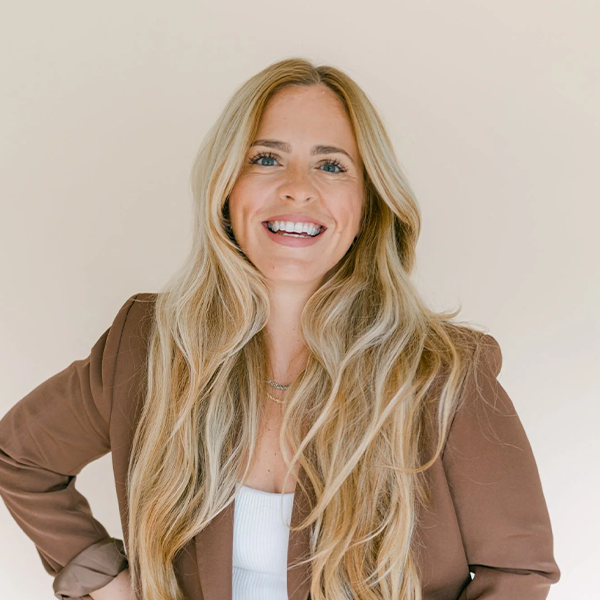
Rory & AJ Vaden (00:01)
Hey everybody and welcome to the influential personal brand podcast. Jess Connolly is the amazing guest that you just heard me introduce. And we’re so, so, so excited to have her on the show because I have to tell you my good friend and team member at BBG, Laura Robinson has been literally singing Jess’s praises for months if not.
Years about you have to meet you have to meet you guys have to you have to have her on the show And so today is the day where after months of planning and scheduling we have finally made it happen Just we are so excited to have you on the show. So welcome
Jess (00:37)
I’m so honored to be here and yeah, just a big fan of Laura and I know she is just An incredible asset to your team and she’s also just an incredible asset to the world I love knowing her and love love getting to watch what you guys do
Rory & AJ Vaden (00:52)
Yes, well, she is amazing. But that’s the best part about knowing amazing people because they know amazing people. then you just meet each other. So okay, so I mentioned in your intro that you’ve written several books. You’re a pastor, you’re a mom, a wife, and we have four little ones, right, four kids.
Jess (00:58)
Amen.
Yeah, they’re not so little. My kids are pretty older. Or guess older, but I four children. Yeah.
Rory & AJ Vaden (01:16)
But if you just think about that for everyone who’s listening, like, four kids is a lot, right? One kid is a lot. Writing one book is a lot, much less. Is this your fourth book coming out soon?
Jess (01:21)
Yes. Yes.
No, my book coming out in September is my 12th traditionally published book.
Rory & AJ Vaden (01:31)
12 foot, my gosh, I only have, see, I only have three of your books. I actually have, this
was one of my summer reads, Tired of Being Tired. So I have a lot of work to do to catch up on all of your work. I only have three of them, but I too am a huge fan of your work. And one of the things that I would just love to do is help our audience get to know a little bit of your journey of where did you start? Like take us all the way back into when you started your professional endeavors and
Jess (01:39)
⁓
That’s alright.
Rory & AJ Vaden (02:01)
And ultimately, okay, I was like thinking four books. You have 12 books. Like there’s a lot of effort, a lot of work, a lot of brain power that goes into writing any book, much less that many. But in addition to that, you’re running a household, a family, helping run a church. You’re speaking. Like you’re doing so many things. So how did that all come about?
Jess (02:22)
Yeah, well, it was fairly organic for me. I’ll start in childhood, but I promise I won’t go every year of my life. But ⁓ one of my earliest memories is I knew that I loved to write and I knew that I could compel people with my words pretty well. So I always felt when I would get in trouble as a kid, the first thing I would do would be to write my parents a letter.
because I knew if I could, I could just arrange words in a way that would compel them to not be so angry at me. And so I kind of tucked that into my heart. And then in my late teens and my early twenties, ⁓ I had this like kind of interesting season in my life where I was getting asked to speak, getting asked to preach at different places, and even actually getting published in different publications. And now my family, my husband and I will always laugh about it. like, that is such a weird thing.
for an 18 year old to be getting asked to write articles in different Christian magazines, et cetera. And so I would say like, okay, there was this flurry of activity from like 18 to 22, or I was getting asked to teach or preach places or getting asked to write different articles or different things. And so you would think like, okay, it just went up, up, up from there. But actually for me, from about 22 to about 28 then, I went full blown into motherhood.
I wasn’t in the workforce in any capacity. I was a stay at home mom. My kids right now are 18, 17, 16, and 12, almost 13. But if you heard that 18, 17, 16, then you know they’re very close together in range. We call them Irish triplets. But so they were one, two, and three, two, three, and four, and three, four, and five, and four, five, six. So those were some really intense parenting, mothering years. My husband was pastoring.
We were leading in different local churches, but I wasn’t really working in any capacity. And I, in that time, really didn’t have the margin to. I didn’t even really have the aspiration to. kind of didn’t ever really think I’d work again. I was in the thick of it so much with motherhood that I just thought, well, this is what I’ll do. But in the midst of that, that was kind of the height of mommy blogging. And I was a fastidious mommy blogger because I had all these words to share.
ideas, add all these thoughts. So I’ve blogged every day. I was one of those bloggers who had sometimes blogged multiple times a day. And so I kind of amassed a following through mommy blogging. Sometimes I’d write about the Bible. Sometimes I’d write about my hair. Sometimes I’d write about the kids. Sometimes I would just write little essays. And that kind of catapulted into publishers coming to me and saying, like, hey, have you ever thought about book writing? And I was like, well, I used to a long time ago.
⁓ And I wrote one book and I realized not only do I like writing, actually love marketing books. I actually love the process of marketing. Around that time also I had ⁓ what had started as like a fun little small business. ⁓ I was creating scripture prints on my husband’s laptop and printing them at my house. These little pieces of art and just printing them on paper and mailing them out to friends and started as like a fun hobby on Etsy.
And by the time, I think I started in March of 2011. And by December 2011, we had done more in revenue than my husband’s salary. So we were like, okay, well, this is actually maybe something. This is maybe a small business. So we continued growing that small business and I began the publishing journey and I started hosting events and then I started getting us to speak other places.
⁓ And then that’s kind of how coaching rose up out of all of that because I realized if I could do this ⁓ You know, I’m a gal who barely passed high school. I got my first F in English in fifth grade So, I mean I was not on this kind of like upward trajectory. I didn’t go to business school I I had to Google like most basic business phrases and I realized like if I could kind of Find some success and some fruit in the small business world
instinctively with what I know. If I could figure out how to publish books and actually get them in the hands of people, if I could lead an organization, if I could lead a team and I haven’t had any training, maybe I could also come alongside people and help them step into their gifting and their calling. so coaching rose up out of all that. We eventually closed our small business. And now I spend my days really doing a conglomeration of all those things.
I’m almost always working on some book in some form. I have a book come out almost every year and have for the last couple decades, sometimes having two books come out in a year. And we’re leading our church that my husband and I planted almost 13 years ago here in Charleston. And I lead a small business here now called Go Intel Gals where we coach women in all of these different formats.
So it actually happened pretty organically and that’s all to say that Origins 4 really was mommy-bogging.
Rory & AJ Vaden (07:48)
There’s two things that you said that stick out to me that I think is really important for everyone who’s listening, ⁓ even though everyone who’s listening, your journey is going to be unique to what we’re talking about today. But I think there’s two themes that you said are really important. It’s one, I blogged every day.
Like there was a consistency. is a, like when you say you blogged every day for how long?
Jess (08:10)
Yes.
it’s funny. I was just talking to my kids about it this weekend because they were like tell us that tell us about the blogging I bought with that like I would say ⁓ I blogged every day for 10 years and This was not the kind of this was like before people realized you could make money blogging So I just did it for free. I was just showing up to serve and talk to my audience
Rory & AJ Vaden (08:37)
huh. think that’s, it’s a timeless message that we cannot hear enough, that consistency matters and that you did it out of service and that you did it in 10 years before you were even making money at it. Like this was just something that I was like, I feel called to do this. I enjoy doing this and I’m going to do it every single day. And I think that’s true for all of us. It’s like, if we just stay consistent at something,
Jess (08:38)
So yeah.
Yeah. Yeah.
Yeah.
Rory & AJ Vaden (09:04)
It’s like there’s a little bit of truth to just outlasting everyone else. There’s a little bit of truth of just showing up, being of service to people, regardless of what everyone else is doing. It’s amazing what happens when you actually just do that. But you’re talking about for 10 years, you blogged every day.
Jess (09:10)
Absolutely.
Yeah.
Yeah. Yeah. And it’s funny. It’s interesting. Even now when I’ll have a book launch, you know, I think I don’t know how many Instagram followers I have. Maybe ⁓ I really genuinely don’t know 130,000, something like that. I’ve got, you know, ⁓ a large email list and I’m now like blog on Substack and I’m, know, on different
platforms, but what’s interesting is I would say there’s about 10,000 people, 10,000 women that I feel like have pretty much been with me since almost 2007. You know, that I’ve been like spending time with in some capacity and as an author, I would just encourage, you know, a lot of times when we’re looking at publishing books or
I’m getting in free orders like 10,000 book sales is like a really strong pre-order number that’s gonna serve an author, you know, for the long haul. And I would say because I’ve invested in that 10,000 group of women for now genuinely almost 20 years just showing up, you know, hopping on the phone with them, taking calls, you know, of those 10,000 women, I’ve got women who will like stop in a Charleston to see me on vacation or like
You know, there’s probably, I would say at least 500 of them that if I saw their face in a crowd, I would know them. I know their name because we’ve been interacting on the internet for that long. And so to some degree, almost anything I put out, that core group of women is going to be with me. But it has been almost 20 years of investment.
Rory & AJ Vaden (11:08)
And I think that out of like almost out of everything you said, which there was a lot, I have like 10 questions from just what you shared with, you know, how you started to where you are. But that’s probably the most important thing is just realizing like relationships take investment. regardless of what we hear today, relationships are still how businesses grow. It’s still how content is received. It’s still how book launch happen, regardless of what we think.
Jess (11:27)
Yes.
Yeah.
Rory & AJ Vaden (11:33)
having real life connection and real life relationships because you’ve been at it for a long time serving people, getting to know them, connecting with them. It’s not all about paid ads and trying to convert strangers on the internet. It’s about how can I reach someone and serve them, know them and do it consistently over the course of time. Those are just things we cannot hear enough because there’s so much noise out there talking about
Jess (11:51)
Yeah.
Okay.
Rory & AJ Vaden (12:02)
you know, this funnel and this challenge and this and it’s like, you know, have a six figure launch with a bunch of strangers on the internet. And it’s like, does that really work consistently? Right. there’s, there’s a lot of what you said that I think is really impactful of y’all. It takes time. And that’s okay because I imagine that 10 years of blogging every single day made you a phenomenal writer.
Jess (12:13)
Yeah.
Yeah.
You know, it certainly honed my ability to get get 500 to a thousand words out every single day So that’s the other things people will say like how have you written that many books? I’m like, well, I just write 500 to thousand words every day, which actually is about 40 minutes of writing, you know But you write a thousand words a day for two months and that’s a manuscript about 60,000 words. So Yeah
Rory & AJ Vaden (12:52)
Yeah, I mean the average manager
today is like 52,000 words and that’s like exactly that timeframe. But again, it’s about honing the craft. You gotta do it. You gotta do it again and again and again. So I love that. Okay, the second thing you said that I’d love for you to talk a little bit about is it wasn’t just that I loved writing. I loved marketing the book. That’s something a lot of authors possess. I think a lot of people go,
Jess (13:02)
Yeah, yeah.
Yes.
Rory & AJ Vaden (13:20)
All the work is in the writing of the book. And then they’re like, ⁓ I’m done. But really it’s, you know, just part one, it’s done. Now the marketing and the selling is actually how you get people to know about the book. So what have you learned about marketing the book that you did not know when you started? And if somebody was out there going, I want to write a book or I’m about to launch a book, when it comes to actually marketing and selling books, getting it in the hands of people, what would you say has worked?
Jess (13:22)
Yep.
Mm-hmm.
Rory & AJ Vaden (13:50)
for you that may be here very often.
Jess (13:51)
Whoa.
I love this question. So, okay, here’s the first thing I’ll say and I’ll just encourage anyone who is excited about writing a book or maybe even like running their own business or, you know, loves running their own brand and doesn’t enjoy marketing ⁓ or doesn’t enjoy promoting themselves or showing up on social media. ⁓ I think the biggest thing that has served me is that I see marketing as a way to serve.
And I will also say, also see using social media as a privilege. Women who were doing what I am doing 20, 30, 40 years ago, first of all, they weren’t getting book deals. Second of all, if they were, they were having to do so much more legwork. I think all the time about Lisa Turkhurst. She’s probably, she’s one of the foremost.
you know, female authors who’s Christian authors who’s still publishing today. She puts out a book every year, every other year. ⁓ And I have heard just incredible stories about Lisa 20, 25 years ago. She was doing things like mailing newsletters to everyone in her city, like, hey, I’d love to come speak at your church. I’d love to come to your event. The fact that we just get to show up, pick up our phones, turn them on and serve people.
immediately that we should see that as such a privilege. We should be so honored that we get to use social media. And so I would say that as number one. Number two, the same thing about marketing is that I like you. I hear from so many authors who are like, oh, this is not my favorite part. I don’t love this part. I just like the writing. And so I would say if you are going to spend the time of your life to write 50 to 60,000 words, you should hope and pray.
that they are going to have a life changing positive effect on someone’s life. And if you believe that, if you say like, wanted to write this book because I actually want to create and cultivate a positive life giving change in the reader’s life, then wouldn’t you want to get that in as many hands as possible? Wouldn’t you want to serve as many people as possible? So I would say that’s number two.
And then number three, then kind of like the backend thing I hear is like, yes, but I hate promoting myself. And I would say, if I’m honest, I don’t feel like I have promoted myself one single day of marketing. I don’t want to promote myself. I’m not the product. What I do want to do is communicate with people about what I believe will serve them and help them live more fully awake.
And so talk about the problem, talk about the promise, talk about how this book or this product or this idea is actually going to create lasting change in their life. And then you’re never promoting you. You’re actually talking about them. You’re actually talking about this problem or this issue in their lives. So those things have typically helped me a ton, just kind of conceptually with book marketing. But the biggest thing I would say is that
I spend a significant amount of time before I ever start writing my book, thinking about my reader, thinking about their pain points, describing their pain points in different ways. I spend a lot of time listening to my reader, asking her, what is hard for you about this? What does this look like in your life? How does it manifest in the way that it shows up the problem? ⁓ And so really when I’m marketing my book, all I’m doing and mirroring back what I’ve heard her say.
that this is what is difficult for her. This is what is hard for her. This is where she feels stuck. This is where she doesn’t know what to do. This is where she feels in the dark. And then when I’m talking about the book, I’m only talking about it as a pathway really to serve her to get out of that, to make some steps forward. So yeah, that’s, I would say the number one thing that has helped me love marketing is thinking about my who, getting obsessed with her and listening to her.
spending a lot of time not just guessing about what’s hard for her or what’s difficult for her, but listening to her and then trying to serve her not only in the writing of the book, but in the marketing of the book.
Rory & AJ Vaden (18:15)
Okay, I love that. And that’s so in alignment. We believe the exact same thing. And we talk about, you your ideal avatar, your who. It’s a huge part of our recent book that came out. And so I know a lot of people who are listening to our show know our version of like what we talk about when it’s creating your who and your avatar. But I’d love for you to share, like, how did you find your who? Because I think some people check off that exercise.
Jess (18:32)
Yeah.
Rory & AJ Vaden (18:44)
as a quick checkbox. They’re like, yeah, that right. I know the demographics. I did the psychographics. I’ve done that exercise before. And there’s that. And then there’s so much more. So when you say her, right, I know her and I’m focused on what problems she has. Like that tells me like you have an intimate relationship with this person that you know you can help that you can serve. And I think a lot of us who are struggling with
Jess (18:46)
Yeah.
Yeah.
Mm-hmm.
Rory & AJ Vaden (19:10)
our business or our messaging or what problem. all because we don’t have a deep understanding of our who. So in your words, what is a who and how did you find yours?
Jess (19:22)
Yeah. Okay. Well, I’ll speak specifically to book writing ⁓ as an illustration. So before I ever start writing, I’m going to identify, I’m going to do an avatar-esque exploration where I’m going to write about my primary reader, my secondary reader, my tertiary reader. ⁓ And these are going to be women who are in similar demographics, but are going to have slightly different pain points.
⁓ I’ll use my book breaking free from body shame as an example. So when I wrote breaking free from body shame I wrote to kind of three different readers. My primary reader was a woman who you know What felt like felt like every woman, you know, she had been on a diet since she was in her teens She grew up in diet culture ⁓ Maybe she’s serving in the church. Maybe she’s a leader ⁓ maybe she has been to Bible studies or gone to Bible studies and She’s been on a bunch of different diets
but she’s never combined these two ideas. She’s never like trying to figure out where her faith and her concept of her body image come to pass. So she would be my primary reader. I’m gonna mostly talk to her. Well, for me, when I was prepping and kind of doing that avatar experience, my secondary reader would actually be somebody who was really more in a diagnosable place of having an eating disorder. ⁓
Maybe a therapist has said like, Hey, you actually have this condition. She’s, has actual disorder eating behaviors or different behaviors in her past or maybe even in her present. ⁓ that would, that would kind of put her in a slightly different category. And she’s looking for some more in-depth healing. Why that’s important to note is because she’s not necessarily my primary reader, not, not the bulk of my audience is going to have a diagnosis of that sort, but I have to consider her.
constantly in my writing because I want the book to be safe for her. I want it to be palatable for her. I don’t want her to feel triggered in any sort of way. And then for that book, for example, my tertiary reader was someone who is maybe really well versed in body image, body freedom. Maybe she’s been a part of the body positivity moment. I think when I did some writing about this tertiary reader for this book, I would say like she listens to Lizzo. You know, she’s like she’s down with body positivity, but she doesn’t know at all what that would have to do with her face.
She’s never connected to those ideas. And so I’m really considering all three of those women as I write. Now the key is, and I want to like really clearly answer your question, the key is, and what I actually find many authors do wrong, and what I find many entrepreneurs struggle with as well, is that they no longer surround themselves with the people they’re serving.
⁓ And so there are a lot of things that are really complex for me about being a multi-mission to woman It is not easy to to be a local church pastor and someone who travels to teach and write who still coaches women who still might get you know a desperate Instagram DM from someone who’s struggling and I might say like let me help on the phone with you. Can I give you a call today? ⁓
I could easily say like, no, you know what? I’ve gotten to this place in my career where I’m going to set a lot of boundaries. I’m just going to do what I’m great at and I’m going to be excellent. And I’m only going to actually interact with other people who do what I do and who are excellent and who have large platforms and who are phenomenal leaders. That’s what a lot of people do. And that’s actually like the pinnacle for a lot of people. They feel like once I’m friends with people who are very successful, then I will just be kind of sequestered off and I’ll be great and I’ll be famous and it’ll be awesome.
The problem is that you no longer have access to real people. You don’t know who you’re serving and you don’t know what their problem is. So it’s incredible to sit in a room and identify your avatar. Then you have to keep meeting with them. Then you have to keep loving them. You can’t also like put yourself on a pedestal and see like, okay, I’m the one serving them and they’re beneath me. You actually have to love them. You have to do life with them. You have to…
be surrounded by people who are struggling with the problem that your product or your book or your brand is seeking to solve. ⁓ And that’s what I find so many specifically authors stop doing, but also I think entrepreneurs as well.
Rory & AJ Vaden (23:43)
Yeah, like honestly, that’s so, so, so good because even most of us do it unintentionally. know, whenever you were talking, it made me think about just how like corporate, like giant corporations and corporate entities, lose touch with the end user because the business they started where everyone was more entrepreneurial and everyone was engaging. It’s like all of a sudden you’re kind of climbing this corporate ladder and
Jess (23:52)
Totally.
Rory & AJ Vaden (24:10)
You don’t even know these people anymore. You don’t even know what they struggle with. And when people say, well, they’re out of touch with reality. It’s like, it’s this right here. This is what you’re talking about. But I see that even happens on a leadership level when you’re no longer engaging as like an owner with your frontline employees. It’s like, it goes kind of the same way with not just your readers or customers, but also with your team members. so.
Jess (24:10)
Yeah.
Yeah.
Yeah.
Absolutely.
Rory & AJ Vaden (24:37)
What do you do like tactically? Like what do you do to stay in front of and engaged and in relation with your who?
Jess (24:45)
Yeah, think staying accessible and I would say staying humbly accessible feels really important. And so again, kind of across all these platforms, I mean, even similarly in the church world, it can be very typical to go to a church where, ⁓ you know, a pastor is up on a pedestal and like maybe he has his own community and he has his own people, but like you’re not ever gonna get to speak to them.
Something that’s super important to my husband and I is like, we want to be in actual groups at our church that we are not leading for perpetuity because we want to be in community with people. We want to stay in community with people. And we actually believe to some degree, if you don’t step on that pedestal, people won’t treat you weird. There’s a little bit less pressure going on. And so I would say I do the same thing or I try to do the same thing across platforms.
When I go to a speaking engagement, you are not gonna catch me back in the green room 90 % of the time with the other speakers. I wanna be out with the women. I wanna be out with the people. I wanna be hearing what’s going on with them. I wanna be sitting with them. I wanna be praying with them. I wanna be learning from other communicators in the same way that they are because that is how I’m gonna grow. I wanna be sitting with the teams also at the events that I go to and learning from them and growing with them. And then similarly on social media, ⁓
I understand there are a lot of different reasons why people might set boundaries and not read DMs or not respond to them, cetera. And in full transparency, have someone who has to help me with DMs because I want to be loving to people and I don’t want to miss really important things. But we have a healthy system where she can flag certain things or send me a screenshot of something and say, I really feel like you’re going to want to see this or you’re going to want to respond to this or you might even want to this woman a call. I know you don’t know her, but she’s just been really transparent with you.
staying humbly accessible to people and saying like, I’m not aloof, I’m not off in some glass house where you can’t reach me, but I’m gonna be in this with you. I’m gonna be a leader from in the midst has really helped me. And again, just also helped me to stay healthy. I know so many people who do what we do, who host podcasts, who are thought leaders, who just, they feel pressure.
They feel like they’re on a pedestal. They’re constantly worried about getting canceled. They’re constantly worried about making a mess up. And there’s some safety to staying ⁓ normal and not getting on the pedestal for our own souls.
Rory & AJ Vaden (27:21)
That’s so good. I think it’s important. You said it’s okay to have some boundaries and it’s okay to get support and help and be transparent and all of that. But at the same time, be in it. It’s not something you outsource. You can get support, you can have boundaries, but you got to stay in it. I think this is a really important thing because I think you’re right. think a lot of people, as they have a little bit more success, whether they have a big book come out, their business grows,
their speaking career takes off, doesn’t matter whatever it is, right? Whatever it is. You get a promotion in a corporate environment, make a long list of things. But at some point it’s like, you do, kind of like almost remove yourself from the relationship of the people that you actually started the whole thing for. I’m curious to hear from you, like, why does that happen? Like, what have you seen for everyone who’s listening, who’s going,
Jess (27:52)
and
Yeah.
Yeah.
Rory & AJ Vaden (28:18)
yeah, that’s me. I’m totally out of touch. if I’m listening going, okay, how do I make sure that doesn’t happen?
Jess (28:21)
Yeah.
Yeah, I think the main reason it happens, again, yeah, just to give a massive dose of grace to people who might say like, oh, I assumed that would happen, or I’m noticing maybe that has happened. I would say the main reason that happens is it’s a cultural phenomenon that we didn’t start. We don’t choose it. We perceive like this is the conveyor belt. This is how it’s supposed to go.
And so I would just say like, yeah, just a massive like shame off you to anyone who’s feeling like, ⁓ I think that’s me. Like you didn’t choose it. That was the path that you probably were presented with. It seemed like the most natural path. It seemed like, this is what’s supposed to happen. ⁓ And I think honestly, like there’s bigger questions there, but ⁓ my personal sociological point of view is that we love fame.
⁓ And we love to separate people and we love to other ourselves and we love to other other people But also I would say my personal belief is that fame is a trauma And it’s one that even as leaders we have to kind of continually absolve ourselves of and we have to Break off what what is it? What is actually you like too much pressure for our souls and our psyches to handle? So I would say that
And I would say some ways to avoid it is cultivate healthy friendships with people who do not do what you do. ⁓ And I would say that’s one thing that has massively served me is that my best friends in life right now, know, some are assistants and some are school administrators and some are nannies ⁓ and some are nurses and some are stay at home moms.
And it’s been very good for me to remember that my calling, my career, my life is actually not more important or more valuable in any way than theirs. And so I want to stay curious about what their lives are like and how I can encourage them and how I can affirm them and how I can support them in the same way that they might do for me because my calling’s a little bit more flashy or a little bit more out there. And so I think that’s one way we can just ⁓ stay.
grounded in a really healthy way is just cultivate friendships with people who don’t do what you do. And again, I would also say this is is anti most of the advice that I got when I really started pastoring and writing books and stepping into leadership. I would actually hear people give the wisdom and insight like you need to get around other high capacity leaders and that’s you need to stay around all the time.
You know, there’s going to be other pastors would tell me there’s going to be a point where you can’t be friends with the people that you pastor. ⁓ So not to get biblical, like Jesus breaks that exact example. Like he stays friends with the people he pastors. You know what I’m saying? Like he doesn’t say like, sorry, I’m only going to hang out with Holy Spirit now. He stays friends with sinners. He stays friends with like sleepy disciples who don’t get what he’s doing. And then I would also say like there, this is why we see
Rory & AJ Vaden (31:20)
to
Jess (31:43)
huge thought leaders and authors fall. It’s why we see them experience, you know, maybe even like a fall off in their career, two books, three books, four books, five books in, or they go on social media and they say something incredibly tone deaf. And it’s because they’ve just surrounded themselves with an echo chamber of people who all sound like them and who kind of forget like how much milk costs and what it’s like to really get childcare when you’re struggling. And, you know, just all of that
stuff. yeah, that would be my encouragement.
Rory & AJ Vaden (32:16)
Yeah, I love that. And it’s such a great parallel to Jesus and, you know, just even thinking about, yeah, like his closest friends are the people he discipled. You know, it’s like those, yeah, because you hear that all the time. It’s like, don’t be friends with your employees. Right. And it’s like, why not? There’s a little bit. Why not? And yeah, does it add complexity? Sure. But I was complex. Welcome. You know, but I love that. And it’s like,
Jess (32:34)
Yeah. Why not?
Yes. Yep. Yep.
Rory & AJ Vaden (32:46)
you know, don’t isolate yourself or elevate yourself out of the real world and real people and reality, because then you’re, you are out of touch and you think you’re untouchable and that’s, that is where sin takes hold. ⁓ and it always happens in isolation. So I love that. It’s like just cultivate healthy friendships. ⁓ one other thing for this, and then I want to move on, but I’m curious because I do hear a lot of people talk about like, okay, if we’re going to be accessible, like how accessible, like how much time am I?
Jess (32:51)
Yeah.
Yeah.
Yeah.
Rory & AJ Vaden (33:15)
I was to spend reading emails and checking DMs and like, where does the rest of my life occur? So do you have any best practices around time, duration, engagement of like, what does that look like? Cause it can be a dark black hole.
Jess (33:22)
Yeah.
Yes, yes, a hundred percent. And I’m so glad you asked that because it would, I would hate for anyone to hear my words and think like, well now I just need to be accessible all the time. I need to be DMing all the time. I have actually tried to do that and it has been to the detriment of my work, to the detriment of my calling and for certain to the detriment of my own health and my own mental health.
And so I would say like having a rightly ordered understanding of what is most important in your work, what you spend the time on that’s going to be the most impactful for the most amount of people and ordering your day like that, ordering your week like that in those correct maybe I would say like chunks that correlate to the importance.
We do something on our team every week where everybody, every member of our team draws out a pie chart and then they list their tasks by importance on the pie chart. So for example, when I made my pie chart for the week this week, I’m currently writing my next book. So 25 % of my pie chart went to book writing. And then maybe, you know, like 6 % went to podcasts and like,
8 % went to different content planning and different sorts of things. And so by doing that every single week, I know, okay, what’s the most important work for me to do this week? And then my time needs to go there. So always for me, partially that’s gonna be talking to people, hearing from real women, know, spending time in DMs. But if I spend 25 % of my week doing that, I wouldn’t actually be able to write the book that is gonna impact hundreds of thousands.
⁓ because I’m taking time to DM maybe 13 people. So ⁓ I’m trying to be thoughtful about, what actually fits into the priorities? But I would say a lot of us just don’t know. We don’t know like, is the most important work that I do? What’s the work that only I can do? ⁓ And how can I honor that? And so I would say evaluating that and then reevaluating it every single week can be really helpful.
Rory & AJ Vaden (35:42)
I think that’s wise, sage advice, which is there is no universal best practice. We’re all different. Our priorities are different. Our seasons are different. What’s happening in our lives are different. What your audience needs is different, ⁓ which means we all have to do that work.
Jess (35:47)
No. Yeah. Yes.
Yeah,
yeah. And in our businesses, and I would say like using book writing as an example, in our businesses, it’s exactly what you said, the seasons are going to be different. So for example, right now I’m in a really strange layered season and that is not my favorite where I’m preparing to publish one book and I’m finishing the manuscript of another. But my goal is to get the manuscript of my next book finished before the pub date of
the book that’s coming out. I have a book coming out at the end of September. So my goal is to get this next manuscript done before that pub date. Because once a book is out in the world, I kind of see the next six weeks is for the reader. It’s me talking to her. So I’m definitely going to spend a lot more time in that six weeks post book launch reading DMs and contacting women and talking to women who have gotten the book and who are in it because that’s about her. But right now,
I’m serving her by kind of going into a hole and writing the next book.
Rory & AJ Vaden (37:02)
Yeah, that’s so good. And I think that’s just really important because I think a lot of people are trying to put in static standard rules of how we divvy up our time and that that this doesn’t work for most most of the people throughout the various seasons of life ⁓ and I think that’s good. like every week even you’ve got to take a
Jess (37:11)
Yes.
Right.
Yeah.
Rory & AJ Vaden (37:25)
hard look at like, does my capacity allow for this week? And next week, different and the next week different. And I think that’s just why Sage advice going there is no universal best practice. There’s only a practice for where you are in your audience and your business and your life, which is a really, really healthy way to look at it. ⁓ and I love that. Okay. I’m watching the clock. and I know that we have a tech cause I have literally 10 questions that I have, but I know I’m not going to get.
Jess (37:28)
Yeah.
Mm-hmm.
No.
I love it.
Rory & AJ Vaden (37:54)
⁓ We’re going to have to continue this when your next book comes out. We’ll have to do another interview. But I have two last questions for you. And then I want to talk a little bit about this upcoming book you have and where people can go to get it. We’ll put the link in the show notes and what it’s about. And although it may not be for every single person in this particular moment, it most definitely is for everyone in a season of life. It affects all of us. So here’s my last two questions for you.
Jess (37:58)
Love. Can’t wait.
Mm-hmm.
Rory & AJ Vaden (38:24)
Do you have a favorite book that you have written? And why?
Jess (38:31)
Hmm. Well, I feel like this is a this is a cheap answer, but I do think it is. I’ll get I’ll give you two answers. One answer is the book I’m writing that comes out in fall 2026. I love but I have to say I usually say that about whatever book I’m writing, which authors should say if you’re writing a book and it’s not your favorite book like you need to revisit the outline, you know, my favorite book is usually the one that
Rory & AJ Vaden (38:55)
You
Jess (39:00)
I am currently writing. ⁓ I do love my book that’s coming out the fall and I’ll share more about it with you in a moment. But I will also say I have a book that is one of my least selling books. It’s one of my least well-known books. And the reason why is it came out the second week of the pandemic. it was just for a woman who loves marketing, it was so painful because it was like, there was just no way we could get loud about that.
in the way that the world was. ⁓ But I always say it’s for anyone who cares about the Enneagram, I identify as an Enneagram eight. So I’m direct, I am ⁓ brutally honest, ⁓ usually like my passion has turned all the way up to a 10. And I wrote a devotional that came out in 2020 called Take It Too Far. ⁓ And it’s 100,
a hundred essentially things of your faith to take too far. like take generosity too far, take courage too far, take compassion too far. ⁓ And the book, the reason why it’s one of my favorites is cause it’s like an Enneagram eight fever dream. It’s just somebody like telling you like, don’t be scared. Don’t be, you can do this. Like, you know, go for it. But also the, there is a backstory and a lore to that book that is so fun. And it is that I, ⁓
I care a lot about writing deadlines. I’m not the kind of author who’s who misses a deadline. I hit a deadline. Um, and the way my life was when this book, when I was writing it the year before the pandemic in 2019 is I basically forgot I had to write this book. I just basically forgot that it was on my plate. was a weird confluence of events. My, my editor at my publishing house left.
And so they never assigned me another editor. so I just forgot. So I could have gone to my publisher and said, like, guys, I’m sorry. I forgot to write this book. Like, I need three more months, you know? ⁓ But I didn’t want to do that. And so I essentially locked myself in my office for two days. And I wrote almost the entire book in 48 hours. And you would think that would make it, you know, a pretty crazy book, but it actually has
so much clarity and it has, it is just the, it’s one of my favorite things I’ve ever written and barely anyone knows about it because it came out in April, 2020.
Rory & AJ Vaden (41:31)
to help make sure people know about it now. in addition to the new book coming out, we’re also going to promote Take It Too Far.
Jess (41:40)
Take it too far. Yeah. Actually fun story also about that book. My sister a couple years ago, maybe that book came out in 2020. My sister, I have an older sister I’m really close with. She came to me maybe two years ago, maybe in like 2023. She said, hey, I have an idea for you. And I was like, I want to hear it. And she was like, I think I know what your next book should be. And I was like, tell me. She was like, you should write a book called Take it Too Far.
Rory & AJ Vaden (41:42)
I’m gonna say.
Jess (42:09)
you always say that and she was like, you always say that phrase. I think you should write a book called Take It Too Far. And I was like, Katie, I wrote that book. You helped me market it. It came on 2020. She was like, I totally forgot. So even my sister forgot. That’s how crazy it was. You know what I’m saying?
Rory & AJ Vaden (42:30)
get the word back out. We’re gonna relaunch. We need a relaunch of this. I love that. And I have it jotted down because I am also an Enneagram 8 and the whole concept is too far and also hitting deadlines. I live and die by my calendar and deadlines. My husband’s the opposite. He’s ⁓ more of a free spirit when it comes to that. I don’t even know how we function in the same household because we will hit the deadline at all costs. And he’s like, what’s the deadline?
Jess (42:34)
We do.
Ugh, you’ll love it.
Yes.
same.
Rory & AJ Vaden (42:59)
What are you talking about? So I totally relate. get that. Okay. My last quick question, and then I want to talk about this new book. What advice would you give to someone who’s out there who, you know, kind of back to this whole concept there, doesn’t have to be a book. It could be anything, but they’re adverse to marketing. And I know you talked about the mindset shift of, and that really what it is, it’s a mindset shift of going, this isn’t self-promotional. This is service, right? But,
Jess (43:19)
and
Rory & AJ Vaden (43:29)
For the person who’s struggling to go, I just, I’m having a hard time because I believe that some of the best kept secrets in the world are people who have spent all of their time honing their craft. They are a true expert and yet no one knows about them. What would you say is like the one thing to think, believe, do, say to help activate this marketing side that is in all of us to some degree so that we can help the world know that you’re there.
Jess (43:44)
Yeah.
Yeah, such a good question. Such a generous question to serve people. ⁓ So my team does an exercise we do every single week. Again, going back to the avatar, it is not a one and done thing for us. So we do what we call a who exercise every week. And every week we ask four questions about our who I’m going to call her she because we primarily work for women. But we say, what is she feeling right now?
What’s she feeling right now? if I’m going to do that exercise, I’m going to ask that question on, you know, a Tuesday in August. so I might say, okay, for me, a lot of my avatars, her kids are going back to school. She’s feeling overwhelmed. She’s feeling like, you know, fall might take her out. She, the summer was too short. Did she do a good job? So that’s just what she’s feeling right now. The second question we might ask is, the second question we do ask is how can we collectively serve her?
How can we serve her this week? How can we show up? What does she need to hear? You know, how could we be on her team? How could we help her move out of that problem? The third question that I have everybody on my team ask in relation to this is how can I in particular in my role serve her? ⁓ And I think that that is something no matter where you’re at in an organization, even if you’re the only person in the organization, it’s a really helpful question to ask.
And then the fourth question that we ask every single week is if you could say anything to her right now, what would you say? And what happens when we answer those four questions every single week is we basically come up with a marketing plan. A ⁓ very high amount of our social media copy and content comes from that fourth question. What would we most want to say to her? How could we most serve her?
⁓ And so I would say that is really what marketing is. Just remember, don’t get bogged down in promotion. ⁓ I love a funnel. I love a marketing plan. I love figuring out what are the new fun best practices. But if you know what your customer is feeling, if you can think about that, if you know how you can serve them, and if you can think about what you would most want to tell them about how you can serve them, that’s marketing.
Rory & AJ Vaden (46:22)
So good. Don’t be surprised if I start having my team do this every week, you’re going to hear from me. Like, guess what AJ is doing? So good. And honestly, it’s back to the most important part of all of this, which is the person that you’re called to serve. Because if you’re not doing it for them, then why are you doing it? Right? That’s so, so good. Okay, now I to finish taking notes after we’re done. now I know how to do it.
Jess (46:27)
Do it! I love it.
100%.
I love it.
Rory & AJ Vaden (46:53)
So we have this awesome new book that you have because I want to make sure we just have a quick moment to share this. You have your brand new book called What Comes Next coming out September 23rd shortly after this episode will air. Tell us what this book is about and who it is for.
Jess (47:11)
Yeah, absolutely. So this book is for any woman who is struggling with heartache, brokenness or burnout. So ⁓ in short, any woman who has felt tired or sad in any way, or form. And I love what you said earlier. Like she might not be feeling it right now, but we have all been tired or sad ⁓ at some point in our lives or we know a friend who is tired or sad. And so ⁓ I would say, yeah, it’s for the woman who has just got it.
gotten a confusing or devastating call from the doctor’s office. It’s for the woman whose kid is struggling with something and she’s asking like, what comes next? ⁓ It’s for the woman who’s feeling burnt out in her career and she’s saying she’s acknowledging maybe for the first time, you know, I’m burnt out. I don’t know what comes next after this. ⁓ It’s for the woman who maybe has just had like a long season of feeling down or feeling like she’s got low energy or ⁓ feeling confused or feeling like she needs some discernment.
⁓ So for anybody asking the question, what comes next? It’s a 40 day journey that will hopefully help her answer that question.
Rory & AJ Vaden (48:20)
⁓ Why’d you pick 40?
Jess (48:23)
You know, ⁓ I mapped out the different process I wanted to take her on. Interestingly, you won’t see this in the book at all. It was ⁓ an internal metaphor I used, but the internal metaphor I used in the book, I ended up splitting into four different sections of 10 days. And the internal metaphor I used is let’s say that you’re in a boxing ring and you get hit in the face.
So the first 10 days is as you’re falling. The next 10 days is kind of as you’re sitting there assessing your injuries. The next 10 days is as you’re standing back up and kind of dusting yourself off. And then the final 10 days is really encouraging her to go serve and go help somebody else who might’ve just gotten hit upside the head. As a woman who fell off my, I fell off my bike this morning, riding into the office, this metaphor is redolent for me because I’m a little bit of
cluts and I do fall very often. And so as I’m remembering this metaphor that I used right in the book, like, man, I learned that out again this morning, falling off my bike.
Rory & AJ Vaden (49:33)
I don’t know why. Yeah, and I said earlier, it may be not you right now, but it will be you at some point. We all have these seasons. so September 23rd, we will put the Amazon pre-order link in the show notes. And then when it comes out, we will put the order link in the show notes. And just to help revive what was potentially lost in 2020, we will also include Take It,
Jess (49:40)
Yeah. Yeah.
Yeah. Yeah.
Amazing.
Rory & AJ Vaden (50:03)
I wrote it down. Take it too far. We’re going to include that as well. That’s on my next week. So amazing. ⁓ So insightful. If people want to connect with you, what is your preferred platform?
Jess (50:03)
Take it too far. Yes.
You’re amazing. Thank you.
pretty much live on Instagram. I’m just a Connolly on Instagram.
Rory & AJ Vaden (50:24)
So connect with her. can also check out her podcast, the Jess Connelly podcast. Pick up one of 12 books. I have three, I have many to go. there’s a wealth of knowledge. only that, but you’re coaching the work that you guys are doing in your ministry and your church and just loving on the people who are in your community in Charleston. As someone who does not live there, thank you for being connected to the people around you because we all need that. Thanks for being available.
Jess (50:32)
you
Rory & AJ Vaden (50:54)
and staying humbly accessible. think those are great stage pieces of advice that I know for at least me, I’m gonna take and run with. And for everyone out there who’s listening, just remember that when you started this journey, you did it for a who. And as Jess so ⁓ graciously reminded us of today, don’t forget that who, no matter how far you go. So stay connected to your who. That’s why we’re doing all of this. Jess, this was amazing, fantastic.
Jess (50:57)
Mm.
Yeah.
Rory & AJ Vaden (51:21)
For all of you listening, stick around for the recap episode and we will see you next time on the influential personal brand.
It’s not letting me hit stop. So that’ll have to happen later, but that was awesome. ⁓
Jess (51:40)
⁓ I’m so grateful.
Thank you. Thank you so much.
Rory & AJ Vaden (51:46)
This was awesome and wonderful. So nice to meet you. ⁓
Jess (51:50)
It was a joy
to connect. I hope we get to be in person together.
Rory & AJ Vaden (51:54)
I would love that. Like honestly, so much of what you said is so, so, so, so, so ingrained with our disbelief. And ⁓ there’s so much continuity and similarity. So this was also just really good for the audience to hear in a different voice, in a different lens, but some continuity and messaging that just here in the Fresh Voice was awesome. So thank you.
Jess (52:07)
⁓ Thank you, God.
Mm.
Yeah.
⁓
so glad. I’m so grateful. Thank you. I appreciate it.
Rory & AJ Vaden (52:25)
get all this out so I’ll let you get back to your hideaway writing. cannot watch you writing a book and launching a book at the same time. That just sounds like madness to me.
Jess (52:30)
Yes.
F
You know, was not, it was, it’s not ideal, but ⁓ I did it so that I could have the rest of the fall pretty much like, I was like, you know, I might as well just pump it out and be done. Yeah. Yeah. Thank you. Thank you.
Rory & AJ Vaden (52:45)
fair.
Thank
Good luck sending prayers for endurance. All of that.
All right, well, let’s be in touch. I would love to stay connected.
Jess (52:58)
Same, grateful for you, bye.
Rory & AJ Vaden (53:23)
to
have an internet connection.
Ep 609: The Unexpected Path from Miss USA to Emmy-Winning Journalist with Lu Parker

Rory: [00:00:00] Hey, we have a special treat for you today. One of my dear friends, Lou Parker is a six time Emmy award-winning journalist. This woman is brilliant and funny and insightful. Um, she is on live television and has been for years, like 20 hours every single week. Uh, she also is a former Miss USA, so we’ll talk about how she went from teacher to miss USA to award-winning journalist.
And she has covered things in the major news cycle, presidential shins. Um, she’s covered the, uh, January 6th Life insurrection whole situation, school shootings. Uh, she’s won awards for some of her detective journalism around, uh, res rescuing animals and animal rights. And she’s just a delightful human.
And what we’re gonna talk about is a little bit about what it takes to be successful on camera, uh, things around what you need to know about when you’re doing live productions, and also more about finding your voice [00:01:00] and, and having the confidence to say what you really believe. And sort of bringing your offline personality into the online world, uh, and vice versa.
So anyways, Lou, welcome to the show, Craig.
Lu: Thanks. Super happy to be here and really happy to be in person. Who knew I was gonna be in Nashville? I know this worked out, so, so they’re really good. I felt like, uh, you guys reached out to me about the book. I had been thinking about you guys prior. ’cause I always thought I would come here one day and.
And, you know, see you guys at some point and then it all just kind of converged into today. So I’m, I am happy to be here and it, it is nice embalming here in Nashville.
Rory: Yes. It’s, uh, it’s, but
Lu: beautiful, humid in the summertime. Yes. Yeah. It’s fun.
Rory: So I, I wanna start with, um, miss USA and, and I, I know you don’t do as much in that world, but that was a big part of your life, uh, for a while.
And, and I wanna know. What does Miss USA not prepare you for? So you win something like that. Mm-hmm. [00:02:00] Um, I think it certainly has done a lot, you know, it set, set your career in a certain direction. Maybe what does it not prepare you for winning? Winning something like that. And what people might think, oh, you’re definitely gonna learn this, but maybe you didn’t.
Or this, it’s definitely gonna lead to this, but maybe it didn’t.
Lu: Gosh, that’s a great question. And that, um. I, I was open to it all when I, when I won the pageant. So the first thing that popped into my head is that walking into a room, I didn’t expect that I would learn how to do that to any room. Right? To a room that has two like huge name celebrities that I’m meeting as Miss USA or walking into a conference that had 10,000 people and I’m going on stage and I’m young at that time, you know, I was like a little southern girl.
With a big accent and just a former teacher and just happy I was, I had an innocence back then. That was so awesome. You know, [00:03:00] um, as Miss USA walking in to any of those rooms, I think that’s where I learned a lot of my confidence. But I, what you don’t know is just that, wow, this, I didn’t know all that was gonna be happening.
I thought I would just win the pageant and. Um, to be honest, I don’t know if I knew what would happen if I won the pageant, what I was expecting
Rory: to be. Were you super confident going into the pageant or were you nervous about it? Like,
Lu: well, you’re always nervous, obviously. Um, but I had a great, I met this guy randomly at a hair salon.
I was getting my hair done, um, or something. I was working with this lady, uh, who was a friend of mine and there was a guy who did hair and he overheard me say that I was handwriting. My application. ’cause back then you didn’t submit it with emails or anything that didn’t exist. ’cause I won in 1994. Uh, and so it was really interesting and he was like, girl, you can’t hand write your application.
You need to type it. Long story short, he started [00:04:00] working with me, new pageants, um, did it for free. I had no money. Um, he just wanted to be a part of it. And he ultimately taught me manifesting. Right? Like he didn’t know he was teaching me manifesting. But I had confidence going into that pageant so much, miss South Carolina and Miss USA, and ultimately competing at Miss Universe as Miss USA, because he said, and I remember, it always sticks with me.
He said, when you leave this house, when I was a teacher, he said, when you leave this house and you go to the post office box, if you go to school to teach, if you’re going to the gym, you walk out with a crown already on your head.
Both: Mm.
Lu: Right. You already are. Miss USA. Just know that, feel the crown on your head.
And so that is what gave me the confidence. So when I was, and you’re not there to win this congeniality too, ’cause I want to be like, Hey everybody, you’re not there to win Miss Congeniality, you’re there to win the pageant. Right? Which was a little bit of a struggle for me ’cause I had to stay super focused and not get diverted [00:05:00] by having fun.
But I did, to answer your question, I did. I did have a lot of confidence and was nervous. ’cause you’re on stage in front. But you
Rory: were embracing that identity from before it happened. Yes. Which, which I think is something we see consistently, whether that’s in sports or going to war. Yes. Or becoming a bestselling author or a world renowned speaker.
It’s like if you can’t see it in your mind first Yes. Mm-hmm. The likelihood of it ever happening in real life. To me is like less than zero. Like it never accidentally happens. I never meet someone who has competed on a global stage or a national stage like that, and then not say like, I saw it first. Yes.
It’s almost like you have to believe it in your mind before it can ever become a reality. So did, did you also see that about tv? So did you, did you see yourself like, Ooh, I’m gonna be a journalist, I’m going to be on, I’m gonna be on tv. In one of the biggest markets in the world like Los Angeles? Like did you always see that or was [00:06:00] that more accidental?
Hundred percent not. Oh, it was accidental. And
Lu: back to your original question, that is probably the answer, is that what I didn’t see that was gonna happen by winning this USA, was that I was going to become a journalist. Mm-hmm. Because I had no idea I would ever be in TV or want to be in tv. Like that was so off.
My radar 100%, but it was in the cards. Um, I was living in LA because when I won Miss USA, they moved you to Los Angeles. So I was living there for the year, fell in love with California, lived for a year as Miss USA, then you have to give it up. And then I stayed in LA and started doing like dilly dally acting classes.
And I was a horrible actress. Like I hated it. I was horrible like. So embarrassed that I even like took classes. But I had an agent at the time who was, you know, sending me out on all these, uh, acting things, and she said, Hey, there were these trades that you can look at where jobs are [00:07:00] available. Again, on paper, not, not online.
And it said there’s an education reporter’s job available at the CVS affiliate in Charleston, South Carolina, where I’m originally from, and who had also followed me to the Miss USA and Universe Pageant. Now, did they create that to entice me? Did it just appear because that was my path? We’ll never know.
Um, went back to interview with them and. Three times and told them no three times. ’cause I didn’t want to leave la Mm. And I didn’t want to come back. So I was like, if I come back, like, and, but I ultimately talked to my acting coach at the time and he said, and he’s, and this is great advice as well, just in general, he said, uh, if you’re, as long as you’re on camera, you’re working right.
So no matter what it is, you’re working Right. As opposed to sitting out here. Now he could have given me a different answer. He could have said, you know, stick it out here a little bit longer. I probably wouldn’t have gone. So that advice, [00:08:00] I was like, okay, that he’s right. At least I’ll be on camera. And I moved back and then, you know, then ultimately you have to work years and years and years to, then it took me 10 years to get back to la.
Mm.
Rory: Yeah. That’s interesting. ’cause I think of like speaking. And it’s like even if you’re practicing to the mirror, it’s like it’s super valuable. You’re going through the awkward motion of being in front of an audience, even if it’s just you. Yes. And like those great point hours, those are reps. And you know, fast forward to the modern world, I think of the same thing.
It’s like if you’re a content creator, it’s like, how much time are you in front of a microphone or in front of a camera? Because it’s like, if you’re not, how are people ever gonna find, like, how are you ever gonna get good? And then how are, how are you ever gonna produce enough content that people ever, ever find you?
Lu: Yeah. You have to do the work, even if it’s ugly. Right. Even if it’s bad. Even if you feel like, oh, you’re just gonna crawl outta your skin. Right. I remember doing live shots, uh, outside of an, I mean, they were such [00:09:00] easy stories, like literally so easy. And I, my heart rate. Would just be like, they’d be like three, two, and they’d point at me, whatever.
My heart rate just, it was. Um, and you know, I would flub it because I would memorize it. Another great point. I would memorize everything as opposed to knowing your message. Right. What’s the difference? So, um, I, I was the only one on this story. No one else knew the story, so I’m the messenger, right, to tell the audience.
So I don’t need to memorize it. I just need to sort of have my format, like an outline, and then just tell the story. Like, Hey guys, I’ve been here, you know, the school board meeting started at five 30, they voted on A, B, C, and D, and here’s what they had to say, and then tossed to the story, right? I would have it like all set.
So if I messed up one word. It would freak out liter. I wouldn’t freak out, but there was always a pause ’cause I wasn’t good enough to pick it back up.
Both: Yeah.
Lu: Um, but it’s a great point [00:10:00] now is that, don’t memorize what you’re going to say on social media. Right. Just have a feeling for, like, I, I saw the interview you did with Nicholas, uh, is it Nicholas?
Nicholas John, yeah. Nicholas John Nicholas. The key. Yeah. How he sort of basic, he said, you know, he sits down and sometimes records them, but he likes to feel it in the moment. Right. It’s when you get that aha moment of like, oh, this, I need to share this, or I want to share this. Yes. Or How beautiful was that?
Sit down at that moment and either write it out, but more importantly, if you are on camera, get on camera and do it. Right, because then that’s when the beautiful softness comes out. The, the emotion might come out because it’s, it’s your emotion. Right. As opposed back to don’t memorize it. Mm-hmm. Because people know when you’ve memorized something.
When it doesn’t feel right.
Rory: Yes. Now you. For the longest time TV was like the only live broadcasting, I mean radio too. Yeah. But, but now all of us have a button that we can [00:11:00] push to go live. You and I went live last week. Mm-hmm. Or a couple weeks ago. ’cause you were helping us support us for our book launch.
Yeah. We did it
Lu: on Instagram and
Rory: we went live and so many people are terrified of going live, which I understand, right. As a speaker, which was like kind of my classic trait there is this like. You’re, you know, you can’t edit. Right. You’re doing it. So how do you overcome the fear of being live? Mm-hmm.
Knowing that like, there’s no editing this moment. Mm-hmm. And what happens here?
Lu: Well, I’m very comfortable live only because, like you mentioned in the intro, I’m live every day for four hours a day. Like, and granted it’s me. Reading a prompter, but sometimes when breaking news happens, it, the prompter goes out of the room, right?
So everything’s live ear pieces, um, telephone calls, what we’re seeing on the screen. Uh, and it’s one of those things [00:12:00] when we have a choice to tape something in TV or make it live. Same thing with Instagram. You can tape it or ins or do it live. I always choose live really. I always choose live, and I always prefer my guests to be, I want to interview the guests live too, because what happens if you don’t?
The guests will say, uh, they’ll start talking and then they get in their head and they forget. They’re thumbing. They’ll be like, oh, wait, can I start over? Mm. Right. Or, or they’re trying to edit it as they’re saying it to make it perfect, but when they know it’s live, you gotta pull. You’re gonna, it’s a, it is a muscle.
So I think the more you go live, the better you get. Even if you’re not good. In the beginning, like I was horrible and that’s why I started in a small market. ’cause you can mess up and not get fired. Then you move to a medium market and you’re a little bit better, but you’re still gonna fumble because you’re gonna get a different type of story.
Right? Or a lot, now you’re doing live interviews on camera, right in the field at a shooting or something with a police officer, and then it [00:13:00] becomes. Then you’re on set doing live. So my advice to people, even with Instagram, is do as much live as you can. Obviously when you’re by yourself, that’s, is that live taped, I guess that’s taped.
But live is where you, but do to live
Rory: by yourself on Instagram and just talk to it. Yes. And do that.
Lu: And do it, because then you’ll notice, or at least I notice when I’m taping something for Instagram, I’m a little. Stiffer ’cause I’m in my head. Mm-hmm. But when I know someone’s over there, there’s a feeling, maybe it’s ’cause I’ve worked in TV so long, I just, I know I’m speaking to someone, so it’s like fluid.
My blood pressure sort of goes down and I, I become a little bit more real.
Rory: Mm-hmm. Now what? So on that, one of the things, I’ve been on national TV a couple times. Mm-hmm. And like I remember. That’s like, I was on Fox News Morning. Mm-hmm. And it was so fast. Yeah. It was like a four minute segment. Mm-hmm. And it literally felt like 10 [00:14:00] seconds.
Yeah. I mean, I couldn’t believe how fast it went by. Yeah. How do you get to the point quickly? How do you tell a story? Like, you know, if you’re doing a story, like you’re saying, you might only have two minutes or something to tell the, tell the story. Do you have any tips for. Being very concise. ’cause I feel like, again, most of this, I, most people listening to this are probably never going to host a TV show.
Mm-hmm. Mm-hmm. But all of us are being pressed by the algorithm and the videos and the shortening attention spans. Yes. To like get to the point quickly. How do you do that particularly in a live moment?
Lu: A lot of stuff is coming up in my head. Um, Oprah just said, I saw her talking the other day that she, every time back in the day for her show, and she still does it, is that she’ll say before she does any of that, she’ll say, what is my intention for this segment?
What is my intention for this interview that I’m getting ready to go do on Fox? Right? [00:15:00] What is the intention? So set that right so you can always come back to that intention, almost like your book Come back to the purpose, right? Always come back to the purpose. And then with us with TV, and it’s bled now into Instagram, is that you wanna get them everyone’s attention within the first three to seven seconds, right?
Mm-hmm. So I learned as a journalist when I was in the field writing stories, I always led with my juiciest soundbite. Either emotion, like sadness, someone crying, unfortunately, or someone laughing. Or the sound of like kids in a playground, whatever it was, because you want to grab them. You don’t wanna just start with, today we were on the playground and it was fun as opposed to like, kids like, yeah, yeah, yeah.
So it’s more about like lead with the good stuff, right? Mm-hmm. Lead with your emotion, but then if you have sound or if you have a good quote or if you have, um, a philosophy, but like with you [00:16:00] too, going on. We onto Fox. You probably had set questions that they asked you not set, but you sort of, kind of knew what they were.
Kept talking points. Yeah, just keep it concise. Like we also say, um, you know, keep it, keep it simple, stupid. Like that’s kind of a, it, it reminded me when I would have this great story and I’d be in the live truck riding and we needed to keep it at 1 15, 1 30 minutes, like a minute, 90 seconds. I could tell a story in 90 seconds.
A whole story. But sometimes I’d want to tell it in 1 54, but I knew 1 54 was too long and it actually felt too long.
Rory: That is crazy. Uh, well, and even like hooks, like today, everyone talks about hooks, but it was like, to me, the local news was the master of hooks long before, because the tease, uh, the tease, the tease, the Ts, the Ts, the T, it was just like.
Uh, you know, new study comes out like, there’s something causing cancer all around town. It might be in your refrigerator. Find out what it is. I
Both: [00:17:00] like, I got, I
Rory: mean, that was, yeah. And, and now it’s like everybody’s learning, having to learn that skill. Did you write your own hooks or does somebody else kind of write?
I
Lu: have in the past. Okay. Now I don’t, I go in and edit sometimes over the years, like I’ve just noticed, I’ll, I’ll go in and edit like, um. Boring verbs. Like I want a, you want action verbs as opposed to was going, you know, you can be like, he jumped, he was going to jump, or what? Like you don’t want it to be like, um.
Just kind of, you want action verbs no matter what it is and like a strong word, more of a strong word. But the teases are amazing. Like now when I help people edit, my friends will have me edit like a story or something. Not a news story, but just something you can just kind of find that as a journalist, writing over the years and having to write fast.
It’s really interesting how you can go in and just take out that, like you don’t need the word that on really anywhere. If you notice the word that is like irrelevant. [00:18:00] Um, and then just tightening sentences. And for, in your case, or if anyone’s listening and they’re doing an interview, they’re being interviewed, which I’m not doing a very good job right now ’cause I’m rambling on and on.
But if you’re on TV and you know, you have four minutes mm-hmm. And they’re anchors are getting ready to ask you all these questions, answer the question, know what you’re gonna answer, but, and then just stop. And then they’ll ask you another question. Don’t feel like you have to be in control of the interview.
Both: Mm.
Lu: Because then you’ll blow through all the questions we have people come on that’ll blow through all our questions in like their first statement, and then we’re like, uh oh. But we’re good enough. You know? ’cause we’ve been on, we’ll just kind of backtrack and ask some different questions. But let it
Rory: toss back and forth.
Yeah. And be punchy rather than long-winded.
Lu: Yes. And, and you know, back to the pageant days when I think one of the reasons I won Miss USA to be honest, is that, um, to be honest, is another great, not a good thing to say. Like, I’m trying not to say that [00:19:00] either, because like, aren’t you honest all the time?
It’s like, so now I’m just being honest, so I’m trying to take that out and I just said it. But, um, to be, to be truthful, um, when I was. Interview. We had one-on-ones with each judge for four minutes. Okay. And I treated them as a friend at a party. Okay. I did not treat them as celebrities or agents or just like in your mindset.
I sat down and said, these are my friends. I’m meeting them at a cocktail party. Even though it was weird. ’cause some people were celebrities. Right. And I was young and, and, and I really think, and I always talk, ask them questions. Like about like, or if they, she had a hat on and then she started talking about her hat, or like, I always put it back on them.
So it’s not always about you. Sure. Right. So that’s always another great thing where make it feel like it’s a conversation as opposed to answering the question. Like, answer the question stop. Answer the question. Stop. Just don’t ramble on.
Rory: So I want to ask [00:20:00] you about. Live TV debacle. Mm-hmm. What’s the, what’s the, like, I know that you cover it up, right?
Like when it’s live you have to recover. Are there any, or what’s, what is one that you can think of that was like, this is the most disastrous thing that ever happened to me on live tv, and I’m just curious, like, what was it or what, how did, how did you respond? Well, two
Lu: things happened. One, the first time I was ever on.
An anchor desk as a reporter. So the two anchors were up there and I was a reporter and I was doing a story, so I would’ve been, they would’ve said, and Lou Parker is here now with the story, Lou, and I’d be sitting, right. I was sitting right next to them. And so I’m supposed to say, hi, John and Tammy, and then I’m supposed to turn to the prompter, which is here, and everything’s supposed to be there.
And you know, of course I’m nervous. I’m like brand new. And I turned to the prompter that I had written, and it was supposed to scroll and it was going like this. So I have Nothing was showing. No, all the [00:21:00] words were just, oh, like fast forward or something. We’re not sure what happened. I don’t know what happened.
This is your
Rory: first time ever. I
Lu: think I blocked it out because I don’t remember first time ever being able to, I mean, that’s pretty scary. It was bad. But the other one that was really good is, so there’s a term in, um, TV called Stretch, and you probably know it too, like just stretch where we, the person’s not here yet.
The interview’s, not, the phone’s not on. So just stretch. Or in breaking news we say stretch a lot. So just
Rory: like draw it out. Like fill the, fill the time. Yeah. We, I need you to
Lu: fill the time stretch. Okay. So I am new reporter. I’ve been given the opportunity to go to Disney on Ice and be the love Disney on Ice.
I know, right? But it was Friday. Um, and every Friday at six o’clock we would have, which is kind of dangerous thinking back in the day. Like we just would have the reporter out there talking and people would call in. And ask questions, which is I, they would scan and make sure they weren’t, you know, like crazies.
But it was, [00:22:00] we, I had answered two or three with someone. I was like, oh, this is working, this is asking a lot of a new reporter. Like, I didn’t know what I was doing. Right. And to be like clear, I had a friend, I was dating a guy in North Carolina who had a friend named Jason, but they called him Stretch, right?
So. My producer’s in my ear and the other person’s talking to me like, yeah, blah, blah, blah, blah, blah. My producer says, um, stretch. I thought they were saying Your next caller is a name stretch. So when that person stopped, I said, our next caller is stretch. And my producer was like, no. Oh, right, no. Oh, yeah.
Started yelling, right? Your ear yelling like, no, like, and the photographer fell like he fell ’cause he started laughing, but I didn’t understand because I didn’t know what stretch was. And she was like, just keep talking. So that I, I didn’t live that down. I mean, that was like for many, many years actually, people knew about it.
When I [00:23:00] got to San Antonio, someone knew about it, which is embarrassing. It doesn’t sound as bad. But it was bad.
Rory: I, I I The idea of listening to a person Yeah. Talking and hearing someone in your ear that freaks me out. Yeah. Like, I’m like, how do I, my, I don’t, my brain cannot give all of those.
Lu: It’s a dance.
Those dance, it’s a dance. The producer has to be good. It’s when, when you have a good producer, they know when that pause comes, they know when to say, Hey, we have sergeant, blah, blah, blah, on the line while my co-anchors talking. And then once I start talking, she’ll find, or he will find a space just to, they don’t ramble on in our ear.
’cause once they hit that it cuts all the audio. I only can hear them. Wow. It is a dance that,
Rory: that, that’s tricky. Mm-hmm. Okay. So I want another shocking moment that people would not know about.
Lu: Oh no.
Rory: I know you’ve interviewed lots of celebrities. Yeah. What celebrity shocked you the most or surprised you the most?
Or what sort of [00:24:00] celebrity interview did you do where you were like, that was not at all what I was expecting.
Lu: Yeah.
Rory: Uh, ’cause you’ve interviewed a bunch of ’em.
Lu: Gosh. So Tom Cruise was very, very cool. I, I interviewed him on the cruise carpet. Tom Cruise is very cool. Yes. But I wasn’t expecting him to be very like.
High like he was, but he, and he could have been like high and, but he was very present without being flirty. Right. So it wasn’t a flirty thing. It was very like present. And I, I remember thinking it was very, it was a lot of energy in a good way. Right. But he just has a lot of energy that I remember that.
But he was
Rory: like engaged with you? Very engaged. Not like, I’m too good for you. No, very engaged and not like, I’m trying to like, come on to you answer
Lu: the questions. It was like perfection, like he was. He was really cool. Interesting. Yeah. And then, um, Aretha Franklin, I got to interview before her concert at, um, SoFi Stadium, or one of the large staples maybe before it got [00:25:00] switched over.
And I knew I was gonna interview her, but I wasn’t sure like what that would look like. And I, and then I was like, oh my God, I’m interviewing Aretha Franklin. Like, really? This is gonna, and I was expecting her to come in like big, like. I want this, I need that. I need blah, blah, blah. And when I tell you like I felt like she was a sister when she walked in the room, it was so the beautiful.
Just conversation we had and just being able to sit there with her and then all of the old school managers from back in the day, all the big names that, you know, like came in with her too. She had no ego and those are the cool things when you meet somebody that big, that could have come in huge in ego and she wasn’t.
It was, it was really special.
Rory: I love that. Yeah.
Lu: It’s really nice.
Rory: I wanna talk about FAME for a second. Mm-hmm. What have you learned about fame? Um, you, you know, you have a level of fame. I mean, you’re starting off with being Miss USA, but then also, I mean, around [00:26:00] la like everybody knows you. I mean, they see you every day for hours.
Um, also you’ve interviewed a lot of famous people, been around a lot of famous people, and I think there are some people, uh, maybe a lot of people who would listen to this or watch this, that might think, Hey, I really, they want to be famous. Hmm. Is there anything that you would say to somebody who wants to be famous about what they should know about it?
Kind of going into that journey or pursuit?
Lu: Yeah. Well, I’ll definitely say that being famous is your career, right? Whatever you’re gonna be famous at as a, as a actress or a actor or a TV person, or whatever it is that you are aspiring to be. Ultimately that’s never, you can, you’re gonna get there, but that is not what’s going to love you and fulfill you.
Mm-hmm. It’s really kind of crazy. I just heard a professional golfer talking about this [00:27:00] yesterday, and I think it was shuffler. Mm-hmm. I could, at a press conference, he was talking about this and he, and, and, and I was like, yes sir. I to, I wouldn’t have understood that 10, 15 years ago, but I get it now like.
We pursue and pursue and pursue and pursue and pursue. And we’re on a treadmill. And we’re on a treadmill trying to, you know, satisfy something or someone ourselves, or someone in the past, or our parents or whatever it is, but ultimately that win, whatever that is, does not love you. And so the advice is yes, if you wanna be famous, if you want to be, you know, known or.
When golf tournaments or BN TV news or have 1.1 million followers, again, those 1.1 million followers love you, but they’re not gonna be there at four o’clock in the morning for you if you need something, right? Mm-hmm. Um, just to remember, to love and support the people around you. Right? And re never forget who you [00:28:00] are.
Right? Don’t sell your soul to be that. Because if you sell your soul to be that, then it’s gonna be empty at the top.
Rory: Mm-hmm. I think that’s that. I, you know, Jim Carrey has a quote, something to the effect of like, I wish everyone could be rich and famous Yes. To, because then they would just know that it’s not what’s gonna, you know, bring their heart fulfillment.
Lu: Right. Because the heart fulfillment. The heart fulfillment is. The hard fulfillment is you doing the work and getting quiet. The older I get, the more it’s like getting quiet and, and finding that, finding the purpose. Finding a spiritual practice, finding whatever that spiritual practice looks like. Breath work, church, friends, um, getting quiet, loving you, right?
Like always coming back to you, which we’re not taught to come back to ourselves. We’re always taught to be. The external world will make us happy. But really it’s like that whole thing where like I got, I’m gonna go to [00:29:00] India to go search myself, but you’re still with you. You’re still with you. So you can find yourself in a closet in your house.
You know, if you get quiet enough and do enough work, you can really find yourself. And then when you get to the top or the middle, or whatever your goals are in a relationship or wherever, you’re more grounded, right? ’cause you love you and you are worthy.
Rory: Yes. So you and I talked a little bit about this.
You, you shared an irony about yourself with me before we started, that you’ve used your voice, your entire career mm-hmm. To report the news, tell other people’s stories, conduct interviews, but that there’s an irony that sometimes you struggle to find your own voice in what, what does that mean exactly.
And. Talk talk. Um, tell me a little bit about that. Like, uh, what’s that been like to, to, I guess, have some of that [00:30:00] realization and how, how do you find your own voice after making a career of like telling other people’s stories?
Lu: It’s been a really long journey. Um, and I didn’t even know, I didn’t have my voice until it just hit me that I did, I had not been using my voice, and I think it’s.
The more research I do on it, younger girls have their voice until around puberty and then then to their twenties and like late twenties. And typically that’s when we start to lose our voice because we either are told, you know, in relationships or jobs or in society or wherever it is that speaking up and taking space can be aggre looked at as aggressive.
Um, it can be like taking up too much room or even, even I think the worst is like that. It’s not feminine to speak up. You know, I was taught that like, not necessarily just by my parents. My parents were super supportive, um, all through my life, [00:31:00] but I think society and growing up in the south too, like, be a good girl.
Be a sweet girl. Don’t, don’t cause any ruffles, you know, so I, I grew up as a people pleaser, you know, and I don’t wanna look like that person that’s speaking up and using her voice. So granted I was. Um, successful and going up a path. I just wasn’t using my voice right. Then I started using my voice, um, with animal advocacy and I think that’s where I started really getting out there and talking and like really helping the community.
And then I was using my voice, obviously through journalism, but it’s different ’cause you can hide, right? ’cause journalism is so I’m telling someone else’s story. I’m not like speaking up Sure. Or animals or speaking up for the community or um, or speaking up for yourself. Um, and then,
Rory: um, did you run into that a lot in terms of like, just being a female in TV and entertainment?
I mean, it’s, there’s this irony of like, Hey, we want you to play this role, but also like, not have [00:32:00] too much power, not take up too much space. I mean, did you, did you, have you bumped into that in terms of just. Being a woman in a professional, you know, like a very competitive environment. It is a
Lu: competitive environment and it’s a dog eat dog environment.
Uh, uh, as long, I mean all a lot of professions are, but tv very much so. ’cause you’re having to climb the ladder and push and pull and, um, you just, I always tell, I used to always tell the girls, like the younger girls, they would be like, well, they’d be concerned about someone coming in and their job getting taken.
And I was like, you cannot look over your shoulder. You have to like. Always look forward as the female or male, but I again, always go back to the female. But you have to look forward and look at your accomplishments. I did that during the pageant too. ’cause all the girls that were around me were beautiful, successful in shape.
If I started focusing on them, then you lose your power, right? So I would tell the girls like, don’t look over your shoulder. But at the same time, all that stuff creeps up for us [00:33:00] too. Because over the years we’ve been told, like once you. Get older, you’re not gonna be on camera as long as the men or whatever.
Now that’s changing for sure. Um, I’m one of the oldest, um, at the station, uh, at KTLA. I’ve been there 20 years, which is crazy. I’ve done like every, um, schedule every segment, but I think it’s more of just knowing that if you know something is not right. At your work, in relationship in society, at the animal shelters across the world, wherever it is, and it is tugging at your heart.
Like you, you are allowed to go out and talk about it. Mm. And speak the truth. You’re allowed to and you’re not. You’re not gonna make everybody happy. And I’m now, as we know on social media, people are gonna beat you up about it. Or they’re gonna be like, oh, she thinks blah, blah, blah. Or she did that. Well, how can she say that?
Um. You if you know it’s the truth. If you’re speaking your [00:34:00] truth and you really believe something, you have not only the right to speak up, you have a little bit of a responsibility to speak up for yourself, but also for the girls that are coming up from behind us. ’cause like even like all the women who pave the road for me at in tb, like Barbara Walters, like can you imagine what she went through as a female anchor like it was.
Intense, but she just stayed in there and she paved the way. She said, no, I’m speaking up for myself. I deserve also to be at this desk. I wouldn’t be at the desk if it weren’t for her.
Rory: Mm-hmm. You know, I wanna talk, I want you to talk to younger women right now for a second, because you have, among, among all the things that you’ve done, you’ve also been highly critiqued.
I mean, from being in a beauty pageant to. Being on TV and you have your producers, but then you have like all of these people watching you, uh, you know, even on your Instagram, right. I’ll see people saying [00:35:00] things that have nothing to do with like your character or something. They’re just like commenting on, on your appearance or if, and I think that is something that, you know, if you put yourself out there, you’re going to, that’s going to happen.
Yeah. There’s no way that you put yourself out there. And particularly, I wanna hear from you about. You know, if there’s a younger woman who’s listening to this or watching, what would you whisper in her ear right now about when she is critiqued? When she critiques herself, when, you know, whatever, whatever is, because that’s going to come if she’s in front of people.
Mm-hmm. And, and if she is using her voice. What did what you want her to know?
Lu: Well, I, and I will speak to them, but I think it’s every woman no matter what age you are. Mm-hmm. Because I think once you know, a woman can be 72 and still be reluctant to use her voice or feel like, oh, I shouldn’t wear that dress.
Or, [00:36:00] you know, I want to wear those cowboy boots, but maybe I shouldn’t ’cause I’m 72. You can wear those cowboy boots if you want to wear those, those sparkly pink cowboy boots. Um, I think the first word that came in my mind when you were talking is that nothing is perfect. No one is perfect. There’s no definition of perfection, right?
So once we let go of that, ’cause all women, and some men too obviously are, we’re all searching to be perfect, perfect body. The perfect attitude, the perfect house, the perfect life, the perfect everything right? And. Yeah, there’s nothing is perfect if you try to define it. It’s really you. Everyone’s got a different de definition of that, right?
Mm-hmm. So for myself, working through the pageant world, I was kind of young and just was like working out and doing my thing and just kind of went through it. Plus you’re not really concerned that much then ’cause you’re like young and you just kind of make it happen. Um, meaning. [00:37:00] That you can work out and perfect things and not judge yourself as much, I think.
Um, but now as you get older and those times progress, I think the judgment comes from society and that with this Instagrams, everyone, Instagram and all the Facebooks and the tiktoks, everyone looks so perfect and so beautiful and we’re not, and if we can just sit to that woman younger or older, if.
Looking in the mirror like you were doing the speech in the mirror. I sometimes, and you’ve probably heard this before, I sometimes like say hi to myself in the mirror now. Like, as opposed to waking up and saying, dang, what happened? Like, you look tired, your hair looks like hell. You know, did you gain weight last night?
Or, I mean, ’cause we say stuff like that, right? Like, and I’m, you know, I shouldn’t have done that. Now I need to, you know, I’m gonna look horrible on camera today. Right? There’s a lot of that pressure. Um, as opposed to saying good morning, like, how’d you sleep last [00:38:00] night? Um, I love you. Like, really? Look, it’s so creepy and beautiful at the same time.
To literally look at yourself in the mirror, eye to eye and look at yourself and say, I love you. Like it’s heavy. And then you’re, then you realize, oh yeah, I’m a person too. Right. I’m not just an object that I’m having to like look good for, to get a guy or look good to keep my job or look good in on my Instagram post.
I think you and I talked about it when I, when you, when I interviewed you, is that I was, I find sometimes when I’m posting and I don’t look up to my par what I think I should look like.
Both: Mm-hmm.
Lu: Um, I won’t post it. I’ve, I’ve, I’ve written, I’ve. Said things before and like recorded things and won’t post it.
’cause I’m like, and then I’m, and I’m getting better at it now. I’m like, you know what? I don’t care. Like if someone judges me because like a piece of [00:39:00] hair was out or, you know what, whatever I’m judging myself for, um, who cares anymore. Like, I’ve gotten to a point where I’m, I mean, I do care. Obviously I care, like, um, but I’m not so hard on myself anymore.
So I think that’s another great nugget of advice to the girls too, is like, it’s okay to, like, don’t be so hard on yourself. Like it really is okay, no one’s perfect. We’re all making our way through this. No one’s actually looking at you. They’re, they’re worried about themselves. They’re, they’re really not.
They, they might look at you for a second, but it’s really, they’re gonna go back to themselves of what, what, what their issues are. You know?
Rory: Yeah. I love what you said about the mirror too. Like I’ve noticed even with myself, it’s like if I just sort of look vaguely at the mirror mm-hmm. You know, I see my body.
Yeah. But when I get close and I look at my eyes, like everything fades away. And it’s almost like I see my real self, your
Lu: soul. You see your soul. That’s why they say the eyes are the window to the [00:40:00] soul. Mm-hmm. And even like with interviewing too, like if I like look, literally look at you. Mm-hmm. And like, look at your eyes right now, it’s a more intense.
Because we’re looking at each other. ’cause a lot of times people interview or talk or just in general, we can be at a cocktail party, but we talk like this. Right. ’cause it is scary to go there. Right, right. I, I did this really cool retreat one time, um, where, uh, up in Bicker and they had us sit with one of the people that were in our group or whatever.
We had been there for two days. So I felt like I sort of knew the people, but I didn’t. It’d be, and we, we sat and we had to stare at each other for four minutes and not divert our eyes. And it is fascinating what happens. Even if you do it with someone you know, it’s still gonna be fascinating and awkward.
Yeah. But you don’t divert and people laugh, then the tears come or they get really quiet and then, [00:41:00] or it’s more laughter. Because they’re uncomfortable.
Both: Mm-hmm.
Lu: And then it’s just quiet and then there are a lot of tears. Mm-hmm. Right. But when you’re done, you feel like you’ve actually seen someone in that more important, they’ve seen you.
Mm. Right. So you’ve shared this really beautiful existence with each other. We don’t do that enough in society, I don’t think.
Rory: That’s amazing how much you can sense about how a person’s really feeling when you look them right in the eyes. And, and if they won’t look you in the eyes mm-hmm. That’s always like, wow, there’s something going on.
Mm-hmm. Like there’s some really, they’re, they, they’re not steady enough to even look at another person. Yeah. Um, and that’s why I think, you know, I don’t remember where I heard this, but somebody was, was I heard this story about, or was somebody who was homeless and they said what they miss most is having people look at them.
Right. See them. It’s like they just, they like, you see ’em and you look [00:42:00] past them. Yes. And they’re just like, I don’t, nobody looks at me. Yeah. Um,
Lu: and you know, to that point, I, one of the things I try to do, I don’t always give money to the person or, and if I have food or something in the car, like I’ve done things like that before, but I think even just.
When they’re walking by your car or they’re standing there instead of ignoring them. Like most people, like, I’ll either wave at them or look, look at them and smile, and they light up and smile right back. They don’t have, they don’t, it’s not gonna, they don’t, I would say 99% of it happened. Oh, that’s an open invitation to come to my window that I’m gonna, you know, like give you something.
It’s just an acknowledgement. Of them. You know, it really, it is. That’s so powerful. But I think we all need that.
Rory: Yeah. So, and, and I wanna, I wanna also ask you like on the, on this topic of kind of like you brought up, you interviewing a few times. I think another skill that, [00:43:00] another skill that’s very much transferring from TV to like everybody is the skill of interviewing.
Mm-hmm. Because we are going live together on social, we’re doing, we’re doing podcasts, you know, we also have to interview our customers for. You know, testimonials and like sharing, sharing their stories. The, is there anything that you’ve learned, like something you used to do wrong as an inter interviewer or something that you used to do that now, after a couple decades of interviewing both celebrities and non-celebrities telling everyday ordinary stories and also these extravagant, like world changing moments that you’ve covered.
Is there anything that you’ve changed in how you conduct an interview now versus when you first got into journalism?
Lu: A couple things. Um, one, listen, because you can have your questions and then the answer from the person you’re interviewing kind of goes somewhere else and then all of a sudden [00:44:00] you do number two question.
It’s like, ah. You have to kind of go where you’re good at it. You’ve done it in this interview where I went somewhere a little bit off of what you asked me. And then instead of going back to, you know, number eight that you were planning to ask me today, you picked up on that. It’s mirroring, right? It’s mirroring like what, what’s happening in the moment.
Right? And I also believe in doing your research, you did that well too. Like you just. Set it off the cuff to the camera, like who I am and the bio, and doing your research, and always going a little deeper than the, than most people would do in terms when, when I’m. Say that as like find a little bit more, not just the normal of like who Roy is.
Like try to find a little something else that he’s interested in or a fact like maybe where he went to school or like that wouldn’t have come up or like one of your favorite hobbies or whatever it is. Just go a [00:45:00] little deeper because people ultimately want to talk about themselves, right? And so when you, they realize that you’ve done the work to like show up.
Read the book. If you’re gonna interview someone, read the book or listen to it. It’s re I mean, if you’re being interviewed,
Rory: you can’t read the whole book. You read the whole book. That’s what I’m saying. When you interview somebody do
Lu: Well. I do know. No, not always. Always. Like youll scan but you at least scan it.
One. But sometimes, you know, in the past I’ve done interviews with people and I haven’t read the book ’cause we get it at the last minute. Sure. Or whatever. What, or I chose not to, I don’t know, it just doesn’t feel the same. I love to go through it and know like at least what their concept are, the like top four concepts and also just the vibe of it.
But you can also listen to audio and hear their voice, like just spend like an additional 20 minutes just getting a little vibe of who they are. Mm-hmm. Um. We are so fast. Like we have three se three [00:46:00] to four segments typically in a day. So like almost every show has a segment and it’s either like cooking or, um, products or a, the doctor will see you now, so a doctor comes on or wish a wish kid, um, segment where a family comes on, or we’ll have a barbecue segment or like, so it’s like stimuli constantly, right?
So, um. Back to your point of just get on camera, get on the microphone. Because the more you do it, the more, or get on stage or talk in the mirror because it’s like reps, like you pennies in a jar. ’cause then you get better at, like, if you’re on stage and you forget your train of thought, you’ve got that rep to pull like, oh, well I can just kind of transfer right here and then figure out what the heck I was talking about before and then get back there.
I’m sure that’s happened with you before. Mm-hmm. Yeah.
Rory: Yes, for sure. I, I, I, this, this is. So fun and exciting and useful and I think relevant to just go, I think there’s so many skills, technical [00:47:00] skills today that are come, like out of the TV world that now apply to, to all of us, um, and the most of all, which is just the confidence and the like, you know, self-worth.
Is there anything that I should have asked you that, is there anything I should have asked you that I didn’t ask you? That you think is something that you go, I really want people to know this, or, you know, here’s, here’s something that, you know, I’ve experienced that I think could be useful to a mission-driven messenger who’s listening or watching.
Lu: I would say, and I’m only speaking just from my struggles and my fear of taking that first step in the transition, like I can walk into a TV studio. Or sit on a studio and interview people or go out in the field. I can do it in two seconds and have be amazing confidence. Right? And, and I’m trying to transfer some of my [00:48:00] skills now into maybe some writing and, and more speaking on stage and, and I’m ready.
I know I’m ready. Just like a lot of people are probably ready to do the next step and they, but they’re talking about it a lot. But they’re not doing it. I’m finding myself like, this is what I want to do, but I won’t like actually do it. Right. So I think the confidence comes from I had to go do it. I had to go do the report.
I didn’t want to do, I had to go cover the shooting. I didn’t want to have to go see a body. I, I, you know, I had to show up at two o’clock in the morning and do a morning show for two years. Like, I sometimes I was tired, but like, I. I put my right foot in front of my left foot, and I, I started right again, back to perfection.
Nothing’s perfect, and I’m talking to myself as well. When I’m saying this to everyone who’s listening, just take the step and the universe will trust you. The, the universe, Jesus, I know in your world, [00:49:00] like whatever the plan is, if you believe in yourself, even if you’re shaky, just take that first step. And when you take that first step, the universe goes, oh, they’re ready to move.
And whatever that movement looks like is what it’s supposed to look like and it’ll happen.
Rory: Mm-hmm. Well, Lou, you have been such a symbol of kindness and confidence to so many people and in my life. Thanks. Uh, and I, it, I, I’ve been honored to get to know you. Thank you for sharing some of these insights and, you know, some of these more candid moments from like behind the, behind the scenes that people may not.
Now, where do you want people to go if they want to stay connected with you and kind of follow you in your journey?
Lu: I’m on Instagram, uh, primarily I’m getting on Substack. Oh, soon. So I’m super excited about that, if you’re familiar with Substack and, uh, I’m Blue Parker LA on Instagram. And um, yeah, I’m just, I think that’s the best place for now is just, um, that’s where I’ll probably be making [00:50:00] any announcements or sharing my.
Um, stories or whatever I’m doing. Yeah. Well, thank you for the
Rory: kindness. Thanks for the insight. Thank you. And my friend.
Lu: Thank you for what you’re doing and congratulations on your book. Thank you. Yeah, thank you so much. You’re helping me take the first step.
Rory: I love it.
Lu: Yeah,
Rory: I love it. Thanks. Well, we wish you all the best and we look forward to following you from here.
Lu: Thanks.
Ep 608: Authenticity Made Simple: Tell the Truth About Your Story | Jessica Zweig Recap
Have you ever wondered what it takes to really be authentic? Listen, so many people talk about being authentic, right? It’s like, be your authentic self. Show up authentic, please. Be an authentic leader. Uh, you know, it’s like au authenticity is the new thing. It’s like, yeah, but how, like, what does that even mean?
Like when people talk about being an authentic leader, I’ve always wondered, what do you mean by be an authentic leader? Or it’s like, Hey, authenticity is the new way to build trust. And I’m like, but how, and where and when, and. What do you share and how much do you share and where do you share it and when do you share it?
And there’s so much conversation about be authentic and so little conversation of what that actually means. And today I was in a conversation with Jessica Wag, [00:01:00] who we happened to have on our podcast, and it hit me like a lightning bolt for the first time, had somebody put it in plain and simple terms.
What it means to be authentic. So whether or not you agree with this, whether or not this is, uh, true and real to you, this hit me in such a way that I was like, I have to make a separate video just about this because I have wondered, I have asked myself, I have conversated with people for years who are authors on the subject, speakers on the subject.
They do podcasts on the subject, like this is their brand is authenticity, how to be more authentic, and yet I’ve never. Quite clearly understood what that meant. You hear a lot about it, but it wasn’t until today in the most simple and plain terms that it hit me for the first time. That to be authentic simply means to tell the truth.
To tell the truth about your story, to not be [00:02:00] afraid to share the hard parts. That doesn’t mean you need to share all of the hard part, all of the hard parts. But what are the parts where you have learned a life lesson that you have grown from? What are the events in your life that changed you, challenged you, uh, made you make different decisions, helped you reinvent, helped you move forward?
What are those moments? What are those events that were those pivotal moments in your life that said there was a before and that there will be an after. And I think if we all reflect in our life, if we all just took the time to go, what are the stories? What are the events? What are the experiences that I have gone through that make me who I am?
That’s what we’re talking about when we say, just tell the truth. Take a moment, and just be honest that it’s not always easy. Or that it wasn’t always this way [00:03:00] and that maybe the marriage you have today looks really great in photos and videos on social media, but there was a time where you barely made it, or perhaps the business that you run today looks so successful and it looks so easy, and it’s a whole bunch of team members hugging and laughing in pictures.
But it wasn’t always that way because there was a time that it was in complete shambles and in distress, and you didn’t even know if you could make payroll. We love to share the highlight reel. We love to share the mountaintop moments of our life, but that is not what people relate to. That is not what connects people to you, your story or your business.
What makes you relatable? What makes you someone that people wanna follow is to know that you’ve been through the worst of the worst, but yet you’re still going. That you know, you know what it’s like to be tried and to fail. You know what it’s like to be on the very bottom, but yet [00:04:00] you didn’t give up.
Right? To me, those are the stories that attract me. In fact, I’ll tell you a quick story about how I selected my life coach and for, uh, lots of, you know, different intents and purposes, I will leave my coach’s name anonymous, but I was on the hunt for a very long time, uh, for a life coach that I feel like could really help me grow as a leader, as a wife, as a mom, as a human being.
I was in a pretty dark place in 2021. Uh, 2021 was probably the hardest year of my professional life, and I’ve had some hard years. I’ve had years of being fired, starting over, losing my income, um, having to sell my car to make payroll of absolutely just being sued, just obs absolutely horrible things.
None of them really emotionally compared to the year 2021. It was a dark place, uh, in my life. And [00:05:00] our, my marriage was really struggling. I was really struggling. I was not in a good mental state. Uh, looking back, I probably. Uh, was suffering from some deep, dark anxiety and depression. It was a real spiritual battle that whole year.
And, uh, through the grace of God in some really powerful community, I really got encouraged to like, you, you need help. Like you need help. And I tried the counseling route and it just didn’t work for me. Uh, it made it worse. Doesn’t make it work for everyone, but it did for me, and I knew that I just needed someone.
Um, who had been through it, and I had all these recommendations of all these amazing coaches that my friends and, uh, different mentors had used over the years. And here’s what was interesting to me. Everything in their bios, everything on their websites, the conversations that I had, the quote unquote sales calls.
We’re all about all these successful people that they had helped and all these accolades and credentials and certifications and years in business. And [00:06:00] it was, it was a highlight reel. And I just literally left feeling those conversations of like, well, I can’t share my awful dirty truth with these people.
I’m too embarrassed. I’m too ashamed to tell this person how I really feel, how I’m really doing in my life, how I’m really doing in business right now. I can’t do it. And so I did it and then I got reintroduced to an old friend who I had known years before who had also kind of been off of my radar for several years because my coach had gone through a pretty public divorce and, uh, had gone through a pretty public removal of his position, uh, and the organization that my coach was a part of, and.
I had this reckoning moment with this person gets me. I know that they know what it’s like to feel the way that [00:07:00] I feel right now. I know that they have been through what I am going through. I know that I can be honest with this person and this person has now been my coach for four years. And it wasn’t because of the HiFi reel.
It was because I felt like they got me. And how, how did I know that? Because I knew their story. I knew that they had been on the top and fell to the bottom, but they really struggled in their family and in their marriage. That ended in an unfortunate divorce. But I, I also watched this person climb back to an amazing place of grace and forgiveness and goodness and success.
And I was like, well, gosh, if that, if that happened to them. And they’re where they’re at. Maybe that can be me too. Maybe there is a place of restoration and hope for me with how I’m feeling. I chose my life coach because of the story of the trials and the valleys and the hard parts, [00:08:00] not because of the books they had written and the stages they had spoken on, which was all true, but that isn’t what made me hand over my credit card and say, here you go.
It was the fact that I knew they had been in the darkest pit, but they had found a way to climb out and there was hope and peace and forgiveness and light in all of that. And I share that story with you because I think it’s really important that you have to realize that people are more likely going to give you their money, sign up for their, your products and services, tune into your content, be in community with you.
When they know that you’re not ashamed of your truth, that life is hard, but it’s also beautiful that there’s really hard days and that there’s really good days. There are mountaintop moments, but we have just as many valley moments and we have to be able to be willing to share both. We can share the truth and all the good stuff as long as we’re [00:09:00] not hiding the hard stuff.
’cause what I know, what I have found to be true, that it’s in the hard stuff, that you build real authentic community. And that doesn’t mean you have to know those people in real life. You can build real authentic community by someone reading the pages of your book or listening to a podcast you’re on or a piece of content or just hearing your story through a third party friend.
But you can do that. And the way that people remember you is to go, man, there, there’s something in their story that relates to mine. I have a story similar to that. I’ve had feelings like that. I’ve been through things like that. I want to know that I’m in relationship with people who know what it’s like to be me, and that is what it means to be authentic, is that you allow people to get to know you and not just the good parts, but the hard parts.
And that through that you’re able to build trust and you’re able to help people understand that there are gonna be those bottom of the [00:10:00] pit days. But you can climb your way out. There is a way I’ve done it and so can you. So when you think about what it means to be authentic and to just tell the truth, it’s to be honest with the parts of your story that you most often try to hide that you don’t love sharing.
’cause maybe they don’t position you in the best light, but perhaps that’s exactly what your audience needs. Yes. They don’t need to see you in the best light. They just need to see you in the realness of what you’ve been through and how you got to where you are. So to be authentic, all you gotta do is just tell the truth.
Ep 607: Authenticity Is the Strategy: How to Build a Personal Brand That Actually Matters with Jessica Zweig
Rory & AJ Vaden (00:00)
Jessica, I’m so excited. Finally girl. I know. Before we hit record on this y’all, we were just talking about how many friends we have in common, how our paths have crossed in so many ways. And yet today is our first time. have met in person. I’m ready for this moment. But you know what that’s a great testament of is the true nature of a reputation. Amen. And also the power of you can be teaching people, serving people without ever having met them in person. It’s such a testament of
IPBP 607 YouTube Jessica (00:00)
Jessica, AJ, I’m so excited. Finally girl. I know. Before we hit record on those y’all, we were just talking about how many friends we have in common, how our paths have crossed in so many ways, and yet today is the first time we have met in We’re waiting for this moment. But you know what that’s a great testament of is the true nature of a reputation. Amen. And also the power of, you can be teaching people, serving people without ever having met them in person.
It’s such a testament of
Rory & AJ Vaden (00:30)
the power of content and just
IPBP 607 YouTube Jessica (00:30)
the power of content and…
just the work that you’re doing because we both clearly knew about each other. I told her, was like, I have your book sitting on my shelf. That made my whole freaking day. That book is like such a piece of my soul and to know that it exists in the world and that it’s touching people. like, that’s the best thing you can say to an author is you know.
Rory & AJ Vaden (00:32)
the work that you’re doing because we both clearly knew about each other. I told her, was like, have your book sitting on Michelle. That made my whole freaking day. That book is like such a piece of my soul and to know that it exists in the world and that it’s touching people. It’s like, it’s the best thing you can say to an author is you know.
IPBP 607 YouTube Jessica (00:46)
And yes, and I think that’s also the beautiful thing about actually doing work that you deeply love and care about is that it actually helps people get to know you before you ever meet in person. Powered personal brand. I’ve been preaching these for over a decade.
Rory & AJ Vaden (00:46)
Yes, and I think that’s also the beautiful thing about actually doing work that you deeply love and care about is that it actually helps people get to know you before you ever meet in person. Power of personal brand. I’ve been preaching this for over a decade as
you guys have been too. Which we’re going to talk a little bit about today. But we’re going to talk about that and so much more. So I have so many things that I would like to talk about, but since we only have roughly 45 to 50 minutes. We’ll do a follow up over cocktails.
IPBP 607 YouTube Jessica (01:02)
you guys have been to. Which we’re going to talk a little bit about today. But we’re going to talk about that and so much more. So I have so many things that I would like to talk about, but since we only have roughly 45 to 15 minutes. We’ll do a follow up over our skills.
This is part one, episode part one. But here’s the first question. I told you that we had an event last week with a lot of our community at Brain Builders Group here in Nashville. And there was this circulating conversation that came up over the two days. And I thought it was really serendipitous that
Rory & AJ Vaden (01:16)
Here’s part one, episode part one. ⁓ Here’s the first question. I told you that we had an event last week with a lot of our community at Brain Builders Group here in Nashville. And there was this circulating conversation that came up over the two days. And I thought it was really serendipitous that
IPBP 607 YouTube Jessica (01:32)
I knew we were having this conversation today and I thought if that
Rory & AJ Vaden (01:32)
I knew we were having this conversation today. And I thought if that…
IPBP 607 YouTube Jessica (01:35)
many people had the conversation in our room How many more people want to have this conversation or want to hear thoughts on this? So that’s where we’re gonna start today. Are you ready? I’m ready. Okay You have founded and exited businesses. You’ve written best-selling books. You have built a top podcast You have an amazing amazing coaching practice There’s a lot of things going on in that and none of that happened overnight. I know that but what
Rory & AJ Vaden (01:36)
had the conversation in our room, how many more people want to have this conversation or want to hear thoughts on this? So that’s where we’re going to start today. Are you ready? I’m ready. Okay. You have founded and exited businesses. You’ve written bestselling books. You have built a top podcast. You have an amazing, amazing coaching practice. There’s a lot of things going on in that and none of that happened overnight. I know that.
What do
IPBP 607 YouTube Jessica (02:02)
Do you think that people truly misunderstand about what it takes to build a personal brand that lasts? Oh girl, what a good one. think a few things. I think that first it starts with, you know, it’s scary to put yourself out there. I think that everyone is afraid to some degree, whether they have alchemized it and healed it over time or don’t want to
Rory & AJ Vaden (02:02)
you think that people truly misunderstand about what it takes to build a personal brand that lasts? ⁓ girl, what a good one. I think a few things. I think that first it starts with, you know, it’s scary to put yourself out there. I think that everyone is afraid to some degree, whether they have alchemized it and healed it over time or don’t want to.
are afraid of what people might think of me. Because I think being a
IPBP 607 YouTube Jessica (02:26)
admit it, are afraid of what people might think of them. Because I think being a
brand yourself, calling yourself the brand can come off in the wrong way, like an ego play, like that you’re all about yourself or that you are, you know, putting yourself out there in a way that is only serving you. And I think we really have to one move through that fear and start to trust ourselves that what we have to give in the world matters
Rory & AJ Vaden (02:32)
brand yourself, calling yourself a brand, can come off in the wrong way, like an ego play. Like that you’re all about yourself or that you are putting yourself out there in a way that is only serving you. And I think we really have to one, move through that fear and start to trust ourselves that what we have to give in the world matters.
who we are, the world wouldn’t be the same without our
IPBP 607 YouTube Jessica (02:56)
who we are. The world wouldn’t be the same without our
Rory & AJ Vaden (03:01)
gifts and we would be doing the world a disservice if we don’t show up in our gifts and that is that’s easier said than done. That takes some radical inner work. I often say and I think we have the same ethos that building a personal brand is actually an inside job first before it becomes an external platform and that’s not always the the walk that people want to walk.
IPBP 607 YouTube Jessica (03:01)
gifts and we would be doing the world a disservice if we don’t show up in our gifts. And that is that’s easier said than done. That takes some radical inner work. I often say, I think we have the same ethos that building a personal brand is actually an inside job first before it becomes an external platform. And that’s not always the walk that people want to walk
because you have to sort of face your own shadows and you have to face your own trauma and you have to face your own bullshit to be honest. And I think
Rory & AJ Vaden (03:23)
you have to sort of face your own shadows and you have to face your own trauma and you have to face your own bullshit to be honest and I think
when you can touch into that radical self-belief and start to put one foot in front of the other every single day because here’s the truth not everybody’s going to get you or like you or refer you or share your content but the more you are you the more you magnetize your right people and that becomes a daily confirmation that you’re onto something.
IPBP 607 YouTube Jessica (03:31)
when you can touch into that radical self-belief and start to put one foot in front of the other every single day, because here’s the truth, not everybody’s gonna get you or like you or refer you or share your content, but the more you are you, the more you magnetize your right people and that becomes a daily confirmation that you’re onto something.
And I think it’s moving through that fear in the very beginning that helps to sustain and power the compound growth of what becomes a platform of meaning over time.
Rory & AJ Vaden (03:52)
And I think it’s moving through that fear in the very beginning that helps to sustain and power the compound growth of what becomes a platform of meaning over time.
IPBP 607 YouTube Jessica (04:01)
And really digging in and I know that I know your philosophy. I’ve studied BBG for a long time You guys are amazing. You really talk about being of service Like what you have to give to the world and if you come from that orientation You’re never gonna come off egotistical and people think that who cares.
Rory & AJ Vaden (04:02)
And really digging in, and I know your philosophy, I’ve studied BBG for a long time, you guys are amazing, you really talk about being of service. Like what you have to give to the world, and if you come from that orientation, you’re never gonna come off egotistical. And if people think that, who cares?
IPBP 607 YouTube Jessica (04:20)
I also think that you have to really ⁓ understand that the Market wants to see the authentic you and that you have to be willing to be out loud with your own journey
Rory & AJ Vaden (04:20)
I also think that you have to really ⁓ understand that the market wants to see the authentic you and that you have to be willing to be out loud with your own journey.
A brand, a personal brand is not meant to be stagnant. We’re not Starbucks coffee or Hyatt hotels or BMW cars. We’re human beings in a constant state of evolution.
IPBP 607 YouTube Jessica (04:31)
A brand, personal brand, is not meant to be stagnant. We’re not Starbucks coffee or Hyatt hotels or BMW cars. We’re human beings in a constant state of evolution.
And so the more that you can show up in that evolution out loud with strategy, of course, and with clarity, the more your audience is going to trust you and go on that journey with you. So to answer your question, I think that it’s… I often say that personal branding is personal development disguised, you know? As marketing self-discovery. Self-discovery and personal.
Rory & AJ Vaden (04:43)
And so the more that you can show up in that evolution out loud with strategy, of course, and with clarity, the more your audience is going to trust you and go on that journey with you. So to answer your question, think that it’s, I often say that personal branding is personal development disguise, you know, as marketing, self discovery, self discovery and personal
IPBP 607 YouTube Jessica (05:01)
empowerment and I think if you can really click into that and hit that it becomes the biggest high for lack of better word because then they are helping
Rory & AJ Vaden (05:01)
empowerment. And I think if you can really click into that and hit that, it becomes the biggest high for lack of better word, because the end of the day, you’re helping.
IPBP 607 YouTube Jessica (05:10)
people.
And there’s no better feeling in the human experience than helping people. Well, I cannot agree more. And one of the things that we say, one of our mantras at BBG is that if you’re afraid of somehow coming off as prideful or egotistical, then you’re worried too much about yourself. Amen. Right. And yet it’s still one of the number one people. It’s one of the number one things people struggle with. And so you mentioned, you’ve got to do some of that inner work. You’ve got to face that fear on the front end. You talk a lot about that. You do a lot.
Rory & AJ Vaden (05:12)
And there’s no better feeling in the human experience than healthy people. Well, I cannot agree more. And one of the things that we say, one of our mantras at BBG is that if you’re afraid of somehow coming off as prideful or egotistical, then you’re worried too much about yourself. Amen. Right? And yet, it’s still one of the number one people, it’s one of number one things people struggle with. And so you mentioned, I you’ve got to do some of that inner work. You’ve got to face that fear on the front end.
You talk a lot about that. You do a lot of
that. What are some of the things that people can start doing? If they’re sitting there listening today going, yeah, I do struggle with that. And I’m afraid to tell people what I’m doing because I don’t want to be judged or I don’t want them to think I’m just bragging about myself and all these things I’m doing. What’s the one, couple, two, three, how many ever you got? What are the inner things that we need to be working on? I think, you know, if I may, I want to share a story.
IPBP 607 YouTube Jessica (05:41)
that, what are some of the things that people can start doing? If they’re sitting there listening today going, yeah, I do struggle with that and I’m afraid to tell people what I’m doing because I don’t want to be judged or I don’t want them to think I’m just bragging about myself and all these things I’m doing. What’s the one, couple, two, three, how many ever you got? What are the inner things that we need to be working on? I think, you know, if I may, I want to share a story.
I’m a serial entrepreneur. ⁓
Rory & AJ Vaden (06:10)
I’m a serial entrepreneur. like
IPBP 607 YouTube Jessica (06:11)
I’d like to say that I scaled and failed my first business. did. was critically successful, but financially not good. Scaled and exited my second. Now I’m scaling and sustaining my third. How is that? Scale and fail, scale and exit, scale and sustain. That’s my path. My very first business, I want to get to the question, I ran a very sparkly business in my late 20s, early 30s. It was an online
Rory & AJ Vaden (06:11)
to say that I scaled and failed my first business. did. It was critically successful, but financially not good. Scaled and exited my second. Now I’m scaling and sustaining my third. like that. Scale and fail, scale and exit, and sustain. That’s my path. My very first business, I want to get to the question, I ran a very sparkly business in my late 20s, early 30s. It was an online
IPBP 607 YouTube Jessica (06:39)
magazine for the millennial women.
Rory & AJ Vaden (06:39)
for the millennial women
IPBP 607 YouTube Jessica (06:41)
Chicago we were the go-to guide for restaurants and nightlife and arts and culture and fashion and beauty was amazing and I kind of Accidentally became like an eight girl in Chicago like I was always going out I was on the scene I was going to nightclubs I get into any restaurant I wanted like I thought I was I was a nerd in high school so like in my late 20s when I became all of a sudden quote-unquote cool like my ego was definitely taking that wheel and
Rory & AJ Vaden (06:41)
of Chicago. We were the go-to guide for restaurants and nightlife and arts and culture and fashion and beauty. It was amazing. And I kind of accidentally became like an it girl in Chicago. Like I was always going out. I was on the scene. I was going to the nightclubs. get into any restaurant I wanted. Like thought I was a nerd in high school. So like in my late 20s when it became all of sudden quote unquote cool, like my ego was definitely taking that wheel.
I felt, you know, in alignment, I guess, for a time until my life blew up. Like the business
IPBP 607 YouTube Jessica (07:05)
I felt You know in alignment I guess for a time until like my life blew up like the business
went bottom up broke, had a toxic relationship with my business partner, I started contracting an autoimmune disorder, like my life broke down internally
Rory & AJ Vaden (07:12)
bottom-up broke. I had a toxic relationship with my business partner. I started contracting an autoimmune disorder. Like my life broke down internally.
IPBP 607 YouTube Jessica (07:20)
and externally everyone thought I was this like sparkly co-founder of this women’s magazine. Long story short, I left the business, decided to start Simply Bee Agency, this little one woman consultancy that turned into my agency and I got asked to speak on a panel and there were four or five of us up there and I was burying myself out of credit card debt, okay?
Rory & AJ Vaden (07:20)
And externally, everyone thought I was this like sparkly co-founder of this women’s magazine. Long story short, I left the business, decided to start Simply Bee Agency, this little one woman consultancy that turned into my agency. And I got asked to speak on a panel and there were four or five of us up there. And I was burying myself out of credit card debt, okay?
While trying to figure out my next move. And I made the pretty bold move to share that with the whole room.
IPBP 607 YouTube Jessica (07:41)
while trying to figure out my next move. And I made the pretty bold move to share that with the whole room,
that I was coming out of that. It was like my very first moment of actually being authentic and telling the truth about what was really going on under the surface. And when that panel was done, AJ, there was a line of people around the room waiting to talk to me and nobody else on the panel.
Rory & AJ Vaden (07:51)
that I was coming out of that. was like my very first moment of actually being authentic and telling the truth about what was really going on under the surface. And when that panel was done, AJ, there was a line of people around the room waiting to talk to me and nobody else on the
because everyone felt seen.
IPBP 607 YouTube Jessica (08:11)
because everyone felt seen.
Rory & AJ Vaden (08:14)
Everyone felt like less alone. Everyone felt safer to share their truth with me. And I was a stranger. I gave them radical permission to own their own authenticity. And that was a huge unlock for me. It was sort of the catalyst to this whole concept around authentic personal branding. Like we can be the experts. We can stand out and be masterful in our gifts and use our platforms to make money. Of course, that’s what we do it for.
IPBP 607 YouTube Jessica (08:14)
Everyone felt like less alone. Everyone felt safer to share their truth with me. And I was a stranger. I gave them radical permission to own their own authenticity. And that was a huge unlock for me. It was sort of the catalyst to this whole concept around authentic personal branding. Like we can be the experts. We can stand out and be masterful in our gifts and use our platforms to make money. Of course, that’s what we do it for.
Rory & AJ Vaden (08:44)
but our
IPBP 607 YouTube Jessica (08:44)
authenticity, our truth, our shame, our failures don’t cancel out our greatness. They make us more magnetic because we’re real. And I think the more I’ve tested that theory over time and my whole like platform speaks to that vulnerability to this day like radical honesty. Not like sharing all of the crap that when I’m having a bad day or fighting with my husband or like but like the stuff that I’ve worked on
Rory & AJ Vaden (08:44)
authenticity, truth, our shame, our failures don’t cancel out our greatness. They make us more magnetic because we’re real. And I think the more I’ve tested that theory over time and my whole platform speaks to that vulnerability to this day, like radical honesty, not like sharing all of the crap that when I’m having a bad day or fighting with my husband or like, but like the stuff that I’ve worked on.
IPBP 607 YouTube Jessica (09:11)
and I’ve gleaned real wisdom on the other side of to
Rory & AJ Vaden (09:11)
I real wisdom on the other side of to
come out and share that kind of thing openly is magical. It’s what the world needs. And so I think my continual trusting, going back to that inner trust, has really impacted my external success and magnetized my right audience of women mainly who feel less crazy, feel less alone because I’m willing to go first. And we all should go first. We could heal the world if we went
IPBP 607 YouTube Jessica (09:14)
come out and share that kind of thing openly is magical. It’s what the world needs. And so I think my continual trusting, going back to that inner trust, has really impacted my external success and magnetized my right audience of women mainly who feel less crazy, feel less alone, because I’m willing to go first. And we all should go first. We could heal the world if we went
first. What I love about what I heard you say,
Rory & AJ Vaden (09:41)
You know what I love about what I heard you say
IPBP 607 YouTube Jessica (09:44)
is because I think a lot of people talk about authentic leadership, be authentic online, authentically you, there’s all these tag races, no one has really made it clear and I just something I just heard it just clicked for me literally for the first time of what authentic really means and you said telling the truth. Yes. That’s what it means to be authentic. Yes. It’s tell the truth. Right. Like the whole concept of be authentic it’s like yeah but how?
Rory & AJ Vaden (09:44)
is because I think a lot of people talk about authentic leadership be authentic online Authentically you look there’s all these tag races, but no one has really made it clear and I just something I just heard it just clicked for me literally for the first time of what authentic really means and you said telling the truth Yes, that’s what it means to be authentic. Yes, it’s tell the truth, right? Like the whole concept of be authentic. It’s like yeah, how
IPBP 607 YouTube Jessica (10:11)
But it’s tell the truth. Yes.
Rory & AJ Vaden (10:11)
But it’s tell the truth. Yes. And if I can
IPBP 607 YouTube Jessica (10:14)
can add one point to that. I think it’s telling the truth from a vibration. I’m very spiritual so you’ll hear me say words like that. From a vibration, a frequency of love, not fear. Like to not tell the truth to hurt somebody or make yourself look better or dump, but to tell the truth back to this word in service of somebody else’s awakening,
Rory & AJ Vaden (10:14)
add one thing to that, I think it’s telling the truth from a vibration. I’m very spiritual so you’ll hear me say words like that. From a vibration, a frequency of love, not fear. Like to not tell the truth to hurt somebody or make yourself look better or dump, but to tell the truth back to this word in service of somebody else’s awakening.
IPBP 607 YouTube Jessica (10:41)
aha moment.
Rory & AJ Vaden (10:43)
I think if
IPBP 607 YouTube Jessica (10:44)
we can really come back people feel that like if you’re there to show your behind the kimono not for your own indulgence but for someone else’s gain right not for the sake of over sharing exactly and that’s what you said dumb so here’s a follow-up question I have to this because it has in this concept of okay the authentic put it all out there tell the truth
Rory & AJ Vaden (10:44)
we can really come back, people feel that. Like if you’re there to show you’re behind the kimono, not for your own indulgence, but for someone else’s gain. Right, not for the sake of oversharing. exactly. And that’s what you said, dump. So here’s a follow-up question I have to this, because in this concept of, okay, be authentic, put it all out there, tell the truth.
IPBP 607 YouTube Jessica (11:08)
how much yeah what yeah when where yeah they should read my book be ⁓
Rory & AJ Vaden (11:08)
How much? What? When where? Yeah, they should read my book B. I’ll give them all the codes on how to
IPBP 607 YouTube Jessica (11:14)
to do that. I really believe that a couple things. One, your life does not belong in a glass case online. Like you can keep things private. You can be discretional. You can be intentional. Doesn’t make you any less authentic. I think that’s one. You and going back to what I said earlier, personal branding is an act of empowerment.
Rory & AJ Vaden (11:14)
do that. I really believe that a couple things. One, your life does not belong in a glass case online. Like you can keep things private. You can be discretional. You can be intentional. Doesn’t make you any less authentic. I think that’s one. You and going back to what I said earlier, personal branding is an act of empowerment.
IPBP 607 YouTube Jessica (11:34)
In many ways, like if you’re in alignment and you’re coming from love and you’re coming from truth and you’re coming from service, this is never going to feel manipulative. But you get to teach the market who you are.
Rory & AJ Vaden (11:34)
In many ways, like, and if you’re in alignment and you’re coming from love and you’re coming from truth and you’re coming from service, this is never going to feel manipulative, but you get to teach the market who you are. You
IPBP 607 YouTube Jessica (11:44)
You get to teach the market how to see you. You get to write your own narrative every single day based on what you say. You are who you say you are over and over and over again. To me, there’s nothing more empowering in life than that. However, you get to design what’s for people and what’s not for people. And
Rory & AJ Vaden (11:44)
get to teach the market how to see you. You get to write your own narrative every single day based on what you say. You are who you say you are over and over and over again. To me, there’s nothing more empowering in life than that. However, you get to design what’s for people and what’s not for people.
IPBP 607 YouTube Jessica (12:01)
I kind of have this framework in my book B called the personal brand hologram. I teach this in my school. I do this in all my private coaching to help craft a message because I believe that branding at its core is an exercise in clarity. ⁓
Rory & AJ Vaden (12:02)
kind of have this framework in my book B called the personal brand hologram. I teach this in my school, I do this in all my private coaching to help craft a message because I believe that branding at its core is an exercise in clarity. You
IPBP 607 YouTube Jessica (12:14)
have to really be known as the thing and felt as that thing within less than 15 seconds less actually now to someone who’s never heard of you to create that emotional response and we need clarity to do that but
Rory & AJ Vaden (12:14)
have to really be known as the thing and felt as that thing within less than 15 seconds less actually now to someone who’s never heard of you to create that emotional response and we need clarity to do that.
but we can’t sacrifice that. So how do we create that beautiful juxtaposition of this holistic message that encapsulates both your expertise and your humanity?
IPBP 607 YouTube Jessica (12:24)
we can’t sacrifice depth so how do we create that beautiful juxtaposition of this holistic message that encapsulates both your expertise and your humanity I also think the last thing I’ll add to that is you know I’ll tell you another quick story when I first got jumped on Facebook back in like 2008-910 whatever that was
Rory & AJ Vaden (12:35)
think the last thing I’ll add to that is you know I’ll tell you another quick story when I first got jumped on Facebook back in like 2008, 9, 10 whenever that was
I was going through this horrible breakup okay with this ex-boyfriend of mine and I was getting on Facebook at the time being like super passive aggressive and like sharing stuff that I knew he would see that he would you know be mad at her as we all have as we all have exactly and I remember somebody I really trusted pulled me aside and was like Jess
IPBP 607 YouTube Jessica (12:44)
I was going through this horrible breakup, okay, with this ex-boyfriend of mine. And I was getting on Facebook at the time being like super passive aggressive and like sharing stuff that I knew he would see that he would, you know, be mad at her. As we all have at some Exactly. And I remember somebody I really trusted pulled me aside and was like, Jess,
Rory & AJ Vaden (13:03)
The internet is not a place to process. That’s so good. You have your therapist for that. That’s so good. The internet is a place for you to show up once you’ve gone through that breakup,
IPBP 607 YouTube Jessica (13:04)
the internet is not a place to process. Mmm, that’s so good. I’m not your therapist for that. That’s so good. The internet is a place for you to show up once you’ve gone through that breakup.
healed, gathered new information for women who are going through a breakup too. But right now you’re making this one cathartic hot mess on the internet and no one cares. Yeah, it’s so good. It was brutally honest. was the best feedback I ever got. And I’m
Rory & AJ Vaden (13:14)
healed, grown, gathered new information for women who are going through a breakup too. But right now you’re making this one cathartic hot mess on the internet and no one cares. Yeah, that’s so good. It was brutally honest and it was the best feedback I ever got. ⁓
IPBP 607 YouTube Jessica (13:31)
like, okay, heard. When we show up in our whatever parts of the glass house we do want to share, let’s just make sure that it’s clean. That’s good. You know, that’s really, I think, a huge
Rory & AJ Vaden (13:35)
show up in our whatever parts of the glass house we do want to share let’s just make sure that it’s clean. That’s good. You know that’s that’s really I think a huge part
IPBP 607 YouTube Jessica (13:44)
part of that authentic Once you have gleaned the lesson and you’ve healed from the hurt, then it’s time to go back and share. Once you’re out of the pit, then you can go back and talk about everything, but not necessarily while you’re in it. I think
Rory & AJ Vaden (13:44)
of that. It’s like once you have gleaned the lesson and you’ve healed from the hurt then it’s time to go back and share right like once you’re out of the pit then you can go back and talk about everything but not necessarily while you’re in it.
IPBP 607 YouTube Jessica (14:02)
that’s a big reason why social media gets a bad rap, because we weaponize it. You can feel that. You can feel that frequency. I feel like it’s the people, the brands, many of the people that you and I know and are friends with that are
Rory & AJ Vaden (14:02)
That’s a big reason why social media gets a bad rap because we…
feel that. You can feel that frequency and I feel like it’s the people, the brands, many of the people that you and I know and are friends with that are
you know really doing well in the space come from that that place. Like they’re being authentic, they’re being honest, they’re sharing their stories but it’s not like for them or targeted. It’s for their community and it can still be raw and real as long as you’ve…
IPBP 607 YouTube Jessica (14:13)
you know, really doing well in the space come from that place. Like they’re being authentic, they’re being honest, they’re sharing their stories, but it’s not like for them or targeted. It’s for their community and it can still be raw and real as long as you’ve
not processed it in real time. Honestly, one of things I think is so important that I hope everyone heard what Jess just said around, you know, it’s like, and this is how I interpret it. It’s like social media.
Rory & AJ Vaden (14:34)
I honestly, one of the things I think is so important that I hope everyone heard what Jess just said around, you know, it’s like, and this is how I interpret it. like social media, like
everything else is a tool. It’s a tool to share. It’s a tool to be used and it can be weaponized, but it can just as much be used for good. It’s beautiful. I love social media. And I think everyone talks about the weaponization of it and the bad parts. And I’m like, that is true. Those are there. Let’s not pretend.
IPBP 607 YouTube Jessica (14:43)
else is a tool and a tool to share it’s a tool to be used and it can be weaponized but it can just as much be used for good. It’s beautiful I love social media and I think everyone talks about the weaponization of it and the bad parts and I’m like that is true those are there let’s not pretend
and and it can change your life. I do every single one of my Bible studies and my devotionals on social media every morning. I love that and it’s like it’s also sharing good exactly and there are amazing stories.
Rory & AJ Vaden (15:00)
And it can change your life. I do every single one of my Bible studies and my devotionals on social media every morning.
And it’s like, it’s also sharing good. Exactly. And there are amazing stories
and, and yes, there’s not so bad. And you get to curate your own feed and your own experience and who you let into your field. And you get to just, you have agency of how you show up. And if you can get like, I think that it’s actually the most fun place to be. I have made real relationships, deep friendships, real money, real impact, true community with Instagram. I love showing up there.
IPBP 607 YouTube Jessica (15:13)
And, and yes, there’s also bad. And you get to curate your own feed and your own experience and who you let into your field. And you get to, you have agency of how you show up. And if you can get like it, I think that it’s actually the most fun place to be. I have made real relationships, deep friendships, real money, real impact, true community with Instagram. I love showing up there
because it’s the energy that I bring to it. And that’s what I attract. And I, I tune out the noise. I, we all,
Rory & AJ Vaden (15:37)
because it’s the energy that I bring to it and that’s what I attract and I tune out the noise. We all,
IPBP 607 YouTube Jessica (15:43)
You know, I’ve coached a lot of people you do it’s like people struggle with social for so many reasons and if you can just really remember that it’s a tool for connection and show up as a human and remember that there are other human beings on the other side of their phone and every single thing you post and to not just add noise but to add value You’re gonna you’re gonna rise
Rory & AJ Vaden (15:43)
you know, I coach a lot of people who do, like people struggle with social for so many reasons. And if you can just really remember that it’s a tool for connection and show up as a human and remember that there are other human beings on the other side of their phone and every single thing you post and to not just add noise, but to add value, you’re gonna run.
You’re gonna stand out because it’s so low density at a lot of the time. So you get to be one of those people that
IPBP 607 YouTube Jessica (16:06)
you’re gonna stand out because it’s so low density at time a lot of the time so you get to be one of those people that
rises above. you look at it, if you really study the people that you admire, like pay attention to their energy. That’s right. And that’s what you should emulate. I just love the conversation of it’s a tool and it’ll be wielded in any way that you choose. Like any other tool, a hammer can be used to build a house or it could be used to murder someone. Yeah, exactly.
Rory & AJ Vaden (16:13)
rises above. you look at, you really study the people that you admire, like pay attention to their energy. That’s right. And that’s what you should emulate. I just love the conversation that it’s a tool and it’ll be wielded in any way that you choose like any other tool. A hammer can be used to build a house or it could be used to murder someone.
IPBP 607 YouTube Jessica (16:34)
Right? It’s like these tools aren’t inherently good or bad. It’s whatever energy we bring to it. That’s exactly right. Now you talk a lot about energy and frequency. I do.
Rory & AJ Vaden (16:34)
It’s like these tools aren’t inherently good or bad. It’s whatever energy we bring to it. right. Now you talk a lot about energy and frequency.
IPBP 607 YouTube Jessica (16:43)
And you mentioned earlier the spiritual part of your business and your brand and how you run the day to day. So that kind of leads me to my next question. You talk a lot about alignment
Rory & AJ Vaden (16:43)
And you mentioned earlier the spiritual part of your business and your brand and how you run the day to day. So that kind of leads me to my next question. You talk a lot about alignment.
IPBP 607 YouTube Jessica (16:53)
and energy and the energetic components of how to put business and life together. What does that look like in a day to day business? ⁓ well, let me take you back, okay, before I take you forward. ⁓ It wasn’t always like this. I feel very ⁓ proud of how my state’s energetically
Rory & AJ Vaden (16:55)
components of how to put business and life together. What does that look like in a day-to-day business? ⁓ well let me let me take you back okay before I take you forward today. It wasn’t always like this. I feel very proud of how I my state’s energetically
IPBP 607 YouTube Jessica (17:13)
every day, how I’m running my business. My nervous system is calibrated. I’m not in fight or flight anymore. I trust that the universe has my back. I’m in
Rory & AJ Vaden (17:13)
every day how I’m running my business. My nervous system is calibrated. I’m not in fight-or-flight anymore. I trust the universe has my back.
IPBP 607 YouTube Jessica (17:24)
a lot of financial abundance. I’m surrounded by beautiful people. I have the most amazing community in the space in my view. I know I’m biased, but I love my work. I would do it for free. That’s Everyone should just take a lesson in this positive self-talk that just happened here. If we’re not talking like that, check yourself. It’s been a journey to get here.
Rory & AJ Vaden (17:24)
financial abundance, I’m surrounded by beautiful people, I have the most amazing community in the space in my view, I’m not biased, but like I love my work, I would do it for free. That’s Everyone should just take a lesson and this positive self-talk that just happened here. Like if we’re not talking like that, check yourself. It’s been a journey to get here
IPBP 607 YouTube Jessica (17:43)
is my point. Like, so when I answer these questions of like the attunement of how I start my day, what does that look like? I need to really confess that it was
Rory & AJ Vaden (17:43)
is my point. Like so when I answer these questions of like the attunement of how I start my day, what does that look like? I need to really confess that it was…
IPBP 607 YouTube Jessica (17:53)
not like this for the majority of my career. I started my agency, Simply Bee, as a one-woman consultancy in 2017. I was making like panties, just testing the model. This was in 2016-17 AJ, so you understand, like personal branding at that time was sort of like,
Rory & AJ Vaden (17:53)
not like this from the majority of my career. I started my agency, Simply B, as a one woman consultancy in 2017. I was making like panties, just testing the model. This was in 2016, 17 AJ, so you understand like personal branding at that time was sort of like
IPBP 607 YouTube Jessica (18:13)
wild.
Ep 606: The Rise of Personal Brands in Direct Sales with Sarah Robbins

Rory & AJ Vaden (00:00)
Hey everybody and welcome to the influential personal brand podcast. I’m so excited to get to interview my good friend, Sarah Robbins today. Not only is Sarah a great friend, ⁓ but she is one bad mamma jamma when it comes to everything we’re going to talk about today. And this is one of those unique episodes that we’re really going in into a niche realm of where do we see a rise of the personal brand.
Sarah Robbins (00:15)
Thank
Rory & AJ Vaden (00:29)
in the direct sales space. But it’s not just for direct sales. It’s about leadership and recruiting and growing and scaling and building teams. But Sarah has this unbelievable origin story of how she went from kindergarten teacher to billion, multi-billion dollar network marketing legend. That’s not her words, those are my words. Legendary.
And I think it’s a really important thing to go at, hey, in a market, in an economy where there’s so much change happening with AI and technology, and then we see some industries literally changing, some crumbling, some rising, but change rampant. Direct sales is one of those industries that we have seen this enormous change, and Sarah herself has seen an enormous change of what that looked like for her a year ago to what that looks like.
today and this interview is for anyone who’s going, well, what have I really built my reputation on? What have I built my personal brand on and is that going to get me to where I want to be? And this interview is on the precipice of her very first book launch. So we’re going to also get to talk about her awesome new book, The Multiply Method. There are so many other things that I could say, but this is an interview that is worth the listen. So stay tuned in all the way to the very end and then you guys can catch my recap.
So Sarah, are you ready to dig in? This is gonna be awesome. Okay, so I want to start with this kind of very little preview of what I gave everyone when I said from kindergarten teacher to multi-million dollar direct sales leader. Like come again what? Like tell us about that. Like where did you start? Where was it? How did this happen? Over how long? But we need to know all the details.
Sarah Robbins (01:54)
go! ⁓
Well, first of all, thank you for having me. You are so incredible and I cannot wait for this time together. My story really starts from humble beginnings. I was a kindergarten teacher in Michigan back in the recession of 08. We all know what was happening during the recession, but most particularly Michigan, the automotive industry. lived in Motown, Motor City, Metro Detroit.
And although I was the most requested teacher in the building, teacher tenure trumped performance. So I was in a place where I kept hearing, you could lose your job. You’re the low man on the totem pole. And I kept thinking we really need my income. So I had to look for additional streams of income. And my search led me to my company. Now I will say this, my company that I was with for 18 years,
was not in direct sales when it started. It was first a retail brand. And my mom was freelancing for them doing events. It was a skincare company. And she said, I can get you a job making $20 an hour. So I was the girl that passed out the samples. And so I have compassion on the ladies when they’re passing out the samples. I was making 20 bucks an hour. I was in the right place in God’s time. We’ll one day, letting us know good news and bad news.
The bad news was we were going to lose that job, the freelancing job. But the good news was they had another opportunity for us. They were going to leave retail, go into direct sales, and did we want to do it? And I will be honest, I knew nothing about direct sales except for the fact that I would never do it. I had no network. I was shy. I was young. I was broke. I had no experience in sales, but my mother
was a savvy, successful serial entrepreneur. She did everything she could to be at home and raise her three girls. I remember growing up in an in-home daycare. So she would do real estate. She had other direct sales ventures. And she said, Sarah, you know, I know people who have become really successful doing businesses like these. We would be crazy not to do it. So I’m the first born kid, which means I’m the compliant child. Thank goodness I listened to my mom and I started the business.
very part-time alongside of my full-time job. And eventually that school year, we ended up replacing our teaching income. And I will say one year, yes. And keep in mind, her and I didn’t have mentors. We didn’t have training in the company at the time. We were the first two. We didn’t even have a compensation plan. We didn’t know how we were going to get paid. But I will tell you, I became a student of our profession. I started buying the books, going to the events.
Rory & AJ Vaden (04:45)
with a new year.
Sarah Robbins (05:04)
Again, when we had nobody else to follow. Then fast forward, I recruit, you know, my first kind of like crop of leaders and I start creating a sales team. ⁓ and it was interesting. I put in my leave of absence with teaching because I was too scared to walk away and I just never went back. I feel like I still owe somebody an explanation. Like, I’m so sorry. Like I should probably write that letter letter someday, but
Rory & AJ Vaden (05:06)
Thanks.
Thanks
Sarah Robbins (05:28)
We went on in under five years to build that team to over a billion dollars in sales. So arguably the most successful sales team in the history of our industry. And we changed millions of lives. have hundreds of thousands of people on our team, millions of customers. And it truly was incredible what we were able to accomplish in one company over 18 years of time.
Rory & AJ Vaden (05:57)
So I want to pause right there for a second. First of all, that’s a good lesson and never say never. That’s right. Never say never. ⁓ but also like, what do you think it was from you going, okay, I’m a teacher, no sales experience to all right, I can do this. I am doing this. wow. I’m doing really good at this. Like, I think there’s so many of us who first we never make the leap. We just don’t have enough belief in our sales and ourselves to take the risk.
or we give ourselves the excuse, don’t know how, so we don’t learn. I think there’s a lot of things. So what was it in you? Like what was that difference? Because I know you’ve also worked with tens of thousands of people over the years. You’ve got to have seen some trends on this is how I know this person’s gonna make it.
Sarah Robbins (06:46)
Yeah, it was the power of decision for me. And I remember a distinct day, I was actually in my car waiting in the parking lot for Bible study. And my mom’s friend who was a leader on her team called me, her name is Rochelle. And she said, and at the time I was really struggling in my business. And she said, Sarah, do you want to know what is going to help to get you unstuck? And I’m like, yes. Like, and I think she’s, she’s going to give me like some magic system, secret sauce, whatever.
And she’s like, you are showing up to everything. I would go to every meeting, every call, every event. She said, you are doing one thing, but you are saying another. would say things like, nobody’s joining me. Everybody’s quitting my team. And she said, you have to decide. You have to make a decision. And in that moment, I was like, I will be successful and do whatever it takes. And at the time, people would refer to me as Chris’s daughter, Chris is my mom.
And, you I was young and I’m kind of just learning the ropes from her. And I thought, you know what? I’m going to lead a team. I’m going to start stepping into my leadership, even when, you know, I don’t have a big team of people to follow me. And I really started to invest in my personal and professional growth. mean, I remember literally that year I went into a deep dive for one year studying the power of my words. And I thought at of the day, if nothing happens in this business.
Rory & AJ Vaden (08:11)
Mm.
Sarah Robbins (08:16)
I will be a better wife. At the time I didn’t have kids. have two beautiful boys now, but someday I will be a better mother. I’m going to be a better friend. So I invested as much into the business as I did myself, but it was a decision.
Rory & AJ Vaden (08:29)
That’s good. I love that. And I also have to tell you this for everyone who’s listening. I love that you said that for the longest time you were Chris’s daughter. And for everyone listening, I randomly ran into an old friend of mine who happened to be with Sarah’s mom that I didn’t know. And then I got to be like, you’re Sarah’s mom, right? Full circle, full circle.
Sarah Robbins (08:52)
See ya! ⁓
Rory & AJ Vaden (08:55)
Because now it’s, it was such a sweet serendipitous moment too, but you have gone from Chris’s daughter to now she is Sarah’s mom. So I love that. But I love that. It’s like, it’s invest in yourself and to make the decision. And then a little bit of no excuses. It’s like between books and coaches and classes and conferences and now podcasts and TikTok and social media and blogs. It’s like,
Sarah Robbins (09:03)
Yeah. See you guys in a beautiful mom.
Yes.
Rory & AJ Vaden (09:22)
The information is there. Whether or not we choose to find it, use it, act on it, that’s up to us. But the information is there. Now, so for 18 years, you were building this billion dollar business, had a whole bunch of team, making a whole bunch of money. What happened a year ago?
Sarah Robbins (09:43)
Well, from billions to blank slate, I got a call on July 15th, one year ago, and it was a surprise leadership call. And we didn’t have surprise leadership calls. And I was shocked because we had just gotten back from a company trip. Our team at the time was still doing over $1.6 billion in sales in a year. And it was an attorney on the screen letting us know that the model as we knew
would be no longer, that we would be losing for us personally 99.9 % of our income. And that would be gone. Our entire sales team that we had built over 18 years, it would be gone in 60 days. 60 days. And I just remember, first of all, a couple of things. You and I had been in a mastermind and we were at a retreat together and you sharing your story of just redemption. And that gave me hope.
And another thing that gave me hope was six months prior to that happening. And I don’t get to share the story often, but I was in a church meeting and my pastor’s mentor called me out of a crowd. He does not know me. And he said, girl in the sparkly shoes, he said, a great betrayal is coming to you and God is going to heal it. The thing you thought would be forever. God is going to change the trajectory.
Now you can imagine I was scared. I’m like, who’s going to betray me? What was the thing I thought was going to be forever? He said, but you have not done anything wrong. Nothing is out of order and nothing is out of place. He said, suddenly people will come to you and say, what will it take for you to sell this or do this? And he said, in 18 months, it will make up for the past three years. I got that phone call and keep in mind, I forgot about that word. I recorded it in my phone, but it was so obscure.
At the time it was scary. So I was like, I actually don’t ever want to listen to this again. And I laid down and I heard, be reminded of that word. And so I remembered that it was literally six months to the day. And I opened it up and I listened to it and I start to weep. And I thought, you know what? I will not get caught up into unforgiveness or betrayal. And I literally started getting on the phone. And of course it’s like, what do we do in those moments? I’m like,
we got to think of some next steps. So I started to call some friends in the industry, some mentors, and they’re like, Sarah, what do you want to do? Because we had done really well in that past season. Do you want to do more of your coaching? Do you want to do corporate? I was like, no thanks. No thanks. Do you want to start your own company? I’m like, man, that sounds like a lot of work. I got two businesses, two babies. And it took me two seconds to say, I want to do this again.
Rory & AJ Vaden (12:34)
Mm.
Sarah Robbins (12:34)
And so I really started with two things. It was forgiveness. And you could see all the way back to July 15th from public social media posts to private conversations was I have honored everything and everyone in that past season because it set us up to where we are today. And then the next thing was faith was, you know, just believing that everything we lost would be restored. Even our joy.
And having friends like you, having a lot of other entrepreneurial friends that had walked through hard things, stories of loss, which you share about in your book. And I have seen them come out stronger on the other side. And that, for me, was enough to give me that hope and that inspiration that I needed to really see me through in that season.
Rory & AJ Vaden (13:22)
Yeah, and I, you know, I got to walk with you through this season and, know, I think this is just for everyone who’s listening, whether you’re in this season where you feel like everything that you thought you knew is changing or it’s gone. ⁓ I know that there’s layoffs happening all over the country. There’s just, there’s changes. Maybe it’s in your personal life, your professional life. Maybe you’ve had that before, or maybe it’s going to happen to you in the future. I think that there’s just so many stories. If you just look for them of how the change.
that was the most painful, the most unexpected, was for the best. It was for the best. And it’s something that you probably would have never done proactively. I probably wouldn’t have done mine proactively, but it’s not even forgiveness, it’s gratefulness. It’s like, thank you, because I’m in this new life, I’m in this new season, I’m on this new trajectory that I likely would have never been on if that hadn’t have been for this thing. And so…
Sarah Robbins (14:05)
Yeah. Yeah.
Rory & AJ Vaden (14:17)
for everyone who’s listening, just encourage that the pains that you go through prepare you for the purpose that’s ahead. you know, Sarah, this is such a great story of everything that you walk through and yes, could it have been a coincidence? Could it have been luck? Could you have just been the right person in the right time 18 years ago? Maybe, but maybe not, right? And I think this is a great story of also going like, if you did it once, you can do it again.
Sarah Robbins (14:38)
Yeah.
Rory & AJ Vaden (14:45)
and we all have a chance to rebuild and it’s an attitude and a decision, as you said earlier, to go, what are we gonna do? I don’t think that you’re just a lucky person in the right seat. I think it was divinely orchestrated to get you to where you are. And a part of where you are is succeeding in this new season and doing it again. And so I wanna know, in this new season, right? Working with a new company, rebuilding,
It’s not easy. Let’s don’t sugarcoat it. That ain’t easy. It’s a lot of long hour days. ⁓ There’s a lot to it. In the middle of all that, you’ve also made this decision of going, okay, I’m not only gonna just rebuild my business, rebuild my team, I’m starting literally over from scratch, but I’m also gonna write a book. Why? Why now? Why this book? Why now?
Sarah Robbins (15:22)
Yeah.
Well, to tell you the truth, you know, because you had watched me prior to losing everything and I started to talk about and it was always a dream of mine to write like a real business book, the one that you see on a shelf in the Barnes and Noble and it’s like all of the years of wisdom, experience and stories. And to be honest, in the backdrop, I was like, okay, the book is written. I know what to do. I’ve already got everything ready, everything set. And then comes the news and you know,
What you said is true. What was going through my head was, I’m not starting from scratch. Yes, I have to build brand new customer by customer, but I’m starting with wisdom and experience and systems. And so the interesting thing and the really neat thing was a lot of times when we read a book, comes from years of experience. So wisdom, which is so helpful, but it’s like, what if we can combine that with building in the trenches too?
Rory & AJ Vaden (16:23)
That’s good.
Sarah Robbins (16:39)
And so what I did was I’m like back to the manuscript, back to the pages. And it actually put all of my systems to the pressure cooker and they performed. We started building faster than the first time, but the really neat thing was this. It caused me to really comb through everything I did then. What I was doing today to say, what is timeless and true in our industry? What will always work?
building relationships, follow-up, et cetera. But with technology and social media, how are things evolving? How are things changing? Like a good example, our profession has been around for over 100 years. Used to be the Avon ladies, right? They would sell products door to door. And so I was able to look and say, what is working right now? So it’s a really unique perspective of, here I am actually building. I’m in the trenches doing the thing. I know what I’m doing.
Rory & AJ Vaden (17:28)
Yeah.
Sarah Robbins (17:36)
But starting over again, will tell you, I’ve always had a spirit of excellence in everything that I’ve done. I mean, up until the final day of leading that business, I was still doing weekly sales calls to serve my team. But when you start over, and I know you know this, there is a level of excellence, another layer that you have to rise to, because there’s this urgency of not only having to meet a need, like your actual needs, but also
for the people that you serve as well. So for example, when we were doing events now in this new company, again, I was doing those until the final day every week for 18 years. But now I was going, okay, we’re gonna create like this whole invitation suite. We’re gonna give them the graphics, give them the language, give them the email blast, like everything they need so we can multiply. You always say? What you simplify, you multiply. Like we made our system so simple for our team.
Rory & AJ Vaden (18:08)
Hmm.
Sarah Robbins (18:34)
And that was the greatest thing. It’s like, here we are building and alongside sharing these best practices and a book. And that’s kind of how the multiply method came to be.
Rory & AJ Vaden (18:46)
Yeah, so that’s the title of the new book, The Multiply Method. And I love that little phrase, like when you simplify, you multiply. Because if it’s too complex, we just can’t remember it. If it’s too complicated, you can’t do it. And the simpler it is, the better. But as humans, we try to overcomplicate things. So in your words, what would you say is if you had to like sum up the book in a sentence, who’s the book for and what it’s about?
Sarah Robbins (19:14)
This book, The Multiply Method is for social sellers. So direct sellers, if you sell anything, affiliate marketing, network marketing, direct sales, it’s for you, anybody, any company, any level, it’s going to help you level up. And here’s the thing, as a former kindergarten teacher, the thing that I love the most is taking complex topics like social media, sales, and simplifying them and creating simple systems. So these are simple systems.
words that work, little frameworks for every single element of the business, like prospecting, which is the art of inviting. How do I talk to people about what I do? Presenting, how do I share it powerfully, professionally in every setting? Closing, so we all need to know how do we close more sales? Customer acquisition and retention for sales that multiply and even how to sell on social media without constantly selling or sliding in the DMs and you’re bugging your best friend.
And so that’s really what it is all about is it’s creating simple systems to help people who are leading a sales team or of course looking to grow sales themselves.
Rory & AJ Vaden (20:22)
I love that. And I love the avatar too of social sellers. Right. And so what I’d like to do is just spend a few minutes. I’m watching the clock. I know we have a limit here because this could easily take a long time because I kind of picked a few topics out of the different pillars and chapters of the book, but I thought would be really value written for everyone who’s listening. Because again, we all are in the business of client acquisition, client retention, talent acquisition, or talent retention. So some of these, I even think really apply to
Sarah Robbins (20:25)
Yes.
Rory & AJ Vaden (20:52)
like recruiting and maintaining like sales of sales, right? It doesn’t matter if it’s a client or a recruit. So first thing, let’s start with prospecting. One of the things that I love that you say is that conversations are the new presentations. What does that look like in real time?
Sarah Robbins (21:07)
Yeah.
Yeah. So I love like, it’s like when I’m trying to strike up a conversation with people, the number one mistake that I see people make, and we’ve seen it before, it’s happened to all of us. Someone slides in the DM and they start selling you something. And it’s like, I’m sorry, who are you? And what are you doing here? Right? It’s like social media is a social platform. And I got to flip the script. Let’s prioritize people over profit relationship over revenue. So what I teach is a simple framework.
Rory & AJ Vaden (21:26)
Yeah.
Mmm, that’s good.
Sarah Robbins (21:39)
Compliment, conversation, connection. So let’s say you and I hadn’t talked for a while, AJ, and I wanted to share my business with you. I’d first go to your feed and find out what’s new and exciting with you, something that I could compliment you on or congratulate you on. And I would say the obvious. would say, AJ, I know it’s been a while. Your post popped up in my feed. Congratulations on becoming a New York Times bestseller. And really, congratulations. I mean, that’s so awesome. And then I would ask, how have you guys been? Tell me more about the book. How do you get into conversation?
Rory & AJ Vaden (22:03)
Thank
Yeah. Good.
Sarah Robbins (22:09)
You ask questions.
And then when the time is right, we make that connection. Hey, where are you guys living now? Oh, you’re here. Okay, wonderful. I have a business that’s expanding there. I would love to follow up, kind of get in touch. Could I meet you and treat you to coffee or a little virtual coffee? And again, when we prioritize that relationship, not only are we the person that people want to do business with,
but we’re the person that people want to refer people onto as well. So always prioritize that relationship first.
Rory & AJ Vaden (22:42)
Hey, that’s good, y’all. Everyone should write this down to remind yourself that social media is a social platform. And I love that. And I love the simplicity, of you just compliment, start a conversation, then make a connection. It’s back to the simplicity of it. And I think that for a lot of us, we just overthink sales, and then it becomes too salesy. It’s like this whole concept of conversations or the new presentations is brilliant, because that’s how it should have always been.
Sarah Robbins (22:55)
less.
Mm-hmm.
Yes.
Rory & AJ Vaden (23:11)
Nobody has ever become a successful salesperson in a monologue. Always been the best salespeople have a dialogue. They ask questions, then they get responses and they use that versus I ask a few questions and then I go into a 30 minute presentation. And so this is just putting that back into these new micro opportunities with social media and text messages and all the different platforms that we’re having. So I love that.
Sarah Robbins (23:16)
True.
Rory & AJ Vaden (23:39)
Right? conversations are the new presentations. And don’t forget that social media is a social platform. That’s simplifying prospecting just a little bit. We love that. Y’all, let me go ahead and just plug this. Like if you’re already going, ⁓ yeah, I need more of that. Let me just encourage you right now to go get the book, The Multiply Method. And you can go to themultiplymethod.com. Right?
easy breezy, right? Themultiplymethod.com. You can get the book. I would say at the time of this recording, it’s pre-order, but by the time this goes live, you’ll be able to get the book immediately within 24 hours. So get a copy of the book. There’s some awesome bonuses that come along with it. So please check out the book. We’re going to talk about more of the book content, and I’ll remind you of this in just a few minutes. if already you’re going, just the simplicity of reframing how I think about selling and presentations.
TheMultiplyMethod.com. That’s where you get to pick up the book, right? Okay. Next one I picked out was around overcoming objections and closing. Okay. So what advice would you give to someone who feels discouraged or stuck when it comes to making the ask? Because I feel like a lot of people, they’ll do a really good job at asking some questions. They have great benefit written quote unquote presentations. And then they just never ask.
Sarah Robbins (24:44)
Yes.
Yeah, I always say you have to get your ask ASK in gear and you have not if you ask not. So usually what I say, you know, when I close, I always say recommendation, validation and role. So that’s kind of like a simple way to sell is I’ll ask again, let’s say that you reach out to me and say, Sarah, I want to try your skin care. I would say, great. If you could change one thing about your skin, what would it be and why change one thing about your blank? What would it be and why? And I would say, here’s what I recommend to you. I recommend this regimen.
Then validation, I’m going to send you some before and after pictures, a story. Success in selling is not about selling, it’s storytelling. It could be a before and after, maybe you’re in internet marketing, it could be a testimonial, et cetera. And it’s enough to just say, they love it, you’re going to love it. And then we’re going to ask. I love to lead with an offer or a guarantee because that kind of creates urgency. And then I ask, would you like to give it a try? And by the way, that subtle sell, it feels good to ask that way. But when we end with a question,
People actually have to respond. And here’s the thing, I always prep people for with objections. Sometimes we hear no. And no is not a four-letter word. The way that we respond to no, I always say respond with two words and a phrase. Two words and a phrase. So when somebody says no, I say, no problem. I’d love to put you on my VIP list for future offers and events. I add them to my email follow-up, my text follow-up.
So if I have an event or an offer that I can invite them to, we know with sales, it’s very rare that we actually close people on the first exposure. So if I have an event or if I have an offer, I can reach back out and say, AJ, earlier you expressed interest, here’s this great thing we have or this great event we have going on. Would you like to be my guest or would you like to take another look? And again, the fortune is in the follow-up.
Rory & AJ Vaden (26:54)
Yeah, I love that. And you’re so right. The fortune is in the follow up, you know, back to like the best sales people are great storytellers. I cannot tell you how many stories story after story after story after story of people who have come to be clients at brand builders group have been following us for years. Years. Right? This was not a first interaction close. They heard a podcast, requested a call and bought on the spot. It’s
No, they heard us on a podcast, started following it on social media, maybe heard us on another podcast. I see they have a book coming out, got the free audio book. And it’s like, there have been several touch points. And I can’t tell you how many people have also, I’ve just encountered at our events who’ve also said, you know, I did my first sales call five years ago. I’m like, five years ago, what took you so long? And they’re like, well, in that season, it just, wasn’t a right fit, but I liked.
I liked what you guys were about. liked what you were doing. I just knew that I didn’t have the time for it, but you guys stayed in touch and I stayed in touch and here I am five years later. And I think that’s a great reminder that the fortune is in the followup. And also it’s a reframe too of, you one of the things that I used to tell all of our sales team at our former company, which I remind our team now today too, but it’s like, you have to make the decision that you never hear no, you only hear not right now.
Sarah Robbins (28:17)
Yes.
Rory & AJ Vaden (28:18)
Right? it’s, that’s just a mindset reframe of it’s not a no, it’s just a not right now.
Sarah Robbins (28:23)
Yeah. Yeah. And can I just
say something was I followed you both for 18, 15 to 18 years. I had first heard about the two of you when I was in my first company. And I think y’all had spoken at an event in Tennessee. So I knew who you were. I started following your stuff. So here I am 15 years later as a client of yours. So again, I love that quote. It’s like,
timing perseverance, 10 years of trying, you eventually look like an overnight success. It’s like, we are in a relationship business. And, know, again, I followed all of the content that you were giving for free, all of the podcasts, and I did all of their learning. And then it’s like, boom, when the time is right. So it’s exactly what you said. It’s no, not now. Why? Because the timing has to be right for the other person too.
Rory & AJ Vaden (28:54)
Thanks
Right. Like what you said, like this, we’re in the relationship business. Guess what? Relationships take time. Like relationships take time. Most of us would not go on a first date and make a proposal to get married on a first date, right? It requires time and investment and questioning and curiosity. And there’s like this, this courting phase that happens that I even find with consumers and businesses. It’s like, even when I’m going to the mall, I’ll browse.
several stores before I go back to the store that I want to buy something from. It’s like, want to see what my options are, see what I like, who I like. And it’s really not all that different, even if we’re in a direct sales or professional selling environment. A lot of it is the same. And I think that’s a really important reminder that the fortune’s in the follow-up. Because a huge part of being successful in sales is just being the most persistent and the last one to stay in touch. Because most people give up.
I love that and I love that. It’s like success in sales is not about selling. It’s about storytelling. And that’s another reframe in general around how can you become a great storyteller. I saw something on Instagram the other day that said ⁓ presentation skills are a leadership requirement. And it made me think about the best leaders are also great storytellers. Same with sales. The best salespeople are great storytellers because people remember stories.
not facts and benefits. They remember stories. They’ll love that. Okay, next one. I have so many to talk about. ⁓ Okay, this is the next one. What, in your opinion, on the leadership side, talking about leadership, what makes a team duplicatable, right? So what have you seen works really, really well and what should you stay far, far away from?
Sarah Robbins (31:05)
Leadership is not about being the smartest in the room, having the fanciest of funnels in our business. We’re a business of duplication. So I actually, instead of looking at what can I do, right? Because I have the means to invest in things and to hire out, to have people do all, like if I wanted to do all the fancy funnels, but instead I think it’s not just what I do, is will it.
duplicate. So I have to boil down every single element of the business in a way that it becomes so simple that the everyday, that the average person, that the part-time person could do it. And so there are things that I could do, but I don’t do because I realize that I’m going to slow things down for my team. You know, it’s interesting. You said too many people kind of focus on sales.
Even at my business with product, many people focus on science. And I’m like, here’s the thing that it’s doing right now. It is slowing down your sales, but it’s also slowing down your sales team. So if we want to create an environment where our sales and our sales team, it grows month over month, or in our industry, people have to say, lead a sales team into momentum. There is no way that I can find millions of customers myself. I had millions of customers in our previous business, not me.
But our team, momentum is created by empowering a lot of people to do a little bit more. And how do you do that? By creating really simple systems. Again, it goes back to that idea of what we simplify, we multiply. Sometimes when people like they’re in my coaching programs or, you know, they’re reading the book or whatever, they’re going, this is so simple. I’m like, yes, you will be surprised at how simple this is. That is by design. And so again, it’s having very simple systems from
Rory & AJ Vaden (32:34)
Mm-hmm.
Sarah Robbins (32:59)
effective enrolling to onboarding. That’s how we start a new person. So again, this duplicates down the entire team. It’s kind of like pseudo franchising. It’s like we all know of like that really successful, you know, coffee franchise. There’s one on every corner. And I don’t care if you like the coffee or you are allergic to the coffee. If you were to walk into one of those coffee shops, you know exactly what to expect as a consumer. Guess what? Every single employee walks in and they know exactly what.
to do. And it’s created, you know, this multi-billion dollar global giant. Now in my business, it’s like pseudo franchising because we don’t have overhead employees that brick and mortar building, right? But we build our business on simple replicatable systems.
Rory & AJ Vaden (33:44)
I love that. I love what you said too is just like massive momentum cannot happen alone. Right. And it reminds me of that old African proverb. If you want to go fast, go alone. But if you want to go far, go with others. Yeah. And it’s so much like that. And I think, again, leadership mentality is you’re not going to do this by yourself. Right.
Sarah Robbins (33:58)
That’s good.
Rory & AJ Vaden (34:06)
So who’s the team and how can you help them succeed as quickly as you’re helping yourself succeed? I had a mentor in my younger days, his name was Ron Marks. And I love, I use this story all the time. And he talks about how to go from a great performer, sales performer, to a great leader, you have to learn how to stop being in the spotlight and instead become the spotlight operator. And it’s like, that’s so much of what you’re saying. It’s like, it’s not about me anymore.
It’s about the collective, it’s about them, and it’s not being in the spotlight, it’s being the spotlight operator.
Sarah Robbins (34:41)
That’s very good. And let me just say that was something that kind of I had this mindset shift to in this new season. Where actually you’ll see behind me, it was cute when I first started my business, my last name is Robbins and people call me Rockin’ Robbins. And you know, of course that just stuck and that became our team name. And in this new season, we came together and I was like, this is one team. We’re just, one team. It’s not about a person. It’s not about a name. It’s a mission. It’s a vision.
and how do we lift this movement and how do we come together as leaders and really lift this launch? So it’s like 20 years later, just kind of seeing how all of that evolves too, but I totally agree.
Rory & AJ Vaden (35:20)
Yeah, I love that. And I think those are all just like the great reminders of leadership in general and like how are you seen and how do you see your team because that affects the culture and all those like micro momentum movements. Okay, next one, I social media and scaling. And so what would you say is working right now on social that others might be missing?
Sarah Robbins (35:46)
Yeah, to be successful on social, specifically if you’re selling, you got to stop selling all the time. It’s focused on storytelling. One of the things you and Rory said to me is, because I was going through kind of season of promoting my book, I’m like, my gosh, I feel like I’m selling. And you’re like, you’re serving. And I was like, that is true. But there are two things that really work when it comes to social media is creating posts that perform with the audience and in the algorithm. And it’s always first and foremost with the audience. Why?
We have to create content that people actually like, not just hit the like button, but it’s like, we have to pause before we post every day and ask ourselves, how can I make his or her life easier today? Like, who’s my avatar? If I sell wellness, besides talking about my products, because my product is only one solution to the problems that they’re facing, what other things can I share? Recipes. My favorite supplement stack that aren’t all from my company.
how I’m getting the water, high protein snacks, a lot of different ideas that speaks to her or speaks to him. So if you want to trump the algorithm, you’re the place that people check on purpose, that they go to for a source of inspiration, motivation, education. And then the second side of it is after we’ve said, I given great value today, or did I just show up to sell something, is thinking about the algorithm.
As it relates to social media, conversation is the currency of social media. And what do I mean by that? So the algorithm looks for saves and shares. So think about your favorite recipe. That would be something that maybe they would share with a friend or save. Likes and loves, right? Content that people do naturally like or they love. A lot of that is like posts about our babies, our grandbabies, our fur babies, right? Like all of that really fuzzy feel good stuff.
but then also comments and conversation. So used to be in social media, we would post links. Problem is now the algorithm doesn’t like that, but also too, you can’t follow up on that. So I teach people that instead of posting links or language, what I’ll do is I’ll say, drop the word blank, whatever it is I’m talking about for more info. So drop the word collagen for info, drop the word insider for info, and people will comment one word and now I can follow up on that conversation.
Rory & AJ Vaden (37:53)
Damn.
Sarah Robbins (38:11)
but I will always take it a step further. So I’ll end with a one word call to action or even a question like, what is your favorite way to get in all your protein? I’m inviting you into the conversation, but I go back into the comment section and I ask more questions to create more conversation. Not only does it build a relationship, but what does that do? It tells the algorithm, a lot of people are hanging out here and talking. I want to show this post to more people.
So at the end of the day, we want to think about how will people actually naturally like this and what kind of content can I create that will spark a conversation too.
Rory & AJ Vaden (38:48)
Yeah, I think that’s I think that you really hit it it’s like you have to focus on serving the audience and making sure that you’re doing it with the algorithm in mind and it’s not one or the other it’s how do you both do both because you can right you can do both but I think that is something that’s really good just for everyone it’s like hey are you making content just for the algorithm are you making content just for the avatar right just for your audience and it’s like how do you actually come and do both
How do you serve the person, but then also make sure that you’re hitting all the things that you need to hit for the algorithm. Otherwise, no one’s going to see it and you stay the world’s best kept secret, which isn’t serving anyone. I love that. The other thing I heard you say, that’s kind of what I to call out is that, you you didn’t say it in these words, but this is what I heard you saying. It’s like, trust is the great multiplier. It’s like, be the trusted resource that people go to even if it’s not for your products or services.
Sarah Robbins (39:31)
True.
Rory & AJ Vaden (39:47)
You just have to be someone that they can trust because you’re being real, authentic, it’s valid, it’s credible. And then because of that, you’re never selling, you’re just serving.
Sarah Robbins (39:58)
Yeah, think about the people that we don’t wait for the algorithm to serve up their posts. I mean, there are people that I wake up and I’m like, I can’t wait to see what this person shared or the content that this one dropped. Right. And for me, it’s like, I have those several accounts that I’m going to every single day because they give such great value.
Rory & AJ Vaden (40:19)
Yeah, who’s your favorite account that you follow?
Sarah Robbins (40:22)
my gosh, I have so many of them, but actually one of them, I just did a podcast with her, is my friend Emily, Emily Ford. And I think for me, it’s like, there’s a few things that I feel like I relate to is, you know, faith, you know, and she’s always talking about faith and fashion and all the fun stuff, business, which again, I really align with. And she just kind of has like a cool way of like, you know, kind of sharing her message, but helping others share, you know, their message with the world. And then obviously,
you guys as well.
Rory & AJ Vaden (40:54)
We don’t count, but I think that’s good because it’s like, know, you got to have like what, and I love what you said too. It’s like, you’re not going there for one thing. It’s like, Hey, I really love her take on fashion and faith and business back to it’s like just a trusted resource. And it doesn’t have to be, cause I think that’s something that people struggle with. When we think about what are, what’s working that sometimes people are missing is they make it all about content. It’s just content, content, content. And it’s like, maybe people just want to know what you like to eat.
Sarah Robbins (41:02)
Yes.
Rory & AJ Vaden (41:20)
Maybe they want to know what your favorite vacation spot is or where you shop. And I hear so many people in my world going, they don’t care. I’m like, I think they do. Actually, I think they do care. And I think that’s back to it’s like this is because people want to know you. They want to know if they can trust you. And the more that you have in common with someone, the more there’s this natural level of trust, even if you’ve never met them. So I love that you brought that up because it isn’t just about. leadership content or business content, it’s.
Sarah Robbins (41:20)
you
They do.
Rory & AJ Vaden (41:50)
mixture of all the things because that’s it takes all of that to build trust especially if you’ve never met someone. That’s good. I love that. Okay two last topics and then we’ll wrap up but okay talking a little bit about leadership again. What would you say differentiates a great recruiter from a great leader?
Sarah Robbins (41:56)
True.
Ooh, that’s so good. Here’s the thing I will say, and it’s interesting. I haven’t seen people, example, seller versus team builder, where it’s like they get a bunch of sales, but they don’t sponsor one person. And after my years of not only building a successful sales team, but doing coaching in the industry, working with thousands of people, I started to ask the right questions because I wanted to know why.
And it’s interesting, you know how we hear oftentimes about fear of failure, but there’s actually a fear of failing other people. Like if they did join me, how would I enroll them? How would I start them successfully? Like how would I onboard them and how would I lead them? And I think there’s two things like leadership is a decision. It’s a choice. You know, as we talked about earlier, that story of like the day I made a decision to lead,
Leadership is not a promotion. It is not a pay plan because I know great leaders that I wouldn’t follow to the bathroom. In fact, let me just say this. There were leaders who not just in my company, but in companies also that had recently closed. We fared really well. A lot of our leaders, like their team said, well, wherever you go for chapter two, we’re coming. You led well. You led till the end because leaders lead in mountaintops and in valleys. They lead from the front.
Rory & AJ Vaden (43:34)
Thank
Sarah Robbins (43:35)
And then I watched leaders who kind of like hung out for a while and they sat on a paycheck and they wondered why in the second chapter, nobody came. Ultimately, I think that is the big thing is, you know, how we lead by example, that we double down on relationships that we’re doubling down on leadership in every single season. I don’t care if you’re on the mountain. I don’t care if you’re in the valley.
Rory & AJ Vaden (43:45)
Hmm.
Sarah Robbins (44:02)
It’s like, you you continue with that same level of care, tenacity, and really like hands on, like being in the trenches with your team. That’s what I think separates a leader from just a team builder.
Rory & AJ Vaden (44:17)
That’s so good. I wrote that down. y’all didn’t, y’all need to write this down is that leadership is a decision, not a promotion, right? And it’s like, there was this book that was written, oh my gosh, probably 20 years ago. Can’t believe I’m old enough to read books 20 years ago. But it was called, you don’t have to have a title to be a leader. And it’s a lot of like, no, it’s a decision. It’s not a promotion. It’s not a pay raise because that doesn’t make a leader.
A leader is someone who says, I choose to be a leader regardless of my title, regardless of my pay, and that’s somebody worth following. That’s good. And I love that you don’t have to have a title to be a leader. This isn’t a promotion. You don’t have to get a pay raise or get a promotion to do it. It’s just something you start doing today. It’s a decision. And that is the difference of why think why some leaders are followed and others aren’t. Yeah, that’s good. OK, last topic.
Sarah Robbins (44:50)
True.
Rory & AJ Vaden (45:12)
When it comes to legacy and thinking about beyond all the things that you’re doing right now, what would you say for you with the multiply method? Like how does that contribute to your legacy and what is the legacy that you want to leave?
not just in your professional accolades, but think a lot of this is I think books are a culmination of a legacy piece of these are all the things that I’ve learned in my personal life and professional life. These are the things that I feel like I can contribute to the world to help, to make it better. Those are legacy pieces if you do them, right? So I’d be curious to hear like, what does that mean to you? And how does this book help forward that vision?
Sarah Robbins (45:52)
Well, I really have a heart to redeem the industry. I sometimes when people hear my story and they think, well, gosh, I hope it never happens to me. And what does this mean for the industry? I’m like, the industry is not dying. It’s evolving and changing in order for you to continue to grow with the industry. You have to evolve and change. And the truth is, is if I didn’t think it wasn’t the best gig on the planet, I wouldn’t be doing it again. I’m not going to attach my name and network just anywhere else. And so I think it’s to bring hope back to the profession.
There are very few female leaders in our space that are stepping forward, even outside of their company, to serve at this capacity. And we need more of us. I say a healthy profession is healthy for all of us. When one company wins, it’s not just your team. When one company wins, the whole industry wins when we really rebrand how people are looking at us. And then the second thing is, you know,
I would say it’s like we multiply leaders who multiply leaders. For me, I believe that God gave me such a gift of wisdom in this business. so for me, like, this isn’t just, he never said it was just for this team or for this group of people. So it’s taking that gift and sharing with more people. And as a former teacher, my joy comes. Like I would say coaching for me is not a career, it’s a calling. would do it for free. My joy comes from
giving somebody a system for something that they think is hard, sales, social media, whatever, giving them a simple system and seeing success unlock. That is my greatest joy, is just seeing others celebrate their wins too.
Rory & AJ Vaden (47:29)
I love that. And I think that’s a great reminder for all of you who are listening of going, man, a calling is something that you can’t not do. And it’s all of us. It is worth the effort, the investment of time, energy and money to figure out what that calling is. And when you find it, it’s pursuing it in the pursuit of excellence, regardless of the company, regardless of what it is of going, no, like I was given a gift and I’m going to use it.
and I’m gonna make sure that I’m real good at it. And I think that’s, because there was an alternative to this, Dara. You could have been very bitter and resentful, and you’re not. And you have chosen the path of forgiveness and gratefulness, and you have taken everything that you have learned, and you are multiplying it into the future. And we all have those unique opportunities. And I think that’s a really important message for all of us because…
No one said success is easy. No one said life was easy. Marriage is hard. Kids are hard. Work is hard. It’s like choose your hard, right? It’s hard to be single. It’s hard to be married, right? It’s hard to have kids. It’s hard not to. It’s hard to have a very big business. It’s hard to have no business. Choose your hard, choose wisely, and then be frigging good at it. All right, y’all. Follow Sarah.
Sarah Robbins that’s on your IG, but then y’all pick up a book. All right, if you have learned anything I wrote down like ten things already pick up a book the multiply method comm come into all bookstores near you What’s the official date August? 12th right around the release of this Sarah such a great interview. I’m so excited for this book, but I’m also I love your dream of redeeming an industry that is
Sarah Robbins (49:06)
Yay!
Rory & AJ Vaden (49:19)
Maybe not in the most favorable terms right now, but that doesn’t mean good isn’t happening, that success isn’t happening, that people aren’t thriving. They are, you’re a testament to that. I think it’s such a cool thing that you’re doing. I’m so excited to see this book come out into the world. So y’all grab a copy, stay tuned for the recap episode and follow Sarah on social media. We’ll pull all the links in the show notes. Sarah, thank you. This was so wonderful. All right, everybody, we’ll see you next time.
Sarah Robbins (49:44)
Thank you.
Rory & AJ Vaden (49:48)
on the influential personal brand.
Ep 605: Neuroscience of Mental Health for Mission Driven Messengers with Dr. Caroline Leaf
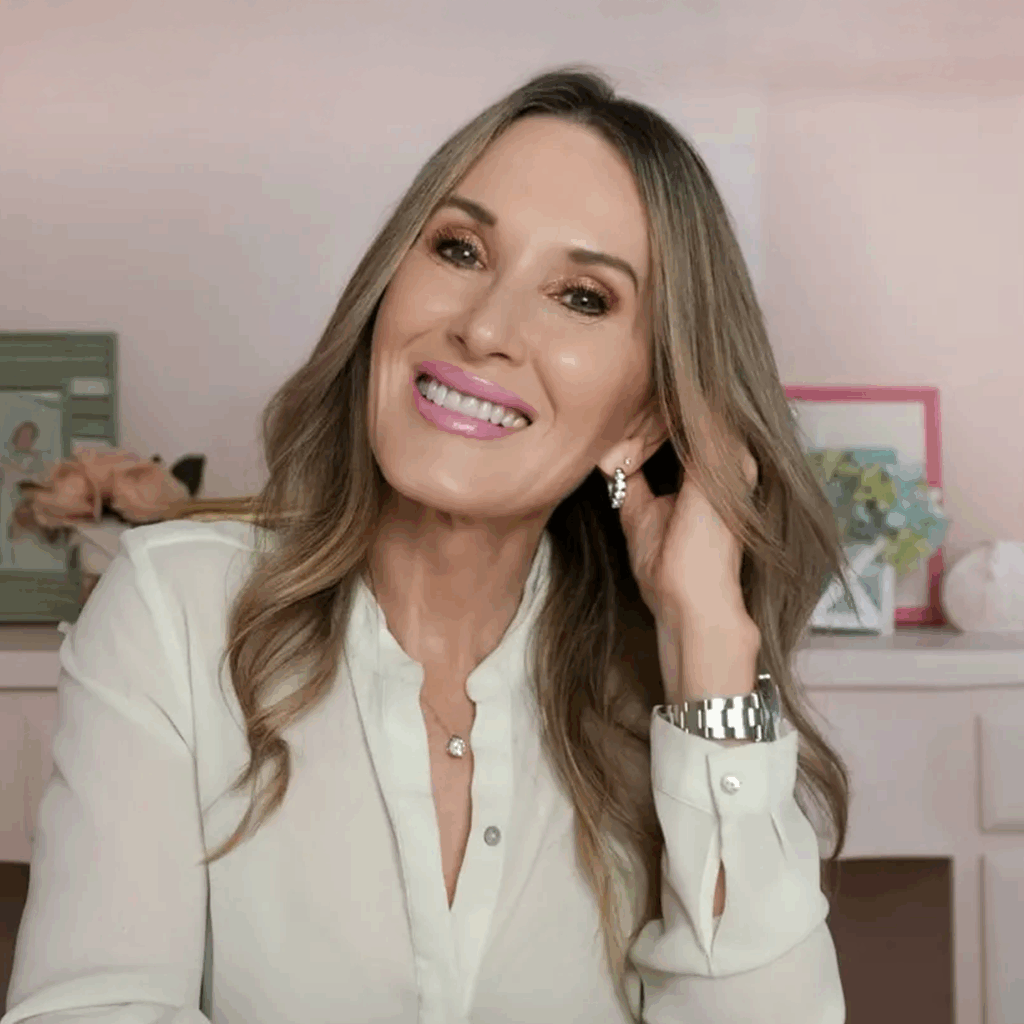
Rory: [00:00:00] I am so honored today to bring you someone who is truly one of the most credible and qualified thought leaders in the world. Um, she’s become a good friend of mine. Her name is Dr. Caroline Leaf. She’s a bestselling author. She has a huge social media following of millions of followers, millions and tens of millions of downloads on her podcast.
I actually have to read some of her bio because some of these words are so big I can’t memorize them and pronounce them properly, but, so Dr. Caroline Leaf. Is a communication pathologist, audiologist, clinical and research neuroscientist with a master’s and PhD in communication pathology. Um, and uh, she’s got a specialist in psycho neurobiology and metacognitive.
Neuropsychology. Um, so since the early 1980s, she has researched the, the mind brain connection, uh, the nature of mental health and just the formation of memory. So she was one of the first people in her field of study to really. [00:01:00] Look at and analyze how the brain can change, which is a term known as neuroplasticity.
And she is really one of the, the, the deepest thinkers, the most recognized experts in her space. And she is the author of a fabulous new book called Help in a Hurry. And we’re gonna talk about the book today, but we’re gonna talk more specifically about. The status of mental health and how your mental health affects you as a personal brand or you as an entrepreneur and understanding how stress and overwhelm and imposter syndrome are all things that are connected.
Into, to what’s going on inside your brain and what you need to know to move past that, to perform at your highest so that you can reach more people and make a bigger impact in the world. So with that, Dr. Leaf, uh, a true honor to have you on the show. Welcome.
Dr. Caroline Leaf.: Thank you Rory. It’s so good. Always so good talking to you.
And thank you for just all the great advice you always give us. I mean, not only are we [00:02:00] good friends, but you always give us such good advice and helped have helped us so much. So thank you.
Rory: Yeah, thank you
Dr. Caroline Leaf.: for that nice intro. That was very kind. You.
Rory: You are. Um. Uh, in, in addition to being, you know, brilliant and being an expert in your field, you also have one of the biggest personal brands in the world.
And I wanted to see, you know, for this conversation, I was going, okay, how can we have a conversation on this show that nobody will hear on any other show? And it’s this connection between what you do with your field of study, but also connecting that to what you do as a business and building your personal brand.
And I wanna start with. Stress. Um, I wanna start with anxiety. I wanna start with burnout and understanding how does, if we don’t manage our mental health, because I think help in a hurry is really, you know, dials in on some of this. But if you’re an entrepreneur or an expert or a mission-driven messenger, if you don’t [00:03:00] manage your stress well, um.
That’s gonna affect how we perform, uh, with our personal brand. So what do we need to know about dealing with stress, anxiety, uh, and burnout? What’s going on in our brain and how can we have better mental health so we can perform more in our business?
Dr. Caroline Leaf.: Such a good question. And it’s applicable as you said to everyone, no matter who you are, what you’re doing, the, those words are just used all the time.
I’m just tired, I’m stressed, I’m burnt out. What we need to do is look at the language that people are using, first of all to answer your question, and that is in our, um, the biomedical model, which is the model. It has been used for about 50 years now to describe mental health has kind of messed with us a little as, as a, as messed with humanity and made us think that there’s something wrong with us if we feel emotions, if we don’t feel okay all the time, or if we have a lot of up and down emotions and if we have anxiety and if we have depression, there’s so much scary.
Um. Thoughts [00:04:00] attached to that because of the messaging that’s come through. And unfortunately, it’s not the correct messaging because you, anxiety, depression, stress, burnout, these are not mental illnesses. These are normal reactions to life experiences. So if we take away the word mental I out of the equation and push that to the side.
Rather it’s look at us as humans and our mental space and we’ve gotta, we go through life and we have challenges. How we react to those challenges and the types of challenges and all, all of that creates our how we are functioning in our mental space. And sometimes we have some really bad things happen and that can really knock us.
And if we don’t manage our reactions and understand how to read the signals, we can. Get worse and worse, and then we can get told we have diseases. And soon as you start labeling someone and putting that that thought into a person’s mind, it gets wired into the brain and then a self perpetuating loop starts getting set up and whatever.
So wrong messaging number one, can make us [00:05:00] look at our mental state in a, in a way that’s a little bit scary. So people, instead of dealing with it, maybe push it aside and think, okay, well that’s, I mean, that’s
Rory: fascinating. Like to go. People are using terms like mental illness. They’re saying, oh, anxiety, do you feel anxious?
Do you feel depressed? It’s like, yes, I’m human. And what I hear you saying is like. Those are normal emotions. There’s nothing wrong with you when you feel those. That’s the, that’s the way your brain sends you signals to help guide you and give you information to, to, for how you respond. But that doesn’t mean there’s anything wrong with you, is what you’re saying.
Dr. Caroline Leaf.: Exactly. So emo anxiety is an emotion. It’s an emotional warning signal or an emotional signal, as is depression, as is frustration, as is jealousy. Any emotion. They are data, it’s there are signals giving you information. So sometimes they’re, they. Maybe at a 10. Anxiety could be at a 10 or a three. So it changes depending on what’s going on in your life and how you are responding the way that you respond.
We think, feel, and [00:06:00] choose in response to what’s happening to us and the way that we manage that process of thinking, feeling and choosing can take that anxiety signal and say, and, and we can do one of two things. We can say. Oh my gosh, I’m so anxious. There’s something wrong with me. I keep feeling anxious.
I’m anxious all the time. I’ve been anxious for weeks now. I must have a disease. I need to go to the doctor. There’s something wrong with my brain. And that in itself is putting, putting you into a very negative state. It’s creating all kinds of incorrect information from the mind into the brain, which we can discuss.
Break that mind brain connection in a moment. And creating and making things worse for you and guaranteed you’re gonna feel some depression, some this, some of that, your body’s gonna start playing up because everything’s linked. The mind, brain, body connection now, rather, you could stand back and say, okay.
I’m not anxiety. Anxiety is not an illness. Anxiety is information. It is one of four categories of signals. Well, it’s, it’s an emotion. It’s, it’s, it’s a, it falls under one four categories of signals of which one of them is emotional warning. Signals [00:07:00] and anxiety is an emotional warning signal. What does the signal do?
It gives us information. So I’m not gonna be scared of this anxiety. I’m gonna stand back and look at it. I can stand back into, into my conscious mind and I can tap into my non-conscious mind, which is that deep, spiritual, intuitive level that guides me where all the solutions are. And I can observe myself and I can say, okay, I’m not anxiety, but I’m experiencing anxiety.
Because of, I’m not depression. I’m experiencing depression because of, I’m not burnout. I don’t have a burnt out brain and a damaged brain. I’m experiencing burnout because of, and you start doing the work to search for the, because of, because you’ve landed up in that state, because of something going on in your life.
So it needs to be acknowledged to get control, and then it needs to be processed, embraced, processed, and reconceptualized. And so when you do that. Process. You shift, you shift everything. Your research shows mind, plus many others that the moment I say, okay, I’m not scared of anxiety, I’m not anxiety, I’m anxious because of [00:08:00] all your neuropsycho, neurobiology, all your mind, brain, body connection has shifted.
You’re in control Now, you still may not feel okay, you still feel lousy. You still, the issue’s still there, but you shifted the, the leadership from you being led by the anxiety and with all the wrong information. And getting worse to, oh, okay, this is information. How can I make it work for me? No information is bad, no signaling is bad.
I can take that and I can make it turn, turn it around and blow the energy levels and make it actually work for me. ’cause a little bit of anxiety is actually very good for me. That kind of thinking is the shift that we, that I try and help people understand.
Rory: Yeah. And you know, to me it’s the difference between when someone says, I’m de when when somebody says I am depressed.
They’re, they’re embracing that as their identity versus Exactly, and that’s an issue. You’re, what you’re saying is going, I feel depressed, which is a signal that’s giving you information for [00:09:00] how you should adapt your life. It’s accordingly. And to hear that from somebody with your pedigree is really powerful.
So. Okay, so I wanna talk about adapting to this. Um, so neuroplasticity is one of the things that you are like known worldwide for and neuroplasticity, I think. Okay. So correct me if I’m wrong here, but as, as I’ve. Understood. What I’ve learned from you is basically the brain’s ability to change. Um, and so a lot of times in personal development, like even in my first book, take The Stares, I, there’s a whole chapter on, uh, self-talk and, you know, just something that I had learned more intuitively about, you know, what you tell yourself.
But I think a lot of people think, oh, positive affirmations is sort of like fluffy, and it’s like hooey, fooey. But then when I hear you talk about neuroplasticity, I’m like. Wait a minute. This is like the, this is like grounded scientific [00:10:00] connection. So can you just help us understand like what is the role that neuroplasticity plays in helping us break past limiting beliefs that we have about our ourself and like reestablishing new beliefs?
Dr. Caroline Leaf.: Okay. Good question. Excellent question. Okay. Neuroplasticity is actually the mind’s ability to change the brain. So the brain, let’s think of the brain. The brain. Take the brain for a moment. The brain. I’ve got a model of a brain here. So those of you that are listening, I’m holding up brain. Yeah.
Rory: Say that again real quick.
You said neuroplasticity is the mind’s ability. To change the brain.
Dr. Caroline Leaf.: The brain, yes. So the mind’s doing the work, not the brain. So we need to change our narrative. It’s not my brain made me do it. It’s not my brain. My amygdala is a fear detection, um, threat. It, it identifies threats. It’s not, your brain doesn’t do anything.
Your brain can’t think. Your brain can’t. Anything. It can uh, it’s a conduit. It is a responder. It’s something that your mind uses so that you can actually show up in the world [00:11:00] and your brain is designed biologically to be changed. It’s malleable, but it can’t change itself. It’s changed by something and that’s something is your mind.
So what we need is mind management. ’cause when we manage our minds, we then manage the brain. The body, the brain, and the body are around about 1% of who you are as a human. The mind is 99% of who you are. So if we paid total attention and keep thinking, well, my brain made me do it, what’s happening is that we are getting trapped inside our sensations.
How we feel, um, that that physical, the physical sensations or, and our five senses, which are actually only 1%, but because they’re so in your face, that when you feel that anxiety, when you feel that gut wrenching pain in your body, when you, when you. Feel this, the, the physiological responses in your body.
If you don’t know that that is a 1% part of you and that you can get that under control, you’ll get consumed by that. And then that can take you down that spiral of negative thinking, and then those belief systems just grow [00:12:00] stronger and stronger and that negative self-talk, et cetera, et cetera. So what we need to first understand is the power of the mind.
The mind is fundamental and you’s distinction.
Rory: The mind is. Not the brain. Those are two different things, is what you’re saying. Two
Dr. Caroline Leaf.: different things. Yes. And this goes right back to Thomas Akin, back to St. Augustine, back to um, in Decart also had a hand in this talking about mind being separate from brain, but the difference between what Decart, for example, and someone like St.
Augustine or Thomas Akin said, and what I say and what modern science actually says, is that your mind. Is all around and inside your brain and your body. So here you see me, I see you. Our mind is around us and through us, and it has different levels. Um, it has got your conscious level, your subconscious, and your non-conscious level.
That’s kind of like your spirit, soul and body, a spirit and soul kind of thing. And then you’ve got your body, but the fundamental nature is your mind. And your mind is. Making the changes in your brain, your brain is a host or a conduit, and basically it, it, it’s, it’s a derivative. It’s basically your mind [00:13:00] makes a change.
So if I have a limit, if, if I, um, hear someone says something to me that you are not good enough, and that comes in from outside by someone who’s a, that a child gets or someone in your life. Is a caregiver or someone that has a big impression on, makes a big impression in your life, they say that to you.
It’s very sensely strong. It’s got high energy. It comes in through this field of the mind first. Everything’s first in this field of the mind. It gets. Processed throughout the mind, and then a copy of it gets made and put into the brain as energy. So literally first that experience is in the mind, like a little cloud of energy.
Imagine little clouds all around you. Of all these experiences, every little cloud of energy gets copied and placed into the brain and into the body. And that connection between the mind, brain, and body is how you are then able to show up in life. Now, if someone said to you, you’re not good enough, and that planted as a baseline little cloud that.
Wired in your brain and in your body. That’s like a [00:14:00] baseline related to identity. And that from that, you then receive other information. So other people say, oh, well done, but you don’t really believe it because you’re not good enough. Because that other core belief was so, so deeply, um, wired into the, that’s what neuroplasticity is.
You receive it in your mind and you build it into the brain and the body. The good news is that neuroplasticity is also the ability to reverse that. Nothing ever stays the same. So even if that happened to you as a child, but you
Rory: don’t, if you don’t learn how to consciously reverse it. It’s like you’re trying to, it
Dr. Caroline Leaf.: stays there.
Rory: It stays there, and any new input comes, it’s stronger. Then it goes, no, this is a conflict with the underwriting programming. So it just bounces off until you rewrite the, like the, under the, the foundational program.
Dr. Caroline Leaf.: You have to, you have to rewrite from the cloud to the brain, to the body. You have to, that little cloud of energy, you have to rewrite that whole process.
So you have to rewrite what your mind put in, which means your mind’s got different levels. So we’ve got a, A level. That is, uh, is basically processing data, the incoming [00:15:00] data. Then we have a, that’s a conscious mind consciousness that we hear all this. Everyone’s always talking about consciousness, and that’s got a part of it that is like a toddler.
You’ve got young kids and they’re all over the place, hungry, up and down, learning hungry to learn, but you as the parent guide them. So think of your conscious mind, the part that is helping you to process this data as having a toddler part that. It’s great ’cause it gathers the data excitedly and thinks and feels, but then there’s the parent guiding it.
So what happens is that when we get stuck in a negative belief system, the toddler mind is activated, but it ignores the parent mind. So now the parent mind doesn’t give, is there to give advice. But now you don’t take the advice. So now you build this little cloud of energy, build it into the brain, and now this and, and the body.
Now a network is set up and now every time something comes in that is, that activates that, it just gets more added to it. Because these, these networks are organic and dynamic and they learn, but they could be learning the wrong stuff and that long stuff could be, I’m not good enough. But now, as soon as you stand back, [00:16:00] how do you stand back?
You with your conscious mind, you are able, as the parent, part of the conscious mind stand back and say, okay, hang on. Let’s have a look at this. What is the truth? Let’s stand back and observe. So then now the parent mind balances the toddler mind. So then you bring that thought into your conscious awareness and you, your parent.
Mind helps you to start being curious, why am I thinking this? Is this really true? Where does this come from? And so you begin a process of exploration. As you do this curious exploration, you open up, um, you open up the depth to the depths of your non-conscious, NON, not unconscious. Unconscious, a brain state.
When you sleep or under anesthesia, non-conscious is your spiritual level that operates 24 7. It’s where all your wisdom, intuition, intellect, reasoning, it’s kind of got levels. It’s your first levels, your sort of intellect and reasoning, and then the deeper level is your intuition and insight and wisdom, and you’ve got creativity in between.
So all that good stuff is down there now, what we needed as humans to function to be good [00:17:00] entrepreneurs. Deal with these critical belief systems. The self-critical talk, there’s people pleasing, imposter syndrome, all these networks that have been wired in via neuroplasticity by our mind processing things in, in, in the wrong way is we need to take those belief systems and stand back into the parent mind and as soon as the parent mind says, Hey, hang on, let’s just question this a bit.
It opens the door to the unconscious and now we start doing a little bit of logic and reasoning, and now we go deeper into, into intuition because inside each and every one of us is every solution to every problem and what, but we have to dig to find it. But what so often happens in the busyness of life and the.
Pressures of life and I’ve gotta get X done and I’ve gotta do this. And if I’m not nice to that person and don’t keep them happy, then this is gonna happen. Oh my gosh, if I’d only done this or it’s too much and burnt out, or I’ve got anxiety, there’s something we, we’ve got so much that’s the toddler going crazy and that chaos just adds more and more layers of chaos.
Now in between. We have a [00:18:00] great moment. Insight and great moment in relationship or work. And so then in those great moments, if you recall those great moments where you have a great conversation or you have a breakthrough at work, or you get a bestselling book, or you have a beautiful time with your wife or your kids, that’s as soon as that you have those, that’s evidence that your toddler mind stop for a moment.
Listen to the parent mind tapped into the intuitive part of you and you started just being yourself. And that truth started coming through. When I talk about mind management, I’m talking about learning and training yourself to recognize when you have got caught in the chaos, when you got caught in that mental mess, when you need that help in a hurry.
When you finding yourself reacting and thinking going into these spirals, it’s to stop and say, that’s not me. I acknowledge it and it’s okay to not be okay. Acknowledge it, but let me open up these levels of wisdom inside of me to handle this differently. And that’s mind work when you die. Your brain [00:19:00] disintegrates, your body disintegrates, but your mind carries on, your spirit and your soul, carry on.
They have an eternal value, and that’s been scientifically established. It’s more significantly scientifically established that we have more beyond just our physical than the physical is established. So there’s more science showing that we more than just the brain and the body. Wait, wait, wait, wait.
Rory: Say that, say that again.
You’re, you’re saying. Science has proven that after you die, you,
Dr. Caroline Leaf.: you exist.
Rory: There’s an existence that, that, that continues.
Dr. Caroline Leaf.: Yes. There’s research that reality exists beyond the physical and it’s, and the evidence is more significant than, for example, some of the. Top significance of top drugs that we use on the current market.
So that means in terms of all the science language that a drug is put out to market, when it is supposedly significantly doing what it’s supposed to do, a medication, the research on mind and mind being separate from brain, but working through the brain and the body. There’s this relationship this, there’s this interactive [00:20:00] relationship, um, that, that they have.
And that the fact is that these. Once our physical brain and body pass, there is, um, there is reality that exists beyond that. There’s more significant research evidence proving that than it is that we just, this is all there is and that’s great to know because that means that that intuitive deep part of me, that thing’s coming from a level of wisdom that’s stepping into a level of wisdom that is something we need to spend the time.
Delving into, so the work that I do in my, I don’t practice anymore, but the, in the coaching and in the books and all that sort of thing in the podcast is to help people to manage their mind. And managing the mind means when I’m anxious, that’s a signal. It’s an emotional signal. Where do I feel that in my.
Body where, what is, how is that affecting what I say and what I do? How is that affecting my perspectives looking at those signals? The minute I do that, I gather awareness of those signals. I can then name that thing. Oh, okay. Well, [00:21:00] I’m feeling anxious because, and I validate because we can’t run What you resist persists.
You have to deal, you have to face, you have to look at it in the face. And so the, the. Once you’ve acknowledged those signals, then it’s to name, what is this attached to? I’m feeling this anxiety, but anxiety is not an it. This behavior is not an it. These are. Attached to something they’re attached to. What a thought.
What is a thought? It’s an experience. What’s an experience made of? Lots of details, lots of data. This conversation is an experience. We’re saying lots of words. So this experience, this conversation is a thought made up of the words, which are the memories. So every. Lot of signals is attached to a thought that thought’s made of lots of memories, and sometimes the source of those memories, the roots, are not so great, in which case, and if we’ve never dealt with that, we just keep reinforcing that same thing.
It just that same network just keeps being reinforced. Neuroplastic,
Rory: would it be is, is it accurate to say that an emotion [00:22:00] is not a problem? An emotion is a symptom. That is the result of something else, like an experience like it. There’s an experience that we had that led to thoughts, and if we don’t deal with those or change the way we think about those, then the emotion persists until we go back and change the way that we’re thinking about that experience or that thought, and that’s what mind management is.
Dr. Caroline Leaf.: Almost 100% correct. So your thought is your experience, and we have all of our existing thoughts from everything that we’ve ever gone through. And then we have new experiences that become thoughts. So. The past is all our past experiences that have become thoughts with memories and the present are the new ones coming in, and then there’ll be ones in the future.
And all of those work together. So every new, like this conversation is a new thought coming in, but it’s activating existing thoughts and those thoughts have got memories inside of them. So we look at. The current through the view of our existing networks, and it all gets coordinated now. Every thought is, um, imbued with [00:23:00] emotions and, and that then manifests our behaviors and our perspectives and so on.
So, um, that the, the, the emotions are part of the thought networks. So a thought networks data. But the, the, the, the aliveness is the emotional and perspective component. And then the behavioral component is, is what we say and what we do. That’s why we talk about four categories of signals that each thought generates.
So every thought generates emotions. Every thought generates those emotions inside the body. So we are gonna have a sensorial. Variance of those emotions. So the thought comes alive through the emotions, through the body, through how we look at life and through what we say and do. So what we can do, my management is our ability to look at what am I feeling?
Where am I feeling it? How’s this making me at? What’s it, how’s it affecting my perspective? Oh, okay. Where does that come from? What’s the detail? What, where’s the source? How can I deconstruct? I can’t change what’s happened to me. You can’t ever change the past, but you can change what it [00:24:00] looks like inside of you.
That’s the key with neuroplasticity. Mm-hmm. So with your mind, you do say that again. Signals
Rory: you. So you gotta say that again. You can’t change the past, but you can. Change what
Dr. Caroline Leaf.: it looks like inside of your networks. So that’s directed neuroplasticity. That’s what mind management is doing. Mind management is catching via the signals.
The thought. You don’t, can’t just catch the thought. You have to get the The signals. The signals then pulls up the thought and helps us to unpack it and deconstruct it and rebuild it. But you still remember the past, but you’re not now sitting with a toxic tree. Look at this. Thought type this to represent for fun, a thought network, a wiry looking tree, whereas I’ve got a healthy green tree.
So I often use this to represent a thought because the thought’s got all these branches and connections and sources like a root. So if I, um, this will generate negative signals, this will generate. Healthy signals. This is going to make me depressed and anxious and withdrawal, and life sucks and my body feels sick, et cetera, et cetera.
This is gonna have [00:25:00] the opposite, but I can change them. Neuroplasticity in a is my ability as a human to step into that wise, intuitive parent, part of my conscious mind and tap into the, the endless wisdom of the, of the intuitive, non-conscious, and do something about this and rewire it. I can’t eliminate it, but I can rewire it, reorganize it.
Pick it up and throw it away and dig it out and throw it away, but I can shrink this. So eventually it’s mainly this with just a tiny little reminder of, once I was like that, now I’m like this. So I take that learning, I learn from this. I wire that into the new learning. Now that is mind management and that’s directed neuroplasticity and that’s what we can do as humans.
Rory: It’s, it’s interesting to me because, because I had an epiphany at some point in my life where every single memory I have. When I realized that every single memory I have is not exactly what happened, every single memory I have is an [00:26:00] interpretation of what happened. It’s something that I chose to remember about what happened, and you go, if that’s true, then.
I can take anything that has ever happened to me and I can adapt my own interpretation of what that thing was in a way that is more empowering or clarifying or insightful or inspiring than it is exactly like, you know, judgmental or vindictive or, uh, you know, some somehow hurtful to, to me and others.
And it’s to go, wow, that is actually. Foundationally rooted in neuroscience and neuro biology and neuro and, and that is neuroplasticity. So, uh, so I wanna talk about imposter syndrome. I can you explain from a scientific perspective what is happening to someone’s brain when a mission-driven messenger feels.
The sense of imposter syndrome and what do we need to [00:27:00] know about what that is and how to move past that.
Dr. Caroline Leaf.: So I’m very glad you asked that question. So basically, imposter syndrome is coming from, let’s talk about the sort of psychological and then go into the psycho neurobiology of it. Psycho neurobiology being the psycho mind by neuro brain biology body.
So. Everything, everything every thought you have affects your brain and your body. And in fact, just a sidebar here, 35 to 95% of illnesses, lifestyle ill diseases come from our thought life. So basically our, we are, we wear and tear our brain and our body. So if we, if we don’t manage our mind, we put chaos in the brain and the body.
Eventually we wear our wear. Out our systems, but fortunately we can, depending on how far down the health, um, road one has gone, you can reverse and arrest and things to a certain extent. Okay. So, um, imposter syndrome has come from comparison, but it’s first come from an, an identity issue because, um, my. If I’ve been labeled in some way or if I [00:28:00] don’t, if I haven’t tapped into my, what I like to call the perfect you, because each there’s something you can do that I can’t do.
There’s something that every person on this planet can do that no one else can do, so that the normal neurobiology, the normal psycho neurobiology of humanity, the spiritual, normal, spiritual psycho neurobiology of humanity is that. There’s no competition. There’s only enhancements because Rory can do something that Caroline can’t and vice versa.
So therefore, we better together than we are apart. We better in community and connection and enhancement and in co incoherence, but we live in a world that says the opposite thing. It’s all about competition. That you’re competing with someone else as opposed to, um, be enhancing someone else. And so when, when we go into that competitive state, it will distort realities.
And it doesn’t mean that you can’t get to the top. And it doesn’t mean that you, you know, you’re not, when someone is, is in our field and in our lane and they seem to be doing better than us. The fact that you even think that. [00:29:00] Means that you’ve moved into competitive lane. So we need to stand back and say, why am that’s, and there’s never a judgment.
It’s okay to think it’s okay to not be okay. That’s what this book really is about. It’s okay to have those, those moments where you grab hold of, okay, this is what I’m thinking now. I’m, I’m, I feel like I’m not good enough. I, I Why? Because you’ve just compared yourself to someone else. You’ve just tried to compete with someone else.
Mm. You’ve. Focused away from what you can do. So it, it involves a lot of rebuilding a person’s identity. So when I work clinically with people with imposter syndrome, and I mean, well I’ve even experienced it under, but I you, it’s something that’s in your field, it’s in life. It’s so easy in this day and age as well.
’cause it’s so easy to compare yourself to other people. Sure.
Rory: But the key
Dr. Caroline Leaf.: thing amplified by
Rory: social media and instant communication and Absolutely. Like, I mean, absolutely amplified.
Dr. Caroline Leaf.: Absolutely. So the key thing with imposter syndrome is to realize that there’s not something wrong with you. It’s that you got sucked into competition and it’s affected [00:30:00] your identity.
So it be healing begins by you going back to who are you, what is your voice, and spending time just getting to know yourself. I mean, it’s really like what. Read books, read fiction, read the things that you’ll learn about yourself when you move away. It’s very important to spend and, and honestly, reading fiction is a really quick way of learning about yourself because you’ll be drawn to stories that seem to tell you something.
And as your creativity and imagination or activated, you go into that deeper, deeper level of non of the unconscious mind, which is your intuitive level. Once you hit the intuitive level, you start finding yourself. So it’s like logic and reasoning, creativity and imagination. Intuition me. And what we wanna do is take ourselves down to that level.
When I, when I know who I am and I know my voice and I work on raising my voice, I’ll suddenly start seeing, I want to support others. I want to celebrate others that I can catch myself. If I see someone who’s doing better or who’s doing something that I think I should be doing and want to doing it or whatever, or I’m not good enough, or they know more than me, I, [00:31:00] instead of running from it, I can just say, oh, that’s interesting.
Let me stand back into what I call the multiple perspective advantage. Stand back into that. Parent conscious part of your mind, open the door to the wise, non-conscious and say to yourself, okay, that’s a valid statement. You are feeling this in your body, this emotion, this affecting your perspective. You know, go through those signals and name the statement, validate it, and then do some kind of breathing or whatever to calm down your neurophysiology and then shift over to, okay, well now let’s really reflect on this.
What is the, is this the truth? Who, the what, the when, the where, the why, the how, then what memories does it bring up? ’cause as you start. Doing this, you’re going deeper and deeper. You’re going down, you’re starting to reason, you’re moving down towards intuition as you get to that who, what, when, where, why, how it starts generating.
Thoughts and opening thoughts up like a flower opens up in bloom or pollen comes out of a flower, memory start emerging and other thoughts and connected thoughts and, and suddenly you get data, more and more data. Now you can take data and you can go to intuition, and intuition [00:32:00] will take you into you and you can start looking at all of this objectively and say.
Oh, okay. You having in a moment where specifically that person quoted that scientific paper and you feel potentially it made your you ing your own research immediately you can say, well, that’s what’s happening, but what’s the truth? The truth is that that’s it. That’s really interesting what they found.
This is what I found. I’m sure there’s some whatever, whatever, and you have it, you can have a normal discussion. So instead of imposter, I now get excited about my voice and I now learn from that situation and grow as a person versus being. Wiped out by the imposter syndrome. Does that make sense?
Rory: Yes, absolutely.
I mean, I, I think, you know, understanding that imposter syndrome is fundamentally connected to competition. Totally huge neurological insight to me because you know, like one of the things that we’ve realized is like when you’re competing, there are wins and losses. And if we are in our brain, if, if, if we’re reverting [00:33:00] back to a competitive time in our life, most of us in our competitive careers, we ended up not being the champion.
Right. Like unless you were the state champion or the world champion, like. At some point in every form of competition in our life, we ended up not being number one. And so there’s, I could see how that would root biologically. Yeah, a lot of negative emotions for all of us. And so when you’re competing, there’s wins and losses, but when you’re serving, there’s only wins and win.
Exactly. When you just lean into going, like, it’s not about me winning, it’s not about me being smarter, it’s about how can I process this new information exactly to be more helpful and more useful. Um. And you get out of, there’s like this magic that you snap out of that com competition and just go, I’m not competing against other colleagues.
I’m, I’m competing against, you know, being more helpful to other people and serving, uh, you know, my, my end user, my, my [00:34:00] end customer. But to, to realize that that goes directly to. Our neuroscience and being, and being drawn into competition without even realizing it. That’s, that’s really powerful insight.
Dr. Caroline Leaf.: And it goes right down to rewiring that because you, you’ll probably find something happen at some point in your life. It could be recent, it could be old, could be from child, whatever, and that that needs to be when you found the source and the root, you can then rewire. But it takes standing back and observing and recognizing specifically that that.
When people battle with imposter syndrome, one of the big things that I say to them, and I’ll say to myself if it hardly pops up anymore, because I know how to manage it now, but it did a lot, especially when I first started out in the world of science as a woman in a very patriarchal, dominant world. Um, you know, they’d go up to my husband and say.
Hey Dr. Leaf. You know, they would overlook, you know, that’s the, just the whole, and just, I’ve had signed male scientists say to me, you’re not a scientist. Meanwhile, I’m doing more research than what they, yeah. It’s just having come through that kind of environment, I always say to myself, and I’d [00:35:00] say to my patients, and I’ll say to everyone listening today, there’s something you can do that no one else can do.
And that is so important to find because that what you can do. That no one else can do is the piece of the puzzle. That is what Ev, and I know it sounds so cheesy, but Rory, it’s so valid and it’s so key to overcoming that imposter syndrome. You’re not gonna get rid of it through an affirmation. You’re not.
’cause an affirmation is an attempt to take something that’s positive and place it on top of something that’s negative. It’s like putting a bandaid on a wound. It’s like taking an opioid. When your hand is on the stove, take your hand off the stove. That’s why your hand’s sore. The open’s not gonna stop the, you know, the, the pain.
So we, the painkiller not an a painkiller. So essentially we, what we need to do is we need to, uh, we need to look deeper and see who am I, what is it that I can do that no one else can do, and how can I do that to enhance others? And the research, so much research neuroscientific, psycho neurobiological research, research that I’ve done with my team, where we’ve even seen [00:36:00] changes down to the level of the DNA.
When you shift that. Perspective and you start recognizing who you are and your identity starts coming back and you stop saying, I’m depression, I’m anxiety, I’m an imposter. I’m, when you shift that, you start opening the doors to dealing with a lot of the other mental health issues. It’s very much a, you know, it’s not the only core issue, but it’s a very core issue, are authenticity and our identity.
Rory: Mm-hmm. Yeah. I, um, so help in a hurry. So this is the name of the book, which I lo I love this idea and I think. W if somebody is struggling with some type of like mental health situation. What should they do? Like what are the things they can do to get help in a hurry? Obviously get the book y’all like you could tell this is, this is amazing.
It’s so fascinating to me. Um, but in addition to like, you know, you also mentioned like the four triggers and I think we’ve only talked about one of them, which is emotion. So I would love to hear that of just helping us process. Okay. When I have anxiety or I have imposter syndrome, or I have fear, or [00:37:00] I do feel overwhelmed.
What should I practically do? Like how do I coach myself through those situations?
Dr. Caroline Leaf.: Okay, so just quickly go a little bit of neurobiology and neuroscience. Is that let, let’s say that this toxic looking tree over here, this wire looking tree is the imposter syndrome and the roots of it are the wherever the source was, someone’s saying something to you or whatever, and it just never was dealt with.
It was just shoved down and shoved aside and never really dealt with. If you don’t deal, lot of stuff, what you resist will persist and just get stronger. So this is not just a wiry looking tree in your brain. This is a. Misfolded network. It’s proteins that are misfolded, it’s inflammation, it’s chemicals going create, creating hac.
It is everything that’s supposed to be running normally, not running normally. So as much as a virus can invade the body and make biological changes our thoughts of, for example, imposter syndrome, do the, create the same physical damage as something like a virus. Wow. Wow. That’s
Rory: amazing that a thought can have the same [00:38:00] biological damage as a, as a virus.
Dr. Caroline Leaf.: even more. And it’s, it’s, that’s why we have like the, the, the, when people, your thoughts create reality literally. So you, you are your thoughts, you are your mind, your brain and body just follows suit. It’s not the other way around. So when we, when we recognize that the research I do, which is psycho neurobiology, you will look at when someone in taking someone through a process of it takes around 63 days to break a habit.
So a habit of imposter syndrome, which is a, is a wired in network that has become an automatized habit. Um, which means it’s intelligent and logical and driving you and learning. And the more you don’t deal with it, the stronger it actually is getting, ’cause it’s learning to be more and more of an imposter syndrome.
That is an actual physical, structural, biological change in your brain and your body that’s increasing your vulnerability to disease. It’s affecting your gut, it’s affecting your heart. Various different ways that it can affect us. Right down to your telomeres, which are your part of your DNA. They’re basically the ends of chromosomes.
So [00:39:00] we’ve shown that within nine weeks of mind management, just managing your mind, you can completely reverse that process. You can, we’ve had people gain up to 35 years of biological health. Um, and if so, people that were like 30 in these thirties were the 65-year-old. Biological health, going back to match, catching, getting.
So they’re 35, but they, but their body says they’re 65. That’s what it means. But within nine weeks, getting their body and their biological, their mental health and their biological health at the same chronological and biological at the same age, that’s 35 years of. Gaining health, mental health. So what it means is that I’m not decrying the fact that people have extreme states, extreme depression, extreme anxiety, um, where the mind really can, can, can literally break apart because of extreme trauma, et cetera, et cetera.
That’s, that they, they, it’s so harsh and so dramatic, and that’s generally, um, trauma. So trauma is when something happens. To you, and it can really break, but it doesn’t mean that that person can’t heal. It means it’s gonna take [00:40:00] longer, not just one cycle of 63 days to break a trauma cycle. It’s gonna take multiple cycles.
But if it’s a habit that you’ve developed, um, and something like impostor syndrome is something that’s, um, basically a habit that you have. Have developed, you can basically rewire that network in around 63 days. Most people think you can change a habit in 21, but it takes three cycles of 21. It’s different phases you go through and it’s a daily micro habit that you do.
So it’s a daily process that you follow. So to come back to the four signals and all that stuff. So 63 days is the research shows is what I need to rewire a network using directed neuroplasticity. So if I want to wire out the imposter syndrome to take the example we’ve used today, I’m not gonna wire it out.
After one session of listening to me, you’re gonna have to go and actually do the, apply a formula over 63 days. But what you can do in the moment that it happens. So I’m gonna tell you two things now in the moment that something happens, this is what this book deals with. This book deals with, how do I deal with imposter syndrome [00:41:00] in this moment?
I’m sitting in a meeting and someone says something and. Can’t answer because all that is flaring up. So this gives you the ability to manage the 63 seconds. So what we see from science is that if you can create a pause of 63 seconds, you can actually get yourself back under control. You can direct the energy of the mind, brain, body connection, and you can affect.
Right down to the level of the DNA. You can get yourself in a place of, of calm, like the orange and the red before the green on the traffic light. And that’s what this book is. It’s filled with strategies of, if I hit that, people pleasing, imposter syndrome, regret cycle, um, anything where you need to get calm.
So it’s strategies to do that. Now, once I’ve hit the mark of, okay, I’ve managed the 63 seconds, I haven’t fallen apart, I’ve managed to recognize that I’m reacting and I’m scared to say anything, but I’ve gone through the little. Technique and I’m now back on track, and even though I’m still feeling a little bit wobbly, I have managed to master the 63 seconds.
I’m still gonna say that in that meeting, when you’ve mastered 63 seconds, you can [00:42:00] master. In the next 10 minutes, you can master the next seven days. So this book also teaches you how to manage the 63 seconds and teaches you how to manage the 10 minutes and how to then get yourself to look at seven days.
Why seven days, seven days is how we can start seeing if it’s a pattern in our life. Once you find a pattern, you then can go into the 63 days, which is the, is. Time it takes to rewire or multiple cycles of its trauma. What do you do each day? The neuro cycle and the neuro cycle? I’ve got an app. I’ve got other books.
I reference the short version of it in here, plus a whole ton of other techniques. It’s basically how you gather awareness of the four signals, emotions, behaviors. Bodily sensations and perspectives. Those then take you to the thought, you name the thought, and then you reflect on that. That’s the second step.
It’s all very clearly outlined in, in the, in the books, in this book and in, um, my other books. And I’ve got an the app, neuro cycle app. Um, and then you go to the third step, which is basically. Digging up all the other memories. Um, it’s just [00:43:00] basically a mindstorm that you do. And then what you do is you’ve now got all this data, you’ve got all these emotions, you’ve got the name of the thought, you’ve reflected, you’ve got a bit of who, what, when, where, why.
Now you’re at a point where you can start rechecking, where you can start saying, reconceptualizing, what does this mean? How could I mind shift this? And then you create a little action. So you do that in about five to 15 minutes a day, and that is the formula that you apply to. Direct neuroplasticity, you’re literally rewiring that mind, brain, body network in the direction you wanted to go and changing how it plays out into your future.
And you do that daily for the different cycles.
Rory: That is phenomenal. And so it’s so inspiring and encouraging to me to go these. Things that are happening, that we’re feeling are very real and there’s nothing wrong with us. When we feel them, we should feel them. We should allow ourselves to feel them.
They’re rooted in science and biology, but at the same time, we have power over them when we realize it’s not my identity, it’s just a thought. It’s [00:44:00] just a story. It’s just an experience. And that knowing that what I tell myself about the thing that happened or what I tell myself about the emotion I’m experiencing is.
Is like most of the battle. I mean, it can, it, it, it affects my physical, it is my, my, my status and then just my, my ability to actually get out there and perform physically is connected so directly to the ability to have. You know, controlling my mind. And, um, I just, I love this so much. So y’all go get the book, help in a Hurry.
It’s called, um, where do you Want People to Go, Dr. Leaf to, to get this book and stay connected to all the things that you’ve got going on.
Dr. Caroline Leaf.: Oh, thanks Rory. They can get whatever books are sold and my Dr. Leaf do um com is the website. And my social media handles are Dr. Caroline Leaf on all nine, all the platforms.
Um, so they can get lots of, and the podcast is the Dr. Lee Show. So, and you’ve been on that show?
Rory: Yeah. You, you’ve been, you’ve been such a great supporter of us [00:45:00] too, which I, I appreciate so much. And. I’m such a nerd. I feel like if I would’ve had a different path in life, I could have ended up maybe going down like cognitive neuroscience because I I love what you do so much.
It’s
Dr. Caroline Leaf.: so interesting.
Rory: It is interesting and it’s inspiring and it, it, it’s, it’s, it’s just, it’s like it’s rooted in science, but also I think it know some of the things that you’ve said here, like the idea that there’s more evidence. There’s more scientific evidence that points to life after death. And there is scientific evidence that points to some of the pharmaceutical drugs that are on the markets.
Uh, their efficacy is like, it is mind blowing. It is so that you know if you’re a, a person of faith, uh, or if you’re just a person who believes in people. To go. There’s science that backs all of this and supports that, and you, you dig to those deepest levels and then you kind of bring it forward for all of us to understand and apply and make sense of.
So, um, thank you [00:46:00] for the work that you do. Dr. Lee, thank you for being who you are and, uh, we wish you the best. This is the book. Help in a Hurry. Everybody go buy the book. Go check out Dr. Leaf. Her work is. Incredible. And, um, Dr. Leaf, we just, we just wish you all the, all the best.
Dr. Caroline Leaf.: Oh, thank you Ru You’re incredible too.
And thank you for all the help and everything you’ve put into our lives. I mean, you’ve really sewn a lot into our lives and we really appreciate, you’re amazing yourself. So thank you. And thank you for the great questions. I enjoyed this.
Rory: It was, it was magnificent. Magnificent. Alright buddy, we’ll talk soon.
Dr. Caroline Leaf.: Thank you.
Ep 604: From Homeless to 9 Figures: Stephen Scoggins on Alignment, Legacy, and the Real Reason Businesses Fail | Stephen Scoggins

Rory: [00:00:00] welcome back to the Influential Personal Brand Podcast. I’m about to introduce you to a friend of mine that I’ve known for years.
Someone that I love and adore. I admire and respect in real life as a real entrepreneur. And you know, when I use that term real entrepreneur, I don’t, I don’t dish it out lightly. It means somebody. Who knows what they’re doing in the world of business, not just the stuff that you see online, but offline real relationships.
Uh, Steven Scoggins is who you’re about to meet, and Steven was homeless. He went from homeless to nine figure entrepreneur. For those of you that are not math majors, nine figures means a hundred million dollars a year in annual revenue. Um, he was very, very close to that number, and he has had multiple exits in business.
His brand is all about being unstoppable, both in your personal, your professional life. He’s a spiritual giant. Um, someone that I’ve come to respect. We’ve done some really important projects together. And I’m honored to have him on the show and excited for you to learn from him today. Steven s [00:01:00] Goggins
Welcome bro.
Stephen: Love you bro. Man. Thanks for the intro, dude. I appreciate you guys. Uh, it’s been, it’s been a minute, man. It’s been a few years now.
Rory: Dude, we, we should we have to talk about the last thing we did together because Okay. People don’t know this. Uh, you know, ed Millet was something that, he was someone who brought us together and, and, uh, I don’t even know if Ed knows this, but.
You know, when Ed brought us in to help him with his book launch, there were a lot of people that helped. Mm-hmm. Uh, and you know, part of what was magical was Ed pre-sold 117,000 copies of his book. Yeah. Uh, and we were some of the team leading the strategy there. Mm-hmm. But what became legendary. Was, we sold 35,634 books.
I always ran up 36,000 books in a single day. Mm-hmm. And we sold those books at an event that we had at your building. Yeah. And, uh, it was your butt on the line for all the AV and the technical and, um. That was like the last time that we really did something. That was like a [00:02:00] few years ago already.
Stephen: Yeah.
Yeah. Dude, you know what? Tom really flies, man. But it was a, it was a great experience. I was telling somebody recently, I was like, I remember this time Rory calls me, he says, Hey, I got a client. I’m like, yeah, okay, cool. He’s like, we wanna do a book, a hybrid book launch. What do, what do you think about that?
I’m like, okay, cool. He’s like, how many, you know, how, how, how many, uh, seats can you hold? What can you do live? What can you do? Virtual virtually, all this kind of stuff. I was like, oh, I, you know, I can, I’m, I’m good. I can do 10,000 virtually, and I can do this. You’re like. Uh, I might need a little more than that.
We might
Rory: need more. I remember the conversation that we had where I said, uh, I said, Steven, do you have a generator? Yeah. And you were like, no, we don’t have a generator. Do you think we need one? I knew that was gonna come next. And I was like, I don’t know. Imagine what would happen though. Do your reputation if the power went out.
Yeah. At Ed Millet’s event in
Stephen: your building. Well, when Eric Thomas is on stage and, and, and you were like,
Rory: all right, let’s do it. I’m gonna get a generator.
Stephen: Yeah. And then sure enough, we had a tornado jump over the building. A tornado that jumped over the building
Rory: knocks the power out at the building. Yeah.
Eric Thomas is on stage. There’s however many [00:03:00] thousands watching the whole place goes black. Uh, 10 seconds though. Not even, not even 10 seconds. It was like less than three seconds. Generator comes right back. Kick, kick
Stephen: out. We, we didn’t even lose any live feed. That’s how quick it happened. The, yeah.
Rory: It was amazing, dude.
So the way that you supported Ed. The way that you, um, you did something, you made him feel so special the way you had, like, custom pillows made. Mm-hmm. You had like little, uh, you had a whole wall that was of, of his dad. Mm-hmm. You had decorated the whole place, which I later
Stephen: found out was his least favorite picture.
But he, he still loved it in, in the moment. He,
Rory: he did love it. Uh, Ed’s not like the most emotional guy, but the way that you showed up for him that day. Really made him feel special and he performed at his best and everybody did that day. It was a
Stephen: very special event.
Rory: Legend. Legendary. Yeah. But to see you go all in on somebody that you had, you know, no personal relationship with, um, and a lot of trust and faith in me and like the whole thing.
And I was like, Hey, I, I, I think we can make this happen. Yeah. Was extraordinary.
Stephen: Well, and I think that, you know, it’s funny, I’m gonna say one of your quotes ’cause I think [00:04:00] it’s, it’s, uh, it’s, it’s instrumental when it comes to relationships, uh, is when you say that the best time to build a relationship is before you need it.
And you and I have been building a relationship. We were trying to help a lot of the, the, uh, personal brands you guys were representing and helping out, trying to get their, their footage created and all this kind of stuff. I’ll never forget this, when we agent and I had the hair brainin idea to put a program together, and I think she flew you to North Carolina and you’re like.
Am I here again, kind of thing. I don’t know. It, it is just really cool because that, um, that culminated in such a special day and such a special event. I remember at the end of the event, you and I giving each other this massive big hug. It’s like, it, it, and Ed was happy, which is great. But I I, one thing I didn’t share with you was the weeks leading up to the event specifically.
Um, God was talking a lot to me about Ed. Hmm. A lot to me about Ed and, ’cause obviously Ed had a, already had a massive reputation, massive brand, was already doing incredible, incredible work and a massive, you know, max out Lie or Max Out podcast or Ed Mylet show, you know, max out [00:05:00] and, uh, he, you know, or he had a lot of tremendous amount of success in a lot of different ways.
Yeah. And I kept praying. I was like, well, you know, Rory brought this, this, uh, this opportunity to me. How can I be the best steward of this? Hmm. And part of the reason that we were able to have that picture of Edna’s dad up, um, was because God told me that he was doing something special inside of Ed.
Hmm.
Stephen: And he asked me to show up. Essentially, God asked me specifically to show up for Ed in a way that I was show up for my own father. Wow. So all the extra details, the color coded macaroons, the pillows, the I branded my entire building with
Rory: color coded macaroons. If you wanna know the secret to selling 35,000 books in one day, color coded macaroons.
That that’s what it takes. I think
Stephen: it’s a custom bobblehead you got, but that’s, that’s me’s uh, yeah, I mean, I, you know, it’s, I think it’s, I’ve tried to always have a servant’s heart in general. And when given an opportunity to serve and serve at scale, um, I ne I never knew if or when my, my personal brand would ever [00:06:00] really take off.
And it was the greatest access, um, to get to know some of the world’s best speakers and thought leaders on the planet. ’cause obviously I added to share the stage with ’em, get to know everybody’s human beings. Mm-hmm. Um, we had a zoom room. We kept having hiccups. I, I found out later that the zoom room was, uh, trying to force an update.
So Dean Gaza is in the back. He’s like, well just. Kick him outta this room, move him to this room. Now it happened to be the one that Ed’s my left wife was in. Yeah, of course. So that was fun. But, you know, but then having Marie Forlio and Jenna Kutcher sitting in my left and my right, and they’re like, Steven, you don’t understand this event’s going great.
Yeah.
Stephen: Like you’re putting a lot of extra pressure on yourself. But I, I felt a responsibility to not prove my worth or prove myself, but instead give the audience the best opportunity to have the most impactful message that they may ever hear in their life. And so much of what you guys do at Brand Builders is giving that opportunity to the voices that need to be heard by the masses, the mess, mission driven messengers, as you guys call ’em.
And I’d like to think I am one. You know, you are, you know, you are
Rory: you, you are the epitome [00:07:00] of what we want, have always wanted this business to be about. And the way that you served Ed that day. Um. And the way that you’ve done that for lots of other people, you’ve shown up big. And, and I love, ’cause I do believe wholeheartedly in that we, you know, it’s one of our mantras, build relationships before you need them.
Mm-hmm. But few people sell out fully to that. Like in the way that, yeah. The way that you do. Um. I wanna talk about building a real business. Sure. Um, not, not that building a personal brand isn’t a real business. It’s, it’s becoming, it’s becoming more and more real business. Mm-hmm. And there’s like a lot of dollars in sophistication coming into this space.
But, um, first tell us the story about. You know, this, this piece of your story of homeless, like wh how old were you and how real was this? Gosh. Like, oh, what, what, when? Take us back to then.
Stephen: Yeah. So, uh, you know, covered, covered this quite a bit, but, um, the greatest thing that I dis, lemme tell you what I discovered in that process, right.
So the homelessness for me came as a byproduct of pride and arrogance.
Rory: [00:08:00] Interesting.
Stephen: Okay. I wasn’t, I wasn’t, um, in a situation where. I was mentally ill. I wasn’t in a situation where I was intoxicated or dealing with drug issues, nothing like that. My first mentor of all time, and now I, keep in mind I dropped outta high school to help my family pay the bills.
My dad specifically, um, had no real college aspirations. I’ve been on my own since I was essentially 17, uh, living on my own, providing for myself and stuff like that. But when. I first, uh, over the course of the years of fucking 11 to 17, I would get to know a man by the name of Old Man Myrick. Steve Myrick was my first mentor of all sorts.
He’s my dad’s employer. Uh, he was a multimillionaire by, by all stretches and purposes. Okay. Uh, he was a home builder. My dad obviously worked for him, framing houses, and for whatever reason, he would pull me down off his framing crew on nights and weekends. As a child, basically 11 to 17, and talked to me about life and talked to me about business and talk to me about this and talk to me about that.
I later discovered that one of the reasons, one of the reasons, [00:09:00] uh, that he did that was because my grandfather, uh, who I used to refer to as, uh, ox, ’cause he was actually six foot two, which is kind of funny ’cause I’m not six months old. Um, you know, um, actually employed Steve.
Interesting. And because
Stephen: of alcoholism now my grandfather survived Pearl Harbor.
Right. So he is one of the few people in North Carolina, I think it was one of seven, um, that actually, you know, survived Pearl Harper, went back to North Carolina and tried to restart, was dealing with probably PTSD from not knowing what that is. Right? So self-medication became, um, alcohol and lo and behold, uh, Steve, Mike told me one time in, in the car, he is like, Hey, your grandfather would’ve been a multi multimillionaire.
Hmm.
Stephen: Had this one thing not gotten a hold of him.
Mm.
Stephen: And my granddad had a crazy integrity, crazy solid integrity. If he shook him, shaking your hand, it was like a contract. Those days I miss.
Yeah,
Stephen: I really do. Um, people would stand up for what, you know, stand up for those relationships. But I say all that to say that for some reason Steve would take me down with these framing crews, put me in this, his Jeep Grand Cherokee, ride me around the community and tell me [00:10:00] about real estate.
He would tell me about, um, I remember in fact one of his greatest quotes. He, he used to, I used to, I kind of still live by this day, is be willing to do today. And you saw this with Ed, my Lets event be willing to do today what others won’t. And you can have tomorrow what others don’t.
Yeah.
Stephen: Right. And sometimes we think having today what others won’t is money or resource.
What I’ve discovered is a lot of times it’s inner peace. Mm. Amen. It’s Amen. Immigration. It’s friendship, it’s relationship. You know, I would call Ed a friend now, you know, I think he would call me a friend as well. Right. And that became as a byproduct of just trying to show up. But in the grand scheme of things, uh, when you look at this homelessness journey, I was given a lot.
So Steve gave me a business of my own. I. Early on, very similar to the one that I exited. And, you know, he brought it, he provided all the equipment I needed, all the vehicles, he provided the back office resources Wow. To help me like handle accounting, all this kind of stuff. So he was like trying
Rory: to groom you?
He was legitimately
Stephen: trying to put me in business for myself. And, and part of
Rory: that was thinking like a payback pay forward to your, for your grandfather. Okay. Exactly. I would assume, I [00:11:00] mean, so how old were you
Stephen: uh, when that, when that took shape? I was probably around 18 and a half to 19 in some change.
Rory: Okay. So how do you go from that to like living on the
Stephen: streets again? It’s. It’s arrogant. So I go from making hardly any money, 11, 12 bucks an hour, like, you know, which was, you know, late nineties, you know, it wasn’t terrible money, but it wasn’t great money. Right. I was still very much blue collar work.
Right, sure. Which I, I admire still to this day. But, uh, in that grand scheme of things, when he comes through this, this opportunity, I go from making that kind of money to making close to six figures. So a hundred plus thousand dollars a year in annual income based on the work he was now, which is in late nineties.
Rory: Well, that’s a lot. Even that’s a lot of, especially young, early twenties, that’s a lot of money.
Stephen: Yep. And you know, you and I did a podcast a number of years ago, a virtual one, I think it was, we were coming outta COVID where you asked me, you know, why did, why didn’t you start speaking? And I, this has always hung with me.
’cause it had, if you go back and watch the podcast, like there’s a spiritual moment that happens between the two of us. And I realized that I, I think I articulated it, I was like, well, I think I was trying, and you see me on the [00:12:00] podcast, like, it’s like an epiphany. It’s like I was trying to decide if I was worthy of a voice.
Right. So almost everything that I’ve chased in my life or forced into existence has been a byproduct. They’re trying to choose or trying to prove my worth to other people. Wow. Now, keep in mind, if you look at my life nowadays, a lot of folks would say that I’ve, I have managed to come through a scenario where I’ll, I’ve already done a lot more than a lot of folks will do in a lifetime.
Rory: You know, I mean, you’ve sold, you’ve, you’ve had multiple exits. Mm-hmm. A, a recent one, which is your, yeah. Biggest, right? Yeah. Big roll up. Yeah. Was a big, big roll up and yeah. So you, you’ve definitely done what people dream of. Yeah. I mean the American dream.
Stephen: Yeah. But the homelessness journey came as a biproduct was making a bunch of money becoming very cocky, very arrogant.
I’ve got this figured out. I had something to prove to all the people who told me I was gonna be a failure when I dropped outta high school.
Yeah.
Stephen: That was, I think at the, at the end of the day, then you had a big chip on your shoulder, a big chip on my shoulder. My father came to me and lost his business, you know, a few years earlier and said, Hey, Skagen, get [00:13:00] ahead.
They get by like all these life lies, all these things that I think a lot of times that we’re all navigating and trying to work through. And I find that a lot of entrepreneurs share two things in common historically, especially early days. Uh, number one, they all think they should be further ahead than they actually are.
Hmm. Even today, I got, even today, I’m like, I should, that’s funny. I should be doing this, this, I told this
Rory: to someone, someone the other day, I was like. Yeah. I feel behind constantly. Mm-hmm. And I have felt that way since I was in eighth grade. Yeah. Like, I just, I always feel like I’m so far behind. Yeah.
Stephen: Yeah. Well, and I think that’s, you know, it’s into, before I, before I mention the next, uh, comment, uh, the second thing that we all deal with that we. All have in common is we’re all in some way, shape or form chasing an admiration or worth issue. Hmm. Sometimes it’s a lack of a parent that wasn’t there that could have affirmed us early on.
There’s a, there’s always a sense, there’s, there’s always an undercurrent. Right. And if I think’s one of the things why, the reasons I’m so adamant that hustle culture as we know it must die. Right? [00:14:00] So this, this, this ability to think, if you just take activity. If you just produce enough activity that great things are gonna happen.
What I’ve discovered is, and, and, we’ll, I’m sure we’ll get a chance to talk about this when I get you and AJ on, um, is, especially as it relates to monetizing personal brands, um, is most of them never monetize and they never monetize because of the same reason a lot of businesses struggle to get through the million dollar ceiling, which is they don’t have alignment.
Their values, their mission, their vision. Uh, it’s one thing brand builders has always been really, really good at. As you guys have been very aligned since I’ve was introduced to brand builders a number of years ago, even before, I mean, we were friends before that, but when, when you launched this business with aj and this inner alignment actually covers a lot of different things.
So a lot of, a lot of business owners, and I’m, and I know I’m, I’m, I’ve diverged a little bit from the homeless story, but I, I think I want to give a, a indication of what I learned. In that journey from there to there. ’cause I think I’m more grounded, more regulated, more authentic, more sincere, more centered than I’ve ever been in my life.
And it’s taken numerous [00:15:00] crushing. I call ’em life gates. So you go through, you go through a life gate, there’s a lot of tension, a lot of pressure. A lot of pressure. A lot of pressure. Go through the life gate. You come out the other side, right? Well, they say in business that, you know, there’s five major reasons that tend to alternate every year after year.
Why businesses fail, lack of funding, lack of leadership, product, market fit, you know, marketing. There’s the stuff right. And I’ve discovered this by osmosis, by just living my journey, by just living my life. I struggled as an entrepreneur at every single level. What was just getting started, whether it’s breaking through the million dollar ceiling, but $10 million ceiling, $50 million ceiling and beyond.
It came down to arrogance, ignorance, impatience, insecurity, and fear.
Hmm.
Stephen: When an entrepreneur can tap into understanding those emotional. Areas of their life and really begin to be self-aware of those areas.
Rory: What do you, you call these something, the five,
Stephen: I call ’em the five.
Rory: Constraints. Constraints,
Stephen: yeah.
’cause if you think about it, there’s, there’s things like, alright, you take your neck for example, like your neck for example. You’re breathing air, it feels great, you know, in through your nose, out through your [00:16:00] mouth, going down to your lungs, coming back out, right? But someone, the moment something goes to cons, constrict your throat or block your airway, right?
It, labor breathing, hardly you’re able to breathe. Possibility of passing out all this kind of stuff. A business is no different, right? In that if you can’t get your arms around making sure you, the lifeblood of your business, that your core values, your mission, your alignment, who you are as a leader, your personality traits, your own self-awareness.
If you can’t understand what’s driving you to make the decisions, you can’t really change the decisions you’re making. Right? So almost every dumb decision I’ve made, a few, I’ve been through embezzlement, I’ve been through all kinds of stuff in my business journey, came down to being emotionally dysregulated
Rory: Interesting.
I. And that started right away. Earlier it started by the
Stephen: trigger of the homeless journey, which is why I brought it up. It’s like that was the moment that you, you go back to a moment of scarcity, that if you can’t unlock that moment of scarcity and deal with it, you’ll prevent you from moving forward. So
Rory: let’s talk about these constraints.
So, well, uh, before we get to the constraints, I wanna come back to the hustle culture thing. [00:17:00] Sure. Because, uh. I know this has been like a pendulum where it was like, Hey, work hard and hustle and you know, Gary va, Gary Vaynerchuk, I remember reading in his book Crush It That said, you know, work until your eyeballs bleed.
Uh, and then, then, you know, there’s been this like anti hussle culture. Mm-hmm. And now it’s been like real trinity to be like anti hussle culture. Yep. And yet, I don’t know a single mm-hmm. Like, I don’t know, a single ultra successful person that has not hustled hard Yeah. For a long time. Yeah. Yeah. So you’re sitting here telling me mm-hmm.
Anti hussle culture as we know it today. Yeah. So I want you to bring some clarity to that conversation ’cause I know you’ve worked your butt off. Yeah. There’s, there’s, there’s no question about that. Yeah. So how do you find the balance between like. There’s an amount of hard work that goes into this. Sure.
But that’s not the same as hustle culture.
Stephen: Yeah. So if you take hustle culture in today’s terms, when I’m phrasing hustle culture, it’s not the inability to have diligence and focus. Right? It’s, it’s the ability to just take, take [00:18:00] random activity, wake up at 4:00 AM without a real clear path of why you’re waking at 4:00 AM You know, I, when I wake up that early, I’m, I’m going into a, you know, you and I talked about this downstairs a little bit, a journal session or a prayer meditation.
There’s, there’s an intent. Behind what I’m doing, and I’m finding a lot of entrepreneurs are just waking up and just jumping into their day. They’re not spending any time being more self-aware of themselves and digging into things. Okay, so when I say wholesale culture. I mean, hustling from the sheer aspect of just literally just doing, just
Rory: doing, like you’re disconnected from your purpose.
You’re, you’re completely, you’re
Stephen: disconnected from your purpose. You’re oftentimes disconnected from your family, and most nine times outta 10, you’re disconnected from yourself. Huh. And almost every s situation I’ve seen where you’ve got a thought leader, or not a thought leader, but a leader in general who’s got a, a business that hasn’t broken through the seven figure ceiling, let alone the eight figure ceiling.
In almost every case, it’s actually the leader. It’s actually the person. That has to change their behavior pattern and the thought patterns. Sometimes it’s limiting beliefs. You know, sometimes it’s the ability to develop [00:19:00] relationships. Sometimes it’s the ability to have a healthy lifestyle at home. You know, because you’re bringing that stuff with you in and out, right?
So what I’m saying is, is rather than just hustling for the sake of hustle,
right,
Stephen: just thinking because you’re having a lot of activity and because you’re on your phone all the time, you’re in your computer all the time, that somehow you’re making, you’re making your life, your business, and your family better, okay?
What I believe differently. Is, I believe alignment is the answer. Mm-hmm. I believe as soon as you get aligned, your income and everything else will follow. Mm-hmm. Right. Brand Builders Group is a perfect example of a business that, as long as I’ve ever known, it has been very aligned with what the mission was to begin with.
Mm. The term mission driven messengers has been there since, since I was introduced to brand builders. Yeah. You
Rory: were one of our first clients. Yeah, absolutely. I mean, early, early, early.
Stephen: Yeah. And it was because it was so clear, the methodology, even wealthy and well known, like I’m super excited about it ’cause it.
I know the secrets that are in that book. Well, I know, I know. I don’t even know all of them, but I know a lot of them. ’cause I’ve had a chance to spend time with you guys. And, and the reality is, is, is just that [00:20:00] the, that alignment has, has allowed your business to scale exponentially in a very short window of time.
Mm-hmm.
Stephen: Right. The, what you guys managed to do in a very short window of time will normally take companies 30, 40 years to do the same top line revenue amounts mm-hmm. And produce the same kind of results with consistent team member behavior and everything else.
Rory: Yeah. Which is ironic ’cause like. Revenue growth has never been our focus.
Mm-hmm. Like we say it all the time, like brand builders group was never started to be a profit maximization machine. Yep. It was started from the beginning Yeah. To be an impact maximization machine. Yeah. We don’t price our, our services. Mm-hmm. At the most we think we can charge. We charge, at the least we think we can charge.
Mm-hmm. And still provide the experience mm-hmm. And the career path for the people here. Yeah. Like, we have to pay our people well. Right. And, and. Um, you know, that is really interesting to kind of hear you talk that out because I, I think that really is true is it’s going, we’re not aiming at a number for a number sake.
We’re not working hard. But one, one of my favorite quotes of all time, and I don’t ever share this. Yeah. Oh, this is such a good quote. Let’s quotes, let’s it, this [00:21:00] is, this is from Times of Two Friends Get Together a philosopher, um, I don’t even know how to say the name. I think it’s Pan Pan Panjai. And it says, um.
When you’re inspired by some great purpose mm-hmm. Your mind transcends all limitations and new creative forces, dormant faculties come alive and you discover yourself to be a far greater person than you ever thought you could be. Yeah. Yeah. And it, and it’s like you’re, you’re not working for the sake of work.
It’s, you’re working out of alignment with the vision that you’re pursuing mm-hmm. Is kinda what I hear you saying.
Stephen: Yeah. And, and it’s, and it’s alignment with the vision you’re pursuing, but it’s also alignment with you like. If you took this gift, uh, and you and AJ took this gift that you guys have to make this kind of impact and this kind of specific niche, and you decided, you know what?
We’re not gonna do this anymore. We’re gonna, we’re gonna become lawyers.
Mm.
Stephen: You’ll be completely out of alignment. It’ll be very difficult to make money. You’ll be unfulfilled, you’ll be unhappy, you won’t be happy with the results. Interesting. You know, so it’s, it’s like even
Rory: though the, the, the principles of [00:22:00] operating a service-based business theoretically are the same, it’s just not.
It’s not like your calling, it’s not what God’s created you to do. Yeah. It’s, it’s the vehicle.
Stephen: Right. So, uh, you know what, one of the, one of the epiphanies I had after we did the event with Ed was, you know, ed is a, he’s a phenom when it comes to speaking. Yeah. Like, I don’t know anybody like him.
Rory: He’s a world changer.
I mean, he’s anointed and like Exactly. I
Stephen: would, I would agree with that a hundred percent. And on top of that, when we were able to partner with him for his endeavor and then partner together on other endeavors, but we were able to partner with. Every life that he spoke into, every tear that was cried that we could see, we couldn’t see.
Every person that bought a book, didn’t buy a book, went to, went to the um, the private retreat when in Palm Springs after that. Yeah. Or watch the podcasters. Watch the little sizzle clip from Max out live, or can go online right now. Watch the recording version of Max Out Live today. All of these different lives have been touched and because we were both operating in alignment with our unique skill [00:23:00] sets to aid someone else.
Who has their own mission and stuff like that. We play, we get to play an active role in the kingdom building, if you will. That happened there. Yeah. So a and we gotta,
Rory: we gotta give a shout out to Daniel and to Pete. Oh. Because it was, dude, it was an all, it was an Allstar team of people coming together.
Yeah. And then, you know, obviously it was Ed like, but to your point, it’s like everyone ral, there were so many people rallying. It was a
Stephen: special event
Rory: behind Ed’s leadership and like we all get to have a piece of the impact that, that Ed has made.
Stephen: Yeah. So you take alignment. And you take focused intensity.
So focused intensity is different than hustle to me.
Rory: Okay. To
Stephen: me, hustle can can be described as nervous energy.
Rory: Yeah. ’cause this is my question is what’s the difference between hustle, culture and proper hard work? Mm-hmm. And that’s what you’re saying right now?
Stephen: Yeah. Priorities. So when you’re able to articulate what your number one priority is, you can now set the dominoes up in your favor.
Okay. Again, I’m teaching you, I’m, I’m, I’m sharing things that you already know.
Rory: No, but what’s the term that you set out? Like intentional. Intentional or [00:24:00] focused Intensity. Focused intensity.
Stephen: Yeah, focused intensity. So I, um, as, as you know, I travel and speak. Um, I’m looking up, hoping to get more out there.
This year I took a year and a half off after the exit to, yeah, to recalibrate and whatnot. Um, but I did an event, um, it was probably three years ago and I started, it was the first time I ever brought some of my construction background on stage. So I come out stage, I got a nice big cinder block, right?
It’s four inches thick, eight inches or eight inches wide, 12 inches deep. It’s cool. Yeah, it feels tough. Yeah, it was tough. And I come out and I’ve got my, my tool belt on my shoulder. ’cause you know, I started, you know, I started the company that I exited with a nail and a hammer basically. Right?
Rory: I love this.
Stephen: And so I come out on stage. I’ve got the thing on my, I mean, I’m talking about the, you know, you it, the tools you use are, you know, very helpful. I said, but most people don’t understand that focused intensity is what makes you unstoppable.
Mm.
Stephen: Right. So I take the hammer out and I’m starting to like, I’m starting to hit the, the, the block in different areas on the block, right?
And sure there’s little chips flying off and little sparks and whatever. [00:25:00] And I was like, but I’m, I’m, I’m not breaking through it. It reminds me a lot of your She hands wall. She hands
wall,
Stephen: right?
Yeah.
Stephen: And. It’s really interesting because Shehan Wall is a direct representation of this brick. I hit this block three times in the same exact 0.3 times, and the thing shatters into Wow.
Right. And to me that’s the principle focused intensity. You, you and AJ teach this with Brand Builders Group as when it comes to a. In order for you to really make an impact, we have to help you understand what your niche is, so you become notable for it. Right? It’s the same, that same principle applies to every business.
It may not even be coming notable. It’s just like, okay, what is the number one thing I need to focus on right now? Mm-hmm. To get the greatest lift.
Mm-hmm.
Stephen: And my experience has been six figure entrepreneurs aren’t thinking that way. Seven figure entrepreneurs oftentimes will stumble into it.
Mm.
Stephen: Right. But then when they could go from seven to eight, they don’t realize.
From seven, you’re all about earning and trying to, and trying to get the thing like really kinda established. And eight, it’s all about compounding. You know, one of the principles I learned from you and take the stairs is compounding your time. Mm-hmm. Like for every hour [00:26:00] that I devote to a podcast, I’m hoping to pick up four hours of impact or four hours of productivity, or the, that’s the focused intensity approach, right?
So it’s like wake up on purpose. If you wanna wake up at 4:00 AM great. Wake up at 4:00 AM If you wanna wake up at six, wake up at six. But be intentional about it.
Rory: I love what you said there about see the, what’s the difference between a seven figure entrepreneur and an eight figure entrepreneur? Mm-hmm.
And I think that’s where the biggest leap happens, because you can get to seven figures. Mm-hmm. Even multi seven figures. Mm-hmm. Through sheer hustle. Through Yeah. Just red line, hard work. Yeah. No, quit. Do it all yourself. Figure it all out. But you can’t get to eight figures like that. Mm-hmm. No, you can’t.
You can’t grow like no business will outgrow the strength of its systems. Mm-hmm. The only way to get to eight figures or the leader is you have to develop the people, develop the processes, and develop the product. And like, and, and it’s namely the leader. Mm-hmm. Right. To go, what, what got you to multi seven figures as a producer won’t [00:27:00] get you to eight figures.
Yeah. As a leader. Yeah. You have to become a different person. Yeah. And so, and there’s so few eight. Figure personal brands, and I think that’s part of it. Mm-hmm. Is going, you can, you can build a multi seven figure business as a personal brand, like through your charisma. Mm-hmm. And you’re amazing. But like to get to eight figures, you have to have people and process and systems.
And it’s almost counterintuitive to a lot of personal brands who are just like. You, you know, they’re kind of flying on charisma. Yeah. Um, but you have to become a real leader to get to eight figures.
Stephen: Yeah. And you also have to understand business basics. So, you know, I, I believe there’s five stages of a business for five seasons.
You got the start up phase, right. We’ve, you and I have been there. Um, millions of other entrepreneurs have been there. Yep.
Rory: Exciting. But disorganized, very disorganized. You’re,
Stephen: you’re, you know, you’re taking advantage of every opportunity. You’re weighing risk later. A lot of times, you know, you’re. You, you very much are in hustle, right?
Yeah. You’re just trying to make something happen, right? Surviving. I always de
Rory: I describe this, that phase as you’re being chased by a bear, and it’s like, and [00:28:00] people are like, your shoe’s untied. Yeah. And you’re like, but you’re in startup mode. Like, it doesn’t matter. Like your shoes untied, your pants are half fallen off.
Like you don’t, you cannot stop to Yeah. You have to. You’re just running like you’re being chased by a bear. Yeah. Like hopefully you get ahead to where you can stop and tie your shoe. But like the survival mode of the startup is you’re just, it’s a flat out sprint. So I, I, I agree with you. Yeah. That’s like straight up hustle.
Yeah. What, what’s after that
Stephen: testing? Right? So now you got something that’s working. Um, I got, I was very fortunate. I’ve experienced some of this when we got introduced with Brand Builders Group a number of years ago. Yeah. Because it was like COVID Right. Had just happened and we’re like doing live events on Zoom and.
And, and just being, I call it pivot to it becomes possible. Like you just, you’re pivoting, but you’re, oh,
Rory: wait, wait, wait. Say that again?
Stephen: Pivot to what becomes possible.
Rory: Pivot to what becomes possible.
Stephen: Yeah. Because in the testing phase, you’re, you’re seeing things that work, you’re seeing things that don’t work.
Yeah. You’re having to come up with new ways that things that are working. Like there’s, there’s a, it’s a bit, it’s less, I would call it less of being chased by a bear.
Mm-hmm. [00:29:00]
Stephen: And more of like, Hey, I need to go ahead and like plant a garden. Like, it’s much more of like seeing what grows in different areas.
Yeah.
Rory: Well, so it’s interesting as you’re talking, I love that. I’ve never heard you say that before. Pivot. Mm-hmm. Pivot until it becomes possible. Until it becomes possible. What it really seems to me is almost like you’re like in a maze or something. Mm-hmm. Or like you’re getting hit, you’re getting slapped in the face.
You’re like, this doesn’t work. Go this way. Yeah. And you’re just like, oh, like pinball. You’re just kinda like getting bounced around until you, but you kind of like mm-hmm. It’s like, just take the beating. Yeah. And you’ll find your way. Yeah. Kind of a thing. Well, and I
Stephen: think, and I think, again, I think it’s, to me, it’s so important to understand what season of business that you’re in, because you can give yourself grace.
Amen. People present in the moment, you’re less than patient. You’re, you’re not, definitely not on the arrogant side. You’re more open to being teachable, which helps you overcome the, the side of being, you know, I call it ignorance. It’s like you don’t know what you don’t know, and you don’t know where to find what you don’t know.
Right. You’re gonna, you’re gonna discover these different things along the way, but, and in the testing phase, once you’re done with the testing phase, you’re okay. You’ve got something that’s working. [00:30:00] It’s working. I got something here. I can build a business. Okay, now is the next phase, which is the investing phase.
Okay? What do I invest in investing? Yep. Do I invest in team? Do I invest in leadership? Huh? Do I invest in process or systems or CRM or um, gosh, your accounting software or like, there’s all these different tools that ultimately will make your life easier. Right. But you still have to get through the window.
Rory: That’s a tough phase, the investing phase. ’cause it’s, it’s like your eyes are open to all the things you need. Mm-hmm. But you can’t afford them. Mm-hmm. You can’t afford all of them Priorities. Yeah. You can’t afford, it’s like, oh man, we need a CFO. It’s like, I can’t afford A CFO. Like, oh, we need another sales person.
It’s like, I can’t, you know, we need better microphones, we need better cameras. We need a building. We need, we need a new CRM. And it’s just like. Because you’re still kind of being chased by the bear. Mm-hmm. But like, like you have a little bit of distance. Yeah. But you don’t have, you can’t stop to do all the things.
Yeah. So you gotta place your bets. Mm-hmm. You place your bets there. That’s good.
Stephen: Yeah. I mean, and, and it, and it helps. Like, you, you, you get really. Clear on, okay, we’re gonna invest in [00:31:00] this and maybe six months from now we can invest in the next thing or whatever.
Rory: Yep.
Stephen: Um, I’ve heard terms, I think, I think it’s one of, uh, Dave’s terms as fast as cash build your business or as fast as cash.
Mm. Buildings, technology, whatever. Yeah. Um, I agree with that. All the businesses that I’ve owned are all debt free in general. I never borrow money. That’s good. Um, it’s, I slowly build, it’s slower, but in more stable. I weathered COVID, I weathered, excuse me, the pandemic, you know, I weathered like these different, the e you know, embezzlement, all these different things because.
I didn’t have this exponential risk, right? Once you get past the investing phase, now you’re in a scaling phase, which is, this is phase four. Phase four, scaling.
Rory: Scaling,
Stephen: right? You can’t scale what? You can’t duplicate or replicate, and you darn sure can’t scale dysfunction.
Rory: Ha. That’s good. Yeah. You cannot,
Stephen: dysfunction to me is built from the energy of hustle.
Rory: Which is usually connected to the entrepreneur, like Exactly, because what’s
Stephen: happening is, is they’re not responding constantly. They’re reacting constantly. Okay. So therefore, the thing that they’re trying [00:32:00] to solve in the moment, in the time without taking a moment to breathe, make a data-driven decision, is gonna cause them four more problems.
And then they wonder why they’re constantly putting out fires.
Rory: Here’s a, here is the most sobering thought as an entrepreneur to me, that I’ve ever had to come to grips with.
Mm-hmm.
Rory: Our business is a reflection of me. Mm-hmm. Like our business is a reflection of my internal like thoughts. Yeah, exactly. So it’s like, if my business is chaos, it’s ’cause I’m chaotic.
Mm-hmm. Like if, if we’re helter skelter, da da da da da. Mm-hmm. And you go like, I don’t know how literally true it is, but gosh, it, I think it’s pretty literally true. Yeah. Yeah. And you go everything that drives you nuts about your business. Is an external reflection of your internal paradigm and mindset.
Yeah. Of like what’s going on in your own head a thousand percent.
Stephen: And again, that’s why I’m, I’m, I guess I’m trying to be a bit of an evangelist of, of discovering alignment. Like alignment, not regardless of your faith, [00:33:00] belief, like we’re, we’re alignment with the divine, alignment with yourself, making peace with your past.
Like a lot of my reactions as a business owner. How I treated people even early days, was a byproduct of what I hadn’t dealt with on my inside.
Rory: Like in a personal life. Yeah. Like stuff happened to you when you were seven, seven years old and like now all of a sudden that’s affecting your system. Yeah. I mean, and the reality
Stephen: is that it’s, it’s, it’s real stuff.
I’m a, I’m a big believer in grounding now I’m a big believer in regulat, like help being, having healthy methodologies is regulating prayer. Meditation are part of my, part of my lifestyle. Active work, lifestyle, workout. Um, my checking, making sure my hormone levels are good. I’m 49 years old, man, you know, so.
Things are off from when I was 20 something, right? Or different, right? Um, all this kind of stuff. And then if you can get all that done and you get the scaling situated, now you can go to what I, the fifth phase is either operate or sell. Now the one big mistake operate or sell. Yeah.
Rory: Okay. So this, I couldn’t figure out a way to
Stephen: blend the words together.
So yeah, it’s operate or sell. ’cause when you have choice, now the one big mistake that I think we all make as business owners is we [00:34:00] don’t build our businesses to sell.
Mm.
Stephen: So if you build your business to sell, you’re gonna be far more focused on the efficiencies, the processes, the systems, the people, all those types of things, to be super clear on actually building an actual organization mm-hmm.
If you’re building it solely to operate it, then it’s gonna be built around you, which means you’re never gonna have the lifestyle and freedom that you ultimately want.
Rory: Right. Yeah. I, I’ve, I heard it said once that like a business worth selling looks a lot like a business worth keeping. Mm-hmm. Is to go.
The best business you can build is one that theoretically would operate without you. Yeah. Because that’s the one that’s most valuable to sell. Mm-hmm. It’s also the most valuable to keep. Yeah. It’s like, well, if the business operates without me, why wouldn’t I keep it? Right? Yeah. It’s like if I built a, if I created a vending machine that was throwing off a hundred thousand dollars a year mm-hmm.
I would just keep operating it. Yeah. Or I or somebody would buy it. ’cause it’s a very successful vending machine. Yeah. It’s sort of like how you have to think of like any bi any business. Yeah. So, and did you
Stephen: always [00:35:00] think of your business that way? I did not. I didn’t start thinking about how I built my business until I had to go back and rebuild part of it.
Rory: Ah. It
Stephen: cost me three years of the transitions. Lemme let me talk about something else real fast because you just brought it up. It’s like, okay, if you build a business that’s good enough to, to sell, it’s also good enough to keep okay with that theology. Well, how do you know when it’s the right time to sell?
Yeah. Okay. So this is a question I’d faced. Sure. Good question. Uh, we had aspirations to take that company to 150 plus million dollars. Okay. How invested was I going to be in doing my part? Personal growth, otherwise learning new systems, scaling piece, how much, how aligned was it with who I was and who I’d already become?
Did that company in order for it to have the best chance at that next level is the best person at the helm me. And given the fact that I love to do other things in a different way, take the knowledge and wisdom that I’ve already done. So I love the thought leadership world. I like what it does for [00:36:00] people.
Right. I love real estate. I like, I like passive income. Okay. I also like doing live events for how, because live events change my life along the way.
Mm-hmm.
Stephen: Right. So you, you be, you discover that you’re going to evolve and change as a human being and how you feel 10 years or now might feel different 10 years from now.
Right. So the question I had to ask myself is, does this business, this industry still light me up or is it sucking my soul from me?
Mm-hmm.
Stephen: Even though, regardless of how well it’s built, even when I had, it really built really well, very little problems and breakdowns in systems. We were probably about 70 million I think, at that point, where things are be humming along.
Oh, wow. Um, where I kind of had what you talked about, which is actually when I started getting courted, which had been thinking about it. Um, and then we went through another growth spurt. Right outta 2021, the, the market in the, the construction business, which was what type of company it was, was like prices went up, everything went up, volume went up.
’cause it was, we were coming outta the pandemic and all of a sudden there was this [00:37:00] massive need for housing and all this kinda stuff. But the question I asked myself was, do I really wanna do this? Mm-hmm. And if I was honest with myself, and this is what I wanna encourage your listeners and viewers to do, is be honest with yourself.
Right. If you can say right now that if you’re honest with yourself that you’re not the person to lead the charge, the best thing you can actually do is step aside. Mm-hmm. Now, step aside with a strategy. Continue showing up for two or three years while you get everything in place to make sure that business isn’t dependent on you, and then obviously you can then pursue it that way.
Rory: And what I heard you say that I think is different than what I have literal words you said is it’s not necessarily am I the best person to lead this, it’s do I want to lead this? Yes. Yeah. That’s a really powerful question is to go, when’s when’s the right time to sell? As if you go, if I’m hearing you right.
Yeah. It’s like if I ask myself, do I, am I still passionate about leading this? Mm-hmm. And you’re saying if the answer to that question ever [00:38:00] shifts from yes to no mm-hmm. Then that’s the point. You go, great. Yeah. Create a, create a plan to step aside as the leader. Yeah. And the good is, that’s really good, Steve.
I’ve never heard anyone say it so clearly.
Stephen: Thank you, brother. Yeah. Um. It’s, I think it’s just really important. I, I believe. Alright, so Billy Graham said before he passed away that one of the greatest moves of God is gonna come in the house of business. Amen. Yep. Okay. He said that right. And I’m seeing that Totally.
’cause you spend most of your time at workplace.
Rory: Yep.
Stephen: Right? So if you’re leading from an incongruent place on unaligned place, then your team to your point, is gonna be experienced an unaligned piece. Right. So I say all that to say that. I feel like part of the initiatives that need to take place in the, in the, in the marketplace right now for is for every single entrepreneur to literally evaluate themselves with radical honesty.
No condemnation, no guilt, no shame, just observation. If I took myself out of the picture and I just looked at everything like as if it was a movie. Mm-hmm. Okay. What would make, what would make the Hero’s [00:39:00] journey thrive? Right. And in many cases it is stepping aside. Now you, when you step as when, if you, you choose to step aside, you’re choosing to step aside with a roadmap in mind.
Not you’re just gonna throw in the, you’re just gonna throw the keys to everybody and hurt people out the door.
Mm-hmm.
Stephen: Right? It’s more lines. Okay, well I realize that I, internally, I don’t, I don’t feel great. This is not my thing. Okay, great. Then spend the next two or three years really focused intently.
On actually making sure you’re setting the business up to be sold.
Yeah,
Stephen: right. Because that was the one big thing that I didn’t do. I got all the way I was getting courted and then all of a sudden they were like, they would bring up the things, not in due diligence, but there’s different phases when you put your business out there.
Rory: Sure.
Stephen: And by the
Rory: way, like, it’s like you don’t wanna wait until that moment to go, oh, now I should think about building this to sell. It’s like it want, yeah. You want it to be at that, at that at that point. You know, and for, and like for us at Brand Builders Group. We, we never started this to sell it. And y you know, uh,
Stephen: what happens when Rory and AJ no longer exist?
Rory: Right. See, we’ve already been [00:40:00] courted to, to, by mm-hmm. People to, to, to buy it. Yeah. Because of just the database alone of like the cell phone numbers of the people that are our clients is like, yeah. Where, where’s a lot of money? Yeah. Uh, the, the, but it’s. It’s the, the thing for us is to go, what? What happens when something happens to us?
Yeah. Right. And going like, okay, if this is really God’s company, if we’re really hearing God say, help my people be heard. Mm-hmm. And it’s like. What happens? Yeah. Something happens to us. Whether that’s tomorrow or if it’s a hundred years, like you’ve gotta think about that now. Yeah. Yeah. So even if, even if you’re like, this is my life’s work and this is my passion and my calling it, it, it is all those things for us.
Yeah. But it’s like even more so to go like, great, this is all gonna die when you die. Mm-hmm. If you don’t set up. Yeah. A business, a real business to operate without you. Yeah.
Stephen: Yeah. And so the only reason why I think it’s important because, um, when you look at personal brands in general, right? You, you mentioned you can, you can get to a certain extent just on charisma.
Yeah. Right? [00:41:00] Well, you, you typically have a family in play, extended family, family at the home or whatever, that will, would be impacted in the event that you were no longer here or there to produce. Okay. Um, which is another reason why I’m. Almost everything that I think about nowadays is about how do I create a legacy, not a legacy that brags about me, but a legacy that I’m proud of because it, it basically helps others be free.
Mm-hmm.
Stephen: Right. So and so as, as I’ve been thinking about this more and more, um, I realized I need to be the most aligned, most grounded, most regulated, most just present, Stephen, I can be. I don’t need to be trapped in trying to. Make things happen or force things to happen. I need to actually open my hands and actually say, okay, God, what do you want me to do?
Rory: What were the five constraints against the five arrogance constraints? Again, a arrogance.
Stephen: Ignorance.
Rory: Ignorance. Im patience. Mm. Impatience,
Stephen: insecurity and fear.
Rory: Yeah. So basically it’s like, I, I don’t want to be any of those five,
Stephen: [00:42:00] basically. And if you, if you’ll do just some daily basic work, even somatic work, I mean, I’ve done a lot of somatic work the last two years and it’s been, it’s worked wonders.
I actually had more success with that than I did with traditional therapy models. Hmm. Um. Let me, lemme come back to something real fast. So you’ve got the five constraints, essentially you have five seasons, and then well, how do you evolve? Okay, so every business has a life cycle. So zero to 1 million, 1 million to 10.
10 to 50 is typically about the next big jump. 50 to a hundred is the next big jump from what I’ve seen. Okay. Well, how do you evolve? Well, I’ve been, so, I’ve been thinking about this for the last probably two years. Okay. What is, what is, what is it that has to be retooled and looked at continually, regularly on a regular basis?
And what I’ve discovered is there’s actually yet another five, right? I call ’em the five drivers. Now, these drivers are in every business. Doesn’t matter what industry, doesn’t matter what you’re trying to build. Um, but [00:43:00] essentially the drivers are very simply ideation. So that is you creating the business out of thin air.
Okay. Mission, vision, core values, what you stand for, what you stand against, roles, responsibilities, key team impact you want to make, how you plan to make it, how you plan to measure it. You know, all those kind of fall in the ideation bucket. Brand goes in the ideation bucket. Uh, you know, ideal client persona goes in the ideation bucket.
Like it’s really the, the, the what and why is this business gonna exist? And once that’s dialed in, then you have, what’s something that you’re, you and your team have always been really exceptional at, which is sales.
Hmm.
Stephen: Okay, so how, what, when, where, or why are we gonna sell? You know, are we gonna sell books?
Are we gonna sell podcasts or endorsements or a product, A good or service? Okay, well, well, now we know what we’re gonna sell. Okay. Well, is it gonna go to door to door? Is it gonna go through phone call? Is it gonna go through a website? Like, like, you know, I call it who, what, when, where like, it’s like, you know, just kinda like really thinking through your business, saying, okay, who, what, when, where?
Right. Well, then you go to fulfillment. Okay, well, how you gonna deliver that product with [00:44:00] excellence? Right? That adds to your reputation. Long time. Mm-hmm. Long term. Right. And then helps you build in and stuff like that. Which is another reason I love brand builders. I just like how I, like how you guys build.
Um, which is why I call my podcast build, I think. ’cause I, I like how things are built, um, built, you know, and then the fifth one or the fourth one gets a lot of people in trouble, which is finance. Mm-hmm. Cash comes in, you have no idea how it’s coming in. Have no idea how it’s going out. Yeah. Cash flow kills businesses left and right.
It’s the, the, it’s funny that that particular cog in the wheel when I look at it. Uh, was a major cog for me. That’s how I got in. That’s why, how I was able to, with, I’ll say how I was able to, um, how uh, suspected embezzlement happened. ’cause I have to put air quotes around it. Um, ’cause I couldn’t read my own numbers.
I wasn’t tracking my own numbers, but yet other people in the business could. Right. So you open yourself up to that. I’ve seen people, um, do really great at sales, do really great at fulfillment, bring a lot of money in. [00:45:00] And have a lot of money go out ’cause they’re not watching their expenses. Mm-hmm. You know, I was, uh, talking to Sean, it doesn’t matter how
Rory: much you make you mm-hmm.
You can always outspend it like
Stephen: Yeah. Well I even told I was, I was on another, uh, show not long ago and one of the things we talked about was like, okay, what’s the biggest one of the biggest lessons you learned? I said, well, if you wanna increase your profit was a, was run profit also, the biggest thing you knew was take a fine tooth comb to go back through your business on your expenses.
Hmm.
Stephen: I picked up 3% margin. And about a 45 day window, which added about $3 million cash to the bottom line. Wow. Because of just going back and double checking expenses. Now, you don’t do that until you’re pressed to do that. ’cause when things are good, you get sloppy. What I’m saying is, is be intentionally focused.
Be aligned. Right. Make sure you’re, you’re finance matters are aligned in a healthy way as well. If you get all of those dialed in, then it’s about raving fan retention. Right. Mm-hmm. What types of, uh, processes can you put in play of make sure your customer doesn’t wanna buy anywhere else? Because a lot of builder, a lot of businesses, they’ll have a one-time transaction.[00:46:00]
Well, you’ve, I just, with me, you’ve already created repeat, uh, uh, like recurring revenue. Recurring revenue, or a lifetime value, or, you know, any of these different terms that honestly help you scale. You can’t scale a business on a one time transaction.
Mm-hmm.
Stephen: You can’t. Right. So I say all those different fives, because to me they go like a cog.
Right. So I wanna constantly be checking where am I at, where am I at emotionally with my arrogance, my impatience, and so on and so forth. I wanna see what’s kind of, what season of business I’m in, and then I want to take those five drivers and I wanna overlay that over both of those and say, okay, uh, every 18 months I use those five drivers.
Say, okay, lemme go back through ideation. What’s changed in my business? What’s pivoting? You guys have just started a, a, a wonderful publishing, uh, side of your, your arm that I’m super excited about, right? Like, that’s a, that’s a pivot that wasn’t there three years ago.
Rory: Yeah, technically it’s a new, a new business.
We had to separate it ’cause it it grew really fast. Yeah. So I think we, we hit like 5 million in revenue like the third year. Oh, that’s amazing. So it, it’s now a separate entity and has its own team. ’cause [00:47:00] it, but, but yeah, it’s, it was a new, it was the, it’s the same journey all over again. Yeah. And it’s, it’s like you follow the same.
The same stages we’re talking about. Yeah. I
Stephen: mean, successful entrepreneurs that I’m seeing yourself and several other friends that we have, and not just this industry but other industries, they have innately done this. They’re innately looking at business and reevaluating their business and their teams and their leadership and stuff on a regular basis.
Rory: Well, and coming back to, to the theme that we were talking about earlier in terms of service, like we’re not thinking about how can we get more rich. Mm-hmm. We’re thinking about how can we help our customers succeed faster? Mm-hmm. And that. Guides the path. It illuminates the path. Mm-hmm. It says like, oh, okay, this is the next move.
Yeah. Like, this is the next thing, this is the next thing you gotta, you gotta fix. Mm-hmm. Um, and you know, I think profit is a byproduct of service done well, service done well. Mm-hmm. And, uh, that is where I feel like, you know, we, we, alignment is really the [00:48:00] driver of what we do. Yeah. Um. You know, and I think one great thing about making a lot of money mm-hmm.
Is that you realize, you get to a point where you go, oh yeah, money doesn’t really get me there. Because, because, because when you’re, when you’re like broke or when you’re coming up through the ranks, people always say, you know, money doesn’t buy you happiness. Mm-hmm. And, and you’re, and you’re like, oh, that’s cute.
But like, I’d like to try. I like, I’d love to, I’d love to. I’ve learned that lesson harder. I’d like to prove this. That’s really it. Right. And, and then, and then there is a point where you go, okay, like. I’ve had enough things you, you know, um, that I realized that’s, that’s really not the thing that is, gives us the most satisfaction.
Yeah. Um, same thing about awards and achievement, right? Mm-hmm. Like I remember becoming a New York Times bestselling author, was this, it was like such a focus. Mm-hmm. Like you talk about that focused intensity. Yeah. It was such a focus and in, in many ways it’s sort of a shallow way to live your life. To go, I’m gonna like conquer this thing.[00:49:00]
But the powerful part of it was that once I got that mm-hmm. It really put that to bed for me. Yeah. Where it was like, I’m no longer after a title to, to, to, to prove my worth. Mm-hmm. I can legit like let go. Yeah. And just, just be focused on service. Yeah. And that’s a really, that’s a really great, beautiful part of like achieving some of those things.
Stephen: Yeah. And you know, again, I, I was, um, sharing this again with somebody else ’cause we, you know, there’s a, a bit of a. It’s not a juxtaposition. I dunno why that word stuck in my head for recently, but there’s this element of wealth being evil sometimes.
Mm-hmm.
Stephen: Um, and I remember hearing that growing up a lot.
It’s like the rich people were evil, but then I noticed that we were always borrowing money from people that had the money to borrow from.
Mm-hmm.
Stephen: I said, well, okay, but they’re not evil. The people I know that are doing this aren’t evil. In fact, they’re very generous or actively giving and, and stuff like that.
So I’m a big believer in creating overflow,
right? Yeah. [00:50:00]
Stephen: And if you serve well, you’ll profit well. If you profit well, you can overflow well.
Rory: Yes.
Stephen: Right? And you might do it in church, you might do it on the, you know, a person passing on the street, and there’s any number of ways that you can do that, you know.
But at, at the end of the day, uh, one of the things that I’m really adamant about is making sure that what you’re doing matters. Like it really matters. So I’ll give you an example I’ll share with you, I think downstairs that, you know, I, I had exited right, and we did well enough where I can choose to do what I wanna do with my time, talent, and resources.
That’s amazing. Okay. So not necessarily f money, it’s like, you know, where it’s like the world, you know, whatever. We, I’ve got a couple friends that did quite well and buying jets and islands and whatever. Yeah, yeah, yeah. Which ironically is a, is a thing, uh, I’ll come back to that in a second. And. In a home, beautiful home, can travel, do all the things right.
And yet I was my least happy, my least fulfilled to contrast that to showing up. [00:51:00] Um, and we’ll go back to Ed’s event for just a minute. Going back to Ed’s event and showing up at that event, dude, I was lit up.
Mm-hmm.
Stephen: Because I knew I was part of something bigger. Mm-hmm. And it was just, it was just, so every time I’m in an act of service, I also feel like I’m in an act of obedience with the divine.
And because I’m in an act of obedience with a divine, it’s almost like I get supercharged downloads of love. Like, so the inner sort, the fulfillment that I’m chasing is not external. It’s all internal. Okay. Now take that same mindset shift. Right? I also realize that I don’t have a problem with wealth. I don’t have a problem with people having things.
I don’t have a problem that I have some things. What I would have a problem is if those things had me. I think at the end of the day is, is ultimately what I’m concerned about, right? I wanna be seen for service and who I am as an authentic human, not for what people may or may not, but a gain for me or things of that nature.
And I feel like I’m starting to see that be a bit more of a culture change.
Mm-hmm.
Stephen: Right? The relationships that I’m [00:52:00] trying to build, uh, with people, uh, I’m trying to make sure they’re real relationships, like they’re real friendships. Like Rory, you call me and say, Hey dude, I got a flat tire. Yeah, right.
And I left my wallet at the building
Rory: and, you know, I’m not capable of changing no flat tire. That’s mama’s boy not getting, I’m not getting out no crank and like getting on my knees and like, I, I need help.
Stephen: But if you made the phone call, I’d show up. You know, and I’m, you know, those are the sincere relationships.
Ep 603: How to Build a Public Seminar Business with Tyler Devereaux

Rory: [00:00:00] I’m talking with a friend today and I’m talking with a friend about a conversation that we would normally have unrecorded off scripted, and we started having this conversation a couple months ago and I was like, whoa, whoa, whoa, whoa, whoa, whoa. We need to record this as a podcast. This is so good. This will be so helpful.
And so that’s what we’re doing today. So you’re about to meet my buddy Tyler Devereux. Uh, he’s a BBG client, a good friend of mine. Uh, I’ve really come to love and, and, uh, get to know this guy. Uh, I spoken at his event and he is an amazing, uh, speaker himself and we’re talking about putting on events. So Tyler is a keynote speaker.
He’s the bestselling author. He has shared the stage with like many of the legends of the day, ed Millet, Eric Thomas, inky Johnson, Jim Quick, Jamie Kern, Lima, David Goggins. I had the opportunity to speak at his event recently. I. And, um, it’s, it’s incredible. It’s, it’s amazing to see. So he’s [00:01:00] also a nine figure founder of, um, a business, the CEO of Nalo Capital and the multifamily mindset.
So basically they teach investing and, uh, particularly in like multifamily units and things. Um, and he owns a lot of properties in that helps teach people how to do that business. But the reason I invited him on the show specifically was because. Of his business model. And what they do is the classic public seminar model.
So he is filling his own rooms, selling his own tickets, um, and uh, and bringing, he’s the one bringing in speakers and speaking on his own stages. And so he’s in control of his own destiny. And that is something that we really love. And if you don’t know this part of our story, this is exactly how AJ and I started.
Um, we weren’t in investing, but we were doing sales training events. And we started by putting on our own public seminars. So when Tyler and I were talking about, oh, how do you fill the rooms and how do you sell the [00:02:00] tickets? And how do you make money doing this? Uh, that’s when I was like, oh yeah, we, we have, we, we have to get this recorded because this is such a great business model for people who wanna be a speaker, but who don’t wanna be, uh, dependent on somebody else hiring them or waving the magic wand to say You’re good enough to speak at an event, but just to take charge and control of your own life and put on your own events.
So Tyler, welcome to the show buddy.
Tyler: What an intro, Rory. Appreciate it, man. Honored to be on the show and Doug grateful to be able to chat with you. Always.
Rory: Yeah man. So, um, tell us about the business model. Okay, so let’s just talk public seminars for somebody who doesn’t know what that model means. Um, and I really think of, you know, we learned that model from like Tom Hopkins and Brian Tracy, and they learned that model from people before them, but I think it was.
If, I think it was really real estate investors, like people teaching, investing who really perfected this model, and now lots of [00:03:00] people use different variations of it. But like what, what is the public seminar model and just like kind of broad brush I high level, like how does it, how does it work and, and, and what’s the engine behind your business?
Tyler: Yeah. So I, in my early twenties. I wanted to be able, I wanted to start an internet business, and so I went to look for places on how to start an internet business, and I, I ran this company called Stores Online. And Stores Online is like the OG of the seminar business. Like they are, they are, they ran a, a tight, well oiled organization.
I learned so much from being with them. And so here’s, this is where I learned the model and then I, it’s something that I’ve repeated with pretty much any business that I’ve, I’ve started where it’s, I have learned. I knew the, knew the thing that I wanted to do. I learned how to do it, and then I have either worked with other seminar companies to teach it or then, you know, eventually started my own seminar company.
And so how this model works on our side, so we, we put [00:04:00] these, you know, advertisements out for free events. It’s, you know, the, this is where I believe a lot of people miss the boat because it is an upfront investment that you’re putting, I’m putting on a free event. Mm-hmm. So I’m, you know, paying this money upfront for these advertising campaigns.
We go into an area and we host a free event, and that free event, like the standard model is a 90 minute to, you know, so that hour and a half, two hour presentation. That hour and a half, two hour presentation is where I also believe it’s a free, it’s free for people to come to a live event, right? So you’re upside
Rory: down right from the beginning because you’re paying for ads, then you’re paying to host the event, and then if you’re giving them anything, gifts or food or anything like you’re, you’re immediately upside down on the front end.
Tyler: Yes, and then we’ve tested all those things. We’ve tested gifts to get ’em there. You’ve, you’ve tested, we’ve tested food to help, help them stay there and be there. But honestly, Rory, the biggest thing that we’ve tested that actually works is [00:05:00] just good value. Like to actually teach them. The whole goal of that event, and it’s no secret, we say this, the very first slide that when they get there is we want to sell them to our deep dive training, which is a three day training.
Okay? And they know that. But here’s the thing, most people will just spend that whole hour and a half, two hours just trying to sell them and providing no value. We do the opposite of that. We take them through a journey and actually teach them. Uh, and then, you know, by teaching them and actually providing value, well they wanna learn more and they actually pay for, you know, the three day training.
Rory: Okay. So that’s
Tyler: the first bit of it.
Rory: So the first part is, uh. Are these, so just to, to stick on this for a bit, so are these usually like nighttime events, weekends, middle of the day? Does it matter or, I mean, is it just It matters. It does matter. Yep. Okay. Oh,
Tyler: yeah. We’ve tested tons of different times too. So our time that we do, we have tested 11 [00:06:00] 12, 12 31, 12 30 is the timeframe.
So I’m number one. We do two of these free events each day. And in, you know, usually the same location, but 1230. ’cause we realize a lot of people are getting off lunch at 12. They need some time to travel to the event. And so we started at 1230.
Rory: Okay.
Tyler: And then it’ll go an hour and a half, and then we do the second one at 6:00 PM so 1230 and then 6:00 PM.
Rory: Interesting. And that’s just because it’s like, okay, they’re on their way home. They don’t go home and then leave. It’s like they hit it on the way home. Otherwise, if they go home, they’re not coming back. Right. That’s exactly. You nailed it. No, that’s exactly
Tyler: it. Yep.
Rory: Okay. We,
Tyler: we’ve tested this, so much of this stuff, like the different timing and we’re looking at show rate.
Your big thing is you have your cost per registrant, right? How much it’s costing for you to get a register registrant to the event. But the, the bigger metric really is your cost per attendee. Like, ’cause if they can re, like a lot of people will register, like, to give, give you this example. We have. [00:07:00] 80% of the people that register for this free event don’t show up.
Huh. So, like, if we can hit a 20% show rate, we’re pretty happy, uh, you know, anything below that. And it starts to get way too expensive. So your cost per attendee needs to be dialed in as well.
Rory: Yeah. So this is, you know, just a parallel for, for somebody listening. Okay. This is where webinars came from. Like what you’re about to hear was just like, webinars became the virtual is the virtualized version of this model, but like.
The other industry that does this all the time and has for decades is, is financial advisors. They’ve done this forever. Like, come to come to Ruth Chris for a free steak dinner, and that’s how they, they hook you to come and then they add value and then the goal is, you know, they’re gonna, they’re gonna sell from there.
This is exactly, well, it’s, it’s kind of similar to what we did. So the way that we did it was we would cold call companies. And we would try to come in and do [00:08:00] a lunch meeting at their office or during their weekly training meeting. ’cause we were, we were selling sales training. So the idea, but the pitch was sort of similar, was, let me come in and do a free 90 minute presentation.
Let me show you how I can add value in 90 minutes. Build trust, add value, build relationship. And then we would sell a a after that. So. You, those were like private seminars. You’re doing like public public seminar here. Um, so this has been around forever and even webinars to this day, even the, like the, the three day challenge model and stuff.
I mean, we’ll talk about that. They’re just virtualized versions of this is where it started.
Tyler: That’s it. And listen, we do the webinar step too, because if somebody that’s a funnel, right? Like you teach funnel building for sure. And you have this funnel, so somebody who doesn’t show up to the event. We call that a preview, non attendee a p and a and that preview non attendee will then go into a funnel that’s a webinar funnel.
’cause what we’ve realized is, and this took us a long time to realize this too, some people, we were just try to get them back [00:09:00] to a live event, but some people, they’re not ready for a live event yet. And so those people are perfect to funnel into a webinar model that now we’ve put ’em in a, in a digital funnel until they’re ready to come to live events.
Rory: Mm-hmm. Yeah. So that’s good. You’re nurturing them. I mean, that’s important, right? If, if 80% of the people don’t show, I. The game is like right there is, what do you do to keep in touch with the 80%? Um, that’s it. How are you getting these people to register? You mentioned that you’re spending money on ads, so is this like billboards, radio ads?
I mean, since it’s local advertising, is it more like traditional media or is it still like Facebook ads and stuff like that?
Tyler: Our, the bulk of our stuff comes from social media ads, so on YouTube, on Instagram, Facebook, all the social media channels we’re on, but we test radio ads. We can get pretty good. It, it costs more to get an attendee from a radio ad, but those people have a higher buy [00:10:00] rate, so, so you have to look at all these things, right?
Maybe it costs more to get ’em from radio, but if a bigger percentage of them actually show and buy, well then it’s worth, then it’s worth it. So we’ve done radio, we’ve done, uh, mailers. These people, we definitely, we still do mailers to this day. Like anybody that hits our list doesn’t show, or they even came to the event and don’t, and don’t buy.
We’ll hit them with a mailer next time we’re in town. Mm-hmm. Yeah, a lot of, but the bulk of our new leads come from social media marketing.
Rory: And when you say social media marketing, is that like you’re putting content out, like just content or it’s like you are actually cre hitting them with like an ad come to this free event or A little bit of both.
Tyler: A little bit of both, but it’s usually our paid ads, you know, organic stuff. We’ll get people come through on the organic side or you know, they get in contact with me from, you know, they watch some of my YouTube videos, but the bulk of our leads come from paid face, you know, paid social media ads.
Rory: Yeah.
Okay. And then. And what’s the, what’s the [00:11:00] goal? Like what’s the size here? Is this like a thousand people? Is this like 10 people? What’s the normal kind of like, okay, we, our first, we’re gonna do two. Great question. Two 90 minutes you said? Mm-hmm. In the same day.
Tyler: Same day. And we do ’em, so lemme tell you the times that we do ’em too.
So we do ’em Tuesday. The, the Tuesday we do them, um, like I said, 1230 and six. Wednesday, 1230 and six. Thursday, 1230 and six. Friday, 1:00 PM we only do one on Friday. Friday nights have been, those aren’t the best ones. And so we just, we just don’t do it. And then Saturday we do two and we do ’em in the mornings.
We do one at nine, and then another one, or we do one at nine and the other one at, what is it? Uh, 1130 or 12. Mm-hmm. Now, but how many people we want registered our target for? Any week that we go into, we want at least, we, we want at least, um, 2,500 people registered for the event
Rory: [00:12:00] events. And remember, not all of them, it’s really for events, right?
You’re, ’cause now all of a sudden events, you, now you’re not talking, so you’re saying like you’re hitting a city and you’re doing 2, 4, 6, 7, 9, you’re hit, you’re doing like nine events in a week.
Tyler: Yep. Yep.
Rory: So you’re looking for 2,500 registrants across nine events.
Tyler: Yep.
Rory: Wow. Yep. That’s a lot of stage time. At least you also get good, that’s how you get good on stage is doing nine, nine present presentations a week
Tyler: hundred.
The thing about that, like the, the, there’s no other place in the world where that I know of that you can. Speak, do your presentation nine times in a week and you just get dialed in. I could do my, you know, presentation at 1230 and see, man, this didn’t quite hit, this didn’t quite hit. Make a couple quick changes, hit it at six and real live.
See the results from those changes It’s saying. Credible, the reps, you don’t get those reps anywhere else.
Rory: Yeah. Yeah. That I know of. I told the story of how I spoke 304 times for [00:13:00] free in my journey to the world championship of public speaking. Most of those speeches were when I, we were starting the public seminar business.
’cause we would do three in a day sometimes, right? Yeah. So you could, you could knock out, yeah. 8, 10, 15 at, you know, 15 would be way max. But like, that’s a bunch in a week. Some people, they only present that much in a year and, um, yeah. So you’re, you’re, you’re going in. You’re doing this. Okay, so you have 90 minutes.
So let’s, let’s zoom out again. High level here. So then, then it is they free event, they come, you deliver value, and then they’re usually gonna buy a ticket to a three day training.
Tyler: Yep.
Rory: And then at the end of the three day training, is there another, like another offer upsell?
Tyler: Yep. So our. Our offer price for the three day training is 1490, so $1,497.
Okay. We’ve tested lots of these different models too. You know, 9, 9 7, 4 9, 7 14, 9 7 [00:14:00] 2000 or 9, 19 97, but 14 9 14 9 7 is I, I believe for us and what we do, that’s the, the sweet spot and our cell, like the percent of cells that we want. We want 20% of the attendees in the room to buy like to, to go. So 20% show up rate, 20% sales rate.
And that’s, those are good conversion rates to get, you know, a good three day event put together. And then, you know, my inside sales team will follow up in between the, the events to get more people there that weren’t quite ready to buy, for whatever reason, to get us a good, you know, a good size three day event.
Rory: But then you, so just a quick rough math. You got 2,500 registered. If 20% show up, that means you got 500 people showing up across nine of these. Mm-hmm. So that’s roughly 45 or 50 people at each one. Yep. Um, all right. And then, uh, out of, uh, out of [00:15:00] that, if there’s 500 people, then 20% of that would be a hundred.
You’re getting a hundred people to buy the three day deal.
Tyler: There we go. Yep.
Rory: Mm-hmm. Got it. Yeah. I love this because it is such a numbers game. I mean, that’s one of the things about the seminar business and just about hu humanity in general as you go, like an an individual person is like very, you know, nuanced and like personal and you don’t know, but like on the whole
Tyler: Yeah,
Rory: it’s like a pretty predictable numbers game.
Every city, every, I mean, I remember going door to door when I was in college. They were just like, if you, if, if you, if you show 30 people a day, the product, like you’ll get two that buy out of it. Just, it doesn’t matter how bad you are. It’s just, it’s not the theory of averages, it’s the law of averages.
Um, yes, it’s just a numbers game. So if you can get your, your cost dialed in. Then, um, then it works. Okay? So you get a hundred
Tyler: people. So think about that. Like if you think about like the, the number, if you’re exactly right, like [00:16:00] over a big span. I know that if, we’ll do, I know that if, if, if, if I’m not getting a 20% show rate, well then there’s something within my post, we call it a post reg drip campaign.
So from the time they reg to the time they showed the event, these emails, these texts, there’s something that I need to fix there. Because there’s some sort of disconnect there as to why they’re not showing. So I know where to place my focus and my energy at the event. If I’m not getting a 20% sales rate at the event, there’s something with the presentation, with one of my speakers, with something.
That’s where I place my energy and my focus. If I’m not, it’s like when you know the trends and the numbers, it helps you, it drill down on where to place your energy to fix it. If not, and you’re, once again, you’re, you’re looking at individual buyer. I mean, man, you can be just guessing forever.
Rory: And then, so at the three day event, then you have basically like your main offer, your big, your, your, your biggest, like your annual membership, right?
Tyler: Yep. Yep. [00:17:00] And so the three day event, this is another thing I’ve been to so many of these, I. And I, I’ll tell you my process as I go to these and I’m, I’m talking since my early twenties, like 21, 22, I’ve, I’ve seen so many of these three day presentations. I’ve worked at these three day presentations. I’ve, but what I did, I always knew I wanted to be a speaker, so I would, I.
These are phenomenal speakers. These are successful people who are successful in the space, but they’ve, they’ve also become very successful in speaking and understanding how to teach and translate that, you know, to the masses. And so I would take notes on how they would deliver a message and things that where I felt like they lost the crowd and things where they, you know, that went well or didn’t go well or.
You know, a story that they told and the point that was to it and how that, you know, helped overcome, like, call a response block. So overcome, uh, an objection that a buyer may have. And it is literally like playing chess
Rory: Mm.
Tyler: Through the, you know, through that three day weekend. And I did that due for a decade before I ever got a chance to speak at one of these events.[00:18:00]
So I took notes. I’m not joking you for 10 years until I got a chance to then get up on one of one of these stages. But I was weaponized, man because I had been, you know, dissecting so many of these events for so long. I knew what I was gonna go in and do. It was good.
Rory: So what, what are, what are some of the keys that you think going, what are some of the conversion steps of the 90 minutes?
So you mentioned the show rates really important. Yes. And you go, there’s a number of things. We gotta get people to show up. What are some of the things that you go. These are in, in the, in the free 90 minute version. Yep. These are the things that must happen in order for a 20% conversion to the three day.
Tyler: Great question. Great question. So I look at it in different phases. This presentation has these different phases. Okay. Section one, I go by sections. Section one is, um, [00:19:00] you know, and, and I’ll even drill it down into. Because it really does follow I, I’m pretty sure I learned this even at your mastermind event that I went through with you that then made me think through my presentation and how the sections are at.
But I think you have the something number of PS of marketing or something. I can’t remember how many PS 15 Ps
Rory: of marketing. Yeah, the 15 piece of, there we go. Marketing. Yep. 15. So the first one’s Promise 15 piece of copywriting. That’s the copywriting. Yeah. The 15 piece of copywriting is how you write sales pages.
And it’s all based on the psychological process somebody has to go through in order before they’ll buy
Tyler: Uhhuh. Yes. So it’s so similar. So once I, I learned that at your mastermind. I remember going back after that and going through that 90 minute presentation and like segmenting it out and being like, this is the same thing.
So the first part, you know, first section, the promise. And what I’m really doing there is I want them to answer the questions. What do I want? Why do I want it? And then I want them to be thinking about how long they’ve. Then wanting that and [00:20:00] why they haven’t taken action on it. So if I can help them understand, hey, man, or, or just identify for themselves, like, man, I have wanted this for a long time and this is why it’s important to me.
This has been the thing that’s been getting in my way. Or, or, or even identify like how even just getting in the framework of this is what I want and why I want it. And then if I know those things, the how tool will start to reveal itself. So this is the promise section. Yeah. The next section is the problem and the pain.
Right? So it’s it’s what they want, why they want it, then it is. But this is the thing that’s been getting in the way of that, right? So most people think in, in our events as an example, that it’s gonna take too much money or that they, or that they don’t have enough money, that they, um, don’t wanna be a landlord, that they don’t know how to underwrite or analyze these deals, these, these things that they believe are the problems.
And now I’m gonna, now they know what they want. I’m gonna debunk the things that they think have been the issue and show them that they’re not the issue. And then I’m gonna go into [00:21:00] the premise, which is who we are. This is who we are. This is who we’ve helped. This is what we’ve done. This is some students that we’ve helped.
This is their testimonials, right? So it’s showing them, Hey, these, you want this? This is what you thought was got in the way. Let me introduce you to this student who wanted the same thing they thought that got in the way. They overcame it, and now they’re here. Right?
Rory: Yeah. Following with me so far, Uhhuh.
Yeah. I mean, those are the, the, you’re, you’re tracking the 15 Ps like identically promise, problem, pain, premise, and then we talk about process, uh, payoffs and proof. Uh, right? Which is like what everything you’re talking about is going, here’s who we are, this is how we do it, how this is how we got into it, and this is how we do it.
And then, um, if you do it right, here’s what’ll happen. And then here’s the proof of. Other people who have been able to do it.
Tyler: Yes. So that’s, that’s exactly it. Yep.
Rory: Uhhuh Uhhuh. And
Tyler: I, [00:22:00]
Rory: go ahead. Were you gonna ask something? Uh, no. So, so, so that’s the three parts of the presentation.
Tyler: The first part of it.
There’s more,
Rory: but Okay. But that’s like the high level outline of what you’re gonna do over the 90 minutes, basically. Right. So,
Tyler: so it’s higher though. So then from there, I go into the offer and I do the offer. We drop the offer right out the gates, like within the first 30, 45 minutes we’re telling them what the offer is.
Hmm. And then my mindset is from there, ’cause a lot of people will drop it at the end. My mi my mentality is I wanna drop it as quickly in the beginning as I possibly can. And then the rest of the presentation I’m seeding back into like the, how this value exceeds the cost of. Training, right? So, hey, this is the investment, this is the value.
Okay? So then I can go through and I’m walking them through the, uh, really the plan that we have. And I have these, you know, seven, seven steps essentially, that they need to take on every deal. And so, seven [00:23:00] steps on every single deal, and I’m walking them through, finding the deal, sourcing the deal, underwriting the deal, and then the whole way through.
I’m, I’m like, I’m showing proof throughout, right? But this is, I believe, the key of what I do and how I do it. And I, and I, all up, until I’m going through the seven steps, which, you know, I would say the plan or the proof section, I am talking about what they want, certainly. But then it’s like, Hey, this is what I’ve done.
These are other people that have done that. But then when I’m going through the steps, I’m telling them a story. I’m telling them a me story with a them meaning, right? Like I’m telling this story, but I’m painting it in their light. Like, and the, even the verbiage that I use is when you do this deal and when you source this deal, when you underwrite this deal and when you do this thing, and then what happens is you get this payment and this is how you would get paid.
So they’re seeing themselves go through this journey, this super powerful, I believe, just from a, a mental construct for them to see, like them going through the journey instead of [00:24:00] just telling them all about my journey. Right.
Rory: Mm-hmm. And then how do you actually collect the money? Like, so you do all these things that’s interesting.
You, you tell ’em the offer right up front, here’s what it is. And so it’s kind of like, there’s not a big surprise at the end. It’s like this is the thing, and then you’re basically cost justifying and price anchoring and like doing all those things. And then at the end you just be like. Like, do you send ’em to a website?
Do you like hand out a form for them to fill out? Like what? What do you do? They go talk to somebody one-on-one.
Tyler: Yeah. So. I am doing soft closes. I also believe this is a huge separator here. I’m doing soft closes the whole way through. So, so for example, I will, you know, talk about, you know, I’ll talk about the, the cost of the investment.
Then I’ll go through a quick high level. These are the seven steps I’m gonna walk you through. And then I talk [00:25:00] about right out the gates, you know, finding the deals and running the numbers. And as an example, I show them a software we use to run the numbers. That makes it super, super simple. And then I’ll ask questions like, how many of you think that this software alone could be worth more than the cost of investment by raise of hands, right?
They raising their hands and I said, if your hand’s up, then go to the back, set up for the event and go and get that. But then I don’t har, I don’t harp on it at all. I’ll say something like, go to the back side for the event. I get that and then I’ll immediately move to the next section. Okay. This is the three ways you get paid.
This is an acquisition fee. This is the way that you get paid for, you know, upfront on the deal. How many of you would like to make this type? How many of you would like to be able to, you know, have checks like this? I’ll show some proof checks like this, you know, oh, you know, coming in over the next year by raise of hands, guys, if you’re hand up, go to the back, sign up for the event, and they don’t.
Just think about it. Go and do it. And you’ll see. I give them permission. Um, it sounds funny to say that, but that’s literally what it is. In the very beginning, I say, Hey, man, you’ll see that a number of you will stand up, [00:26:00] go to the back, sign up for the event and leave before I’m even done speaking. I said, that’s okay.
You don’t have to wait for me to ring the bell at the end when you know this is what you wanna do, guys, take immediate action to go and do it, and we’ll see you at the three day event. And so most of the people who have signed up who, who sign up, sign up before I even end. And so I want. Momentum that that creates to the event as people are standing up and that, you know, as people stand up and go sign up, I’m congratulating ’em from the front and I’ve trained my speakers to do the same thing.
We even have a, I’m giving too much here, but you know, if somebody’s watching this, they really wanna do, do this. This is, this is literally what I do. We have a whiteboard, like a little tiny whiteboard, and my team will take that whiteboard. The minute that person comes to the back, somebody is, they’re signing up on the form.
We’re not sending ’em to a website. There’s a form at the back. They are coming back to sign up. And as soon as that happens, the other team member will come around, see the the person’s name, take the whiteboard, write their name on it, go like this in the back of [00:27:00] the room. So I’m the only one that can see it.
And then I call them by name and say, Hey Ted, so excited to see you at the event. We’ll see you there. Right. And so that whole time I’m congratulating people as they’re going and he just creates a buying momentum.
Rory: Yeah. It’s the same thing you do on like a webinar, right? When it’s like if you see things, people pinging through a shopping cart.
You’re reading out the emails and you’re like, oh, Tyler, like, congratulations. We’re so excited to have you and you know, whatever. Like, why, why’d you decide to do this? Like the, um, but it’s so, it’s, it’s very transparent. It sounds like It’s very open from the beginning and then it’s just like, go, go to the back and sign up.
Like, not a big deal. Just, Hey, when you’re ready, go to the back and sign up. Exactly. And it’s just, there’s a form at the back table. They fill it out. Simple as that.
Tyler: Yep, that’s exactly it. The whole winter. That’s why I like to go through the cost right at the very beginning. So that I can, so it’s just, it is out the gates.
Like literally slide one or two, we say, Hey, how many of you, you know, came here today hoping that we can teach you something about, you know, real estate or making money in real estate, or something along those lines. Raise your [00:28:00] hands and they’ll say, you know, they’ll raise their hands and they’ll say, okay, how many of you came here today thinking that I might try to sell you something?
And, you know, they’ll, I’ll raise their hands and I’ll say, I promise you that I will not disappoint you. We’re definitely gonna do that. You know, we’re gonna sell you something this weekend. They all laugh and it removes some tension and then we tell ’em the price and it’s like, dude, there’s no, there’s no trying to hide something or drop, Hey, this is what it usually is.
But today, and today only, it’s this. I don’t do that game either, so.
Rory: Yeah. Um, and then is it sort of similar during the three day situation? It’s like you do, you let ’em know right up front, like in day one somewhere, Hey, this is like, yep. We, it is sort of just the same thing over again, but
Tyler: just very, yeah, and we actually will, most people already know, ’cause most people, you know, if they’re there, they’ve looked up things and they know that there’s other offerings and so, I mean, do, we’ll even tell ’em that at the first meeting, you know, because people will always ask, it’s almost inevitable that somebody in their travel raise their hands at the first meeting and ask, are you gonna try to sell [00:29:00] something?
Sell me something at that second event. And we go, absolutely. Yeah. We have trainings that cost anywhere from. You know, 5,000 to $40,000. So yeah, we wanna, we wanna, our thing is this, we want to give you anything and everything that you. Needing and can get access to, to help you with your business. So yes, absolutely.
Your job is to determine what you need and get access to the things that you need. Our job isn’t to try to bamboozle you and pull the wool underneath your eyes and sell you something. Our job is to show you things that are of value and it’s your job to determine as a business owner if you want those things.
Rory: So, Hmm, that’s good. So, so make sure I heard that right. So you’re just saying basically like, our job is to give you access to anything and everything you would need to do this business. Your job is to figure out which of those things you actually need to support you.
Tyler: Yeah. Yes, that’s exactly it.
Rory: That’s a great mindset, right?
Like there’s nothing slimy or scammy about [00:30:00] it. And it’s like, well if, if I can tell you what to do and you can go figure it all out on your own, then go do it on your own. But if I tell you what to do, mm-hmm. And you’ve realize you need help with this part or that part. Great. You work with, you work with us.
Um, yeah, that’s, that’s really super transparent. Um, so you, you don’t like wait till the end of the second day to make the offer or anything on the, at the three day event. You just let ’em know kind of right up front, same thing. And then it’s like, go to the back and sign up. When you’re ready, go to the back and sign up when you’re ready.
Tyler: Yeah, when they walk in, there’s literally a brochure on their seats to talk about mentorship. And once again, most people don’t drop this on the three day event. Most people don’t drop it until like you said. Sometime on end of day two, but I swear in my life, it’s my third slide of my three day event. So my third slide of day one.
So we’re talking, we’re we’re 15 minutes, 20 minutes in, you know, no, no longer than that. And I will bring it up. Hey, there’s, you know, you get access to other trainings courses, [00:31:00] classes are classes offered above and beyond was taught here. Yes, those things cost money. You wanna know what those things are. I said, you know, $39,997 and sometimes you’ll get a gasp, but I, but listen, when I’m saying it.
I am like, I literally breathe in, okay, write this down, 39,997 as monotone as possible. And then I’ll say, then I’ll say, okay, write it down once again, $39,997. I’m not gonna drop that at the end of the day. I’m not gonna drop that at the end of the weekend. That’s the cost of investment. Oh, it’s, that’s what it’s.
So for those of you who just wanna go and do your first deal though, and then I go straight past it and then I seed it in the entire way through. But then on day two at lunch, before they go to lunch, I go through like really what that would look like, what their mentorship journey would look like. And then, you know, then, so that they can have time to make it a sound decision.
’cause I don’t like an emotional decision where somebody has to make that at the end in this, you know. [00:32:00] Quick environment. I want them to have ample time, like the entire weekend to be like, is this actually something that I want to do? And some people don’t want that because they’re nervous that they’ll talk themselves out of it.
I believe the more value that you provide and the more that you can help them see well, what they can create and do, do the right ones are gonna say yes, and the, you know, the, the wrong ones, or you know, the ones that aren’t a fit. Whoa. And that’s, I would much rather them determine that then than me put so much time and effort into ’em afterwards.
And then have that, you know, have to have refunds or cancellations or whatever comes from that,
Rory: you know? Yeah, yeah. That, that, uh, I, I mean, I think what’s so powerful is you’re not hiding anything. No, like you’re just, you’re not, you’re not hiding anything. You’re not tricking anybody. You’re not sneak trying to sneak something out.
It’s like, it’s right out there in the open and it’s like, if you think this will help you, then great. Go for it. You know, we call that the pressure free promise, which is the, the language that we actually teach. So one [00:33:00] of our courses is called Pressure Free Persuasion, and we have, we have language called the Pressure Free Promise, where we say, Hey, I’m gonna, I’m gonna give you a really good look at this.
And if you like it, great. I’ll show you how to go ahead and sign up and get started. If you don’t like it, totally fine. Like, no, no big deal. Our, our job isn’t to talk you into anything you don’t want or need. I just wanna show you what it is, and for some of you to be a fit, for some of you it’s not. It’s totally okay.
And that like, clearing the air of just like letting it be their decision, I think I’ve always felt is like really powerful and transparent and trustworthy. Because you don’t have to be slimy and sneaky and shady to sell people stuff. They, it, it’s, it’s like you’re not selling them anything. You’re showing it to them and the ones who want it will buy it if you allow it to just be available for sale, like we all go to Amazon every day Yes.
And buy stuff without anybody selling it to us. We just have to know it exists.
Tyler: Yeah. Yes. Kate, can I give you an example of [00:34:00] this, of your organization? Tell me how you guys did such an amazing job with this Is I. Got a phone call and they were like, listen, we noticed that you haven’t been logging in to watch like the digital trainings and those kind of things.
But we’ve been with you in person, like we’ve been with you in person before and like you are so present and like we just, I think that you do better in like a live personal intensive setting, like all in for that many days. And I’m like, I do. That’s definitely more how I learn. Like I want to get it done and build it and go that like, okay, well we have this thing and then they just.
Told me about it. They just told me and immediately I literally hung up the phone. I spent, it’s more money to do that, but it doesn’t that, it doesn’t matter. The value for me personally, was well worth it, man. And so I literally hung up the phone, paid, you know, a good chunk of money to y’all, and I hung up the phone.
Grateful, like, just like grateful, like, oh my gosh, I’m so excited that this solution was there. Your team crushed it at that.
Rory: Hmm. I love [00:35:00] that. I love that. Yeah. And that’s such a good testimonial, not just for us as a company, but for anybody to go. Just because something’s more expensive isn’t like you somehow took advantage of somebody.
Like people are genuinely grateful to go, I will pay more money to get the thing I really need, and I’ll be happier about that than paying less money for the thing that isn’t quite what I need.
Tyler: Yes. That’s exactly it.
Rory: Yeah, that’s, that’s exactly
Tyler: it.
Rory: That’s really good. Yeah. Um, that, that’s, that’s, that’s awesome.
Um, and that’s what this is all about, right? Is just going, how can we serve people and help them, help them succeed? So, uh, well, lemme tell you something.
Tyler: Yeah. Sorry. Go ahead. Go for it.
Rory: Tell me,
Tyler: I was just gonna say, you know, one thing that I didn’t think through is that I thought so much, man, through what.
The messaging and that first presentation. And you have to, ’cause if you’re gonna make any money in this business and survive, you have to have a good [00:36:00] close rate at your first event and a good close rate at your, at your three day event. You have to. But I will tell you where the real, um, money and value is, is actually after that.
And so people would ask me all the time, they’d be like, okay, hey. And so now I just literally bring this up at the event. Right after I go through the offer, I’ll say, Hey, a lot of people will ask me, what are you gonna try to sell me? After this, after I’ve done this big thing now, then whatcha gonna try to sell me And I, and I will say, I wanna sell you as much as I can possibly sell you.
That’s what I wanna do. Anybody who tells you otherwise is the person that you should be. Anybody that’s like, once you have this, that’s all you need. Like dude, that’s the person that you need to be aware of. That’s the person you need to be skeptical of. I wanna sell you anything that I could possibly sell you.
The only reason you should ever buy anything though, is because you see the value from it. That’s it. But one mistake that I made. I didn’t think through that. What the next thing that they would need after they left the three day. Like obviously, I mean, not the three day, that was [00:37:00] very much thought out on the mentorship side, but once they were done with that first year of mentorship, what was that next thing that they would need?
I didn’t think, I didn’t think through that process, which means I would bring these students to this point of like they, they’re closing their first deal and then this, they need this next thing. I didn’t have it, so I had to go refer that to other people who did have it. So my, my, my, I guess call to anybody that would want to do this is, and I’m gonna tell you why I didn’t do it, because I didn’t wanna sell ’em more things.
I, it was a limiting belief I had. ’cause I thought, man, I don’t wanna just continue to bombard ’em with sales all the time. I wanna provide value. They need, they need things like, they need things at different stages of the journey. And it was a limiting belief that I had, that I had to overcome. And I’m grateful that I did.
Rory: Mm-hmm. Mm-hmm. Yeah, I mean, that’s the. Irony of it is it, is it, I mean, this is our entire, our entire strategy at Brand Builders Group is just going, what’s the next thing we need to create to help our customers succeed faster? [00:38:00] Mm. Like that’s our great question. That’s our whole strategy, just going, okay.
What’s the next thing we need to create to help our customers succeed faster? And a lot of times, we’ll, we’ll include it right in our program. Like we we’re sort of notorious for delaying price increases, uh, you know, from, from really like when we should. But, um, what, what ends up happening is we’ll create all these things and then it’s like, man, we have really upleveled this.
And then it’s almost like then we’ll, uh, and then we’ll upgrade the price sometimes. Uh, like, uh, we won’t do it retroactively on the people that were there, but it’s like, oh, now we can certainly charge a higher price. ’cause we’re, we’ve added all this stuff. We never increased the price and we tend to grandfather people in if they’ve been with us.
Um, but, uh, you know that, to your point. Like, so one of the things that we have, we said in wealthy and well known, by the way, did you, you got, did you get your galley copy of our new book? You got it. I got, I got it.
Tyler: Yep.
Rory: Yep. Yes. So, so one of the, the, the new flagship mantras in there [00:39:00] is that the best form of marketing in the world is it changed life.
Mm-hmm. And, and it is going, all right, how can I help my people succeed? How can I help ’em succeed faster? How can I make this easier? How can I do more of the work for them? And it’s like, you know, I joke sometimes at BBGI say. Our job will be done when you sign up as a customer for BBG and checks, just start showing up in your mailbox from your customers.
’cause we will have created so many things that basically like, you know, help people and that that there’s a long, doesn’t matter what you’re selling, what industry, there’s so much more that people need and it costs time and money to create those things. And so that’s what people pay money for, is to save them time.
So that’s what, as the creators we’re doing, is going. How can we solve those problems for people? What do they need next? And every new level of success opens up a new level of problems.
Tyler: Fact. Yes. Yes. That’s exactly it. And the more that we can recognize that and understand that, and like my job, I believe [00:40:00] my job now is to stay a few steps ahead of everyone, like meaning.
I’m supposed to figure these things out, and as I figure it out, then I pass it down, right? Figure it out. How did I do it? Okay, this is how I did it, and I pass it down. You just continue to build and grow. It’s the same thing that you do, bro. It’s, it’s the same thing.
Rory: Yeah, that’s, that’s exactly the idea, man, because, um, and that’s why we’re so, we’re so keen and strong on like, serve a smaller audience in a deeper way, like not a smaller audience.
Yeah. Serve a more specific audience in a deeper way because the, the way to be able to charge more is to, to. To like do more and more and more of the thing for them. And that’s really hard to do with 15 different audiences. But if you have one mm-hmm. Very specific customer, you’re like. You know, I can do all this.
And we’re, we’re, we’re getting that point with books right now. ’cause it’s like we can help you create the ideation, we can help you outline it, we can create the frameworks, we can do the design, we can help you write it. Now we’re now we have a publishing company. We can publish the book, we can [00:41:00] print it, we can manufacture it, we can distribute it, we can teach you how to sell it.
We can build all the funnels for it. And then we can like process all the books, you know, all the bulk sales to make ’em count, you know, in the best way. And go, is this end to end thing for an, for an author? Uh, yeah. So, and then massively valuable. So I love that. Massively valuable. That’s, I love that’s what you’re doing.
Um, anything else?
Tyler: Well, I’m trying to, I’m trying to do to the A to Z like, like you do there. ’cause it is that, you know, it’s a con, it’s a continual process of like, what does that really, the whole upsell piece of it, or not even upsell, but just like the, the next thing that they need is, dude, it’s really like, it is, it, it, it consumes my thoughts because.
Probably because, you know, I didn’t do that before. And so it was a learning lesson and I realized that, dude, I left people hanging. I felt like, you know, at that point. And it’s like, I don’t wanna do that. I wanna make sure that they have what they need and if they can get it in one spot, that’s also valuable.
The more areas that I have to go to get something, you know, the [00:42:00] harder and harder it gets. Um, one more thing that I wanna say. ’cause you said the, the big biggest testimonial is a changed life or something like that, right?
Rory: Yeah. The best form of marketing is a changed life.
Tyler: Okay, so this is one thing that I do that I also believe is a separator, is at my events at all these other events that I had been to, they were trained salespeople that came to the event to sell, and they’re very good at sales.
The people who, uh, help at my events are they’re students. They’re past students who have went through and done the thing, and they might not have this sales background. They might not have this. You know, know how to, you know, exactly how to, you know, position the set, but you know what, their life has changed and that energy is palpable, you know, and the gratitude that they have, and that’s just felt throughout the room.
And so it’s, it’s one thing that I’m, you know, my partners when we first started were very [00:43:00] apprehensive about. But it’s one thing I was super bullish about because I was like, no, listen. Like they, I, and I knew this because this is what I did with Dave Lindell. When I talked with Dave Lindell, I, I, my life had changed from what he taught me.
And I was like, dude, nobody’s gonna sell more than I, I’m gonna sell because I’m so passionate and so grateful about it. It’s like, if we can get these people that we’ve already helped to do this thing in the room, listen, that energy is. Beautiful.
Rory: Yeah. Yeah. That’s awesome. Yeah. So with that, that’s one of the, the other flagship lines is we say if you do your job right, your customer force will become your sales force.
And, and we mean that literally. And that’s like you, yes, you have, you did that right. You were someone’s customer. You’ve done that for us. I mean, you’ve helped us sell, uh, you know, people at BBG and, and like. That’s, that’s how you know you got it right. When, when you, when someone is going, you, it’s almost like, you don’t have to pay me.
I’ll go tell people about you because I believe in the value of [00:44:00] what you’re doing. Right? A hundred percent. They don’t, they don’t, and they don’t do that if they feel sold. They don’t feel that if they, if you over promise and underdelivered, they don’t do that for you. If you snuck something in on them and you go, it’s, it’s really shortsighted to just try to trick someone into buying something once.
Because like even if you did do that, like you still lost because the big sale is the second, third, fourth, fifth sale, and you never get, you never get that sale. Those sales when you, when if, if you under serve on the first one. Uh, that’s it. Yes. So I love this brother. Well, thanks so much. I mean, this is so transparent, Tyler, and, and helpful and, you know, I just want people to see, like, this model applies.
It’s been going, it’s proven for years, and it’s just going,
Tyler: yep.
Rory: You, you start with free, you add value, you build trust, and then you solve their next problem. Then you deliver on that, you add value, and then you see if you can solve another problem and then another problem, and then it’s just like, um, you’re not upselling, you’re up serving.
[00:45:00] You’re just out serving. That’s exactly it. You’re out
Tyler: serving. I’ll say one more thing as we wrap, which is it could be, it might be daunting for someone to look at it and think, man, how do I create all those pieces of the puzzle? But what you just said is, I. Is how you do it. Listen, start with providing free value.
See what people find valuable in the free setting. Then dude, instead of doing, going straight to a live, try some things, test some things out on some webinars, but do a bunch of ’em. And then once you understand, hey, this thing is working, and then you can move that to a live model. But then you’ll also have the webinar model there and both of those things go hand in hand.
So start with something that you know is feasible for you, but the free. Portion of it, the more you can give away for free and understand what people actually want, man, then you can build so much from that on the back end of it.
Rory: So, yeah, totally. Um, well this has been so great, Tyler. Is there any word that you want people to go if they do wanna like learn about you and follow your journey?
Tyler: Yeah, hit me up on [00:46:00] Instagram in Instagram’s my best place to, I’m very active on Instagram. I do all my, you know, inbox and so hit me up on, on Instagram, Tyler Devereaux, D-E-V-E-R-A-U-X. Uh, but would love to connect, would love to know that you, you know, found some value here. And if you have any questions about the event space, I love this stuff.
Like, I love this stuff more than willing to answer questions in help any way I can.
Rory: That’s so great buddy. Well, thank you so much and, uh, we’re so thanks Laurie, so grateful for you buddy, and we, uh, we wish you all the best.