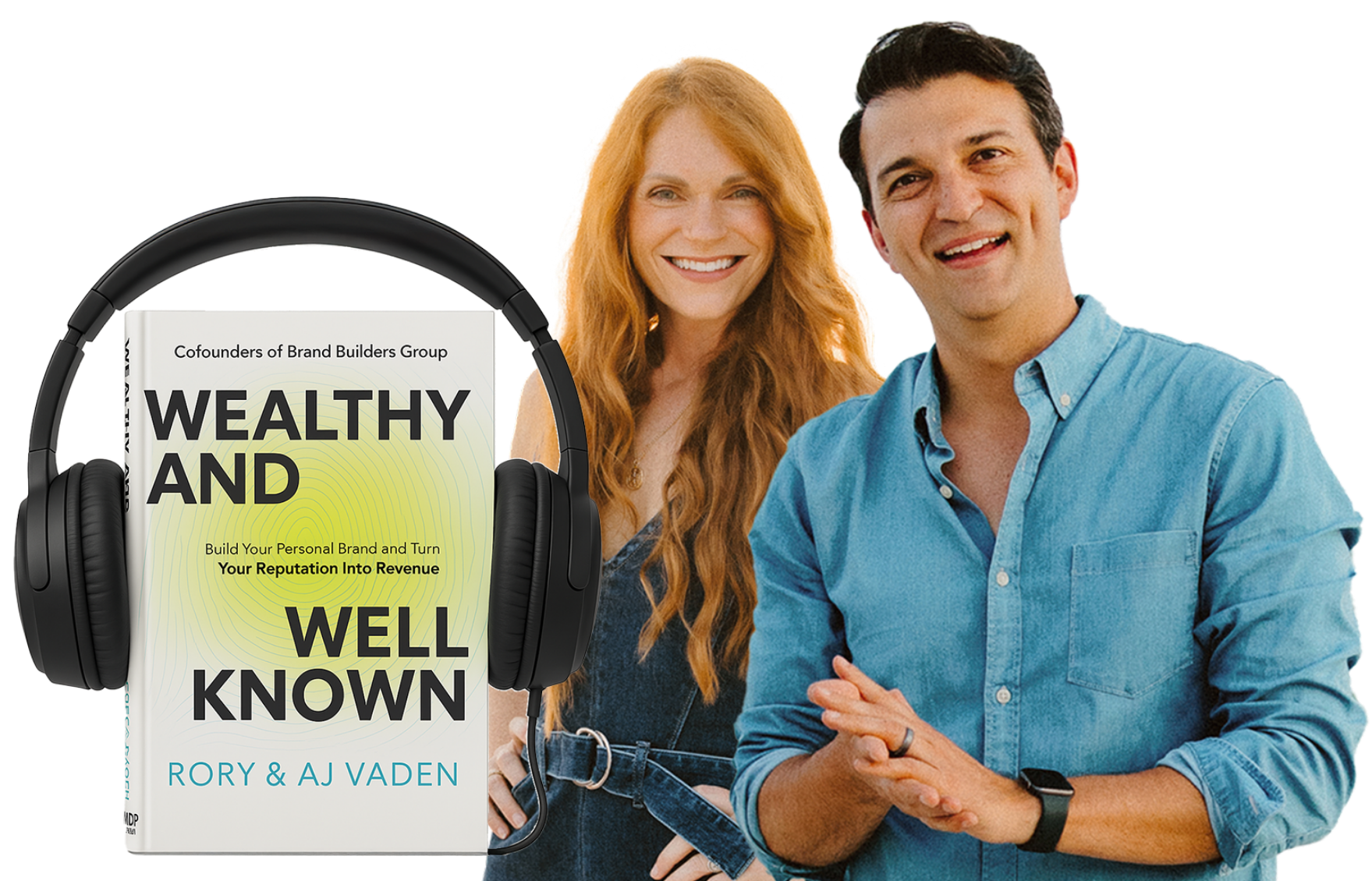
WWK Ep 016: YouTube in 2026: How Smart Business Owners Turn Content Into a Business Asset

Sean (00:00)
it this way, competition is highest for low effort content.
Rory (00:04)
Say that again.
Sean (00:04)
competition is highest for low effort content or lazy content.
Rory (00:10)
Did he just
call me lazy? I’m pretty sure. Wait, can we rewind the
today we have one of the most sophisticated advanced YouTube experts in the world and one of my best friends, Sean Cannell. Back on our podcast, we haven’t had him here for a while. We’re gonna talk about why smart business owners should be investing in YouTube to create an asset that really grows their business and what smart YouTube operators are doing in 2026 to build their YouTube channel. Sean has channels with over a million subscribers.
had over 100 million views. He is a multi seven figure entrepreneur and has long been one of the OG original experts on YouTube specifically. He wrote the book YouTube secrets years ago, which has been revised and expanded. We’re glad to have him here in the studio, buddy. Welcome back. ⁓
Sean (01:07)
Rory Vaiden, fired up to be here.
Rory (01:11)
So we’re going to talk about my YouTube woes as we do about my frustrations with YouTube and why we’re not doing it right. And you’re going to fix me. You’re going to you’re going to fix us. ⁓ I want to start with the year 2026. How should business owners mission driven messengers for our community? How should we be thinking differently about YouTube in 2026 than maybe we’ve thought about YouTube in previous years?
Sean (01:40)
I think the big mindset shift is that YouTube is not just a content platform, it’s a business asset that can lift everything else that you are doing. YouTube is the town square of the internet right now, over two billion visitors every single day. Two billion?
Rory (02:04)
That’s globally. Yes, that’s like a fourth. That’s like a fourth of the planet.
Sean (02:08)
Yeah, and that’s not monthly active users. That’s daily consumption from individuals on YouTube. YouTube is the town square of the Internet. And the YouTube CEO recently came out and said that over 50 % of consumption on YouTube is happening on television screens. YouTube is the number one platform consumed in ⁓ U.S. living rooms bigger than Netflix, bigger than Peacock, bigger than Amazon Prime. So YouTube is the town square of the Internet and it’s the everything platform. People are going for sports,
for entertainment, for music, but also for business, for education. So personal brands, coaches, service providers should really be taking YouTube seriously.
Rory (02:49)
Okay, so you say it’s a town square of the internet. Tell me, I wanna talk more about that. So why do you say that? I know we’ve talked over the years since we’ve known each other about, you know, there’s this war for attention and all of these platforms and tech companies are fighting this war. And you seem to think that YouTube has like won the war?
Sean (03:10)
I think I mean if you think about the biggest players, the only platform that has more users is Facebook. Facebook is still huge. But second with users is YouTube. But YouTube is actually bigger in terms of just total distribution and consumption. Everybody’s going there. And this would include YouTube TV. But people are going there for sports. They’re going for news clips. They’re going for a summary of what’s happening in the world. It’s like the center of culture. So whether you’re watching music videos.
or commentary on culture, cultural events, whether you’re going to learn something. It’s like 75 % of people go to YouTube to solve a problem, whether they want to fix their dishwasher or they’re trying to figure out how to increase sales or master marketing or learn the latest news about AI and anything that’s happening in the world will get repurposed to YouTube. You know, if people are watching the Super Bowl, a lot of people watch it for the commercials. But what ends up happening is the
benefit extension of YouTube is the replay. can go back and watch your favorite commercials on YouTube. You can go back and consume really anything you want. It’s where collaborations are happening. Podcasts are blowing up and being distributed across platforms. Netflix has their recent play where they’re going to be getting into the podcasting game, Spotify and all of that. But YouTube’s at the top of the pyramid in terms of distribution of content, consumption of content. And so
established an influential presence on YouTube is one of the most valuable assets a business could have. Not easy to build, but if you have that kind of influence, you’re right at the center of the conversation.
Rory (04:53)
So what does that mean to
think of it as an asset? just like, you know, my YouTube channel isn’t just like, are you saying that basically, my YouTube channel isn’t just a traffic source? It’s like, basically, like intellectual property or anything else that we would build as a company that’s like a core integral part of the business? Is that the shift you’re talking about?
Sean (05:14)
Yeah. And I mean, I think if we were to go back a few decades, ⁓ a prime time spot on television, ⁓ seven or eight PM when you’re going to watch Wheel of Fortune or Jeopardy or that new spot would be the pinnacle of value. Like not only what show could get that spot, but you would have the attention of the world. There’s a lot. There was much fewer options for watching TV and consuming that content. Now, YouTube gives anybody access
to the game to actually have, you know, a show, a brand, a presence. And if you establish your subscriber base, your viewer base, and someone knows you as the go-to source for information, and by the way, in sub pockets, you know, I know you’re a genius when it comes to being able to take like just a small audience and monetize it in a big way. And so to plant your flag on YouTube with what do you want to be known for? What’s your expertise? What are you an authority on? That is
compounding influence.
Now I don’t want to over ⁓ simplify that like it’s not easy to build, but what is it worth to have a brand on YouTube like Cody Sanchez or Alex Hermosy? Those are kind of a one entrepreneur type channels. It’s absolutely prices priceless. I would think that out of all of their social platforms, YouTube is their most valuable asset. That’s why individuals like that will invest six figures or more in multiple team members ⁓ to produce content every month.
and weekly on YouTube. And so it’s a business asset. It’s growing media and out of all the media platforms, YouTube is the leader. So if you want to plant your flag in media, plant your flag in YouTube.
Rory (07:00)
Yeah,
so here’s something that you and I are super aligned on ⁓ the difference between evergreen and viral. It’s also I think the difference between making ⁓ selling something once versus doing like recurring revenue revenue or doing launches versus Yeah, doing recurring and we’ve built our whole business around evergreen, recurring revenue, and not like a launch but just a steady growing snowball. And I’m looking at where we are today as a company going I’m seeing a lot of my friends
in a frantic mode where they’ve been launching this and that kind of course. And like they, they don’t have a sustainable thing in a world of AI. And I’m going, that is a bet that we made a philosophical play that we made about evergreen. And when it comes to YouTube, you’ve always been a fan of it’s not about going viral. It’s about
Evergreen. So explain the difference there for people about what what is that philosophical shift between viral and evergreen? Why do you have that stance? And how should that shape what we’re doing tactically on our channels?
Sean (08:14)
Yeah, there was a study done about the half life of content and ⁓ it revealed that if you post something on Instagram, the half life, it depreciates over about two days that the reach of that post will probably end in two days. And that’s very similar to a Facebook feed or a TikTok feed. Whereas on YouTube, the half life was over 10 days. And that’s just for your average video. The powerful thing about YouTube though, is if you post content that
gets into the algorithm and gets into search and discovery is you can post videos that are watched for weeks months and even years to come ⁓ creators reported established YouTube creators that over half of their monthly views comes from older content
So I like to look at YouTube like a content library, whereas the other social media platforms are content feeds and you have to constantly be putting something in the feed because everyone’s scrolling past past it. A lot of other platforms, people open up their phone and they just see what comes to them. Now there’s massive opportunity on these platforms because you can get reach, you can go viral. One post could get you a lot of exposure exposure and you know, get you business. But I also think of it as the
social media hamster wheel a little bit like you’re constantly posting and
Rory (09:37)
how it feels.
mean, that’s how it feels is just like you’re just constantly just cranking out content of like, feeding this machine. And then it disappears. There’s some ways that we’ve gotten around that. Like basically, the way that we think of it now is is like our Instagram feed is just a it’s just a test environment, where we’re going to post 10 videos. And then we see which one performs and then we’re just going to put money behind the top performer. Yeah. And so that’s a way to force the
the evergreen value of that video, but it’s costing us money. The difference on YouTube is like, it’s kind of like, I think of YouTube as almost like a fine wine, right? It’s like, if you get a great video, it gets better over time and it doesn’t reach the pinnacle. It kind of spikes, comes down, but then it climbs up and then it becomes like truly a long-term asset. That’s kind of what you’re talking about.
Sean (10:30)
It is, and I think
it also is two different mindsets and one requires more patience and that’s YouTube because it could be slower in the beginning, but compounding months and years later, whereas other social platforms give you more immediate ROI. So if we’re chasing dopamine or we’re just chasing immediate business results, many entrepreneurs could feel like, I get better results on Instagram. Like today I saw that the reach of the posts or the views on the post was a few hundred views or a few thousand.
You give that immediate call to action to comment or click a link and so you go great I posted a reel and I got five leads, you know I got 50 people that were interested and maybe I posted a YouTube video and it’s like watching grass grow like the view seems slow not a lot happened But if you post a good YouTube video, that’s well crafted that’s intentionally positioned the that can become an asset where
six months later, that video is continuing to get views, get distribution to the right audience, that YouTube algorithm, the YouTube algorithm is helping you discover and get that video to. Now you go, okay, that video took some energy and I spent some time figuring out the title, the positioning, I put out some quality content, but I’m not even posting content and my older videos in my library are bringing me new business. That’s why I’m obsessed with YouTube.
most leveraged platform for entrepreneurs that use it well.
Rory (12:04)
The other thing
that you’re kind of tapping on there that I want to really double click and deep dive on is we’re big, you know, big, big fans. mean, one of the core things in this book is trust must take place before there’s a transaction. Yeah. And to go, you might get more views on Instagram, but if that’s a 60 second reel, that’s not the same. It’s not an equivalent view as somebody who watches eight minutes
minutes of a YouTube video and certainly not 60 minutes or 40 minutes of a YouTube video. walk us through that dynamic. This is another place where even though you and I kind of live in different universes that overlap, like we have a lot of philosophies that overlap. And I think this is one that I think a lot of people don’t understand about it’s like not all views are created equal a YouTube view is worth way more than an Instagram view. True or false?
Thank
Sean (13:05)
True.
I think what everybody needs to understand is Google’s 7-11-4 rule. And what that…
Rory (13:12)
Never even
heard this before.
Sean (13:14)
Yeah, so this came out a few years ago, but it matters more today than ever before. And what it revealed was that to generate a sale, to generate a conversion, you need seven hours, 11 touch points across four platforms. Seven hours, 11 touch points, four platforms. So that could be seven hours of people consuming your content, seeing you, being aware of you. 11 touch points, it could be all on YouTube or it might be watching a YouTube video. They might see an Instagram reel. They’re reading your emails. They’re engaging with you in
And for platforms could be Instagram YouTube, but it also could be email, text, any other touch point and a book.
Rory (13:55)
a speech
like in our world. It’s like the book, the speech, the email, then they’re on a webinar and then they’re in free call and then and then they’re like, Yeah, I’m in podcast.
Sean (14:00)
Yes, the fee.
So when I think about, I’m thinking about that number seven, seven hours. So how long does that take if they’re consuming just a seven second vertical video or even 30 seconds? And then the other problem is that most of the times when people are on these platforms like Instagram, they’re seeing you but they’re swiping and they see something else. They see a travel video, something humorous, they see a little bit of business content and they’re kind of in this more passive what’s interesting, maybe they follow
Whereas YouTube has an entirely different level of intent. People go to YouTube often times to learn or to lean back a little bit to click play on a video podcast but then they’re you know doing dishes or driving in their car and so they’re there to learn they’re there more serious especially for your community you know we want to learn level up.
⁓ and listen to deeper content, like a video podcast. So that’s priceless attention and you can get to seven hours much more quickly. The author of the book influence also wrote the book pre-suasion. What’s his name? Chaldini. And so.
Rory (15:14)
Right there on
the shelf. Yep.
Sean (15:19)
Yeah, imagine that it’s, you what kind of conversations and how are you demonstrating your authority, your expertise, your personality, your values before a sales conversation even takes place. So YouTube really accelerated.
Rory (15:33)
And
in a world of sales, I would think of that as just like, you know, we talked about buying lines, which is like how far on this path does someone need to go before they buy and it’s like, you to all of this content is doing that work of like, we don’t have to meet in real life because it’s pushing them along the buying line. And certainly those said that’s what the seven hours is basically. Yeah, is what you’re saying YouTube is pushing them further faster. If you get that view there and you can hold them, like you’re pushing them towards a sale faster.
Sean (16:01)
Yeah, and there was a deep study done by the software platform called one out of 10. It’s a YouTube optimization software. One out of 10 means ⁓ like your top performing video out of your last 10 uploads on YouTube. They studied 52,000 channels and they studied all these different metrics, including title length, thumbnail colors. One of the things they studied was video length. And in 2026, they found that videos outperform in terms of
in two categories. If it’s long form videos, one was between 15 and 30 minutes. That’s a good range of a video length. As soon as you cross 30, they call this the dead zone between 30 and 60. Not that that’s bad, but it’s kind of like, it’s not, you know, under 30.
Rory (16:49)
It’s
like a point of diminishing returns.
Sean (16:51)
Yeah,
under 30 is like, yeah, I could do that on my lunch break. I could, you know, catch that in between. You know, I don’t know if I have time to watch a 45 minute thing. I might have to watch that in multiple parts. And so 15 to 30 minutes was outperformed by like 12 % in views. And then the other one was ultra long. It started to rise again after an hour and at 90 minutes or even two hours video started to outperform as well. And this has been established for a long time with
kind of, you know, the Joe Rogan podcast and now diary of a CEO and all of these ultra long podcast conversations that are taking 90 minutes, two hours. And I think one of the reasons those ultra long videos are working really well on YouTube is because if someone sits down and is interested or turns it on passively, you’re just getting so much watch time that the YouTube algorithm rewards that with reach because they want time on platform. They want people dwelling on the platform. But the big idea here,
is think about how much trust can compound when someone is interested in a topic, they click on that conversation and they spend 90 minutes, two hours, two and a half hours, which people are doing, especially if that’s what they’re interested in. They wanna go deep, they wanna have an expanded conversation on that. And just one two hour episode and you’re a third of the way to your seven hours of someone really spending significant time with you.
Rory (18:16)
this this this is something I think that mission driven messengers and experts need to understand one person watching an hour long podcast or like a video podcast or or reading a book in our case that would be like four hours is worth way more than 1000 people or even 5000 people watching a 60 second reel. Yep. And I think that’s what
Sean (18:35)
Yeah.
Rory (18:46)
people don’t understand they’re chasing the like the vanity of I want 5000 views. And they’re trading that for not understanding that one person who goes deep with me is more valuable. And that’s what you know, when you say we’re geniuses at making money from a small audience. It’s because it’s exactly that it’s like we have a very specific audience. But man, if they’re an expert of any like a speaker author coach,
they get into our universe and they just go, my gosh, we are there are people. And so we build a lot of trust quickly, but we don’t reach millions and millions and millions of people. And I think that’s the big mental switch that a lot of expert specific creators need to really think about and understand. So
Sean (19:33)
Agree.
Rory (19:35)
Now let me complain about YouTube. so so here’s the thing that people always said, just be consistent. Just be consistent. Just keep pushing. You you say just push record, just push record, right? And I’m a huge, huge fan of it. We’ve been pushing record. And we’ve been publishing every week on YouTube for seven years. We’ve got 9000 subscribers. Now I’ll be the first to admit we’ve not we’ve not prioritized it as the most important thing in our business. It’s
pretty, it’s been pretty low on the list. So there’s no doubt that that is, you know, your results reflect your effort to some extent. But at the same time, I’m going, we’ve been putting videos up for seven years. We’ve never had one pop off ever on YouTube, with the exception of my TED talk, which went, you know, massively viral, but that was on their channel, not on our channel. Right? ⁓
Now, I’ve had massive success being on podcasts like yours and like Ed Myled and Lewis and other Cody Sanchez, these other shows that I’ve been on. I was on Cody Sanchez podcast. She’s a client of ours. And so I think it was like a year ago, we were on a show. We had like four sales last week from her.
from a video that was published a year ago to what you’re saying. So I’ve had lots of success with them. So clearly they’re doing things that we’re not doing right. But the idea that you can just keep, you know, just keep going, just keep consistent.
it kind of at least feels to me in a discouraging way like that’s not really the truth. And in some ways you go, well, we still have 9000 subscribers. I mean, that’s not nothing. But it’s not, you know, when I look at the return on investment for the time that we have put in, and it’s hard to measure because it’s like, well, how many of our sales have come from people who, you know, of those 9000 who sat and watched several hours of video? I don’t know, like it’s a little bit tough. But so anyways, what do you say to some
somebody who’s like has been publishing and has been doing it is not not getting the not seeing the results yet.
Sean (21:43)
Yeah, well, I think, especially in 2026, we have to face the brutal reality of success on YouTube, and it’s this. 20 million videos are uploaded to YouTube every single day.
Rory (21:56)
20 million a day, but there’s 2 billion people every day going there. Yeah. But of course, Mr. Beast takes like half of that.
Sean (22:04)
And
so when I hear 20 million videos uploaded every single day, that’s a big pool to try to crack through the noise and stand out. I think the key though is you just got to get into the top 10 % of content.
You know, I heard an old Brian Tracy, the sales legend and you know, leadership ⁓ quote that said, you know, if you’re in the top 10 % of salespeople, you’ll get 80 % of the results. And if you’re in the top 2%, you’ll get, ⁓ you know, disproportionate returns. So put it this way, competition is highest for low effort content.
Rory (22:42)
Say that again.
Sean (22:43)
competition is highest for low effort content or lazy content. Now, I’m not saying that anybody who’s putting effort towards YouTube is being lazy, but those that are rising.
Rory (22:55)
Did he just
call me lazy? I’m pretty sure. Wait, can we rewind the tape? Did you just call me lazy?
Sean (23:01)
⁓
If you compare your average entrepreneur that’s posting on YouTube to those at an elite level, your average entrepreneur is maybe thinking about sitting down to have a podcast, maybe not doing a ton of preparation. They haven’t planned a real strong angle or title at the beginning. The thumbnail is maybe just a little bit of outdated. It’s a little outdated. It’s not really best practice. Those micro details aren’t really thought about. The hook, the opening, the first not
just three seconds, but what are the first 30 seconds? What is the entire opening of the video? How’s the video structured is, ⁓ has the content been edited at all to trim the fluff? Your average entrepreneur is not doing any of that, anything like that. They might just be, you know, they’re experts. They’ve got good content, but they are also maybe invested. very busy. So they spend, if any prep time, they spend five minutes thinking about, well, what’s the title? How am I going to position this?
Well, what are the elite doing? The elite are sitting down and they’re spending 10x more time on video packaging. So if you’re average entrepreneur
Rory (24:10)
Another word for that could be planning.
Sean (24:12)
planning, but they’re sitting down and your average entrepreneur didn’t even think about the title ahead of time, you know, isn’t putting a lot of energy in the thumbnail and then then into the topic itself. But the elite are sitting down and saying, okay, what actual topics are hot right now? What are the highest pain points that my audience has and how could I position that? What are even some of the best practices that are happening? One of the main practices of
elite YouTube creators is studying outliers.
is looking at channels in your niche and in your topic or even just adjacent. It doesn’t have to even be setting other business creators. You’re looking at formats. For example, one of the formats that is known to go really viral is I tried Andrew Huberman’s morning routine for 30 days. I tried X for a week. I tried Facebook ads. I tried chat GPT ads because they’re adding an ad product that you can now do pay
advertising inside of chat gbt. ⁓ I tried chat gbt advertising for seven days. Parenthesis shocking results. So now now we’re at a strategic topic level maybe tapping into the now with chat gbt. You’re still tapping into a paid ads thing you maybe want to attract others in terms of marketing. That’s topic research. Then you’re thinking about video formats you’re thinking about the title and then that that right there is going to inform the structure of the content and how it’s
Positioned and it’s gonna take more energy to where you maybe came up with that concept You didn’t just sit down and record a podcast and riff on something you Reverse engineered the idea and then did an experiment for seven days and then turn that experiment into a video and then that video got 55,000 views a hundred and sixty seven thousand views Which would eclipse the entire view count of a lot of people’s channels that start on YouTube because they spent that much more time
on the topic, the title, the thumbnail, essentially the concept, the energy invested in the content itself. Now, here’s the thing, listening to that, many people might count themselves out and say, well, I mean, yeah, I don’t have time to do that kind of work or effort on YouTube.
Rory (26:34)
particularly
when you say that inside of the same breath as saying YouTubers a long term play. It’s a long term asset. It’s not something that you put you do. You sit down today, you do this for a thumbnail and tomorrow a bunch of money shows up. That to me, that’s the conflict of like the entrepreneurs going, you know, the analogy we always use as we say, you’re it’s like you’re being chased by a bear to create revenue. Like you have to just it’s like I have to have enough revenue to pay the people and like keep keep the lights on around here. So
So I have to balance, I have to balance planting seeds while being chased by a bear. YouTube to me feels more like seeds that you’re planting that will one day grow up and be, you know, provide a layer of protection from the bear. like right now it’s just a seed and I’m like running around being chased by the bear. So how do you afford the time and the money to do that?
Sean (27:30)
I mean, think there’s entrepreneurship always comes down to ⁓ one of two things. You either have time or you have money. Like when you’re just starting out, you might not have money, but you also, you’re a lot more lean, lower overhead. So what can you invest in it? Sweat equity. So you invest time in YouTube to say, okay, I maybe I still have my core business. Maybe I’m on sales calls all day and I have fulfillment, but if I want to invest in this long-term play, I’m building up my YouTube channel with sweat equity. But a lot of individuals listening to this,
they have money. So the mindset shift would be, ⁓ I heard Dan Sullivan say something once that if you have money and you have a problem, you don’t have a problem. And so it’s making the decision.
Rory (28:14)
You have
enough money to solve a problem, you don’t have a problem.
Sean (28:17)
You don’t have a problem.
So so then you know, you’re asking yourself who and not how I want to invest in YouTube who which would be a strategic hire or working with an agency or an individual that you could bolt onto your business to help you do the heavy lifting of YouTube invest those dollars and They could sit down. They’re doing that packaging for you. They’re working
Rory (28:42)
with
title, topic, thumbnail.
Sean (28:44)
Yeah, they’d mind your genius mind your topics. They’re aware of the broader YouTube culture. They’re aware of the research tools you work with them. They’re helping you do all of the above and still allowing you to sit down and just do your genius. But they’re maybe going to restructure things outline, you know, I’d even say scripting, you know, the greatest YouTube videos again are spending just a lot more time period and planning that out and scripting or outlining the content. Again, that sounds like a lot of work, but if anything,
could just be structure like okay talk to me you know deliver what’s what’s some of your core genius what are your core frameworks what are some of you okay we’re do this here’s how we want to outline this let’s work on the hook of the video let’s think about how this thing is gonna be structured
Rory (29:28)
Which
by the way, just to like…
go meta on people, you and I did this, like you’re I’m going to be on your show right after this. And you were like, Okay, what’s what’s what’s the what’s the title of this episode going to be? Yeah, it was actually it was it was kind of like, what’s the topic? Like, what’s a meaty topic we could do? And then it was, okay, what sexy title? Could we come up with that you can see on a thumbnail? And then it’s like, okay, then how do we open this? How how do we open it, you know, with the hook? And then what’s the talking
points that we’re going to go through. So you’re actually practicing what you.
Sean (30:03)
And that would be, mean us working together for these episodes we’re gonna shoot together was about a 30 minute conversation. A 30 minute conversation with somebody that has that expertise. And that would be tapping into the famous who not how framework. Like who could you work with? And you know for listeners they could jump right in and if they just started talking to chat GBT a little bit ⁓ on a basic level, that’s gonna get you a lot further than you would normally. Like okay here’s what I wanna talk about, thing one. So here’s some of the stuff I normally teach, here’s what I
talk about your I’m assuming open up chat GBT you know start doing a voice prompt talking to you a little bit about it but then you could follow up with these prompts okay what how could I package or position this and here is one of the most powerful YouTube principles that most don’t understand that you want to ask yourself how can I go more broad appeal how can I raise
That doesn’t mean diluting the topic too much, but you want to raise the broad appeal as high as possible. So we’re going to do this episode on the answer was copywriting. The thing you wanted to teach was like copywriting structure for sales. We’re having this conversation on the phone. go, that’s amazing. But a title like, you know, use this copywriting framework to make your next video more powerful, horrible title. Super.
Rory (31:26)
narrow
because people go I’m not a copywriter, this video doesn’t apply to me even though we go no these principles apply to anyone trying to generate revenue. So we have to take the topic and we have to round it out to have a broader appeal.
Sean (31:38)
We
raise it up to go, yeah, how can I go more broad appeal? Now, if we take a principle from the most viral YouTubers, the question they ask is how can this topic in video apply to at least 80 % of the population? That’s really broad. Now, I don’t suggest business owners typically do that, but it’s a really good principle to understand.
Rory (32:05)
It’s like a workout
to do like a way to exercise your brain in that direction.
Sean (32:09)
To
push it up broad appeal. So if you were to make a video just for ⁓ women, now you’re 50 % of the population. But now you’re saying, okay, how do I go higher than that? That’s why the most broad topics that could be like relationships or food or something, everybody eats food.
Rory (32:25)
always
it’s it’s money, sex, politics, religion, food, relation. mean, those are those are every major podcast or show. It’s like those are they’re hitting on those because they’re the most universal topic.
Sean (32:39)
Yeah, so push it up. Now, if we then get into your niche, you’re still asking how can I go up a little bit to the known felt needs and pain points and ambitions of my target audience?
Rory (32:50)
because when we do
this, we’re risking violating what we were talking about earlier, which is we’re going for viral. But now we’re risking not building as deep of trust, we’re going for width. And we’re comp, it’s like a balance between width and depth. And we have to, we, we kind of want to have more width in the title and the topic. But then once you get into the content, that’s where you kind of go a little bit deeper and speak. If you’re an expert,
Sean (32:56)
Yes.
Yes.
Yes.
Yeah, to your audience. a
principle in communication I learned was, you know, you want to answer the questions people are asking. What question are people asking? Like, and then what question should they ask? Or so in this case, the answer was copywriting and a sales framework.
Rory (33:40)
what they should
be asking. That’s what they are asking. They don’t know that’s what they need. They think they need something else.
Sean (33:46)
And so where I pushed it up would be, ⁓ you know, one of the titles I think that we ultimately came up with was essentially money. How can we raise it up to money? Like, ⁓ you know, this framework will make you more money on YouTube or use this framework and then push it up even more like. ⁓
Rory (34:06)
Like the best video that we’ve done together of me on your show was ⁓ it’s all about the title was like something like how to how small creators are making millions of dollars.
Sean (34:15)
So the copywriting video we’re gonna shoot together, the title I came up with was The Psychology Behind Why Some Videos Make Money. And so, an alternative would be why some videos make money and others don’t, or the difference between videos that make money and those that never will.
Rory (34:32)
There
it is. But basically you’re going the answer is copywriting. But but the question we should be asking is how do we state the question that more people pay attention to? Which then becomes the title.
Sean (34:43)
And then what’s fascinating, which is the time. Yeah,
if you were to put even like sales professionals or really call out a niche in a title and there’s a time and place to do that, I’m not suggesting those should never be uploads, but. ⁓
anyone that’s interested in YouTube, even so this is for our podcast where we want to talk to the creator or DIY creator as well as the business owner. But if we actually put the word business in the title, it will kill the click through rate because somebody will opt out of clicking on the video because ⁓ I’m not a business owner. I don’t know if I resonate with that as much, but everybody has got money problems where they want to learn about money and they want more views or more money. we’re pushing it up. But if I’m, then you have to ask yourself, okay, it’s my target audience.
that do business owners want to know the psychology behind why some videos make money and others don’t and do creators want to know that is what they both do. So you actually have the opportunity to get more reach, but also reach your target audience at the same time. So that’s the tension to manage is how do I raise the broad appeal, still make it a sharp title with fierce clarity and ⁓
And then in the video itself, articulate. So I will articulate in that video, like, listen, if you’re actually a YouTuber that wants to earn more and really go to a mastery level on YouTube, you’re going to love this conversation. And this is also great for business owners that want to generate leads and sales. We start broad appeal, kind of qualify in there. And then that’s the difference between a video that could get 22,000 views or 200,000 views or one that stays stuck at 2000 views because of this whole packaging.
conversation.
Rory (36:24)
Yeah, so by the way, on that this is a good spot to mention. So ⁓ on some of those tactics, we’ve got ⁓ if you go to free brand training.com slash YouTube, people can watch a class from you that’s a little more into like the weeds of the tactics on this right.
Yeah, so ⁓ go check out freebrandtraining.com forward slash YouTube if you want, you know, to get more into the tactics here. so basically, high level though, we’re talking about topic, title, thumbnail. Those are the main and I think part of what part of the big insight that I’m having is going it’s not
Sean (36:55)
Yes.
Rory (37:07)
as much about the quality of the content today. It’s more about the attraction of the wrapper of like the positioning. that’s where the over indexing work comes from spending time thinking about
It’s the same candy bar. It’s got to be a quality candy bar, but we have to spend more time on the wrapper than the candy bar itself. That’s where the over indexing result comes from today on YouTube.
Sean (37:39)
think that’s one. And then I think the other thing to consider is, you know, YouTube is two things. The most viral videos to have viral videos on YouTube. You want to understand two big things. YouTube is psychology and trends at the highest level. It’s human psychology and trends.
What’s going on in the minds of people? What are they thinking about? What are they worried about? And also what’s trending? There’s a reason why AI content or AI in the title is getting so many views right now on YouTube because everyone’s worried about it. It’s the trend. Everybody’s thinking about it and it also applies to everything. So if it’s coming into our daily life, should we be adopting this in our, ⁓
service provider business. How could we be adopting it? You could say the dark side of AI that will get a lot of views. How to make extra money that will get a lot of views. ⁓ It’s replacing employees and you’re also hitting hot buttons. It’s replacing people. Should it be now debates happening in the common?
Rory (38:38)
⁓
You have emotion and you have trending topic that AI is hitting on those two things and that’s a thing. This reminds me of a great lesson that I learned from Tom Hanks. He’s not a friend of mine, but I heard him say this. He actually said this to a friend of mine and he said, the key to writing a movie that’s a hit is you have to enter into the nation’s conscience.
So all you have to do is ask yourself, what is the nation thinking about talking about? And basically, that’s like the hot that’s like the highway. And then you have to ask yourself, how does my topic come in and just catch that sort of catch that wave? And that’s exactly what you’re talking about in terms of how do you succeed in YouTube in 2026?
Sean (39:26)
Yeah. So anybody watching this right now could take the phone mount that’s on their car dashboard, put their phone up there where normally they’re viewing their GPS, turn it horizontal at themself, turn the camera on and sit in your car, which is a great audio booth by the way. And maybe, you know, somebody’s late for a meeting or something. You got 20 minutes. And if you sit down and you think about what’s happening in the national ⁓ consciousness, what are people thinking about, worried about, and you have some stuff to riff on. Maybe you plan your ideas out a little bit.
of planning, like one of our 3P frameworks is plan, ⁓ press record and then post. That’s the most simple thing. Plan first, press record and then post. So I might plan on a legal pad or my tablet if I was sitting in my car and be like,
Man, the phone calls I’ve been getting, the conversation, people, they’re worried about AI, they’re worried about it disrupting jobs. I have a few thoughts. I’ve heard a couple things that have been happening. Okay, how could I talk about that? You’re planning a little bit. Then just press record and say, okay, you might be thinking about this, this is a conversation we’ve been having. And then you post that video and with no editing and just sitting in your car.
and just sharing from the heart and maybe sharing some of your wisdom, your perspective, your thoughts. In some cases, probably why you’re not.
Rory (40:43)
while you’re ⁓
Sean (40:47)
while we’re parked
and, we’ve all seen this. We’ve seen basic low production talking head videos on YouTube that get 55,000 views or 500,000 views. And what become, what’s the, you know, difference between that video and a video that’s in a fancy podcast studio with all kinds of cameras and all kinds of production and people get frustrated because sometimes they sit down. They got, I got the fancy studio, but I’m not getting the views that missing element right there can be the timing, the topic and tapping into
trends and what sometimes a mental barrier to that for business owners is like, well, I don’t want to just cover trending videos. Like is that trending, you know, tick tock?
Rory (41:27)
Well, so
I was gonna I want to ask you about this. I need you to coach me on the limiting belief that I have I know I’m aware that I have this and I have a hard time letting go of it because I actually struggle with this is I don’t want to be the pandering
vanity seeking person and and this is why this is one reason I never post when people die. I have a emotional struggle where you know, it’s like Kobe Bryant just died and everyone and it’s like I know that’s gonna get tons of views. I know that’s gonna get tons of engagement. I feel like it’s cheap.
and inauthentic, even if it is authentic. It’s like, even if you were the biggest Kobe Bryant fan in the world, right? And so it’s like, every time a celebrity dies, people post about it. And I’m like, is that’s what I think of when I think of?
the trend AI is that way right now we’re using AI in our business I guarantee we are implementing AI more than almost every person on YouTube is talking about it. We’ve built 40 bots for our community like you’re talking about the topics we have bots that just analyze the and it just gives it to them and all of their brand memory is stored if they’re using our bots you don’t have to give the context it already has all of your context it knows your model and who you’re going after. So we have bots that do that but I have this problem with going
yeah, I’m just gonna go on every day and be like, here’s what happened in the world of AI for personal brands. I know that would perform. I struggle doing it because I don’t know, I guess I just have like a distaste for like the amateurness of it. And yet I also am frustrated with going, all of these people are willing to do it and they’re just riding the wave and they’re just and they’re taking off. It’s why I got out of ⁓ traditional radio. I used to be on traditional radio and that’s all they wanted to talk about. Here’s the top news.
topics today. And I’m like, why are we talking about this? Because everyone’s talking about it. I’m like, I don’t care about any of this stuff. It’s actually why I got into podcasting because I was like, I want to talk about more meaningful things. So anyways, coach me through that. How do I reconcile that?
Sean (43:39)
To me it sounds like you just coached yourself. I think that that limiting belief, you’re self-aware enough to understand that. I mean, all I could add to it is a mission-driven messenger.
without compromising ethics is willing to do anything to reach as many people as possible. It’s like the apostle Paul said, I’ll become all things to all people in order that I might win some for Christ. So it’s a willingness to say what’s going to be most effective. And then it’s also a letting go of any fear of other people’s opinions or any ⁓ fear of judgment and fear of somebody calling you authentic. Only you would know the truth to that. But what I can say in the seat of the conversation,
we had before you turn on the podcast. I think you do care about AI. If we isolate around AI, you do care about AI. You are doing it. It couldn’t be more authentic. It’s actually probably more important that people hear your voice on the matter than many people who are just chasing trends at a shallow level. So if you resolve any kind of internal cognitive dissonance or whatnot, and maybe realize like it’s re embracing the principle, because I think the principle of what you did on radio is pretty important. That is what gets the most views.
on YouTube. So a willingness to do what it takes. then if you have ethical lines, you’re like, I’m not I’m not going to do that because I don’t feel that that’s not authentic to me. But when it is authentic, I think you have to press past any resistance you have because you go, no, I do care about that. I’m not going to post about every person when they pass away. But I really care about this. I have something to say in this moment. You know, when Charlie Kirk was assassinated, ⁓ I don’t talk about a lot of stuff, but I ended up doing an Instagram
post about it and ended up getting 1.7 million views.
By the way, could put somebody could sit here and you were just trying to get views. No, I wasn’t. I actually had some I didn’t post immediately. I think I posted two days later, three days later. I’ve been processing it. It was very heavy. I’ve been thinking I’ve been listening to all the conversation. also realized, man, you know, this could be very polarizing. I don’t usually get political, but I felt it. That’s why I posted it. I felt it. I processed it. And then I ended up doing an Instagram carousel. I lost 3000 followers.
when I did the post, I ended up gaining 7000 followers when I did the post and it wasn’t about that. Now I’m also a good marketer so I understand what could happen but I also I didn’t know that that would happen and I actually thought that it might be more of if you will a net negative but here’s the thing above all of that was conviction above all of that was authentic conviction.
feeling like I had something to actually say and I don’t jump on most things. And some people said, well, if you’re gonna post about this, also, if you’re gonna talk about this, you have to talk about this other stuff too. People are always gonna bring you your judgment. Again, if we’re reverse engineering back from what does it take to actually get views and reach and have impact on YouTube, I think you have to be willing to do what it takes. Is. Yeah.
Rory (46:42)
And you’re saying trends
essential. It’s one of the essential ingredients to performing on YouTube.
Sean (46:49)
And most things are not problems to be solved, they’re tensions to be managed.
So it’s like, think trying to have a binary answer to that question, like I’m just not going to do trends because it could be, you know, misperceived or I personally don’t love it. That would be more of like black and white thinking as opposed to tensions to be managed. Am I just jumping on this? And then I think willing to be mistakes, willing to make mistakes, willing to try something, willing to, ⁓ you know, one week be doing it and you might look back and, and I think we have to get over that.
here.
Maybe criticism comes your way after you do jump on a trend and talk about something. They’re like, you know, Rory, I know you, I don’t think that post hit and you’re my, you know, I didn’t feel authentic. felt like you’re like, as I reflect, maybe that’s true. That’s a willingness to take a risk and willingness to, put yourself out there. But I know your community too is very purpose-driven, you know, ethics driven. So those, these are like internal frameworks to be processing what to post next. But I know we’re isolating on AI and I’m not saying AI is the only choice.
trend. No, just talk. But it’s a good case study. Yeah. Because literally the conversation we had before we pressed record was fascinating to me about what you guys are doing, how you’re doing it. And what again, what we know is that AI is trending. The avoidance of talking about something you’re authentically doing, you’re doing at a world class level that could help people, I think is a mistake. I think. And then realizing that with in the sea of sameness, whether it’s not that you can’t do like evergreen topics or old
school titles, how to get leads in your business using Facebook. There there’s just been so much of that. And that’s to step into a world of YouTube where you get views today. I think you have to be willing to talk about the now. Neil Patel, the, you know, entrepreneur and SEO expert, like really good at SEO. Smart.
Rory (48:49)
We’ve had him on the show. He’s so good. Super.
Sean (48:52)
And he made a quote, which a lot of good communicators will sometimes speak in absolutes, even though the absolute isn’t always true. But he made the absolute statement that the only thing working on social media right now is new. The only thing working on social media right now, including YouTube, is new. The good news about why YouTube will never be saturated, it’ll never be crowded, neither were social media is because new things are always happening.
We coach a lot of real estate agents and they’re like, but there’s so many other agents. Like there’s just so much competition. So other people doing it. Well, number one, not really a national association of realtors say that only 9 % of agents are posting listing videos. So it’s not as much as you think. But I think number two is there’s always something new happen happening. Rates are always changing. New home buyer incentives are always happening. ⁓ politicians are always switching. There’s always.
Rory (49:51)
Even though news stands for notable events weather and sports as you know that that’s where news comes from But really the way I think of news is it’s it’s new. It’s what’s new and I think you know, I think of it as there’s better There’s different and there’s new yeah and right right now and I think always it’s like new actually outperforms new outperforms better Mm-hmm, which is frustrating, but I think that is how it is but if you can
Sean (49:55)
That’s
Rory (50:20)
connect your better take on what is new. You know, it’s selling people what they want, giving them what they need. It’s what the apostle Paul said. I mean, it’s our five title tests of like, you know, the I want blank test. It’s part of just the tension, I think, to be managed.
Sean (50:38)
I think we’re hitting on something that’s so powerful in this conversation, and that’s this. I actually think it’s lot of the limiting beliefs and internal frameworks that hold most back.
Rory (50:47)
Amen.
Sean (50:48)
because
the fear of just sitting in your car and hitting record to talk about today, what is new is why 99 out of a hundred professionals, they just don’t do it. Oh, they kind of overthink it. need to prepare more. need to. So you hesitate when actually content that’s planned out a little bit, press record and then publish that thing is on a new topic with a title that jumps into the conversation has a
chance from taking your obscure channel that just has never gotten any reached. All of a sudden you got 55,000 views and you’re now getting awareness. I never knew about you before. I never discovered you before. What’s fascinating is I’m not saying that has to be a hundred percent of your content, but we’re asking how do you even jump into the conversation or get discovered in the first place? And then people start to explore your library and start to see the depth of your content. So the internal beliefs of, you know,
Rory (51:44)
Otherwise
you’re the world’s best kept secret, which is like a huge part of our audience of just like, because just you have amazing stuff. Nobody knows you’re there.
Sean (51:54)
Yes.
And so why do we sit in the car? Oh, well, I don’t know if I’m ready to talk about this or I might get a little bit pushback, a little bit of pushback. Or is this too political or will? And, I don’t know if I should talk about AI because some people are going to say, but what about the water consumption and what about if the machines, you know, kill us later? And there’s a million excuses. Am I ready to talk about this? What if I stumble over my words? Well, you know, there’s a million what ifs and those are those internal beliefs. And, you know, well, am I just jumping on a trend? Somebody else already did it.
a million reasons and so what ends up happening analysis paralysis and then we don’t press record so I think having a conviction based approach and having hopefully this conversation being beneficial to individuals like you know punching fear in the face and then pressing record
Rory (52:43)
Yeah, yeah, well, there you go, friends. Sean Cannell, brilliant, profound, inspiring.
Go to freebrandtraining.com forward slash YouTube, check out his free training if you wanna dive deeper on the tactics of YouTube. ⁓ I love this conversation. I do believe that all of this is a huge asset that automates trust at scale, right? That’s what we’re trying to do is automate trust at scale. There may be no better tool on the planet than YouTube. It’s certainly one of the top ones. It’s a systematic, there’s a system you can follow to make this happen. So make sure you do that. Share this episode with somebody who you know
should be crushing it on YouTube and who wants to do better on YouTube, rate this podcast if you haven’t, we would love to hear your comments and come back next time. We’ll catch you on the wealthy and well-known podcast.
WWK Ep 013: Reclaiming Your Health with NYT Bestselling Author Ben Azadi

Rory & AJ Vaden (00:00)
what are we not asking? What do we not know? Or what are we being misinformed of that you think is the most universal, most general that people need to be aware of?
Ben Azadi (00:10)
is a great question because we’re dealing, all of us are dealing with this. The first thing to consider is that doctors are not trained on this philosophy of the body’s built to heal itself. So I don’t blame doctors. I blame the system. And I used to say for so many years, AJ, the system is broken. The system is broken. I no longer feel that way. It’s running and designed the exact way that it was set up. It’s a cash cow. It’s a brilliant subscription model. What we should be asking is why do I have these symptoms? Not how do I
mask these symptoms or medicate the symptoms or reduce these symptoms, but why?
the symptom is not the problem. The symptom is the gift. The symptom is the body’s check engine light. It’s the way the body communicates to you. If you got in your vehicle.
and you’re on a road trip and your check engine light turned on, thank God there’s a system in place to show you something underneath the hood is going on. Don’t just mask, cover up that light, no, pull it over, take it to a mechanic, find out what’s happening. So the question we should be asking the doctor is why? Why do I have the
Rory & AJ Vaden (01:12)
Welcome to the wealthy and well-known podcast. Y’all today’s guest is someone who is helping millions of people reclaim their health, their energy and mental clarity, starting from the inside out. Ben Azadi is a leading voice in metabolic health, a bestselling author, four time bestselling author and a New York Times bestselling author, by the way. He’s also the founder of Keto Camp. His work bridges science, mindset, faith and practical action in a way that empowers people to take ownership of their bodies.
and their lives. So if you are listening to this today and you care about longevity, discipline, and becoming the best version of yourself specifically in this new year, then this is a conversation for you. Don’t miss it. This is a time to spend on getting yourself to the healthiest state humanly possible. So let’s dive in.
Rory & AJ Vaden (02:04)
Hey y’all, we are so excited for this conversation. And I say we, I mean me. This is like one of those awesome episodes where I’m like, I’ve been eagerly anticipating this conversation because I love it when I am personally invested in a topic and I’m like, I cannot wait to see what he says about this and this and this. And you guys heard this awesome introduction of my newer friend, Vinazati. But we’re gonna be talking today about health breakthroughs.
And I think Ben is one of those people who not only has the true researched and academic approach, but also the real life personal experience of misinformation, which I think is all too common for all of us. And I think the reason I’m so excited for this conversation, Ben, is because that was me too, right? And I think that’s a lot of us. So here’s how I would love to start is just one.
Ben Azadi (02:50)
Mm.
Rory & AJ Vaden (02:56)
Can you give our audience just a little bit of background on who you are and just for everyone who’s listening, if you didn’t catch it, he’s a world renowned health expert, a four times bestselling author and host of the Keto Camp podcast, right? So there’s a lot of stuff going on, but outside of that, like what should our audience know about you as we kick off this conversation today?
Ben Azadi (03:15)
Yeah, I’m excited to be here AJ. Thank you for the invitation. you know, like you said, I’m somebody who also struggled with my health, my energy, my metabolism for a very long time, 20 plus years. And I want it to feel better. I wanted to have more energy. I didn’t want to have to rely on medication or a broken medical system. And I felt like, you know, when I, when I was in my early twenties, I felt like I was being gas lit by my doctor because I had all these issues going on 23 years old. I was very young, but I had brain fog. had, I was
I
depressed, was suicidal, was obese, I was dealing with a ton of inflammation, digestive issues. I mean, I could go on and on about the symptoms I was dealing with. I would make my appointment with my doctor like so many of us do, and I’d list the symptoms, and not once did my doctor ask me the question, what are you eating? Let’s discuss your lifestyle, how’s your sleep? It was more about, what can I prescribe for this young man? And there were some prescriptions that were recommended by my doctor, but I felt like I was too young to get on that.
and I had to figure things out on my own. And I really took a deep dive into health and metabolism. I got really excited because I started replying what I was learning and I completely transformed my health. This was 18 years ago. I lost 80 pounds of extra inflammatory fat that was hanging around my body.
I went from being physically obese and mentally obese to being physically fit and what I call a mental six pack. And I was able to transform my health. And the cool thing about the way that I did it is that number one, I’m not special. Anybody could do it too. I don’t care how you want your ages. Number two, that was 18 years ago. I kept the weight off. I feel like I’m getting healthier year after year. I’m 41 now and I honestly feel the healthiest I’ve ever felt before. And one thing that I know to be true is that God built the body
to be self-healing. There’s not a doctor, a supplement, a pill, a medication, a shot that could replace the inner physician that’s already within our 70 trojan cells. As long as we remove the interference. So I had a lot of things that were interfering with this amazing body and we’re going to discuss that today. What are the things that are interfering with your body? You remove that interference, the body will heal itself. So now, know, fast forward, I’m a New York Times bestselling author, just like you. I speak on
stages, I do keynote lectures, I speak to doctors and medical groups. I’m not a doctor myself and I’m not saying all this to impress anybody but I’m saying it to impress upon them. I’ve a lot of research, I’ve worked with a lot of people and I’ve kind of extracted what works for most people and what doesn’t work and today we’re going to decipher exactly what that is.
Rory & AJ Vaden (05:54)
You know, I love what you said is like, there’s an inner physician in all of us. And one of my, as many of you who are listening know, I live here in Nashville, Tennessee. And one of my favorite food markets has this sign. It’s called urban market. If you’ve lived here in Nashville, they have this amazing sign behind the register that says, let thy food be thy medicine and thy medicine be thy food. And I think that,
Ben Azadi (06:07)
I love that place.
Rory & AJ Vaden (06:18)
Unfortunately, at least here in America, we live in a society, at least for now, where it has been prescriptions, not inner healing. It has not been, let’s figure out what the interference is, remove it so that we can have healthy, happy lifestyles. It’s like, how many more chemicals can we find and prescribe? Which I’m curious to hear is like, how much of that is the interference? So I don’t know, we’ll have to find out. But okay, so here’s our first question.
This has been going on for 18 years, right? And I would also just second, like I turned 42 this year and this is the healthiest, fittest, happiest I’ve been my whole adult life. So for all of you who are not in your forties yet, good things are coming. The forties have proven to be a good decade thus far. But I think, I think this is the interesting thing. It’s like you were going to your doctor. I was going to a doctor for years and wasn’t getting the right information.
and there was no information in my case. It wasn’t even misinformation. There was none. wasn’t even let’s have the conversation. So I would be curious for everyone who’s listening to hear like, what are we not asking? What do we not know? Or what are we being misinformed of that you think is the most universal, most general that people need to be aware of?
Ben Azadi (07:34)
The first thing is a great question because we’re dealing, all of us are dealing with this. The first thing to consider is that doctors are not trained on this philosophy of the body’s built to heal itself. So I don’t blame doctors. I blame the system. And I used to say for so many years, AJ, the system is broken. The system is broken. I no longer feel that way. It’s running and designed the exact way that it was set up. It’s a cash cow. It’s a brilliant subscription model. What we should be asking is why do I have these symptoms? Not how do I
mask these symptoms or medicate the symptoms or reduce these symptoms, but why? What’s the cause of these symptoms? Because here’s an example. Most Americans, they buy their junk food at their convenience store. It’s a convenience store because it’s very cheap and easy and convenient, but these foods, they’re like food-like substances, they are loaded with artificial ingredients, preservatives, chemicals, rancid fats, and we eat these foods because they’re cheap and convenient, and then we get a symptom. That could be,
Maybe you have brain fog or maybe you’re starting to gain some belly fat or maybe your thyroid is slowing down. So your energy production is lower. So you just you feel off. And we’ve been trained to believe that those symptoms are the problem. I want a medication to lower my blood pressure. I need a medication to lower my blood sugar. I want to go on a Zephyg to loosen what the symptom is not the problem. The symptom is the gift. The symptom is the body’s check engine light. It’s the way the body communicates to you. If you got in your vehicle.
and you’re on a road trip and your check engine light turned on, thank God there’s a system in place to show you something underneath the hood is going on. Don’t just mask, cover up that light, no, pull it over, take it to a mechanic, find out what’s happening. So the question we should be asking the doctor is why? Why do I have the symptom? That gets you down the path of, okay, you’re eating these inflammatory foods, remove that interference, you start to produce more energy and burn fat and feel good. The next thing to consider is that here in the United States, we spend about four
trillion dollars on health care every single year. And if that was a GDP of a country, that would be the fourth largest GDP in the entire world. And what’s really interesting about that
amount of spend is that one out of every four dollars spent on health care is spent on diabetes, primarily type 2, which is 100 % preventable and 100 % reversible. It’s a lifestyle disease, but unfortunately, it’s been treated with medication. And it’s not just the diabetes, it’s the obesity, it’s the heart disease, it’s the thyroid condition. So it’s not about the symptom. The symptom is a blessing. It’s a gift. It’s about the cause. We want to figure out what’s going on.
at a cellular level inside the body.
Rory & AJ Vaden (10:11)
a ha moment of, know, symptoms aren’t the problem, they’re the signal, right? It’s like, hey, this is your alert system. Are you paying attention? And are you asking what’s causing the symptom versus just give me a medication to solve the symptom? It’s like, now we kind of have to go underneath the symptom to figure out what’s the cause of it. What do you think for you, at least in your experience, what did you learn from the beginning?
Or actually, let ask you an even earlier question, because I think a lot of people who are listening are like, I can relate to this. Where do I start? So take it back 18 years. Where did you start?
Ben Azadi (10:48)
It starts with the foundations of getting healthy, right? It doesn’t have to require a ton of money, although I’m a big fan of different biohacks and devices and all that, but it doesn’t, you don’t start there. The supplements I’m a big fan of too, but they supplement the lifestyle. So the foundations need to be laid first. need a strong foundation, right? So that’s going to be your movement, right? Moving your body. That’s where I started to answer your question. I started by moving my body, walking outside, riding my bicycle, playing basketball, doing things that I enjoy doing that it required me to move my body. Then I started
to just focus on eating whole foods. And I know we hear that all the time, eat whole foods, eat real food. But I think a lot of people, and Jay, don’t really understand what that means. I will explain that because a whole food is simply a single ingredient food. When we go to the supermarket, urban market is, I love that place, but any supermarket, is it urban or urban?
Rory & AJ Vaden (11:40)
Urban.
Ben Azadi (11:41)
When we go to any supermarket and let’s say we are on the perimeters where they have like the produce and the beef, when we look at the ingredients list of an avocado, for example, there’s not a list of ingredients. It’s what you see. You get the avocado, a potato, it’s just the potato, eggs, just the egg, the beef, the beef. But when you go in the middle aisles and you now get a potato chip instead of the potato, it’s now a processed version of the whole food.
Rory & AJ Vaden (11:59)
Mm-hmm.
Ben Azadi (12:04)
there’s 20, 30 ingredients. So a simple start is eat only single ingredient foods, move your body. That’s where I started. And then when you go from there, you start to make some progress, you get momentum. Then you start stacking things and stacking different behaviors and habits, and then you gain some serious momentum.
Rory & AJ Vaden (12:22)
Okay, I love these are two simple steps. Move, like move, right? It’s going to walk, go biking, play pickleball, but move. ⁓ Can we just pause on that one just for a second? What do you find in your 18 years of research and working with people? Like, why don’t they do that? Like it’s a simple step, that didn’t mean it was easy. Why don’t they?
Ben Azadi (12:25)
Thank you.
Right, yes.
because we want the sexy thing. We want the, you know, the ozendic, the fad diet. We want the whatever’s trending in the health world these days, apple cider vinegar, whatever it is. We want the sexy thing, but you know, sleep and movement and eating real food. It’s like, we’ve heard that before and it sounds so simple. So we don’t necessarily do it because it just sounds too easy, but sometimes, a lot of the times, little by little, little becomes a lot.
Right. It’s about getting momentum and a lot of people, especially this, you know, this time of year, we start to do make different changes and we start to throw everything into the mix all at once. Gym membership, keto diet, intermittent fasting, these supplements, and we just throw too much and we can’t, we make some progress and then all of sudden it’s just too much for the body to handle. a lot of people like the sexy stuff. They want to hear about, you know, the infrared sauna and the cold plunge. And again, I’m not against any of that. I have an infrared sauna and a cold plunge.
but those are things you add later on. The foundations are set in stone. Like this is the way we’ve been healthy for a very long time. This is way our ancestors were healthy. Once we look back at our ancestors and see what they did for the most part, we could follow suit and then get healthy and then stack those other sexy items that everybody’s looking for.
Rory & AJ Vaden (14:04)
I love that. What would you recommend? Is there a goal of for how long when you think about movement? Is it 10 minutes, 30 minutes? Is it low impact, high impact? Does it matter?
Ben Azadi (14:16)
I would start with getting daily steps each day. would aim wherever you’re at with your current level of activity. If you’re getting 5,000 steps a day, let’s bring it to 7,000. If you’re at 7,000, let’s bring it to 9,000. But once you get to around 10,000 steps a day, that’s going to be optimal. And you’re not going to get those 10,000 steps in one walk. I wouldn’t recommend that. It’s sprinkled throughout the day. These are actually called exercise snacks. And one of the best things you can do for your energy levels, digestion, for fat loss, is to go for a
15 minute walk after your largest meal of the day, which is typically dinner for most people. When you do that, it improves digestion. There’s less of this blood sugar spike from that meal. it blunts that blood sugar spike so you don’t get a crash in energy after and you get back into a fat burning state much faster. So I recommend having something that tracks your steps. I use an aura ring, but there’s so many different things out there and aim to get 10,000 steps a day. When you do that, you strengthen your heart.
you strengthen your arteries, you are able to burn fats. Walking is so underrated and if you could time it with that 15 minute walk after your biggest meal of day and do that consistently, just that alone without any other changes, you will start to see some progress.
Rory & AJ Vaden (15:31)
and I’ll tell y’all for who are listening, know if you follow me on social, you see me, but it’s like, I have an actual old school step counter, like one that clips onto your shoe. And it’s like, one of the things I learned for those of you who listening, if you relate to this, I had to see it. I was like, I actually have to see, because if I saw that I was like 8,200 steps, I’m like, oh, I’m almost there. But if I didn’t see it, I would get in bed at night and I’m like, dang it, I missed it. Versus having it on my shoe, like a weirdo, people are always like,
Is that a, you’re not, you’re not out of prison, are you? No, not a tracking device. It’s not. But it’s like, you know, I think about like, know yourself of like, are you a visual person? Like, is that going to help you? And I just, it did for me when I was trying to make some of these changes. But also I love that simple tip of just go for 15 minute walk after your biggest meal or make it a habit of like, go on a walk after every meal.
Ben Azadi (16:05)
Thank
Rory & AJ Vaden (16:28)
You know, one of things I was thinking of like, just like park the farthest way away from the restaurant, right? It’s like, don’t try to get the VIP space up front. It’s like park as far away as you can, where it’s like, it forces you to get in some of those steps if you’re gonna go out to eat. And it’s like, how can you challenge yourselves in those little ways that will compound, as you said, into the big things.
Ben Azadi (16:51)
That’s exactly it. Yeah. I love that because number one, with looking at your steps, you’re gamifying it in a way, right? You’re able to see and hit those goals and see it right in front of you and see how many steps you have, how many steps you need, and you can finish those steps because you see it right there in front of you. And that tip about parking far away and walking is a great tip. We tend to drive around as close as possible to see that open spot as close as possible to the door. No need to do that. Just park wherever you see the first spot, walk.
When you see the choice between elevator or stairs, take the stairs. These are different things that add up over time. They really do.
Rory & AJ Vaden (17:26)
Totally. And it’s like, just, again, do all the little things. It’s like, you’re working out and you don’t even realize it for the person who’s like, I can’t make it to the gym. That doesn’t allow in my lifestyle or my, it’s like, well, these are all things that help us get there. And I love that. And I love the two of just like the simple definition of eat whole foods, right? These are just the single ingredient foods. So I have a personal question for you, right? So.
I agree with this. Are there any non-single ingredient foods or any brands that you would say, have found that if you’re going to have to have, you know, a middle of the grocery store, I’ll snack that if you’re going to buy something, this is what you should do, right? These are the brands or these are the foods. Are there any that are on your like approved checklist?
Ben Azadi (18:10)
Yeah, there is. is absolutely. So there’s healthier versions of these processed foods and now they’re not single ingredient whole foods. So they’re not as good as that, but they’re, you know, if you want those as an option, especially if you have kids, it’s a good option for them as well. Lesser Evil is a good brand that’s in most grocery stores. have Siete, you have Epic. These are companies that are typically found in most commercial grocery stores. There’s a good company called Thrive Market that it’s kind of like, yeah, it’s kind of like Costco meets Whole Foods.
online membership, you pay an annual fee, and then you shop online. And they have a ton of these products that are healthier versions of processed foods. You just shop online, deliver it to your door. So yeah, there’s definitely options out there. There’s healthier ways to go about it. And know, things like bone broth, like kettle and fire bone broth, you could find that at grocery stores. So absolutely any of those brands, even though they’re multiple ingredients, they’re typically cleaner on the ingredient side.
Rory & AJ Vaden (19:04)
Yeah, I love that. I love, we have most of these brands and I love that. One of the things that, I don’t even know why I put this in place. It was literally just on a whim, but we have a policy in our house and part of my kids go grocery shopping with me when I go. And so part of like this education process is they have to be able to do two things. They have to pick foods that have no more than four ingredients. So we have a four ingredient policy.
And then they have to be able to pronounce all the ingredients. And if you cannot pronounce it, we cannot buy it. It’s like those, well, I didn’t kind of like gamify shopping and I’m like, they bring it over and I’m like, how many does it have? And they’re like five. And I’m like, oh, sorry, it’s more than four. Didn’t like to cut. Right. And it’s like, but it’s like, for those of you who have kids, it’s like, these are just small, simple ways of introducing this to them too. And then I love that. It’s like, you gotta have like what brands are trustworthy.
Ben Azadi (19:36)
Awesome.
That’s fantastic.
Rory & AJ Vaden (20:01)
And there’s so many, it’s like, if you were to look at all of them, oh my gosh, you’ve been in the grocery store for 12 hours. is, perimeter shopping is the best, I agree. Yeah, these are good of like, hey, if you’re gonna buy, these are some of the brands, check the ingredients, limit the ingredients, make sure you can pronounce them.
Ben Azadi (20:05)
It’s true. Yeah.
It is. Yeah.
I love that you do that with your kids. Another brand that came to mind is Masa, Masa chips. Masa chips, fantastic. It’s cooked in beef tallow, it’s organic tortilla, so it’s a great option for healthier chips. They also have potato chips as well, corn and potato, so Masa is a good brand as well.
Rory & AJ Vaden (20:24)
Let’s
Yeah, I have, I bought those before at like airports and stuff. And I didn’t even, it didn’t even register me to just said that I was like, yeah, I could probably buy those from a house. Yeah. Yeah. I love having like a list of good brands. okay. So that kind of leads to my next question, which is it’s so hard to discern and determine who to listen to. What’s trustworthy.
Ben Azadi (20:45)
Yeah.
Rory & AJ Vaden (20:58)
what’s a good brand, even if it’s promoted as, you know, healthy or, you know, people think, well, if it’s at Whole Foods, it must be good. And it’s like, no, not necessarily. So I guess how can people cut through some of these health trends or some of the fear-based messaging or conflicting advice? Cause it’s like, you could listen to four different people and you’re going to get four entirely different messages. How did you do that? And how do you tell people to do that today?
Ben Azadi (21:27)
It’s a big problem. We’re drowning in all this information. We used to have not enough information. Now it is too much information. We’re we’re drowning in information. We’re starving for that true wisdom and truth. Your rule was great. You shared with your kids, when you’re shopping, anybody could follow that rule. Four ingredients, you gotta be able to pronounce it. That’s great. People need to, we just need to read the labels and understand how to read the labels. The front of the package or the box is gonna have brilliant
It’s going to say like gluten-free organic, it’s going to be in Whole Foods. Doesn’t necessarily mean it’s healthy. It’s important to read the ingredients label. Follow that rule. If you can’t pronounce it, probably not a good idea. If it has a ton of ingredients, probably not a good idea. But you know, part of the other part to the answer here is a lot of people are now going on chat GPT, YouTube, they’re doing Google searches, they’re listening to the podcast and there’s so many different health experts out there, TikTok experts out there.
Rory & AJ Vaden (22:21)
Mm-hmm.
Ben Azadi (22:24)
A lot of it’s conflicting. And I think about this a lot because I feel for people because it’s like, but my nutritionist or this TikTok person said, just focus on calories, just about calories in versus calories out. And then they come across me and I’m like, don’t worry about calories. It’s about hormones and inflammation. Like, who do I believe? I always say that this is my answer. I always say, find somebody that you resonate with, their personality, their story. They make sense to you.
And go all in with that. Give it 30 days at the very minimum, maybe 60 days. Go all in with what they’re teaching. And if you see progress, you see results, stick with that person. If you see no results, maybe you regress. OK, that person’s philosophy or approach doesn’t work for you. That’s what I would recommend. You might have to go through a few people to get there, but there’s a lot of quality people teaching the right information. So I would recommend you find that person, that authority that you resonate with, and then go all in.
in
with them, don’t listen to anybody else, just that one person and see what it does for you. Maybe do some lab work as well. See what it does to your lab work and then you can kind of go from there. If it works, then continue with that person. If it doesn’t, move on to the next person.
Rory & AJ Vaden (23:33)
Yeah, I love that. And you said something that caught my attention and I wrote this down. So I want to come back to it. You said some people talk about calories in calories out and come to me and it’s about hormones and you know metabolism and it’s like so much talk about hormones right now. It’s like I think I’ve like every time I look at the bestseller list there’s a new book on hormones. Okay, I don’t know if it was just me or maybe I’m in a new season of life where it’s like my reticular activator has kicked in but I don’t feel like there was
this talk about hormones 20 years ago, 15, 10, maybe even five years ago, but in the last three years or so, there’s been this explosion of conversation around hormones at a very public, universal, everyone’s talking about it. Why and what do you have to say about it?
Ben Azadi (24:24)
Yeah, I know you’re right. wasn’t as popular five, 15, 20 years ago. It’s really common now. There’s a few reasons why. Well, number one, there’s now a mainstream message on metabolic health, which is great with, you know.
Rfk jr. Make America healthy again I know when I say that it triggers some people but there’s a conversation now being had about metabolic health Which I personally love because we know what was happening before was not working So thank God we have something that’s going to change right now and with this focus on metabolic health Hormones are one of the biggest things to focus on here our hormones Dictate everything for us. They help us produce energy. They help us burn fat They help us extend our lifespan and add years to our life our hormones need to be able to do their job
Hormones are simply these these little chemical messengers and they connect to your cells your cells hear the message if there’s not too much inflammation and then it tells your cells to perform that job. The issue is that too many people are inflamed. They have high levels of inflammation. When you have high levels of inflammation it’s like if I muted my mic here
I would be screaming at you. This is the hormones being produced or even taking hormones. But if the mic is muted, I could be screaming. You won’t hear the message. You would be frustrated. I would be frustrated. Same thing with the cells. If you’re taking hormones or you’re producing hormones, but there’s inflammation, the message is not getting through. You’re not going to get well. You’re not going to feel better. You’re not going to get.
the benefit of those hormones. So we want to reduce inflammation, right? When you do that, then those hormones get in. And that’s where all these authors and books, talk about that. There’s synergy between inflammation and hormones. And I love that this is now being talked about because it’s not about calories. Being overweight,
is not your problem. When I was obese, I never had a weight problem. It is a weight symptom. When we focus on calories, we’re focusing on the symptom. We would discuss why that’s the issue. It’s not the symptom. The symptom is the gift. Being overweight is the gift. It’s showing you there’s too much inflammation. So we don’t lose weight to get healthy. We get healthy to lose weight. When you get healthy by focusing on inflammation and hormones, the weight comes off as a side effect. That’s where the focus should be. So I love that we’re seeing these books. I love that we’re seeing
hormones trending and these different authorities or authors are talking about hormones because that’s really where it’s at when you combine the focus of hormones with the focus on lowering inflammation that’s where the magic happens.
Rory & AJ Vaden (26:50)
you said so many things that just like blew my mind a little bit. So I wanna go back. okay, okay. You said obesity is not a weight problem. It’s a weight symptom. It’s a symptom, right? And so when your body gets healthy, when your hormones are back in check and you reduce inflammation, the weight comes off as a by-product. Did I hear you right?
Ben Azadi (27:02)
Yes.
That’s right,
the weight loss is a side effect of getting healthy, yes.
Rory & AJ Vaden (27:15)
Okay, so let’s talk about two things then that I think are that I just hear these two topics come up all the time in my personal life with friends and family, my business life across the board. Can you explain to everyone what is inflammation, what causes it and what can you do to reduce it?
Ben Azadi (27:31)
Yes, I love that. There’s two types of inflammation, two primary types. There’s acute inflammation and then there’s chronic inflammation. Acute inflammation is not necessarily bad. If you worked out and you have soreness from the workout, that’s acute inflammation. That’s actually a good thing. Your body is sending all the healing properties. You’ll be sore for a couple of days and you’re stronger. If you sprain your ankle, if you hurt your shoulder, this is acute inflammation. Your body is sending those signals. It’s going to be just short term. It’s not necessarily the issue.
Chronic inflammation is the issue. Chronic inflammation is when your cells, you have about 30 to 70 trillion cells in your body, when your cells are inflamed, then…
those messengers, the hormones cannot get in, not just that. Oxygen cannot get into the cells, nutrients cannot get into the cells, and then you’re going to have some symptoms. So we want to find out what’s causing the inflammation. There’s many different things that cause the inflammation. I’ll give you a few of what I believe are the top things that cause inflammation. This might surprise a lot of people, but I believe the number one of the leading causes towards inflammation is actually eating too frequently, snacking and grazing throughout the day.
We’ve been trained to believe we need to eat every two to three hours to keep the metabolism revved up, fired up. That’s actually one of the worst things you can do for your health. If you want to age faster than anybody you know, eat every two to three hours. That is because without getting too scientific, I just want to explain why I say that, there’s something that I wrote about metabolic freedom in my book called the Hayflick Limit.
The Hayflick limit states that your cells could duplicate a certain amount of times until it can no longer duplicate. Once it reaches that limit, this is called the Hayflick limit, now that cell has reached its capacity and it goes into what’s called a zombie cell. A zombie cell now produces.
more inflammation, hormones cannot use the zombie cell, it weakens your immune system, it increases your chances of cancer and different autoimmune conditions. So we want to avoid the Hayflick limit.
you will reach that hayflick limit the fastest, the quickest way to reach it is when you’re eating every two to three hours. Every time you spike glucose from the meal, then insulin is produced, the cells duplicate. And you are achieving that hayflick limit much faster than if you just had three meals a day or practiced intermittent fasting. So that I believe eating too frequently and eating too close to bed on top of that.
is one of the fastest ways to raise inflammation and reach that hay flick limit.
Rory & AJ Vaden (30:07)
Okay, well
talk about some of the worst misinformation of our generation. Keep your metabolism up. Eat every two to three hours, lots of small meals. And that is one of those things that is simply about the aesthetics. It’s like, can you keep your metabolism to look a certain way, not actually be internally healthy?
Ben Azadi (30:13)
Right.
That’s exactly it. And you know, I taught that for so many years as a personal trainer. I used to own a gym here in Miami. used to believe in that. And so I knew better. And once you know better, you do better. And here’s the thing. You don’t even want to speed up your metabolism or boost your metabolism. As a matter of fact, the metabolism doesn’t even operate by speed. It’s not fast or slow. There’s no such thing. It’s either efficient or inefficient.
When you’re eating every two to three hours and most people are eating a lot of processed carbs, you are teaching your metabolism to be inefficient by only using sugar as the only fuel source. And when I say sugar, I’m not necessarily saying eating sugar, I’m saying carbohydrates turn into sugar. Now you have a metabolism that is a sugar burner. That is an inefficient metabolism. When you start to practice fasting, maybe a low-carb keto diet.
avoid eating every two to three hours, you now switch over to fat burning. That is now a metabolism that is efficient. So we don’t want a fast metabolism. No such thing. No such thing as a slow metabolism. We want a metabolism that is flexible and efficient, which is the premise behind my book, Metabolic Freedom.
Rory & AJ Vaden (31:41)
Hmm.
Well, I love that. I mean, there’s another misnomer, speed up your metabolism. And how many people have said the words, I just have a slow metabolism.
Ben Azadi (31:49)
all the time, all the time. know what’s really interesting, AJ? When I was digging into the research on metabolism, was writing the book, I came across a study that is the most comprehensive, best study ever done on the metabolism. it totally just…
Rory & AJ Vaden (31:51)
Yeah!
Ben Azadi (32:05)
excuse that your metabolism is slow, it just made it just like it voided the entire thing because the study showed this is a 2021 study Duke University 6,000 plus people in the study and it was a worldwide study that involved multiple countries and here’s what the study did it looked at different age groups from the age to yeah a two-year-old to age 95 years old and everybody in between 6,000 people and at the end of the study it said that our metabolism
between
the ages of 20 years old and 60 years old, there are no significant changes in the metabolism at all. Okay, so if you’re 45 or 51 or 57 saying it’s because my age is slowing my metabolism, this study, which is the gold standard of measuring metabolism, showed that doesn’t happen. But it did say this. It said they noticed after age 60, there’s a 0.7 % decline
in that metabolism every year after age 60. But the reason why that happens is because of loss of muscle mass, which means if you build your lean muscle mass in your 40s, 50s, or even if you’re over 60, you could be 95 years old with the same metabolism as when you were 25 years old by preserving that lean muscle mass. So to me, that’s super exciting and very cool. it also, you know, that excuse that you have a slow metabolism because of age studies
Rory & AJ Vaden (33:12)
huh.
Ben Azadi (33:34)
Please don’t back that up.
Rory & AJ Vaden (33:35)
Yeah. And then back to it’s like, it’s not about being skinny. It’s about being healthy. It’s about being healthy and having lean muscle mass that matters. Okay. Uh, I’m going go back to inflammation just for a second. said eating too frequently, right? Every two to three hours eating too late, too close to bed. Are there any other general, like, this is going to cause inflammation?
Ben Azadi (33:39)
Mm-hmm.
Yeah, the environmental toxins have to be a part of that conversation. Chapter four, no, chapter five, excuse me, of metabolic freedom gets into this. So environmental toxins, reason why I wrote a whole chapter and why I’m bringing it up now is because we live in the most toxic world than ever before.
And the argument that I get on social media when I talk about detox and toxins is, but then we have these detoxification organs in place, the liver, the kidneys, the lymphatic system. Can’t we just detox these toxins that come in? Yes, we do have them in place. God put them there and they do help, but they cannot keep up. These detox pathways cannot keep up with the amount of toxins that we’re dealing with this day, these days. So when we think about it, we are the water that comes through our tap water.
is loaded with toxins. It’s loaded with chlorine and chemicals and different traces of medications and birth control pills. So one simple thing you can do is do not drink tap water at all, ever.
Rory & AJ Vaden (34:53)
Yeah. Good.
Ben Azadi (34:54)
And when you go to a restaurant and they offer you water, it’s typically tap water. I could smell it and know that it’s tap water. I never drink it. I get bottled water and I recommend you do the same. When you’re taking a shower, use a shower filter. $30 on Amazon, you replace every three months. It blocks those toxins in the chlorine, et cetera. Do an audit on your cosmetics. Do an audit on your cleaning supplies, your detergents. Switch over to non-toxic things. As you do these simple changes, it doesn’t require a lot of money or time, but just simple changes.
is you start to reduce that toxicity load. As you reduce the toxicity load, your inflammation also drops. You have more energy, your hormones function better, you burn fat, and you feel better overall.
Rory & AJ Vaden (35:37)
Yeah, I mean, those are so good because those are things you don’t think about, right? It’s like all the household cleaners, tap water, know, shower head filters, all the medications, the birth control. And it’s like, yeah, like we did a huge, what would you say? Yeah, I guess. Yeah. Purge of like our household cleaners of like, we only use, I don’t know if you heard of green llama.
Ben Azadi (35:54)
codes.
No, I haven’t.
Rory & AJ Vaden (36:03)
They’re like, you know, glass water bottles and they come with these little tablets that you just add water to, right? And then they dissolve and it’s like, it’s like I’ve gotten away from all of that stuff. Like my husband Rory’s like, you’re this close to straight blown hippie.
Ben Azadi (36:17)
The values
you feel better doesn’t matter.
Rory & AJ Vaden (36:19)
Keep it on, I’m ready. But those make a difference. Because if you don’t, then they all just add up. And it’s not one thing, it’s all the things.
Ben Azadi (36:26)
Yeah.
That’s correct. Yeah, it’s not one thing. all things. Exactly. Just your bucket just fills up. Like you just said, like I have this bottle here. I’m using, I always use glass water bottles as much as possible. When I can control it. Sometimes not the airport, can’t find it, but when you can control it, use glass instead of plastic. A couple of things. A lot of people who cook at home instead of a plastic cutting board, which you get a ton of microplastics in your food that way, switch over to a wooden cutting board instead of a plastic Tupperware, switch over to
last couple where so it’s just these simple swaps that when you’re aware of you can make the changes that go a long way over time.
Rory & AJ Vaden (37:02)
Amen. So I think, again, it’s not like one huge change that you have to make. It’s like, are all the micro changes that compound? Okay. So we talked about some inflammation, so that was great and super helpful. What are ways we can reduce it? Like, you know, it’s removing all of this stuff. So we talked about that, right? So don’t do some of the, is there anything else that you have seen that really helps with inflammation reduction outside of like, Hey,
Use glass when you can and get a filter on your shower heads and don’t drink from plastic and don’t drink tap water. But are there any other like, hey guys, if you know you’re suffering from inflammation, do one, two, three.
Ben Azadi (37:38)
Yeah.
Yeah, I would say the first thing would be find some schedule of intermittent fasting and start to do some intermittent fasting. know, fasting is the probably the best way to harness this innate intelligence within your body. There’s not a biohack that’s out there that replaces the healing capabilities of fasting. You know, when you’re in a fasted state, your body goes through deep, deep healing. That is because when you’re not fast,
And eating every two to three hours never skipping meals when you’re eating and constantly digesting food it takes a lot of energy Bandwidth blood flow to digest food. That’s why when you ate a huge meal Christmas Thanksgiving whenever it was Your first thought wasn’t okay. I’m ready to record a podcast or get some work done I’m ready to speak on stage. Now your first thought was like, where’s the couch put on the game? Let’s try you turn to a cash potato because all the energy required to digest food Okay, there’s something that happens during a fast around the
Rory & AJ Vaden (38:30)
Yeah.
Ben Azadi (38:37)
14-hour
mark of a fast.
That’s not a long time. 14 hours into a fast. At the 14 hour mark, there’s actually two amazing things that happen. Number one, a process called energy diversion is turned on. Okay, what does that mean? I just shared that it takes a lot of energy to digest food. At the 14 hour mark, meaning 14 hours after your last bite of food, you’ve now completed digestion. So you now divert the energy that was being used for digestion and that energy is now being diverted
to the brain, to your kidneys, to your liver for healing. Okay, this is energy diversion. The second thing that happens at that 14-hour mark is that you start to lower the hormone insulin.
What’s really interesting AJ is that we have over 600 hormones inside of the body. So a lot, but only one hormone signals fat storage and that hormone is called insulin. And anybody who’s overweight right now, it’s because they have high levels of insulin. So what I see a lot of people do when they try to lose weight, they go on chat GPT or YouTube or Google university and they type the words, how do I lose weight? What’s the best diet for weight loss? Wrong question.
The question should be, what’s the best way to lower insulin? Fasting is the best way to lower insulin. Every hour after that 14 hour mark, you start to lower insulin more more and more. once you get into more different types of fasting, like 16 hours and 18 hours, you get other benefits that occur. But I think a 14 hour fast, most people can do, let me lay this out for you real quick. That means if you’re done eating your dinner at,
6 p.m. Last bite of food, 6 p.m. You go to bed that night, right? So you use your sleeping window as a fasting window. Then you wait until 8 a.m. the next morning to break that fast. That’s a 14-hour fast, right? It’s totally doable for a lot of people, right? And just by doing that one thing, you will lower inflammation. You’ll have more energy.
you’ll have less brain fog, more mental bandwidth, and you’ll start to burn fat. Now, if you could take that 14 hours and increase that to 18 hours per day with a six hour eating window and do that consistently, you’re gonna even increase those benefits and lower inflammation even more.
Rory & AJ Vaden (41:02)
Y’all like, I have to admit because you know, in my earlier years, it’s like, like we would still make fun of people who would eat early. And now that we are more educated, we’re like five PMers. And it’s like, we’re, it’s us and all the 95 year old people in the restaurant. But it’s like, it’s because of that right there. It’s like, what we have noticed, maybe it’s an age thing, maybe it’s a knowledge thing. Maybe it’s God’s wisdom showing up in our lives as we open our eyes to it, but it’s like,
Ben Azadi (41:15)
Thank
Rory & AJ Vaden (41:30)
I used to laugh so hard about early bird special, but it’s like, I’m like, there’s something to this. It’s like the longer you wait between eating and going to bed and resting, your body has more time to regenerate and renew itself. And when you’re eating at 9 PM or 8 PM even, and then you’re eating again at 6 AM and 7 AM, like your body gets an arrest.
Ben Azadi (41:52)
Right. Yeah, you know.
Rory & AJ Vaden (41:54)
Where were these messages like 20 years ago? And I’m so glad we have them now, but it’s like, yeah, it’s like, here’s the best part. No one wants reservations at 5.30. You can all take what want.
Ben Azadi (41:56)
Yeah.
That’s
The more popular restaurants, you’ll get a table because it’s only you and those 80, 90 year olds like you said, right? I’m, I’m, I’m.
Rory & AJ Vaden (42:14)
Yeah, I’m here.
I’m all about it. I can’t. I’ll get into all the hot restaurants at five p.m. But yeah, like those those are little things that really do matter. And I love that. And I love just like the fact the facts here around intermittent fasting. We practice that in our household. And I love that. I didn’t realize that it was like that 14th hour. Right. And that’s really fascinating of like it’s not just intermittent fasting. It’s like, no, like, can you make it 14 hours and then stop?
Ben Azadi (42:33)
Yeah.
Rory & AJ Vaden (42:41)
So even having that demarcation for all of us who practice that or who are thinking about it, it’s like there’s an hour. Now, one of the things, because you’ve mentioned it a couple of times casually, what do you think are also the healing elements about the spiritual components with fasting?
Ben Azadi (42:58)
Well, know fasting is in every religion. Religions don’t agree to do a lot of different religions, but they all agree on fasting. Every religion practices some form of fasting. Once you start going to deeper levels of fasting, and what I mean by that long fast, like I’ve done five day water fast, three day water fast, I do 24 hour fast almost every week. Once you go three days and beyond, there’s a connection to God that
It’s hard to put into words. have to just do it to kind of experience it. part of there’s a science behind this where your brain produces something called brain derived neurotropic factor. It’s like miracle growth of the brain. So you’re more creative. You’re more alert. This is great for like book writing, deep, deep work. You’re just so focused because you just remove all that interference. And this kind of happens around that 72 hour mark of a fast three days. But the reason why I believe every religion practices it in the Bible, of course, mentioned
many times is because they didn’t know about BDNF back then but they knew you remove all the interference and then you you connect to your source you connect to your creator you connect to God.
And I experienced that when I do these long fasts. when you, if anybody who watches this or listens to this does a long fast like that, you will notice that same thing. It’s such an incredible experience. And that’s the reason why I believe every religion teaches it because you just, it’s one of the best ways to remove that interference completely and just tap into this incredible source, God, to help you just be present and alert. And I’m telling you, like for book writing, it’s, it’s phenomenal thing for, any author out there.
Rory & AJ Vaden (44:34)
I love that. And I think that’s, I think it’s a good reminder to all of us who practice fasting or who share the Christian faith. It’s like, we’re called to it. Like we’re called to fast. And I think it’s a really important part of like, there’s this physical healing, but then there’s spiritual healing and connection. And those are interconnected, right?
So I love that and I think that’s really great. Okay, I know that we’re coming up on time and I promised we would be short on this, but okay, at last, two couple of quick, like hot topic questions and then we’ll kind of cut this. I could probably talk for three more hours on this because I’m so personally interested. And if you guys who are listening are thinking, yeah, me too, there’s a couple of different things that I just wanna encourage one of them.
is that Ben has mentioned several times his book, Metabolic Freedom, but that’s not his only book. So I would just encourage everyone, go to his website, benazati.com. We’ll put it in the show notes so that you don’t misspell it. But I would just encourage you to go there, check out his book, Metabolic Freedom, check out all of his other books. Also go to his podcast, Keto Camp. Ben, is there a favorite place for people to go if they want to follow you on social media?
Ben Azadi (45:44)
Yeah, thank you for that. My website’s great, great resource, but in terms of my favorite place on social media, we put out a new podcast on YouTube every day, every single day. Weekends included, holidays included, every day. So I would say if you want a brand new episode on our YouTube channel, that’s where you go. Just type in my name, Ben Azzotti on YouTube, you’ll it pop right up.
Rory & AJ Vaden (46:06)
And then we’ll put all of these in the show notes. also has this amazing course that you guys can purchase, which is Metabolic Freedom. We’ll put that in there as well. There’s a lot of things going on. you’re going, yeah, but I need more. Then he’s got the resources. He’s got the book. He’s got the podcast. He’s got the course. So we’ll put all of that in there, but the central place is just go to his website. Last couple of quick questions. To you, what does metabolic freedom mean beyond just physical health?
Ben Azadi (46:31)
Well, it’s the way God built the body. it’s the metabolic freedom is functioning the way God built the human body. And it’s beyond physical health beyond beyond way beyond that. It’s actually so it’s more important to have a mental six pack than a physical six pack. When you are mentally and metabolically healthy, you are living on purpose with your purpose. You are thriving. You are your truest personality. You are functioning and operating the way God designed you.
That is just such an incredible feeling and a lot of people don’t function that way. A lot of people are just surviving. They’re like Earl Nightingale used to say, most people tiptoe their way through life hoping to make it safely to death. I don’t want that life. I know you don’t want it AJ and I don’t want it for anybody watching or listening. So when you get healthy inside out, and I really believe it starts with your thoughts and your mental health before even the physical changes. When you get healthy, you’re just operating the way God designed.
unique to you, unique to your goals and your purpose, which is such a beautiful thing. I have found that for myself and I want that for every single person on the planet because that’s the way we were designed to thrive. And that’s what metabolic freedom and mental freedom means to me.
Rory & AJ Vaden (47:40)
I love that. It’s so good. And it’s so true. Okay, two last questions. You wrote this book, but you didn’t have to. You had all this knowledge, but you didn’t have to put it in a book. Why did you decide to not only write this book, you have four books, but why books? Like what was it that made you go, I feel called to do that?
Ben Azadi (48:01)
Yeah, as you know, as an author, and you teach a lot of people to be successful authors.
There’s something to having a book. There’s such a huge authority piece to having a book. You can hand people a business card or tell them your website or your socials and that’s great. But when you have a book that you could hand them or reference, there’s authority there. And I wanted to create a book like Metabolic Freedom. The reason why I wrote this book specifically, this book is not a niche book. It’s not a book that goes deep into the science.
It definitely has signs, but it was written for the masses. It was written for you to understand how your body works, simple swaps you could make. Here’s a 30-day plan. I wanted to write something that appealed to the masses, that made a dent in what we see the disease out there. I want to make a dent in the disease. So whatever problem we see out there that you see out there for those watching and listening, I think it’s so great to have a book as a solution, a book that somebody could read or listen to or reference as a solution. And that’s the reason why
I wrote this book, it’s the reason why I’m already writing my next book. I think it’s such an incredible thing to have and gets you on, I mean we could talk more about it, it gets you on stages, it gets you more interviews, it’s like there’s so many things to it that AJ could just teach you for hours. But you know, for me, I wanted to have a resource for the masses and I believe that I accomplished that with MetaBolt Freedom.
Rory & AJ Vaden (49:21)
Yeah, I would second that. I really do believe it’s a calling to write a book. A lot of people have information to share, but it’s a calling and it’s a discipline to write a book. But to that point, it creates a document that you can give to people, right? And people who find value in it gives. there’s something tangible about a book that…
The ever greenness of it just seems to way outlast a podcast or social media post or a blog. and I think that’s really meaningful and impactful and it’s a lot of work, right? And that’s a great reminder to all of you who listening, who are getting all of your health tips from Tik TOK or Instagram or YouTube. It’s like the amount of time that we prep. I can just say for me, it’s like, do 15 minutes prep for a podcast, five years of prep for a book.
So if you think about the depth and the knowledge and the time that you put into a book versus a social post or a podcast, it’s extraordinarily different. And so put some weight into like what actual books are you reading? Real expertise, real wisdom, especially when it comes to your health and making sure you’re not just listening to the latest TikTok influencer, but you’re actually getting real expertise and experience. All right, then last question. ⁓
Ben Azadi (50:32)
Yes.
Rory & AJ Vaden (50:34)
This is a totally personal question for everyone who’s listening, who really resonates with what you said today. And they’ve been on the struggle bus and they are struggling with obesity or overweight. but they know like I’m doing all these things and I’m trying and you know, all the things that you probably felt and that I have felt in the past too. What would you say is their very first next step after listening to this conversation?
Ben Azadi (50:58)
I would say, you know, what needs to change is the, your self image, the way you view yourself at a subconscious level. you can make all the conscious decisions to change, do keto fasting, all the things you heard today, but you’ll find a way to sabotage yourself. If you don’t change it at a subconscious level, it’s the way you view yourself, your self image, chapter 10 of metabolic freedom gets into this, but I will say this. One of the things I recommend in chapter 10 that I’ll recommend now is my answer is to on a, a card, a index card, a piece of paper, write down that
new version of yourself, the new image of yourself. Write it down in present tense. Thank God for it, that this is the way that I would recommend it. I would say, I’m so happy and grateful now that, and then you write this beautiful new self image of yourself. So if you’re overweight, the self image would be, I’m so happy and grateful now that I’m at my perfect weight. I’m healthy. I have optimal energy levels. The perfect health I seek is now seeking me. I remove blockages between us. Glory to God for helping me achieve optimal health.
You write that down and you read it every single day, every single morning, right before bed. You do that for 30 days. And what happens is now you start to put this new idea into the subconscious mind. It replaces the old idea. And then you become unstoppable. You no longer sabotage yourself. You start to get some serious momentum. So that would be my tip. Write down that new image, read it every day, at least for 30 days and watch what it does to change your life.
Rory & AJ Vaden (52:20)
So good. So, so good. This has been amazing. Thank you guys so much. Please everyone check out the show notes. We will put all the places where you can get the book, listen to the podcast, follow Ben on social and let’s start 2026 out on the right foot, which is getting healthy inside out. Thanks everyone for listening. We’ll see you next time on the wealthy and well-known podcast.