



WWK Ep 004:The Sales Mindset Shift That Will Change Your Business Forever

[00:00:00] I once introduced you in a room full of like colleagues and friends, as [00:00:05] one of the greatest salespeople, the greatest salesperson that I’ve ever met, which I still firmly [00:00:10] believe. I think you are the best salesperson. Well, let me just be clear. What he did not introduce me [00:00:15] as was his wife. She has to tell this part.
The mother of his children, the [00:00:20] CEO of Brand Builders Group, just like I was some random person on the street, greatest salesperson I [00:00:25] ever met. I’m like, uh, how about your wife?[00:00:30]
Hey, welcome back to the podcast. [00:00:35] Today we’re talking about something very important, how to generate more sales. In a very [00:00:40] tactical way, what do you need to do to sell more? What do [00:00:45] you need to know about why people don’t sell more? And, uh, what are [00:00:50] the, the, what’s the data you need to look at at your business?
How do you drive leads? How do you convert those leads? [00:00:55] What are the mistakes that people are making related to those sales? And we’re gonna have a [00:01:00] dialogue back and forth about that. Many of the things that we agree on, [00:01:05] a few of the things that we see differently. And, um, you [00:01:10] know, uh, this is something that AJ and I have spent our entire career studying is just professional selling.
[00:01:15] And if you’re a personal brand, this is something that you need to pay attention to. [00:01:20] Hi, babe. Welcome back. Welcome back. Um, I think [00:01:25] one of the things that we should start with is defining, or for some of you listening, [00:01:30] redefining sales. Hmm. I still think currently sales is a four letter word [00:01:35] for a lot of people.
They think it’s sleazy or cheesy or [00:01:40] unprofessional, and that they’re above it. Mm-hmm. And I think redefining [00:01:45] sales in this setting, I think is really important. And I just firmly [00:01:50] believe we can talk about all the tactics, all the techniques, all the strategies. [00:01:55] And none of them will work if you do not have confidence in [00:02:00] conviction that this is a good thing.
Yeah, right. Sales is a good [00:02:05] thing. It’s a necessary thing. It’s essential. And it’s not some formula, it’s a [00:02:10] conversation. It’s a. Important conversation that we all have to have. And if we [00:02:15] just back it up to talk about what is sales and remind [00:02:20] ourselves of how many, many sales we all make on a daily basis, I think it will [00:02:25] just help put some context to that.
Sales is not a four [00:02:30] letter word, it’s not a bad thing, it’s not high pressure. It’s not the old, you know, used [00:02:35] car salesman. I always wonder where that analogy came from. Hmm. Like what, what used [00:02:40] car salesman did so bad that he has ruined entire [00:02:45] industry for everyone since? ’cause that is the one thing that people, I just don’t wanna be like the [00:02:50] used car salesman.
I’m like, who was this used car salesman and what did he do? Like he [00:02:55] has ruined it for generations of used car salesman. Uh, but it doesn’t have to be that way. [00:03:00] No, for sure. And, um, by the way, Preston, can you grab a copy of our book? [00:03:05] Let’s put it there. Um, there should be one in the closet out [00:03:10] there. Yeah. Um,[00:03:15] [00:03:20] [00:03:25] [00:03:30] [00:03:35]
right. Also, before y’all lean, I’m gonna show y’all [00:03:40] mockups at the studio. Oh, yes. I love that. Of, of our home studio. Mm-hmm. [00:03:45] Oh, I’m excited about that. Oh, yeah. But work on a little something, something before you left. So [00:03:50] something, yes. A little treat. All right. So to, to [00:03:55] pick up there, there’s a story in this book.
I’m sorry, I wanna address that [00:04:00] because it’s gonna cut in. So there might be a moment of, of a [00:04:05] fun. Wow. There might be a moment of like.[00:04:10]
You know what I mean? Just to acknowledge the book is now there. [00:04:15] Wasn’t there now. Okay. Got it. So that reminded me of a [00:04:20] story in our book. So I had to bring it in because of this. And this is a story that you [00:04:25] don’t love, but it’s a, it is a story of when I once introduced you. It’s a [00:04:30] story you don’t love. I have no problem with it.
Well, uh, this is the [00:04:35] one part of our book that Rory tried to rewrite and edit out. And I was like, no, [00:04:40] this is what happened. Crazy person. It stays. So you have to read the book if [00:04:45] you want the whole story. But the, the, the, the part of the story that matters here is that I once [00:04:50] introduced you in a room full of like colleagues and friends as one of [00:04:55] the greatest salespeople, the greatest salesperson that I’ve ever met, which I still firmly believe.
I [00:05:00] think you are the best salesperson. Well, let me just be clear. What he did not introduce me as [00:05:05] was his wife. She has to tell this part of the story. The mother of his children, the CEO of [00:05:10] Brand Builders group, just like I was some random person on the street, greatest salesperson I ever met. [00:05:15] I’m like, uh, how about your wife?
I said that before you got over there. I’m [00:05:20] sure of it. There’s no way I didn’t say that. Um, separate of all of that and how [00:05:25] much of a jerk your husband can be at times, um, you are a [00:05:30] phenomenal salesperson. And I mean, from a, from a technical perspective to to, [00:05:35] to go on what you were saying about if someone believes that sales is bad or [00:05:40] wrong or manipulative, they’re not gonna do it.
And if somebody [00:05:45] understands the power of it. What you can build is life changing. I mean, [00:05:50] you have changed our life with this ability to sell and for, for [00:05:55] those people that don’t know. ’cause I do think this is an important part of the story and it’s sometimes why I tell it is, yes, you [00:06:00] are the CEO of Brand Builders group and you run the company.
You are the steward [00:06:05] of financially of, of our organization. Yes, you are a [00:06:10] speaker. Yes, you are an author. But I think in some ways, first and foremost, you are a [00:06:15] saleswoman. Yeah. Professionally. And that’s how we started our, before we even [00:06:20] mm-hmm. Were dating, when we were business partners, we were selling together.
Mm-hmm. And I’m pretty [00:06:25] sure I had to sell you on all those dates way. No, that’s one [00:06:30] thing I closed you on. Uh uh, I have many examples of, it was the opposite, but [00:06:35] Okay. This is gonna be the most embarrassing episode of my life. Um, [00:06:40] so talk to me about what sales is not because I think what you opened with is really good.[00:06:45]
And go, what do people think sales is? Mm-hmm. That [00:06:50] sales is not? And why do you think that? Yeah. I think that people [00:06:55] think sales is convincing someone to do something that they don’t want to [00:07:00] do. Mm. And I think that’s where you get the icky, yucky [00:07:05] feelings where it’s like, I was tricked. It was like, you know, the, [00:07:10] you know, s no, whatever.
What does they say? The, the snake oil [00:07:15] salesman? Yeah. The snake oil salesman. Uh, again, what are those saying? Like, where’d that come from? Where is their snake oil? Yeah. [00:07:20] Where have I been missing all this? And, and he must have been, I mean, even though he is manipulating people, he must have done a really good job.[00:07:25]
Yeah. ’cause a lot of people know about it. Where are all these things coming from? This is gonna be my evening homework assignment. Um, but I think that’s [00:07:30] really where it comes from. It’s like, oh, I was tricked, or I was [00:07:35] misled, or I was lied to, or I was oversold over promised, [00:07:40] um, taken advantage of, taken advantage of, manipulated.
And I think that’s where it comes [00:07:45] from. And I think at the end of the day, that all comes from this, this feeling of I’m [00:07:50] being convinced to do something that I don’t wanna do. [00:07:55] But as a consumer, as a buyer, I didn’t have enough confidence just to say [00:08:00] no. Mm-hmm. And I got sold into something. And, you [00:08:05] know, it’s one of the things where I have to remind myself and our team, it’s like, we don’t [00:08:10] wanna oversell.
And at the same time, if you don’t have enough confidence [00:08:15] and conviction in what you’re selling, then stop selling it. Mm. Like if you’re not gonna ask [00:08:20] someone to do it ’cause you don’t believe in it, then please leave. Go. Go find [00:08:25] something that you can be so convicted in that you can’t not talk about it.
Mm-hmm. And if you’re not that, [00:08:30] whatever, then that’s when it feels salesy, because you don’t even have enough internal [00:08:35] confidence and conviction to go. Now you don’t understand. This can change your life. [00:08:40] And when you don’t have that, it comes out as. [00:08:45] Lying or, uh, false. That’s shallow false beliefs. Yeah. And [00:08:50] I think that’s where a lot of us are.
It’s like, and it takes a lot of, uh, firsthand research [00:08:55] and experience to have that level of conviction. Uh, I personally love [00:09:00] it when I’m in a great sales presentation. Hmm. Like, I love it [00:09:05] when I’m like, when you’re a prospect being sold by a Right. Oh yeah. When I’m a consumer, uh, or [00:09:10] like, uh, recruiting is also sales.
I think we, we think that sales is just [00:09:15] selling and buying a products and services. It’s not, uh, and I think [00:09:20] recruiting is one of the greatest sales of all time. Right. You did this, do this. [00:09:25] Um. It’s the same thing. It’s like when I have a candidate that I’m interviewing and [00:09:30] they’re like, can we just stop and let me tell you why I’m the best candidate on the planet for your company?
I’m [00:09:35] like, yes, I would like to hear that. I wanna see how good you are at that. [00:09:40] Uh, I’ve been even in conversations before where I was in a termination conversation and [00:09:45] the employee being terminated was like, um, I don’t really [00:09:50] want to be fired. And I’m like, huh, what? And they’re like, can I tell [00:09:55] you why I don’t think you should fire me?
I’m like, yeah, true story. You should. And I [00:10:00] literally got resold and rehired the person at the end of the call. I’m like [00:10:05] that. And I literally said to him, and I was like, if you can do what you just did to me [00:10:10] on all your calls, we’re gonna be just fine. Mm-hmm. Um, but that’s because it was like, no, I’m [00:10:15] convicted.
I wanna be here. I want to do this. That’s when it doesn’t feel like [00:10:20] a sale is when you believe in it so much that you’re like, I have this story and this [00:10:25] story and I have this proof and I saw this happen and this happened and it’s not a [00:10:30] sale anymore. Mm-hmm. It’s a, it’s a transference of your own confidence and your own conviction [00:10:35] and your products and services.
Uh, and what I tell people is like, a sale can’t happen until there’s a [00:10:40] transference of trust. Mm-hmm. And that happens when you’re real. And it can’t just be a [00:10:45] script. I think outlines are good. Frameworks are good. Scripts are no bueno [00:10:50] because it disallows your humanity. Mm-hmm. It disa allowss real [00:10:55] conversation.
Now are they good for learning and practice? Absolutely. But at some point you have to put [00:11:00] it away and you have to go, I’m just having a real conversation with another human being about something I [00:11:05] believe in. Mm-hmm. It could be insurance, it could be a car, it could be a house, it could be [00:11:10] personal branding.
You know, you can request a free call with us right now. Um, it could be whatever it [00:11:15] is. So on that note, genuinely. One of the things [00:11:20] that I, there’s many things I love about you professionally [00:11:25] speaking. One of the things that I’ve always loved is you and I have a very [00:11:30] similar sales style. Mm-hmm. And it’s everything that you’re talking about.
And I [00:11:35] think where a lot of the distaste has come from for the profession of selling [00:11:40] is from sales trainers who teach selling. And they teach [00:11:45] it as how to manipulate someone, how to convert a no into a yes. How to [00:11:50] pressure someone. It’s like sell or be sold it. You know, always be they’re selling you or you’re [00:11:55] selling them always.
Because if you’re not first, you’re last. And it’s like, you know, you keep asking until they say [00:12:00] yes and like put your head down until they let you in the house. Like, yeah. There’s so much [00:12:05] of that energy. Uhhuh pressure’s. Pressure. Pressure. And you [00:12:10] know, you and I are some of the. Best salespeople [00:12:15] probably in, in the profession today.
And we figured out [00:12:20] you could do this by serving people and putting their interest first, um, [00:12:25] but not being so soft that you’re not convicted and you don’t tell ’em what you believe. And so we created this [00:12:30] service centered selling methodology, which is what we teach at Brand Builders Group. So if you’ve ever [00:12:35] had a, a bad taste in your mouth about sales or had a horrible experience from a [00:12:40] salesperson and that’s turned you off for like, I don’t ever wanna be that.
I really wanna encourage you to listen to this [00:12:45] whole episode and see if you don’t get a different vibe. And this is part of why we started Brand Builders Group, was [00:12:50] to go, we wanna teach the world a different way to do this a, a [00:12:55] better way to do this. And ironically. You can close more [00:13:00] sales with less pressure.
You can close more sales by being less [00:13:05] self interested and more service centered. Yeah. But it’s a really, like, what does that mean? [00:13:10] Right. And I think at the end of the day, what most people do is they’re, [00:13:15] they’re too nervous, they’re too under underconfident, they’re too self-conscious, or they just don’t have [00:13:20] the wherewithal to know that a sale is made when you ask questions, [00:13:25] not when you share information.
Yeah. So define how would you define selling then? If it’s, [00:13:30] if it’s not all those things, it’s not manipulative. It’s very, very simple. Selling is [00:13:35] a progression of questions. The end from the very first [00:13:40] question to the very last question. The very first question is, you know, like our team asked is like, so how did you hear [00:13:45] about brand Builders Group?
That’s the beginning of the sale. The last is, what’s your credit [00:13:50] card like? It’s, it’s a, it’s a progression of questions, [00:13:55] and I think we forget somewhere in the middle. It’s like, at the end of the day, our [00:14:00] prospects, right? If they were willing, and I’m speaking about Brand Builders group [00:14:05] specifically, and I shared this with our team earlier this week.
Ironically, I’m like, I just want you to think about for a [00:14:10] second, all the hoops, and so I want you to think about as you’re listening, how does this apply to you and your [00:14:15] business? But for us, I want you to listen to all the hoops that a prospective [00:14:20] client has to go through to actually become a client. I want you listen to [00:14:25] this.
They have to listen to a podcast or watch a piece of content or hear about us from a [00:14:30] friend, right? So they have already invested minutes or hours or years in [00:14:35] some cases, of learning from us, hearing from us, watching us, hearing their friend talk [00:14:40] about us, whatever it is. So they’ve already invested some amount of time into investigation, or in some cases they’ve read the book, [00:14:45] they’ve listened to the book.
There’s already a time investment there. Then they had to have enough [00:14:50] interest to request a call with us. They had to fill out a micro form, [00:14:55] then they had to fill out an application. Mm-hmm. Okay. That takes five to seven minutes. [00:15:00] Then they had to go through all of that, give us their personal information, share their dreams, share their income [00:15:05] levels, all the things that we ask for to make sure that we’re selling the right thing to the right person in the right [00:15:10] season of life.
Then if they have to go to a calendar and make time on their calendar [00:15:15] and give it to us, they have to sign up for that call. Then they have to show up for that call. These free [00:15:20] calls that we do, they are freed strategy calls. Then they have to go through an hour of more [00:15:25] talking and listening and learning.
Then they have to be willing to give us their [00:15:30] financial information to sign up for this. Then they have to read our agreement, agree to all of it, [00:15:35] sign it, pause right there. That’s a lot. It’s a lot. [00:15:40] So I just like, so, and I, I was sharing this with our team earlier. I’m like, don’t you [00:15:45] tell me in week one or in month one, they’re not interested anymore.
Mm. [00:15:50] That’s a bunch of balo. No, we need to [00:15:55] resell their interest. No, they lost interest. That’s our problem to own. That’s [00:16:00] not theirs. They already went through all the hoops they already filled out in the information. They already shared what they wanted [00:16:05] to do. Now we must deliver. Right? Nobody loses interest after two weeks after all [00:16:10] that they just went through.
That’s a lot of hoops. Now, can life events change and uh, [00:16:15] circumstances change? Sure. But this whole idea of oh, they got cold feet [00:16:20] after all that. Here’s what happens. When I think people get cold feet, [00:16:25] that is always a sign to me that somebody just got oversold. Cold [00:16:30] feet means they got oversold. It almost was like, it can’t be that good, [00:16:35] can it?
And I think that happens. Most often when [00:16:40] we’re doing too much talking and that we’re not doing enough asking. So, back [00:16:45] to this concept of sales is just a progression of questions. It is [00:16:50] a true, genuine desire of curiosity. Like I really [00:16:55] actually wanna know, why did you request a call with us today? What are you doing in your personal [00:17:00] brand?
How are you trying to use this to grow your business? Like, what, what do you want to do? What are [00:17:05] your dreams? What’s not working? Why isn’t that working? Uh, what have you tried [00:17:10] before? Like, those are genuine questions to go. It’s not [00:17:15] How can I sell you? It’s are we a fit for you? Amen. [00:17:20] And I think that’s the difference of someone who’s like, I know I, I, I really [00:17:25] need to know that you’re the right fit because I’m about to lay it on you and lay it on [00:17:30] you means.
I love that we’ve gotten to know you today. We are not a fit for [00:17:35] you. And a great salesperson is not trying to make a commission. A [00:17:40] great salesperson is not trying to make a sale, they’re trying to make a relationship. Mm. And I think that’s [00:17:45] important, and I have no problem at all any day of going. I don’t think we can help [00:17:50] you right now.
I don’t think you have the time nor the funds to give this the investment [00:17:55] it requires. However, I believe that you could be a fit for us one day. So I’m gonna send you off [00:18:00] with free resources. I have no problem. I’m not afraid of where the next sale is gonna come [00:18:05] from. I have, I have a hundred percent confidence I can go find another person who [00:18:10] is the right fit.
And that makes it easy for me to hold everything loosely and [00:18:15] not have a scarcity mentality, which makes it a low pressure environment. I have a [00:18:20] question of like, I, I don’t know if this is a good fit for you, uh, or. [00:18:25] I will find out if it is. And when it is, I’ll be like, I’m gonna tell you right now, I know exactly [00:18:30] who we’re looking to work with and it’s you.
I know exactly what we can do for someone like you. [00:18:35] This program is built for you. I’m gonna tell you why, based on all the information you just learned, and at the [00:18:40] end, I’m gonna help you get signed up. Mm-hmm. And that’s the difference of, no, I know [00:18:45] it’s the right fit for you versus, I don’t know, I hope it’s the right fit for you.
So I’m gonna go through the script [00:18:50] I have and fingers crossed. Yeah. I think the, you know, to the thing about what’s the [00:18:55] definition of selling and asking the questions, I would, I would. I would submit that you go, [00:19:00] we’re asking those questions to help someone figure out if this is the right fit for [00:19:05] them.
It’s not about me getting a sale. It’s not me, the salesperson versus you, [00:19:10] the prospect. It’s me with you versus your fears, your [00:19:15] worries, your excuses, your procrastination, or just you not being the right fit [00:19:20] for what we do, which is also okay. And we have to discover those questions. And I think [00:19:25] when you’re asking these questions, one of the things that I’ve become convicted in, like you said, [00:19:30] maybe some people don’t have the time, they don’t have the money For sure.
What I’ve really [00:19:35] become convicted in is for a program like ours. Somebody has to flat out [00:19:40] have the desire and the passion to fight for their dream. Amen. They have to say, I’m [00:19:45] gonna change the fricking world. Like I am here on a mission. I am a mission-driven messenger. I will [00:19:50] make the time. I make the time, find the money, the, and it.
And, and when we ask questions about, [00:19:55] tell me about your dreams, or why is this important to you? Or how would that make you feel? [00:20:00] If they don’t have a strong enough desire to do the thing that we help people [00:20:05] do, they’re gonna die on the road. Yeah. Which is what happens to most people. Mm-hmm. Is like they don’t have what it [00:20:10] takes because they don’t have the desire and we go.
If that’s you, I wanna find out [00:20:15] in the initial, initial conversation early on, early on, like, I don’t wanna waste your time or my time. You signing up for [00:20:20] something that you think is like, oh, they’re just gonna do this for me. No. Mm-hmm. We’re gonna show you [00:20:25] the way that has been proven again and again and again.
But it’s a difficult road. It’s a hard [00:20:30] journey and you have to prove to me that you want it and, and not to me. You have to prove to [00:20:35] yourself. Yeah. That you want it. You have to articulate out loud why this [00:20:40] transformation is important to you. Because when you start on the journey, it is gonna [00:20:45] get hard. You are gonna get busy.
You are gonna face rejection, there are gonna be excuses, there is [00:20:50] competition, there is economic challenges, and you have to make a decision. I’m gonna rise above all that. And [00:20:55] if, if that doesn’t come out in the sales conversation, yeah, they never articulate it. The moment [00:21:00] they hit that first barrier, they’re like, you know what?
I’m out. I can’t do this program. And it’s it, it might be [00:21:05] because we oversold them. But it also might be because we didn’t ask the right questions for them to [00:21:10] truly sell themselves on the power of this journey and why it matters. [00:21:15] Yeah, and I think that happens outside of just what we do here at Brand Builders Group, like I just see it [00:21:20] all the time, is we ask really surface level questions.
We get really surface [00:21:25] level answers and then we’re like, okay, I asked my five questions, now I’m gonna move into my presentation. [00:21:30] Mm-hmm. And that’s not what we’re talking about. It’s, you have to have enough [00:21:35] wherewithal to go, I don’t feel like they’ve gotten it. [00:21:40] And I think that’s where there just has to be a natural sense of curiosity.
Like we cannot [00:21:45] anyone, doesn’t matter what sales training companies give you, every single probing question, every [00:21:50] ne next best question on the planet. That’s where you just have to have a genuine curiosity of, [00:21:55] do I think what I offer can serve this person? Mm-hmm. And no one knows that [00:22:00] better than you.
And that’s how you have to figure out how to ask the right questions. And sometimes, [00:22:05] yeah, you need coaches, you need outside support to help do that, but at the end of the day, no one’s [00:22:10] gonna be able to sell your products and services as good as you. So you’ve gotta have enough [00:22:15] confidence and conviction that you can deliver.
And I think sometimes the sales don’t [00:22:20] happen when we’re lacking our own conviction and our own confidence in what we do. [00:22:25] Totally, totally. Yeah. I, I, I, I think of [00:22:30] this like, when people think of sales, you know, they think of the like, used car salesman, but I, when I think of [00:22:35] sales, I think of like a doctor.
Mm-hmm. Like when someone sits down with me, I have the [00:22:40] same level of experience and knowledge and education in the [00:22:45] professions of marketing and sales as a doctor, as a surgeon does. And I view [00:22:50] my profession in this way. And so when somebody is sitting with me, [00:22:55] I’m not telling them what to do. I’m listening to what they need, and I’m gonna, [00:23:00] I’m gonna prescribe a solution for them.
Yep. And that solution might be. Our [00:23:05] self-study virtual program. It might be our one-on-one, you know, our flagship one-on-one program. It might be a [00:23:10] private two-day experience, it might be free resources. It might [00:23:15] be, we’re not the right fit for you at all. I think you should go check this out. But when you go talk to a [00:23:20] doctor, they hook you up.
They take tests, they do diagnostics, they take [00:23:25] readings, and then they interpret the data that you give to them and they make a [00:23:30] prescription back to you. Yeah. That’s what I think a great, a truly great [00:23:35] professional, uh, seller does, and they have to be. [00:23:40] An expert both on the, the profession of selling and the, the sort of [00:23:45] conversational tactics.
I guess I’ll, I’ll call them. But then they also have to have the, the [00:23:50] conviction in what they’re doing to go like, you need surgery, you need a different diet plan, [00:23:55] you just need to exercise, you need, you need to read this book. Mm-hmm. Like, there’s a different [00:24:00] prescription. And honestly, that’s why I always tell people that sales is the last thing that the [00:24:05] founder should outsource.
Totally. It’s like, it’s the last thing. And ironically, it’s [00:24:10] the first thing that a lot of business people, entrepreneurs, uh, they wanna outsource, try to [00:24:15] outsource. And it’s like, why would you do that? Like, no one is going to have [00:24:20] that first level ex experience, context, expertise, case [00:24:25] studies, history. Ion, yeah.
Like, yes, [00:24:30] like you outsource everything else, but you keep sales until the very, very end. Until you have [00:24:35] somebody else who has been there long enough, who’s groomed up long enough, who has their own stories, who has [00:24:40] their own experience with the products and services. And that right there is exactly why I tell people all the [00:24:45] time, no sales is the last thing that you hire for.
It’s the last thing that you [00:24:50] outsource. Because at the end of the day, so much of selling is just social proof [00:24:55] of like, I’ve done it for someone else. Here’s the ex, here’s the, uh, results they got, they [00:25:00] experienced, uh, I’m pretty sure if it worked for this person, this person, this person, this person and this person, [00:25:05] I can make it work for you.
Right. And a lot of that just comes from that firsthand awareness. [00:25:10] And it’s really hard for a brand new hire to have that where it not [00:25:15] feel a little scripted. A little borrowed. Yeah. And at some point you’re gonna have to do that and that’s fine. [00:25:20] Uh, but that’s again, it’s the last thing, not the first thing you do.
I think the energy [00:25:25] here. Is if you see an amazing [00:25:30] movie, you go tell all your friends, you gotta see this movie. Like, uh, for [00:25:35] me, what was that movie? The Greatest Showman? Mm. Right. When I saw that movie, I was, I was telling everybody, [00:25:40] I’m like, you have to see this movie. Like the story, the message, the [00:25:45] music, the dancing, the acting, like you have to go see this.
I [00:25:50] didn’t get paid a commission for that. It’s the same thing when you go to an amazing restaurant and you’re like, oh [00:25:55] my gosh, every single bite like melted the most delicious [00:26:00] thing. Or you see a play or you go to a city or you, you, [00:26:05] you, when you have that kind of experience, you’re passionate to tell [00:26:10] people.
Too many entrepreneurs and personal brands are more [00:26:15] passionate about. A movie they saw than their own product. Mm. It’s like, I, I’ll tell you about this [00:26:20] amazing movie, but like, I won’t tell you about this thing. I’ve spent my life building. And I think that’s [00:26:25] kind of the energy that we need to, we need to marry up to go.
Like, [00:26:30] to your point about being convicted in your own transformation Yeah. That you can, that you can help [00:26:35] provide. ’cause if you’re not, why are you selling in the first place? Well, and I think that’s a lot of, at [00:26:40] least what I see today, and you know, we’ve been in the professional business of [00:26:45] selling for 20 years.
Our company prior to this was a professional sales coaching and training business. [00:26:50] So, uh, this is where I got started in business. You started in college. Um, but one [00:26:55] of the things that I see more frequently today than ever before is, uh, people tell me, it’s like [00:27:00] I’m, I’m doing all the things. It’s just not working.
And I’m like, what are these [00:27:05] things that you’re doing? Can you just walk me through? I need to know exactly. And they’re like, well, I’ve sent [00:27:10] all these emails and I’m like. Okay. You’ve [00:27:15] sent emails. Okay. I’m posting on social media. I built a website and I’m [00:27:20] like, I just wanna be very clear. None of that is selling, that is [00:27:25] marketing, that is not selling.
And they’re, they look at me like, what are you talking about? I’m like, [00:27:30] you need to talk to someone. Like what conversations have you [00:27:35] had and how many have you had? Send me a recording. I’ll audit it. [00:27:40] And they’re like, well, I haven’t done that. I’m like, then you have not been selling. [00:27:45] I don’t know what you think you’re doing.
That’s why you have no revenue. That’s why you have no sales. [00:27:50] You cannot have sales without selling. And it, it, there’s like [00:27:55] this disconnect between marketing and selling. Mm-hmm. And it’s like, well, you know, I [00:28:00] got this email template. I customized it and I sent it to everyone I know. I’m [00:28:05] like, when you said you have a template and you customized it, what does that mean?[00:28:10]
It’s like, and I think that’s something too that I think people forget. It’s like, how many [00:28:15] emails do you get? Right? Like, do you want some sort of generic [00:28:20] e Like, are you gonna respond to some generic half personalized, high half [00:28:25] customized email asking for a referral? No. I, no offense, I’m going to delete that.[00:28:30]
I, I, I do not have time for this Now, if it was genuinely personalized and [00:28:35] more importantly, if it was a phone call, if it was a meeting, if it was a coffee, and you have my time and [00:28:40] attention, I just don’t have time. Like, I get hundreds of emails every single [00:28:45] day. What is different about yours That I’m gonna sit there and go, you know what?
This person that I [00:28:50] kind of know that’s asking me to do something that I’m not even really sure what they’re asking for, that I can definitely [00:28:55] tell is general and templated. I just don’t have time for this. If they don’t have the [00:29:00] time to pick up the phone call and have a conversation with me, I do not have a time for your email.
Hmm. And I, and that, I [00:29:05] say that to good friends. It’s like, you wanna go on a walk, you wanna have coffee? Let me know. [00:29:10] Until then, I don’t even know what you’re asking me to do and I’m definitely not gonna try to figure it out for you. So [00:29:15] like that’s not how it works. So I would just encourage you too, if you’re asking yourself like, [00:29:20] why aren’t my sales growing?
It’s like how many conversations, conversations are you [00:29:25] having? Not emails not, definitely not social media posts. Not even [00:29:30] dms. Now, can you sell in your dms? Can you sell an email? I’m not saying no to that. Yes, but [00:29:35] that is marketing. That is not actual relationship building. You [00:29:40] wanna get real sales then talk to real people.
And I think that’s partly step one is [00:29:45] people are going, do people still do that? Yes. People still do [00:29:50] that. They get on Zoom, they have copy, they have phone calls. Yes, we still do that. [00:29:55] Um, and then I think the other thing is like knowing what to say. I think people [00:30:00] really struggle with, okay, you’re talking about questions.
Tell me what they are. Like, [00:30:05] how do I ask for the business? And I, I think it’s a really interesting thing. ’cause [00:30:10] a lot of people really, they’re just like, I’ll do it, but I don’t know what to say. What questions do I [00:30:15] ask? And at the very end, like, what do I ask them to do? So I think it would be [00:30:20] worthwhile if we actually got into some of the tactics of that.
Yeah. I mean, totally. So, so [00:30:25] obviously we have very specific tactics and things of, of what to [00:30:30] say and walk people through the presentation, but I think the, [00:30:35] what, what somebody, the thing to underscore, which you’ve said several times is [00:30:40] it’s questions. It’s selling is not about being a smooth talker, [00:30:45] being great at sales is about being a master question asker.
[00:30:50] It’s about being a master listener and knowing what questions you have [00:30:55] to ask in order to get someone to buy. And I think we can go into whatever tactics you [00:31:00] want to, to discuss, but I think from a, from a high level. [00:31:05] There is a cost to buying anything, right? So there is a cost of [00:31:10] time and money and energy to buy something when you’re selling.
We have [00:31:15] to ask the, whatever questions are [00:31:20] necessary to help someone understand that the thing that they’re going to get [00:31:25] is worth more than the cost that is going to be asked of them. Mm-hmm. [00:31:30] Also, similarly, the thing that we’re going to help them prevent [00:31:35] is going to be worth more than the cost of the thing that we are asking them [00:31:40] for.
And at a high level, that’s all selling is. [00:31:45] And to go, what questions do I need to ask someone to where [00:31:50] their own answers articulate for themselves [00:31:55] why the thing they’re gonna get from us is worth more than what they’re [00:32:00] gonna pay us to get it. Mm-hmm. Or. Asking questions that help them articulate for [00:32:05] themselves why the thing they’re gonna get from us is, is going to save them [00:32:10] more headaches and pain than what they’re gonna have to pay us to, to, to [00:32:15] save that pain.
Mm-hmm. And if you understand that, then you understand [00:32:20] selling. Yeah. If you don’t understand that, I don’t care what scripture you’re using, what [00:32:25] questions, what magical talk tracks you think you have, like it, it’s not [00:32:30] gonna work. Mm-hmm. All of the tactics are based in, it’s, it’s a [00:32:35] teeter-totter, right?
Mm-hmm. It’s like, which is what is more valuable, what I’m gonna get [00:32:40] or what do I have to pay? And so the tactics all I think stem around that. [00:32:45] Yeah. You know, it’s interesting as, uh, to that the best, like, and I [00:32:50] said earlier, like, I love being the prospect. I love being the consumer when it’s a great [00:32:55] sales presentation, but the best sales presentation.
[00:33:00] That the best, best presentations that ever happen, I’ve already made my decision to buy [00:33:05] before they ever started presenting. Totally. Right. And it’s like we live in a world where I’m [00:33:10] not learning about you for the first time on this phone call. Like that’s not actually [00:33:15] what’s happening. Right. If I have come to you, it’s ’cause I’ve been doing research.
Mm-hmm. I heard about you from a trusted [00:33:20] resource. I’ve already done a little bit of my investigation and I think sometimes, and that’s [00:33:25] marketing. Marketing is all that pre-work. Yeah. The pre fluence. Yeah. Um, but it’s like [00:33:30] I’ve already established I have a problem or a desire and I need support. I need help.[00:33:35]
And if I’m on the phone with you, if I’m willing to give you my time, that means I’m already semi [00:33:40] sold. I just need to verify that you are who you are, say you are, you do what I think you [00:33:45] do and I can afford it. And I think that we miss that too. And we get into these [00:33:50] sales conversations as if they don’t know anything about us.
Mm-hmm. And it’s like, I think that’s [00:33:55] a rarity. I think most people are not getting on your calendar today if they [00:34:00] don’t know a little bit about you because it’s so easy too. Totally. And they’re not. They’re [00:34:05] not buying because they know about you. They’re buying because they have a problem and they think you [00:34:10] can help them.
And all that matters is can you help them or not? Like they don’t need to know your company history. They don’t need to know how many [00:34:15] employees you have. They don’t care how many customers you have. They only care about one thing. Can you solve this [00:34:20] problem for me? And if you can. I can afford it, then we got a [00:34:25] deal.
But I think that’s a lot of people, they, they skip through that and they’re asking questions that [00:34:30] don’t matter. Yes. They’re talking about things that don’t matter. Um, they think [00:34:35] rapport building is talking about don’t matter how. We both grew up with horses on farms and [00:34:40] we, you know, it’s like, uh, I’m so glad you said this.
This is like the [00:34:45] dumbest thing. It’s like, Hey, let’s talk about the weather and build rapport as if like talking about the weather [00:34:50] is gonna, has anything to do with what we’re doing. Yeah. Like, does that really create trust of like, no, hey, we, we both [00:34:55] like the Tennessee Titans, you should buy from me. Like, like give me all your personal [00:35:00] information.
We like the same team. Yeah. I, but that happens a lot. Like, I think people really confuse [00:35:05] what is rapport building? Uh, rapport building is where you’re actually establishing [00:35:10] trust. Yes. And trust happens When you’re talking about problems that [00:35:15] you have that I can solve, we’re talking about real needs, not surface [00:35:20] level.
Where’d you grow up? You know, I don’t know where that accent came from, but I like it. Like [00:35:25] where, love that southern accent. I love when it comes out. Like that’s the best, but that’s, let’s talk [00:35:30] about rapport building. It’s not, it’s not like, and I even mentioned this earlier, [00:35:35] like one of the first questions you asked is, how did you hear about us?
That has a specific intention [00:35:40] behind it. What I really wanna know is, uh, what ch what lead channel, right? So if you [00:35:45] said, Hey, I heard about you on a podcast. Yeah. What podcast? Now I actually already know that [00:35:50] because you already put it on your application. Right? We already tracked it in our market. I already know that.
So why would I bring it up? [00:35:55] Right? And it’s because I am leading them into a conversation where I already [00:36:00] know where it’s going. Right? I already know they heard us about, you know, this podcast from this [00:36:05] person. But what I really wanna know is, well, how long have you been following that person? Right? [00:36:10] I’m asking because I’m trying to figure out what level of trust existed.
With what [00:36:15] you just heard and learned about us. And if they go, you know what? I’ve never listened to that podcast before. It was just this [00:36:20] random episode. Well then I know like there’s not a lot of weight there, right? But if [00:36:25] they’re going, oh man, I’ve been listening to that podcast for 10 years. I do everything they [00:36:30] recommend, then I know it’s like, oh, there’s a high level of trust there.
And I wanna know, well what, what [00:36:35] was it about this particular episode that stuck out to you? Hmm. Right? So it’s like I’m [00:36:40] establishing like, what was the trigger point? What was said that that made you go, [00:36:45] huh, I’m gonna track down that link, fill out that application and get a call on [00:36:50] those, those people’s account.
That’s also a relationship you have in common, which I think is really, really, [00:36:55] that’s rapport building, is trust building is relationships in both that versus Oh, that’s so cool. I love that [00:37:00] podcast too. Check mark, question, ask, moving on. It’s like, why are you asking the question? [00:37:05] If you don’t know why you’re asking the question, then don’t ask it.
And I think the real [00:37:10] rapport is, like you said, it’s digging into. What is their dream? [00:37:15] What is their vision? What is the thing they want in their life [00:37:20] compared to where they’re at right now? Mm-hmm. We call that the gap in our, in our curriculum, we just call [00:37:25] that the gap. It’s like, that’s the sale. It’s what do they want versus [00:37:30] where are they now?
If there’s a gap that you, that they have articulated, [00:37:35] there’s an opportunity for a sale. Yep. If you don’t ar, if they don’t, if you don’t get them to [00:37:40] articulate that gap, there is no chance of the sale. But it’s like, it’s not, ’cause I’m asking you about the weather, it’s [00:37:45] because you’re telling me about your hopes, your dreams, your passions, the things you care about, and your telling [00:37:50] me about your struggles and the pain and the problems, which is how you do [00:37:55] real life with people.
Like surface level conversations are things you do with [00:38:00] strangers. Oh, where are you from? What do you do for a living? When you have conversations with family, [00:38:05] it’s like, what’s going on in your life? Like, what are you struggling with? Like, what’s breaking your heart? What’s, [00:38:10] why is your day so hard? That’s where real relationship [00:38:15] happens is in the meaningful conversations about our dreams and ambitions and our [00:38:20] pain and our problems.
And if they’re, this is one of the things that we say all the time, right? [00:38:25] You are selling when they are talking. Yep. Specifically when they are [00:38:30] talking about their hopes and dreams and their pains and their problems. That [00:38:35] is how and when real relationship, I feel like is, is being [00:38:40] built. Yeah, totally. And I think one of the things I would just, uh, add to that is [00:38:45] now I’ve been doing sales for a long time, you know, spent the first 13 years [00:38:50] auditing sales team, sales companies.
And one of the things that I see all the [00:38:55] time is, uh, distracted. Listening, and it’s like we’re going through [00:39:00] the motions of ask the question, get the answer, ask the next thing. Mm-hmm. And one of the, you mean on the behalf of the [00:39:05] salesperson? On the behalf of the salesperson. Yeah. And like, one of the things that I just wanted to really strongly comment [00:39:10] on to this gap, if you’re not actively listening, you never hear the gap.
[00:39:15] Totally. You miss the gap, right? This whole idea of like, Hey, I’m, I’m doing the sales call and checking [00:39:20] emails or trying to respond to dms. I’m like, this person, I just, for [00:39:25] context, I just, I wanna rewind. It’s like this person is actually telling you their life’s dreams, [00:39:30] which they have maybe never articulated to another human being before.
They’re also telling you that [00:39:35] these dreams are not happening at the speed or the rate or at the velocity, like [00:39:40] whatever it is that they want. Um, they’re struggling. They’re sitting here telling you, [00:39:45] I have this dream and I don’t know what to do. And you’re there [00:39:50] multitasking, making copy, checking emails.
WWK Ep #003: Why They Killed the Downline: The Truth About Affiliate Marketing, AI, and the End of Direct Sales as We Know It

Rory: [00:00:00] Sales to me is the ultimate level playing field. I didn’t grow up with a lot of money, [00:00:05] didn’t have Ivy League connections, and didn’t grow up with powerful relationships with [00:00:10] people who were high up in companies. But it was like sales is this thing that goes like, I don’t care if you got [00:00:15] your degree from Harvard, or if you dropped outta school.
Can you knock on a [00:00:20] door? Can you overcome rejection? Yeah. Can you build a relationship? Can you add trust? Can you add [00:00:25] value? Can you follow up? Can you stay in touch? Do you have a good product? It’s like, I don’t care about your pedigree. I don’t care [00:00:30] about your, you know, connections. It’s like, it, it’s really you as a person.
AJ: It’s the whole concept of your [00:00:35] reputation precedes you. And in this case, it better. Right.[00:00:40] [00:00:45] [00:00:50]
Hey [00:00:55] y’all. Welcome to this episode of The Wealthy and Well-Known Podcast. [00:01:00] Uh, today we’re gonna be talking about an interesting topic, uh, something to do with [00:01:05] micro entrepreneurs, what a lot of people would maybe refer to as direct sales. [00:01:10] Uh, or, you know, a side hustle. But I think it’s a really important thing to start this [00:01:15] conversation with what is direct sales, because it’s really different than affiliate marketing, and it’s [00:01:20] really different from the old school MLM model.
But I, this is what we would call [00:01:25] in today’s market, the micro entrepreneur or the micro influencer. And [00:01:30] so that’s where we wanna start today, is how does personal branding help you [00:01:35] indirect sales as a micro. Influencer, a micro entrepreneur, and, uh, [00:01:40] specifically what is direct sales, so we know exactly who we’re talking to.[00:01:45]
Rory: This is a, this is a topic that’s near and dear to my heart. Uh, for those of you that don’t [00:01:50] know my story, I was raised in direct sales. My, my mama, my single [00:01:55] mama sold Mary Kay Cosmetics when I was a kid. And so I grew up going to those [00:02:00] meetings. Um, and then when I was in college, I went door to door for five years, five [00:02:05] summers, and was in a network marketing company.
Was a recruiter, a top sales [00:02:10] person, and, um. I have sort of just grown up around the industry, and this is well [00:02:15] hold. I
AJ: wanna pause really quickly because you aren’t just a, a recruiter. You are the [00:02:20] all time 150 year record holder of [00:02:25] recruiting, recruited the largest teams of a direct sales. [00:02:30] Marketing company.
Thank you, babe.
Rory: You’re, you’re, you’re making me blush honey. You’re making blush. Well, I think it’s a big
AJ: deal. Like [00:02:35] they actually had you as a college student, travel around the country teaching other [00:02:40] student managers how to build organizations like you did. Like 150 [00:02:45] years is a long time to be the all time record holder for recruiting is no small feat.
So let’s [00:02:50] not skim over that. Like you don’t have experience in the space.
Rory: Well, thank [00:02:55] you. Yeah. I, I just, this is, it is, it’s an important, it’s, it’s near and dear to my heart and I [00:03:00] think in many ways. I think of direct sales as true sales, [00:03:05] real sales, where you are prospecting human to human [00:03:10] and like building relationships.
It’s
AJ: interesting though, but is direct steel sales still [00:03:15] happening that way today?
Rory: No less of it. I mean, I, I think that’s what we’re gonna talk about is [00:03:20] go, you know, how’s it different? And I, I think that’s an interesting topic even to start is [00:03:25] what’s the difference between direct sales? Affiliate marketing, network [00:03:30] marketing, personal branding.
Mm-hmm. You know, it’s, there’s a sort of a weird amalgamation [00:03:35] of all all of these things coming together
AJ: and we’re seeing a lot of direct sales [00:03:40] companies transition. Two more of affiliate marketing [00:03:45] organizations. There’s been a lot of disruption, uh, in the industry the last few years as [00:03:50] a lot of traditional direct sales companies are no longer a direct sales [00:03:55] model and have moved to a.
More affiliate marketing affiliate
Rory: model. Yeah, I was, I was just, I was just [00:04:00] speaking at an event for, uh, direct selling news, direct selling university, and they were sharing a [00:04:05] lot of the data of what’s going on in the industry. There’s a, there is, there has been a lot of [00:04:10] consolidation in, in the industry.
Um, part of what they were saying is like, the [00:04:15] headlines are dominated by some of those, but a, you know, in many ways the industry [00:04:20] still. Is what it has always been. And, but they were showing how, you know, some of the [00:04:25] companies, I, I’d say, you know, most famously, like Rodan Fields, um, [00:04:30] Beachbody, you know, which is now just body, they, they, they have kind of [00:04:35] adapted or adopted to an affiliate marketing model where, and I think the difference here for people who [00:04:40] are just listening is, is going.
Direct sales is anything where you [00:04:45] have a, a sales person selling a, a product direct to consumers. [00:04:50] It’s like the individual person is conducting that [00:04:55] transaction. Um, I think network marketing is where I get [00:05:00] paid on the sales of people that are. In as part of my organization. And [00:05:05] then affiliate marketing is more like digital marketing where I’m just sharing a link.
And so [00:05:10] some of these companies moved from like a true network marketing model to, to more of [00:05:15] an affiliate marketing model where they’re just selling links, but they don’t have the downlines of like Yeah, the multi-level, [00:05:20] the multi-level, the multi-level part of it. Um. And, um, I
AJ: think it’d be [00:05:25] worthwhile, um, to talk about like why this shift, why the trend to [00:05:30] affiliate marketing for some of these larger organizations, and what does that mean across the [00:05:35] board?
Compared to some of the other information and other research that we’ve [00:05:40] learned from other thought leaders in this space of how you can barely [00:05:45] make a living on affiliate marketing today. It’s like you have to have such a big following [00:05:50] and still so very few people see it, uh, that it’s like. What [00:05:55] used to you would get paid thousands or even a hundred dollars for a post.
You’re now getting pennies on the [00:06:00] dollars. So there’s been also conversation that would go, why would they [00:06:05] transition to this if this is what’s really happening in this space? So I think there’s the dichotomy of [00:06:10] why are people moving to this. When you hear this counter argument of it’s [00:06:15] almost impossible for a normal individual to make any money in that.
Rory: Yeah, I mean, I don’t [00:06:20] know exactly why they do it, right? Every company is different and everybody who, you know, buys and investors, they [00:06:25] do this sort of thing. But I think the general thought process is, as a company, we will become more [00:06:30] profitable if. We don’t have so many layers of payouts like we’ve had in [00:06:35] network marketing.
So I don’t, I don’t think their goal is to help people make more money, and that’s just kind of [00:06:40] evidenced by the fact that some of these companies basically like let their entire field force kind of [00:06:45] go overnight effectively, or they transitioned, you know, very quickly to, to a model [00:06:50] to where it’s like, Hey, we’ll still pay you to sell our product, but we’re not gonna pay you on.
The, [00:06:55] the, the downline of everyone you’ve recruited and built in. And I think, you know, [00:07:00] there’s some pain around that. There’s controversy around it. As somebody who owns a business, you know, [00:07:05] there’s an argument to go like, well, if it’s more profitable, and you know, maybe there’s reasons that we do that. But I think [00:07:10] there’s also influencer marketing, which is part of this conversation, which I think is really what you’re talking [00:07:15] about too, is going, affiliate marketing is.
I give a link and I [00:07:20] get paid a percentage of those sales or a flat fee per sale. A influencer [00:07:25] marketing is more like. I get paid from the platforms per thousand [00:07:30] views, um, or brands show up and they pay me. And now that everybody is a [00:07:35] creator, I think the supply has gone through the roof and the demand [00:07:40] isn’t necessarily gone with it because I don’t know that brands are always seeing [00:07:45] directly attributable, attributable results to like.
Just like brand deal marketing. [00:07:50] So there’s a lot of it. There’s all, there’s still people being successful in affiliate marketing, network marketing, direct [00:07:55] sales, uh, you know, in influencer marketing, but. It [00:08:00] begs the conversation of what is happening here and, and what’s the right [00:08:05] mix for me as an individual and for us as an organization.
I mean, I, I’d be curious [00:08:10] how some of those things and topics have shaped your philosophy about what we do at Brand Builders [00:08:15] Group. Mm-hmm. In terms of the type of marketing and payouts that, that we provide. ’cause I think we’re [00:08:20] kind of pioneering and innovating in some ways in that regard. So like, how do you process [00:08:25] all of this going on as a CEO in terms of.
What we can be doing to, to drive leads.
AJ: Yeah. And I [00:08:30] think that’s not just, uh, pertinent to brand builders group, but for any business [00:08:35] who’s going, okay. Like, uh, and I think you could even throw in the emergence [00:08:40] of AI and technology into all of this, of going, wow. Like, do I [00:08:45] really need all these people anymore?
And I think that’s a lot of the thing that’s happening with [00:08:50] some of the dissolution of these direct sales models at the multi-level, uh, [00:08:55] impact to an affiliate where it’s like, yeah, you brought these hundreds or [00:09:00] thousand, you know, for some people, thousands of people, organizations, and now all that work [00:09:05] you did is now ours.
I’ll pay you direct, but not for any of the work in recruiting [00:09:10] or leading or training or building. And I, uh, you know, not to cast [00:09:15] shade anywhere ’cause I don’t know the inner workings of any of these companies, but I do [00:09:20] find that that’s a profit first approach, not a people first approach. And [00:09:25] those are, those are, those get to be harder and bigger conversations the bigger that you get.[00:09:30]
Um, but those are real lives with years of history helping those [00:09:35] organizations build and for that to just go away, it, it’s a hard pill to [00:09:40] swallow. I think speaking as a business owner of going. Our philosophy [00:09:45] around ai, which we, we recorded an episode here lately on this, is like, we’re [00:09:50] not trying to have AI replace any position, but we would love it if we didn’t have to keep adding [00:09:55] positions.
But we’re not in a replacement mode. Like, this is not like, Hey, we’re gonna bring in, you know, all [00:10:00] these new things that we don’t need to have, we don’t have to have as many people anymore, and we’ll be more [00:10:05] profitable. It’s like, why can’t it be both? Like why can’t we, you know, serve our [00:10:10] team and also make more profit?
Right. Doesn’t. Can it be both? [00:10:15] Does it not need to be both? And I think that’s where I kind of get stuck in the middle [00:10:20] of more people, more problems. Right. And that’s more clients [00:10:25] or more team members? More problems. But that’s also a, a decided choice of [00:10:30] going like, no, it’s like, yeah, like we’re humans.
There’s. There’s [00:10:35] the, there’s the potential for greater success or greater failure, the bigger you get. [00:10:40] And I think removing the human elements, in my opinion, is always a little dangerous. [00:10:45] And so that’s, I, I think for me it’s a people conversation [00:10:50] dilemma where. You know, we’ve seen all over the news with big corporations doing massive [00:10:55] thousand person layoffs with ai.
You’ve see a lot of these, you know, [00:11:00] companies that are removing all these layers of leadership with all the work that’s been done over decades and [00:11:05] replacing it with links. And I, I think, yes, do I see why they’re [00:11:10] doing it on the one hand, sure. Do I know their financials? No. And yeah, those are [00:11:15] real human lives and real human costs that sometimes get left out of the equations.[00:11:20]
I think that’s the hard part of all of this, and I just think there’s an opportunity [00:11:25] to go, how do we do both?
Rory: Yeah. And I think that part of that has all been a catalyst to [00:11:30] particularly, I think, the direct sales industry going okay. Personal branding [00:11:35] matters a lot because people, I think there’s a few macro sort of [00:11:40] economic trends happening.
One is in general, power is shifting from corporate brands [00:11:45] and corporate media conglomerates to individual people, right? We’re not loyal [00:11:50] to the company, we’re loyal to a person. We don’t trust the company. We trust the person. Mm-hmm. And so. I [00:11:55] think that has happened. The other thing is, so just as a marketing, [00:12:00] uh, channel, personal branding is really important to everybody, every type [00:12:05] of business and every, every business model.
But I also think particularly in this [00:12:10] sort of direct sales industry, that for the people who spent [00:12:15] decades of their life building a field force that was. [00:12:20] Something that they treated like their own business, but on paper was never actually their own businesses [00:12:25] owned by an organization. I think certainly there is the backlash of feeling burnt and [00:12:30] like, you know, I poured my whole heart and soul into this and now you just take it away from me.[00:12:35]
I think that also becomes a catalyst for people to build their personal brand to go. Mm-hmm. Now I’m gonna build my [00:12:40] own audience, I’m gonna own my own audience, I’m gonna have my own database. I’m [00:12:45] gonna, um. Be in control of like my own business, even if [00:12:50] I’m selling someone else’s product, it’s like the customers stay with me because I’m the [00:12:55] person building it.
So
AJ: yeah, the trust lies with the trust
Rory: lies with me. And, and now the technology [00:13:00] exists for me to manage that versus turn all that those customers over to somebody else. So I think, [00:13:05] you know, it’s a weird relationship that, and, and, and a lot of dynamics, like you throw AI [00:13:10] in there that, that are going on.
But I think for everybody to go. Whether you’re a [00:13:15] business, you’re a big business, you’re a small business, you’re a creator, you’re affiliate marketer, [00:13:20] you go, all of us are building our own audience. Mm-hmm. [00:13:25] And we’re building trust. And the trust must always take place before there’s a transaction. [00:13:30] And now the power lies in the individuals and the [00:13:35] technology and the tools are available to, to, to bring, for you, to own your own audience.
And that is [00:13:40] something that. I think everybody should want to do and and pay [00:13:45] attention to because whether your company [00:13:50] changes its model or you own your business and your business goes outta business, or you get replaced [00:13:55] by a competitor, the fact that you own your audience is really important. Mm-hmm.
And you can take your [00:14:00] audience with you. So I think that’s what makes this conversation. Interesting and, and super [00:14:05] relevant for direct sales and really for anybody who’s in any type of marketing or or sales. [00:14:10] Um,
AJ: so I have a question for you about that because I think there’s been, you know, [00:14:15] probably a 15 year shift.
You know, you take it back 15 years ago and you [00:14:20] look at the direct sales space. And I can think about like on a monthly [00:14:25] basis what type of home party I was getting invited to. Mm-hmm. It was a Pampered Chef party. It was a [00:14:30] Rodan and Fields party, uh, you know,
Rory: wine. There was wine tastings. Yeah. There’s been all sorts of party [00:14:35] planning.
Tupperware was back in the day, Mary Kay. There was the wild
AJ: tree, there was the food company. It doesn’t exist [00:14:40] anymore, but it was like all the time. And over the course of the last 15 years, they got [00:14:45] completely away from that all together. Mm-hmm. It kind of went [00:14:50] all digital, all online, but now COVID
Rory: accelerated that.
AJ: COVID [00:14:55] accelerated that for sure. But now even with some of the most explosive growth, [00:15:00] what I would say, you know, direct sales companies or affiliate marketing companies, I think [00:15:05] about like the faster way to weight loss. I think about even some of the nonprofits like. [00:15:10] They’re finding ways of doing in-person events again.
Hmm. Um, like I was just thinking about [00:15:15] faster way to weight loss because I’m on their text blast I guess from years ago, and [00:15:20] it’s like coming to Nashville for National Legs Day hosting something at, you know, [00:15:25] Opryland. And it’s like now, like there’s some of that kind of coming back in a mass community [00:15:30] appeal.
And what I would just like to hear your opinion on, like why did we get [00:15:35] away from all of that and. Have you seen, have you heard about some of that [00:15:40] reemerging? I was thinking about another company that we had on the podcast a couple years ago, Hugh and Grace.
Rory: Hmm. [00:15:45]
AJ: And they were, you know, it’s a, a hormone free, you know, cleaning line [00:15:50] and supplements and vitamins and.
But they were like, no, we want to reimagine what [00:15:55] it’s like to have a home party. And it’s more of an event and an, it’s an experience. It’s something that [00:16:00] you wanna go to, not to get sold, but for learning and education and networking. And they were really trying [00:16:05] to reimagine, uh, what it was like to host the old school, you know, [00:16:10] home parties.
And then I hear about like all these other events that are happening of like, Hey, everyone come [00:16:15] in for National Leg Day. And you know, you even hear about like charities, like Charity Water, doing the [00:16:20] immersive experiences. It’s like, Hey, the online thing just isn’t working anymore. There’s too much noise, there’s [00:16:25] too much clutter.
I gotta get people in real life immersive experiences [00:16:30] experiencing what we do again. So have you seen that? That’s. [00:16:35] Coming back.
Rory: I feel like that I, I feel like COVID accelerated us towards a [00:16:40] digital environment and ironically, I feel like AI is accelerating [00:16:45] us back towards an analog environment because you go, if AI can do all [00:16:50] the stuff, then what do we do?
What matters? Community. Yeah. [00:16:55] Relationships, emotions, and, and that lends itself to in-person [00:17:00] experiences. And I think, you know, if even at Brand Builders group we have. [00:17:05] Wrestled in that pendulum has swung back and forth about how much in person do we do versus how much per how much, uh, [00:17:10] virtual and also how much live do we do versus how much prerecorded, and we’ve [00:17:15] skewed heavily into both live.
Even virtual stuff is like our members. It’s live. It’s live. [00:17:20] I mean, how many live virtual events do we have like in our, in. Entry level [00:17:25] program. It’s, it’s, it’s like one a more than one a month, isn’t it? Yeah. In our
AJ: entry level program, there’s seven virtual [00:17:30] training calls you can attend, and then one every
Rory: month.
AJ: Every month. And
Rory: those are hours. So seven one [00:17:35] hour live
AJ: plus a full day live virtual event.
Rory: A full day, at least one a month.
AJ: [00:17:40] Every month.
Rory: Every single month. Yeah. And then our in-person events, I mean, 16 a [00:17:45] year, we have
AJ: 16 in-person events and an additional 24 live interactive workshops. [00:17:50] For our pro members.
Yes,
Rory: we do
AJ: a lot of events.
Rory: A lot of events. Turns out, so, [00:17:55] and I think you go, I mean, if, if I apply all this lens of what’s happening to us, I [00:18:00] think you go. The future is not about selling information and when we [00:18:05] put this in, in the book, right? Uh, people don’t pay for information. They pay for organization and [00:18:10] application.
I think that continues to be true, but I also think the next evolution of that is like people pay for [00:18:15] application and they also pay for community. Mm-hmm. They pay to be, I want to be, I wanna find my [00:18:20] people. I want to have in-person experiences. I wanna be in an environment where I feel supported and [00:18:25] cheered on.
I think, you know, we’re leaning so heavily into helping people get on each other’s podcasts and [00:18:30] helping them share speaking opportunities and, and doing client referrals [00:18:35] because it’s like that’s the part that AI can’t replace the relationships. Mm-hmm. [00:18:40] So, you know, if we were building a direct sales company, I would be leaning [00:18:45] heavily into that.
You know, anecdotally, I think some are doing that. [00:18:50] Um. Some of the other ones are moving away towards just like more towards social selling the, the affiliate thing. [00:18:55] Now, when I saw, uh, Stuart Johnson did a presentation, so he’s the, he’s the owner of Direct Selling News and [00:19:00] he had this very, very data rich presentation on what’s happening in the world of direct [00:19:05] selling.
He was showing, um. The data behind some of those companies that switched [00:19:10] to affiliate marketing and direct sales. And while they maybe have become more [00:19:15] profitable, nobody knows, always, many of them are privately held, their revenue has [00:19:20] gone down tremendously. Um, and part of that makes sense. You know, you let all these people [00:19:25] go and they all go run off and they go to a different direct sales company or whatever, but, um.[00:19:30]
You know, there, you lose that bond, you lose that comradery. And I think [00:19:35] direct sales, what, what has made direct sales, again, going all the way back to my mom, it [00:19:40] was like community. It was community. It was being around women who made her feel beautiful [00:19:45] and she could help them feel beautiful I, and supported and important, and it was like, [00:19:50]
AJ: mm-hmm.
Rory: Part of why I have such a passion for direct selling is [00:19:55] because. The product isn’t the product, the industry is the product. Yeah, I
AJ: was gonna say it’s the common [00:20:00] experience of all of that.
Rory: And it’s personal development. I mean, direct [00:20:05] sales is basically a way to monetize personal development. And so it’s learning
AJ: goal [00:20:10] setting time, manage management and leading and time management productivity.
Rory: And you go and, and [00:20:15] the other reason I’ve always loved direct sales is, and sales in general mm-hmm. Is [00:20:20] sales to me is the ultimate level playing field. Mm-hmm. And you know, I. We didn’t grow up with a [00:20:25] lot of money. You know, didn’t, didn’t have Ivy League connections and didn’t grow up with [00:20:30] powerful relationships with people who were high up in companies.
But it was like [00:20:35] sales is this thing that goes like, I don’t care if you got your degree from Harvard. Mm-hmm. Or if you [00:20:40] dropped outta school.
Both: Mm-hmm.
Rory: Can you knock on a door? Can you overcome rejection? Yeah. Can you build a [00:20:45] relationship? Can you add trust? Can you add value? Can you follow up? Can you stay in touch?
Do you have a good [00:20:50] product? It’s like, I don’t care about your pedigree. I don’t care about your. Connections. It’s like it’s [00:20:55] really you as a person. And I’ve always loved that. And, um, you know, I [00:21:00] told this to that audience when I was speaking a few weeks ago. I said, you know, when [00:21:05] you and I started, we really were like building a speaking [00:21:10] career.
And, you know, we were building a coaching company, consulting company, speaking. We learned [00:21:15] personal branding for ourselves, being speakers, authors, coaches, consultants. [00:21:20] I never would’ve thought. When we were learning all of that 20 years ago. [00:21:25] You would fast forward to now and you go, no. Personal branding is not just for [00:21:30] experts, it’s for all professional service providers.
It’s for anyone with any type of field [00:21:35] sales force. Mm-hmm. And especially direct sales. Absolutely. And [00:21:40] net and network marketing,
AJ: it’s the whole concept of your reputation precedes you. And in [00:21:45] this case, it better. Right? It’s like it, you need to be the person that’s like, oh, let [00:21:50] me introduce you too. Right, and I think that’s a, that is a really important thing for sales in [00:21:55] general, right?
You wanna be the first person that someone thinks of when they think of what [00:22:00] you sell, because that’s how you get referrals. That’s how you get word of mouth customers. That’s the difference [00:22:05] of being a megaphone versus a magnet, right? Are you just out there, hustle, hustle, hustle? Or [00:22:10] are you actually attracting people into you because you have built a strong community, [00:22:15] you deliver good service, you have a good product, you stay in touch with people, you [00:22:20] have community.
Right. And that is a lot of how you build that regardless of what [00:22:25] kind of sales you’re in. That’s just sales.
Rory: But, but yeah. And, but it’s like the in [00:22:30] direct sales, the money they pay to the field force. Historically, [00:22:35] the network marketing, right. All these organizational downlines is money they didn’t [00:22:40] spend on corporate advertising.
Marketing, yeah. And marketing. So. Direct sales has [00:22:45] always been like the purest, truest form of like, if you’re buying, you’re buying because of me, me.
AJ: [00:22:50] Mm-hmm.
Rory: My re my reputation, your trust with me,
AJ: my effort, my outreach.
Rory: [00:22:55] Yes. You’re not buying ’cause it’s like, oh, I’ve seen that product on, uh, the Super Bowl [00:23:00] commercial or the ads.
Um. So, you know, it would be interesting to see the, the, [00:23:05] the direct sales companies that are shifting away from the field force. Are they pouring more [00:23:10] into advertising now? You know, I think it’s, you know, companies like Beachbody and Rodan and Fields in [00:23:15] particular, they had done a great job of that. Rodan and Fields had already.
Already had [00:23:20] a very established brand. Yeah. You know, body, which was previously Beachbody had the whole nine, uh, P [00:23:25] 90 X movement and all that kind of stuff. So they, they had a lot of brand equity that was [00:23:30] outside their, their field force. Um, but for anybody listening, you [00:23:35] know, the thing that I think applies to all of us is how do I own my own audience?
How do I build [00:23:40] trust? And then. What type of transactions am I creating? Mm-hmm. [00:23:45] Am I gonna sell my own products and services? Um, and this goes to the [00:23:50] paid that we teach in the, in, in the book, um, in the monetization strategy chapter, which is your [00:23:55] chapter. Yeah. Why don’t you do a quick, well quick review of the page.
AJ: Paids are products. Those are [00:24:00] tangible things that you can touch. Hold, right? Those are your widgets, uh, those are your items. Then you’ve got [00:24:05] ads and affiliates, right? You gotta have a big enough platform, a big enough audience where someone is [00:24:10] paying you money to get access and exposure to your audience.
Mm-hmm. Then you have [00:24:15] information. Right. So I would say, uh, information be courses that could be [00:24:20] eBooks, it’s uh, anything, membership
Rory: certifications, [00:24:25] assessments, all that kind stuff. Stuff. Totally.
AJ: Um, then you have deals, right? So that could be book deals, that could be [00:24:30] sponsorship deals, uh, that could be different brand deals.
But you’re getting paid because again, [00:24:35] your platform, your audience, your notoriety. You already have an established personal brand that doesn’t [00:24:40] technically happen if you don’t have something already established. And then you’ve got services, which [00:24:45] is the most common, the most popular and the most pervasive of all of them, which is [00:24:50] anything that’s in the service business.
We would fit in services, all professional services, uh, [00:24:55] anything that you can think of from attorneys to doctors, to financial services, to [00:25:00] insurance, to real estate to mortgage to. Coaching, consulting, those are all services. [00:25:05] So that’s a quick recap of paid.
Rory: And I think in, in direct sales, you used to say, [00:25:10] okay, even before social media, if we said a personal brand is a reputation.
Okay. It [00:25:15] was very clear. I, I, my mom worked for Mary Kay. She sold a physical product. Yeah, [00:25:20] right. She was in that key category. All direct sales
AJ: almost are all physical products
Rory: almost [00:25:25] entirely, almost. And they’re, a lot of ’em are in the health in beauty space. [00:25:30] Supplements
AJ: Avatar woman.
Rory: Yeah. Yes. Um, and, and, [00:25:35] and when, what the shift that has happened is you’re going, oh, well now they’re moving [00:25:40] more into affiliates, where they’re going, okay, I’m just giving out affiliate links.
Which shifts the model to where you [00:25:45] go all if I am, you know, like if, if my mom were selling this today, [00:25:50] if all she has is links mm-hmm. She actually. The company is less [00:25:55] loyal to her and she also is less loyal to the company because
AJ: she could have links for lots of people,
Rory: beauty [00:26:00] Counter, and she could have links.
She could be selling Rodan and Fields and Mary Kay. Now, some of the direct sales [00:26:05] companies are, I disallow that, disallow, that post,
AJ: disallow that.
Rory: But um, there’s this woman that spoke at the [00:26:10] conference. Her name was Heather. I wish I could remember her last name, I think maybe Frazier. But she said, you [00:26:15] know, in direct sales.
Brand loyalty is still alive, but brand [00:26:20] monogamy is dead. Mm. And so what she was the, the point that she was making, which I thought was [00:26:25] really good, was she was like, Hey, if you’re not all in on them, they’re not gonna be all in on you. And [00:26:30] don’t expect them to be, because if it’s an affiliate model, they can also affiliate [00:26:35] for Brand Builders group.
They can affiliate for some other nutrition line there. You
AJ: could get. [00:26:40] You could fill, its everything. Blanket,
Rory: blankets and whatever. Like, and, and, and that’s [00:26:45] also the shift that’s happened was I was the Mary Kay lady and now [00:26:50] I’m a lifestyle influencers. But that’s problem for everything and
AJ: pretty much against everything that [00:26:55] we teach and believe in when it comes down to how do you break through she hands, walls.
Exactly. [00:27:00] Which is you become known for one thing. You don’t wanna be a jack of all trades, you wanna be a Dr. Jack of [00:27:05] one trade and. That’s a problem.
Rory: So that’s, so that was
AJ: dilution?
Rory: Yes. [00:27:10] And that’s what I said on stage. I said, the problem here is you got an industry and a whole [00:27:15] culture that’s moving. That’s problem.
That’s a towards telling people like, Hey, have multiple streams of income, have a [00:27:20] bunch of these affiliate links. But you and I know, and the data is super strong that the [00:27:25] way you get rich is not from multiple streams of income, one. From one amazing stream of [00:27:30] income, you do one thing really well. And so I do see that as a, as a problem.
Just take
AJ: this [00:27:35] out of the direct sales space for a second. I just want everyone to think about this. Like, what [00:27:40] if you were talking to your financial advisor and all of a sudden he was like, Hey, just so you know, [00:27:45] I’ve started selling cars. Uh, would you wanna go to the, the lot and see some cars?
Rory: Such a [00:27:50] good example?
Or
AJ: what if he was like, you know what, I’ve also, I’ve started a, a healthcare line, [00:27:55] really love to show you my supplements. I’d be like, what are you doing now? I don’t wanna [00:28:00] learn about your cars and supplements. I thought we were talking about my finances.
Rory: Yeah,
AJ: just like a [00:28:05] ra. Imagine in real life
Rory: if your doctor was suddenly like, you know, teaching softball [00:28:10] lessons all, all the time on the side.
Like,
AJ: like
Rory: what, what? [00:28:15] Professionals to be a professional, you study a craft, an
AJ: expert in one thing, you [00:28:20] need to be known for one thing. While that’s a really big potential issue. So I have one quick [00:28:25] question as we wrap into the next segment. If you were starting. [00:28:30] Brand new, fresh in this space of direct sales.
What’s [00:28:35] one thing that you would do today to build brand notoriety to [00:28:40] build this community? Like what would you do today if you were not at Brand Builders group and you’re like, [00:28:45] I’m gonna start over in direct sales, what would be the first thing that you would do to,
Rory: [00:28:50] so it’s a philosophical thing, instead of trying to figure out how I could [00:28:55] pay the least amount of money to people to sell my thing.
I [00:29:00] would figure out how do I pay people the most amount of money with the least amount of effort? Mm-hmm. [00:29:05] Which is exactly what we do at Brand Builders Group. Um, those of you that are watching or listening, you may [00:29:10] not know this, but we have a referral partner program where we pay a 10% lifetime [00:29:15] referral fee and we pay the referral fee to whoever’s the first person that refers someone to [00:29:20] us.
And it’s very transparent across the board, and it’s whoever is the first person that [00:29:25] sends us the lead. To somebody, we pay them and we pay them forever on any of our core [00:29:30] strategy services that someone buys. And people have said, why do you do that? Why don’t you pay the last [00:29:35] person who made the sale?
And it’s like, no, we’re rewarding the person who is out there talking about us [00:29:40] first. And they go, why do you pay forever? And they say, well, one, because we don’t have high [00:29:45] margins, so we can’t pay huge affiliate fees all upfront. And it’s like, I want to [00:29:50] send Lewis Howes checks every month, and Ed Millet and Amy Porterfield, and you know, our top [00:29:55] affiliates, Jenna Kutcher, and these people who have supported us.
I want them to make more money. Why? [00:30:00] Because I want them to think about us and go, they’re gonna redirect traffic. [00:30:05] Now, affiliate in our own model is. Primary revenue stream, [00:30:10] it’s the A and page. So if you said, oh, I am just gonna drive affiliate traffic, that in some [00:30:15] ways is one thing, but you go, I’m not gonna be spending my time creating products and [00:30:20] launching services and managing and building teams to do all these things.
Yeah. I’m a media company [00:30:25] that builds audience and I sell ads and affiliates, and that’s part of what Lewis got really clear on and it’s like, [00:30:30] I want them to to. So I think we’ve done that really well. I [00:30:35] think it’s now people are, it’s, it’s working and people are seeing the evidence of brand builders [00:30:40] group growing because so many people are talking about us, and then more people hear about us, and then they all make money [00:30:45] referring us to people.
And so, in a weird way, I think Brand Builders Group has become a modern [00:30:50] day network marketing through our referral partner program. But you know, we, we [00:30:55] have created that massive passive mailbox money. So [00:31:00] anyways, that’s how we do th we do things, any of our clients can be referral partner. And by the way.[00:31:05]
You, you can, we will pay you to give our audio book away for free. Look at how we [00:31:10] did our book launch. Yeah, we did this. We said you can go to, uh, I think it’s brand [00:31:15] builders group.com/referral partner, and you can [00:31:20] request. Your own affiliate link to give our audio book away [00:31:25] in full for free to your audience.
And then what happens is we tag all those people in our system is coming from [00:31:30] you and if they ever request a call from our team, we do all the selling, all the follow up [00:31:35] deal with all the cash collection, we do everything. All you have to do is give away our book [00:31:40] and we send you money. Massive passive mailbox money forever.
So I think [00:31:45] we’ve done that and I think. You know, you’re asking me the question, what would I would do? I [00:31:50] would do exactly what we have done all over again, which is more of a [00:31:55] philosophy is going, how can I pay people the most amount of money with [00:32:00] the least amount of effort from them as possible? We create, we wrote the book, we created the assets, we did [00:32:05] everything.
AJ: You just gotta share it.
Rory: You just gotta share it. And if you’re gonna move into that model, [00:32:10] I think it’s that. But coming back to what you said earlier, the problem is. People are [00:32:15] making a profit First decision instead of a people first decision. And you know [00:32:20] who’s to say what is right? But I think you and I are aligned on like the people first, and we [00:32:25] believe the profit shows up as a byproduct a
AJ: hundred percent.
Now we are going to [00:32:30] do what we call community questions. This is where a question from our [00:32:35] community gets boated up and we answer the top question from our Brain Builders group community. [00:32:40]
Rory: Today’s question is how do you manage relationships at [00:32:45] scale, but meanwhile making every single person feel valued and important?
And this is the [00:32:50] perfect question for you, because you do this as good as anybody in the world. [00:32:55] You manage so many relationships, and you have a knack for making people still [00:33:00] feel important and valued and special, and showing up. And we were just talking [00:33:05] about this this weekend. So I would love, personally would love to hear your philosophy on this.
AJ: Yeah. You [00:33:10] know, I think a lot of people talk about the techniques and tactics and tips and [00:33:15] schedules and, you know, different programs you can buy of how to stay in [00:33:20] touch and do this many things at this frequency and yes. [00:33:25] Can you do all of that? Have I done a lot of that? Sure. But what I have come to find [00:33:30] as a parent.
And I think this is where I’ve learned this most, is that [00:33:35] quality is better than quantity. And what I have found is that a [00:33:40] few genuine outreaches, a few genuine conversations, [00:33:45] I few really personal touches make up for months of no connection [00:33:50] at all. And I think. What I have found, uh, of what people do for me and [00:33:55] what I do for people is can you and will you be present in life’s [00:34:00] greatest moments and in life’s hardest moments?
Mm. And that’s how you do it at scale. Uh, [00:34:05] I think that I’m a very big firm believer. Jenny Allen talks a lot about this in her book, [00:34:10] find Your People, that it’s almost impossible to have deep, intimate [00:34:15] relationships with more than a few people. Hmm. Because of the amount of time that it takes and [00:34:20] you just don’t have it.
She talks a lot about, I love this book. If you’re, if you’re an [00:34:25] adult trying to figure out how to make friends as an adult, I highly recommend this book. Find Your People by [00:34:30] Jenny Allen and
Rory: all Jenny Allen books she loves. I love her
AJ: avatar. That’s true. [00:34:35] Um, but I love what she talks about is, you know, the concept of proximity is power is [00:34:40] true for deep, meaningful, intimate relationships.
And that’s not meant to be done at [00:34:45] scale. Mm. It’s really not. And she goes, if you’re not randomly running into someone at [00:34:50] church, at school, at the grocery store, you cannot do life together. And that’s [00:34:55] true, but that doesn’t mean that you can’t love. People serve people and be there [00:35:00] for people, but as your, you know, the volume grows in your relationships and in your [00:35:05] community, how do you keep that authentic connection alive at scale?
What I have found [00:35:10] for me, what people do for me and what I do for people, is that you show up to celebrate [00:35:15] the mountaintop moments. You were most certainly there for the value moments, [00:35:20] and that makes up for months or years of little to no connection at [00:35:25] all because it’s not surface level. It’s there to celebrate the [00:35:30] things that happen once in a lifetime.
It’s babies, it’s weddings, it’s [00:35:35] uh, book launches, it’s product launches, it’s sales of businesses, it’s [00:35:40] graduations, it’s life’s biggest moments that everyone was like, thank you for being there. And it’s [00:35:45] also life’s hardest moments. When there was a death or a sickness or an illness or, [00:35:50] um, a disaster or a business failing or, you know, a mental health [00:35:55] challenge of also showing up in those moments of like, they’re like, and you were there too.[00:36:00]
And I have found that being there for life’s biggest and hardest moments is [00:36:05] how you stay connected at scale. It’s not in the everyday, hey, just, you know, [00:36:10] it’s been six months, wanted to see how you were doing. Um, it’s no like, you show up for the things [00:36:15] that count. You show up in the valleys and you show up on the mountaintops.
Rory: Mm-hmm. [00:36:20] I’m not the best to answer this question. I don’t think I, I do a, a particularly great job at it, [00:36:25] but I do watch you do it and as you’re talking, there’s like a little framework coming to, to head for [00:36:30] me of going, you celebrate, you commiserate. The other thing I think you [00:36:35] do is you commemorate. Mm Uh, I remember when I very first launched, like, take [00:36:40] the stairs.
You got me like pen. Yeah. That said take the stairs. And it [00:36:45] was technically,
AJ: I got you. Pens, notepads, pens, not pads. Popping mugs, pads, Uhhuh magnet [00:36:50] stickers.
Rory: And it’s, it’s part of celebrating, but it’s like celebrating is more of like life’s [00:36:55] biggest moments. Yeah. Commemorating is like acknowledging more of like.[00:37:00]
The special things people are into. I remember the first gift you ever got me before yoga Mat. We were dating, yoga was a yoga [00:37:05] mat. You were commemorating that. I had just started going to yoga and I was like. That is such a [00:37:10] thoughtful gift. Mm-hmm. Not expensive. Not the nicest gift I ever got, but one of the most [00:37:15] thoughtful.
Yeah. And I think that’s what commemorating about is being thoughtful [00:37:20] and strategic, almost anticipating what do people need or what’s big in their world [00:37:25] right now. Mm-hmm. And you are the best gift giver. And, and, and I think [00:37:30] that, I think that’s it. And I, I’ve watched you show up for people. In the good [00:37:35] times.
Definitely in the hard times. You, you are the friend to have in a crisis.
AJ: Yeah. I say this [00:37:40] all the time, I’m not a great casual friend. If you’re looking for the girlfriend to go chit chat or, [00:37:45] uh, you know, go to the movies with, I’m probably not your friend. Like, that’s not who you call for that. But [00:37:50] I’m the best friend in the world for someone who’s going through a crisis.
Yeah. Mm-hmm. [00:37:55] I’m not good at that. And, and maybe that’s why I stay in touch is at scale that way is I’m [00:38:00] not your chitchat girlfriend. If you wanna have a deep conversation about how the world was [00:38:05] created, I’m down for it. But if you wanna talk about what happened in fashion this week, I’m gonna, [00:38:10] I’m not your pr, no one’s calling me for that.
They know. Um, but I do think it’s. But that’s also [00:38:15] how I’m able to keep deep, long relationships with very infrequent communication [00:38:20] is because when I do make the time, when I do have the opportunity, it’s like we’re [00:38:25] going deep. It’s not, we’re not talking about the weather. Uh, we’re talking about, uh, [00:38:30] life’s biggest struggles.
What’s happening with your kids, what’s happening in your marriage? We’re going deep [00:38:35] fast. It’s not a surface level wide conversation, but I also think it’s like that’s how you build [00:38:40] meaningful relationships. That can stand the test of time when you don’t live together and [00:38:45] you don’t live near each other and you don’t talk every month.
You might talk once a year. [00:38:50] You can still have deep, meaningful relationships and only talk once a year. Mm-hmm. And it’s because when you do [00:38:55] talk, it’s the important stuff.
Rory: Yeah. And again, I I, I don’t feel like the expert to add to this, [00:39:00] but I, I, I wanna share one quote for everybody that I heard, and it was a guest that I [00:39:05] interviewed on our show.
This is from Ryan Leveque. I’m not a hundred percent sure this is [00:39:10] true a hundred percent of the time, but it has totally stuck with me, and I have [00:39:15] wrestled with it because there’s so much truth in it that I’m like, maybe it is [00:39:20] always true. And one of the things that Ryan said, it was so simple, he said, the best things in [00:39:25] life.
Do not scale. Mm. The best things in life [00:39:30] do not scale. Um, and I’m like, there’s, you know, there are some great [00:39:35] things that scale, but like the best things in life, they really don’t scale. And so [00:39:40] you, you make the time to show up. Yeah. To, uh, celebrate, commiserate, [00:39:45] commemorate
AJ: the Three C’s. Coming to a new book soon.
Rory: [00:39:50] Yes, absolutely. The world is changing. It’s changing fast. The world of marketing, the world [00:39:55] of sales, the world of online offline reputation. And this podcast is the place [00:40:00] that you wanna stay connected to if you want solid, steady truth, [00:40:05] data-driven, practical, faith-driven principles to help you navigate.
That [00:40:10] change. So hit subscribe, come back, stay tuned. [00:40:15] We’re gonna be open and honest with you every single week. Share this with other people who want, uh, a [00:40:20] solid foundation for how to navigate the changing world of personal branding and [00:40:25] reputation, and turning those reputations into revenue. Hit subscribe.
WWK Ep 002: How AI Is Helping Us Scale Without Hiring or Firing: The Future of Personal Brands Starts Here

Rory: [00:00:00] This is perhaps the greatest opportunity for scale that we’ve seen in our [00:00:05] lifetime. Why am I nerding out over ai? I think [00:00:10] it’s a good touch point to, to consider. It’s a chance for us to scale our company and grow [00:00:15] profits disproportionate, um, to revenue. The number one [00:00:20] driving question, at least for me, in terms of what drives [00:00:25] our strategy at Brand Builders Group.
Is simply how do we help our [00:00:30] clients succeed faster? I am just consumed with that question, how do we help our clients succeed [00:00:35] faster? Yeah. That’s what I think is so powerful.[00:00:40] [00:00:45] [00:00:50]
Hey, welcome back to the podcast. [00:00:55] I am joined by my wife, business partner, co-founder, co-author. AJ [00:01:00] Vaden. Today we’re gonna be talking about and diving into the subject of ai. [00:01:05] We’re gonna be talking about the ways that we’re using ai, the ways that we’re not [00:01:10] using ai, what’s helpful, what’s gimmicky, uh, how AJ is using it as a [00:01:15] CEO, and how I’m using it to build the content and infrastructure to support more [00:01:20] personal brands and more of our clients.
So, babe. Welcome back to the [00:01:25] show
AJ: on this topic of ai. I think it would be really [00:01:30] fascinating for everyone who’s listening to hear why you are [00:01:35] so passionate about it, and for those of you
Rory: passionate, also nerdy,
AJ: passionate, [00:01:40] nerdy, whatever you wanna call it. But I think this is really good because a lot of people listening may not know, but we’ve [00:01:45] really been on a internal.
Company wide kick for the last 18 months [00:01:50] on building bots and uh, trying to figure out different AI tools and [00:01:55] strategies to help us scale without having to add a lot of human capital. And I’ll just [00:02:00] start with this. My philosophy is and will always be. I do [00:02:05] not want to use AI to replace jobs. I would like to use [00:02:10] AI to scale from here without having to add more jobs.
One of the [00:02:15] things that we say at Brand Builders Group all the time is we wanna provide maximum income [00:02:20] opportunities for the team that we have. But if we keep having to add more jobs, more [00:02:25] roles, more people, well then the income opportunities have to get [00:02:30] distributed evenly. But if we can figure out how to do [00:02:35] more with less.
Addition of human capital. Mm. Then we [00:02:40] are, we’re able to keep that money and spread it more internally to who’s here. So, uh, I think that’s a really [00:02:45] important place to start. I know there’s a lot of companies doing a lot of layoffs right now. I just read [00:02:50] last week, Salesforce announced a huge layoff because mm-hmm.
The CEO said, I [00:02:55] just don’t need as many bodies. Mm-hmm. And you know, I think there’s a lot of benefit to ai, but I [00:03:00] see our team as more than just bodies. Mm-hmm. Right. They are more than just bodies. We’re also super [00:03:05] believers and advocates in what AI can do to help scale efficiencies, effectiveness, [00:03:10] and I think this is a good topic to talk about both humanity [00:03:15] and ai.
Rory: Yeah, so as you were talking, it was reminding me, you know, there’s a, there’s a [00:03:20] chapter. In our, in our new book, wealthy and Well-Known on Monetization strategy, [00:03:25] which you wrote, where we talk about the difference between growth, scale, growth and scale and scale. [00:03:30] Why don’t you tell everybody what the difference is?
I mean, I know everybody listening has already read [00:03:35] our book. Of course, of course. They study it on nights and weekends, but every chapter underlined, highlighted,
AJ: folded, [00:03:40] start
Rory: if they haven’t.
AJ: Yeah, so growth is when you are growing revenue. [00:03:45] At the same rate, you’re growing expenses, right? So that’s growth, right?
Yep. Uh, we just know [00:03:50] so many people behind the scenes who have, you know, and I’m sure all of you have seen this too, it’s like, [00:03:55] you know, learn how to have a six figure launch, make seven figures in your first year. And it’s like, [00:04:00] okay, that that could be true. But what no one talks about is, well, I also [00:04:05] spent six figures or seven figures in ads or staff.
Spent [00:04:10]
Rory: eight figures made multi seven figures. Yeah. Not a good, and I think a lot of people
AJ: talk about revenue, revenue, revenue, but they [00:04:15] forget. There’s this other thing that occurs too, which is expenses. Expenses, expenses. Mm-hmm. And not enough [00:04:20] people, at least I think, online talk about what’s a little bit more [00:04:25] important, which is profits.
That’s actually the money you get to keep. So [00:04:30] that is growth when you’re, you’re growing revenue, but expenses are growing up the same rate [00:04:35] scale is when you are growing revenue, but expenses have [00:04:40] flatlined. It’s, they’re no longer growing at the same percentage as [00:04:45] revenue. So that’s what happens when you have figured out how do you continually grow revenue [00:04:50] and you’re able to help flatline and maintain the same expense [00:04:55] without having to exceed it to grow revenue.
Rory: Mm-hmm. Yeah, and I think it is a [00:05:00] brand builders group. I think it’s like we have two. Audiences to cust to [00:05:05] customers. We serve our internal team and then our actual paying customers. And that’s something that you and I have always been [00:05:10] very passionate about is like we’re not just building a business.
It’s like we’re creating a family. We take it very [00:05:15] serious. Like we’re pro, we’re supporting the families, like Brand Builders Group supports all the [00:05:20] families who are a part of this ecosystem. And so I do think that that is part of the [00:05:25] vision and the excitement of AI is to go, this is perhaps the greatest opportunity for [00:05:30] scale.
That we’ve seen in our lifetime.
Both: Yeah.
Rory: And maybe that we will ever see in [00:05:35] our lifetime. So when you, when you, when you start with that question, why am I [00:05:40] like nerding out over ai, I think it’s a good [00:05:45] touch point to, to consider those two audiences. One is what we already said, it’s a [00:05:50] chance for us to scale our company.
Grow profits Disproportionate to [00:05:55] revenue. Yeah. Which we then turn around and we share with our team because of how we’ve got the, the structure [00:06:00] set up. And then number two is I think that the number one [00:06:05] driving question, at least for me in terms of what drives [00:06:10] our strategy at Brand Builders Group, is simply how do we help our clients [00:06:15] succeed faster?
I am just consumed with that question, how do we help our clients succeed [00:06:20] faster? Because one thing that also I think is very different about Brand Builders Group is [00:06:25] we’re not just like for us, you know, you and I have a shared sales philosophy that a sale [00:06:30] isn’t made when the cash is collected. A sale is made when a result is [00:06:35] delivered.
Mm-hmm. And so we’re not just in the business of. Collecting [00:06:40] cash from our customers. We’re in the business of delivering results to our customers, [00:06:45] and we’ve never, I don’t think we’ve ever had someone leave our membership program [00:06:50] who was like. This program sucked. This was a waste of time. I didn’t [00:06:55] like it.
You over like, over promise this wasn’t good. It’s more like I just, [00:07:00] you know, they got, they were too busy, like with their normal day job or they didn’t [00:07:05] maybe like, it didn’t take off the way they wanted it to. Or as fast. Or as fast. It’s, it’s, it’s [00:07:10] all about speed, right? It’s like, you know, I just, it’s not taking off as, as fast as I want it to.[00:07:15]
And so. To me, brand Builders Group is a strategy firm. First and foremost. [00:07:20] I think our job, at least how I view my job as like our head of curriculum, uh, [00:07:25] you know, that role that I kind of play is my job is to go out and find [00:07:30] the world’s smartest and most effective strategies for growing a personal brand in all [00:07:35] aspects.
Social media, podcasting, book launches, you know, speaking, blah, blah, blah is like [00:07:40] I have to go kind of, we have to go find those, but. [00:07:45] Every one of our clients has always said, can you just do this for me? [00:07:50] Like, can you just like build these funnels for me? Can you just like write my my keynote for me? Can you, it was like, can [00:07:55] you, can you just read my book and edit my book?
Like, can you just write these funnels? Can you just edit my [00:08:00] demo video? Can you, and it’s like, man, with a thousand, you know, [00:08:05] we’ve got nearly a thousand active members. It’s like, I would love to do that. I know that [00:08:10] that would help. I know you would love to do it. You’re occupied running the whole company [00:08:15] and with a thousand members, it’s like there’s only so much time we can get to people.
Yeah. And so I [00:08:20] think the bots, I think AI for me is going, this is the [00:08:25] way that we can scale execution to go. These [00:08:30] bots are a chance to have Rory and AJ [00:08:35] coaching every single person in our membership as if [00:08:40] they were sitting in this room right now. Right here talking to us like we would over dinner with [00:08:45] friends or clients.
So I think that’s, to me is the, that’s the big vision is to go, [00:08:50] they, I see them as a vehicle to enable us to move from solely [00:08:55] strategy to strategy plus execution. Execution still be in secondary, but we [00:09:00] can scale the execution, its ability to, to scale access to us. Yeah. [00:09:05] That’s what I think is so powerful.
AJ: So I have a question for you. If time and money were no [00:09:10] limit and you could have any AI tool created and deployed [00:09:15] next week. What would you be working to solve? Like what problem would you be working to [00:09:20] solve with ai, with unlimited money and resources that could launch next week?
Rory: Are you gonna gimme an unlimited budget?
[00:09:25] Is that why you’re asking?
AJ: I’m absolutely not doing that, but I do think it’s a good question.
Rory: [00:09:30] AJ is very frugal, which is why, part of why she’s such a great ceo. I am the
AJ: financial [00:09:35] fiduciary,
Rory: financial fiduciary slash frugal, um,
AJ: when [00:09:40] necessary.
Rory: Okay, so I love this question. So I’ve been describing [00:09:45] ai. To our community in almost like two eras.
So we’re in [00:09:50] era one right now, which are really like the release of these bots, right? So we’re [00:09:55] creating custom bots to immediately achieve deliverables for [00:10:00] clients. There’s things that we teach clients how to do. Here’s how to write a sales page. Here’s how to create an expert [00:10:05] bio. Here’s how to do your brand positioning statement.
These things that you’ve heard about this. On this podcast and [00:10:10] in the wealthy and well-known book of like, you select your primary business model, identify your [00:10:15] avatar. So
AJ: we have built a whole suite of bots that help you execute strategy.
Rory: Yeah. They [00:10:20] execute and they’re like things that you would do one time.
Sure. Right. You write a speech one time, you write a book [00:10:25] one time, you write an avatar one time. And so the, the, the, the earliest win and, and for [00:10:30] those people who are not listening, those are just some of the examples that we coach people on. Um. [00:10:35] Is going, let’s create bots to execute those things so people can [00:10:40] create those deliverables faster.
But the real answer to your question is what I think era two is [00:10:45] an era two for me in terms of how we’re deploying AI to [00:10:50] our membership is creating bots or more appropriately and [00:10:55] accurately named agents, which is a series of bots strung together, agentic [00:11:00] workflows. Creating agentic workflows that solve the problems [00:11:05] that never go away,
Both: such as,
Rory: so let’s give some examples, right?
[00:11:10] So such as creating social media content. [00:11:15] Mm-hmm. So social media is a beast that you have to feed. Mm-hmm. Again, and again and [00:11:20] again. Again. Like every week you have to put out new content. Yeah. So you need new topics,
AJ: lots of. [00:11:25] Tools could do that right now. So what is different about this?
Rory: Yeah. Well, what’s different about [00:11:30] ours is that it’s got our intellectual property baked into it.
Mm-hmm. So I [00:11:35] think this is what I think is the real magic of AI for personal brands. And I think, I think we’re actually doing a [00:11:40] great job of this is what makes our bots so amazing is [00:11:45] three parts, and it’s equally thirds. So the first third is. [00:11:50] That they are based on LLMs, Chachi, bt, Claude Gemini, [00:11:55] grok, et cetera.
And we’ve built our AI digital [00:12:00] infrastructure to be nimble to where we can toggle switches and operate with different [00:12:05] foundations. You, you know this, but the people listening have definitely never, you know, heard us talk about this on this show. So [00:12:10] you’ve got these LLMs. And so you could ask chat GBT, you [00:12:15] know, crank out some content topic ideas for me and it would do it [00:12:20] for you.
But what it would be missing is the second of the three parts of [00:12:25] the triangle, which is the brand builders group proprietary intellectual property. [00:12:30] Yeah. So all of the things that we teach about viral hooks and talk tracks and what to [00:12:35] say and how to, you know, reduce your fear and blah, blah, blah. All these things in our curriculum that are not.[00:12:40]
Accessible in the public domain, Chachi bt, and none of those LLMs large language models have [00:12:45] access to our proprietary information. And so this is what I think all personal brands should [00:12:50] be doing. It’s again, we’re just telling people to do what we’re doing is we’re going, so we have, you know, call it [00:12:55] Chachi BT as the base foundation, but then our IP is layered on top.
So if you want the brand [00:13:00] builders way, the Brand Builders group way, the brand builders group methodology, we’ve baked it in. Mm-hmm. [00:13:05] And then the other third is. The client’s information. So our [00:13:10] bots, as you know, operate off of something that we created called Brand Memory. So when they [00:13:15] complete exercises from our curriculum, like in the era one bots, we store [00:13:20] that information into brand memory.
And so every [00:13:25] future use case of a bot draws upon everything that’s already [00:13:30] preexisting in brand memory. Right? And so that’s the, that’s the, that’s the magic now. [00:13:35] Your question was if I had unlimited, yes. Let’s get to my question. Unlimited budget. Yes.
AJ: My question. [00:13:40] Yeah. What would
Rory: I do? And, and it’s, I would solve a whole classification of [00:13:45] problems, which are the things that never go away.
So for example. Creating [00:13:50] topic ideas that are not only structured to go viral based on, you know, [00:13:55] what the LLMs would say, but scripts that are, are coached through RIP [00:14:00] and then specifically tailored to you based on everything else you’ve done. That’s a problem that never goes [00:14:05] away. You have to constantly create content.
You gotta create thumbnails for your YouTube channel. You gotta edit [00:14:10] videos would be another great example. So one of the bots we created is called Clip Bot. So a lot of our [00:14:15] clients have a backlog of content and they’re like, uh, I hate social media. I. Can I just [00:14:20] upload? Like do you have someone that could just edit all my old videos?
And the answer is, well, you could, but [00:14:25] you’d have to hire a video editor. It’s very expensive. So we created a bot that will crunch your [00:14:30] past videos, and it’s trained to pull out the time codes that. [00:14:35] Make great short form content and then it feeds the time codes to the video editors. That’s a [00:14:40] problem that never goes away.
The the two big, but it
AJ: doesn’t edit it.
Rory: It doesn’t edit it. [00:14:45] Now, for now, the immediate thing that our clients right now in our membership have [00:14:50] access to, they can upload a file and it will give ’em the time codes of exactly, [00:14:55] exactly where to cut. So what it does is it saves them or their editor hours and [00:15:00] hours of scrubbing through footage and just like sitting there watching over and over and over.
AJ: Now these are bots [00:15:05] that are made just for our members though. So if we were to go outside of the Brand Builders Group [00:15:10] community, and you were to think about using AI that everyone potentially has [00:15:15] access to, not just within the Brand Builders group membership community, like [00:15:20] how do you do some of that?
If you’re not a member.
Rory: Yeah, I think, I think I’d actually flip [00:15:25] that question I’d like to ask you about, ’cause the stuff that you’re using AI for is more, I [00:15:30] think, relevant to that conversation. I think the, the part that’s super relevant of [00:15:35] what I’m saying to everyone listening, one, is to hear how we’re thinking [00:15:40] about it and building it internally for our clients.
One, because if you’ve, if you’ve been listening to the [00:15:45] show for a while and you’ve considered becoming a client, like there could not be a better time in history, [00:15:50] um, course of course you can Go to free brandand call.com/podcast and request a call with our team to learn [00:15:55] more. But even if you have no interest in becoming a client of ours.
[00:16:00] You could adapt the same thinking and strategy for how we’re building this to your own [00:16:05] business to go, all right, how do I build an environment where I’m, I’m leveraging the tools of the [00:16:10] day, the LLMs, but then I’m, I’m layering my proprietary intellectual [00:16:15] property on top of it, and then I’m creating an interface for my clients to interact [00:16:20] and add their own specific use cases.
And then that engine. [00:16:25] Of those three things, working together is what creates the magic answer. [00:16:30]
AJ: If there was one problem that you could solve next week with unlimited budget and [00:16:35] time, if time wasn’t a thing, like what is the one problem you would solve next week? And I hear you saying, [00:16:40] I wanna solve the problem.
That never goes away, but as we know so many, there’s several examples of those. Yeah, right. There’s so [00:16:45] many.
Rory: The immediate one is, is what I call the speaking switchboard. So we teach a technique called the [00:16:50] relationship switchboard. I’ve taught this for free on my blog before, which is basically a dating service of [00:16:55] introducing two people to each other.
And so we’re building bots that connect. People [00:17:00] who should know one another. Mm. A good example of that is [00:17:05] we’re building a database of people who need speakers, [00:17:10] and our clients are a database of people who want to speak. Mm-hmm. [00:17:15] Sometimes it’s for a fee, right? We have clients, you know. Ourselves. [00:17:20] We speak $50,000.
Our friends, you know, our, some of our clients speak a hundred, [00:17:25] $150,000. Eric Thomas, ed Millet, you know, Wil Guera. People like that, they get top, top [00:17:30] dollar to go speak. A lot of our clients go speak for free and they u use it to generate [00:17:35] leads. What I want to do is I wanna capture and build a database that all [00:17:40] of our clients.
Crowd source and then build the [00:17:45] agentic calculation to go, oh, AJ spoke at this company. Mm-hmm. [00:17:50] Rory would be a great fit for that company and for it to be an automatic catalyst to [00:17:55] create that introduction. And then the people who did the work of generating the lead and creating it, get a [00:18:00] percentage of the revenue.
That’s the, that’s the number one thing, because it would. It would [00:18:05] help us guarantee that we could make our clients money right away. So that [00:18:10] switchboard
AJ: functionality, and that’s an immediate ROI revenue generating, sales [00:18:15] driven lead generation tool. And I think that’s some of the, the [00:18:20] strategy work that a lot of people are not using AI for.
I think a lot of people are [00:18:25] using AI right now and they’re using it for very. Simple things. Important [00:18:30] things, but simple things. How to respond to this message, drop this email. I use it
Rory: every day for like, how [00:18:35] should I, how long should I grill stakes on stuff like that all the time. But
AJ: then there’s more strategic [00:18:40] building infrastructure work that we are seeing is really [00:18:45] expediting our ability to move technology forward without having to go hire [00:18:50] some big company who can code and who can do this.
You, that’s not a prerequisite [00:18:55] anymore. Some of the things that I think, uh, along those same lines that are really important, [00:19:00] not just in a personal brand fashion, but in a business owner fashion, a CEO [00:19:05] fashion that I have seen that have worked extraordinarily well and, [00:19:10] uh, I could give you a long list of things, but I think about some of the things that a year ago [00:19:15] would take me hours and hours.
And hours to do that I [00:19:20] am now cranking out in 5, 10, 15 minutes mm-hmm. Are extraordinary things that I [00:19:25] had to hire full-time people to outsource to that I’m now able to make a draft [00:19:30] and a car ride from my house to Starbucks, send it to someone else to edit, cleanup, and boom, there [00:19:35] we go.
Rory: Okay. And I would love for them to hear your actual workflow on this.
AJ: Yeah, I’ll, [00:19:40] I’m gonna do that.
Rory: Yeah.
AJ: It’s one step ahead of me.
Rory: Okay. Okay. I wanna see. Okay. But just [00:19:45] being, just, you know, we’re, we’re, it’s not just one of us who can be verbose. I’m just, for the record. [00:19:50]
AJ: We’ll, we’ll, we’ll let the audience decide who’s more verbose. We’ll do that. We’ll have [00:19:55] a, a voting contest in social media.
Uh, like a, a, a great example is, uh, [00:20:00] role benchmarking. Job descriptions, salary benchmarking, uh, [00:20:05] competitive analysis of, you know, so we need
Rory: to hire a new person. Yes. Walk us through [00:20:10] that.
AJ: So, today, and again, this would take. So many hours [00:20:15] and recruiters to do a year ago. Soon as I need a new role. The very first thing that I do, and again, [00:20:20] this is where you have to know the role.
You can’t just step in and expect AI [00:20:25] to be your brain. That’s not how it works. And I think that’s when a lot of people going, oh, that wasn’t [00:20:30] very good. Like, the output is only as good as the input. So you have to use your [00:20:35] brain in order for it to do good work for you, which means you really have to know the role.
[00:20:40] You have to sit down and go, what am I really looking for? What type of person am I looking for? [00:20:45] What tasks and responsibilities would this person do? Uh, who would they report to? [00:20:50] Uh, what would be the frequency of these tasks? What skill level would they need to have in those [00:20:55] things? Mm. And so once I have all of that, and again, I literally voiced [00:21:00] this out to myself.
Rory: You have, you have all. And then [00:21:05] how out of your head, I literally
AJ: use the voice feature on chat, GPT. [00:21:10] And I literally say, uh, hello, will you please [00:21:15] so friendly with it? Uh, and I go, Hey, I am looking for a brand new position that has never [00:21:20] existed before. I am looking for a person with these character traits, these [00:21:25] personality characteristics, who can do these categories of work.
And one of the things that I have [00:21:30] found that works really well when you get super clear and specific is I break down the [00:21:35] categories of work. Someone would do. I would say, Hey. Category one would be [00:21:40] something such as proactive member outreach of members who [00:21:45] are at risk. What does ask at risk mean? Then I’ll define that and I’ll go, and here are [00:21:50] some of the things that I know they should do, and then I would encourage.
Chat, GBT, Hey, [00:21:55] please help fill in the gaps with anything that I’ve missed based on these types of [00:22:00] membership companies that we potentially are comparable to, right? So I go category by [00:22:05] category. Then at the very end, I would wrap that up with, Hey, I need a formal job description. That can [00:22:10] be used. One externally facing, then a more detailed one that would be internal [00:22:15] facing that a manager could hold this person accountable to.
Then I want you to go [00:22:20] out based on this skill level, right? And I’ll say this is a entry to mid-level [00:22:25] person with three to seven years of experience. This is a Nashville based [00:22:30] position, or it’s a remote based position because those are two different salary fields, and I would ask it to [00:22:35] do a salary benchmark across comparable companies of our revenue size.
With [00:22:40] our employee count across all states in the United States.
Rory: Is this a different prompt from [00:22:45] the giant? The giant,
AJ: all one big prompt?
Rory: You’re just, you’re just puking it. These
AJ: are like [00:22:50] eight, nine minute prompts. Yeah. Like legit. Uh, then from there I would say please [00:22:55] make me KPI recommendations that are top line or bottom line [00:23:00] oriented.
I would say create me a metrics chart that gives me at what [00:23:05] frequencies I said all of these tasks should be done at. This isn’t an eight, nine men minute [00:23:10] drive. Like I use my drive time to do this now. I’ll take a once over. I give my [00:23:15] feedback through the voice prompt back into chat, GBT, and then I have a draft [00:23:20] then said, sent to our head of people in ops who can verify a few things and we are ready [00:23:25] to go in about 15 minutes.
Both: Mm-hmm.
AJ: This is. Immensely [00:23:30] powerful and helpful in terms of, do you know how many sites that I would have to subscribe [00:23:35] to or people to talk to to do a salary benchmarking? Less than two years ago, I was paying [00:23:40] $8,000 a year to do what I just did in eight minutes for free on chat, GBT.
Rory: Mm-hmm. [00:23:45] One of the, one of the mantras we have around Brand Builders Group is Say it ugly first.
We teach our members that [00:23:50] all the time when you’re creating content or like whatever, it’s like say it ugly first, just puke it out. [00:23:55] That’s what you’re doing. I do the same thing where it’s just like, you don’t have to have it perfectly [00:24:00] formulated, just start talking. Oh, yeah. Because it, that’s what it does really well, is it organizes your [00:24:05] thoughts and creates like, oh, KPIs and charts.
Um, no, I’ve
AJ: set up projects. [00:24:10] Okay. Like in chat GBT for this particular, you know, scope of work where I keep all of [00:24:15] the job descriptions so I can. Go back to a project and continue to iterate [00:24:20] on a, you know, job description of like, oh, you know, I’ve changed my mind after talking through this [00:24:25] with our team.
We don’t need it to do this, this, and this, but I want you to add this, this, and this. The [00:24:30] amount of workload that this has offboarded from [00:24:35] myself, my head of people in ops and other directors in the company that just had never taken the time to [00:24:40] do this, is, I can’t even tell you how extraordinary it has [00:24:45] been in order to clearly articulate, explain, and then benchmark.[00:24:50]
That, that is where I think some of the strategic thought is not [00:24:55] being considered of like, no, I’m not having it pull anything from Glassdoor to Indeed [00:25:00] to, uh, different other US Bureau of Labor Statistics and I’m benchmarking [00:25:05] salary roles and KPIs, so I feel a hundred percent confident when someone on [00:25:10] the team or my head of people or a recruit’s like, well, I just think, uh, [00:25:15] I should get paid more.
Rory: Based on
AJ: what you feel like, tell me, tell me more about that. [00:25:20] Is
Rory: it giving you, it’s giving you accurate market. Market compare. Market cost. It really is.
AJ: It really is. And, and [00:25:25] then I have all the places to go, but then that’s it. It’s like I, what I have found is that so many [00:25:30] people who are. Looking for jobs who are, you know, looking for a new job or even [00:25:35] looking to get a pay increase or get a promotion with their own company.
They go out and they go, Hey, what’s [00:25:40] the, you know, salary range for this, this job? Mm-hmm. With no context. [00:25:45] Like, do you know, like you could have the exact same title and have 45,000 different job descriptions, [00:25:50] and it’s like, what a title. Of this person, it means that this company that’s a [00:25:55] $50 million company with a similar title at a $5 million company, we’re not gonna have the same [00:26:00] salary team.
Rory: Yeah. Director of marketing means something very different. [00:26:05]
AJ: And in different geographic areas, Joe, and at different, uh, levels of [00:26:10] experience and years of experience. And so just to have the very [00:26:15] factual, logical proof to go, this is not an emotional conversation anymore. [00:26:20] This is a logical conversation around real dollars, real employee counts.
[00:26:25] Companies, geography
Rory: matters. Geography tremendously. And so what I have found is
AJ: that for our team and for the [00:26:30] conversations we’re having with potential employees, it gives us all a little bit more confidence of [00:26:35] going, wow, like this would’ve been a full-time job or a recruiter or [00:26:40] a very expensive tool to do the level of data and research that it’s empowering us to have real [00:26:45] conversations and, and make good hires based on [00:26:50] real data.
Rory: So this is a, a little bit off the topic of ai, but it’s, it’s right [00:26:55] in the vein of what you’re talking about. Can you explain for everyone what is the difference between a [00:27:00] job description and a role mapping? We’ve never talked about that on this show, and I know that’s a huge part of [00:27:05] how you’ve hired and mm-hmm.
And built our leadership team to hire. What is the [00:27:10] difference between a job description and a role mapping? Why do you need both, and how do you use each of them?
AJ: And [00:27:15] I am currently using AI to develop both.
Rory: You’re using AI to build both of them. Yeah. But the [00:27:20] use for each of them is strategically different.
My job
AJ: description is for recruiting purposes. A job [00:27:25] description is external facing. It is high level. It is what you put in a job post. It’s what you [00:27:30] send to recruiter. It’s what a candidate is previewing to go, do I have the skills and [00:27:35] qualifications and do I have the interest to apply for such a job? A role [00:27:40] mapping is an extension.
It’s an uh, an elaborate [00:27:45] expansion of a job description into every. [00:27:50] Granule, every little, you know, rock that needs to be unturned of what this person is [00:27:55] accountable for. Mm. And that’s really it. It’s like, what tasks are you accountable [00:28:00] for in this role? So when I make a job description with ai, now I turn [00:28:05] around and then I use the exact same job description, make another probably seven, eight minute prompt [00:28:10] to build out a detailed role mapping that a manager could hold their team accountable [00:28:15] to.
It’s going, Hey, in each of these categories, what are the very [00:28:20] specific tasks and responsibility, and at what frequency is this person held [00:28:25] accountable to doing these things? What I have found is over the years is that [00:28:30] most often, more often than not, it’s not that somebody just didn’t do the job ’cause they [00:28:35] didn’t want to.
Often they didn’t even know they were supposed to or at what [00:28:40] frequency, and that was poor onboarding, poor training, poor accountability.
Rory: I’ve also been shocked at how many of our [00:28:45] meetings we’re like, well, whose job is that? And we’re like, we’ll pull up the role mappings. And it’s like, [00:28:50] oh, it’s not on anyone’s role mapping uhhuh.
Like, we literally don’t have that task assigned to a [00:28:55] person. And so it’s like, no wonder why it gets, doesn’t get done. It’s, it’s extremely powerful [00:29:00] to go, like each task for each person
AJ: has to belong to a person, has to belong to somebody with [00:29:05] a backup. And then a backup to the backup. But that’s it. A role mapping is the, the [00:29:10] list, the list of tasks that we can hold that person accountable to.
So that’s an internal [00:29:15] facing document, or a job description is more of a recruiting tool.
Rory: Yeah. And one, one thing for, if you’re feeling [00:29:20] overwhelmed right now as an entrepreneur and you’re just like completely buried, a lot of times it’s, it’s [00:29:25] kind of a desperate, hopeless feeling of like, I need help, but I can’t have time to get [00:29:30] help, and where am I gonna find the perfect person?
From an emotional standpoint, the best thing you [00:29:35] can do for yourself is make a list of all the tasks that need to be done. [00:29:40] Don’t try to find the person when you just dump out of your brain and and [00:29:45] chat. GBT is a good function for this. What are all the tasks that need to be done [00:29:50] is immediately emotionally freeing and empowering to go.
I could [00:29:55] probably get someone to do this, and at least now you know exactly who you’re looking for and, and you [00:30:00] can, you can, you can do something with it. You can, it goes from this obscure emotional, [00:30:05] you know, mess in our brain to a tactical like, okay, well what would it cost to get someone to do [00:30:10] these tasks and then hold them accountable?
What I found
AJ: is that when you don’t do that, and then we can move on from this [00:30:15] particular topic, when you don’t do that is when you end up overpaying or underpaying. [00:30:20] ’cause there wasn’t clarity in what this person was, would actually be doing. And [00:30:25] then all of a sudden they’re in the job and you’re like, you know what?
I do need someone to do this. Or you know, you’re, this is [00:30:30] gonna be what your job is and you end up overpaying or underpaying when you don’t have [00:30:35] clarity in all of the tasks that they’re gonna be held responsible for. So what, this has been an [00:30:40] immensely revenue saving. Profit maximization and time [00:30:45] saving tool that we’ve implemented in the last year.
Rory: I wanna hear some of the other examples of, uh, so this is [00:30:50] powerful. Like this has been huge and it’s almost like an HR function of it, a business that all, all of us, [00:30:55] uh, as entrepreneurs, you know, we, we struggle with or executives, like, you have to hire people. [00:31:00] What are some of the other general ways you’re using And by general, I’m just saying not our internal [00:31:05] bots.
’cause we built a, we’ve also built a set of internal bots that do things just for our team [00:31:10] internally, which has
AJ: been extraordinary.
Rory: So what are, what are some of the. Non-internal bots [00:31:15] that other uses of AI that you’re using as a CEO?
AJ: Yeah, I would say like I should be their new [00:31:20] spokesperson. ’cause I talk about this so much is fixer, [00:31:25] FYXE r.ai.
Rory: They would be a great sponsor for this podcast. We should, we should be. I [00:31:30] talk about them all the time. Time. We should be getting them as a,
AJ: um. I have an amazing chief [00:31:35] of staff who, you know, doubles as my executive assistant. Plus, [00:31:40] you know, all things project uh, management for me at BBG and beyond. [00:31:45] But there’s just so much that one person can do [00:31:50] that.
I just felt the need over the last couple of months. It’s like. I [00:31:55] need my chief of staff doing more project work, more high level strategic [00:32:00] work, and I found that she was getting caught up in my inbox in my calendar more than she had [00:32:05] time to keep up with vetting and, you know, research and a lot of [00:32:10] other things that.
Are on her role. And I got introduced to Fixer, you know, it’s comparable to [00:32:15] like a superhuman or some of those other, uh, email tools out there.
Rory: These are AI based [00:32:20] inbox management tools,
AJ: inbox and calendar. But what I like specifically about Fixer [00:32:25] is that one, you can train it, right? You can upload a lot of training docs to it.
[00:32:30] Others don’t have that or didn’t have it when I researched them. Uh, the other thing that I really like about it is [00:32:35] it replaces other tools that you might be using, like Fathom. [00:32:40] Right. So it follows me to every meeting that I go, and what I have found about it spec it [00:32:45] specifically, is that it’s
Rory: also an AI note taker for your virtual meeting.
AJ: It’s AI note taker, but then what it [00:32:50] does is it takes all of those, puts them in email, draft form [00:32:55] automatically includes everyone who is on the call. So I have all of these notes, like my chief of [00:33:00] staff used to have to come to meetings to take all of these notes and action items. And yes, fathom has helped [00:33:05] with that, but email drafting and assigning who to who?
It does it so [00:33:10] well, and by the time I’m done with the meeting, five minutes later, there is an email draft in my [00:33:15] inbox to everyone who was on the meeting with a recap of the meeting, a link to the meeting, and then [00:33:20] at every second with an action I item where you can link to where I said that or it was [00:33:25] written.
And so. The communication process, the accountability process of [00:33:30] using Fixer or something like Fixer has put everyone on notice [00:33:35] of, oh no, this is what we said. Now it’s in writing with your name tagged to it with the [00:33:40] minute it was said, email drafted, sent go, and the heightened level of accountability and [00:33:45] specificity that it does that is extraordinarily well.
It’s almost acting as [00:33:50] like a project management tool in and of itself without, you know, all the details of a Monday or [00:33:55] an Asana. But I have found that that is an extraordinarily useful part of [00:34:00] that. That was an added bonus. The other things is its ability to just [00:34:05] filter through your inbox and then draft emails.
Now the drafting of emails, most of them need slight [00:34:10] editing, but I have found that it’s accuracy and calendar availability is [00:34:15] extraordinary. Mm. So somebody will say, Hey aj, you know, I’d love to, you know, get on a meeting with you [00:34:20] and. I have filters set up. That is, if this is a first time person who’s never emailed me, it does [00:34:25] not draft a response.
It does not come to me that it’s being filtered. So it goes to an inbox that Laura [00:34:30] manages and checks of like, who is this stranger who’s never emailed us before? Who’s asking for a meeting [00:34:35] or a call? But if it is someone who is emailed before, or it can tell in the tone that we know each other, [00:34:40] it will draft an email, right?
That I can then go and approve it, scrapes [00:34:45] my calendar and says, aj, these are the three times that you’re available. Should [00:34:50] we offer these to, you know, Bob And uh, then all I have to do is edit [00:34:55] send. And often it’s just a send. But this is saving me [00:35:00] and my chief of staff hours every week. Like I love that.
It too gives me, you know, an end of [00:35:05] week recap of this is what we did for you last week. This is how many hours it saved, how many emails [00:35:10] we drafted. But last week alone in seven days, it routed, it rerouted [00:35:15] 782 emails that never met my eyeballs. That’s significant. [00:35:20] Not just for for me, but for my team. Um, and so.
There’s [00:35:25] lots of different ways of them just getting more effective, more efficient with where I [00:35:30] spend my time and where my Chief of spa staff spends her time with, Hey, I’ve [00:35:35] got an initial draft. All right, I can train it in my tone of voice. Uh, I have all [00:35:40] these, uh, folders set up where, you know, these are first timer, first time emails [00:35:45] that are coming in so we can vet like, do I actually know this person?
Or is it a sales? Is it a [00:35:50] promo? Is it marketing? Is it a mention? Is it Monday? [00:35:55] That alone, yes, you can have email rules like that in Outlook, but not to this degree. [00:36:00] Not to this level of what I would just say. The specificity [00:36:05] of how it’s tagging things and moving them has freed up so [00:36:10] much. Work for me. And then the drafting, just an initial draft has also [00:36:15] been super helpful, where maybe I change two or three words, add a sentence versus having to start from scratch.
[00:36:20] So fixer, uh, I’m super high on right now.
Rory: And you, you feel comfortable with the [00:36:25] team trying out tools like that too?
AJ: Our team is trying out tools I set up with [00:36:30] Fixer a brand builders group organization account. So anyone who tries to register [00:36:35] with Fixer [email protected] automatically gets added to the [00:36:40] organization.
Absolutely. So that we can set admin settings, which I think is also [00:36:45] really wise, otherwise every person in your organization’s trying a new tool. Um, and so [00:36:50] we’ve set up some admin settings, uh, in the tools that we’re advocating for.
Rory: What do you think [00:36:55] are. Some of the things people are doing wrong with AI in general in terms [00:37:00] of either how they’re thinking about it, how they’re using it, or how they’re not using [00:37:05] it just in general, like personal brands, small business owners.
[00:37:10] Let’s say specifically you go, here’s some of the things I’m either hearing about or seeing [00:37:15] people do or not do that I would flag as like. I wouldn’t [00:37:20] advise that.
AJ: Uh, I have three categories of really close friends who would [00:37:25] fit in each of these categories. Okay. Category one would be, what’s ai? It’s like, [00:37:30] I mean, I know what people talk about, but what’s it really used for?
I, I, I [00:37:35] have really close, successful Sure. Eight. Figure entrepreneur friends who right now are [00:37:40] going, don’t tell me how you really use it. And they, they still have in their mind a little bit. It’s a [00:37:45] marketing tool.
Both: Hmm.
AJ: Right. They’re going well, yeah. But I’m not in marketing, I’m not building a personal [00:37:50] brand.
I’m not doing copy and content like what actual business owners use it for. [00:37:55]
Both: Hmm. Um.
AJ: I have that category of friends. All
Both: right.
AJ: And I think that’s a, a [00:38:00] big no-no. I think that’s a big, don’t be in that category. Do I think that it’s [00:38:05] going to be used in every function of every department today? No. Do I [00:38:10] really think it will likely be in every function of every department of your company?
Very soon. I [00:38:15] do. Um, and that’s rather be, that’s gonna be because you, the business owner, the [00:38:20] entrepreneur have created a path for it, or your team’s gonna be doing it without you and they’re gonna go rogue because [00:38:25] they’re going, well, if you’re not doing it, I’m doing it because I would like efficiencies in my work.
And I think what [00:38:30] happens when I see the friends that I know who just haven’t embraced it in their work [00:38:35] life at all. Their teams have, and their teams are now [00:38:40] using it in maybe not, not the most productive way, such as thinking it can do their job for [00:38:45] them. Right. And all of a sudden, like I, we had somebody share this last week.
They’re like, my team [00:38:50] is sending me AI written emails. And it’s like, okay, well [00:38:55] that’s because you haven’t had the AI conversation. It’s like, I can still tell if I know [00:39:00] someone well enough. I’m like, you did not write that. That is way too polite. I know you didn’t do it. [00:39:05] Um, so I’m like, that is not, I know that is not how you talk.
And it’s like, no, you don’t [00:39:10] use AI to write emails to your colleagues or to your boss or to your team. [00:39:15] So is it a memo? Sure. Could you use it for that? But I think there’s some of those things where it’s like AI is [00:39:20] not an excuse to no longer use your brain. Right? That that’s not what it’s for. And [00:39:25] if we’re not educating and training properly on how do we use it, where do we use it, [00:39:30] what’s appropriate and what’s not?
Then people don’t know, so don’t be mad. Right? And that’s where a [00:39:35] business owners have to step in and go, these are the AI policies, guidelines for the company, and how we [00:39:40] use it for efficiency and effectiveness. And where it’s a no-no, you get to decide that. So that would be [00:39:45] category one. Category two is where people are only using it in, I [00:39:50] would, what I would say, I’m just gonna Skype business areas of their life.
And they go, [00:39:55] oh, well this is, I’m not gonna let this invade the personal parts of my life. Uh, or vice [00:40:00] versa, right? They, they have segmented this to, this is only for the [00:40:05] marketing department, or this is only for the financial [00:40:10] analysis team, or this is only for. Whatever executives, I’m just making that up, [00:40:15] or other people are who are going, well, I use it in my personal life, but I don’t wanna use it [00:40:20] in business because that takes away my true expertise and authenticity.[00:40:25]
Mm. I was like, well, that neither are true. Some
Rory: people use it more like Google. They’re just like replacing [00:40:30] Google for like personal search, but they’re not really leveraging the power, power. They’re not using it of it in business.
AJ: [00:40:35] Like I just a very quick example, like in my personal life, as you know, and some people who’ve [00:40:40] followed the podcast for a while know I’ve had a pretty radical health journey after an [00:40:45] emergency gallbladder surgery.
And I don’t eat oils, uh, of any kind, right? I [00:40:50] don’t cook with oils. I don’t eat with oils. I have a very low fat diet, don’t eat a lot of [00:40:55] sugar, right? So. If you don’t cook with any oils at all. [00:41:00] It can be kind of hard to go, like, how’s anything gonna taste good? Right? [00:41:05] So I’ve used this a ton for recipe creation.
Mm
Both: of,
AJ: [00:41:10] Hey, I need a four ingredient recipe that uses no taps, types of butter, [00:41:15] coconut oils, olive oils, avocado oils, no oils, who, da, da, da. [00:41:20] And that has been a very simple way, I tell
Rory: you, he who’s not gonna sponsor our podcast or any oil [00:41:25] companies. That’s right. Sorry
AJ: guys. But I think that, but is. One of the most [00:41:30] helpful because I have searched high and low in every bookstore online on [00:41:35] Amazon for cookbooks that cook with no oils.
This doesn’t exist.
Both: Mm.
AJ: There are [00:41:40] no, there are no cookbooks that are oil free cooking.
Both: Mm.
AJ: And so it’s been a really [00:41:45] challenge in our personal life, in my kitchen of going like, how do I not just eat a Turkey burger [00:41:50] every day? It’s been really frustrating. Um, and ever since I’ve started using this [00:41:55] for this micro part of my personal life, it’s like.[00:42:00]
I’m excited to cook again and try new recipes again, and none of them have oil in it, and there [00:42:05] is no cookbook that exists. Maybe that’s my next, that’s my next book. Mm-hmm. Oil free cooking, [00:42:10] which no one will buy, but it serves a really important personal need. Right. And so [00:42:15] how are we using it to build the gaps in our life where we haven’t been able to [00:42:20] find the resource we need?
Rory: Yeah. And that’s, that’s how I really think about AI in like a [00:42:25] really tight summary is it’s like. I think of it as like an assistant.
AJ: Yeah.
Rory: It doesn’t [00:42:30] do it for you. You have to know what to do.
AJ: It’s gotta do it with you. It
Rory: does. It [00:42:35] does it with you. You have to be able to direct its work. You have to be able to guide it, coach it, know [00:42:40] what you want.
Yeah. Like, it can’t tell you what you want. You’ve, you’ve gotta know that. [00:42:45] But it, it can do a lot of the more menial parts of labor or [00:42:50] manual tasks or repetitive things like it just crushes in that area. And deep
AJ: research too. Sure. [00:42:55] Research assistant, same, same thing. So that’s the second category. Okay.
Right. It’s like you’re [00:43:00] segmenting it somehow. Um, and then the third category, you know, you have the one extreme [00:43:05] of what is it? Don’t wanna touch it, don’t want it to invade my life [00:43:10] people or they just don’t get it. And then you’ve got the other where they’re like, [00:43:15] amazing AI is here. I’m firing my workforce.
Right. [00:43:20] And I think that’s equally as a dangerous place to be. That’s removing the humanity [00:43:25] from your work. And I do think it’s gonna create efficiencies. [00:43:30] Unfortunately, I do think it’s gonna replace jobs. It is replacing jobs. We’ve [00:43:35] already seen the massive layoffs, but a lot of those layoffs were happening because of inefficiencies.
[00:43:40] And I just really believe that there is a, a place for, you’ve gotta have the, the [00:43:45] human capital in the workforce. And then there is that a hybrid of bringing a AI in [00:43:50] to do the parts of the job that you didn’t really wanna do anyways? Mm-hmm. Right. There are some parts [00:43:55] of my job I just don’t want to do, and I have been doing them because I just have to do them.[00:44:00]
But now there is a tool. That does ’em for me, so I can do the parts that I’m better [00:44:05] at, more skilled out, enjoy more. That can be for my entire workforce. I don’t have to get rid of my [00:44:10] workforce. I can make them healthier, happier employees, more efficient, [00:44:15] more effective, more productive, and happier by using some things to [00:44:20] relieve things off their plates.
And that’s how I think we should be doing it.
Rory: Yeah. And I, I, I, I pulled [00:44:25] this up from one of our clients, so this is. This is from a woman named Daphne who’s [00:44:30] been in our program for 18 months and she said, um, you know, I jumped on the AI [00:44:35] bandwagon years ago, so I’m no stranger to the benefits and also the challenges, but [00:44:40] I’ve been using the, the brand builder bots since you gave us all access.
They are incredible. [00:44:45] I’m almost done writing all of my primary keynote speeches for all five of my pillars. These bots are [00:44:50] not just a one and done. As with all things, you really do have to work with them. That being said, the [00:44:55] brand bots have allowed me to leverage frameworks and models you’ve created, but [00:45:00] also to really learn how those models work at the highest levels to help me get more of my things done.
[00:45:05] You know, lead can offer closing offers. Uh, they are geniuses and. [00:45:10] I think, you know, that’s a, those are the bots obviously that we’ve created, but it’s, you, you see that [00:45:15] light bulb come on for people to go mm-hmm. Oh my gosh. It, it is doing, it helps [00:45:20] us to move faster and get through more of the mundane things, to do more of the higher level [00:45:25] things.
And while I do think it will replace jobs, I think it will also create jobs. Absolutely. I do think it will [00:45:30] cause people to have to think differently, just like the internet did, like the internet. You know, [00:45:35] killed a bunch of jobs, but it also created a bunch of jobs.
AJ: Same with social media, same
Rory: with social media.
So I, I, [00:45:40] I don’t, I don’t totally worry about the whole w world just being like, laid off to
AJ: [00:45:45] thoughts. I don’t either. And for every job that’s laid off, there’s going to be a [00:45:50] reemergence of industries and jobs that are refilled again, right? It’s not like [00:45:55] everyone’s gonna be, you know, sitting at home collecting unemployment.
Hopefully I don’t, I don’t [00:46:00] think that’s the case, but you know, I had this conversation with someone the other day and I’m like, if you think about every [00:46:05] single progressive
Rory: technological tech,
AJ: not even [00:46:10] technological, just any sort of progressive element of society. [00:46:15] So think about it, grocery stores, they, they are not technological at all, [00:46:20] but they were placed.
Farmer’s markets, they replaced the door to door [00:46:25] milkman. Right. They replaced, like they replaced something and eliminated one [00:46:30] thing, but created a whole new thing. Mm-hmm. Right. I’m not saying I’m a, you know, not to go shop at the farm. It’s [00:46:35] not what I’m saying, but it’s like every single progression has eliminated one, [00:46:40] but created another simultaneously.
And that’s what we’re seeing here. [00:46:45]
Rory: Is there anything you are scared of as we, so we gotta wrap up here. Is there, there so many things? Is there, is there [00:46:50] anything about AI that you are really worried about?
AJ: Yeah. Uh, but they’re [00:46:55] not any different than, they’re the same things I’m worried about with social media.
Uh, they’re the same [00:47:00] things I’m worried about with, with anything.
Rory: It’s like the, it’s, it’s just another [00:47:05] opportunity for the proliferation of bad things. Sure. But it is. Equally and greater [00:47:10] the opportunity of the proliferation of good things.
AJ: I, for, for now. I very much see it [00:47:15] as I see most things, anything in this world can be [00:47:20] wielded for good or for evil, and this is just another one of those tools.
[00:47:25] Another one of those examples. I think there is a lot of good to social media. I also know [00:47:30] there’s a lot of bad, right? I think there’s a lot of good [00:47:35] to, you know, schools. I think that we see a lot of bullying and a [00:47:40] lot of problems in schools today. Mm-hmm. That doesn’t mean we eliminate school, right. That doesn’t mean that [00:47:45] we, you know, shut down freedom of speech on social media.
Um, but I think with [00:47:50] anything, this is just a new emergence of there are gonna be hard things, there are gonna be [00:47:55] scary things. Welcome to life. Uh, I, I, I get scared going on the [00:48:00] interstate every single day, like just today, the day. Right. It’s no different than [00:48:05] anything else.
Rory: Yeah, I think, I think that’s so true.
It’s, it’s, you know, AI is a [00:48:10] tool and what matters is the people, the hearts of the people who are using it. [00:48:15] And I think, you know, when I think about our, our. Our passion of serving [00:48:20] mission-driven messengers is going, we wanna surround ourselves with people who are good [00:48:25] people. Yeah. Who care about changing the world, wanna make a difference.
And so we’re embracing [00:48:30] the idea of building tools to help people like that. People like you. To use these [00:48:35] tools so that you can reach more people. So those are some of our initial thoughts on [00:48:40] ai. Thanks for being here. If you wanna learn more about, uh, brand Builders Group and you wanna have a chance to [00:48:45] sample some of our bots and talk about how they could work for you, go to free brand [00:48:50] call.com/podcast.
Share this episode with someone who you think would benefit from it. And we’ll [00:48:55] see you next [00:49:00] [00:49:05] [00:49:10] time.
WWK Ep 001: Peace is the new profit — and here’s how we built a business that respects both
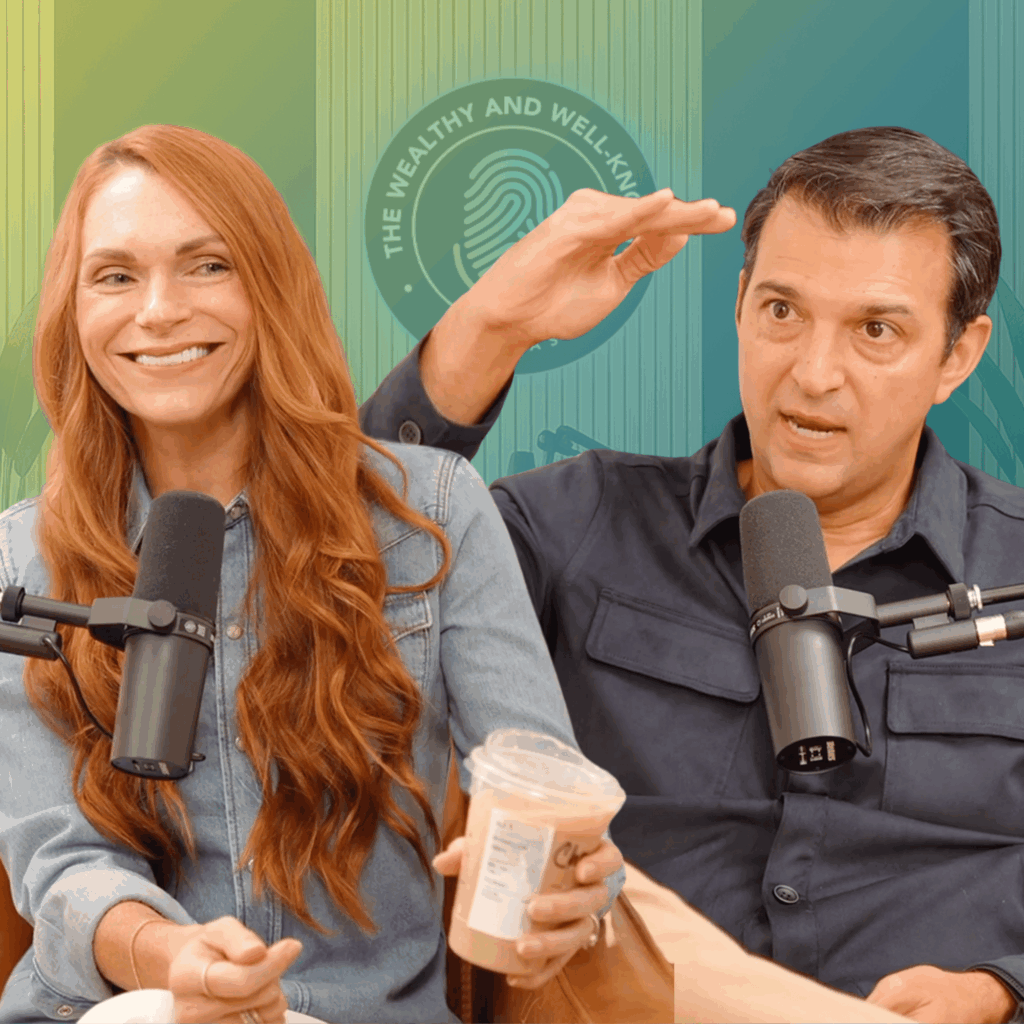
[00:00:00] Hey, welcome back to the podcast.
[00:00:05] Today, I’ve got Rory with me and we’re talking about money, wealth, riches.
[00:00:13] What to do if you have some, how do you get it and how do you keep it?
[00:00:19] Really we’re talking about just like personal philosophies, best practices with money, mindset,
[00:00:26] tactics, strategies, but anything around personal finances.
[00:00:31] I feel like people have asked us to talk about this before and we’ve kind of been resistant
[00:00:35] to it because it’s like, we’re not the people that are like, hey, look at us, we’re rich,
[00:00:42] which we’re not like ultra-rich or anything, but I feel like we’ve been a little bit resistant
[00:00:46] to that, but I also feel like there’s a lot of bad influences online about money.
[00:00:53] I’m excited about this because I do think there’s some things that we’ve done differently.
[00:01:01] I think we have a joke inside in our family that we’re weird and it’s like, we are very
[00:01:05] weird.
[00:01:06] I think we’re very unusual in many ways and I think statistically, financially, we’re
[00:01:12] pretty unusual for our age.
[00:01:16] I think it would be fun to do this and talk about it.
[00:01:18] I’d like to start off with asking you, what are some of those philosophies that you think
[00:01:25] we have about money that are different from what most people have?
[00:01:31] And again, just kind of a qualifier, right?
[00:01:34] We’re not like billionaires and like the world’s wealthiest people, but you know.
[00:01:39] We might be thousandaires.
[00:01:40] Yeah, we’re definitely hundredaires.
[00:01:42] Most days we’re hundredaires, but I do think we’ve been able to achieve a lot.
[00:01:48] A level of, I guess I’ll call it financial piece beyond what most people ever get to,
[00:01:54] certainly from where I grew up in and I’d love to just kind of, yeah, just start with
[00:02:02] that.
[00:02:03] What do you think are some philosophies about money and maybe not even that are different
[00:02:06] from other people, but just like philosophies we have that maybe we have spoken or even
[00:02:10] ones that are sort of unspoken between us because we haven’t talked about this subject
[00:02:15] in a while.
[00:02:16] Yeah.
[00:02:18] And I think one of the reasons why is we’re not financial advisors.
[00:02:23] So this is not legal, formal financial advice, please go talk to a professional.
[00:02:28] These are personal philosophies and best practices mainly curated from some really good things
[00:02:36] we’ve seen and some really hard things that we’ve seen.
[00:02:40] We’ve seen money build marriages up.
[00:02:43] We’ve seen money build marriages down.
[00:02:45] We’ve seen money help expand.
[00:02:47] We’ve seen money help implode.
[00:02:50] And so I think those are some of the things that have curated some of these practices
[00:02:54] and beliefs.
[00:02:55] If I were to start over archingly, I think one of the things that makes us most unique
[00:03:02] is how simple and conservative our philosophies are.
[00:03:07] Somebody asked me last week, they’re like, Hey, I’m in this mastermind and they’re talking
[00:03:12] a lot about crypto and investments and real estate and she said, can I just get your take
[00:03:18] on how you invest your money?
[00:03:20] And I looked at her and I smiled and I’m like, it’s going to be a very short conversation.
[00:03:25] She goes, why?
[00:03:26] And I said, I don’t invest in crypto.
[00:03:29] I don’t invest in a lot of real estate and I have very little investments outside of
[00:03:33] some very conservative, boring 401k IRAs, Roth IRAs insurance, the end.
[00:03:40] And she goes, wait, what?
[00:03:42] And I’m like, yeah, I told you it was going to be really short.
[00:03:46] It’s very conservative.
[00:03:48] And I think a lot of that is what I have found and I know that you agree with this is the
[00:03:53] best investment that we have ever made that we will ever make is reinvesting back into
[00:03:58] our own personal development, our own company and our own family.
[00:04:03] And there is nothing in the world.
[00:04:05] There is no reward, great enough to risk my sleep and my peace and the security of my
[00:04:13] family and my team for some potential one day big payoff.
[00:04:20] And maybe that’s just really ignorant, but I’m choosing that I am choosing peace.
[00:04:27] I am, I am choosing enoughness than some big potential investment and payoff.
[00:04:34] I’m choosing peaceful rest at night versus any anxiety over what the stock market is
[00:04:38] doing or what’s happening with Bitcoin or anything in cryptocurrency.
[00:04:44] I’m not stressing out about managing lots of properties.
[00:04:47] Don’t care.
[00:04:48] I’m not saying it’s bad.
[00:04:49] I’m not saying don’t do it.
[00:04:51] I’m just saying that what we have learned for us is no thanks.
[00:04:54] I think I think that’s something that would shock people to know like for us, we really
[00:05:01] believe that peace, that profit, like peace is the new profit.
[00:05:06] I think we end to go like, we aren’t really money motivated.
[00:05:11] Like we don’t go, we have to like earn this much money to do this and like, let’s think
[00:05:17] about it every day.
[00:05:19] It’s going money is subservient to the mission that we’re on.
[00:05:24] And so it’s like money shows up as a byproduct of what we’re doing.
[00:05:28] And I think to your point of simplicity, I have to give a shout out here and I don’t
[00:05:34] know if you would say he’s been as impactful in your life as I would.
[00:05:37] So I’ll be curious to hear this, but like I still look back on Dave Ramsey’s financial
[00:05:43] peace and we made a decision that we weren’t going to get married until we were both debt
[00:05:47] free.
[00:05:49] And I look at that decision as like the first step to being rich.
[00:05:56] If you want to be ultra rich, I really still believe to this day, the most important first
[00:06:02] tactical step is to be debt free because when you don’t have debt, everything you make piles
[00:06:10] on top of itself.
[00:06:12] So like if you don’t have a car payment and credit card bills and student loans and a
[00:06:16] mortgage and you don’t like paying off TVs and sofas, if you make $50,000 a year, then
[00:06:25] that means at the end of a year, you’re going to have $50,000 sitting there and then in two
[00:06:28] years you’ll have $100,000 and then $150,000 and then it starts to grow with interest and
[00:06:32] it’s like you can have peace much earlier than you think.
[00:06:39] Like people feel like, I have to invest because I need to hit the Bitcoin jackpot or I have
[00:06:45] to hit the lottery or I have to pick a unicorn company to invest in that I’ll have this huge
[00:06:51] payoff and they expend so much time and so much energy and so much money diluting all
[00:06:59] of this where it’s like if you just like live simple and don’t get into debt and you keep
[00:07:04] investing in yourself, you grow your income.
[00:07:07] So I personally really still feel like being debt free was one of the most important things,
[00:07:12] first things that we ever did.
[00:07:14] Yeah, I think when it comes to personal financial decisions and it’s not that we don’t have
[00:07:20] strategies.
[00:07:22] I have pretty much a minor in taxes at this point with the amount of books and courses
[00:07:27] that I’ve invested in terms of, I want to know just enough or I can make good decisions.
[00:07:33] I’m not going to read all how many per thousand pages of tax code there is but there’s this
[00:07:39] new big beautiful bill that came out and it’s like I went to a course and I listened to
[00:07:44] this webinar and I need to know enough to go how does this impact me but I’m not going
[00:07:50] to like spend every extra dollar I have with some new investment or tax shelter or tax
[00:07:57] saving strategy and it’s like I care enough to go, yeah, I want to know what’s happening
[00:08:03] and I feel the same way about investing, right?
[00:08:06] It’s like I think we should have IRAs and Roths and we need retirement plans and we
[00:08:12] did a cash balance plan and we have a donor advice fund, like there are things that we
[00:08:17] do but those are very simple and honestly they’re all with the long game in mind and
[00:08:24] I think that’s one of the philosophies we have is we’re not doing any quote unquote
[00:08:29] get rich quick strategies because at the end of the day our goal isn’t to get rich.
[00:08:37] I think that’s what’s surprising in a lot of ways.
[00:08:40] It’s like we don’t build a lot of, you know, we don’t make decisions on, we don’t buy a
[00:08:46] lot of real estate because we’re not trying to get rich.
[00:08:50] It’s really back, you know, and I said this since to somebody a few weeks ago, like I
[00:08:56] have never since I have been alive seen the stock market or any of our funds get the rate
[00:09:01] of return that we do in our own business and it’s like if I’m going to invest money somewhere
[00:09:06] I’m going to go where the greatest rate of return is and I have yet to see any fund any
[00:09:11] investment opportunity, anything come my way that has a greater almost guaranteed with
[00:09:18] my influencing control rate of return and then investing into myself and investing into
[00:09:23] my own business.
[00:09:24] Which includes investing into people and it’s hiring new people, it’s giving them raises
[00:09:29] and trying to like grow the pay so we can attract better people into the business and
[00:09:34] keep good people and all that kind of stuff but it’s like, you know, if your business
[00:09:38] makes, you know, a 20% profit margin, it’s like show me some other investment that’s
[00:09:43] going to consistently make 20% and you know, I think what’s crazy is all the get rich quick
[00:09:48] schemes are like exciting for a hot minute but it’s like literally trying to time the
[00:09:55] lottery and then they like crash and it’s, you know, there’s, we’ve been around now long
[00:09:59] enough to go.
[00:10:00] We’ve got lots of friends and people who’ve done like real estate.
[00:10:04] I think real estate could be a great investment.
[00:10:07] It’s also like people get really leveraged and it’s like, man, I can’t make money fast
[00:10:13] enough.
[00:10:14] I can’t buy enough properties and then the moment the interest rate goes up or, you know,
[00:10:18] there’s the mortgage crisis or whatever, it’s like, man, it all disappears quickly
[00:10:23] and it can invert and go massively upside down and it’s like, did you need all that
[00:10:28] in the first place?
[00:10:29] Like you, like you have this high high but then you have this really low low, you end
[00:10:33] up averaging in the middle.
[00:10:34] Like what if you just kind of like plotted along?
[00:10:36] Yeah.
[00:10:37] I mean, my family, I come from a construction business and my brother and my dad build a
[00:10:41] lot of real estate on the side, right?
[00:10:44] And the quote unquote, not no busy, the non busy seasons of the construction industry.
[00:10:49] And there’s often been seasons of life where I’m really tempted of like, wow, like he’s
[00:10:55] cranking out neighborhoods left and right and look at all these deals he has coming through.
[00:10:59] And then I remember it’s like, but that’s not what I want.
[00:11:02] I have to like, I mean, that’s how you, one of the biggest financial personal philosophies
[00:11:08] I have is stop looking at what other people are doing and that’s, that’s the temptation.
[00:11:14] It’s like, and I even have it with my own family and I’m like, wow, it’s like, look
[00:11:17] at all this, look at all these deals they’re turning and look at all these houses and look
[00:11:20] at all this, wow, wow, wow.
[00:11:23] And then I’m reminded it’s like, yeah, but he works a lot of nights and weekends and
[00:11:26] a lot of mornings and is always on the phone and always handling problems and I just need
[00:11:33] to put on my own blinders and go stop paying attention to what other people are doing.
[00:11:38] And there’s no judgment at what other people do.
[00:11:42] And I just need to know like, that’s their lane.
[00:11:46] This is my lane and I’m making choices that are good for me and my family and they’re
[00:11:51] making choices that are good for their and their family.
[00:11:54] And not one is right or wrong.
[00:11:55] They’re all unique for each of us, but every single time that I’ve been tempted to try,
[00:12:03] you know, I don’t know, maybe we should buy, you know, Bitcoin or maybe we should do it’s
[00:12:06] only because there was some comparison, right?
[00:12:09] There was a bit of FOMO or there was a bit of what everyone else is doing it.
[00:12:14] And when has that ever done any good for me?
[00:12:16] When I go back to my high school days, every single time I did something that someone else
[00:12:20] was doing, I got in the biggest worst trouble of all time, every single time.
[00:12:24] I cannot think of one time ever that me jumping on the bandwagon did me any good.
[00:12:31] I think it’s a mature, one of the most important places you can get to in your life financially
[00:12:39] is when you can consciously say, I’m willing to accept less money if it gives me more peace.
[00:12:50] Like I remember one of the recent things that happened to us, I don’t know, it was maybe
[00:12:54] around the time of COVID, we started saying consciously, we don’t need more money.
[00:12:58] We need less stress, right?
[00:13:01] It’s like, what are you going to do with more money?
[00:13:04] Like what?
[00:13:05] I got plenty of things we could do with more money.
[00:13:06] Well, I’ll make you a list.
[00:13:08] Really?
[00:13:09] Yeah.
[00:13:10] Is there a lot of things that you want to do like with more money?
[00:13:12] I didn’t say want.
[00:13:13] I said could.
[00:13:14] Oh, yeah.
[00:13:15] Lots of things we could do.
[00:13:16] Like when you ask the question, what are you going to do with more money?
[00:13:19] I’ll give you a list.
[00:13:20] There’s a lot of things we could do with more money.
[00:13:22] Yeah.
[00:13:23] But I think realizing to be, you know, getting to the place to go like, I’m okay with less.
[00:13:30] Like I don’t need to have the nicest car, the biggest home, the private jet, the like…
[00:13:39] Really you don’t want a private jet?
[00:13:42] I would mind flying private, but I don’t think I’d want a jet.
[00:13:45] It’s a boat is a good example, right?
[00:13:47] Like we could definitely have had a boat.
[00:13:48] I don’t want a jet.
[00:13:49] A long time ago.
[00:13:50] Yeah.
[00:13:51] But I’m like, we could own a boat.
[00:13:52] But I’m like, what a mess.
[00:13:53] Like what a night.
[00:13:54] I don’t want to own a boat.
[00:13:55] I just want friends with boats.
[00:13:56] It’s kind of the same thing with real estate.
[00:13:57] It’s like, yeah, I know we could kind of build the empire and like, I don’t know, maybe we’re
[00:14:01] missing out there.
[00:14:02] But I’m like, man, it’s so much.
[00:14:04] But that’s good to that point.
[00:14:06] We’re only missing out because we’re looking at what someone else is doing.
[00:14:09] Yeah.
[00:14:10] Or listening to what somebody else is saying.
[00:14:12] And here’s the part about running your own race because it’s like, it’s the…
[00:14:18] You know, you always say the grass isn’t always greener.
[00:14:20] It’s almost never anywhere near as good as it sounds, right?
[00:14:27] Like they say, oh, I got this Bitcoin thing.
[00:14:29] And it’s like all they’re talking about for a year.
[00:14:32] And then, you know, we have some friends that have lost significant money, very painful.
[00:14:38] Same with real estate.
[00:14:39] Same with investing into businesses.
[00:14:41] Same with buying individual stocks, right?
[00:14:43] I mean, our plan, I think, you know, looking back on our path was very simple.
[00:14:48] It was like, we got debt free.
[00:14:50] We lived below our means.
[00:14:52] We maxed out, first of all, our IRAs, then we maxed out our 401Ks.
[00:14:58] Then we had enough amount…
[00:14:59] We had enough in the stock market that just the rate of compounding interest over the
[00:15:05] next 30 or 40 years, plus we had term life insurance.
[00:15:10] And then it was like, okay.
[00:15:12] Now we have, after all that is taken care of, you go, now what?
[00:15:17] It’s like, well, I guess we’ll, you know, buy a few things.
[00:15:20] You know, we got to the house of our dreams and we upgraded.
[00:15:24] For those of you that don’t know the story, like the first house we bought when we were
[00:15:27] married was 1,000 square feet.
[00:15:30] It was 1,200 square feet, and technically I bought it.
[00:15:33] Technically you bought it.
[00:15:34] Just to be clear.
[00:15:35] Yeah.
[00:15:36] Just so everyone knows who the sugar momma is in this relationship.
[00:15:41] $179,000 house to be clear.
[00:15:44] But then…
[00:15:45] $179,000.
[00:15:46] That was 2010.
[00:15:47] And then it was like seven years later, we built our dream home, which was a very nice
[00:15:51] home.
[00:15:52] And that was because our business has also quadrupled.
[00:15:55] And you know, we’d had books come out and we were speaking everywhere and like you were
[00:15:59] doing consulting with big companies and you know, we had some more income, but it was
[00:16:04] just going, it was because we weren’t trapped by debt.
[00:16:06] Everything that we made just started to kind of like pile on top of itself.
[00:16:09] And we were also not quick to be like, oh, let’s go buy a hundred properties and you
[00:16:13] know, like multiply everything.
[00:16:17] It was like, no, I just want to have like this place that we live every day that we’re
[00:16:21] happy with and not have a lot of stress to like pay the mortgage and like be buried underneath
[00:16:25] the weight of feeling like we have to do stuff.
[00:16:27] And I think, and then after that it was like, oh, that put us in the position to start brand
[00:16:32] builders group really.
[00:16:33] You should tell them about the financially, you know, why we were able to start brand
[00:16:40] builders group just on the purely financial side.
[00:16:47] Do you know what I’m getting out there?
[00:16:48] I’m trying to take your cue here.
[00:16:50] I have no idea where it’s coming from.
[00:16:51] Yeah.
[00:16:52] Okay.
[00:16:53] So anyway.
[00:16:54] Why don’t you tell them, right?
[00:16:55] Yeah.
[00:16:56] Maybe I’ll start that.
[00:16:57] But just to go like, you know, when we exited our former company, it takes a lot of money
[00:17:00] to do it.
[00:17:01] And by exited it when I got fired.
[00:17:03] When AJ got fired and then, you know, I resigned and we started brand builders group.
[00:17:11] Our income went straight to zero.
[00:17:13] So literally like in a matter of a few days, a two week period, but we had two incomes
[00:17:18] that went to zero straight to zero.
[00:17:21] We had a newborn baby.
[00:17:23] We had our brand new house.
[00:17:25] And then we were starting a company and that is very expensive.
[00:17:30] The reason we were able to do it is because of savings.
[00:17:33] We were able to weather that storm and then literally day Ramsey and your six month emergency
[00:17:39] fund.
[00:17:40] Yeah.
[00:17:41] And then, and then COVID hits and we were literally able to weather that storm.
[00:17:44] We were, we were literally able to hire the people we needed to start brand builders group
[00:17:50] because we had savings.
[00:17:51] Well, yeah.
[00:17:52] And I think that’s important to go.
[00:17:54] It’s like we had savings, but we also, we didn’t pay ourselves a salary at brand builders
[00:17:58] group until year five.
[00:18:00] So every, every dollar that was coming in was going right back.
[00:18:04] We earned commissions for the first five years of brand builders group.
[00:18:07] There were no salaries.
[00:18:09] We earned commissions just like anyone on our team did sales commissions, delivery commissions.
[00:18:14] And that was a huge part of it is like we could do that, but it was also because we
[00:18:18] were betting on ourselves, but we also knew that we had to give the company enough runway
[00:18:24] to make it.
[00:18:25] And if we were going to pay ourselves big salaries, it wouldn’t make it.
[00:18:28] Yeah.
[00:18:28] I think that’s actually a really important financial philosophy in the business side that
[00:18:33] people don’t think of.
[00:18:33] It’s like when you’re a small business owner, you just kind of like pay yourself the profit.
[00:18:37] One of the things that we do is we, we earmark the money.
[00:18:40] We, we, we take people actually in our eight figure entrepreneur course in our membership,
[00:18:45] we take them through an exercise called divide the dollar.
[00:18:48] And we basically say, okay, if there was for every dollar you make, there’s a hundred pennies
[00:18:53] divvy up who those pennies are going to go to.
[00:18:56] And so we’ve always said, we’re going to pay this percentage to the person or
[00:19:01] persons doing the work.
[00:19:04] We pay this percentage to the person or persons who sell the deal.
[00:19:09] We take this percentage and pay the person or persons who generated the lead.
[00:19:15] We then have this percentage allocated to paying for the overhead and being able to go,
[00:19:20] okay, this is the amount we can reinvest into like more infrastructure and staff.
[00:19:25] And then there’s this percentage that theoretically is what should be left over for profit.
[00:19:29] Well, in actual budgeting, I do it the opposite.
[00:19:34] So you start with profit first is what you’re saying.
[00:19:36] Yeah, it’s a profit first budgeting.
[00:19:38] And I go in order to make a, you know, I’m just crazy math, a 10% profit margin.
[00:19:44] I reverse engineer like, what are the fixed expenses that we’re going to have?
[00:19:48] Then what are the variable expenses that includes labor, that includes all the software
[00:19:53] and all the rents.
[00:19:55] And then I reverse engineer it and go, can we do that?
[00:19:59] And that tells you, right, how much revenue we need to bring in and what gross margin
[00:20:04] products and what percentage of products.
[00:20:06] So I actually, in terms of budgeting, I take the reverse approach.
[00:20:11] And then if I feel like that’s too much of a stretch, then we back it down.
[00:20:14] We back it down.
[00:20:14] We back it down, but it’s a profit first budgeting.
[00:20:17] Yeah.
[00:20:17] And just, you know, high level percentages, because people ask this a lot, um, in our,
[00:20:23] in our internal trainings, like roughly we budget 30 to 30% to 40% of a dollar for all
[00:20:31] the variable expenses.
[00:20:33] So that’s paying the people that includes like, you know, if there’s food and meals
[00:20:37] and all, all that stuff, roughly, you know, somewhere between five to 10% for sales
[00:20:44] commissions, when, when you add in like salesperson salaries and stuff, it’s like
[00:20:48] 10%, then you go roughly 15% is what we budget, 15% of revenues, what we budget
[00:20:54] to pay for lead generation, which we can either pay to our affiliates and referral
[00:20:59] partners, whether that’s employees or clients or true affiliates, or we can pay
[00:21:04] that in advertising dollars.
[00:21:07] And then roughly, uh, you know, so what, what is that?
[00:21:11] That’s like 65.
[00:21:12] So then roughly you could do like 20 to 25% and overhead.
[00:21:17] And then that leaves something like a 10 to 10 to 15% profit margin.
[00:21:21] So high level, that’s kind of like, at least what’s worked for us in terms of
[00:21:25] like how we would structure a company, it’s in theory.
[00:21:28] Yeah, in practice, they change each product, each service changes in that.
[00:21:34] But that’s, but, but I guess my point in saying that to what you said was if you
[00:21:40] don’t, even when you pay yourself as the business owner, you need to pay
[00:21:46] yourself for each of those different roles, even if you’re doing all of them.
[00:21:50] Um, because if you don’t, then you don’t ever feel like you can afford to hire
[00:21:56] somebody.
[00:21:56] Well, and then it’s all false sense of profits, right?
[00:21:59] If you’re not paying yourself at all and you’re just taking profits, those
[00:22:03] aren’t real profits, right?
[00:22:04] It’s like you, if you had to replace yourself, right, as whatever role you
[00:22:08] play in the company, salesperson, delivery, you know, CEO, president,
[00:22:13] whatever, right, that costs real money.
[00:22:16] You’d be paying someone else that.
[00:22:17] And so we didn’t take a salary because we simply couldn’t afford it with overhead.
[00:22:21] So we took it in commissions and then we worked our way towards that.
[00:22:25] But that’s how we, that’s how we had the runway.
[00:22:27] When people talk about most small businesses don’t make it, that’s what
[00:22:31] they’re talking about, right?
[00:22:32] There wasn’t enough financial runway to hit the stride.
[00:22:38] And, and often that happens because of a variety of different things.
[00:22:42] But at the end of the day, not enough revenue, right?
[00:22:44] And so we acted as the primary revenue generators, which is why we took commissions.
[00:22:49] It’s like they’re, I’m, we’re seven years in and I just now feel like I’m
[00:22:54] starting to sit in the seat as real CEO, right?
[00:22:57] And that’s because we couldn’t afford it, right?
[00:23:00] I had to take sales calls and we didn’t have people, right?
[00:23:03] And it’s like, well, that’s how you have enough runway to make it, right?
[00:23:06] It’s like, yeah, sure.
[00:23:07] I would have loved to stepped out of that.
[00:23:09] Some of that stuff, customer service calls, writing copy.
[00:23:12] It’s like, I still find myself doing some of those tasks on a pretty
[00:23:16] frequently basis today, but that’s because that’s what the business needs.
[00:23:20] Yeah.
[00:23:21] And there’s power in paying yourself, I think, commissions.
[00:23:25] We have three different types of commissions.
[00:23:27] We’ve got the lead generation commission, the sales commission, the delivery commission.
[00:23:30] There’s, I think it’s powerful to do that because you, you’re, when you pay
[00:23:36] yourself in that way, you know that you’re directly contributing to revenue
[00:23:40] generating activities, and then you’ve set up the business model to do the same
[00:23:44] so that other people are stepping in and they’re getting paid to generate revenue,
[00:23:47] which is always, that’s always the hardest thing is like generating revenues.
[00:23:51] The thing that nobody wants to do is the hardest thing.
[00:23:54] And so we’ve always kind of compensated well for that.
[00:23:56] And then it’s like, it’s easy to step out of it.
[00:23:58] Like we really just pulled me out of delivery like last year.
[00:24:03] And it was because we were able to ramp up the income and the overall revenues
[00:24:06] and finally start paying ourselves, but it’s like, there’s a bucket of money
[00:24:10] that is earmarked to pay other people to step in and do the delivery.
[00:24:14] So that’s good.
[00:24:14] I want to ask you about taxes because you have learned a lot about taxes.
[00:24:19] What are, what are some of the, what are some of the key tax strategies,
[00:24:27] you know, or just philosophies, maybe not even tactics or strategies,
[00:24:31] there’s people from different countries listening, but like,
[00:24:34] how do you think about tax strategy?
[00:24:36] Where do you find tax strategy?
[00:24:38] Are there some key things that, you know, you advise in general for small business owners?
[00:24:45] Yeah, I think there’s a few things.
[00:24:48] But before I forget to say this, I would just say, if anyone is looking to go,
[00:24:51] where do I get more information around some personal philosophies around money?
[00:24:58] One of my favorite books, and I really a turning point in my own relationship
[00:25:01] with money was the book by Morgan Housel, The Psychology of Money.
[00:25:06] And so if you’re looking for additional resources of going like, maybe I do have
[00:25:10] an unhealthy attachment to money or the idea of money, or I really need to talk
[00:25:15] about my relationship with money.
[00:25:18] And I think that’s where we all need to start is like, what is our emotional
[00:25:21] relationship with money?
[00:25:23] And that dictates so much.
[00:25:25] Even tax strategy, right?
[00:25:26] It’s like, if you’re obsessed of, you know, how do I make more?
[00:25:31] How do I keep more?
[00:25:32] How do I do this?
[00:25:32] How do I, you know, not pay the government more like whatever it is.
[00:25:36] Like there’s an emotional attachment there.
[00:25:38] That’s worthy of you doing some self discovery in.
[00:25:40] And that’s a great first place to start.
[00:25:42] I would just preface that.
[00:25:43] Now, why I became somewhat obsessed with taxes is because I knew nothing.
[00:25:52] And I was taking a lot of advice from advisors, tax CPA individuals that quite
[00:25:59] honestly, I took them out their word and it cost us a lot.
[00:26:03] And I think that was a first lesson.
[00:26:05] And just because they’re a bunny ears professional, it doesn’t mean they
[00:26:09] know what they’re doing.
[00:26:11] And it was a really good, hard lesson for me to learn in the early days of
[00:26:15] the brand builders group of, Oh, that was bad, bad, bad advice that just
[00:26:21] cost us tens of thousands of dollars.
[00:26:23] I will not be making that mistake again.
[00:26:26] So I think this would be shocking for people to realize that some of the worst
[00:26:30] tax advice we’ve ever gotten is from tax professionals and some of the best
[00:26:35] tax advice we’ve ever gotten is from where?
[00:26:38] Where do you, where do we ultimately learn the best tax strategies?
[00:26:42] Most of them have been on Instagram.
[00:26:45] I was going to say other entrepreneurs, I would say other when I bet them, but I
[00:26:50] think that’s, uh, I follow a few very, very reputable tax, you know, content
[00:26:57] creators on Instagram.
[00:26:59] And when I say, I’m not, I’m not kidding.
[00:27:01] Right.
[00:27:02] I learned some of my best, but then I don’t deploy those.
[00:27:05] I go and I bet them.
[00:27:06] Yeah.
[00:27:07] Cause by designing this, I heard this, I saw this run this through Tennessee, because
[00:27:13] a lot of things that are out there might work in another state, but they don’t
[00:27:17] work in your state, which was some of the awful hard lesson that I had to learn
[00:27:22] when they deployed something that was counter to Tennessee tax law.
[00:27:26] And then we ate it double sides and it was really bad.
[00:27:28] So I think a part of it was, I don’t need to know all of it, but I need enough.
[00:27:32] I need to know enough where if somebody says something whack, I can raise my
[00:27:35] hand and go, no, I don’t think so.
[00:27:38] Not in Tennessee or not here or we’ve done that.
[00:27:41] Or I know what that is, not some random thing.
[00:27:44] I’m also always going to follow our fall on the side of the law.
[00:27:48] Right.
[00:27:49] I, I want to pay my fair share of taxes and not one cent more, but I want to pay
[00:27:54] my fair share of taxes.
[00:27:55] Right.
[00:27:56] Right.
[00:27:56] And so it’s like, I’m always going to fall to a little more on the right side of
[00:28:02] the line in terms of, Hey, I’m going to follow a little bit more to the letter
[00:28:05] of the law than not.
[00:28:07] Right.
[00:28:07] A lot of people go, is it a ask for forgiveness or ask for permission policy?
[00:28:12] That’s like, well, I’m probably going to follow a little bit more in the
[00:28:14] ask for permission a little bit, uh, even though I’m walking the line
[00:28:17] pretty close personally.
[00:28:19] Uh, but some of the, the best things that I have learned, uh, that have helped us.
[00:28:24] And again, uh, I believe this was set to sunset this year, but it has just been
[00:28:28] extended is the one 99 a QBI deduction.
[00:28:32] And that’s a classification for training companies, um, that you’re able to take
[00:28:38] a major deduction on pass through revenue.
[00:28:40] And, uh, the first year that we took the QBI, the one 99 a business deduction
[00:28:46] qualified business, um, I think we saved $80,000 in taxes and it’s been roughly
[00:28:51] about that.
[00:28:52] So again, I’m not going to go into all the, the details of each of these for
[00:28:55] limited time, but these are things that take to your CPA, to your tax advisor
[00:28:59] and go, Hey, would that apply to me?
[00:29:01] Which is what you should do with anything that you hear from taxes is not
[00:29:04] making any assumptions and go, does that apply here?
[00:29:07] But that has been a very tangible, helpful business deduction.
[00:29:12] Um, that we just, if you’re not out there learning, you would never know about it.
[00:29:16] And I think that was another big thing that went with personal finances that I
[00:29:20] learned is don’t expect others to come to you with ideas that save you money.
[00:29:23] Yeah, that’s what I want.
[00:29:24] That’s your job.
[00:29:25] That’s what I wanted to really get at was, was going, it’s.
[00:29:30] The tax professionals aren’t often the one to give us the, the ideas to vet.
[00:29:35] It’s usually other entrepreneurs or even if it’s on Instagram, it’s usually
[00:29:38] other entrepreneurs, or it’s just people doing more sensational things.
[00:29:41] Cause that’s what you, how you get followers, but you gather the ideas and
[00:29:45] then you take them to a professional to vet.
[00:29:48] Um, but it’s your, like, I would just say, take the personal responsibility of
[00:29:52] no one’s coming to save you and your banking account.
[00:29:54] Yeah, you go.
[00:29:56] This is another financial philosophy we have.
[00:29:59] It’s like one thing we never do is completely outsource our money and just go,
[00:30:06] I don’t understand that.
[00:30:08] I’m just going to like, so-and-so takes care of that.
[00:30:10] If I don’t understand it, then I go learn it.
[00:30:13] Yeah, we know enough to be dangerous.
[00:30:15] Um, and taxes, one of those things, just general finance and accounting.
[00:30:19] I didn’t go to school for a finance degree.
[00:30:21] Uh, I didn’t tell everyone what your degree was in, babe.
[00:30:24] Until my junior year, it was in painting.
[00:30:28] Um, and then my, and now it’s in financial statements.
[00:30:33] It’s a different kind of art.
[00:30:34] It’s a different kind of art.
[00:30:35] Uh, no, I didn’t graduate with a painting degree.
[00:30:37] I graduated, uh, with an advertising degree with a minor in Spanish and business.
[00:30:43] Um, but up until my dad said, you can’t graduate with that.
[00:30:47] It was painting.
[00:30:48] Uh, no, but I would say with all of that, though, I think just something I’ve
[00:30:51] learned in all of this tax research and tax knowledge is
[00:30:58] one of the things that thing is really important and I have seen them as a
[00:31:01] mistake and I would say this with financial advisors or tax advisors is
[00:31:05] make sure you don’t outgrow who you use.
[00:31:08] And over the years, um, we have, uh, outgrown three separate tax firms.
[00:31:15] And what do I mean by and, and bookkeeping?
[00:31:17] We’ve also, we’ve also, uh, and yes, several things we’ve ensourced as we’ve
[00:31:21] gotten bigger, but what worked for you as a $1 million company or a 3 million or
[00:31:28] 5 million or to 10, 15, 20, beyond, you know, you really have to look at are
[00:31:33] the service providers that I’m using now advancing at the level that I am advancing.
[00:31:39] And what I learned is the first, you know, really amazing, you know, and this
[00:31:44] was specific to taxes, tax strategy firm that we used, uh, who are all CPAs.
[00:31:48] They were great until we had deployed every single thing they had to offer.
[00:31:54] And then there was crickets for years and then it wasn’t so great anymore.
[00:31:59] A lot of them have a playbook of like, these are like the, the five or 10 plays
[00:32:03] we know how to run, but then they don’t have much beyond that with you.
[00:32:08] So I would just say as you’re growing and your own knowledge and your
[00:32:11] and income and revenue, it’s like, make sure that you’re up leveling your
[00:32:15] providers as you grow.
[00:32:17] Now, some can grow with you.
[00:32:18] Like we’ve had our personal financial advisor for as long as we’ve been
[00:32:23] together and he has grown with us, but not all, not all do.
[00:32:28] And so I have found it’s really good.
[00:32:30] Even if you make the decision not to change, you should have an audit of
[00:32:35] how you run your finances every couple of years.
[00:32:39] And I did that this year and the, I hired an external firm to come in and just
[00:32:44] do a tax audit because there were just some things that felt rushed.
[00:32:47] If I had, I had lingering questions that didn’t get answered and I wasn’t
[00:32:52] comfortable with it.
[00:32:52] So I would say, trust your own instincts, but you’ve got to be in your
[00:32:55] finances enough to go, I don’t know about that.
[00:33:00] And I didn’t know the answer and I really didn’t have the time.
[00:33:02] So I hired someone to come and do an audit.
[00:33:04] Y’all, let this be a lesson.
[00:33:07] You never have to learn the, that feeling I had within of like, that just
[00:33:12] felt rushed.
[00:33:13] That just felt like not thorough with no good explanation.
[00:33:17] It was just a gut feeling when I had the audit done.
[00:33:21] The previous tax firm had simply forgot to select a very important box that
[00:33:27] cost us $40,000.
[00:33:33] That was it.
[00:33:33] They forgot to select the box.
[00:33:35] What was the box?
[00:33:37] That’s confidential financial information.
[00:33:40] Come back next week.
[00:33:43] But the audit firm that I did, they were like, Hey, great news.
[00:33:46] This is our very first meeting after they had, you know, done an audit of our
[00:33:50] financials and tax statements.
[00:33:51] Uh, we found $40,000 that we’re going to get returned to you.
[00:33:54] And I said, how?
[00:33:56] And they’re like, well, this is good news, bad news, good news.
[00:34:00] We found it.
[00:34:00] You’re going to get the refund check, bad news.
[00:34:03] Your prior firm forgot to select this one really important box about, uh, how
[00:34:07] you file taxes.
[00:34:11] Like what?
[00:34:12] What do you mean?
[00:34:13] They just forgot.
[00:34:15] So I wouldn’t have found that.
[00:34:18] I just had enough wherewithal to go.
[00:34:20] Something’s not right.
[00:34:22] I’m going to pay the $500 to have someone else review the tax statements.
[00:34:26] They found $40,000 of refunds.
[00:34:28] And I think this is an important thing.
[00:34:29] I feel like this is happening in the medical world too, where it’s like,
[00:34:33] let’s get a second opinion.
[00:34:34] It’s like, don’t blindly trust someone because they’re the professional.
[00:34:39] And, and especially with taxes, here’s what’s interesting.
[00:34:41] A lot of, a lot of firms, somebody, if you’re a business owner, a lot of the firms
[00:34:49] that are doing your taxes, the people that are on that team doing your taxes
[00:34:53] have not never actually been a business owner.
[00:34:56] Or you have never spoken to either.
[00:34:58] Yeah.
[00:34:58] Or you don’t know that.
[00:34:59] But there, it’s going like, if you’ve never been in my position, how do you
[00:35:04] think like, how do you, how do you think like I think?
[00:35:06] And you go, you don’t, they’re just running, they’re running a playbook.
[00:35:10] Um, so let’s talk about personal finances for a second.
[00:35:13] What are some of the financial practices that we’ve done on our personal side to
[00:35:21] keep track of expenses, manage cash, like, you know, all of that.
[00:35:26] So can you talk a little bit about more on like the personal side?
[00:35:30] And also, I’d be curious, I think, I think a lot of people would be interested
[00:35:34] in knowing how do you transfer that money?
[00:35:37] When do you transfer that money between like, the business makes money and then
[00:35:42] it comes into the personal and like, how separate are those entities or how
[00:35:46] connected and like talk, talk, talk, talk, talk about some of that.
[00:35:50] Now we just say, I think the, one of the biggest things that we’ve done on our
[00:35:54] personal finances is we have a personal bookkeeper, right?
[00:35:58] It’s a nominal amount of money we pay every month for sanity and peace.
[00:36:03] We have a business bookkeeper, right?
[00:36:05] We have two in-house accountants and a bookkeeper for the entities we run.
[00:36:10] Why wouldn’t we have that personally?
[00:36:12] Cause it’s like, what am I opening up every bill and paying every bill and
[00:36:16] tracking it?
[00:36:16] No, my tracking every receipt?
[00:36:18] No.
[00:36:19] Um, so we hired someone who’s a personal bookkeeper just for our personal
[00:36:22] finances and I get a personal statement every month that I go through.
[00:36:26] And so just like we do in our business and we have a P and L, we have a personal P and L.
[00:36:32] It’s like, how much did you spend on entertainment?
[00:36:35] How much did you spend on groceries?
[00:36:37] How much did you spend on gas and how much income came in?
[00:36:40] Yeah.
[00:36:41] And so it’s like, I review that every month and I’m watching for trends of, why
[00:36:46] did we spend that much in groceries last month?
[00:36:48] What were we doing?
[00:36:50] Uh, or whatever.
[00:36:51] And so it’s like, it helps me go.
[00:36:52] Like this is where we need to pull back.
[00:36:54] Now a lot of people live by personal budgets and I wouldn’t say that we
[00:36:59] necessarily have like a strict budget that we follow personally.
[00:37:02] We did early.
[00:37:03] We did in the early days when we were getting out of debt.
[00:37:05] But what I do now is I have a better sense of how the money ebbs and flows.
[00:37:11] And I’m looking for anomalies, right?
[00:37:13] And you just can’t do that unless you’re looking at trends month over month,
[00:37:16] year over year.
[00:37:17] And if I see something that’s abnormal in one month, that’s not for the year.
[00:37:22] I’ll go back and say, Hey, pull, pull me this same period last year.
[00:37:25] And I’m like, Oh, summer water.
[00:37:28] Okay.
[00:37:28] That’s why it’s always high.
[00:37:30] Um, you know, so there’s just like some of those things that by having a personal
[00:37:33] bookkeeper has allowed me to not flip out, not stress, because I have historical records.
[00:37:40] And at this point, we’ve had this bookkeeper for more than a decade.
[00:37:42] They know our spending patterns as well as we do.
[00:37:46] And they have caught fraudulent activity.
[00:37:48] They have saved us money.
[00:37:49] Um, you know, somebody was cashing a bunch of checks at Walmart and our bookkeeper
[00:37:55] reached out to me and was like, I have never seen you shop at Walmart before.
[00:37:59] What are you doing?
[00:37:59] And I’m like, I don’t go to Walmart.
[00:38:01] She goes, really, you haven’t cashed the X amount of checks at Walmart.
[00:38:06] And I was like, no, $3,000 of checks that they were able to mark as fraud and get
[00:38:11] that money back because you follow your spending patterns.
[00:38:15] So that would just be one awesome best practice, uh, for the, for a nominal
[00:38:19] amount of money to save you peace, track your own personal spending, which I think
[00:38:23] a lot of people track it in their business and they forget to do the same
[00:38:26] in their personal life.
[00:38:28] One of the keys of managing a successful business financial statement, I think,
[00:38:34] is also managing by anomaly.
[00:38:37] And so one of the reasons to create a budget is that every month on our
[00:38:41] financial statements, we have, you know, one column that says budget and then one
[00:38:45] column that says actual and then another column that just says like the delta,
[00:38:49] the difference, and it’s going, how do you quickly review financial statements
[00:38:52] for a business?
[00:38:54] You just take your kind of ruler down the page and go, where is, if we’re
[00:38:58] kind of spending within the range of what was planned, okay, but we’re looking
[00:39:03] for the big sharp deltas.
[00:39:04] And then when there’s a big delta, it’s like, okay, let’s double click on that
[00:39:08] and let’s tap in and let’s go dive in and what, look at every expense and all
[00:39:12] that sort of stuff.
[00:39:13] So I think that is just kind of a more general practice that you can use with
[00:39:17] your personal finances or with your business finances is sort of like when
[00:39:21] you have a baseline of like a trend line or create one by way of a budget,
[00:39:29] you know, and you go, now all of a sudden we can manage by exception.
[00:39:34] And I think that, that, that helps a lot.
[00:39:36] So we’ve, we’ve done that.
[00:39:37] Talk about the different bank accounts that we have because I think we’ve,
[00:39:41] this has come up before it.
[00:39:42] Some of our philosophy has changed over the years.
[00:39:46] It has changed, but talk about, talk about the, maybe the journey, the evolution
[00:39:49] of it, because I think, you know, at one of our accelerator events, which are,
[00:39:52] are our in-person masterminds for our members, AJ and I still do four of those
[00:39:56] in-person a year with our members.
[00:39:59] This question came up one time and I remember people were like, so
[00:40:02] curious about the way that we did this, because we, we did this for years.
[00:40:06] So, so tell them about our, all of the accounts we had.
[00:40:09] Yeah.
[00:40:09] And we still have several different accounts.
[00:40:11] And I think, uh, as all the interest rates were going nuts and when that
[00:40:17] happened, you know, the high yield, uh, accounts also kind of went up.
[00:40:23] And so I made some of these shifts with the market, right?
[00:40:28] But prior to that, I would just say, like, we don’t do this as tightly anymore.
[00:40:32] This has kind of shifted with some of the,
[00:40:34] But for the first 10 years we were married, we did this like clockwork.
[00:40:38] We did.
[00:40:38] And I, we probably were managing eight different personal banking accounts.
[00:40:43] Um, so that we couldn’t access our own money.
[00:40:45] I think that’s the gist of it, right?
[00:40:47] It’s like we put in measures to make sure that we weren’t touching money.
[00:40:52] That wasn’t ours to touch.
[00:40:54] So we had a primary checking account that was joint, joint checking.
[00:40:58] Then I had a personal spending account.
[00:41:02] Rory had a personal, personal spending account.
[00:41:04] Rory allowance, which I could spend on whatever I wanted and you could too.
[00:41:08] So we gave ourselves adult allowances and we had our own accounts and a certain
[00:41:12] amount of money went in there.
[00:41:13] And it’s like,
[00:41:14] I don’t have to ask money.
[00:41:15] Don’t ask any permission.
[00:41:16] If it’s,
[00:41:17] And that was great.
[00:41:17] Like we,
[00:41:18] Rory and I have plenty of debates and arguments about things throughout our life.
[00:41:24] I can never recall in the 18 years that we’ve been together,
[00:41:26] that we ever have had a serious argument about money.
[00:41:30] True.
[00:41:31] We’ve had others.
[00:41:32] How late we work, how much we work, where we’re going to eat.
[00:41:36] We’ve had plenty of arguments.
[00:41:38] But trying to be in the same canoe together was the biggest fight we ever had.
[00:41:42] But never about money.
[00:41:43] And I believe a lot of that was due to the way that we had these accounts.
[00:41:46] If he wanted to buy some nonsense piece of technology that I didn’t agree with,
[00:41:50] he was like spending account.
[00:41:52] Like, okay.
[00:41:53] And courses.
[00:41:54] I spent most of,
[00:41:54] I spent most of my money on gadgets, courses and gifts for you.
[00:41:58] Yeah.
[00:41:59] Which the last one wasn’t so bad.
[00:42:01] Um,
[00:42:01] but we never argued about it because it was can’t talk about it money.
[00:42:05] This is my spending money.
[00:42:06] Then we had a personal savings, right?
[00:42:08] That was like our emergency fund.
[00:42:10] Then we had a giving account and that was just set aside for tithing and
[00:42:14] giving sin.
[00:42:15] That one gets populated first.
[00:42:17] Uh, and we still have that separate.
[00:42:18] We still have that.
[00:42:19] That is still separate.
[00:42:20] 10% of our money, no matter what, every, every dollar that comes in every
[00:42:24] single month, 10% goes aside for tithing and giving.
[00:42:28] And then we also have a donor advice fund,
[00:42:29] which is just basically like a next level of that where we set money aside for
[00:42:34] charity.
[00:42:35] At the end of the year,
[00:42:35] we do a large amount into that to figure out how we want to spend it for the
[00:42:39] next year, but every month we set money aside.
[00:42:42] Um, then we had a tax savings account.
[00:42:43] So we were setting aside 30, 35% every single month.
[00:42:47] So there was no surprise bills or, uh-oh, where’d all the money go?
[00:42:50] Um, so we had again, a joint checking.
[00:42:53] We had a joint savings.
[00:42:54] We had a personal spend for each of us.
[00:42:56] We had a tithing in our givings.
[00:42:58] We had a tax savings account and then we had a household account and the
[00:43:01] household account was for all the recurring routine bills that were paid,
[00:43:06] uh, rather by check or on auto debit.
[00:43:09] But those were for the routine types of bills and mortgages.
[00:43:13] So when you looked at all of our different accounts,
[00:43:16] it really made clear how much we actually had to spend on things like gas and
[00:43:20] groceries outside of ordinary expenses.
[00:43:23] And I think a lot of that was just the training ground to help us know how to
[00:43:27] treat our money.
[00:43:28] And we did that for 10, 12, probably 12 years.
[00:43:30] And as we started hiring staff, like personal staff of like helping us,
[00:43:35] like our family managers and, and you know, and once we had kids,
[00:43:39] we have like nannies, they would have debit cards that would also have access
[00:43:44] to the household account.
[00:43:45] So there, there’s, we’re always separate with a $500 max.
[00:43:48] So you have joint checking, joint savings.
[00:43:52] We each had an allowance account, a tithing account, a tax account and a
[00:43:57] hassle household account and then a separate account for, for assistance and
[00:44:01] family matters.
[00:44:01] So we had eight, we literally had eight accounts,
[00:44:05] which now you know why we needed a personal bookkeeper.
[00:44:09] But it’s like the Dave Ramsey envelope system in many ways.
[00:44:12] It’s just, it’s just like, it’s instead of like having a bunch of cash
[00:44:16] laying around stuck in envelopes, we’re, we’re, we’re actually segmenting it.
[00:44:20] I learned about myself anyways, uh, and managing a lot of our family’s finances
[00:44:25] is, um, don’t want to spend money that we don’t have.
[00:44:28] And so I’m going to pull it out, separate it.
[00:44:31] And then we really knew what we had.
[00:44:33] Um, and there wasn’t this false sense of, Oh, look at all this money.
[00:44:36] It’s like, no, this is God’s money.
[00:44:37] This is America’s money.
[00:44:39] This is Roy’s money.
[00:44:40] This is the mortgage’s money.
[00:44:41] Like it was all separated.
[00:44:43] So at the end of the day, it, it really gave you a better sense of how much is
[00:44:46] left over.
[00:44:47] Um, and that’s, that is, that’s how we trained.
[00:44:50] Oh, and an emergency fund.
[00:44:51] Yeah.
[00:44:52] That was our savings.
[00:44:53] We use that.
[00:44:53] And then we had a different savings.
[00:44:55] If we were saving for a big house, no emergency fund and savings was the same.
[00:44:58] Okay.
[00:44:59] But I think it was again, back to, you have to know yourself.
[00:45:02] That may feel like too overwhelming.
[00:45:03] It may not be good for you, but it worked for us.
[00:45:06] And I think that’s a part of the goal in all of this is like, you got to figure
[00:45:09] out what works for you.
[00:45:10] And just because we did, it doesn’t mean it will work for you.
[00:45:13] But I think that was, that was our training ground of training ourselves of not
[00:45:18] every dollar that comes in is for you to spend.
[00:45:20] And going back to the divide the dollar in the business is the same thing is just
[00:45:23] going like a lot of entrepreneurs wake up one day and they look at their checking
[00:45:27] account and they’re like, Oh, we got lots of money.
[00:45:29] Let’s go buy some stuff.
[00:45:30] And they forgot that like payrolls next week and like they owe, you know, they
[00:45:34] owe this other bill and they’re just like looking at their checking cows.
[00:45:37] Like that’s not the way to do it.
[00:45:38] Like look at the budget and, and earmark the money quickly to the places so
[00:45:43] that you know what you really have to work with.
[00:45:45] And I think that just helps a lot of people, you know, operate more logically
[00:45:50] when you, when you, you segregate out the dollars like that.
[00:45:55] Yeah.
[00:45:55] That’s interesting.
[00:45:56] I guess we’ve never really had a fight about finances, which is great.
[00:46:01] Cause I think, you know, statistically, that’s like one of the biggest reasons
[00:46:04] why people get divorced is because, it’s because of they have, they have money issues.
[00:46:10] I think a lot of that was from the financial discipline of coming into
[00:46:14] the marriage debt free.
[00:46:15] Um, but I think a lot of it was the separation of accounts.
[00:46:19] Last thing I want to talk about, we need to wrap up.
[00:46:21] Um, I want to talk about giving money.
[00:46:24] Um, I want to talk about tithing, generosity.
[00:46:31] What is your philosophy on that?
[00:46:33] Have you always been good at it?
[00:46:35] You know, how has it evolved over the years?
[00:46:39] Um, and then I’d like, I’d like to answer this question too.
[00:46:42] Do you want to start?
[00:46:44] Um, no, go ahead.
[00:46:46] Uh, I was very blessed from a very young age to get to watch two parents, both
[00:46:53] my mom and my dad give generously.
[00:46:56] And so I was raised in a very generous home.
[00:47:00] I remember sitting in church.
[00:47:02] Um, my dad’s an entrepreneur.
[00:47:03] My grandfather was an entrepreneur.
[00:47:05] So, um, there’s a lot of family business and entrepreneurship in my paternal line.
[00:47:12] And I remember sitting in church and I was probably seven or eight years old.
[00:47:15] And we were sitting on the front row and I remember my dad would always give the
[00:47:18] kids like a $20 bill to put in the basket.
[00:47:21] And then every so often I’d watch him write a check.
[00:47:24] And I just remember this one particular time I watched him write a $10,000 tithing
[00:47:30] check to our church.
[00:47:32] And I remember looking at that and looking at him and having a conversation in the
[00:47:36] car after I’ve like, where’d all that money come from?
[00:47:39] Like to me, like $10,000 was like millions, right?
[00:47:42] I was a little kid and he was like, it’s a lot of money.
[00:47:45] That, that’s money for the church.
[00:47:47] And I was like, why did I get that much money?
[00:47:50] Like why?
[00:47:50] Like, I was so intrigued.
[00:47:53] And I just, like my parents were just like, well, that’s not our money.
[00:47:56] That’s God’s money.
[00:47:58] And so I just was raised in a very young age of there’s some money for us.
[00:48:03] There’s money for others and there’s money for God’s causes.
[00:48:07] And I, my dad had lots of rental houses at my mom and my dad.
[00:48:11] My mom died when I was 15.
[00:48:13] So if I say my dad’s single early, that’s why I remember like going to all
[00:48:17] these rental houses on Saturdays, collecting cash, right?
[00:48:21] So my dad would like go through like all the properties he had.
[00:48:24] And a lot of these people didn’t have banking accounts, so they paid their rent
[00:48:29] cash and I remember so many times that we’d go to collect the rent and they
[00:48:35] just didn’t have it.
[00:48:36] And he’d say, all right, I’ll be back next week and he would just let them stay.
[00:48:41] And it was like, pay me when you can.
[00:48:44] And it just, it really set a precedent of sometimes it’s not always about making
[00:48:51] more money.
[00:48:52] Sometimes it’s just about providing some runway for someone else.
[00:48:56] It’s about giving to something that you believe in.
[00:48:59] You know, that old saying, it’s the one who gives the gift is the one who
[00:49:03] receives the gift.
[00:49:04] And I saw that lived out.
[00:49:07] My mom was one of the most generous human beings on planet Earth with her time,
[00:49:12] love, money, resources, just the ultimate giver.
[00:49:17] I just got to witness it at a really young age from both parents, both in a
[00:49:22] financial aspect, but also in a celebration aspect.
[00:49:25] My mom was a great celebrator of life, of just, of celebrating, right?
[00:49:31] It doesn’t matter what it was, it was a recital.
[00:49:33] We got to have a party and roses and stuffed animals.
[00:49:36] And it was like just a generous, generous giver of helping people feel loved.
[00:49:41] And then I watched my dad do that financially.
[00:49:43] So I was raised in a home that was like, there was an expectation that you get
[00:49:50] 20 bucks, it’s not all for you.
[00:49:51] Some’s for you, some’s for others.
[00:49:54] So I was lucky enough to see that really witnessed and modeled.
[00:49:57] And I was able to step into that.
[00:49:59] That’s beautiful.
[00:50:00] I love that.
[00:50:02] You know, I, I came from a family that didn’t have much money.
[00:50:07] And so I think I came at this very opposite where it was like, we didn’t have,
[00:50:13] we felt like we didn’t have any excess.
[00:50:15] And we, you know, we, in many ways we didn’t.
[00:50:17] And so when I started to accumulate some money, I was living with this psychology
[00:50:25] of like, I don’t, I, I’m never going to have enough.
[00:50:27] Like we never have enough to get what we want.
[00:50:29] We’re never going to have enough.
[00:50:30] And so I was always naturally holding onto it.
[00:50:34] And it’s not because my, like my mom was not that way.
[00:50:37] My mom’s very generous and always has been, but it was just, but she’s also not had a lot.
[00:50:42] And so I grew up like holding tightly of like, I can’t, I can’t give this away.
[00:50:47] And, um, you know, I think I started giving out a sheer discipline out of just, you know,
[00:50:56] the, the biblically speaking of like, you know, giving a tie the 10th and, um,
[00:51:02] and didn’t really kind of like have the heart for it.
[00:51:06] I was just doing it like out of obedience.
[00:51:09] And in many ways, I think that’s a great place to start.
[00:51:12] If you’re not, if for no other reason, it’s like, give it out of obedience.
[00:51:16] Same way of like, I don’t want to go to the gym, but I’d do that.
[00:51:20] Or, you know, I don’t, I like just do it out of obedience and see what happens.
[00:51:25] Because, you know, there’s this great verse in the Bible in Malachi,
[00:51:29] that this is one of the only places in the Bible where God says, test me in this.
[00:51:34] He says, bring, bring your whole tithe into the storehouse and see if I do not throw open
[00:51:41] the floodgates of heaven, like test me in this.
[00:51:44] Like this is a place where God invites you to test him.
[00:51:48] And there’s this great meme on the internet of a little girl standing next to Jesus.
[00:51:53] And she’s got this teddy bear in her hand.
[00:51:56] And she’s like, Jesus is saying, give me your teddy bear.
[00:52:00] And she’s holding this small teddy bear.
[00:52:01] And she’s like, I can’t, like this is my favorite teddy bear.
[00:52:04] And behind Jesus is back.
[00:52:06] He’s holding with another hand this huge teddy bear, like waiting to give it to her.
[00:52:11] And he’s like, just, just trust me.
[00:52:14] And I love that meme.
[00:52:15] And it’s, I found that to just be true.
[00:52:18] It’s like, you, you really can test God in it.
[00:52:21] So it’s like, if you have to do it out of obedience, if you can do it out of faith,
[00:52:28] ultimately that will evolve to doing it out of generosity.
[00:52:33] And I think, you know, and you, I would say it’s like, my experience has been,
[00:52:38] you can’t out give God.
[00:52:40] There’s not been a season when it was like, sometimes we’ve been called to give to something
[00:52:45] or like, that’s going to stretch us.
[00:52:48] It’s like God has always blessed it somehow.
[00:52:51] And then, you know, the last thing is just going, there’s nothing quite like the feeling you get
[00:52:57] when you give to someone, especially when you give to something, you know,
[00:53:01] someone that’s really in need.
[00:53:03] And it’s like, what else are we going to do with the money?
[00:53:06] Like what’s another meal or another car or another trip versus like watching the money
[00:53:12] that you’ve worked hard for to make a contribution to someone else’s life?
[00:53:18] And do that while you’re alive.
[00:53:20] Like don’t wait to like die and give all your money away and never see that impact.
[00:53:25] It’s like, enjoy that feeling and that fruit of getting to give people that gift.
[00:53:31] And I think that’s one reason why, you know, I’m most excited about making more money is to give
[00:53:36] more money.
[00:53:37] And you’ve always had such a great faithful heart in that way.
[00:53:41] And it’s really been encouragement to me.
[00:53:43] So there you have it friends.
[00:53:45] Those are a few of Rory and AJ’s random philosophies and smattering principles
[00:53:53] that about finances that have made a huge difference in our life and in our business
[00:53:58] and in the lives of the people around us.
[00:54:00] You know, keep in mind, again, for us, you know, money is not the marker.
[00:54:05] Peace is the marker.
[00:54:07] Peace is the new profit.
[00:54:09] Hopefully some of what you learned today will help you have more peace in your life.
[00:54:13] Share this episode with someone who needs it.
[00:54:15] If you haven’t yet, please go leave a review wherever you listen to this show
[00:54:18] so other people can find us and come back next time.
[00:54:21] We’ll see you then.
Ep 621: The 5 Luxury Levers: Neen James on Creating Irresistible, High-Ticket Client Experiences
Neen: But the most revered position in a hotel is the concierge and the [00:00:05] concierge anticipates needs you don’t even know you have. And what I want our listeners to think about [00:00:10] is I want you to think like a concierge, not a bellhop. [00:00:15] A bellhop is transactional. A concierge is transformational.
Rory: Well, [00:00:20] today I’m gonna bring you a fabulous high energy interview from one of my [00:00:25] longtime friends, uh, in the speaking world, and I’ve known through the National Speakers Association, [00:00:30] NEN James.
Her new book is number one right now on Amazon. She [00:00:35] works with some of the biggest and brightest and best companies, uh, in the world [00:00:40] to talk about creating luxury experiences and luxury price [00:00:45] points, is what we’re gonna talk about. But she’s worked with the Ritz Carlton, with Fairmont, Comcast, [00:00:50] Viacom, uh, Cisco, the Four Seasons.
She [00:00:55] recently was appointed to the Board of the World Luxury Chamber of [00:01:00] Commerce. Um, she is a favorite speaker, a longtime friend, and we’re gonna talk [00:01:05] about what does it mean to create elevated experiences. Um, [00:01:10] and, uh, her new book, by the way, is called Exceptional Experiences, five Luxury [00:01:15] Levers to Elevate Every Aspect of Your Business.
So we’re gonna talk about how to. [00:01:20] Sell those experiences and how to deliver, um, exceptional experiences. [00:01:25] Nen, welcome to the show
Neen: Goodday. Gorgeous. It’s great to be back serving your [00:01:30] fabulous viewers and the listeners to this podcast.
Rory: Yeah, it’s, uh, it’s not that often that we [00:01:35] have somebody back, but we’ve had you, uh, uh, a couple times.
It’s been a while though. [00:01:40] Um, well,
Neen: yeah,
Rory: it’s been a minute. It’s been a hot minute. So, um. Tell me about [00:01:45] exceptional experiences and, and here’s the thing, I guess to tee this up a little bit for the audience. You and I were [00:01:50] talking about this before. We’re seeing very consistently right now, both in our business [00:01:55] and with our clients, that ironically, it [00:02:00] seems almost like it’s easier to sell.
More expensive offers [00:02:05] and that people are willing, more willing than ever to pay for [00:02:10] an elevated experience for a higher level offer, they’ll pay more money. It’s [00:02:15] our top level offers that are selling out quickly. And it, in a way, maybe it [00:02:20] seems almost offset by, like it’s harder than ever to sell these sort of, uh, lower [00:02:25] ticket, more generic type offerings that are available to everybody.
So I’m [00:02:30] noticing that. As a pattern and a trend in our monetization strategy. So [00:02:35] I just wanted to kick that over to you and go, is that part of the timing of this book? Are you seeing that same [00:02:40] kind of thing?
Neen: You know, as a client experience expert, I have the privilege of working in [00:02:45] some incredible brands as you read out.
And if I take for example, the luxury travel [00:02:50] industry, when the world changed, that industry ended up investing [00:02:55] more in more exclusive experiences. So if we think about top tier [00:03:00] clients, so whether you are a consultant or whether you have a dental practice, you have top [00:03:05] tier clients. And one of the things that we’re finding is those top tier clients are [00:03:10] the ones that we wanna focus on.
Because if you look at your revenue split and think about the old. Greater principle, [00:03:15] right? Mm-hmm. The 80 20 rule, you’ll often find that it is those 20% that [00:03:20] are generating 80% of your revenue. What we noticed in the luxury travel industry is what [00:03:25] people wanted as more unique experiences. They wanted to be first to discover a [00:03:30] location, and then they wanted to share it with others.
The same could be true of businesses. What [00:03:35] people want is they want more exclusive behind the scenes. Access. [00:03:40] I loved the interview that you and Marcus did about the questions with endless customers, and one [00:03:45] of the things he was talking about was having videos showing behind the scenes, so people should go back and [00:03:50] listen to that particular episode.
What we are seeing is it doesn’t matter whether it is luxury [00:03:55] travel, whether you are in financial services, what people are willing to do [00:04:00] now because what they. Associating is they’re associating that [00:04:05] exclusivity, that exceptional experiences with their own values and success. And so [00:04:10] it’s, it is a lot easier to sell a high end item where people already perceive the [00:04:15] value will be there because of the ticket that you are charging for that.
As [00:04:20] opposed to you, you know, some people thought it was a volume game, like those small things, you know, they would say [00:04:25] start the funnel with something kind of. Free or something low end. And [00:04:30] that might work for people. But what I’m noticing is people want a personal touch. And what [00:04:35] luxury brands do better than anyone else, Rory is personalization and [00:04:40] customization.
Mm-hmm. And you don’t have to be a luxury product to provide a luxury level of [00:04:45] service. So regardless of what kind of product you have, when you’re listening to this, you [00:04:50] could easily offer a luxury experience. You just need to know how.
Rory: Hmm. [00:04:55] Yeah. Well I wanna talk about that. And I mean, we’ve definitely seen this, um, you know, people [00:05:00] are paying more to just be in a small, intimate setting with [00:05:05] myself and like some of what we call these events, mastery events that we started doing.
Mm-hmm. [00:05:10] Where it’s like I get a little bit of time to work with each person directly [00:05:15] one-on-one, uh, versus like, you know, a huge. Virtual or [00:05:20] in-person presentation where there’s hundreds of people in the room, uh, to that point about personalization and [00:05:25] customization. So, uh, you talk about five levers that, [00:05:30] you know, basically business owners can pull.
You call ’em the [00:05:35] five luxury levers of the experience elevation model. So [00:05:40] can you just tell us what are those, because I think it’s, um. [00:05:45] People start to go, okay, is there an opportunity for me to create a higher level [00:05:50] experience? What would that look like? How do I go about [00:05:55] doing that? Uh, walk us through the five levers.
Neen: Sure, because I [00:06:00] consult to so many CEOs and their, uh, teams around the world, whether it is luxury or [00:06:05] legacy brands, what I’ve been able to apply this experience elevation model to medical, [00:06:10] to hospital emergency rooms, to, you know, media companies, obviously [00:06:15] to hospitality. And what I’ve found is through my consulting and through the [00:06:20] research that I did, I have the only research study of its kind luxury as a mindset.
And so [00:06:25] what we discovered was that really, when you want to think about two things as a [00:06:30] leader, this book is designed based on my consulting model that I already used to [00:06:35] drive. Two things. How do you capture attention? Let’s call that mind share. How do you [00:06:40] drive revenue? Let’s call that market share. So if you are listening to this, imagine there’s a [00:06:45] triangle and at the bottom it’s about capturing attention, and that’s mind share.
At the top of the [00:06:50] triangle, it is market share, where we want to take those clients, we’re capturing their [00:06:55] attention and have them become advocates. The whole goal is to have people out there also [00:07:00] talking about your business. This book will help you do that. It’s like a playbook with all the [00:07:05] systems, the first of those luxury.
Levers you say, I say levers. The [00:07:10] first of those levers is entice. And using. Entice is how do [00:07:15] you then tell the story about your business? How do you position yourself? You [00:07:20] know, at Brand Builders Group, you already help people do this, to identify the type of client that they wanna [00:07:25] work with and to really elevate their reputation.
So storytelling is one of the techniques you [00:07:30] can use here, okay? But I challenge people to also share your origin story. Why is. [00:07:35] Your business so important to you, how does it align with your values and that your reputation would [00:07:40] be demonstrated there. The second of the levers is invite. Invite [00:07:45] is where you bring people into your business, into your community by speaking the language they [00:07:50] need to hear.
We even outline different digital and analog communication [00:07:55] methodologies in the book to be able to deepen those connections. Then we [00:08:00] move up to the luxury level of. Excite it’s here that we want to be [00:08:05] doing things that are shareworthy. Are your clients, not only do you have their attention, but [00:08:10] are you doing things that they wanna talk about with others?
It’s about engaging the five [00:08:15] senses, Rory, and if you have a digital business, it’s about using [00:08:20] language to create a more sensory experience. But if you have a physical business, how [00:08:25] can you then think about elevating that, using the five senses? We then move into the [00:08:30] luxury level of delight. This is one of my favorites because this one here [00:08:35] is where you show people that you know them really well.
This is where you also make [00:08:40] people feel like they’re seen and heard and valued. And just between you and I, Rory, that’s a whole [00:08:45] stealth message of this book is how do you really make people feel seen, heard, and [00:08:50] valued. I’m using examples in the book from luxury brands, but we can all do [00:08:55] that every day.
And then the fifth of the luxury leavers is ignite. This [00:09:00] is where you create advocates of those same clients. This is about helping educate [00:09:05] them to give you those referrals. Maybe it’s about hosting exclusive events so people could [00:09:10] feel like they’re really important to you. Maybe it’s to developing a gifting strategy, [00:09:15] but it’s surrounding their lifestyle so you become top of mind and top [00:09:20] of market for that particular client.
So we start with entice. Then we [00:09:25] invite, we then excite, delight, and finally ignite. We drive [00:09:30] mind share and market share using this model.
Rory: Mm-hmm. [00:09:35] Yeah. Um, uh, talk let’s, I wanna talk about the Shareworthy [00:09:40] stuff a bit because I think that is hard [00:09:45] to do. I mean, it’s, it’s like. Getting, it feels like it’s getting harder and harder to [00:09:50] impress people.
Um, you and I have a mutual friend, Eric Chester, and I, uh, Eric was one of [00:09:55] my speaking mentors. Right. And I remember growing up in the business where Eric was like, you know, when [00:10:00] I used to do presentations, people would go rousing, applause. And they were just [00:10:05] absolutely nuts. And today they just kinda like, okay, good job buddy.
[00:10:10] Like, you know, like, it’s just like the, the. There I, I [00:10:15] guess the threshold or the level of expectation of like what blows somebody’s [00:10:20] mind just seems to be getting higher and higher and higher and higher. [00:10:25] So what do you think are some of the kind of things that [00:10:30] people do to create those, you know, I guess.[00:10:35]
Remarkable moments or make ’em shareworthy as you say, to go like, [00:10:40] this is what you do when, when you do this. This is the kind of stuff that [00:10:45] people are gonna share about. Because that also is like even creating free content. We’re trying to make our [00:10:50] content shareworthy. Mm-hmm. Of like, sure. We’re trying to create something that people go, yeah, hit the share button.
Like that’s still like, yeah. [00:10:55] Perhaps the most important button on social is the share button. Yeah. So, yeah. What are you [00:11:00] seeing are the dynamics, components, characteristics of things that really reach [00:11:05] that shareworthy status?
Neen: Let me give you an example that’s not in the book, because it was [00:11:10] something I experienced after I was in the process of publishing, but I want people to listen [00:11:15] and remember about making an emotional connection because when we have an emotional [00:11:20] connection to something, we are more likely to then share it.
So one of the keys to this is emotional [00:11:25] connection. I love the luxury property in Alexandria called [00:11:30] AKA. It’s a brand of, there’s a few of the hotels, but the first time I checked into this [00:11:35] beautiful hotel, they have a hotel dog called Senna. He’s named after the F1 driver for any of the [00:11:40] listeners who are F1 fans.
And so he’s this massive big dog. So when I went to the [00:11:45] reception area, here’s Sena. I was on my knees cuddling this beautiful puppy as soon as I checked in, [00:11:50] because I love a furry baby When I travel, hotel, dog or cat, I’m, I’m here for all of that. [00:11:55] Someone snapped a photo of that Rory. Fast forward to the second time I stayed at the [00:12:00] AKA Alexandria, but wouldn’t you know there’s Sena there.
And I was like, oh, that’s an amazing [00:12:05] coincidence. And then Isaiah at the front desk said, no, no, n we knew you were checking in. We wanted to make sure Sena was [00:12:10] here to greet you. Amazing. Get to my room, Rory. [00:12:15] And there is a framed photo of Senna and I from my first visit [00:12:20] on my bedside table. But wait. There is a handwritten note [00:12:25] from Senna with a paw print on it saying, I’m so glad you’re [00:12:30] back at the property.
Mm-hmm. Now that plus less than $5. [00:12:35] Right. But what it was for me was that emotional connection. It [00:12:40] reminded me of the lovely visit, the fun that I had last time. It was incredibly [00:12:45] personalized. It took a moment to hand write a note in our digital [00:12:50] AI world. Analog systems get attention that handwritten note.[00:12:55]
That sweet, kind, thoughtfulness, that creativity of making it [00:13:00] from center the puppy as opposed to Yes. Chris, the general manager wrote me a note as well, but [00:13:05] Center is the one that I remember of taking them time to frame a photo. [00:13:10] Something that was a memory, because they’ve had systems in the background, what I call [00:13:15] systemized thoughtfulness to make that happen.
And what will we need to think about no matter what kind of [00:13:20] business you have. Perhaps one of the shareworthy ways that you could look at capturing the [00:13:25] attention and demonstrating your expertise to people is analog. [00:13:30] And it could be the simplicity of, let’s say Rory, when a friend of ours, Chris [00:13:35] Ducker, published a book, long Per Leader, I would buy 25 copies of his book, and [00:13:40] I would write a handwritten note to all of the people that are important to me, and I would send them a [00:13:45] copy of Chris Tucker’s new book.
And that is going to arrive in a hot pink bubble [00:13:50] mailer. It’s physical mail, it’s lumpy. It’s not a white envelope, which probably has a bill in it [00:13:55] if you get your mail. All right? That’s what we think about, and so it’s an extension of my brand through the [00:14:00] hot pink packaging. It doesn’t say anything about me, it’s just.
Hey, Chris’s book [00:14:05] is really great. As a leader, I think you’ll benefit from chapter four. This would be really powerful for you. [00:14:10] It’s personalized, it’s customized, and it’s saying, I thought of [00:14:15] you. So when it comes to doing things that are shareworthy Rory, it’s about [00:14:20] thinking creatively. It’s not just about sharing on social, and that’s really [00:14:25] important, but what people want is they wanna know that you are important to them.
Now an [00:14:30] easy way to make things shareworthy in a digital way is give us [00:14:35] behind the scenes. Give us what’s happening. Let us meet. Yeah.
Rory: What does that [00:14:40] mean? What does that mean exactly? So tell me about that. So let’s, for
Neen: example, let’s see, you’re a dentist office, right? As a [00:14:45] dentist office, there’s gonna be things that are happening behind the scenes.
As a client in the dentist, [00:14:50] it would be really cool for me to know who are the team members? What’s the process? What are they [00:14:55] go through in a day? What do they joke about? What are things that we need to know? You could shoot that video [00:15:00] and, and put it on the Instagram stories. It doesn’t have to be on the grid.
But it’s an easy way for us to [00:15:05] get to know, wow, this dental practice has personality. This is someone I’m like, oh. So [00:15:10] when I go to see my hygienist, I say, oh my gosh, how was your trip to Bali? How’s your family? Like, [00:15:15] little things that help me feel more connected. So what we can do is if, [00:15:20] for example, uh, at a hotel.
They might interview the chef about why they [00:15:25] designed the menu they did. If you’re a mechanic, it might be about showing us behind the scenes of how you [00:15:30] set up, how you take care of the cars. We need to think more creatively about using [00:15:35] video. Video is the future of communication, as we know, and people want to see the [00:15:40] unedited, unfiltered, genuine, because you know, [00:15:45] with what you do with people and their reputation, building that trust is so [00:15:50] important.
So. Would it be? An easy way to do it is capture some video, interview [00:15:55] your team, and then post that and share it. Or even with me as a keynote [00:16:00] speaker, as soon as I arrive on property, I will take out my phone. I’ll shoot a short video for the [00:16:05] meeting planner and say, Rory, I just arrived. I love my hotel. I can’t wait to see you at soundcheck at 7:00 [00:16:10] AM Have a great night.
I’ll see you and your wonderful audience tomorrow. I just text that off to the [00:16:15] meeting planner. It takes me less than two minutes to do that. Meeting. Planners love it because [00:16:20] it’s personalized. It’s digital, it’s easy, but it just [00:16:25] helps you. Then the meeting planning goes, it’s one less thing I have to worry about.
The coffee’s hot, the [00:16:30] room’s gonna be warm enough and needs arrived. So what we wanna do is also think about how can we [00:16:35] stand and service of our clients in a unique way, and video is an easy way to do [00:16:40] it. Using digital or analog, there’s so many ways you can capture attention.
Rory: [00:16:45] Mm-hmm. Yeah. I like, um, it seems like personalization and analog [00:16:50] are two really prime parts of that, that you, you go, [00:16:55] uh, the more, the more hyper-personalized it is and yeah.
The more analog it [00:17:00] is or that it feels, um, is really key. I wanna talk about the [00:17:05] definition of luxury and what you consider the definition of luxury, because you know, in a way you, [00:17:10] it’s like analog maybe is like, even that word is like, doesn’t sound luxury, but here you’re saying [00:17:15] like, no, that that is luxury.
Um, so what are, what are some of the misconceptions you [00:17:20] think that people do have about luxury and what do they, what, you know, how do [00:17:25] you sort of reframe that? Um, because, you know, is it just [00:17:30] expensive and it’s just Louis Vuitton or is it something else?
Neen: You know, I think luxury is a [00:17:35] divisive word.
Roaring people associate it with expensive or it’s elitist, and I [00:17:40] want to change the narrative on that. Mm-hmm. I believe luxury is both inclusive and [00:17:45] exclusive. Here’s what I mean by that. It’s inclusive because everybody deserves it every [00:17:50] day, and it’s exclusive because you can roll out the red carpet experience for people.
Like I [00:17:55] said, you don’t have to have a luxury product to provide luxury experience. But in my research [00:18:00] study that I did, what we discovered is of the hundreds of people that were part of the research [00:18:05] study, there were five words that appeared constantly as the main characteristics [00:18:10] of how luxury is defined.
They are high quality, long [00:18:15] lasting. Unique, authentic. Indulgent. [00:18:20] Mm. Now, for most people listening to this call, the only one they may not relate to as much is [00:18:25] indulgent because as leaders we wanna be high quality. We want to have legacy and be long lasting [00:18:30] in our brands. We want a unique approach to our thought leadership and the way we share out in the [00:18:35] world, and we wanna be authentic.
So those same definitions of luxury apply to the [00:18:40] businesses listening to this. But one thing that we need to think about is some people see [00:18:45] luxury as time. Others, it is about the fabulous handbag. But what [00:18:50] I discovered of all the research was two things were common in my research [00:18:55] study. Everyone agreed luxury is about, uh, a [00:19:00] reward for hard work.
Hmm. And the second thing that was my favorite finding in the [00:19:05] study and something I’ve personally believed my whole life, because I do believe luxury is a [00:19:10] mindset, is that luxury is about experiences. Not things. And we have [00:19:15] the data to support that. And what we can all do is we can all provide this [00:19:20] experience for our clients, for our team, customers, guests, patients, [00:19:25] students, whatever community you serve.
But what you can do is just elevate it a little [00:19:30] bit so that people feel more seen, heard and valued.
Rory: And, and what [00:19:35] does that mean to be, to, to help people feel more seen, heard and valued? I mean, is that [00:19:40] just like personalization? Is that basically. Think
Neen: that’s one of the strategies to it, but I [00:19:45] think one of the things that often happens is.
I’ve worked with brands where they’re so [00:19:50] eager to tell the world about their product or service, that all they do is talk, talk, talk. Right? So they’re [00:19:55] just vomiting out all this information, all this content, and it’s all about them, right? [00:20:00] And one of the things that I wrote in my book, attention Pays, and it was one of the best [00:20:05] lessons I ever got from my little five-year-old friend Donovan.
And he and I were in this heated [00:20:10] debate, and I don’t know if you’ve ever debated with a 5-year-old with your kids, but you know what? Every day
Rory: as it turns out, right?
Neen: And [00:20:15] so I remember he, he thought that I wasn’t listening to him, and he got so mad at [00:20:20] me, Rory. He jumped in my lap. He grabbed my face in his tiny little hands.
He [00:20:25] turned it towards him. And he said, this nin, listen with your eyes [00:20:30] now. From the mouths of babe, come to the best [00:20:35] wisdom. We don’t just listen with our ears, we listen with our eyes. We listen with our heart. We listen with our [00:20:40] soul. So if we want to, as business owners, whether you are an entrepreneur, whether you are a [00:20:45] thought leader, we need to listen with our eyes more.
We need to be able to listen for what the [00:20:50] clients are not telling us, for the concerns that they aren’t sharing, and we need to [00:20:55] anticipate in a way they haven’t thought about it. One of the things I love worry [00:21:00] about hotels is I love a good bellhop. A bellhop will move your bags really quickly through the [00:21:05] hotel.
Their job is very efficient. They wanna get those bags up into your room. It’s a [00:21:10] transaction. But the most revered position in a hotel is the concierge. [00:21:15] The concierge is the go-to person. They know everything about that community. They [00:21:20] can get you that hot ticket at a restaurant or that seat at a table.
And the [00:21:25] concierge anticipates needs you don’t even know you have. And what I want our listeners to think [00:21:30] about is I want you to think like a concierge, not a [00:21:35] bellhop. A bellhop is transactional, but a concierge is [00:21:40] transformational. How are you anticipating needs people don’t even know they have, [00:21:45] so that you can be the person who can help them with that?
Rory: Yeah. I’m a, I’m a big [00:21:50] believer in anticipate the need, like just going, if you wanna be a [00:21:55] great employee, anticipate the need of your employer, of your customer. Mm-hmm. And like, if you wanna [00:22:00] blow someone’s socks off. Anticipate the need. Give them the, give them [00:22:05] the thing they don’t even know they need before they have a chance to ask you for it.
Neen: [00:22:10] Mm-hmm.
Rory: Exactly. Uh, and the, the, [00:22:15] I think that’s also what makes a great gift giver is like when somebody’s like, [00:22:20] they hear you be like, oh, like I’ll never forget. So when AJ and I first started dating, [00:22:25] uh, actually we weren’t even dating was right when we first met. Um. [00:22:30] We all, uh, we were, we were living on the road.
We were living in these corporate like apartments [00:22:35] and we were all just kind of meeting each other and stuff. And it was my birthday. And [00:22:40] what had happened was we had all started going to like these, uh, yoga classes together. And we had [00:22:45] never done it, but we were like, it was close by or whatever. We were just looking for something to do and, [00:22:50] and she gave me a yoga mat for a birthday present.
And I was like, I was so [00:22:55] touched by. How thoughtful it was. Mm-hmm. Because I was like, [00:23:00] oh, she’s not just like googling great gifts [00:23:05] for, you know, random guys that I just met. It was, it was like [00:23:10] she was, she was thinking
Neen: mm-hmm.
Rory: About what I [00:23:15] was doing and going, what could I get for you that would [00:23:20] be so useful for you, but you haven’t even thought about needing that [00:23:25] yourself.
Neen: Yeah, and I think, you know, personalization requires information, right? [00:23:30] Customization requires connection, but anticipation requires fascination. And so if [00:23:35] what’s fascination, whoa, whoa. Go
Rory: back and say all that again. That was a lot of shun and that was really good. I wanna hear that again. So [00:23:40] slow that down.
Personal
Neen: personalization requires information. Personalization requires, [00:23:45] requires information.
Rory: Information, okay?
Neen: Customization requires [00:23:50] connection. Okay. Anticipation requires fascination. [00:23:55] Mm. She was fascinated with you and what was gonna make you happy and things that, so [00:24:00] that fascination is the same fascination we need.
When you ask about making people feel, [00:24:05] seen, heard, and valued, are we truly fascinated with the community that we serve so that we [00:24:10] want to be able to find ways to make their lives more exceptional, to [00:24:15] elevate every experience where it can be the simplicity of using someone’s name [00:24:20] when you. See them, the server, the valet, the barista, whoever it [00:24:25] is.
Just by being able to be kind and just instead of just sending these mass [00:24:30] emails out to people, could you look for opportunities to customize it so that people [00:24:35] realize that yes, you’re important to them? Yes. You’re still using automation. You can still [00:24:40] use systems to elevate things, but can you do it in a way that makes people feel like, oh, [00:24:45] I see you.
I get you, and what we need to do is leave room for that. Gifting [00:24:50] is one of the strategies we talk about in the book because really people who do this [00:24:55] well, I love hosting people in my home. It’s one of my favorite things to do because I am [00:25:00] always in these luxury hotels. I’m always learning. I’m always watching to see what do they do That makes me feel really [00:25:05] great as a.
And I wanna extend that into my home. So every time people stay [00:25:10] with me, Rory, I’ve already done my due diligence on their favorite fragrances, their [00:25:15] flowers, their dietary restrictions, how they have their morning beverage, what is it? And I create these [00:25:20] gift packs so that when they arrive, everything is self-contained for them.
That’s. Easy thing for me to [00:25:25] do and I have a system. I literally have a checklist for every time people stay at my house. And so [00:25:30] what we can all do is think about how we apply that to our team. What are the things we’re doing in the [00:25:35] team spaces? Do they really get, feel like they’re being taken care of in [00:25:40] hospitality?
In hotels, we talk about front of house, back of house. Often our clients only see [00:25:45] front of house, but the people who are taking care of our clients. Often back of [00:25:50] house. So are we paying the same attention to provide a luxury experience for our team [00:25:55] because they’re the ones who are providing that same level of service to our clients.
So think about [00:26:00] elevating all those experiences so everyone can deliver luxury, whatever luxury feels like to [00:26:05] you.
Rory: Yes. I think it’s, it’s amazing that it’s like this [00:26:10] is a great business strategy, but it’s also just a great human strategy of just [00:26:15] going, you’re showing people that you care. You’re showing people that you pay attention.
And [00:26:20] I have found that like the best marketing strategy in the world is to actually care [00:26:25] about people. Like when you actually care about people, like when you actually care about your [00:26:30] customers. They tell other people about you when you actually care about your employees? Yes. They [00:26:35] recruit all the other employees for you?
Yes. This is
Neen: also being shareworthy because [00:26:40] you’re, you’re giving them this shareworthy experience. They can’t help but tell other people, this is a great place to work. This is a great [00:26:45] person to book to speak. And so what I want people to think about as they’re listening to this [00:26:50] inside the book, it’s like a playbook of how you can apply all these different strategies to your business no matter [00:26:55] what kind of business you have.
But one of the things that we wanna think about too, when it comes to [00:27:00] this elevation, is we wanna make sure that. As people are [00:27:05] experiencing you as a leader, that you are also choosing to be exceptional. [00:27:10] That you are choosing not only to pay attention, but that you’d be so fascinated with people [00:27:15] that you, I think it’s like, for me, it’s a game.
How can I surprise and delight and get this [00:27:20] person excited about what I’m doing because I love it. But what that also means, Rory, is [00:27:25] you need to be really clear about who your clients are. Who are you for, and [00:27:30] who were you not for? And so what, that also makes it easier to provide a more exceptional experience [00:27:35] if you love the people that you take care of.
Rory: Mm-hmm. Yeah, absolutely. Um, [00:27:40] so cool, Neen, where, where do you want people to go? Uh, if you to learn more about you. [00:27:45] I mean, obviously they can go get the book, exceptional Experiences. It’s out now. [00:27:50] You’re helping us create a more luxury experience, giving us the playbook for how to do that. [00:27:55] How else do you want people to stay connected to you?
Neen: You can find [email protected] or [00:28:00] follow my adventures every day on Instagram, but I love LinkedIn as well. But if you reach out to me on [00:28:05] LinkedIn, make sure it’s because Rory is our connection, so I get to know that in your invitation. [00:28:10]
Rory: I love it. Um, well thank you for this friend, and thank you for, uh, you modeled this [00:28:15] so well in your personal life of just surprising and delighting your friends and being such a [00:28:20] delight.
So, um, I love that you’re doing this. I love that you wrote the book now on this [00:28:25] and, um, I’m a hundred percent convinced that like this. [00:28:30] Conversation. This strategy is really, really key for personal brands in this moment, right now. [00:28:35] As you say, like in a world of ai, it’s, I think it’s the analog that wins.
It’s the [00:28:40] exceptional that wins. It’s the customized, the personalized, uh, and the more [00:28:45] kind of intimate, you know, heart based human connection that is, [00:28:50] is going to win. So thanks for sharing us. Thanks for sharing your insights with us, and, uh, we wish you all the [00:28:55] best friend.
Neen: Thanks. It’s been a privilege.
Ep 620: Lead with Generosity: How to Build Influence Through Authentic Relationships with Keith Ferrazzi
Rory: if [00:00:35] you’ve ever heard the story about my son coming into the office and I have hundreds of books on the [00:00:40] shelves and he grabs one off the shelf and I talk about it was one of my favorite [00:00:45] books, never Eat Alone. That book was written by a number one New York [00:00:50] Times bestselling author named Keith Far.
That book and many of Keith’s [00:00:55] teachings inspired me early in my career about the power of relationships. [00:01:00] Um, any of you who earn affiliate commissions from us every month from Brand Builders Group, or if [00:01:05] you’ve ever, uh, if you know, if you’re the result of someone who referred us. Uh, [00:01:10] referred you to us, your friend makes money.
And a lot of that comes back to the book that [00:01:15] I read when I was starting out in my journey. Never Eat Alone, and about the importance of building [00:01:20] relationships, adding value, uh, depositing more into people than you extract, [00:01:25] staying in touch with people. And that book was written by Keith Razzi. I’m so excited.[00:01:30]
That you’re about to meet Keith Razzi. So he’s the number one New York Times bestselling [00:01:35] author. Uh, he consults with many of the top Fortune 500. He is [00:01:40] in all different types of businesses. He is one of the most respected consultants I, I [00:01:45] think, in this space. He is, had a couple decades in this career, uh, and he has a new [00:01:50] book that just came out called Never Lead Alone.
So we’re gonna talk a little bit about that. We’re [00:01:55] gonna talk about a little bit about Never Eat Alone and really. The career arc of his journey of [00:02:00] how he built one of the most recognizable personal brands in the world. So Keith, [00:02:05] welcome to the show, man. It’s such an honor to have you,
Keith: Rory. What a beautiful introduction.
And [00:02:10] I’d never heard that story about your son, that it was really touching. Thank you. And, uh, you know, it [00:02:15] feels like a homecoming. I’m excited to meet your, your team.
Yeah, so I, I’d like to start [00:02:20] with, with never eat alone. Um, a lot of the techniques we teach, we teach this thing [00:02:25] called the relationship switchboard, where we track every introduction that we’ve ever made.
Uh, our [00:02:30] business model is inherently connected to paying people for all the introductions we’ve [00:02:35] made. Uh, how do, how do you do relationships [00:02:40] the right way? Versus the wrong way in this space. ’cause there’s a lot of [00:02:45] like, oh, I’ll do this for you only if you do this for me. And there’s some [00:02:50] weirdness around around that.
So I would love to just go like, how have you built relationships [00:02:55] and what are the mistakes kind of you see people doing in this, in this space specifically?
Keith: Yeah. [00:03:00] Well, let me give, if you don’t mind, I’d like to give just a slight backstory. To [00:03:05] how I cultivated the knowledge about the relationship world that we’re in today.[00:03:10]
Um, when I was a young kid, I was born into a very impoverished [00:03:15] family in Pittsburgh, Pennsylvania during the crash of the steel industry. And the [00:03:20] challenge, uh, for me growing up was I had no effective role models. You know, I [00:03:25] was, uh, I, I had great aspirations for tons of extraordinary success, [00:03:30] but nobody in my family had ever gone to college.
And it was a woman named Mrs. Poland who worked at [00:03:35] the country club where I was working, who showed me the gift [00:03:40] of how a person can open doors of opportunity. When you didn’t [00:03:45] have, when you weren’t born into it. So like I was always bemo, be bemoaning when I was a [00:03:50] kid. The lack of nepotism. Oh yeah, I wish I was born into these rich families, like the kids I knew from [00:03:55] school, et cetera.
And what I learned is that you don’t have to be born into it. You could earn into it through strong real [00:04:00] relationships. Mrs. Poland opened beautiful doors for me and when I asked her, ’cause I was [00:04:05] her caddy, I asked her years later, I was like, why did you, why did you do this for me? She [00:04:10] said, Keith, you took two strokes off my golf score.
And [00:04:15] it really leveled home to me that, you know, I, I showed up at the golf [00:04:20] course a half of an hour early ’cause my pop said, get up there and hustle. I never lost [00:04:25] a ball. I was always on it. And, you know, I really busted my ass to be [00:04:30] of service. I outta scarcity, to be honest, in fear that I would lose the job.
I needed that 20 bucks. It was the [00:04:35] same money my mom made as a cleaning lady. But it, it, I learned early on that [00:04:40] some of the most powerful people, and she was incredibly powerful compared to where we were in our family, the [00:04:45] most powerful people in the world. If you, if you seek out and think about the question, how can I be of [00:04:50] service, it’s absolutely game changing Now when I show up to [00:04:55] anybody.
That I feel is an individual that’s important to my [00:05:00] network. I do my research, I call it the seven Ps. My dad used to call it the seven Ps prior [00:05:05] proper planning present prevents piss poor performance, the seven Ps, uhhuh, and [00:05:10] uh, I’ve, I’ve identified what I believe to be the five packets of generosity. I can give this person.[00:05:15]
Five packets of generosity. I’ve done my homework. I know whether or not they’ve got a kid about [00:05:20] to go to college. And I’ll ask and I’ll offer to be a conduit to internships. I know [00:05:25] what their, uh, what their most important, um, charity is that they, [00:05:30] they’re interested in. And I’ll do my research in my network and figure out who I could introduce them to.
For that, [00:05:35] I will ask them whether they’ve thought about ever writing their book. Because I’d say, I’d love to be a [00:05:40] Sherpa through you for this process. So whatever it is, like, and, and it’s, it’s what I [00:05:45] call, and I what I teach early on in never alone call it the generosity pyramid. [00:05:50] It’s like at the bottom it’s how do you show up Being the kind of person people want to hang around.
And [00:05:55] that has to be with do with your ability to be authentic, to, yes, be generous, but just be [00:06:00] the kind of person who can, who can care about people who listens and asks questions and is, [00:06:05] and is dotting on people. And letting people know how much you admire them and respect them. And, and [00:06:10] that whole milieu of how do, what does it mean to build that kind of charisma.
That doesn’t mean you’re an [00:06:15] extrovert, I’m an introvert. These are things I had to learn because I’m not natural at it. [00:06:20] And what Rory teaches you in terms of how to build your personal brand. You don’t have to be a natural [00:06:25] at it to be great, right? You can work at it, you can practice it, and that’s what I did all my life.
So [00:06:30] number one is lead with generosity. The second thing is make sure you follow with vulnerability and authenticity. [00:06:35] There’s nothing that’s more of a turnoff to me when I meet somebody is when they [00:06:40] go straight into transaction mode. Right. They go straight into, you know, [00:06:45] what can you do for me? What can I do for you?
That sort of thing. And I understand that that’s a natural inclination [00:06:50] of people, but you want to take people out of that. Just like Rory, when his introduction, he introduced [00:06:55] his son to me in the introduction. That is an act of [00:07:00] vulnerability, of authenticity, of bridging from the transactional into the personal.
The fact that [00:07:05] Rory represented early on in the, in our dialogue, that I was impactful to his life. That is an act [00:07:10] of currency. Right. So the la you know, I’ve got six sons through [00:07:15] foster care and adoption. Right now I’m struggling with one of my boys in mental health issues in, in [00:07:20] Phoenix, and I will openly share these things because, not [00:07:25] because I’m trying to make people feel sorry for me or, but it’s because I want to create the [00:07:30] universal bond between me and another person, which is my, my and your humanity.
[00:07:35] If, if when I was young, I didn’t do that when I was young, I probably stood on a pedestal and I wanted to tell [00:07:40] everybody that. I went to Yale, I went to Harvard. I was the youngest partner at Deloitte. I wanted to [00:07:45] prove myself right? And, and as a result, all I was doing is distancing [00:07:50] myself. Um, I talk a lot about this in detail in a TED talk that I give, which you can [00:07:55] see online.
Anyway, Rory, I’ve been going on too long. Go.
No, no, that’s good. So, so one of the things you [00:08:00] said reminded me actually. Uh, you were talking about charity. It reminded me of one of the [00:08:05] things that I, I learned tactically from you, which I want to ask you about [00:08:10] now, is getting high level introductions, [00:08:15] getting introduced to people of influence getting introduced.
I think that’s more important [00:08:20] than ever, right? It’s podcasters, it’s speaking opportunities, it’s whatever, consulting. [00:08:25] Um, what tips do you have? For getting [00:08:30] introduced to people and building authentic relationships with, with the person that, [00:08:35] like everybody wants to meet. And so it’s like everybody’s trying to get to them [00:08:40] and you’re trying to get to them, but you don’t, you know, you want it to be kind of in like a, a, a [00:08:45] warm, a warm way.
Keith: Yeah. Well, you already mentioned it. It’s warm [00:08:50] in that, number one, you should always put on your sleeve and tell people who you’re trying to get to meet. Right, [00:08:55] and so if you let it known, then the people who care about you, who trust you, who [00:09:00] you’ve served. Who have benefited from you. They may be like, you know, I know that person.[00:09:05]
So, number one, don’t be shy in sharing your short list of those to the world that you’d love [00:09:10] to meet. Hmm. Number two, ask people who you’ve already, you’ve already [00:09:15] delivered a lot of generosity to a lot of currency in their direction. Ask them. Sometimes I [00:09:20] find that by asking somebody for a simple favor, like an introduction to somebody they know, et [00:09:25] cetera.
Um, we’re not, you’re not asking to borrow a thousand bucks, right? You’re just asking for a [00:09:30] simple favor that actually strengthens the relationship. If you’ve been, you gotta start with your [00:09:35] generosity toward them. Then at some point just ask. Um, now, as I said before, make [00:09:40] sure you do your homework. I have shown up with, when I was early, early on, like 20 [00:09:45] years ago, um, I made a list of the people I wanted to get to know Tony Robbins, [00:09:50] Deepak Chopra, you know, um.
The, the both of the boys from, [00:09:55] um, um, no, uh, Jack Canfield and Mark Victor [00:10:00] Hansen. What was their, what was their book? Um,
chicken Soup for the Soul, anyway. Mm-hmm.
Keith: Yeah, yeah, [00:10:05] exactly. So like, these were the biggies at the time. Right. All of them now are best friends. They’re all great friends, [00:10:10] and they, by putting them on the list, that’s the starting point.
[00:10:15] But then doing research. I remember when a friend of mine, Peter Diamandis, I knew, [00:10:20] knew Tony Robbins well, and by the way, Peter, uh, is a [00:10:25] great, you know, was one of the greats now too. And I actually, Peter will credit the fact that he has [00:10:30] a speaking business today to me.
Rory: Hmm.
Keith: And because early on when he was running around [00:10:35] selling xprize, he saw the money I was making in speaking and [00:10:40] he, he was like asking me for some advice some day.
I was like, listen. Let’s book a lunch. Let me [00:10:45] bring the person who runs my speaking business to the table. You bring your admin and I wanna [00:10:50] give you the whole formula for how I run my speaking business and how it accelerates [00:10:55] my life, et cetera. And he gets, he gets teary-eyed when he talks about that, that I [00:11:00] spent that time with him.
And for him, he gets teary eyed and he’s like, you paid for my, [00:11:05] my kids’ college and then some based on that day that you gave me. [00:11:10] Um, so right there, you know,
so I wanted to just say something. So I [00:11:15] remember when you talk about doing research on people, one of the things that you [00:11:20] said was you can meet people through charities and serving on boards [00:11:25] and being involved with nonprofits.
You meet, you always meet high powered people. And then another [00:11:30] thing that you said was. Anytime you can be of value to someone’s family or their kids, [00:11:35] that’s like another really amazing way to add generosity because it’s like you help their kids, like [00:11:40] he gets teary eyed because of how much like you helped him pay for his kids’ college or get [00:11:45] them an internship game changer.
Keith: There’s a chapter in the book, first book, never [00:11:50] Alone, uh, called Health Wealth in Children. And if you wanna solidify [00:11:55] loyalty with a person, you are there for them when they’re struggling with a health issue. [00:12:00] Um, you help them make money, um, or you help their kids. Very, very [00:12:05] powerful. And on the health issue, early days, I always, when I thought about this, I always [00:12:10] collected doctors.
Interesting. I got to know, I got to know [00:12:15] when I meet, meet a doctor who’s a specialist. I would build a personal relationship. I [00:12:20] would DM, invite them over to my house for dinner. I’d build a personal relationship. I’d go deep. It was a real authentic relationship. I’d [00:12:25] send them, you know, clients, I’d, you know, refer them, et cetera.
But more importantly, [00:12:30] you know, when, whenever one of my network knew that if they got diagnosed with prostate [00:12:35] cancer. Or if their wife got diagnosed with breast cancer or whatever they were struggling with [00:12:40] diabetes, I would get a call and I would be able to open my doctor [00:12:45] network to them, and it would be game changing Sometimes I was the second call.
That an [00:12:50] executive would give after their spouse when they got a diagnosis. Um, [00:12:55] so, so there’s this whole area of leading with generosity. The next area is making sure you [00:13:00] show up with vulnerability and authenticity. I throw dinner parties with some of the most successful people in the world. I [00:13:05] do it, uh, you know, every other month up here in the Bay Area with major CEOs of the [00:13:10] Bay Area.
Now, combination of the, you know, the, the cutting edge. A hundred billion [00:13:15] dollar, uh, AI companies combined with the biggest juggernauts like Cisco and HP and others, [00:13:20] all the CEOs. Um, and they come to my dinners because I created an [00:13:25] environment where they can serve each other and they, and the format [00:13:30] is easy.
I start, but everybody goes around and shares what are they struggling with the most right now? [00:13:35] That’s it. Wow. What are you struggling with the most? And I set in an environment where [00:13:40] that’s safe. And, and that is, and people always say to me, it’s the most powerful dinner [00:13:45] they’ve ever been to. Mm-hmm. And they want to keep coming back.
And they do. Some of the most powerful CEOs come back [00:13:50] repeatedly in a given year. ’cause they just want it to happen in that network. By the way, I’ve [00:13:55] never believed that anybody has ever coming. I still don’t think [00:14:00] anybody’s ever, I have no desire to believe that people are coming for Keith Ferrazzi.
[00:14:05] They’re coming because of the environment I’m setting up and they’re coming because of the people at the table. Sure. I’m [00:14:10] one of them and I may contribute to that, but I’ve never had enough hubris to [00:14:15] think that somebody and I will never let anybody sell anything. I will never let anybody pitch [00:14:20] anything.
Um, I will only allow people to be of service to each other. [00:14:25] Mm-hmm. Does that make sense?
Yeah, absolutely. I, I think, you know [00:14:30] what, what, what’s interesting to me, and I think that some people struggle with is like, [00:14:35] like the things that you talk about, they’re strategic, right? You’re going, how can I add [00:14:40] value?
Who do I wanna meet? Who do I need to build relationships with that [00:14:45] can be valuable to other people? How can I curate experiences? But it’s so, it’s like you’re [00:14:50] intentional and you’re strategic, but it’s not manipulative. In the sense, listen, you’re only [00:14:55] doing it to get something back.
Keith: What I, there’s two lessons and rules you gotta [00:15:00] live by.
Number one is, this is not a balance sheet. [00:15:05] This is not a, I’m gonna help Rory, and Rory has to help me. I will help Rory. And [00:15:10] yes, because Rory is a very successful person who has access to great podcasters [00:15:15] and other people, I may accrue benefit, but I’m gonna help Rory if I can help Rory, [00:15:20] and if over time Rory doesn’t return that favor.
I might stop at [00:15:25] leveraging my energy in Rory’s direction, but if he does [00:15:30] and we continue to build that relationship of mutuality and service to each other, [00:15:35] et cetera, we’re not keeping score right? But it’s clearly a mutual relationship and a service [00:15:40] relationship. Then we keep it going and it’s, and it’s needs to be authentic.
You know, [00:15:45] I, but you’ve gotta lead with generosity, without keeping score, without expecting to keep score. ’cause [00:15:50] it will stink on you if in fact you’re showing up with that kind of transaction. So that’s the first, and
people are [00:15:55] always afraid that if I lead with generosity and I give, it won’t be [00:16:00] returned.
And I see, I see. If you, what the fuck? I mean, why are you, I’ve never lost.
Keith: It’s like [00:16:05] even if you do, even if you do. It’s like, what’s the big deal? You did a favor for [00:16:10] somebody. You, oh, you know, you introduced somebody to somebody. What’s the big deal? It’s like [00:16:15] live in abundance, not in scarcity. And this is something I’ve had to overcome as a poor, scarcity minded [00:16:20] kid for years, but live in abundance, not in scarcity.
The second thing you have to recognize [00:16:25] is that, so this, this was this idea of giving without, keeping score, right? Yeah. Giving [00:16:30] without keeping score is the other. The other one is just because you’re purposeful doesn’t mean [00:16:35] you’re fake. Right. So why live your [00:16:40] life through ma Through sheer serendipity, like I I, if I just walked [00:16:45] around the world and, you know, everything was serendipitous bullshit when I [00:16:50] started.
I said, I’m gonna build relationships with the most powerful speakers and thought [00:16:55] leaders that I knew at the time. When I met Tony Robbins through Peter [00:17:00] Diand, a referral through a friend that I’d already served, um, I, I showed up [00:17:05] to Tony and I said, Hey, Tony, you know, I, I don’t know what your B2B business is like, [00:17:10] but I am one of the most connected people in the Fortune 500.
You know, I’ve, that’s [00:17:15] my space. I’m not a consumer brand kind of guy. I am like you are. I’m a, I’m an enterprise guy. [00:17:20] Um, but if I, I think sales reps and high potential should be going to [00:17:25] your courses. I would love to think about how to put a strategy together to [00:17:30] sell B2B for you. And he’s like, okay, that’ll be great.
And he’s like, I want you [00:17:35] to come to all my events. And he put me in the front row. I met some great people in the process, [00:17:40] but what I did is I earnestly wrote up what I thought his B2B strategy would be, [00:17:45] right? And, and that relationship. Now I speak on Tony’s stage [00:17:50] several times a year. He’s a great buddy.
I text him all the time, you know, and, and I, [00:17:55] I, you know, this is a real relationship, but it was absolutely purposeful. [00:18:00] And you know, if, if, if you ask, if you said to Tony, Hey, Tony, he targeted you. [00:18:05]
Rory: Mm,
Keith: Tony would fucking laugh at you. He was like, why the fuck not, you know, [00:18:10] we are friends. What a great, you know, like I say this to Peter Diman, who’s one of my best buddies.
And [00:18:15] by the way, there’s two really good podcasts your folks should watch. Um, I’m Not in this [00:18:20] business. You are, and hopefully you’ll enjoy the content. One of them, Peter. So Peter and I sat, we wrote How [00:18:25] to Write a New York Times bestseller. We did a podcast on it. And then the other podcast is [00:18:30] How to Build a Million Dollar Speaking Business.
Do me a favor, [00:18:35] Roy. Watch those podcasts and tell me how I have my head up through my ass because you know how to do these things,
[00:18:40] but we’ll link ’em. Well, so Peter, uh, Peter is also a client of ours, but, uh, only one. He was a [00:18:45] private client of mine, actually one time we worked together. So I know him just a little bit, but [00:18:50] he’s so brilliant.
So if the two of you guys did that, we’ll link that up in the show notes for Yeah, link that
Keith: up. I think your [00:18:55] people will love it. You know, Uhhuh, um. So anyway, uh, but so, so back that what [00:19:00] you were
saying, I I, there, there have been relationships where [00:19:05] maybe I’ve given more to somebody and probably ones where they’ve given more to [00:19:10] me, but just because somebody doesn’t return the favor to you, it’s, it’s, it’s the [00:19:15] net.
It’s like it comes from somewhere else. You don’t have to keep score because it’s like you can’t [00:19:20] karma the universe. Totally agree. Yeah. You cannot give the universe,
Keith: by the way I’m dealing with this right now. Which it’s [00:19:25] so funny. I’ll show you how the I, this is a struggle for me. I got a buddy. Who, when [00:19:30] he and I went to high school together and he shot off to become a deca [00:19:35] millionaire, um, way before I started seeing a million bucks.[00:19:40]
Um, and, uh, and he and I talked to him and [00:19:45] I was building my enterprise business and, uh, he had a business that’s also sold into the [00:19:50] enterprise. And, um, and at the time I was doing a, a book had just launched, never Loan had just [00:19:55] launched. Uh, and. And I was, and he was really enticed by [00:20:00] my parties and he would come to things, et cetera.
He never invited me to one thing ever. You [00:20:05] know, and he’s always bragging about hanging out with Jay-Z and down in Miami on a yacht and [00:20:10] all this kind of stuff. He never invited me to anything. Um, and it was really [00:20:15] painful. They’re like, I got him, I got him introduced to my camp at Burning Man and he had an extraordinary [00:20:20] experience.
I don’t think he even said once to say hi. He said hi to me once when he was there. [00:20:25] Um, recently he gave me a call and he’s going through divorce, so he lost half of his [00:20:30] wealth. His business has slowed down. Um, a number of things have happened to [00:20:35] him, and he’s desperately trying to get into an audience that I have [00:20:40] in, in, in, in abundance.
He would like to, I have 106 of the [00:20:45] Fortune 500 CIOs, chief Information Officers that are in a community that I help [00:20:50] coach to transform their organizations with ai. So these are the [00:20:55] biggest of the biggest, the best of the best. He would love that introduction into that. Right. [00:21:00] Gosh, this is tough for me right now.
I’m like, I’m literally on [00:21:05] text with the guy. So there’s a couple of reasons. Number one, I wanna tell him, I so [00:21:10] wanna tell him that I felt so abused in the past. [00:21:15] Right. And, and I want to tell him. And there’s a piece of me that’s old school, like OG Keith Scarcity Keith [00:21:20] that wants to tell him just to tell him.
But there’s also a piece of me that was like, I [00:21:25] hope you’re not doing it anymore. Like, I hope that this could be a changing opportunity for you. Right? [00:21:30] So there’s that piece, right? But then the other question I am having is, you know, [00:21:35] yes, he’s a smart guy, but to what extent do I want to invite him into my network?[00:21:40]
So I get this. So, so, so here’s where I’ve landed on this, because every day I [00:21:45] get asked, can you introduce me to Ed my leg? Can you introduce me to Lewis Howes? Can you, and the thing that [00:21:50] I landed on is, is it’s one thing for me to give to somebody, but. [00:21:55] I decided I can only, I will introduce you to [00:22:00] somebody as long as you can add as much value to them as they can add to you.
Yeah. Right. [00:22:05] And so that be, and you
Keith: know what I think, I think he can do that. So that’s a good [00:22:10] litmus test. So therefore I should, I suspect he would deliver in earnest the work that he would want to [00:22:15] do for these people. Um, and so therefore, I’ve gotta pick apart whether or not [00:22:20] I’m still holding on to resentment.
Right. Which is not a way to live my life. So I [00:22:25] think the answer is I should make one introduction and maybe watch it and see how he does and whether [00:22:30] he gives and, and or, or abuses, et cetera in that relationship.
Okay. [00:22:35] So yeah, I’ll be, I’ll be curious if, I’ll have to text you to follow up to be like, how did that go?
Yeah, please do. I’m so [00:22:40] curious. But you know, it’s, it’s, it’s interesting ’cause it’s like it always does come back sometimes not through that [00:22:45] relationship with some other one, but, um, okay. I know you have to go soon. I cannot [00:22:50] let you go. Because you are like the relationship guy and [00:22:55] you are also the ai, like you are consulting like the biggest [00:23:00] influencer companies in the world on ai.
Yeah. I just want to just hear you [00:23:05] riff for a, a couple minutes on how are relationships [00:23:10] going to change or not change or be impacted or not [00:23:15] impacted by AI or a, you know, how is AI going to replace or not replace that like. [00:23:20] What is your mindset? You’re so, so close to these two things,
Keith: [00:23:25] right? So I’m not gonna go to the, I’m not gonna spend too much time on the doomsday [00:23:30] scenario.
Um, but more than likely, [00:23:35] um, the preponderance of white collar workers will be unemployed [00:23:40] in five to 10 years. Um, AI is going to be able to [00:23:45] replace most people’s jobs, and to be honest. If right [00:23:50] now, um, I could create an avatar of Keith Ferrazzi [00:23:55] that would be better at answering questions about my [00:24:00] 24 years and five books than I would be, ’cause I don’t remember half the stuff.
Rory: Hmm. [00:24:05]
Keith: Right now would that AI be equally as good at nuancing a [00:24:10] new question like the one you just gave me. ’cause I might not have written this answer yet. [00:24:15] Right. Very soon it will, very soon it will be agentic and it can extrapolate. [00:24:20] So it could be that the best speakers in the world on and most influential speakers in the [00:24:25] world will actually beis.
And that’s what’s happening in the, that’s will, that [00:24:30] will happen in the future. Now, now that I’ve scared the shit out of you. Um, yeah. [00:24:35] Okay. So like, uh, right. Let me suggest what I would do if I were you. [00:24:40] And, and Rory to you specifically, you’ve just asked a very powerful question. And maybe this is something that you [00:24:45] and I could go on a, on a, on a joint effort around if I were you, Rory, I [00:24:50] would reach out to like folks like myself, the top [00:24:55] 10 most respected people that you have in this business.
People who are making, you [00:25:00] know, millions, dec of millions in the business of thought leadership, et cetera. And what I would do [00:25:05] is I would ask them individually if you could interview them. And about how they [00:25:10] believe the future of AI is gonna land with for them and their career in speaking [00:25:15] in thought leadership, et cetera.
And then say to them in the [00:25:20] aggregate, I’m gonna be interviewing 12 of the most powerful people that I know on this topic. [00:25:25] I would love to then share that information back with all of you. What a gift. [00:25:30] And it now puts you as the host of one of the most important questions that all [00:25:35] of us are thinking about.
And then you can start to build a community of us [00:25:40] who are, are interested in this topic, and you can bring us [00:25:45] together and we can share with each other. And we can what I call the, I created a word for [00:25:50] your ability to create a community. So I never alone was about networking. What I’m talking to you about now is creating [00:25:55] of a community, just like you have with budding authors and writers, et cetera.
[00:26:00] You could create a community just like I’ve done in Fortune 500 World. Of [00:26:05] people trying to crack the code and figure it out about AI worry. You should do that in the space. [00:26:10] Now. Any of you out there have your ability to create communities in your space, [00:26:15] but you don’t have to have the answers. You have to be the host.
The way to create a great community today is to be [00:26:20] richly curious and your ability to invite experts in to co-create the answer to the [00:26:25] cracks, the code of what you’re curious about, and therefore you’ll be out ahead of the curve if we keep [00:26:30] staying out ahead of the curve. AI can’t bite us in the ass.
Right. So the [00:26:35] key will be be curious and create community out ahead of the curve. There’s a wonderful little story I’ll [00:26:40] tell you. This is, by the way, this is an article I just wrote in Forbes Magazine that you all can look up. I write for [00:26:45] Forbes, fortune Inc. Fast Company, wall Street Journal, Harvard Business Review.
This just came out in [00:26:50] Forbes, um, and it’s an old story where, uh, there were two [00:26:55] guys sitting in a park and they were hiking. A bear [00:27:00] comes out of the woods down the way.
Rory: Mm-hmm.
Keith: You know about this story. You know it, that’s a good one. And the bear comes outta [00:27:05] the woods and the guy’s sitting there and he’s, and he, and, and one guy just takes off running [00:27:10] and he’s cladding along in his hiking boots and the other guy bends over and takes off his hiking boots, putting out, puts on his [00:27:15] tennis shoes.
And the guy running heads a fucking guy, would you need to run? And, you know, [00:27:20] like, you cannot outrun that bear. And he goes, he said, buddy, I’m sorry but I [00:27:25] don’t have to outrun the bear. I just out have to outrun you. So [00:27:30] right now, I’m sorry, but those of us who are out ahead on this not [00:27:35] waiting to be victimized by it, they, we are gonna be the victors.
Rory: Mm-hmm.
Keith: So richly [00:27:40] curiosity bring together the best of the best. By the way, this is all stuff Rory that, you know, I, I [00:27:45] told you earlier, I just launched an eight week class.
Yeah. Tell ’em where they can go to get, tell ’em where they can go to [00:27:50] get that. And I also want to, where do they go to get the new book as well?
Keith: Well look. I’ll, [00:27:55] I’ll, I’ll give you a quick clip on Never Eat Alone in a second. Never Lead Alone. What we did is we [00:28:00] took my first three books, um, never Eat Alone. Who’s Got Your [00:28:05] Back Teaching? How to Build Those Lifelines around You. And leading without authority. Teaching how to [00:28:10] work, uh, how to build a team of people that don’t report to you like Peter and I are together, right?[00:28:15]
We’re like, we’re a team even though neither of us pays each other. How do you have that in your life? [00:28:20] And we created those three books and we created an eight week curriculum that you can go to [00:28:25] connected success.com. And join. It’s a small, limited group. [00:28:30] We only, we only allow about a hundred people in a class.
And the reason is because at the [00:28:35] end of it, everybody’s invited to my home in LA for graduation. Um, and it’s been an, it’s [00:28:40] been amazing. It’s been so much fun to be connected to this community that really wants to build a [00:28:45] relationships that are important to their, their future, and their life. So that’s what this is all about.
And now [00:28:50] let me give you a quick pitch on, um, on, on the book. Um, never lead alone For [00:28:55] 24 years now, I have coached the highest performing teams in the world. That’s what I do for a living. After I wrote, never [00:29:00] Alone, I’ve always been a coach of high performing teams. After I, after I left as [00:29:05] Deloitte and Starwood’s Chief Marketing Officer, and I started this business, ’cause I really felt teams were crucial [00:29:10] and it’s, it’s 20 years of research on what’s a high performing team.
I [00:29:15] sat with Jeff Bezos, his team, I’ve, I’ve gone deep with Jamie [00:29:20] Diamond and his team at, uh, at, uh, JP Morgan. This is 10 [00:29:25] shifts that every one of us needs to make with the team of people we’re working with. The, [00:29:30] the shift from being conflict avoidant to being candid and, and to have a challenge relationship [00:29:35] with those individuals.
Peter and I hold each other accountable, kick each other in the butt and always tell each other the [00:29:40] truth, right? Those relationships that you have have to be high degrees of candor. [00:29:45] Next thing it teaches you with this is, is in this virtual world, how do you ship from having [00:29:50] relationships being accidental?
To being very purposeful and managed and planned. [00:29:55] That’s another critical component of how you manage your team. So I’m so proud of this book, and, [00:30:00] and I would just say, you know, if you haven’t read the others pick, you know, start wherever you want. But this [00:30:05] is the conduit of 20 years of research on how to build a high performing team.
I love this. [00:30:10] I mean. Lead with generosity, give without keeping score. Be [00:30:15] rich in curiosity. Don’t, don’t have the answers. Be the host. I mean, these are [00:30:20] tenets and principles that like, they do not fail. They do not, they do not [00:30:25] fail. And uh, I think about going like, I don’t know what’s gonna happen with ai, but I do believe in those [00:30:30] tenets.
And if anything’s gonna make it, it’s gonna be relationships. And so it’s like these things are really, really [00:30:35] important. So, um, Keith. We will link to connected success.com. We’ll link [00:30:40] up to the book, uh, at this pod. I’m very, I’m gonna go listen to the podcast that you, [00:30:45] that you did with Peter of like both of ’em.
Keith: Yeah. Just text me. I’d love to hear what your thoughts are on them.
Yeah. [00:30:50] Uh, so, uh, thank you for your wisdom. Thanks for your generosity. Thanks for giving us a way to [00:30:55] do. Relationships that’s purposeful, uh, and strategic and deliberate [00:31:00] and intentional, but not ever hurtful or, uh, you know, harmful [00:31:05] or manipulative in any way.
So, um, I really, really appreciate it, man. We wish you all the best. Thanks [00:31:10] for making time and, uh, we’ll look forward to following your journey from here.
Keith: Thanks Rory. Thank [00:31:15] congratulations on your success.
Ep 619: From $25 to $1 Million a Month: The Marketing Machine Behind a $300M Exit with Lee Pepper
Right. And we didn’t, we didn’t write it all day one. It was a living document that we [00:49:45] added to every month. Right. And that, and the same thing with technology. We had a, a, a very [00:49:50] detailed technology plan, and I think that’s where that came out of because being a former CIO and working for Ross per, [00:49:55] you know, we were very, everything had to be very well documented ’cause we worked a lot with banking and [00:50:00] healthcare.
And so the same thing if your marketing team is not. Willing to document what they’re [00:50:05] doing and it can be readable. Or in a presentation you have a problem. Hmm. Right, because it should be [00:50:10] accessible, right? Because you want to have things that when somebody leaves to go and [00:50:15] pursue other opportunities or greener pastures like that, knowledge just doesn’t go away.
And like, you wonder, oh, what [00:50:20] happened to all that testing we did last year? Well, I don’t know what happened to it. Like, you don’t wanna lose that. Mm-hmm. Like, it’s, it’s, [00:50:25] it’s valuable. And I think that was one of the things that helped us, A lot of people say [00:50:30] that when they, when we sold foundations, uh, what we really sold was, was the marketing engine [00:50:35] because it was a, a revenue, it was so much revenue generating.
Both: Mm-hmm. Yeah. [00:50:40] Thank you for this because I think you make what you talk about in [00:50:45] Never outmatched and the things you’re talking about today. It makes marketing about [00:50:50] data, documentation, and I would say predictability. Mm-hmm. It’s [00:50:55] all about going, what levers do we need to push and pull on? And we know exactly [00:51:00] when that mm-hmm.
If that, if we do that, then this is the outcome. Yes. And once you figure out that [00:51:05] equation. Yeah. There’s, there’s literally no limit to how far you can scale. [00:51:10] Absolutely. ’cause you’re just constantly tweaking and testing and it’s like, you don’t start out spending a million dollars a month. Right. [00:51:15] But you, and you, you might go a million dollars a month.
I remember when you said that, where you spend a million dollars a month. [00:51:20] I was like, like, I was like a million dollars a month on, on ads. But you go, [00:51:25] but you start with a hundred dollars a month. Mm-hmm. And you tweak it. Yeah. And [00:51:30] you test it, and you track it, and you document it, and you optimize it. And then you tweak it, and then it’s like [00:51:35] that a hundred becomes 500 and that becomes 1,010 thousand and 30.
And then. It’s a million dollars a [00:51:40] month and you go, of course nobody can compete with us. Yeah. We’re buying all the [00:51:45] traffic. Yes, we’re buying all the prospects and I think it really demystifies [00:51:50] marketing for everybody. Lee
Lee Pepper: Roy, the, the, the 2006 when I had left Perot and [00:51:55] gone to work for, pass along a digital music company that was starting up here in Nashville.
You know what our daily [00:52:00] paid search budget was back then? Mm. $25. Nice. And we were like, [00:52:05] oh, let’s don’t break the bank. You know? And it’s, it’s just funny how we, when you, when you mentioned the million dollars, I mean, [00:52:10] yeah. We got to a point where we were spending a million dollars a month and how do you go from $25 to a million?
[00:52:15] I mean, you know, it’s, it, you, you do it over time. Yeah. You know, and, and you get your, and you get the, the [00:52:20] expertise. You’re
Both: not guessing, right. You’re not just going, let’s throw a million and see what happens. Yeah,
Lee Pepper: absolutely. [00:52:25] Absolutely.
Both: Awesome. Well go get the book. Okay. Never Outmatched is the book. Uh, follow my [00:52:30] friend Lee Pepper.
He is a sage wis piece of wisdom and advice on all of these [00:52:35] things. Um, so make sure you follow him and check him out. We’ll put links to all that in the show notes. If you haven’t [00:52:40] requested a call with our team, this is the level of sophistication that we want to take you to with your personal [00:52:45] brand. We want to, we want you to know that.
Ep 618: How AI Will Affect the Future of Marketing for Small Businesses with Sara Nay

Rory: [00:00:35] Well, if you’ve been sleeping in a cave for the last two years, you’ve missed that. The entire world is [00:00:40] talking about marketing and particularly AI in marketing, and [00:00:45] how is AI gonna affect the future of marketing for small businesses? That is what we’re [00:00:50] gonna talk about today, and we’re gonna talk about that topic with somebody who [00:00:55] is the daughter of a really good friend of mine that I’ve had for a lot of years.
So you’re about to meet. [00:01:00] Sarah Nay. Uh, she is the CEO of Duct Tape Marketing Group. So [00:01:05] if you’ve ever heard of Duct Tape Marketing, that’s John Jantz, who we’ve had on this show before. [00:01:10] A couple times I’ve been on his show. Uh, and Sarah has worked in that business for [00:01:15] well over a decade. She took over, uh, as CEO of that business, like [00:01:20] a year and some change ago.
She knows this world and she [00:01:25] also has not only lived it and breathed it as they run their agency and they help small businesses, [00:01:30] she also released a book called Unchained, um, which is all about breaking free [00:01:35] from broken marketing models. And we’re gonna talk about that today. We’re gonna talk [00:01:40] about how marketing is changing for small businesses.
How does AI come into [00:01:45] that? And just everything you need to know to drive more leads for your business. So Sarah, [00:01:50] welcome to the show. It’s great to have you. Thanks.
Sara Nay: Yeah, thanks for having me on Rory.
Rory: So, um, [00:01:55] I wanna just dive in, right on the topic of, of ai. I know that [00:02:00] you’ve worked, you know, as a CMO with fractional CMOs, [00:02:05] um, but like, you know, I wanna ask you about the subtitle of the book.
So [00:02:10] the book, again, Unchained, but the subtitle I really love breaking free from Broken [00:02:15] Marketing Models. So, what are broken marketing models? [00:02:20] Why do you use that? Or like what are some of the broken marketing models that you see [00:02:25] small businesses doing today?
Sara Nay: Yeah, of course. And this comes from, as you said earlier, I’ve [00:02:30] lived the agency world for about 16 years now.
And so I’ve seen a lot of challenges [00:02:35] in the agency space, both on the agency side of things and also the small [00:02:40] business side of things as well. And one of the key things that I see broken in the [00:02:45] agency model or the outsourcing model is there’s a lot of small businesses [00:02:50] that get into business ’cause they’re passionate about.
A topic or a service or a product or whatever [00:02:55] it might be. And then all of a sudden they have to learn how to market their business. [00:03:00] And so either they’re forced to figure it out themselves, and so now they’re serving as the founder [00:03:05] and the CMO of their business. Or in a lot of cases, they end up just [00:03:10] outsourcing or delegating their marketing to outside partners as they’re in growth mode.[00:03:15]
And so where I see a lot of small businesses struggle is they out. Source their control. [00:03:20] And so all of a sudden they bring in an agency or a contractor and they say, okay, run my marketing, [00:03:25] we’ll pay you every month. We’ll have no idea what you’re doing and we hope that you get us some results. And they [00:03:30] keep paying over time.
Hmm. And there’s a lot of challenges in that and I’ve seen it as [00:03:35] extreme as, you know, companies outsourcing their marketing to an agency and the agency owns their [00:03:40] website, URL domain, all hosting all of the things. And so when they part ways, the company then [00:03:45] loses. S their biggest asset, biggest marketing asset, which is their website.
[00:03:50] And so the book is all about how can small businesses. Take ownership and [00:03:55] control of their marketing. And I’m not saying outsourcing is all [00:04:00] bad, um, but outsourcing to the right relationships is important. And so starting with [00:04:05] creating the business strategy, the marketing strategy, and then answering the question of who can get [00:04:10] this done?
And if you are bringing in outside solutions to get the work done, thinking of [00:04:15] them as a partnership, working together as a team, versus simply [00:04:20] delegating and having no idea what’s being done.
Rory: Mm-hmm. I, I recently, uh, [00:04:25] I heard someone say this quote and it was, uh, not like a famous thought [00:04:30] leader. It was someone that I’m actually in a mastermind with, and she said, my entire [00:04:35] goal is to insource [00:04:40] understanding, but outsource execution.
And it’s probably my, it’s my [00:04:45] favorite new quote. This is definitely my favorite new quote that I have heard [00:04:50] in like the last year is I want to insource understanding, but I want to outsource [00:04:55] execution. Um, so what [00:05:00] I’ll, I’ll, I’ll, I’ll ask you as an agency owner who, yeah, you know, [00:05:05] many companies do outsource some of their, their execution and some of their stuff to [00:05:10] you.
What are the things that you think a small business [00:05:15] owner can do and should be doing to hold their agency accountable? Right, [00:05:20] so I, I think you said like the wrong thing to do is just like to spray and [00:05:25] pray where you’re like, here’s some money. Like, solve this problem like. That’s not how it works, but [00:05:30] what are the kind of like metrics or reports or check-ins or, [00:05:35] uh, touch base points or, you know, call it, you know, internal [00:05:40] controls that somebody should install if you run a small business but you, you’re [00:05:45] working with outside marketing support.
Sara Nay: Yeah. I’m gonna take it even a step back further [00:05:50] before I get to that point. It really comes down to creating the business [00:05:55] strategy first, and then thinking about the marketing support from there, because that’s a key piece [00:06:00] where when someone brings in an agency or an outsource solution and they’re relying on that [00:06:05] agency to tell them what to do or to get the work done, you’re playing a bit of a [00:06:10] guessing game.
And so as the business. As the business owner, you should take some time to create an [00:06:15] overall business strategy to then help guide your marketing team or support in. And [00:06:20] so that’s things like your mission, your vision, your values, your current revenue, where you wanna [00:06:25] be in one year and three years from now.
Because all of that information is [00:06:30] important to then be able to say. Okay, now let’s think marketing strategy. And [00:06:35] so let’s say you, you’re not a CMO, you’re a business owner and you need help with creating the marketing [00:06:40] strategy. Then when you’re bringing someone in to help you, you wanna look for someone that is [00:06:45] very strategic on the front end.
And so they’re creating an overall marketing strategy and plan [00:06:50] based on research, identifying things like your ideal client and your core message [00:06:55] and your customer journey, and your biggest growth priorities. And then you can start thinking about. [00:07:00] Tactics. And so those are the components that should go into a marketing strategy.
Once that’s [00:07:05] created, you’ll, you’ll have a better understanding of what needs to be done in order [00:07:10] to move the needle and also who needs to do the work. And so [00:07:15] then you can start thinking about who, um, is actually gonna help us market or. Execute [00:07:20] on this marketing plan. Is it humans or is it ai? Depends on the tasks.
[00:07:25] Both are great solutions, but where I see a lot of businesses miss is they go straight into we’re [00:07:30] gonna bring the who the people in without actually thinking about what are we trying to [00:07:35] accomplish from a business or marketing perspective. So you have to do that work. First, and then let’s say you [00:07:40] identify, okay, we’re gonna work with an agency.
The things you wanna look for is the [00:07:45] fact that the edu, the agency is willing to educate you along the way. The fact that they’re willing to [00:07:50] communicate with you along the way, the fact that they’re transparent in the work that they’re doing. [00:07:55] Because, you know, when we work with clients as an agency, our goal is to set them up for success.
[00:08:00] Beyond working together. And so when they come and work with us, we’re teaching them why we’re [00:08:05] doing marketing strategy and why we’re doing the tactics that we’re doing. We’re teaching them what’s gonna [00:08:10] determine if these things are successful or not. So we can decide if we should keep doing these things [00:08:15] or move on to something new.
And so really our goal is to set them up to be better than when we [00:08:20] came along. And that way we’re really a, a. Advisor, we’re a [00:08:25] partner and we’re not just someone that’s, Hey, we’re gonna do all these things behind the scenes and show [00:08:30] you these fancy reports that you’re not even gonna understand. Because in those relationships and scenarios, [00:08:35] you’re in a worse case situation when you part ways than when you began.
Rory: Mm-hmm. So, [00:08:40] okay. So hot take here. In a world of ai, what matters more [00:08:45] strategy or tactics?
Sara Nay: In the world of AI strategy, I [00:08:50] still absolutely say, um, a lot of, I see a lot of businesses bringing in [00:08:55] AI tools and solutions right now without doing the strategic work on the [00:09:00] front end. And so now all of a sudden you just have all these tools that aren’t working toward, [00:09:05] towards the goal and that haven’t been trained properly on the front end.
And so it’s [00:09:10] confusing. It’s creating noise. It’s. Costly, like all of the things. And so [00:09:15] I absolutely recommend taking a step back and doing that deep work in terms of what you’re trying to [00:09:20] accomplish and who’s on your team, and then analyzing, okay, what AI systems can we build below [00:09:25] them to elevate our team members?
And then once you identify what tools [00:09:30] they are, you can then say, how do we need to train these tools on the front end with our [00:09:35] company, our vision, our mission, our ideal clients, our messaging, our stories. [00:09:40] And then once the tools are trained, then you need to put systems and processes in place to [00:09:45] help your humans all use the tools consistently moving forward.
And so, [00:09:50] absolutely, I still argue strategy is more important or is the [00:09:55] important piece. That guides the tactics and where a lot of people miss is they start with the [00:10:00] tactics and forget about the strategy on the front end.
Rory: Yeah. And we, we, we often get, [00:10:05] people will ask us the question like, what’s the right technology tool to use?
And they’re like, well, this CRM is better, or [00:10:10] that email tool is better, or this one has this thing. And we, and we always telling them like, guys. [00:10:15] Strategy is much more important than technology. Like all [00:10:20] technology sucks and all of it can be useful, but you have to nail the, the, the strategy. [00:10:25] The other thing that I’ve noticed, both in our business internally, like as an [00:10:30] entrepreneur and then in our clients, is to go chaos [00:10:35] multiplied by speed is exponentially more chaos.[00:10:40]
Like, it, it, it doesn’t, it doesn’t, it, it, it helps you zero. To [00:10:45] have complete chaos and then multiply it by AI and add speed, like it does [00:10:50] that, that makes it worse. Like you’re just going faster in the wrong direction. Yes. You’re, [00:10:55] you’re, you’re, you’re fastly, if that’s the word, fastly, [00:11:00] creating much more mess.
Um, so I, I, I noticed that you talked about [00:11:05] that and, uh, I, I just couldn’t, I, I so emphatically agree with you [00:11:10] that it’s just like, it’s not the tactics, like it’s all about, it’s all about [00:11:15] strategy. Um, one of the things that you said in that last answer, which I also really [00:11:20] love and I think is, um, a beautiful part of the future [00:11:25] that not enough people are talking about.
Is the [00:11:30] symbiotic relationship between humans and ai? It seems like so much of what we’re hearing is like [00:11:35] AI’s gonna replace jobs and people are gonna be jobless, or people are like, no. All that matters is [00:11:40] like human connection and authenticity and no one wants your fake AI crap. Right? Mm-hmm. And [00:11:45] I think, you know, I really think the magic is going to be the balance.
[00:11:50] Just like, you know, you can’t automate all of your email marketing with no human oversight or all your [00:11:55] social media without it, or all of your podcasts or video production, like, um, so talk to me [00:12:00] about, like you said, how do we create these two, how do we create the strategy, then create [00:12:05] the tools, and then create the systems and processes in place to help your humans?
What do you [00:12:10] see as that relationship between how humans and AI interact [00:12:15] specifically in the context of marketing for small businesses? [00:12:20]
Sara Nay: It’s a great point. Someone actually asked me on LinkedIn today, what tasks are you [00:12:25] using AI for? And I’m like, almost everything, but it’s because I’m using it as an assisted [00:12:30] approach.
Like I’m still layering on the human components and everything that I’m doing, [00:12:35] but I’m able to work at a higher level because I’m using AI as this. Assistant right now, [00:12:40] and so it’s a good point that you made. But I have an exercise that I talk about in the book, um, as well, which [00:12:45] we went through with our whole entire team, where, starting with myself, where essentially what I [00:12:50] did initially is wrote down all of the things that I do on a regular basis.
So. Skills, [00:12:55] tasks, like everything that I’m doing consistently. And then went through an exercise where basically [00:13:00] of everything on that list identified if those things are increasing in value because of [00:13:05] AI or, or they’re human based, um, if they’re staying stable or if they’re decreasing in [00:13:10] value because of ai, especially in the marketing space, there’s a lot of conversation about [00:13:15] that.
And then once you identify what’s. Staying stable or decreasing, then you can look at [00:13:20] what AI platforms or solutions should I bring in to help me with those things [00:13:25] so I can spend more time on the areas that are increasing in value. [00:13:30] And so it was a really great exercise for me to go through just to start identifying like, where [00:13:35] should I spend most of my time moving forward, and where should I delegate?
But then I also took that [00:13:40] exercise to our team as well because we’ve been talking to our team a lot about AI over the last few years, [00:13:45] as many have, and on my team, you know, some people are completely bought in, some people are a little bit [00:13:50] hesitant. There’s always this feeling of are we gonna be let go?
Are they just asking me to [00:13:55] be more productive and less time, even though, you know, we’ve been reassuring them all along, like [00:14:00] we’re using AI to elevate you all and ourselves. And so I had the team go through the [00:14:05] exercise, um, and it really helped everyone get bought in on we’re not bringing in these [00:14:10] AI solutions again to replace us all.
We’re bringing it in to help us do [00:14:15] better work. And I think if you can have that mindset shift on your team, you’re [00:14:20] gonna be able to be a lot more productive and bringing in different solutions.
Rory: Mm-hmm. Yeah, I [00:14:25] love that. I mean, it’s interesting because there is this. Sort of [00:14:30] like fantasy or dream that AI is gonna help us all get our work done [00:14:35] faster and like it won’t be so crazy and chaotic.
But there’s a [00:14:40] big part of me that wonders if it’s just like, it’s just gonna help us do more, [00:14:45] which is only gonna speed things up and, and create, create more work. Um, [00:14:50] but. Either way. I think it’s like humans are a necessary part of the [00:14:55] future, right? Like, there, there, there, there’s, there’s, there’s always some human level of oversight and, [00:15:00] and engagement.
Um, what, what are some of the ai what, what are some of [00:15:05] your favorite AI use cases right now? And let’s talk about marketing specific of [00:15:10] going, okay. Here are either some tools or maybe it’s not so much the tool, it [00:15:15] doesn’t have to be like a tool, but like, here is a, here is a way that we’re using AI [00:15:20] right now.
To increase, you know, as you say, do better [00:15:25] work. Um, yeah, in the marketing space.
Sara Nay: Yeah, so just to give you a [00:15:30] specific example, we’ve been doing an engagement for our clients for years called Strategy First, which is [00:15:35] 45 day engagement, where we create a marketing strategy before we think about execution.
[00:15:40] And so now in the age of ai, we are still delivering strategy first [00:15:45] over a 45 day period. And so it didn’t necessarily speed up what we’re [00:15:50] doing, but we have so much more information now available to help [00:15:55] us do better strategic work than we had. Without ai. And so for example, [00:16:00] some of the things we do is we do competitive research for our clients as part of the [00:16:05] process.
Before ai, we were doing, you know, there’s different tools you could use for some like SEO [00:16:10] specific research, but we were doing a lot of manual research looking at their websites and [00:16:15] social profiles and they had a hundred reviews online. We’d go read all the reviews and, and [00:16:20] look for themes. And now that seems crazy now that we have different tools available to us.
So now [00:16:25] in that specific. Case like we use, we still go out and look at their websites and we [00:16:30] still go out and look at their profiles because that’s the human piece that you still need to confirm on. But we’re able to [00:16:35] pull deep research reports in a tool like chat, GBT, and have a 35 page document [00:16:40] in 10 minutes that summarizes all the competitors and how they’re different than our client [00:16:45] and our opportunities to compete.
Um, if, you know, again, they have a hundred reviews [00:16:50] online, we can dump all of that into Che GBT and in seconds. Have an analysis of the [00:16:55] themes, and so it’s, it’s allowed us to have more information to [00:17:00] help guide strategic decisions than we’ve ever had before. But then [00:17:05] also when you go into the execution side of marketing, you know, gone are the [00:17:10] days where you need to have.
A content writer writing everything from scratch or a social [00:17:15] media specialist creating everything from scratch, because if you take the time to create the marketing [00:17:20] strategy and train something like chat GBT on that information. Now you can use chat GT [00:17:25] by human and on the front end and human on the back end where you’re having chat gt.
[00:17:30] You do a deep research report to write a blog outline, to write the first draft [00:17:35] of a blog post. But then as a human, you’re editing it, finalizing it, [00:17:40] publishing it, getting across the finish line. And I think that’s really the value of. [00:17:45] AI is, it’s helping move a lot of executors, from executors to [00:17:50] essentially managers in a sense where now they’re managing AI platforms [00:17:55] versus being in the weeds and doing all of the steps themselves.
Rory: Mm-hmm. Yeah, [00:18:00] no, I love that. And the way that you described it is also how I’m thinking about it. It’s like. [00:18:05] Basically, AI is my assistant. Mm-hmm. That just does a bunch of the [00:18:10] grunt work, a bunch of the middle work, a bunch of the like tedious work, whether [00:18:15] it’s researching, consolidating, summarizing.
Together, but it’s still [00:18:20] not really doing the thinking because you have to still tell it how to think. Like you still have to teach [00:18:25] it how to think in the way you want it to think. Uh, which, you [00:18:30] know, hopefully is the part of what still makes, you know, human insight and thought leadership sort of valuable.[00:18:35]
What, what are some of the ways that you think people are doing marketing wrong right [00:18:40] now with ai? Like, um, are there, are there some specific tactical [00:18:45] mistakes or? Even philosophical mistakes or [00:18:50] procedural mistakes that you see small businesses doing with AI that they really [00:18:55] shouldn’t be doing.
Sara Nay: Yeah, I mean, just look at LinkedIn and you can see a series of posts and [00:19:00] comments that are all AI generated, obviously, and generic.
I think the, you know, the [00:19:05] biggest struggle with small businesses is not knowing how to train these tools effectively to [00:19:10] create their unique voice out of the tools. And so a lot of people are just creating. [00:19:15] Volume of content that’s generic and that is not speaking to their ideal clients [00:19:20] directly and is not building trust and authenticity.
And so I think those, [00:19:25] and I talk about that in unchanged, like guiding people through your customer journey, understanding [00:19:30] them deeply, speaking them to, to them directly. Building trust along the way. I think that. [00:19:35] Always been important in marketing, but people are looking for companies that are real [00:19:40] and that are human, and that will speak to them and interact with them because all, a lot of [00:19:45] stuff is being automated these days.
And so, you know, again, where I see small businesses [00:19:50] missing is even either they’re leaning into AI and doing generic stuff within ai [00:19:55] or they’re leaning into it too heavily and they’re, they’re forgetting about that commun that, [00:20:00] that human element that needs to be in combination with ai.
Rory: Yeah, it’s sort of ironic because I [00:20:05] feel like that there’s been this sort of pendulum swing [00:20:10] where you go.
It used to be all offline, human, [00:20:15] face-to-face, like, you know, handshake relationship. Everything became digital and it was like, oh, who [00:20:20] can automate stuff and get me faster responses, response time and like, you know, more [00:20:25] accessible information and da, da da. But then it became so automated that it was like, oh my gosh, like I’m on [00:20:30] everybody’s automated newsletter and all this stuff.
And it seems like the pendulum was [00:20:35] already swinging back to human before AI showed up. [00:20:40] And. Ironically, you know, I, I think [00:20:45] it’s, it’s, it feels ironic to me because it seems like [00:20:50] humanness is our uniqueness. Like humanness is the new [00:20:55] uniqueness of going like. That’s what people already want it. And now like you’re saying, [00:21:00] AI is just exploding that out even more with more like garbage content and, [00:21:05] and that, do you agree with that or think about that differently?
Or [00:21:10] how, how, what do you think?
Sara Nay: Yeah, I absolutely agree with you. I think people are getting sick with [00:21:15] the automation and the perfectly polished content and like [00:21:20] the visuals people are putting out. I mean, I think really people connect with other humans, even if they’re [00:21:25] buying from a business. And so the more that you can show your unique selves [00:21:30] and tell your unique stories, people are gonna be attracted to that more than some [00:21:35] perfectly polished funnel or campaign.
I, I believe, and I, I agree with you, I was, we were [00:21:40] starting to see that shift swing back, and I think that it’s just sped up the direction that it’s [00:21:45] going.
Rory: Mm-hmm. Yeah. Do you, uh, the storytelling part is interesting. Do you [00:21:50] think that clients. Like, let’s take businesses. I mean, we, we, we serve [00:21:55] personal brands and, and that’s mostly who’s listening.
I think if you’re a personal brand, it’s like a more [00:22:00] obvious answer that you’ve gotta share your personal story. But if you’re working with small businesses [00:22:05] or even you guys work with some big businesses as well, do you encourage, like [00:22:10] executives, even let’s say it’s not a personal brand, let’s say it’s like a company, there’s a [00:22:15] corporate brand.
Are you encouraging executives and [00:22:20] professionals to share? More of their personality, more of their story, [00:22:25] or is it still more just like the company brand, the company logo, the [00:22:30] company tone of voice, or like how are you guys navigating that balance right now? [00:22:35]
Sara Nay: I mean, we absolutely encourage both. Like the company needs to have its own voice and brand and way it’s [00:22:40] put out there.
But also, as I said, you know, human people wanna buy from humans even if they’re buying from a [00:22:45] business. And so we absolutely encourage at least one person being the [00:22:50] spokesperson essentially for. For the company and putting themselves out there, um, to, to represent [00:22:55] the company because again, people, they buy from certain brands, but in a lot of [00:23:00] well-known brands.
But in a lot of cases, they wanna connect with other humans and they wanna trust other [00:23:05] humans. Um, I was actually at a mastermind group. Uh, event that I go to, uh, last week [00:23:10] and there was a speaker there that did a presentation and his whole topic was every single [00:23:15] small business needs an influencer or a spokesperson representing them right [00:23:20] now.
Hmm. And so I absolutely agree with a lot of what he shared, and it’s what we’ve been working on with our [00:23:25] clients and, and teaching over the years as.
Rory: That’s cool. Yeah, that’s, it’s [00:23:30] interesting. It’s, it is like, uh, definitely we trust people and it’s, you know, some of these AI [00:23:35] clones are fascinating to me because it’s like there are people [00:23:40] following these v uh, comp.
There’s a, there’s a lot of social media profiles that are growing that are [00:23:45] completely fake. Yeah. Like they, they, they are somehow generating [00:23:50] legitimate followership. But there’s a part of me that feels very much like the business world and the [00:23:55] corporate world is like. Always going to go, I want the real person.
I want a, I want a real [00:24:00] human, I want to know who I’m doing business with. Like, I don’t want this perfectly [00:24:05] airbrushed, like AI generated avatar talking to me. So [00:24:10] I’m, I’m very curious to see how that plays out.
Sara Nay: Yeah, I agree. I was actually recording a training [00:24:15] for our group yesterday, a training video, and I like stumbled over a sentence and I’m like, and I’m not gonna edit [00:24:20] that out ’cause I’m a human and I make mistakes.
And I kept going.
Rory: Great. So hopefully we’re
Sara Nay: [00:24:25] right here.
Rory: That’s great. That’s a great line to start using. Like, I’m not even editing [00:24:30] that out ’cause I’m a real human.
Sara Nay: Yeah,
Rory: that’s, that’s, that’s cute. Well, uh, this is [00:24:35] awesome Sarah. So where, where do you want people to go? Uh, again, the book is called Unchained.
Where do you [00:24:40] want people to go to get to get a, to grab a copy of the book if they wanna learn more?
Sara Nay: Absolutely, the book [00:24:45] is on Amazon, and then the book website is unchained model.com. And then our company [00:24:50] website as well is just duct tape marketing.com.
Rory: Really cool. Um, well thank you [00:24:55] for this chitter chatter.
Congratulations on taking over the business. You guys have had such a great brand over the years. [00:25:00] Uh, we’ve enjoyed a, a great relationship with y’all and, um, excited to see what the [00:25:05] future holds. So best of luck to you and, uh, here’s, here’s to stay in human. [00:25:10]
Sara Nay: Awesome. Thank you.
Ep 617: One Rich Relationship Is Worth More Than 100 Casual Connections with Selena Soo

Welcome to the Influential Personal Brand [00:00:10] podcast. This is the place where we help mission-driven messengers, just like you [00:00:15] learn how to build and monetize your personal brand. My name is Rory Vaden [00:00:20] and I’m the co-founder of Brand Builders Group, a hall of Fame speaker, and New York Times [00:00:25] bestselling author.
And this show is to help experts learn how to become more [00:00:30] wealthy and well-known. I know you’re gonna love it. Thanks for being here. Let’s get started. [00:00:35] One of the things that I believe firmly is that relationships are the [00:00:40] irrefutable accelerant to success. And I think a lot of people think [00:00:45] they’re good at relationships when they really are not.
And today you’re going to hear from [00:00:50] one of my good friends, uh, Selena Sue, and she is now a USA today [00:00:55] national bestselling author of this book, rich Relationships. She is also a [00:01:00] multis seven figure entrepreneur. She’s done many multi six figure and seven figure launches. [00:01:05] She’s worked with a lot of the biggest personal brands, uh, in the world.
Uh, she is featured [00:01:10] regularly in major news media outlets. She also gets a lot of her friends and clients [00:01:15] into major news media outlets and on stages and in front of audiences that they need to meet. And [00:01:20] this book teaches you exactly how to build meaningful relationships, deep [00:01:25] relationships, not just casual networking.
So we’re gonna talk about how you can do that to [00:01:30] get more speaking engagements, to get more consulting, coaching clients, more uh, clients for your [00:01:35] practice, for your advisory business. And we’re gonna do it authentically and genuinely with my [00:01:40] friend Selena Sue, welcome to the show friend.
Selena: Thank you for having me.
Rory: Yeah, totally. [00:01:45] So, um, I wanna talk about, I wanna start with the six circles. Okay. So you have a concept [00:01:50] in here about the six circles, um, and then actually there’s the six and five. [00:01:55] And you also talk about the mentors that everybody, or the relationships that everyone needs to have. So. [00:02:00] Pick one of those and let’s dive into those two frameworks.
Selena: Yeah, I would love to. So first, [00:02:05] I just wanna begin by defining what a rich relationship is. Okay? So a rich relationship is [00:02:10] one that brings financial abundance to your life. Mm. They’re with people who want to help you reach your [00:02:15] goals and dreams faster. They’re connected to your goals and dreams. And then last but not least, these are healthy relationships.[00:02:20]
They’re supportive. They’re people who inspire you. And so if you find yourself in a relationship with someone [00:02:25] where you don’t feel. Safe or you feel like they don’t have your best interests at heart, but they’re powerful and [00:02:30] influential. That is not a rich relationship.
Rory: Mm.
Selena: So just kind of starting there.
So it’s gotta be
Rory: like mutual, you gotta [00:02:35] feel safe and it, and you’re saying it’s, it’s specifically financial. Yeah. It’s
Selena: a relationship that can [00:02:40] create abundance for you. But there’s different kinds of abundance. Right. And sometimes it. Direct and [00:02:45] sometimes indirect. So if we look at, for example, the five rich relationships that you need to have.
Yeah.
Rory: So [00:02:50] this is what I was asking you about. Let’s start with there. Yeah.
Selena: So one, you need to have mentors, right? Mm-hmm. To help you [00:02:55] reach your goals and dreams faster. Right? They can shortcut things for you. Um, and then you also need [00:03:00] to have supportive peers so you don’t feel alone in your journey. Um, then I [00:03:05] also believe that everybody should have promoters in their corner.
So promoters could be referral [00:03:10] partners or affiliate partners who directly send business to you. Um, or they could be media or [00:03:15] other people who are singing your praises out in the world.
Rory: Mm-hmm.
Selena: And then of course, we all need [00:03:20] team members. And even if you’re a solo printer, you still need people to help you with different things.
Totally. You can’t [00:03:25] do everything on your own to reach your full potential. And then last but not least, we need [00:03:30] confidants. And so these are people who we can open up with about the hard things that we’re going through. [00:03:35] And so a confidant might make you help. Help you get your confidence back. So you go out there, it could even be a [00:03:40] therapist or an executive coach.
Um, maybe the therapist isn’t directly helping you [00:03:45] make money, but because they’re a part of your support network and a rich relationship, like [00:03:50] in, in a different way, they are helping you move forward with your business.
Rory: Mm-hmm. So it’s like you’ve got [00:03:55] you and your center and then you’ve got mentors, people who are helping you.
You’ve [00:04:00] got promoters. Mm-hmm. You, you’ve got uh, team members, you’ve got your confidant, [00:04:05] what was the, and then your peers. And then your peers. Yeah. Yeah. So I think, uh, it’s [00:04:10] funny about peers ’cause I really, really value that. And I think a lot of people don’t, they [00:04:15] underestimate how important it is to be like, like I respect the feedback of my [00:04:20] peers so much.
Like I will listen to what. Another writer or a [00:04:25] speaker tells me before, like the general population or the general Totally. The general public. [00:04:30] Yeah. Um, so I love that. And you go, these are [00:04:35] relationships that bring you abundance. Yeah. Money that create wealth. Yeah. Energy time. Mm-hmm. [00:04:40] And I love the word about feeling safe.
I think that’s important in any relationship. But, [00:04:45] um, yeah, if you don’t feel that, what, what was the thing that you said at the end? You said if, if there’s [00:04:50] someone who’s like. Intimidating to you, or they’re like very successful or they, or they don’t have your best back interests
Selena: at heart, they [00:04:55] don’t wanna see you win, then that’s not a rich relationship.
How do you know,
Rory: how do you, [00:05:00] how do you know who really has your back? Like what are some of the things, ’cause it’s like, you know, you have social [00:05:05] media friends that you kind of meet and people are like, oh, you don’t ever meet real friends. I’m like, I actually have met some [00:05:10] people on social media that have become like really important to me.
Yeah. That I really trust. Um, [00:05:15] but you know, what are some of the things that you look for in terms of going. [00:05:20] How do you know if somebody really does have your back?
Selena: Yeah, so I think that [00:05:25] people who have your back, like you see it in their actions, how they consistently show up. I mean, there is [00:05:30] also, you know, what happens in business sometimes is there is, you know, love bombing or people coming on [00:05:35] really strong really quickly where you’re like, oh my gosh, this is my new best friend.
But the reality is, is if you’ve only [00:05:40] had one or two conversations, you don’t actually know them. Right? So everything gets revealed over [00:05:45] time. Just seeing how they consistently show up for you. Do they follow through on their word? I think [00:05:50] there’s a lot of people that get excited and they say things, they make promises, but they’re not personally [00:05:55] organized and so they don’t follow through.
And that doesn’t mean that they don’t have your back, but there are gonna be [00:06:00] people who, it’s like time and time again like. They’re always there. You know, it’s like when you’re [00:06:05] like, I’ve got my book coming out, or I’ve launched my podcast, or I need help in this way. They’re always the [00:06:10] first to be like, I’m leaving that Amazon review.
I’m promoting your podcast. I’m showing up to the event. [00:06:15] I’m bringing friends. Right? And so it’s just kind of observing that. And I think a lot of people, you [00:06:20] know, they think about, well, who’s powerful, who’s influential, who feels hard to reach, [00:06:25] who’s got followers? And they think that those are the rich relationships.
Rory: Hmm.
Selena: Right. But your rich relationships are [00:06:30] people who are really there with you through the thick and thin.
Rory: Mm-hmm. You are such a great example of [00:06:35] that. As a friend, you promote not just for me, but like definitely for me, but all of [00:06:40] your friends that like, I know, it’s like mm-hmm. Selena is the one doing reviews.
She is sending out emails. She [00:06:45] is introducing people. Yeah. Constantly. Like if she says, I’ll, I’m gonna try to connect you to so and so, like, [00:06:50] you connect them to so and so. I think that’s a really, really beautiful thing about you. Thank you. Like [00:06:55] practicing what you preach. Um, so I want to, you have a phrase [00:07:00] that you, as you say about mm-hmm.
One rich relationship is worth. Um, and I want [00:07:05] you to talk about the difference between, um, connections versus [00:07:10] real relationships.
Selena: Yeah. So, yeah, so the phrase is that one rich relationship [00:07:15] is more valuable than a hundred casual connections. You know, that’s so good. [00:07:20] It’s
Rory: one rich relationship is better than a thousand, a hundred, a hundred casual connections.
[00:07:25] Although
Selena: really, like a thousand or 10,000. Yeah. Yeah, I came up with it during my BBG intensive, by [00:07:30] the way. It just, like, there it’s, yes. Came outta my mouth. So co-creation, so good. Um, but yeah. [00:07:35] Yeah. So, you know, people sometimes think like they go to events, they take pictures with celebrities. These are not your [00:07:40] rich relationships.
Right. So I think this is a perfect time to talk about the six [00:07:45] circles of connection. Yes. Because everybody, you know, falls into the six circles. And I think the [00:07:50] biggest challenge that I find with people, Rory, is that they feel overwhelmed by. [00:07:55] How do I manage my network when over my decades of life, I’ve literally met multiple thousands of people.[00:08:00]
So how do I manage my network? Sure. Right. So the first thing to do is think about, well, where [00:08:05] do people fall in the six circles? And the sixth circles are based on trust and the [00:08:10] proximity you give to them.
Rory: Hmm. So
Selena: we’re gonna start with circle one. So circle one. [00:08:15] These are your innermost circle of connections.
Okay. These are the people you’re doing life with. And [00:08:20] typically there’s only gonna be a handful, one, three, maybe four or five. [00:08:25] This would be your life partner. This would be your longtime very best [00:08:30] friend. Maybe if someone speaks to a therapist weekly and they’ve had that relationship over [00:08:35] multiple years, maybe they fall in there.
Um, but it’s people that you’re really [00:08:40] opening up to completely about everything that you’re going through. And you feel like if you said, I need help. [00:08:45] Like it’s automatic. Like you can count on them. You know, they say with relationships you shouldn’t [00:08:50] expect things, but for your circle one and your circle two, it’s healthy to expect your [00:08:55] most important relationships to show up for you.
Mm. Right. So if I asked a circle one in your [00:09:00] life, um, you know, what’s Rory up to this week? What’s happening with him? Like, they would have [00:09:05] an answer. So that’s how you know their circle one, they’re kind of on the pulse of what’s happening, if not day by [00:09:10] day, week by week. So are really close. And these are, these are circles
Rory: that are like.
Moving [00:09:15] out. Moving out? Yeah. From you in the center of like, uh, concentric circles. Is that, is that the term? Maybe not. [00:09:20] It’s concentric. Yeah. Okay. So
Selena: one is like the closest. So, and some people have zero, you know, in circle [00:09:25] one. Um, but typically it’s just a handful, like usually one to three.
Rory: Mm-hmm. Um,
Selena: then you have circle [00:09:30] two.
So these are your treasured connections. And these could be people who are like very [00:09:35] close team members, maybe a business partner. Um, really [00:09:40] close friends. Colleagues, maybe your, you know, top supporters in your business that [00:09:45] just consistently show up. You know, you can count on them. These are your circle two, right?
So that’s usually [00:09:50] like half a dozen to a dozen people.
Rory: Okay?
Selena: So six to 12. I’m thinking about Jesus
Rory: here. Like [00:09:55] Jesus had his three best friends and then he had the 12 disciples. Oh, like that is like. I love this [00:10:00] classic, uh, exactly what you’re talking about. Oh my goodness. In terms of the numbers. Yeah.
Selena: Okay.
Yeah.
Rory: [00:10:05] So then you get circle three.
Selena: Yeah. So circle three, this is a pretty broad circle. So this is your active [00:10:10] network, right? And so these are people that you’re close to and there’s three [00:10:15] characteristics. So these are people that you respect. Right. These are people that you’d feel comfortable [00:10:20] recommending and introducing to other people.
And these are people that are also responsive. [00:10:25] So sometimes we might think someone’s in our circle two or circle three, but if we’re texting them [00:10:30] and we need help and we’re like, and they’re ignoring us, they’re not in that circle. They’re in an outer [00:10:35] circle, right? So circle one and two, like two is always one and two will always show up for [00:10:40] you.
The things that one is on like the weekly pulse of what’s going on, right? Super, super inner [00:10:45] circle and then three, they might not, it might not be a guarantee that they can always do everything [00:10:50] that you want ’em to do, but they really would like to, they’re not gonna
Rory: ignore you flat out. Or if they do, they’re like, [00:10:55] I’m so sorry, I just couldn’t get back to you.
But they re respond. I think that’s a really key responsive, they’re responsive. [00:11:00] Yeah. So you respect them and they’re also responsive to
Selena: you. Yeah. So you would invite them to the party, you would feel [00:11:05] comfortable introducing them to treasured people in your network. But then if there [00:11:10] is someone where you’re like, ah, like I still want them in my network, but I feel like they need to be [00:11:15] a little bit of an arm’s length.
I’m not, I don’t want to be like, I can’t be their friend. There’s still [00:11:20] benefit. Okay. But there needs to be a little bit of distance. That’s circle four. Right. So circle four [00:11:25] are your distant connections. These are also called weak ties. So there’s, you know, three different [00:11:30] reasons why people are in circle four.
So one might be, okay, there’s things I like about them. Maybe we have [00:11:35] history, but there’s not total alignment. I just need to kind of manage that relationship. [00:11:40] Thoughtfully might, they might not even be good for your reputation to be like, closely aligned, but you’re like, you know what, they’re okay. [00:11:45] Right?
You can have them around
Rory: or there could be like a certain, a very specific type of person [00:11:50] you would introduce them to, or. Uh, introduce to [00:11:55] them, uh, if there’s like, maybe something like that. Yeah, yeah, yeah, yeah. So maybe
Selena: they’re, but it could [00:12:00] be something like, maybe they drop the ball, maybe they’re super negative and it’s like, okay, there’s a little bit of distance.[00:12:05]
Or another reason might be like, they’re just an acquaintance, right? Like, your life is so full and maybe [00:12:10] what they do is not as relevant to you and the people in your circle. So it’s like they’re more of an [00:12:15] acquaintance, okay? And like you value and appreciate them, but you’re not actively in touch all the time, but you [00:12:20] can tap into them.
When you need them.
Rory: Okay.
Selena: Um, or if you just met someone like the [00:12:25] first and second meeting, someone’s still gonna be in circle four. ’cause you could feel like, wow, they’re amazing. But the [00:12:30] reality is, after one or two meetings, someone is still a stranger, okay? And it takes time to build [00:12:35] trust in order to let them into the more inner circles.
Rory: So five. What’s then the difference between [00:12:40] circle five and Circle four?
Selena: Yeah. Yeah. So a lot of people are in Circle four and there will not be many [00:12:45] people in Circle five. Oh, so Circle five is disconnected. So these are people that have [00:12:50] perhaps betrayed you. Um, these are people where you don’t feel safe around them.
It’s not [00:12:55] healthy for you to be in close proximity. Oh, interesting. You don’t wanna be associated with them [00:13:00] and. Most people have like a couple people over the course of their lifetime that have put [00:13:05] themselves into that category, and it’s just part of, um, you know, healthy boundaries. Basically. You [00:13:10] can be kind and cordial, but if there was a small brunch with four people and you were [00:13:15] invited and you were sitting next to your circle five, you’d probably be like, I don’t wanna go to that event.[00:13:20]
You know, and, and that’s not someone that I would recommend at all to others. Right.
Rory: Okay. And
Selena: what about Circle six? So Circle [00:13:25] six is everyone else out into the world. Strangers, basically. Yeah. So that’s like, you know, billions of people in the world, [00:13:30] but everyone falls into these different circles. And so I think that this is helpful to know, not because you’re going to [00:13:35] announce to someone, you’re in circle four or you’re in circle two, but you know, so if [00:13:40] you notice that someone is treating you a particular way and it’s like, wow, I like go for bat, I go above and beyond [00:13:45] for them, but they’re treating me like this or they’re showing up in this way, like right now, mentally.
I’ve moved [00:13:50] them to circle four.
Rory: Mm-hmm. And then
Selena: just being really aware of who are the people that show up for you? Who, who [00:13:55] prioritizes you? Who do you feel safe around? Who is responsive? Who supports you? [00:14:00] Right. These are your circle one, twos and threes. So those are gonna be our priority people. That being said, it [00:14:05] is good to have weak ties as well, um, but they don’t get the same consistent [00:14:10] energy from you.
Rory: All right. So let’s talk about how to get access [00:14:15] to influential people. Yes. Because. You know, influential people tend to [00:14:20] be influential for a reason. They can introdu, they can make things happen, right? Yeah. They, they can [00:14:25] knock down walls, they can get things moving, but they also tend to be the people [00:14:30] everyone is trying to get to.
And so it can be really hard to get to them. [00:14:35] And, um, also they, they reach, they reach a point I think [00:14:40] where they, they start to know that people are trying to get to them and it’s, mm-hmm. People want [00:14:45] something from them. And so they tend to, they, it’s like the more influential someone [00:14:50] becomes, a lot of times, I feel like the more guarded they become.
Yeah. Mm-hmm. Um, how do [00:14:55] you build relationships with some of those people? Right. And it’s like, I’m thinking it’s like, it [00:15:00] could be a literary agent, it could be someone who runs a speaker’s bureau. It could be someone with a huge podcast. It could [00:15:05] be someone who’s a TV show host. It could be somebody who writes for a, an important publication.[00:15:10]
And over time, they’re like, oh, okay. Like a lot of the people who want access to me [00:15:15] don’t really care about me. They really care about my audience or my thing or my whatever. Mm-hmm. And so it’s like, [00:15:20] it’s sort of a tricky thing to go, how do I build trust with that person that [00:15:25] everyone else is sort of trying to get to?
Or it could be just like a celebrity endorsement or something like, [00:15:30] something like that.
Selena: So much to say about this. Yes. I feel like this is really power. Well, you’re really good at this. I
Rory: want to hear how [00:15:35] you approach this. Yeah,
Selena: so when I think about a busy, influential person, I think of them as his train, and [00:15:40] they’re on the tracks.
They’re going full speed ahead, and there might be moments where the train stops and it [00:15:45] opens up the doors and let people’s on. On, but then it, you know, continues forward. Hmm. And so a lot of [00:15:50] people, when they’re trying to connect with that busy, influential person, it’s like they’re trying to pull the train off the [00:15:55] tracks.
They’re like, Hey, this is my agenda. This is what I need from you. And it’s just simply [00:16:00] not going to work.
Rory: Hmm.
Selena: And so the way to really connect with busy, influential people [00:16:05] is when there’s an opening, you just. Jump on the train and help them get to their end destination [00:16:10] faster. And so you wanna be really good at understanding what people need.
And a [00:16:15] concept that I’ve coined is breathtaking generosity. Yes. And so it’s this idea [00:16:20] of, you know, being so kind, so.[00:16:25]
And it’s like your their new favorite person. [00:16:30] And so there’s two primary ways to be breathtakingly generous. So one is being a [00:16:35] pain detective. And I first heard Joe Polish, use this word, so a pain. Pain [00:16:40] detective. Detective, okay. Yeah. So it’s being really attuned to the pain in the people [00:16:45] who matter to you.
So some people might say, you know, Selena, Rory, how do I know when people are in pain? They’re not [00:16:50] telling me they’re in pain. And I would say it’s actually pretty obvious. There’s usually a few different categories of [00:16:55] pain. So one would be natural disaster. You know, many of us know people who’ve been [00:17:00] affected by hurricanes and floods and fires, right?
So that’s one category. [00:17:05] Um, relationships, maybe someone is going through a divorce or maybe they’re having [00:17:10] behavior. Issues with their kids or maybe their, you know, parents are aging and sick, [00:17:15] right? Health, um, maybe they have a chronic illness, right? Or someone that they care [00:17:20] about, um, financial, maybe their business is not doing well and things are falling [00:17:25] apart, or identity where it’s like.
I’m not married to this person anymore. I’m not a [00:17:30] part of this community. The, the business, um, topic that everyone knew me for is not [00:17:35] even a thing I do anymore, right? Mm-hmm. And so I think if we all slowed down a little bit, [00:17:40] I think that we could identify people in our world who are in pain. And so when I say when people are in [00:17:45] pain, be the first to show up and not the last to show up.
So I feel like I’ve [00:17:50] always been really good at just spotting when people are in pain and need help and I’m [00:17:55] just like, I’m right there, like right away. Mm-hmm.
Rory: And
Selena: I think that people don’t do it. Not because they don’t [00:18:00] care, but because they haven’t. Consciously prioritize that when they see people in [00:18:05] pain, it’s like, be the first, right?
Don’t be the last or the person who doesn’t show up at all. So that’s [00:18:10] one. The second is being a dream amplifier. And so really paying [00:18:15] attention to when people have these big goals and dreams, and you know what they are because they’re sharing them, they’re sharing them on [00:18:20] social media, they’re sharing them at.
On their newsletter, they’re sharing them in conversations. Whether it’s [00:18:25] like, you know, I wanna be a new and noteworthy podcast. I dream of being on the New York Times [00:18:30] bestsellers list. I wanna speak on stages. I wanna get this new business idea off the ground. Oh my gosh, I would [00:18:35] die if I could get connected to this person and maybe one day earn their endorsement.
Right? So [00:18:40] if you’re a really close to someone, you could. Them. But the reality is, let’s say if we [00:18:45] look at just entrepreneurs or personal brands, most people’s goals and dreams are exactly the same. You know what I [00:18:50] mean? Mm-hmm. They want to connect with other people that inspire them. Um, [00:18:55] they want to, you know, make more money.
They want. People to take things off their [00:19:00] plate. They want to have more peace, more ease. Um, and so when you really become that pain [00:19:05] detective and that dream amplifier and consistently show up with breathtaking [00:19:10] generosity, and when I say consistently, I don’t mean that like every moment of your life you have to do that.
But [00:19:15] when there is someone that’s important to you. And you see that opportunity, right? Just be the first to [00:19:20] show up and not the last.
Rory: Your metaphor about the train is so good. [00:19:25] I, I think that’s so powerful. And, and I know that you were talking about that a little bit before the [00:19:30] pain detective, but the idea that everybody is on a path to do [00:19:35] something.
Mm-hmm. And it’s like instead of trying to pull them over [00:19:40] to what you’re doing Yeah. If you can just like hop on. To their [00:19:45] train and help them do the thing that they’re trying to do. Like that is [00:19:50] the easiest way to, to get noticed. To be valuable. To be useful, yeah. [00:19:55] Um, I think not enough people understand.
Not enough people understand [00:20:00] that. And I think about, and I, I always use this story. Mm-hmm. Um, so a, a, a few weeks ago [00:20:05] I finally, um, well, so the story is of a woman named Gretchen Rubin who wrote The [00:20:10] Happiness Project. Oh yeah. Mm-hmm. And I just thought, oh my gosh, she’s just so cool. And, [00:20:15] um, she was amazing.
And I saw that she had a new book coming [00:20:20] out and I reached out to her and I was just like, Hey. Is there any chance you’d come on my [00:20:25] podcast? By the way, I know I don’t have the world’s largest podcast. I have a great show, but I [00:20:30] also have a lot of friends that have podcasts. And if you’d be willing to come on my [00:20:35] show, I will proactively introduce you to all of these other shows.
Oh, [00:20:40] and she said yes, and then I did. Yeah. And that started a relationship, which has [00:20:45] now been going for like. 13 years and Oh wow. We just met [00:20:50] in person like a few weeks ago.
Selena: Oh, that’s incredible. And our
Rory: entire relationship was just over [00:20:55] like virtual. Um, but I met her because it was like that, [00:21:00] you know, book launches.
Are one of the times, yes. Where everybody needs [00:21:05] help and they’re open to receiving help. Like we use, again, that train metaphor of like the door [00:21:10] opens when someone is launching a book. Like you just need to know this. If someone has a book [00:21:15] coming out, they need help. They’re trying to get the word out and a lot of their [00:21:20] friends are ghosting on them and like they scatter like cockroaches.
And you’re going like, if you can show [00:21:25] up and be like, I’m excited about this project. I want to help and you do something that’s a great. [00:21:30] Window. And like you’re saying, you, you look for those windows Yeah. When someone’s starting a [00:21:35] new company. Mm-hmm. That, that would be, uh, you know, very similar when someone enters a [00:21:40] contest or, or if they’re going through a difficult time.
But it’s, it, it’s like you’re talking about it being a pain [00:21:45] detective. Mm-hmm. But it also seems like when they’re being like a dream chaser Yeah. It’s like [00:21:50] those two moments are like Exactly. That’s, that’s, those are the [00:21:55] two moments where people are most receptive. To help and thereby most receptive [00:22:00] to new relationships, right.
That they might not otherwise be. I love, I love that. So [00:22:05] yeah,
Selena: so there’s like golden moments of opportunity and you just have to be very good at stopping up there. Stops on the train. Yeah, [00:22:10] there’s, they’re, yeah. That’s a train stop. Yeah, that’s a train
Rory: stop.
Selena: And the other thing is, you were talking about the relationship with [00:22:15] Gretchen is that I think we need to cover this concept of reciprocity because I’m not a [00:22:20] fan.
Most people are always like, I’m looking for reciprocal relationships. Right? Or they feel like I [00:22:25] help people a lot and they don’t help me. So here’s the thing. I don’t believe in reciprocity at all. I [00:22:30] believe in generosity and I believe in energetic abundance. So, for example, in your relationship with [00:22:35] Gretchen, you proactively reach out to her.
I would love to feature you and you know, [00:22:40] and if you’re. You know, a yes to this. I also wanna, you know, make all these, you know, introductions and [00:22:45] support you even more. But it’s not like, let’s say if you hooked Gretchen up with 13 [00:22:50] interviews, you’re like, Hey Gretchen, can you introduce me to 13 of your friends?
Right. That’s not like the way [00:22:55] that Totally you do it.
Rory: Totally. And I
Selena: think that also sometimes. People are at different levels, right? [00:23:00] Of business, um, and in their careers. So we’re all equal as human [00:23:05] beings. Amen. Everyone deserves like respect and kindness. But if you’re reaching out to [00:23:10] maybe somebody that you really look up to, that’s like 20 years further ahead, that has [00:23:15] millions of followers and you support their.
Book launch and breathtakingly generous [00:23:20] ways, it is not realistic to expect that they reciprocate in the same [00:23:25] way. You know, they might have like 500 people in their book launch team. They just simply can’t do that. [00:23:30] And so, you know, when people try to create these tit for tat relationships, and I think that [00:23:35] if some people wanna do that, that’s fine.
The reality is it’s just extremely limiting. [00:23:40] And so I think it’s more important to think long term and think about how do I create energetic abundance? [00:23:45] Because there may be someone where it’s like, I’m gonna help them and they may never help me. But if they’re [00:23:50] grateful and we’re building that connection and I’m feeling alive and they’re feeling alive from it, it’s positive.[00:23:55]
You know, with like, say a mentor mentee relationship, typically the mentor is [00:24:00] always gonna give a lot more than the mentee, right? Sure. So looking for 50 50, [00:24:05] um, and looking for transactional relationships is very limiting. I call that transactional [00:24:10] giving. And then there’s indiscriminate giving where someone just feels like I need to say yes to everyone.[00:24:15]
Um, so that everybody likes me and you know, they kind of center everyone else and they forget about their own [00:24:20] needs. And then there’s rich giving, which is what I teach, which is being really [00:24:25] clear on who do I intentionally want to pour into which relationships. Feel [00:24:30] energizing and abundant, which relationships I would give even, you know, just because it [00:24:35] feels good to give.
That being said, there are nuances. Of course. If you feel that the person is [00:24:40] draining or they don’t care about you at all and they only want to use you, that’s not a rich relationship. [00:24:45] That’s not energetic abundance. Right. Um, so I think that that’s the way [00:24:50] is don’t look for reciprocal relationships if you’re saying, you know, people don’t help me, it’s.[00:24:55]
Because you’re either doing one of two things. One, you’re choosing the wrong people to invest in you because [00:25:00] the right people, when you show up with kindness and generosity consistently, they wanna help you too, [00:25:05] right? So either you’re investing in the wrong people, or two people don’t know what your goals and [00:25:10] dreams are, so they don’t know how to help you, or you never told them explicitly what they can [00:25:15] do to support you.
Rory: Mm-hmm. Yeah. I’ve always found too that [00:25:20] like you don’t really have to keep score because it’s like. [00:25:25] Even if, even if Selena gives me something and I don’t directly [00:25:30] reciprocate to you. Mm-hmm. I have found that like you can’t outgive God, like you can’t outgive the [00:25:35] universe. So even if I don’t reciprocate back to you equally, [00:25:40] someone else will like, it always comes back to me where it’s like.
It [00:25:45] may not happen through that person.
Selena: Right.
Rory: But eventually the blessings come back. You [00:25:50] always get paid, you always get rewarded for how generous you are to people. Always. Yeah. [00:25:55] Sometimes it’s from that person. Oftentimes it’s from another, but sooner or later it will, [00:26:00] it will come back to you. And here’s something I wanna, I [00:26:05] wanna articulate.
Well, let me, I wanna share. The single biggest thing, I’ve gotten clarity [00:26:10] on relationships in my own life just recently. Mm-hmm. And it’s about when I introduce [00:26:15] people to each other. Yeah. Because, you know, over the years we’ve built [00:26:20] some relationships with people who are like pretty, pretty influential.
Mm-hmm. And pretty much, there’s not a day that [00:26:25] goes by that somebody’s like, can I meet Lewis Howes? Will you introduce me to Amy Porterfield? Like, will you introduce me [00:26:30] to Cody Sanchez? Or who, you know, whoever the person is.
Selena: Yeah.
Rory: And. [00:26:35] I struggled with this for the longest time. It was so hard because I was like, [00:26:40] well, it’s, it’s not that I don’t want to introduce you because I, I [00:26:45] want to help you.
Selena: Mm-hmm.
Rory: But I, there’s something that doesn’t feel right and I [00:26:50] couldn’t, I couldn’t put my finger on. Why don’t I feel right about it? And [00:26:55] recently I did, maybe it’s like six months ago, or maybe a year ago, and it has been so clarifying for me. [00:27:00] And now I only have one rule when it comes to introducing people to each other.
Mm. [00:27:05] I say, I will introduce you to Lewis Howes. The moment you can [00:27:10] add as much value to him as he can add to you. Mm. And [00:27:15] if that moment comes. You won’t have to ask me. I will automatically [00:27:20] introduce you. Right. Because I care about you and I care about Louis. Mm. But if, you [00:27:25] know, I can’t add value to Oprah right now in a way [00:27:30] that she can’t get access to it somewhere else.
Right, right, right. So it’s gonna be hard for someone [00:27:35] to introduce me to Oprah. Right. Until. Or un [00:27:40] until it’s not right. Yeah. Until she’s maybe struggling with something that I have a specific expertise in. [00:27:45] Yeah. Or, you know, something that she can’t get anywhere else. Um, but I think [00:27:50] as, as we evaluate our [00:27:55] relationships with people and how much someone has been giving to us, I think it’s like we have to [00:28:00] also be mindful that we can’t be upset at friends who can’t deliver [00:28:05] things for us that aren’t.
Equally yoked with who we are.
Selena: Right. That’s so true. Yeah. [00:28:10] But,
Rory: but then it’s like, you know, sometimes they are so, like Lewis is a good example, right? Is to go, [00:28:15] well, I can’t introduce you to be on Lewis’ show, like mm-hmm. Because you’re a brand new person, [00:28:20] whatever, right? Yeah. Mm-hmm. But then I go, oh, well, you know, the moment that Lewis [00:28:25] becomes.
Super. He comes, he becomes super interested and like, you know, [00:28:30] uh, you know, there’s a health crisis in his family and he needs a person who can help with da dah, [00:28:35] dah, dah. It’s like, oh, now I can introduce this person, because he has, [00:28:40] he has that need. Mm-hmm. And, and so I think you go, if you go through life just going, [00:28:45] and this is something you do really well, if you just go through life going, how can I add value?
Selena: [00:28:50] Yeah.
Rory: Where can I add value? Where can I contribute? Then. Sooner or [00:28:55] later, your name’s gonna show up in the hat on the receiving end of that. Somewhere else. Totally. Somewhere else. [00:29:00] Yeah.
Selena: I mean, you’re building your reputation, you’re building goodwill. I like to think of it that when you’re [00:29:05] investing in these relationships and you’re giving generously, you’re actually investing in your overall [00:29:10] network and your network just starts to get stronger.
Right. I
Rory: love the breathtaking generosity. [00:29:15] Yeah. Because that, that, that’s it too, is to aspire to go, how can I. [00:29:20] Blow their mind. Yeah. Like how can I knock their socks off? I would
Selena: love to share one example of this. Yeah, please. Yeah. It’s in [00:29:25] my book. So basically, um, this was a couple years ago and [00:29:30] things were, well, first of all, they were like up and down in my business launches that used to do, you know.[00:29:35]
Really well, we’re not doing well anymore.
Rory: Mm.
Selena: Um, I, you know, I had also moved to Puerto Rico [00:29:40] and everybody was like, you know, you should be investing in crypto. And, you know, you hear of people that put in a hundred [00:29:45] thousand and it becomes 10 million and you’re like, oh my gosh. Like, why am I not doing it?
And so I converted [00:29:50] my retirement savings into a self-directed IRA so I could invest in crypto. [00:29:55] Wow. Yeah. I didn’t know that. Yeah. And then I lost a hundred thousand dollars. Oh. Um, so [00:30:00] that happened. And then at the same time I was investing in real estate. ’cause you know, they say passive [00:30:05] income is so important.
I had a second property. But then what happened is that there were other properties [00:30:10] that were like popping up around that were more suited for that area. It was more a family focused [00:30:15] area. And so I was losing like $6,000 a month on my two bedroom. Oh man. So everything was like [00:30:20] kind of all happening at once and I was like, I need a money coach.
Like whenever I need help, I [00:30:25] always invest in a coach. So even though I’ve never done this, I need to find a money coach. So I just like Googled [00:30:30] online. I found like the Dave Ramsey website, I answered some questions and they assign me to this [00:30:35] coach, and her name’s Jenna Rose and she’s amazing. And I just start to feel very [00:30:40] confident and I have my game plan.
I’m like, okay, I’m like fixing things and really, you know, feeling good. And I have the kind [00:30:45] of personality where if I think someone’s great, I just like to tell everybody like, you gotta work with them. And [00:30:50] I would tell like certain friends, like my best friend, like seven different times to hire Jenna [00:30:55] Rose.
And she didn’t do it. And so I just thought, I just need to buy sessions for [00:31:00] everyone. And at around the same time, I was promoting a friend who had a money course. So I needed a [00:31:05] kind of like a cool bonus package. Package giveaway package. Yeah. So I went to Jenna Rose and said like, [00:31:10] what if I just bought like sessions and just gave them to tons of people, like I, you [00:31:15] know, um.
Like, what if it was like ended up being like a hundred sessions or whatever, what kind of price [00:31:20] point could you give me? So it’s like a no-brainer for me to use as some bonus packages and things like [00:31:25] that. And so this is a number that she came up with, not me. Um, but it was basically [00:31:30] she was willing to give me a package of four sessions with her for $200.
Hmm [00:31:35] one-on-one because she knew that a lot of times she might have to have like one or two [00:31:40] conversations or more, like before somebody even becomes a client. So she’s like, oh wow, Selena’s putting me in front of all these [00:31:45] dream clients. Like I’ll do it for 200 bucks. And so when I noticed people around me, ’cause I [00:31:50] wasn’t the only person that was experiencing these shifts in the marketplace, right?
Um, [00:31:55] people that were struggling with money, like dear friends of mine, people that were going through divorce, and [00:32:00] there’s like a huge financial consequence there. I would just like send a little voice note, like [00:32:05] 90 seconds like, Hey, I was thinking of you. You know, I recently worked with this person and it has [00:32:10] created so much transformation and I would love to gift you some sessions.
Wow. And just to [00:32:15] be super clear, like I do not need anything in return. I just wanna support you as a friend. Let [00:32:20] me know if you’re open to an intro and people. All my friends said yes. [00:32:25] And so I would introduce him to Jenna Rose. And I remember one person, she’s um, a single [00:32:30] mom, and she was like, wow, Jenna Rose also made me realize all this money that I’m entitled [00:32:35] to my divorce.
I didn’t expect another person was like, Jenna Rose showed me how to save [00:32:40] $15,000 a month. So I’m doing the math like 15,000 a month. 12 months. [00:32:45] That’s 18,000 in one year.
Rory: Hmm.
Selena: So I put $200 in. [00:32:50] It was probably two minutes of my time to send the voice note and make the intro. Jenna [00:32:55] Rose is doing the sessions, not me, and I’ve helped someone who’s important to me save [00:33:00] $18,000 a year.
And so breathtaking generosity doesn’t have to take [00:33:05] up a lot of your time. It might be connecting people to the right resources, gifting them a [00:33:10] session, right. But I’ve. I don’t remember how many people I did that, but I remember [00:33:15] after like losing $7,000 in Facebook ads, I just had like this personal goal, I’m gonna spend at least [00:33:20] $7,000 just gifting people sessions.
Rory: Mm-hmm. And
Selena: so there’s different things that I do like that, [00:33:25] or even with publicity. Um, you know, I might gift a session with my media coach, so it’s [00:33:30] not my time, but you know, the time with my media coach, if it’s something I’m paying internally, [00:33:35] it’s not. You know, it’s something that is financially manageable and then we can even get someone a [00:33:40] win from like one call, and then I make one introduction.
And in some cases it’s like, wow, now they’re in [00:33:45] Forbes. You know? And that could have cost them. You know, many thousands, you know, [00:33:50] working with a publicist. Sure. Right. A 10,000, 20, $30,000 contract. Sure. Make an introduction. But [00:33:55] we’re only, but I’m also mindful, I’m obviously not going to do like, you know, three months of [00:34:00] services for free, but like, maybe, you know, one call.
With a coach and one connection. So you [00:34:05] just have to be clear on what feels good for you, like how much are you willing to give [00:34:10] that actually feels expansive and exciting and creates so much abundance. And then just do [00:34:15] that same thing over and over again.
Rory: Mm-hmm. Um, and,
Selena: and that’s the important thing, like when you’re building [00:34:20] relationships, it’s not about doing a million different things.
It’s doing like two or three things. [00:34:25] Over and over again, whether you’re like the person that hosts dinner parties or you’re the person that gifts this [00:34:30] kind of service. Um, and it really has that compound effect.
Rory: Mm-hmm. I love what [00:34:35] you said about introducing vendor partners.
Selena: Yeah.
Rory: Because I’ve [00:34:40] come to realize that like I, I literally in the last [00:34:45] couple weeks I said this to aj, I said, I now [00:34:50] believe that more.
Then [00:34:55] 70% of solving a problem comes down to just finding the [00:35:00] person who knows how to solve the problem.
Selena: Right? Right. Like
Rory: it’s just going, if you can just [00:35:05] find the person who already knows how to do the thing you’re trying to do or has done the, I mean, it’s [00:35:10] like mm-hmm. The problem’s basically solved, um, and going, introducing great [00:35:15] vendors.
Is one of the easiest things that any of us could do. Now you’re doing it with money, right? Yeah. [00:35:20] You’re like buying a session, which is so awesome. Mm-hmm. But it’s like even if you’re not, yeah. If you go, you know how hard it is to find a good [00:35:25] babysitter, a good cleaner, a good chef, a good mechanic. Like [00:35:30] all a good lawyer.
A good dentist, a good CPA. Yeah. Like all of us [00:35:35] have vendors.
Selena: Yes.
Rory: And we never think of how [00:35:40] valuable, like if a vendor is blowing your mind. To go, like, I wanna [00:35:45] help them by in, I want to tell all of my friends and family about this vendor, right? Like these people do what [00:35:50] they say they’re gonna do. They’re really good at what they do.
They really can help you. And like they [00:35:55] have integrity and it’s like everybody wins and you get caught in the [00:36:00] crossfires. So much of how I built my relationships mm-hmm. Is like. I’m introducing people [00:36:05] to people who are way more influential than me. Like, I don’t even belong in the conversation, [00:36:10] but I like get caught in the crossfire of introducing people [00:36:15] to each other.
And then, you know, it’s like you introduce them to five people and they’re like, Hey, what [00:36:20] can I do for you? Right.
Selena: Right. And like, they’re really
Rory: like, they’re like, I, I honestly feel kind of bad. Like you, you’ve [00:36:25] connected me to all these amazing people. Like how can I help you?
Selena: Yeah. And then
Rory: it’s like, [00:36:30] okay, well, you know, so I I, it’s all in that breathtaking generosity.[00:36:35]
Um, and I love the tactical thing of introducing vendors, but that’s [00:36:40] super cool that you bought, like use your own money to pay sessions to help people [00:36:45] avoid making mistakes that like you’ve personally struggled with.
Selena: Yeah, and I think. I, I believe that [00:36:50] everybody should be investing money into their relationships.
I think a lot of people are comfortable making an [00:36:55] introduction, but when there’s anything financial like, uh, Uhuh and it like comes, you, you have a generosity fund. Yes. You have a concept. So I [00:37:00] actually like, recommend that everybody create a generosity fund Yes. For their business. [00:37:05] Right. And so I know like with, for example, we’ll Adera a reasonable hospitality, like what they would [00:37:10] do is they would carve out like 5% and just do these breathtakingly generous.
[00:37:15] Unreasonably hospitable things for people. Mm-hmm. And that was like, you know, that was just like a part of their business [00:37:20] model. And so think about what is it for you? Maybe it’s 2%, maybe it’s a [00:37:25] flat, you know, dollar amount. Maybe there’s a percentage of your services that you’ll gift to [00:37:30] people in need.
But when you think about like your VIP clients, your top [00:37:35] affiliate partners and promoters, and you think about all that they do for you and all that they invest in you. [00:37:40] If you carved out like 5% or 2% and like invested it back in them, [00:37:45] obviously like, you know, it would pay dividends, right? So, yeah, I think that’s really [00:37:50] important to think about.
Okay, who, who do I want to invest in? Like who is my generosity fund [00:37:55] for? Right? Is it clients? Is it team members? Is it promoters? Is it new [00:38:00] relationships I’m looking to build? How much do I wanna put in there? Whether it’s a percentage or a flat [00:38:05] fee. And then what are the specific things I’m going to give?
What are the services I’m gonna [00:38:10] give? What are the things I support? Maybe it’s something like around, um, you know, it could be a [00:38:15] charitable initiative or something that is like religious, but whatever it is, like these things I’m like [00:38:20] always a yes for that.
Rory: So great one. One of the best marketing promotions that we started doing at Brand [00:38:25] Builders Group is we give our clients.
A golden ticket where the client [00:38:30] actually doesn’t have to pay us the money. Yeah. We, but we gift them one ticket to [00:38:35] go give this to a friend. Yeah. And then we actually will pay our, our, our [00:38:40] client. A, a referral fee if they give it to a friend and a friend signs up. Right. But we [00:38:45] started doing that ’cause it creates this like, generosity loop of just like, we’ll give you a, a [00:38:50] ticket to give to somebody.
And that’s a really, uh, effective example of, of, [00:38:55] you know, doing that. But like, you know, that’s to what you’re saying, like, as a company, we [00:39:00] budget for that X number of seats for to be able to gift. You know, for our clients to be able to [00:39:05] gift. Yeah. Um, that’s really good. I, I got, I, I, I want, I want to know where you wanna [00:39:10] direct people, but before I do, I got one more question for you.
Mm-hmm. Um, I have to, I, I’m [00:39:15] so curious. This is completely a little bit off subject. Okay. But I’m so, I’m so curious [00:39:20] about your philosophy about AI and how is a, how is AI [00:39:25] gonna change the future of relationships [00:39:30] and relationship building? Do you see it? Being something that will change it [00:39:35] dramatically or not change it dramatically, like relationships are gonna, like.
I’m just [00:39:40] curious because you, you and I are both aligned in like Yeah. How important relationships are. [00:39:45] Are you, do you spend time thinking about how AI will. [00:39:50] Interrupt that or not really? Or what? Like what’s, what’s your thought there?
Selena: Yeah, I think that [00:39:55] business is being done differently now. So I think that there was a time where mass marketing was really [00:40:00] effective.
And I’m not saying don’t do it. I think you still do it, but I think mass marketing alone is not [00:40:05] enough. You know, before you could spend a ton of money on Facebook ads or send a million emails or [00:40:10] just do whatever, and you could get people. Into your programs and now like trust is lower than [00:40:15] ever. And when I think about when I’m making buying decisions, I’m always just asking my friends.
[00:40:20] I’m asking my friends, my mentors, my peers, people that I trust, who do you work with? Who do you [00:40:25] recommend? Like that’s the way I’m doing it. And so you want to be building those relationships with [00:40:30] people of influence. Right? And so, and and that’s something that money can. Buy. You [00:40:35] know, I remember a former team member wanted to get in touch with a very influential entrepreneur who I’m friends [00:40:40] with, and she wanted to support her with her launch.
And there’s no amount of Facebook [00:40:45] ads and Mars mass marketing or cold email, you know, marketing that would get that [00:40:50] highly influential person to say yes to that meeting. Um, but when I knew that was a dream of hers, I was like, let me [00:40:55] just send her a Voxer note and I just sent a note and then, you know, like two hours later they’re in touch, [00:41:00] right?
Mm-hmm. So like rich relationships can take you places that mass marketing never can. [00:41:05]
Rory: Mm. And the
Selena: other thing is now it’s easier to stay in touch because there’s more tools. And so I feel like [00:41:10] if you aren’t. Staying in touch with people, but others are, um, then [00:41:15] you’re not gonna be considered right, like out of sight, out of mind.
And I think that the [00:41:20] biggest thing that people need to focus on right now when it comes to rich relationships is actually the nurture piece. [00:41:25] I think yes, we can expand and build more relationships, but the way in which we’re [00:41:30] struggling as nurture, so there’s build, gotta know the right people and gotta know what my goals and dreams [00:41:35] are and create those initial connections.
Nurture. I have to stay in touch with people. So I’m top of [00:41:40] mind and people feel that I’m important to them, right, and that they matter. And then third is [00:41:45] activate. But you can’t activate successfully if you haven’t done the nurture, because [00:41:50] if you go from build to activate, then people will feel that you’re a transactional person and they’re not going [00:41:55] to want to support you.
So I just would love to like share this final example. So with my book [00:42:00] launch. One thing that I, I’ve always done well, but I definitely did this with my book launch, is like, I’m very [00:42:05] good at Nurture. So like, let’s say, you know, I’m working on the book cover [00:42:10] and, you know, texting people individually, Hey, here are three covers.
Which one do you like the [00:42:15] best? Um, I did something called rich Relationships Behind the Scenes, which was like [00:42:20] a webinar where I brought together my rich relationships. I didn’t send, you know. Mass [00:42:25] email. I reached out to people individually and said, Hey, you’re such an important person in my world and I’m launching my book.[00:42:30]
Um, I would love to share with you the behind the scenes what my big goals and dreams are. Um, [00:42:35] and so I did that and I got like a hundred influential connections. Cool. And then I shared my bulk buy [00:42:40] packages at the very end, right? And I did a lot of like different events to bring people together, virtual events, [00:42:45] in-person events.
Um, and when I hit, you know, the USA today bestsellers list, [00:42:50] thanks to you, I screenshot that in my phone. And then also. Um, LA Times [00:42:55] number three. And I started, yeah, I texted people like the two screenshots and [00:43:00] then the first sentence was always the same. Like, I hit number 10 on USA today and number three [00:43:05] on LA Times.
And then I would add a sentence like, thanks for pre-ordering our copy and making my [00:43:10] dream come true. Thanks for having me on my, your podcast. Thanks for having me on, uh, being on [00:43:15] my book launch team. That’s good. Thanks for cheering me on. Right. So it was, um. So, [00:43:20] but because I like organized in a way, and this is like going back to like, you wanna be doing the same [00:43:25] action again and again.
You don’t wanna be doing like, you know, 47 different actions you wanna do, like one action, [00:43:30] but just slightly personalize it. So it’s like upload, upload the two pictures, copy and [00:43:35] paste the one sentence, and then write one sentence. So, you know, at first I was like just [00:43:40] maybe reaching out to like, I don’t know.
Seven people, and then I’m like, you know what? Let me push myself. [00:43:45] And so that day I reached out to 70 people. Wow. And by the next day, I’d reached out to maybe like [00:43:50] 120 people. And then people started. I didn’t ask for anything. I wasn’t trying to activate, I was just [00:43:55] trying to tell people that you’re important to me and I’m so excited and I wanna share my [00:44:00] win with you.
So, you know, people like, um, you know, our mutual friend Jim Quick was like, oh yeah, I got the [00:44:05] book here I need to post. So then he did his Instagram story and then, you know, Mike Mcal is [00:44:10] like, oh my gosh, yeah, I’ve been meaning to support you. Okay. It’s going in the newsletter today. Um, and then a [00:44:15] colleague who’s a Circle four, um, his name is Francis and he’s just circle four because we’re not in [00:44:20] touch all the time.
But he sees my Instagram stories and even that’s a form of nurturing. ’cause people see what [00:44:25] you’re up to. Mm-hmm. And he was like, Selena, do you think I would make a dent if I emailed my list of [00:44:30] 600,000 people about your book? And I was like, are you for real? And I was like, okay, let me make it [00:44:35] so easy. I wanna create custom swipe.
But I didn’t ask anyone for anything, but I [00:44:40] did keep them posted on the journey. And when you just circle back in the right moment, [00:44:45] the right people are gonna be like, oh my gosh, let me jump in. So that’s, that’s like my number one piece of advice for [00:44:50] everyone. So
Rory: good is
Selena: nurture your network and the easiest way is just little pings to keep them [00:44:55] updated on what is happening in your world.
Rory: That’s so good. You are so good at that. And uh, [00:45:00] I love how you circled back folks. Rich relationships create a million dollar network for your [00:45:05] business. As you could tell. There was, so there I had like 20 questions I didn’t even get to. There’s so much. [00:45:10] Uh, there’s so much tactical frameworks mm-hmm. Into this whole world of [00:45:15] relationships.
As you can tell from our conversation. So, uh, Selena, where else do you want people to go [00:45:20] to? Learn about you and follow you and stay connected to what you’re doing.
Selena: Yeah, they can [00:45:25] go to rich relationships book.com/scripts. So one of people’s favorite [00:45:30] things in the book is scripts because you build rich relationships through conversation, right?[00:45:35]
And so this is how I’ve built my, you know, a hundred million dollars network, have achieved all these big things. So [00:45:40] I package all of my scripts in one place, and you can get [00:45:45] [email protected] slash script.
Rory: Awesome. We’ll link to the show notes. Uh, hopefully you enjoyed this [00:45:50] episode. Ask yourself right now who is a rich relationship for [00:45:55] you that you need to nurture.
Let them know how much you appreciate them. Figure out a way to add value [00:46:00] to them right now. Uh, and if you wanna be a part of our journey, you could [00:46:05] follow Selena on social. Say hello to her. We would always love a review or share this episode, [00:46:10] and maybe that’s what you need to do is share this episode with someone that you think it’ll be useful for.
Thanks for being [00:46:15] here. We’ll catch you next time on the Influential Personal Brand [00:46:20] [00:46:25] Podcast.
Ep 616: Why Physicians Need a Personal Brand: How to take back control and confidence through real content with Dr. Mina

AJ: Hey everybody. Welcome. We are so excited to have you today. It’s [00:01:55] not every day that I get to interview someone that I [00:02:00] know, like, and admire. Uh, I get to know Dr. Mina [00:02:05] and her brand, and her business and her mission. I’ve gotten the privilege of getting to [00:02:10] sit in the audience to hear her speak. And I’m so excited to introduce her to [00:02:15] all of you today.
Now, for all of those of you who are listening or watching, uh, [00:02:20] who her Face is new to you, or Dr. Mina, her name is new to you, uh, Dr. [00:02:25] Mina, I really would love for everyone to kind of get to know you a little bit and you have [00:02:30] kind of a unique journey and in my opinion, of what a [00:02:35] typical physician an MD, would go through Harvard trained physician to top podcaster [00:02:40] and entrepreneur.
So can you tell our audience a little bit about your [00:02:45] story and behind the, the skin reel and also just this whole concept of [00:02:50] bringing humanity back into medicine.
Dr. Mina: Oh my gosh. Thank you so much AJ, for [00:02:55] having me on. Uh, you and Rory and Brand Builders has really been instrumental in my [00:03:00] journey, so really thrilled to be here.
And I think this is such an important, important [00:03:05] topic and that’s why I wanted to talk about it. So, yeah, I don’t, I guess I don’t like to do anything the [00:03:10] traditional way prior to being a. I was a ballet dancer, and then I decided I [00:03:15] wasn’t a very good ballet dancer. Why don’t I go to medical school? And everything was going [00:03:20] chugging along great.
I was hitting all my goals. Go to med school, become a [00:03:25] dermatologist, become a MO surgeon. Have my own practice, become a partner. [00:03:30] Until 2020. And in 2020 A something, uh, pretty [00:03:35] big happened in my life. I turned 40. Now I know you were thinking [00:03:40] COVID happened and Yeah, so it’s like a double whammy, but I turned 40 [00:03:45] and I’m sitting at home.
I’m not able to see my patients. I’m, I’m [00:03:50] stressed out because my, my income relies on seeing patients. [00:03:55] I have no idea what’s, you know, we all had no idea what was going on and I, I didn’t have [00:04:00] like a way to pivot into, to something else, and it really just. Flipped [00:04:05] everything upside down and it made me rethink, okay, I’m, I’m mid-career.
I love what I [00:04:10] do, but what happens when I can’t physically see patients? What [00:04:15] happens when the pandemic happens? Um, you know, if there’s another pandemic, um, or [00:04:20] I become disabled. And I, I also was having a lot of questions for [00:04:25] myself like. I didn’t look like who I thought I should look like at 40. I [00:04:30] didn’t recognize the person looking back at me and I realized these bad habits that I had been kind [00:04:35] of pushing under the rug.
They didn’t seem like that big a deal, you know, by the time 10 years [00:04:40] later, um, I wasn’t the healthy version of myself. I wanted to be. [00:04:45] All of that made me, uh, really dive into podcasts, into kind of a, a [00:04:50] self learning journey. And I realized I can help people as [00:04:55] a doctor outside of my clinic walls. And that is really what drove me to [00:05:00] start the podcast, the Skin Reel, because I knew people like me, women my age, ’cause all my friends [00:05:05] were asking me like, what’s going on with my skin?
Why does my face, you know, all of a sudden, [00:05:10] uh, wrinkle like this? And I. Was disappointed with the information out there. [00:05:15] So it wa it was, uh, just kind of a journey for me to realize I can help my patients beyond [00:05:20] my clinic walls and, and there was a need for a physician, a [00:05:25] dermatologist, to be giving skin information to the public and yeah, so [00:05:30] that’s how it started.
AJ: I love this because I feel like every [00:05:35] great business, every great story, every successful brand starts with a [00:05:40] story like this. It’s, you know, I didn’t like the information that was [00:05:45] out there and all my friends were asking, and I was asking, and I was looking in the mirror and I’m like, [00:05:50] why isn’t there something more, why?
Like, why isn’t someone doing something about this? [00:05:55] And then you realize, oh, not for me to do
Dr. Mina: exactly. [00:06:00] Someone should change this.
AJ: And I love that when people take on the [00:06:05] responsibility of going, I’m not gonna wait on someone else to do it. I’m gonna do it. Right. [00:06:10] Uh, that’s, that’s my calling, that’s my thing.
That’s what I can do. And what I [00:06:15] love about this particular conversation and why I wanted you to come on the show is [00:06:20] we work with a ton of physicians, MDs, uh, chiropractors, dentists, [00:06:25] but we, we work with a ton of people in the medical field, at Brand Builders Group [00:06:30] and at our sister company, mission Driven Press.
We’ve had the privilege to work on a lot of books and a lot of [00:06:35] different, uh, brands behind the scenes. That have this real [00:06:40] unique expertise in the medical field, but yet the larger, [00:06:45] broader, efficient, uh, physician community isn’t [00:06:50] really delving into this, uh, uh, what I would say in more [00:06:55] mass appeal. And there’s a, what, how dare I say, I, um.[00:07:00]
I think a medical crisis. Yeah. In the United States, in my opinion, [00:07:05] and the trustworthiness of doctors is going down, down, down, [00:07:10] and the, the information that’s on the internet. It’s bogus. Right? [00:07:15] But yet that is what people are listening to because of an influencer, someone they quote [00:07:20] unquote trust versus someone who really should, should be the [00:07:25] voice of this educational information of all of this.
And, and they’re not, they’re kind of just [00:07:30] being quiet, just handling patients in their office. Yeah. And it makes me mad to be honest, [00:07:35] because. We’re going, can someone please tell us what, what we should actually know? Can [00:07:40] somebody give us real answers versus going after fad, after fad, after fad. I could go [00:07:45] on a very long tangent about this, but I’m not Yeah.
Um, but I, I wanna know, like [00:07:50] you really have embraced this concept of like, no, I’m gonna build my personal brand. I’m gonna [00:07:55] put truth out there. I’m gonna answer the questions that people are asking for, whether they’re in my practice coming through [00:08:00] my doors or not.
Dr. Mina: Yeah.
AJ: Why did you do that, and what would you [00:08:05] say to the entire, you know, physician community out in the US of like, why [00:08:10] should they do it too?
Dr. Mina: Yeah, I mean, so many great points in there. And you’re right, we’re in a [00:08:15] crisis right now in healthcare and patients are suffering. And healthcare [00:08:20] workers, doctors, uh, you know, I can only, I’m, I’m a doctor, so I’ll speak for doctors, but I know the nurses are [00:08:25] suffering. I know the people in the hospitals are suffering ever since COVID, right?
We’ve lost autonomy. [00:08:30] There is a loss of trust. Um, it used to be right, like you put on a white coat, you’re the doctor, you’re [00:08:35] gonna do, as I say, very. Paternalistic. And, and so I think physicians were like, well, [00:08:40] why would I, why would I need to put myself out there? And in fact, um, it was really [00:08:45] frowned upon to put yourself out there, at least when I was training about 15 years ago.
If I had told people, oh, I’m gonna [00:08:50] do an Instagram account, um, I’d be told, oh, don’t do that. You know, people wouldn’t take [00:08:55] you seriously. And I have to admit, when I started my podcast, I’m kind of embarrassed to say this. [00:09:00] I had no problem telling. The world that I was doing it, I was [00:09:05] so embarrassed to tell my partner, for my staff to know, for my immediate [00:09:10] community to know, because I was afraid they were gonna look at me like, who do you think [00:09:15] you are?
Are you trying to be an influencer? Uh, why isn’t this good enough for you what [00:09:20] you have? So even though I was okay pub, you know. Doing this podcast to the [00:09:25] world within my community that knew me. I was, I was kind of embarrassed. And it’s taken me a [00:09:30] couple years to get over that and to be like, you know what, I’m, I’m putting out good information.
And [00:09:35] I feel like, you know, I’m a part of this community of a lot of physician entrepreneurs, so I kind of [00:09:40] feel like, oh yeah, we’re all doing it. And then I go and I, I talk with like the rest of the physician community and they’re kind of [00:09:45] like, wait, you’re doing what? I do feel so strongly that [00:09:50] this is what we need to do more than ever, and I love how, uh, you and.[00:09:55]
Excuse me. I love how you and Rory talk about, uh, you have a personal brand. This isn’t a [00:10:00] question of, Hmm, should I get a personal brand? If you’re a doctor, you have a personal [00:10:05] brand, you’re just not creating it. Other people are the Yelp reviews, the Google reviews, the [00:10:10] administrators, your hospital system, whoever employees you, whatever they’re [00:10:15] creating your personal brand.
If, um, if you are not actively curating it, [00:10:20] so. I would just encourage physicians, you know, during this time where we do feel like [00:10:25] we’ve lost autonomy, um, medicine is not what it used to be. We’re having to [00:10:30] dispel a lot of misinformation. You know what? Turn on your webcam and [00:10:35] record, record a five minute, 10 minute teaching piece.
Put it [00:10:40] out there. It’s gonna be scary at first. And, and, and see it as I’m helping [00:10:45] patients, right? It’s not like, oh, I wanna be. I wanna be Instagram famous and a [00:10:50] star, right? Like come from a place of service, which is what, as physicians, we all why [00:10:55] we all went into medicine.
AJ: You know? I love that you say that because as you were [00:11:00] talking I was reflecting back on where did I find my [00:11:05] current groupings of doctors.
Uh, I was thinking about my dentist, [00:11:10] my chiropractor, my, you know, md like my, you know, general [00:11:15] practitioner. And as I was like listening to you talk, I just like, literally gut checked [00:11:20] myself because 10 years ago I would’ve found most of my doctors, [00:11:25] um, through insurance.
Dr. Mina: Yeah.
AJ: I would’ve been like, who takes my insurance?
[00:11:30] And personally, uh, we cut insurance out of our family three years ago. [00:11:35] Amen. I’m like, [00:11:40] I’m gonna go where I wanna go, who I wanna see. Right. And a lot of that shifted. It’s like our current, you know, we [00:11:45] have a, a concierge doctor and I heard him speak. Wow. And he [00:11:50] was speaking to my EO group and I’m like, I wanna learn more about what you do.[00:11:55]
And it was because there was this relationship built. And I think he does just as much [00:12:00] speaking as he sees patients at this day. And he’s built up, you know, other physicians in his practice. But it [00:12:05] was, I found him because he came to speak to my EO group about longevity. And [00:12:10] it was about proactive, not reactive.
It’s like, what can you do now? And there was [00:12:15] something in there that resonated. I’m like, yeah, yeah, why isn’t my current doctor talking about that? And we [00:12:20] left and then we left insurance and went to this concierge doctor. And then I think about, [00:12:25] uh, my dentist, uh, and it’s like, I’m pretty sure the first time I heard about him.[00:12:30]
Was at a conference that he was also a speaker at, but then he’s on every [00:12:35] page of every magazine in Nashville, Tennessee. He’s like a celebrity dentist here in Nashville, [00:12:40] probably also around the country. But it was this. Unbelievable [00:12:45] amount of reputation and trust that had been built up through books and [00:12:50] speaking and podcasting and interviews and magazines.
And it was like I couldn’t go [00:12:55] anywhere without seeing his face or his name. And that is [00:13:00] how most of my friends find their practitioners today. Right? It’s [00:13:05] through who are they learning from?
Dr. Mina: Right. And I, I love how you said, you know, 10 years ago, [00:13:10] right? You, you would’ve found ’em through insurance. But patients are wisening up.
They’re [00:13:15] realizing this whole thing is a racket, it’s a mess, right? You are paying every year [00:13:20] more and more for your premiums and deductibles, and you’re getting less. And less. [00:13:25] And, and so I’ll have patients too where I ask him, how’d you find me? And um, you know, it’s [00:13:30] ai, oh, it’s the mom’s Facebook group they’re a part of.
And, and they at recommend [00:13:35] people. My business partner just saw someone who found him on TikTok, and my partner is [00:13:40] in his sixties, and he said, well, I’m not on TikTok. And he said, well. They were posting about [00:13:45] you on TikTok and, and it was good. So you don’t know where these things are gonna come [00:13:50] from, but why not be the one putting out that information and, and [00:13:55] education, and I see this as this is a free resource for people.
It is. So hard to [00:14:00] find a dermatologist. I get it right. There are long, long waits and so at [00:14:05] least I can put out this free content for people to learn and, and hopefully [00:14:10] get some value. And if they wanna become a patient, then they can, but. I, [00:14:15] I do. You’re so right, like this whole landscape of healthcare is changing.
[00:14:20] Patients want to be more proactive. Doctors. We wanna be more, more proactive, right? Like, [00:14:25] it’s not that we don’t wanna discuss these things, we just feel like we have constraints, but it’s [00:14:30] time that we, we stop making excuses, right? I used to think, oh, healthcare will get [00:14:35] better. Someone’s gonna fix it.
Congress will fix it. It’ll, it’ll turn around. And, and [00:14:40] now I’ve realized 15 years later. It’s not gonna change. The only thing that’s [00:14:45] gonna change is what I do, what I’m willing to accept, and how I’m gonna practice. And [00:14:50] so I would, you know, any physicians listening or, or healthcare workers, like, don’t feel like you don’t [00:14:55] have the power.
Uh, it can feel like helpless at times, but you can [00:15:00] change how you decide to practice and how you educate patients. And that may be on a [00:15:05] stage.
AJ: I love that because yeah, it’s like, I mean, how many times am I actually [00:15:10] showing up in the office? Like I go to a dermatologist every single [00:15:15] year. Right. But I go typically once a year.
Right, right. And that’s just for like, you know, skin [00:15:20] health. But I go see my MD maybe twice a year. I see my dentist twice a year. It’s like. It’s [00:15:25] pro. I probably need some stuff in between, but I’m not likely gonna pick up the phone and call the [00:15:30] office. Um, so how am I gonna stay up to date and knowing should I come in a little more [00:15:35] often?
Did I notice something that maybe I should be looking at? That’s because you’re educating [00:15:40] us outside of the four walls of the office. I have, I have a question about this [00:15:45] because I think, you know, this is an interesting thing and I, I think it’s fascinating for to hear you admit [00:15:50] that, you know, five years ago, in 2020 when you were starting on this journey, you were kind of like, uh, I’m [00:15:55] not gonna tell anyone enough.
I’m doing this. Like, I’ll tell everyone else. [00:16:00] Exactly. Yep. What, what are some of the misconceptions that doctors or other high [00:16:05] achieving, you know, certain professionals, what do you think are some of the misconceptions they have [00:16:10] about personal branding?
Dr. Mina: I, I think the biggest one, and, and this is for [00:16:15] I can speak for doctors, is, is maybe a little arrogance.
Like, well, I’m a, I’m a doctor. Of [00:16:20] course they’re gonna come see me. I trained at Harvard, I trained at the top programs, and [00:16:25] I’ll tell you, when I was looking for a job, that’s when it first hit me. Like, oh, I thought people were [00:16:30] gonna be falling all over to get me to come work with him. They were not. And so [00:16:35] I, I think it’s a little bit of this arrogance, like, oh, look at my credentials, look at my [00:16:40] training.
I’ve given all these talks at these academic meetings. I have, you know, 30 plus [00:16:45] publications, but. Patients don’t know that regular, the public [00:16:50] doesn’t know that, and that’s not really what they care about, right? They want someone who is [00:16:55] approachable, someone they know, like, and trust, really. Right? Someone who they feel like, well listen to them.
They [00:17:00] don’t care if I was, you know, top 10% of my class, right? [00:17:05] So it’s this changing now, maybe 30 years ago, maybe that is what people cared [00:17:10] about, but it’s not what they care about nowadays. They really want to know, like, and trust you. They can [00:17:15] get the information anywhere they want someone who can help put it together in a [00:17:20] unique in.
In a unique way that kind of meshes with them. I’m not gonna be everyone’s [00:17:25] dermatologist. They’re not gonna always like my approach to things. I, I, you know, someone might be [00:17:30] more of a maximalist and they want someone with a different approach or more of a, a [00:17:35] masculine approach. I don’t know. Whatever it can be.
So, um, you just need to present the [00:17:40] information in your unique way so that people who are your people can [00:17:45] find you and they will.
AJ: Yeah, I love that. ’cause I think that’s such a great, that’s such a [00:17:50] great reminder, not just for, you know, physicians, but for anyone in business. We, I [00:17:55] think sometimes we all have the misconception of I will build it and they will come.
Yes. [00:18:00] They don’t, they didn’t come. They didn’t come. They [00:18:05] don’t come. It’s like, no, you have to build it and then you have to go tell everyone that you built it Right. [00:18:10] You know, it’s like we have this, uh, quote in our new book, wealthy and Well Known [00:18:15] that says, marketing is art. There is the art of [00:18:20] what you do, but then there’s the art of telling people that it exists.
Dr. Mina: [00:18:25] Yeah.
AJ: And a lot of us are really good about the art of what we do. ’cause that’s what you went to [00:18:30] school for. That’s where you spend all your time, money, energy, and resources. And we forget now. [00:18:35] We actually have to go tell people that this exists. I am here and here’s what we do and [00:18:40] here’s how we do it and here’s how we’re different.
It’s like we actually have to market our art. [00:18:45] Right? Yeah. And that’s a good reminder no matter what business you’re in. Um, I just, [00:18:50] I personally feel like in the middle community, that just doesn’t happen [00:18:55] near enough.
Dr. Mina: No.
AJ: I have to do so much research on my own to figure out where [00:19:00] to go and who’s good and the amount of people I get referred from.
And it’s like kind of exhausting. [00:19:05]
Dr. Mina: Yeah,
AJ: it would be so much better for us as consumers, the end users, [00:19:10] for you to help us find you, right? So for whatever it’s worth, [00:19:15] for anyone who’s listening in the medical community, uh, it really [00:19:20] is hard because there’s so much to filter through. If you were [00:19:25] more present, you would be so much more findable for your right [00:19:30] audience.
Right. And that goes both ways, right? Um, okay. So, Dr. Mina, here’s my next [00:19:35] question. Now, you know, not to say this is true for everyone, but I do feel like [00:19:40] in the medical world, the medical community, uh, people tend [00:19:45] to, you know, have long tenured careers. Okay? So for [00:19:50] someone who feels like maybe their season of influence has passed.
Right. Maybe they’re [00:19:55] like, well, I’ve been doing this too long. Uh, I can’t start doing that now. Or, you [00:20:00] know, things are just too different now. Whatever they might be saying, right. [00:20:05] This whole, I’m too late. Yeah. It’s too late for me to build a personal [00:20:10] brand, to start a podcast, to write a book, to go out and speak, like it’s just too late for me.[00:20:15]
What would you say to them?
Dr. Mina: Oh my gosh. Well, I, I’ll say I, I feel that way sometimes. I’ll [00:20:20] say, Ugh, I’m too old to start an Instagram account. I, I’m too old to get on [00:20:25] TikTok. My son, my children tell me, mom, you’re too old to get on TikTok, so that doesn’t help. [00:20:30] Um, I had those feelings too, like, oh, who am I at 40?
Trying [00:20:35] to, you know, totally steer the ship in a different direction. Right. Our patients [00:20:40] need this. And one thing, I mean, I have content for days. I will never run outta content [00:20:45] because every time I see a patient or someone dms me a question, or the grocery store [00:20:50] checkout lady is, finds out I’m a dermatologist and asks me a question like, that’s my content, that’s [00:20:55] what people wanna know.
And I think too, as, as you know, whatever you do when [00:21:00] you’re at sort of the top of your, um, career, um, you think, oh, everyone already [00:21:05] knows that, right? Oh, everyone already knows this is important. But they don’t. [00:21:10] You know it because you talk about it all the time and do it. So I think that’s hard for people [00:21:15] to, they think, oh, but this has already been done.
Everyone knows it. Another one I felt was I [00:21:20] see all these like 30-year-old dermatologists who kind of grew up with. [00:21:25] Social media, Instagram, they have, you know, hundreds of thousands if not [00:21:30] millions of followers. And I think I can’t, I can’t do that. And I also don’t really wanna do that, [00:21:35] which is fine, that you don’t have to be, you know, like you guys say, right?
And [00:21:40] brand builders, you don’t have to go wide, go deep, right? And the people. We’ll find [00:21:45] you no matter how old you are. I mean, I actually, some of my favorite people to follow, there’s a [00:21:50] neurosurgeon who I think is probably in his sixties, and he’s like, he’s like a dad figure [00:21:55] and he’s, I just love his content.
He’s not, he’s not doing all the marketing [00:22:00] gimmicks and things to get people to watch and all that, but he has a huge following. So there, there are. There’s [00:22:05] someone, there’s an audience for you. You just have to put yourself out there. And it is [00:22:10] scary, I admit, but just do it because it’s so rewarding [00:22:15] when I, someone comes up to me and says, I heard your, your podcast, you’re Dr.
Mina, [00:22:20] right? I’m not even that big. Right? But they’ll say that, really, I, I listen to that podcast and it really [00:22:25] resonated with me. Um, or when I’m seeing a patient, I can say, you know what? We haven’t really had a [00:22:30] lot of time to discuss this, but here’s a video that you can go watch at your leisure [00:22:35] that goes into it in more detail.
So love that. Again, coming at it from, you’re, you’re [00:22:40] helping patients. We’re not doing this to become TikTok famous multimillion dollar [00:22:45] stars or whatever. And, and not even to quit medicine, right? It’s just another [00:22:50] way to, um, to attract your, the patients that you wanna [00:22:55] see and the people you wanna help take care of.
AJ: Yeah. It’s like, you know. Hopefully for [00:23:00] most people in the medical community, they got into medicine ’cause they did wanna help people. [00:23:05] Right, right. Yeah. And it’s like, this is a way to do that.
Dr. Mina: Exactly. It’s a, it’s a new way to think [00:23:10] though, because medicine, right? Like we are just entrenched in these traditions.
We are slow [00:23:15] to innovate. We wanna see all this data. Uh, and, and again, it’s. It is [00:23:20] changing, but, um, it’s not changing fast enough and we’ve allowed other people to have [00:23:25] a loud voice out there, and we’re sort of hiding behind our white coats in our clinic [00:23:30] and, and not putting ourselves out there. So my, my hope is over the next [00:23:35] 5, 10, 15, 20 years, like this whole landscape changes and almost every [00:23:40] doctor, if not every doctor has a YouTube channel where they give education or, or some sort of [00:23:45] platform that they use to engage with their patients and, and.
The public.
AJ: [00:23:50] Yeah, I love that. Now, you said something, um, a minute ago that I don’t want to [00:23:55] wash over ’cause it’s significant. And for people who are listening, I just don’t want them to [00:24:00] think, oh well that’s just what she does now. This is what you should do. You said, I have content [00:24:05] for days. Yes. I’ll ever run outta content.
Every question I get, every dm, [00:24:10] every you know, person who’s checking me out at the grocery line, every, you know, whatever. Can [00:24:15] you just talk a little bit about. That a little bit more in depth. ’cause I think a lot of people [00:24:20] do have that, you know, kind of fear of, well, I don’t have anything to say. What would I [00:24:25] talk about?
Yeah. Or the, what you ever said. Well, the other thing you said, which is, well, everyone already [00:24:30] knows that. It’s like, yeah, no, everyone you know knows that. Exactly. Right. [00:24:35] So talk a little bit about how you create your content and what you [00:24:40] mean by Every question I get is my content.
Dr. Mina: Yeah. So, uh, I [00:24:45] think we overthink it, right?
We think, um, it has to be super complicated. It can’t [00:24:50] just be, do I need sunscreen on cloudy days? You know? Um, so I would say if you [00:24:55] don’t, if you don’t think you have content, like, um, keep a journal throughout the [00:25:00] day of, you know, if you don’t wanna write, like get one of those. Uh, we’re voice recorders that just [00:25:05] records you throughout the day and plug it into AI and say, Hey, uh, what were 50 questions, [00:25:10] you know, that I discussed today?
You’d be, you’ll be amazed, right? I think we just, we just see it so [00:25:15] routinely. But, um, sometimes I’ll invite dermatologists on my podcast and they’re like, oh, I have nothing to [00:25:20] talk about. I’m like, what do you mean you have nothing to talk about? And I’ll just tell ’em. I say, well, what [00:25:25] do you find yourself saying over and over and over again to your patients [00:25:30] or, or your friends who are texting you, Hey, do I really need this or that?
So I think we overthink [00:25:35] it. We think it has to be these really deep, complex questions, but that’s not really, really people [00:25:40] want, they wanna know. What order do I put my skincare products in? Right. And you may be like, [00:25:45] oh, it’s, it’s so obvious, but it’s not right. And, um, so that, that’s your [00:25:50] content. We just need to be aware.
We need to, um. Not just like, go through our day [00:25:55] and, and like, just ’cause it’s like, oh, here I go, I’m gonna give my spiel about sunscreen. You know, like, actually take the [00:26:00] time to be like, oh, that was a question someone asked me. And I, I really think use one of those voice [00:26:05] recorders because AI will tell you, they will tell you the, the 50 things you talked about with [00:26:10] your patients and, and give you questions, um, or give you content ideas if you’re struggling.
[00:26:15] But I think if you really just. Take a step back in your day instead of just [00:26:20] going through the motions, you’ll realize you have content everywhere. In fact, I have too much [00:26:25] content. I forget. I’m like, oh man, I wanted to do a video on that. Or I forgot that. So I have the opposite [00:26:30] problem. Like it’s, I don’t have enough time to record all the things I wanna record.
AJ: Yeah, I [00:26:35] would just like to what you’re saying, like I would encourage, for anyone who’s listening, who is a [00:26:40] physician too. Just spend a few minutes on Instagram or YouTube or [00:26:45] Or or on TikTok. Yeah. And look at all the false information out there. Right? Like what if you [00:26:50] just did that and said, you know what?
I saw something today that wasn’t quite accurate. [00:26:55] I’d love to put the medical perspective, the real perspective behind [00:27:00] this. Yeah. That’s one thing that I do with all my FRA doctors. Yeah. All these. [00:27:05] Tips, trends, you know, whatever that are happening online. I’m like sending them like, [00:27:10] can you verify this?
Like just real, I saw a video the other day just [00:27:15] because you know, you’re a dermatologist. Maybe you can speak to this where. This guy was [00:27:20] making this whole thing about like all the natural homeopathic things that you can [00:27:25] do if you don’t want to have fillers or Botox or do whatever. And he [00:27:30] said if you wash your face in ice cold water every [00:27:35] day, it’ll have the same impacts as Botox.
And it’s like, [00:27:40] I wish, trust me, I would have a bowl of ice water right here, [00:27:45] aj. I literally like, I’m gonna put like ice in, like what am I gonna, what? How you thinking am I doing? [00:27:50] And so I’m like sending this to all my friends and they’re like, who? Who said this? Where did we find [00:27:55] this? So again, I would just encourage, like if you think.
You [00:28:00] don’t have anything to talk about, just go watch. Yeah. Refuse and go, [00:28:05] let’s, uh, let’s talk about the science behind this. Right? Let’s talk about, you [00:28:10] know, so I just, you know, to what you were saying, Dr. Mina, it’s like there’s content for days, [00:28:15] especially when there’s so much false information out there.
Yes. Or opposing [00:28:20] information. And you know, a lot of people are buying into that because [00:28:25] somebody who has the real truth and the real answers just isn’t out there.
Dr. Mina: [00:28:30] Exactly,
AJ: and I think that’s like, why I appreciate you and what you do so much is [00:28:35] you, you answered the call. Yeah, it’s, I’m not gonna wait for someone else to fix this.
I’m not gonna wait for someone [00:28:40] else to do it. I have this experience, I have this knowledge, I have this expertise. [00:28:45] I believe that people in the medical field have a responsibility to help [00:28:50] reeducate the public when there’s a whole bunch of false junk out there. So I [00:28:55] just, I love you for just being like, no, I answered the call.
I didn’t wait on someone else.
Dr. Mina: [00:29:00] Yeah. I, I think this is where, this is the future, right? Um, [00:29:05] there’s not enough doctors to see everyone. There’s so much, it’s so easy to spread information, [00:29:10] including misinformation. So, um, I know it feels weird for physicians to think about doing this, but [00:29:15] this really, uh, otherwise you’re gonna be the world’s best kept secret, and, and that’s no good either, right?
AJ: If [00:29:20] that doesn’t help anyone. So on that note, I have two quick questions. I know that well, actually I [00:29:25] lied. I have like three quick questions. Um, but I think this one is, uh, this one is [00:29:30] interesting ’cause you’ve been featured in a lot of well-known me media, right? [00:29:35] People, wall Street Journal, glamor. Um, there’s a lot of mainstream media that [00:29:40] you’ve been featured in and I’d just like for you to speak to just for a moment, like, how can building a personal [00:29:45] brand create opportunities beyond just the immediate career field?
Dr. Mina: Oh [00:29:50] yeah. I, and, and I think especially nowadays, there’s so much physician burnout [00:29:55] out there. We feel like we’ve, we’ve done all this training, we’ve spent all this money, and now we’re, [00:30:00] we’re just like a cog in the wheel of this dysfunctional healthcare system. And so [00:30:05] burnout’s a very real thing. And what I love about cultivating your personal brand, it’s again, you are [00:30:10] taking ownership.
I can’t fix insurance. Single-handedly, but I can change how I’m [00:30:15] gonna show up and what I’m gonna do. And, and I just find that so empowering, [00:30:20] especially nowadays. So whether you’re employed, own your own practice, whatever, you can all have a personal [00:30:25] brand and the opportunities that it affords is really remarkable.
I, [00:30:30] um, yeah, I’ve been quoted in a lot of pieces. People approach me, I get approached all the time about [00:30:35] brand deals, which I wanna be really selective. If I’m gonna put my name behind something, it’s something that [00:30:40] I really. Use, I recommend I’ve already talked about it. Um, because again, [00:30:45] I, and I do think as physicians, we, we do need to be careful about that.
Don’t just take everything that [00:30:50] comes your way, really vet it, screen it and make sure it’s something you believe in. Because [00:30:55] people, um, I feel like that is one way to lose your credibility, right? But. [00:31:00] Lots of opportunities can come, come, speak at this event. Um, I really wanna [00:31:05] focus on women in midlife, basically me who are going through, who are, are [00:31:10] noticing changes and maybe feeling, uh, irrelevant.
Like, I’m invisible now. I’m, I’m, [00:31:15] I’m past my prime. And helping them see, wait a minute, you’re not. Just, and, and [00:31:20] how can you still be healthy and beautiful and have beautiful skin and, and really [00:31:25] taking an inside out approach. So that’s really sort of like my platform. Those are the people I wanna speak to [00:31:30] and, and help.
And it’s amazing how many opportunities will find you [00:31:35] when you start putting your name out there. And you’re not gonna say yes to all of them, but. It just [00:31:40] takes like that one connection, that one person that you meet, and who knows, [00:31:45] like, next I’ll be writing a book. Right. You know, all these, all these amazing things that can [00:31:50] come from just turning on your camera and helping people.
And, and that’s really [00:31:55] like, we’re physicians. We go into medicine to help people. So this is just sort of like [00:32:00] Doctor 2.0. Like it’s just the new, the new era.
AJ: Yeah, I love [00:32:05] that. And I think that’s so true. It’s, uh, people are looking for truth in [00:32:10] all different, you know, facets of life and medicine and healthcare is.[00:32:15]
Definitely one where we’re all seeking of like, right, what should I do? This person says this [00:32:20] and that person says that. Um, and then it’s like creating your own brand around like, this is my [00:32:25] take, right? This is my mission in the field. Um, and that does attract different things. [00:32:30] It’s not gonna be for everyone, but yeah, find your thing.
And it does start to attract some of that. Now, [00:32:35] we mentioned insurance earlier, and I had this as a side note. I wanna come back to it for a second because [00:32:40] I think there’s a love hate relationship with insurance, uh, for a lot of us. [00:32:45] Um. I think this is an interesting question, and this is a question that you [00:32:50] brought up and I wanna kind of like retack this.
Again, for those who are listening. [00:32:55] In your opinion, how does building a personal brand give doctors back [00:33:00] control when they feel powerless against insurance companies [00:33:05] and big, large administrators?
Dr. Mina: Yeah, so again, it, it gives [00:33:10] you options. Um, so for instance, I, I have two practices now. I have one [00:33:15] where I do take insurance.
I tend to do more surgery and I have a lot of Medicare patients who are [00:33:20] older and, um, and, and I love, I love that. Patient [00:33:25] population. I really love what I do, but I can’t really talk about preventative and longevity and [00:33:30] regenerative options for skincare in these short visits. So I realized I really need [00:33:35] to have something else where people can find me and come see me.
And so that’s why I also have [00:33:40] a, you know, outta network, uh, direct specialty care practice where [00:33:45] people, if I align with them, um, and they wanna spend, really the goal is to have [00:33:50] sort of a 12 month. Or more experience with me. Where we really [00:33:55] delve into all that is skincare, not just topicals or [00:34:00] procedures like kind of skin health holistically.
And, and so that’s [00:34:05] where I’m able to really take the time with these patients who, um, go over [00:34:10] nutrition, exercise, like all of the things that go into healthy skin. I [00:34:15] think too often we think it’s just what products you put on and, and I wouldn’t have been able to [00:34:20] do that if I didn’t already have a voice out there and a personal [00:34:25] brand that people knew and resonated with.
’cause otherwise I’d, I’d open up that shop, think [00:34:30] everyone’s gonna come hang my shingle and crickets, right? Like people have to know me. They have [00:34:35] to. Trust me. And, and that’s another thing I love when patients come in and they [00:34:40] say, I feel like I already know you because they’ve, they’ve watched me, they’ve followed [00:34:45] me, they’ve heard my podcast, they know my personality.
They know, uh, sort of what I’m [00:34:50] like, you know, they know my kids’ names or my husband’s name. So to me that just makes [00:34:55] the relationship more special because they already know me. They’re already invested [00:35:00] in, in working with me. And, um, it’s just super fulfilling and, and that helps. [00:35:05] With the burnout where I don’t feel like a cog in the wheel now because I have [00:35:10] options.
And, um, so I’m, I, I understand there is a role for insurance. [00:35:15] Not everyone’s able or willing to give up insurance completely. And I do think it [00:35:20] has a role for, um, you know, very, uh, you know. Expensive surgeries, [00:35:25] chemotherapy, cancer, catastrophic stuff, but it’s like, um, you know, [00:35:30] car insurance or home homeowner’s insurance.
Right? You don’t, you don’t use that for your oil [00:35:35] change, right? You save it for, you know, the wreck if it happens. And I do think people [00:35:40] are starting to realize like, wait a minute, I’m paying all this money for interns. I’m not getting what I want in [00:35:45] return. I’m told who I can and can’t see. And, um, so I think it’s.
Patients are [00:35:50] realizing this and physicians are realizing like, wait a minute, uh, I don’t have to accept this. I [00:35:55] can do this better. I can serve my patients in a better way. And so that’s why I’m, I’m [00:36:00] kind of playing the fence. I’m doing both sides, but, um, in different ways.
AJ: Yeah. But you [00:36:05] know, you said something that I think is really powerful.
It’s like you said, I love it when patients come [00:36:10] in and go, I feel like I already know you. And that’s a sign of like, people are opting [00:36:15] in to your practice, they’re opted in to your methodology, they’ve opted into your [00:36:20] way of doing things. So there isn’t like this, I have to convince you, uh, or are you gonna have [00:36:25] to educate you like you’ve already done the education?
That’s why they’re there. Like that’s a pretty [00:36:30] powerful thing when someone goes, Hey, no, I’m here because I feel like I already know you. I already have [00:36:35] a level of trust I’ve already learned from you. So they’re not coming in as a. I don’t know [00:36:40] anything. Tell me what to do. It’s like, no, I’ve been following you, learning from you.
It’s why I’m here. [00:36:45] Right? That’s a different patient.
Dr. Mina: Oh yeah. And, and it makes it, it’s a [00:36:50] relationship, right? And that’s where in healthcare the relationship, you know, now we’re, we’re [00:36:55] providers. You see someone new each time. People are always moving around and, and it’s frustrating. The [00:37:00] patients are like, I don’t know who’s my, my doctor who I’m really seeing and, and.
I [00:37:05] like the relationships. That’s why I love being a dermatologist. I love seeing patients over and over. I love [00:37:10] building that relationship with them and their families, learning about their families. Um, so [00:37:15] to me that’s the rewarding part of, of having that connection. And I love it when they [00:37:20] come in.
They’re already on board and, um, and, and we know it’s gonna be a match, [00:37:25]
AJ: you know? I love it too. You find? ’cause I was thinking as you were talking, like my [00:37:30] chiropractor, her name is Dr. Sarah. And at this point, since she only works [00:37:35] one day a week, I rearrange my whole schedule to only see her. So like [00:37:40] I don’t wanna see anyone else I for you.
And you know that’s because I like her [00:37:45] way of doing it. Now, could I see everyone else there? Sure. Do they likely do something [00:37:50] similar? Sure. I don’t want that. I want her. And I think that is, that’s, [00:37:55] that’s the type of relationship that we should be cultivating, that we should be [00:38:00] creating in our different medical practices is like, they’re here because there is a relationship.[00:38:05]
Dr. Mina: Yeah.
AJ: Right. It’s like I won’t see anyone but her. I’ll schedule everything else so I can just get [00:38:10] her for that, you know, 10 minute visit. But it’s important because I want her. Yeah. And I [00:38:15] think that’s a lot of what we’re seeing. It’s like you gotta, you gotta do work to build that relationship. Yeah. That doesn’t happen [00:38:20] when you see someone once a year.
This can happen. There’s gotta be something [00:38:25] outside of that. Absolutely. Okay, last question. What’s [00:38:30] one small step that a busy doctor could start taking [00:38:35] today to start building their personal brand?
Dr. Mina: Yeah. So I would say, [00:38:40] just start, I started, I, I, I didn’t have you guys, I didn’t have brand [00:38:45] builders helping me.
I, I, I, I did it messy, right. Just I, and that’s, that’s the thing. Like [00:38:50] physicians, we are perfectionists. We want it perfect. And in medicine yeah, you kind of want [00:38:55] your doctor to be a, a perfectionist, right? But. For something like this, it doesn’t have [00:39:00] to be perfect. You, you know, someone asked me like, wait, before you record, do you do your hair?
Do you do your [00:39:05] makeup? I, no, I’ve got like my hair clip. I was just seeing patients. I just threw it down [00:39:10] and it’s about to go right back up when we’re done. Like, you don’t, you know, I did invest in a ring light. Um, [00:39:15] so I do think a or a camera, uh, that clips on my thing, but you don’t, you don’t need that, right?
If, [00:39:20] if a microphone could help but just sit down. And do five [00:39:25] minutes and, and record, uh, what did you see today that you talked about? And [00:39:30] just put it out there. Because at, at first in the beginning, the good news is not a [00:39:35] lot of people are watching right? In the beginning. So you’ve got some wiggle room and, and just create like [00:39:40] a, just create like a library for your patients that you’re seeing.
Mm-hmm. Like, oh, I’m [00:39:45] always talking about how to take care of a wound, so I’m gonna do a quick five minute video. Here’s how you take care of a [00:39:50] wound and you’ve got it up on YouTube, it’s free, and, and then you just start adding to [00:39:55] it. But, um, I think we think it’s gotta be this. Big production. We’ve gotta have like [00:40:00] producers and all, all this stuff, which there are people who, who do that and it looks [00:40:05] amazing, but you don’t, I don’t do that.
And it, you don’t have to do it. That’s not what people are really [00:40:10] looking for. Uh, they’re looking for just good content. And if you don’t believe me, like [00:40:15] just go on YouTube and start looking up stuff. Like look at other doctors in your field. And, um, [00:40:20] sometimes I’m like, oh my gosh, I can’t believe they.
They filmed with, you know, whatever in the mirror that [00:40:25] we all can see. But hey, uh, just do it. So don’t get overwhelmed. Don’t think it [00:40:30] has to be perfect. A five minute quick video on something you talk about all the [00:40:35] time and just start creating a library of content or things you wanna talk about, a [00:40:40] blog, whatever.
If you don’t wanna be on camera, although I do think, um, people like seeing you. Uh, [00:40:45] so I would encourage that. But, um, I would say just start. Don’t be scared. You don’t have to tell [00:40:50] anyone. You can be like me and just tell the world, right? And don’t tell your [00:40:55] immediate people. Um, but I find like patients love it when I can say, Hey, I’m gonna send [00:41:00] you a, a video on how to do this, or I’m gonna send you a video on X, Y, or [00:41:05] Z.
And they love it. And, and I, I don’t think all my patients are older. They don’t know how to do that [00:41:10] nowadays. Everyone’s got a phone and, and everyone’s got someone who can help ’em click a link. Right. So I [00:41:15] find, uh, even my 90-year-old patients, they know how to work that phone and they know how to click [00:41:20] buttons.
AJ: Yeah. I, I can’t, you know, reinforce that more. And it’s like [00:41:25] the hardest thing to do is just to start. Right. It’s like pick one question that [00:41:30] one patient asks you today. Turn on your phone and record an answer. Even if you’d ever [00:41:35] send it. Just start building an archive in your phone. And when you feel just enough confident one day, you start [00:41:40] putting ’em out there, or you just have ’em for your, you know, patient body within the office.
But like, pick [00:41:45] one question every day that someone asked you that you’re like, hmm. I get asked that all the time. [00:41:50] Right? What? I didn’t have to repeat myself 14 times a day. That’s gotta be you for that. Yeah. Uh, [00:41:55] start there. Yeah. Uh, Dr. Mina, thank you so much for coming on the show [00:42:00] today. I think we have so many conversations with, you know, different types of entrepreneurs [00:42:05] and business owners and course creators, but, you know, I haven’t really had a [00:42:10] physician on the show to talk about what is building a personal brand look like as a doctor.[00:42:15]
Like, what does that look like in the medical field? And this has been so refreshing and so [00:42:20] enlightening, and I just wanna commend you for. Again, I said this three times now, but it’s, I’m not waiting around [00:42:25] for someone else to do it. Uh, I answered the call. I started doing this wasn’t perfect, [00:42:30] but you just gotta show up and look at what that has done in such a short amount of time for [00:42:35] you, your practice, your business, but most importantly for all the patients that you’re helping.
So if [00:42:40] people wanna stay in touch with you, ’cause you’re awesome, where should they go? Yeah, so [00:42:45] if you
Dr. Mina: wanna watch some of my videos when I started and wasn’t so good, uh, you, I, I [00:42:50] have an app where I put all my content in one place, my videos, podcast, blog, um, [00:42:55] and my, my email, my contact information is there.
So it’s the skin reel, which I have to [00:43:00] spell out in this day and age, REAL, like real skin. And, uh, it’s [00:43:05] on, uh, you know. Android Apple, uh, you can find it there. It’s totally [00:43:10] free. So even if you’re like, I don’t care anything about skin, maybe you’re, maybe you have a [00:43:15] patient who cares about their skin and you are like, Hey, just go get this app, right?
Uh, she’s got all [00:43:20] the content, you can follow her. But, um, all my information’s in there, the material I’m putting [00:43:25] out there, and you can kind of get an example of like. Is how she does it. And it, it’s not [00:43:30] perfect and it’s messy at times, but I’m, I’m giving real good information for my [00:43:35] patients and that’s what keeps me, keeps me going.
AJ: Love it. Y’all go to the App Store, [00:43:40] the Skin Reel app with Dr. Mina. We will put the link in the [00:43:45] show notes along with a link to her website, social Media Profiles, podcasts. We’ll do all the [00:43:50] things, but you can find all of that in the app, right? So go to the app store, the [00:43:55] skin reel to learn more from Dr.
Mina. Thank you so much for being here. [00:44:00] So excited everyone else will see you next time on the Influential Personal Brand. Bye [00:44:05] everybody.